Scholars Biographies : Shaykh Muhammad Taqiudeen al-Hilali al-Maghribi

Dr. Al-Hilali was born in the year 1311 (A.H.) in a village called Al-Fidah in a valley near Sajalmasah in Morocco (N. Africa). His grandfather migrated to this place from Al-Qairawan (Tunis), a long time ago. He was a person endued with religious knowledge and so was his father and so was his family. Dr. Al-Hilali belongs to the family of Husain bin Ali – the family of Prophet Muhammad (SallAllahu ‘alayhi wa sallam) . His real name is Muhammad Taqi-ud-Din, his Kunyah is Abu Shakib.

He memorized the Qur’an while a boy of 12 years. Then he studied Arabic grammar and Tajwid and other Arabic knowledge of Ahadith of the Prophet (SallAllahu ‘alayhi wa sallam) .

He also learned well the English and German languages. He traveled widely all over the world in search of knowledge (India, Iraq, Egypt, Saudi Arabia, etc.). He worked as a teacher in these countries. He got his secondary school education in Al-Qarawiyyth University, completed his education in Egypt, and got his doctorate from the Berlin University (Germany). He worked in Baghdad University, as an assistant professor, then a professor. Lastly, he worked as a professor in the Islamic University, Al-Madinah (Saudi Arabia). Dr. Al-Hilali had widespread experience in the field of preaching, has written many books and had done many religious and good deeds. May Allah reward him for all that. He was possessed with true Islamic Monotheist Faith and had been inviting people to this Faith and used to reply back those who used to oppose this doctrine. He had a good way of tackling the problems with wisdom and knowledge, which made him reach a high place in the field of knowledge.

He shared with Dr. Muhammad Muhsin in the translation of the meanings of the interpretation of the Qur’an and Sahih Al-Bukhari and the book Al-Lulu-wal Marjan into the English language during the period of his stay et the Islamic University (Al-Madinah Al-Munawwarah).

He died in the year 1408 Hijrah. May Allah shower His Blessings on him.

Source: The Interpretation of The Noble Qur’an,  Dar-us-Salaam English publication

Related Link: abdurrahman.org/tag/shaykh-dr-muhammad-taqi-ud-din-al-hilali/

Scholars Biographies: Shaykh ‘Abdus-Salam Bin Barjas Ali ‘Abdil-Karim

Shaykh ‘Abdus-Salam Bin Barjas Ali ‘Abdil-Karim (rahimahullaah)
Written by Haanee bin Saalim Al-Husaynee Al-Haarithee
Producer: Al-Ibaanah.com

This biography was written by Haanee bin Saalim Al-Husaynee Al-Haarithee in Jeddah and was distributed in the Saudi newspaper “al-Jazeerah”

Ahlus-Sunnah wal-Jamaa’ah were shocked when the news reached them about the death of the noble shaikh, Dr. ‘Abdus-Salaam bin Barjas bin Naasir Aali ‘Abdil- Kareem (born 1387h) who had died on a Saturday night on 3/12/1425H in a terrible car accident while on his way from Ahsaa to Riyadh.

Shaikh ‘Abdus-Salaam was well known to the scholars and shuyookh of this blessed country (i.e. Saudi Arabia). The proof for this was the large amount of scholars and teachers that attended his funeral prayer. And I indeed heard some of the people of knowledge and virtue say about him: “The level of knowledge of Shaikh ‘Abdus-Salaam surpassed his age.” [1]

And it was also said about him: “Had he lived long, he would have been an ayah (proof/sign).” And I have seen a large amount of scholars and students of knowledge affected by his loss. This was since he was a defender of the Sunnah, safeguarding it with his life, pen and wealth.

Allaah blessed me by allowing me to be close to the Shaikh for a period of time, which is considered short in comparison to the number of close friends and loved ones he had. During my closeness to him, whenever I would hear anything from him concerning his biography and personal information, I would write it down. So, after a while, I had collected several pieces of information about him. And every time I would gather with him, I would remind him about that, and he would say to me: “I am not one whose biography should be recorded. I am less (significant) than that.”

However, I now feel that it is the least of my duties to him that I bring out this biography even though it has deficiencies in it. So I say, while seeking assistance from Allaah:

His Name and Lineage:
He was Abu ‘Abdir-Rahmaan ‘Abdus-Salaam bin Barjas bin Naasir Aali ‘Abdil- Kareem. He was born in Riyadh in 1387H as confirmed in his personal identity card. He was raised under the care of his parents and their home was a place of religiousness and righteousness. Ever since his youth, the Shaikh was intelligent, determined, diligent and hard-working.

His Early Studies:
He memorized the Qur’aan and began seeking knowledge at the age of 13. His teachers observed distinguishing and distinctive signs in him, thus giving him special attention and importance.

The Shaikh studied at the hands of a number of scholars in this blessed country, the likes of:

1. The Imaam and great scholar, Shaikh ‘Abdul-‘Azeez bin ‘Abdillaah bin Baaz (D. 1420H), may Allaah have mercy on him, whom he accompanied for a period of time, attending a number of his lessons, particularly his classes on Buloogh-ul- Maraam of Ibn Hajr, Tafseer Ibn Katheer and other books.

2. And among them was the scholar of Fiqh and Usool, Muhammad bin Saalih bin ‘Uthaimeen (1421H), may Allaah have mercy on him. Shaikh ‘Abdus-Salaam traveled to him between the years 1401H and 1403H during the regular school breaks. He also maintained close contact with him when Shaikh Muhammad began his classes in Al-Masjid-ul-Haraam in Makkah in 1402H. He would also live with him before he accompanied the Shaikh and his family to Makkah. This also includes the other times he spent with him. He studied Kitaab at-Tawheed with him, as well as al-‘Aqeedah al-Waasitiyyah and some statements from Zaad al- Mustaqni’ on Fiqh, al-Ajroomiyyah on Grammar, Shaikh Muhammad’s abridgement of al-Qawaa’id of Ibn Rajab and almost half of Saheeh Al-Bukhaaree. Shaikh Muhammad would have great respect and esteem for Shaikh ‘Abdus- Salaam. I even saw this for myself.

3. He also kept close company with Shaikh ‘Abdullaah bin ‘Abdir-Rahmaan Ibn Jibreen, whom he accompanied for a period of four years in which he read and studied the book at-Tawheed of Ibn Khuzaimah under him, as well as an- Nooniyyah of Ibn Al-Qayyim along with its explanation by Ibn ‘Eesaa. Shaikh ‘Abdus-Salaam memorized almost one thousand lines from it. He also studied Zaad al-Mustaqni’ along with (its explanation) Ar-Rawd al-Murabbi’ and Ma’aarijul- Qabool of Shaikh Haafidh Al-Hakamee. Shaikh ‘Abdus-Salaam benefited immensely from Shaikh Ibn Jibreen.

4. Also amongst his teachers was the great scholar and Muhaddith, ‘Abdullaah bin Muhammad Ad-Duwaish (D. 1409H). He studied the Alfiyyah of Al-‘Iraaqee and a portion of Sunan Abee Dawood under him during his scheduled school breaks in Buraidah.

5. He also studied under Shaikh Saalih bin ‘Abdir-Rahmaan Al-Atram in the College of Sharee’ah of the Imaam Muhammad bin Sa’ood University. He studied the notes on ar-Rawd by Ibn Qaasim and attended his lessons in the masjid.

6. His teachers also include Fahd Al-Humain, may Allaah preserve him, under whom he studied Tawheed and Fiqh.

7. He also studied under Shaikh ‘Abdullaah bin Qu’ood whom he read Fat’h-ul- Majeed with.

8. Also amongst his teachers was the scholar of Fiqh and Usool, ‘Abdullaah bin ‘Abdir-Rahmaan bin Ghudayaan whom he studied under while in the higher institute of judicial education.

9. Amongst them was Saalih bin Ibraaheem Al-Baleehee (D. 1410H). He attended his classes on Zaad al-Mustaqni’ along with his notes to it, which is called as-Salsabeel fee Ma’rifat-id-Daleel.

10. Amongst them also was the Shaikh, Dr. ‘Abdul-Kareem Al-Khudair under whom he studied Nayl-ul-Awtaar of Ash-Shawkaanee and the Alfiyyah of Al- ‘Iraaqee on Hadeeth Terminology.

11. His teachers also include A. D. ‘Abdul-Muhsin bin Muhammad Al-Muneef under whom he studied ar-Rahbiyyah on the Laws of Inheritance while in Makkah in 1405H during Ramadaan.

His Positions and Advanced Studies:

These are just some of the teachers the Shaikh studied under with the determination of the people of knowledge. As for his organized studies, the Shaikh acquired his education in the city of Riyadh. There, he began his primary level studies. Then he joined an educational institute under the auspices of the Imaam Muhammad bin Su’ood University. After that, he moved on to the College of Sharee’ah at the same university and graduated from it in 1410H. Upon his graduation, he was appointed as a teacher in the educational institute in Qaway’iyyah, which is located about 170 kilometers west of Riyadh on the road to Makkah.

He then aspired to continue his education with higher studies, so he joined the higher institute for judicial education and completed his Masters there. The title of his Master’s thesis was “at-Tawtheeq bil-‘Uqood fil-Fiqh-il-Islaamee.”

He was then appointed a judge in the Ministry of Justice, but he asked to be excused from this position. He was finally granted his request after much hard struggle. He was then nominated to work in the bureau of complaints and injustices in the city of Jeddah. However, he only stayed in that position for one week. He then abandoned the bureau out of dislike for it and looking to absolve himself from it. He returned to Riyadh as a lecturer for the higher institute of judicial education. And he obtained his Doctorate’s degree in 1422H due to his verification of the book “al-Fawaa’id-ul-Muntakhabaat Sharh Akhsar-ul- Mukhtasaraat” of ‘Uthmaan bin Jaami’ (D. 1240H) in conjunction with others. The person that supervised him in this project was the current head Muftee of Saudi Arabia, Shaikh ‘Abdul-‘Azeez Aali Shaikh.

After this, he was appointed an assistant professor, a position he held up until his death, may Allaah have mercy on him.

His Manners:

He was profound in his good manners and humbleness, and he was known for his gentleness, amiability and cheerfulness with his parents, teachers, family members and colleagues. Everyone that associated with him knew him to be this way. This is why there were so many people that were affected and griefstricken upon hearing news of his death. We ask Allaah to unite us with him in His honourable abode. [2]

Shaikh ‘Abdus-Salaam was also an excellent poet. His poetic verses were of the highest quality and at the uppermost level of precision. He has recorded poetic talks. His poetry shows his naturalness at this talent and that he had no need for writing it down (i.e. he would make poetry off the top of his head). He would use poetry in his regular conversations and it would be limited to his friends and loved ones. If we were to try to collect all these poems, they would fit into a moderatesized volume – may Allaah assist the one who compiles it.

His Books and Writings:

Shaikh ‘Abdus-Salaam possessed a fluent writing style and used elegant expressions. He has authored numerous books which have spread far and wide, going to the east and the west, and producing much benefit. He wrote his first book before reaching eighteen years of age. His books are valuable and of great benefit. I will now mention those books he wrote, which I am aware of, including both those that are printed and those that are not:

1. Al-Qawl-ul-Mubeen fee Hukm-il-Istihzaa bil-Mu’mineen (The Clear Statement on the Ruling of Mocking the Believers) – printed in a concise treatise.
2. Eeqaaf-un-Nabeel ‘alaa Hukm-it-Tamtheel (Alerting the Noble Person on the Ruling of Plays) – published in an average-sized paperback. [3]
3. At-Tamannee (Hope) – published.
4. ‘Awaa’iq-ut-Talab (Obstacles in the Path of Seeking Knowledge) – published.
5. Al-I’laam bi-Ba’adi Ahkaam-is-Salaam (A Notification of Some of the Rulings on Greeting with Salaam) – published as a small treatise.
6. Al-Hujaj-ul-Qawiyyah ‘alaa annaa Wasaa’il ad-Da’wah Tawqeefiyyah (Sound Proofs that the Means of Da’wah are Based on Revelation) – published as a shortsized paperback.
7. Daroorat-ul-Ihtimaam bis-Sunan (The Need for Giving Importance to the Aspects of the Sunnah) – published as a small paperback treatise.
8. Al-Abyaat al-Adabiyyah al-Haasirah (Confined Poetic Verses on Ethics) –published twice.
9. Al-Abyaat-ul-‘Ilmiyyah al-Haasirah – The Shaikh mentioned it in his introduction to his afore-mentioned book, stating that he has yet to finish it. I asked him five months before his death about it, and he told me it was still not complete. If it were to be completed it would indeed be something amazing. The Shaikh let me review two sections from it. If it were to be printed in the manner that the Shaikh left it, it would still be very beneficial.
10. Al-Mu’taqid-us-Saheeh Al-Waajib ‘alaa Kulli Muslim I’tiqaadu (The Correct Creed that Every Muslim must Believe in) – Originally, this treatise was a lecture that the Shaikh gave in the Central Mosque. Shaikh ‘Abdul-‘Azeez bin Baaz commented on this talk and praised Shaikh ‘Abdus-Salaam, may Allaah have mercy on both of them. One of the noble mashaayikh suggested to the Shaikh to print the book, so he did so. It was published several times and much benefit came from it.
11. Ibtaal Nisbat-ud-Deewaan al-Mansoob Li-Shaikh-il-Islaam Ibn Taimiyyah (The Falsehood of Ascribing ad-Deewaan to Ibn Taimiyyah) – published in a small paperback.
12. Majmoo’ Shi’r Shaikh-il-Islaam Ibn Taimiyyah (A Compilation of Poems from Ibn Taimiyyah) – published as an appendix in the afore-mentioned book.
13. Mu’aamalat-ul-Hukaam fee Daw’-il-Kitaab was-Sunnah (Interacting with the Rulers in Light of the Qur’aan and Sunnah) – This book was printed several times. Much benefit came from it. It is a book that is unique in its subject.
14. Al-Amr bi-Luzoom Jamaa’at-il-Muslimeen wa Imaamihim wat-Tahdheer min Mufaaraqatihim (The Obligation of Sticking to the Unified Body of Muslims and their Imaam and a Warning on Splitting from them) – The source for this book is a chapter in the afore-mentioned book. One of the mashaayikh close to him advised him to publish it separately due to its importance.
15. Bayaan al-Mashroo’ wal-Mamnoo’ min at-Tawassul (A Clarification of the Legislated and Prohibited Forms of Tawassul) – published.
16. At-Tawtheeq bil-‘Uqood fil-Fiqh-il-Islaamee (Authenticating Contracts according to Islamic Jurisprudence) – This was a scholastic research which the Shaikh presented in order to receive his Master’s Degree in the higher institute for judicial education. It has not been published.
17. Qat’-ul-Miraa fee Hukm-id-Dukhool ‘alaal-Umaraa (Removing Arguments on the Ruling of Entering in the Presence of Rulers) – The Shaikh wrote this book at the request of one of the noble mashaayikh. It has been published in a small volume.
18. Al-Ahaadeeth an-Nabawiyyah fee Dhamm-il-‘Unsuriyyah al-Jaahiliyyah (The Prophetic Ahaadeeth on the Censure of the Nationalism of the Days of Ignorance) – This was published in a medium-sized booklet.
19. Al-Khiyaanah: Dhammuhaa wa Dhikru Ahkaamihaa (Deception: Its Disapproval and a Discussion on its Rulings) – This book has been formatted and is ready for printing. The Shaikh told me this about four months before his death.
20. Mashroo’iyyah Hibbat-ith-Thawaab (The Legality of Presenting Rewards) – It is formatted and ready for print.
21. Al-Muhaadaraat fid-Da’wah wad-Du’aat (Lectures on the Call and the Callers) – The book consists of nearly thirteen lectures the Shaikh delivered, which I took the task of transcribing along with a brother, Mansoor bin Mubaarak As-Safaree. The Shaikh then reviewed it and made corrections to it. It was then formatted and is now ready for publication.
22. Sharh Al-Muharrir fil-Hadeeth li-Ibn ‘Abdil-Haadee (D. 744H) – The Shaikh devoted a lot of time to this book, loved it and had a strong desire to complete its explanation. However, Allaah willed that he not complete it. He was only able to finish the chapter on Purification and most of the chapter on Prayer.
23. Tadween-ul-‘Aqeedah As-Salafiyyah: Juhood A’immat-il-Islaam fee Nashr-il- ‘Aqeedat-il-Islaamiyyah (The Recording of the Salafee Creed: The Efforts of the Muslim Imaams in Spreading the Islamic Creed) – It is a wonderful book containing lots of benefit. It consists of a list of the books of the Salaf on Creed along with brief biographies for each of their authors. The Shaikh originally intended to make the book two volumes, the first one consisting of books from the first century to the end of the seventh century, and the second one from the beginning of the eighth century to modern times. The Shaikh completed the first volume. As for the second volume, he did not begin writing it, according to my limited knowledge. The first volume is formatted and ready for publication. I have a photocopy of it in my library.
24. A book on Fiqh – The Shaikh would mention it often and he said he was revising it and examining it in depth. I don’t know how much he cut off from it.
25. Taraajim Li-Ba’ad-il-‘Ulamaa (Biographies of Some of the Scholars) – I do not have any information on this book other than that the noble Shaikh, ‘Abdul- Kareem bin Muhammad Al-Muneef mentioned it to me and told me that Shaikh ‘Abdus-Salaam told him about it.
26. Bayaan Mashroo’iyyat-id-Du’aa ‘alaal-Kaafireen bil-‘Umoom (A Clarification on the Legality of Supplicating against the Disbelievers in General) – This is a small booklet on this subject printed in eight pages and widespread.
27. Darb-ul-Mar’ah baina Hukm-ish-Shara’ wa Waaqi’-in-Naas (Hitting Women between its Legal Ruling and the Actions of People). There may be other books that I am not aware of. [4]

The Shaikh has also written numerous articles which have been distributed in newspapers and magazines.

His Verifications:

The Shaikh also gave special importance and time to verifying, spreading and working hard to distribute the books of the scholars of Najd. He deserves credit, after that of Allaah, for reprinting the book: “Majmoo’-ur-Rasaa’il wal-Masaa’il An- Najdiyyah.” This book was originally published in 1346H. He, may Allaah have mercy on him, also took on the task of verifying many of the treatises that were published in two volumes, the first with the title “Silsilat Rasaa’il wa Kutub ‘Ulamaa Najd-il-A’laam”, and the second with the title “Min Rasaa’il ‘Ulamaa Najd Al-Fiqhiyyah.”

They are as follows:
1. Dahd Shubuhaat ‘alaat-Tawheed of Shaikh ‘Abdullaah Abaa Butayn
2. Al-Fawaa’id-ul-‘Udhaab of Shaikh Hamad bin Mu’amar
3. Ar-Radd ‘alaal-Qubooriyeen of Shaikh Hamad bin Mu’amar
4. Ad-Diyaa-ush-Shaariq of Shaikh Sulaymaan bin Sahmaan
5. Su’aal wa Jawaab fee Ahamm-il-Muhimmaat of Shaikh ‘Abdur-Rahmaan bin Sa’dee
6. Tuhfat-ut-Taalib wal-Jalees of Shaikh ‘Abdul-Lateef Aali Shaikh
7. As-Sawaa’iq-ul-Mursalah ash-Shihaabiyyah of Shaikh Sulaymaan bin Sahmaan
8. Ar-Radd ‘alaa Shubuhaat Al-Musta’iyeeneen bi-Ghairillaah of Shaikh Ahmad bin ‘Eesaa
9. Kashf-ush-Shubhatain of Shaikh Sulaymaan bin Sahmaan
10. Iqaamat-ul-Hujjah wad-Daleel of Shaikh Sulaymaan bin Sahmaan
11. Shifaa-us-Sudoor fir-Radd ‘alaal-Jawaab-il-Mashkoor of Shaikh Muhammad bin Ibraaheem
12. Ar-Radd ‘alaa Jareedat-il-Qiblah of Shaikh Sulaymaan bin Sahmaan
13. At-Tuhfat-ul-Madaniyyah fil-‘Aqeedat-is-Salafiyyah of Shaikh Hamad bin Mu’amar
14. Usool wa Dawaabit fit-Takfeer of Shaikh ‘Abdul-Lateef Aali Shaikh
15. Naseehah Muhimmah fee Thalaatha Qadaayaa of several scholars
16. Minhaaj Ahlul-Haqqi wal-Ittibaa’ of Shaikh Sulaymaan bin Sahmaan
17. Ar-Rasaa’il-ul-Hisaan of Shaikh ‘Abdullaah bin Humaid
18. Naseehah fit-Tahdheer min al-Madaaris al-Ajnabiyyah of Shaikh ‘Abdur- Rahmaan bin Sa’dee
19. At-Ta’sees wat-Taqdees fee Kashf Talbees Duwaad bin Jarjees of Shaikh ‘Abdullaah Abaa Butayn
20. Al-Jahr bidh-Dhikr ba’adas-Salaat of Shaikh Sulaymaan bin Sahmaan
21. Munaasaht-ul-Imaam Wahb bin Munabbih of Shaikh Sulaymaan bin Sahmaan
22. Al-Fawaa’id-ul-Muntakhibaat fee Sharh Akhsar al-Mukhtasaraat of Ibn Jaami’ An-Najdee – The Shaikh verified this book and presented it to the advanced judicial institute to obtain his Doctorate’s Degree in Comparative Fiqh. He verified the book from its beginning to the end of the chapter on gifts. The person in charge of supervising this treatise was the current Muftee, Shaikh ‘Abdul-‘Azeez Aali Shaikh, may Allaah prolong his life.

There are other books that the Shaikh verified but which have not been printed yet.

Shaikh ‘Abdus-Salaam was eager to spread the books of knowledge in general and the books of the scholars of the Salafee Da’wah in particular. He would at times make photocopies of manuscripts or strive to obtain them for those who would take on the task of verifying them. More than thirty books and treatises were counted in which the verifiers mentioned that they used some of the manuscript copies that were found in the Shaikh’s library for their verifications.

There are many other stories and reports which are hard to confine here. May Allaah facilitate their compilation and arrangement.

Footnotes:

[1] Translator’s Note: This means he had more knowledge than was typical for his young age.
[2] Translator’s Note: It is important to note that the Shaikh also was diligent and active in the field of Da’wah as he would travel throughout Saudi Arabia to participate in conferences and seminars. This also includes his trips to the United Kingdom in which he delivered several lectures and lessons for the benefit of the Muslims there.
[3] Translator’s Note: In his introduction to this treatise, Shaikh Saalih Al-Fawzaan said: “I have reviewed the valuable book written by Shaikh ‘Abdus-Salaam bin Barjas bin Naasir Aali ‘Abdil-Kareem with the title ‘Eeqaaf-un-Nabeel ‘alaa Hukm-it-Tamtheel’, which consists of evidences for the prohibition of such an act. In it, he mentions the arguments used by those who allow it, so I found it, all praise be to Allaah, to be a valuable treatise, comprehensive in its subject. It will solve a current problem that has affected many scholars and teachers. Shaikh ‘Abdus-Salaam, may Allaah reward him, has clarified the truth in it, leaving no room for doubt concerning the prohibition of plays.” Shaikh Rabee’ Al-Madkhalee said: “I reviewed this valuable knowledge-based research, which was actively put together by the noble youth, the one with enthusiasm for the Religion, Shaikh ‘Abdus-Salaam bin Barjas.”
[4] Translator’s Note: This does not include the many lectures he gave which were later transcribed and published as booklets.

Related Links:

The Correct Creed – Based upon the book of Shaykh al Burjiss – Dr.Saleh as Saleh (rahimahullaah)
To learn more about him, you can listen to The Correct Creed – Introduction

Questions regarding Blood Transfer (Blood Transfusion) / Blood Donation – alifta

Ruling on blood donation

Q 43: What is the ruling on blood donation? [1]

A: There is no wrong in doing so, especially at times of necessity and need.

[1] Published by Al-`Arabiyyah Magazine, Rajab, 1420 A.H.

Fatwas of Ibn Baz>Volume 20>Chapter on Gifts and Grants
http://alifta.net/Fatawa/FatawaChapters.aspx?languagename=en&View=Page&PageID=3891&PageNo=1&BookID=14

What is the ruling on non-Muslims donating blood to Muslims?

Q 1: What is the ruling on blood donation? What is the ruling on non-Muslims donating blood to Muslims?

A: It is permissible to donate blood to Muslims whether the donor is Muslim or Kafir (non-Muslim); and whether he is of the People of the Book, or idolater if there is no harm to the donor and the person to whom blood is donated was in need of it.

The Permanent Committee for Scholarly Research and Ifta’ – alifta.net
Fatwas of the Permanent Committee>Group 1>Volume 25: Miscellaneous Fatwas 2>Treatment with blood>Blood donation

Question:

Is it allowed to transfer blood from one person to another, and what if the two are of different religions?

Answer:

When a patient becomes so sick that the only way for him to get better is to undergo a blood transfusion, and when doctors are at least confident of the benefits that will result, he may be treated in this fashion, even if the donor and the recipient belong to different religions. Blood form a disbeliever, even though he may be at war with the Muslims, can be donated to a Muslim. And Muslim blood may be donated to a disbeliever who is not at war with the Muslims. May Allaah send peace and blessings upon Muhammad, his family, and his Companions.

Permanent Committee for Research and Verdicts
Fatawa Islamiyah Vol. 8 Page 229
DarusSalam English Publication

Muslims donating blood to non-Muslims is a good deed

The former Mufti of Saudi Arabia Shaykh bin Baz mentioned…

It is permissible for Muslims to donate blood to non-Muslims and you will be rewarded (by Allah) for doing so. But it’s not permissible to accept compensation for donating blood. Thus Whoever accepted money for donating blood should give that money in charity to the poor.

http://www.binbaz.org.sa/fataw/4868
http://www.binbaz.org.sa/fataw/3875

Summarized and Translated by Rasheed ibn Estes Barbee

Transferring blood from a male to a female and vice versa

There is nothing wrong with transferring blood from a male to a female and vice versa, as this does not affect marriageability and such matters.

[Issued by the Permanent Committee, Fatwa no. 19477, the sixth question]
http://www.alifta.net/Fatawa/FatawaChapters.aspx?languagename=en&View=Page&PageID=319&PageNo=1&BookID=17

Donating blood and taking a Price / receiving Gifts for it.

Receiving compensation for blood donation is unlawful, whether the compensation is money or any other kind of payment based on the Hadith reported on the authority of Abu Juhayfah in Sahih Al-Bukhari: The Prophet (peace be upon him) forbade the price of blood [1].There is a general Ijma` (consensus of scholars) that it is unlawful even if the money is a gift; for it is a gift given in return for something that it is forbidden to sell.

[1] Al-Bukhari, Sahih, Book on clothing, no. 5945; and Ahmad ibn Hanbal, Musnad, vol. 4, p. 308.

http://www.alifta.net/Fatawa/FatawaChapters.aspx?languagename=en&View=Page&PageID=321&PageNo=1&BookID=17

Narrated `Aun bin Abu Juhaifa:

My father bought a slave who practiced the profession of cupping. (My father broke the slave’s instruments of cupping). I asked my father why he had done so. He replied, “The Prophet (صلّى الله عليه وسلّم) forbade the acceptance of the price of a dog or blood, and also forbade the profession of tattooing, getting tattooed and receiving or giving Riba, (usury), and cursed the picture-makers.”

Sahih al-Bukhari 2086 (Book 34, Hadith 39), Translated Dr. Muhammad Muhsin Khan

Q: A blood bank grants gifts to blood donors, such as prayer rugs, medals, head coverings or the like, and sometimes three hundred riyals. I would like to know what is the Islamic ruling on such gifts.

A: After considering the Fatwa request, the Committee gave the following answer:

It is not permissible to sell blood based on the Hadith related in Sahih Al-Bukhari on the authority of Abu Juhayfah who said: I saw my father buying a cupper [a person who performs cupping] and ordered that his tools be broken. I asked him about this and he replied: The Messenger of Allah (peace be upon him) forbade the price of blood, the price of dogs, and the earnings of a prostitute; and he cursed the woman who tattoos others and she who gets tattooed, the one who takes or gives Riba (usury or interest), and the Musawwir (one who makes pictures, statues, or photographs of living beings).

Al-Hafiz in Al-Fath said: “This means that it is prohibited to sell blood just as it is prohibited to sell dead meat and pork. This is unanimously Haram (unlawful), i.e., to sell blood and take a price.”

Permanent Committee for Scholarly Research and Ifta’
http://www.alifta.net/Fatawa/FatawaChapters.aspx?languagename=en&View=Page&PageID=320&PageNo=1&BookID=17

Does blood transfusion create a Mahram relationship?

Transferring blood from a man to a woman or vice versa does not fall under the same category as breastfeeding, whether linguistically, conventionally, or legally, nor is it liable to the rulings on breastfeeding, such as creating a Mahram (unmarriageable relatives) relationship or affecting marriageability and the like, as breastfeeding does.

[Issued by His Eminence Shaykh Muhammad ibn Ibrahim Al-Shaykh, may Allah be merciful to him]

http://www.alifta.net/Fatawa/FatawaChapters.aspx?languagename=en&View=Page&PageID=315&PageNo=1&BookID=17

Establishing an Islamic bank to store blood for emergency aid for wounded Muslims

It is permissible to found an Islamic bank for accepting blood donations from people and preserving it to provide first aid to the Muslims who need it, provided that the bank does not take anything from the patients or their guardians in return for providing blood to them and does not use it as a commercial means to earn money. There is no doubt that such project will be of public interest to Muslims.

[Decree of the Council of Senior Scholars no. 65 dated 7/2/1399 A.H.]
http://www.alifta.net/Fatawa/FatawaChapters.aspx?languagename=en&View=Page&PageID=330&PageNo=1&BookID=17

Scholars Biographies : Shaikh Muhammad Amaan bin ‘Alee Al-Jaamee

1349H-1416H: Shaikh Muhammad Amaan bin ‘Alee Al-Jaamee

Source:  Excerpted from Al-Ibaanah.com with slight updates

His Name and Birth:

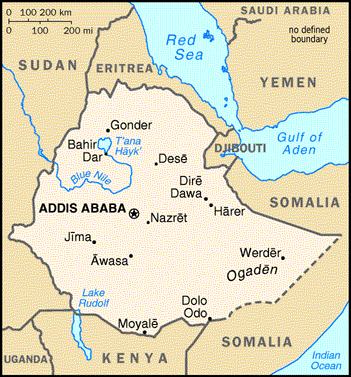
His name was Muhammad Amaan bin Alee Jaamee Alee; and he went by the nickname Abu Ahmad. He was born and raised in Ethiopia in the district of Harer, town of Taga Tab. According to his official documents, he was born in 1349H.

His Early Studies: 

The Shaikh grew up in the town of Taga Tab (Ethiopia) where he learned the Noble Qur’aan. After completing the Qur’aan, he began studying the books of Fiqh according to the madh-hab of Imaam Ash-Shaafi’ee, may Allaah have mercy on him. He also studied Arabic in his hometown with Shaikh Muhammad Ameen Al-Hareree.

He then justify his hometown as was the custom of the inhabitants of that area, and moved to another town where he met with a man who would become his colleague in seeking knowledge and migrating to Saudi Arabia, Shaikh Abdul-Kareem. So the ties of Islamic brotherhood were formed between the two of them. After meeting, they would go together to study under a teacher called Shaikh Moosaa under whom they studied Nadham-uz-Zubd of Ibn Raslaan. They then studied the text of al-Minhaaj under Shaikh Abaadir. While in this town, they learned several disciplines of Islamic knowledge.

ethiopia.gif

The pair then had a desire to travel to the holy land of Makkah to seek knowledge and fulfill the obligation of Hajj. So they justify from Ethiopia and headed for Somalia where they boarded a ship and headed for Aden (Yemen). There they experienced many hardships and perils on both land and sea but they continued on to Hudaidah by foot and fasted the month of Ramadaan there.

They then departed for Saudi Arabia and passed through Saamitah and Abi ‘Areesh until they got permission to enter Makkah, which they walked to on foot. While in Yemen, some teachers warned them against the Salafi Dawah, which they called Wahhaabee.

His Studies while in Saudi Arabia: 

After the Shaikh performed Hajj in 1369H, he began to seek knowledge in the study circles held in the precincts of Al-Masjid-ul-Haraam. There, he learned from Shaikh Abdur-Razzaaq Hamzah, may Allaah have mercy on him, Shaikh Abdul-Haqq Al-Haashimee, may Allaah have mercy on him, Shaikh Muhammad bin Abdillaah As-Sumaalee and others.

While in Makkah, he came to know Shaikh Abdul-Azeez bin Baaz and accompanied him in his journey to Riyadh when the Educational Institute was opened. This was in the early seventies (i.e. 1370H).

Some of the colleagues he studied with while undergoing secondary studies at the Educational Institute was Shaikh Abdul-Muhsin bin Hamad Al-Abbaad and Shaikh Alee bin Mahnaa, former judge in the Central Courthouse of Madeenah. At the same time, he would attend the many circles of knowledge in Riyadh.

He also benefited and was influenced by the (former) Muftee, the great scholar of Jurisprudence and Principles, Shaikh Muhammad bin Ibraaheem Aali Shaikh, may Allaah have mercy on him.

He would stick closely to Shaikh Abdur-Rahmaan Al-Afreeqee, may Allaah have mercy on him, as well as Shaikh Abdul-Azeez bin Baaz, may Allaah have mercy on him, whose vast knowledge and noble manners he was able to absorb.

In Riyadh, he studied under Shaikh Muhammad Al-Ameen Ash-Shanqeetee, may Allaah have mercy on him, and the Muhaddith, Shaikh Hammaad Al-Ansaaree, may Allaah have mercy on him.

He was also greatly influenced by Shaikh Abdur-Razzaaq Al-Afeefee, even in his manner of teaching. Likewise, he benefited from and was influenced by Shaikh Abdur-Rahmaan bin Naasir As-Saadee, may Allaah have mercy on him, since they would write letters to each other. However, it should be known that he did not study under Shaikh As-Saadee. He also learned under Shaikh Muhammad Khaleel Harraas, may Allaah have mercy on him, whom he was greatly influenced by, and Shaikh Abdullaah Al-Qaraawee, may Allaah have mercy on him.

His Scholastic Accreditation: 

He completed his secondary studies at the Educational Institute in Riyadh, then joined the College of Shareeah and obtained his diploma in 1380H. He then received the equivalent of a Masters Degree in Shareeah from the University of Punjab (Pakistan) in 1974 and thereafter a Doctorates Degree from Daar-ul-Uloom in Cairo.

His Scholarly Status and the Scholars Praise for him: 

The Shaikh held a high status amongst the people of knowledge and virtue as they would mention good things about him and rely on him. In fact, reliance upon his knowledge and Creed reached the point that when he was a student in Riyadh, and his teacher Shaikh Abdul-Azeez bin Baaz, saw his superiority and enthusiasm for knowledge, he referred him to Shaikh Muhammad bin Ibraaheem, may Allaah have mercy on him, which resulted in him being appointed a teacher at the Educational Institute in Saamitah in the district of Jaazaan.

What also proves the trustworthiness of his knowledge and Creed and his high regard amongst the scholars was the fact that when the Islamic University in Madeenah was opened, he was appointed to teach in it after being selected by Shaikh Abdul-Azeez bin Baaz, may Allaah have mercy on him.

It is well known that the Islamic University of Madeenah was founded in order to disperse the Creed of the Pious Predecessors. And this same University entrusted him to teach this Creed, first in the secondary institute and then in the College of Shareeah, due to their trust in his Creed, knowledge and methodology and so that he could participate in achieving the Universitys goals.

Below are some of the statements of the trustworthy scholars that they wrote about Shaikh Muhammad Amaan Al-Jaamee, may Allaah have mercy on him:

In a letter written (no. 64) by the former Muftee of the Kingdom of Saudi Arabia, Shaikh Abdul-Azeez bin Baaz, may Allaah have mercy on him, on 1/9/1418H, he said about Shaikh Muhammad Amaan: “He is known to me for possessing knowledge, virtue, a good Creed, and activeness in Calling to Allaah and warning against innovations and misconceptions. May Allaah forgive him, grant him an abode in Paradise and keep his progeny upright. And may He gather us, you and him in the abode of His honor. Verily, He is All-Hearing and All-Near.”

In a letter dated 3/3/1418H, Shaikh Saalih bin Fawzaan Al-Fawzaan said:

“Shaikh Muhammad Amaan as I knew him: Indeed, the students and those who hold various type of higher degrees are many, but there are only a few from whose knowledge and personality you could truly benefit from. Shaikh Muhammad Amaan was one of these few rare scholars who employed their knowledge and efforts in order to benefit Muslims and guide them by calling them to Allaah upon knowledge. This was via the classes he would give while at the Islamic University and the Prophets Masjid as well as during the excursions he would undertake inside and outside of the Kingdom in order to give lessons and lectures on various topics. He would call to Tawheed and propagate the correct Creed, and he would direct the Muslim youth towards the methodology of the pious Predecessors (Salaf as-Saalih) while warning them about destructive principles and deviant calls.

Whoever did not know him personally should get to know him by way of his beneficial books and numerous tapes, which consist of a deluge of the great amount of knowledge and immense benefit he possessed.

Shaikh Abdul-Muhsin bin Hamad Al-Abbaad, a teacher at the Prophets Masjid, may Allaah preserve him, said: “I came to know Shaikh Muhammad Amaan bin Alee Al-Jaamee when he was a student in the Educational Institute of Riyadh and then when he was a teacher in the Islamic University of Madeenah in the secondary level and then in the university level. I knew him to have a good Creed and following a safe course. He dedicated himself to clarifying the Creed upon the beliefs of the Predecessors and to warning against innovations by way of his classes, lectures and writings. May Allaah forgive him, have mercy on him and grant him an immense reward.”

The Director of the Islamic University of Madeenah, Dr. Saalih bin Abdillaah Al-Abood, said in a letter written on 4/15/1417H: The brother, Shaikh Mustafaa bin Abdil-Qaadir, asked me to write something about Shaikh Muhammad Amaan Al-Jaamee, may Allaah have mercy on him, that I know personally about him and his good qualities. So I complied with his request by writing these brief words even though I was not one of his students or close companions throughout the times I met him and mixed with him. However, there were some meetings that took place between him and I, may Allaah have mercy on him, from which I benefited and which resulted in us getting to know each other better and love for the sake of Allaah to develop between us, not to mention a firm conformance with the methodology of the Salaf-us-Saalih in matters of Creed and refuting opposition.

Muhammad bin Alee bin Muhammad Thaanee, a former teacher in the Prophets Masjid, may Allaah have mercy on him, said in a letter dated 1/4/1417H: He was a Salafee scholar of first class rate in sacrificing himself for the Islamic Call. He was also very active in giving lectures in mosques and educational seminars both in and out of the country (of Saudi Arabia). He authored many books on Creed and other subjects. May Allaah reward him on behalf of Islaam and the Muslims with the best of rewards.

Muhammad bin Abdil-Wahhaab Marzooq Al-Bannaa, may Allaah preserve him, said about him: He, may Allaah have mercy on him, was upon good, which we love, such as good manners, sound Creed and pleasant companionship. I ask Allaah to shower him with His Mercy, grant him an abode in Paradise, and gather us together there as brothers upon thrones facing one another.

Shaikh Umar bin Muhammad Fulaata, a teacher in the Prophets Masjid and Director of the Daar-ul-Hadeeth branch, may Allaah have mercy on him, said in a letter dated 2/8/1417H: In general, he, may Allaah have mercy on him, was honest in speech, immense in his ascription to the beliefs of Ahlus-Sunnah, and strong in his desire to call to Allaah through speech and action. He was reserved in speech, strong in clarifying, and quick to get angry when Allaahs laws were violated. The gatherings he would hold in the Prophets Masjid, the books he would distribute, and the travels he would undergo speak on his behalf.

I accompanied him one time on a journey and what a great friend he was! He himself accompanied the great scholar Muhammad Al-Ameen Ash-Shanqeetee, may Allaah have mercy on him, author of Adwaa-ul-Bayaan and other books, on a journey and also served as a good companion for him. A journey is that in which the true nature of a man becomes revealed. He would not flatter others, nor would he be hypocritical. He would not argue or dispute with others. If the proof was with him, he would openly proclaim it. And if the opposite of what he adhered to became apparent to him, he would take on that view and recant from his prior position. This is the common practice of the believers as Allaah says: The only saying of the faithful believers when they are called to Allaah and His Messenger to judge between them is that they say: We hear and we obey! Such are the successful. [Surah An-Noor: 51]

I call upon Allaah as a witness to the fact that he, may Allaah have mercy on him, fulfilled many times over his duty of serving the Religion and spreading the Sunnah of the chief of messengers (i.e. Prophet Muhammad). As a result he encountered much harm and was subjected to plots and conspiracies, but he did not give in nor was he dissuaded from his goal until he met Allaah. The last words he uttered were the testimonies of Laa Ilaaha illaaAllaah and Muhammadur-Rasoolullaah.

Shaikh Umar Fulaata, may Allaah have mercy on him, also said: I came to know Shaikh Muhammad Amaan bin Alee Al-Jaamee, may Allaah have mercy on him, since a long time ago, after he came to this country (of Saudi Arabia) seeking knowledge, searching for good, and looking to learn the Creed of Ahlus-Sunnah wal-Jamaaah.

I met him in 1372H in the home of our teacher, example, and fatherly figure, Shaikh Abdur-Rahmaan bin Yoosuf Al-Afreeqee, may Allaah have mercy on him and us, in Riyadh, since he would spend a lot of time with him and benefit from him. When I asked about him, I was informed that he had come from Saamitah where he would teach and participate in examinations in the educational institute and faculties under the Aali Shaikh family.

What caused me to notice him at that time was his vigor, zeal, superiority and great concern for speaking the pure Arabic language as well as his ability to explain clearly some of the problematic Fiqh issues, which showed that he was a well-versed student of knowledge.

Not much time passed since then until it was conveyed to me that our teacher, Shaikh Abdur-Rahmaan Al-Afreeqee, presented him with the opportunity of becoming part of his family by way of him marrying his wifes sister. So based on this, the ties between them became strengthened and the connection and love between them increased.

The professor, Dr. Muhammad Hamood Al-Waailee, teacher in the Prophets Masjid and Islamic University of Madeenah as well as its headmaster for Advanced Studies and Educational Research, said in a letter dated 5/29/1417H: I began my acquaintance of the Shaikh in 1381H when this noble country of Saudi Arabia first opened the Islamic University in Madeenah. He was one of the first to teach there and I was one of his students. He was from a number of teachers that would give their students special attention, which was not restricted to just that of a student-teacher relationship in class.

He would devote a great amount of attention in most of his classes to the Creed of the Pious Predecessors, may Allaah be pleased with them, and would not let any opportunity pass in which he would not explain its status and high position. This was the same whether his lessons were on Creed or on other subjects.

When he would discuss the Creed of the pious Predecessors and attempt to implant it into the souls of his students a majority of who came from all places abroad he would speak with profound experience and knowledge of this Creed, as he had tasted its sweetness and treaded its path, to the point that those listening and watching him would feel as though their hearts would become soft with love and affection for it.

He would undergo journeys in order to spread the Call and teach outside of the Kingdom of Saudi Arabia. He would not let any occasion or opportunity pass without clearly explaining the loftiness, purity and nobility of this Creed. Anyone who reads the books and treatises that he wrote will come to realize the truth of his Call.

I attended the deliberation of his doctorates dissertation in Dar-ul-Uloom, which falls under the University of Cairo in Egypt. In most of his research, he strove to clarify the purity of the Creed and the soundness of the methodology of the pious Predecessors. His academic persona became apparent throughout the discourse in his ability to expose the falseness of every methodology that deviated from the methodology of the pious Predecessors

In summary, he may Allaah have mercy on him, had great love for the Creed of the pious Predecessors and he was sincere in calling to it and dedicated to defending it. Nothing prevented him from speaking the truth about it not even people turning away from him and boycotting him. May Allaah have mercy on him and forgive him.

Dr. Muhammad bin Abdir-Rahmaan Al-Khumayyis, teacher at the Imaam Muhammad bin Suood Islamic University in Riyadh wrote: The noble Shaikh, Muhammad Amaan bin Alee Al-Jaamee, may Allaah have mercy on him, from what I knew about him, was from the strongest at defending and calling to the Creed of the pious Predecessors. He would defend it in books, lectures and seminars. And he was strict in refuting those who opposed the Creed of the pious Predecessors.

It is as if he sacrificed his entire life for this Creed in terms of learning it, teaching it, instructing it and calling to it. He realized the importance that this Creed has on the life and uprightness of a human being. And he acknowledged the danger that innovations which opposed this Creed have on the livelihood of society and individuals. So may Allaah have mercy on him and forgive him and all of the Muslims.

The afore-mentioned statements of people of knowledge and virtue about Shaikh Muhammad Amaan Al-Jaamee show his academic status and his efforts and struggle in calling to Allaah for close to his last forty years. His strong love and interest for clarifying and teaching the Creed of the Salaf brought him to high levels of distinction to the point that he became known amongst the scholars for his devotion to it. But apart from Creed, he was also very well-versed in the subjects of Tafseer, Jurisprudence, and the Arabic language.

His Books and Writings: 

The Shaikh authored several books and delivered many lectures and classes, which were transcribed before and after his death and published. Below is a list of some of his most famous and highly regarded works:

1. As-Sifaat-ul-Ilaahiyyah fil-Kitaab was-Sunnah an-Nabawiyyah fee Daw-il-Ithbaat wat-Tanzeeh [The Divine Attributes in the Quraan and Prophetic Sunnah in light of Affirming and Absolving] This is one of the larger books of the Shaikh, which is highly beneficial in its subject.

2. Adwaa alaa Tareeq ad-Dawah ilaal-Islaam [Illuminations upon the Path of Calling to Islaam] This book consists of a number of lectures he gave, which affirm the Creed of the Salaf, present the status of the Call to Islaam in Africa, discuss the problems faced by the Call and the Callers in current times and their solutions, and provide a refutation of the Sufees.

3. Al-Muhaadarah ad-Difaaiyyah an-is-Sunnah al-Muhammadiyyah [A Lecture in Defense of the Sunnah of Muhammad] The source of this book was a lecture he delivered in 1383H in Sudan in which he refutes the atheist Mahmood TaHa.

4. Haqeeqat-ud-Dimuqratiyyah wa annahaa laisat minal-Islaam [The Reality of Democracy and a Clarification that it is not from Islaam] The source of this treatise was a lecture he gave in 1412H.

5. Haqeeqat-ush-Shooraa fil-Islaam [The Reality of Shooraa in Islaam] This is a small treatise.

6. Al-Aqeedat-ul-Islaamiyyah wa Taareekhuhaa [The Islamic Creed and its History] An excellent treatise on the progression and evolution of the recording of Creed and the formation of deviant groups throughout the history of Islaam.

7. Nidhaam-ul-Usrah fil-Islaam [The Structure of the Muslim Family] A short treatise which was originally a lecture he gave in Africa. The book was translated and published in English.

Many of the lessons and classes the Shaikh would give explaining classical works on Creed and Jurisprudence were also transcribed and published on the Internet and in book format. Amongst these works are his explanations of:

1. Tajreed-ut-Tawheed of Al-Maqreezee
2. Thalaathat-ul-Usool of Muhammad bin Abdil-Wahhaab
3. Shuroot-us-Salaat of Muhammad bin Abdil-Wahhaab
4. Al-Usool-us-Sittah of Muhammad bin Abdil-Wahhaab
5. Al-Aqeedat-ut-Tadmuriyyah of Ibn Taimiyyah
6. Al-Qawaaid-ul-Muthlaa of Ibn Al-Uthaimeen and more.

His Students: 

It is hard to imagine that a man of such a high regard amongst the scholars and who expended such great efforts in his call to Allaah and his love for the Creed of the Salaf would be void of any students. Many students studied under him to the point that it is difficult to confine their amount due to their large number. However, from the most outstanding of them are:

1. Dr. Rabee bin Haadee Al-Madkhalee;
2. Shaikh Zayd bin Haadee Al-Madkhalee;
3. Dr. Alee bin Naasir Al-Faqeehee, teacher in the Prophets Masjid;
4. Dr. Muhammad Hamood Al-Waailee, teacher in the Prophets Masjid and headmaster of the Islamic Universitys Advanced Studies department;
5. The Muhaddith, Shaikh Abdul-Qaadir bin Habeebillaah As-Sindee, may Allaah have mercy on him;
6. Dr. Saalih bin Saad As-Suhaymee, teacher in the Prophets Masjid and Islamic University;
7. Dr. Ibraaheem bin Aamir Ar-Ruhaylee, teacher in the Islamic University;
8. Dr. Bakr bin Abdillaah Abu Zaid, member of the Committee of Senior Scholars;
9. Dr. Falaah Ismaeel, teacher in the University of Kuwait.

Some of his Noble Characteristics: 

1. His Sincerity: He, may Allaah have mercy on him, was sincere to Allaah, His Book, His Messenger, the Muslim Imaams and their common-folk. This becomes apparent with just the slightest bit of reflection, since if one looks at his life, he will see that the Shaikh sacrificed his entire life in affirming what our Lord is deserving of in terms of His Lordship, Worship, and Names and Attributes according to the understanding of the pious Predecessors. This can be seen in his lessons, writings, lectures, and refutations against those who opposed the Quraan and Sunnah. Furthermore, he was just and balanced when refuting his opponents steering clear from partisanship and vain desires.

2. His Mixing Little with People: He, may Allaah have mercy on him, was known to mix little with people unless it was for good. So as a result most of his time and his days would be reserved. His manner of doing this was well known since he would go out from his home to work in the Islamic University, then return home, then go to the Prophets Masjid to give classes there after Asr, after Maghrib, after Ishaa and after Fajr. He would continue to follow this schedule up until he was bedridden when his illness worsened.

3. His Reserved Tongue: He, may Allaah have mercy on him, was also reserved in speech, He would not speak ill, throw blame or backbite others. In fact, he would not allow anyone to backbite others while in his presence nor would he permit anyone to convey gossip and people’s defects to him.

If any students of knowledge fell into error, he would request the tape or the book (containing the error) and would listen or read it. If it became apparent to him that it was in fact an error, he would fulfill his requirement of advising that person.

4. His Forgiving Nature and Forbearance: He would react to those who treated him badly by displaying forbearance and forgivingness.

Many times people would come up to him on the street or while in the Prophets Masjid and ask his forgiveness for speaking bad about him and attacking his honor, and he would say to them: I hope Allaah will not cause anyone to enter the Hellfire because of me.

He would also pardon those who sought to destroy his reputation, saying: There is no need for anyone to come to me to seek my pardon, for I have already pardoned everyone. And he would request those in his gatherings to convey this from him.

5. His Concern and Care for His Students: He, may Allaah have mercy on him, was from those who gave special to his students, which would not stop with the end of his classes. He would attend their special functions, ask about their situations, take care of some of their needs, and help them out with some of their family problems or some of the hardships of life that they encountered. In general, he would make use of his money, reputation, and time in order to assist those students of his that were needy.

These actions of his justify a profound effect on his students and as a result, he would earn true love from them. His students felt the great gap in this aspect after he died. The truth is that the Shaikh, may Allaah have mercy on him, possessed many good characteristics, all of which cannot be mentioned here.

Some of his Wise Sayings: 

The Shaikh said: It is upon our youth to take advantage of their free time by spending it on studying books that cure the diseases of the heart. This will cause a person to try to adhere to the ways and practices of the pious Predecessors in being steadfast and upright, and not just practicing it outwardly. Practicing Islaam on the outside is of no use by itself. Wearing a short garment (thawb) and growing a long beard are two things that Allaah has prescribed and encouraged. However, if there cannot be found any Islamic concept and understanding behind that, these outward features are of no use or benefit. [The tape: Sharh Asbaab Inshiraah-us-Sadr]

His Salafee Creed: 

What proves that the Shaikh was upon a sound Salafee Creed was that fact that he would teach from the classical books of Creed from the pious Predecessors, such as: al-Waasitiyyah, al-Fataawaa al-Hamawiyyah al-Kubraa, at-Tadmuriyyah, Sharh al-Aqeedatut-Tahaawiyyah of Ibn Abil-Izz, al-Eemaan, Thalaathat-ul-Usool, Fath-ul-Majeed, Qurratu Uyoon-ul-Muwahhideen, al-Usool-us-Sittah, al-Waajibaat-ul-Mutahattimaat, al-Qawaaid-ul-Muthlaa and Tajreed-ut-Tawheed of Al-Maqreezee. These lessons were recorded and are widely available in cassette form. He would explain some books several times such as Thalaathat-ul-Usool.

He would also refute the people of innovation, such as the Sufees, the Sheeah, and the Rawaafid as can be witnessed in his books, the articles he would write for scholastic magazines, and the lectures and classes he would give. As an example, refer to his book: Adwaa alaa Tareeq ad-Dawah ilaal-Islaam [Illuminations upon the Path of Calling to Islaam].

His Sickness and Death: 

During the last part of his life, he was stricken with a terminal illness to the point that he was bedridden for almost a year. But he endured it with patience and forbearance.

Shaikh Umar Fulaata, may Allaah have mercy on him, said: In the last part of his life, he was stricken with chronic illnesses, but endured them. One of his children related to me that before he died, he gathered his family together, advised them and emphasized in counseling them to be conscious and fearful of Allaah (Taqwaa), to maintain family ties, and to strive upon the Salafee Creed up until the time that they meet Allaah. The last thing he said before he died was the testimony that: There is no deity that is worshipped in truth except Allaah and Muhammad is the Messenger of Allaah.

On a Wednesday morning, on the 26th of Shabaan 1416H, his soul returned back to its Creator. His funeral prayer was held on that day after Dhuhr and he was then buried in the Baqee-ul-Gharqad Cemetery in Madeenah. A large group of people were present at his funeral including amongst them many scholars, judges, and students of knowledge. His death put the ummah at a loss, since they were now lacking a great and hard-working scholar, may Allaah grant him a spacious abode in Paradise.

Sources for his Biography: 

Refer to the biographical account of the Shaikh written by his student, Mustafaa bin Abdil-Qaadir Al-Fulaanee in 3/5/1419H as found in the book: The Islamic Creed and its History (pg. 5-22) with alterations and additions.

Published on: August 31, 2007

Related Links: abdurrahman.org/tag/shaykh-muhammad-amaan-al-jaamee

We do not bear witness for any one from the muslims that he will be in paradise or hellfire – Aqeedah Tahawiyyah

Aqeedah Tahaawiyyah: Lesson 38  : Point [153]
Dawud Burbank [Audio|English]

153. And we do not declare about anyone from them (the people of the Qiblah) that he is going to be in the Paradise or that he is going to be in the Fire. 

[Souncloud Audio Link]

At-Ta`leeqaat Al-Mukhtasarah `alaa Matn Al-`Aqeedah AtTahaawiyyah. By Shaykh Saalih ibn Fawzaan al-Fawzaan hafizahullaah. Translated by Aboo Talhah Daawood Burbank, rahimahullaah, in 1426AH

Posted with kind permission from Dawud Burbank rahimahullaah

Title of the Post is taken from the Shaykh Fawzan’s explanation of the Point.

Listen to the Full Audio Series of Aqeedah Tahaawiyyah:
Explanation of Aqeedah at-Tahaawiyyah – Dawud Burbank [Audio|En]

Book Study Resource : Aqeedah at-Tahaawiyyah – Imam at-Tahaawi


Are there any exceptions to Residing in the Lands of Disbelief? – By Shaykh ‘Abdur Rahmaan al-‘Adanee

Question 6: Are there any exceptions to residing in the lands of disbelief?

“After we have come to know the ruling of hijrah, and the rule defining the land from which hijrah is made, are there any circumstances considered exceptions to this, and if so, what is the condition on this resident?”

The Answer:

Allaah (Ta’ala) says in His Noble Book:

إِنَّ الَّذِينَ تَوَفَّاهُمُ الْمَلَائِكَةُ ظَالِمِي أَنفُسِهِمْ قَالُوا فِيمَ كُنتُمْ ۖ قَالُوا كُنَّا مُسْتَضْعَفِينَ فِي الْأَرْضِ ۚ قَالُوا أَلَمْ تَكُنْ أَرْضُ اللَّهِ وَاسِعَةً فَتُهَاجِرُوا فِيهَا ۚ فَأُولَٰئِكَ مَأْوَاهُمْ جَهَنَّمُ ۖ وَسَاءَتْ مَصِيرًا – 4:97

إِلَّا الْمُسْتَضْعَفِينَ مِنَ الرِّجَالِ وَالنِّسَاءِ وَالْوِلْدَانِ لَا يَسْتَطِيعُونَ حِيلَةً وَلَا يَهْتَدُونَ سَبِيلًا – 4:98

فَأُولَٰئِكَ عَسَى اللَّهُ أَن يَعْفُوَ عَنْهُمْ ۚ وَكَانَ اللَّهُ عَفُوًّا غَفُورًا – 4:99

“Verily! As for those whom the angels take (in death) while they are wronging themselves (as they stayed among the disbelievers even though emigration was obligatory for them), they (angels) say (to them): ‘In what (condition) were you?’ They reply: ‘We were weak and oppressed on earth.’ They (angels) say: ‘Was not the earth of Allaah spacious enough for you to emigrate therein?’ Such men will find their abode in Hell – What an evil destination! Except the weak ones among men, women and children who cannot devise a plan, nor are they able to direct their way. For these there is hope that Allaah will forgive them, and Allaah is Ever Oft Pardoning, Oft-Forgiving.” – An-Nisaa (4):97-99

So those who are excused for not making hijrah when it is obligatory upon them, they are these people, the people who have excuses, those who are in no way able to make hijrah. So these people, they are the ones in which an exception is made, and this incapability is under certain circumstances:

1. It could be because of an illness. Either because he is sick with an illness that forces him to stay in bed, and with this illness he is not able to mount any means of transportation required to leave the land he is in, this person is then excused, or likewise if he has an illness that he can’t find treatment to stay alive except in the land of disbelief which he is in, this person is also excused.

2. Or this incapability could be because of compulsion, like a prisoner for example, or likewise some countries prevent its citizens from leaving to go somewhere else except under extremely difficult measures as we saw and witnessed in the south of Yemen in the days of Communism.

3. Or it could be because of weakness as is the case of the women and children who are unable to travel from one land to another because of their weakness and lack of experience. So these also are from those for whom an exception is made.

However, if there exists from the women one who is rational, and resolute, and possesses insight and comprehension, and is able to travel and leave the land of disbelief to go to the land of Islaam, and she feels safe for herself from fitnah (tribulation), then this woman, it is obligatory upon her to leave and make hijrah when she is in the circumstance where it is obligatory upon her, and it is not a condition that she have a mahram (a guardian who, because of ties, she is never able to marry) because of the statement of Allaah (Ta’ala):

“O you who believe! When believing women come to you as emigrants, examine them” – Al-Mumtahanah (60):10

For verily Umm Kulthoom Bint ‘Uqbah Ibn Abee Mu’ait justify, and also Zainab the daughter of the Messenger of Allaah (Sallallaahu ‘Alayhi Wa Sallam) justify, they both justify without a mahram, and likewise many women justify from Makkah to Madeenah without mahaarim, so the ahadeeth which mention the condition of having a mahram for a woman to travel don’t apply in the particular case of hijrah.

4. Or this incapability could be because of the obstacles which have been put in place today, from the visas and things similar to that, thus if he is not able to enter the lands of Islaam because of the likes of these obstacles, and this is rare that all of the Islaamic lands shut their doors on he who comes from Europe, and America, and other lands of disbelief, however, whatever the case may be, if something like that were to happen to a Muslim, then it would be an excuse for him.

5. Also, there are some extremely rare cases where the person has fled from an oppressive Muslim ruler who wants to kill him, or he wants to do something to him that he can’t handle, and he could not find a land where he is safe from the evil of this oppressor other than a land of disbelief. This is a rare case, otherwise, the Islaamic countries are many, however, sadly you find many of these people who flee from their oppressive rulers choose the countries of disbelief over the Muslim countries without necessity. They only desire easy living and luxury, and Allaah is the one whose help is sought.

Whatever the case may be, it is upon these people who are excused to avoid falsehood and the people of falsehood, and stay far away from the tribulations as much as they are able to do so, and it is upon them to hold firm to the truth and the Sunnah in those lands which they were forced to stay in. And we ask Allaah (‘Azza Wa Jall) for grace.

Also, it is upon the Muslims to help their brothers who are not able to make hijrah, while they are in the circumstance where it is obligatory, with everything they can, so they can rescue them from the situation they are in. Allaah (Subhaanahu Wa Ta’ala) says in His Noble Book:

“Help you one another in righteousness and piety; but do not help one another in sin and transgression.” – Al-Maaidah (5):2

Also, the Prophet (Sallallaahu ‘Alayhi Wa Sallam) is the one who said, “One of you doesn’t believe until he loves for his brother what he loves for himself.” (This hadeeth is) agreed upon (by al-Bukhaaree and Muslim) from the hadeeth of Anas.

Likewise, in Muslim from the hadeeth of Abu Hurairah on the Prophet (Sallallaahu ‘Alayhi Wa Sallam) that he said,

“Whoever relieves a believer of an anxiety from the anxieties of this life, Allaah will relieve him of an anxiety from the anxieties of the day of resurrection, and whoever makes things easy for the mu’sir (the one who is in financial straights and is not able to repay his debt), Allaah will make things easy for him in this life and the next, and Allaah supports the slave when the slave supports his brother.”

As for the condition on the one residing in those lands, it is that he have the ability to openly perform his deen, and perform the rituals of his deen, and openly profess it without hindrance. The second condition is that he feels safe for his deen, whereas he has enough knowledge and insight and strength of faith and contentment and conviction and firmness and composure that will help him to stand firm on his deen.

With regards to the first condition, it is the one the Muslims focus on in order to justify them residing in the lands of disbelief, and most of their questions are about that while they are negligent when it comes to fulfilling the second condition, and at the same time the first condition, which is to be able to openly perform the deen in a manner which frees you from guilt, most of the people residing over there, this condition is not possible for them. For example, the Adhaan, to call it publicly out loud is prohibited over there as is well known, and it is from the important rituals of our deen. The Permanent Committee of Scholars (in Saudi Arabia) gave a legal verdict that: “Whoever is not able to call the Adhaan out loud then he has failed to openly perform the rituals of the deen, and it is upon him to make hijrah.”

Likewise, the second condition, which is that, the resident feels safe for his deen, do we truly believe that there is anyone over there who is able to feel safe for his deen, and stand firm upon it with all those tremendous causes of corruption that exist over there.

In brief, in residing in the lands of disbelief there is tremendous danger for the belief of the Muslim and for his deen and for his character. Over there the causes of disbelief and sin are strong and many and of various kinds, and add to that the weakness the Muslims over there have in adhering to their deen. Look how he and his family are brought up amongst the disbelievers and how they then acquire their despicable character and their evil habits. Rather, at times they get affected by them in beliefs and types of worship. So he who lives in those corruptive, bestial societies, he does not take interest in his deen, nor does he take it into account, nor does he pay attention to its commands and its good manners. How sad it is!

How can his soul feel at ease about residing in the land of disbelief in which the rituals of disbelief are publicized, and the unlawful things and despicable things are considered lawful, and in which every wicked person is deemed good, and in which every forbidden act is performed, and in which every secret thing is brought out into the open, and over there every evil and abomination is at hands reach. How can the soul of the Muslim feel at ease about being in a land in which the rule is for other than Allaah and His Messenger (Sallallaahu ‘Alayhi Wa ‘Alaa Aalihi Wa Sallam). He hears that, and witnesses it, and touches it, and then he persists to remain there with his children.

It is upon the Muslims to beware of the plots, and conspiracies, and plans, and schemes of the enemies of Islaam which aim to turn the Muslims away from their deen and weaken their adherence to it. We must be alert, and we must also ask ourselves: Why did the enemies of Islaam open their lands to the Muslims? So they can reside there, and work there, and study there, and amuse themselves and stroll about there? Did they do that because of their love for the Muslims? Did they do that out of desire for their wealth or for their need for laborers?

The answer: No! By Allaah! They didn’t do that because of their love for the Muslims, for verily they harbor in their hearts hatred and enmity. Also, they opened up their lands to the poor Muslims and the weak Muslims, so this shows us they are not ambitious for their wealth. Also, it is well known that they have unemployment, so they are not in need of laborers. Rather, the goal from that is to attempt to turn the Muslims away from their deen, and to corrupt the Muslims, and wipe out the Muslims’ identity over there.

By Allaah, O my brothers in Allaah’s deen, they envy us because of this deen, and because of this good that we live in, and they are extremely eager for us to become like them in disbelief and misguidance and decadence.

Allaah (‘Azza Wa Jall) says in His Noble Book:

“They wish that you disbelieve, as they have disbelieved, so you all become equal.” – An-Nisaa (4):89

And He (Subhaanahu) is the one who said:

“The Jews and the Christians will not be pleased with you until you follow their religion.” – Al-Baqarah (2):120

And He (Subhaanahu) said:

“… and they will not cease fighting you until they turn you back from your religion if they can.” – Al-Baqarah (2):217

So they are bent on making evil and discomfort reach the Muslims. They are saddened by the good that reaches the Muslims, and they rejoice at the calamity that befalls them. Allaah (Subhaanahu Wa Ta’ala) has exposed them in His Book, and He has disclosed that which they conceal in their hearts. He (‘Azza Wa Jall) said:

“O you who believe, take not as your advisors those outside your religion since they will not fail to do their best to corrupt you. They desire to harm you severely. Hatred has already appeared from their mouths, but what their breasts conceal is far worse. Indeed, We have made plain to you the proofs if you understand.” – Aal Imraan (3):118

And Allaah (‘Azza Wa Jall) says in His Noble Book:

“Should they gain the upper hand over you, they would behave to you as enemies, and stretch forth their hands and their tongues against you with evil, and they desire that you disbelieve.” – Al-Mumtahanah (60):2

So they, O my brothers in Allaah’s deen, they have not justify the Muslims alone in their (the Muslims’) own lands and inside their own houses, so how much more with someone who lives amongst them, and with someone who goes to them? No doubt, they will not leave off any means or path that leads to diverting him from his deen except that they will implement that. They have plots for that, and tricks, and secret means, and apparent means. There is a war against Islaam and the Muslims, and there are plots, day and night. So because of that they aspire to carry out these schemes on the Muslims with all the might they have and they spend large amounts of money and take great efforts to achieve that.

Also, they have plans to convert people to Christianity in their lands and in the Muslim lands. They have revealed those plans in many Muslim lands like Indonesia, and the Philippines, and Sudan, and Bangladesh, and Uganda, and other Islaamic lands.

They use as a means to do that giving charity to the weak Muslims by building schools and hospitals, and also by forming what are called organizations for humanity, and there goal is not to benefit the Muslims, nor develop the Muslim societies, there goal in that is only to destroy the Muslims’ character and destroy the Muslims’ intellect and break the relationship the Muslims have with their Lord, Allaah (Subhaanahu Wa Ta’ala) and give free rein to their desires. So we must beware of these plans.

In brief, residing in the land of disbelief has evil consequences, and it has bad effects on the Muslim’s deen, and this deen is the capital wealth of the righteous slave in this life. So I ask you by Allaah, is there anyone residing in the lands of disbelief who has realized At-Taqwaa (piety and fear of Allaah), and has become from the Muttaqeen (the devout ones who fear Allaah), and thus has performed the commands, and has stayed away from the prohibitions in his eating, and drinking, and in his clothing, and in his house, and in his street, and in his market, and in his school, and in his job.

It is rare that you find someone who has realized At-Taqwaa and has truly become from the Muttaqeen, those who hasten to carry out the commands and stay away from the prohibitions. Rather, how many are the sins which the Muslims over there live in, and infatuation and love of the dunyaa (worldly pleasures), and being attached to it, and putting it before obedience to Allaah and His Messenger, for the disbelievers, as is well known, the splendor of this life has been granted to them, however, it is a small pleasure, and a short lived pleasure designed for tribulation, and test, and trial. Allaah (Subhaanahu Wa Ta’ala) says:

“Let not the free disposal (and affluence) of the disbelievers throughout the land deceive you. A brief enjoyment; then, there ultimate abode is hell, and worst indeed is that place for rest.” – Aal Imraan (3):196-197

And He (Subhaanahu) says:

“Do they think that We enlarge them in wealth and children. We hasten unto them with good things (in this life so that they will have no share of good things in the Hereafter). Nay, but they perceive not.” – Al-Mu’minoon (23):55-56

And He (Ta’ala) says:

“We shall gradually seize them with punishment in ways they perceive not. And I respite them; certainly My plan is strong.” – Al-A’raaf (7):182-183 and Al-Qalam (68):44-45

The Muslim over there gets amazed and dazzled by the civilization of the disbelievers and by the material goods of the disbelievers which leads to glorifying them.

Also, (there is) the temptation of the women. It is well known the nudity, and the decadence, and the lack of morals, and the lack of values in those bestial societies. They have no deen, no shame, no morals, no obstacles, nothing preventing them from the forbidden things, and the Prophet (Sallallaahu ‘Alayhi Wa Sallam), he is the one who said as has been transmitted in the two Saheehs from the hadeeth of ‘Usaamah, “I have not justify a fitnah (trial) more harmful on the men than the women.

And the hadeeth of Abu Sa’eed on the Prophet (Sallallaahu ‘Alayhi Wa Sallam) which has been transmitted by Imaam Muslim,

“Verily, the dunyaa (this life) is sweet and succulent, and indeed Allaah has made you successors to one another in it, so beware of the dunyaa, and beware of the women, for verily the first fitnah (trial/temptation) for the children of Israa’eel was in the women.”

And his (Sallallaahu ‘Alayhi Wa Sallam) statement,

“I have not seen from the females who are deficient in their intellect and deen she who has more power to take away the heart of the prudent man than one of you.”

The highlight is that the Muslim over there is in serious danger, he, and his family, and his children. It has to amaze you how can the Muslim feel safe for his children, boys and girls, in those societies, in the schools, and in the streets, and in the different sections of town, and in the roads, everywhere! These little ones who are like moths, they don’t distinguish between that which is beneficial and that which is harmful, nor between guidance and misguidance, nor between what is permissible and what is forbidden. Rather, whoever directs them to the path of good, they follow it by the success granted by Allaah, and likewise, whoever directs them to the path of evil, they, in most cases, rush to it, except for he who Allaah protects.

So the infant over there from his infancy is being led to that which has evil in it, and that which has corruption in it, and to decadence, and to being detached from the deen, and from morals, and from modesty. From kindergarten to the highest grades; while it is incumbent upon those in charge of their affairs to fear Allaah (Subhaanahu Wa Ta’ala) in dealing with these offspring and these families, and they must take care of the responsibility facing their children and their families, and they must show them the path to paradise and help them follow that path, and it is also upon them to warn them from the path to the fire, and warn them from these paths, and help them to leave alone these paths, and help them to stay far away from them.

It is also upon them to raise their children a righteous upbringing, and bring them up in a good way, and order them to observe the Islaamic rituals and codes of behavior, and it is also upon them to forbid them from despicable forms of behavior and the forbidden things and all means which lead to that, and that is not possible except by keeping them far away from evil companions, and far away from criminal groups and places of corruption. It is also upon them to implant in them outstanding character. All of that must be done in compliance with the statement of Allaah (‘Azza Wa Jall):

“O you who believe! Ward off from yourselves and your families a Fire (Hell) whose fuel is men and stones.” – AtTahreem (66):6

Likewise, the Prophet (Sallallaahu ‘Alayhi Wa Sallam), he is the one who said, “Each one of you is a herdsman, and each one of you is responsible for his flock.”

So I ask you, by Allaah, is the one who resides over there able to do that with his family and his children, or is it the reality that the Muslim over there is subject to the systems of the disbelievers and to the laws of the disbelievers?

Over there he does not have true authority over them (his family). Rather, how often are the incidents of rebellion, and dispute, and quarrel between the man and his family, for verily if he does not respond to their demands, the disbelieving police force is the judge, and because of that you notice that he sees the abomination and the indecency in his family, and he is not able to do anything about it. O how distressing it is! O how sad it is!

Also, from the dangers is the existence of complete social intercourse with the disbelievers which causes him and them to come closer together, and brings about love through the perception that he is a fellow citizen, and this is a dangerous matter because it is incumbent upon the Muslim to hate the disbelievers because they are the enemies of Allaah, and the enemies of His Messenger, and the enemies of Islaam and the Muslims. Allaah has ordered that, and He has warned against loving them and befriending them. He (‘Azza Wa Jall) said:

“You (O Muhammad) will not find any people who believe in Allaah and the Last Day, making friendship with those who oppose Allaah and His Messenger (Muhammad), even though they were their fathers, or their sons, or their brothers, or their kindred (people). For such He has written Faith in their hearts, and strengthened them with Rooh (proofs, light and true guidance) from Himself.” – AlMujaadilah (58):22

And He (‘Azza Wa Jall) said:

“Let not the believers take the disbelievers as Auliyaa (supporters, helpers, etc.) instead of the believers, and whoever does that will never be helped by Allaah in any way, except if you indeed fear a danger from them. And Allaah warns you against Himself (His Punishment), and to Allaah is the final return.” – Aal Imraan (3):28

And Allaah (‘Azza Wa Jall) says:

“O you who believe! Take not as (your) Bitaanah (advisors, consultants, protectors, helpers, friends, etc.) those outside your religion (pagans, Jews, Christians, and hypocrites) since they will not fail to do their best to corrupt you. They desire to harm you severely.” – Aal Imraan (3):118

And He (Subhaanahu) says:

“O you who believe! Take not the Jews and the Christians as Auliyaa (friends, protectors, helpers, etc.), they are but Auliyaa to one another. And if any amongst you takes them as Auliyaa, then surely he is one of them. Verily, Allaah guides not those people who are the wrong-doers.” – AlMaa’idah (5):51

And our Lord (Subhaanahu) says:

“You see many of them taking the disbelievers as their Auliyaa (protectors and helpers). Evil indeed is that which their ownselves have sent forward before them, for that (reason) Allaah’s Wrath fell upon them and in torment they will abide.” – Al-Maa’idah (5):80

And our Lord (Subhaanahu) says:

“Indeed there has been an excellent example for you in Ibraaheem (Abraham) and those with him, when they said to their people: ‘Verily, we are free from you and whatever you worship besides Allaah, we have rejected you, and there has started between us and you, hostility and hatred for ever, until you believe in Allaah Alone.’” – Al-Mumtahanah (60):4

So when he (the Muslim) loves them, then, no doubt, he will agree with them, and follow in their footsteps, and blindly follow them and imitate them, while the Prophet (Sallallaahu ‘Alayhi Wa Sallam), he is the one who said, “Whoever imitates a people then he is from them.”

Also, from the evils of residing in the lands of the disbelievers is, in doing so, their masses are increased, and their societies are stimulated, and it also strengthens their economy, while we are ordered to irritate them, and show enmity to them.

In brief, it is almost impossible for the Muslim to feel safe for his deen in most lands of disbelief. Add to that, the enemies of Islaam over there who are eager to make the Muslim doubt about his deen, and his creed, and his faith in his Lord and His Messenger. And it is known that faith does not accept doubt, rather, it is the certain belief. So if the Muslim becomes doubtful, and uncertain, and irresolute about that which it is incumbent upon him to be firmly convinced about, then he, and Allaah’s refuge is sought, becomes a disbeliever.

They spread their specious arguments, and their falsehood, and their ways of skepticism everywhere, and with every means, and because of that, it is from the conditions of the one residing in those lands that he feel safe for his deen, and this does not happen except if he learns his deen with its proofs, and evidences and arguments, so he will be able to defend it, and so he can refute the specious arguments of the disbelievers which they have spread everywhere. Yes, it is upon him to have knowledge of the legislation and know that which will enable him to distinguish between truth and falsehood, so he won’t be deceived by the falsehood and the people of falsehood, and so the truth won’t be made obscure to him.

So it is a must that the Muslim have knowledge to protect himself from the specious arguments, and so he can use it to protect himself from disbelief and disobedience. It is well known that the hearts are weak, and the specious arguments are strong and grabbing, and when it was the case that most of the people going and residing over there were not strong in deen, and were lacking in knowledge and insight, many of them returned to us with something different from what he went with. He would return deviant in his deen, and in his manners and behavior. He would return as a sinful person, far astray, rather, some of them would return, and Allaah’s refuge is sought, as an apostate disbelieving in his deen, the deen of Islaam.

Rather, he would also disbelieve in the rest of the religions whereas he would be upon total disbelief, and he would mock the people of Islaam. He would return imitating the destructive ideology of the disbelievers, and he would follow their way in lifestyle, and in clothing, and in appearance, and in all of their affairs, and they would become spokesmen for the enemies of Islaam in the lands of the Muslims. So it is upon every Muslim to strive to reside in the lands of Islaam in which the abominations are few in comparison to the lands of disbelief. Indeed, in that is good for him, and security and protection for his deen.

Nevertheless, we would like to point out, it is possible that there exists remote lands of disbelief in which the Muslim is able to openly perform his deen, and openly perform the rituals while feeling safe for himself from tribulations, so if there are lands of disbelief out there upon this description, then Al-Hijrah from it is mustahab (highly recommended) for the Muslim, and residing there is makrooh (disliked). However, as is well known, most of the lands of disbelief in the east and the west are not like that.

SourceQuestions and answers concerning al-Hijrah – By Shaykh ‘Abdur Rahmaan al-‘Adanee

Related Link: Hijrah (Migration to Muslim Lands) – abdurrahman.org/hijrah

Praying behind every righteous or sinful person / Ruler from the people of the Qiblah, and upon whoever dies from them

Aqeedah Tahaawiyyah: Lesson 38  : Point [152]
Dawud Burbank [Audio|English]

152. And we hold praying the Prayer behind every righteous or sinful person from the people of the Qiblah, and upon whoever dies from them

[Souncloud Audio Link]

At-Ta`leeqaat Al-Mukhtasarah `alaa Matn Al-`Aqeedah AtTahaawiyyah. By Shaykh Saalih ibn Fawzaan al-Fawzaan hafizahullaah. Translated by Aboo Talhah Daawood Burbank, rahimahullaah, in 1426AH

Posted with kind permission from Dawud Burbank rahimahullaah

Listen to the Full Audio Series of Aqeedah Tahaawiyyah:
Explanation of Aqeedah at-Tahaawiyyah – Dawud Burbank [Audio|En]

Book Study Resource : Aqeedah at-Tahaawiyyah – Imam at-Tahaawi

PS: The title of the post is from AbdurRahman.Org

Related Link : Rulers & Kings – https://abdurrahman.org/rulers/