Clarification regarding making distinction among the messengers
Those Messengers! We preferred some to others; to some of them Allah spoke (directly); others He raised to degrees (of honour); and to ‘Iesa (Jesus), the son of Maryam (Mary), We gave clear proofs and evidences, and supported him with Ruh-ul-Qudus [Jibrael (Gabriel)] (Surah Baqarah 2:253)
Say (O Muslims), “We believe in Allah and that which has been sent down to us and that which has been sent down to Ibrahim (Abraham), Isma’il (Ishmael), Ishaque (Isaac), Ya’qub (Jacob), and to Al-Asbat [the twelve sons of Ya’qub (Jacob)], and that which has been given to Musa (Moses) and ‘Iesa (Jesus), and that which has been given to the Prophets from their Lord. We make no distinction between any of them, and to Him we have submitted (in Islam).“ (Surah Baqarah 2:136)
The answer is based upon the clarification from Shaykh Uthaymeen rahimahullaah
Share this, Baarakallaah Feekum: [“One who guides to something good has a reward similar to that of its doer” - Saheeh Muslim vol.3, no.4665] [This website protects the copyrights of the authors/publishers. The Content is posted on this website with implicit/explicit permission from content owners]
Share this, Baarakallaah Feekum: [“One who guides to something good has a reward similar to that of its doer” - Saheeh Muslim vol.3, no.4665] [This website protects the copyrights of the authors/publishers. The Content is posted on this website with implicit/explicit permission from content owners]
Listen / Download Mp3 Here (Time 30:57)
[audio https://salafiaudio.files.wordpress.com/2014/09/preferences-prophets-and-messengers-saleh-as-saleh.mp3]
Source : UnderStand-islam.net
Share this, Baarakallaah Feekum: [“One who guides to something good has a reward similar to that of its doer” - Saheeh Muslim vol.3, no.4665] [This website protects the copyrights of the authors/publishers. The Content is posted on this website with implicit/explicit permission from content owners]
Hajj is an act of worship that must be devoted only to Allaah. It is a declaration and a manifestation of the belief in the Oneness (tawheed) of Allaah. It is a time to call upon Allaah to purify the self from any worship to other than Him.
The Muslim who declares the talbiyah: (Labbaika allaahumma labbaik. labbaika laa shareeka laka labbaik; innal-hamda wan-ni’mata laka wal mulk, laa shareeka lak) understands that it is a du’aa that means: “Here I am O Allaah, here I am. Here I am, You have no partner, here I am. Surely all praise is due to You, and every bounty is from You, and all dominion is Yours, and You have no partner.”
The Muslim, therefore, should submit himself completely (mentally, spiritually, and physically) to Allaah Alone. No worship should be devoted to statues, tombs, religious leaders, righteous men (dead or alive) or any part of the creation!
The tawheed of Allaah requires the Muslim to follow the perfect way of worship. This is the way (sunnah) of Muhammad sallallaahu alaihi wa sallam as understood by the sahaabah (the companions of the Prophet sallallaahu alaihi wa sallam), who were the best of mankind.
Share this, Baarakallaah Feekum: [“One who guides to something good has a reward similar to that of its doer” - Saheeh Muslim vol.3, no.4665] [This website protects the copyrights of the authors/publishers. The Content is posted on this website with implicit/explicit permission from content owners]
Share this, Baarakallaah Feekum: [“One who guides to something good has a reward similar to that of its doer” - Saheeh Muslim vol.3, no.4665] [This website protects the copyrights of the authors/publishers. The Content is posted on this website with implicit/explicit permission from content owners]
All Praise is due to Allah, and may the salaah and salaam be on Prophet Muhammad, his household, and the noble companions and those who follow them until the Day of Resurrection.
Question:
Is the adhan an obligation, and should we face the qiblah when performing it?
Answer:
The legal meaning of adhan is I’laam (announcement). The Islamic meaning of it is to worship Allah (سُبْحَانَهُ وَ تَعَالَى) through a specific announcement, which involves specific remembrances at the time when salaah is due.
The adhan is a collective duty (fard kifaayah); this means that if it is done by someone, then this lifts the duty off the rest due to the hadeeth of Malik ibn al- Huwayrith who narrated that the Prophet (sallallaahu ‘alayhi wa sallam) said:
“…And when it is time for the prayer then one of you should pronounce the Adhaan (call) for the prayer…” [see Bukhari vol. 9. no. 352]
The evidence for its obligation upon men is the command of the Prophet (صلى الله عليه وسلم) to perform it in several ahaadeeth and that he (صلى الله عليه وسلم) continued to do it while traveling as well as in residence. Therefore, the adhaan is a collective duty for those in residence, as well as the traveler.
The adhaan is not an obligation upon women. There is a difference of opinion whether it is permissible for women to perform it. One opinion is that is a Sunnah for them to do the iqamah when they gather for the congregation, without the adhaan, and that there may be a merit in it. This is the saying of our shaykh, Muhammad ibn Saalih al-Uthaimeen (rahimahullaah).
Some of the scholars of the past went with the opinion that women performing the adhaan is allowed and recommended, as in one narration from Imam Ahmad (rahimahullaah). In another report, he said: The iqamah is recommended without the adhan. It is also reported that Imam Ahmad disliked women doing them.
From the etiquettes of the adhaan is to face the qiblah because of the action of Bilal himself (radiya Allaahu ‘anhu) when he performed the adhaan. The report was declared hasan by Shaykh al-Albani due to supporting evidences in Irwaa’ul Ghaleel.
And Allaah, the Most High, knows best. Saleh As-Saleh
Share this, Baarakallaah Feekum: [“One who guides to something good has a reward similar to that of its doer” - Saheeh Muslim vol.3, no.4665] [This website protects the copyrights of the authors/publishers. The Content is posted on this website with implicit/explicit permission from content owners]
Share this, Baarakallaah Feekum: [“One who guides to something good has a reward similar to that of its doer” - Saheeh Muslim vol.3, no.4665] [This website protects the copyrights of the authors/publishers. The Content is posted on this website with implicit/explicit permission from content owners]
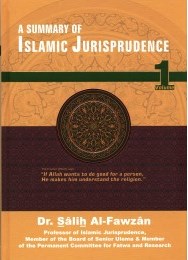
From the book Al-Mulakhas al-Fiqhi (A Summary of Islamic Jurisprudence) by Sheikh Saaleh al-Fawzaan. You may download a copy of the original arabic text here: الملخص الفقهي
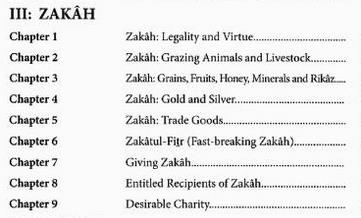
Part III: Zakah of Volume 1. Here are all the lessons covering Chapters 1 through 9
In this class we begin reading from the chapter of Zakaat (obligatory charity) Part 01: Download Mp3 Here (Time 01:00:02) (Feb 3rd 2014) (Ch 1)
In this class we continue reading from the chapter of Zakaat (obligatory charity) Part 02: Download Mp3 Here (Time 48:02) (Feb 10th 2014) (Ch 2)
Today we will continue with the section regarding the zakaat due on grazing livestock Part 03: Download Mp3 Here (Time 48:30) (Feb 24th 2014) (Ch 2)
Today we will continue with the section regarding the zakaat due on grains, fruits, honey, etc… Part 04: Download Mp3 Here (Time 46:48) (March 3, 2014) (Ch 3)
Share this, Baarakallaah Feekum: [“One who guides to something good has a reward similar to that of its doer” - Saheeh Muslim vol.3, no.4665] [This website protects the copyrights of the authors/publishers. The Content is posted on this website with implicit/explicit permission from content owners]
Share this, Baarakallaah Feekum: [“One who guides to something good has a reward similar to that of its doer” - Saheeh Muslim vol.3, no.4665] [This website protects the copyrights of the authors/publishers. The Content is posted on this website with implicit/explicit permission from content owners]
Share this, Baarakallaah Feekum: [“One who guides to something good has a reward similar to that of its doer” - Saheeh Muslim vol.3, no.4665] [This website protects the copyrights of the authors/publishers. The Content is posted on this website with implicit/explicit permission from content owners]
Share this, Baarakallaah Feekum: [“One who guides to something good has a reward similar to that of its doer” - Saheeh Muslim vol.3, no.4665] [This website protects the copyrights of the authors/publishers. The Content is posted on this website with implicit/explicit permission from content owners]
This lecture was given at Masjid Sunnatun-Nabawiyyah in Philadelphia, PA on Friday, June 7, 2013.
We strive to hold firm to the Quran and the Sunnah of the Messenger, sallallahu alaihi wasallam. But do we know how to check ourselves upon this? Listen to find out…
Hadith of Irbaad ibn Saariyah, may Allaah the Most High be pleased with him, who said, “The Messenger of Allaah صلى الله عليه وسلم gave us a sermon which frightened the hearts and caused the eyes to shed tears. So we said, ‘O Messenger of Allaah! [it is as if it is a farewell sermon] so advise us.’ He said,
‘I advise you to fear Allaah and to hear and obey even if an Abyssinian slave were to rule over you. For surely, he who lives from amongst you will see much differing, so it is upon you to be upon my Sunnah and the Sunnah of the Rightly Guided Caliphs. Bite on to it with your back molar teeth and beware of newly invented matters, for verily, every newly invented matter is an innovation, and all innovation is misguidance.’”
Related by Aboo Daawood (no. 4607) and by at-Tirmidthee (no. 2676). It was authenticated by Shaykh al-Albaanee in Irwaa’ul-Ghaleel (no. 2455).
Share this, Baarakallaah Feekum: [“One who guides to something good has a reward similar to that of its doer” - Saheeh Muslim vol.3, no.4665] [This website protects the copyrights of the authors/publishers. The Content is posted on this website with implicit/explicit permission from content owners]
Share this, Baarakallaah Feekum: [“One who guides to something good has a reward similar to that of its doer” - Saheeh Muslim vol.3, no.4665] [This website protects the copyrights of the authors/publishers. The Content is posted on this website with implicit/explicit permission from content owners]
This is taken from of the books of our noble scholar Dr Saaleh al-Fawzaan, hafidhahullahu ta’ala, entitled محاضرات في العقيدة و الدعوة . You may download the original arabic text by clicking on the title.
Part 01: Listen / Download Mp3 Here (Time 57:30)[audio http://salafiaudio.files.wordpress.com/2014/06/the-meaning-of-bidah-its-types-rulings-01-dr-saaleh-al-fawzaan-abu-muhammad-al-maghribee.mp3]
Part 02: Listen / Download Mp3 Here (Time 40:53)[audio http://salafiaudio.files.wordpress.com/2014/06/the-meaning-of-bidah-its-types-rulings-02-dr-saaleh-al-fawzaan-abu-muhammad-al-maghribee.mp3]
Share this, Baarakallaah Feekum: [“One who guides to something good has a reward similar to that of its doer” - Saheeh Muslim vol.3, no.4665] [This website protects the copyrights of the authors/publishers. The Content is posted on this website with implicit/explicit permission from content owners]
Share this, Baarakallaah Feekum: [“One who guides to something good has a reward similar to that of its doer” - Saheeh Muslim vol.3, no.4665] [This website protects the copyrights of the authors/publishers. The Content is posted on this website with implicit/explicit permission from content owners]
In the year 1433 our belovered Shaykh Abdur-Rahman Mohiyuddin (حفظه الله تعالى)delivered a series of monthly lectures to explain the great work titled: Usoolus-Sittah ofShaykh-ul-Islam Muhammad ibn Abdul-Wahaab (رحمه الله رحمة واسعة).
One lecture a month was delivered over four months at Masjid al-Farooq in Hayy Safaa in the city of Jeddah.
إن شاء الله we will make this series available soon for the people to benefit from.
At the end of this series he delivered an excellent lecture that I believe, and Allah knows best, has never been released prior to this day.
Anyone who knows or has sat in the duroos of Shaykh Abdur-Rahman knows that his classes can be very interactive.
I have titled and dated the lecture:
Advice to the Student of Knowledge – 18-07-1433 – Shaykh Abdur-Rahmaan Mohiyuddin
This lecture was personally recorded by me and has not been taken from any other website.
May Allah cause us all to take benefit from the advice our our Shaykh.
أخوكم
أبو بلال نعيم بن عبد المجيد
(وفق الله الجميع للعلم النافع والعمل الصالح)
(May Allah aid us in acquiring beneficial knowledge & righteous actions)
Share this, Baarakallaah Feekum: [“One who guides to something good has a reward similar to that of its doer” - Saheeh Muslim vol.3, no.4665] [This website protects the copyrights of the authors/publishers. The Content is posted on this website with implicit/explicit permission from content owners]
Today we begin a new lecture mini-series regarding the Importance of Seeking Knowledge and the Virtues of the Scholars. This is taken from of the books of our noble scholar Dr Saaleh al-Fawzaan, hafidhahullahu ta’ala, entitled محاضرات في العقيدة و الدعوة . You may download the original arabic text by clicking on the title. Today’s lesson begins on page 463.
Part 01: Listen / Download Mp3 Here (Time 47:59)[audio https://salafiaudio.files.wordpress.com/2014/06/importance-of-seeking-knowledge-and-the-virtues-of-the-scholars-01-abu-muhammad-al-maghribee.mp3]
Part 02: Listen / Download Mp3 Here (Time 01:02:09)[audio https://salafiaudio.files.wordpress.com/2014/06/importance-of-seeking-knowledge-and-the-virtues-of-the-scholars-02-abu-muhammad-al-maghribee.mp3]
Part 03: Listen / Download Mp3 Here (Time 59:35)[audio https://salafiaudio.files.wordpress.com/2014/06/importance-of-seeking-knowledge-and-the-virtues-of-the-scholars-03-abu-muhammad-al-maghribee.mp3]
Part 04: Listen / Download Mp3 Here (Time 01:00:04)[audio https://salafiaudio.files.wordpress.com/2014/06/importance-of-seeking-knowledge-and-the-virtues-of-the-scholars-04-abu-muhammad-al-maghribee.mp3]
Part 05: Listen / Download Mp3 Here (Time 01:06:14)[audio https://salafiaudio.files.wordpress.com/2014/06/importance-of-seeking-knowledge-and-the-virtues-of-the-scholars-04-abu-muhammad-al-maghribee.mp3]
Share this, Baarakallaah Feekum: [“One who guides to something good has a reward similar to that of its doer” - Saheeh Muslim vol.3, no.4665] [This website protects the copyrights of the authors/publishers. The Content is posted on this website with implicit/explicit permission from content owners]
We continue with the talk from the previous day regarding the actions of worship specifically legislated for the end of this blessed month such as zakat fitr and other than this. (Check Rulings And Regulations Regarding Zakaat Al-Fitr)
Listen / Download Mp3 Here (Time 41:56)[audio https://salafiaudio.files.wordpress.com/2014/06/actions-of-worship-legislated-in-the-end-of-ramadhaan-abu-muhammad-al-maghribee.mp3]
Share this, Baarakallaah Feekum: [“One who guides to something good has a reward similar to that of its doer” - Saheeh Muslim vol.3, no.4665] [This website protects the copyrights of the authors/publishers. The Content is posted on this website with implicit/explicit permission from content owners]
Share this, Baarakallaah Feekum: [“One who guides to something good has a reward similar to that of its doer” - Saheeh Muslim vol.3, no.4665] [This website protects the copyrights of the authors/publishers. The Content is posted on this website with implicit/explicit permission from content owners]
Share this, Baarakallaah Feekum: [“One who guides to something good has a reward similar to that of its doer” - Saheeh Muslim vol.3, no.4665] [This website protects the copyrights of the authors/publishers. The Content is posted on this website with implicit/explicit permission from content owners]




 AbdurRahman.Org
You must be logged in to post a comment.