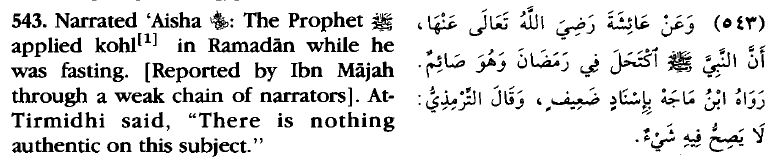
Having Control over Sexual Desire during Fasting in Ramadhan – Bulugh al-Marâm | Dr. Saleh as Saleh [Audio|En]

Bismillaah

Bulugh al-Marâm | Dr. Saleh as Saleh [Audio|En][Translation Source: Darussalam English Publication of Bulugh al-Maraam]
Explained by Dr. Saleh as Saleh rahimahullaah based on the explanation of Shaykh Uthaymeen rahimahullaah

[Souncloud Audio Link

Related Links:

Break the Fast with Dates or Water – Bulugh al-Marâm | Shaykh Uthaymeen | Dr. Saleh as Saleh [Audio|En]

Bismillaah

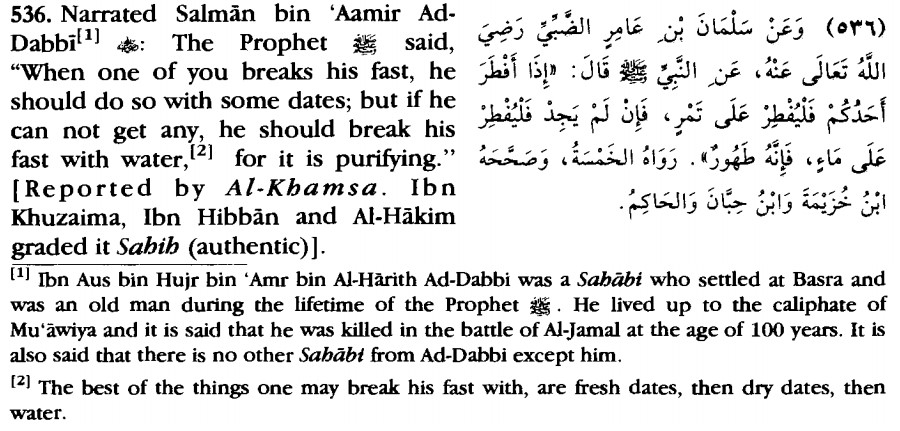
Breaking the Fast with Dates or Water

[Translation Source: Darussalam English Publication of Bulugh al-Maraam]

Explained by Dr. Saleh as Saleh rahimahullaah based on the explanation of Shaykh Uthaymeen rahimahullaah

[Souncloud Audio Link

Related Links:


The True Meaning of “Laa ilaaha illAllaah” and It’s Explanation from the Qur’an – Shaykh Fawzan | Dawud Burbank [Audio|En]

Bismillaah

Sharh-ul-Usool-ith-Thalaathah : Lesson 27 Part B & Lesson 28
Shaykh Saalih al-Fawzan | Dawud Burbank [Audio|English]

[Souncloud Audio Link


Imaam Muhammad ibn ‘Abdul-Wahhaab (rahimahullaah) said:

ومعناها لا معبودَ بحقٍّ إلا اللهُ وحده؛ (لا إله) نافيًا جميعَ مَا يُعْبدُ مِنْ دونِ اللهِ (إلا الله) مُثْبِتًا العبادةَ له وحدَهُ لا شريكَ لهُ في عبادتِهِ، كما أنَّه ليس له شريك في مُلْكِه

And its meaning is none has the right to be worshipped except Allaah; laa ilaaha (nothing has the right to be worshipped) is a negation of everything which is worshipped besides Allaah. Illallaah (except Allaah) affirms worship for Allaah Alone, and that none is given any share of worship along with Him, just as He has no sharer in His Sovereignty.34


[34]: Shaykh Saalih al-Fawzan’s Explanation:

His saying, “And its meaning is none has the right to be worshipped except Allaah”: the meaning of laa ilaaha illAllaah is not as is said by the people of falsehood: “there is no creator and there is no provider except Allaah”, because this is tawheed-ur-Ruboobiyyah (tawheed of Lordship), the people of shirk agreed to that, but they would not say laa ilaaha illAllaah. He the Most High said:

إِنَّهُمْ كَانُوا إِذَا قِيلَ لَهُمْ لَا إِلَٰهَ إِلَّا اللَّهُ يَسْتَكْبِرُونَ

وَيَقُولُونَ أَئِنَّا لَتَارِكُو آلِهَتِنَا لِشَاعِرٍ مَّجْنُونٍ

When it was said to them, “laa ilaaha illAllaah(none has the right to be worshipped but Allaah), they became proud, and they say, “are we to abandon worshipping our gods for a crazy poet?” [37:35-36]

“Aalihatinaa” means: those things which we worship.

لِشَاعِرٍ مَّجْنُونٍ ..

… in favour of a crazy poet?” [37:35-36]

They meant the Messenger sallallaahu ‘alaihi wa sallam, they described him with poetry and madness, because he had said to them, “Say: laa ilaaha illAllaah”, and he forbade them from the worship of idols.

And when he said to them, “Say: laa ilaaha illAllaah”, they said:

أَجَعَلَ الْآلِهَةَ إِلَٰهًا وَاحِدًا ۖ إِنَّ هَٰذَا لَشَيْءٌ عُجَابٌ

Has he made all of the objects of worship a single One to be worshipped? This is something very strange [38:5]

They thought that there were many gods to be worshipped.

So therefore this shows that its meaning is – nothing truly deserves worship except Allaah. Whereas if its meaning were – there is no creator and there is provider except Allaah – then they agreed to that, and they did not question it. So if that were its meaning they would not have refused to say laa ilaaha illAllaah, because they used to say when they were asked, “Who created the heavens and the earth?”, they used to say, “Allaah”. And when they were asked, “Who creates? Who gives provision? Who gives life and gives death and who controls the earth?”, they used to say , “Allaah”. They acknowledged this. So if that were the meaning of laa ilaaha illAllaah then they would have consented to it. However its meaning is, “None has the right to be worshipped except Allaah”.

If you were to say, “Nothing is worshipped except Allaah”, this would be a great error, because then all the objects of worship would be Allaah, High and Exalted is Allaah above this. Rather if you restrict it and you say, “bihaqq” (nothing is deservedly worshipped), then all the objects of worship are negated except Allaah the Perfect and Most High. You must therefore say, None has the right to be worshipped truly, meaning none has the right to be worshipped except Allaah. Then he explained that in accordance with the wording of the saying:

laa ilaaha: is a negation, it negates the right to worship from everything besides Allaah.

illAllaah: this is affirmation of worship for Allaah alone with no partner.

So laa ilaaha illAllaah includes negation and affirmation, and tawheed has to have negation and affirmation both. Affirmation alone will not suffice; and negation would not suffice on its own. There must be negation and affirmation, just as He the Most High said:

فَمَن يَكْفُرْ بِالطَّاغُوتِ وَيُؤْمِن بِاللَّهِ

So whoever rejects the false objects of worship, and truly believes in and worships Allaah [2:256]

وَاعْبُدُوا اللَّهَ وَلَا تُشْرِكُوا بِهِ شَيْئًا

And worship Allaah and do not associate anything in worship along with Him [4:36]

So if you say, “Allaah is One who deserves worship”, this will not suffice, because Al-Laat is one who was worshipped, and Al-‘Uzza is one who was worshipped, and Manaat was an object of worship, all of the idols were called gods, or objects of worship. So therefore you must say, “laa ilaaha illAllaah”, none has the right to be worshipped except Allaah – there must be combination between negation and affirmation so that therefore tawheed is actualized and shirk is negated.


Imaam Muhammad ibn ‘Abdul-Wahhaab (rahimahullaah) said:

: وتفسيرها الذي يوضحها قوله تعالى

And its explanation which will make it clear is His saying, He the Most High:

وَإِذْ قَالَ إِبْرَاهِيمُ لِأَبِيهِ وَقَوْمِهِ إِنَّنِي بَرَاءٌ مِّمَّا تَعْبُدُونَ

إِلَّا الَّذِي فَطَرَنِي فَإِنَّهُ سَيَهْدِينِ

وَجَعَلَهَا كَلِمَةً بَاقِيَةً فِي عَقِبِهِ لَعَلَّهُمْ يَرْجِعُونَ

And remember when Ibraaheem said to his father and to his people “I am totally free of everything that you worship except for the One who created me, for He will guide me”. And Allaah made it a saying to persist amongst his progeny so that they might remember and return to obedience to their Lord. [43:26-28] 35


[35Shaykh Saalih al-Fawzan’s Explanation:

The best thing to explain the Qur’aan is the Qur’aan. So laa ilaaha illAllaah has been explained by Allaah in the Qur’aan, and that is in the saying of His Khaleel, His specially chosen One (Ibraheem ‘alaihisalaatu wassalaam), in that which Allaah mentioned from him: 

إِنَّنِي بَرَاءٌ

I am totally free [43:26]

This is negation; it has the same meaning of laa ilaaha (none has the right to be worshipped): 

إِلَّا الَّذِي فَطَرَنِي

Except for the One who created me [43:27]

Meaning: except for Allaah. This is affirmation.

So this aayah is a complete and full explanation of the meaning of laa ilaaha illAllaah.


Imaam Muhammad ibn ‘Abdul-Wahhaab (rahimahullaah) said:

And His saying, He the Most High:

قُلْ يَا أَهْلَ الْكِتَابِ تَعَالَوْا إِلَىٰ كَلِمَةٍ سَوَاءٍ بَيْنَنَا وَبَيْنَكُمْ أَلَّا نَعْبُدَ إِلَّا اللَّهَ وَلَا نُشْرِكَ بِهِ شَيْئًا وَلَا يَتَّخِذَ بَعْضُنَا بَعْضًا أَرْبَابًا مِّن دُونِ اللَّهِ ۚ فَإِن تَوَلَّوْا فَقُولُوا اشْهَدُوا بِأَنَّا مُسْلِمُونَ

Say : O people of the Scripture, come to a word of justice between us that we will single out Allaah with all worship and will not worship anything else besides Him, nor will we take one another as lords besides Allaah. Then if they turn away then say bear witness that we are Muslims submitting to Allaah and making our worship purely and sincerely for him. [3:64] 36


[36]  Shaykh Saalih al-Fawzan’s Explanation:

And His saying, He the Most High:

قُلْ يَا أَهْلَ الْكِتَابِ تَعَالَوْا إِلَىٰ كَلِمَةٍ سَوَاءٍ بَيْنَنَا وَبَيْنَكُمْ أَلَّا نَعْبُدَ إِلَّا اللَّهَ وَلَا نُشْرِكَ بِهِ شَيْئًا

Say: O people of the Scripture, come to a word of justice between us that we will single out Allaah with all worship and will not worship anything else besides Him. [3:64]

This aayah from Soorah Aal-i-‘Imraan came down with regard to the deputation of Najraan, the Christians who came to the Prophet sallallaahu ‘alaihi wa sallam and debated him and asked him questions, and a long conversation occurred between them and him. They were Christians from the Christians of the Arabs. And in the end, the Prophet sallallaahu ‘alaihi wa sallam requested from them Al-Mubaahala (calling down Allaah’s curses upon whoever was lying):

 فَقُلْ تَعَالَوْا نَدْعُ أَبْنَاءَنَا وَأَبْنَاءَكُمْ وَنِسَاءَنَا وَنِسَاءَكُمْ وَأَنفُسَنَا وَأَنفُسَكُمْ ثُمَّ نَبْتَهِلْ فَنَجْعَل لَّعْنَتَ اللَّهِ عَلَى الْكَاذِبِينَ

Then say: Come, let us call our children and your children, our womenfolk and your womenfolk, ourselves and yourselves – then let us invoke and call down Allaah’s Curse upon the liars. [3:61]

So when he requested al-Mubaahalah (calling down curses upon the liars), they feared and they did not engage in calling down the curses along with him, ‘alaihisalaatu wassalaam. Rather, they handed over the Jizyah because they knew that they were upon falsehood, and that he was the Messenger of Allaah, sallallaahu ‘alaihi wa sallam.

نبتهل: Meaning, let us call the curse down upon the liar from us. They knew that they were the ones who were the liars, and if they had engaged in calling down curses, fire would have descended upon them and consumed them in their places. Therefore they said no, we won’t do so – rather, we will hand over the Jizyah (special tax) and we will not engage in calling Allaah’s curses down upon the liars. So the Prophet sallallaahu ‘alaihi wa sallam accepted the payment of Jizyah from them.  And it had become clear to them that Allaah had indeed commanded him with what was contained in this aayah.

This aayah contains the meaning of laa ilaaha illAllaah (none has the right to be worshipped except Allaah). His saying:

أَلَّا نَعْبُدَ

That we will not worship [3:64]

This is a negation. And His saying:

إِلَّا اللَّهَ

Except Allaah. [3:62]

This is affirmation.

And this is the ‘Adl (justice) for which the heavens and the earth are established. So the heavens and the earth are established upon tawheed (singling out Allaah with all worship) and upon al-‘Adl. So we do not associate anything in worship along with Him, neither with the Messiah, whom they claim is a lord and whom they worship besides Allaah, nor anyone besides the Messiah, not even Muhammad ‘alaihisalaatu wassalaam, and not any one from the Prophets, not anyone from the righteous, nor anyone from the awliyaa (beloved servants of Allaah):

أَلَّا نَعْبُدَ إِلَّا اللَّهَ وَلَا نُشْرِكَ بِهِ شَيْئًا

That we will not worship except Allaah, and we will not associate anything at all with Him. [3:64]

وَلَا يَتَّخِذَ بَعْضُنَا بَعْضًا أَرْبَابًا مِّن دُونِ اللَّهِ

And we will not take one another as lords besides Allaah. [3:64]

Meaning: Just as you (i.e. the people of the Book) have taken the Rabbis and monks as lords besides Allaah the Most High:

اتَّخَذُوا أَحْبَارَهُمْ وَرُهْبَانَهُمْ أَرْبَابًا مِّن دُونِ اللَّهِ وَالْمَسِيحَ ابْنَ مَرْيَمَ وَمَا أُمِرُوا إِلَّا لِيَعْبُدُوا إِلَٰهًا وَاحِدًا

They took their rabbis and their monks as lords besides Allaah and (they) also (took as their Lord) the Messiah, son of Maryam, and they were not commanded except that they should worship a single God. [9:31]

The taking of rabbis and monks as lords besides Allaah is something which Allaah’s Messenger sallallaahu ‘alaihi wa sallam explained as being their obedience to them in declaring lawful that which Allaah has made forbidden and making forbidden that which Allaah had made lawful.[1] This is the meaning of their taking them as lords besides Allaah, since they used to declare lawful that which Allaah has made forbidden, and  declare forbidden which Allaah has made lawful. So the people obeying them upon that is taking them as Lords. This is because the One who legislates for the people and declares things to be lawful and forbidden for the people is Allaah the Perfect and Most High.

فَإِن تَوَلَّوْا

So, if they turn away. [3:64]

Meaning: (They) do not accept the call to tawheed:

فَقُولُوا اشْهَدُوا بِأَنَّا مُسْلِمُونَ

Then say: Bear witness that we are Muslims (obedient to Allaah, worshiping Him alone). [3:64]

They call them to bear witness that they were muwahiduun (people of tawheed) and that they were kuffaar (unbelievers).  So they made clear to them the falsity of what they were upon. And this aayah shows Al-Baraa’a (freeing oneself) from the religion of the people of shirk and it clearly states “(We) bear witness that we are Muslims.” This contains the obligation of clearly announcing the falsity of what the people of shirk are upon and not remaining silent about it, and of clearly announcing the falsity of shirk and of refuting its people.

In summary:

Laa ilaaha illAllaah (none has the right to be worshipped except Allaah) has two pillars, and they are:

  1. An-Nafee (negation) and
  2. Al-Ithbaat (affirmation).

So if it is said to you: What are the pillars of laa ilaaha illAllaah? Then say, negation and affirmation.

Its conditions are seven, and it (saying the shahadah) will not benefit except with these conditions; someone has written them in a line of poetry and said:

Knowledge, certainty, purity and sincerity and your being truthful

                             Along with love, compliance, and acceptance of them

1.Knowledge: Its opposite is ignorance, so the person who says Laa ilaaha illAllaah with his tongue, but is ignorant of its meaning, then laa ilaaha illAllaah will not benefit him.

2.Certainty: Such that he does not have any doubt. This is because some people may know its meaning, however, they have a doubt about it, so his knowledge is not correct. He must have certainty of laa ilaaha illAllaah and that it is true.

3.Purity and Sincerity: Its opposite is ash-Shirk. Some people say laa ilaaha illAllaah, but they do not abandon shirk as is presently the case today with the worshippers of the graves. Those people will not be benefited by (saying) laa ilaaha illAllaah because from its conditions is abandoning shirk.

4.Being truthful: Its opposite is falsehood and lying. This is because the munaafiquun say laa ilaaha illAllaah, but they are liars in their hearts; they do not believe its meaning. Allaah the Most High said:

إِذَا جَاءَكَ الْمُنَافِقُونَ قَالُوا نَشْهَدُ إِنَّكَ لَرَسُولُ اللَّهِ ۗ وَاللَّهُ يَعْلَمُ إِنَّكَ لَرَسُولُهُ وَاللَّهُ يَشْهَدُ إِنَّ الْمُنَافِقِينَ لَكَاذِبُونَ

اتَّخَذُوا أَيْمَانَهُمْ جُنَّةً

When the hypocrites come to you, they say: “We bear witness that you are the Messenger of Allaah indeed.” But Allaah knows that you are indeed His Messenger, and Allaah bears witness that the hypocrites are liars. They take their oaths as a shield to screen them. [63:1-2]

5.Love: That the person loves this saying and is an ally to its people. As for the person who does not love it or does not love its people, then it will not benefit him.

6.Compliance: It is the opposite of turning away from it and abandoning it, and it is complying with what it (this saying) indicates with regard to worshipping Allaah Alone and not associating anything with Him, and it is complying with His commands. Since you have acknowledged and have borne witness that none has the right to be worshipped except Allaah Alone, then it becomes binding upon you to comply with His rulings and His religion. As for your saying laa ilaaha illAllaah, and you do not comply with His legislations, then laa ilaaha illAllaah will not benefit you.

7.Acceptance: Acceptance which negates Ar-Rad (rejection) – such that you do not reject anything from the rights of laa ilaaha illAllaah and whatever it indicates. Rather, you accept everything which laa ilaaha illAllaah indicates and you accept it correctly.

And an eighth condition is added:

And the eighth is added; rejecting whatever things are 

worshipped besides the One who is truly worshipped

Meaning: 8.Freeing oneself from shirk. So a person will not be a muwahid (a person of tawheed) until he frees himself from shirk. 

وَإِذْ قَالَ إِبْرَاهِيمُ لِأَبِيهِ وَقَوْمِهِ إِنَّنِي بَرَاءٌ مِّمَّا تَعْبُدُونَ

And when Ibraaheem said to his father and his people: I am totally free of whatever you worship. [43:26]

These are the conditions of laa ilaaha illAllaah – eight conditions.

Footnotes:

[1] Refer to the hadeeth of ‘Alee ibn Haatim radiy Allaahu ‘anhu that was reported by At-Tirmidhee (3095). In it Allaah’s Messenger sallallaahu ‘alaihi wa sallam said:

“They did not used to directly worship them, but rather, when they (priests or monks) declared something lawful for them, they (the people) would then declare it lawful. And when they declared something forbidden for them, they would take it as being forbidden.”

[Shaikh Al-Albaanee rahimahullaah declared this hadeeth as hasan (good)].

Listen to the Full Audio Series:
Sharh Usool-ith-Thalaathah – Shaykh Fawzan | Dawud Burbank

Book Study Resources – Three Fundamental Principles

Related Links:

Intention For Voluntary Fast – Bulugh al-Marâm | Shaykh Uthaymeen | Dr. Saleh as Saleh [Audio|En]

BismillaahIntention For Voluntary Fast
[Translation Source: Darussalam English Publication of Bulugh al-Maraam]

Explained by Dr. Saleh as Saleh rahimahullaah based on the explanation of Shaykh Uthaymeen rahimahullaah

[Souncloud Audio Link

Related Links:

Allaah bears witness that “Lā ilāha illā Huwa”. Likewise the Angels & the people of knowledge bear witness – Shaykh Fawzan | Dawud Burbank [Audio|En]

Bismillaah

Sharh-ul-Usool-ith-Thalaathah : Lesson 27 Part A
Shaykh Saalih al-Fawzan | Dawud Burbank [Audio|English]

Allaah bears witness that “Lā ilāha illā Huwa”. Likewise the Angels & the people of knowledge bear witness. Sharh-ul-Usool-ith-Thalaathah| Shaykh Salih al-Fawzan | Dawud Burbank

Imaam Muhammad ibn ‘Abdul-Wahhaab (rahimahullaah) said:

So the proof for the shahaadah (testification) is:

شَهِدَ اللَّهُ أَنَّهُ لَا إِلَٰهَ إِلَّا هُوَ وَالْمَلَائِكَةُ وَأُولُو الْعِلْمِ قَائِمًا بِالْقِسْطِ ۚ لَا إِلَٰهَ إِلَّا هُوَ الْعَزِيزُ الْحَكِيمُ

Allaah bears witness that none has the right to be worshipped but Him; and likewise the Angels and the people of knowledge bear witness. He Who maintains justice, none has the right to be worshipped but Him, the All-Mighty the All-Wise [3:18]33


[33]: Shaykh Saalih al-Fawzan’s Explanation:

His saying, He the Most High, “He testified“: meaning He judged and He decreed and He informed and He made clear and He made it binding.

So bearing witness from Allaah revolves around these five meanings: judging and decreeing and and informing and clarifying and making binding. So the meaning of, “He testified”, is He the Perfect and Most High decreed it upon His servants and He calls them to know of it and He informed them and He made it binding upon them that none has the right to be worshipped except Him.

laa ilaaha”, (none had the right to be worshipped): this is a negating ‘laa’ which negates everything which is worshipped besides Allaah

illaahu”, (except for Him): this affirms worship for Allaah alone.

And the meaning of, “annahu laailaaha illaahu”, (none has the right to be worshipped but him): it means there is nothing that is worshipped rightfully except  Allaah the Perfect and Most High. As for those who are worshipped besides Allaah, then worship of it is false because of His saying He the Most High:

ذَٰلِكَ بِأَنَّ اللَّهَ هُوَ الْحَقُّ وَأَنَّ مَا يَدْعُونَ مِن دُونِهِ هُوَ الْبَاطِلُ وَأَنَّ اللَّهَ هُوَ الْعَلِيُّ الْكَبِيرُ

That is because Allaah, He is the true God deserving all worship and those whom they call upon besides Him are futile and false and Allaah He is the Most High the Most Great [22:62]

He the Perfect and Most High testifies to His unity and the right to all worship and He is the most truthful One Who speaks and His bearing witness He the Perfect and Most High is the truest testification there can be because it comes from One Who is All-Wise, All-Aware, All-Knowing, he knows everything so therefore it is a testification which is true.

And the Angels“: they testify that none has the right to be worshipped except Him and they are a species of beings whom Allaah created to worship Him. They are honourable Angels, honoured servants, Allaah created them to worship Him. They declare His perfection night and day, and they never slacken. And also Allaah created them to carry out His commands in the creation, He entrusted them with implementing whatever He commanded, He the Perfect and Most High, from the affairs of the creation. So every Angel from them is entrusted with a duty. And their testification is a true testification, because they are people of knowledge, and of ‘ibaadah (worship) and of ma‘rifah (awareness) of Allaah the Mighty and Majestic. And they are from the most excellent of the creation, along with the point of disagreement which is are the righteous humans more excellent than the Angels, or are the Angels more excellent than the righteous humans there being disagreement about that point.

And the people of knowledge”: they are of two categories: the Angels, and the second category are the Possessors of Knowledge from mankind. And the Possessors of Knowledge do not testify except with something that is true, contrary to the case with those who are ignorant people, for their testification is not counted. And every species from the creation of Allaah bears witness for Allaah of His Unity and that none has the right to be worshipped but Him. And this is a case of showing the honour and nobility of the people of knowledge since Allaah joined their testification along with His testification, He the Perfect and Most High, and with the testification of His Angels. He counted the testification of the people of knowledge from the creation, and this shows their excellence and their nobility and their status, and they are testifying to the greatest matter that can be testified to, and it is at-Tawheed.

And what is meant by the Possessors of Knowledge – are the people of knowledge of the Legislation (i.e. Islamic knowledge), not as is said by some people that people of knowledge means the people of industry and agriculture, so those people, it is not said about them that they are People of Knowledge unrestrictedly, because their knowledge is limited in scope and is restricted, rather it is to be said, “this person is knowledgeable about arithmetic, this person is knowledgeable about engineering, this person is knowledgeable about medicine”, but it is not said about them that they are the People of Knowledge unrestrictedly. Because this term is not used unrestrictedly except for the people who have Islamic knowledge. And also most of those people are people who have only worldly knowledge, and amongst them are atheists whose knowledge mostly only increases them in ignorance concerning Allaah the Mighty and Majestic, and in self delusion and in atheism as you can see today in the disbelieving nations, that they are advanced with regards to industries and with regards to agriculture, however they are disbelievers. So how could it be said that they are the People of Knowledge, those whom Allaah has mentioned in His saying, “and the Possessors of Knowledge”. This is not at all feasible.

And likewise His saying:

إِنَّمَا يَخْشَى اللَّهَ مِنْ عِبَادِهِ الْعُلَمَاءُ

It is only those who have Knowledge amongst His slaves that fear Allaah [35:28]

What is meant is the scholars of Islamic knowledge, those who truly know Allaah and who truly worship Him and who fear Him. As for those people, then most of them do not fear Allaah, the Mighty and Majestic. Rather they disbelieve in Allaah and deny Him, and they claim that the world has no Lord and that rather nature brought it about and controls it, as is the case with the communists – they reject the Lord, the Perfect and Most High, even though they have worldly knowledge. So how then could we say – those people, they are the People of Knowledge? This is an error. So the term ‘Knowledge’ is not applied unrestrictedly except to its true people, and it is a noble title which cannot be applied to atheists and disbelievers, such that it is said, “they are the people of Knowledge”.

So the Angels and the possessors of Knowledge, they bear witness to Allaah’s Unity and sole right to worship. Therefore the saying of others besides them from the atheists and the people of shirk and the Sabeans, those who disbelieve in Allaah the Mighty and Majestic, is not counted. Those people, they are not counted, neither they nor their saying, because it is something contrary to the testification of Allaah and the testification of His Angels and the testification of those possessing knowledge from His Creation.

And His saying,Qaa’imam bil-Qist, (maintaining justice): this phrase is in the accusative case indicating a state along with, ‘He bore witness’ – meaning whilst establishing justice, He the Perfect and Most High. And the word, “al-Qist”, means al-‘adl (justice) – meaning Allaah the Perfect and Most High establishes justice in everything, and al-‘adl (justice) is the opposite of al-jawr (injustice), and He the Perfect and Most High is a just judge, nothing but justice comes from Him in everything.

Laa ilaaha illahu”, (none has the right to be worshipped but Him): this emphasizes the first sentence.

Al-‘Azeez-ul-Hakeem”, (the Almighty the All-Wise): these are two Names of Allaah the Mighty and Majestic, comprising two Attributes from His Attributes, and they are al-‘Izzah (Might) and al-Hikmah (Wisdom).

Listen to the Full Audio Series:
Sharh Usool-ith-Thalaathah – Shaykh Fawzan | Dawud Burbank

Book Study Resources – Three Fundamental Principles

Related Links:

The Meaning of Ad-Deen Al-Islam (The Religion of Islam), its Levels and Pillars – Shaykh Fawzan | Dawud Burbank [Audio|En]

Bismillaah

Sharh-ul-Usool-ith-Thalaathah : Lesson 25 Part D & Lesson 26
Shaykh Saalih al-Fawzan | Dawud Burbank [Audio|English]

[Souncloud Audio Link


The Second Fundamental Principle: Knowledge of the Religion of Islaam 

The Definition of the Religion (Ad-Deen)

Imaam Muhammad ibn ‘Abdul-Wahhaab (rahimahullaah) said:

الأصلُ الثَّاني: معرفةُ دينِ الإسلامِ بالأدلةِ

The second fundamental principle: knowledge of the religion of Islaam with its proofs.27


[27]: Shaykh Saalih al-Fawzan’s Explanation:

The Shaikh, having finished explaining knowledge of the first fundamental principle, which was knowledge of Allaah the Perfect and Most High, with the evidences, he now moves on to explaining the second fundamental principle, and it is knowledge of the religion of Islaam with the proofs.

So therefore he said, “The second fundamental principle: knowledge and awareness of the religion of Islaam with the proofs.” Then he mentioned its definition and he explained its meaning and then he mentioned its levels.

And his saying rahimahullaah, “knowledge of the Deen of Islaam”. Ad-Deen – it means obedience, for it is said about a person, daana lahu, when he obeys him with regard to what he commanded, and he abandons what he forbade.

And the word Ad-Deen is used to mean al-Hisaab (bringing to account or reckoning), just as occurs in His saying:

مَالِكِ يَوْمِ الدِّينِ

The Sovereign Owner of the Day of Reckoning [1:4]

And it is said, “daanahu”, meaning he brought him to account, just as He the Most High said:

وَمَا أَدْرَاكَ مَا يَوْمُ الدِّينِ

ثُمَّ مَا أَدْرَاكَ مَا يَوْمُ الدِّينِ

And what will cause you to understand what is the Day of the Reckoning? Then what will cause you to understand what is the Day of the Reckoning? [82:17-18]

Meaning: the Day of the Reckoning.

يَوْمَ لَا تَمْلِكُ نَفْسٌ لِّنَفْسٍ شَيْئًا ۖ وَالْأَمْرُ يَوْمَئِذٍ لِّلَّهِ

On the Day when no soul will possess any benefit for any other soul, and the whole affair on that Day will be for Allaah. [82:19]

His saying, “with the proofs”, meaning: knowledge of the religion of Islaam cannot be by way of blind following, or by way of conjecture from the person. The religion must be based upon proofs from the Book and the Sunnah. As for the person who does not know his religion, rather he just blindly follows the rest of the people and he is just a follower of whatever the rest of the people do, then this person does not know his religion as he should, and it is quite appropriate that when he is asked in the grave, that he should say:

هاه ، هاه ، لا أدري ، سمعت الناس يقولون شي ئا فقلته

“Haa, Haa, I do not know. I heard the people saying something, so I said it.”

[Reported by al-Bukhaaree (1338) and by Muslim (2870) in abridged form from a hadeeth of Anas radiy Allaah ‘anhu. The full version of the hadeeth is reported by Aboo Daawood (4753) from a hadeeth of al-Baraa’ ibn ‘Aazib radiy Allaah‘ anhu.]

So it is obligatory on a person that he should gain knowledge and awareness of his religion with the proofs from the Book of Allaah and the Sunnah of His Messenger sallallaahu ‘alaihi wa sallam, and he will not know this except through learning.


Imaam Muhammad ibn ‘Abdul-Wahhaab (rahimahullaah) said:

وهو الاستسلامُ له بالتوحيدِ، والانقيادِ له بالطاعةِ، والبراءةُُ مِنَ الشِّركِ وأهلِهِ

And it is to submit to Him with tawheed and to yield to Him with obedience and to free oneself from shirk and its people.28


[28]: Shaykh Saalih al-Fawzan’s Explanation:

Al-Islaam is derived from, “aslama lish-shay”, meaning he submitted to it. As it is said in the language, “aslama nafsahu lilqatl”, (he submitted himself to being killed)”, meaning that he submitted to being killed. So a person did islaam of himself, means that he submitted to that thing.

So therefore Islaam is submitting one’s face and one’s purpose and resolve and one’s intention to Him, he the Mighty and Majestic.

وَمَنْ أَحْسَنُ دِينًا مِّمَّنْ أَسْلَمَ وَجْهَهُ لِلَّهِ وَهُوَ مُحْسِنٌ وَاتَّبَعَ مِلَّةَ إِبْرَاهِيمَ حَنِيفًا

And who is better in religion than one who submits his face to Allaah and he is the doer of the good which Allaah legislated and he follows the religious way of Ibraaheem, upright and upon his way, turning away from shirk [4:125]

بَلَىٰ مَنْ أَسْلَمَ وَجْهَهُ لِلَّهِ

Rather whoever submits his face to Allaah [2:112]

Meaning: he makes his deeds purely and sincerely for Allaah the Mighty and Majestic, and he yields to Allaah obediently and by choice and with desire and out of love.

Submitting to Allaah with tawheed”: and it is to single out Allaah the majestic and most high with worship, and this is the meaning of tawheed. So whoever worships Allaah alone without attributing a partner to Him, then he has indeed submitted to Him.

His saying, “And yielding to Him, He the Perfect with obedience“: regarding whatever He has commanded you with and whatever He has forbidden you from. So whatever He commanded you with then you do it and whatever He forbids you from then you avoid it, in obedience to Allaah the Perfect and Most High.

His saying, “and freeing oneself from shirk and its people“: freeing oneself means cutting off from and separating from and being far removed from shirk and from the people of shirk, such that you believe the falsity of shirk and keep away from it. And you believe in the obligation of having enmity towards the people of shirk because they are enemies to Allaah, the mighty and majestic, so therefore you do not take them as beloved friends and allies, rather you take them as enemies because they are enemies to Allaah and to his Messenger and to His religion so therefore you do not have love for them and you do not have love and alliance with them rather you cut off from them with regard to the religion and you distance yourself from them and you believe in the falseness of what they are upon so therefore you do not love then with your heart and you do not aid them with your sayings and your actions, because they are enemies to your Lord, and enemies to your religion so how can you have love and alliance with them when they are enemies of Islaam?

It is not sufficient that you submit to Allaah and yield to him with obedience but do not free yourself from shirk and nor from the people of shirk, this will not suffice, you will not be counted as being a Muslim until you have these characteristics:

  • Firstly: submitting to Allaah with tawheed.
  • Secondly: yielding to him with obedience
  • Thirdly: freeing oneself from that which opposes tawheed and that which opposes obedience and it is shirk.
  • Fourthly: freeing oneself from the people of shirk.

By actualizing these characteristics you will be a Muslim, as for if you miss out on a single characteristic from them then you will not be a Muslim. So in these three words the Shaikh summarized the definition of Islaam and how many a person does not know the meaning of Islaam because he has not learned this thing, and if it were said to him, “What is Islaam?“, he will not give you a correct response.


The Levels of the Religion 

Imaam Muhammad ibn ‘Abdul-Wahhaab (rahimahullaah) said:

وهو ثلاثُ مراتبَ: الإسلامُ، والإيمانُ، والإحسانُ 

And it is of three levels: Al-Islaam,29 Al-Eemaan and Al-Ihsaan 30


[29]: Shaykh Saalih al-Fawzan’s Explanation:

The meaning of levels is ascending levels because we have said Islaam is of three levels, some of them being higher than others. The first level from the levels of the religion is Islaam, then after it comes eemaan, then after it comes ihsaan. So therefore Islaam is broader, and eemaan is something more restricted than Islaam, and ihsaan is more restricted than eemaan.

So the sphere of Islaam is wide, the hypocrites, they enter within it if they outwardly comply with Islaam and they outwardly display it and they outwardly adhere to it. If they pray along with the Muslims and they give the zakaat and they do the outward actions, then they are called Muslims and the rulings of the Muslims apply upon them in this world, so they have whatever the Muslims have and upon them will be whatever is upon the Muslims. However in the Hereafter they will be in the lowest depths of the fire because they do not have eemaan rather they just have outward apparent Islaam only.


[30]: Shaykh Saalih al-Fawzan’s Explanation:

His saying, “Al-Eemaan“: this is the second level, and the people who have eemaan they vary in their levels so from them are Al-Muqarraboon (those who draw especially close through good deeds), and from them are Al-Abraar (the righteous ones). Al-Muqarraboon – they are the people of the highest of the levels, and Al-Abraar are lesser than them, and from them there are those who are the person who is one who wronged himself, and he is the one who commits major sins which are less than shirk. Then he is a sinful believer or he is a believer who is deficient in eemaan.

He the Most High said:

ثُمَّ أَوْرَثْنَا الْكِتَابَ الَّذِينَ اصْطَفَيْنَا مِنْ عِبَادِنَا ۖ فَمِنْهُمْ ظَالِمٌ لِّنَفْسِهِ وَمِنْهُم مُّقْتَصِدٌ وَمِنْهُمْ سَابِقٌ بِالْخَيْرَاتِ بِإِذْنِ اللَّهِ ۚ ذَٰلِكَ هُوَ الْفَضْلُ الْكَبِيرُ

Then we gave the Scripture as inheritance to those whom we chose from our servants. So from them are those who wrong themselves and from them are those who take a middle course and from them are those who are foremost upon good deeds by the permission of Allaah, and that is the great bounty [35:32]

His saying, “Al-Ihsaan”: this is the third level and it is Al-Ihsaan, and it is that the servant does well with regards to what is between him and Allaah, he does well in the worship of Allaah the Mighty and Majestic. And the Prophet sallaahu ‘alaihi wa sallam mentioned Al-Ihsaan:

الإحسان أن تعبد الله كأنك تراه ، فإن لم تكن تراه فإنه يراك

“Al-Ihsaan is that you worship Allaah as if you are seeing him and even though you do not see him then he certainly sees you”

[A part of the long hadeeth reported by al-Bukhaaree (50) and by Muslim (9 and 10) from a hadeeth of Aboo Hurayrah radiy Allaahu ‘anhu]

Meaning: you have certain knowledge that Allaah sees you wherever you may be.


Imaam Muhammad ibn ‘Abdul-Wahhaab (rahimahullaah) said:

وكلُّ مرتبةٍ لها أركانٌ

And every level has pillars.31


[31]: Shaykh Saalih al-Fawzan’s Explanation:

His saying, “and every level has pillars“: pillars is the plural of a pillar, and it is that which something stands upon.

So the pillars of something are its aspects which it stands upon, and it cannot stand without them, and they are within the thing itself, contrary to conditions, for they are outside the thing. For example the conditions of the prayer then they are outside the prayer and come before it. And as for the pillars of the prayer, then they are inside it such as the initial takbeer of the prayer and the recitation of al-Faatihah, so if anything from them is missing, then the prayer will not be correct, just as if there was something missing from the pillars which hold up a building then it will not stand and will not be supported.


The pillars of Islaam

Imaam Muhammad ibn ‘Abdul-Wahhaab (rahimahullaah) said:

فأركانُ الإسلامِ خمسةٌ: شهادةُ أنْ لا إله إلاّ اللهُ، وأنَّ محمدًا رسولُ اللهِ، وإقامُ الصلاةِ، وإيتاءُ الزكاةِ، وصومُ رمضانَ، وحجُّ بيتِ اللهِ الحرامِ

So the pillars of Islaam are five, the testification that none has the right to be worshipped except Allaah and that Muhammad is the Messenger of Allaah, and establishing the prayer, and giving the zakaat and fasting Ramadaan and performing Hajj to Allaah’s sacred house 32


[32]: Shaykh Saalih al-Fawzan’s Explanation:

Islaam will not stand except with these pillars, if they are missing than Islaam will not be upright and the rest of the acts of obedience are matters of completion for these pillars. All the actions of obedience and all good deeds are all actions of completion of these pillars and therefore when Jibreel ‘alaihissalaam asked Allaah’s Messenger sallaahu ‘alaihi wa sallam in the presence of the Companions saying:

أخبرني عن الإسلام ، قال : الإسلام أن تشهد أن لا إله إلا الله وأن محمدا رسول الله ، وتقيم الصلاة ، وتؤتي الزكاة ، وتصوم رمضان ، وتحج البيت إن استطعت إليه سبيلا

“Inform me about Islaam. He replied: Islaam is that you bear witness that none has the right to be worshipped except Allaah and that Muhammad is the Messenger of Allaah, and that you establish the prayer and that you give the zakaat and that you fast Ramadaan and that you perform Hajj to the house if you are able to make your way to it”

So he explained Islaam to be these five pillars, however the hadeeth of Ibn ‘Umar makes it clear that these five are the foundations of Islaam so he sallaahu ‘alaihi wa sallam said:

بني الإسلام على خمس

“Islaam is built upon five” 

[Reported by al-Bukhaaree (8) and by Muslim (16) from a hadeeth of Ibn ‘Umar radiy Allaahu ‘anhu ]

Meaning: that these five are not the whole of Islaam rather they are its pillars and its foundations which it rests upon and the rest of the legislated matters are things which perfect and complete these pillars.

Listen to the Full Audio Series:
Sharh Usool-ith-Thalaathah – Shaykh Fawzan | Dawud Burbank

Book Study Resources – Three Fundamental Principles

Related Links:

Breaking Fast When Hardship During Travel – Bulugh al-Marâm | Dr. Saleh as Saleh [Audio|En]

BismillaahBreaking Fast When Hardship During TravelBreaking Fast When Hardship During TravelBreaking Fast When Hardship During Travel
[Translation Source: Darussalam English Publication of Bulugh al-Maraam]

Explained by Dr. Saleh as Saleh rahimahullaah based on the explanation of Shaykh Uthaymeen rahimahullaah

[Souncloud Audio Link

Related Links:

Do not fast on the Day of Doubt Concerning the Start of Ramadân – Bulugh al-Marâm | Dr. Saleh as Saleh [Audio|En]

Bismillaah
Do not fast on the Day of Doubt (Ramadhan)Do not fast on the Day of Doubt (Ramadhan) - Footnotes

[Translation Source: Darussalam English Publication of Bulugh al-Maraam]

Explained by Dr. Saleh as Saleh rahimahullaah based on the explanation of Shaykh Uthaymeen rahimahullaah

[Souncloud Audio Link

Related Links:

Applying Kohl (Ithmid) While Fasting in Ramadhan – Bulugh al-Marâm | Dr. Saleh as Saleh [Audio|En]

BismillaahKohl-Fasting-Bulugh al Maraam

[Translation Source: Darussalam English Publication of Bulugh al-Maraam]

Explained by Dr. Saleh as Saleh rahimahullaah based on the explanation of Shaykh Uthaymeen rahimahullaah

[Souncloud Audio Link

Related Links:

Bad Deeds While Fasting – Bulugh al-Marâm | Dr. Saleh as Saleh [Audio|En]

BismillaahBad Deeds while Fasting

[Translation Source: Darussalam English Publication of Bulugh al-Maraam]

[Souncloud Audio Link

Related Links:

Unintentional Eating or Drinking While Fasting – 3 Cases (Forgetfulness, Ignorance, Compulsion) – Bulugh al-Marâm | Dr. Saleh as Saleh [Audio|En]


BismillaahUnintentional Eating or Drinking While Fasting – Bulugh al-Marâm

Footnote:
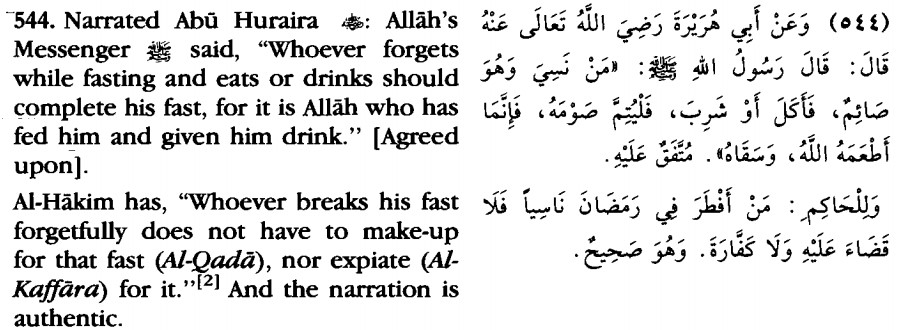
[2] We are thus informed that the eating or drinking out of forgetfulness does nor invalidate fasting. Neither one is obliged to observe a compensational fast (Al-Qadâ) nor pay any expiation.
[Translation Source: Darussalam English Publication of Bulugh al-Maraam]

[Souncloud Audio Link]  [Download Mp3]

Related Links:

Hastening To Break the Fast – Bulugh al-Marâm | Shaykh Uthaymeen | Dr. Saleh as Saleh [Audio|En]

BismillaahHastening To Break the Fast

Footnote:
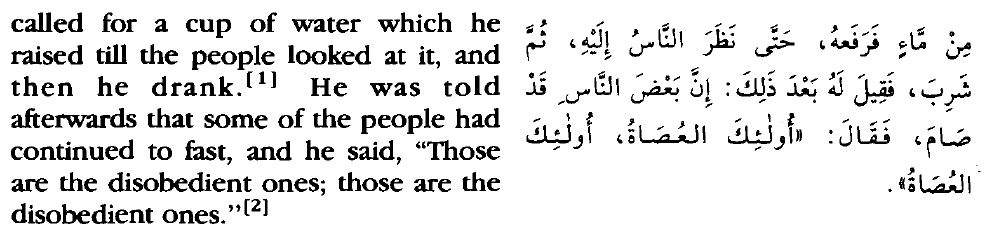
[4] As long as one is absolutely sure about the setting of the sun, he must not delay breaking his fast, as a delayed breaking of fast is the practice of Jews and Christians.

[Translation Source: Darussalam English Publication of Bulugh al-Maraam]
[Souncloud Audio Link

Related Links:

An-Nadhr (Vows) and their Evidence – Shaykh Fawzan | Dawud Burbank [Audio|En]

Bismillaah

Sharh-ul-Usool-ith-Thalaathah : Lesson 25 Part C
Shaykh Saalih al-Fawzan | Dawud Burbank [Audio|English]

[Souncloud Audio Link


An-Nadhr (Vows) and their Evidence

Imaam Muhammad ibn ‘Abdul-Wahhaab (rahimahullaah) said:

And the proof for vows:

يُوفُونَ بِالنَّذْرِ وَيَخَافُونَ يَوْمًا كَانَ شَرُّهُ مُسْتَطِيرًا

They fulfill their vows and they fear a Day whose evil will be widespread [76:7] 26


[26]: Shaykh Saalih al-Fawzan’s Explanation:

An-Nadhr (making a vow): it is that a person makes something binding upon himself which was not originally binding upon him in the legislation, such as his making a vow that he will perform a fast, or his making a vow that he will give such and such in charity – then it becomes binding upon him to carry out his vow, because of the saying of the Prophet sallallaahu ‘alaihi wa sallam:

من نذر أن يطيع الله فليطعه

Whoever makes a vow that he will obey Allaah, then let him obey Him

[Reported by al-Bukhaaree (6696 & 6700) from a hadeeth of Aa’ishah radiy Allaahu ‘anhaa.]

And making a vow is a type from the types of worship, it is not permissible to do it except for Allaah. So whoever makes a vow for a grave or for an idol or for other than that, then he has committed shirk with Allaah the Mighty and Majestic and it will be a vow of sin and shirk. And the Prophet sallallaahu ‘alaihi wa sallam said:

ومن نذر أن يعصي الله فلا يعصه

And whoever makes a vow that he will commit an act of disobedience to Allaah, then let him not disobey Him”.

PS: Dawud Burbank (rahimahullah) covers some more benefits from the Explanation of Shaykh Uthaymeen rahimahullah at the end of this short clip ( this is not transcribed)

Listen to the Full Audio Series:
Sharh Usool-ith-Thalaathah – Shaykh Fawzan | Dawud Burbank

Book Study Resources – Three Fundamental Principles

Related Links:

Adh-Dhabh (Sacrificing or Slaughtering), its Types and its Proof – Shaykh Fawzan | Dawud Burbank [Audio|En]

Bismillaah

Sharh-ul-Usool-ith-Thalaathah : Lesson 25 Part B
Shaykh Saalih al-Fawzan | Dawud Burbank [Audio|English]

[Souncloud Audio Link


Adh-Dhabh (Sacrificing or Slaughtering), its Types and its Proof

Imaam Muhammad ibn ‘Abdul-Wahhaab (rahimahullaah) said:

And the proof for sacrificing is His saying He the Most High:

قُلْ إِنَّ صَلَاتِي وَنُسُكِي وَمَحْيَايَ وَمَمَاتِي لِلَّهِ رَبِّ الْعَالَمِينَ

Say: My prayer and my sacrificing and my living and my dying are all for Allaah alone, the Lord of the whole of creation [6:162]

And from the sunnah:

لَعَنَ اللهُ مَنْ ذَبَحَ لِغَيْرِ الله

“Allaah has cursed the one who sacrifices for other than Allaah.”[1]  25


[25]: Shaykh Saalih al-Fawzan’s Explanation:

adh-Dhabh (sacrificing or slaughtering) is of four types:

Firstly: sacrificing which is done to seek closeness and to honour and venerate someone, and this is not permissible except for Allaah the Perfect and Most High, because it is an act of worship involving wealth. So therefore it is not permissible to sacrifice for the jinn nor for the devils nor for the kings nor for the leaders in order to show honour and veneration of them, because this is worship – it is not permissible except for Allaah the Mighty and Majestic.

So those people who sacrifice for the jinn in order to gain safety from their evil, or in order for a sick person to be cured, as is done by the soothsayers and by the astrologers, those who claim to be able to heal or cure, and who say to the people, “if you sacrifice such and such in order to cure your sick person and do not mention the Name of Allaah upon it” – this is major shirk which takes a person outside of the religion and this is what Allaah the Most High has said in warning against doing it for other than Allaah:

قُلْ إِنَّ صَلَاتِي وَنُسُكِي وَمَحْيَايَ وَمَمَاتِي لِلَّهِ رَبِّ الْعَالَمِينَ

Say: My prayer and my sacrificing and my living and my dying are all for Allaah alone, the Lord of the whole of creation [6:162]

And He said:

فَصَلِّ لِرَبِّكَ وَانْحَرْ

So pray for your Lord and sacrifice to Him [108:2]

Meaning: make sacrifice for your Lord.

The second type of sacrifice is: slaughtering an animal in order to obtain meat to eat. This, there is no harm in it, because it is not something slaughtered to draw closer to anyone or to venerate anyone, it is just being sacrificed for a need, and eating is from that; so this, there is no harm in it, because it is not a type of worship, and it can be slaughtered in order to sell the meat.

The third type of sacrifice is: sacrificing which is done at times of joy and happiness, on the occasion of a marriage or on the occasion of settling in a new home or someone returning after an absence, or the like of that, by gathering one’s relatives and then performing a sacrifice in order to show one’s happiness and joy at what has occurred. This, there is no harm in it, because it does not contain veneration of anyone, and it is not seeking to draw closer to anyone, rather it is just a case of joy and happiness at something that has occurred.

Fourthly: sacrificing in order to give meat away in charity for the poor people and the needy and the destitute, this is counted as being a sunnah, and it enters into worship.

Footnotes:

[1] Reported by Muslim (1978) from a hadeeth of Alee ibn Abee Taalib radiy Allaahu ‘anhu. 

`Alee (radiyallaahu `anhu) said: Allaah’s Messenger (salallaahu `alaihi wassallam) narrated to me four words, saying:

  1. “Allaah curses whoever slaughters to other than Allaah.
  2. Allaah curses whoever curses his parents.
  3. Allaah curses the one who shelters an innovator or wrongdoer.
  4. Allaah curses the one who alters the boundaries of a land.”

Listen to the Full Audio Series:
Sharh Usool-ith-Thalaathah – Shaykh Fawzan | Dawud Burbank

Book Study Resources – Three Fundamental Principles

Related Links:

Al-Istighātha (Seeking Rescue and Deliverance) and its Proof – Shaykh Fawzan | Dawud Burbank [Audio|En]

Bismillaah

Sharh-ul-Usool-ith-Thalaathah : Lesson 25 Part A
Shaykh Saalih al-Fawzan | Dawud Burbank [Audio|English]

[Souncloud Audio Link


Al-Istighaathah (Seeking Rescue and Deliverance) and its Proof

Imaam Muhammad ibn ‘Abdul-Wahhaab (rahimahullaah) said:

And the Proof for al-Istighaathah (seeking rescue and deliverance):

إِذْ تَسْتَغِيثُونَ رَبَّكُمْ فَاسْتَجَابَ لَكُمْ

Remember when you sought the aid and deliverance of your Lord, and He responded to you [8:9] 24


[24]: Shaykh Saalih al-Fawzan’s Explanation:

Al-Istighaathah is a type of the types of worship, and it is seeking al-Ghauth (deliverance or rescue), and it does not occur except at times of adversity or great difficulty, when a person comes to be in a situation of adversity, then he seeks deliverance and rescue from Allaah and he seeks salvation from this adversity.

And al-Istighaathah (seeking rescue and deliverance) is of two types:

The first type is: al-Istighaathah (seeking rescue) from a created being, with regard to something that no-one is able to do except Allaah the Mighty and Majestic, and this is shirk. So whoever seeks rescue and deliverance from other than Allaah, whether it be from a jinn or a human or those people who are absent or from the dead, then this is shirk along with Allaah the Mighty and Majestic. So seeking rescue and deliverance through the dead and those who are absent from the devils and the jinn, this is shirk along with Allaah the Mighty and Majestic.

The second type is: seeking aid and rescue from a created being who is present and who is alive with regard to something he is able to do – this is permissible. He the Most High said in the story of Moosaa:

فَاسْتَغَاثَهُ الَّذِي مِن شِيعَتِهِ عَلَى الَّذِي مِنْ عَدُوِّهِ

So the man who was upon his religion (i.e. the religion of Moosaa) he called to him for assistance and rescue against the one who was an enemy [28:15]

Listen to the Full Audio Series:
Sharh Usool-ith-Thalaathah – Shaykh Fawzan | Dawud Burbank

Book Study Resources – Three Fundamental Principles

Related Links:

Al-Isti‘aadhah (Seeking Refuge) and its Proof – Shaykh Fawzan | Dawud Burbank [Audio|En]

Bismillaah

Sharh-ul-Usool-ith-Thalaathah : Lesson 24 Part B
Shaykh Saalih al-Fawzan | Dawud Burbank [Audio|English]

[Souncloud Audio Link


Al-Isti‘aadhah (Seeking Refuge) and its Proof

Imaam Muhammad ibn ‘Abdul-Wahhaab (rahimahullaah) said:

And the proof for Al-Isti‘aadhah (seeking refuge) is His saying, He the Most High:

قُلْ أَعُوذُ بِرَبِّ الْفَلَقِ

Say: I seek refuge with the Lord of the Dawn [113:1] 22


[22]: Shaykh Saalih al-Fawzan’s Explanation:

Al-Isti‘aadhah: means seeking refuge with someone who can defend you against something disagreeable which you fear in order that he should repel from you this thing. This is al-Isti‘aadhah. 

And al-Isti‘aadhah is a type from the types of worship. It is not permissible for you to seek refuge in other than Allaah the Mighty and Majestic. So whoever seeks refuge with a grave or with an idol, or with anything besides Allaah the Mighty and Majestic, then he will be a mushrik, who has committed major shirk.

And He the Most High said:

وَأَنَّهُ كَانَ رِجَالٌ مِّنَ الْإِنسِ يَعُوذُونَ بِرِجَالٍ مِّنَ الْجِنِّ فَزَادُوهُمْ رَهَقًا

And there used to be men from mankind who would seek refuge in men from the jinn, and they only increased them in transgression. [72:6]

The Arabs in the days of ignorance, when they stopped off at a place on the earth, one of them used to say, “I seek refuge in the chief of this valley”: meaning the chief one from the jinn; he would seek refuge from the evil of the foolish ones of his people.

So the Prophet sallallaahu ‘alaihi wa sallam said refuting that and making clear what is legislated in place of it:

“Whoever stops off at a place and he says, “I seek refuge in the perfect words of Allaah from the evil of whatever He has created”, then nothing will harm him until he travels on from that stopping place of his.”[1]

This is the correct replacement, seeking refuge in the perfect words of Allaah instead of seeking refuge in the jinn.

He the Most High said:

قُلْ أَعُوذُ بِرَبِّ الْفَلَقِ

Say, “I seek refuge in the Lord of the Dawn” [113:1]

Al-Falaq”, is the dawn, and the Lord of the dawn, He is Allaah the Perfect and Most High, just as He the Most High said:

فَالِقُ الْإِصْبَاحِ

Allaah is the One Who causes the dawns to break [6:96]

Meaning: the One Who brings out the light of the day into the darkness of the night. Who is able to do that except Allaah the Perfect and Most High?

أَعُوذُ بِرَبِّ الْفَلَقِ

I seek refuge in the Lord of the Daybreak [113:1]

Meaning the Lord of dawn when it breaks, the Sovereign Owner, the One who controls it, the One having full ability over it.

مِن شَرِّ مَا خَلَقَ

From the evil of that which He created [113:2]

This covers the evil of all of the created beings, he seeks refuge in Allaah from the evil of all of the created beings. This will suffice you for every seeking refuge and every seeking protection which the people do.

وَمِن شَرِّ غَاسِقٍ إِذَا وَقَبَ

And from the evil of the Ghaasiq (darkening night) as it comes with its darkness (or the moon as it sets or goes away) [113:3] 

Al-Ghaasiq”, is the darkness of the night; since in the darkness wild animals and wild beasts come out so then you are in danger, so you seek refuge in Allaah from the evil of this darkness and whatever is beneath it from these harmful things.

وَمِن شَرِّ النَّفَّاثَاتِ فِي الْعُقَدِ

And from the evil of those who blow upon knots [113:4]

And they are the sorcerers, you seek refuge in Allaah from sorcery / magic and its people, because sorcery / magic is tremendous evil.

وَمِن شَرِّ حَاسِدٍ إِذَا حَسَدَ

And from the evil of the envier when he envies [113:5]

Al-Haasid, the envier, he is the one who hopes and wishes for favours to pass away from other people; when he sees someone having a favour then he becomes furious, and he wishes for this blessing to pass away out of envy and out of transgression and Allaah’s refuge is sought. And it is one of the worst of blameworthy qualities, because it involves raising objections against Allaah, and it involves evil towards the creation.

And entering into it is the person who gives the evil eye, the one who causes harm with his look, because striking with the evil eye is a type of envy, so you should seek refuge in Allaah from these evils.

So this indicates that al-Isti‘aadhah (seeking refuge) is worship, it is not permissible to be directed to other than Allaah, so you do not seek refuge in a created being, and whoever seeks refuge in a created being then he has committed shirk with Allaah, the Mighty and Majestic.

And the Prophet sallallaahu ‘alaihi wa sallam said to ‘Abdullaah ibn ‘Abbaas radiy Allaahu ‘anhumaa:

“And if you seek aid then seek the aid of Allaah”[2]


Imaam Muhammad ibn ‘Abdul-Wahhaab (rahimahullaah) said:

And His saying, He the Most High:

قُلْ أَعُوذُ بِرَبِّ النَّاسِ

Say: I seek refuge with the Lord of Mankind. [114:1] 23


[23]: Shaykh Saalih al-Fawzan’s Explanation:

And in His saying, He the Most High:

قُلْ أَعُوذُ بِرَبِّ النَّاسِ
مَلِكِ النَّاسِ
إِلَٰهِ النَّاسِ
مِن شَرِّ الْوَسْوَاسِ الْخَنَّاسِ
الَّذِي يُوَسْوِسُ فِي صُدُورِ النَّاسِ

Say: I seek refuge in the Lord of Mankind. The King of mankind. The One Who is rightfully worshipped by mankind. From the evil of the whisperer, who whispers and then withdraws. The one who whispers into the hearts of mankind. From jinn and from men. [114:1-6]

Allaah the Mighty and Majestic commands seeking refuge in the Lord of mankind, the King of mankind, the One Who is rightfully worshipped by mankind – these are all Names and Attributes of Allaah the Mighty and Majestic, and it contains the three types of tawheed: Tawheed-ur-Ruboobiyyah (Tawheed of Lordship), Tawheed-ul-Uloohiyyah (Tawheed of worship) and Tawheed-ul-Asmaa wasSifaat (Tawheed of Allaah’s Names and Attributes).

Seek refuge in Allaah and in these Names and Attributes, seek refuge in Allaah from the evil of al-Waswaas (the whisperer) – and he is Satan. As for Wiswaas (a whispering) then that is a verbal noun from the verb waswasa yuwaswisu. As for al-Waswaas then it is a name from the names of Satan, because he whispers to mankind and gives him false ideas, and he pre-occupies him in order to cast terror into his heart and uncertainty and confusion in his affairs, particularly with regard to the affair of worship, because Satan whispers to man in acts of worship until he confuses him regarding his prayer or his act of worship, and then finally the person comes out from his prayer believing that it was null and void. Or he prays and then he believes that he was not upon wudhoo’, or that he did not stand up for such and such, or that he did not perform such and such, the person comes to suffer from whispers and he is not calm in his worship.

So Allaah the Majestic and Most High has given us the remedy for this dangerous matter, and that is that you seek refuge in Allaah from the evil of this whisperer who is al-Khannaas. 

al-Khannaas: meaning the one who departs and moves away, so he whispers when you are negligent of the remembrance of Allaah, and he withdraws – meaning he falls back when you remember Allaah the Mighty and Majestic. So he whispers when the person is inattentive, and he is one who withdraws and moves away when one remembers Allaah, the Mighty and Majestic.

مِن شَرِّ الْوَسْوَاسِ الْخَنَّاسِ
الَّذِي يُوَسْوِسُ فِي صُدُورِ النَّاسِ

The one who whispers into the hearts of mankind. From jinn and from mankind [114:5-6]

It is as if the meaning – and Allaah knows best – that there are those who whisper from the jinn and from mankind as well – those who whisper things to the people; they come to the people and they cause them to have doubts, so just as there are devils from the jinn who whisper evil, then likewise there are devils from mankind who whisper also, so you should seek refuge in Allaah from the evil of the two tribes.

And therefore the Prophet sallallaahu ‘alaihi wa sallam said:

“No-one seeking refuge has sought refuge by means of the like of these two” [3]

Meaning: these two soorahs (Soorat-ul-Falaq and Soorat-un-Naas). So it is befitting for the Muslim that he should read these two after the prayers and that he should repeat them again and again, and that he should recite these two when he goes to sleep along with Aayat-ul-Kursee and Soorat-ul-Ikhlaas.

He should recite Aayat-ul-Kursee and Soorat-ul-Ikhlaas and the two soorahs for seeking refuge, he should recite them after every prayer, and repeat them three times after maghrib and after fajr, and likewise recite these two when you go to sleep in order that Satan should move away from him and not disturb his sleep for him and not trouble him with nightmares.

The witness from these two soorahs is that Allaah has commanded seeking refuge in Him alone, so this proves that seeking refuge in other than him, whether it be jinn or mankind or any created thing, that that is not permissible because it is a type from the types of worship.

[1] Reported by Muslim (2708) from a hadeeth of Khawlah bint Hakeem as-Sulamiyyah radiy Aallaahu ‘anhaa

[2] Reported by at-Tirmidhee (2516)

[3] Reported by Aboo Daawood, An-Nasaa’ee and Ahmad from a hadeeth of ‘Uqbah ibn ‘Aamir radiy Allaah ‘anhu [Saheeh – Sh Al-Albaanee]

Listen to the Full Audio Series:
Sharh Usool-ith-Thalaathah – Shaykh Fawzan | Dawud Burbank

Book Study Resources – Three Fundamental Principles

Related Links:

Al-Isti‘aanah (Appealing for Aid and Assistance) and its Proof – Shaykh Fawzan | Dawud Burbank [Audio|En]

Bismillaah

Sharh-ul-Usool-ith-Thalaathah : Lesson 24 Part A
Shaykh Saalih al-Fawzan | Dawud Burbank [Audio|English]

[Souncloud Audio Link


Al-Isti‘aanah (Appealing for Aid and Assistance) and its Proof

Imaam Muhammad ibn ‘Abdul-Wahhaab (rahimahullaah) said:

And the proof for Al-Isti‘aanah (appealing for aid and assistance) is His saying, He the Most High:

إِيَّاكَ نَعْبُدُ وَإِيَّاكَ نَسْتَعِينُ

You alone do we worship and to You alone do we appeal for aid [1:5]

And there occurs in the hadeeth:

“If you seek aid, then seek the aid of Allaah”[1], 12


[12]: Shaykh Saalih al-Fawzan’s Explanation:

Al-Isti‘aanah: means seeking aid and assistance, and it is of two types:

The first type (which is worship): is seeking assistance upon something which no-one but Allaah is able to do; then directing this to other than Allaah is shirk, whoever seeks aid and assistance of other than Allaah with regard to something which only Allaah can carry out, then he has committed shirk, because he has directed a type from the types of worship to other than Allaah the Mighty and Majestic.

The second type (which is not worship): seeking aid upon something which someone from the creation is able to carry our, so you may seek someone’s help to build a wall along with you or to carry some luggage along with you or to help you to do something which is permissible which you wish to do, just as He the Most High said:

 وَتَعَاوَنُوا عَلَى الْبِرِّ وَالتَّقْوَىٰ ۖ وَلَا تَعَاوَنُوا عَلَى الْإِثْمِ وَالْعُدْوَانِ

And help one another upon righteousness and dutifulness towards Allaah, and do not help one another upon sin and transgression [5:2]

So al-Isti‘aanah (seeking aid and assistance) with regard to everyday matters which the people are able to do, there is no harm in this, because it is co-operation upon righteousness and dutifulness to Allaah. And He sallallaahu ‘alaihi wa sallam said:

“And Allaah continues to aid the servant for as long as the servant is aiding his brother”

[Reported by Muslim (2699) from a hadeeth of Abu Hurayrah radiy Allaahu ‘anhu]

As for seeking aid and assistance from someone from the creation with regard to something which no-one can carry out except Allaah, for example bringing about provision and repelling harm, then this cannot be except for Allaah; such as seeking the aid of the dead and seeking the aid of the jinn and the devils, and seeking the aid of people who are absent and they cannot hear your calling out their names – this is major shirk, because you are seeking aid from those who are not able to aid you.

So His saying, He the Most High:

إِيَّاكَ نَعْبُدُ وَإِيَّاكَ نَسْتَعِينُ

You Alone do we worship and Your aid Alone do we seek [1:5] 

Iyyaka na‘budu”, (You Alone do we worship): this is a case of putting the governed word before the operative word. The governed word, “You”, is in the accusative case and, “We worship” is the governing word which caused, “Iyyaka” to be in the accusative case. And putting the governed word before the operative word indicates restriction. So the meaning of, “Iyyaka Na‘budu”, is – we do not worship anyone else besides You. So worship is restricted (to only be) for Allaah, the Mighty and Majestic.

Wa Iyaaka nasta‘een”, (and Your aid Alone do we seek): this is a restriction of seeking aid (to only be) from Allaah the Mighty and Majestic, and that is with regard to those affairs which no-one is able to carry out except Allaah the Perfect and Most High.

And in His saying, “Iyaaka nasta‘een”, (Your aid Alone do we seek): it shows freeing onself from, “Hawl” and “Quwwah” – from any claim to having the ability to change things and from having power, and that a person has no power except with Allaah’s aid, and that no-one is able to do anything except with the aid of Allaah the Mighty and Majetic, and this is the utmost worship and servitude to Allaah, when a person frees himself from shirk, and he frees himself from, Hawl – from any claim to being able to bring about change, and from having Quwwah – from himself having power. So this is the utmost worship and servitude to Allaah the Mighty and Majestic.

[1] Reported by At-Tirmidhee as a hadeeth of Ibn ‘Abbaas radiy Allaahu ‘anhumaa (part of hadeeth 19 in An-Nawawee’s 40 hadeeth)

Listen to the Full Audio Series:
Sharh Usool-ith-Thalaathah – Shaykh Fawzan | Dawud Burbank

Book Study Resources – Three Fundamental Principles

Related Links:

Al-Inaabah (Turning Repentantly and Obediently) and its Proof – Shaykh Fawzan | Dawud Burbank [Audio|En]

Bismillaah

Sharh-ul-Usool-ith-Thalaathah : Lesson 23 Part D
Shaykh Saalih al-Fawzan | Dawud Burbank [Audio|English]

[Souncloud Audio Link


Al-Inaabah (Turning Repentantly and Obediently) and its Proof

Imaam Muhammad ibn ‘Abdul-Wahhaab (rahimahullaah) said:

And the proof for al-Inaabah (turning repentantly and obediently) is His saying, He the Most High:

وَأَنِيبُوا إِلَىٰ رَبِّكُمْ وَأَسْلِمُوا لَهُ 

So turn in repentance and obedience to your Lord and submit to Him [39:54] 20


[20]: Shaykh Saalih al-Fawzan’s Explanation:

Al-Inaabah: it means returning and it has the meaning of at-Tawbah (repenting), and repenting and al-Inaabah have one and the same meaning. However some of the scholars have said al-Inaabah is more specific than at-Tawbah (repenting), meaning it is more emphasized because it, Inaabah is Tawbah (repenting) but along with turning to Allaah, the Mighty and Majestic, meaning it is a specific repentance, and a person may repent and leave the sin and not return to it, and he may regret it, however his turning to Allaah may be a weak turning. Whereas al-Inaabah then indeed it means turning towards to Allaah the Mighty and Majestic. And therefore He said:

.. وَأَنِيبُوا إِلَىٰ رَبِّكُمْ وَأَسْلِمُوا لَهُ

So turn in repentance and obedience to your Lord and submit to Him …

Meaning turn back to Him and turn fully to Him, He the Perfect and Most High.

مِن قَبْلِ أَن يَأْتِيَكُمُ الْعَذَابُ ثُمَّ لَا تُنصَرُونَ ..

… before the punishment comes to you and then you will not be helped [39:54]

When the punishment which destroys and annihilates comes, then repentance will not be accepted from those who repent at that time.

فَلَوْلَا كَانَتْ قَرْيَةٌ آمَنَتْ فَنَفَعَهَا إِيمَانُهَا إِلَّا قَوْمَ يُونُسَ لَمَّا آمَنُوا كَشَفْنَا عَنْهُمْ عَذَابَ الْخِزْيِ فِي الْحَيَاةِ الدُّنْيَا

Except for the people of Yunus when they believed, then we took away from them the humiliating punishment [10:98]

This was an exception, otherwise when the punishment which destroys descends, then repentance is not accepted, and therefore He said:

مِن قَبْلِ أَن يَأْتِيَكُمُ الْعَذَابُ ثُمَّ لَا تُنصَرُونَ ..

.. before the punishment comes to you and then you will not be helped [39:54] 

So at-Tawbah (repenting) and al-Inaabah (turning repentantly and obediently), they have an appointed time and they have a limit, so repentance will not be accepted from the person who is experiencing the death rattle, or someone to whom death comes, and the repentance will not be accepted from one whom the punishment which destroys and annihilates descends upon. And repentance will not be accepted when the sun comes out from its place of setting before the establishment of the Hour. Repentance will not be accepted then. So therefore Allaah encourages the servant upon at-Tawbah (repenting) and al-Inaabah (turning repentantly and obediently) before the time limit comes to its end.

مِن قَبْلِ أَن يَأْتِيَكُمُ الْعَذَابُ ثُمَّ لَا تُنصَرُونَ

Before the punishment comes to you and then you will not be helped [39:54]

So the witness is His saying:

وَأَنِيبُوا إِلَىٰ رَبِّكُمْ وَأَسْلِمُوا لَهُ

Turn to your Lord repentantly and obediently [39:54]

This indicates that al-Inaabah (turning repentantly and obediently) is a type from the types of worship because He said, “to your Lord”. So this shows that it is a type from the types of worship.

Listen to the Full Audio Series:
Sharh Usool-ith-Thalaathah – Shaykh Fawzan | Dawud Burbank

Book Study Resources – Three Fundamental Principles

Related Links:

Al-Khashyah (Fear and Awe) and its Proof – Shaykh Fawzan | Dawud Burbank [Audio|En]

Bismillaah

Sharh-ul-Usool-ith-Thalaathah : Lesson 23 Part C
Shaykh Saalih al-Fawzan | Dawud Burbank [Audio|English]

[Souncloud Audio Link


Al-Khashyah (Fear and Awe) and its Proof

Imaam Muhammad ibn ‘Abdul-Wahhaab (rahimahullaah) said:

The proof for al-Khashyah (awe) is His saying, He the Most High:

 فَلَا تَخْشَوْهُمْ 

So do not have Khashyah (awe) of them [2:150] 19


[19]: Shaykh Saalih al-Fawzan’s Explanation:

Al-Khashyah (awe) is a type of Khawf (fear), and it is more specific than just fear. And it is said al-Khashyah (awe) is fear which is mixed with veneration. He the Most High said:

 فَلَا تَخْشَوْهُمْ 

So do not have Khashyah (awe) of them [2:150]

Allaah the Perfect and Most High commanded having Khashyah (awe) of Him alone.

He the Most High said in the aayah:

فَلَا تَخْشَوْهُمْ وَاخْشَوْنِي وَلِأُتِمَّ نِعْمَتِي عَلَيْكُمْ وَلَعَلَّكُمْ تَهْتَدُونَ

So do not have Khashyah (awe) of them, but rather have Khashyah (awe) of Me, and so that I may complete My favour upon you and so that you may be guided. [2:150]

So He commanded having Khashyah (awe) of Him, He the Perfect and Most High, and He said in description of those who pray salaah:

وَالَّذِينَ هُم مِّنْ عَذَابِ رَبِّهِم مُّشْفِقُونَ

And those who have fear of the punishment of their Lord [70:27]

Meaning they have fear, they are the elite ones from the creation, they have fear of Allaah the Mighty and Majestic. And He said about the Angels:

يَخَافُونَ رَبَّهُم مِّن فَوْقِهِمْ وَيَفْعَلُونَ مَا يُؤْمَرُونَ

They have fear of their Lord from above them, and they do whatever they are commanded [16:50]

The elite of the creation from the Angels and the Messengers and the beloved and the obedient servants and the righteous ones, they have the utmost Khashyah (awe) of Allaah the Mighty and Majestic and Khawf (fear) of Him, He the Perfect and Most High and Rahbah (dread) of Him.

So ar-Rahbah (dread) and al-Khawf (fear) and al-Khashyah (awe), all of them have a single meaning, even though some of them are more specific than others. However they all share in being Khawf (fear) of Allaah the Perfect and Most High. And these are from the characteristics of the Prophets and the righteous servants of Allaah, and they are tremendous types of worship and they are from the actions of the hearts which are not known except to Allaah the Perfect and Most High.

Sharh-ul-Usool-ith-Thalaathah. Explanation of the Three Fundamental Principles of Imaam Muhammad ibn ‘Abdil-Wahhaab by Shaykh Saalih ibn Fowzaan al-Fowzaan hafizahullaah. Translated by  Daawood  Burbank, rahimahullaah

Posted with kind permission from Dawud Burbank rahimahullaah

Listen to the Full Audio Series:
Sharh Usool-ith-Thalaathah – Shaykh Fawzan | Dawud Burbank

Book Study Resources – Three Fundamental Principles

Related Links:

Ar-Raghbah, Ar-Rahbah and al-Khushoo – Shaykh Fawzan | Dawud Burbank [Audio|En]

Bismillaah

Sharh-ul-Usool-ith-Thalaathah : Lesson 23 Part B
Shaykh Saalih al-Fawzan | Dawud Burbank [Audio|English]

[Souncloud Audio Link


Ar-Raghbah (fervent desire) and Ar-Rahbah (dread) and al-Khushoo‘ (reverence and humility), and the Proof for Each

Imaam Muhammad ibn ‘Abdul-Wahhaab (rahimahullaah) said:    

And the proof for Ar-Raghbah (fervent desire) and Ar-Rahbah (dread) and al-Khushoo‘ (reverence and humility), is His saying, He the Most High: 

إِنَّهُمْ كَانُوا يُسَارِعُونَ فِي الْخَيْرَاتِ وَيَدْعُونَنَا رَغَبًا وَرَهَبًا ۖ وَكَانُوا لَنَا خَاشِعِينَ

They used to hasten to perform acts of devotion to Allaah, and they used to worship Us raghaban (upon love and desire), and rahaban (upon fear), and they were were reverent and humble before Allaah [21:90] 18


[18]: Shaykh Saalih al-Fawzan’s Explanation:

Ar-Raghbah (fervent desire): it means seeking something which is praiseworthy.

Ar-Rahbah (dread): is fear of something which is dreaded.

He the Most High said:

 وَإِيَّايَ فَارْهَبُونِ

And have dread of Me [2:40]

And it is a type of Khawf (fear);

ar-Rahbah (dread) and al-Khawf (fear) have one and the same meaning.

al-Khushoo‘ (reverence and humility): it is a type of humbling oneself to Allaah the Mighty and Majestic. And humbly submitting and humbling onself before Him, He the Perfect and Most High – it is from the greatest of levels of worship.

His saying, He the Most High, “Innahum”, (they): this pronoun refers back to the Prophets, since in Soorat-ul-Anbiyaa Allaah has mentioned the stories of the Prophets, and then He said:

إِنَّهُمْ كَانُوا يُسَارِعُونَ فِي الْخَيْرَاتِ وَيَدْعُونَنَا رَغَبًا وَرَهَبًا ۖ وَكَانُوا لَنَا خَاشِعِينَ

They used to hasten to perform acts of devotion to Allaah, and they used to worship Us raghaban (upon love and desire), and rahaban (upon fear), and they were were reverent and humble before Allaah [21:90]

So His saying, He the Most High:

إِنَّهُمْ كَانُوا يُسَارِعُونَ فِي الْخَيْرَاتِ

They used to hasten upon doing acts of good [21:90]

Meaning: they would race to them, and they would hasten to them. This is the characteristic of the Prophets ‘alaihimussaalatu wassalaam, they would not be lazy and they would not behave as if they were powerless, rather they hastened to doing good deeds, and they raced towards them.

His saying, He the Most High:

وَيَدْعُونَنَا رَغَبًا

And they invoked and worshipped us with Raghbah [21:90]

Meaning: desiring what lies with Allaah the Mighty and Majestic, desiring attainment of what they wished for.

وَرَهَبًا

And His saying, He the Most High, wa rahaban”, (with dread): meaning with fear of Us, so they called upon Allaah to have mercy upon them, and they called upon Him not to punish them, and not to bring them to account and not to seize them with punishment. So they had hope for the mercy of Allaah, and they feared His punishment, just as He the Most High said:

أُولَٰئِكَ الَّذِينَ يَدْعُونَ يَبْتَغُونَ إِلَىٰ رَبِّهِمُ الْوَسِيلَةَ أَيُّهُمْ أَقْرَبُ وَيَرْجُونَ رَحْمَتَهُ وَيَخَافُونَ عَذَابَهُ ۚ إِنَّ عَذَابَ رَبِّكَ كَانَ مَحْذُورًا

Those whom they call upon, themselves seek a means of nearness to draw themselves closer to their Lord, to see which of them can draw closest to Him. They hope for His mercy and they fear His punishment [17:57]

So they call upon Allaah having fear of Him, and they worship and call upon Him desiring what lies with Him (from reward), they call upon Allaah so that He should ordain good for them and repel evil from them.

وَكَانُوا لَنَا خَاشِعِينَ

And they were reverent and humble towards Us [21:90]

Meaning: they were reverential, humbly submitting, humble before Allaah, the Mighty ad Majestic. So they gathered between three characteristics: Ar-Raghbah (fervent desire) and Ar-Rahbah (dread) and al-Khushoo‘ (reverence and humility). These are the characteristics of the Prophets sallallaahu ‘alaihim was allam and these three types are from the types of worship of Allaah the Mighty and Majestic.

And it contains a refutation of Soofees, those who say, “We do not worship Allaah out of desire for His reward, nor out of fear of His punishment, we only worship Him out of love of Him alone”. This is false and futile speech, because the Prophets called upon and worshipped Allaah, raghaban wa rahaban (with fear and with hope) and they were the most complete of the creation.

Sharh-ul-Usool-ith-Thalaathah. Explanation of the Three Fundamental Principles of Imaam Muhammad ibn ‘Abdil-Wahhaab by Shaykh Saalih ibn Fowzaan al-Fowzaan hafizahullaah. Translated by  Daawood  Burbank, rahimahullaah

Posted with kind permission from Dawud Burbank rahimahullaah

Listen to the Full Audio Series:
Sharh Usool-ith-Thalaathah – Shaykh Fawzan | Dawud Burbank

Book Study Resources – Three Fundamental Principles

Related Links: