Congratulating on new Gregorian year, the new Hijri (lunar) year, and the Mawlid (the Prophet’s birthday) – alifta

Fatwas > Al-Muharram Fatwas > Congratulations on the new year or the occasion of Mawlid

The first question of Fatwa no. 20795

Q 1: Is it permissible to congratulate non-Muslims on the occasion of the new Gregorian year, the new Hijri (lunar) year, and the Mawlid (the Prophet’s birthday)?

A: It is not permissible to offer congratulations on such occasions; for it is not Mashru‘ (Islamically permissible) to celebrate them.

May Allah grant us success! May peace and blessings be upon our Prophet Muhammad, his family, and Companions!

Permanent Committee for Scholarly Research and Ifta’
http://www.alifta.com/Fatawa/FatawaChapters.aspx?View=Page&PageID=151&PageNo=1&BookID=10

Sacrificing an animal on the 10th of Muharram – Permanent Committee

The first question of Fatwa no. 7465

Q 1: What is the ruling on sacrificing an animal at a specific date and time every year? Many people believe that slaughtering on the 27th of Rajab, 6th of Safar, 15th of Shawwal and 10th of Muharram draw them close to Allah and is an act of ‘Ibadah (worship). Are these acts valid? Are they acts of Sunnah or Bid‘ah (innovation in religion) that contradicts Islam and its doer will not be rewarded for them?

A: All acts of ‘Ibadah that draw a Muslim close to Allah are Tawqifiy (bound by a religious text and not amenable to personal opinion).

There is no textual proof from the Qur’an or the authentic Sunnah that dictate a particular sacrifice on the mentioned days of these months. The Sahabah (Companions of the Prophet – may Allah be pleased with them) did not do so either and therefore, this is Bid‘ah. It is authentically reported that the Prophet (peace be upon him) said: Anyone who introduces anything into this matter of ours (Islam) that is not part of it will have it rejected. (Related by Al-Bukhari and Muslim)

May Allah grant us success! May peace and blessings be upon our Prophet Muhammad, his family, and Companions!

source : http://alifta.com

Al-Muharram Fatwas – alifta

Check Here : http://alifta.com/Fatawa/FatawaChapters.aspx?languagename=en&View=Tree&NodeID=157&PageNo=1&BookID=10

Congratulations on the new year or the occasion of Mawlid
Yemeni calendar known as “Bayt Al-Faqih”
Combing hair during the first ten days of Muharram
Hadith: Anyone who bathes on the Day of ‘Ashura’ will not be sick during that whole year
Sawm on the Day of ‘Ashura’
Men and women swimming then shaking hands on the 9th and 10th of Muharram
Ruling on moon sighting for the night of ‘Ashura’
Ruling on relying on the calendar for Sawm on the Day of ‘Ashura’
Which is better: Sawm on the 10th with the 9th or the 10th with the 11th of Muharram?
Sacrificing an animal on the 10th of Muharram
Bid‘ahs committed during funerals
Act of Jahiliyyah in Muharram
A vow of sacrificing an animal at a specific time and distributing it to the poor
Hunting during Ramadan and the Sacred Months
Ruling on fasting Muharram, Sha‘ban and the ten days of Dhul-Hijjah

The Linguistic Definition of the word Masjid – Permanent Committee

Question: What is the Masjid, (mosque) linguistically and religiously?

Answer:

Linguistically, the masjid is the place of prostration.

Religiously, it is everything that is built for the Muslims to offer the five prayers in congregation.
It is also used to refer to that which is more general that this. Thus, it also includes that place that a person uses in his house(or has allocated) to offer the voluntary prayers in, or he uses it to perform the obligatory prayers when he is unable to offer them in the masjid where the people have established congregational prayer. From this is that which Al-Bukhari and others recorded from Jabir, may Allah be pleased with him, who said that the messenger of Allah sallahu alayhi was sallam said:

“I was given five (things) that no one was given before me. I was aided with Ar-Ru’b (fright cast into the hearts of enemies) for a month’s distance (of travel), and the earth was made a Masjid (place of prayer) for me and a means of purification. So any man from my nation (the Muslims) whom the (time for) prayer catches, then let him offer the prayer….”

(Al-Bukhari no. 33 and Muslim no.521)

Permanent Committee for Research and Verdicts
Fatawa Islamiyah vol.3 p.19 DARUSSALAM

Salat-ul-Tasabih – A Strange Salah – Permanent Committee

Taken from : alifta.net

Q 2: There has been heated debate about salat-ul-Tasabih (supererogatory Prayer in which Allah is glorified 75 times in each unit of Prayer). I hope you will shed some light on this.

A: Salat-ul-Tasabih is not Mashru‘ (Islamically prescribed), as the Hadith that it is reported regarding it is not authentically narrated from the Prophet (peace be upon him). It also differs from the prescribed Salahs in regard to its form, words and actions, which is evidence that it is not prescribed. Certainly, the Salahs authentically reported from the Prophet (peace be upon him) are perfectly sufficient to dispense with this strange Salah, which is incompatible with what is known of the Purified Shar‘ (Law).

May Allah grant us success! May peace and blessings be upon our Prophet Muhammad, and his family and Companions!

Permanent Committee for Scholarly Research and Ifta’
Members : Bakr Abu Zayd, `Abdul-`Aziz Al Al-Shaykh, Salih Al-Fawzan, `Abdullah ibn Ghudayyan
Deputy Chairman : `Abdul-Razzaq `Afify
The Chairman : `Abdul-`Aziz ibn `Abdullah ibn Baz

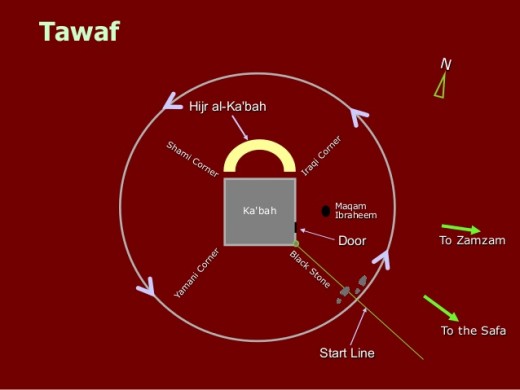
Salah (Prayer) inside the Ka’bah (Hijr) is preferred and is a means of drawing close (to Allaah)

Hijr Ka'bah Makkah Masjid al haram

Making Takbir, then du’aa to Allaah after praying two rak’ah inside the Ka’bah (Hijr) is a Sunnah

Question: Is salat inside the Ka’bah in any way superior to salat outside it, and is it permissible for a person to speak of what he has seen inside the ka’bah?

Answer by The Permanent Committee: Salat inside the Ka’bah is preferred, if it is possible to do so without any inconvenience, difficulty or harm to anyone, as the Prophet (salallaahu ‘alaihi wa sallam) entered it and prayed therein, according to an authentic narration in the Sahihain (Two Sahihs). And it has been reported from him (salallaahu ‘alaihi wa sallam) that he came out one day looking sad, and he said: “Verily, I fear that I may have placed a burden upon my Ummah (i.e. by entering the ka’bah).” [1]

And when ‘A`ishah (radiallaahu ‘anha) asked him about salat in the Ka’bah, he said: “Pray in the Hijr, because it is a part of the House.” [2]

This proves that salat inside the Ka’bah is preferred and is a means of drawing close (to Allaah) and an act of obedience, and in it is great merit.

However, it is not fitting that there should be crowding, or harm, or doing anything which causes difficulty to him or to the people. It is enough for him to pray in the Hijr, because it is a part of the House; and there is no objection to speaking about what he has seen inside the Ka’bah, such as its inscriptions, or what is on its ceiling or the like. There is no objection to a person talking and saying: “I saw such and such and such and such.” There is no sin in that.

The Sunnah, when one enters the Ka’bah, is to pray two rak’ahs and to say “Allaahu Akbar” and invoke Allaah, the Almighty, the All-Powerful with whatever supplications are easy for him at the end of it, especially those which have been reported (from the Prophet, salallaahu ‘alaihi wa sallam) because the Prophet (salallaahu ‘alaihi wa sallam) entered the Ka’bah and prayed therein, then he performed Takbir and supplicated Allaah. All of this has been authentically reported from him (salallaahu ‘alaihi wa sallam).

The Permanent Committee; Fatawa Islamiya, Volume 2

[1] Abu Dawud no. 2029.
[2] Abu Dawud no. 2028; Ahmad 6:92

Ruling Regarding Standing for National Anthems or Flags – Permanent Commitee

Q: Is it permissible to stand in honor of a national anthem or flag?

A: It is not permissible for a Muslim to stand in honor of a national anthem or flag; this is a repudiated Bid‘ah (innovation in religion) as it did not happen during the time of the Messenger of Allah (peace be upon him) or that of the Rightly-Guided Caliphs (may Allah be pleased with them). It also runs counter to the perfection of due, pure Tawhid (monotheism) and to the sincerity of dedicating all glorifications to Allah Alone. It is a means that can lead to Shirk (associating others with Allah in His Divinity or worship) and involves imitation of the Kufar (disbelievers) and their bad customs, as well as their excessive glorification of their leaders and their exaggerated ceremonies. The Prophet (peace be upon him) prohibited acting like and imitating the disbelievers.

May Allah grant us success. May peace and blessings be upon our Prophet Muhammad, his family, and Companions.

The Permanent Committee for Scholarly Research and Ifta’
Chairman : Shaykh Abdul-`Aziz ibn `Abdullah ibn Baz

Fatwas of the Permanent Committee>Group 1>Volume 1: `Aqidah (1)>Creeds>Venerating other than Allah>Standing up as a way of honoring the national anthem


Tawakkul does not mean that you should jump into a pool of water while you cannot swim – alifta

Q: If Tawakkul (putting trust in Allah) does not mean that you should jump into a pool of water while you cannot swim, nor put yourself in danger by a physical movement without previous training, nor sit in a room full of insects without using insecticide and expose oneself to affliction of a disease, nor leave a drawer opened exposing its contents to loss, then what is the meaning of Tawakkul? We appreciate your guidance, and many thanks to you.

A: Tawakkul means that a person should put their trust in Allah (may He be Exalted) Alone. It is an obligatory act and one of the tenets of Iman (faith). Allah (may He be Exalted) says:Surah Al-Ma’idah, 5: 23 … and put your trust in Allâh if you are believers indeed. 

Tawakkul is one of the powerful moral means helping to achieve goals and fulfill purposes.

However, a Muslim should combine it with other means, whether they are acts of `Ibadah (worship) like Du`a’ (supplication), Salah (Prayer), Sadaqah (voluntary charity) or maintaining the ties of kinship, or other material means which Allah has predestined that their effects follow from their causes like the examples mentioned by the questioner here. We should have Tawakkul to follow the way of Allah’s Messenger (peace be upon him) in this regard as he was the best person who had Tawakkul. He used to consider other appropriate material means along with his Tawakkul. So, whoever ignores the material means thinking that it is sufficient for them to have Tawakkul, contradict the way of Allah’s Messenger (peace be upon him). This type of Tawakkul is not permissible. Rather, it is recklessness and not a Shar`y (Islamically lawful) Tawakkul.

May Allah grant us success! May peace and blessings be upon our Prophet Muhammad, his family and Companions!

Permanent Committee for Scholarly Research and Ifta’

source : alifta.net

Bowing as a Greeting Either in Karate or for Some Other Reason – Permanent Committee

Question:

We joined a karate club in America, and when our trainer told us that we had to bow to him after he bowed to us, we refused, explaining to him that we couldnt because of our religion. He accepted our excuse but then he said that we had to bow our heads at least. He said that since he began the greeting by bowing, we had to respond. What is the ruling in this issue?

Answer:

To greet somebody by bowing is unlawful, regardless whether that person is a Muslim or a disbeliever, and regardless whether you bow with our entire upper body or with your head only. This is because bowing is a kind of worship, and worship is for Allaah Almighty alone.

May Allaah send peace and blessing upon Muhammad, his family, and his Companions.

Permanent Committee for Research and Verdicts
Fatawa Islamiyah Vol. 8 Page 219

Dedicating reward of Khatmah to the Prophet? – Permanent Committee

Q: On the last night of Ramadan in 1400 A.H., the Imam (the one who leads congregational Prayer) finished the recitation of the whole Qur’an. He said that the reward of this Khatmah (completing of one reading of the whole Qur’an) is dedicated to our Prophet Muhammad. What is the opinion of the Shariýah (Islamic law) on this?

A: It is not permissible to dedicate the reward of any act of worship or Khatmah to the Messenger (peace be upon him).

The Salaf (righteous predecessors) from the Sahabah (Companions of the Prophet, may Allah be pleased with them) and those after them did not do so. The acts of Ibadah (worship) are Tawqifiy (bound by a religious text and not amenable to personal opinion). The Prophet (peace be upon him) said, ‘Anyone who does an action which is not in accordance with this matter of ours (Islam), will have it rejected. ‘ The Prophet (peace be upon him) is rewarded for every righteous act performed by his Ummah (nation) just as they are, because it was he who guided and directed them to this. It has been authentically reported that the Prophet (peace be upon him) said, ‘Anyone who guides to good will have a reward like that of the one who does it.’ (Related by Muslim in his “Sahih [Book of Authentic Hadith]” on the authority of Abu Mas’ud Al-Ansary [may Allah be pleased with him])

May Allah grant us success! May peace and blessings be upon our Prophet Muhammad, his family, and Companions!

Permanent Committee for Scholarly Research and Ifta’

The Islamic date (Hijri date) starts after Maghrib – Permanent Committee

Date = day + night

In Islam, the night precedes the day.

The new hijri date begins with the setting of sun. Hence for e.g. once the sun sets after the 11th day in Ramadhaan, the 12th has already begun.

So, if today is Thursday 3:15 pm then Maghrib begins at 5:00 pm then know from the moment Maghrib time begins on that day, Friday begins.

The Islamic cycle of a day begins with the setting, not the rising of the sun. In countries such as Saudi Arabia, where the Islamic calendar alone is norm, when someone is speaking about going out on Friday night, he means the night that comes before the “day” of Friday.

And since the day starts at maghrib, then its the first of Ramadan. On the last day, we dont pray Taraweeh, and that’s because the day (new day) has started at maghrib, so Ramadan is over and Eid has begun. That is also why we start to say the Takbir for Eid after Maghrib of the last day of Ramadan. This is all because the Islamic month is lunar, so the moon we see after Ramadan is that of Eid, so we celebrate Eid, and Ramadan is then officially over.

This information is really crucial to find out the odd nights in the last 10 days of ramadhan for seeking layla-tul-qadr for e.g the night preceding the 27th day is actually the 27th night

The following fatwa is about the day of the islamic date, hope you don’t confuse.

Q 1: When does the day start according to Islamic calculations? Does it start from the break of the dawn, or after midnight as astronomers count? Please, provide evidence from the Qur’an or the Sunnah.

May Allah grant us success! May peace and blessings be upon our Prophet Muhammad, his family and Companions!A: In Islam, the day starts at the break of the second true dawn. Allah (may He be Exalted) states,Surah Al-Baqarah, 2: 187 It is made lawful for you to have sexual relations with your wives on the night of As-Saum (the fast). until it reads:Surah Al-Baqarah, 2: 187 So now have sexual relations with them and seek that which Allah has ordained for you (offspring), and eat and drink until the white thread (light) of dawn appears to you distinct from the black thread (darkness of night), then complete your Saum (fast) till the nightfall. The Prophet (peace be upon him) stated, Bilal pronounces the Adhan at night, so eat and drink (Suhur) until Ibn Umm Maktum pronounces the (second) Adhan.

Permanent Committee for Scholarly Research and Ifta’

Member Member Member Member The Chairman
Bakr Abu Zayd `Abdul-`Aziz Al Shaykh Salih Al-Fawzan `Abdullah ibn Ghudayyan `Abdul-`Aziz ibn `Abdullah ibn Baz

How to Pay Zakah on Ones’s Salary – Ibn Baz (rahimahullaah)

Zakaah on an Employee’s Salary – Shaykh ‘Abd al-‘Azeez ibn Baaz

Shaykh ‘Abd al-‘Azeez ibn Baaz (may Allaah have mercy on him) was asked:

There is a man who depends on his monthly salary; he spends some and saves the rest. How should he pay zakaah on this money?

He replied:

He should write down what he saves of his salary, and pay zakaah on it when one year has passed. Zakaah should be paid on the savings of each month when one year has passed. If he pays zakaah on the total in the first month, there is nothing wrong with that and he will be rewarded for that, and it will be regarded as zakaah paid in advance for the savings for which one year has not yet passed. There is no reason why a person should not pay zakaah in advance if he sees some benefit in doing so. But delaying it after the year has passed is not permissible, unless there is a valid shar’i excuse, such as the wealth not being available or there being no poor people. End quote.

Tuhfat al-Ikhwaan bi Ajwabah Muhimmah tata’allaq bi Arkaan al-Islam (question no. 12)

Here is an Answer from Fataawa al-Lajnah al-Daa’imah :

If he insists on having all his rights and on not giving any charity to those who deserve it apart from what he is obliged to give, then he should make a schedule of his earnings and write down every amount and the date on which he took possession of it. Then he should pay zakaah for each amount separately when one year has passed from the date on which he took possession of it.

But if he wants an easier method, and wants to be more generous and give precedence to the poor and others who are entitled to zakaah over himself, then he can pay zakaah on all the money he possesses when one year has passed from the date when his wealth first reached the nisaab. This will bring a greater reward and raise him higher in status; it is easier for him and is more generous towards the poor and needy and others who are entitled to zakaah. Whatever extra amount he may pay will be regarded as a “down payment” on the zakaah for any wealth for which one year has not yet passed.

(From Fataawa al-Lajnah al-Daa’imah, 9/280)

Do not anticipate Ramadan by fasting one or two days before it – Permanent Committee

Q: If it is cloudy or overcast, is it obligatory or prescribed to observe Sawm (Fasting) on the Day of Doubt (the 30th of Sha‘ban) as a precaution, in case the month has begun?

A: It is not permissible to perform Sawm on the Day of Doubt (so called because there is doubt concerning it – is it the last day of Sha’ban or the first day of Ramadan), even if the sky is cloudy, because the Messenger (peace be upon him) said,

Fast when you see it (the new moon of Ramadan) and stop fasting when you see it (the new moon of Shawwal); but if the clouds obstruct your sighting of the new moon, complete the month of Sha‘ban thirty days.”

He (peace be upon him) also said,

Do not precede Ramadan by fasting one or two days before it begins, unless for a person who observes a habitual pattern of Sawm, then let them fast it.”

As for what is narrated about Ibn ‘Umar (may Allah be pleased with him), that he used to observe Sawm on the 30th of Sha‘ban if it was cloudy, this was his Ijtihad (juristic effort to infer expert legal rulings), but the correct opinion is contrary to this; it is obligatory not to observe Sawm (on that day). Ibn ‘Umar practiced Ijtihad in this case, but his Ijtihad opposed the Sunnah (whatever is reported from the Prophet), may Allah forgive him!

The correct opinion is that the Muslims must not observe Sawm on the 30th of Sha‘ban, if the new moon of Ramadan is not sighted. If it is cloudy, it is obligatory not to observe Sawm. It is not permissible to start observing Sawm until the sighting of the new moon is confirmed or Sha‘ban is completed with thirty days. This is what is obligatory on Muslims, and it is not permissible to oppose the Nas (Islamic text from the Qur’an or the Sunnah) according to the words of one person, whether he is Ibn ‘Umar or anyone else, because the Nas (Islamic text from the Qur’an or the Sunnah) takes precedence over all opinions, as Allah (may He be Glorified and Exalted) says:

And whatsoever the Messenger (Muhammad peace be upon him) gives you, take it; and whatsoever he forbids you, abstain (from it) [Surah Al-Hashr 59:7].

He (may He be Glorified and Exalted) also says:

And let those who oppose the Messenger’s (Muhammad peace be upon him) commandment (i.e. his Sunnah — legal ways— orders, acts of worship, statements, etc.) (among the sects) beware, lest some Fitnah (disbelief, trials, afflictions, earthquakes, killing, overpowered by a tyrant) should befall them or a painful torment be inflicted on them. [Surah Al-Nur, 24: 63]

Source: http://www.alifta.net


‘Ammaar ibn Yaasir said: “Whoever fasts on the day concerning which there is doubt has disobeyed Abu’l-Qaasim (peace and blessings of Allaah be upon him).” This was narrated by al-Tirmidhi and classed as saheeh by al-Albaani in Saheeh al-Tirmidhi, 553.

Shaykh Ibn ‘Uthaymeen said in his commentary on the hadeeth “Do not anticipate Ramadaan by fasting one or two days before it begins…”:

The scholars (may Allaah have mercy on them) differed concerning this prohibition and whether it meant that this is haraam or makrooh. The correct view is that it means it is haraam, especially on the day of doubt.

Sharh Riyaadh al-Saaliheen, 3/394.

The scholars of the Standing Committee said concerning the day of doubt,

“The Sunnah indicates that it is haraam to fast this day.” (Fataawa al-Lajnah, 10/117)

Is wearing a watch on the right hand in accordance with the Sunnah?

Shaykh ‘Abd al-‘Azeez ibn Baaz (may Allaah have mercy on him) said:

There is nothing wrong with wearing a watch on either the right or left hand, like a ring, because it is proven that the Prophet (peace and blessings of Allaah be upon him) wore a ring on his right hand and left hand. End quote.

Fataawa Islamiyyah (4/255)

Shaykh Muhammad ibn Saalih al-‘Uthaymeen (may Allaah have mercy on him) said:

Putting a watch on the right hand is not better than putting it on the left hand, because a watch is like a ring, and there is no difference between putting a watch on the right hand or left hand. But undoubtedly putting it on the left hand is easier with regard to correcting it and looking at it, and it is safer in most cases, because the right hand moves more so it is more likely to cause damage to it.

The matter is broad in scope, so we should not say that the Sunnah is to wear it on the right hand, because it is narrated in the Sunnah that it is permissible to wear a ring on both the right and the left hand, and a watch is like a ring. End quote.

Al-Sharh al-Mumti’ (6/110)

The Permanent Committee for Scholarly Research and Ifta’ – alifta.net

Q 4: What is the ruling on men wearing watches on the right or left hand?

A: The ruling is flexible in this regard and it is permissible to wear it in the right or left hand, equally for men and women, just like rings.

May Allah grant us success. May peace and blessings be upon our Prophet Muhammad, his family, and Companions

The Permanent Committee for Scholarly Research and Ifta’

Member – Deputy Chairman – Chairman
`Abdullah ibn Ghudayyan – `Abdul-Razzaq `Afify – `Abdul-`Aziz ibn `Abdullah ibn Baz

http://www.alifta.net/Fatawa/fatawaDetails.aspx?languagename=en&BookID=7&View=Page&PageNo=1&PageID=9382

Shab-e-barat : Specifying the day of the 15th of Sha’baan by fasting or reciting the Qur’aan or performing naafilah prayers

Question:

We see some people specifying the 15th of Sha’baan with particular supplications and reciting the Qur.aan and performing naafilah prayers. So what is the correct position concerning this, and may Allaah reward you with good?

Response:

That which is correct is that fasting the 15th of Sha’baan or specifying it with reciting (the Qur.aan) or making (particular) supplications has no basis. So the day of the 15th of Sha’baan is like any other 15th day of other months. So from that which is known is that it has been legislated for a person to fast the 13th, 14th and 15th of every month, however, Sha’baan is characterised unlike the other months in that (except for Ramadhaan) the Prophet (sal-Allaahu `alayhe wa sallam) used to fast more in Sha’baan than any other month . So he used to either fast all of Sha’baan or just a little. Therefore, as long as it does not cause difficulty for a person, it is befitting to increase in fasting during Sha’baan in adherence to the example of the Prophet (sal-Allaahu `alayhe wa sallam).

Shaykh Ibn ‘Uthaymeen
al-Bid’u wal-Muhdathaat wa maa laa Asla lahu – Page 612
Fataawa Shaykh Muhammad Ibn Saalih al-‘Uthaymeen – Volume 1, Page 190


Standing the night of the 15th of Sha’baan in prayer and fasting during it’s day

Question: Is standing the night of the 15th of Sha’baan in prayer and fasting during it’s day legislated?

Response: Nothing firm and reliable has been established on the authority of the Prophet (sal-Allaahu `alayhe wa sallam) that he stood in prayer in the night and fasted during the day of the 15th of Sha’baan. So the night of the 15th of Sha’baan is like any other night, and if someone is a regular worshipper during other nights, then he may stand the night in prayer on this night without assuming anything special (because of it being the night of the 15th of Sha’baan). This is because specifying a time for any act of worship requires a authentic proof, so if there is no authentic proof then the act is regarded as an innovation and all innovations are misguidance. Likewsie, regarding specifically fasting during the 15th day of Sha’baan, then no (authentic) proof has been established on the authority of the Prophet (sal-Allaahu `alayhe wa sallam) to indicate the legislation of fasting on that particular day.

As for that which is mentioned from the ahaadeeth regarding this subject, then all of it is weak as the people of knowledge have indicated. However, whoever has the habit of fasting the 13th, 14th and 15th (of every month), then he can continue and fast during Sha’baan as he fasts during the other months, without assuming anything special about the 15th of Sha’baan. Also, the Prophet (sal-Allaahu `alayhe wa sallam) used to increase in fasting during this month (Sha’baan), however, he did not particularise the 15th day, rather proceeded as per norm.

Shaykh Ibn Fowzaan
al-Bid’u wal-Muhdathaat wa maa laa asla lahu – Page 614
Noorun alad-Darb Fataawa Shaykh Saalih Ibn Fowzaan – Volume 1, Page 87


Giving sadaqah specifically on the night of 15th of Sha’baan

Question:

When my father was alive, he entrusted me to give sadaqah (charity) according to my means on the 15th of Sha’baan every year, and likewise I have been doing this ever since. However, some people have admonished me for doing so saying it is not permissible. So is giving sadaqah on the night of the 15th of Sha’baan permissible according to the willment of my father or not? Kindly advise us and may Allaah reward you with good.

Response:

To specify the giving of sadaqah on the night of the 15th of Sha’baan every year is an innovation, and despite your father having entrusted you with that, it is not permissible. It is befitting you give this sadaqah without specifying the night of the 15th of Sha’baan, rather do so every year and in whichever month, but without particularising any one month (on a consistent basis). However, it is permissible to do so in the month of Ramadhaan (for the evidence which indicates so).

And with Allaah lies all success and may Allaah send prayers and salutations upon our Prophet (sal-Allaahu `alayhe wa sallam) and his family and his companions.

The Permanent Committee for Islaamic Research and Fataawa

al-Bid’u wal-Muhdathaat wa maa laa Asla lahu – Page 611
Fataawa al-Lajnah ad-Daa.imah lil-Buhooth al-‘Ilmiyyah wal-Iftaa. – Fatwa No. 9760

Sitting after Fajr and Praying 2 Rakah after sunrise – for which there is a reward equal to a completed Hajj

Check the Link – Fatawa : Duha Prayer

Incantations and Amulets with Quranic Ayahs – Permanent Committee

Question:

There are some people who write amulets for sick, insane, and psychiatric patients including in them parts of the Qurýan and Sunnah we never vouch for the sound creed of such people. We advised them against doing so, but they refused to listen, saying: We write only what is in the Book of Allaah and the Sunnah of His Messenger (sallallaahu alaihi wa sallam), which is not prohibited. Some of these amulets are worn by the patients themselves, or by an impure woman such as a menstruating woman, or a woman in her postnatal, or an insane, an under age child who does not know how to clean himself. Is this permissible?

Answer:

The Prophet (sallallaahu alaihi wa sallam) permitted incantations with Qur’anic recitation, and supplications, as long as they do not include Shirk, or meaningless words. Muslim narrated in his Sahih that Auf bin Malik said: We used to use incantations in the pre-Islamic era, so we asked the Messenger of Allaah (sallallaahu alaihi wa sallam): What formula should we recite for that purpose? He said: Let me hear what you say. There is no harm in incantations as long as they do not include Shirk in them. [2]

Scholars have unanimously agreed on the permissibility of incantations provided they meet the above condition, and believing that it has no effect without the Will of Allaah.

It is rather, Shirk according to the Hadith which is narrated by Imam Ahmad in which Imran bin Husain, may Allaah be pleased with him, reported that the Prophet (sallallaahu alaihi wa sallam) saw a man wearing a copper bangle on his arm, and he asked him: What is this? He said: I am wearing it for cephalic weakness. The Prophet (sallallaahu alaihi wa sallam) said: Remove it, for it will not increase you in anything except weakness, and if you should die while you are wearing it, you would never be successful. [3]

In another version narrated by Ahmad, the Prophet (sallallaahu alaihi wa sallam) said: He who wears an amulet commits Shirk. [4]

It is also narrated by Ahmad and others that Ibn Mas’ud, may Allaah be pleased with him, said: I heard the Messenger of Allaah saying: Verily, incantations amulets and Tiwalah [5] are Shirk. [6]

If the worn amulet contains Qur’anic words, then it is, prohibited according to the preponderant opinion for three reasons:

  1. The general prohibition of wearing any kind of amulets according to the Prophetic traditions with no exception.
  2. Leaving no excuse for wearing amulets that contain other than Qur’anic formulas.
  3. Amulets that are worn are usually subject to disrespect by taking them into washrooms, or wearing them during intercourse or the like.

As for writing a Surah or a Verse on a slate or on a sheet, and washing the writing with water and saffron, to drink that water for the hope of gaining blessings, knowledge, wealth, good health, or the like, we have never heard that such was done by the Prophet (sallallaahu alaihi wa sallam) for himself or for someone else. He neither permitted any of his Companions to do so, nor did he give the permission to his Ummah to do so, even though the needs for doing so are existent.

Based on the above, it is better to avoid doing so, and be content with what is authentically approved of incantations of Qur’anic recitation, the beautiful Names of Allaah, the authentic supplications, or the like, whose meaning are clear and they are free from the blemishes of Shirk.

One should seek nearness to Allaah by doing only the permissible things for the hope of gaining reward, relief, and gaining beneficial knowledge. This should be sufficient, and he who is content with what Allaah has legitimized, Allaah renders him free from the need of someone else. It is only Allaah Who grants success.

[1] The term incantations is used throughout the book to refer to a recitation formula for healing, whereas amulet is the written formula for the same purpose.

[2] Muslim no. 2200

[3] Ibn Majah no. 3531 and Ahmad 4:445

[4] Ahmad 4:154, Abu Ya’la no. 1759 and Al-Hakim 4:417

[5] Tiwalah, a spell which is used to make a man love his wife, or the other way round.

[6] Abu Dawud no. 3883, Ahmad 1:381 and Al-Hakim 4:418

Permanent Committee for Research and Verdicts
Fatawa Islamiyah Vol. 1 Page 34


Supplicating to Allah in other than the Arabic language – Permanent Committee

Source: alifta.net

Q 1: How should we supplicate to Allah (may He be Exalted)? Is it permissible for a person to supplicate to Allah in Salah (Prayer) in any language? Will their Salah be valid?

A: The Muslim should supplicate to Allah (may He be Exalted) with humility and in secret without asking for unlawful things. A person may supplicate to Allah both during Salah and at other occasions, in whatever language they speak. Salah is considered valid even if the person supplicates to Allah (may He be Exalted) in a language other than Arabic. When supplicating to Allah (may He be Exalted) during Salah, a person should use the Du`a’ (supplication) that are authentically reported from the Prophet (peace be upon him) and recite them where and how the Prophet (peace be upon him) recited them so as to follow the example of the Prophet (peace be upon him). Many scholars wrote books on the Du`a’ and Adhkar (invocations and Remembrances said at certain times on a regular basis) of the Prophet (peace be upon him), such as (Al-Kalim Al-Tayyib) by Ibn Tayymiah, (Al-Wabil Al-Sayyib) by Ibn Al-Qayyim, and (Riyad Al-Salihin) and (Al-Adhkar) by Al-Nawawy. You can buy any of these books to know the authentically reported Du`a’ and Adhkar, and how and when they should be said. This is better and of great benefit to you.

May Allah grant us success! May peace and blessings be upon our Prophet Muhammad, his family, and Companions!

Permanent Committee for Scholarly Research and Ifta’

Member Member Deputy Chairman The Chairman
`Abdullah ibn Qa`ud `Abdullah ibn Ghudayyan `Abdul-Razzaq `Afify `Abdul-`Aziz ibn `Abdullah ibn Baz