Explanation of a Summary of al-‘Aqeedatul-Hamawiyyah
Author: Shaykh Muhammad Ibn Saalih al-‘Uthaymeen Paperback: 208 Pages Published: January, 2005,
One of the works on this subject is his (Ibn Taymiyyah’s) “al-Fatwaa al-Hamawiyyah” which he wrote as an answer to a question presented to him in the Hijrah year of 698 from Hamaah, a place in ash-Shaam. In it, he was asked what the scholars and Imaams of the religion say concerning the Aayaat and the Ahaadeeth of the Sifaat, or the attributes and characteristics of Allaah. So he answered in about 83 pages and due to which, he suffered trials and afflictions. May Allaah reward him on behalf of Islaam and the Muslims with the best of rewards.
From the Back of the Book:
Allaah has sent Muhammad (Sallallaahu ‘alayhi wa Sallam) with guidance and the true religion. He sent him as a mercy to the world, as an example for the workers, and as a proof against all the servants. He (Muhammad) fulfilled the trust, conveyed the message, advised the Ummah, and he clarified for the people all of what they need regarding the foundations of their religion as well as its detailed matters. He left no good except that he clarified it and encouraged it, and he left no evil but that he warned the Ummah from it so much so that he left his Ummah upon a clear, white path – its night as clear as its day. His companions traversed this path, shining and radiant.
Afterwards, the best generations took it from them in the same state until oppression frowned upon them with the darkness of various innovations by which the innovators conspired against Islaam and its people. The people then wandered in confusion purposelessly, and they began building their ‘Aqeedah beliefs upon a spider’s web.
However, the Lord upholds His religion with His close helpers upon whom He bestows Eemaan, knowledge, and wisdom by which they prevent these enemies. They repel their plot back against their own throats. So no one ever comes out with his innovation except that Allaah – and for this deserves praise and thanks – destines to send someone from Ahlus-Sunnah who refutes and disproves his innovation and extinguishes it.
He has many works on the clarification and explanation of the Sunnah, the reinforcement of its pillars, and the destruction of innovations.
One of the works on this subject is his “al-Fatwaa al-Hamawiyyah” which he wrote as an answer to a question presented to him in the Hijrah year of 698 from Hamaah, a place in ash-Shaam. In it, he was asked what the scholars and Imaams of the religion say concerning the Aayaat and the Ahaadeeth of the Sifaat, or the attributes and characteristics of Allaah. So he answered in about 83 pages and due to which, he suffered trials and afflictions. May Allaah reward him on behalf of Islaam and the Muslims with the best of rewards.
Due to the difficulty in understanding and comprehending this answer from many readers, I wanted to summarize the most important points from it along with some other needed additions. I have named it “Fathu Rabb-il-Bariyyah bi-Talkhees al-Hamawiyyah.”
I first published it in the Hijrah year 1380. I am now publishing it a second time and perhaps changing what I see beneficial of additions or deletions.
I ask Allaah to make our effort sincerely for His Face and as a benefit to His servants, for indeed He is Generous and Kind.
-The Author (Muhammad ibn Saalih al-’Uthaymeen)
25.34980855.394526
Share this, Baarakallaah Feekum: [“One who guides to something good has a reward similar to that of its doer” - Saheeh Muslim vol.3, no.4665] [This website protects the copyrights of the authors/publishers. The Content is posted on this website with implicit/explicit permission from content owners]
Al-‘Aqidah Al-Wasitiyyah (2 Vol. Set) Author: Muhammad bin Salih Al-‘Uthaimin Publisher: Darussalam Publishers & Distributors (2010) Pages: 1155 Binding: Hardcover . Buy Here
A detailed commentary/explanation of the famous writing of Shaikh Al-Islam Ibn Taymiyyah, al-Aqeedatul-Wasitiyah, done by the noble Shaykh, Muhammad Ibn Saalih al-‘Uthaymeen (Rahimahumullaah).
Two large deluxe volumes contain a detailed study/explanation on the topic of creed/aqeedah (belief in oneness of Allah). Each volume has golden color page edges.
25.34980855.394526
Share this, Baarakallaah Feekum: [“One who guides to something good has a reward similar to that of its doer” - Saheeh Muslim vol.3, no.4665] [This website protects the copyrights of the authors/publishers. The Content is posted on this website with implicit/explicit permission from content owners]
Q 5: What is the difference between takyif and tamthil regarding the Names and Attributes of Allah (Exalted be He)?
Ans:
The meaning of Takyif (questioning Allah’s Attributes) regarding Allah’s Attributes is close to that of Tamthil (likening Allah’s Attributes to those of His Creation), except that Tamthil is to believe that Allah’s Attributes are the same as those of His Creation.
Takyif means believing that Allah’s Attributes are in such and such way even if they are not like one of the creatures’ attributes. If someone says that the attribute of the Hand of Allah (Exalted be He), for example, is like their hand or is like the hand of so and so, in this way they have likened Allah’s Attributes to those of His Creation (Tamthil). If they say that the hand is in the shape and form of such and such thing but does not liken it to any creature, in this way they have questioned the way and mode of Allah’s Attributes (Takyif).
The outcome is that all these forms are invalid and deviation of the words from their real meanings.
May Allah grant us success! May peace and blessings be upon our Prophet Muhammad, his family, and Companions!
Permanent Committee for Scholarly Research and Ifta’
Member Member Member Deputy Chairman Chairman Bakr Abu Zayd Salih Al-Fawzan `Abdullah ibn Ghudayyan `Abdul-`Aziz Al Al-Shaykh `Abdul-`Aziz ibn `Abdullah ibn Baz
Share this, Baarakallaah Feekum: [“One who guides to something good has a reward similar to that of its doer” - Saheeh Muslim vol.3, no.4665] [This website protects the copyrights of the authors/publishers. The Content is posted on this website with implicit/explicit permission from content owners]
Merit of memorizing the Magnificent Names of Allah
Q: The Messenger of Allah (peace be upon him) said: Allah has ninety-nine names; anyone who memorizes them will enter Jannah (Paradise). Does this mean that anyone who memorizes the Names of Allah will enter Jannah?
A: This is one of the Hadiths that promise Jannah and speaks of virtues and good deeds. The Prophet (peace be upon him) said: Allah has ninety-nine names, one hundred less one. Anyone who learns them will enter Jannah. According to another narration: Anyone who memorizes them will enter Jannah. (Agreed upon by Al-Bukhari and Muslim)
This Hadith urges us to consider carefully, ponder over, memorize and learn the Names of Allah, so that we can benefit from their great meanings, gain Khushu` (the heart being submissively attuned to the act of worship), obey Allah and fulfill our duty towards Him(Glorified and Exalted be He).
Anyone who memorizes the Names of Allah, fulfills their duties towards Him, and shuns the major sins will be admitted to Jannah while those who commit major sins subject themselves to Allah’s Wrath and their fate is left to His Will: He may punish them or admit them to Jannah. Memorizing and learning the Names of Allah is one means to enter Jannah if a person does not commit major sins. Attaining Jannah has certain conditions that must be fulfilled and certain obstacles that must be avoided. Committing sins is one of the obstacles which prevent one from entering Jannah with those who will enter first. A Muslim who commits sins and does not repent before death will eventually enter Jannah after being punished and purified.
Also, Allah may forgive and admit them to Jannah without punishment. The Prophet (peace be upon him) said: The Fve (Obligatory Daily) Prayers, from one Jumu’ah (Friday Prayer) to the next and from one Ramadan to the next are expiation for (sins committed) in between, as long as major sins have been avoided. Major sins include those prohibited acts for which a warning of severe punishment is given. These include all those which incur Allah’s Wrath, and are cursed by our Prophet (peace be upon him) such as Zina (sexual intercourse outside marriage), consuming Khamr (intoxicant), undutifulness to parents, involvement in Riba (usury/interest), Ghibah (backbiting), Namimah (tale-bearing), etc.
These are some major sins whose committers will be left to Allah’s Will: He may forgive and admit them to Jannah due to their belief in His Oneness and their Islam or punish them in a manner commensurate with their sins and eventually bring them out of the Fire and into Jannah after purifying them of their sins. There are various Hadiths Mutawatir (Hadiths reported by a significant number of narrators throughout the chain of narration, whose agreement upon a lie is impossible) reported from the Messenger of Allah (peace be upon him) that indicate that many disobedient Muslimswill enter the Fire because of their sins and will be punished in a manner commensurate with these sins.
Afterwards, the disobedient will be taken out of the Fire due to the Shafa`ah (intercession) of the Prophet (peace be upon him), angels, other prophets, and the children who died before they reached the age of puberty while others will be granted forgiveness due to Allah’s Mercy. Allah (Glorified and Exalted be He) says: Verily, Allâh forgives not that partners should be set up with Him (in worship), but He forgives except that (anything else) to whom He wills .
Those disobedient Muslims are subject to Allah’s Will: He may forgive them and admit them to Jannah, or punish them in a manner commensurate with their sins and then take them out of the Fire as they will not stay therein forever. None will abide eternally in the Fire except the Kafir (disbeliever) and Mushrik (one who associates others with Allah in His Divinity or worship) who will not be forgiven.
Therefore, disobedient Muslims will not remain eternally in the Fire, according to Ahl-ul-Sunnah wal-Jama`ah (adherents to the Sunnah and the Muslim mainstream) unlike the Khawarij (separatist group that believes committing a major sin amounts to disbelief) and Mu`tazilah (a deviant Islamic sect claiming that those who commit major sins are in a state between belief and disbelief) who believe that the disobedient will stay eternally in the Fire. However, Ahl-ul-Sunnah wal-Jama`ah hold the view that the disobedient who have died as Muslims believing in the Oneness of Allah, but have not repented of their sins shall be subject to Allah’s Will. May Allah grant us all success!
Q: Will the one who memorize the Magnificent Names of Allah be admitted to Jannah (Paradise)?
A: It is reported in a Hadith Sahih (authentic Hadith) that the Prophet (peace be upon him) said: Allah has ninety-nine names, one hundred less one. Anyone who learns them will enter Jannah. According to another narration: Anyone who memorizes them will enter Jannah. These ninety-nine Names were not reported from the Prophet (peace be upon him) in any Hadith Sahih. However, the Muslim who is guided to learning them, by heart and put into action – and they are ninety-nine Names, is promised that goodness.
The above is one of the Hadiths which speak of the virtues of memorizing the ninety-nine Names of Allah, provided that one does not die while insisting on committing major sins because they are one of the causes that deprive a person from entering Jannah and cause him to be thrown into the Fire, unless one attains Allah’s Forgiveness.
The basic principle is that unrestricted Ayahs (Qur’anic verses) and Hadiths should be interpreted in light of restricted ones, because neither the Ayah nor the Hadith contradicts each other. They rather confirm one another.
Allah (Glorified be He) says: If you avoid the great sins which you are forbidden to do, We shall expiate from you your (small) sins, and admit you to a Noble Entrance (i.e. Paradise). Therefore, Allah indicates that avoiding major sins is a condition for expiating sins and entering Jannah. The Prophet (peace be upon him) stated, The Five (Obligatory Daily) Prayers, from one Jumu’ah (Friday Prayer) to the next and from one Ramadan to the next are expiation for (sins committed) in between, as long as major sins have been avoided.
Those who memorize the ninety-nine Magnificent Names of Allah but commit Zina or consume Khamr are subject to Allah’s punishment and will be thrown into the Fire unless they repent and Allah forgives them.Contrary to the belief of Khawarij and Mu`tazilah, Muslims who believe in the Oneness of Allah will not abide eternally in the Fire for committing major sins. Those sinful people will be punished in a manner commensurate with their sins and then Allah will take them out of the Fire due to His Grace and Kindness. None will abide forever in the Fire except those whom the Qur’an and the Hadith rule as Kafir.
A disobedient person such as a fornicator, a thief, and those who are undutiful to their parents etc., will not abide eternally in the Fire. The disobedient, who did not repent of their sins before death, will not abide in the Fire forever. They are threatened to suffer the torment of the Fire. If Allah forgives them, He (Glorified and Exalted be He) is the Source of Generosity and Benevolence; otherwise He will punish them to a degree commensurate with their sins and will eventually take them out of the Fire after being purified.
The Prophet (peace be upon him) informed us in many concurrent Hadiths that the disobedient will be taken out of the Fire and he (peace be upon him) will intercede several times for them as will the angels, the believers, and the children who died before reaching the age of puberty. This is the truth which Ahl-ul-Sunnah wal-Jama`ah follow and which differs from the view of Khawarij and Mu`tazilah. The view of Ahl-ul-Sunnah wal-Jama`ah is supported by Allah’s statement in His Noble Book: Verily, Allâh forgives not that partners should be set up with Him (in worship), but He forgives except that (anything else) to whom He wills Allah (Glorified and Exalted be He) states that if one commits sins, the matter is subject to His Will but He will not forgive whoever dies as a Mushrik.
Anyone who dies as Mushrik will not be forgiven and will reside eternally in the Fire. A Mushrik is not considered to be one of Ahl-ul-Fatrah (people having no access to Divine Messages) or those who come under the same ruling as them, we seek refuge with Allah!
Whoever dies before repenting of their sins shall be subject to Allah’s Will; if He wills, He can pardon themout of His Grace, and if He wills He can punish them in a manner commensurate with their sins and then take them out of the Fire by His immense Bounty and Mercy after they have been purified. Khawarij and Mu`tazilah hold a different view, as they believe that the disobedient will remain eternally in the Fire but according to the followers of the Truth, this is false.
Q: Your Eminence, it was reported on the authority of Abu Hurayrah that the Prophet (peace be upon him) stated: Allah has ninety-nine Names, one hundred less one. Anyone who ‘ahsaha’ will enter Jannah. Does the word ‘ahsaha’ mentioned in the Hadith mean memorizing or just reading them? Please advise me, may Allah reward you with the best!
A: This Hadith was related in the Two Sahih (authentic) Books of Hadith (i.e. Al-Bukhari and Muslim) from the Prophet (peace be upon him). It was reported in two different wordings: first, “ahsaha” and second, anyone who memorizes them, will enter Jannah. The word ‘ahsaha’ means to memorize by heart and to act according to them. Thus, whoever learns the Names of Allah by heart and acts accordingly will be admitted to Jannah.
However, if one memorizes the Names of Allah by heart, but does not act or believe in them, they will be of no avail. The word ‘ahsaha’ means to memorize and act upon them. Therefore, it is Wajib upon whoever memorizes Allah’s Names to act accordingly. For example, a person should be ‘Rahim’, i.e. show mercy to others and should also believe that Allah is Al-`Aziz (the Ever-Mighty), Al-Hakim (the Most Wise), Al-Ra’uf (the Most Compassionate), Al-Rahim (the Most Beneficent), Al-Qadir (the All Powerful) Who has unlimited knowledge of all things.
Such a person should fear Allah and remember that He is watching them and should not persist in committing sins of which HisLord knows. They should avoid sins and all forms of Shirk (associating others with Allah in His Divinity or worship).
One should exert all his efforts to memorize and act upon the Names of Allah, believe in Him and His Messenger, affirm the Names and the Attributes which Allah has affirmed for Himself in a manner befitting His majesty without Tahrif (distortion of the meaning), Ta`til (negation of the meaning or function of Allah’s Attributes), Takyif (descriptive designation of Allah’s Attributes), or Tamthil (likening Allah’s Attributes to those of His Creation) and believe that Allah is Perfect in His Essence, His Names, His Attributes and His Deeds, with no peer, equal or rival. Allah (Glorified and Exalted be He) says in His Noble Book: Say (O Muhammad sallallaahu alaihi wa sallam): “He is Allâh, (the) One. “Allâh-us-Samad [Allâh the Self-Sufficient Master, Whom all creatures need, (He neither eats nor drinks)]. “He begets not, nor was He begotten. “And there is none co-equal or comparable unto Him.” .
One must believe that Allah is the Self-Sufficient, Who is similar to nothing and nothing is comparable to Him; Whom all creatures need, Who is Perfect in His Essence, Who neither begets nor was He begotten, and Whom none is co-equal or is similar to Him. Allah (Exalted be He) says: There is nothing like Him; and He is the All-Hearer, the All-Seer. And: Do you know of any who is similar to Him? And: So put not forward similitudes for Allâh (as there is nothing similar to Him, nor He resembles anything).
There is nothing equal, comparable, or that can rival Allah (Exalted be He). He is Perfect in all things; His Knowledge, His Essence, His Wisdom, His Mercy, His Honor, His Power, and in all His Names which if one memorizes and acts accordingly, will allow them admission to Jannah.
However, if the disobedient memorize and enumerate the Names of Allah, they will be subject to Allah’s Will; if He wills, He may forgive them, and if He wills He may punish them and eventually admit them to Jannah after they are taken out of the Fire and are purified provided that they have died as Muslims believing in the Oneness of Allah. Allah (Glorified be He) says: If you avoid the great sins which you are forbidden to do, We shall expiate from you your (small) sins
Major sins include all forms of Shirk, Kufr (disbelief), and the sins that were forbidden by Allah and their doers cursed, and warned of a severe punishment and Allah’s Wrath. The servant to Allah, male and female, must shun them for Allah (Glorified be He) says: If you avoid the great sins which you are forbidden to do, We shall expiate from you your (small) sins i.e., the minor sins and admit you to a Noble Entrance (i.e. Paradise).
The Prophet (peace be upon him) said: The Five (Obligatory Daily) Prayers, from one Jumu’ah (Friday Prayer) to the next and from one Ramadan to the next are expiation for (sins committed) in between, as long as major sins have been avoided. According to another narration: …so long as major sins are not committed. Major sins include Zina, theft, undutifulness to parents, severing the ties of kinship, consuming Riba, Ghibah, Namimah, fleeing during battle, and magic, in addition to other sins which Allah forbids.
Therefore, memorizing the Magnificent Names of Allah is one means of true happiness and being admitted into Jannah provided that one acts according to them, remains steadfast in obeying Allah and His Messenger, and does not persist in committing major sins.
Share this, Baarakallaah Feekum: [“One who guides to something good has a reward similar to that of its doer” - Saheeh Muslim vol.3, no.4665] [This website protects the copyrights of the authors/publishers. The Content is posted on this website with implicit/explicit permission from content owners]
What is the creed of Ahlus-Sunnah wal-Jamaa’ah in regard to Allaah’s Names and Attributes? And what is the difference between a Name and an Attribute? And does affirmation of a Name necessitate affirmation of an Attribute, and (likewise) does affrimation of an Attribute necessitate affirmation of a Name?
Response:
The creed of Ahlus-Sunnah wal-Jamaa’ah in regard to Allaah’s Names and His Attributes is affriming that which Allaah has affirmed for himself from the Names and Attributes, without:
tahreef (changing/distorting a Name and/or Attribute of Allaah to other than its true meaning, i.e. from Allaah to al-Laat, and al-‘Azeez to al-‘Uzzah);
ta’teel (denying some or all of Allaah’s Names and Attributes);
takyeef (questioning as to “how” (Allaah’s Name or Attribute is), i.e. How does Allaah descend, etc.?);
tamtheel (to imply a similarity between Allaah’s Names and Attributes and that of His creation).
And the difference between a Name and an Attribute is that a Name is that which Allaah has named Himself by; and an Attribute is that which Allaah has described Himself by. And between them is a clear difference.
So a Name is that which is considered a Name of Allaah (Subhaanahu wa Ta’aala), (and that) which incorporates an Attribute.And affirmation of a Name necessitates affirmation of an Attribute. For example: al-Ghafoor (the Most Forgiving) is a Name, and (its affirmation) necessitates the (affirmation of the) Attribute of Maghfirah (Forgiveness);
And ar-Raheem (the Most Merciful) is a Name and (its affirmation) necessitates the affirmation of ar-Rahmah (Mercy).
And the affirmation of an Attribute does not necessitate the affirmation of a Name. For example: al-Kalaam (Speech) does not necessitate the affirmation of the Name al-Mutakallim (the Speaker) for Allaah.
So, based upon this, the Names are more wider (in scope), since every Name encompasses an Attribute, however, every Attribute does not encompass a Name.
Share this, Baarakallaah Feekum: [“One who guides to something good has a reward similar to that of its doer” - Saheeh Muslim vol.3, no.4665] [This website protects the copyrights of the authors/publishers. The Content is posted on this website with implicit/explicit permission from content owners]
Allah has ninety nine names, one hundred minus one; and he who counts them all will enter Al-Jannah (the Garden Of Heaven), and Allah is “witr” (One) and loves the witr (i.e. odd numbers).
[Al-Bukhaari, At-Tirmidhi, An-Nasaai, Ibn Majah]
25.34980855.394526
Share this, Baarakallaah Feekum: [“One who guides to something good has a reward similar to that of its doer” - Saheeh Muslim vol.3, no.4665] [This website protects the copyrights of the authors/publishers. The Content is posted on this website with implicit/explicit permission from content owners]
True Meaning of ‘Laa ilaaha illa Allaah’ is : There is no deity truly worthy of worship except Allah
All praise is due to Allah alone and may peace and blessings be upon the Noblest of the messengers, our Prophet Muhammad, his family, his Companions, Tabi`un (Followers, the generation after the Companions of the Prophet) and those who followed them in the best manner until the Day of Resurrection.
I have read the article written by our brother in Islam, the eminent Shaykh `Umar ibn Ahmad Al-Millibary on the meaning of ‘La ilaha illa Allah’. I read the explanation of the shaykh thoroughly on the three points of view regarding its meaning. The definitions are as follows:
First, it means that there is no deity truly worthy of worship except Allah. Second, that there is no deity truly worthy of obedience except Allah. Third, that there is no god but Allah.
The correct definition, as he stated, is the first which is clarified in the Book of Allah (may He be Praised) many times. For instance, Allah (may He be Praised) states, You (Alone) we worship, and You (Alone) we ask for help (for each and everything). and, And your Lord has decreed that you worship none but Him. He (may He be Praised) also states, And I (Allâh) created not the jinn and mankind except that they should worship Me (Alone). and, That is because Allâh — He is the Truth (the only True God of all that exists, Who has no partners or rivals with Him), and what they (the polytheists) invoke besides Him, it is Bâtil (falsehood).
There are many Ayahs (Qur’anic verses) to this effect. Moreover, this is the meaning that the polytheists understood from ‘La ilaha illa Allah’, when the Prophet (peace be upon him) called them to it, saying: O my people, say ‘La ilaha illa Allah’, to succeed.
They denied it and haughtily rejected to accept him because they understood that it contradicts their forefathers’ worship of idols, trees and stones and their deification, as Allah (Glorified and Exalted be He) mentions in Surah (Qur’anic chapter) Sad, And they (Arab pagans) wonder that a warner (Prophet Muhammad صلى الله عليه وسلم) has come to them from among themselves. And the disbelievers say: “This (Prophet Muhammad صلى الله عليه وسلم) is a sorcerer, a liar. “Has he made the âlihah (gods) (all) into One Ilâh (God – Allâh). Verily, this is a curious thing!”
In Surah Al-Saffat (ayat 35 and 36), Allah states concerning the polytheists: Truly, when it was said to them: La ilaha illa Allah (none has the right to be worshipped but Allah), they puffed themselves up with pride (i.e. denied it). And (they) said: “Are we going to abandon our alihah (gods) for the sake of a mad poet?” This indicates that the polytheists understood that the meaning of ‘La ilaha illa Allah’ superseded their deities and necessitated dedicating their acts of worship to Allah Alone. Thus, when one of them embraced Islam, he gave up Shirk (associating others with Allah in His Divinity or worship) and dedicated acts of worship to Allah Alone.
Had ‘La ilaha illa Allah’ meant only that there is no god but Allah, or that there is none worthy of obedience but Allah, they would have never rejected it. That is because they already knew that Allah is their Lord and Creator Who must be obeyed in the orders they believed to come from Him. Rather, they believed that worship of idols, prophets, angels, righteous people, trees and the like were their intercessors with Allah and brought them closer to Him. Allah says in Surah Yunus, aya 18: And they worship besides Allah things that harm them not, nor profit them, and they say: “These are our intercessors with Allah.” Say: “Do you inform Allâh of that which He knows not in the heavens and on the earth?” Glorified and Exalted is He above all that which they associate as partners (with Him)! He (Glorified and Exalted be He) also states: The revelation of this Book (the Qur’ân) is from Allâh, the All-Mighty, the All-Wise. Verily We have sent down the Book to you (O Muhammad صلى الله عليه وسلم) in truth: So worship Allâh (Alone) by doing religious deeds sincerely for Allâh’s sake only. Surely the religion (i.e. the worship and the obedience) is for Allâh only. And those who take Auliyâ’ (protectors, helpers, lords, gods) besides Him (say): “We worship them only that they may bring us near to Allâh.”
The pagans admitted that they worshiped others only to bring them near to Allah, but Allah (may He be Praised) responded to this, Verily, Allâh will judge between them concerning that wherein they differ. Truly, Allâh guides not him who is a liar, and a disbeliever.
Allah (may He be Praised) declared that they are both liars in the claim that their deities bring them near to Allah, and disbelievers because of committing this act. There are many Ayahs that support this meaning.
All praise be to Allah, Lord of the worlds. May peace and blessings be upon our Prophet Muhammad, his family, his Companions, Tabi`un and those who followed them in the best manner until the Day of Resurrection!
Share this, Baarakallaah Feekum: [“One who guides to something good has a reward similar to that of its doer” - Saheeh Muslim vol.3, no.4665] [This website protects the copyrights of the authors/publishers. The Content is posted on this website with implicit/explicit permission from content owners]
1 – Belief In Allah’s Existence Allah’s existence is affirmed through Fitrah (the innate purity that Allah creates in every human being), the Mind, the Shari’ah (Islamic Law) and the senses.
a) As for the Fitrah, we say the following: Allah created the belief in Him in every human being. Mankind needs not to be taught this belief or think about how to possess it. However, the ones who have this Fitrah corrupted will not benefit from it. The Prophet (sallallahu alaihi wa-sallam) said, what translated means, “Every newly born will be born having Fitrah. However, his parents will either convert him to Judaism, Christianity or Majocism (fire worshipping).” [Saheeh al-Bukhari]
b) The Human Mind must be used to prove the existence of Allah. All this creation, of old and new, must have a Creator who invented and started it. This creation could not have come to existence on its own or by chance. It could not have created itself, because it did not exist beforehand. Therefore, how can it create? Also, the creation could not have been started by accident or chance. Everything that exists must have a Creator who brought it into existence. Creation is magnificent in organization, coherent and correlated in its existence. There is a reason and originator behind every act. All this nullifies the saying that this entire universe was started by chance. What was started by chance cannot be organized in its form because it did not have any organization before it was formed. What makes what was created by chance to be this organized? If all this creation neither could have created itself nor was it created by chance, then it must have an Originator, Allah, the Lord of the worlds. Allah mentioned this reasoning in the Quran, “Were they created by nothing, or were they themselves the creators?” [52:35].
This Ayah means that men were neither created without a Creator nor did they create themselves. Therefore, Allah is the One who created them. This is why when Jubair ibn Mut’im (radiyallaahu anhu) heard the Messenger (sallallahu alaihi wa-sallam) recite this Surah until he reached, “Were they created by nothing, or were they themselves the creators? Or did they create the heavens and the earth? Nay, but they have no firm belief. Or are with them the Treasures of your Lord? Or are they the tyrants with authority to do as they like?” [52:35-37],
Jubair, a disbeliever then, said, “My heart almost flew (from the power of this reasoning mentioned in the Surah). This was the first time that Iman entered my heart.” [Saheeh al-Bukhari]
c) – As for the Shari’ah, all divine religions testify to the fact that Allah created the world. All Laws that were sent with these divine and revealed religions contain what benefits mankind. This is evidence to the existence of a Wise and All-Knowing Lord Who knows what brings benefit to His creation, All divinely-revealed religions describe a universe that is self evident to the existence and ability of Allah, Who Creates what He Will.
d) – Also, the senses must be used to prove the existence of Allah. We know that Allah accepts the supplication from whoever seek His aid and help, and that He brings them the benefits that they desire. This is clear evidence to the existence of Allah, who said, what translated means, “And (remember) Noah, when he cried (to Us) aforetime We listened to his invocation.” [21:76] and, “(Remember) when you sought help from your Lord and He answered you?” [8:9].
Anas ibn Malik (radhiyallahu anhu) said, “An Arabian (Bedouin) man entered (the Masjid) on Friday while the Prophet was delivering the speech. He said: ‘O Messenger of Allah! (Our) possessions are destroyed, (our) children are hungry. Ask Allah for us.’ He (the Prophet (sallallahu alaihi wa-sallam) raised his hands in supplication (to Allah). All of a sudden, mountain-like clouds were formed. He did not descend from his Minbar (the podium) until I saw rain falling through his beard. On the second Friday, this Arabian man, or someone else, stood up and said: ‘O Messenger of Allah (sallallahu alaihi wa-sallam), Buildings have collapsed and possessions are flooded. Ask Allah for us.’ He (the Prophet (sallallahu alaihi wa-sallam) raised his hands and said: ‘O my Lord! Around us and not on us.’ Wherever he pointed to an area (of the sky), they (the clouds) dispersed.” [Saheeh al-Bukhari]
Allah’s acceptance of supplication has been and still is a known matter until today. It is given to those who are true in their seeking refuge in Allah and perform supplication in the correct manner to ensure its acceptance. Also, there are the signs that Allah gave His Prophets, which are called miracles. People witnessed or heard these miracles. They are clear evidence that the One who sent the Messengers exists, and He is Allah the All Mighty.
These miracles are activities that are beyond the capability of mankind. Allah gave them to His Messengers as a way of aiding them and giving them victory. An example of these miracles is the sign given of Moses. Allah ordered him to strike the sea with his stick, and the sea parted into twelve separate pads between mountains of water on each side of these parts, “Then We inspired Moses (saying): “Strike the sea with your stick. And it parted, and each separated part (of that sea water) became like the huge, firm mass of a mountain.” [26:63]. Another example is the miracle of Jesus. He was given the power by Allah to raise the dead from their graves and back into life. Allah said about him, what translated means, “And I bring the dead to life by Allah’s leave.” [3:49] and, “And when you (O Jesus) brought forth the dead by My Permission.” [5:110]
A third example is the miracle Muhammad (sallallahu alaihi wa-sallam) performed. His tribe, Quraysh, asked him to perform a miracle. He pointed to the moon and it separated into two parts while his people were witnessing the incident. Allah said about this miracle, what translated means, “The Hour has drawn near, and the moon has been cleft asunder. And if they see a sign, they turn away, and say: “This is continuous magic.” [54:1-2].[4] All these miracles, that Allah gave to His Messengers as an aid and victory and that were witnessed by their nations, are proof that Allah exists.
2 – Belief In Allah’s Lordship This means to believe that Allah is the Lord, alone, and that He has no partners or helpers. The Rabb (Lord) is the One who Creates and Commands. There is no creator except Allah and there is no owner of the universe except Him. The Commandment and the Control is His. He said, what translated means, “Surely, His is the Creation and commandment.” [7:54] and, “Such is Allah your Lord; His is the Kingdom. And those whom you invoke or call upon instead of Him, own not even a Qitmir (the membrane over the date-stone).” [35:13]. Only a few people rejected Allah’s Lordship. These are the arrogant ones who deny what they believe deep in their hearts. This happened from Pharaoh, when he said to his people, as was mentioned in the Qur’aan, “I am your lord, most high.” [79:24] and, “O chiefs! I know not that you have a god other than me!” [28:38].
However, what he said was not his true belief. Allah said, what translated means, “And they belied them (Our Signs) wrongfully and arrogantly, though their own selves were convinced thereof” [27:14].
Also, Moses said to Pharaoh, as was mentioned in the Quran, ”Verily, you know that these Signs have been sent down by none but the Lord of the heavens and the earth as clear (evidences of His Oneness and Might). And I think you are, indeed, O Pharaoh, doomed to destruction.” [17:102]. The Arab disbelievers of old used to confirm Allah’s Lordship, although they associated others with Him in worship.
Allah said, what translated means, “Say: “Whose is the earth and whosoever is therein? If you know!” They will say: “It is Allah’s!” Say: “Will you not then remember?” Say: “Who is the Lord of the seven heavens and the Lord of the Great Throne?” They will say: “Allah.” Say: “Will you not then fear Allah?” Say: “In Whose Hands is the sovereignty of everything? And He protects (all), while against Whom there is no protector, if you know?” They will say: “(All this belongs) to Allah.” Say: “How then are you deceived and turn away from the truth?)” [23:84-89],
And indeed if you ask them: “Who has created the heavens and the earth?” They will surely say: “The All-Mighty, the All-Knower created them.” [43:9]
and, “And if you ask them who created them, they will surely say: “Allah.” How then are they turned away (from His worship)” [43:87].
Allah’s order comprises of both, His running of the universe and the Commandment. He is the One who controls the creation and the One who does what He will, according to His Wisdom. He is also the One who gives the Commandment organizing aspects of worship and dealings, according to His Wisdom. Whoever takes anyone, besides Allah, to be the one who commands acts of worship or types of dealings, will have committed Shirk (disbelief, association in worship) with Allah. This act negates Iman.
3 – The Belief That He Is the ILAH: Allah is the Ilah, meaning He is the Worshipped One Who has no partners. This Ilah is worshipped with love and reverence. He said, what translated means, “And your Lord is One Lord, there is none who has the right to be worshipped but He, the Most Beneficent, the Most Merciful.” [2:163]
and, “Allah bears witness that none has the right to be worshipped but He, and the Angels, and those having knowledge (also give this witness); (He is always) maintaining His creation in Justice, none has the right to be worshipped but He, the All-Mighty, the All-Wise.” [3:18].
All things that are taken as gods, besides Allah, are false gods, “That is because Allah is the Truth (the Only True God), and what they (the disbelievers) invoke besides Him, it is falsehood. And verily, Allah is the Most High, the Most Great.” [22:62].
To call these things “gods,” does not make them gods. Allah said about some idols, Al-Lat, Al-’Uzzaa and Manat, “They are but names which you have named, you and your fathers, for which Allah has sent down no authority” [53:23].
Yousef (Joseph) said to his two companions in jail, as was mentioned in the Quran, “Are many different lords (gods) better or Allah the One, the Irresistible? You do not worship beside Him but only names, which you have forged, you and your fathers, for which Allah has sent down no authority.” [12:39-40].
All Messengers used to say to their nations, “Worship Allah! You have no other God but Him.” [23:23]. However, the disbelievers refused to accept this call. They took others as gods besides Allah. They worshipped them besides Allah, calling them when aid and help were needed. Allah refuted the disbelievers in their taking these idols as gods besides Him, using two logical arguments:
The first argument: These idols, that were taken by the disbelievers as gods, do not have any attributes that qualify them to be gods. These false gods were created and do not create. They can neither bring about benefit for whoever worships them, nor can they fend harm off. They cannot give life or take it away. They neither own nor are they partners in the kingdom of the heavens and earth. Allah said, what translated means, “Yet, they have taken besides Him other gods that created nothing but are themselves created, and possess neither hurt nor benefit for themselves, and possess no power (of causing) death, nor (of giving) life, nor of raising the dead)” [25:3],
“Say (O Muhammad): ‘Call upon those whom you asset (to be associate gods) besides Allah, they possess not even the weight of an atom, either in the heavens or on the earth, nor they have any share in either, nor is there for Him any supporter from among them.” [34:22-23] and,
“Do they attribute as partners to Allah those who created nothing but they themselves are created? No help can they give them, nor can they help themselves.” [7:191-192].
If this is the case with false gods, then taking them as gods is a true misguidance and the lowest of all acts. The second argument: The Mushrikeen (polytheists) are among those who confirmed that Allah, alone, is the Lord, the Creator, the One Who Has the ownership of everything and the One Who gives protection and no one can give protection to anyone from His Might. This confirmation requires from these disbelievers to worship Allah alone. He said, what translated means, “O Mankind! Worship your Lord (Allah), Who created you and those who were before you so that you may become among the pious. Who has made the earth a resting place for you, and the sky as a canopy, and sent down rain from the sky and brought forth therewith fruits as a provision for you. Then do not set up rivals unto Allah (in worship) while you know (that He Alone has the right to be worshipped).” [2:21-22],
“And if you ask them who created them, they will surely say: “Allah”.How then are they turned away (from His worship)?” [43:87]
and, “Say (O Muhammad): “Who provides for you from the sky and from the earth? Or who owns hearing and sight? And who brings out the living from the dead and brings out the dead from the living? And who disposes the affairs?” They will say: ‘Allah.” “Say: “Will you not then be afraid of Allah’s punishment?” Such is Allah, your Lord in truth. So after the Truth, what else can there be, save error? How then are you mined away? [10:31-32].
4 – The Belief In Allah’s Names and Attributes. This belief requires accepting whatever Allah described of Himself in His Book or in the Sunnah of His Messenger (sallallahu alaihi wa-sallam). The Names and Attributes must be accepted without alteration [1], rejection [2], and precise description of their true nature or equating them with attributes of the creation. Allah said, what translated means, “And (all) the Most Beautiful Names belong to Allah, so call on Him by them, and leave the company of those who deny His Names. They will be requited for what they used to do.” [7:180],
“His is the highest description in the heavens and in the earth. And He is the All-Mighty, the All-Wise.” [30:27] and, “There is nothing like unto Him, and He is the All-Hearer, the All Seer.” [42:11].
Two groups have fallen into misguidance concerning this matter:
One of them is Al-Mu’attilah (the refuters). This group rejected the Names and Attributes, or some of them, claiming that to accept them is to equate Allah with His creation. This claim is false for many reasons following are two of them:
1. This claim leads to false conclusions that Allah’s Words are in Opposition to each other. Allah is the One who confirmed these Names and Attributes and denied that there is anything that resembles Him. If confirming these Names and Attributes leads to equating Allah with the creation, then this will lead to the conclusion that Allah’s Words are full of discrepancies and refute each other.
2. For two things to have an attribute of some kind, does not mean that they are equal or look-likes. One can witness two persons who are both called “a human who hears, sees and speaks.” However, this description of both does not mean that they are of equal capabilities in their hearing, sight or speech. One can also see that animals have hands, legs and eyes. However, this does not mean that animals are equal in every respect with regards to their hands, legs and eyes. If disparity is this wide between that which creation possess of attributes or names, then the disparity between the Creator and creation is even greater and more evident.
The second misguided group is called “Al- Mushabbihah.” They confirmed the Names and the Attributes. Yet, they equated them with the names and attributes of the creation. They claimed that this is what the Texts mean. They claimed that Allah reveals to His slaves what they can comprehend. This claim is false for many reasons, some of them are: Allah’s resemblance with His creation is false and is refuted with the mind and the Laws of Shari’ah. Texts of the Qur’aan and Sunnah cannot lead to falsehood in their meanings.
Allah revealed what His slaves can understand of the general meaning. However, the true nature of what these meanings are like is a knowledge that only Allah possesses, especially with regards to the true nature of His Names and Attributes. Allah confirmed that He is the All-Hearer. Hearing means to comprehend sounds. However, the true nature of Allah’s Hearing is unknown. Creation vary in their hearing capability. The difference between Allah’s Hearing and the hearing of creation is even greater and more evident. Also, Allah confirmed that He Istawa (Mounted or Settled) on His Throne. To mount and settle on a throne is known in the general meaning of the word “mounted,” or “settled.” The true nature of Allah’s mounting on His Throne is unknown. Mounting on something varies with regards to different creation. To mount on a chair is unlike mounting on a wild camel. If Istiwaa’ is this different between creation, then how can the Istiwaa’ of Allah be compared to the Istiwaa’ of creation? The difference between them is greater and more evident. Benefits of Believing in Allah, in the way described above, leads to many benefits for the believers:
1. To truly realize the Taw’hid of Allah, by depending only on Him and hoping in, fearing and worshipping Him alone. 2. To prefect one’s love and reverence of Allah, and according to His Might as described by His Most-Beautiful Names and Most-High Attributes. 3. To truly give one’s worship to Allah, by adhering to His Commandments and abandoning His Prohibitions.
FOOTNOTES
[1] TAAWEEL – Introducing change in a statement, leaving out the meaning understood by it, expressing and accepting such a meaning which the words may indicate in a doubtful sense. In the present context (i.e. Attributes of Allaah) it means rejecting the true meaning of Attributes of Allaah, as understood by the companions (radiyallaahu anhum), and giving preferences to one own understanding.
[2] TA’TEEL (Rejecting,Leaving or Vacating). It means negating the Attributes of Allaah and denying them with His Self. The difference between Taqweel and Ta’teel is that in the latter case the real meaning is denied which is proved by the Qur’aan and the Hadith. While in Tahreef the explanation of the text is done with such meanings that are false and the word does not prove them. So Ta’teel includes Tahreef. Wherever there is Tahreef, Ta’teel is certainly there, but the reverse is not true. If someone tries to prove the false meaning and denies the real meaning, he is committing both Ta’teel and Tahreef
Share this, Baarakallaah Feekum: [“One who guides to something good has a reward similar to that of its doer” - Saheeh Muslim vol.3, no.4665] [This website protects the copyrights of the authors/publishers. The Content is posted on this website with implicit/explicit permission from content owners]
And never say of anything, “I shall do such and such thing tomorrow.” Except (with the saying), “If Allah wills!” And remember your Lord when you forget and say: “It may be that my Lord guides me to a nearer way of truth than this.” – Surah Kahf: (23, 24 ayah).
When Allah’s Messenger (sallalahu alaihe wa-sallam) declared Allah’s Oneness and proclaimed to be the Messenger of Allah (sallalahu alaihe wa-sallam) and revelation of Divine Message, the disbeliveers of Makkah sent some men to Jewish rabbis in al-Medina and said: “Ask them (the rabbis) about Muhammad (sallalahu alaihe wa-sallam), and describe him to them, and tell them what he is saying.They are the people of the first Book, and they have more knowledge of the Prophets than we do.’ So they set out for al-Medina, they asked the Jewish rabbis about the Messenger of Allah (sallalahu alaihe wa-sallam). They described him to them and told them some of his teachings.
The rabbis said: ‘Ask him about three things which we will tell you to ask, if he answers them then he is a Prophet who has been sent (by Allah); if he does not, then he is saying things that are not true, in which case how you will deal with him will be up to you. Ask him about some young men in ancient times, what was their story? For there is a strange and wondrous tale. Ask him about a man who traveled a great deal and reached the east and the west of the earth. What was his story? And ask him about he Ruh (soul or spirit) what is it?
If he tells you about these things, then he is a Prophet, so follow him, but if he does not tell you, then he is a man who is making things up, so deal with him as you see fit.’ So, the men came back to Makkah and said: ‘O people! We have come to you with a decisive solution which will put an end to the problem between you and Muhammad (sallalahu alaihe wa-sallam). The Jewish rabbis told us to ask him about some matters,’ and they told them what they were. Then they came to the Messenger of Allah (sallalahu alaihe wa-sallam) and said: ‘O Muhammad (sallalahu alaihe wa-sallam) tell us,’ and they asked him about the things they had been told to ask.
The Messenger of Allah (sallalahu alaihe wa-sallam) said: “I will tell you tomorrow about what you have asked me.” But he (sallalahu alaihe wa-sallam) did not say, ‘If Allah Wills.’
Allah Messenger (sallalahu alaihe wa-sallam) never spoke anything except with revelation. So, he waited for the revelation from Allah but fifteen days passed away without any revelation concerning those matter which the disbelievers asked, neither did Jibreel (alaihis-salaam) come to him. The people of Makkah started to doubt him and said: ‘Muhammad (sallalahu alaihe wa-sallam) promised to tell us the next day and now fifteen days have gone by and he has not told us anything in response to the questions we asked.’
The Messenger of Allah (sallalahu alaihe wa-sallam) felt sad because of the delay in revelation and was grieved by what the people of Makkah were saying about him.
Then Jibreel (alaihis-salaam) came with the revelation of Soorah al-Kahf, which contained answers to the questions and also the above mentioned verse explaining the correct etiquette when determining to do something in the future.
Determining to do something in the future should always be attributed to the Will of Allah, Who is the Knower of the Unseen and Who Alone Knows what was and what is yet to happen and what is not to be.
It is reported in Saheeh al-Bukharee from Abu Hurayrah (radhiyallahu anhu), who said: “The Messenger of Allah (sallalahu alaihe wa-sallam) said: “Sulaiman Ibn Dawood (alaihimus-salaam) said: ‘Tonight I will go around to all my seventy wives (according to some reports it is ninety or one hundred wives) so that each one of them will give birth to a son who will fight for the sake of Allah.’ It was said to him, (according to one narration, an Angel said to him), say, ‘If Allah Wills.’ But he did not say it. He went around to the women but none of them gave birth except for one, who gave birth to a half-formed child.” The Messenger of Allah (sallalahu alaihe wa-sallam) said: “By the One, in Whose Hands is my soul, had he said, ‘If Allah wills,’ he would not have broken his oath, and that would have helped him to attain what he wanted.” [Saheeh Muslim (vol. 3, no. 1275)]
So, if one determines to do something in the future or even takes an oath, he should say, ‘If Allah Wills’ or ‘Insha’Allah.’ If one forgets to say “Insha’Allah” then he should say when he remembers it even if it is a year later, as Ibn Abbas (radhiallahu anhu) explained.
25.349808 55.394526
Share this, Baarakallaah Feekum: [“One who guides to something good has a reward similar to that of its doer” - Saheeh Muslim vol.3, no.4665] [This website protects the copyrights of the authors/publishers. The Content is posted on this website with implicit/explicit permission from content owners]
Q: I am a Muslim woman from Sweden. I write to you about a complex problem that befell me. Before I embraced Islam, I had been married to a non-Muslim man and gave birth to a child. I named him Mustafa. I and Mustafa’s father separated. Mustafa’s father wanted to raise the child. I feared that Mustafa’s father might use the religion for his own sake. So, I suggested that I sign an agreement with Mustafa’s father without the interference of the court. This agreement stipulates that:
1- Mustafa’s father has the right to see his son for a certain period of time every year. 2- Mustafa’s father abides by respecting the traditions of Islam and never opposes the teachings set by Mustafa’s mother with regard to the rules of food and drink.
Now, let me narrate the story of my problem. I want to relate my problem in details to let you understand the case: when I accepted Islam, my mother was not happy and she hoped that I might forget the whole matter after a while. Some months later, I got married to a Muslim man, a matter that led my mother into a state of hysteria. As a result, she kidnapped Mustafa and called Mustafa’s father as well as the police and the social security. She told them falsehoods about me and my husband. She contacted the lawyer of Mustafa’s father and tried to get us out of our flat. She wrote a letter to the lawyer of Mustafa’s father and told him some lies about me and that I am not competent to raise Mustafa. She added that I am completely insane. In Sweden, the individuals have the right to embrace the religion they want, but it is natural that such case does not apply to the religion of Islam. I was very worried that I might lose Mustafa. When I signed the agreement with Mustafa’s father, I had the intention not to let him see Mustafa at all. I hoped to leave this country in the near future and get rid of this problem completely. Unfortunately, my husband does not yet have a residence document. This means that he can not get a Swedish passport, so we can not travel to any place. Cooperating with Mustafa’s father, my parents helped him with money and securing several things. Theyall do whatever they can against me and against Islam. I know that they intend to influence Mustafa to leave Islam in the same way they did with me. They did several things against me and my family, which I find no room or time to relate in this letter.
Now, let me ask the following questions: 1- Is it permissible for me to breach the agreement I signed with Mustafa’s father out of my fear so that Mustafa could live in peace? 2- Is it permissible for me to prevent Mustafa’s father from seeing his child? 3- Is it permissible for me to send Mustafa to another country? 4- Is it permissible for me in such case to travel alone? Or will I be in need of a Mahram (spouse or unmarriageable relative) to travel with me? 5- Do my parents have the legal right to see their grandson even though they are non-Muslims and plot against Islam? 6- Should I pay a visit to my mother despite the hostility she holds against me?
I am very worried about Mustafa as this may cause him internal conflicts. Two months ago, Mustafa began to study at an Islamic school in Malm?o. He goes there everyday to learn the Holy Qur’an. He loves his school and classmates. Though he is Swedish, he speaks Arabic better than the Arab children themselves. He has memorized several Surahs (Qur’anic chapters).All Praise be to Allah that my son is very intelligent. However, I am always worried about him as I fear that his father may affect him and distract him from the Right Path of Islam, as his father is bad-tempered. I know that he is a liar when he says he respects my religion. This situation is not suitable for a child of this age. I am an adult and reasonable woman who feels strong through this religion. In addition, I can protect myself, but the child can not protect himself. It is not logical or permissible in the field of Islamic education for Mustafa to see his mother performing Salah (Prayer) and reciting the Holy Qur’an one day and see his father performing acts of Kufr (Disbelief) the next day. Mustafa may be inflicted with disorders, which may lead him to be unable to distinguish between what is right and what is wrong. I would be grateful if you would give a reply to my letter as quickly as possible. This is because I want to do what I can for Mustafa and his future so that he can be a pious Muslim, In-Shaa` Allah. I would like you to give me the ruling on the following question: Is it permissible for me in Islam to keep Mustafa away from his father who is a non-Muslim (a disbeliever)?
A: You are more entitled to raise your son, Mustafa, as long as his father is a disbeliever and you are a Muslim. Since you are a Muslim, Mustafa is regarded as a Muslim as well. This is because a disbeliever can not be a guardian of a Muslim, as Allah (Exalted be He) says in His Book, in Surah Al-Nisa’: And never will Allâh grant to the disbelievers a way (to triumph) over the believers. Allah (Exalted be He) says: The believers, men and women, are Auliyâ’ (helpers, supporters, friends, protectors) of one another
May Allah grant us success! May peace and blessings be upon our Prophet Muhammad, his family and Companions.
Permanent Committee for Scholarly Research and Ifta’
Member Deputy Chairman Chairman
`Abdullah ibn Ghudayyan `Abdul-Razzaq `Afify `Abdul-`Aziz ibn `Abdullah ibn Baz
Share this, Baarakallaah Feekum: [“One who guides to something good has a reward similar to that of its doer” - Saheeh Muslim vol.3, no.4665] [This website protects the copyrights of the authors/publishers. The Content is posted on this website with implicit/explicit permission from content owners]
Q 1: Here in Sri Lanka some Kafirs (disbelievers) have accepted Islam, especially Buddhists, but they stay married according to their former religions. One might be married to his niece and they have children. In such a case, we cannot separate them. What should we do?
A: If both spouses accept Islam together, and they are married in a way that is impermissible in Islam, they must be separated at once, such as a couple who accepts Islam while the wife is her husband’s niece.
In such a case, they must be forced to leave each other, as it is impermissible for a Muslim to marry his niece.
This is according to Allah’s saying (Exalted be He), Forbidden to you (for marriage) are: your mothers until His saying, your sister’s daughters and similar cases. A man who accepts Islam while he is married to two sisters is asked to divorce one of them. This is according to what was narrated by Ahmad, Abu Dawud, Al-Tirmidhy and Al-Nasa’y, on the authority of Al-Dahhak ibn Fayruz, from his father that he said, When I embraced Islam, I was married to two sisters. The Prophet (peace be upon him) ordered me to divorce one of them. The wording of Al-Tirmidhy is choose either one of them that you wish. May Allah grant us success! May peace and blessings be upon our Prophet Muhammad, his family and Companions!
Permanent Committee for Scholarly Research and Ifta’
Member Member Deputy Chairman Chairman
`Abdullah ibn Qa`ud `Abdullah ibn Ghudayyan `Abdul-Razzaq `Afify `Abdul-`Aziz ibn `Abdullah ibn Baz
Share this, Baarakallaah Feekum: [“One who guides to something good has a reward similar to that of its doer” - Saheeh Muslim vol.3, no.4665] [This website protects the copyrights of the authors/publishers. The Content is posted on this website with implicit/explicit permission from content owners]
Share this, Baarakallaah Feekum: [“One who guides to something good has a reward similar to that of its doer” - Saheeh Muslim vol.3, no.4665] [This website protects the copyrights of the authors/publishers. The Content is posted on this website with implicit/explicit permission from content owners]
Q 3: a person embraced Islam and the members of his family are still non-Muslims. Then his parents died leaving behind a legacy for him and his brothers. It is well-known that this Muslim person does not deserve inheritance from his father’s legacy. If his brothers offered him what they think is his share of inheritance, should he accept it? It is said that it is permissible for him to take it as a gift. If this is true, must he tell them that he will accept it as a gift or is his intention enough?
Ans:
It is permissible for this Muslim person to take the money offered for him by his father or brothers whether they are dead or alive as long as it does not draw him back to their religion and as long as they are rational people and know that he does not deserve inheritance.
May Allah grant us success! May peace and blessings be upon our Prophet Muhammad, his family, and Companions!
Permanent Committee for Scholarly Research and Ifta’
Member Deputy Chairman Chairman
`Abdullah ibn Qa`ud `Abdullah ibn Ghudayyan `Abdul-`Aziz ibn `Abdullah ibn Baz
Share this, Baarakallaah Feekum: [“One who guides to something good has a reward similar to that of its doer” - Saheeh Muslim vol.3, no.4665] [This website protects the copyrights of the authors/publishers. The Content is posted on this website with implicit/explicit permission from content owners]
Q: Does mere pronouncement of Shahadah (Testimony of Faith) suffice for a person to be rightfully called a Muslim, or does one have to do other things in order for their Islam and Iman (faith) to be complete?
A:
It is enough for a non-Muslim to pronounce the first pillar of Islam, that is, to bear witness that La ilaha illa Allah (there is no deity but Allah) and Muhammad is the Messenger of Allah to be rightfully called a Muslim provided that this testimony is pronounced out of one’s certainty, knowledge, true belief, and sincere work. A person will then be asked to perform Salah (Prayer) and observe other acts of `Ibadah (worship).
When the Prophet (peace be upon him) sent Mu`adh (may Allah be pleased with him) to Yemen, he said: Invite them to bear witness that La ilaha illa Allah and Muhammad is the Messenger of Allah. If they do that, then inform them that Allah has made it obligatory upon them to offer the Five Obligatory Daily Prayers. If they obey, then inform them that Allah has made it obligatory upon them to pay Zakah (obligatory charity) which is taken from the rich among them and distributed among the poor. The Prophet (peace be upon him) did not ask Mu`adh to command them to offer Salah until their Tawhid (monotheism) and Iman in the Messenger of Allah (peace be upon him) were firmly established. First of all, they are required to declare the Oneness of Allah and believe in Muhammad as the Messenger of Allah. Once they embrace Islam, the former Kafir (disbeliever) will hold the same rulings applied to Muslims. Then they will be required to offer Salah and perform all other religious acts. If they refrain from performing these acts, other rulings will be applicable to them.For example, if they abstain from offering Salah, they are given the chance to offer Tawbah (repentance). Otherwise, the Muslim ruler may punish him by capital punishment. If they arrogantly refuse to pay or and fight for that, they will also be fought. This is based on the fact that the Sahabah (Companions of the Prophet) fought those who denied Zakah. If they deny Sawm (fast), the Imam (ruler) may inflict Ta`zir (discretionary punishment) on them in a way that serves as a deterrent for them. The same applies to abstention of performing Hajj in case a person is financially and physically capable of performing it. This ruling is applicable to all sins which are liable to Ta`zir or Had (ordained punishment for violating Allah’s Law).
In conclusion, a person will be considered as having embraced Islam once they declare Shahadah whereby they will be treated as Muslims. If they die soon after declaring Shahadah, they will dwell in Jannah (Paradise). For example, if they embrace Islam after sunrise and die before they can offer the Zhuhr (Noon) Prayer, they will be regarded as Muslims though they have not performed any Salah. This was the case with some of the Sahabah who were killed on the battlefield soon after they embraced Islam. They belong to the dwellers of Jannah, even though they did nothing except having declared Allah’s Oneness and believed in the Messenger of Allah. However, if they live until the time of Salah is due, they will be commanded to offer it.
If they amass wealth which reaches Nisab (the minimum amount on which Zakah is due), they will be commanded to pay Zakah. They will also be required to observe Sawm if they witness the month of Ramadan. They will also be obliged to perform Hajj if they have the means.
In general, they will hold the same rulings applied to Muslims whether those related to this life or the Hereafter. They will be obliged to fulfill all the duties of Islam. However, if they die before the time of Salah has become due, they will be regarded as Muslims and shall be consigned to Jannah. In case of their persistent refusal to offer Salah, they will be treated as Kafirs. This is the view held by a large number of scholars. Other scholars hold that theywill be considered as having committed minor Kufr (disbelief that is not tantamount to taking the Muslim out of Islam). Although they will have to be put to death, they will not be considered as having committed major Shirk (disbelief that takes the Muslim out of Islam). The same applies to abandoning Zakah or Sawm. The correct opinion is that whenever a person abandons Salah intentionally, they are regarded as having denied its obligatory status. Accordingly, they will be executed according to the correct view maintained by scholars. The majority of Fuqaha’ (Muslim jurists) hold the view that they will be considered disobedient Muslims. This is the view held by the majority of later Fuqaha’. However, `Abdullah ibn Shaqiq Al-`Aqily reported that the Companions were unanimous on the fact that whoever abandons Salah will be considered as having committed Kufr.
Share this, Baarakallaah Feekum: [“One who guides to something good has a reward similar to that of its doer” - Saheeh Muslim vol.3, no.4665] [This website protects the copyrights of the authors/publishers. The Content is posted on this website with implicit/explicit permission from content owners]
Q 2: what should be done concerning promises made before converting to Islam?
Ans: A man should fulfill only the good promises he took before embracing Islam. It is not permissible for him to fulfill promises involving anything prohibited.
May Allah grant us success! May peace and blessings be upon our Prophet Muhammad, his family and Companions!
Permanent Committee for Scholarly Research and Ifta’
Member Deputy Chairman Chairman `Abdullah ibn Ghudayyan `Abdul-Razzaq `Afify `Abdul-`Aziz ibn `Abdullah ibn Baz
Sahih Muslim : Chapter 7: WHAT A NON-BELIEVER SHOULD DO WITH HIS VOW WHEN HE EMBRACES ISLAM
Book 015, Number 4072:
Ibn ‘Umar reported that Umar (b. Khattab) said: Messenger of Allah, I had taken a vow during the days of Ignorance (Jahiliyya) that I would observe I’tikaf for a night in the Sacred Mosque. He (the Holy Prophet) said: Fulfil your vow.
25.349808 55.394526
Share this, Baarakallaah Feekum: [“One who guides to something good has a reward similar to that of its doer” - Saheeh Muslim vol.3, no.4665] [This website protects the copyrights of the authors/publishers. The Content is posted on this website with implicit/explicit permission from content owners]
Fatwas of Ibn Baz > Volume 3 > A lecture onthe fundamentals of Iman
Comments in red in square brackets like [Comments] are added by AbdurRahman. org for better clarity
Praise be to Allah, the Lord of the Worlds. May peace and blessings be upon the Servant of Allah, His Messenger, the best of His Creatures, and His Trustee over His revelation, our Prophet, Imam, Muhammad ibn `Abdullah. May Allah’s Peace and Blessings be upon his family, Companions, and those who adopt his way and follow his guidance until the Day of Resurrection!
Dear honorable brothers, my address to you will be on the fundamentals of Iman. This topic was chosen by the university and I agreed to deliver this speech because it is an exceptionally important matter. It is acknowledged that our Deen (Islam) is established upon these tenets, as our Ummah (nation) cannot succeed, live in a state of happiness, security, and glory above other nations except through holding fast to these tenets and acting accordingly in terms of its statements, actions, general conduct, Jihad, and all its affairs.
The Qur’an makes these fundamentals clear in many Ayahs (Qur’anic verses) and are also explained in the Prophet’s Hadiths (peace be upon him). The six fundamentals of Iman are themselves the tenets of the Islamic faith, for preaching Iman in Allah is the foremost objective of this Deen which awakens people’s inclination towards piety, guidance, and Taqwa (fearing Allah as He should be feared). It is the essence of the Message of the Prophet (peace be upon him) who propagated beneficial knowledge and practicing good deeds. All this falls under the realm of Iman.
These six fundamentals have been explained in the Noble Book in different Ayahs, and highlighted in the Prophet’s Hadiths. Allah (may He be Praised) states in His Book: It is not Al-Birr (piety, righteousness, and each and every act of obedience to Allâh, etc.) that you turn your faces towards east and (or) west (in prayers); but Al-Birr is (the quality of) the one who believes in Allâh, the Last Day, the Angels, the Book, the Prophets Allah (may He be Praised and Exalted) mentions in this Ayah fivefundamentals of Iman: To believe In Allah, the Last Day, His angels, Books, and Messengers. These are five matters upon which Islam is based in all its aspects. Allah (Glorified and Exalted be He) also states: The Messenger (Muhammad صلى الله عليه وسلم) believes in what has been sent down to him from his Lord, and (so do) the believers. Each one believes in Allâh, His Angels, His Books, and His Messengers. (They say), “We make no distinction between one another of His Messengers“
Share this, Baarakallaah Feekum: [“One who guides to something good has a reward similar to that of its doer” - Saheeh Muslim vol.3, no.4665] [This website protects the copyrights of the authors/publishers. The Content is posted on this website with implicit/explicit permission from content owners]
Q: Is it necessary for new converts to Islam to change their names? Should an adult convert be circumcised?
A: It is permissible for new Muslims to change their names if they carry wrong or bad meanings, as this is a sign of conversion to Islam. If one asks the reason for a convert having changed their name, in most cases, their names before converting to Islam were not suitable, thus they felt it necessary to change them to Islamic names such as Saleh, Ahmad, `Abdullah, `Abdul-Rahman, Muhammad, etc. Names which suggest slavery to other than Allah such as `Abdul- Messiah, `Abdul-Zahra, or `Abd-Musa must be changed to `Abdullah, `Abdul-Rahman and the like, as servitude is to Allah (Glorified and Exalted be He) Alone. Therefore, it is best to change names which express servitude to other than Allah and which are familiar and used by the Kuffar (disbelievers) to Islamic names.
It is better for new Muslims to get circumcised by highly-skilled, experienced doctors, even when accepting Islam as adults. A group of scholars hold that it is Wajib (obligatory) upon new converts be circumcised unless there is fear of harm. If a doctor feels that circumcision may harm them, it is waived in this case. However, if a doctor know that it will not cause them any harm, they should be circumcised.
Circumcision is a stressed Sunnah and Wajib according to a group of scholars. Therefore, if it is feasible for an adult to be circumcised without suffering any harm, it is better and safer to undergo such procedure, otherwise they do not have to do it.
If getting circumcised will drive a person away from Islam, it should not be mentioned to them. It can also be abandoned, for embracing Islam is a great bounty even without being circumcised. Therefore, a new convert need not be informed of this if it will turn them away from Islam.
When a new convert becomes steadfast in Islam, they should be circumcised, if it would not pose any risk to their health; otherwise they should not undergo this procedure.
Source: alifta.com
Fatwas of Nur `Ala Al-Darb>Volume 1>Chapter on `Aqidah>
25.349808 55.394526
Share this, Baarakallaah Feekum: [“One who guides to something good has a reward similar to that of its doer” - Saheeh Muslim vol.3, no.4665] [This website protects the copyrights of the authors/publishers. The Content is posted on this website with implicit/explicit permission from content owners]
Share this, Baarakallaah Feekum: [“One who guides to something good has a reward similar to that of its doer” - Saheeh Muslim vol.3, no.4665] [This website protects the copyrights of the authors/publishers. The Content is posted on this website with implicit/explicit permission from content owners]
All praise is due to Allah Alone. Peace and blessings be upon the Last Prophet, his family, Companions and those who follow his guidance.
A Muslim should know that Allah (may He be Praised) enjoins all the creation to embrace Islam, hold it firmly and avoid what contradicts it. Allah sent His Prophet Muhammad (peace be upon him) to call for that, informing them that whoever follows him will be guided and whoever turns away from him will be misguided. In many Ayahs (Qur’anic verses), Allah warned people against causes of apostasy and all forms of Shirk (associating others with Allah in His Divinity or worship) and Kufr (disbelief). Under the topic of the rulings of the apostate, scholars (may Allah be merciful with them) mentioned that a Muslim may abandon Islam by committing one of the nullifiers that make his blood and money violable and turn him out of the fold of Islam. The most dangerous and common ten nullifiers are mentioned by Shaykh and Imam Muhammad ibn `Abdul-Wahhab and other scholars (may Allah be merciful with them). Here we will list them in brief so that a Muslim can keep away from them and warn people against them in hope for safety and wellbeing. We will briefly elaborate on them.
First: Shirk in the worship of Allah. Allah (Exalted be He) says: Verily, Allâh forgives not that partners should be set up with Him (in worship), but He forgives except that (anything else) to whom He wills He (Exalted be He) also says: Verily, whosoever sets up partners (in worship) with Allâh, then Allâh has forbidden Paradise to him, and the Fire will be his abode. And for the Zâlimûn (polytheists and wrong-doers) there are no helpers. This includes invoking the dead and seeking relief, vowing or offering sacrifice for them.
Second: Whoever takes intermediaries between him and Allah, invokes, and asks them for intercession with Allah and puts his trust in them has committed Kufr (disbelief) according to the Ijma` (consensus) of scholars.
Third: Whoever does not hold the polytheists to be disbelievers, has doubts about their disbelief or considers their ways and beliefs to be correct has committed disbelief.
Fourth: Whoever believes that some guidance other than that of the Prophet (peace be upon him) is more complete than his guidance or that someone else’s judgment is better than his judgment, such as those who prefer the judgment of the Taghut (false gods) over his judgment, then he is a disbeliever.
Fifth: Whoever hates something that the Messenger (peace be upon him) came with, even though he may act on it, has disbelieved. Allah (Exalted be He) says: That is because they hate that which Allâh has sent down (this Qur’ân and Islâmic laws, etc.); so He has made their deeds fruitless.
Sixth: Whoever mocks or ridicules any part of the Messenger’s religion, its rewards or punishments has committed an act of disbelief. Allah (Exalted be He) says: Say: “Was it at Allâh (عز وجل), and His Ayât (proofs, evidence, verses, lessons, signs, revelations) and His Messenger (صلى الله عليه وسلم) that you were mocking?” Make no excuse; you disbelieved after you had believed.
Seventh: Sorcery, which includes magic spells that cause a person to hate or love someone/something. Whoever practices it or is pleased with it commits disbelief. The proof for this is the saying of Allah (Exalted be He): but neither of these two (angels) taught anyone (such things) till they had said, “We are only for trial, so disbelieve not (by learning this magic from us).”
Eighth: Supporting and assisting the polytheists against the Muslims. The proof for this is the saying of Allah (Exalted be He): And if any amongst you takes them as Auliyâ’, then surely he is one of them. Verily, Allâh guides not those people who are the Zâlimûn (polytheists and wrong-doers and unjust).
Ninth: Whoever believes that it is permitted for some people to be free of (implementing) the Shari`ah (Islamic law) brought with Muhammad (peace be upon him), then he is a disbeliever. Allah (Exalted be He) says: And whoever seeks a religion other than Islâm, it will never be accepted of him, and in the Hereafter he will be one of the losers.
Tenth: Turning away from Allah’s religion, not learning it or implementing it (is an act of disbelief). The proof for this statement is the saying of Allah: And who does more wrong than he who is reminded of the Ayât (proofs, evidence, verses, lessons, signs, revelations, etc.) of his Lord, then turns aside therefrom? Verily, We shall exact retribution from the Mujrimûn (criminals, disbelievers, polytheists, sinners).
There is no difference in committing these nullifiers between the utters them in humor, seriously, or even out of fear except for a person who says them under coercion. All of these (ten) matters are the gravest nullifiers that most often occur. A Muslim must beware of and keep away from these acts. We seek refuge with Allah from the things that entail His anger and severe punishment. May Allah’s Peace be upon the best of His Creation Muhammad, his family, and Companions!
The Fourth Nullifier includes those who believe that man-made laws and constitutions are better than the Shari`ah of Islam, equal to it, or that it is permissible to resort to them for judgment even if he believes that the judgment of Shari`ah is better. Likewise, whoever believes that it is not correct to implement the Laws of Islam in the twentieth century, that this is a cause for the fall of Muslims, or that it is limited to relationship between the servant and his Lord and should not interfere in the other affairs of life. The fourth category also includes those who hold that carrying out Allah’s laws, such as cutting off the hand of a thief or stoning a guilty adulterer is not befitting for this modern era. This category includes those who believe that it is permissible to rule by something other than the Laws of Allah (Shari’ah) in matters of transactions, Hudud (prescribed penalties) and so on, even if he does not believe that it is better than ruling by the Shari`ah. This is because, by doing that, he makes lawful that which Allah forbade, according to the consensus of scholars. Similarly, whoever makes lawful that which Allah has prohibited and this prohibition is indisputably established, such as adultery, Khamr (intoxicant), Riba (usury/interest) and ruling by anything other than the Shari`ah, then he is a disbeliever according to the consensus of Muslim scholars.
May Allah guide all of us to what pleases Him. May Allah guide us and all Muslims to His straight path! He is All-Hearer, Ever Near. May peace and blessings of Allah be upon our Prophet Muhammad, his family, and Companions!
Share this, Baarakallaah Feekum: [“One who guides to something good has a reward similar to that of its doer” - Saheeh Muslim vol.3, no.4665] [This website protects the copyrights of the authors/publishers. The Content is posted on this website with implicit/explicit permission from content owners]
Share this, Baarakallaah Feekum: [“One who guides to something good has a reward similar to that of its doer” - Saheeh Muslim vol.3, no.4665] [This website protects the copyrights of the authors/publishers. The Content is posted on this website with implicit/explicit permission from content owners]


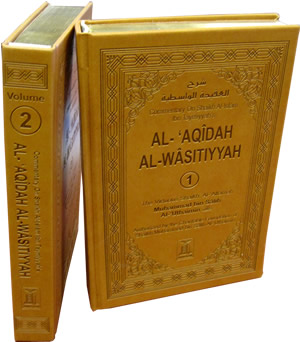


 Allah (may He be Praised and Exalted) mentions in this Ayah fivefundamentals of Iman: To believe In Allah, the Last Day, His angels, Books, and Messengers. These are five matters upon which Islam is based in all its aspects. Allah (Glorified and Exalted be He) also states:
 AbdurRahman.Org
You must be logged in to post a comment.