Share this, Baarakallaah Feekum: [“One who guides to something good has a reward similar to that of its doer” - Saheeh Muslim vol.3, no.4665] [This website protects the copyrights of the authors/publishers. The Content is posted on this website with implicit/explicit permission from content owners]
Share this, Baarakallaah Feekum: [“One who guides to something good has a reward similar to that of its doer” - Saheeh Muslim vol.3, no.4665] [This website protects the copyrights of the authors/publishers. The Content is posted on this website with implicit/explicit permission from content owners]
Alhamdulillah – all praise is due to Allah Who made the path to Him easy for those who really believed, the One Who made the path of guidance leading to His pleasure and He made the sign of following the Messenger صلى الله عليه وسلم as evidence. And alhamdulillah for His Decrees, the Universal and the Legislative ones. Alhamdulillah – for He deserves all the Praise. Wa ash-hadu al-laa ilaha ilAllah – and I bear witness that no god deserves worship except Allah, the True God, without a partner or an associate. And I bear witness that Muhammad ‘abduhu, al-Mustafa, (is) His chosen slave and Messenger and Prophet, the truthful one, who is inspired and sent as a mercy to mankind, an evidence against all those who rebel.
Allah subhana wa ta’aala, when He got Adam down to earth, He sent him down by a Decree, manifesting His perfect Attributes and Actions, so that Adam returns to his earlier, best conditions. He wanted, subhanahu wa ta’aala, to make Adam and his offspring taste from the toils of this life, and its worries and concerns, that which will make him magnify and make them magnify the value of entering the Abode of Bliss again, because the opposite is manifested by its opposite, and if they were to be raised in the Abode of Bliss, they wouldn’t have estimated its proper value.
He also, subhana wa ta’aala, wanted to command them and to test them and to try them, and Paradise is not the Abode for checking legal responsibility, so He sent them down to Earth. And in return, He compensated for that with the best of rewards, which would not have been possible to attain without His Commands and Legislations. And He subhanahu wa ta’aala wanted to make from them Prophets and Messengers and friends and martyrs, loving them and they love Him. So He left a free encounter between them and between His enemies, and tried them through that. And when they preferred that which leads to their Creator, and exerted themselves and their wealth in His Pleasure and in that which He loves, they attained from His Love and from His Pleasure and Nearness to Him, that which would not be possible to attain without all of this happening – sending them for the place of trials and checking.
He, subhana wa ta’aala, is qualified with the best Names: the Oft-Forgiving, the Most Merciful, the Oft-Pardoning, the Clement One, the One Who lifts in honor, and the One Who humiliates to disgrace, the One Who gives life and causes death, and it is inevitable that the manifestations of these Names occur, and thus, His Hikmah, His Wisdom was to send Adam down and his offspring in an abode, manifesting upon them that, which is entailed by His Beautiful Names: forgiving whomever He wishes, having Mercy upon whomever He wishes, lifting in honor whomever He wishes, disgracing in humiliation whomever He wishes, lifting in might whomever He wishes, and avenging from whomever He wishes, giving and taking – all in accordance with His Wisdom, Knowledge and Justice.
He subhanahu wa ta’aala, is al-Malik, the King, and the King, He is the One Who commands and prohibits, the One Who commands and forbids, the One Who gives reward and the One Who punishes, the One Who honors and the One Who humiliates, so His Kingship entailed that Adam and his offspring be in an abode, upon them manifested the rulings of the King; then He takes them to an Abode, perfecting what His Decrees entail. He subhana wa ta’aala sent them , to an abode in which their belief in the Unseen is the beneficial belief, whereas the belief in the witnessed, it is such that everyone will believe on the Day of Resurrection, when, at that time, no soul will be availed except if it believed in the Unseen. So if they were created in the Abode of Bliss, they wouldn’t have attained the rank of believing in the Unseen, and the enjoyment and the honor cannot be attained without the belief in this Unseen. As a consequence of their belief in the Unseen, they will be in the Abode of enjoyment and honor.
And Allah subhana wa ta’aala created Adam from a hold: He held a Hand-full from all earth, and the earth has the good and wicked, the easy and difficult, the honorable and the wretched and the mean. The Prophet صلى الله عليه وسلم said, ‘Allah created Adam from a hold of a Hand-full from all earth, and so the children of Adam came like the earth. From them is the white and the black and the red and the yellow, and between them, and the easy and the difficult, and the wicked and the good.’ And this hadith is of authentic narration. So He knew subhana wa ta’aala, that in the loins of Adam, there are those who are not fit to be in His Abode, so He brought them down to an abode to extract from them the good and the wicked from their loins, then He distinguished them separately in two Abodes, making the good the ones deserving His Nearness in His Abode of Paradise, and as to the wicked to be the inhabitants of the Abode fitting the evil and wicked ones. That’s why Allah said, ‘In order that Allah may distinguish the wicked disbelievers from the good believers and put the wicked, one on another, heap them together and cast them into Hell; those, it is they who are the losers.’ And when He subhana wa ta’aala knew that amongst his offspring, Adam’s offspring, there are those who are not fit for Allah’s Closeness and Nearness, He threw them down to an abode from which He extracted those and (will) send them to the abode that fits them. Perfect Wisdom and penetrating Will, and this is the Taqdeer of al-Aziz al-Aleem, this is the Decree of the All-Mighty, the All-Knowing.
And when He said to His angels – ‘And remember when your Lord said to the angels: ‘Verily I am going to place mankind, generations after generations, on earth’, they said, ‘Will You place therein those who will make mischief therein and shed blood, while we glorify You with praises and thanks?’, He answered them, ‘I know that which you don’t know.’ Then He made His Knowledge manifested to His slaves and to His angels, in that which He made, on earth, from the special of His creation and His Messengers and His Prophets and His friends, and from those who draw near(ness) to Him, exerting themselves and their lives for His Love and for His Pleasure and content, while struggling against their lusts and their desires, leaving that which is beloved to them in order to draw nearer to Him, abandoning their lusts for His Pleasure, exerting their blood and themselves in His love and praising Him day and night, worshiping Him while facing the impediments of desire and lusts, and the self and the enemy, while you, the angels, worship Me without any impediment opposing you, and without any lust overwhelming you, and without an enemy facing you; your worship of Me is just like your breath. Furthermore, I want to make manifest that which is hidden from you in relation to My enemy and his war against Me and his arrogance, taking the path against My Pleasure. This and that were hidden in the father of mankind and the father of Jinn. So He brought them both down, making manifest that Knowledge which was known only to Him subhanahu wa ta’aala, and making manifest His Wisdom, and His Decree was perfected and executed, and then it became clear to the angels, that Knowledge which Allah kept from them and which they knew not.
And since He subhana wa ta’aala loves the patient ones, and loves the good-doers, and those who fight in His Cause in ranks solidified, and those who turn to Him in repentance, and those who purify themselves in His Pleasure, and those who love gratitude – and His Love is the utmost of honor – then accordingly, His Hikmah, His Wisdom, is to put Adam and his offspring in an abode to bring forth these qualities, through which they can attain the highest of His honors from His Love. And thus, their sending down to the earth is from the greatest favors upon them. ‘But Allah choses for His Mercy whom He wills, and Allah is the Owner of great Bounty.‘
And He subhanahu wa ta’aala wanted to have from Adam’s offspring an offspring who will receive His Help and Love and they love Him. His Love of them is their greatest objective and perfection, and this would not be manifest except by agreeing to His Pleasure and following His Command, and relinquishing the wills of the self and its desires, so He brought them down to an abode, commanding them therein and forbidding them from what He forbade them, so they carried on His Commands and kept away from His Prohibitions, attaining through that their love of Him, so He gave them His Love. And this is from His Perfect Wisdom and Perfect Mercy.
He subhana wa ta’aala, when He created His creation in states and conditions and many forms, part of His Decree is that He made Adam and his offspring excel over many of His creation; He made their ‘ubudiyyah to Him, their slavery in worship of Him, the best of their ranks. It is affirmed that Allah subhana wa ta’aala sent Jibril to the Prophet صلى الله عليه وسلم , giving him the choice to choose between to be a king-Prophet, or a slave-Prophet. He looked at Jibril as if consulting him. Jibril indicated to him, ‘Be humble’, so he said, ‘Rather I choose to be a slave-Prophet.’ And this hadith is reported by Ahmad and others and its chain is sahih, is correct. And Allah mentioned him, the Prophet صلى الله عليه وسلم , as a slave in the highest mentioning of ranks, in the rank of ‘Isra, of Ascension to Heaven; He called him a slave worshiper, and in the rank of da’wah and in the rank of challenges, He called him ‘abd, slave. In the rank of Isra’, He subhana wa ta’aala described him and mentioned him, ‘Glorified be He (Allah) Who took His slave, Muhammad…‘ – He didn’t say, His Messenger Muhammad, He didn’t say His Prophet Muhammad – ‘for a journey by night from the Sacred Mosque’, the Sacred Haram, ‘to the farthest mosque’ in Jerusalem, in al-Quds, denoting that he attained this rank of ‘ubudiyyah, of slavery to Allah, and this is at the highest and most perfect station a person can reach.
And in the station of da’wah, in Surah al-Jinn, ‘(It has been revealed to me that) When the slave of Allah (Muhammad صلى الله عليه وسلم )‘ – He didn’t call him His Messenger, He didn’t call him His Prophet here – ‘stood up invoking (his Lord Allah) in prayer to Him they (the Jinns) just made round him a dense crowd as if sticking one over the other (in order to listen to the Prophet’s recitation).‘ At this da’wah station, He called him, the slave.
And in the station of challenge also He called him a slave, as in Surah al-Baqarah 2:23, ‘And if you (Arab pagans, Jews, and Christians) are in doubt concerning that which We have sent down (i.e. the Qur’an) to Our slave (Muhammad صلى الله عليه وسلم), then produce a Surah (chapter) of the like thereof and call your witnesses (supporters and helpers) besides Allah, if you are truthful.’ A station of challenge. And in the sahihain, al-Bukhari and Muslim, in the hadith of intercession and when the Prophets direct people to go to whom? To go to the Prophet صلى الله عليه وسلم; listen to Jesus peace be upon him, to ‘Isa ‘alayhi salaam, saying to them, ‘Go to Muhammad, a slave whom Allah subhana wa ta’aala forgave him his past and future sins’, indicating that he صلى الله عليه وسلم attained this greatest and most perfect station, and this is the station of ‘ubudiyyah to Allah, slavery to Allah.
And if this ‘ubudiyyah to Allah has this level, then His Wisdom entailed that Allah made Adam and his offspring reside in an abode to work for this rank through their obedience to Him and through drawing nearer to Him in that which He loves and abandoning and relinquishing their familiarities, what they prefer, for His Sake, and this therefore, is from His perfect Bounty and Favor upon them.
He subhana wa ta’aala wanted His slaves, whom He bestowed upon them from His Bounty, wanted them to appreciate the Bounty so that they become more loving of Him and more perfect in their gratitude, and more in their enjoyment of what He gave them, so He subhana wa ta’aala made them see what He does to His enemies and what He prepared for them of punishments and all sorts of painful torments. This would not have been, without having them on earth and testing and trialing them, giving success to whom He wishes, as Mercy and Favor from Him, and humiliation to whom He wishes, entailed by His Wisdom and Justice, and He is All-knowing and All-Wise. Each of them received what they received because to him – either one – is the proper place: one receiving the Mercy and the Bounty and fitting for it, and the other not fit for that, and therefore dealt with His Justice. And there is no doubt when the believer sees his enemy and the enemy of the One he loves, and Who is most beloved to him, Allah, seeing him going through the punishments, while he is enjoying the Mercy and the Bliss of Allah, then his pleasure increases and his enjoyment intensifies. And the Favors will be perfected.
And He subhana wa ta’aala created us – created them to worship Him, this is the objective sought: Allah says what means, ‘I have created Jinn and mankind for the sole purpose of worshiping Me Alone,’ and it is known the perfected ‘ubudiyyah requested from the creation would not occur in the Abode of Bliss and other living, rather it occurs in the abode of trials and tests. As to the Abode of Bliss, that’s an Abode of enjoyment and favors, it is not an Abode for testing and trials and legal checking of responsibility. So it is from the Favor of Allah upon Adam and his offspring that He made them examine and see what their enemy did to them and to their father, so they are to be prepared and take guard. And if it is said, ‘It would have been possible that He may not try them with their enemy’, then it is to be said, ‘It preceded that Allah subhana wa ta’aala created Adam and his offspring in a form which entails their mixing with the enemy and to be tried by him, and if He would have wished, He would have created them like the angels: intellect without desire. So in this case, the enemy would not have a way to them. But had they been created on this nature, there would have been creation other than the creation of the children of Adam. The children of Adam had been formulated on intellect and desire, and that’s why they have to face the enemy.’
And since man’s happiness is in Allah’s Love, and since the true love can be attained when the beloved is given precedence and preference over everything else from the desires of the self, and since this requires hardship in obedience and to attain His Pleasure, in this way, the love really settles and its affirmation becomes known through such struggles. As such then, His Hikmah, His Wisdom, Allah’s Wisdom entailed bringing them to this abode which is engulfed with desires and what the self loves, in order for them to attain His Love and giving Him preference and precedence over everything else. And that’s why they can bear the difficulties and (have) patience against temptations and misguidance. Through that, the authority of love intensifies and its tree in the heart grows and its fruits on the limbs sprout, because the true love is the one which is affirmed despite the impediments, and the other love which is conditional upon pleasure, good health, is not affirmed when it is faced by impediments and oppositions, because the thing which is dependent upon a conditional thing, will not exist when the condition is not existing. And anyone who loves you for a certain objective, he will turn away from you when his objective is over. And there is a difference between the one who worships Allah in all of his conditions, happiness, prosperity, distress, adversity, testing and trials, from the one who worships Him only in conditions of prosperity and happiness.
And since to Allah belongs all the perfect Praise, then, the manifestation of the causes which He is to (be) praise(d) for them, this is entailed by the fact that He is the Praised One, and that it is binding to His Praise. How is that? Because the causes are of two types: a bounty and a justice, and He is praised in all of that. Therefore, it is inevitable that the causes of justice be manifested so that the perfect Praise is attained, which He deserves. In the same manner, that He subhana wa ta’aala is praised for His Favors and Bounties and Rewards, He is praised for His Justice and Avenge and Punishment, because all of that originates from His Might and Wisdom. And that’s why He subhana wa ta’aala pointed to this so many times, as in Surah ash-Shu’ara, where He mentions at the end of each story from the stories of the Messengers and their nations, He mentions the following verse, in (Chapter) 26, meaning, ‘Verily! In this’ – what happened to the Messengers in their confrontation with their nations and the punishment that came to their nations when they rejected – ‘is indeed a sign (or a proof), yet most of them are not believers. And verily, your Lord! He is truly the All-Mighty, the Most Merciful.’So here, He tells us that this is coming from His Might, which comprises His Perfect Ability, and from His Wisdom, which comprises His Perfect Knowledge and putting things in their fitting places. So, He put His Favor and safety to His Messengers and their followers, and put His Anger and Revenge and destruction on their enemies, each in its proper place, because of His two Attributes: ‘Izza wa Hikmah – Might and Wisdom. And that’s why He subhana wa ta’aala, after He tells us about His Decree between the people of happiness and people of wretchedness and the destiny of each of them to their respective abodes, which do not fit except them, and which his wisdom cannot entail except that, He said, (in Chapter) 39:75, which means, ‘And you will see the angels surrounding the Throne, exalting [Allah] with praise of their Lord. And it will be judged between them in truth, and it will be said, “[All] praise to Allah, Lord of the worlds, the Lord of all that exists.”’
On this one we stop, and we continue this subject inshaaAllah tomorrow, and this is based on Imam Ibn Qayyim’s rahimahullah discussions on the Wisdoms of Allah subhana wa ta’aala and His creation, and this is from his book – based upon such discussion which he had in his book, ‘Miftahu Daarus-Sa’aadah’ – ‘The Key to the Door of Happiness’.
We ask Allah subhanahu wa ta’aala to have mercy on Imam Ibn Qayyim rahimahullah and to make us from the people of the Abode of Happiness, al-Jannah.
Wa salAllahu ‘ala Muhammadin wa ‘ala aalihi wa sahbihi wa sallam. [end of part 1]
Part 2 –
Bismillahir-rahmanir-rahim. All praise is due to Allah, the Most High, the Originator and Creator of the heavens and the earth. He decrees what He wills, and He does what He wills. He subhanahu wa ta’aala brought Adam to earth, put him and his offspring in an abode, commanding them and forbidding them, in order to bring forth from them those that He loves and they love Him. His Love of them is their utmost objective for perfection and the most of nobility they can attain, and such objectives, noble and high, cannot be achieved except in complying with what pleases Allah and following His Decrees and Commands, and abandoning the self and its lusts. His Wisdom subhanahu wa ta’aala made them excel over eachother in order those upon whom He bestowed the Mercy give gratitude to Him and for them to know that they were given this favor and this honor, and were they all to be equal in the favor and safety, then no one having favor would really estimate its value and would not exert at all thanks as it should be exerted, because he would see of the others the same as his condition, all equal in favorability. But from the main causes for extracting the shukr, the gratitude, is, that those who receive Allah’s na’mah and favor, sees his condition in an opposite condition to others, not forgetting that there is nothing that Allah loves most from the slaves more than his humility and humbleness and submissiveness before His Hands subhana wa ta’aala, and poverty to Him, and this is not achievable in the abode of endless Bliss, where there is perfect Bliss and there is no accountability and no legal responsibility. The causes that will bring forth the humility and humbleness from man to Allah, for them to be in the Abode of endless Bliss, is not perceivable, because this would be mixing together two opposites. And that’s why they are here, in order to bring it forth here on earth, and to prove themselves.
And He subhana wa ta’aala, to Him belongs the Commandment and Creation, and the Commandment is His Legal Ways with which He sends His Messengers and brought down His Books, and the Jannah is not Daarut-takleef, an abode for legal checking of responsibility. It is an Abode of Na’eem, Pleasure and Bliss. So, His Hikmah, subhana wa ta’aala, His Wisdom, entails extracting Adam and his offspring to this abode here, upon them, the rulings and the decrees to be applicable, in order to manifest from them what is entailed by His Commands. Since we know that His Action subhana wa ta’aala is from what is entailed by His Perfect Names and Attributes, similarly, His Amr and Sharra’, His Command and His Legal Ways and what they produce from reward and punishment, all of this is from what is entailed by His Names and Attributes. And Allah directed to this meaning in many parts of His Book; listen to what He said in Surah al-Qiyaamah verse 36, (which means), ‘Does man think that he will be left Suda [neglected without being punished or rewarded for the obligatory duties enjoined by his Lord (Allah) on him]?‘ – functionless, without being commanded nor forbidden, nor to be punished or rewarded. And, you know, this is obviously in opposition to the perfection of Allah’s Wisdom and His Ruboobiyyah, His Lordship, and His Might, wa ‘Izzati. And His Wisdom does not fit to have such a neglected creation. And that’s why He subhana wa ta’aala, in this Statement, look at it carefully: ‘Does man think that he will be left neglected?‘ – this is denunciation for anyone who claims this to be the case. Similarly, when He said in Surah al-Mu’minoon 23 verse 115, (which means), ‘Did you think that We had created you in play (without any purpose), and that you would not be brought back to Us?‘ It’s not befitting His Wisdom. Next verse: ‘So Exalted be Allah, the True King, La ilaha illa Huwa (none has the right to be worshipped but He), the Lord of the Supreme Throne!’ He glorifies Himself, declared it above any imperfection in this respect, because this is in opposition to what is entailed by His Names and Attributes, subhana wa ta’aala. Many are the verses like this in the Qur’an.
Add to this the fact that Allah subhana wa ta’aala loves from His slaves many things to be done, but these cannot be done without the causes that lead to them, and then cannot be done except in this Daar, in this abode of tests and trials. For He subhana wa ta’aala loves the patient and the persevering, and He loves those who give gratitude, and He loves those who fight in His Way, and He loves those who often repent, and loves those who are pure and purify, and there is no doubt that the manifestation of these beloved things, without their causes, is not perceivable. Impossible! And Allah subhana wa ta’aala loves taubah from His slaves, and He is so pleased with it. Allah is more pleased with the repentance of His slave than a man who encamps at a place where his life is jeopardized but he has his riding animal carrying his food and water. He then rests his head and sleeps for a short while and wakes to find his riding animal gone. He starts looking for it and suffers from severe heat and thirst or what Allah wished him to suffer from. He then says, ‘I will go back to my place.’ He returns and sleeps again and then, getting up, he raises his head to find his riding animal beside him, as in Sahih al-Bukhari, Vol 8, 320. What is meant here is that this Pleasure of Allah is in response to the taubah from the slave, to the repentance from the slave, and therefore repentance and sin are inter-related and they are causes which draws the Pleasure of Allah. Because it is impossible for what is entailed to occur without that which entails it. So this Pleasure is due to the taubah, which is related to the sin, and it is impossible for this to occur in the Abode of Bliss, because there is no sin in the Abode of Bliss. And since this Pleasure to Allah is so beloved than its non-existence, then His Love necessitated to create its causes, which would lead to it, and which are beloved to Him. And that’s why man is in this abode of trials and tests and sins and repentance, with all these causes that would lead to that which is beloved to Allah and therefore for His Pleasure.
Furthermore, Allah made Paradise an Abode of Reward, and divided it into ranks, people dwelling in different ranks according to their deeds. And on this condition Allah created it, because of the Wisdom entailed by His Names and Attributes. Paradise are levels on top of levels, and between each two levels is as that which is between the heavens and the earth, as came in the hadith reported by al-Bukhari, from the Prophet صلى الله عليه وسلم, ‘Paradise is 100 levels, between each two levels is that which is between the heavens and the earth (from a distance).’ And the Wisdom of Allah subhana wa ta’aala necessitates the habitation of these levels, and that it will be established, and differences between levels of people in these different ranks in accordance with their deeds, as therefore entailed by His Wisdom subhana wa ta’aala. And it is, as more than one of the Righteous Predecessors has mentioned, they are saved from the Fire of Hell by the Forgiveness and Pardoning of Allah, and they will enter Paradise by His Favor and Bounty and Forgiveness, and they will be divided into the ranks and levels and abodes within Paradise in accordance with their deeds. So the entrance and admittance to the Paradise originally is by the Bounty and Favor and Forgiveness of Allah and His Mercy, and this is what explains the hadith of the Prophet صلى الله عليه وسلم, ‘None of you will enter Paradise by his deeds.‘ They said, ‘Nor even you, O Messenger of Allah?’ he said, ‘Even me.’ What he intended here صلى الله عليه وسلم, is the forbiddance to or negating the origin of admittance, and this is related to the Mercy and Bounty of Allah and His Forgiveness; and what is negated is the kind of trade, i.e. our works for Jannah. Because there is no comparison between man’s righteous deeds, even though they are beloved to Allah, and what Allah gives him from the Favors. Our deeds cannot stand to equate the Favors of Allah subhana wa ta’aala in no way. In fact, they will fall short in comparison with the least of His Favors upon us. And had it not (been) therefore for the Mercy of Allah upon His slaves, He wouldn’t have admitted them to Paradise. Because the deeds of man, even if they are so much, they on their own are not or do not necessitate the entrance to Paradise. What is intended therefore, is that His Wisdom, subhana wa ta’aala, necessitated the creation of Paradise on different levels, and to populate them with Adam and his offspring, in these levels, in accordance with their deeds, and this by itself entailed sending them to this abode of action and striving, where they are going to be different in terms of their deeds.
He created Adam and his offspring generations after generations, as Allah spoke about this in Surah al-Baqarah, Chapter 2 verse 30, (which means), ‘And (remember) when your Lord said to the angels: “Verily, I am going to place (mankind) generations after generations on earth.’ And as He subhana wa ta’aala said also in Surah al-An’am 165, (which means), ‘And it is He Who has made you generations coming after generations, replacing each other on the earth.’ And Allah said in Surah al-A’raf, Chapter 7 :129, (which means), ‘It may be that your Lord will destroy your enemy and make you successors on the earth, so that He may see how you act?‘ So Allah intended to remove Adam and his offspring from this succession on earth to inherit him the Abode of Bliss, and He subhana wa ta’aala knew in His Foreknowledge that Adam and his offspring are weak and that they may hasten to that which is minimal and prefer it for that of the long-run in the Hereafter. Allah He knew, He created him, He knew his nature, so His Wisdom, subhana wa ta’aala, entailed admitting him to Paradise in the first place to recognize and to see its Bliss which he saw it really, in order what? In order what? So that he yearned to it, he longs to it and becomes more keen to return to it and becomes more intense in seeking it. Because loving something, requesting it, yearning, longing to it, is entailed by its examination, is entailed by examining it. Once it’s examined, once it is seen, then the attachment, the longing. So anyone who examines that which is good and sweet, he will be motivated intensely to attain, for when the self tastes, it longs to the thing. And that’s why, when the slave tastes the sweetness of iman, of faith, and it intermingles with his heart, it becomes established, and nothing will affect it. In Sahih Bukhari and Muslim, from the hadith of Abu Hurairah, illustrating this point, ‘Allah asks the angels, saying to them, ‘What are my slaves asking Me?’ The angels respond, ‘They ask You Paradise.’ ‘Did they see it?’ They say, ‘No.’ He says, ‘How about if they saw it?’ ‘Had they seen it, they would be more intensely requesting it and seeking it.’ So His Wisdom subhana wa ta’aala necessitated that He showed their father Paradise and made him dwell in it. Then He related to his offspring, his, Adam’s story therein, so they all became as if they saw it with their father. And those who had been created for it, responded and hastened to it, not looking for the early gains in this life, rather, they prepare themselves for it and looked at it that it was taken away from him by his enemy: shaytan. And therefore he looks at it as his first Abode, longing for it, always yearning to it, to his Abode, to his first home. And he rahimahullah put the following poem, illustrating this point:
‘And come for the Jannaat of bliss, it is your first home and therein is your camps, but we are the captives of the enemy, so do you see we return to our homes and be saved.’
So the secrets of all these angles is that Allah subhana wa ta’aala in His Fore-decree and in His Wisdom, is that the sought objectives cannot be attained without it’s causes, causes which Allah made them means to attain these goals, and from these goals is the highest in bliss and most magnificent in bliss, and therefore it cannot be attained except in causes which He had set leading to it. And imagine the lower objective that we encounter, if they cannot be attained except by their respective causes, though weak and disconnected many times, like gaining the food, looking for food, looking for drink, looking for clothing, looking to have children, wealth, prestige, in this life; so how it could be under your delusion that the attainment of the most highest objectives and the most noble, would be without causes leading to it, and that these causes cannot be except in this life, in this abode of striving and cultivation. So therefore, consequently, habitating Adam and his children in this land, on this earth, and creating for them the means for them to utilize, to reach that greatest objective of bliss, is from His Perfect Bounty and Favor upon them.
Not to forget, the other secret is that He subhana wa ta’aala made the Message and Prophethood and love and speaking to whomever He spoke to and slavery to make from the most noble of His creation, so He put them in an abode extracting from them Prophets, sending them the Messengers, taking from them beloved to Him, speaking to Musa directly and taking from them martyrs and slaves and friends and specials who love Him and He loves them, and therefore, sending them to this abode is from the perfection of His Wisdom, from His Bounty, Favors and goodness.
And from the secrets is that He manifested for His creation what is entailed by His Names, subhana wa ta’aala, and also He made Himself known to His creation by His Actions, His Names and His Attributes as well, and in that which He put forth amongst them from His friends and from His enemies, and gave them help against them and humiliating them, the enemies, responding to those who responded to Him, fulfilling their needs, making them turn in all sorts of good and evil, in all of this making it known to them that He is their Lord and He is their King, and that He is Allah, la ilaha illa hu – none has the right to be worshiped but He, and that He is the One, All-Knowing, All-Wise, All-Hearing, All-Seeing, the True God, and anything besides Him or to the exclusion of Him is baatil/false. And thus, the evidences for His Rububiyyah, for His Lordship, and His Tawheed on the earth is compounded and His slaves knew Him and attested to His Tawheed, and the losers rejected Him and committed shirk, unjustly and arrogantly.
Anyone who, therefore, ponders His Signs witnessed on earth and His Signs heard on this earth and His Signs seen, and their effects, would come to know His perfect Wisdom in habitating Adam and his offspring in this abode for an appointed term. Because verily Allah had created Jannah, Paradise, for Adam and his offspring, and He made the angels therein servants for Adam and his offspring, however, His Wisdom necessitated that He created for them an abode from where they take provisions to the other One which He created for them, and that they will not attain it except with these provisions, as Allah subhana wa ta’aala said about this abode in Surah an-Nahl 16:7, – this is the example of moving on this earth from one place to the other, then how about the movement from this life to the Next one? – (which means), ‘And they carry your loads to a land that you could not reach except with great trouble to yourselves. Truly, your Lord is full of Kindness, Most Merciful.’ So if this is applicable to moving from one place to the other in this life, that it requires some great trouble, then what about the case of moving from this life to the Abode in the Hereafter? And Allah subhana wa ta’aala said also with the same meaning in Surah al-Baqarah, (which means), ‘And take a provision (with you) for the journey, but the best provision is At-Taqwa (piety, righteousness, etc.). So fear Me, O men of understanding!’
So the deceived ones sold their houses for the cheapest and most degradable price, and the successful ones sold themselves and their wealth and put it a price for Paradise, and so they won, and they won the great reward. Allah subhanahu wa ta’aala said in Surah at-Taubah 9:111, (which means), ‘Verily, Allah has purchased of the believers their lives and their properties; for the price that theirs shall be the Paradise.’ Nasallaahu min fadhlih – Nasallaahu min fadhlih.
So Allah did not expel Adam from it, except that He intends to return him to it in the most perfect way. It is as if, ‘O Adam, don’t be worried about My Saying to you, ‘Get out of it’ because it is for you that I created. I am the One Free of want concerning it, Paradise, and regarding everything else, and I am the One Who is Most Generous, Most Noble, and I don’t enjoy there anything, because I am the One Who feeds, but fed not (am not fed), and I am the Rich, Free from all want. Rather, come down to the abode of seeding, and if you spread the seed and the produce stands up firm and it becomes a harvest, then afterwards come, I will give you in full, return, that which you need most; one single seed for 10, to 700 folds, much more amplified reward, because I am Most Perfect in Knowledge concerning your benefit than yourself, and I am the All-Knowing, the All-Wise.’
We ask Allah subhana wa ta’aala to make us from those who plant the seeds and take care of it; we ask Him subhana wa ta’aala to amplify the reward in Paradise, in seeing His Face, inni huwa ‘ala kulli shayin qadeer, walhamdulillahi Rabbil ‘Alameen, wa la ilaha ilAllaha al-‘Aliyyul-Qadeer, wa Allahumma salli ‘ala Muhammadin wa ‘ala aali wa sahbih wa sallam, and may Allah’s Mercy be upon Iman Ibn Qayyim rahimahullah, wa salAllahu ‘ala nabiyyina Muhammadin wa akhira da’wana alhamdulillahi Rabbil ‘Alameen.
Transcribed (with minor additions in italic) by Sister Umm Abdalrahman
Share this, Baarakallaah Feekum: [“One who guides to something good has a reward similar to that of its doer” - Saheeh Muslim vol.3, no.4665] [This website protects the copyrights of the authors/publishers. The Content is posted on this website with implicit/explicit permission from content owners]
Share this, Baarakallaah Feekum: [“One who guides to something good has a reward similar to that of its doer” - Saheeh Muslim vol.3, no.4665] [This website protects the copyrights of the authors/publishers. The Content is posted on this website with implicit/explicit permission from content owners]
Share this, Baarakallaah Feekum: [“One who guides to something good has a reward similar to that of its doer” - Saheeh Muslim vol.3, no.4665] [This website protects the copyrights of the authors/publishers. The Content is posted on this website with implicit/explicit permission from content owners]
Share this, Baarakallaah Feekum: [“One who guides to something good has a reward similar to that of its doer” - Saheeh Muslim vol.3, no.4665] [This website protects the copyrights of the authors/publishers. The Content is posted on this website with implicit/explicit permission from content owners]
Share this, Baarakallaah Feekum: [“One who guides to something good has a reward similar to that of its doer” - Saheeh Muslim vol.3, no.4665] [This website protects the copyrights of the authors/publishers. The Content is posted on this website with implicit/explicit permission from content owners]
Share this, Baarakallaah Feekum: [“One who guides to something good has a reward similar to that of its doer” - Saheeh Muslim vol.3, no.4665] [This website protects the copyrights of the authors/publishers. The Content is posted on this website with implicit/explicit permission from content owners]
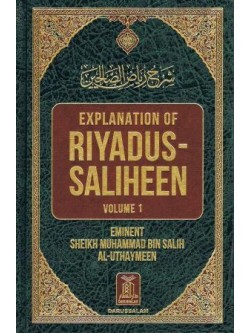
Classical collection of great hadeeth on matters affecting the life of the believer. Explanation is based upon Shaykh Ibn Al-‘Uthaymeen’s work {rahimahullaah}
Note: English Translation of Shaykh Utahymeen’s Explanation of Riyad-us-saliheen was published by darussalam, which can be purchased here. Note that only the first 2 volumes have just been printed covering the first 217 hadith (from total 1903) and more volumes will available as they are published. The full Arabic edition consists of 6 volumes so the English one will be much larger. Volume #1 – covers Hadith #1 to 86. Total # of pages: 609. Volume #2 – 97 to 217. Pages: 524
In this audio series, Dr. Saleh as-Saleh rahimahullaah covers the explanation of the first 60 hadeeth in Riyadus Saliheen. The Number in the below listing indicates Hadith Number in the Book.
Chapter 1: Sincerity and Significance of Intentions and all Actions, Apparent and Hidden (Read the Hadith Here)
Share this, Baarakallaah Feekum: [“One who guides to something good has a reward similar to that of its doer” - Saheeh Muslim vol.3, no.4665] [This website protects the copyrights of the authors/publishers. The Content is posted on this website with implicit/explicit permission from content owners]
Share this, Baarakallaah Feekum: [“One who guides to something good has a reward similar to that of its doer” - Saheeh Muslim vol.3, no.4665] [This website protects the copyrights of the authors/publishers. The Content is posted on this website with implicit/explicit permission from content owners]
Translation of Sahih Bukhari, Book 76: To make the Heart Tender (Ar-Riqaq)
Volume 8, Book 76, Number 422: Narrated Anas:
The Prophet said, “O Allah! There is no life worth living except the life of the Hereafter, so (please) make righteous the Ansar and the Emigrants.”
Volume 8, Book 76, Number 423: Narrated Sahl bin Sa’d As-Sa’idi:
We were in the company of Allah’s Apostle in (the battle of) Al-Khandaq, and he was digging the trench while we were carrying the earth away. He looked at us and said, “O Allah! There is no life worth living except the life of the Hereafter, so (please) forgive the Ansar and the Emigrants.”
Share this, Baarakallaah Feekum: [“One who guides to something good has a reward similar to that of its doer” - Saheeh Muslim vol.3, no.4665] [This website protects the copyrights of the authors/publishers. The Content is posted on this website with implicit/explicit permission from content owners]
Share this, Baarakallaah Feekum: [“One who guides to something good has a reward similar to that of its doer” - Saheeh Muslim vol.3, no.4665] [This website protects the copyrights of the authors/publishers. The Content is posted on this website with implicit/explicit permission from content owners]
Share this, Baarakallaah Feekum: [“One who guides to something good has a reward similar to that of its doer” - Saheeh Muslim vol.3, no.4665] [This website protects the copyrights of the authors/publishers. The Content is posted on this website with implicit/explicit permission from content owners]
Basic Rulings and Principles of Fiqh
Beneficial, Eloquent Classification and Differentiations
by Shaykh ‘Abdur Rahmaan ibn Nasr As-Sa’di (rahimahullaah)
Author of this greatly beneficial reference on Fiqh Foundations & Principles is Shaykh Abdur Rahmaan bin Nasr as Sa’di rahimahullaah. Explanation is by our Shaykh Dr Sami as-Sughair, hafidhahullaah, in 1427
Share this, Baarakallaah Feekum: [“One who guides to something good has a reward similar to that of its doer” - Saheeh Muslim vol.3, no.4665] [This website protects the copyrights of the authors/publishers. The Content is posted on this website with implicit/explicit permission from content owners]
Share this, Baarakallaah Feekum: [“One who guides to something good has a reward similar to that of its doer” - Saheeh Muslim vol.3, no.4665] [This website protects the copyrights of the authors/publishers. The Content is posted on this website with implicit/explicit permission from content owners]
Share this, Baarakallaah Feekum: [“One who guides to something good has a reward similar to that of its doer” - Saheeh Muslim vol.3, no.4665] [This website protects the copyrights of the authors/publishers. The Content is posted on this website with implicit/explicit permission from content owners]
Reviewing the Creed-Al-Hakami – Based upon the book of Shaik Al-Hakami – A’laam As-Sunnah Al-Manshoorah
Part 01 : Listen / Download Mp3 Here (Time 15:47)
[audio http://salafiaudio.files.wordpress.com/2014/09/reviewing-the-creed-alaam-as-sunnah-al-manshoorah-01-hakami-saleh-as-saleh.mp3]
Part 02 : Listen / Download Mp3 Here (Time 8:31)
[audio http://salafiaudio.files.wordpress.com/2014/09/reviewing-the-creed-alaam-as-sunnah-al-manshoorah-02-hakami-saleh-as-saleh.mp3]
Part 03 : Listen / Download Mp3 Here (Time 12:49)
[audio http://salafiaudio.files.wordpress.com/2014/09/reviewing-the-creed-alaam-as-sunnah-al-manshoorah-03-hakami-saleh-as-saleh.mp3]
Part 04 : Listen / Download Mp3 Here (Time 13:26)
[audio http://salafiaudio.files.wordpress.com/2014/09/reviewing-the-creed-alaam-as-sunnah-al-manshoorah-04-hakami-saleh-as-saleh.mp3]
Part 05 : Listen / Download Mp3 Here (Time 18:26)
[audio http://salafiaudio.files.wordpress.com/2014/09/reviewing-the-creed-alaam-as-sunnah-al-manshoorah-05-hakami-saleh-as-saleh.mp3]
Share this, Baarakallaah Feekum: [“One who guides to something good has a reward similar to that of its doer” - Saheeh Muslim vol.3, no.4665] [This website protects the copyrights of the authors/publishers. The Content is posted on this website with implicit/explicit permission from content owners]
Book of Shaykh Muhammad bin AbdulWahab At-Tamimi rahimahullaah Audio Series based on the explanation of Shaykh Uthaymeen rahimahullah
The treatise “Al-Qawaa’id-ul-‘Arba’ah” [The Four Rules regarding Shirk] is well known throughout the Muslim world and needs no introduction. It is a basic discussion that provides fundamental principles regarding Shirk. Although short in size, it is an extremely valuable source of knowledge and a must–read for all students desiring to further their understanding of Islaam.
In Part 01, Dr. Saleh As-Saleh explains from the Introduction of Author Shaykh Muhammad bin Abdul Wahhaab (rahimahullah): “I ask Allaah, the Most Generous, Lord of the Great Throne to befriend you in this world and the Hereafter, and to make you blessed wherever you may be. And (I ask) that He make you from those who when they are given, are thankful; when they are tested, are patient; and when they sin, seek forgiveness (from Allaah). For indeed these three characteristics are the true signs of happiness.“
Share this, Baarakallaah Feekum: [“One who guides to something good has a reward similar to that of its doer” - Saheeh Muslim vol.3, no.4665] [This website protects the copyrights of the authors/publishers. The Content is posted on this website with implicit/explicit permission from content owners]
The Three Fundamental Principles addresses the three questions which the person will be asked in the grave. This is the work of Imaam Muhammad bin Sulaymaan at-Tameemi rahimahullaah. Discussion based upon our Shaykh Ibn ‘Uthaymeen’s rahimahullaah and Shaykh Bin Baaz, rahimahullaah. Discussion also based upon Shaykh Saalih al-Fawzan’s and Shaykh ‘Abdullaah al-Fawzan’s may Allaah preserve them.
You can read the Translated Book at the below Links:
The Fundamentals Of Belief – An abridgement of ‘The Three Fundamentals’ An abridgement of ‘The Three Fundamentals’ (‘Thalaathatul-Usool’), entitled ‘Talqeen Usoolil- ‘Aqeedah lil-‘Aammah’ (Instruction in the fundamentals of Belief for the common people) , Translated by Dawud Burbank (rahimahullaah)
Share this, Baarakallaah Feekum: [“One who guides to something good has a reward similar to that of its doer” - Saheeh Muslim vol.3, no.4665] [This website protects the copyrights of the authors/publishers. The Content is posted on this website with implicit/explicit permission from content owners]
This summary outlines the fourteen key etiquettes of making Du’a (supplication) as detailed in the sermon. The etiquettes begin with praising Allah and sending blessings upon the Prophet before supplicating, followed by the importance of admitting one’s sins, as exemplified by the prayer of Prophet Yunus and the “Sayyid al-Istighfar.” The sermon emphasizes supplicating with humility, hope, and fear, and with firm determination, avoiding phrases like “if You wish.” Other crucial manners include being persistent in Du’a, making supplication in all states (both ease and hardship), and refraining from praying against oneself, family, or wealth. The physical aspects of Du’a are also covered, such as repeating the supplication three times, facing the Qibla, raising one’s hands, performing ablution (Wudu), and using a Siwak. Finally, the sermon highlights the significance of preceding one’s Du’a with a righteous deed and having a noble intention or objective behind the supplication.
بِسْمِ اللَّـهِ الرَّحْمَـٰنِ الرَّحِيمِ. الْحَمْدُ لِلَّهِ رَبِّ الْعَالَمِينَ وَصَلَّى اللَّهُ عَلَى نَبِيِّنَا مُحَمَّدٍ وَعَلَى آلِهِ وَصَحْبِهِ وَسَلَّمَ. In the name of Allah, the Most Gracious, the Most Merciful. All praise is for Allah, the Lord of the worlds, and may Allah’s peace and blessings be upon our Prophet Muhammad, his family, and his companions.
We continue the discussion on the subject of du’a. And last time we spoke about the conditions of du’a. And in addition to the fact that du’a has conditions to it, then there also there are etiquettes that makes it perfected. And from the etiquettes, this is the subject of today’s topic is theأَدَبُ الدُّعَاءِthe etiquettes and manners of du’a.
1. Praising Allah and Sending Blessings on the Prophet
From theأَدَبthe etiquette or manner in du’a is praising Allah subhanahu wa ta’ala and making salah upon the Prophet sallallahu alaihi wasallam before the du’a. Praising Allah and making salah upon his Prophet sallallahu alaihi wasallam before the du’a.
It is reported from Fadalah bin ‘Ubayd that while the Prophet alayhi salatu wassalam was sitting, a man came in and he prayed and said,اللَّهُمَّ اغْفِرْ لِيO Allah, forgive meوَارْحَمْنِيand have mercy upon me.
The messenger sallallahu alaihi wasallam said, “You hasted. If you pray and you sit, then praise Allah by all that which He deserves,وَصَلِّ عَلَيَّthen make salah upon me,ثُمَّ ادْعُهُthen invoke Him.”
So he directed him to praise Allah subhanahu wa ta’ala first and then make salah upon him alayhi salatu wassalam.
Then another man came and prayed. And this other man praised Allah subhanahu wa ta’ala and made salah upon the Prophet sallallahu alaihi wasallam. The Prophet alayhi salatu wassalam told him,
أَيُّهَا الْمُصَلِّي ادْعُ تُجَبْ “You the one who prayed, invoke Allah and you will be answered.”
This hadith is reported by at-Tirmidhi and by Abu Dawud and Sheikh al-Albani rahimahullah said that it isSahihin Sahih al-Jami’.
And he sallallahu alaihi wasallam said in the other hadith reported by at-Tabarani and others, he said,
كُلُّ دُعَاءٍ مَحْجُوبٌ “Every du’a is hindered,
meaning from being answered,
حَتَّى يُصَلَّى عَلَى النَّبِيِّ صلى الله عليه وسلم until salah upon the Prophet sallallahu alaihi wasallam is made.”
This is reported by at-Tabarani or in at-Tabarani in al-Awsat from ‘Ali radiyallahu ta’ala anhu. And also in al-Firdaws by ad-Daylami from Anas. And it is also reported raised to ‘Umar radiyallahu ta’ala anhu. But this is in at-Tirmidhi and Sheikh al-Albani rahimahullah graded it as hasan, graded it as hasan, as good.
2. Admitting One’s Sins and Wrongdoings
So this is the first etiquette. The second etiquette is admitting one’s sin and confessing of one’s mistakes and wrongdoings. And that’s why the du’a of Yunus alayhi assalam is from the greatest invocations, if it is not the greatest. Why? Because it comprised his confession and attestation to the oneness of Allah subhanahu wa ta’ala and His uniqueness. In addition to his confessing his sin and wrongdoing and doing injustice to himself, as Allah subhanahu wa ta’ala said regarding this in Surah al-Anbiya, chapter 21 verse 87.
فَنَادَىٰ فِي الظُّلُمَاتِ أَن لَّا إِلَـٰهَ إِلَّا أَنتَ سُبْحَانَكَ إِنِّي كُنتُ مِنَ الظَّالِمِينَ But he cried through the darkness (saying): “La ilaha illa Anta [none has the right to be worshipped but You (O Allah)], Glorified (and Exalted) are You [above all that (evil) they associate with You]. Truly, I have been of the wrong-doers.” (21:87)
And remember Dhun-Nun, Yunus, Jonah, when he went off in anger and imagined that we shall not punish him, meaning the calamities which had befallen him, but he cried through the darkness saying,
لَّا إِلَـٰهَ إِلَّا أَنتَ سُبْحَانَكَ “La ilaha illa Anta [none has the right to be worshipped but You (O Allah)], Glorified (and Exalted) are You [above all that (evil) they associate with You].
لَّا إِلَـٰهَ إِلَّا أَنتَ سُبْحَانَكَ إِنِّي كُنتُ مِنَ الظَّالِمِينَ Truly, I have been of the wrong-doers.”
Similarly, the situation holds regarding the great du’a known asسَيِّدُ الِاسْتِغْفَارِSayyid al-Istighfar, which is most superiorof istighfar, asking Allah subhanahu wa ta’ala for forgiveness, which is considered the best in structure. And one of the causes for its merits is that it involves the confession concerning sin and wrongdoing.
As came in the hadith of Shaddad bin Aws radiyallahu anhu from the Prophet sallallahu alaihi wasallam that he said,
سَيِّدُ الِاسْتِغْفَارِ Sayyid al-Istighfar, the most superior of istighfar,is for the slave to say,
اللَّهُمَّ أَنْتَ رَبِّي لَا إِلَهَ إِلَّا أَنْتَ خَلَقْتَنِي وَأَنَا عَبْدُكَ وَأَنَا عَلَى عَهْدِكَ وَوَعْدِكَ مَا اسْتَطَعْتُ أَعُوذُ بِكَ مِنْ شَرِّ مَا صَنَعْتُ أَبُوءُ لَكَ بِنِعْمَتِكَ عَلَيَّ وَأَبُوءُ بِذَنْبِي فَاغْفِرْ لِي فَإِنَّهُ لَا يَغْفِرُ الذُّنُوبَ إِلَّا أَنْتَ “O Allah, You are my Rabb, there is no true God worthy of worship but You. You created me and I am Your slave, and I am keeping to Your covenant and promise as much as possible or able to. I seek refuge in You from the evil I have done. I testify or confess of Your favor upon me, and I admit and acknowledge, and I confess to my sin, so forgive me, and no one forgives sins except You.” (Volume 8, hadith 318 in Sahih al-Bukhari)
The Prophet sallallahu alaihi wasallam said, “If somebody recites it during the day,
مَنْ قَالَهَا مِنَ النَّهَارِ مُوقِنًا بِهَا فَمَاتَ مِنْ يَوْمِهِ قَبْلَ أَنْ يُمْسِيَ فَهُوَ مِنْ أَهْلِ الْجَنَّةِ if somebody recites it during the day with firm faith in it and dies on the same day before the evening, he will be from the people of Paradise.
وَمَنْ قَالَهَا مِنَ اللَّيْلِ وَهُوَ مُوقِنٌ بِهَا فَمَاتَ قَبْلَ أَنْ يُصْبِحَ فَهُوَ مِنْ أَهْلِ الْجَنَّةِ And if somebody recites it at night with firm faith in it and dies before the morning, he will be from the people of Paradise.”
نَسْأَلُ اللَّهَ سُبْحَانَهُ وَتَعَالَى مِنْ فَضْلِهِWe ask Allah subhanahu wa ta’ala from His bounty.So this is the second, the second etiquette or manner.
3. Humbleness, Calmness, with Hope and Fear
The third one is being in a state of humbleness and calmness with hope and fear, with hope and fear.
Allah subhanahu wa ta’ala described His prophets alayhimussalam as in Surah al-Anbiya 21:90.
إِنَّهُمْ كَانُوا يُسَارِعُونَ فِي الْخَيْرَاتِ وَيَدْعُونَنَا رَغَبًا وَرَهَبًا وَكَانُوا لَنَا خَاشِعِينَ Verily, they used to hasten on to do good deeds, and they used to call on Us with hope and fear, and used to humble themselves before Us. (21:90)
So we answered his call and we bestowed upon him Yahya, where he said, “Verily they used to hasten on to do good deeds and they used to call on us with hope and fear. And they used to call on us with hope and fear and used to humble themselves before us.” This is the point of evidence. Verily, they used to hasten on to do good deeds, and they used to call on us with hope and fear and used to humble themselves before us. This is the third etiquette.
4. Firmness and Determination
The fourth etiquette, having firmness and determination when making the du’a or concerning the issue. As in the hadith reported by al-Bukhari and Muslim, and in Bukhari volume 8, hadith 351. Abu Hurairah radiyallahu ta’ala anhu said that Rasulullah sallallahu alaihi wasallam said,
لَا يَقُولَنَّ أَحَدُكُمْ اللَّهُمَّ اغْفِرْ لِي إِنْ شِئْتَ اللَّهُمَّ ارْحَمْنِي إِنْ شِئْتَ لِيَعْزِمِ الْمَسْأَلَةَ فَإِنَّهُ لَا مُكْرِهَ لَهُ “None of you should say, ‘O Allah, forgive me if You wish.’ ‘O Allah, be merciful to me if You wish.’ But he should always appeal to Allah with determination, for nobody can force Allah to do something against His will. Nobody can force Allah to do something against His will.”
This is the fourth etiquette, having firmness and determination when making the du’a or concerning the issue.
5. Insistence in Du’a
And the fifth one, the fifth etiquette is insistence in du’a. This is from the beautiful etiquettes which indicates the true hope for that which is with Allah azza wa jall. In addition to the fact that Allah subhanahu wa ta’ala loves those insisting in du’a as came in the hadith of ‘Aisha radiyallahu ta’ala anha. And this hadith is reported in at-Tabarani and others. And in it, the wording is
إِنَّ اللَّهَ يُحِبُّ الْمُلِحِّينَ فِي الدُّعَاءِ “Allah loves those who insist in du’a.”
I have to mention that with respect to the narration by ‘Aisha which we mentioned earlier, we didn’t mention concerning the degree of the hadith. This hadith,
إِنَّ اللَّهَ يُحِبُّ الْمُلِحِّينَ “Allah loves those who insist in du’a,”
as I said, is supported in at-Tabarani
فِي الدُّعَاءِ in ad-Du’a
and al-‘Uqayliفِي الضُّعَفَاءِ الْكَبِيرِin ad-Du’afa’ al-Kabirوابن عدي في الكاملwa Ibn ‘Adi fi al-Kamiland others from the way of Baqiyyah ibn al-Walid and who said that Yusuf ibn as-Safarعَنِ الزُّهْرِيِّ، عَنْ عُرْوَةَ، عَنْ عَائِشَةَfrom az-Zuhri, from ‘Urwah, from ‘Aisha,then he reported it.
Al-Hafiz Ibn Hajar said in his book al-Fath that at-Tabarani reported it in the du’a with good chain with trustworthy chain of narrators except that there is the point of known in hadith as ‘an’anah Baqiyyah ibn al-Walid from ‘Aisha. And there is criticism also by others to the narration and some have declared it weak and others considered it inauthentic and some of the scholars even considered it to be fabricated. This is with respect to the status of this narration.
6. Making Du’a in All Circumstances
We continue then. The sixth manner or etiquette,
الدُّعَاءُ فِي كُلِّ الْأَحْوَالِ making du’a under all circumstances,
under all circumstances, meaning at times of ease, at times of difficulty, under hardship. Because of the hadith reported by Abu Hurairah radiyallahu ta’ala anhu, he said that the Messenger sallallahu alaihi wasallam said,
مَنْ سَرَّهُ أَنْ يَسْتَجِيبَ اللَّهُ لَهُ عِنْدَ الشَّدَائِدِ وَالْكُرَبِ فَلْيُكْثِرِ الدُّعَاءَ فِي الرَّخَاءِ “Whoever is pleased that Allah or wants is that Allah subhanahu wa ta’ala responds to his du’a at times of hardship and distress, then let him make abundant du’a at the times of ease.”
7. Avoiding Du’a Against Oneself, Family, or Wealth
The seventh is avoiding du’a against one’s family, one’s wealth, and one’s self. Why? Because the objective of the du’a is to seek what is beneficial and to ward off harm. And making du’a against one’s family, wealth and self, there is no benefit in that. Rather this is pure harm upon the person. What he is going to gain from the corruption, for example, of his family, or destruction of his wealth, or of himself, etc. And that’s why in the hadith reported by Muslim, or collected by Muslim, the Prophet alayhi salatu wassalam said,
لَا تَدْعُوا عَلَى أَنْفُسِكُمْ “Do not invoke Allah against yourselves,
وَلَا تَدْعُوا عَلَى أَوْلَادِكُمْ and don’t invoke Allah against your children,
وَلَا تَدْعُوا عَلَى أَمْوَالِكُمْ and don’t invoke Allah against your wealth,
lest you may meet an hour where you ask Allah and He will respond to you.So this is the seventh etiquette.
8. Repeating the Du’a Three Times
The eighth etiquette is to repeat the du’a three times. To repeat the du’a three times, to repeat the invocation three times. As reported in Sahih Muslim from the hadith of Ibn Mas’ud, the lengthy hadith of Ibn Mas’ud, and that’s when the Prophet sallallahu alaihi wasallam finished his salah, he raised his voice, then he invoked Allah against Quraysh. And that when he used to make du’a, he used to make it in thrice.
ثُمَّ قَالَ: اللَّهُمَّ عَلَيْكَ بِقُرَيْشٍ Then he said, “O Allah, deal with Quraysh.”
اللَّهُمَّ عَلَيْكَ بِقُرَيْشٍ، اللَّهُمَّ عَلَيْكَ بِقُرَيْشٍ “O Allah, deal with Quraysh. O Allah, deal with Quraysh.”
9. Facing the Qiblah
The ninth etiquette is to face the Qiblah. Face the Qiblah. And in the hadith reported by al-Bukhari and Muslim, and it is in al-Bukhari volume 8, hadith 354. From Abdullah bin Zayd radiyallahu anhu qaal,
خَرَجَ النَّبِيُّ صلى الله عليه وسلم إِلَى هَذَا الْمُصَلَّى يَسْتَسْقِي فَدَعَا وَاسْتَسْقَى ثُمَّ اسْتَقْبَلَ الْقِبْلَةَ وَقَلَبَ رِدَاءَهُ “The Prophet sallallahu alaihi wasallam came to the Musalla and then he made du’a and sought Allah for rain, then he directed himself towards the Qiblah and turned his rida’, the upper garment, inside out.”
Allah’s messenger went out to this Musalla praying place to offer the prayer of Istisqa seeking Allah for rain. He invoked Allah for rain and then faced the Qiblah and turned his rida’, his upper garment inside out.
10. Raising the Hands
The tenth etiquette is raising the hands with du’a. Abu Musa al-Ash’ari radiyallahu ta’ala anhu said, and this hadith is in Bukhari and Muslim,
دَعَا النَّبِيُّ صلى الله عليه وسلم “The Prophet sallallahu alaihi wasallam made du’a,”
then he raised his hands,
وَرَأَيْتُ بَيَاضَ إِبْطَيْهِ “and I saw the whiteness of his armpits.”
And in the hadith of Ibn ‘Umar reported by al-Bukhari and also an-Nasa’i, the hadith of Ibn ‘Umar, may Allah be pleased with both of them, said that
رَفَعَ النَّبِيُّ صلى الله عليه وسلم يَدَيْهِ “The Prophet sallallahu alaihi wasallam raised his hands,”
وَقَالَ and he said,
اللَّهُمَّ إِنِّي أَبْرَأُ إِلَيْكَ مِمَّا صَنَعَ خَالِدٌ “O Allah, I declare myself free of what Khalid had done.”
And also from the hadith of Salman al-Farisi radiyallahu anhu reported by Abu Dawud and at-Tirmidhi, Ibn Majah, and Sheikh al-Albani considered it as Sahih or hasan rather good in Sahih al-Jami’, the hadith of Salman that the messenger sallallahu alaihi wasallam said,
إِنَّ رَبَّكُمْ تَبَارَكَ وَتَعَالَى حَيِيٌّ كَرِيمٌ “Your Rabb, Allah subhanahu wa ta’ala, most blessed and most high, is hayyun karim,one who He is bashful and generous.
يَسْتَحْيِي مِنْ عَبْدِهِ إِذَا رَفَعَ يَدَيْهِ إِلَيْهِ أَنْ يَرُدَّهُمَا صِفْرًا He is shy if His slave for His slave to raise his hands to him and then turns them empty.”
This raising of the hands applies to the general du’a, and to all cases where there is proof to raise the du’a, to raise the hands in du’a, like for example raising the hands in du’a while on the Safa and Marwa and in istisqa seeking Allah subhanahu wa ta’ala for rain. Yawm al-Jumu’ah, the day of Jumu’ah, istisqa while making the khutbah. Why we say this? Because there are invocations where hands are not raised, like the du’a upon entrance to the to the house or leaving one’s house, going out, or upon entrance to the toilet or leaving it, upon leaving it. There is no proof for raising the du’a under such situations, raising the hands rather under such situations. So therefore the guiding or the guidance in this is raising the hands is applicable to in cases of general du’a or when there is a proof indicating as such.
11. Using the Siwak
From the etiquettes is using the siwak, using the siwak to brush one’s teeth. And this is directed in the following manner. The du’a is worship by the tongue. And cleaning the mouth when making the du’a is a good etiquette. And that’s why the sunnah is replete regarding the legality of using the siwak for salah. And the reason is to clean the place where the dhikr is going to be established in the salah, where the remembrance of Allah subhanahu wa ta’ala is to be established.
12. Preceding Du’a with a Righteous Deed
From the etiquettes of du’a is to introduce before the du’a a righteous deed, like giving in charity or doing good to a poor person or offering two raka’ah or fasting, so that these righteous deeds be means for the du’a to be answered. The evidence for this is in the hadith of the three who went into a cave and a rock fell and closed the entrance to the cave, and so they were trapped there. And we discussed this hadith in the classes before. The Prophet sallallahu alaihi wasallam told us that each one of them sought means of nearness to Allah by a righteous deed which he did sincerely for Allah’s sake, and Allah then accepted the du’a of each person and made the rock move away finally and they came out safe. So this is a manner or etiquette to introduce a righteous deed before one’s du’a.
13. Performing Ablution (Wudu)
The thirteenth etiquette is al-wudu, al-wudu, making wudu, the ritual purification. As in the hadith of Abu Musa al-Ash’ari which is in al-Bukhari and in Muslim. May Allah be pleased with him. After the Prophet sallallahu alaihi wasallam finished from the expedition of Hunayn, the battle of Hunayn, and in the hadith,
فَدَعَا بِمَاءٍ فَتَوَضَّأَ “he called for water to be brought, so he made wudu,
وَرَأَيْتُ بَيَاضَ إِبْطَيْهِ and I saw the whiteness of his armpits.”
14. Having a Good Intention
The fourteenth etiquette, one’s aim should be good. One’s objective should be good. Like if one puts an objective as a means of nearness to Allah if his du’a is answered, that a righteous deed may be manifested. Like for example, saying, “Allahumma irzuqni malan, O Allah, give me wealth so I can spend it in ways of truth and to help by it Your deen, Islam.” Or, “O Allah, bestow upon me knowledge so that I can teach it, teach Your deen to the people and spread goodness.” “O Allah, bestow upon me a good husband or a good wife so that I suffice myself and protect myself from falling into haram,” and so forth.
This is indicated as in the du’a of Musa alayhi assalam in Surah Taha. Chapter 20, verses 25 to 35.
قَالَ رَبِّ اشْرَحْ لِي صَدْرِي وَيَسِّرْ لِي أَمْرِي وَاحْلُلْ عُقْدَةً مِّن لِّسَانِي يَفْقَهُوا قَوْلِي وَاجْعَل لِّي وَزِيرًا مِّنْ أَهْلِي هَارُونَ أَخِي اشْدُدْ بِهِ أَزْرِي وَأَشْرِكْهُ فِي أَمْرِي كَيْ نُسَبِّحَكَ كَثِيرًا وَنَذْكُرَكَ كَثِيرًا إِنَّكَ كُنتَ بِنَا بَصِيرًا [Musa (Moses)] said: “O my Lord! Open for me my chest (grant me self-confidence, contentment, and boldness). And ease my task for me; And make loose the knot (the defect) from my tongue, (i.e. remove the incorrectness from my speech) That they understand my speech, And appoint for me a helper from my family, Harun (Aaron), my brother; Increase my strength with him, And let him share my task (of conveying Allah’s Message and Prophethood), That we may glorify You much, And remember You much, Verily! You are of us Ever a Well-Seer.” (20:25-35)
What was the outcome? Allah subhanahu wa ta’ala answered his request and bestowed favor upon him.
And this is also indicated by the hadith of Ibn ‘Amr radiyallahu anhuma which is reported in Abu Dawud and Sheikh al-Albani rahimahullah considered it as hasan, good. He said that the Prophet sallallahu alaihi wasallam said, “If anyone of you comes to visit an ill person, then let him say, invoke Allah saying,
اللَّهُمَّ اشْفِ عَبْدَكَ يَنْكَأُ لَكَ عَدُوًّا أَوْ يَمْشِي لَكَ إِلَى صَلَاةٍ ‘O Allah, bestow your healing upon such and such person, so that he can stand to defeat an enemy of you, or that he walks to offer salah for You.'”
These are 14 manners in du’a and there is more but insha’Allah Ta’ala sufficient for today. I ask Allah subhanahu wa ta’ala to make this a benefit for myself and for all of you.
وَالْحَمْدُ لِلَّهِ رَبِّ الْعَالَمِينَ وَصَلَّى اللَّهُ عَلَى نَبِيِّنَا مُحَمَّدٍ وَعَلَى آلِهِ وَصَحْبِهِ وَسَلَّمَ. And praise be to Allah, the Lord of the worlds, and may Allah’s peace and blessings be upon our Prophet Muhammad, his family, and his companions.
Share this, Baarakallaah Feekum: [“One who guides to something good has a reward similar to that of its doer” - Saheeh Muslim vol.3, no.4665] [This website protects the copyrights of the authors/publishers. The Content is posted on this website with implicit/explicit permission from content owners]




 AbdurRahman.Org
You must be logged in to post a comment.