Notes Taken from Sheikh Abdul Qadir al Junaid’s explanationof Ibaana as Sughra from ibn Battah. Translated by: Abu Afnaan Muhammad
Click the below link
Islamic Knowledge – Islam, Sunnah, Salafiyyah

Notes Taken from Sheikh Abdul Qadir al Junaid’s explanationof Ibaana as Sughra from ibn Battah. Translated by: Abu Afnaan Muhammad
Click the below link
Put Tawheed First!!!
Shaykh Taamir Fatooh (may Allah preserve him upon good) said, from the tricks of shaytawn is to make the people belittle the studying of Tawheed and Aqeedatul-Islaamiyyah. From the deceptions of shaytawn is to beatify and rises the other sciences in the eyes and hearts of the people, before understanding Tawheed soundly and correct ones Aqeedah. No doubt all of the sciences of Islaam are important and they have their time and place, but Tawheed and correct Aqeedah must come first and foremost. It is from the tricks of shaytawn to mislead the Muslims from the correct path. It is from the tricks of shaytawn to belittle understanding Tawheed and correcting ones Aqeedah.
Aboo Abdir-Rahmaan Abdur-Raqeeb
insightaudio.com
The Noble Shaykh Taamir Fatooh (May Allah Preserve Him) is from the mashaayikh of Egypt and is a student of Shaykh Hasan Ibn ‘AbdulWahhaab Marzuq al-Banna and is highly recommended by Shaykh Hasan and Shaykh Adil as-Sayyid (May Allah Preserve Them).
Also from the etiquettes related to books is that one should make an effort to care for and reinforce their outer and inner parts as well as to keep them clean so that the books can be in a presentable condition that is befitting for others besides you.
This is since when a student of knowledge buys a book, he must have or should we say it’s preferred for him to have two types of intentions. The first is that he should intend to benefit from it in order to free himself from ignorance. And secondly, he should intend that others benefit from the book as well – such as either his wife or his children. Afterward, the books can either remain with that person (in his family) or they can be donated after him. Or perhaps one can give them away to someone as a gift or sell them, and so on and so forth.
So every time someone takes care of his books – whether by binding them or preserving them so that they can last longer in the future – the result of this is that his reward and recompense will be greater for doing that.
From the amazing stories about negligence shown towards books is what was reported by Al-Qiftee, author of the book Inbaa’-ur-Ruwaat, concerning the story about him and the book al-Ansaab of As-Sam’aanee. Perhaps I mentioned it to you before. Al-Qiftee was very enthusiastic for books so much so that he had gathered a collection of books that was from the best of what could be compiled.
He said: “The book al-Ansaab of As-San’aanee in the author’s own handwriting was presented to me, and it consisted of the second, third and fourth volumes, however, the first volume in the author’s handwriting was missing.” Even though there was a span of close to 250 years between the time of Al-Qiftee and that of As-Sam’aanee, he nevertheless purchased the three volumes and said: “So I bought them.”
Then some time had passed during which he would continuously ask people about this book trying to find the first volume. He kept asking about it and getting nothing in reply to the point that he thought the book was missing and that that was the end of it. Perhaps the book written in the author’s handwriting had been borrowed by someone and then went missing or it had gotten lost, and so on.
He went on to say: “Then one day, my servant brought me a parcel of legumes – i.e. a kind of vegetable – wrapped up in pieces of paper that appeared to be originally from a book. So I grabbed the paper before the legumes” – since they had no value to him compared to these pieces of paper – “and when I looked at it, behold it was the handwriting of As-Sam’aanee, which I recognized! I then took it to my copy of the book al-Ansaab and discovered that this page was from the first volume that was missing! So I rushed in haste to the one who was selling the legumes and found that only a few pages from it were still left. So I asked him: ‘Where are the rest of these papers?’ He replied: ‘We wrapped legumes with it and they are dispersed throughout the people’s homes.'” So he said: “Verily, to Allaah we belong and to Him we will return!”
Someone’s loss is another person’s gain! This one is sad because of his loss, while the other is happy because he found these pieces of paper which contain the handwriting of Al-Haafidh As-Sam’aanee that have no value to him and which he instead used to wrap legumes in and give out to people.
So it is said that he, i.e. Al-Qiftee, then spent a month mourning over knowledge and its people and for the book al-Ansaab of As-Sam’aanee.
We wanted to say by relaying this story that one must take special care of his books – whether by way of reinforcing them or by way of preserving them. If one has the pages of a book all over the place then it is easy that the pages will get lost. But if they are preserved and attached to each other, this is the best way to guarantee that they will continue to exist in your library.
The issues related to this subject are many. Perhaps what we mentioned here will serve as a reminder for some of the things that are required with regard to books. I ask Allaah to grant myself and you success, correctness, uprightness and guidance, and may the peace, praises and blessings of Allaah be on our prophet, Muhammad.
[End of the Lecture]
Taken from : The Student of Knowledge and Books : Shaikh Saalih bin ‘Abdil-’Azeez Aali Shaikh
Also from the etiquettes related to caring for books, even though this topic is vast and covers many aspects, is that a student of knowledge should review and examine his books from time to time. This means that he should not amass books without reviewing what he has. So, for example, he goes out and gets this book and that book, puts them in his library and only refers to a small portion from them. One should continuously inspect all of his books.
You should go and examine what books you have so that you remember the subjects they cover. This is since some people buy the same book twice or three times or maybe even four times due to the fact that they have forgotten that they already have the book! And this is because of the few times that they inspect and review their collection.
But if one were to have a constant connection to his books – especially in countries such as ours where the libraries of some of the students of knowledge are big – if he does not review his books, perhaps he will ask to borrow the book from someone when he already has it himself! Or perhaps he may forget what is in the book or need to research a topic but because he doesn’t review his collection, he makes no reference to that book.
Another etiquette regarding books is one’s concern for donated books. Donated books refer to any book that has an imprint or seal on it that states that it is a donation (i.e. waqf). You may only keep these books in your library so long as you meet the donor’s conditions. When a person donates books he is (firstly) making them available for the students of knowledge. If you are not using the book and someone else needs it, then giving the book to someone else that needs it is better. Yes, you may have a valid need for the book, even if it is one time in the year that you refer to it. There is nothing wrong with this since this book was given as a donation for the students of knowledge.
However, if you do not refer to the book and two years or four to five years have passed by without you looking into it and you acknowledge that you have no interest in referencing this book or these books in general or perhaps you won’t need the book in the future, then in this case your keeping it contradicts its purpose.
Some scholars say that it is not permissible to keep these books (in this situation) and that they should be given to those who deserve them. They should be passed on to those who will use them and benefit from them. This is since the donor has intended them as donations for only those who will use them. If you are not using them then it is more fitting that it should go to someone who will.
There are some students of knowledge that feel that they are above keeping donated books if they have a lot of money and are able to obtain the book by buying it. This is since perhaps one may store away the book and not use it. So if the book is a charitable copy then it may be that he is sinning for withholding this book from someone who can use it. This is perhaps more noticeable in countries in which books are more scarce.
Taken from : The Student of Knowledge and Books : Shaikh Saalih bin ‘Abdil-’Azeez Aali Shaikh
A student should arrange his books in such a way that it is easy for him to refer to them if there is an issue that requires him to research some of his books. This means that he should maintain his books in a certain order. The way the books are to be organized depends on the preference of this student. So if he requires that all of his books on Tafseer be arranged together and all of his books on Hadeeth be arranged together, and he further divides the Tafseer section into its various sciences and the Hadeeth section into its various sciences, and the Fiqh books into their respective madh-hab’s and so on and so forth, then there is no harm in this. And if he decides to arrange his books in some other order that he feels is more beneficial, then there is also no problem with this. The objective is for the book to be in a place where if he looks for it, he will find it.
Books are divided into two types: Large books and small treatises. As for the large books, then these are the ones that we see in a library. This is since they are big – 10 volumes, 15 volumes, 13 volumes, 14 volumes, etc. This is clear. Rather, what deserves special attention are the small treatises, which are also important. It is possible that these smaller books may contain knowledge that cannot be found in the bigger books.
When he needs to refer to one of these small treatises, he looks for it but can’t find it. Why? It is because he has not put it in its proper place. One should take special care of these small treatises by putting them in a separate area. This means that they should not be put amidst the works of research and the larger books. So for example, a person may put a large book on his shelf and then next to it place a small book, in terms of its pages, and then next to that a small 40-50 page treatises and so on! The scholars have devoted some of their attention to this aspect, such that they have put forth what they call “compilations” consisting of a volume or more in which there can be found 10 or 12 treatises or more.
So if it’s possible, a student of knowledge should compile these small treatises into a collection, placing booklets of a similar subject into one volume. This means that he should put all the small treatises that deal with the manners of seeking knowledge in one specific volume, for example, or the small treatises that deal with the subject of Hadeeth terminology in a separate volume or the essays on the sciences of Tafseer and the sciences of Qur’aan in one specific collection and so on and so forth.
Likewise, he should place his Fiqh-related books and treatises separately. It is also appropriate to divide the Fiqh-related books and treatises into different sections, within themselves, according to what topics of Fiqh (jurisprudence) they fall under. So for example, one should place a treatise on crimes in its proper place amongst the chapters of Fiqh, thus organizing his books in this manner. He should begin with the treatises that deal with purification, followed by the treatises that deal with prayer.
Even those treatises on prayer should be subdivided into those that deal with the conditions of prayer first followed by the rulings on prayer which include the prostration of forgetfulness, for example. Each book should be put in its proper place. They should not be placed in the section of Zakaat, say, which comes after the prayer. The same should then be done with similar treatises, i.e. these small booklets that are hard to locate if one needs to refer to them. They should be organized according to their subjects of jurisprudence.
The same goes for the rest of the Islamic sciences whether they deal with history, Creed or their likes. One should put the books that cover Creed in general amongst the general books or treatises on Creed. Or he should place those subjects on Creed that he is researching into different sections on Creed so that it is easy for him to refer back to them.
So the first etiquette with regard to books is that one must organize his books in a good manner. Maintaining one’s library in order is an indication of a student of knowledge’s regard for his books.
However, if you visit and are granted access to a person’s library and find that his books are scattered around, in disorder and so on, this is due to ether one of two possibilities. The books are this way either because (1) the person researches his books a lot and needs to refer to them, thus causing his books to be scattered about – and even though this is something praiseworthy he should still put them back in their proper places afterward – or (2) he does not organize his books at all to begin with.
In his book on the judges of Egypt, which is called Raf’u-il-Isr ‘an Qudaat Misr, Al- Haafidh Ibn Hajr records a biography of one of the judges in Egypt and mentioned that when he was granted his judicial position, he would sit in a place where his books were on display. His books would be arranged in a nice and neat order. A student of knowledge entered his office once and saw his books and said: “What excellent order these books are in!” He was insinuating that the neat order and arrangement that his books were in indicated his lack of referencing them and using them. The judge understood this and kept it a secret to himself.
Later on, this man that had criticized the judge for having his books neatly arranged was put in charge of recording people’s marriages, i.e. the marriage contracts – something like an official that is licensed to wed couples. So the judge discovered that he had made an error in one of his marriage certificates and then rebuked him harshly. This shows that he had preserved that statement he made (a long time ago) in his memory.
The point is that this student used the fact that the judge’s books were neatly arranged as proof that he didn’t read or use them. But this is not always the case. If a student of knowledge wants to work on a subject or research an issue and he takes a number of books out, putting them in front of him and looking into this one and looking into that one, when he finishes, he should return them back to their proper place so that it will be easy for him to refer back to them at a later time.
Taken from : The Student of Knowledge and Books : Shaikh Saalih bin ‘Abdil-’Azeez Aali Shaikh
From the manners of dealing with books is that a student of knowledge focuses his attention on the revised and accurate editions of books only. In the old days, books used to be bought from a manuscript transcriber known as a warraaq. A person was called a warraaq if he had a place where he would manually transcribe a copy of a book and sell it to buyers or sell it to someone who intended to sell his manuscripts (i.e. dealers). These people were known as warraaqoon – those who devoted their time to transcribing books by hand or to just selling books. Amongst these transcribers were those who were vary careful in their work and others who weren’t.
The closest things in resemblance to them in our time are the publishing houses and print shops that exist today. They have inherited the work of the warraaqoon throughout the passage of time. This is why we say that the occupation of the copyists was taken over in detail as time passed on by the scholars. A student of knowledge should strive to buy a verified and edited book or to transcribe one by hand whilst comparing what he has copied to the original manuscript. Or he should buy a book and compare it with a reliable source copy that is studied in the presence of scholars and so on and so forth.
What this means is that a student of knowledge should focus on acquiring the authentic and verified editions of book whether in manuscript or published form. In this day and age, most of the students of knowledge devote their attention and concern to only the published books. This is why we see that the books in print today are many.
The publication of books in the Arabic Language began a little more than five centuries ago, i.e. printing books in Arabic started more than 500 years ago, which was around 1400-1500 AD, since that is the time they were dated. However, the majority of the books that were printed in the Arabic Language in the Arab and Muslim lands only occurred in the last two-hundred years. Whatever was printed before that was published in the western countries due to their high regard for publishing books.
The point of all this is to show that the publication of books is something old and well established. Today one can find displayed in the marketplaces and stores a variety of different publishing companies, books, and names of verifiers and editors, etc. This is why many times that a phrase or a sentence is quoted from a recently published book, which is not necessarily revised accurately or precisely, the result is that discrepancies and mix-ups occur.
This happened to me several times while teaching in the mosque’s study area. I confirm the reading of a passage (from a book being studied), for example, based on an accurate edition of the book, then one of the students of knowledge comes and presents a recent edition of the same book in which the passage in there is inaccurate. The reason for this is because the contemporary publishing companies are not all precise and meticulous with the books they print. This also can apply to the older publishing companies. So regardless if the book was published a long time ago or recently, you should strive to find which edition of the book is the most accurate.
If you are interested in purchasing a book or acquiring knowledge on some subject, you must seek to attain the most accurate edition of the book that has been published with precision. So you should ask the people of knowledge or those who have expertise on this subject, saying for example: “What is the most reliable edition of such and such book?” “What is the most accurate edition of Tafseer Al-Qurtubee?” “What is the most accurate edition of Tafseer At- Tabaree?” “What is the most accurate edition of Saheeh Al-Bukhaaree?” – which if you acquire, you will keep in your library and have no need for another edition of the book to go along with it.
What we have observed today from many publications is that you find the publishing companies only print books for commercial purposes and so they come out unreliable. This is why you should ask about which edition you should acquire or which edition you want to purchase. So you should not just buy any book that is thrown at you. Rather, you should ask about it and become aware of the publishing company that has produced it.
If a certain individual has verified and reviewed the publication of the book, you should ask about whether or not this individual is accurate or inaccurate in his verification. Is he a businessman or not? And so on and so forth. To reiterate, a student of knowledge should focus on acquiring only the most accurate edition of a particular book.
He should only buy a book after enquiring about it. For example, you should ask: “Which is the most accurate edition of Tafseer Al-Qurtubee?” So if you receive an answer to this question, you should then go and strive to acquire this edition of the book regardless of whether it is printed or photocopied or published in modern times via computer formatting. You should strive to acquire only the correct and accurate editions of books.
What I have noticed according to my opinion is that most of the books that the brothers have in their hands are editions that are not accurate and precise. They may have a valid copy of the book however it is not completely accurate.
Some individual has taken charge of the overview of its publication but what he has done can hardly be called “taking charge.” Or it is said that the edition was amended by the publishing house and so on and so forth, however, it contains mistakes and errors the likes of which make the edition defective and not fit for a student of knowledge to acquire and reference and use for researching information.
Therefore, the second etiquette is that a student of knowledge should strive to acquire the accurate and precise editions regardless of whether they are printed in older form or they are recent publications. What is important is that the edition is accurate. So one should get to know and become acquainted with which publishing companies are meticulous and precise and which publishing companies are not. This is so that he will be able to know and distinguish which editors are just interested in business from which ones show great concern and care for their verifications. By doing this, he will also be able to tell the advantages that certain editions have over others, as well as how many times one book has been published.
We will diverge from the topic a little here and say that a student of knowledge should also be careful when looking into verifications and what people do nowadays such as placing footnotes and comments in their books. He should be aware of the different editions that exist for a book because it may be for example that an editor makes a reference to a volume and page number of a particular book and the reader believes that the book was only printed once. So when he goes to reference the volume and page number of the edition that he has, he cannot find it and says: “This person has erred or made a mistake.” It is possible that this same book was published over a hundred times or twenty times of thirty times or five times or four times and so on and so forth. So if a student of knowledge is aware of the different editions of the book and the number of times it was printed and the advantages and merits that some editions have over others, this is from the supplementary forms of knowledge that is from the general etiquettes that a student of knowledge should abide by.
Taken from : The Student of Knowledge and Books : Shaikh Saalih bin ‘Abdil-’Azeez Aali Shaikh
The third etiquette with regard to books is that one must strive to keep his books clean and preserved. This means that his books should be clean and have no dust attached to them. They should not be dirty nor should they have any bad markings on them. They should also not be put in an improper place, meaning the book should be put in an appropriate place that is befitting for it.
From that which is not befitting for books – especially the books of the people of knowledge in which can be found a clarification of the meanings of the Qur’aan and the Sunnah – is that they have dirt, dust and filth on them. Keeping books clean is a sign of one’s respect for what is contained in them and a proof that one magnifies the symbols of Allaah. Allaah says:
ِبﻮُﻠُﻘْﻟا ىَﻮْﻘَﺗ ﻦِﻣ ﺎَﻬﱠﻧِﺈَﻓ ِﻪﱠﻠﻟا َﺮِﺋﺎَﻌَﺷ ْﻢﱢﻈَﻌُﻳ ﻦَﻣَو
“And whoever magnifies the symbols of Allaah, then that is truly from the piety of the hearts.” [Surah Al-Hajj: 32]
So if the book is on Tafseer or on the Sunnah or on Fiqh – the lawful and unlawful – or on Creed, then a person should strive to preserve them. Maintaining books clean falls under honoring Allaah and honoring the religious knowledge that is taken from the Qur’aan and the Sunnah.
When dealing with books, from the perspective of preserving and safeguarding them, a student of knowledge should also be careful of not turning his book into a parcel for his documents, special essays or receipts, i.e. such as the sales receipts for the books he bought and so on. If you were to pick up one of his books and look at it you would find that there is a receipt and a treatise inside it or that there is a pen and an eraser inside it and so on an so forth. Some of the scholars have said: “Do not turn your book into a bouquet or a parcel.”
This is one of the important etiquettes with regard to books – that you not turn them into storage bins such as by placing pens inside them or treating them like repositories for money and currency. So if you were to open up a book you would find all of these things inside them and notice that the book’s binding has become worn and that the book has changed and so on due to the book not being preserved properly.
A book should also not be turned into a bouquet, i.e. it should not be folded in an inappropriate manner, since a book contains the words of Allaah and the words of the Messenger of Allaah (Peace be upon him). So it is not proper to treat a book in this manner.
It is also not proper to put a glass of water or a cup of tea or their likes on top of books. The books of the people of knowledge, which contain texts from the Qur’aan and the Sunnah should be put in the highest places and not in the lowest places with pieces of paper and such on top of them. Abiding by this etiquette instills respect in the heart for the words of Allaah and the words of the Messenger of Allaah, not to mention the knowledge that is derived from these two sources.
What is also related to preserving books is when a student of knowledge is careful in the manner that he records text from books. Sometimes, we see books with written comments in them that are annotated in such a way that their benefit is squandered. In what has preceded, we have seen that the scholars forbade from writing small letters in books, such as when you write notes using tiny lettering or when you make notes on points of benefit found in your book using such small letters that if a student of knowledge wanted to, he would not be able to benefit from them. In what has been reported, Imaam Ahmad one time regretted having recorded ahaadeeth with small handwriting. This is since when he needed to refer to them in his old age, he was not able to extract these points of benefit because they were written in very tiny letters and the ink from the letters were so close to each other that it was hard to read and thus the benefit was lost.
Some scholars or students of knowledge may not have good handwriting. This is not a flaw. However, one should arrange his letters in such a way that they are written clearly. This is since some of the scholars who didn’t possess good handwriting would not be able to read even their own handwriting, as was the case with Shaikh-ul-Islaam Ibn Taimiyyah whose writings would have to be extracted by one of his students. This is mentioned in the books on Biographies.
Al-Haafidh Ibn Katheer indicated this in the 14th volume of his collection al- Bidaayah wan-Nihaayah while discussing the year in which this student of Ibn Taimiyyah passed away. He said: “And he was the one who would be able to extract the second sermon of Ibn Taimiyyah. And whenever Ibn Taimiyyah would want to take a portion (from his writings), no one would be able to extract it except for him since Shaikh-ul-Islaam (Ibn Taimiyyah) would write in a hurry and his writings would be unclear, so at times it would appear obscure to him.”
This was due to the letters being written very small. This could work, however it is not possible all the time, which is why a student of knowledge needs to know how to write in his books.
The scholars of Hadeeth have advised in their etiquettes on writing that when a student of knowledge wants to write, he should start from the line that he is in or in which can be found the note, then continue by going up towards the top and not the bottom. This means that when you study a book with a teacher or you make notes in a book and you come upon an area where you begin writing (a comment), you should transfer from that line to a line above it. The reason for this is because you may encounter a point of benefit in the line that follows that one, which requires you to write a note for it, and so then you will be confused on how to write it. Start ascending to the line above it. If you write from the bottom to the top, this will ensure that your writing will be clear.
You should also try to make your lines straight but designed in a sloping manner such that if you want to correct anything later, you can insert that correction in the empty spaces that are between the slants. Perhaps some of you have seen some of the old books with notes in them and noticed that these (notes) were written in blocks of text that appear to be in the shape of triangles. This was not done in vain and without purpose. Rather, these books were written this way – in the manner of the ancestors – because they needed to be verified afterward. The corrections would be placed in the empty spaces (on the sides of the triangle) or the book would be compared to another manuscript and notes from that manuscript would be annotated in these empty spaces.
So therefore, you must give great importance to having handwriting that is clear and organized in terms of knowing the place where the writing starts. So if I were to look at what you wrote and the notes you made, I would know where the note you made for this sentence begins and in which direction it will go.
Also, if you reference the books on terminology, their authors have explained how to write and make notes in books using guidelines and details that they have established on either preserving the text, explaining a word, making a correction, writing a footnote, clarifying which manuscript it is or how to write valid phrases and so on. So we should refer to these books on terminology because their authors wrote about this and talked about it in detail.
Taken from : The Student of Knowledge and Books : Shaikh Saalih bin ‘Abdil-’Azeez Aali Shaikh
Another etiquette regarding books which deserves attention is: A student of knowledge should maintain (a list of) selected points of benefit for each of his books. This means that if someone reads a book and he doesn’t feel that he will remember or be able to recall what he read later – even if he is young – he should select points of benefit from this book and write them down in a special notebook. Or he can make references to them in the preface of the book, such as in a page at the beginning of the book. So he makes something that resembles a table of contents, however, it is specifically catered to him since these points of benefit that apply to him may not apply to others.
So they are specifically for you when you need to reference something you learned from this book at a later time. Two nights ago, I took the book al-Fadl-ul- Mubeen fee Sharh al-Arba’een of Jamaal-ud-Deen Al-Qaasimee from its place in my library. It had been almost ten years since I last read the book, but when I opened it up to its first page, lo and behold, I found the points of benefit in the book that I had written down a long time ago. And there were many, many points of benefit of which I had forgotten almost ninety percent of them. So instead of reading the book over again, all I had to do was look at this point of benefit and that point of benefit and so on.
One of the points of benefit found in the book, for example, was the author’s discussion on the difference between the ‘Aalim and the ‘Aarif and the reason why the Sufis renounced the word ‘Aalim in favor of using the word ‘Aarif and why they say the ‘Aarif so and so and not the “‘Aalim” (i.e. scholar) so and so. This is one of the points of benefit found in this book.
Another point of benefit in the book was an excellent and firm quote from Ibn Hazm found in his book al-Fisal on the meanings of the (verbs) qadaa (to divinely ordain) and qaddara (to divinely pre-decree). At the end of the quote, Jamaal-ud-Deen Al-Qaasimee says: “And this is the most brilliant of what was said concerning the meaning of qadaa and qaddara and what has the most right to be accepted.” And it is just as he said. Perhaps I will relate that to you at a later time.
These points of benefit that you record at the beginning of the book are very important. If you refer to the book some time after reading it, you will find these points before you. This means that when you read a book or a group of books, you should select points from them, which you feel are beneficial and useful to you and annotate them at the beginning of the book in the first page. So it will take the form of an index with brief phrases describing the point of benefit (and the page number where it can be found).
There is no doubt that this is extremely important for a student of knowledge. If you are able to make a special notebook in which you can place selected points that you may need, then this is important and you will definitely refer to it later on in time. It is not proper for you to read a book just like this and say that this (one-time) reading is sufficient because after one or two months or maybe after a year, you will forget what you read.
But if you write down (the most important points of) what you read, you can refer back to it years later and find that the points of benefit are available for display before you, as the saying goes: “Understanding is contingent – it comes and goes, whereas writing is recorded.” Write down what you have understood or record what you have learned from the book.
Taken from : The Student of Knowledge and Books : Shaikh Saalih bin ‘Abdil-’Azeez Aali Shaikh
From the etiquettes related to books, also, is: The manners of lending out books. Giving out books for people to borrow is not allowed unless you are giving them to someone that you trust will care for the books. The reason for this is because you have the most right to your book, unless you find someone else that is in need of it and who, when finished using it, will return it back to you.
It is mentioned in the biography of Al-Khateeb Al-Baghdaadee that a man once asked him if he could borrow one of his books, so he replied saying: “You have three days to use it.” The man said: “That is not enough time.” So Al-Khateeb said: “I have counted its pages, so if you want to make a copy of it, then three days is sufficient for you. And if you want to read it, then three days is sufficient for you. And if you want to do more than that with it, then I have the most right to my book.”
This is correct, since in the past I had lent the first volume of a large book consisting of eight volumes to a brother – I don’t want to mention the title of the book, since perhaps he may hear this and think that I’m insinuating him – and now nearly twelve years have passed on, and he still has not returned it to me! And he tells me he doesn’t know where he put it. Similarly, the eighth volume of another set – even though I’m not worried so much over it – however, more than twenty years have passed and until now, he has not given it back. This is why a poet once said:
“Do not lend your books
And make your answer some excuse
Whoever does in fact lend a book,
I swear he has not done something good.”
Another person said: “The perdition of books is in lending them.”
It was once said to a man from India who had opened up a huge library: “How did you create this library?” He replied: “By borrowing books from people.” He was asked: “How is that?” So he said: “I borrow a book and don’t return it. This is how I was able to create this library.” The man asked: “Isn’t this a crime against those you borrow from?” He replied: “Whoever lends his books to people is insane. And whoever gives back what he borrows is even more insane than him.”
This is since souls are attached to books. In his book al-Qawaa’id, while speaking about a principle, Al-Haafidh Ibn Rajab mentioned that there is no capital punishment of cutting off the hand for stealing them – i.e. if a person steals a book, then according to some scholars, he does not have to have his hand cut off. This is since there is a doubt in this – i.e. that the truth contained in books is (free) for everyone.
So for example, one of your fellow students or colleagues may get a book and then believe that he has a right to it, especially if the book is a charitable copy or it was given to you as a gift or so on. So this would cause him to take the issue of returning it lightly. He will be lax in giving the book back. And you will be the one who loses out on the book.
Therefore, if you are not sure if the one who is asking to borrow a book from you is serious and will benefit from it in a short amount of days and nights, then do not lend him the book. This is since when you lend your books out to people, you are depriving yourself from their benefit. And not every one that borrows a book can be trusted with it, for how many people have borrowed books and not returned them!
Taken from : The Student of Knowledge and Books : Shaikh Saalih bin ‘Abdil-’Azeez Aali Shaikh
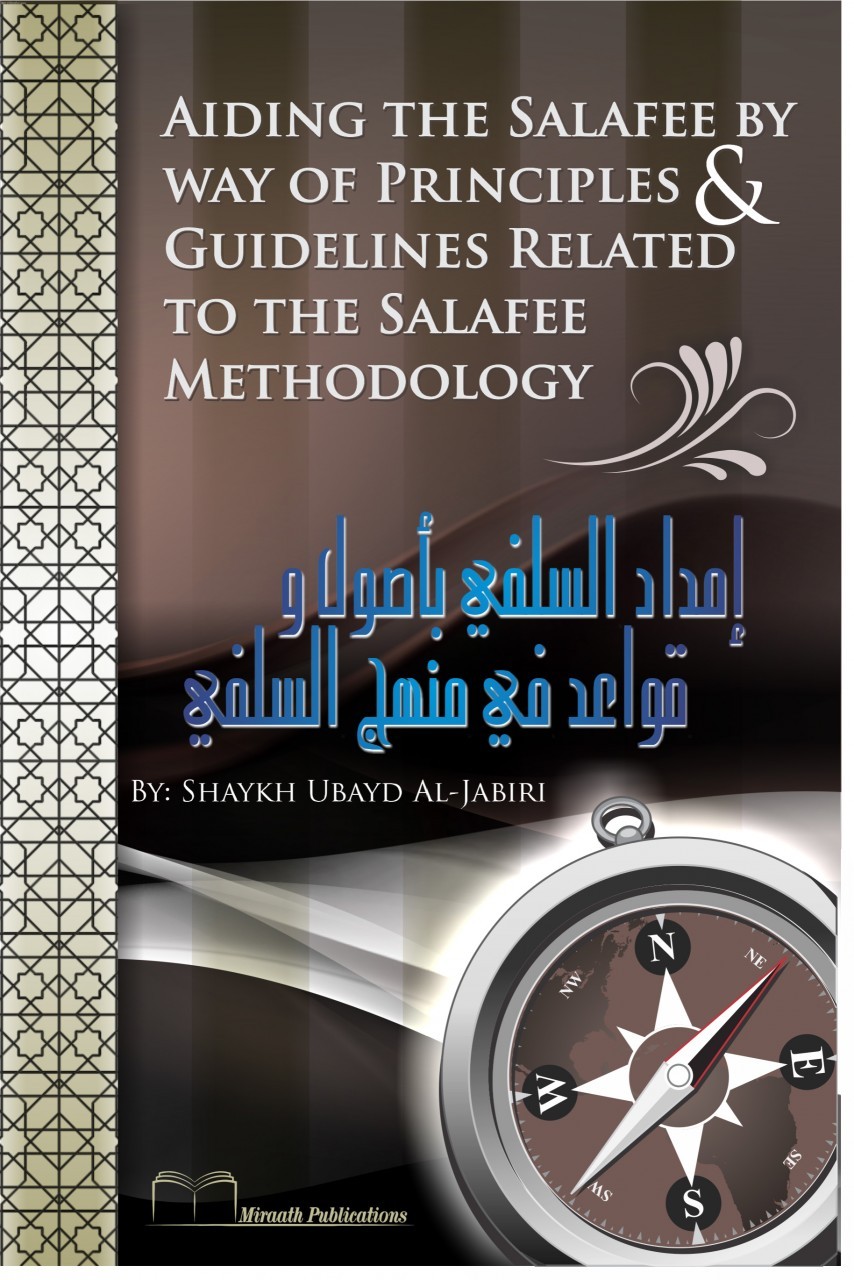
As-Salafiyyah in the Arabic Language Means: Ascription to he who has preceeded; meaning passed by.
In its legislative usage, it is: All those who have passed after the Prophet Peace be upon him (following) his tracks; from the companions, the Imaams amongst the Taabi’oon (successors of the companions), and those after them.
Know, may Allaah bless you, that no one from the human beings in any time or place founded Salafiyyah. So Shaykh Muhammad ibn ‘Abdul-Wahhaab along with his brother Imaam Muhammad ibn Sa’ood were not the founders of Salafiyyah.
Nor was anyone before them from the people of knowledge and the Imaams of the religion and the true callers to this monotheistic religion its founder; such as Shaykhul-Islaam Ibn Taymiyah and his students, and those who were before him; such as the four Imaams and those who we have named from the Imaams; nor from the Taabi’oon, nor from the companions of Muhammad nor was Muhammad. Nor was it anyone who came before him from the Prophets and Messengers, upon all of them be prayers and peace. Rather, it is from Allaah. The Prophets and Messengers brought it. They conveyed that which He wished from the worship legislatively; as did those who came after them from their companions and followers. So whoever came after them were callers to Allaah in conformity with this Salafiyyah.
Author: by Shaykh Ubayd Al-Jabiri
Size 8.5 X 5.5 / Pgs.85
Translator & Publisher:Miraath Publications
Price: $9.00
Published: 2013
Refer Back to the Senior Scholars – Shaykh Saalih as-Suhaymi حفظه الله
Translated by Abu Abdillah Owais Al-Hashimi حفظه الله
http://owaisalhashimi.info/salih-al-s…
Video Courtesy: Bilaal @ Manhaj ul-Haqq
The Likeness Of Those Who Seek To Unite The Muslims Even Though They Are Upon Divergent Beliefs, Is The Likeness Of One Who Attempts To Bring Together Water And Fire, And A Reptile And Fish
Sheikh Saaleh al Fawzaan (may Allaah preserve him) said:
As long as the Aqeedah is shaky and blemished, the Muslims cannot be united. It is not possible to unite the one upon Bidah with the one upon the Sunnah, abadan.
It is not possible to unite the person of corrupted aqeedah with the person of sound aqeedah, even though they share the same name (i.e. they are both called Muslims).
It is inevitable to unite the word of the Muslims upon Tawheed, upon the correct aqeedah, upon the Book of Allaah and the Sunnah of the Messenger of Allaah (Muhammad-sallal-laahu-alayhi-wasallam).
The Muslims must be together. They are to be united, and that they follow that which comes from that (bond and unity), as long as this does not depart from obedience to Allaah and His Messenger (sallal-laahu-alayhi-wasallam)
For that reason the Messenger (sallal-laahu alayhi wasallam) said:
”Allaah is pleased for you with three things: ”that you worship Him (alone) and not to associate anything with Him; and that you (all) hold unto the Rope of Allaah and not to be divided; and that you give sincere advise to the one placed in charge over your affairs (i.e. the Muslim Ruler)”
As for the one who calls to the unity of the Muslims, even though they differ in their aqeedah, this indeed cannot be possible. The one who wants to unite the Muslims, even though they are upon divergent beliefs, even though they are upon shaky beliefs, this is but inconceivable like the one who attempts to bring together water and fire (This is not possible); Or bring together (as it is said) a reptile and a fish. This is not possible ever, because the reptile lives on land and the fish lives in the sea…
[Source: Excerpt from a lecture delivered by sheikh Saaleh al Fawzaan at Masjid At-Tawheed in Taa-if. Title of lecture: At Tahdeer Minal Furqati Wal Ikhtilaaf]
Benefit shared by Abu Mu-aawiyah Abdullah bin AbuBakr
Listen / Download Mp3 (Time 4:31)
[audio http://salafiaudio.files.wordpress.com/2014/02/the-truth-is-above-every-one-gem-from-abu-uways.mp3]
Shared by @RahaBatts (hafidhahullaah) via Twitter

And from the forbidden types of business transactions is: When a man sells something that he doesn’t own.
For example, a man goes to a businessman looking for a specific product, but this businessman doesn’t have this specific product. Yet they both agree to a contract (for the sale of the product) and agree on the extent of the price (on the item) presently or in the future. And all the while, the product is not found in the possession of the businessman or the buyer. Then the businessman goes and buys this product and hands it over to the buyer after they already agreed to a price and they made a contract and determined the value as it relates to present terms or in the future.
So this kind of business transaction is haraam. Why? Because he sold something he didn’t own and he sold something before gaining possession of it, if the product was specified. As for if the product was not specified and its price was delayed, he actually sold a debt on credit. The Messenger of Allaah (sallAllaahu ‘alayhi wa sallam) forbade us from doing that, as was the case when Hakeem bin Hazaam (radyAllaahu ‘anhu) came to him, saying: “O Messenger of Allaah, what if a man comes to me wanting to buy something from me, but I don’t have it. Then I go to the marketplace and buy it for him?” The Prophet (sallAllaahu ‘alayhi wa sallam) said: “Do not sell what you don’t have.” This is a clear cut forbiddance, therefore it is not permissible for a person to sell some specified commodity unless he is in possession of it before making a contract on it, whether he will sell it right there or in the future.
It is not permissible to take this matter lightly. So whoever wants to sell something to the people, then he should store the products in his store or in his shop or in a warehouse or in the trunk of his car or in his office, so that he can have the products ready with him. Then if some people who want to buy the products come to him, he can sell it to them directly or at a later time.
Posted from: Forbidden Business Transactions– by Shaikh Saalih al-Fawzaan
The saying of Abu Dardaa (radhi Allaahu anhu):
“What is the matter that I see your scholars are departing and your ignorant ones aren’t learning?Learn! For indeed the scholar and the learner are sharers in reward”
Q 2: Does the following Hadith bear evidence on the dominance of Jinn (creatures created from fire) over Humans? Abu Al-Sa’ib narrated:
“We visited Abu Sa`id Al-Khudry in his house and while we were waiting for him (to finish his Prayer) we heard something under his bed. We looked towards the sound and found a snake. I jumped up to kill it, but he (Abu Sa`id Al-Khudry) gestured that I should sit down. I sat down and when he finished (the Prayer) he pointed to a room in the house and said: Do you see this room? I said: Yes. He said: There was a young man amongst us who was newly wed. We went with Allah’s Messenger (peace be upon him) to take part in the Battle of the Trench, this young man used to ask for Allah’s Messenger’s (peace be upon him) permission to return to his family everyday at midday. One day, he sought permission from him and Allah’s Messenger (peace be upon him) (after granting him the permission) said to him: Carry your weapons with you for I fear the tribe of Qurayzhah (may harm you). The man took his weapons and came back to find his wife standing between the two doors. He was hit by jealousy and made a dash towards her with a spear in order to stab her. She said: Keep your spear away and enter the house until you see that which has made me come out. He entered and found a big snake coiled on the bed. He darted with the spear and pierced it and then went out, but the snake quivered and attacked him and no one knew which of them died first, the snake or the young man . . . “
(Related by Muslim in his Sahih (authentic) Book of Hadith ‘Refer to Mishkah Al-Masabih,chapter on [The lawful and the prohibited to eat]’)
A: Firstly: The Hadith is Sahih (a Hadith that has been transmitted by people known for their uprightness and exactitude; free from eccentricity and blemish) in terms of its Sanad (chain of narrators) and Matn (text).
Secondly: Adam was created from clay in human form, then his offspring propagated. Jinn were created from fire then became living beings and were divided into males and females. The Prophet (peace be upon him) was sent to both humans and Jinn, some of them believed and some disbelieved. Humans can harm Jinn with or without knowledge and Jinn can harm humans, knock them down, or kill them just as a human may harm another human. A Jinny (a creature created from fire) may harm another Jinny. Indeed, whoever denies the power of Jinn while unaware of their condition follows that of which they have no knowledge and contradicts the guidance of the Qur’an concerning their power.
Allah (Exalted be He) says:  He created man (Adam) from sounding clay like the clay of pottery.
 And the jinn: He created from a smokeless flame of fire. He also says: And indeed We created man (Adam) out of an extract of clay (water and earth). Allah addresses them in the same manner He addresses humans in His saying: Then which of the Blessings of your Lord will you both (jinn and men) deny? And His saying: O assembly of jinn and men! If you have power to pass beyond the zones of the heavens and the earth, then pass beyond (them)! But you will never be able to pass them, except with authority (from Allâh)! Allah subjugated Jinn with their different forms to His ProphetSulayman (Solomon, peace be upon him). Allah (Exalted be He) says: So, We subjected to him the wind; it blew gently by his order whithersoever he willed, And also the Shayâtîn (devils) from the jinn (including) every kind of builder and diver, And also others bound in fetters. , He (Exalted be He) says: …and there were jinn that worked in front of him, by the Leave of his Lord. And whosoever of them turned aside from Our Command, We shall cause him to taste of the torment of the blazing Fire. He also says: And of the Shayâtîn (devils from the jinn) were some who dived for him, and did other work besides that Allah (Exalted be He) says: And (remember) when We sent towards you (Muhammad صلى الله عليه وسلم) a group (three to ten persons) of the jinn, (quietly) listening to the Qur’ân. When they stood in the presence thereof, they said: “Listen in silence!” And when it was finished, they returned to their people, as warners. They said: “O our people! Verily, we have heard a Book (this Qur’ân) sent down after Mûsâ (Moses), confirming what came before it: it guides to the truth and to the Straight Path (i.e. Islâm). O our people! Respond (with obedience) to Allâh’s Caller (i.e. Allâh’s Messenger Muhammad صلى الله عليه وسلم), and believe in him (i.e. believe in that which Muhammad صلى الله عليه وسلم has brought from Allâh and follow him). He (Allâh) will forgive you of your sins, and will save you from a painful torment (i.e. Hell-fire) And whosoever does not respond to Allâh’s Caller, he cannot escape on earth, and there will be no Auliyâ’ (lords, helpers, supporters, protectors) for him besides Allâh (from Allâh’s punishment). Those are in manifest error. He also says: And on the Day when He will gather them (all) together (and say): “O you assembly of jinn! Many did you mislead of men,” and their Auliyâ’ (friends and helpers) amongst men will say: “Our Lord! We benefited one from the other, but now we have reached our appointed term which You did appoint for us.” He will say: “The Fire be your dwelling-place, you will dwell therein forever, except as Allâh may will. Certainly your Lord is All-Wise, All-Knowing.” And thus We do make the Zâlimûn (polytheists and wrong-doers) Auliyâ’ (supporters and helpers) of one another (in committing crimes), because of that which they used to earn. Read also the Ayahs (Qur’anic verses) of Surah Al-Jinn for it tells you all about their form, actions, and the recompense of those who believed and those who disbelieved.
There is nothing strange about a Jinny hurting a human or inflicting harm on them just as a human may hurt a Jinny and inflict harm if the Jinny takes the form of an animal such as the one mentioned in the question and the Hadith related by Al-Bukharion the authority of Abu Hurayrah (may Allah be pleased with him) that the Prophet (peace be upon him) said:  A strong demon of Jinn came to me yesterday suddenly, so as to spoil my Salah (Prayer), but Allah enabled me to overpower him, and so I caught him and intended to tie him to one of the pillars of the Masjid (mosque) so that all of you might see him, but I remembered the invocation of my brother Solomon: My Lord! Forgive me, and bestow upon me a kingdom such as shall not belong to any other after me so I let him go cursed. Generally, Jinn and humans are either Mu’mins (believers) or Kafirs (disbelievers), good or bad, beneficent or harmful but it is all by Allah’s Will as mentioned above.
Finally: The Jinn world and forms are screened from humans. It is an area where we know nothing except what is mentioned in the Qur’an or Sunnah (whatever is reported from the Prophet). We should believe in the truth conveyed in the Qur’an and Sunnah with no doubt or denial. Similarly, we should refrain from interfering with what is unknown to us, for affirming or denying things that are unwarranted in the Qur’an or Sunnah is an act of ignorance which Allah (Exalted be He) forbids: And follow not (O man i.e., say not, or do not or witness not) that of which you have no knowledge. Verily! The hearing, and the sight, and the heart, of each of those one will be questioned (by Allâh).
May Allah grant us success. May peace and blessings be upon our Prophet Muhammad, his family, and Companions.
The Permanent Committee for Scholarly Research and Ifta’
http://www.alifta.net
The Dream of the Prophet Sallalahu Alaihi wa Sallam
Sahih Bukhari Volume 9, Book 87, Number 171: [Interpretation of Dreams ] : Narrated Samura bin Jundub:
Allah’s Apostle very often used to ask his companions, “Did anyone of you see a dream?” So dreams would be narrated to him by those whom Allah wished to tell.
One morning the Prophet said,
“Last night two persons came to me (in a dream) and woke me up and said to me, ‘Proceed!’
I set out with them and we came across a man Lying down, and behold, another man was standing over his head, holding a big rock. Behold, he was throwing the rock at the man’s head, injuring it. The rock rolled away and the thrower followed it and took it back. By the time he reached the man, his head returned to the normal state. The thrower then did the same as he had done before. I said to my two companions, ‘Subhan Allah! Who are these two persons?’ They said, ‘Proceed!’
So we proceeded and came to a man Lying flat on his back and another man standing over his head with an iron hook, and behold, he would put the hook in one side of the man’s mouth and tear off that side of his face to the back (of the neck) and similarly tear his nose from front to back and his eye from front to back. Then he turned to the other side of the man’s face and did just as he had done with the other side. He hardly completed this side when the other side returned to its normal state. Then he returned to it to repeat what he had done before. I said to my two companions, ‘Subhan Allah! Who are these two persons?’ They said to me, ‘Proceed!’
So we proceeded and came across something like a Tannur (a kind of baking oven, a pit usually clay-lined for baking bread).” I think the Prophet said, “In that oven there was much noise and voices.” The Prophet added, “We looked into it and found naked men and women, and behold, a flame of fire was reaching to them from underneath, and when it reached them, they cried loudly. I asked them, ‘Who are these?’ They said to me, ‘Proceed!’
And so we proceeded and came across a river.” I think he said, “…. red like blood.” The Prophet added, “And behold, in the river there was a man swimming, and on the bank there was a man who had collected many stones. Behold. while the other man was swimming, he went near him. The former opened his mouth and the latter (on the bank) threw a stone into his mouth whereupon he went swimming again. He returned and every time the performance was repeated, I asked my two companions, ‘Who are these (two) persons?’ They replied, ‘Proceed! Proceed!’
And we proceeded till we came to a man with a repulsive appearance, the most repulsive appearance, you ever saw a man having! Beside him there was a fire and he was kindling it and running around it. I asked my companions, ‘Who is this (man)?’ They said to me, ‘Proceed! Proceed!’
So we proceeded till we reached a garden of deep green dense vegetation, having all sorts of spring colors. In the midst of the garden there was a very tall man and I could hardly see his head because of his great height, and around him there were children in such a large number as I have never seen. I said to my companions, ‘Who is this?’ They replied, ‘Proceed! Proceed!’
So we proceeded till we came to a majestic huge garden, greater and better than I have ever seen! My two companions said to me, ‘Go up and I went up’ The Prophet added, “So we ascended till we reached a city built of gold and silver bricks and we went to its gate and asked (the gatekeeper) to open the gate, and it was opened and we entered the city and found in it, men with one side of their bodies as handsome as the handsomest person you have ever seen, and the other side as ugly as the ugliest person you have ever seen. My two companions ordered those men to throw themselves into the river. Behold, there was a river flowing across (the city), and its water was like milk in whiteness. Those men went and threw themselves in it and then returned to us after the ugliness (of their bodies) had disappeared and they became in the best shape.” The Prophet further added, “My two companions (angels) said to me, ‘This place is the Eden Paradise, and that is your place.’ I raised up my sight, and behold, there I saw a palace like a white cloud! My two companions said to me, ‘That (palace) is your place.’ I said to them, ‘May Allah bless you both! Let me enter it.’ They replied, ‘As for now, you will not enter it, but you shall enter it (one day)
I said to them, ‘I have seen many wonders tonight. What does all that mean which I have seen?’
They replied, ‘We will inform you:
As for the first man you came upon whose head was being injured with the rock, he is the symbol of the one who studies the Quran and then neither recites it nor acts on its orders, and sleeps, neglecting the enjoined prayers.
As for the man you came upon whose sides of mouth, nostrils and eyes were torn off from front to back, he is the symbol of the man who goes out of his house in the morning and tells so many lies that it spreads all over the world. And
those naked men and women whom you saw in a construction resembling an oven, they are the adulterers and the adulteresses;,
and the man whom you saw swimming in the river and given a stone to swallow, is the eater of usury (Riba) and
the bad looking man whom you saw near the fire kindling it and going round it, is Malik, the gatekeeper of Hell and
the tall man whom you saw in the garden, is Abraham and the children around him are those children who die with Al-Fitra (the Islamic Faith).”
The narrator added: Some Muslims asked the Prophet, “O Allah’s Apostle! What about the children of pagans?” The Prophet replied, “And also the children of pagans.”
The Prophet added, “My two companions added,
‘The men you saw half handsome and half ugly were those persons who had mixed an act that was good with another that was bad, but Allah forgave them.’”
Source:Sahih Bukhari Volume 9, Book 87, Number 171: [Interpretation of Dreams ]
The Messenger of Allah (salallahu alaihe wa-sallam) said: “My entire nation is safe, except al-Mujahirin (those who boast of their sins). Among the Mujaharah is that a man commits an (evil) act, and wakes up in the morning while Allah has kept his (sin) a secret, he says: “O Fulan! Last night I did this and that.” He goes to sleep while Allah has kept his (sin) a secret but he wakes up in the morning and uncovers what Allah has kept a secret!” [Saheeh al-Bukharee]
Abdullah Ibn Masoud (radiyallahu anhu) related, ‘A man came to the Prophet and said: ‘O Messenger of Allah! I have mingled with a woman in the far side of al-Medina, and I fulfilled my desire short of actually having sexual intercourse with her. So, here am I, judge me according to what you decide.’ Umar Ibn al-Khattab (radiyallahu anhu) then said: ‘Allah had kept your secret, why did not you keep your secret?’ [Sharh Muslim]
Allah’s Messenger (salallahu alaihe wa-sallam) said: “He, who relieves a hardship of this Dunya (word) for a believer, Allah will relieve (from him) a hardship of the Day of Resurrection; he who makes easy an indebted person, Allah will make it easy for him in the Dunya and the Hereafter; he who covers a Muslim (meaning his mistakes and shortcomings), Allah will cover him in the Dunya and the Hereafter…”[Muslim]
Abdullah Ibn Umar (radiyallahu anhu) related, “The Messenger of Allah (salallahu alaihe wa-sallam) once rose above the podium and then said with a loud voice,“O those who have embraced Islam only with their tongue, while Eemaan has not yet entered their hears, neither harm Muslims, nor mock them, nor try to expose their mistakes, for he who follows(searches for) the errors of his brother, Allah will follow his errors, and he whom Allah follows his errors, He will expose him even if he was in the middle of his home.” [Saheeh al-Jamee]
By Shaykh ‘Abdullaah ‘Ateeq al-Harbee
Shaykh ‘Abdullaah ‘Ateeq al-Harbee is one of the professors in the University of al-Madeenah, he is a student of Shaykh Rabee’ Ibn Haadee al-Madkhalee
The Shaykh began by giving his salutation after sending peace and blessings upon the Messenger (sallallaahu alaihi wa sallam) and after praising Allaah subhanahu wa ta’ala.
He says: O Muslims indeed Allah subhana wa ta’ala has created us and He has not left us to our own desires. Indeed He has prohibited us and He has given us command and He has made it clear to us the path of khair and the path of good and He has encouraged us to follow that. And He has made clear to us the path of evil and has prohibited us from following that. And indeed Allaah subhanahu wa ta’ala is more knowledgeable concerning that which is good and that which has the best for His servant in this life and the Hereafter. And He is the Most Knowledgeable concerning that which will give them bliss and that which will give them good fortune in this life and in the Hereafter.
And indeed from the things that Allaah subhanahu wa ta’ala has made it important and placed importance upon
protecting it and upon making sure that the Muslims are mindful with regards to it and that He has prohibited us and made us something that we should be distant from corrupting and that is the honour of the Muslim and that is going to be the title of the talk. And indeed it has been established in a hadith in Saheeh al-Bukhari that the Messenger (sallallaahu alaihi wa sallam) said : ‘indeed your blood, and your wealth and your honour, is haraam upon you (it is prohibited upon you) just as this day is haram or considered sacrilegious and just as this month is considered sacrilegious.
And indeed the honour is something that should be protected by the Muslims in two ways :
Allaah tabarak wa ta’ala has said : ‘O you who believe, indeed Allaah subhanahu wa ta’ala has sent down upon you a garment that will cover your modesty and He has given you a leash which is something other than from the standard covering. And indeed from the greatest of things that will make the honour of the Muslim corrupt whether they are male or whether they are female and indeed it is that which is referred to or known as ‘zina.’
And indeed Allaah tabarak wa ta’ala has said, ‘.. and do not come close to zina. Indeed it is something that is lewd and it is an evil way.’
And indeed in this ayah Allaah tabarak wa ta’ala has made Haraam anything that leads to zina and that is never mind the actual committing of the act. Allaah tabarak wa ta’ala has said, ‘ and do not come close to fawahish, do not come close to lewdness, that which is apparent from it and that which is hidden.
And indeed the issue of fornication (may Allaah protect us all from it). Indeed along with it being prohibited it is something that likewise corrupts the society, corrupts the community. And indeed it is from the reasons for the spreading of corruption in and amongst the community.’ Insha-Allaah I am going to mentions some of the reasons and some of the things that corrupts the society.
And from the first of the evils that come from zina is that it is one of the causes for the spread of many evils and many diseases connected to fornication, just like the sickness of AIDS and other in that from the sicknesses that destroy the lands and destroy the servants.
And likewise it is from the reasons that causes commotion in and amongst the family — as far as it relates to the husband or as far as it relates to the wife and to the children and if the family indeed is split, that will lead to the splitting of the community and indeed they will fall into that which are of the lowly actions and will fall into corruptions.
And likewise from the evil effects of zina is that it is from the reason for talaaq (or divorce) being plentiful in the societies. Because you find after the marriage, after a small space of time you will find the people divorcing each other and sometimes this happens after a space of few hours.
And likewise, from the evil effects of zina and fornication is that it lowers the marriage rates in the society. So as for the person who commits fornication and is constant and regular in doing that, then he does not look to marriage except as another way of having a sexual relationship. Not that it is a beautiful way of uniting two bodies, neither it is a life that is built of love and emotions and raising a family and having children and indeed from bringing and having children, it is by way of those children our that lives become happy lives. And likewise it makes life easy with the presence of the children.
And likewise we see from the evil effects of zina and fornication is that we find the level of children and the level of having kids fall in that particular society. Because when zina is one of the reasons for the spread of deadly diseases like AIDS and other than AIDS, we find as a result of that many people die in the society. And as a result of that we find people having children as a result of that die. And as a result of that also the strength of the community is lost.
And also from the evil effects of zina, is that it leads to much crime in that society. And from that the crimes that generate and likewise a person will enter into stealing and rape in order to satisfy his sexual desires. And likewise as a result of that we find people even killing each other and killing themselves as a result of this spread of this zina.
And likewise from the evil effects of zina, is that we find that we have many children, many offspring that are the children that have come as a result of that fornication. And this likewise is from the sins meaning these children have come about as a product of fornication. This is also from the sins that increases crimes, and increases evil doings in and among society. Because the child from a young age is in need of receiving the love and attention from both his parents. So when the child loses out on that care and loses out on that attention, and when he loses that love, then what happens is that he has a reactory feeling as he grows that he was not nurtured upon love and upon affection. So that breeds from him and lead him to haste and dislike to society and the surrounding that he lives in. So, when he reaches the age of maturity, we find that these individuals enough of time end up themselves being individuals that commit evil acts and committing different crimes in order to avenge that society.
And brothers and sisters from the things that we can utilize to protect this evil, to protect ourselves from this evil is by following the message, and the measures and the means that al-Islam has laid down for us. The means have been laid down for protecting our ‘ird — lineage.
So from the most important means for protecting the limits is the establishment of the belief of Allaah in the hearts of the servant. So if the slave then knows and believes that Allaah is the Creator of the creation, and He is the One that is worshipped and there is none worthy of worship other than Him, then he would carry out his commands and he would stay away from his prohibitions.
And likewise he will believe in his heart that Allaah subhanahu wa ta’ala knows the hidden things and knows those things which are apparent. And likewise he will know that Allaah subhanahu wa ta’ala sees everything that takes place in this creation. And so this Imaan of his will carry him to be odd and over keeping in mind the presence of Allaah subhanahu wa ta’ala. And it will lead him likewise, to be distant from disobeying Allaah and it will make him to carry out Allah’s commands and the things that please Allaah. So not once will Allaah see him in a place where Allaah subhanahu wa ta’ala dislikes to see him in and likewise he will not be absent from places that Allaah subhanahu wa ta’ala loves for him to be in. And that is a condition with the mu’min and the believer who is sincere with his Imaan, the one who is certain concerning his Lord.
Listen O brother and listen O sister, to the story of that great Sahabah ; that Sahabi who before Islaam used to commit sins as of fornication and he used to visit prostitutes ; look at his condition after his Islaam. Did he continue upon that which he was upon, in his days of Jaahiliyah before Islaam? .. (not clear) …. And likewise he took upon himself chastity and distanced himself form all evil and all lowly acts.
This appears in the Sunnan of Tirmidhi that a person from amongst the Sahaba (radiallahu anhu) who was referred to as al-Martad. He used to carry the prisoners of war from Makkah until he reached Medina and there was a woman from amongst the Mushrikeen who was a prostitute or she was a fornicator and her name was ‘Anaaq and she was his girlfriend before Islaam. And he had promised a man from amongst the prisoners of war from the people of Makkah that he was carrying. He said to them radiallaahu ‘I continued until I came to a wall from the walls of Makkah in the shade of a wall on the full moon night man, so ‘Anaaq (this woman) came to him and she had noticed that this man being detained near the wall. So when she came to me she realized that it was me. So I said, ‘my name is Martad’ and she said, ‘welcome.’ She then said, ‘come and sleep with me tonight.’ So she was calling him to the lewdness. So I said, ‘O Anaaq, indeed Allaah has made zina Haraam. Allaahu Akbar!’. So the Shaykh is saying look then brother Muslim may Allaah guide you and myself to success. Look at the Imaan that Martad had concerning Allaah subhanahu wa ta’ala and how it prevented him from committing zina even though it was easy for him to commit that act. So may Allaah have mercy upon him and be pleased with him. Look how his complete turn around came for him after he was a committer of major sins and major evil deeds prior to his Islaam? Look how Islaam turned the whole direction of his life. And he became the best of the people as regards to him being chaste, as regards to him having adab, and with regards to him having taqwa.
Therefore from the first of the things that we can utilize to protect ourselves from this sick disease, it is to have Imaan in Allaah subhanahu wa ta’ala.
As for the second affair is that we make sincere tawbah to Allaah tabarak wa ta’ala for all of our sins. Allaah subhanahu wa ta’ala has said, ‘and those who when they commit a sin or when they run themselves, they remember Allaah subhanahu wa ta’ala and make isthighfar for their sins. And who will forgive sins other than Allaah as long as they do not persist upon that which they did while they know.’
Likewise from the things that will protect ourselves and from the methods and means that have been laid down in the Shariah is that indeed Islaam is the deen of the fitrah and its way is the just way, balanced way.
And it has affirmed for mankind that which he has established or that which he has within him a way of desire for sexual actions. But Allaah subhanahu wa ta’ala has not made it absolute for him to utilize or enjoy his desire in any way that he pleases. And at the same time He has not prohibited him from enjoying sexual pleasures absolutely but rather it has reigns and orders for him that desire of his. And that sis with the connection of the link of marriage. Because when Allaah tabarak wa ta’ala created mankind, He created for him his wife so that he may receive tranquility from her.
Allaah subhanahu wa ta’ala says, ‘and indeed from His signs is that He has created for you wives so that you may
receive tranquility and reside with them. And He has made between you love and He has made between you Mercy.’
Therefore Allaah has made and prescribed marriage by way or which a person can increase in love and emotional feelings. And a way for him to protect himself from falling into evil deeds and lewd deeds. And for that reason Messenger (sallallaahu alaihi wa sallam) encouraged that we should marry.
In both Sahih al-Bukhari and Muslim it is recorded that Ibn Mas’ud (radiallaahu anhu) that the Messenger (sallallaahu alaihi wa sallam) said: ‘O gathering of youth, whosoever from amongst you is able then let him marry. Because it is better for the lowering of the gaze. And it is better as a protection of the private parts. And whosoever is not able to do so then let him fast, because then indeed it is a protection for him.’
And likewise from the things that protect ones private parts (and things connected to that), that the method of protecting — – that men not mix with the women. Ibn Qayyim rahimahullah mentions in his book, ‘and there is no doubt that to let the women mix with the men is the origin of every evil. And it is from the greatest reasons for Allaah subhanahu wa ta’ala revealing or sending upon the people punishments and likewise it is from the reason that the general and the specific affairs become corrupt. And the men mixing with the women is a reason for zina, fawahisha, lewdness and evil act connected to sexual related acts being committed between men and women. And it is from the reasons for diseases and plagues when the prostitutes began to mix with the army of Musa, and evil deeds and lewdness began to spread among them. Indeed Allaah sent upon them at that point plague and diseases and 70,000 people died as a result of that. And we ask Allaah that He protects us.
And likewise from the protective reasons that has been laid down by the Shariah for the male Muslim and the female Muslim, that the women wear the hijaab and screen themselves from strange men. Allaah subhanahu wa ta’ala says, ‘..and stay in your homes and do not display yourselves like the displaying of the days of Jaahiliyah’ and Allaah azzawajal says addressing his message to his Messenger (sallallaahu alaihi wa sallam) : ‘O Messenger, say to your wives, daughters and to the women from amongst the Muslimeen, that they should throw the jilbaabs over themselves, that is better for them not to be known or not to be recognized and they will not be harmed. And indeed Allaah is al- Ghaffoor ar-Raheem.’
And likewise from the reasons is that a woman stays in her home and that she doesn’t leave her home except for a
pressing need. Allaah says in the previous ayah, ‘.. stay in your homes and do not display yourselves like the displaying of jaahiliyah. And you know O servants of Allaah, (O female slave of Allaah) that the Shaitaan who is the major enemy for us utilizes the issue of the women leaving out of their homes, using her as a means of corrupting the men and utilizing the men for corrupting her. And indeed the Messenger (sallallaahu alaihi wa sallam) has said, ‘indeed the whole of the woman is an awrah. So if she leaves her home, then indeed the shaitaan beautifies her and makes her fall into some type of fitnah and attempts her to fall into some lowly deeds.
And likewise from that a person distances himself from music as it is established with the people who have intellect that the beautiful voice has a direct effect upon the heart especially the heart of the woman. Music has an effect more on the woman than it has on the men. And if that music is accompanied with singing and with the playing of musical instruments, the effect that it has on the hearts in calling that person to lewdness is indeed greater. And for that reason Fudayl Ibn Iyyad rahimahullah mentioned that music is the ruqya of zina – meaning it is the thing that will lead towards it and will draw towards it.
Indeed Allaah subhanahu wa ta’ala says in the Qur’aan, ‘and indeed from the people of those who buy lahwal hadeed (meaning music here) in order to misguide from the path of Allaah and Ibn Masood radiallaahu anhu swore three times by Allaah regarding the tafseer concerning this ayah and the explanation of the lahwal hadeed that it is ghina, it is music and likewise from the reasons that protect ourselves from this lewdness will be mentioned in a summarized form so that we don’t spend too long here.
The first of them the Shaykh mentions is that a person both men and women lowers their gazes. Because the sight that it takes to look is from the arrows from the arrows of Iblees. And for that reason the Messenger (sallallaahu alaihi wa sallam) explained, ‘that the first look that you take for a woman is for you i.e it is overlooked and the second one is against you. And that is because the first look that a person took was not intentional i.e he did not intentionally take that look of that woman. So Allaah subhanahu wa ta’ala had mercy upon us and forgave us for that. And as for the second look then the mu’min the male and the female believer are both taken to account for that.
Likewise, the woman should not perfume herself when she leaves from her house. Indeed Messenger (sallallaahu alaihi wa sallam) prohibited that. And likewise from the reasons that will protect the society from this is that a woman does not show her beautification or that which she wears underneath her jilbaab except to those individuals who are from her mahrim (Mahram) who are lawful from her relatives.Allaah subhanahu wa ta’ala has said that she should not show anything of her beautification except that which is
apparent from her.
And likewise from the reasons that will protect us bi-iznillaah that a woman does not enter in her speech i.e she does not go into too much depth with her speech and that she does not soften her speech to strange men. Whether that is upon the telephone or upon other than the telephone. And this is indeed from the greatest of reasons that leads to that evil. Because indeed if she is soft in her speech, then that one who has something from sickness from his heart , will enter into his heart to have something with her by way of evil actions or by way of adultery or fornication.
And likewise from the reasons that we can protect, is that a person distances himself from intoxicants. Because indeed the khamr and the intoxicant are the mother of all evils. And by way a person would fall into zina and likewise it is a stealing and likewise it is a killing these souls that have been prohibited for us to kill. Rather a person would fall into every type of lowly act.
And likewise from the things that will protect us is that we keep clear from touching in any way a strange woman except in extreme necessity. O Servants of Allaah, indeed when the believer believes in Allaah subhanahu wa ta’ala there is no doubt that he is going to be tested and that he is going to be under trial. And for that reason Allaah subhanahu wa ta’ala when he created the Jannah, He surrounded it with the distasteful things. It was surrounded by things that are distasteful like Jihaad because a person may possibly die and it is something that is difficult for a person.
And likewise he wakes up at night at the time that it is very cold, and that you make wudhu and you pray. As for the tareeq or path to the Hellfire may Allaah protect us and you from it, is something that is easy iyaazu billaah. By doing those things that have connections with our desires like zina and drinking khamr and consuming wealth unlawfully and other than that from the evil act. Allaah subhanahu wa ta’ala has said, ‘Alif Laam Meem, do the people believe that they are going to be left alone saying that we believe and that they will not be put under trial. Indeed we put to trial those who came before them and Allaah subhanahu wa ta’ala will know those who were truthful in their Imaan and Allaah tabarak wa ta’ala will know by way of those that who are liars – the kaazibeen.nd likewise Allaah tabarak wa ta’ala has said, ‘do you believe that you are going to enter Jannah and it did not come to you that which came to those who came before you? They were struck with hardships and calamities and they were shook until the Messenger and those who believe along with him said, ‘when is the aid of Allaah going to come? Indeed the aid of Allaah is near.’
So you O my brother Muslim, and you O my sister Muslimah indeed you have chosen al-Islaam as your religion and this is the way of the anbiya alaihissalaatu wassalam and it is upon you that you remain firm upon the religion of Allaah and that you are not shaken in your Imaan and that you are not deceived by the duny and by its beautification and by Allaah you don’t know when you are going to die. And you don’t know when that thing that thing that stops all of one’s desires and stops all of one’s pain is going to end and going to come, so die while you are upon Islaam and while you are upon Imaan and while being in a state of being distant from the lewd deed and the evil deeds. ‘O Allaah make us to see the Haqq and bless us to follow it. O Allaah make us see the baathil and the falsehood and bless us to stay away from it. And do not make it something that is not clear to us, so that we go astray. O Allaah make the best of our deeds of the dunya the last of our deeds, and the best of our action the last of our actions and the last of our days the day that we meet you.’
—
May Allaah reward the sister who Transcribed from the Audio


 AbdurRahman.Org
You must be logged in to post a comment.