—
Posted from: The Caller to Allaah – Manners and Qualities
Islamic Knowledge – Islam, Sunnah, Salafiyyah

—
Posted from: The Caller to Allaah – Manners and Qualities
Third: Among the qualifications necessary for a Da`y is that he should have patience, kindness, and gentleness with forbearing temperament as the prophets (peace be upon them) were.
Never should a Da`y be rushing, violent, or unduly strict. Rather, he has to be patient, forbearing and kind while practicing Da`wah. To this effect, we have stated some evidence earlier. For example, Allah (Glorified and Exalted be He) says:
“Invite (mankind, O Muhammad صلى الله عليه و سلم) to the Way of your Lord (i.e. Islâm) with wisdom (i.e. with the Divine Revelation and the Qur’ân) and fair preaching, and argue with them in a way that is better.” [Surah Al-Nahl, 16: 125]
He (Glorified be He) also says: And by the Mercy of Allâh, you dealt with them gently. In the story of Musa (Moses) and Harun (Aaron), Allah (Glorified and Exalted be He) says:
“And speak to him mildly, perhaps he may accept admonition or fear (Allâh).”[Surah TaHa, 20: 44]
The Prophet (peace be upon him) is authentically reported to have said:
“O Allah, whoever gains control over some affairs of my people and is hard upon them, be hard upon him, and whoever gains control over some affairs of my people and is kind to them, be kind to him.”
[Muslim, Sahih, Book on rulership, no. 1828; and Ahmad ibn Hanbal, Musnad, vol. 6, p. 93.]
So, it is obligatory for you, slaves of Allah, to be kind in your Da`wah, and not to be harsh with people. Do not make people turn away from Islam because of your harshness, ignorance or violent, harmful approach. It is thus obligatory for you to be forbearing, gentle, pleasant and lenient in speech so that your words may have an effect on the heart of your brother, or that it may have an effect on one toward whom your Da`wah is directed. As such, people will receive your Da`wah better, will be affected by it and will show appreciation. On the contrary, harshness causes disaffection, alienation, and division, not unity.
Fatwas of Ibn Baz : Volume 1 > Da`wah to Allah and the manners of those calling to Him > Fourth: Morals and etiquette of the Da`ys to Allah
http://alifta.net/Fatawa/FatawaChapters.aspx?languagename=en&View=Page&PageID=62&PageNo=1&BookID=14
Reference: AbdurRahman.Org
Interview with Umm ‘Abdullaah Wife of Shaykh Muhammad ibn Saalih Al-‘Uthaimeen (rahimahullaah)
Interview conducted by Sis. Maha bint Husein Ash-Shammari & Published in “Al-Mutamayyizah” Magazine; Issue No. 45, Ramadhan, 1427. Confirmed & Presented in English by Dr. Saleh As-Saleh. Transcribed from the audio presentation by Br. Abu Abdullah Al-Amreeki, Reviewed and finalized by Dr. Saleh As-Saleh January 7, 2007
All Praise is due to Allaah, and may the salaah and salaam be on Prophet Muhammad, his household, the noble companions, and those who follow them until the Day of Resurrection.
The following is an interview with Umm ‘Abdullaah, the wife of our Shaykh, Muhammad ibn Saleh al-‘Uthaimeen (رحمه الله : rahimahullaah). The interview was conducted by Sis. Maha bint Husein Ash-Shammari & Published in “AlMutamayyizah Magazine,” Riyadh, KSA; Issue No. 45, Ramadhan, 1427.
Question 1: Was there any change in the motivation of the Shaykh regarding ‘ilm (knowledge), dawah, and worship between his youth and his elder years?
Answer: I did not find any diminishing or weakness in his motivation (رحمه الله ) in knowledge, dawah, and worship despite his progress in age. On the contrary, his busy schedule continued to increase with time, as was the case with his worship and call to the extent that during his intense illness, he (رحمه الله ) was not negligent with one moment; he would spend every second in remembrance of Allaah (سُبْحَانَهُ وَ تَعَالَى), worshipping Him, teaching, or directing.
Question 2: What did you see that was amazing in the Shaykh’s (رحمه الله ) life?
Answer: His life was an example to follow, especially his patience and motivation to seek the knowledge as well as teach and dissipate it. Also, his piety (رحمه الله ) was something that those who were not close to him may not have known about.
Question 3: How did the Shaykh interact with his children in their private lives?
Answers: His dealings with his sons and daughters fell into two stages.
First, in their childhood, he (رحمه الله ) was keen to be close to them, take care of them, raise some of the Islamic principles in them, and follow their educational achievements. In addition, he made sure to direct, admonish, and incite them. For instance, he would sometimes take the children with him to the masjid to perform some of the fard prayers. Also, he would encourage them to fast some of the days of Ramadan. Furthermore, he would incite them to memorize some of the short surahs of the Qur’aan and reward them on that.
In the stage of youth and maturity, he (رحمه الله ) was firm concerning their fulfilling of the religious obligations and in discipline in cases of negligence. He would couple that with direction and leniency. At certain times, he was not hesitant to do what was sufficient to change or correct their mistakes. In addition, he (رحمه الله ) used to put full trust in them to do certain things so they could learn to depend upon themselves; he used to continuously encourage them on righteousness and check on them regarding that.
Question 4: Why did the Shaykh (رحمه الله ) not use henna on his beard?
Answer: Maybe he did not have the time to do that. I think I heard him saying something to this effect.
Question 5: When did the Shaykh anger intensify, and how did he deal with your anger?
Answer: His anger used to intensify if the inviolable matters of Allaah (سُبْحَانَهُ وَ تَعَالَى) were violated. Regarding my anger with the children, he would try to calm me down first and then give the admonition to the one that was mistaken. In general, he (رحمه الله ) was quiet and did not anger quickly; when he (رحمه الله ) did, his anger would quickly dissipate, and this is from the favors of Allaah (سُبْحَانَهُ وَ تَعَالَى) upon him, something which I wished for the like of his condition.
Question 6: How did he (رحمه الله ) get up from his sleep? Did he depend on an alarm clock, or would he ask someone to wake him?
Answer: He used to depend upon Allaah (سُبْحَانَهُ وَ تَعَالَى), then the alarm clock and then us. Usually he awoke before the alarm and before I would go to wake him.
Question 7: Would the Shaykh (رحمه الله ) ever go outside with his family for a picnic?
Answer: Yes, the family used to have a weekly picnic on Fridays after salaat aljumu’ah; we would go to an area in the wilderness close by and bring our lunch. He utilized this time to share in some activities with the children, like foot racing and solving puzzles. Also, he would bring a small rifle and compete with his children in aiming and shooting.
Question 8: How did the Shaykh fast during the year?
Answer: The Shaykh (رحمه الله ) consistently fasted three days each month throughout his life. In addition, he would fast six days in Shawwal, the ten days of Dhul-Hijjah, and the day of ‘Aashooraa’.
Question 9: How did the Shaykh select the names of his children?
Answer: He used to choose names like ‘Abdullaah and ‘Abd ar-Rahman [1]; he left the rest for consultation amongst us. We would pick a name and present it to him; he would either agree or ask us to select another.
Question 10: What were some of the things that would please the Shaykh (رحمه الله )?
Answer: There is no doubt that the Shaykh’s (رحمه الله ) happiness used to increase whenever he saw the strength of Islam and Muslims. Regarding happiness at home, it was manifested in meetings with his family and children.
You would also see the signs of pleasure and happiness on him upon receiving his grandchildren. He used to open his cloak to allow them to enter underneath and then inquire about them a few times before reopening it; he would do this several times. Later, he would take them to his library where he kept a special kind of sweets they used to call “halawat abooye” (my father’s sweets). We were keen to ensure that they would not find it, except with him. In addition, despite his busy schedule, he made sure to visit his grandchildren at their homes or in the hospital if any of them were ill; this would have a great influence on them and their patents.
Question 11: How many children did the Shaykh (رحمه الله ) have?
Answer: The Shaykh had five sons and three daughters.
Question 12: Who amongst his children was the closest to his heart?
Answer: The Shaykh used to deal justly with his children in all affairs, major and minor. If he found any kind of distinction between them, he would never declare it openly because this is not from justice. If he was keen to be just in matters lighter than this, then what should we expect here?
Question 13: Who amongst his children was most affected by his death?
Answer: All of them were, and the reality of the matter is that I used to feel that we were not alone in this as he was a father to Muslims around the world, who all felt a great shock by his death.
Question 14: Who is his youngest child?
Answer: The youngest is a daughter who is 21 years old.
Question 15: What were the steps the Shaykh took in seeking knowledge, and what was your role in that?
Answer: The Shaykh (رحمه الله ) began teaching in the Grand Mosque in Unayzah following the death of his Shaykh, ‘Abd ar-Rahman ibn Naasir as-Saa’di (رحمه الله ) even before I married him. At that time, he used to consider himself a student of knowledge.
Concerning my assistance, it was manifested in not distracting him from seeking knowledge and propagating it. I used to serve and make available to him what would support his efforts. I would also follow the children and take care of them, except in matters that required his notification so that he could direct, admonish, and seek a solution.
Question 16: How did he reconcile between the dawah, which took most of his time, and his familial and social responsibilities?
Answer: He used to organize his time and gave this great attention. For instance, he would dedicate time for teaching, fatawa, dawah, worship, the family, the children, social responsibilities, and upholding the ties of kinship. If he, at certain times, was unable to directly share in some of these responsibilities, he was still keen to share even by phone.
Question 17: What was his policy regarding educating and directing his children?
Answer: His policy was education; however, he did not force his children to seek a specialty but instead used to consult with them regarding this decision. The obvious proof is that his children graduated from different types of colleges, some sharee’, others military, and also educational.
Question 18: Taking into consideration the Shaykh’s work and commitments, this inevitably led to him being away from home and the family. What was your role regarding this matter, and how did you cover for his absence (رحمه الله )?
Answer: Even if he was away from home whether for teaching and propagating inside Unayzah or while traveling, he used to follow up with his children through phone calls and by checking on their affairs upon his return. My role is not even worth mentioning because we always felt his presence with us. In general, I used to make the children feel their father’s responsibilities were great and his works many. As such, I would incite them to be patient on that, and he (رحمه الله ) used to compensate them on his return.
Question 19: Could you tell us about his worship at home?
Answer: He was keen to perform the as-sunan ar-rawatib (regular sunnah prayers), except in limited circumstances. He (رحمه الله ) used to wake up in the latter part of the night as much as possible and then make the witr before fajr, in addition to the remembrances and istighfar that he did not discontinue.
Question 20: What was his daily program? For example, when did he sleep and wake, and when did he eat breakfast, lunch, and dinner?
Answer: The Shaykh used to get up in the last third of the night, praying as much as Allaah (سُبْحَانَهُ وَ تَعَالَى) wished and then make the witr before the adhan of fajr. Following the adhan, he would pray the regular sunnah of fajr. Next, he would wake his family before going to perform salaat al-fajr at the masjid. He would then return home to read his daily remembrances in the courtyard as well as some of the Qur’aan until about sunrise. He would then sleep till about 8 am. This was on the days that he was not teaching at the university.
After waking again, he would eat some breakfast and then finish his work and readings in his study. He would also pray salaat ad-duhaa before going to the masjid for salaat adh-dhuhr. Upon his return, he would eat lunch with his family at about 1:30. Next, he would take phone calls until about 20 minutes before ‘asr. He would then rest for fifteen minutes or less before going to the masjid to pray ‘asr and meet the needs of people who went to the masjid knowing he would be there. He would return to his study after addressing the people’s needs to read before going again to the masjid for maghrib and his daily classes that would last until isha. Usually he would return home after that to eat a light dinner before going to his study to either give lectures outside of the Kingdom via telelink or hold meetings. This was almost his regular schedule throughout most the year, although it would change during some seasons such as Ramadan, Hajj, and the summer break.
There were also some weekly commitments, and these would take place either at home or outside. Some of his weekly commitments included: Wednesday night meetings with the judges, meetings with the imaams that were scheduled to give the khutbah of jumu’ah in the masajid, meetings with university staff and professors, and meetings with the people of hisbah (those that enjoin what is right and forbid what is wrong) until 11 or 12 pm then he would go to sleep.
Question 21: What was his schedule during Ramadan, especially after iftaar?
Answer: During Ramadan, the Shaykh (رحمه الله ) had a different schedule. He would spend most of the time at the masjid reciting Qur’aan and meeting the needs of the people. Also, he would invite some of the students of knowledge and the poor to eat iftaar at our home. After salaat al-isha, he would return home for dinner and to give fatawa over the phone. In addition, many people would visit our house to either say salaam to the Shaykh (رحمه الله ) or seek a fatwa.
Question 22: Where did the Shaykh (رحمه الله ) like to spend his rest time?
Answer: In reality, the Shaykh (رحمه الله ) did not know rest time; all of his time was busy. Even when he was sitting with us, the phone sometimes would ring, and he would spend a long time addressing the call. His rest time was in propagating the knowledge, meeting people’s needs, and fatawa.
Question 23: How many hours a day did the Shaykh (رحمه الله ) sleep?
Answer: The connected time did not exceed 3 to 4 hours. In total, it did not exceed 6 hours daily.
Question 24: Who amongst the students of the Shaykh did he praise, mention often, and was pleased with their visits?
Answer: He (رحمه الله ) looked the same upon all of his students. All of them were like his sons, and he did not praise any of them in particular, but he looked upon them equally when he would meet or welcome them to the house. Also, he would share in their special occasions, meetings, trips, or support them if they were in need of something.
Question 25: How did the Shaykh’s (رحمه الله ) family deal with his asceticism and piety?
Answer: We used to see him (رحمه الله ) as an example in all things, and we used to revere his asceticism and piety, which would comfort us since he (رحمه الله ) did not like any unnatural mannerisms nor did he want that around him. He was a simple person who liked ease in all of his matters.
Question 26: Did he (رحمه الله ) cry upon the death of Shaykh ‘Abd al-‘Aziz ibn Baaz (رحمه الله )?
Answer: He was greatly affected by the death of his Shaykh, from whom he took knowledge. Everyone around him felt the extent of the profound impact it had. May Allaah (سُبْحَانَهُ وَ تَعَالَى) make us meet them all in the Paradise of bliss.
Question 27: Did he travel for other than seeking knowledge?
Answer: No, he did not travel except to seek knowledge. He used to travel to Makkah for ‘Umrah, where he would dedicate times for duroos (talks). In addition, he went to Riyadh and Ta’if to attend the meetings of the Grand Scholars Committee, where he would also schedule duroos and lectures.
Question 28: Can you tell us about the apparent generosity of the Shaykh with those in need?
Answer: We used to feel his care (رحمه الله ) for the people in need, whether they were distant or close. For instance, he used to check on the affairs of his family and relatives that were in need. Also, he would do the same with his neighbors, helping them in all that they needed, comforting them concerning their worries, and sharing in their joyous occasions.
Question 29: What did you learn from the Shaykh? Did you learn matters of fatawa? Did you ever give fatawa?
Answer: I learned from the Shaykh (رحمه الله ) everything that relates to the affairs of this life, whether from the social or legal aspects. Concerning giving fatawa, I would not even dare to do this. I only used to present the Questions I received to him and then relate the Answers and fatawa to those that had asked.
Question 30: Before the Shaykh’s (رحمه الله ) death, what did he admonish his household and beloved ones with?
Answer: The Shaykh (رحمه الله ) did not give a specific direction before his death, but throughout his life, he would direct everyone to that which benefited them in their life and in their deen (religion).
Question 31: We would like an admonition from you to the wives of the callers and students of knowledge.
Answer: They should preserve their husbands, openly and secretly. In addition, they should prepare for them the best situations and conditions to continue providing their duties of dawah and knowledge. Also, I incite them that they should not be bothered by the busy schedule of their husbands and their time spent traveling, seeking knowledge, reading, and doing dawah. By Allaah’s (سُبْحَانَهُ وَ تَعَالَى) Will, they are sharing in the reward.
Question 32: Could you tell us about the way the Shaykh (رحمه الله ) used to receive his guests?
Answer: He (رحمه الله ) would receive his guests with simplicity and a real sense of welcoming. He ensured that they felt like guests, and no day passed, except that he brought a guest either for lunch, dinner or in between. We were pleased with his guests and would honor them.
Question 33: What about a rare and pleasing encounter he had with his children or neighbours?
Answer: The Shaykh (رحمه الله ) acted with simplicity towards his children and neighbors and all those surrounding him. And one of those rare and nice occasions is that the Shaykh (رحمه الله ) used to record some short recitations and nasheed [2] for his children and sometimes in the presence of one of the neighbors’ kids. He then would re-play the cassette to them during some meeting with them at older ages. We even still keep some of these recording to this date.
Question 34: What is your advice to those that spread mischief in our Kingdom?
Answer: We ask Allaah (سُبْحَانَهُ وَ تَعَالَى) to preserve our land and to continue to bestow upon us the favor of security and safety. The Shaykh (رحمه الله ) would often repeat and mention that he does not know any nation on the face of the earth that applies the sharee’ah and holds to the correct creed like this one. Similarly, he (رحمه الله ) used to incite us to deal with affairs using wisdom, good admonition, and leniency instead of resorting to violence.
Question 35: Is there anything that the Shaykh (رحمه الله ) asked you to do that seemed strange and made you feel hesitant?
Answer: It may be unknown to most that I was illiterate and did not receive any kind of formal education. When I first married the Shaykh (رحمه الله ), I was fully busy in his service and in providing him the correct, comfortable environment to seek knowledge and teach. After we had our children, I was busy with them, and it took all my time to raise them, in addition to the time I used to spend to help and support the Shaykh ( rahimahullaah) in seeking knowledge. After the children grew up and my responsibilities began to ease slightly, I was surprised that the Shaykh (رحمه الله ) began to incite me to join the schools for the elderly. Although hesitant at first, I decided to join. During this period, he followed my achievements and would not accept for any of my sons to sign my transcripts of record. He (رحمه الله ) would say, “I am the one to sign for all that relates to your academic achievements.” This moment of learning is a period that can not be forgotten because of the great, innumerable benefits.
Question 36: What kinds of gifts would the Shaykh (رحمه الله ) give you, his children, and people in general?
Answer: During his lifetime, he (رحمه الله ) would not withhold anything from those that were close and those that were distant, to the best of his ability. The greatest gift he used to give us was his dawah and du’aa; I ask Allaah (سُبْحَانَهُ وَ تَعَالَى) to accept his du’aa, hold them for him in his good record, and bestow upon us the ability to be righteous to him after his death.
Question 37: Did the Shaykh (رحمه الله ) relate to you anything nice that occurred in the masjid?
Answer: He (رحمه الله ) would always tell us those things that he thought were fit to mention.
Question 38: When did the Shaykh (رحمه الله ) travel for dawah, and how would you deal with him concerning that?
Answer: I used to incite and encourage him as well as make things easy for him by providing him what he needed. In general, his trips were few, and I used to join him on most of them.
Concerning travel outside of the Kingdom, he did not leave the country, except to seek treatment in America for ten days, and I joined him during that.
Question 39: Could you tell us about the Shaykh’s use of the internet when it was first introduced to the Kingdom?
Answer: He was one of the earliest to hasten to benefit from this service and tried to utilize it to dissipate, propagate, and serve the Islamic knowledge. There is nothing more evident of this than the establishment of his website, which contains all of his works. His site is currently supervised by the charitable organization that was setup after his death.
Question 40: When did the Shaykh (رحمه الله ) buy the automatic, telephone Answering machine?
Answer: From the things that are unknown to many is that the Shaykh (رحمه الله ) was keen and had interest in modern electronic instruments. There were those that used to provide him with the newest technology, such that you would often find with him some electronics that had not yet been released to the open market; examples include: electronic watches, instruments that could determine the direction of the qiblah, audio recording devices, mobile phones, and automatic telephone Answering machines among many other gadgets. He (رحمه الله ) acquired the automatic Answering machine as soon as it became available in the Kingdom. He used it a great deal, often programming it and recording the messages himself, to the extent that when he would travel, he would leave a detailed message on how to contact him while he was away. He was in that, a reference to all of us.
Question 41: Did the Shaykh (رحمه الله ) buy newspapers, and how did he learn about local and national news?
Answer: We used to receive one of the newspapers at our home as a gift, and he ( rahimahullaah) would look at it if he had time. Sometimes he would ask us for scissors to clip out important articles or news so he could keep it. Also, he would hear the news on the radio, especially during breakfast around 7 or 8 in the morning when he would listen to either the Qur’aan broadcasting station from Riyadh or the BBC. In addition, he would listen sometimes at length to the analysis of the news if there were important developments.
Question 42: Was there ever an offer for the Shaykh to move to Riyadh?
Answer: Several times he was asked to move to Riyadh, Madinah, and Makkah. He was even assigned as a judge in the eastern province of al-Ihsaa, but he used to see that his staying in Unayzah had a great benefit, so he (رحمه الله ) refused these offers.
Question 43: During the visits of King Faisal (رحمه الله ), King Khaled (رحمه الله ), King Fahad (رحمه الله ), and other princes, what did the Shaykh (رحمه الله ) offer them?
Answer: When he was at his home which is made of mud in Unayzah, he was visited by King Saud (رحمه الله ), King Khaled (رحمه الله ), and King Fahad (رحمه الله ); they were amazed by his humbleness, piety, simplicity, and asceticism.
Question 44: Did anyone offer to install any echo instruments for the microphone in the Shaykh’s masjid?
Answer: The Shaykh (رحمه الله ) did not see to that.
Question 45: Was the Shaykh (رحمه الله ) married to anyone else other than you, and how many wives did he have?
Answer: No, the Shaykh (رحمه الله ) was not married to other than me. He married two wives before me; his first wife died, and Allaah (سُبْحَانَهُ وَ تَعَالَى) did not intend for the second marriage to continue.
Question 46: We need from you an admonition to men who have more than one wife.
Answer: Justice. Justice. Justice.
Question 47: If one would ask the father (i.e. the Shaykh) to admonish me as a girl, what would you expect him?
Answer: He would admonish you as he would admonish one of his daughters and all of the daughters of the Muslims to fear Allaah (سُبْحَانَهُ وَ تَعَالَى) openly and secretly, to be righteous to the parents, uphold the ties of kinship, preserve the husband, and fear Allaah (سُبْحَانَهُ وَ تَعَالَى) regarding raising the children Islamically based on leniency and kindness.
Question 48: Did the Shyakh (رحمه الله ) use to tell you about the Mujaahideen in Sheeshaan (Chechnya) and other places especially since it reached us that he was keen concerning their news and Fatwa?
Answer: He (رحمه الله ) was keen on following the status (affairs) of Muslims everywhere, in Palestine, Algeria, Afghanistaan, and Sheeshaan. [3]
Question 49: How did the Shaykh (رحمه الله ) receive the news of his illness, and how did he tell you about it?
Answer: He (رحمه الله ) received the news with patience, anticipating the reward. One of my sons reported to me that after they (رحمه الله ) received the news, he instructed them not to mention anything to their brothers, sisters, or me and that the matter should be left to him. He (رحمه الله ) related the news to us gradually. We ask Allaah (سُبْحَانَهُ وَ تَعَالَى) to forgive him and give him a spacious residence in Paradise.
Question 50: We came to know that the Shaykh (رحمه الله ) during his illness refused to call his cancer the “evil disease,” choosing instead to simply refer to it as dangerous. Would you tell us about this and his patience?
Answer: This was not only after his illness, but rather he had this opinion before because he disliked using the term “evil” for this disease.
As for his patience, this was manifested in his illness, and I knew that he suffered greatly from it. The pain would wake him many times during the night; whenever he was asked about it, he would confirm that it existed, adding that he only told them this as information and not as a complaint, since he (رحمه الله ) knew the reward for those that were patient.
All Praise is due to Allaah, and may the salaah and salaam be on Prophet Muhammad, his household, the noble companions, and those who follow them until the Day of Resurrection.
[1] These are the names of two of his sons.
[2] The Shyakh’s (rahimahullaah) position on the so-called Islamic Nasheeds as posted on the site (www.understand-islam.net) is not to be confused with this innocent children-directed recordings referred to here.
[3] It is known that the Shaykh (rahimahullaah) like the other reliable scholars of our times, al-Albani and Bin Baaz (rahimahumullaah), as well as Shaykh Saalih al-Fawzaan (hafidhahullaah), exerted great efforts to correctly direct the Muslims in these countries and in others as well as to the reality and conditions of Jihaad and warned them from deviation as evident in their published fatawaa and advices. The reader is referred to www.understand-islam.net for further details on this, especially under “Contemporary issues,” “Jihaad,” “Clarifications,” etc. May Allaah, the Most High, guide all Muslims to understand and properly adhere to the true conditions and rulings regarding Jihaad. Aameen.
Posted from: http://understand-islam.net/site/index.php?option=com_wrapper&view=wrapper&Itemid=181
Explanation of: ‘Umdatul-Ahkaam (The Reliance of Rulings: a Collection of Authentic Ahadeeth of Fiqh Relevance)
Collected by Imam Taqiyy-ud-deen ‘Abdul Ghani bin ‘Abdilwaahid bin ‘ali Al-Maqadissee (rahimahullaah).Prepared by Saleh As-Saleh .Based Upon the Explanation of Our Shaykh Muhammad bin Saalih Al-‘Uthaimeen (rahimahullaah)
—
The Book of Purification
Narrated Abu Hurayrah (May Allaah be pleased with him): Allaah’s Apostle (sallAllaahu ‘alayhi wa sallam) said,
“The prayer of a person who does hadath (passes, urine, stool or wind) is not accepted till he performs (repeats) the ablution.”
[Sahih al-Bukhari, Volume 1, Book 4, Number 137 and Sahih Muslim Kitaab at-Taharah #559]
The narrator is Abu Hurayrah (radiyallaahu ‘anhu). His name is ‘Abdur-Rahmaan bin Sakhir ad-Dawsee. He accepted Islaam in the year of the battle of Khaybar (6 AH), and he witnessed the battle. He was in the company of the Prophet (sallallaahu ‘alayhi wasallam), and was very much interested in the hadeeth of the Prophet (sallallaahu ‘alayhi wasallam).
The Prophet (sallallaahu ‘alayhi wasallam), testified to Abu Hurayrah’s keenness regarding the hadeeths.
Ibn ‘Umar (May Allaah be pleased with him and his father) said: “You were closest to the Prophet (sallallaahu ‘alayhi wasallam), being with him, and most knowledgeable in hadeeth”. The same had been reported from ‘Umar (radiyallaahu ‘anhu) himself.
Al-Imaam al- Bukhaaree (rahimahullaah) said: “Abu Hurayrah was the most diligent one in preserving the narrations of the Prophet (sallallaahu ‘alayhi wasallam), in his time”.
The people of knowledge related that Abu Hurayrah (may Allaah be pleased with him) narrated 5,374 hadeeths. He died in the year 57 AH in the city of Madeenah.
The subject of this hadeeth is “The ruling concerning salaah without wudhuu’”. In this hadeeth it is clear that the importance of salaah ranks high with Allaah (subhaanahu wa ta’aalaa), because it is the best of worship after the shahaadah. And it is the relation between the slave and his Lord. And for this reason, the believer is not permitted to indulge in the salaah until he is pure, as this hadeeth illustrates. So Allaah (subhaanahu wa ta’aalaa), does not accept the salaah of the slave and will not reward him for it if he breaks the wudhuu’ until he repeats the ablution.
1. The hadeeth tells that from the salaah, there is the salaah which is accepted and the salaah which is rejected. The salaah which is in accordance with the shari’ah is accepted. And the salaah which is in opposition to the shari’ah is rejected. This applies to all types of worship, because the Prophet (sallallaahu ‘alayhi wasallam) said: “Whoever does an action which is not in accordance with our matter, then it is rejected.” [Al- Bukhaaree and Muslim]. So it must comply with the shari’ah to be accepted.
2. Whether the salaah is an obligatory one or an optional one (even the salaatul-janaazah i.e. funeral prayer), it is not accepted if the person performs it while in a state of ritual impurity, even if he forgets being in such a state. It is only accepted when he repeats the wudhuu’. Similarly, the salaah of one in a state of sexual defilement is not accepted if he performs the salaah before taking the ghusl – the complete bath.
3. The salaah of the muhdith (the one in a state of ritual impurity), is forbidden until he makes the wudhuu’, because Allaah does not accept it. And offering means of nearness to Allaah, knowing that Allaah does not accept them, is like mocking at Allaah.
4. If a person makes wudhuu’ to perform a certain salaah then the second salaah approaches and he attains the time of the second salaah while in a state of purity then it is not an obligation on him to redo the wudhuu’. He or she can pray on the same wudhuu’ done for the previous salaah. And this is very important because some people think that it is an obligation to make wudhuu’ for each salaah. It is not an obligation as long as the state of wudhuu’ is maintained.
5. Ritual purity is a condition for the correctness and acceptance of the salaah.
6. Breaking the wudhuu’ during salaah invalidates the salaah.
a. Responding to the call of nature or passing wind
b. Intoxication, unconsciousness, deep sleep and insanity
c. Touching the genitals skin to skin, and some scholars conditioned that it must be with a sexual desire
d. Sexual activity which necessitates a ghusl
e. Eating camel’s meat
f. Apostasy (ar-Ridda)
g. Washing a dead body or carrying it. There is a difference of opinion on this, but to be on the precautionary side, one does that. The Prophet (sallallaahu `alayhi was-sallam) said: “He who washes the dead let him take a bath, and he who carries the dead let him make wudhuu’.”
[Ahmed, Abu Daawood and at-Tirmidhee, and Al-Albani graded it as saheeh as in saheeh sunan Abi Daeeod, 2:609)].
1. What is the full name of Abu Hurayrah?
2. When did he accept Islaam?
3. How many Hadeeths did he report?
4. When did he die?
5. If someone prayed without having wudhuu’ due to forgetfulness, is his salaah acceptable or not?
6. Is it a must to have (make) wudhuu’ for each salaah?
[Download PDF version of this article]
Posted from: Explanation of Umdatul Ahkaam – by Saleh as Saleh [PDFs]
Al-Qawaa’id wal-Usool al-Jaami’ah wal-Furooq watTaqaaseem al-Badee’ah an-Naafi’ah
The Basic Rulings and Principles of Fiqh
The Beneficial, Eloquent Classifications and Differentiations
Foundation -11
By Sh. ‘Abdur Rahmaan ibn Naasir As-Sa’di (rahimahullaah)
Discussion based upon:
1-Sh. Ibn Sa’di’s original explanation
2-Our Sh. Muhammad ibn Saalih Al-‘Uthaimeen’s Commentary, and
3-Full explanation by our Sh. (Dr.) Sami ibn Muhammad As-Sghair (summer 1427 A.H./2006 C.E.)
All Praise is due to Allaah, and may the salaah and salaam be on Prophet Muhammad, his household, the noble companions, and those who follow them until the Day of Resurrection. This is a continuation of the explanation of The Basic Rulings and Principles of Fiqh – The Beneficial, Eloquent Classifications and Differentiations by Imaam ‘Abd ar-Rahman bin Naasir as-Sa’di (rahimahullaah).
Foundation eleven is entitled:
The asl (i.e. previous state or condition) remains in effect, and certainty is not annulled by mere doubt.
This great foundation covers many matters including:
1) Acts of worship
2) Salaah (prayer)
3) Zakaah
4) Fasting
5) Hajj
6) Nikaah (marriage)
7) Divorce
Evidence for Foundation 11
This foundation is established on the authentic hadeeth from ‘Abbaad bin Tamim ( radiyallaahu ‘anhu):
“My uncle (radiyallaahu ‘anhu) asked Allaah’s Messenger (sallallaahu ‘alayhi wa sallam) about a person who imagined to have passed wind during the salaah. Allaah’s Messenger (صلى الله عليه وسلم) replied: ‘He should not leave his salaah unless he hears sound or smells something.’” [1]
Therefore, the person should not discontinue his prayer due to mere doubt. He should only leave when he is certain he has invalidated his state of purity.
Examples:
1) A person makes wudhu and later doubts whether he performed an act that would nullify it. In such a situation, the asl is the existence and continuity of purity. The fact that he thinks he may have done a ritual impurity is not to be considered as in origin, the person was in a state of purity. Certainty is never annulled except by certainty; it can never be annulled by mere doubt. Rather, it is strange that some people when they have doubts, they experience whispering which drives them to remove the doubt with certainty by intentionally invalidating their wudhu.
2) A person was certain that he was in a state of ritual impurity. Later, he doubts whether he made wudhu. In this case, the asl is that the state of ritual impurity remains in effect.
Therefore, the asl remains, and it does not cease except when there is certainty that renders it annulled.
Purity (at-tahaarah) is the origin of things (e.g. water, clothing, etc.); whenever someone doubts the purity of something, then he builds upon the asl that it is pure. For instance, if some water from a drain falls on him or he steps in moisture, then the origin is that this water is pure. However, if someone is sure filth has fallen on his garment but later doubts whether he washed it, then the asl is that the ritual impurity remains.
In salaah, a person may doubt exactly how many rakaah he has performed. Such situations are divided into two categories: preponderance and total doubt. For example, if someone doubts how many rakaah he has already prayed (e.g. three or four units) but preponderates a certain number, then he builds on that preponderance and later makes two prostrations of forgetfulness (sujuud as-sahw).
The evidence for relying on preponderance came in the sunnah from the hadeeth of Abdullaah bin Masood (radhi Allaahu anhu):
“The Prophet (صلى الله عليه وسلم) prayed [and the subnarrator Ibrahim (rahimahullaah) said, ‘I do not know whether he prayed more or less than usual’], and when he had finished the prayers he was asked, ‘O Messenger of Allaah! Has there been any change in the prayers?’ He (صلى الله عليه وسلم) said, ‘What is it?’ The people said, ‘You have prayed so much and so much.’ So the Prophet bent his legs, faced the qiblah and performed two prostrations (of sahw) and finished his prayers with tasleem (by turning his face to the right and left saying: ‘As-salaamu ‘alaykum wa rahmatullaah’). When he turned his face to us, he (صلى الله عليه وسلم) said, ‘If there had been anything changed in the prayer, surely I would have informed you, but I am a human being like you and liable to forget like you. So if I forget, remind me and if anyone of you is doubtful about his prayer, he should follow what he thinks to be correct (falyataharra as-sawab) and complete his prayer accordingly and finish it and do two prostrations (of sahw).’” [2]
However, when a person is in total doubt concerning how many rakaah he has already completed (e.g. two or three), then he builds upon certainty which is the lesser number; he then makes sujuud as-sahw.
Example:
1) A person is unsure whether he prayed three or four rakaah and is unable to determine which is more likely. He should therefore build on certainty which is the lesser number (i.e. three) and make sujuud as-sahw.
2) A person is not certain whether he prayed three or four rakaah but preponderates that he prayed four. He should therefore build on the preponderance (i.e. four rakaah) and make sujuud as-sahw.
In addition, preponderance is used to determine the number of completed rounds in tawaaf and walks in saa’ee between Safa and Marwah. For instance, if a person is in total doubt as to whether he completed six or seven walks in saa’ee, then he builds on certainty and considers it to be as if he made six trips. Similarly, if he is able to preponderate that it is the sixth walk, then he should consider it the sixth and bring the seventh. However, there is no sujuud as-sahw legislated for tawaaf or saa’ee given the weakness of the narration from ibn ‘Abbaas (radhi Allaahu anhu) that the tawaaf is salaah. This foundation also is applicable to washing a utensil seven times after a dog has licked it. If someone is entirely unsure whether he washed it three or four times, then he builds upon certainty, but if he is able to preponderate, then he builds upon that.
When making up missed prayers or days of fasting, the person builds on certainty. However, this can be problematic. For instance, someone is unsure whether he broke his fast three or four days in Ramadan. In principle, he is certain he broke it at least three times. However, this origin is opposed by another asl, which is the obligation to fulfill that which is binding upon one’s self. This can not be attained except by fasting four days.
Similarly, if someone does not know if he missed five salaah or six, then in origin he certainly missed at least five, but this is in opposition to the obligation to free one’s responsibility. This can not be fulfilled except by performing six. In this case, he brings that which is higher.
If someone knows that he missed one salaah on a given day but does not remember which prayer (e.g. duhr, ‘asr, etc.), then there are the following opinions concerning that:
1) The person should pray all five prayers because it is possible the missed salaah is any one of them.
2) He should pray one salaah with four rakaah, another salaah with three rakaah, and one salaah of two rakaah. This is because the salaah of four rakaah would cover for duhr, ‘asr, and isha’ while the other two salaah would cover for maghrib and fajr respectively.
3) Our Shaykh, Muhammad bin Saalih al-Uthaymeen (rahimahullaah) said, “He should exert the effort until he preponderates which is the correct one.” If the person sincerely attempts to recall which salaah he missed, Allaah (subhaanallaahu wa ta’aalaa) will let him remember.
There are many different situations in which doubt in divorce can occur. They include:
1) A person doubts whether he uttered the statement of divorce at all. In this situation, the asl is that he did not say it, and the couple is still married. This is because the marriage is certain and is not annulled by mere doubt.
2) If someone doubts whether he conditioned the divorce on something, then the asl is that the divorce is unconditional.
3) Someone conditions his divorce on some matter. Later, he doubts whether the condition was fulfilled. The origin therefore is that it did not take place.
4) A person divorced his wife but is uncertain how many times he uttered the statement (i.e. once, twice or thrice). The asl is that he said it once.
5) A man has two wives (for example Hind and Fatimah), and he doubts which of his wives he uttered the divorce concerning. This matter should be decided by drawing lots. If the lot came on Fatimah, then she is divorced, and Hind remains his wife. If he later remembers he actually divorced Hind or found a paper documenting that, then he leaves Hind and returns Fatimah as long as the drawing of the lots and the accompanying decree was not issued by a judge (if it was performed by a judge, then it would be classified as the judge’s direct ruling). However, if Fatimah got married to someone else in the meantime, then the husband can not return Fatimah because she is now the right of her new husband unless he brings proof, such as a document with testimony, that the divorce was for Hind; in this case, Fatimah can return to him.
6) A person doubts whether his wife finished her waiting period. The asl is that she has not finished it and is still in her ‘iddah.
Concerning suckling, doubts affect whether or not there is prohibition (tahreem) to marry the wet nurse and her daughters. Cases include:
1) Doubt exists concerning whether a particular child nursed from a woman at all. The asl in this situation is that he did not.
2) Someone doubts whether he suckled from a woman five times or less than that. This person builds upon certainty, which is that he suckled on less than five occasions.
3) There is doubt around when a child suckled from a wet nurse. In this matter, the scholars have two opinions.
a. Some scholars hold that for tahreem to exist, the child must have suckled within the first two years. If there is doubt as to whether a child suckled from a woman within the first two years, then in principle the asl would be that he suckled within that period, which would entail tahreem. However, the scholars have explained that since this asl leads to tahreem, the origin is that there is no forbiddance.
b. Other scholars have mentioned that the condition for tahreem is whether the child suckled before or after weaning. If there is doubt as to whether the child suckled before or after weaning, then in principle the asl would be before weaning. However, just as with the other opinion, the scholars have explained that in origin there is actually no forbiddance in this case.
Thus, with either opinion, there is no tahreem.
4) A mother is certain that a woman in a particular household nursed her child but is unsure as to which specific woman did it. In this case, the tahreem is upon all of the women in the household. For example, if there are two women in that house, then both women and their daughters are haraam for him to marry.
5) A woman is certain that she nursed a child in a particular household but is unsure as to which child. Therefore, it is as if she nursed all of them. Hence, all of the boys of this house are prohibited from marrying her as well as her daughters, and they become mahaarim (pl. of mahram) for her and her daughters.
When a person is hunting game, doubt can exist concerning whether the animal was killed by his shot or some other cause. Such situations are divided into two categories.
1) No cause is found for the death of the animal other than the shot. Therefore, the meat is halaal.
Example: Someone says the basmalah and shoots an animal. He later finds the animal dead with no sign of another cause for its death. As such, the asl is the nonexistence of another cause, which makes the meat halaal.
2) Another cause is found for the animal’s death that is equally or close to equally as likely as the shot to have killed it. Therefore, the meat of the animal is haraam. This is proven by the hadeeth of Adi bin Hatim (radhi Allaahu anhu) that the Messenger (صلى الله عليه وسلم) said,
“When you set off your dog, recite the name of Allaah, and if it catches (game for you) and you find it alive, then slaughter it. If you find it dead and that (your dog) has eaten nothing out of that, (even then) you may eat it, but if you find along with your dog another dog and a kill has been made, then do not eat, for you do not know which of the two has killed it. And if you shoot your arrow, recite the name of Allaah, but if it (game) goes out of your sight for a day and you do not find on that but the mark of your arrow, then eat that it you so like, but if you find it drowned in water, then do not eat that.” [3]
Example: A person shot an animal, but the shot did not kill it immediately. The animal was later found dead in a pool of water. It can not be known whether the shot killed the animal or it drowned. Thus, as proven by the hadeeth of Adi (radhi Allaahu anhu), this meat is forbidden.
Under this foundation many matters fall; anyone that studies fiqh will surely be benefited by it and will be better able to relate matters to their principles and origins. In summary, the continuity of the asl remains whenever the existence of a cause to nullify it is doubted. Similarly, in every matter where there is a doubt about the number, we build on preponderance, and if there is no preponderance, then we build on certainty.
The eleventh foundation in Imaam ‘Abd ar-Rahman bin Naasir as-Sa’di’s book, al- Qawaa’id wal-Usool al-Jaami’ah wal-Furooq wat-Taqaaseem al-Badee’ah an- Naafi’ah (The Basic Rulings and Principles of Fiqh – The Beneficial, Eloquent Classifications and Differentiations), is entitled:
The asl remains in effect, and certainty is not annulled by mere doubt.
All Praise is due to Allaah, and may the salaah and salaam be on Prophet Muhammad, his household, the noble companions and those who follow them until the Day of Resurrection.
[1] Agreed upon. Reported in Saheeh al-Bukhaari (English translation vol. 1, hadeeth no. 139) and with a similar wording in Saheeh Muslim (English translation no. 702, book 3).
[2] Reported in Saheeh al-Bukhaari (English translation vol. 1, hadeeth no. 394).
[3] Agreed upon. Reported in Saheeh Muslim (English translation no. 4741, book 21) and with a similar wording in Saheeh al-Bukhaari (English translation vol. 7, hadeeth no. 384, 385, 386, 392, 393, 394, & 395).
Posted from: Explanation of Basic Rulings and Principles of Fiqh of Shaykh Ibn Sa’di
Allah, the Exalted, says:
“O you who believe! Obey Allah and obey the Messenger (Muhammad (sallallaahu alayhi wa sallam)), and those of you (Muslims) who are in authority.” (4:59)
Ibn `Umar (May Allah be pleased with them) reported: The Prophet (sallallaahu alayhi wa sallam) said,
“It is obligatory upon a Muslim to listen (to the ruler) and obey whether he likes it or not, except when he is ordered to do a sinful thing; in such case, there is no obligation to listen or to obey.”
[Al-Bukhari and Muslim].
Ibn `Umar (May Allah be pleased with them) reported: Messenger of Allah (sallallaahu alayhi wa sallam) said,
“One who withdraws his hand from obedience (to the Amir) will find no argument (in his defense) when he stands before Allah on the Day of Resurrection; and one who dies without having sworn allegiance will die the death of one belonging to the Days of Ignorance.”
[Muslim].
–
Posted from : Audio Series :
The Correct Creed – Based upon the book of Shaykh al Burjiss
Related Links:
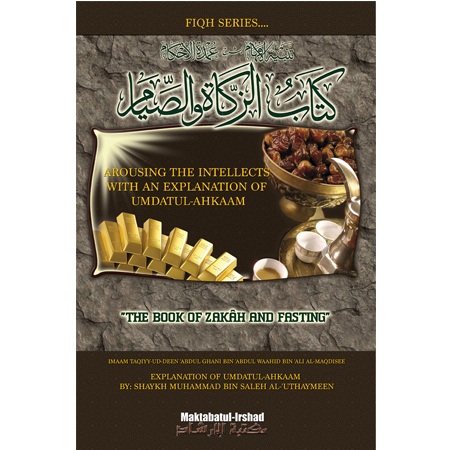
The book, “Umdatul-Ahkaam”, is compiled by hadeeths only from the Saheehs of Imaam Bukhaaree and Imaam Muslim. The majority of the hadeeths in “Umdatul- Ahkaam” are Muttafaqoon ‘alayh (agreed upon): meaning that they are recorded by both Sheikhs, in their respectable Saheehs. There are very few hadeeths in this book which are only reported by Imaam Bukhaaree or only by Imaam Muslim. Therefore, all the hadeeths of “Umdatul-Ahkaam” are authentic hadeeths.
The book, “Umdatul-Ahkaam”, is also assigned in Saudi Arabia as a course of hadeeth for the first class in the intermediate school and Sheikh Muhammad ibn Saalih al-‘Uthaymeen (rahimahullah) has written a brief commentary on the narrations that is very beneficial for the seeker of knowledge.
The book, “Umdatul-Ahkaam”, is compiled by Imaam, Aboo Muhammad `Abdul-Ghanee bin `Abdul-Waahid bin `Aalee ibn Suroor al-Jamma`ili al-Maqdisi ad- Dimashqee. Jamaa`ili in relation to Jamma`il which is a village in the mountains of Nablus from the land of Palestine. Al-Maqdisi – the one who lived in al-Quds (Jerusalem), ad Dimashqi – then Damascus.
Audio Series by Dr. Saleh As-Saleh rahimahullaah:

Ibn `Umar (May Allah be pleased with them) reported: Abu Bakr (May Allah be pleased with him) said: “Show reverence to Messenger of Allah (sallallaahu alayhi wa sallam) by honouring the members of his family.” [Al-Bukhari].
Yazid bin Haiyan reported: I went along with Husain bin Sabrah and `Amr bin Muslim to Zaid bin Arqam (May Allah be pleased with them) and, as we sat by his side, Husain said to him, “Zaid, you acquired great merits, you saw Messenger of Allah (sallallaahu alayhi wa sallam), listened to him talking, fought by his side in (different) battles, and offered Salat (prayer) behind him. Zaid, you have indeed earned great merits. Could you narrate to us what you heard from Messenger of Allah (sallallaahu alayhi wa sallam)?” Zaid said, “By Allah! I have grown old and have almost spent up my age and I have forgotten some of the things which I remembered in connection with Messenger of Allah (sallallaahu alayhi wa sallam), so accept what I narrate to you, do not compel me to narrate what I fail to narrate”. He then said, “One day Messenger of Allah (sallallaahu alayhi wa sallam) stood up to deliver a Khutbah at a watering place known as Khumm between Makkah and Al-Madinah. He praised Allah, extolled Him, and exhorted (us) and said, `Amma Ba`du. O people, I am a human being. I am about to receive a messenger (the angel of death) from my Rubb and I will respond to Allah’s Call, but I am leaving with you two weighty things: the first is the Book of Allah, in which there is right guidance and light, so hold fast to the Book of Allah and adhere to it.’ He exhorted (us to hold fast) to the Book of Allah and then said, `The second is the members of my household, I remind you (to be kind) to the members of my family. I remind you (to be kind) to the members of my family. Husain said to Zaid, “Who are the members of his household, O Zaid? Aren’t his wives the members of his family?” Thereupon Zaid said, “His wives are the members of his family. (But here) the members of his family are those for whom Zakat is forbidden”. He asked, “Who are they?” Zaid said, “Ali and the offspring of `Ali, `Aqil and the offspring of `Aqil and the offspring of Ja`far and the offspring of `Abbas.” Husain asked, “For all of them the acceptance of Zakat is forbidden?” Zaid (May Allah be pleased with him) said, “Yes”.
[Sahih Muslim].
[Source for above hadiths: Riyad-us-saliheen Darussalam English Translation]
Posted from : Audio Series :
The Correct Creed – Based upon the book of Shaykh al Burjiss
Related Links:
Al-Qawaa’id wal-Usool al-Jaami’ah wal-Furooq watTaqaaseem al-Badee’ah an-Naafi’ah
The Basic Rulings and Principles of Fiqh
The Beneficial, Eloquent Classifications and Differentiations
Foundation -2
By Sh. ‘Abdur Rahmaan ibn Naasir As-Sa’di (rahimahullaah)
Discussion based upon:
1-Sh. Ibn Sa’di’s original explanation
2-Our Sh. Muhammad ibn Saalih Al-‘Uthaimeen’s Commentary, and
3-Full explanation by our Sh. (Dr.) Sami ibn Muhammad As-Sghair (summer 1427 A.H./2006 C.E.)
Basic Rulings and Foundations of Fiqh-2
All Praise is due to Allaah, and may the salaah and salaam be on Prophet Muhammad, his household, the noble companions and those who follow them until the Day of Resurrection. This is a continuation of the explanation of The Basic Rulings and Principles of Fiqh – The Beneficial, Eloquent Classifications and Differentiations by Imam ‘Abd ar-Rahman ibn Naasir as-Sa’di (rahimahullaah).
Foundation two is entitled:
The means take on the same rulings as their aims.
What branches from this foundation is the following:
1) Whatever is required to fulfill an obligation is itself an obligation.
2) Whatever is required to fulfill a recommendation is itself recommended
3) Whatever leads to the establishment of a haraam (prohibition) is itself prohibited.
4) Whatever leads to the establishment of a makrooh (detested act) is itself detested.
5) Whatever follows-on from acts of worship and actions takes the same rulings as they do (i.e. worship and actions).
All of these stem from the second foundation, “The means take on the same rulings as their aims do.” In this comprehensive foundation, the phrase, “The means” refers to the methods and ways taken to achieve the aim or the cause that leads to the objectives; in addition, it implies the matters upon which the aims depend as well as what it entails from the existence of something and also the rulings’ conditions. If Allaah (سبحانه و تعالى) and His Messenger صلى الله عليه وسلم command a matter, then it is a command concerning the matter itself and also what is required to fulfill it; this is because the One Who legislated the rulings is al-‘Aleem (All Knowledgeable) al-Hakeem (All Wise) and knows rulings’ requirements, conditions, and fulfillments. Similarly, forbidding something means forbidding it in essence as well as all that leads to it.
Examples:
1) Walking to the congregational prayers, circles of knowledge or to uphold the ties of kinship as well as to visit the sick and to follow the funerals are parts of their respective acts of worship.
2) From the moment the person leaves his residence for Hajj, Umrah, or Jihaad in the cause of Allaah, he is in a state of continuous worship since these are means to the completion of those acts.
Allaah (سبحانه و تعالى : subhannahu wa taa’alaa) says (in the translation of the meaning):
It was not becoming of the people of Al-Madinah and the Bedouins of the neighborhood to remain behind Allaah’s Messenger (Muhamamd صلى الله عليه وسلم when fighting in Allaah’s Cause) and (it was not becoming of them) to prefer their own lives to his life. That is because they suffer neither thirst nor fatigue, nor hunger in the Cause of Allaah, nor they take any step to raise the anger of disbelievers nor inflict any injury upon an enemy but is written to their credit as a deed of righteousness. Surely, Allaah wastes not the reward of the Muhsineen. Nor do they spend anything (in Allaah’s Cause) – small or great – nor cross a valley, but is written to their credit, that Allaah may recompense them with the best of what they used to do (i.e. Allaah will reward their good deeds according to the reward of their best deeds which they did in the most perfect manner). [Surah at-Tawbah (9:120-121)]
The point of evidence in this verse is clear. Also, in the Sunnah, it is reported that the Prophet ( : sallallaahu ‘alayhi wa sallam) said concerning the seeker of knowledge,
“Whoever pursues a path to seek knowledge, then Allaah will thereby make easy for him a path to Paradise” [1]
We ask Allaah (سبحانه و تعالى) from His bounty.
Replete are the evidences from the authentic Sunnah concerning the reward of the person who walks to the congregational prayers; one example is the authentic hadeeth reported by Abu Hurairah who narrated that the Prophet صلى الله عليه وسلم said,
“Prayer offered in congregation is twenty-five times better than prayer offered at home or in the marketplace alone. If any one of you does wudoo’ and does it perfectly, then comes to the masjid for no other purpose than to pray, then he does not take a single step but Allaah raises him in status one degree thereby and removes one sin from him, until he enters the masjid.”
Likewise, concerning verse 12 from Surah Ya-Sin (in the translation of the meaning):
Verily, We give life to the dead, and We record that which they send before (them), and their traces [Surah Ya-Sin (36:12)]
some maintained that the phrase, “We record that which they send before (them), and their traces,” refers to the recording of their footsteps and of the deeds performed to conclude the acts of obedience or disobedience; in another interpretation, others asserted that this verse discusses that which is left behind from righteous deeds after one’s death, such as: beneficial knowledge, authorship, endowments, continuous charity, etc.
Therefore, the footsteps leading to the salaah are something that follows-on the worship. Correspondingly, the footsteps that lead to sin fall under the same ruling as the sins themselves do; as such, these footsteps would also be sins. The command to perform the salaah is a command to do the salaah as well as to do that, without which, the salaah would not be complete, such as the tahaarah (purification), placing a sutrah, facing the qiblah, learning the rulings of salaah, and the rest of the salaah’s conditions. The same applies to the other of the acts of worship. Thus, with this insight, the branches of this foundation that were mentioned previously become clear.
1) The ‘ulama’ (scholars) said that if the time of a prescribed prayer commences upon someone who has no water available, then he should seek it in the places he hopes to find it. Likewise, it is required that he buys water or a sutrah in situations where he may not have them available. This is because whatever is required to fulfill an obligation is itself an obligation.
2) It is obligated for people to learn the industrial knowledge, small or great, that they need in their deen or dunyah. These skills will help reduce the people’s reliance on other nations, especially the kufar, through increased selfsufficiency. Beneficial knowledge is of two types.
a. The first type of knowledge is an individual obligation (fard ‘ayn); it includes all that which is needed by the person for his deen, worship, and transactions, each in accordance with his own condition. This is required of every legally and morally responsible, mature, and sane individual. Example: if a person has wealth then it is binding upon him to learn the rulings of Zakaat, otherwise it is not mandatory if he does not possess wealth. Similarly with respect to the one who wants to go for Hajj or want to be an Imaam. He must learn the related rulings, otherwise the knowledge thereof is of the second type (collective duty).
b. The second type of knowledge is a collective obligation (fard kifaayah); it includes all that which people need but is not required of them individually. Examples of communal obligations are: the learning of the different branches of knowledge, the adhaan, the lesser and greater leadership, enjoining that which is right, forbidding that which is evil, preparing the deceased for burial, the funeral prayer, carrying the body to the graveyard, the burial itself, agriculture, and irrigation. The performance of these is sought from the morally responsible collectively, not from every person individually.
3) The measures taken to earn that which is needed to establish the rights of the self, family, children, and animals fall under this principle. For instance, if a person does not have wealth and he fears his destruction, then saving the self is an obligation. Whatever is required to fulfill an obligation is itself an obligation; as such, the seeking of sustenance would be an obligation.
4) It is obligated to learn the evidences for the direction of the qiblah, time, as well as directions in general for those who need them.
5) The sharee’ah knowledge is of two types, objectives and means. The objectives are learning the Book and the Sunnah; the means to that is the Arabic sciences. This is because the knowledge of the Book and Sunnah is dependant upon knowing the Arabic sciences and cannot therefore be completed except through that. However, if someone learns Arabic to become a writer or a poet, then this is mubaah (allowable) and will be neither for him nor against him, as it is independent of the sharee’ah knowledge.
6) Every allowable matter taken to abandon an obligation or to perform a forbidden act is itself haraam (forbidden). This is because in this foundation, the means take on the same ruling as there aims. That is why it is forbidden to trade or buy after the second call for jumu’ah; Allaah (سبحانه و تعالى) states.
O you who believe (Muslims)! When the call is proclaimed for the Salaat (prayer) on the day of Friday (Jumu’ah prayer), come to the remembrance of Allaah [Jumu’ah religious talk (Khutbah) and Salaat (prayer)] and leave off business (and every other thing), that is better for you if you did but know! [Surah al-Jumu’ah (62:9)]
Similarly, it is forbidden to indulge in trade if someone fears missing the time of the salaah or the congregational prayers. In addition, it is not permissible to sell something to one who intends to use it in a sinful manner. For example, selling weapons to the people of fitnah or bandits is forbidden. Likewise, one can not sell an ingredient that is used in alcohol preparation if you know it will be used for that purpose. Moreover, deceptive practices in transactions are forbidden if they lead to haraam, such as the trade in ‘eena (selling a commodity to another person for a deferred price due at a certain time while then buying the same commodity from him at a lesser price).
7) Those who take wealth through illegal means will be prevented from achieving what they intend. An example of this would be the deliberate killing of person to whom a bequest has been made or an heir. Likewise, the one who divorces his wife during an illness he fears is incurable will be treated in a manner opposite to his intention; as such, she will still inherit from him since the man only divorced her in order to deprive her of the inheritance. Also, one cannot treat his wife harshly in order to take back some of the mahr (bridal money given by the husband to his wife at the time of marriage) by forcing her to resort to khula’. Allaah (سبحانه و تعالى) says:
You should not treat them with harshness, that you may take away part of the Mahr you have given them. [Surah an-Nisa (4:19)]
Similarly, the husband should not send his wife to her parents’ house and leave her situation suspended in order to force her to seek khula’. In such situations, it is not permissible for him to take any of the mahr since anyone who hastens something before its proper time will be prevented from achieving what he intends.
8) If someone gives a gift out of bashfulness or fear, then it is obligatory that the gift to be returned to him.
9) This foundation includes the deceptive approach used by some to make the wife permissible for her former husband who had divorced her three times.
This is forbidden, and the person who engages in this is cursed. For example, if an individual instructs someone to marry his former wife whom he had divorced three times, with the intention of marrying her later, and that person makes a contract to marry her, this is in fact adultery, even though it takes the form of a contract.
10) Allaah (سبحانه و تعالى) forbade all fawahish (evil things and sins) as well as all the means of approaching them when it is feared that the person may fall into haraam. For instance, being in seclusion with women who are legally unrelated to person as well as looking at the haraam are both forbidden. That is why the Prophet صلى الله عليه وسلم said:
“That which is lawful is plain and that which is unlawful is plain, and between the two of them there are doubtful matters about which not many people know. Thus he who avoids doubtful matters clears himself in regard to his religion and his honor, but he who falls into doubtful matters falls into that which is unlawful, like the shepherd who pastures around a sanctuary, all but grazing therein. Truly every king has a sanctuary, and truly Allaah’s sanctuary is His prohibitions.”
11) The prohibition regarding that which instigates enmity and hatred between Muslims as well as the incitement to all that which encourages friendship and cooperation from sayings and actions are branches of this principle.
12) This foundation includes what Allaah (سبحانه و تعالى) said concerning trusts; He (سبحانه و تعالى) affirmed (in the translation of the meaning):
Verily! Allaah commands that you should render back the trusts to those, to whom they are due. [Surah an-Nisa (4:58)]
This verse covers all types of trusts, such as what someone deposits with you, taking care of an orphan’s wealth, taking care of an endowment, etc. One of the means of rendering back the trusts to their people is by preserving them and spending upon them if they are creatures with souls (e.g. animals). Likewise, the one who is entrusted must not be negligent nor do to them that which is not permissible.
Many of the branches previously mentioned are governed by their intentions. For instance, the deceitful act done with the intention of achieving something forbidden or to abandon an obligation is haraam. However, if deceit is used to extract lawful, permissible rights, then this is lawful and may even be commanded, except in cases where it may be harmful to the person; this is because the slave is ordered to take his rights in open ways, but also sometimes in hidden ways. This is clear when we examine the situation of Prophet Yusuf (‘alayhis salaam); Allaah spoke about him, saying (in the translation of the meaning):
So he [Yusuf (Joseph)] began (the search) in their bags before the bag of his brother. Then he brought it out of his brother’s bag. Thus did We plan for Yusuf (Joseph). He could not take his brother by the law of the king (as a slave), except that Allaah willed it. [Surah Yusuf (12:76)]
In addition, the same applies to methods taken to protect lives or wealth. An example of this is the case of Khidr and the ship, in Surah al-Kahf, where he made a hole in the boat in order to save it from the oppressive king who would have unlawfully taken over any working vessel. Therefore, such plots depend on their intention, good or bad.
Excluded from this foundation are vows due to a specific wisdom, particular to them. Vows of obedience are obligatory to fulfill. However, the making of the vow itself is makrooh (detested) as it does not bring good as the Prophet صلى الله عليه وسلم said; rather, vows simply extract things from the miser. Similarly, they diminish and reduce sincerity. What Follows the Objective Takes the Same Rulings as Objective Itself Finally, in is as much as the means taken to reach the objectives inherit the same rulings as the objective itself, what follows or completes the aims also takes the same ruling as their aims do. Accordingly, going to perform good deeds as well as returning to the place of departure are acts of worship. That is why some of the companions said:
“I anticipate my return to my home from salaah as I anticipate my departure from my home for salaah.”
The second foundation in Imam ‘Abd ar-Rahman ibn Naasir as-Sa’di’s book, alQawaa’id wal-Usool al-Jaami’ah wal-Furooq wat -Taqaaseem al-Badee’ah anNaafi’ah (The Basic Rulings and Principles of Fiqh – The Beneficial, Eloquent Classifications and Differentiations), is entitled: The means take on the same rulings as their aims do.
And Allaah, the Most High, Knows Best.
All Praise is due to Allaah, and may the salaah and salaam be on Prophet Muhammad, his household, the noble companions and those who follow them until the Day of Resurrection.
Saleh As-Saleh
Edited 27th Sha’baan, 1427 AH
20th Sept. 2006 C.E.
[1] Part of a hadeeth reported in Saheeh Muslim (English Translation No. 6518, Book 35)
[2] In the wording of al-Bukhari, vol. 1, hadeeth no. 621. It is also reported by Muslim.
[3] Part of a hadeeth reported in Saheeh Muslim (English Translation No. 1599)
Prepared by Saleh As-Saleh (rahimahullaah)
Transcribed by Br. Abu Abdullaah al-Amreeki, Jazaahullaahu Khairan, from live duroos in Paltalk’s “Understanding Islam 1” room. Text edited by sis Umm Ahmad al-Kanadiyyah, Jazaahaallaahu Khairan.
Posted from: Explanation of Basic Rulings and Principles of Fiqh of Shaykh Ibn Sa’di
Related Link: Does The Ends Justify The Means ? – Shaykh Salih Ali-Shaykh
As for the Ahl-ul-Sunnah wal-Jammah, and they are the Companions of the Prophet -sallAllaahu alayhi wa sallam– and those who followed them in goodness, they say that the sinner does not stay in the Hell-Fire for eternity as a long as he does not make something prohibited as permissible. However, if he dies knowing that it is a sin, but the Shaytaan prompted him to commit the sin, then he does not stay in the Hell-Fire for eternity, in fact he is under the Will of Allaah, if Allaah wants He will pardon him and enter him into Paradise due to his Islaam and Eemaan and if Allaah wants, He will punish him in the Hell-Fire according to the amount of sin, then after he has been purified and cleared Allaah will take him out of the Hell-Fire to Paradise.
.. Therefore, whatever is less than Shirk then it is under the Will of Allaah, and committing suicide is less then Shirk, likewise is Zina (adultery & fornication), stealing and drinking alcohol. All of these things are sins that are less than Shirk, and those who carry them out are under the Will of Allaah. If a person dies while committing that sin then it is up to Allaah – Subhanahu – if He wants to forgive him due to righteous actions and the Islaam which is with him, or if Allaah wants, He will punish him in the Hell-Fire according to the amount of sins that he had committed.
– Ibn Baaz (Ref Here)
Posted from : Audio Series :
The Correct Creed – Based upon the book of Shaykh al Burjiss
Related Links:
This is The Creation of Allaah, So Show Me that which those beside Him have Created?
Man & Nature?
Compiled By Dr. Saleh As-Saleh (rahimahullaah)
CONTENTS
Introduction
From A Small Animal To Man!
A Theory With A Broken Chain
Reality Vs Theory
(1) The Points About Archeology
(2) The Point About Embryos
(3) The Point About The Appendix
(4) The Point About Natural Selectivity
(a) Elimination “Factors” & Life “Factors”
(b) Natural Selectivity Or “Mother Nature”
(c) “Mother Nature” Is Not The “Creator”
(d) The “Laws” Of Nature
(e) A God Other Than Allaah!?
(f) What Are These Other “Gods”?
(5) The Point About “Sexual Selection”
(6) “Under-Developed Theory”
Why Did The “Theory” Spread?
The Qur’An And The “Theory”
The Test
The closest thing to man is himself. How many of us really know about ourselves before even thinking about the environment surrounding us? There are many great things in ourselves that we are either heedless regarding their magnificence or that we take for granted. Let us take the following journey back to the days when each one of us was an “embryo” inside the womb of his mother:
[Who took care of me with utmost care and graciousness when I was a tiny seed settled on the wall of the uterine with three layers of darkness surrounding me?
Who made my mother’s blood bring me food I need until I grew up to a stage in which my body was able to stand the air, the light, and the hands of people who turn me around?
Then, when the contractions pushed me, and I was “squeezed” out and to the world of tests and trials I came out!
Who shielded you inside as a “fertilized egg”? Then who made your residence enlarge as you grew up? Who opened the way for you when you came out naked without belongings or wealth?
There you came so poor and needy. Two “containers” of milk hanging on your mother’s chest came to the rescue! Who commanded the milk to develop and then to stand ready for your lips to come and suck it out? A milk so agreeable to you, neither cold nor hot; neither salty nor bitter. You were so thirsty and so hungry.
Who turned the hearing of your mother and filled it with mercy, love and attachment? The moment she hears you crying she comes forth led by her mercy and love. She would prefer to see herself in pain not you! You enlighten her life. Who put all of that in her heart?
When your body got stronger and your belly size became bigger, you needed another kind of food. Who put in your mouth the cutting and grinding “tools”? Who held your teeth from growing during the period of your breastfeeding? It was a mercy for your mother when they were held and a mercy for you when they came out! And the stronger you became, the more you got from these “tools” of your mouth! Thereupon you used a new set of “tools”: the molars working on meat, bread and all kinds of solid food. Who provided you with these “instruments” and made them easy for you to utilize.
When we came out we knew nothing. What a burden it would have been if we were born in a state possessing the intelligence of an adult wrapped in diapers? What kind of living it would be? Would we receive the care and kindness you normally get as developing newborns?
Our intelligence developed gradually and we were able to slowly but surely familiarize ourselves with our surroundings. Who is the One Who is All-Wise and Most Merciful, the One Who is ever watching over us and providing us with the means we need in due proportions and exact measurements?
Then who is the One Who fashioned our heads with hair as a beauty and protection from cold and heat? Who adorned the face of the growing man with the distinctive beauty of the beard and kept the woman’s face soft, radiant and hairless?
Many are turning away from the one who created us and increasingly becoming heedless regarding the true objective behind our existence. They are misled by a concept and a “theory”. That is it! A “theory” that practically denies the existence of the true God (Allaah).
Darwin [1], presented a “theory” that denies the creation of man as well as creation itself. The theory was announced in the second half of the nineteenth century. Although it is an “assumption,” there are those who consider it scientific evidence to support their arguments against the reality of creation. The theory claims that the origin of life lies in a single small animal that was “developed” on its own from water. The “environment”, according to the theory, imposed specific structural changes on this organism producing new features in it. These changes were then inherited in the offspring and further transformed with time to produce more advanced creatures of which man is the highest form. This is the theory of Darwin.
Many critical aspects of the lives of people are still affected, knowingly or unknowingly, by some basic elements of Darwin’s theory, mainly the idea of “development” and its link to the “environment.”
The objectives of this book are to:
A) Examine the basics of the theory and the evidence supporting them.
B) Provide the essential facts that disprove the validity of the theory’s assumptions.
C) Discuss the influence of the theory on the life of this world.
D) Relate man to his Creator and hence to the purpose of our creation.
I ask Allaah (God) to enlighten the hearts of those men and women who will read this book, and to guide them to worship Him alone by submitting their wills to His will. The submission and obedience to Allaah’s Will and Commands as detailed in the last Revelation to mankind, the Qur’an, is the meaning of Islam.
The one who is need of the Mercy of Allaah
Saleh As-Saleh
The Background and Basics of The Theory:
(1) The theory depends on what was observed in archeological discoveries at the time of Darwin: old and new geological layers contained different remains from different forms of creation. The “old” layers contained “primitive” forms of creation while more recent layers contained more “advanced” forms. Darwin concluded that the “more advanced” creatures originated (evolved) from the “lower primitive” ones.
(2) The theory also depends upon an idea that was prevailing at the time of Darwin in which it was thought that all animal embryos were similar at their early stages of development. This brought a conclusion that “the origin of all beings is one” and that “evolution” on earth occurred in the same way it occurred inside the wombs of living beings.
(3) Furthermore, the theory cites “differences in the roles” of the appendix in man in comparison to that in monkey. Since it is assumed that it “does not have a role” to play in the function of the human body while it can digest plants in monkeys, the theory suggested that the appendix in man is an underdeveloped form that was a left over from monkeys.
(4) The theory assumes the presence of a “Natural Selection” process in which there are “elimination factors” that can abolish the weak living beings while the strong ones are kept, and that their characteristics are to be inherited in their offspring. With time these characteristics will accumulate in the new beings producing new characteristics. According to Darwin, this represents the “evolutionary” process that makes of these new characteristics “higher” forms of life.
(5) The theory suggests a “Sexual Selection” process by which there is a tendency of the male and female to mate with the strong and best members of both sexes. The characteristics of the “best” will be “inherited” and those associated with weak animals would be “eliminated” because of the lack of tendency and/or interest to mate the weak.
(6) Whenever a new characteristic is evolved it is inherited in the offspring.
(1) The Points about Archeology
The science of archeology is far from being complete and no one can claim that the search has been completed under the earth or sea layers. The door is still open for more discoveries that may contradict the theory. Assuming, however, that the findings of this science are completed, this does not establish that “higher” forms of life are developed from “lower” ones. This is only evidence for organized existence of these beings (in any form) at times when the environment is suitable for that. On the other hand, the archeological studies at the time of Darwin estimated that man’s life on earth was 600,000 years whereas new archaeological discoveries give an estimate figure of 10 Million years. This is a reflection of the incompleteness of these studies and that this science is still variable.
It is also important to note that there are many “missing links” in the so-called “evolutionary chain” of Darwin’s theory. For example there are no archeological data to link animals of “single cells” and those of “multiple cells” nor between invertebrate animals and fish or amphibians. The same is true between amphibians and reptiles and between amphibians and birds.
(2) The Point About Embryos
This was a wrong conclusion made by some scientists because of the less sophisticated microscopy present at Darwin’s time. Today’s technology demonstrates that there are fine differences between the structure, build up and organization of animal embryos.
(3) The Point About The Appendix
The presence of this organ in man does not represent a concrete evidence for the development of man from a “monkey”. Rather its presence is inherited from the grand-man who depended upon vegetation as a source of food to help him digest it. In addition, there could be other important functions for the appendix that are not discovered yet.
(4) The Point About Natural Selectivity
(a) Elimination “Factors” & Life “Factors”
Surely there is a law and discipline that work to eliminate the living creatures, weak as well as strong. Allaah ordained death on every living being. The elimination factors are not the only factors that affect life on this planet. There are “life factors” as well, and that there is a discipline of mutual dependency and relationship between the living being and its environment. These “factors” represent the true means which Allaah has provided: sun, seas, wind, rain, plants, gravity, etc. All of these means are coordinated to provide survival for man, animals and plants. Considering the “elimination factors” alone and disregarding the “life factors” is confusion on the part of Darwin’s theory. When scientists try to formulate theories to explain certain matters in the outside world, they take into account all factors of influence.
(b) Natural Selectivity or “Mother Nature”
Surely those in support of the theory of evolution like to refer to “Mother Nature” as the “source” that provides and supports the “natural selectivity.” “Mother Nature”, however, lacks wisdom, power, self-coordination, will, and knowledge. Natural things such as wind, lightning, water, storms, warmth, severe cold, etc. can cause destruction or deformation. How could these conditions explain the beauty of the creation and its fine course of establishment and coordination? How could the minute elements in the egg of a bird “know” that the egg must appear in the form of a bird and thus it has to break its own shell to survive? The One Who had created nature provided all the means for its course of existence and activity.
Now we see that many who arrogantly deny Allaah’s existence try to divert the attention of the people to worship this “new” deity called “Mother Nature”! In many conversations some people are reluctant to say “God” when they want to refer to “supernatural” phenomena. Instead, they say: “Mother Nature” did such and such. They like to look “normal and advanced” and not “strange and backward” in front of others. The idea of “how people will look at me,” overshadows that God (Allaah) is more important than people. It is a reflection of psychological defeat in front of secularism, which itself is the major fruit of Darwin’s theory. It is lack of true faith in the true God, Allaah. A believer in Allaah would not fear saying the Name of his Creator, the Most Merciful, and the Most Compassionate. He knows that those around him will one day die, but Allaah is the Everliving. So, who must count first? He knows that Allaah is the Sustainer and Provider and not the “Chairman of the Boards” nor the “Chief Executives,” managers, or any other boss! This is the benefit of worship of Allaah: A liberation from slavery to anything and (or) anyone but Allaah.
(c) “Mother Nature” Is Not The “Creator”
A simple comparison between man and nature illustrates that man can see, hear, know, learn, reason, etc. whereas nature has none of these qualities. How could man then be “more advanced” than a “creator” known as “Mother Nature?” This proves the falsehood of the idea of god-Mother Nature. Allaah says:
“Say (O Muhammad) [صلى الله عليه وسلم [2] to mankind): How do you worship besides Allaah something which has no power either to harm or benefit you? But it is Allaah, Who is the All-Hearer, the All-Knower.” (Qur’an 5:76).
In many aspects, nature is under man’s service, and its resource is under his disposal, as Allaah had decreed in the Final Revelation to mankind, the Qur’an:
“See you not (O men) that Allaah has subjected for you whatsoever is in the heavens and whatsoever is in the earth, and has perfected His graces upon you (both) apparent [3] and hidden [4]? Yet of mankind is he who disputes about Allaah without knowledge or guidance or a Book giving light.” (Qur’an 31: 20).
With the progress of technology some people became even more arrogant. Not only do they refer to “Mother Nature” as the “founder or creator,” but aim to control nature itself. It is a strange conclusion! Allaah has made it very clear that there will be this type of people:
“The likeness of (this) worldly life is as the rain which We send down from the sky, so by it arises the intermingled produce of the earth of which men and cattle eat until when the earth is clad with its adornments and is beautified, and its people think that they have all powers of disposal over it. Our Command reaches it by night or by day and We make it like a clean-mown harvest, as if it had not flourished yesterday! Thus do We explain the Signs (proofs, evidences, verses, lessons, signs, revelations, laws, etc.) in detail for people who reflect.” (Qur’an 10: 24).
(d) The “Laws” of Nature
Some consider that “Nature” represents the “Laws” that govern the universe. They try to explain how things occur, but do not answer questions like: Who created this universe? Who put the “Laws” into effect? This leaves them separated by an artificial barrier into two “personalities”: one that best “fit” the society (i.e. the outside) and tries to give “interpretations” for what occurs in the universe; and one kept within themselves confessing that God (Allaah) is the One commanding these “supernatural” phenomena. But under dangerous circumstances, you hear them calling: “Oh my God!” or “God help me!”
In the old ages, man knew that rain came down from the sky. Today we know a lot about this process, from the evaporation of water up to the formation of raindrops, there is a reflection of real actions. In their references, scientists do not tell us how did these realities become laws. For example: why are these laws coordinated in ways allowing birds to fly in the air, fishes to live in the water, and man to live on the earth? “Nature’s” qualities are not its own. It has been given the attributes we feel and see around us.
The true Creating Power has all the Perfect Attributes and All-Perfect Actions. He is Allaah:
Say (O Muhammad (peace be upon him)): Who is the Lord of the heavens and the earth? Say: “(It is) Allaah.” Say: “Have you then taken (for worship) Auliyâ’ (protectors) other than Him, such as have no power either for benefit or for harm to themselves?” Say: “Is the blind equal to the one who sees? Or darkness equal to light? Or do they assign to Allaah partners who created the like of His creation, so that the creation (which they made and His creation) seemed alike to them.” Say: “Allâh is the Creator of all things; He is the One, the Irresistible. (Qur’aan 13: 6)
“The One Who has created (everything), and fashioned it in due order and proportion; Who has measured and granted guidance. (Qur’aan 87: 2-3)
“The One who has created the seven heavens one above another, you can see no fault in the creation of the One (Allaah) Whose Mercy encompasses everything. Then look again: “Can you see any rifts?” “Then look again and yet again, your sight will return to you in a state of humiliation and worn out.” (Qur’an 67: 3-4).
“Allaah is He Who raised the heavens without any pillars that you see. Then He ascended the ‘Arsh (the Throne in a manner that suits His Majesty). He has subjected the sun and the moon (to continue going round)! Each running (its course) for a term appointed. He regulates all affairs, explaining the Aayaat (proofs, evidences, verses, lessons, signs, revelations, etc.) in detail, that you may believe with certainty in the meeting with your Rabb. (Qur’an 13: 2).
“He has created the heavens without any pillars, that you see, and has set on the earth firm mountains, lest it shake with you. And He has scattered therein animals of all kinds. And We send down water (rain) from the sky, and We cause (plants) of every goodly kind you grow therein.” (Qur’an 31: 10).
“And indeed We [5] created the heavens and the earth and all between them in six Days and nothing of fatigue touched us [6].” (Qur’an 50: 38).
(e) A God Other Than Allaah!?
In an Address to man, Allaah sends clear and vivid verifications as well as challenges for man and for these “gods” that some invoke and worship:
“Is not He (better than your gods) Who has made the earth as a fixed abode, and has placed rivers in its midst, and has placed firm mountains therein, and has set a barrier between the two seas (of salt and sweet water). Is there any god with Allaah? Nay, but most of them know not.” (Qur’an 27: 61).
“Is not He (better than your gods) Who created the heavens and the earth, and sends down for you water (rain) from the sky whereby We cause to grow gardens full of beauty and delight. It is not in your power to cause the growth of their trees. Is there any god with Allaah? Nay, but they are a people who ascribe equals (to Him)!” (Qur’an 27: 60).
“Is not He (better than your gods) Who guides you in the darkness of the land and sea, and Who sends the winds as heralds of glad tidings, going before His Mercy (Rain)? Is there any god with Allaah? High Exalted be Allaah from all that they ascribe as partner (to Him)!” (Qur’an 27: 63).
“Is not He (better than your gods) Who originates creation, then repeats it, and Who gives you sustenance from heaven and earth? Is there any god with Allaah? Say, “Bring forth your proofs, if you are truthful.” (Qur’an 27: 64).
“Say (to the disbelievers): “Tell me, if Allaah took away your hearing and your sight, and sealed up your hearts, who is there-an “ilah” (a god) other than Allaah could restore them to you? Look, how variously We explain the Signs, yet they turn aside.” (Qur’an 6: 46).
Many in this world have turned to worship many created things or beings. Divine attributes has been given to Buddha, ‘Eesa (Jesus), Saints, Monks, Musa (Moses), Prophets, Places, Rivers, Cows, Temples, etc., Do these “gods” benefit or harm?
“And they worship besides Allaah things that hurt them not, nor profit them and they say: “These are our intercessors with Allaah.” Say: “Do you indeed inform Allaah with that which He knows not, in the heavens or on earth? Far is He removed from every imperfection! And far is He above all that which they associate as partners with Him!” (Qur’an 10: 18).
Where did they find “Names” for them?
“You do not worship besides Him but only names which you have forged, you and your fathers, for which Allaah has sent down no authority. The command is for none but Allaah. He has commanded that you worship none but Him, that is the (true) straight religion, but most men know not.” (Qur’an 12: 40).
Where are the things they have created?
“This is the creation of Allaah. So show me that which those (whom you worship) beside Him have created. Nay but the wrong-doers (and those who do not submit to Allaah) are in plain error.” (Qur’an 31: 11).
“Say (O Muhammad صلى الله عليه وسلم): ‘Tell me or inform me (what) do you think about your (so-called) partner-gods to whom you call upon besides Allaah, show me, what they have created of the earth? Or have they any share in the heavens? Or have We given them a Book, so that they act on clear proof therefrom?’ Nay, the wrong-doers (and those who do not believe in Allaah) promise one another nothing but delusions.” (Qur’an 35: 40).
In fact they are unable to create even a fly:
“Verily! Those on whom you call besides Allaah, cannot create (even) a fly, even though they combine together for the purpose. And if the fly snatched away a thing from them, they would have no power to release it from the fly. So weak are (both) the seeker and the sought.” (Qur’an 22: 73).
They themselves are created, aren’t they?
“Attribute they as partners to Allaah those who created nothing? But they themselves are created.” (Qur’an 7: 191).
They cannot even help themselves!
“No help can they give them, nor can they help themselves.” (Qur’an 7: 192).
“Say (O Muhammad صلى الله عليه وسلم): ‘Have you then taken (for worship) protectors other than Him, such as no power either for benef) it or for harm to themselves?’ Say: ‘Is the blind equal with the one who sees? Or darkness equal with light? Or do they assign to Allaah partners who created the like of His creation, so that the creation (which they made and His creation) seemed alike to them.’ Say: Allaah is the Creator of All things. He is the One, the Irresistible.” (Qur’an 13: 16).
They cannot answer those who invoke upon them!
“So call upon them and let them answer you if you are truthful.” (Qur’an 7: 194).
The above proofs are sent down from Allaah to bring people to their senses. This is a Mercy and Kindness from Allaah for mankind. He said:
“Allaah Is the One Who sends down manifest Aayaat (proofs, evidences, verses, lessons, signs, revelations etc.) to His slave (Muhammad صلى الله عليه وسلم) that He may bring you out from darkness into light. And verily, Allaah is to you Full of Kindness, Most Merciful.” (Qur’an 57: 9).
(6) The Point About “Sexual Selection”
The survival of the strongest is not evidence for selective developmental evolution. The only thing that can be understood about the mating tendencies is that they will maintain continuity in the same strong kind and an end to the weak kind. Thus:
(i) The muscles of a strong athlete will not be inherited in his offspring.
(ii) The mind of a high quality scholar will not be transferred to his children by inheritance.
The saying that newly acquired characteristics can be inherited is rejected by modern genetic studies as well as known facts. Any quality that is not an intrinsic part of the genome is “temporal” and is not transmitted to the offspring by inheritance: Muslims circumcise their babies.
Their children are not born circumcised!
(7) “Under-developed Theory”
We have not seen (or heard about) certain types of animals coming to existence through the process of developmental transformation. There was no monkey transformed into a man even after hundred years or so!
The nose of a dog is more sensitive in its smelling function than that of man. Is the nose of the dog more “advanced” than that of man? Or are the birds (with flying abilities) and frogs (with amphibian abilities) more “developed” than man? The eye of the camel and that of the horse or donkey can see during day and night, is it true then that these animals represent more “advanced” forms than man?
The male man, like the male elephant, has breast marks while horses and male donkeys do not (except some resemblance to whatever their respective mothers were). So, why does the male man continue to possess this feature while it was not present in some “lower” beings?
Scientists have called Darwin’s study a “Theory” and clearly there is always a difference between theory and reality. A theory by definition is falsifiable.
The idea of “selection for the strong” had a tremendous influence on humanity. It made it easy for some strong men and strong nations to think and feel that they are strong and superior because of an “evolutionary selective process.” They feel that they are entitled to certain practices of domination according to the idea “survival is for the best!” This is well manifested in the colonial expansions, racism, and in many practices by many of the so-called “democratic nations” who practice the principle of supremacy: “Might is Right.” The idea of “development” interprets life as a “constant struggle between living beings and that the survival is only for the one that best fits the environment around it.”
In reality this environment is a materialistic one and it dictates the type of development, its size, and its direction in an imposed way leaving no role for the living being. This idea is very well used in our times to support the materialistic life of the modern world.
Materialism is imposed in a way as an integral part for “development.” In the name of “development” today’s “secondary” things for your home are becoming the “necessary” items of tomorrow and if you don’t buy them you are going to “look different,” “rejected” and a “drop out” because you do not “fit” the environment around you. Just look around and see the many thousands of things that were “secondary” a year ago and became “essential” a year later! Open a woman’s dresser today and see the latest “fashion” dresses and shoes. Come next month and you find “new” ones. She has to “fit” into the “environment” around her. Men are also influenced with this “fit the environment” concept. Who is doing this to the World? Many are those who contribute to this problem. They come from “big businesses”, media sectors, politicians, military establishments, academia, ‘the world of fashions’, etc.
In the name of progress, many people are influenced by the materialistic environment and are driven away from Allaah, their Creator. On the other hand, many are discovering the truth regarding the very essence of the purpose of existence. They are finding true, satisfactory and beneficial life in the code of life which their Creator has described in the final revelation to man: the Noble Qur’an. They came to know the beauty and reality of the following verse:
“Say: (O Muhammad صلى الله عليه وسلم): “Truly, my prayer, my sacrifice, my living, and my dying are for Allaah, the Rabb [the Creator, the Owner, and the One Who Commands and Administers everything] of the ‘Aalameen [all that exists].” (Qur’an 6: 162).
The theory came at a critical moment in the conflict between the church and many of its corrupted doctrines on one hand and the secular sector (especially scientists) in the 19th century Europe, on the other hand. During this conflict many scientists were killed and/or persecuted. This theory was one of the weapons that were raised by the scientists in their fight with the religious authorities in and outside Europe. It was presented as “The Scientific” reference of the mind. It was introduced in the education programs of most of the colonized countries as “Scientific Knowledge” to support its acceptance. Many colonized Muslim countries were targeted and this caused a great deal of negative influence on many generations, especially with the victory of the secular-scientific thoughts in Europe over the church-made laws. This played a role in the spread of secular thoughts in many parts of the world. For many it helped promote a stand against church oppression, and when it served its purpose it was transformed to serve the purpose of influence and secularism.
Most people had no idea about the theory itself and/or the its concept of “selectivity” that was used as a “pretext of justification” for colonization, reflecting the prejudice of “being better” than those “weak ones” from the “other” world communities.
When Allaah, the Most High, tells us about any matter, it comes from the One Who is All-Knowing. Whatever man knows is nothing compared to what Allaah, the Exalted, Knows:
“Allaah knows and you know not.” (Qur’an 2: 216).
“Should He not Know, what He created? And He is the Most Kind and Courteous (to His slaves) All-Aware (of everything).” (Qur’an 67: 14)
Why do people question their origin when they did not witness its creation? This is result of secular reasoning. Without the reality of creation, there is no purpose for man’s existence:
“I called them not to witness (nor took their help in) the creation of the heavens and the earth, nor (even) their own creation.” (Qur’an 18: 51).
Whatever Allaah decrees in relevance to man’s creation is different from “theories”! Allaah, the AllKnowing, tells us that He informed the Angels about the creation of Adam before it happened:
“And (remember) when your Rabb said to the angels: Verily, I am going to place (mankind) generations after generations on earth.” (Qur’an 2: 30).
And He, Most High, told us about the kind of material from which Adam was created: dust and water, and the offspring of Adam from sperm:
“O mankind! If you are in doubt about the Resurrection, then verily! We have created you from dust (i.e. Adam) then from a Nutfah (mixed drops of male and female sexual discharges i.e. offspring of Adam) then from a clot (a piece of thick coagulated blood) then from a little lump of flesh, some formed and some unformed (miscarriage) that We may make (it) clear for you (to show our Power and Ability to do what We will). And We cause whom We will to remain in the wombs for an appointed term, then we bring you out as infants [7], then (give you growth) that you may reach your age of full strength. And among you there is he who dies (young), and among you there is he who is brought back to the miserable old age, so that he knows nothing after having known.” (Qur’an 22: 5).
“He is the One Who has created you from clay and then decreed a stated term (for you to die).” (Qur’an 6: 2).
Allaah shaped Adam by His own Hands [8]:
“Allaah said:”O! Iblees (Devil) what prevents you from prostrating yourself to one whom I have created with both My Hands.” (Qur’an 38: 75).
The Prophet (Muhammad-صلى الله عليه وسلم) also informed us that:
“When Allaah created Adam from a Handful from all of the earth (material), the children of Adam came just like the earth: amongst them the red, the white and the black and those who are in between; the easy and the sad; the evil ones and the good ones.” [9]
Allaah then changed this clay into “sounding clay:”
“He created man (Adam) from a sounding clay like the clay of pottery.” (Qur’an 55: 14).
Allaah, the Exalted and Magnificent, breathed into this clay a created and honored soul and life came into Adam and he became Adam that can hear, see, talk and think:
“So, when I have fashioned him (in due proportion) and breathed into him his soul created by Me, then you (angels) fall down prostrating to him.” (Qur’an 15: 29).
Right after Adam’s creation he started to speak:
“And He taught Adam the names (of everything); then He showed them to the angels and said ‘Tell Me the names of these if you are truthful.’ They (angels) said: ‘Far is You (Allaah) removed from every imperfection, we have no knowledge except what you have taught us. Verily, it is You, the AllKnower, the All-Wise. He said: O Adam! Inform them of their names…” (Qur’an 2: 31-32).
Even the first woman was created from the first man, Adam:
“O mankind! Be dutiful to your Rabb, Who created you from a single soul (Adam) and from him (Adam) He created his wife, and from them both He created many men and women..” (Qur’an 4: 1).
After the creation of Adam, Allaah commanded angels to prostrate to Adam; all of them obeyed. This is a great Honor to Adam. Iblees (the Devil) refused out of arrogance:
“And (remember) when We said to the angels: “Prostrate to Adam.” So they prostrated except Iblees (the Devil). He was of the Jinns10; he disobeyed the Command of His Rabb.” (Qur’an 18: 50).
Allaah expelled him from His Mercy, and warned Adam against him:
“Will you then take him (Iblees) and his offspring as protectors and helpers rather than Me while they are enemies to you? What an evil is the exchange for the wrong-doers (and polytheists).” (Qur’an 18: 50).
Both Adam and his wife were tested in Paradise. They were allowed to eat from all the fruits of Paradise. They were ordered, however, to stay away from a particular tree:
“And We said: O Adam! Dwell you and your wife in the Paradise and eat both of you freely with pleasure and delight of things therein as wherever you will, but come not near this tree or you both will be of the wrong-doers.” (Qur’an 2: 35).
They disobeyed Allaah by eating from it and Allaah sent them down to earth to live with their posterity, that He may test their obedience and submission to Him. Certainly they repented and Allaah, Oftforgiving, accepted their repentance. The status of the children of Adam is above that of monkeys or lizards:
“And indeed We have honored the children of Adam, and We have carried them on land and sea and have provided them with At-Tayyibat (lawful good things), and have preferred them above many of those whom We have created with a marked preference.” (Qur’an 17: 70).
This is the true origin of man: an honored being above that of a cockroach or a mouse! The response of man must be that of thanks to his Creator, Allaah, manifesting itself in true submission and obedience to Him. This is the meaning of Islam. It is the religion of man since Adam, peace be upon him and it is the same religion of Noah, Ibraaheem (Abraham), Musa (Moses), ‘Eesa (Jesus) peace be upon them all. It is manifested in its final, completed, and preserved form in the Qur’an that was revealed to Muhammad صلى الله عليه وسلم. It calls man to dissociate himself from any form of worship to other than his Creator, Allaah.
Completed on Friday, the 10th of the 11th Islamic month of Thul Qi’dah, corresponding to the 2nd of January 2004.
Final revision on Saturday 1-5-1425 Hj, corresponding to the 19th June 19, 2004.
May Allaah reward sister Umm Ahmad (Canada) for her suggestions and editing. May Allaah accept it purely for His Majestic Face…and forgive me, my parents, and all the Muslims; and make it a benefit for me and whoever reads and/or propagate it.
The slave of Allaah
Saleh As-Saleh
[1]Charles Robert Darwin (1809-1882).
[2] The Arabic inscript صلى الله عليه وسلم is an invocation recited after the name of the Prophet Muhammad is stated. It reads: Sallaa Allaahu ‘Aleihi Wasallam, which means: May Allaah Praise his mention and safeguard him from every imperfection and from all kinds of evil.”
[3] i.e. Islamic Monotheism, the lawful pleasures of this world, including health, good looks, etc.
[4] i.e. One’s faith in Allaah, knowledge, wisdom, guidance for doing righteous deeds, and also the pleasures and delights of the Hereafter in Paradise, etc.
[5]The “We” refers to Allaah Himself. It is common with Semitic languages for any monarch to use the “We” and “Us” when referring to himself. And to Allaah belongs the best example. He Glorifies Himself as suits His Majesty. When Allaah says: “We” or “Us,” no one who is familiar with the Arabic lexicology understands that this refers to “more than one God united in one!” Allaah is One and Unique and all of His Attributes describe His Essence, not qualities of separate “gods”! He is the Most Merciful, the Provider, the Creator, the Oft-Forgiving, the Originator, etc.
[6] The authenticity of the contents of any book, which describes Allaah with imperfect Attributes, is questionable. Allaah acts, originates, creates, and does what He wants such that neither tiredness nor slumber or sleep overtakes Him:
Neither slumber, nor sleep overtakes Him. (Qur’an 2:255)
[7] Prophet Muhammad, may Allaah exalt his mention and render him safe from every imperfection, said: “(As regards your creation), every one of you is collected in the womb of his mother for the first forty days, and then he becomes a clot for another forty days, and then a piece of flesh for another forty days. Then Allaah sends an angel to write four words: He writes his deeds, time of his death, means of his livelihood, and whether he will be wretched or blessed (in the Hereafter). Then the soul is breathed into his body…”(Collected in Saheeh Al-Bukhari which contains the most authentic traditions of the Prophet Muhammad صلى الله عليه وسلم (vol. 4, hadeeth # 549). The texts are published by Dar-Arabia (Beirut, Lebanon) in English and Arabic. This narration came from Prophet Muhammad صلى الله عليه وسلم who was un-lettered. These early stages of growth of the human body were known only approx.1400 years after the Prophet’s explanation. These statements, together with other prophecies by the Prophet Muhammad صلى الله عليه وسلم is a testimony that a) he was a true messenger of Allaah and b) the Qur’an he was trusted with is a true Revelation from Allaah. Those searching for the truth can find in the Qur’an their objective if they are sincere in their strive.
[8] All of the Attributes of Allaah are real and true. He informed us about Himself and about His Attributes. He speaks only the truth. In all of His Attributes He is perfect and distinct from His creation:
“And nothing is like unto Him. He is the All-Hearer AllSeer.” ( Qur’an 42: 11).
[9] Related by the scholars of Hadeeth: Al-Tirmithee and Abu Dawood and Al-Hakim.
[10] Jinns are beings created with free will, living on earth in a world parallel to that of man, and are invisible to human eyes in their normal state. The term “Jinnee” (English: Genie) is equivalent to Jinn, and Jaann may be used as its plural or as another singular form. In Islamic literature, Shaytaan (English: Satan, Devil) is a name given to disbelieving Jinns. Amongst them are the believers and non-believers.
Posted from: http://understand-islam.net
Posted from : Audio Series :
The Correct Creed – Based upon the book of Shaykh al Burjiss
The Transcribed Text from the audio:
بسم الله الرحمن الرحيم
In the name of Allah, The Most Beneficent, The Most Merciful. I testify that there is no true God worthy of worship except Allah and that Muhammad is Allah’s true slave and messenger. May Allah’s salah and salaam be upon the noble prophet, the believers of his family and the noble companions and those who follow on their path until the Day of resurrection. I ask Allah (سُبْحَانَهُ وَتَعَالَىٰ) to make us from those who follow their path until the Day we meet Him (سُبْحَانَهُ وَتَعَالَىٰ) while pleased with us.
We continue with the discussion on correct creed. What we are going to cover now is correct creed with the respect to karaamaat and the miracles.
It is from the creed of Ahlul sunnah and from the basic foundations of their creed is to believe in the karaamaat. Karamaat means charisma that occur by the Auliya’, those righteous who are close to Allah.This forms part of the principles of the creed of Ahlul sunaah.
Who is the Walee? The walee is defined in the Qur’an: ٱلَّذِینَ ءَامَنُوا۟ وَكَانُوا۟ یَتَّقُونَ These are the auliya’, those who believe and are pious, complying with the commands of Allah and are abstaining from his prohibitions, these are Auliya, the friends of Allah (سُبْحَانَهُ وَتَعَالَىٰ). These are the righteous who are close to Allah. This is defined clearly in Surah Yunus in chapter 10 verse 62 and 63.
Allah (سُبْحَانَهُ وَتَعَالَىٰ) says
أَلَاۤ إِنَّ أَوۡلِیَاۤءَ ٱللَّهِ لَا خَوۡفٌ عَلَیۡهِمۡ وَلَا هُمۡ یَحۡزَنُونَ
“No doubt verily the Auliya’ no fear shall come upon them”
Who are they?
Then comes the definition:
ٱلَّذِینَ ءَامَنُوا۟ وَكَانُوا۟ یَتَّقُونَ
“Those who believe in Tawheed and feared Allah much (by abstaining from evil deeds and sins and by doing righteous deeds).”
And the karamaah is a matter that transcends the conceivable or customary or natural, Allah makes occur on the hands of one of His auliya’ as He chooses as a help on some religious matter or a worldly matter.
And the karamaah does not reach the level of the miracles, which is to the prophets and the messengers.So all those ordinary occurrences and habits which Allah manifests through the Auliya’ in terms of various knowledges, spiritual experiences, powers, influences, and those that are mentioned in the Qur’an like in surah al kahf the people of the cave and also regarding former communities and about the initial period of the sahaabah and the successors of this ummah and also those that all exist in this ummah till today and will continue to remain till the Day of Judgement. Allah makes them manifest on the hands of the friends of Allah. The happenings of the karaamaat, the charisma through the followers guidance of Allah’s messenger is true and these karaamaat as we said is an unusual event which Allah manifests through one of His auliya’ for supporting a mundane or a spiritual matter.
And the difference between karaamaat and miracles, miracles mean mujizat implies that miracles is the claim of prophethood and messengership but karaamaat does not imply this.
And there are a number of points of wisdom and aims in the manifestation of karaamaat and the important among these are as follows:
(1) They are like miracles which prove the perfection of the power of Allah and the dominance of His will. They are like miracles in the sense that whatever Allah wills, He is the Greatest performer of it. Allah has an addition to this methods and known causes other methods also which are beyond the access of the human knowledge nor can the human sense organs their reason.
The story of the people of the cave (ashabul kahf) is one of such evidences, including that sleep that Allah imposed upon them for a long time along with protecting their bodies from being disintegrated.
Another of these is the provision being given to Maryam (alaihassalam), the daughter of ‘Imran, in the arches on which zakariya had left astonished and said “where do you get it from these provisions?” She said “from Allah.”
And likewise the fact Maryam becoming pregnant and the birth of Jesus alayhis salaam without a father.
And talking by Jesus while still in cradle and this did not occur only with Jesus, meaning there are those who spoke in the cradle other than Jesus as authentically reported in Bukhari and Muslim from the hadith of Abu Huraira (radhiyallaahu anhu) from the prophet (ﷺ) who said that three ones are only who spoke in the cradle, three only, Jesus is one of them.
The second one: There was a man amongst the children of Israeel, his name was Jurayj, this man was praying one time and his mother came and called upon him, she needed something from him. So he talked to himself “shall I respond or shall I continue the prayers?” So she invoked and said “O Allah! don’t make him die until he sees the faces of the woman who solicits sex. And while he was in his place of worship a woman came and she talked to him into illegal sexual intercourse and he refused. So she went to a shepherd and asked him for the same thing and she seduced him into that. She gave birth to a child and she went to say that this is the child of Jurayj, so the people came to him and broke the door of his place of worship and brought him down, insulted him. So he went to make ablution and prayed to Allah concerning this child from this prostitute. So He came to the child and talked to the child and said “Who is your father?” The child spoke in the cradle and said “the shepherd”. So everyone was amazed and astonished and they came apologised and said “we will build your place of worship from gold” He said “no, just build it from mud.”
And the third one: one woman was suckling her child and this took place a woman from children of Israeel, a man who was on his mount passed by. So she liked that man and said “O Allah! make my son like him this”, the child left her breast and directed himself towards the rider and said “O Allah! don’t make me like him” and then he came back to suckle. And Abu Huraira said: while the prophet was reciting the hadeeth to them as if I remember looking at the prophet ﷺ suckling his finger. Then a slave-girl passed by the woman and then she said “O Allah! don’t make my son like her” he left her breast and said “O Allah! make me like her” So she talked to her child “why?” and he said that rider was a tyrant from the tyrants and this girl they say that she was a thief, stole certain things and that she committed adultery while she was innocent.
So this hadeeth tells us of some of these karaamaat and from this we know that three spoke in the cradle Eesa (alayhis salaam), the child who spoke to Jurayj and this child of this woman from the children of Israeel.
Also from this is the story of the man in surah Al Baqarah whom Allah (سُبْحَانَهُ وَتَعَالَىٰ) made him die for a hundred years then resurrected him.
And the story of the three who from the children of Israeel who went to a cave and a huge rock came and blocked the entrance of the cave and they invoked Allah (سُبْحَانَهُ وَتَعَالَىٰ) each by his own righteous deed and Allah made the rock move until they had a clearance to leave and save them.
And there are many other instances and that the karaamaat exist in this ummah until Day of resurrection because of it is belief and righteousness.
Now if anyone comes up with an extraordinary matter, transcends the norm this can not be a purification for this person that he is a friend of Allah until his actions refer to the Qur’an and Sunnah and it becomes evident that he is a follower of the Qur’an and Sunnah openly and outwardly manifesting his Worship of Allah in accordance to the Sunnah.
The friends of Allah are true and existing and they have merits as in the hadeeth of Sahih Bukhari: Allah (سُبْحَانَهُ وَتَعَالَىٰ) says “whoever stand in enmity towards any of the auliya’ then he is at war with Him (glorious and exalted be He).”
The karaamaat of the auliya’ are in fact the miracles of the prophets, for the auliya’ receive these karaamaat by following the guidance of their prophets and acting accordingly.
The karaamaat of the auliya’, and now we know the definition of auliya’, it is that glad tidings in which Allah has given them in the world itself. The Bushra which is called tidings means every such thing which proves their being protectors, supporters, friends and having good end in here and hereafter.
As we said earlier the karaamaat still exists in the ummah and will be found until the Day of resurrection and observation is the best argument to prove it.
The philosophers have denied the karaamaat of the friends of Allah even as they have denied the miracles of the prophets.
The Mu’tazila sect and some of Ash’ari sects have also denied the occurrence of the karaamaat claiming these are like miracles but this is a false claim as we have mentioned that it does not imply a claim of Prophethood in no way.
One must remain vigilant from the Dajjal, the false liars of these innovators and the deeds of the misguided people and satanic show of extraordinary occurrences who call themselves sufi, such as entering into the fire, striking one’s body with weapons, catching hold of snakes and foretelling about the unseen and so forth.These are not karaamaat. The karaamaat are performed by the auliya’ of Allah and these are not the auliya’ of Allah but these are shayateen in the form of men.
We ask Allah (سُبْحَانَهُ وَتَعَالَىٰ) to protect us from all false Creed and all innovations and to guide the ummah to follow the path of the prophet ﷺ and the righteous predecessors.
PS: May Allah accept and reward the sister who transcribed this audio, ameen
Karamat-ul-Awliya’
The fourth question of Fatwa no. 9027
The Permanent Committee for Scholarly Research and Ifta’
Q 4: Do the Awliya’ (pious people) perform Karamahs (extraordinary events caused by Allah for or through a pious person)? Can they change anything in the heavens or on earth? Do they intercede with Allah for others while they are in Barzakh (period between death and the Resurrection) or not?
A: Karamah is an extraordinary event which Allah (Exalted be He) bestows on a pious person as an honor to protect him against harm, benefit him, or help him defend people’s rights.
But a pious person cannot perform these events whenever he wishes just as the prophet could not perform miracles by himself whenever he wished. It is Allah Alone Who helps them to do all these things.
Allah (Exalted be He) says:
And they say: “Why are not signs sent down to him from his Lord? Say: “The signs are only with Allâh, and I am only a plain warner.”
Also pious people are not empowered with any superiority to change things in the heavens or on earth except for what Allah enables them just like all other humans. They can make changes in things like farming, building, trading, and such works which ordinary humans do with Allah’s Will. In Barzakh, pious people cannot intercede for anyone whether alive or dead, as Allah (Exalted be He) says: Say: “To Allâh belongs all intercession.”
Allah also says:
And those whom they invoke instead of Him have no power of intercession – except for those who bear witness to the truth knowingly (i.e. believed in the Oneness of Allâh, and obeyed His Orders), and they know (the facts about the Oneness of Allâh).
Moreover, He says:
Who is he that can intercede with Him except with His Permission
Whoever believes that pious people govern the universe or that they know the Ghayb (Unseen), is a Kafir (disbeliever), as Allah (Glorified and Exalted be He) says:
To Allâh belongs the dominion of the heavens and the earth and all that is therein, and He is Able to do all things.
Also Allah (Glorified be He) says:
Say: “None in the heavens and the earth knows the Ghaib (Unseen) except Allâh”
Allah (Glorified be He) removes all ambiguity whatsoever and declares the truth in a clear-cut manner when addressing the Prophet (peace be upon him):
Say (O Muhammad صلى الله عليه وسلم): “I possess no power over benefit or harm to myself except as Allâh wills. If I had the knowledge of the Ghaib (Unseen), I should have secured for myself an abundance of wealth, and no evil should have touched me. I am but a warner, and a bringer of glad tidings unto people who believe.”
May Allah grant us success. May peace and blessings be upon our Prophet Muhammad, his family, and Companions.
The Permanent Committee for Scholarly Research and Ifta’
Member – Member – Deputy Chairman – Chairman
Abdullah ibn Qa`ud – `Abdullah ibn Ghudayyan -`Abdul-Razzaq `Afify – `Abdul-`Aziz ibn `Abdullah ibn Baz
Related Links:
A Revised 2nd Edition – 1424 (2004) – [Download PDF of this article]
Introduction
The Purpose And The Return
Creation Is In Need of Allah
The Modern Civilization
The Way Out
A Final Word to Those Who Submitted to Allah in Islâm
بسم االله الرحمن الرحيم
In the Name of Allah, the Most Beneficent, the Most Merciful. I begin to write
THE innate nature (Fitrah) in man recognizes what is good and bad, what is true and false. It recognises that the attributes of God (Allah) must be true, unique, and all-perfect. It does not feel comfortable towards any kind of degradation of His Attributes, nor does it relax towards attributing human-like qualities to the Creator. Many who became “discontent with God” did so because of the practices of the Church in medieval Europe and because of claims such as “God dwells in a son” and that “everyone is born with an original sin“. They “escaped” into worshipping a new thing called “mother nature.” With the advancement of materialistic technology others from different “religions” adopted the concept of “forget God” and “let us live this life and enjoy it.” They revived the old “god” of Rome, the “god of desire.”
Today we can see that all of this materialistic progress produced a spiritual vacuum that led to complex social, economical, political, and psychological problems. Many of those who ‘fled” their religions are in search again. Some try to “escape” the complexity of their daily lives through various means. Those who examined the Qur’an and Islam found a complete code for life that requires man to fulfil the purpose of his existence on earth. Allah does not want man to be enslaved to any false deity: nature, drugs, lust, money, other men or women, desire, or sex. This holds true for Muslims and non-Muslims as well. He gives the proofs that He Alone is the One Who can deliver man to free himself from the slavery to any form of creation and to turn to his Creator Alone. He is the First, nothing before Him. He is the Last, everything ends except Him. He is Most High, nothing above Him. He is Most Near, nothing is beyond His reach. He does not beget, nor is He begotten. He is the Lord of Adam, Noah, Abraham, Moses, Jesus, and Muhammad, the Praise and Mercy of Allah be upon them all. To Him Alone man must submit.
Mankind must know about the purpose of their existence on earth; their responsibility towards their Creator and what they must do in preparation for the Day on which they will return to Him.
Saleh As-Saleh
ALLAH created man and man belongs to Him. He (سبحانه و تعالى) ordained that one day man shall die and return to Him. This world is a transitional period. Allah (سبحانه و تعالى) wanted man to shape his life according to what He (سبحانه و تعالى) had decreed. This is the meaning of worship. Worship requires absolute obedience, humility and love for Allah, Who promised an Eternal life in Paradise for those who obey and worship Him alone, and an Eternal abode in Hell for those who reject Him and His orders:
“So those who believed (in the Oneness of Allah) and did righteous deeds will be in Gardens of Delight (al-Jannah, Paradise).” (Qur’an 22: 56)
“But those who disbelieve and belie Our Ayaat (proofs, evidences, verses, signs, revelations, etc.) such are the dwellers of the Fire, they shall abide therein forever.” (Qur’an 2: 39)
Man’s life at home, as a farmer, a car-dealer, an electrician, a computer consultant, a president, a company’s C.E., a spouse, etc., has to abide by a way of life according to the guidelines Revealed by Allah. He is the one who defined what is good and what is bad.
He stated that:
“Whoever works righteousness, whether male or female, while he (or she) is a true believer (in the Oneness & Uniqueness of Allah), verily, to him We will give a good life (in this world with respect, contentment and lawful provision), and We shall pay them certainly a reward in proportion to the best of what they used to do (i.e., AlJannah).” (Qur’an 16: 97)
The Revelation contains all the details about what is good and bad. It is not left for the limited nature of man to define what is good and what is bad:
“And We have sent down to you the Book (the Qur’an) as an exposition of every thing and a guidance, Mercy, and glad tidings for those who have surrendered (to Allah as Muslims).” (Qur’an 16: 89)
“The command is for none but Allah. He has commanded that you worship none but Him (i.e. Pure Monotheism), that is the (true) straight religion, but most men know not.” (Qur’an 12: 40)
Allah made it clear that:
“Whosoever does righteous good deed it is for (the benefit of) his own self, and whosoever does evil, it is against his own self, and Your Rabb (Lord) is not at all unjust to (His) slaves.” (Qur’an 41: 46)
The Greatest good is achieved when the believer fulfils the role prescribed for him by his Creator, Allah:
“And I (Allah) created not the Jinns and men except they should worship Me (Alone).” (Qur’an 51:56)
The Message of Islam fits the Fitrah in man. Allah created man in the best form. He (سبحانه و تعالى) gave this Fitrah the ability to believe in the Unseen. The animal lives within the framework of his senses while man can relate to a broader scheme amongst which is the ability to believe in the Unseen. Thus man’s soul and its horizon are broader and more open than that of animals. Man knows that the electric current is composed of small particles known as electrons. While we are unable to see these particles, their effects could be seen on an instrument known as the oscilloscope in the form of electron waves. In Nature and in ourselves we can see the Signs of Allah everywhere and we must relate, therefore, to the Creator in the perfect way He has chosen. This is His right upon us: to worship Him Alone.
The Prophet Muhammad (صلى الله عليه وسلم) asked his companion Mu‘adh ibn Jabal:
“O Mu’adh! Do you know what is due to Allah from His lbaad (the created beings) and what is due them? I responded: “Allah and His messenger know best.” He continued: “What is due to Allah from His Ibaad is to worship Him alone and never associate any other being with Him. What is due to them is not to punish any person who does not associate anyone (or anything) with Him.”
Man, through the faculties that Allah has bestowed upon him, can relate to the unseen atom with its unseen electronic “shells” that build up its characteristics. Man can also relate through his Fitrah to his Creator. The Fitrah recognizes the Attributes of the true God and His Signs in the creation although it is unable to see Allah in this life. One can then easily understand that the greatest reward Allah had given to the believers is the actual seeing of Himself on the Day of Judgement. Knowing Allah in His Names and His Attributes drives man to fulfil the purpose for his presence on earth as stated in the above verse and in Allah’s saying:
“The command is for none but Allah. He has commanded that you worship none but Him (i.e. Pure Monotheism), that is the (true) straight religion, but most men know not.” (Qur’an 12: 40)
Allah’s Attributes and His Signs in His Creation testify for His Oneness and that He is the Only True God who deserves to be worshipped. The rejecting man underestimates His Lord. He may reject any worship to Allah or turn to worship other than Allah. Amongst the rejectionists, there are those who think that this Universe has founded itself or it came to exist by co-incidence. This necessitates that man “has no goal to fulfil,” because he came into being without a defined goal! Consequently, a moral or a value system becomes meaningless. Accordingly, man is just a responding “tool” for “mother nature” which, according to Darwin himself, “acts haphazardly”! This way of thinking is aimlessness, and it occurs when man does not recognize his relation with the One who has created life and death, the Universe and everything around man, all in due proportion:
“Indeed Allah has set a measure for all things.” (Qur’an 65: 3)
Those who reject man’s need to His Creator, Allah, are the aimless ones. Allah refers to them in the Qur’an:
“They have hearts (minds) wherewith they understand not, they have eyes wherewith they see not, and they have ears wherewith they hear not (the Truth). They, are like cattle, nay even more astray; those! They are the heedless ones.” (Qur’an 7: 179)
Man always looks for what benefits him and what protects him from harm. However, to accomplish this, man must be able to realize what is harmful. He must then know whom he should need, trust, and love so that he can attain what is beneficial as well as feel good about his choice. He also must know the proper and good approach that would make him achieve this goal. This latter condition requires that man:
a) Know about harm
b) What ways can be used to drive harm away
Certainly, man can have no better guidance than that which comes from the One Who has perfected everything, and the One who Has No deficiency in Himself nor in His Attributes. The One Who is Ever-Living and who does not die. There can be no One better than the One Who Has no need for anything; the One Who is Rich; the Giver, the One Who, after all, controls man’s soul, and runs all affairs. Man is so poor to Him. He is Allah, the True and only God. Man can bring harm to himself if he seeks other than Allah for help. Allah is the One Who can help man drive away any harm for it cannot occur without His Will and His Power.
Allah (سبحانه و تعالى) sent down His Books and chose His Messengers to guide man to:
a) Know His Lord as He (سبحانه و تعالى) has explained about Himself, and
b) Seek Him Alone while living in accordance with His plan.
Knowing Allah’s Names and Attributes liberates man from worshipping any form of creation because creation is weak and imperfect and is in need of the Creator, Allah. The knowledge about Allah leads man to know that he is created to live according to Allah’s way as revealed to the last Messenger, Muhammad (صلى الله عليه وسلم). This Revelation contains a complete code of life. Everything that is beneficial or harmful is established so that man can focus his life around this Revelation. If man commits wrong and knows that Allah is Oft-Forgiving he would turn to Him and to Him Alone seeking His forgiveness:
“Know, therefore, that there is no God who deserves to be worshipped except Allah; and ask forgiveness for your sins.” (Qur’an 47:19)
It is wrong to think or believe that Allah created other “gods” besides Him so that man turns to them for help, loves them or fear them, etc. He is the same God of all nations. He does not order that people should make of stars, sun, fire, Jesus, Moses, etc. gods besides Him. He (Most Exalted) cannot be “contradictory.” He has one way (religion) that calls man to surrender his will only to Him. He (سبحانه و تعالى) warned that if man, even Muhammad-صلى الله عليه وسلم and any Prophet or Messenger, would take partners with Him, then his work will fail and he will be among the losers:
“And verily, it had been revealed to you (O Muhammad) as has been revealed to those before you: If you join others in worship with Allah (then) surely (all) your deeds will be in vain and you certainly be among the losers. Nay! But worship Allah and be among the grateful.” (Qur’an 39: 65-66)
Let us think what Muhammad (صلى الله عليه وسلم), the man-Prophet, who knew Allah best, used to say:
“O Allah, I seek refuge in You for Your Pleasure and against Your Wrath, and in Your Forgiveness and against Your Punishment and in You from You, I cannot Praise You as You can Praise Yourself.”
“I have surrendered myself to You, I have directed my face to You, I have entrusted my affairs to You, I have compelled my back to refuge in You, in want and in fright of You, there is no resort nor survival from You except (in turning) to You, I have faith in your Book (i.e., the Qur’an) which You brought down and in the Prophet (Muhammad) you have sent.”
When we read in the Qur’an that:
“Whatever of Mercy (i.e., of good), Allah may grant to mankind, none can withhold it, and whatever He may withhold, none can grant it thereafter. And He is the All Mighty, the All-Wise” (Qur’an 35:2),
and when we read:
“If Allah touches you with hurt, there is none who can remove it but He; and if He intends any good for you, there is none who can repel His favour which He causes it to reach whomsoever of His slaves He will, and He is the Oft-Forgiving, Most Merciful.” (Qur’an 10: 107),
we should be motivated to return to Him Alone at times of ease and at times of hardship.
And when we read that:
“If Allah helps you none can overcome you, and if He forsakes you, who is there, after Him, that can help you? And in Allah (alone) let believers put their trust” (Qur’an 3:160)
The Qur’an, therefore, leads man to a true liberation from any false attachment. It brings peace to the heart. It helps the believer against hypocrisy and all forms of dishonesty. Imagine, for example, a believer facing a problem at work. He sees wrong and faces unlawful practices. He does not fear rejecting what is wrong. He knows that the job is only a mean to gain his sustenance. While he may be unable to correct what is wrong, he knows well that Allah is the One Who provides. If he leaves his job for the sake of Allah, Allah will give him a better one:
“And whosoever fears Allah and keeps his duty to Him. He will make a way for him to get out (from) every (difficulty), and He will provide him from (sources) he never could imagine.” (Qur’an 65: 2-3)
The above necessitates that man must depend upon Allah (سبحانه و تعالى) asking Him Alone for assistance. It also requires that man must love Allah and worship Him alone to gain His pleasure and His help. Is it not true that the people who consider this life as the “Final Goal” end up worshipping many things in it? You see them so careful about “having it all.” They torture themselves: pain; difficulty; constant worry; keeping their hands in the banks for loan after loan to keep up with the “demands” of development.” They are under the constant threat of fore-closure. They constantly see poverty in front of their eyes. The Prophet (صلى الله عليه وسلم) said:
“Allah (سبحانه و تعالى) says: Son of Adam: fill your time with My worship and I will fill your heart with richness, and end off your poverty. But if you do not, I would make your hands fully busy (i.e., in worldly affairs) and I would not end off your poverty.”
Our purpose of existence on earth is more meaningful than being slaves to worldly gains. There can be no meaningful life better than that prescribed by our Creator Allah. Every act done according to Allah’s way is an act of worship. Man is the beneficiary and Allah is in no need:
“O mankind! It is you who stand in need of Allah, but Allah is Rich (Free of all wants and needs), Worthy of All Praise.” (Qur’an 35: 15)
“We can pray to God yet live life as we like”
Some people think that: to live an Islamic life is ‘restrictive’! Islam, however, is the medium code of life. It recognizes that within the Fitrah there are motivations that influence man’s role on earth:
• a drive to eat,
• a drive to drink,
• a drive to have a home,
• a drive for sex,
• a drive for ownership,
• a drive for success, etc.
Without control, all of these legitimate motives could be very dangerous. What constitutes a perfect control is the discipline that gives an organised manifestation for these motivations without totally abolishing them or becoming enslaved to them. Islam deals with this Fitrah by providing a Divine Discipline that elevates man above animals. Man lacks perfect knowledge as well as perfect wisdom. Therefore, he is unable to provide a perfect way of life. Allah, Most Perfect in His Wisdom and Knowledge perfected a course of life and set limitations and rules all of which are beneficial to man:
“These are the limits (set) by Allah, so approach them not.” (Qur’an 2: 187)
“These are the limits set by Allah, so do not transgress them.” (Qur’an 2: 229)
That is why Islam does not condone celibacy because it is against the Fitrah. The fo llowing incident describes the Islamic stand towards life:
[Anas (May Allah be pleased with him) reported that some of the companions of Allah’s Messenger (صلى الله عليه وسلم) asked his (the Prophet’s) wives about the acts that he performed in private. Someone among them (among the companions) said: I will- not marry women; someone among them said… 1 will not eat meat (and fast all day); and someone among them said: 1 will not lie down in bed (and stand in prayer all night). He (the Prophet-صلى الله عليه وسلم) praised Allah and glorified him and said: What has happened to these people that they say so and so, whereas I observe prayer and sleep too; I observe fast and suspend observing them; I marry women also? And he who turns from my Sunnah (way), he has no relation with me.]”
Islam does not condone the surrender to lust as it is the case in this contemporary “civilization”! Islam recognises the natural inclination of man towards the love of women, children, gold, silver, possessions, etc. Such inclination is essential to drive man towards settlement and civilization:
“It Is He who had brought you forth from the earth and settled you therein.” (Qur’an 11: 61)
“Beautified for men is the love of things they covet: women, children, much of gold and silver (wealth), branded beautiful horses, cattle and well-tilled land. This is the pleasure of the present world’s life; but Allah has the excellent Return (Paradise with flowing rivers. etc.)” (Qur’an 3: 14)
These inclinations are not the objective! They are to be taken in a balanced way. The way to deal with them is real, and Allah gives a detailed description of the balanced approach that gives man a perfectly balanced pleasure in this life.
The use of the word “restrictive” comes from those who think that they live a “free” life. They accept many man-made restrictive rules that affect every aspect of our lives, although these rules are not perfect because man is imperfect. Man accepts these rules thinking that they benefit him. If the reward is high and the Benefit is eternal, should not man accept what is high and leave what is low? There is no sense in accepting what is lower!
“Would you exchange that which is better for that which is lower?” (Qur’an 2: 61)
“Seeking the perishable goods of the worldly life. There are much more profits and booties with Allah.” (Qur’an 4: 94)
“You desire the good of this world, but Allah desires (for you) the Hereafter. And Allah is All-Mighty, All-Wise.” (Qur’an 8: 67)
This worldly life has good things in it. They are, however, perishable. Allah, The AllWise, organised the way to achieve what is good without transgressing and/or oppressing others. Capitalism allows ownership without limits. This produces political, social, and economical injustice, as is evident in Capitalist countries. On the other hand the failed communism suppressed the inclination of man towards private ownership.
Islam responds in a perfectly balanced way when it deals with the human soul. As stated in the above verse (Qur’an 3:14), it is normal for man to love money, gold and silver, women, etc. The challenge, however, is to take a medium and just course in dealing with this love.
Islam prohibits usury, monopoly, compulsion, theft, robbery, hoarding gold and silver, luxurious spending, conceitedness (if wealthy). On the other hand Allah ordained a fixed annual charity that limits inflation and provides a sharing process for the poor. Also He decreed a medium course of spending. All of these represent control mechanisms to prevent social, political and economical injustice. Have we thought about the fact that usury (in the form of interests on loans) holds people as well as nations under the siege of the banks and multinational financial institutions?
In the name of “modern freedom,” men and women are easily driven by their lusts to “enjoy” a sexual “affair”. Nowadays, man knows that the consequences are harmful. Allah had provided man with a control mechanism for his sexual desires, in the form of legal marriage to more than one woman. He (سبحانه و تعالى) made of this mechanism a legal and a moral binding process to protect women. It is not an affair! It is a very real and medium course for those who are able to support more than one house, and for those who have strong sexual desires. It is very realistic. It is done in the open and not in motels, hotels, or private apartments such that when the woman gets pregnant the man takes a flight saying, “Bye, Bye honey!” The craze for lust is affecting the life of others! AIDS and sexually transmitted diseases are just some examples.
Man accepts the accountability principle laid down by his boss in a company. There are man-made restrictions on flights and on the use of many instruments. Man thinks they are there to protect him. In part this may be true, but how about the guidelines that are set by Allah to save the whole living of man? Such guidelines come from the One who is Perfect, not man who is imperfect! The “freedom” that leads a person to an eternal destruction in a Confined Place called Hell is the utmost restriction. The true freedom of man is that which builds a civilization that has a Divine value system and in which man submits to His Creator Alone. A civilization that reacts with the life of this world and links it to the Day of Return. On that Day everyone will be held accountable in front of the One Who is All-Just, All-Wise, All-Merciful, Sever in Punishment, and OftForgiving, Allah:
“It is He Who has made the earth subservient to you (i.e., easy for you to walk to live and to do agriculture in it, so walk in the paths thereof and eat of His provision and to Him will be the Resurrection (of the dead).” (Qur’an 67: 15)
In the above verse there is a reminder for man that, while searching for his sustenance, he must abide by what Allah had decreed. Consequently, there is accountability, either reward or punishment. This calls for responsibility and not “restriction”.
Another reminder on the road to build the responsible society:
“But seek, with that (wealth) which Allah has bestowed on you the Home of the Hereafter, and forget not your portion of legal enjoyment in this world and do good as Allah has been good to you and seek not mischief in the land. Verily Allah likes not the mischief-doers.” (Qur’an 28: 77)
Civilization is not only professional progress in materialistic forms. Although this is required, it has to comply with the moral system as prescribed by the Creator to have a meaningful outcome. Otherwise this progress will bring man’s own destruction by promoting an attachment to desires as well as a power struggle to control the world’s resources. This is best explained in the verse:
“O mankind! We have created you from a single (pair) of a male and a female and made you into nations and tribes that you may know one another. Verily, the most honourable of you in the sight of Allah is that (believer) who is best in religion and best in good deeds. Verily Allah is All-Knowing. All-Aware.” (Qur’an 49: 13)
Those who live according to Allah’s way will be the best in His sight. Those are the truly successful ones who can build a true civilization. The following Ayah illustrates some beautiful aspects of this civilization:
“O you who believe! Enter not houses other than your own, until you have asked permission and greeted those in them, that is better for you, in order that you may remember. And if you find no one therein, still, enter not until permission has been given. And if you are asked to go back, go back, for it is purer for you, and Allah is Knower of what you do. There is no sin for you that you enter (without taking permission) houses uninhabited (i.e., not possessed by anybody) (when) you have any interest in them. And Allah has knowledge of what you reveal and what you conceal. Tell the believing men to lower their gaze and protect their private parts from sins. That is purer for them. Verily Allah is aware of what they do. And tell the believing women to lower their gaze (from looking at forbidden things), and protect their private parts (from illegal sexual acts, etc.)” (Qur’an 24:27-31)
The modern civilization has influenced many parts of the world. It attracted many people through its materialistic progress. In this civilization acts like dedication, honesty, honouring an appointment, respecting the rights of others, are not purely done for the sake of Allah, but for the sake of interest. Such features are limited within the frame work of social interactions. This mostly exists in the so called “pragmatic” or the “freeworld civilization”. When carefully examined, it is a narrow-minded, self-oriented, and eventually self-destructive approach. In the modem civilization, one hand is extended to shake with, while the other is ready to intervene when there are “conflicting” interests. Because of the actual worship of self-interests, people of this “civilization” must deal “nicely” with each other so as to minimise “friction.” There is a continuous “lubrication” of this system to keep it running with the least possible friction. But when it comes to people who are not part of the “free-world,” intervention, rather than “lubrication,” takes place under the banner of “Global Interests,” “Humanitarian Aid,” or “World Order”! The recent position towards systematic killings of Muslims in Bosnia is a vivid manifestation of this real nature of modem civilization. Compare the position towards Bosnia with the quick response and intervention for the sake of “interests” in other parts of the World. When it comes to politics, there is rarely any moral binding. Lying, cheating, and dishonouring the rights of others are practiced in the name of National Interests!
On the economical front, the usury (interest system) is an open rip off that unlawfully uses people’s money making some rich and others poor. Every possible mean is used to advertize products regardless of their benefit. On the issue of sex, there is chaos never like it in history. The family structure is in disarray. Divorce rates are soaring. Teenagers are depressed. Many take antidepressant drugs on the job! The wide-spread psychology clinics on street corners of “effluent” suburbs is an evidence of complex social living. Suicide amongst the youth is alarming. Many people resort to take dogs or cats as “honest friends.” The market of drugs is depleting people’s money and health. AIDS is a direct response to arrogance against the natural and morally abiding decrees regarding sexual needs as set by the Creator. The Prophet (صلى الله عليه وسلم) said:
“Sins didn’t spread in any particular nation until they openly conduct it and as a result plague and other illnesses that were not present among their predecessors became widespread amongst them.”
Cancer could have been a sufficient warning to reflect upon our estimate of Allah and His Attributes. However, the arrogance and disregard of Allah produced a “worship” of lust and brought what is worse than cancer. Could people stop neglecting to think about the purpose of life before more evil appears?
“Evil (sins and disobedience of Allah, etc.) has appeared on land and sea because of what the hands of man have earned (by oppression and evil deeds, etc.), that (Allah) may make them taste a part of that which they have done, in order that they may return (by repenting to Allah, and begging His Pardon).” (Qur’an 30: 41)
And when man forgets Allah and His reminders:
“So, when they forgot that (the warning) which they had been reminded, We opened to them the gates of every (pleasant) thing, until in the midst of their enjoyment in that which they were given, all of a sudden, We took them to punishment, and lo! they were plunged into destruction with deep regrets and sorrows.” (Qur’an 6: 44).
For those who ‘worship’ technology and who arrogantly think that they are building all powers of disposal over the earth, a reminder from Allah:
”Verily, the likeness of (this) worldly life is as the rain which We send down from the sky, so by it arises the intermingled produce of the earth of which men and cattle eat until when the earth is clad with its adornments and is beautified, and its people think that they have all powers of disposal over it, Our command, reached it by night or by day and We make it like a clean-mown harvest, as if it had not flourished yesterday! Thus do We explain the Signs (proofs, revelation laws, etc.) in detail for people who reflect” (Qur’an 10: 24)
Many civilizations vanished before and were destroyed when they stood against the way of Allah. We do not have a special relationship with Allah that may save us when we ignore Him and follow our desires! The only true way of salvation is to submit to Him and His way as Revealed in the Qur’an and as explained by the Prophet Muhammad, peace be upon him. This is the true way of Salvation.
Islam is the perfect way of life. Muslims vary in terms of their adherence to the Faith. There are those whose beliefs and practices adhere well to the way of Allah. Some commit sins but repent and regret. Others disobey and think they will be forgiven just because they are Muslims. Many resort in their worship to other than Allah. They call upon righteous men, dead or alive, and love them like they love Allah. This is the only sin that Allah does not forgive. Any Muslim who sets up rivals with Allah exits the fold of Islam. What matters is the pure submission to Allah.
Muslims are called to liberate themselves from any worship to other than Allah. Following deviated sects that call for Sufism (mystic ways), Shee’ism (which gives Divine Attributes to men like Khumeini, and to certain Imams), Ismaa’eelism (another mystic sect that, like Sheeism, gives Divinity to ‘Ali Bin Abee Talib, the honourable companion of the Prophet Muhammad-صلى الله عليه وسلم), and all other ways that lead Muslims out of Islam, must be avoided.
On the state, family, and individual levels, Muslims must apply the Law (Sharee’ah) of Allah in all of its aspects as detailed by Allah in the Qur’an and by the Prophet Muhammad (صلى الله عليه وسلم). This is the true way of Justice on earth.
The duty of the true Muslims is to call for the correction of beliefs and practices that contradict the purpose of man’s existence on earth. In the course of their duty, they can only depend upon Allah (سبحانه و تعالى) Alone, seeking His Guidance, Help and refuge in Him Alone.
Concluded on 3/12/1414 (15/5/1994),
and revised on 9/11/2004 (19/12/2004)
Saleh As-Saleh.
May Allaah, the Most High, reward with all good sis Umm Ahmad Al-Kanadiyyah for her excellent editing.
Posted from http://understand-islam.net – official website of Dr Saleh as Saleh rahimahullaah
Read Further:
In the name of Allaah the most Beneficent the most Merciful.
The True God is Allaah, And Man is Need of Him.
I testify that there is no true god worthy of worship except Allaah and that Muhammad is Allaah’s true slave and Messenger.
The term worship in Islam translates to a code of life, because worship means everything which Allaah loves from actions and (or) sayings that are apparent and (or) hidden.
Many are those who do not believe in Allaah as the Only True God. Many as well believe that there is a Creator. However, they are in state of confusion as to who is this Creator. In this article a presentation is aimed to direct to the conclusion that Allaah is the true “God”, the Creator, and that man is in need of Him.
The Creator must be the creator of everything, the heavens, the earth an all that is in between them, mankind and all that exists. It is anticipated that anyone who says “I believe in the Creator,” that he believes in this. It also entails that he should necessarily believe that the Creator possesses Perfect Attributes. He is Perfect in His attributes, in Himself, in His Names, and in His Actions. This is a natural flow, otherwise, it is a delusion not a true belief in the “Creator.”
“I believe in a Perfect Creator,” should lead to another obvious admission: if you believe that the Creator is Perfect then He is Perfectly Wise in all of His Actions. Does He then Create because of a Perfect Wisdom, or aimlessly? This is the important linkage. Does He Create for a need? Or He Creates based upon Wisdom? It is anticipated that to be in harmony with having belief in the Creator, that His Wisdom is necessarily is linked to His Knowledge, His Will and to all of His Attributes. The question, therefore, would you think the One who creates does so for a purpose or He creates to leave the creation aimless? The person who believes the Creator is Perfect, would agree that His creating is not aimless. If so, then Who else other than Allaah has stated this? And you know where? It is in His Final Revelation to man.
Contemplate what He has said:
“Did you think that We have created you in play without any purpose and that you will not be brought back to us, so exalted be Allaah the true king none has the right to be worshipped but He, the Lord of the Supreme Throne” [Quran 23: 115-116].
Does man think that he will be left aimless (without purpose)? [Quran, 75:36].
So Allaah is the One whom you believe to be “the Creator.” He chose this title for Himself and He stated that He is the Only Creator, and that He Creates with Wisdom:
Such is Allah, your Lord, the Creator of all things, there is no god but He: Then how ye are deluded away from the Truth! [Qur’an, 40:62].
So this creation which Allaah creates must have a code organizing its existence and its aims. Hence:
1- Allaah creates and His creating is all Wise and for a purpose.
2- Allaah did not leave us aimless. He set a code to live accordingly. So He legislates, commands, and prohibits, and justly sets reward and accountability, because He is all Just.
3- In all aspects of this code, the manifestations of His Names and Attributes become known, contemplated and realized. Being the Creator necessitates creating as well as purpose, guidance and legislations. Whoever ascribes is rewarded, since He is the Most Generous. When one commits a sin, he realizes that his Creator accepts repentance and is oft-Forgiving. So the manifestations of Allaah’s Names and Attributes become realized on earth and this is beloved to Allaah, the Creator.
4- Allaah gives man life, physical sustenance, and spiritual guidance through the revelation which He entrusted His Messengers with. He guides man to know how to benefit from the provisions, what is good for him and what is harmful. He raises in honor those who submitted to Him, and justly puts in humiliation those who disdain and are arrogant. He Forgives and is Merciful; He punishes and rewards in order that man shapes his life with the code that is all beneficial to man and which makes his life on this earth upright. And it cannot be upright unless man ascribes to the guidance sent to him by His creator.
5- If all mankind come to ascribe to his code (i.e. worship) Allaah on one heart, then this does not oblige any change in Allaah’s Essence nor in His Attributes. If all the creation is on one heart, this does not increase in the dominion of Allaah anything.
That is why He stated:
But Allah is free of all wants, and it is ye that are needy. [Qur’an, 47:38]
6-And that is why He mentioned:
“If you do good, you do good for your own selves” [Qur’an, 17:7]
“And whoever does righteous good deeds, then such will prepare a good place in paradise for themselves.” [Qur’an, 30:44]
And as the Prophet Muhammad (صلى الله عليه وسلم) related in the authentic hadith that Allaah said:
“O My slaves, you will not attain harm in Me so as to harm Me, and you will not attain benefit in Me so as to benefit Me; O My slaves, were the first of you and the last of you, the human of you and the jinn of you to be as pious as the most pious heart of any one man of you, that will not increase My Kingdom in anything; O my slaves, were the first of you and last of you, the human of you and the jinn of you to be as wicked as the most wicked heart of any one man of you, that will not decrease My Kingdom in anything; O My slaves, it is but your deeds that I reckon up for you and I recompense you for. So let him who finds good praise Allaah and let him who finds other than that blame no one but himself.”
[Reported in Saheeh Muslim, No. 6246]
On daily basis the person makes what is known as ritual purity (wudu). In every drop of water used to wash the face, hands, arms, head, and feet, sins fall off. It is therefore a tangible and intangible benefit to man. Listen to what Allaah, the Most High, says:
“Allaah does not want to place you in difficulty but He wants to purify you and to complete His favour upon you that you may be thankful.” [Qur’an, 5:6]
Also concerning the ritual of offering a sacrificial animal (from the cattle) in the pilgrimage, we read in the Qur’an:
“It is neither their meat nor their blood that reaches Allaah but it is piety from you that reaches Him.” [Qur’an, 22:37].
In human to human relationship, people do good for each other to attain their own interests, or to be praised. But with Allaah, if you do good, you do good for yourself, because this good that you do does not benefit Allaah.
In light of the above, we need to contemplate the great purpose for which we have been created. This is clearly stated by Allaah:
“And Allaah have not created not the jinn and the men except that they should worship me alone.” [Qur’an, 51: 56-57]
So they are called for what benefits them. Remember the definition of worship in the beginning of this discussion? They are the ones who, if they comply, will win. And that is why He asserted in the next verse:
“I seek not any provision from them nor do I ask that they should feed Me.” [Qur’an, 51:57].
Why did Allaah mention food and provisions here? It is traditionally known that the greatest need for man is the need for food, clothing and residence. This requires means and provisions, and this is the wealth. That is why Allaah began with it: “I seek not any provision from them,” and then He referred to food, because it is the thing most needed by people: “nor do I ask that they should feed Me,” because He is all-Rich, free of all want; Self-Sufficient, needs nothing. He related to us in things we relate closely to so as to make this matter vividly clear.
Hence, the creation of man is not to bring a benefit for Allaah, but to establish this code of life which links him to his Creator. The Noble objective is to submit and deliver. Otherwise there can be no love of our Creator without submission. And to deliver so as to establish uprightness. But who defines what is good and upright? It is laid down by the one who is All-Knowing and Perfect: Allaah. If it is left to us, then your good is an evil to me and vice versa! So, the code of life is set in accordance with what Allaah has defined as worship, outwardly, and inwardly. So imagine someone saying he loves Allaah and worships others besides Him or to the exclusion of Him! This is neither submission nor compliance. That is why love and magnification of Allah means worshipping none but Him. This is the essence of all the revealed Messages to all the Prophets and Messengers. It is a single Message of Tawheed: singling Allaah alone as the true God worthy of worship and disassociating from any kind of worship to other than Him
We often hear people say: what is important is “love.” In reality, the true love is the love of Allaah, our Creator, sustainer, and provider. No one is more beloved to Allaah than the one who loves Him and praises Him and complies with His code which He has set for us in this life. Shirk (opposite of Tawheed): associating partners with Allaah in worship is the most hated thing to Allaah because this diminishes (or may eliminate) the love of Allaah. It sets between Allaah and man an associate, and that is why Allaah does not love it. It takes away from the love of Allaah alone and equates Allaah, the Perfect, with the imperfect. This is not even acceptable in human relations. So one must not set up any rival to Allaah in worship. Allaah warned about this, saying:
“And of mankind are some who take for worship others besides Allaah as rivals, they love them as they love Allaah but those who believe love Allaah more than anything else.” [Qur’an 2, 165]
So the truly beneficial thing to man is to know of His Creator, magnify Him, and love Him so that he gains His love and thus be amongst the happy ones in this life and in the hereafter. However, since man has tendencies towards his own lusts and desires, then this objective cannot be attained except when man follows what is pleasing to His Creator, Allaah. The stronger man’s love of Allaah is, the more he gains of His love and guidance. In practice this needs to be translated into compliance with the code of life set by Allaah.
The one who is in need of Allaah is the created, because the One who is Self Sufficient and Perfect is Allaah. It is out of His generosity and benevolence that He is rewarding for singling Him alone in worship. And in that, His names and attributes become manifested, and this is beloved to Him. He loves for the person to repent; He loves for the person to return to Him in repentance; He loves forgiving; He loves pardoning; He loves clemency, and He loves justice because He is All-Just. When man realizes the manifestations of Allaah’s Names, Attributes and actions in the creation, then he knows the meaning of worship and clings to that.
I hope that in this discussion, there is a benefit for the person who says that he believes in the Creator, and that it takes him to the final conclusion of submitting to Allaah in Islam. As to those who do not believe in Allaah, they are directed to the discussions we have on this matter under the title: “who deserves to be worshipped alone” on the site www.understandislam.net. And all Praise is due to Allaah, the most Beneficent the most Merciful.
=============
Saleh As-Saleh
17/5/1427 AH
June 13, 2006
Acknowledgment: original Article Transcribed from the site www.understand-islam.net by sis Ummammar, may Allaah reward her with all good.
[Download PDF version of this article Here]
Read Further:
https://abdurrahman.org/blogs/invitation-to-islam/
Source: ad-Dawal ila-Allah
There is a very good reason why Ramadaan, out of all the months in the Islaamic calendar was chosen by Allaah to be the month of Fasting. That reason? It was in this month, on the Night of Decree (Laylatul-Qadr), that the Qur’aan was revealed to mankind.[1] Allaah, the Most High says:
“The month of Ramadaan in which was revealed the Qur’aan, a guidance for mankind and clear proofs for the guidance and the Furqaan (criterion) [between right and wrong]. So whoever of you sights [the crescent on the first night of] the month [of Ramadaan], he must fast that month.” [Soorah al-Baqarah (2):185]
Allaah honoured this month by revealing the Qur’aan in it and it is because of this that He obligated fasting in it.
This is also the month in which Jibreel (alayhi as-salaam) would come to meet the Prophet (sallalahu alaihe wa-sallam) every night in order to repeat the recitation of the Qur’aan with him. [2]
Thus, the relationship between Ramadaan and the Qur’aan is very close, which is why Muslims worldwide turn to the Qur’aan with a heightened sense of vigour during this month.
Recitation Of The Qur’aan
The main purpose of the Qur’aan is to be a source of guidance for mankind, leading those who cling to it from darkness into light, from misery to happiness and raising them from lowliness to a lofty station.
However, another important feature of the Qur’aan is that its recitation is in itself a form of ‘ibadah’ (worship). In fact the Qur’aan is defined as being the (uncreated) word of Allaah, sent down to Muhammad (sallalahu alaihe wa-sallam) the recitation of which is a form of worship” [3] a unique definition that can be applied to no other book, writing or statement.
From the very beginning of the Prophet’s Messenger-ship, great emphasis was placed on the recitation of the Qur’aan. The literal meaning of the word Qur’aan itself is ‘Reading‘ or ‘Recitation‘. The first Ayah (verse) to be revealed on that momentous occasion where Jibreel (‘alayhis salaam) came to Prophet Muhammad (sallalahu alaihe wa-sallam) whilst he was alone in the cave Hira was:
“Iqraa (Recite/Read), in the name of your lord who created you…” [Soorah al-Alaq (9): 1]
The Prophet (sallalahu alaihe wa-sallam) himself strongly urged his companions to recite as much of the Qur’aan as possible. He said:
“whoever reads a single letter from Allah’s Book will receive a blessing (for each letter) and each blessing is worth ten times its value.” [4]
Indeed the virtues and blessings of reciting the Book of Allaah are many. And by way of encouragement to all of us to spend time reciting and reflecting upon the Qur’aan, some of these virtues are listed below.
1. It Will Come As An Intercessor On The Day Of Resurrection.
The Prophet (sallalahu alaihe wa-sallam) said:
“Recite the Qur’aan, for verily on the Day of Resurrection it will act as an intercessor for those who recite it” [5]
On the day when neither our family nor our wealth will be of any benefit to us, this Qur’aan will beseech Allaah on behalf of those who recite it frequently. Allaah will give it a speech and Allaah is able to do all things – and it will say to Allaah:
“I prevented him from sleep at night, so accept my intercession for him” [6]
And its intercession will be accepted.
2. Tranquility Descends.
Al Baraa reported that a man was reciting Sooratul-Kahf and there was a horse tied with two ropes at his side, when a cloud overshadowed him. As it began to come nearer and nearer his horse began to take fright from it. He went and mentioned that to the Prophet (sallalahu alaihe wa-sallam) in the morning, who said:
“It was tranquility [as-Sakeenah] which came down at the recitation of the Qur’aan.” [7]
This shows us that the tranquility and the calmness which results from the recitation of the Qur’aan is not something abstract, but something very real which permeated the whole atmosphere so that even the animals can imbibe it. This ‘Sakeenah‘ (tranquility) which descends upon the reciter is accompanied by Angels who assemble to listen to the Qur’aan.
The Companion Usaid ibn Hudair (Radiya ‘Llahu ‘anhu) mentioned to the Prophet (sallalahu alaihe wa-sallam) that once when he was reciting the Qur’aan at night while his horse was tied beside him. The horse suddenly became uneasy and started jumping. When he stopped reciting, the horse became quiet. When he resumed reciting, the horse became uneasy again. After repeating this a few times, he stopped reciting and looked up. He was amazed to see right above him something that looked like a big cloud of bright lamps rising up in the sky. The next morning, he told the Prophet (Sallallahu ‘alaihi wa sallam) about this, and the Prophet (sallalahu alaihe wa-sallam) explained to him that:
“Those were Angels who came to listen to your reading. Had you kept on reciting until morning, they would have remained visible for the people to see them!” [8]
3. It Will Be A Shade On The Day Of Resurrection.
The Prophet (sallalahu alaihe wa-sallam) said:
“Recite the two bright ones, Soorah al-Baqarah and Soorah Aal-e lmraan, for on the day of Resurrection they will come as two clouds, or two shades or two flocks of birds in ranks, pleading for those who recite them” [9]
We are well aware that on a hot summer’s day when we are out in a scorching sun, the thing we appreciate most is a tree or some sort of canopy, beneath which we can shade ourselves. Imagine how much more we will be pinning for a shade on the Day of Resurrection when…
“the people will be submerged in perspiration according to their deeds, some up to half of their knees, some up to the waist and some would have a bridle of perspiration up to their mouths” [10].
We seek refuge in Allah from the terrors of this awful Day.
So these are just some of the blessings awaiting those who recite the Qur’aan as it should be recited, bringing with them a receptive heart. [11]
Furthermore, these blessings and rewards are only multiplied for those who struggle in their recitation, for the Prophet (sallalahu alaihe wa-sallam) said.
”One who is skilled in it, ‘the Qur’aan’ is associated with the noble upright, recording Angels, and he who falters when he recites the Qur’aan and finds it difficult, he will have a double reward.” [12]
Of course it goes without saying, that although great emphasis and encouragement has been made to recite the Qur’aan, this is not the goal in itself. Recitation of the Book of Allaah is just a means through which we can absorb its message and act on whatever that messages entails. However, reciting with the meaning is superior to merely reading as the Prophet (sallalahu alaihe wa-sallam) explained.
He (sallalahu alaihe wa-sallam) said:
“The example of a believer who recites the Qur’aan and acts on it, is like an orange which tastes nice and smells nice.
And the example of the believer who does not recite the Qur’aan but acts on it is like a date that tastes sweet but has no smell.
And the example of the hypocrite who recites the Qur’aan is like sweet Basil which smells good but tastes bitter.
And the example of a hypocrite who does not recite the Qur’aan is like a Coelacanth which tastes bitter and has a bad smell”. [13]
Companion Of Life:
In this month of Ramadaan, let us use it to habituate ourselves into spending a daily period with the Qur’aan – reciting, memorizing and acting upon it. Because we should know that no people are better and more worthy of our envy than the companions of the Qur’aan,[14] which is why the most striking and outstanding character of every pious person of knowledge is their love and attachment towards the Qur’aan. There is no man or woman who is considered to be righteous, except he or she is known to possess this noble quality. So when Aa’ishah was asked to describe the best of all mankind, the Prophet (sallalahu alaihe wa-sallam) she could find no more a suitable description other than to say that:
“His character was the Qur’aan”. [15]
And among the inheritors of the Prophet (i.e. the scholars) We have the example of lmaam Maalik, whose sister was asked: “What did Maalik occupy himself with in his House?” She replied, “The Mushaf (i.e the Qur’aan), reciting.”
Dear readers, no person can afford to remain ignorant or neglectful of the Qur’aan. Reading it regularly, sincerely not ritualistically, to derive guidance from it and adopt the company of those who make mention of it in their gatherings. Make the Qur’aan your constant companion, not just for Ramadaan, but for life.
Footnotes:
[1] Editors Note: There were two distinct revelations of the Qur’aan. The first is the one being alluded to here where Allaah caused the whole Qur’aan to descend at one time from the Protected Tablet (al-Lawh al-Mahfooth) on which it was written to a station in the lowest heaven referred to as “Bayt al-‘Izzah” (The House of Honour or Power). This occurred in Lailatul-Qadr. The second is the continuous segmented revelation to the Prophet (Sallallahu ‘alaihi wa sallam) via Jibreel (‘Alayh is-Salam) up until just before his (Sallallahu ‘alaihi wa sallam) death.
[2] Collected in Saheeh Al-Bukhaaree (eng. Trans. Vol. 6, pg. 486, no. 518-520)
[3] Al-Waadih Fee Usoolil Fiqh (p.66) of Muhammad Sulayman al-Ashqar
[4] Reported by at-Tirmidhee and al-Haakim. It is authenticated by Shaykh al-Albaanee (Saheeh ul-Jaami’ no. 6469)
[5] Saheeh Muslim (eng. Trans. vol. 2, p. 385. no.1757)
[6] Hasan part of long Hadeeth reported by Abdullah Ibn Amr and collected by Ahmad and others. Authentic by Shaikh Alee Hasan al-Halabee in Sifaat Sawmin Nabee.
[7] Saheeh Al-Bukhaaree (Eng Trans. vol. 6, p.492, no. 531)
[8] Saheeh Al-Bukhaaree (eng. trans. vol. 6, p. 496. no. 536) And Saheeh Muslim (Eng Trans. vol. 1, p.382, no. 1742)
[9] Saheeh Muslim (eng. trans. vol. 6, p. 385. no.1757)
[10] Saheeh Muslim (eng. trans. vol. 4, p. 1487. no. 6852)
[11] There are many virtues attached to the recitation of certain parts of the Qur’aan, for example; Ayat-Al-Kursee [(2):225] is a protection against Shaitaan (Bukhari), Soorah al- Naas and Soorah al-Falaq protect against the evil eye and is a cure (Muslim).
[12] Saheeh Al Bukhaaree & Saheeh Muslim
[13] Saheeh Al-Bukhaaree Volume 6, Book 61, Number 538
[14] Editors Note: Envy is permissible in two cases as stated by Ibn Rajab Al-Hanbali (Rahimahu ‘Llah) in Jaami’ al-‘Uloom wal-Hikam saying, “It is good for a believer to wish for that with which another person has been given if it is beneficial for one’s religion. The Prophet (Salla ’Llahu ‘alayhi wa sallam) said: “Do not wish for the likes of anyone except two: a man upon whom Allaah bestowed knowledge of the Book [the Qur’aan], who stands up [in salaah (prayer)] and recites it during the hours of the night, and a man upon whom Allaah bestowed wealth, and he spends it in charity during the hours of the night and the hours of the day.” [Recorded by al-Bukhaaree in Kitaab Fadaa’il Al-Qur’aan (Book on the Virtues of the Qur’aan) no. 5025; also recorded by Muslim in Kitaab Salat Al-Musaafireen (Book on the Prayer of the Travellers) 815/266]
[15] Saheeh Muslim, Aboo Daawood, Ahmad
Jamaa’at-ut-Tableegh
They are a people that follow Muhammad Ilyaas, the founder of this Jamaa’ah.
A biography of the founder: Muhammad Ilyaas was born in 1302H. He memorized the Qur’aan and read the Six Collections of Hadeeth. [2] He was upon the Deobandi methodology, taking the Hanafee madh-hab, the Ash’aree and Matureedee Creed and the Sufi way. They have four Sufi orders amongst them:
1. The Naqshabandees
2. The Sahroordees
3. The Qaadirees, and
4. The Jishtees
Shaikh Muhammad Ilyaas gave the Sufi bay’ah (oath of allegiance) to Shaikh Rasheed Al-Kankoohee, who later became Shaikh Rasheed As-Saharanpuree. Then he renewed it with Shaikh Ahmad As-Saharanpuree who certified him to take oaths of allegiance. Muhammad Ilyaas would sit in detached isolation (khalwah) by the grave of Shaikh Nur Muhammad Al-Badaayunee, in what is known as the Jishtee Muraaqabah (self meditation). And he would go out to the grave of ‘Abdul-Qudoos Al-Kankoohee, the one who forced the ideology of wahdat-ul-wujood [3] on him. He resided and taught in Delhi and passed away in 1363H.
Circumstances that brought about the start of the movement:
Shaikh Abul-Hasan An-Nadwee saw that Muhammad Ilyaas took refuge in this way of giving Da’wah when the ways of blind-following failed to rectify the people of his region. Shaikh Miyaan Muhammad Aslam quotes one of Ilyaas’ sayings that he received kashf (mystic disclosure) to follow this way through a dream in which he was inspired with a new tafseer (interpretation) of Allaah’s saying: “You were the best nation brought out for mankind, commanding good and forbidding evil and believing in Allaah.” [Surah Aali ‘Imraan: 110] And it was that going out (khurooj) to call people to the way of Allaah cannot be realized by staying in one place based on Allaah’s word “brought out” and that one’s Eemaan increases by going out in this khurooj based on Allaah’s saying: “and believing in Allaah” after having said:“brought out for mankind.”
The following can be noted from what has just been mentioned:
1. The Qur’aan is not interpreted by makshoofaat (mystical disclosures), and by Sufi dreams, of which the majority of them, rather all of them come from the inspirations of the Devil.
2. It is apparent from what was stated previously that the founder of this Jamaa’ah was engrossed in Sufism from head to toe. This is because he gave two oaths of allegiance on it and was tested by its false beliefs and because he would spend his time sitting by the graves of Sufis.
3. The founder of this Jamaa’ah was a qubooree (grave worshipper) and a khuraafee. This is clear from his saying: “…and he would sit in detached isolation (khalwah) by the grave of Shaikh Nur Muhammad Al-Badaayunee.” And concerning the second person, he mentioned that he forced the ideology of wahdat-ul-wujood on him. So his being attached to the grave of the one who forced the ideology of wahdat-ul-wujood on him is without doubt a clear proof that he held that same belief
4. Those who believe in wahdat-ul-wujood claim that Allaah embodies Himself inside the attractive woman – and refuge is sought from Allaah! This is a matter that has reached the highest level of repulsiveness. May Allaah give them what they deserve of His curses and wrath!
The methodology of the Jamaa’at-ut-Tableegh can be summarized in six issues or six principles or six characteristics:
1. Actualizing the statement of Tawheed: “Laa Ilaaha Illaallaah Muhammadur Rasoolullaah” (There is no deity worthy of worship except Allaah and Muhammad is His Messenger)
2. Praying with full submissiveness and humility
3. Knowledge of the Virtues (Fadaa’il) and not the Fiqh issues (Masaa’il) along with knowledge of dhikr
4. Showing generosity to the Muslim
5. Correcting the intention
6. Calling to Allaah (i.e. Da’wah) and going out (i.e. khurooj) for that purpose in the Way of Allaah upon the tablighi manhaj.
There is an objective behind each of these six principles or characteristics as well as a virtue to be attained. So for example the objective behind (Laa Ilaaha IllaAllaah) is to: “Eradicate the corrupted yaqeen (Certainty) from the heart while placing the correct and valid yaqeen into the Essence (dhaat) of Allaah.” They really intend the belief of wahdat-ul-wujood with this.
Point to be noted about Jamaa’at-ut-Tableegh:
1. The founder of this Jamaa’ah was raised upon Sufism and gave two oaths of allegiance on it.
2. He would position himself by graves, waiting to receive Kashf (Sufi mystical disclosure) and meditative ideas from the deceased inside them.
3. He would perform the Jishtee Muraaqabah (self meditation) at the gravesite of ‘Abdul-Quddoos Al-Kankoohee, who used to believe in wahadat-ul-wujood.
4. The Jishtee Muraaqabah is to sit by a grave for half an hour of every week, covering the face and reciting this dhikr: “Allaahu Haadiree, Allaahu Naadhiree.” [4] This statement or this action if done sincerely for Allaah is an innovation. And if it is done for the person in the grave then it is committing Shirk with Allaah. And the last of the two is what is most evident.
5. They have four of their graves located in the masjid from where their Da’wah emerged.
6. The founder of this Jamaa’ah believed in Kashf.
7. The founder of this Jamaa’ah was a grave worshipper.
8. The Tablighis perform their worship with an innovated form of dhikr, done in the way of the Sufis. This is by splitting up the statement of Tawhheed (Laa Ilaaha IllaAllaah).
9. Whoever cuts off the negation part of the Statement of Tawheed from its affirmation part intentionally, by saying “Laa Ilaaha” (only), then this necessitates the fact that he has committed disbelief. Shaikh Hamood At-Tuwayjiree stated this, quoting it from the scholars.
10. They make it permissible to wear amulets that have on them mystical writings and names of unknown people, which probably are names of devils! And this is not permissible.
Source: Al-Ibaanah eBook – Modern Day Deviant Groups : Shaikh Ahmad bin Yahyaa An-Najmee
The eighth door of sustenance : As-Sadaqaat (non-obligatory charity) :
Charitable donations, and nafaqaath (regular spending) – you spend on yourself, on your wife, on your children, on your father and your mother, on your uncles and aunts, on your righteous neighbours, on sons and daughters, relatives, widows and orphans – this type of charity, the affair of this is great with Allaah. This is a means of accumulation of provision, a door from the doors of sustenance.
It was narrated from Abu Hurayrah (may Allaah be pleased with him) that the Prophet صلى الله عليه وسلم said:
“There is no day on which the people get up but two angels come down and one of them says, ‘O Allaah, give in compensation to the one who spends (in charity),’ and the other says, ‘O Allaah, destroy the one who withholds.’”
[Narrated by al-Bukhaari, 1374; Muslim, 1010.]
So try and not make a day pass from you from the days of Allaah except that you stretch your hand as much as it is in your ability to do, even if it is a little.
The Prophet صلى الله عليه وسلم said : ‘Fear Allaah even if it is with half a date.’ [Muttafaqun alai – agreed upon]
And Allaah (subhana wa ta’ala) says: ‘fa mai ya’mal misqaala zarrathin kharrai yara. Wamai ya’mal misqaala zarrathin sharrai yara’ — ‘that whoever does an atoms worth of good he will see it.
And Allaah (subhana wa ta’ala) also says, ‘Whatever you spend in the way of Allaah, He will replace it and He is the best of the Providers.’
What is the meaning of ‘He will replace it?’ i.e He will give you what is better than it. Don’t think that is the end & that it has gone from you. It will return to you with that which is better, insha-Allaah.
The Sheikh says again : Whatever you have spent, then Allaah will replace it for you and He is the Best of Providers. And he says again that : O Allaah give the person that spends a replacement that is replaced for him with good, O Lord of the worlds.
And in the hadith of Abu Huraira (radiallaahu anhu) that Msulim related that the Messenger of Allaah said : that there was people from people that were from before you a man who had a garden. And another man heard a cry from the sky, an angel from the clouds who said, ‘give water to the garden of so and so.’ So he poured into it some water into one of the irrigation holes and then the water ran into that garden. So the person who owned the garden, he had a shovel in his hand and he was fixing the water and fixing the dirt and this man said to the man who owned the garden, ‘may Allaah have mercy upon you. What is your name?’
He said: I am so and so, the son of so and so. Then he said: ‘Why do you ask?’
He said: ” I heard a voice from the clouds saying, ‘give water to the garden of so and so. May Allaah have mercy on you. What do you do with this?’
So the owner of the garden says : ‘When I plant and then I harvest, I take one-third for me and my family and I put one-third to roll it back into my garden and I give one-third in charity.
Look at this. What is required from him is only a one-10th of the farm that is if it comes from natural torrential streams and the like (without any artificial irrigation or water). And a half of the 10th if it is water with sprinklers and irrigation.
So rather than giving 1/10th or half of 1/10th, he gave 1/3rd. Meaning he put aside more for charity. So see how Allaah singled him out with rain especially for his garden. Rain specific for him over his neighbors. What did he do to deserve this? He gave sadaqa. Therefore Sadaqaa doesn’t decrease wealth.
Once we were in a certain area giving dawah and alhamdulillaah we always go out calling the people to the Book and the Sunnah of the Messenger of Allaah and remind them of Allaah and the Last Day and righteous deeds and we saw that the mountains were green and the trees were green maasha’Allaah and what a beautiful sight. And they had good agriculture. There must have been a reason because their neighbour’s lands were dusty and barren and their land was green. We saw the reason on the way. There if you walk from a distance to a distance you could have the coolness of water i.e from place to place except that we saw a water cooler.
The Sheikh said : Because of the water cooler, Allaah sent down rain because of this cooler. If they are generous people, then Allaah is more generous than them. He is generous and loves the generous people and if they are merciful, then Allaah is more merciful than them. Allaah is Merciful and He loves the merciful people.
A sadaqa that they did, Allaah did not lose it for them. On the contrary, He gave them the reward for it in this world and the Hereafter. Therefore Sadaqa is a reason for the increase in provision and it is a door from the doors of sustenance and a door from the doors of relief & distress. And also az-Zakaat, it is a door from the doors of relief & distress and all of what you have heard are doors from the doors of relief from distress –- a door of provision and a reason for provision. Even if some of the people only see the material means. As for these other legislated means then these are not in the minds of most people these days, except those on whom Allaah has mercy on. Eventhough they read the Qur’aan however, without pondering, except whom Allaah has protected from that.
From : Means of Sustenance : Shaykh Muhammad Ibn ‘Abdul-Wahhaab al-Wassaabee. May Allaah reward the sister who Transcribed from the Audio
Tawakkal alallaah (having trust in Allaah) : If you placed your trust in Allaah, a true trust in Allaah, Allaah would have provided for you like the bird who goes out in the morning hungry and returns in the evening full. Having trust in Allaah, not on oneself, not on the pocket, not on the job, not on the friend, not on the merchant, not on the car or the store you might own. That is just a means that you work with, however it is obligatory for your heart to be dependant on Allaah.
The fourth door is : Tawakkal alallaah (having trust in Allaah) : The Prophet said, (as recorded in Tirmidhi & Ahmad) ‘If you placed your trust in Allaah, a true trusting in Allaah, Allaah would provide for you just like he provides for the birds. It goes out in the morning hungry and returns in the evening full.’
At-tawakkal alallaah – ‘having trust in alAllaah, not on oneself, not on the pocket, not on the bag, not on the job or employment, not on the friend, not on the merchant, not on the farm, not on the car or the store you might own. That is just a means that you work. It is nothing more than a means. However it is obligatory for your heart to be dependant on Allaah and to trust in Allaah.
He alahis-salaatu wassalaam, you have heard him say : If you put your trust in Allaah, a true trusting in Allaah, He would have sustained or provided for you as He provides for the birds. That is the rizq or the sustenance of the bird is easy. i.e the sustenance of the bird is very easy. It goes out in the morning hungry and returns in the evening satisfied with their bellies filled not with difficulty. It gets its rights with ease and then returns and birds are of many types. Take notice. Some of those birds are those that are big and don’t eat except meat. And Allaah azzawajal gives it meat. And every bird takes what Allaah has decreed for it. And no one enumerates it except Allaah and the amount that no one can enumerate except Allaah and their sustenance is due upon Allaah. i.e He will sustain it. And He mentions the ayah :
‘And so many a moving creature carries not its own provision. Allaah provides for it and for you.’
‘And there is no moving creature is there on earth but its provision is due from Allaah and He knows its dwelling and its deposit i.e in the uterus or in the grave. All is in a clear Book.’
He is talking about the ‘Lawh al Mahfudh’ — the Book of Decree which is with Allaah.
‘ We have not created the Jinn and the mankind except that they should worship Me. I do not want from them sustenance nor do I want them to feed Me. Verily Allaah is the One that provides. He is the Owner of Power and Strong.’
‘In the sky is your sustenance and what you are promised and by the Lord of the sky or the Heavens and the earth, verily it is the truth just like it is the truth that you can speak. Verily it is the truth that Allaah is Ar-Razzaak and your rizk is with Allaah and it is written for you and that is coming to you and there is no doubt about it.’
And the Sheikh reiterates :
Verily by the Lord of the Heavens and the earth, it is true, just like it is true that you can speak. However where is the Eemaan in the Book and the Sunnah these days? Where is the one who wholeheartedly believes in the word of Allaah and the words of the Rasool alaisalaathu wassalaam and who is aware and feels the power of Eemaan and the power of tawakkal alallaah? And Tawakkal alallaah does not mean that you don’t work with the means. No, you carry out the means. However, you don’t depend totally on the means. You carry out the means. However you depend upon the ‘Musabbibul Asbaab’ – the One that makes the means and actually from above. He is Allaah. Look at the bird – it carries out the means; it went out hungry and returns satisfied. So it carried out the means. It flew and moved from tree to tree, and from place to place with comfort and received its sustenance and then it returns. So you also carry out the means in a way that is best without torment, without toil and adverse hardship and that is the way that is best. No more than a means. For example the cure for a disease – a mere means. A man is sick and they say he is tired and sick. Give him some black seed or a little honey or give him some pure milk to drink. Someone has an acidic stomach – so pure milk is good for his stomach. A small thing in a way that is good. And Allaah healed him.
A mere means that they used to do in the past. Someone got sick in the times of the Salaf and their medicine was very simple – maybe with 5 Riyals or 6 Riyals. Not like now where a man may have to sell his house, his property and his car and sell and sell and sell .. so that he can go around and get treatment, go abroad and get treatment and if he had taqwa of Allaah azzawajal he would have got cured with 5 Riyals easily. However, when they opposed look at the punishment? And they didn’t depend upon Allaah, they depended upon the pocket, upon their money, upon his pocket, upon his money, and leaned on himself and didn’t lean on Allaah and in turn Allaah entrusted them to their own selves. My slave did not trust in Me and depended on himself so Allaah entrusted him to himself. So he sells what he owns and he returns sick – the same way he went. Sometimes even more sick and he dies there. And they comes with him dead, wrapped up.
There has to be tawakkal alallaah along with carrying out the legislated means. The salaf there used to be from them who used to sell oil and this is present in the biographies of the narrators of Hadeeth – so and so, the son of so and so As-Zayyaath. Meaning he sells zaith – olive oil and such. He spends on himself and his immediate and extended family. So and so, the son of so and so as-Sammaam – he sells saman which is called ghee (a butter material from cattle) and he spends on himself and his family. So and so, the son of so and so al- Assaal – he sells honey. So and so, the son of so and so is al-Hannar – he sells wheat; and they depend on Allaah. Right now you’ll find in most stores and supermarkets – in some of them you will find a thousand type of products as if he wants to put the whole dunya into his pocket.
From : Means of Sustenance : Shaykh Muhammad Ibn ‘Abdul-Wahhaab al-Wassaabee
May Allaah reward the sister who Transcribed from the Audio
An Important Note:
It is obvious that after all of this we must say: Indeed, the Sunnah that bears this importance in Legislation (i.e. making Islamic laws), only refers to the Sunnah that is authentically reported on the Prophet صلى الله عليه وسلم by way of the knowledge-based paths and authentic chains of narration, which are well known to the scholars of Hadeeth and Narrators. It does not refer to that which is contained within the various books of Tafseer and Fiqh, or the books on Targheeb and Tarheeb, or those of Raqaa’iq and Mawaa’idh, for indeed many of the weak, rejected and fabricated ahaadeeth can be found in them.
Some of these ahaadeeth, Islaam is completely free from, such as the hadeeth about Harut and Marut, and the story on the satanic verses (gharaneeq). I wrote a specific treatise refuting this narration, which has been published.[2] I have referenced a score of them in my book, the collection: Silsilat-ul-Ahaadeeth ad-Da’eefah wal-Mawdoo’ah wa Atharuhaa as-Sayy fil-Ummah.” So far the number of ahaadeeth in them has reached close to four thousand.[3] And they consist of ahaadeeth that are either weak or fabricated. Only five hundred ahaadeeth from these have been published so far! So it is an obligation upon the people of knowledge, particularly those that propagate their Fiqh and verdicts to the people, to not be overconfident in using the hadeeth as proof except after becoming sure about its authenticity. This is especially since the books of Fiqh that are commonly referenced today are filled with ahaadeeth that are weak, rejected and those that have no source to them, as is well known to the scholars.
I have commenced an important project in my opinion, which is beneficial for those who preoccupy themselves with Fiqh, which I call: “The Weak and Fabricated Ahaadeeth in the Major Fiqh Books.” By this I mean the following books:
1. Al-Hidaayah of Al-Margeenaani, regarding Hanafi Fiqh
2. Al-Mudawwanah of Ibn Al-Qaasim, regarding Maalikee Fiqh
3. Sharh-ul-Wajeez of Ar-Raafi’ee, regarding Shaafi’ee Fiqh
4. Al-Mughnee of Ibn Qudaamah, regarding Hanbalee Fiqh
5. Bidaayat-ul-Mujtahid of Ibn Rushd, on comparative Fiqh.
Unfortunately, however, I did not get the chance to complete it because the Kuwaiti magazine, Al-Wa’ee Al-Islaamee, that promised to publish it and that received it graciously after reviewing it, didn’t print it.
Since I missed that opportunity, then perhaps I will be granted the opportunity, Allaah willing, on another occasion to offer a specific knowledge-based course to my brothers that are studying Fiqh, which will assist them and which will facilitate for them the way towards knowing the grades of the Hadeeth, by returning them to the necessary sources of the books of Hadeeth. And which will explain their special and distinct characteristics, as well as what can be relied on from them. And Allaah, Most High, is the One who grants success.
Footnotes:
[2] The book is called: “Nasab-ul-Majaaneeq fee Nasf Qissat-il-Gharaaneeq.” [Printed by Al-Maktab-ul- Islaamee]
[3] Now the number has passed five thousand ahaadeeth, may Allaah facilitate them to be printed soon
Posted by AbdurRahman.Org from al-ibaanah eBook:
The Status of Sunnah in Islam – Shaik Nasiruddin Albanee
Q1: In this country, car insurance is mandatory by law. If a one has a car accident, is it permissible to submit a claim for the car repairs on the insurance?
A: If it is compulsory and a person has no choice, they should not take more than what they paid because this is a form of gambling.
For example, if a person pays ten thousands to an insurance company, they should only take ten thousands only and if they pay four thousands, they should take four thousands only; for it is not permissible to accept any profit. If one receives an additional amount it should given it in charity.
Fatwas of Ibn Baz – http://www.alifta.com
Note from AbdurRahman.Org : If the car insurance is mandated by Law, then it is not permissible to opt for Comprehensive Insurance or Full coverage but one should opt for Third Party Insurance / Basic Coverage.


 AbdurRahman.Org
You must be logged in to post a comment.