Sahih Bukhari : Book 15: The Two Festivals (Eids)

Translation of Sahih Bukhari, Book 15:

The Two Festivals (Eids)

Volume 2, Book 15, Number 69:

Narrated ‘Abdullah bin Umar:

Umar bought a silk cloak from the market, took it to Allah’s Apostle and said, “O Allah’s Apostle! Take it and adorn yourself with it during the ‘Id and when the delegations visit you.” Allah’s Apostle (p.b.u.h) replied, “This dress is for those who have no share (in the Hereafter).” After a long period Allah’s Apostle (p.b.u.h) sent to Umar a cloak of silk brocade. Umar came to Allah’s Apostle (p.b.u.h) with the cloak and said, “O Allah’s Apostle! You said that this dress was for those who had no share (in the Hereafter); yet you have sent me this cloak.” Allah’s Apostle said to him, “Sell it and fulfill your needs by it.”


Volume 2, Book 15, Number 70:

Narrated Aisha:

Allah’s Apostle (p.b.u.h) came to my house while two girls were singing beside me the songs of Buath (a story about the war between the two tribes of the Ansar, the Khazraj and the Aus, before Islam). The Prophet (p.b.u.h) lay down and turned his face to the other side. Then Abu Bakr came and spoke to me harshly saying, “Musical instruments of Satan near the Prophet (p.b.u.h) ?” Allah’s Apostle (p.b.u.h) turned his face towards him and said, “Leave them.” When Abu Bakr became inattentive, I signalled to those girls to go out and they left. It was the day of ‘Id, and the Black people were playing with shields and spears; so either I requested the Prophet (p.b.u.h) or he asked me whether I would like to see the display. I replied in the affirmative. Then the Prophet (p.b.u.h) made me stand behind him and my cheek was touching his cheek and he was saying, “Carry on! O Bani Arfida,” till I got tired. The Prophet (p.b.u.h) asked me, “Are you satisfied (Is that sufficient for you)?” I replied in the affirmative and he told me to leave.


Volume 2, Book 15, Number 71:

Narrated Al-Bara’:

I heard the Prophet (p.b.u.h) delivering a Khutba saying, “The first thing to be done on this day (first day of ‘Id ul Adha) is to pray; and after returning from the prayer we slaughter our sacrifices (in the name of Allah) and whoever does so, he acted according to our Sunna (traditions).”


Volume 2, Book 15, Number 72:

Narrated Aisha:

Abu Bakr came to my house while two small Ansari girls were singing beside me the stories of the Ansar concerning the Day of Buath. And they were not singers. Abu Bakr said protestingly, “Musical instruments of Satan in the house of Allah’s Apostle !” It happened on the ‘Id day and Allah’s Apostle said, “O Abu Bakr! There is an ‘Id for every nation and this is our ‘Id.”


Volume 2, Book 15, Number 73:

Narrated Anas bin Malik,:

Allah’s Apostle never proceeded (for the prayer) on the Day of ‘Id-ul-Fitr unless he had eaten some dates. Anas also narrated: The Prophet used to eat odd number of dates.


Volume 2, Book 15, Number 74:

Narrated Anas:

The Prophet said, “Whoever slaughtered (his sacrifice) before the ‘Id prayer, should slaughter again.” A man stood up and said, “This is the day on which one has desire for meat,” and he mentioned something about his neighbors. It seemed that the Prophet I believed him. Then the same man added, “I have a young she-goat which is dearer to me than the meat of two sheep.” The Prophet permitted him to slaughter it as a sacrifice. I do not know whether that permission was valid only for him or for others as well.


Volume 2, Book 15, Number 75:

Narrated Al-Bara’ bin ‘Azib:

The Prophet delivered the Khutba after offering the prayer on the Day of Nahr and said, “Whoever offers the prayer like us and slaughters like us then his Nusuk (sacrifice) will be accepted by Allah. And whoever slaughters his sacrifice before the ‘Id prayer then he has not done the sacrifice.” Abi Burda bin Niyar, the uncle of Al-Bara’ said, “O Allah’s Apostle! I have slaughtered my sheep before the ‘Id prayer and I thought today as a day of eating and drinking (not alcoholic drinks), and I liked that my sheep should be the first to be slaughtered in my house. So slaughtered my sheep and took my food before coming for the prayer.” The Prophet said, “The sheep which you have slaughtered is just mutton (not a Nusuk).” He (Abu Burda) said, “O Allah’s Apostle! I have a young she-goat which is dearer to me than two sheep. Will that be sufficient as a Nusuk on my behalf? “The Prophet (p.b.u.h) said, “Yes, it will be sufficient for you but it will not be sufficient (as a Nusuk) for anyone else after you.”


Volume 2, Book 15, Number 76:

Narrated Abu Sa’id Al-Khudri:

The Prophet used to proceed to the Musalla on the days of Id-ul-Fitr and Id-ul-Adha; the first thing to begin with was the prayer and after that he would stand in front of the people and the people would keep sitting in their rows. Then he would preach to them, advise them and give them orders, (i.e. Khutba). And after that if he wished to send an army for an expedition, he would do so; or if he wanted to give and order, he would do so, and then depart. The people followed this tradition till I went out with Marwan, the Governor of Medina, for the prayer of Id-ul-Adha or Id-ul-Fitr.

When we reached the Musalla, there was a pulpit made by Kathir bin As-Salt. Marwan wanted to get up on that pulpit before the prayer. I got hold of his clothes but he pulled them and ascended the pulpit and delivered the Khutba before the prayer. I said to him, “By Allah, you have changed (the Prophet’s tradition).” He replied, “O Abu Sa’id! Gone is that which you know.” I said, “By Allah! What I know is better than what I do not know.” Marwan said, “People do not sit to listen to our Khutba after the prayer, so I delivered the Khutba before the prayer.”


Volume 2, Book 15, Number 77:

Narrated ‘Abdullah bin Umar:

Allah’s Apostle used to offer the prayer of ‘Id-ul-Adha and ‘Id-ul-Fitr and then deliver the Khutba after the prayer.


Volume 2, Book 15, Number 78:

Narrated Ibn Juraij:

‘Ata’ said, “Jabir bin ‘Abdullah said, ‘The Prophet went out on the Day of ‘Id-ul-Fitr and offered the prayer before delivering the Khutba, Ata told me that during the early days of IbnAz-Zubair, Ibn Abbas had sent a message to him telling him that the Adhan for the ‘Id Prayer was never pronounced (in the life time of Allah’s Apostle) and the Khutba used to be delivered after the prayer. Ata told me that Ibn Abbas and Jabir bin ‘Abdullah, had said, ú- where was no Adhan for the prayer of ‘7d-ul-Fitr and ‘Id-ul-Aqha.” ‘At a’ said, “I heard Jabir bin ‘Abdullah saying, ‘The Prophet stood up and started with the prayer, and after it he delivered the Khutba. When the Prophet of Allah (p.b.u.h) finished (the Khutba), he went to the women and preached to them, while he was leaning on Bilal’s hand. Bilal was spreading his garment and the ladies were putting alms in it.’ ” I said to Ata, “Do you think it incumbent upon an Imam to go to the women and preach to them after finishing the prayer and Khutba?” ‘Ata’ said, “No doubt it is incumbent on Imams to do so, and why should they not do so?”


Volume 2, Book 15, Number 79:

Narrated Ibn Abbas:

I offered the ‘Id prayer with Allah’s Apostle, Abu Bakr, Umar and ‘Uthman and all of them offered the prayer before delivering the Khutba.


Volume 2, Book 15, Number 80:

Narrated Ibn Umar:

Allah’s Apostle, Abu Bakr and Umar! used to offer the two ‘Id prayers before delivering the Khutba.


Volume 2, Book 15, Number 81:

Narrated Ibn Abbas:

The Prophet offered a two Rakat prayer on the Day of Id ul Fitr and he did not pray before or after it. Then he went towards women along with Bilal and ordered them to pay alms and so they started giving their earrings and necklaces (in charity).


Volume 2, Book 15, Number 82:

Narrated Al-Bara’ bin ‘Azib:

The Prophet (p.b.u.h) said, “The first thing that we should do on this day of ours is to pray and then return to slaughter the sacrifice. So anyone who does so, he acted according to our Sunna (tradition), and whoever slaughtered the sacrifice before the prayer, it was just meat which he presented to his family and would not be considered as Nusuk.” A person from the Ansar named Abu Burda bin Niyyar said, “O Allah’s Apostle! I slaughtered the Nusuk (before the prayer) but I have a young she-goat which is better than an older sheep.” The Prophet I said, “Sacrifice it in lieu of the first, but it will be not sufficient (as a sacrifice) for anybody else after you.”


Volume 2, Book 15, Number 83:

Narrated Said bin Jubair:

I was with Ibn Umar when a spear head pierced the sole of his foot and his foot stuck to the paddle of the saddle and I got down and pulled his foot out, and that happened in Mina. Al-Hajjaj got the news and came to enquire about his health and said, “Alas! If we could only know the man who wounded you!” Ibn Umar said, “You are the one who wounded me.” Al-Hajjaj said, “How is that?” Ibn Umar said, “You have allowed the arms to be carried on a day on which nobody used to carry them and you allowed arms to be carried in the Haram even though it was not allowed before.”


Volume 2, Book 15, Number 84:

Narrated Said bin ‘Amr bin Said bin Al-‘Aas:

Al-Hajjaj went to Ibn Umar while I was present there. Al-Hajjaj asked Ibn Umar, “How are you?” Ibn Umar replied, “I am all right,” Al-Hajjaj asked, “Who wounded you?” Ibn Umar replied, “The person who allowed arms to be carried on the day on which it was forbidden to carry them (he meant Al-Hajjaj)”


Volume 2, Book 15, Number 85:

Narrated Al-Bara’:

The Prophet delivered the Khutba on the day of Nahr (‘Id-ul-Adha) and said, “The first thing we should do on this day of ours is to pray and then return and slaughter (our sacrifices). So anyone who does so he acted according to our Sunna; and whoever slaughtered before the prayer then it was just meat that he offered to his family and would not be considered as a sacrifice in any way. My uncle Abu Burda bin Niyyar got up and said, “O, Allah’s Apostle! I slaughtered the sacrifice before the prayer but I have a young she-goat which is better than an older sheep.” The Prophet said, “Slaughter it in lieu of the first and such a goat will not be considered as a sacrifice for anybody else after you.”


Volume 2, Book 15, Number 86:

Narrated Ibn Abbas:

The Prophet said, “No good deeds done on other days are superior to those done on these (first ten days of Dhul Hijja).” Then some companions of the Prophet said, “Not even Jihad?” He replied, “Not even Jihad, except that of a man who does it by putting himself and his property in danger (for Allah’s sake) and does not return with any of those things.”


Volume 2, Book 15, Number 87:

Narrated Muhammad bin Abi Bakr Al-Thaqafi:

While we were going from Mina to ‘Arafat, I asked Anas bin Malik, about Talbiya, “How did you use to say Talbiya in the company of the Prophet?” Anas said: “People used to say Talbiya and their saying was not objected to and they used to say Takbir and that was not objected to either. “


Volume 2, Book 15, Number 88:

Narrated Um ‘Atiya:

We used to be ordered to come out on the Day of ‘Id and even bring out the virgin girls from their houses and menstruating women so that they might stand behind the men and say Takbir along with them and invoke Allah along with them and hope for the blessings of that day and for purification from sins.


Volume 2, Book 15, Number 89:

Narrated Ibn Umar: On the day of ‘Id-ul-Fitr and ‘Id-ul-Adha a spear used to be planted in front of the Prophet I (as a Sutra for the prayer) and then he would pray.


Volume 2, Book 15, Number 90:

Narrated Ibn Umar:

The Prophet used to proceed to the Musalla and an ‘Anaza used to be carried before him and planted in the Musalla in front of him and he would pray facing it (as a Sutra).


Volume 2, Book 15, Number 91:

Narrated Muhammad:

Um ‘Atiyya said: “Our Prophet ordered us to come out (on ‘Id day) with the mature girls and the virgins staying in seclusion.” Hafsa narrated the above mentioned Hadith and added, “The mature girls or virgins staying in seclusion but the menstruating women had to keep away from the Musalla.”


Volume 2, Book 15, Number 92:

Narrated Ibn Abbas:

I (in my boyhood) went out with the Prophet on the day of ‘Id ul Fitr or Id-ul-Adha. The Prophet prayed and then delivered the Khutba and then went towards the women, preached and advised them and ordered them to give alms.


Volume 2, Book 15, Number 93:

Narrated Al-Bara’:

The Prophet went towards Al-Baqi (the grave-yard at Medina) on the day of Id-ul-Adha and offered a two-Rakat prayer (of ‘Id-ul-Adha) and then faced us and said, “On this day of ours, our first act of worship is the offering of prayer and then we will return and slaughter the sacrifice, and whoever does this concords with our Sunna; and whoever slaughtered his sacrifice before that (i.e. before the prayer) then that was a thing which he prepared earlier for his family and it would not be considered as a Nusuk (sacrifice.)” A man stood up and said, “O, Allah’s Apostle! I slaughtered (the animal before the prayer) but I have a young she-goat which is better than an older sheep.” The Prophet (p.b.u.h) said to him, “Slaughter it. But a similar sacrifice will not be sufficient for anybody else after you.”


Volume 2, Book 15, Number 94:

Narrated ‘Abdur Rahman bin ‘Abis:

Ibn Abbas was asked whether he had joined the Prophet in the ‘Id prayer. He said, “Yes. And I could not have joined him had I not been young. (The Prophet came out) till he reached the mark which was near the house of Kathir bin As-Salt, offered the prayer, delivered the Khutba and then went towards the women. Bilal was accompanying him. He preached to them and advised them and ordered them to give alms. I saw the women putting their ornaments with their outstretched hands into Bilal’s garment. Then the Prophet along with Bilal returned home.


Volume 2, Book 15, Number 95:

Narrated Ibn Juraij:

‘Ata’ told me that he had heard Jabir bin ‘Abdullah saying, “The Prophet stood up to offer the prayer of the ‘Id ul Fitr. He first offered the prayer and then delivered the Khutba. After finishing it he got down (from the pulpit) and went towards the women and advised them while he was leaning on Bilal’s hand. Bilal was spreading out his garment where the women were putting their alms.” I asked ‘Ata’ whether it was the Zakat of ‘Id ul Fitr. He said, “No, it was just alms given at that time. Some lady put her finger ring and the others would do the same.” I said, (to ‘Ata’), “Do you think that it is incumbent upon the Imam to give advice to the women (on ‘Id day)?” He said, “No doubt, it is incumbent upon the Imams to do so and why should they not do so?” Al-Hasan bin Muslim told me that Ibn Abbas had said, “I join the Prophet, Abu Bakr, Umar and ‘Uthman in the ‘Id ul Fitr prayers. They used to offer the prayer before the Khutba and then they used to deliver the Khutba afterwards. Once the Prophet I came out (for the ‘Id prayer) as if I were just observing him waving to the people to sit down. He, then accompanied by Bilal, came crossing the rows till he reached the women. He recited the following verse: ‘O Prophet! When the believing women come to you to take the oath of fealty to you . . . (to the end of the verse) (60.12).’ After finishing the recitation he said, “O ladies! Are you fulfilling your covenant?” None except one woman said, “Yes.” Hasan did not know who was that woman. The Prophet said, “Then give alms.” Bilal spread his garment and said, “Keep on giving alms. Let my father and mother sacrifice their lives for you (ladies).” So the ladies kept on putting their Fatkhs (big rings) and other kinds of rings in Bilal’s garment.” Abdur-Razaq said, ” ‘Fatkhs’ is a big ring which used to be worn in the (Pre-lslamic) period of ignorance.


Volume 2, Book 15, Number 96:

Narrated Aiyub:

Hafsa bint Sirin said, “On Id we used to forbid our girls to go out for ‘Id prayer. A lady came and stayed at the palace of Bani Khalaf and I went to her. She said, ‘The husband of my sister took part in twelve holy battles along with the Prophet and my sister was with her husband in six of them. My sister said that they used to nurse the sick and treat the wounded. Once she asked, ‘O Allah’s Apostle! If a woman has no veil, is there any harm if she does not come out (on ‘Id day)?’ The Prophet said, ‘Her companion should let her share her veil with her, and the women should participate in the good deeds and in the religious gatherings of the believers.’ ” Hafsa added, “When Um-‘Atiya came, I went to her and asked her, ‘Did you hear anything about so-and-so?’ Um-‘Atlya said, ‘Yes, let my father be sacrificed for the Prophet (p.b.u.h). (And whenever she mentioned the name of the Prophet she always used to say, ‘Let my father be’ sacrificed for him). He said, ‘Virgin mature girls staying often screened (or said, ‘Mature girls and virgins staying often screened–Aiyub is not sure as which was right) and menstruating women should come out (on the ‘Id day). But the menstruating women should keep away from the Musalla. And all the women should participate in the good deeds and in the religious gatherings of the believers’.” Hafsa said, “On that I said to Um-‘Atiya, ‘Also those who are menstruating?’ ” Um-‘Atiya replied, “Yes. Do they not present themselves at ‘Arafat and elsewhere?”.


Volume 2, Book 15, Number 97:

Narrated Um-‘Atiya:

We were ordered to go out (for ‘Id) and also to take along with us the menstruating women, mature girls and virgins staying in seclusion. (Ibn ‘Aun said, “Or mature virgins staying in seclusion).” The menstruating women could present themselves at the religious gathering and invocation of Muslims but should keep away from their Musalla.


Volume 2, Book 15, Number 98:

Narrated Ibn ‘Umar:

The Prophet (p.b.u.h) used to Nahr or slaughter sacrifices at the Musalla (on ‘Id-ul-Adha).


Volume 2, Book 15, Number 99:

Narrated Al-Bara’ bin ‘Azib:

On the day of Nahr Allah’s Apostle delivered the Khutba after the ‘Id prayer and said, “Anyone who prayed like us and slaughtered the sacrifice like we did then he acted according to our (Nusuk) tradition of sacrificing, and whoever slaughtered the sacrifice before the prayer, then that was just mutton (i.e. not sacrifice).” Abu Burda bin Naiyar stood up and said, “O Allah’s Apostle! By Allah, I slaughtered my sacrifice before I offered the (Id) prayer and thought that today was the day of eating and drinking (non-alcoholic drinks) and so I made haste (in slaughtering) and ate and also fed my family and neighbors.” Allah’s Apostle said, “That was just mutton (not a sacrifice).” Then Abu Burda said, “I have a young she-goat and no doubt, it is better than two sheep. Will that be sufficient as a sacrifice for me?” The Prophet replied, “Yes. But it will not be sufficient for anyone else (as a sacrifice), after you.”


Volume 2, Book 15, Number 100:

Narrated Anas bin Malik:

Allah’s Apostle .~ offered the prayer on the day of Nahr and then delivered the Khutba and ordered that whoever had slaughtered his sacrifice before the prayer should repeat it, that is, should slaughter another sacrifice. Then a person from the Ansar stood up and said, “O Allah’s Apostle! because of my neighbors (he described them as being very needy or poor) I slaughtered before the prayer. I have a young she-goat which, in my opinion, is better than two sheep.” The Prophet gave him the permission for slaughtering it as a sacrifice.


Volume 2, Book 15, Number 101:

Narrated Jundab:

On the day of Nahr the Prophet offered the prayer and delivered the Khutba and then slaughtered the sacrifice and said, “Anybody who slaughtered (his sacrifice) before the prayer should slaughter another animal in lieu of it, and the one who has not yet slaughtered should slaughter the sacrifice mentioning Allah’s name on it.”


Volume 2, Book 15, Number 102:

Narrated Jabir bin ‘Abdullah:

On the Day of ‘Id the Prophet used to return (after offering the ‘Id prayer) through a way different from that by which he went.


Volume 2, Book 15, Number 103:

Narrated ‘Urwa on the authority of ‘Aisha:

On the days of Mina, (11th, 12th, and 13th of Dhul-Hijjah) Abu Bakr came to her while two young girls were beating the tambourine and the Prophet was lying covered with his clothes. Abu Bakr scolded them and the Prophet uncovered his face and said to Abu Bakr, “Leave them, for these days are the days of ‘Id and the days of Mina.” ‘Aisha further said, “Once the Prophet was screening me and I was watching the display of black slaves in the Mosque and (‘Umar) scolded them. The Prophet said, ‘Leave them. O Bani Arfida! (carry on), you are safe (protected)’.”


Volume 2, Book 15, Number 104:

Narrated Ibn ‘Abbas:

The Prophet went out and offered a two Rakat prayer on the Day of ‘Id ul Fitr and did not offer any other prayer before or after it and at that time Bilal was accompanying him.


[ Index Page]

Sahih Bukhari : Book 14: Fear Prayer

Translation of Sahih Bukhari, Book 14:

Fear Prayer

Volume 2, Book 14, Number 64:

Narrated Shu’aib:

I asked Az-Zuhri, “Did the Prophet ever offer the Fear Prayer?” Az-Zuhri said, “I was told by Salim that ‘Abdullah bin Umar I had said, ‘I took part in a holy battle with Allah’s Apostle I in Najd. We faced the enemy and arranged ourselves in rows. Then Allah’s Apostle (p.b.u.h) stood up to lead the prayer and one party stood to pray with him while the other faced the enemy. Allah’s Apostle (p.b.u.h) and the former party bowed and performed two prostrations. Then that party left and took the place of those who had not prayed. Allah’s Apostle prayed one Raka (with the latter) and performed two prostrations and finished his prayer with Taslim. Then everyone of them bowed once and performed two prostrations individually.’ “


Volume 2, Book 14, Number 65:

Narrated Nafi’:

Ibn Umar said something similar to Mujahid’s saying: Whenever (Muslims and non-Muslims) stand face to face in battle, the Muslims can pray while standing. Ibn Umar added, “The Prophet said, ‘If the number of the enemy is greater than the Muslims, they can pray while standing or riding (individually).’ “


Volume 2, Book 14, Number 66:

Narrated Ibn Abbas:

Once the Prophet (p.b.u.h) led the fear prayer and the people stood behind him. He said Takbir (Allahu-Akbar) and the people said the same. He bowed and some of them bowed. Then he prostrated and they also prostrated. Then he stood for the second Raka and those who had prayed the first Raka left and guarded their brothers. The second party joined him and performed bowing and prostration with him. All the people were in prayer but they were guarding one another during the prayer.


Volume 2, Book 14, Number 67:

Narrated Jabir bin ‘Abdullah:

On the day of the Khandaq Umar came, cursing the disbelievers of Quraish and said, “O Allah’s Apostle! I have not offered the ‘Asr prayer and the sun has set.” The Prophet replied, “By Allah! I too, have not offered the prayer yet. “The Prophet then went to Buthan, performed ablution and performed the ‘Asr prayer after the sun had set and then offered the Maghrib prayer after it.”


Volume 2, Book 14, Number 68:

Narrated Anas bin Malik:

Allah’s Apostle (p.b.u.h) offered the Fajr prayer when it was still dark, then he rode and said, ‘Allah Akbar! Khaibar is ruined. When we approach near to a nation, the most unfortunate is the morning of those who have been warned.” The people came out into the streets saying, “Muhammad and his army.” Allah’s Apostle vanquished them by force and their warriors were killed; the children and women were taken as captives. Safiya was taken by Dihya Al-Kalbi and later she belonged to Allah’s Apostle go who married her and her Mahr was her manumission.


[ Index Page]

One of the Salaf asked his student: ‘What do you do when the devil whispers to you?’

One of the Salaf asked his student: ‘What do you do when the devil whispers to you?’

He replied: ‘I fight him back.’

The teacher asked: ‘What if he returns?’

He replied: ‘I fight him.’

The teacher asked again: ‘What if he returns?’

The student repeated again: ‘I fight him.’

The teacher said: ‘This will take too long. Do you see if you try to pass by some sheep and the shepherd’s dog barks at you to prevent you from passing, what would you do?’

He replied: ‘I would struggle to fight and repel him.’

The teacher replied: ‘This would take too long. Instead, seek the assistance of the sheep’s owner, he would suffice you from him . ‘

Posted from the Book – The Devil’s Deceptions (Talbis Iblis): By Imam Abu’l Faraj Ibn Al Jawzi, English Trans. Page 91

Bewitchment of the Prophet (Sallallaahu ‘alaihi wa Sallam)

In the Book of Medicine of his Sahih, Al-Bukhari recorded that `A’ishah said, “The Messenger of Allah was bewitched until he thought that he had relations with his wives, but he had not had relations with them.”

Sufyan said, “This is the worst form of magic when it reaches this stage.”

So the Prophet said,

O `A’ishah! Do you know that Allah has answered me concerning that which I asked Him.

Two men came to me and one of them sat by my head while the other sat by my feet.

The one who was sitting by my head said to the other one, `What is wrong with this man’

The other replied, `He is bewitched.’

The first one said, `Who bewitched him’

The other replied, `Labid bin A`sam. He is a man from the tribe of Banu Zurayq who is an ally of the Jews, and a hypocrite.’

The first one asked, `With what (did he bewitch him)’

The other replied, `With a comb and hair from the comb.’

The first one asked, `Where (is the comb)’

The other answered, `In the dried bark of a male date palm under a rock in a well called Dharwan.’

`A’ishah said, “So he went to the well to remove it (the comb with the hair).

Then he said,

This is the well that I saw. It was as if its water had henna soaked in it and its palm trees were like the heads of devils.

So he removed it (of the well). Then I (`A’ishah) said, `Will you not make this public’

He replied, (Allah has cured me and I hate to spread (the news of) wickedness to any of the people.)”

Source : Tafseer Ibn Kathir , Soorah An-Naas  –  Dar-us-Salam Publications

***

How come that the Messenger of Allah was bewitched? 

Q 6: How come that the Messenger of Allah (peace be upon him) was bewitched when Allah addresses him saying: Allâh will protect you from mankind. How could he suffer the influence of magic at the time when he was responsible for conveying the Divine Revelation to the Muslims? Kindly explain the statement of the Mushriks (one who associates others with Allah in His Divinity or worship) in the Qur’an: You follow none but a bewitched man. Please, clarify and answer the misconceptions! 

A 6: According to an authentic Hadith, this incident of bewitching took place in Al-Madinah. When the Prophet (peace be upon him) started to receive Divine Revelation regularly, proofs of the truthfulness of his prophethood were established and Allah’s victory was granted to him over the disbelievers who felt disgraced. At that time, a man from the Jews called Labid ibn Al-A`sam bewitched him by sticking one of the Prophet’s hairs to a comb. The Prophet (peace be upon him) started imagining that he had done a thing, which in fact he had not done. Despite being affected by magic, the Prophet (peace be upon him) was conscious of every single word he spoke to people. He would speak the words inspired to him by Allah (Exalted be He). However, the spell that was cast on him affected his intimate relation with his wives. `Aishah (may Allah be please with her) said: Once the Prophet was bewitched so that he began to imagine that he had done a thing which in fact he had not done

It was only when Jibril (Gabriel) (peace be upon him) told him about what had happened to him that the Prophet (peace be upon him) sent someone to bring the spell out from a well belonging to one of the Al-Ansar (the Helpers, inhabitants of Madinah who supported the Prophet). When he was rid of it, the spell was broken by Allah’s grace. It was then that Allah (Exalted be He) revealed the two Surahs, which came to be known as Al-Mu`awwidhatayn (Surahs Al-Falaq and Al-Nas). When the Prophet (peace be upon him) recited them, he was cured. Praising these two Surahs, the Prophet (peace be upon him) said: No one can use anything that is equal to these two Surahs in seeking refuge in Allah. The fact that the Prophet (peace be upon him) was bewitched did not affect his conveying of the Islamic Message nor were the people around him affected by that. Allah (Glorified and Exalted be He) protected him from failing to convey the Message of Islam to people.

Like all other prophets, Muhammad (peace be upon him) suffered several types of physical pain. For example, in the battle of Uhud, his face was wounded by the rings of his helmet that pierced his temples, his lower lip bled, and one of his teeth was broken. He also fell into a pit. The disbelievers also tightened a net around him in Makkah. He suffered pain like all the prophets who preceded him. Allah (Exalted be He) raised him to greater ranks and doubled his reward for his patient endurance of suffering and oppression at the hands of the disbelievers. Regarding the Ayah which reads: (Allâh will protect you from mankind…), it means that Allah (Exalted be He) will protect the Prophet (peace be upon him) from the disbelievers’ conspiracy to kill him and from their attempt to prevent him from conveying the Message of Islam.

Source: Fatwas of Ibn Baaz – http://www.alifta.net/Fatawa/FatawaChapters.aspx?languagename=en&View=Page&PageID=1009&PageNo=1&BookID=14

Related Link:

Was the Prophet (صلى الله عليه و سلم) Bewitched? – Shaykh Ibn Utahymeen


Iblis said to Nooh : ‘There are five things that cause people to become destroyed’

‘Abdullah Ibn ‘Umar (radhi Allaahu anhuma) said:

While on the Ark, [Prophet] Nooh (‘alayhis-salam) noticed an old man whom he did not recognise. Nooh inquired: ‘What brought you here?’ He replied: ‘I came to strike the hearts of your followers, so their hearts become with me, while their bodies with you.’ Nooh responded: ‘Leave O enemy of Allah.’

Iblis said: ‘There are five things that cause people to become destroyed (deviated). I will inform you of three and not of the other two’. It was revealed to Nooh that he needed not know the three, but that he should enquire about the two.”

Iblis said: ‘The two that are certain to work are: envy: I was cursed because of my envy, and became a stoned devil. And the second is eagerness (to have more) : The entire paradise was made permissible to Adam (‘alayhis-salam) . I got what I wanted from him because of his eagerness.’

Ibn Abee al-Dunya in Maka’d al-Shaytaan , 65/ 44.

Posted from the Book – The Devil’s Deceptions (Talbis Iblis): By Imam Abu’l Faraj Ibn Al Jawzi, Dar as-sunnah Publishers. Page 74

Shaytan says : “If you miss him now , you will never catch him again”

When death befalls someone, he should know that it is an hour of serious suffering because it is a moment of severe pain, when he is leaving all objects of love, his loved ones, and to all that the horror of the throes of death and fear of where his wealth go. Then Shaytan comes and attempts to have the slave [of Allah] become discontent with his Lord, he tells him ‘Look at you! What made you die? Is it painful? You are leaving your wife, your children and you will be laid under the ground? So he might cause him to become discontent with his Lord, hating Allaah’s decree, making him say things that include any kind of objection , or he might make him unjust in his will, giving some of the inheritors preference over others, to on and so forth. In this case, we need to cure the whispers of Shaytaan and cure the self .

Abu Dawood reported from Abu al-Yusr (radiy Allaahu anhu) that the Prophet (Sallallaahu ‘alaihi wa sallam) used to say,

 أعوذ بك أن يتخبطني الشيطان عند الموت

Aoodhubika an ya takhabaTani ash-Shaytaan ‘indal Mawt

“I seek refuge in You that Shaytaan flounders me at death: [1]

In that minute Shaytaan tells his assistants,

“If you miss him now [i.e. you do not succeed to lead him astray before he dies], you will never catch him again [i.e. you will never be able to deviate him at any other time].”

As for the cure for these trials we should first mention that whoever is mindful of Allah while in good health, Allah will protect him when he is ill, and whoever observes Allah in his thoughts, Allah will protect him when he moves his bodily parts.

Al-Khattaab said,

“His seeking refuge in the ‘floundering of Shaytaan at death‘, that is if Shaytaan seizes him when he leaves this world, preventing him from repenting or hinders him from mending his affairs, leaving an injustice or he makes him despair from the mercy of Allaah or makes him hate death or be sorry for this life, so he becomes discontented with Allah’s decree in dissolution, going to the hereafter, so one has a bad end and he meets his Lord while he is discontented with Him.

It was narrated that the Shaytaan is never tougher on a man as in death and he tells his assistants: ‘Take this person! if you miss him today you will never catch him again.’ We seek refuge in Allah from his evil, we ask him to bless our death and to have a good end.”

[1] Reported by Abu Dawood 1552-1553, al-Nasa’i[8:283] through the chain of Afla’ Mawla (emancipated slave) of Abu Ayyub from Abu al-Yusr that the Prophet (Sallallaahu ‘alaihi wa sallam) used to pray, “O Allah! I seek refuge in you from dying under abolishment, not being deliberate, I seek refuge in you from drowning, from burning and from senility, I seek refuge in you that Shaytaan flounders me at death, I seek refuge in you that I die while escaping from fighting for Your sake and I seek refuge in you from dying because of a sting.”

Source: from the Book “Disciplining the Soul” by Ibn al Jawzi (rahimahullaah) , published by Dar as-Sunnah

Related Links:

Jinn & Devils Index Page:
https://abdurrahman.org/jinn-shayateen-devils/

Seeking Refuge in Allah from Shaitan :
https://authentic-dua.com/category/dua-dhikr/shaitan-devil/

Iblis said: “These ropes are the various lusts with which I strike on the children of Adam”

Thabit Al-Bunani said: ‘It was reported to us that once Iblis manifested himself before Prophet Yahya (‘alaihis-salaam).’ Observing that he had numerous ropes on him, Yahya inquired:

“O Iblis! What are these ropes that I see on you?”

He replied:

“These ropes are the various lusts with which I strike on the children of Adam.”

Yahya asked: ‘Does there exist a rope for me too?’

Satan said: ‘Yes.’ When you satiate yourself with food, you experience weightiness and it is for this reason you become disinclined to perform prayers, remembrance and supplications.

Hearing this, Yahya vowed: By Allah! Never shall I eat to my fill, ever again.

Iblis responded by pledging: And by Allah, never shall I give advice to a Muslim, ever again.’

[Ahmad in al-Zuhd page 96]

Posted from the excellent Book – The Devil’s Deceptions (Talbis Iblis): By Imam Abu’l Faraj Ibn Al Jawzi. Darussunnah Publishers.You are encouraged to buy this very beneficial Book – around 600 pages.

Visithttps://abdurrahman.org/jinn-shayateen-devils/

Issues Related to the Legislative Rulings of al-I’tikaaf – By Shaykh Badr ibn Muhammad al-Badr al-‘Anazy (حفظهالله)

Translated by Abu Afnaan Muhammad Abdullah (حفظهالله)

This highly informative article is a compilation by our Shaykh ‘Badr ibn Muhammad al-Badr al-‘Anazy (حفظهالله) regarding several pertinent issues related to the issue I’tikaaf. The compilation is a series of questions that the Shaykh presented to his Shaykh the AllaamahSaalih ibn Muhammad al-Luhaydaan (حفظهالله). This article was translated by our noble brother Abu Afnaan Muhammad Abdullah (حفظهالله).

The issues addressed are:

1. When does the time for al-I’tikaaf start?

2. What is the shortest time (duration) of al-I’tikaaf?

3. What is the ruling of travelling for al-I’tikaaf in a masjid other than the threemasaajid?

4. What is the ruling of making al-I’tikaaf in a masjid where the Jumu’ah prayer is not established?

5. What is the validity of al-I’tikaaf in a room inside the masjid?

6. Does al-I’tikaaf become nullified by mere intention?

7. Is it permissible to leave from the place where one is making al-I’tikaaf for something that is necessary/inevitable?

8. Is it permissible to make al-I’tikaaf conditional (upon something else)?

9. Is it permissible to talk to friends while in the place of al-I’tikaaf?

10. Is fasting a condition for al-I’tikaaf?

11. What is the authenticity of the hadeeth: “There is no I’tikaaf except in the threemasaajid.”?

12. When does the time for al-I’tikaaf end?

13. Is it permissible to make up al-I’tikaaf for the one who didn’t make it?

14. Can the person making al-I’tikaaf go to the courtyard of the masjid?

Source: mpubs.org

Itikaaf of women : It is not done at home – Dr. Saleh as Saleh [Audio|En]

Listen / Download Mp3 Here (Time 3:51)

Ruling on Itikaf in a Masjid other than the Three Holy Masjids – Ibn Baz Fatwas

Fatwas of Ibn Baz

Q. What is the degree of authenticity of the Hadith: There should be no I`tikaf (seclusion for worship in a Masjid) except in the Three Masjids (mosques) If it is authentic, does it actually mean that there should be no I`tikaf except in the Three Masjids (i.e., the Sacred, Prophet’s, and Al-Aqsa)?

A. It is valid to observe I`tikaf in any Masjid other than the three Masjids, on condition that congregational Salah (Prayer) is established therein. For, if this condition is not fulfilled, it becomes invalid to observe I`tikaf there.

However, this does not apply if a person vows to observe I`tikaf in any of the three Masjids, for they are then obliged to fulfill their vow. May Allah guide us all to do what pleases Him.

As-salamu `alaykum warahmatullah wabarakatuh (May Allah’s Peace, Mercy, and Blessings be upon you!).

Chairman of the Departments of Scholarly Research,
Ifta’, Daw`ah, and Guidance

Posted from http://alifta.org

Making peace treaties with the Jews or other Kuffaar(disbelievers) does not necessitate supporting and befriending them – Ibn Baz

Q 1: Some people understood from your answer to the first question in the interview about concluding treaties with the Jews that signing a peace treaty or truce with the Jews who captured the lands and committed transgressions is unconditionally permissible. They also understood that they have to support and befriend the Jews. Making peace with them requires the Muslims not to stir hatred and disavowal of the Jews in the educational curriculum or mass media in the Muslim countries. The world is now witnessing a phase of international reconciliation and peaceful coexistence. It is not allowed to arouse feelings of religious hatred among people. Would you please explain this issue.

A 1: Making peace with the Jews or other disbelievers does not necessitate support and friendship. It ensures that both sides enjoy safety and peace and may engage in other dealings such as sale, purchase, and exchange of ambassadors. These actions do not require the Muslims to support or befriend the disbelievers.

The Prophet (peace be upon him) concluded peace treaties with the people of Makkah. This act did not force the Muslims to befriend or support the pagans, but the feelings of hatred remain until the Opening of Makkah and people entered into the religion of Allah (Exalted be He) in multitudes.

Similarly, he (peace be upon him) made peace with the Jews of Al-Madinah for an unlimited period when he emigrated to Al-Madinah. He (peace be upon him) used to buy things from them, talk to them and call them to Islam but it was not necessary to befriend or support them. Furthermore, the Prophet (peace be upon him) died while his armor was in pawn with a Jew in return for food.

When Banu Al-Nadir, a Jewish tribe, committed high treason, they were expelled from Al-Madinah. When Qurayzhah breached the covenant and joined a besieging army of the enemy that came from Makkah to fight the Prophet (peace be upon him) on the Day of Ahzab, the Prophet (peace be upon him) fought them killing their leaders and taking their women and offspring captives. When Sa`d Ibn Mu`adh (may Allah be pleased with him) judged them, he judged that the men must be killed and the women and children taken captives. So, the Prophet (peace be upon him) said that he judged according to the judgment of Allah (Exalted be He) from above the seven heavens.

The Muslims among the Sahabh and their followers often declared a truce with the Christians and other non-Muslims without having to support or befriend them.

Allah (Glorified be He) says, Verily, you will find the strongest among men in enmity to the believers (Muslims) the Jews and those who are Al-Mushrikûn [Sooratul-Maa‘idah 5:82]

Allah (Glorified be He) also says: Indeed there has been an excellent example for you in Ibrâhîm (Abraham) and those with him, when they said to their people: “Verily, we are free from you and whatever you worship besides Allâh: we have rejected you, and there has started between us and you hostility and hatred for ever until you believe in Allâh Alone” [Sooratul-Mumtahinah 60:4]

He (Glorified be He) also says, O you who believe! Take not the Jews and the Christians as Auliyâ’ (friends, protectors, helpers), they are but Auliyâ’ of each other. And if any amongst you takes them (as Auliyâ’), then surely he is one of them. Verily, Allâh guides not those people who are the Zâlimûn (polytheists and wrong-doers and unjust).[Sooratul-Maa‘idah 5:51]

Allah (Glorified be He) also says: You (O Muhammad صلى الله عليه وسلم) will not find any people who believe in Allâh and the Last Day, making friendship with those who oppose Allâh and His Messenger (Muhammad صلى الله عليه وسلم), even though they were their fathers or their sons or their brothers or their kindred (people).[Sooratul-Mujaadilah 58:22]

There are many Ayahs that convey the same meaning.

Here is another situation showing that making peace with the Jews or other disbelievers, when necessary, does not necessitate supporting and befriending them. When the Prophet (peace be upon him) conquered Khaybar, he made peace with the Jews and agreed that they take care of the palms and fields and the harvest was to be halved between them and the Muslims. This agreement was unlimited and they stayed in Khaybar under this agreement as the Prophet (peace be upon him) said, We will let you stay on this (condition), as long as we will.[1] According to another narration, “We will let you stay, as long as Allah will let you stay.” [2] They stayed there until `Umar (may Allah be pleased with him) evacuated them. It is narrated that when `Abdullah ibn Rawahah (may Allah be pleased with him) estimated the value due on the fruits of the palm trees one year, they alleged that the value was unjust. He (may Allah be pleased with them) told them, “By Allah! My hatred for you and my love for the Muslims will never make me treat you unjustly. If you will, accept my bulk assessment of the outcome that I made for you; otherwise we accept it all.”

Hence, these situations indicate that making peace treaties and truce with the enemies of Allah does not require us to support or befriend them, as some of those who are not aware of the rulings of the purified Shari`ah believe.

It should be clear that making peace treaties with the Jews or other disbelievers does not require us to change the educational curriculum or other dealings based on support and befriending. May Allah grant us success.

Footnotes:

[1] Narrated by Al-Bukhari, Book on sharecropping, Chapter on when the Owner of the land says, “I will let you remain as long as Allah lets you remain”…, no. 2338; and Muslim, Book on sharecropping, Chapter on sharecropping in return for part of the fruits and plants, no. 1551.

[2] Narrated by Al-Bukhari, Book on conditions, Chapter on when a precondition is made in the sharecropping: “If I wish, I can expel you.”, no. 2730.’

Source: alifta.com – Fatwas of Ibn Baz rahimahullaah

The Objective of Studying Aqeedah & Tawheed – By Shaykh Muhammed Aman Al-Jami [Video|Ar-En Subtitles]

DaruTawheed Oxford

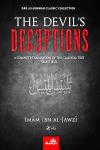
[Book Reco] The Devil’s Deceptions (Talbis Iblis): By Imam Abu’l Faraj Ibn Al Jawzi

The Devil's Deceptions (Talbis Iblis) - By Imam Abul Faraj Ibn Al Jawzi

Paperback 592 Pages
ISBN : 9780904336051
Publisher : Dar as-Sunnah

About The Book

It is from enmity and hopelessness of the devil that his endeavour to misguide mankind from the Path of Allah will persist. This misguidance takes many shades and forms; be it from planting seeds of doubt, or giving rise to deviant ideas antithetical to the sacred teachings of Islam, and essentially becoming entangled within regressive intellectual and rhetorical discourses. The Ummah has suffered varying levels of deviation, some of which remain prevalent today, while more continue to be uncovered – and such is the impact of delusive plottings of the devil and his allies.

This book is the sixth instalment from Dar as-Sunnah of the illustrious Imam, Abu’l-Faraj Ibn Jawzi. Being a complete translation of his well-known and prized work, Ibn Jawzi enumerates within it, many of the mechanisms and modus operandi used by the devil in deceiving and leading mankind away from the Straight Path. It is of particular value and importance because only by unearthing and accentuating some of the traps of the devil, can mankind avoid them as well as navigate others away from falling prey to his harm.

Speaking about the devil and his plotting, the author wrote that, “he was only able to do so while creeping during the night of ignorance. Had the dawn of knowledge shone on him, he would have been exposed. Thus I decided to warn from his plots for identifying evil is a form of warning from it.”

This translation of Tablees Iblees will provide important analysis in developing self-awareness and critical thinking to ward off many deceptions of the devil, which have plagued mankind from the time of Adam. For such reasons alone, this work is a valuable addition to the scholarly discourse it presents to the English speaking world.

About the Author:

‘Abu’l-Faraj Jamal al-Din Abdul Rahman ibn Ali Ibn Muhammad ibn Ali Ibn Ubayd Allah Ibn al-Jawzi al-Qurashi al Tamimi al Bakri al-Baghdadi al-Hanbali (509/510-597) was the Imam of the Hanbalis and foremost orator of kings and commoners in his time, whose gatherings reportedly reached one hundred thousand.

A hadith master, philologist, commentator of Qur’an, expert jurist, physician, and historian of superb character and exquisite manners.
Ibn al-Jawzi was a prolific author of over seven hundred books.

He was the author of a vast number of works of which several have been printed in recent times. He was famous as a preacher and the traveller Ibn Jubair gives an enthusiastic account of two of his sermons heard in Baghdad.

He was born in 509/510 AH in the city of Baghdad and grew up studying under the leading scholars of the time, He also was noted for his scholarship in the fields of history, linguistics, tafseer and fiqh. In fact, he became the leading scholar of the Hanbali Madhab of his time and played an important role in reviving and spreading it, especially after the become a favorite of the Abassid Caliph, al Mustadi

Ibn al-Jawzi was severely tried towards the end of his life when his criticism of Shaykh `Abd al-Qadir al-Gilani – his senior of forty years – led to accusations made against him to the Sultan al-Nasir by the Shaykh’s children and supporters. He was taken from Baghdad to the city of Wasit where he remained imprisoned for five years.

Ibn al-Jawzi passed away in 597 AH, two years after his release from Imprisonment.

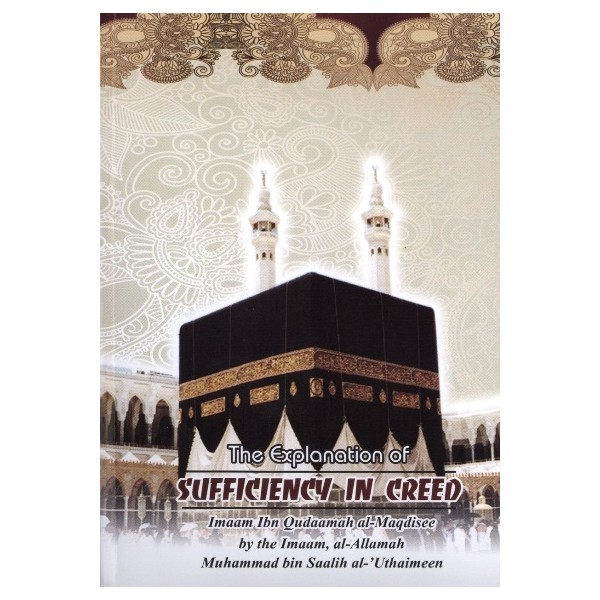
[Book Reco] The Explanation of the Sufficiency in Creed (Lum’at-ul-‘Itiqaad) : Shaikh Muhammad bin Saalih Al-‘Uthaimeen

The Explanation of the Sufficiency in Creed (Lum'at-ul-'Itiqaad) : Shaikh Muhammad bin Saalih Al-'Uthaimeen

In this book, we present the classical treatise on Creed of Imaam Ibn Qudaamah Al-Maqdisee, rahimahullaah, known as Lum’at-ul-‘Itiqaad, which is studied all over the Muslim world. Imaam Muhammad bin Saalih Al-‘Uthaimeen, rahimahullaah, has provided an in depth explanation for the points touched on by the author in a clear and simple manner. Furthermore, the narrations mentioned in the book have been verified and lengthy and extensive footnotes have been provided to make this book a valuable source of reference.

Shaikh Muhammad bin Saalih Al-‘Uthaimeen said in his introduction to this book: ‘This is a brief commentary of the book ‘Lum’at-ul-‘Itiqaad”, written by Abu Muhammad ‘Abdullaah bin Ahmad Ibn Qudaamah Al-Maqdisee (rahimahullaah), who was born in Sha’baan in 541H in a village from the districts of Nablis (present-day Palestine) and who died on the day of ‘Eed-ul-Fitr in 620H.

In this book, the author (rahimahullaah) gathered together the main points of the Islaamic Creed (‘Aqeedah). For this reason, the Board of the Educational Institutes assigned this book to be studied and taught during the second semester of the first year of study, so that it may serve as a pillar upon which one can establish his Creed at this stage.

Because I saw the importance of this book in terms of the topics it touches upon, its methodology and the lack of there being any explanation for it, I became determined, while seeking assistance from Allaah and hoping that He grant me correctness in intention and action, to put forth some words on it, in the attempt to clarify its ambiguous parts, explain its meanings and bring to light its main points.’

No doubt this book is of great importance for the Muslim with regard to establishing the correct Creed. This book is deserving of being taught and studied so that it may serve as a foundation for both the students of knowledge and the common Muslims. The topics touched upon by the author relate to the authentic Creed and Methodology, which all Muslims are obligated to have knowledge of. Consequently, we encourage everyone to purchase a copy of this magnificent book.

View the Table of Contents and Introduction @ http://www.dar-us-salam.com/inside/RA20-SufficiencyinCreed.pdf

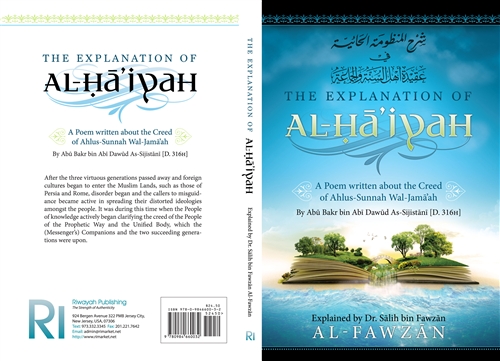
[Book Reco] The Explanation of Al-Haaiyah – Shaykh Salih Al-Fawzan

The Explanation of Al-Haaiyah - Shaykh Salih Al-Fawzan

This is the highly beneficial English translation of Dr. Salih Al-Fawzan’s Explanation of Al-Haaiyah, a classical poem written by Abu Bakr bin Abi Dawud As-Sijistani about the Creed of Ahl As-Sunnah. 

Specifications: 
246 Pages
Printed on Beautiful Natural Paper
Dimensions: 6X9

Buy @ http://www.rimarket.net/product-p/eng0007s.htm

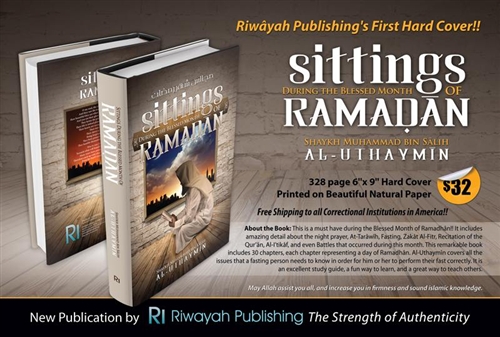
[Book Reco] Sittings During the Blessed Month of Ramadan – Shaykh Muhammad bin Salih Al-Uthaymeen

Sittings During the Blessed Month of Ramadan - Shaykh Muhammad bin Salih Al-Uthaymeen

Sittings During the Blessed Month of Ramadan, an amazing book by the Great Scholar Muhammad bin Salih Al-Uthaymeen, is filled with Qur’anic Verses, Prophetic Narrations, statements of wisdom from the early scholars, and beneficial poetry from scholars such as Ibn Rajab. It is made up of 30 chapters or Sittings, over 320 pages. This book includes details not only about Ramadan, but also details about Paradise, the hell fire, and the deeds done to reach either location. The Sheikh discusses, in detail, the rulings about Zakat Al-Fitr, as well as those who are qualified to receive the charity. This book is a book which both the student of knowledge and the laymen can tremendously benefit from. It is a book the whole family is in need of, and answers many reoccurring questions that are asked. every year, and includes diagrams and charts to make things easy to understand. Each chapter begins with a very poetic introduction, mentioning the Names and Attributes of Allah, and then transitions into the topic of that chapter. This book is a library builder and everyone is encouraged to benefit from this book and to convey the information to others. In conclusion, this book is a fun learning tool and teaching guide.

Buy at http://www.rimarket.net/product-p/eng0008s.htm

The Khilafah has Arrived. . . !!!- By Shaykh Muhammad bin Umar Bazmool

The Khilafah has Arrived. . . !!![1] – By Shaykh Muhammad bin Umar Bazmool
Translated by Abbas Abu Yahya

Shaykh Muhammad bin Umar Bazmool wrote:

‘My Noble Muslim brother, do not let yourself be deceived by the statement ‘Khilafah Rashida’ (Guided Caliphate), and the claim to having established the ‘Khilafah Rashida’!!

Can the shadow be straight if the twig is bent!?

Can guidance, and the truth, and establishing the Deen be reached by way of warring against the Deen and opposing it!?

Have you ever asked yourself: the ‘Khilafah Rashida’ has been absent for hundreds of years and there has not been from the Muslim scholars who have called and claimed to establishing a state and then these scholars going on to  rebelling against the established authority of the leaders in command at that time?

Will the Ummah of Islaam gather together upon misguidance?

Can you imagine: that if this matter was true that the Muslims or the scholars did not know about ‘Khilafah Rashida’ (Guided Caliphate), and these people know about it at this time?

Will the ‘Khilafah Rashida’ become a reality by rebelling against the leaders in authority, and invalidating the contract which is between them and their people while we have the Messenger sallAllaahu alayhi wa sallam saying, as what is brought from Ibn Abbas -Radhi Allaahu anhumma:

مَنْ رَأَى مِنْ أَمِيرِهِ شَيْئًا يَكْرَهُهُ فَلْيَصْبِرْ عَلَيْهِ فَإِنَّهُ مَنْ فَارَقَ الْجَمَاعَةَ شِبْرًا فَمَاتَ إِلَّا مَاتَ مِيتَةً جَاهِلِيَّةً.

From the Prophet sallAllaahu alayhi wa sallam– who said:

‘Whoever sees from his leader something which he dislikes then he should be patient upon that, indeed whoever separates  himself from the Jammah (the collective Muslim Ummah) a hand span and dies then he dies the death of ignorance.’

Collected by Bukhari in ‘Kitab al-Fitn’, chapter the saying of the Prophet sallAllaahu alayhi wa sallam: ‘you will see. ..’ Hadeeth no. 7054 & by Muslim in ‘Kitab al-Imaraah, chapter the obligation of adhering to the Jammah of the Muslims when Fitn appear, Hadeeth no. 1848.

From Nafa’ who said: Abdullaah bin Umar came to Abdullaah bin Muteea’ when he was in command of a place called al Hurra at the time of Yazeed bin Muwaweeya and said:

اطْرَحُوا لِأَبِي عَبْدِ الرَّحْمَنِ وِسَادَةً!

‘Throw a pillow for Abu Abdurahman to recline upon.’

Abdullaah ibn Umar said:

إِنِّي لَمْ آتِكَ لِأَجْلِسَ أَتَيْتُكَ لِأُحَدِّثَكَ حَدِيثًا سَمِعْتُ رَسُولَ اللَّهِ -صلى الله عليه وسلم- يَقُولُهُ،
سَمِعْتُ رَسُولَ اللَّهِ -صلى الله عليه وسلم- يَقُولُ:

He answered:  ‘I did not come to you to sit with you. I came to you to narrate a hadeeth which I heard the Messenger of Allaah saying, I heard the Messenger of Allaah sallAllaahu alayhi wa sallam saying:

مَنْ خَلَعَ يَدًا مِنْ طَاعَةٍ لَقِيَ اللَّهَ يَوْمَ الْقِيَامَةِ لَا حُجَّةَ لَهُ وَمَنْ مَاتَ وَلَيْسَ فِي عُنُقِهِ بَيْعَةٌ مَاتَ مِيتَةً جَاهِلِيَّةً.

‘Whoever casts off his hand from obedience then he meets Allaah on the day of judgement without any justification and whoever dies and he does not have allegiance upon his shoulders dies the death of ignorance.’

Collected by Muslim in ‘Kitab al-Imaraah’, chapter the obligation of adhering to the Jammah of the Muslims when Fitn appear. Hadeeth no.1851.

Will the ‘Khilafah Rashida’ be established upon making the sacred blood of the innocent to be spilt, so that the people of Islaam are killed, and the people of Shirk and worshippers of idols are served. The Messenger -sallAllaahu alayhi wa sallam-said as is brought from Abdullah bin Umar:

(إِنَّ مِنْ وَرَطَاتِ الْأُمُورِ الَّتِي لَا مَخْرَجَ لِمَنْ أَوْقَعَ نَفْسَهُ فِيهَا سَفْكَ الدَّمِ الْحَرَامِ بِغَيْرِ حِلِّهِ)
Indeed from the critical problematic matters from which there is no exit for the one who immerses himself into them, is spilling unlawful blood without it being allowed. ‘

Collected by Bukhari in ‘Kitab ad-Deeyaat’, Chapter the saying of Allaah <<whoever kills a believer intentionally>>  Hadeeth no. 6866.

From Abdullaah who said that the Messenger of Allaah sallAllaahu alayhi wa sallam-said:

(لَا يَحِلُّ دَمُ امْرِئٍ مُسْلِمٍ يَشْهَدُ أَنْ لَا إِلَهَ إِلَّا اللَّهُ وَأَنِّي رَسُولُ اللَّهِ إِلَّا بِإِحْدَى ثَلَاثٍ: الثَّيِّبُ الزَّانِي وَالنَّفْسُ بِالنَّفْسِ وَالتَّارِكُ لِدِينِهِ الْمُفَارِقُ لِلْجَمَاعَةِ).

‘The blood of a Muslim may not be legally spilt[2] other than in one of three [instances]: the married person who commits adultery; a life for a life; and one who forsakes his religion and abandons the Jammah.’

Collected by Bukhari in ‘Kitab ad-Deeyaat’, Chapter the saying of Allaah <<a life for a life>>  Hadeeth no. 6878 and by Muslim in ‘Kitab al-Qasama wal Muharibeen wal Qassas wa Deeyat, Hadeeth no. 1676.

Do you not know my noble Muslim brother that by you carrying out this opposition you are aiding the enemies of Allaah – the Magnificent & the Most High-  in their plans and strategies in busying the people of Islaam and cause them to become weak, and cause them to overpower each other,  so that they do not develop or bring to reality the glory which they were once upon!?

Will the forth coming ‘Khilafah Rashida’ be upon the hands of those who have enmity to the Sunnah and its people, they do not regard the ties with the people of the Sunnah, either of kinship or of covenant with them!?

Will the establishment of the Deen be a reality at the hands of one who is ignorant of the Deen and does not know the Deen.  Wisdom says: ‘a lost thing cannot be given?’

Be careful do not become entangled and then become regretful,  when regret will be of no benefit!

Know with certainty that the ‘Khilafah Rashida’ is coming however its path is by returning to the Deen, and by following what the Messenger -sallAllaahu alayhi wa sallam- and his Companions Radhi Allaahu anhumm– were upon.

The way to Change the situation is by changing what is with oneself,  Allaah – the Magnificent & the Most High- said:

﴿إِنَّ اللهَ لَا يُغَيِّرُ مَا بِقَوْمٍ حَتَّى يُغَيِّرُوا مَا بِأَنْفُسِهِمْ وَإِذَا أَرَادَ اللهُ بِقَوْمٍ سُوءًا فَلَا مَرَدَّ لَهُ وَمَا لَهُمْ مِنْ دُونِهِ مِنْ وَالٍ﴾

<< Allaah will not change the good condition of a people as long as they do not change their state of goodness themselves (by committing sins and by being ungrateful and disobedient to Allaah). But when Allaah wills a people’s punishment, there can be no turning back of it, and they will find besides Him no protector. >> [Ra’ad: 11]

Allaah has promised to grant authority on the earth, with strength and security for whoever worshipped Him alone and did not associate anything with Him,  and did righteous actions, Allaah – the Magnificent & the Most High-  said:

‏﴿وَعَدَ اللَّـهُ الَّذِينَ آمَنُوا مِنكُمْ وَعَمِلُوا الصَّالِحَاتِ لَيَسْتَخْلِفَنَّهُمْ فِي الْأَرْ‌ضِ كَمَا اسْتَخْلَفَ الَّذِينَ مِن قَبْلِهِمْ وَلَيُمَكِّنَنَّ لَهُمْ دِينَهُمُ الَّذِي ارْ‌تَضَىٰ لَهُمْ وَلَيُبَدِّلَنَّهُم مِّن بَعْدِ خَوْفِهِمْ أَمْنًا ۚ يَعْبُدُونَنِي لَا يُشْرِ‌كُونَ بِي شَيْئًا ۚ وَمَن كَفَرَ‌ بَعْدَ ذَٰلِكَ فَأُولَـٰئِكَ هُمُ الْفَاسِقُونَ﴾

<< Allaah has promised those among you who believe, and do righteous good deeds, that He will certainly grant them succession to (the present rulers) in the earth, as He granted it to those before them, and that He will grant them the authority to practise their religion, that which He has chosen for them (i.e. Islaam). And He will surely give them in exchange a safe security after their fear (provided) they (believers) worship Me and do not associate anything (in worship) with Me. But whoever disbelieved after this, they are the Fâsiqoon (rebellious, disobedient to Allaah).>> [Noor: 55]

So we must bring this in to reality of we want the ‘Khilafah Rashida’, Allaah is the Guardian to give success.’

Written by the Professor Dr. Muhammad bin Umar Bazmool
A Member of the Education Committe in Umm al-Qurra University of Makkah al-Mukkaramah
Taken from [http://www.alwaraqat.net/content.php?6297]

[1] For Further clarification & analysis see:

http://dawatussalafiyyah.wordpress.com/2014/07/05/the-caliphate-of-isis-a-response-by-shaykh-as-suhaymee/

The Caliph in Iraq is an Impostor and a Dajjal | Shaykh Saalih as-Suhaymee

http://safeshare.tv/w/TAheiGMScm

http://mtws.posthaven.com/isis-is-a-terrorist-organization-explained-by-shaykh-muhammad-bin-haadee

[2]Who implements the ruling of punishments?

Shaykh Salih ‘Ala Shaykh said:

‘Here is an issue connected to this hadeeth: if there is a country where there is no leader or Muslim ruler who can carry out that verdict, then is it allowed for any Muslim to carry out its ruling if one of these verdicts are established?

The answer: No, as is the saying of the general people of knowledge.  They make the condition for carrying out rulings which are connected to the allowance of spilling blood, wealth and honour, or things similar to this, that it is only for the leader, and if there is no leader then it is not allowed for anyone to carry it out.’

He continues:

‘That he is in a country where there is no-one who can carry out the rulings of Allaah –Jala wa ‘Uulaa – then it is not allowed to carry out the rulings of capital punishment, because this is for the Muslim leader.

The Prophet sallAllaahu alayhi wa sallam- was in Makkah and the Companions were in some countries where the Sharia’ was not established,  however, they did not carry out capital punishment, likewise the scholars were in some countries, like they were in the lands of the al-Ubaydeeyah and those similar to them, and the scholars did not carry out punishments of death and those type of punishments similar to it.’

[Taken from ‘Sharh al-Arbaeen an-Nawawi’ – Shaykh Salih ‘Ala Shaykh]

Posted with Permission from Abbas Abu Yahya hafidhahullah

Zakaat : Al-Mulakhas al-Fiqhi of Sheikh Saaleh al-Fawzaan – Abu Muhammad Al Maghribee [Audio|En]

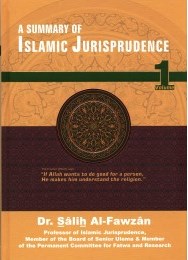
al-mulakhas-al-fiqhi-a-summary-of-islamic-jurisprudence

From the book Al-Mulakhas al-Fiqhi (A Summary of Islamic Jurisprudence) by Sheikh Saaleh al-Fawzaan.  You may download a copy of the original arabic text here: الملخص الفقهي

Zakaat - Al-Mulakhas al-Fiqhi of Sheikh Saaleh al-Fawzaan

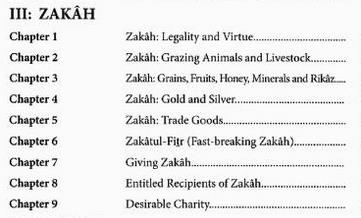
Part III: Zakah of Volume 1. Here are all the lessons covering Chapters 1 through 9

In this class we begin reading from the chapter of Zakaat (obligatory charity)
Part 01: Download Mp3 Here (Time 01:00:02) (Feb 3rd 2014) (Ch 1)

In this class we continue reading from the chapter of Zakaat (obligatory charity)
Part 02: Download Mp3 Here (Time 48:02) (Feb 10th 2014) (Ch 2)

Today we will continue with the section regarding the zakaat due on grazing livestock
Part 03: Download Mp3 Here (Time 48:30) (Feb 24th 2014) (Ch 2)

Today we will continue with the section regarding the zakaat due on grains, fruits, honey, etc…
Part 04: Download Mp3 Here (Time 46:48) (March 3, 2014) (Ch 3)

Part 05: Download Mp3 Here (Time 32:44) (2014-03-10) (Ch 3)

Part 06: Download Mp3 Here (Time 44:04) (2014-03-17) (Ch 4)

Part 07: Download Mp3 Here (Time 48:38) (2014-03-24) (Ch 4)

Part 08: Download Mp3 Here (Time 42:52) (2014-03-31) (Ch 5)

Part 09: Download Mp3 Here (Time 43:29) (2014-04-07) (Ch 5)

Part 10: Download Mp3 Here (Time 53:53) (2014-04-14) (Ch 6)

Part 11: Download Mp3 Here (Time 37:52) (2014-04-21) (Ch 7)

Part 12: Download Mp3 Here (Time 54:02) (2014-04-28) (Ch 8)

Part 13: Download Mp3 Here (Time 44:38) (2014-05-05) (Ch 8)

Part 14: Download Mp3 Here (Time 56:36) (2014-05-12) (Ch8 and Ch9)

Posted with Permission from: http://followthesalaf.com/

Ramadhaan: An Opportunity For Immense Reward : Shaykh Abdullah an-Najmi [Audio|Ar-En]

Ramadhan is upon us


Listen / Download Mp3 Here (Time 50:57)

[audio https://salafiaudio.files.wordpress.com/2014/07/ramadhaan-an-opportunity-for-immense-reward-by-shaykh-abdullah-an-najmi.mp3]

Posted with permission from mpubs.org

The Salaf in Ramadhaan – by Shaykh Muhammad Ibn Zayd al-Madkhalee [Audio|En]

Listen / Download Mp3 Here (Time 42:37)
[audio https://salafiaudio.files.wordpress.com/2014/06/the-salaf-in-ramadhaan-by-shaykh-muhammad-ibn-zayd-al-madkhalee.mp3]

Posted with Permission from: mpubs.org