Regarding the Dream of the Messenger, sallallahu alaihi wasallam – Sheikh Ali at-Tuwaijree [Audio|Ar-En]

Abu Muhammad al-Maghribee
http://followthesalaf.com

This telelink lecture was given by our Noble Sheikh Ali at-Tuwaijree on Friday, April 6, 2012.

The Sheikh, hafidhahullah, gave us a summarized explanation of the hadith narrated by Samurah ibn Jundub when he said that that the Messenger of Allaah (peace and blessings of Allaah be upon him) often used to ask his companions, ‘Did any one of you see a  dream?’ So dreams would be described to him by those who Allaah willed should speak. One morning, the Prophet (peace and blessings of Allaah be upon him) said:

“Last night, two men came to me and said to me, ‘Let us go!’, and I set out with them….”

The Sheikh also gave us some general advice regarding dreams, wajazaahum Allahu khairan.

Download /Listen mp3

The Dream of the Prophet Sallalahu Alaihi wa Sallam 

Narrated Samura bin Jundub:

Allah’s Apostle very often used to ask his companions, “Did anyone of you see a dream?” So dreams would be narrated to him by those whom Allah wished to tell.

One morning the Prophet said,

“Last night two persons came to me (in a dream) and woke me up and said to me, ‘Proceed!’

I set out with them and we came across a man Lying down, and behold, another man was standing over his head, holding a big rock. Behold, he was throwing the rock at the man’s head, injuring it. The rock rolled away and the thrower followed it and took it back. By the time he reached the man, his head returned to the normal state. The thrower then did the same as he had done before. I said to my two companions, ‘Subhan Allah! Who are these two persons?’ They said, ‘Proceed!’

So we proceeded and came to a man Lying flat on his back and another man standing over his head with an iron hook, and behold, he would put the hook in one side of the man’s mouth and tear off that side of his face to the back (of the neck) and similarly tear his nose from front to back and his eye from front to back. Then he turned to the other side of the man’s face and did just as he had done with the other side. He hardly completed this side when the other side returned to its normal state. Then he returned to it to repeat what he had done before. I said to my two companions, ‘Subhan Allah! Who are these two persons?’ They said to me, ‘Proceed!’

So we proceeded and came across something like a Tannur (a kind of baking oven, a pit usually clay-lined for baking bread).” I think the Prophet said, “In that oven there was much noise and voices.” The Prophet added, “We looked into it and found naked men and women, and behold, a flame of fire was reaching to them from underneath, and when it reached them, they cried loudly. I asked them, ‘Who are these?’ They said to me, ‘Proceed!’

And so we proceeded and came across a river.” I think he said, “…. red like blood.” The Prophet added, “And behold, in the river there was a man swimming, and on the bank there was a man who had collected many stones. Behold. while the other man was swimming, he went near him. The former opened his mouth and the latter (on the bank) threw a stone into his mouth whereupon he went swimming again. He returned and every time the performance was repeated, I asked my two companions, ‘Who are these (two) persons?’ They replied, ‘Proceed! Proceed!’

And we proceeded till we came to a man with a repulsive appearance, the most repulsive appearance, you ever saw a man having! Beside him there was a fire and he was kindling it and running around it. I asked my companions, ‘Who is this (man)?’ They said to me, ‘Proceed! Proceed!’

So we proceeded till we reached a garden of deep green dense vegetation, having all sorts of spring colors. In the midst of the garden there was a very tall man and I could hardly see his head because of his great height, and around him there were children in such a large number as I have never seen. I said to my companions, ‘Who is this?’ They replied, ‘Proceed! Proceed!’

So we proceeded till we came to a majestic huge garden, greater and better than I have ever seen! My two companions said to me, ‘Go up and I went up’ The Prophet added, “So we ascended till we reached a city built of gold and silver bricks and we went to its gate and asked (the gatekeeper) to open the gate, and it was opened and we entered the city and found in it, men with one side of their bodies as handsome as the handsomest person you have ever seen, and the other side as ugly as the ugliest person you have ever seen. My two companions ordered those men to throw themselves into the river. Behold, there was a river flowing across (the city), and its water was like milk in whiteness. Those men went and threw themselves in it and then returned to us after the ugliness (of their bodies) had disappeared and they became in the best shape.” The Prophet further added, “My two companions (angels) said to me, ‘This place is the Eden Paradise, and that is your place.’ I raised up my sight, and behold, there I saw a palace like a white cloud! My two companions said to me, ‘That (palace) is your place.’ I said to them, ‘May Allah bless you both! Let me enter it.’ They replied, ‘As for now, you will not enter it, but you shall enter it (one day)

I said to them, ‘I have seen many wonders tonight. What does all that mean which I have seen?’
They replied, ‘We will inform you:

As for the first man you came upon whose head was being injured with the rock, he is the symbol of the one who studies the Quran and then neither recites it nor acts on its orders, and sleeps, neglecting the enjoined prayers. As for the man you came upon whose sides of mouth, nostrils and eyes were torn off from front to back, he is the symbol of the man who goes out of his house in the morning and tells so many lies that it spreads all over the world.

And those naked men and women whom you saw in a construction resembling an oven, they are the adulterers and the adulteresses;,and the man whom you saw swimming in the river and given a stone to swallow, is the eater of usury (Riba) and the bad looking man whom you saw near the fire kindling it and going round it, is Malik, the gatekeeper of Hell and the tall man whom you saw in the garden, is Abraham and the children around him are those children who die with Al-Fitra (the Islamic Faith).”

The narrator added: Some Muslims asked the Prophet, “O Allah’s Apostle! What about the children of pagans?” The Prophet replied, “And also the children of pagans.”

The Prophet added, “My two companions added,

‘The men you saw half handsome and half ugly were those persons who had mixed an act that was good with another that was bad, but Allah forgave them.’”

Source: Sahih Bukhari Volume 9, Book 87, Number 171: [Interpretation of Dreams ]

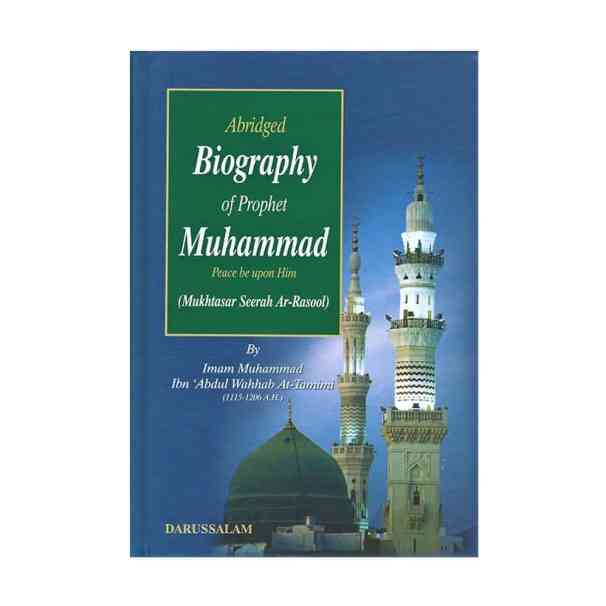
Abridged Seerah of Prophet Muhammad ﷺ – Imam Muhammad bin AbdulWahhaab | Abu Muhammad al Maghribee [Audio Series |En]

Abridged Biography of Prophet Muhammad (Peace be upon him)

Abridged Seerah of Prophet Muhammad sallallahu alaihi wasallam
by  Shaykh Muhammad bin AbdulWahhaab
Abu Muhammad al Maghribee
http://followthesalaf.com

The Book can be purchased at darussalam.com here

[Soundcloud Playlist Link]

Class # Contents:

  • Class 01: Who were the first to embrace Islaam and who was the first martyr of Islaam?
  • Class 02: Covered many topics, such as the first bloodshed in Islaam and the first Hijra
  • Class 03: Reviewed the Second Hijrah to Habasha and continued with discussing the request of the Quraish that an-Najaashee to return the Muslims to the Quraish.
  • Class 04: Ended the last class with the death of An-Najaashee and begin this class with the entrance of Hamza into Islaam, radiyallahu anhumaa.
  • Class 05: Death of Khadijah, the wife of the Messenger, sallallahu alaihi wasallam, and Abi Taalib.
  • Class 06: Questioning of the Quraysh to the messenger, sallallahu alaihi wasallam, regarding the soul and the people of the cave.
  • Class 07: In last class we read about the questions of the Quraysh regarding the Soul and the People of the Cave.  Today we continue reading about the questions and the blessing of being guided to al-Islaam
  • Class 08: Continue with the section “Their Request for Signs” (meaning the Quraysh)
  • Class 09: Departure of the Prophet, sallallahu alaihi wasallam, for Taif

Titles of the other classes will be added soon, inshaa’ Allaah

Writing ‘Ya Allaah & Ya Muhammad’ – Shaykh Rabee ibn Haadee

by Rabee’ ibn Haadee al-Madkhalee
Translated by Abbas Abu Yahya

The Question:

A lot of what we see in certain Masajid is ‘Ya Allaah & Ya Muhammad’ (O Allaah & O Muhammad) written on the Mihrab, is it permissible to pray in the likes of these Masajid?

The answer:

This is clear from what we have seen in Pakistan and Afghanistan – with great regret – I swear by Allaah we saw this written in the cars of the Mujahideen; actually those who claim to be Mujahideen! And they would not accept any advice, they would continue upon these aspects of Shirk! You would see it written in their shops and their Masajid: ‘Ya Allaah, Ya Ali, Ya Ghawth, Ya Hussain, Ya AbdulQadir, Ya such and such!!’ as well as other aspects of Shirk!

Seeking aid from other than Allaah is Shirk; by saying ‘Ya Muhammad’, then this is committing Shirk with Allaah (associating partners to Allaah). Muhammad was the Messenger of Allaah, the slave of Allaah and His Messenger –alayhi as-Sallat wa Sallam. Therefore, if one says ‘Ya Allaah and Ya Muhammad’, then that person has made Muhammad as an equal to Allaah Tabaraka wa Ta’ala.

The Messenger –alayhi as-Sallat wa Sallam- did not come except to destroy this polytheism, and to rectify the deviated nation and at the head of what they had was committing Shirk (associating) with Allaah -Azza wa Jal. The Messenger came to purify the Dunyaa, the hearts, the minds and intellects from Shirk with Allaah –Azza wa Jal- and the filth connected with Shirk.

He –alayhi as-Sallat wa Sallam- taught us pure Tawheed with the texts of the Qur’aan, the texts of the Sunnah and practically implementing them. He –alayhi as-Sallat wa Sallam- ordered us to level the graves, and to destroy idols.

The Messenger –alayhi as-Sallat wa Sallam- said:

‘Do not undertake journeys except to three Masajid – only these, not to graves, nor any place [for worship] – the Masjid al-Haraam, and this masjid of mine, and Masjid al-Aqsa.’

This is because these Masajid were built by the Prophets for the Tawheed of Allaah having Ikhlaas (Sincerity) of the Deen for Allaah – Azza wa Jal.

This action of writing ‘Allaah & Muhammad’ began in al-Madinah – since we know these things we can evaluate it – we knew the plots of the Ahl-ul-Bida’.

There was a man named Siraaj Rahman a colleague of mine in the University and he was from the students of Abul-Hasan an-Nadawi – I don’t know whether – I saw this in Kenya or a story had been narrated to him that this had begun to spread in al-Madinah. Anyway, he mentioned that Abul-Hasan an-Nadawi said the statement: ‘Allaah & Muhammad’ and this is disbelief, what they mean by this is that Muhammad is a partner to Allaah –Azza wa Jal; Allaah & Muhammad are equal.

There is none worthy of worship in truth except Allaah, Muhammad is the Messenger of Allaah; I testify that there is none worthy of worship in truth except Allaah and I testify that Muhammad is the Messenger of Allaah, I testify that there is none worthy of worship in truth except Allaah and I testify that Muhammad is His slave and Messenger; this is the highest status for this Noble Prophet –alayhi as-Sallat wa Sallam.

The Messenger -sallAllaahu alayhi wa sallam- said:

‘Do not over praise me, like the Christians over praised the son of Maryam. Indeed I am a slave of Allaah and His Messenger.’

I have seen this clearly and I would have waged war against it, and if I saw it in a Masjid I would advise the Imam of the Masjid. Likewise in Masjid al-Qiblatayn – Masjid al-Amoodi -, I spoke to the Imam, but he did not do anything! So I spoke to al-Amoodi who was responsible for the Masjid, and he hastened – may Allaah reward him with goodness- and effaced these things.

And in the Masjid near my home in al-Madina they had written ‘Allaah & Muhammad’ so I advised the Imam and he said: ‘we will change it, we will change it.’ But he kept postponing it and did not change it! There was a good young man present who said: ‘I’ll sort it out.’ Then he went and covered it, and that was the end of that, and all praise be to Allaah.

One day I was coming from Batthan and entered Madinah and there was a pickup truck in front of me and it had ‘Ya Allaah Ya Muhammad’ written on it in red. So I followed him and he began speeding up, he noticed that I was following him, so he began to speed up even more, so I gave chase and pursued him until we reached Qurban, he stopped his car and got out and said to me: ‘Shall I wipe it off?’ and I hadn’t even spoken to him yet! He knew and felt this is what I was pursuing him about, so I told him ‘Yes, wipe it off.’

This confirms that there is a battle going on, the battle of these grave worshipping deviants in the land of Tawheed!

[Taken From: sahab.net/forums/index.php?showtopic=128851]

How Did Your Affair Begin, O Messenger of Allaah? – Daawood Burbank

How Did Your Affair Begin, O Messenger of Allaah?

ad-Daarimee reported (1/8-9), and al-Haakim (2/616-617), and Ahmad (4/184) from `Utbah ibn Mas`ood as-Sulamee, and he was from the Companions of Allaah’s Messenger (sallallaahu alaihi wa sallam), that he narrated that: A man said to Allaah’s Messenger (sallallaahu alaihi wa sallam):  “How did your affair begin, O Messenger of Allaah?”

So he said:

<< I was being taken care of by a woman from Banoo Sa`d ibn Bakr. So I went off with a son of hers along with some of our goats, and we did not take any provision along with us. So I said: “O my brother, go and bring us some provision from our mother.” So my brother went off and I remained with the goats. Then two white beings that were flying came, being as if they were two eagles. Then one of them said to the other: “Is it him?” The other one replied; “Yes”. So they hastened to me, took hold of me, and threw me upon the ground on my back. Then they split open my chest and extracted two black clots from it, and one of them said to his companion: “Bring me ice-water”, and he washed my insides with it. Then he said: “Bring me snow-water”, and he washed my heart with it. Then he said: “Bring me tranquillity”. And he planted it in my heart. Then one of them said to his companion: “Sew it up”, so he sewed it up and sealed it with the seal of Prophethood. Then one of them said to the other: “Place him upon a scale, and place a thousand of his nation upon another scale.” >>

Allaah’s Messenger (sallallaahu alaihi wa sallam) said :

<< “So I saw a thousand people above me and feared that some of them were going to fall upon me.” He said: “If his whole nation were weighed against him he would outweigh them.” Then they went off and left me. >>

Allaah’s Messenger (sallallaahu alaihi wa sallam) said:

<< And I became very afraid, and I went back to my mother and informed her of what I had experienced. So I wished that I had been mistaken for someone else. She said: “I entrust you to Allaah’s protection”. So she prepared a camel of hers for riding, placed me upon the saddle, and rode behind me until we reached my (true) mother. Then she said: “I have fulfilled my trust and my responsibility, and she told her what had happened to me, and this did not alarm her. She said: “When he came out from me I saw light which shone and revealed the palaces of Shaam.”>>

Shaikh al-Albaanee said in “as-Saheehah” (no.373):
“…..this chain of narration is “hasan”… and this hadeeth has many witnesses…”

[Translated by Aboo Talhah Daawood ibn Ronald Burbank]
www.alitisaambissunnah.wordpress.com

The meaning of “Sallallaahu ‘alayhi wa Sallam” – Shaykh Uthaymeen

Sallallaahu ‘alayhi wa Sallam – The salaah and salaam of Allaah be upon His Prophet Muhammad.

The salaah of Allaah upon Prophet Muhammad is His Praise of the Prophet before the angels who are close to (but below) Allaah, the Most High, who istawaa (ascended) upon His ‘Arsh (Throne), which is above the seven heavens, in a manner that suits His Majesty. The angels also praise the Prophet (Sallallaahu ‘alayhi wasallam).

The salaam is Allaah’s safeguarding of the Prophet (Sallallaahu ‘alayhi wasallam) from deficiencies and any kind of evil, and the protection of the Message with which he was entrusted.

When the Muslim says “sallallaahu ‘alayhi wasallam”, he invokes Allaah to grant His Praise and Security to Prophet Muhammad and the protection of the Message of Islam which was revealed to him (Sallallaahu ‘alayhi wasallam).

[See Ibnul Qayyim’s Jalaa’ul Afhaam fee Fadlis-Salaati-wa-Salaam ‘alaa Muhammadin Khairil Anaam, [Damascus, Syria: Daar Ibn Katheer, and Daar at-Turaath, Al-Madeenah, Saudi Arabia 1408/1988, p.128].

Visit the Website of Dr. Saleh as Saleh Rahimahullaah : http://understand-islam.net

The Above is Taken from :

Tafseer Ayatul-Kursi – By Shaykh Muhammad bin Saalih Al-’Uthaymeen
With Related Points of Benefit From the Shaykh’s Commentary on Imaam ibn Taymeeyah’s Sharhul ’Aqeedatil-Waasitiyyah,  Prepared by  Dr. Saleh As-Saleh (rahimahullah)

Related Links:

The Status of the Messenger & His Rights upon Us  [PDFs] – Compiled by The Eminent Shaykh, the Muhaddith, Rabee’ ibn Haadee al-Madkhalee


Wisdom behind Prophet Muhammad’s marriages

Source: General Presidency of Scholarly Research and Ifta (alifta.net)

The Messenger of Allah (peace be upon him) married to several wives following his migration to Madinah. His practice of polygyny was not something novel, as polygyny was widely practiced by all people and nations. Some societies allowed unlimited number of wives until some men had more than seven hundred wives, not including slave women. Some Arabs were reported to have taken in marriage more than ten wives. When Ghilan ibn Salamah Al-Thaqafy embraced Islam, he was married to ten wives. The Prophet (peace be upon him) instructed him, saying: Choose four of them (and divorce the rest).

Polygamy was also practiced by the ancient Greeks in Athens, China, Babylonia, Assyria, ancient Egypt, and the Jews were also polygamous. Prophet Sulayman (Solomon, peace be upon him) had seven hundred free women as wives and three hundred slave women. Al-Bukhari related in his Sahih (authentic) Book of Hadith: Sulayman (the son of) Dawud (David) said, ‘Tonight I will go to a hundred women, each of whom will give birth to a boy who will fight in the Cause of Allah.’ The Angel said to him, ‘Say: In sha’a-Allah (If it be the Will of Allah).’ But he did not say so, as he forgot. He went to them but none of them gave birth, apart from one woman who gave birth to half a child. The Prophet (peace be upon him) further said, ‘Had he said: In sha’a-Allah, he would not have broken his oath and he would have had more hope of fulfilling his wish.’ The Christian church also permitted polygyny and did not object to it.

The Prophet’s marriage to nine wives at the same time was merely an implementation of Divine Instructions and Wisdom. Allah (may He be Exalted) states:
So when Zaid had accomplished his desire from her (i.e. divorced her), We gave her to you in marriage, so that (in the future) there may be no difficulty for believers in respect to (the marriage of) the wives of their adopted sons when the latter have no desire to keep them (i.e. they have divorced them). And Allâh’s Command must be fulfilled. There is no blame on the Prophet (peace be upon him) in that which Allâh has made legal for him. That has been Allâh’s Way with those who have passed away of (the Prophets of) old.

Stating the fact that it is Allah Who made it lawful for His Messenger to marry several wives, He revealed:
O Prophet (Muhammad peace be upon him)! Verily, We have made lawful to you your wives, to whom you have paid their Mahr (bridal-money given by the husband to his wife at the time of marriage), and those (slaves) whom your right hand possesses – whom Allâh has given to you Allah then limited the number of the Messenger’s wives to nine, all of whom he was forbidden to divorce. Allah (may He be Glorified and Exalted) states:

It is not lawful for you (to marry other) women after this, nor to change them for other wives even though their beauty attracts you

Therefore, the marriages of the Prophet (peace be upon him) were all necessitated by Divine Command. It is not permissible to compare other cases with that of the Prophet (peace be upon him). This matter was restricted to the Messenger of Allah (peace be upon him) alone. None among the Muslim Ummah (nation) is permitted to marry beyond four women under the pretext that the Prophet (peace be upon him) married nine women.

Those who criticize the Prophet of Islam and brand Muslims as lustful are in manifest error. Worse still, we find Muslims who level blasphemous charges at the Prophet (peace be upon him) and take the subject of his marriages in jest. Had true faith entered their hearts, they would not have allowed such thoughts to occupy their minds. Had they carefully examined the circumstances that surrounded each marriage, they would have thought otherwise. The Prophet (peace be upon him) contracted marriages either to protect and support a widowed woman, or bring comfort to the families whose hearts were broken by the death of their beloved father, or to cement the bonds of love with the clan of his wives, or to honor a free woman who fulfilled Allah’s Command and went against the traditions of her society by marrying a slave rather than a master seeking the Good Pleasure of Allah.

Had the Prophet (peace be upon him) been lustful, he would have opted to marry when he was in his prime youth, a period when desire for sexual gratification is at its peak. However, he married several wives only after he had grown into old age, when his desire for women had weakened. At the young age of twenty-five, he was married to only one wife, Khadijah bint Khuwaylid (may Allah be pleased with her), who was fifteen years older than him. She was forty while he was only twenty-five. He remained with her until she died.

It should also be noted that all the women whom he (peace be upon him) married had been married previously, except ‘Aishah (may Allah be pleased with her). The wives of the Messenger of Allah (peace be upon him) were:

1- Sawdah bint Zam‘ah ibn Qays Al-Qurashiyyah (may Allah be pleased with her): The Messenger of Allah (peace be upon him) got married to her following the death of her husband, Al-Sakran ibn ‘Amr ibn ‘Abd Shams. This took place after the death of his wife, Khadijah bint Khuwaylid, in Makkah and before his migration to Madinah. When
she grew old, she gave up her day and night to ‘Aishah (may Allah be pleased with her).

2- ‘Aishah bint Al-Siddiq (may Allah be pleased with her): The Prophet (peace be upon him) contracted marriage with her before Sawdah. However, he did not consummate marriage with her until after its consummation with Sawdah. Among all his wives ‘Aishah was the only virgin whom the Prophet (peace be upon him) married. His marriage to ‘Aishah was meant to strengthen the bonds of kinship with Abu Bakr Al-Siddiq, the first man to embrace Islam and to support and believe in every word the Prophet (peace be upon him) uttered. He also sacrificed all his wealth for the sake of Allah.

3- Hafsah bint ‘Umar ibn Al-Khattab (may Allah be pleased with her): The Messenger of Allah (peace be upon him) took her in marriage although she was a previously married woman who lacked feminine charm. The Prophet (peace be upon him) married her because of the close relationship he had with her father.

4- Umm Salamah Hind bint Suhail Al-Makhzumiyyah (may Allah be pleased with her): The Prophet (peace be upon him) married her following the death of her husband, Abu Salamah ibn ‘Abd Al-Asad. His intention was to support her children. When the Prophet (peace be upon him) proposed to marry her, she said: “A woman like me is not suitable for marriage. I have become a barren woman, and I am jealous and have children.” The Messenger of Allah (peace be upon him) replied: I am older than you; as for jealousy, Allah will remove it, and as for children Allah and His Messenger are responsible for them. The Prophet (peace be upon him) then married her.

5- Zaynab bint Jahsh (may Allah be pleased with her): The Messenger of Allah (peace be upon him) married her after she was divorced by her husband Zayd ibn Harithah, the freed slave (and adopted son) of the Messenger of Allah (peace be upon him). The Prophet (peace be upon him) was rewarding her compliance with Allah’s Command. It was through this marriage that Allah established the permissibility of marrying the wife of one’s adopted son, a matter which was difficult for the community at that time to undertake. Allah (may He be Exalted) states:
So when Zaid had accomplished his desire from her (i.e. divorced her), We gave her to you in marriage, so that (in the future) there may be no difficulty for the believers in respect to (the marriage of) the wives of their adopted sons when the latter have no desire to keep them (i.e. they have divorced them). And Allâh’s Command must be fulfilled.

6- Umm Habibah bint Abu Sufyan (may Allah be pleased with her): The Messenger of Allah (peace be upon him) married her after her husband, ‘Ubaydullah ibn Jahsh, apostatized from Islam. She stayed away from him until he died.
She was in her thirties when the Prophet (peace be upon him) married her. He contracted the marriage while she was in Abyssinia (Ethiopia). The Prophet (peace be upon him) authorized Al-Najashy to conclude the marriage contract. Her authorizer was Khalid ibn Sa‘id ibn Al-‘As. Al-Najashy gave her four hundred Dinars as Sadaq (mandatory gift to a bride from the groom). This took place in the seventh year of Hijrah (the Prophet’s migration to Madinah).

7- Juwayriyyah bint Al-Harith (may Allah be pleased with her): The Messenger of Allah (peace be upon him) married her after her husband Musani‘ ibn Safwan was killed on the Battle of Al-Muraysi‘. The Prophet (peace be upon him) intended to honor her people by this marriage relationship with them, especially after they had been taken as war captives in the Battle of Banu Al-Mustaliq.

8- Safiyyah bint Huyay ibn Akhtab (may Allah be pleased with her): The Messenger of Allah (peace be upon him) married her to bring solace to her broken heart following the murder of her father, paternal uncle and husband.

9- Maymunah bint Al-Harith Al-Hilaliyyah (may Allah be pleased with her): The Messenger of Allah (peace be upon him) married her following the death of her husband, Abu Rahm ibn ‘Abd Al-‘Uzza Al-‘Amiry. This marriage took place in the seventh year of Hijrah. She (may Allah be pleased with her) was approaching forty by that time.

Source: alifta.net

Knowing Prophet Muhammad (Peace be upon him) – Dr. Saleh as Saleh (Rahimahullah)

Prophet Muhammad (peace be upon him) – Knowing The “Mercy to Mankind” – by Dr. Saleh as Saleh (Rahimahullah)

Click the below link to read or download the article:

Knowing Prophet Muhammad (Peace be upon him) – By Dr. Saleh as Saleh [PDF]

Read the Article Below:

Knowing The “Mercy to Mankind”
By Dr. Saleh As-Saleh
Muharram 17, 1427 AH
February 16, 2006 CE

Important Terms:

1-Islamic Calendar: 12 months
2- AH = After Hijrah (migration of the Prophet (صلى الله عليه وسلم) from Makkah to Medinah).

Month No – Month Name

1 Muharram
2 Safar
3 Rabee’Al-Awwal
4 Rabee’ Ath-Thaani
5 Jamadaa Al-Awwal
6 Jamadaa Ath-Thaani
7 Rajab
8 Sha’baan
9 Ramadhan
10 Shawwaal
11 Thul Qi’dah
12 Thul Hijjah

Prophet Muhammad (صلى الله عليه وسلم salal-laahu ‘Alayhi wasallam ) was born in Makkah which is one of the most important cities of the Jazeeratul-‘arab (the Arabian Peninsula). Makkah (Mecca) was not inhabited by people until Allaah commanded Prophet Ibraheem (Abraham عليه السلام: ‘alayhis-salaam [2]), to take his wife Hajar and his son Ismaeel (Ishma’il) to live there. Allaah sent them because He willed that from this place (i.e. Makkah) a message for all mankind would arise. Ibraheem (عليه السلام) left his wife Hajar and his son Isma’eel in Makkah and returned to Palestine.

At that time Makkah was a land where there was scarcity of water so when the child Isma’eel became thirsty his mother Hajar could not find any water for him. Allaah sent the angel Jibreel (Gabriel) ‘alayhis-salaam عليه السلام who started hitting the ground with his feet and Allaah caused water to gush forth. This special water still exists to this day and its called the ZamZam water. This water was the answer to the Du’a (prayer) that Ibraheem (‘alayhis-salaam عليه السلام) made and it is mentioned in the Qur’aan:

“O our Lord! I have made some of my offspring to dwell in an uncultivable valley by Your Sacred House (the Ka’bah at Makkah); in order, O our Lord, that they may perform As-Salât (establish prayer), so fill some hearts among men with love towards them, and (O Allah) provide them with fruits so that they may give thanks. [Qur’an, Ibrahim (14): 37]

Soon people started coming to Makkah and eventually it flourished until it became one of the most important cities in the Arabian Peninsula. When Isma’eel (عليه السلام) became older, Allaah commanded Ibraheem (عليه السلام) and his son to raise the Ka’aba.

Later Isma’eel (عليه السلام) married and had many children and grand-children. Generations later they became many tribes. Our Prophet Muhammad (صلى الله عليه وسلم) came from the tribe called Quraysh. For many years the descendants of Ibraheem and Isma’eel (‘alayhimus-Salaam) worshiped Allaah alone but as the generations passed the people forgot the way of Ibraheem and started worshiping idols, sun, moon, stars, fire and other dieties.

Each tribe had many families and a leader whom the people followed and obeyed. ‘Abdul Muttalib, the grand-father of Prophet Muhammad (صلى الله عليه وسلم), was one of the leaders of his tribe called Quraysh. The place where these Arabs lived became known as the Arabian Peninsula. Every Arab defended his own tribe against other tribes in the course of many wars between tribes. Before the coming of Islam, the Arabs were known for some good qualities such as respecting the neighbors, being generous, keeping promises, etc.. They also had very bad qualities such as drinking alcohol and burying their young girls alive because they did not like it when girls were born.

Prophet Muhammad (صلى الله عليه وسلم) was born in the tribe of Quraysh in Makkah on a Monday in the year 571 C.E. His father’s name was ‘Abdullah and his mother’s name was Aaminah bint [3] Wahab. His grand-father ‘Abdul-Muttalib was very pleased and named him Muhammad. His complete name is Muhammad bin [4] ‘Abdullah bin ‘Abdul Muttalib bin Hashim from the tribe of Quraysh.

The Prophet’s father ‘Abdullah was one of the best youth in all of Makkah. After his marriage with Aaminah he travelled to a land called Bilaad ush-Shaam. Today this comprises West of Iraq, Jordan, Syria, Lebanon and Palestine. On his way back to Makkah he fell ill and died. His death occurred seven months before the birth of Prophet Muhammad (صلى الله عليه وسلم).

It was the culture of the Arabs to get their children suckled by nursing women who lived away from the city life thus the children could learn to adapt themselves to the harsh conditions of the desert. Muhammad (صلى الله عليه وسلم) was suckled by his mother for a little while but later was given to a woman called Haleemah As-Sa’diyyah. She took him to her house which was located outside of Makkah and he stayed with her until he was four years old.

When Muhammad (صلى الله عليه وسلم) turned six years old, his mother Aamina died. ‘Abdul Muttalib took Muhammad (صلى الله عليه وسلم) in his custody and took care of him. He loved Muhammad (صلى الله عليه وسلم) very much but he died when the Prophet was only eight years old. The Prophet was then looked after by his uncle, Abu Taalib, who loved him dearly. The Prophet (صلى الله عليه وسلم) started working at a very young age as a shepherd for the people of Makkah but did not get much in return. At the age of fifteen he started going with his uncle on business trips. He gained a lot of good reputation and thus the people of Makkah started calling him Al-Ameen (the trustworthy).

In Makkah there lived a very honorable woman by the name of Khadeejah bint Khuwaylid. She heard about the Prophet’s (صلى الله عليه وسلم) truthfulness and sent him on a business trip. She had a servant-boy by the name of Maysara who accompanied the Prophet on that journey. The Prophet took her caravan to the lands of Ash-shaam and came back with a lot of profit. The servant-boy informed Khadeejah of his excellent manners and qualities. Khadeejah was very impressed by this and wanted to marry the Prophet. The Prophet’s uncle, Abu Taalib, arranged the marriage between them. At that time Khadeejah was forty years old and the Prophet was twenty five years old. She was a very good wife and a great help to the Prophet (صلى الله عليه وسلم).

The Prophet (صلى الله عليه وسلم) had six children with Khadeejah, two boys and four girls. Their names were ‘Abdullah, Qaasim, Zainab, Ruqayyah, Umm Kulthum and Fatimah. ‘Abdullah and Qaasim died at a young age. He also had another son named Ibraheem from Maria al Qibtiyah who was from Egypt. Ibraheem too died at a very young age. All his daughters became Muslims.

Once the people of Makkah differed amongst themselves as to who will rebuild the Ka’bah when its building became weak. There is a special stone called the ‘Black Stone’ and all the tribes wanted this great honor to place it in position. They could not come to a solution thus they started arguing and even were getting prepared to fight. Some amongst them suggested that the first person to come to their meeting would be the judge and will decide about whom amongst them would place the Black Stone. The Prophet (صلى الله عليه وسلم) was the first one to come to the meeting and he was thirty five years old at that time. When they saw the Prophet come they all shouted with joy, “this is Al-Ameen (the trustworthy) and we accept him as our judge.” The Prophet was a very wise man. He ordered for a sheet to be placed on the ground and then he placed the Black Stone in the middle of it. The Prophet asked each tribe to hold one end of the sheet thus all the tribes worked in unity and carried the stone. All the tribes being pleased with this judgment showed once again the wisdom of Prophet Muhammad (صلى الله عليه وسلم).

The people of Quraysh loved and respected him but the Prophet himself was not pleased about some matters. The Prophet (صلى الله عليه وسلم) was greatly bothered when he saw his people worshiping idols, drinking alcohol and gambling. Thus he did not like to mix with them but when he saw some good he shared with them. Many times he went into seclusion in order to avoid the evil of the society he was living in. He (صلى الله عليه وسلم) went to a cave in a mountain called Hiraa for one a month each year in order to contemplate about the way of Ibraheem which was pure from idol worship.

One night of Ramadhan in the year 610 (C.E) an extraordinary event that would change the course of history happened. The Archangel Jibreel was sent to the Prophet صلى الله عليه وسلم by Allaah. He squeezed the Prophet (صلى الله عليه وسلم) three times and each time Jibreel asked the Prophet to ‘Read’. The first verses of the Qur’aan were revealed to the Prophet (صلى الله عليه وسلم) on that night….

Read! In the Name of your Lord, Who has created (all that exists), has created man from a clot (a piece of thick coagulated blood). Read! And your Lord is the Most Generous. Who has taught (the writing) by the pen, has taught man that which he knew not. [Qur’an, Al Alaq (96): 1-5]

The Prophet (صلى الله عليه وسلم) was very frightened due to this incidence thus he hurried home and he asked his wife to cover him. Khadeejah (may Allaah be pleased with her) covered the Prophet صلى الله عليه وسلم and comforted him. The Prophet (صلى الله عليه وسلم) narrated the incident to her and Khadeejah, after showing her support, took him to her cousin Waraqah bin Nawfal. He was a wise man and knew the stories of the Prophets who came before. Waraqah comforted Prophet Muhammad (صلى الله عليه وسلم) and explained to him the great responsibility that is going to be given to him.

The moment that changed history began. Allaah ordered the Prophet (صلى الله عليه وسلم) to call people to Islam (though not openly). Allaah told him:

O you (Muhammad صلى الله عليه وسلم) enveloped (in garments)! Arise and warn! [Quran, AlMuddaththir (74):1-2]

The Prophet (صلى الله عليه وسلم) obeyed the command of Allaah and started calling the people towards the worship of Allaah alone, without any partners (idols, saints, angels and other creation that the people of Makkah worshiped before Islam). The Prophet (صلى الله عليه وسلم) began preaching to his family and then his friends. The first to accept Islam was his wife Khadeejah, may Allaah be pleased with her. The first amongst the men to believe in Prophet Muhammad (صلى الله عليه وسلم) was Abu Bakr as-Sideeq, and amongst the boys the first to believe were Ali who was the cousin of Prophet (صلى الله عليه وسلم) and Zaid bin Harith, may Allaah be pleased with them all.

The Prophet (صلى الله عليه وسلم) preached for three years in secrecy and met in a house called the place of Arqam. Then Allaah commanded the Prophet (صلى الله عليه وسلم) to call the people openly to the truth.

Therefore proclaim openly (Allah’s Message of Islamic Monotheism) that which you are commanded, and turn away from Al-Mushrikeen (polytheists, idolaters, and disbelievers, etc. – see V.2:105). [Qur’an, Al-Hijr (15): 94].

The Prophet (صلى الله عليه وسلم) obeyed and called the people of Makkah for a meeting on mount Safa. He told them the message of Tawheed, that is to worship none but Allaah. A man amongst the crowd started shouting angrily at the Prophet and he was Abu Lahab the uncle of Prophet (صلى الله عليه وسلم). Allaah revealed a whole chapter about him. Allaah Says:

Perish the two hands of Abû Lahab (an uncle of the Prophet), and perish he! His wealth and his children (etc.) will not benefit him! He will be burnt in a Fire of blazing flames! And his wife too, who carries wood (thorns of Sadan which she used to put on the way of the Prophet (صلى الله عليه وسلم ), or use to slander him). In her neck is a twisted rope of Masad (palm fibre). [Qur’an, Al-Masad (111): 1-5]

The Prophet (صلى الله عليه وسلم) preached this way for ten years. During this time he and those who accepted Islam suffered many types of torment. The people of Makkah called the Prophet names, calling him crazy, insane, magician and other bad names. They warned the people of other tribes to not to talk to him. They put thorns on his way and also tortured other Muslims. The Muslims were very patient because the Prophet (صلى الله عليه وسلم) told them to be patient to gain the pleasure of Allaah. Amongst them were Bilal bin Rabah, Ammar bin Yaasir, may Allaah be pleased with all of them. The parents of Ammar, Yaasir and Summaiyah, were tortured and killed by the Mushrikeen (disbelivers) thus they became the first Shaheeds (martyrs) of Islam. The only person who stood up for Prophet was his Uncle Abu Taalib.

The Prophet ordered the Muslims who were tortured extensively to leave and migrate to a land in Africa called Abyssinia (now Ethiopia). The Prophet (صلى الله عليه وسلم) chose this place because the King of Abyssinia, an-Najaashi was a just ruler. The Muslims began to migrate to Abyssinia secretly without the knowledge of the Quraysh until they were almost one hundred. An-Najaashi honored them and treated them well. The Quraysh were angered by the behaviour of An-Najaashi and in order to harm the Muslims who were settled in Abyssinia they sent some delegates to trick An-Najaashi. The delegates were loaded with gifts and they asked An-Najaashi to return the Muslims to the Makkahns. They told him that the Muslims were bad rebellious people who invented a new religion, but Allaah caused their plot to fail. An-Najaashi was a just ruler and when he enquired with the Muslims about their religion he realized that Islam was the true religion. Later An-Najaashi also believed in Islam. But did not say it in the open because he feared for his life from his people who were mostly Christians.

The number of Muslims began to grow day after day. Even some of the leaders of the Quraysh accepted Islam, amongst them were Hamza bin Abdul Muttalib, ‘Umar bin Al-Khataab, may Allaah be pleased with them. The Mushrikeen were angered by this and they plotted against the family of the Prophet (صلى الله عليه وسلم). They boycotted the Muslims by stopping the trade with them and the Muslims entered the state of siege for three years. The Muslims suffered so much so that they had to eat from the leaves of the trees. When some leaders saw this they felt sympathetic and ended the boycott. In that year his uncle Abu Taalib died and also his wife Khadeejah (may Allaah be pleased with her) died. The Prophet (صلى الله عليه وسلم) was greatly affected by this. In fact this year was called the Year of Sorrow.

The Mushrikeen from Quraysh took this opportunity and increased their transgression towards the Prophet (صلى الله عليه وسلم). But the Prophet was very patient and he continued to call the people from other tribes to Islam. During these difficult moments the Prophet (صلى الله عليه وسلم) reached a city called at-Taaif hoping to find some support but he was hurt again. The Prophet (صلى الله عليه وسلم) also called to Islam the tribes visiting Makkah for Pilgrimage but the tribes refused.

In the eleventh year of Prophethood six people from the city of Madeenah contacted the Prophet (صلى الله عليه وسلم) and accepted Islam secretly due to their fear of Quraysh. When they returned to Madeenah they preached Islam to their people and, all praise is due to Allaah, many accepted Islam. A year later twelve people from Madeenah came and met the Messenger of Allaah (صلى الله عليه وسلم) in a place called al-Aqabah. They gave their allegiance to the Prophet (صلى الله عليه وسلم). This pledge is known as the Pledge of al-‘Aqabah al-Uulaa (The First Pledge of al-‘Aqabah) The Prophet (صلى الله عليه وسلم) sent his companion Mus’ab bin Umair, may Allaah be pleased with him, with them to Madeenah to teach them Islam.

Islam began spreading rapidly in Madeenah, so much so that every house at least had one person who was a Muslim. A year later, seventy three men and women from Madeenah came to Makkah in order to perform Hajj (Pilgrimage). There they met Prophet Muhammad (صلى الله عليه وسلم) in the middle of the night at a place called Mina because they did not want to be seen by the Mushrikeen of Quraysh. The uncle of Prophet Muhammad (صلى الله عليه وسلم) Al-‘Abbas was present and they all gave the pledge of support to the Prophet and they invited the Prophet (صلى الله عليه وسلم) to stay with them in Madeenah. This was the Second Pledge of al-‘Aqabah.

The Mushrikeen amongst the Quraysh knew about the Second Pledge of al-‘Aqabah. This greatly worried them and thus they increased their torture on the Muslims. The Prophet (صلى الله عليه وسلم) permitted some Muslims to migrate to Madeenah and they left Makkah in secrecy.

Soon after the Mushrikeen of Quraysh plotted to kill the Prophet (صلى الله عليه وسلم), but Allaah the Most High informed the Prophet (صلى الله عليه وسلم) of their plan. The Prophet told his closest companion Abu Bakr as-Sideeq that he intended to migrate to Madeenah and Abu Bakr agreed to go with him. The Mushrikeen amongst the Quraysh surrounded the Prophet’s home in order to kill him. The Prophet (صلى الله عليه وسلم) ordered his cousin ‘Ali bin Abee Taalib (may Allaah be pleased with him) to sleep on his bed and Allaah then caused the Mushirkeen to not see the Prophet whilst he was leaving the house. The Prophet then met with Abu Bakr and they both left to Madeenah.

Later when the Mushrikeen realized that the Prophet had already left they put a price of hundred camels on his head. Anyone who would inform about the whereabouts of the Prophet (صلى الله عليه وسلم) would get that reward of hundred camels. They were hiding in a cave and the Mushrikeen were very close to the cave but Allaah protected the Prophet and Abu Bakr and they were able to reach Madeenah safely. Allaah Says about this in the Qur’aan:

If you help him (Muhammad  صلى الله عليه وسلم) not (it does not matter), for Allah did indeed help him when the disbelievers drove him out, the second of two, when they (Muhammad  صلى الله عليه وسلم and Abu Bakr) were in the cave, and he (صلى الله عليه وسلم) said to his companion (Abu Bakr): “Be not sad (or afraid), surely Allah is with us.” Then Allah sent down His Sakeenah (calmness, tranquility, peace, etc.) upon him, and strengthened him with forces (angels) which you saw not, and made the word of those who disbelieved the lowermost, while it was the Word of Allah that became the uppermost, and Allah is All-Mighty, All-Wise. [Qur’an, At-Tawbah (9): 40]

When the Prophet (صلى الله عليه وسلم) reached Madeenah there was a great reception for him and his companion. Madeenah was later called Al-Madeenatu-Nabawiyyah, the City of the Prophet (صلى الله عليه وسلم). Allaah named those who migrated to Madeenah from Makkah as ‘Muhajireen’. When the transgression of the Mushrikeen increased Allaah ordered the Prophet to fight them. Allaah Says in Qur’aan:

And fight in the Way of Allah those who fight you, but transgress not the limits. Truly, Allah likes not the transgressors. [This Verse is the first one that was revealed in connection with Jihad, but it was supplemented by another (V.9:36)]. [Qur’an Al-Baqarah (2):190].

A caravan of Quraysh was returning to Makkah from Ash-Shaam (greater Syria area) and it had lots of goods in it. When the Prophet (صلى الله عليه وسلم) heard about this he decided to take it because of what the Mushrikeen took from the wealth of the believers of Makkah. This caravan was led by Abu Sufyaan. When he came to know about this he sent for the Mushrikeen of Makkah to help guard his caravan but before their arrival Abu Sufyaan’s caravan was able to flee. Whilst on his way back he met his people who were coming to protect the caravan. Abu Sufyaan told them to return back to Makkah but the leaders of Quraysh refused and proceeded to fight the Muslims. They kept marching in the direction of the city of Madeenah with an army of one thousand men.

The Prophet (صلى الله عليه وسلم) consulted with the Muhajireen and the Ansaar (the helpers, the people of Madeenah who helped the Prophet and his companions were given this title) and told them to stand up against the transgression of Quraysh. Both the Ansaar and the Muhajireen agreed to this and they were 314 in number. The Prophet (صلى الله عليه وسلم) called upon Allaah for help and the battle of ‘Badr’ started on the day of Friday the 17th of Ramadhan, a year after the migration of the Prophet (صلى الله عليه وسلم) to Madeenah. Allaah sent angels to fight the Quraysh and gave the Muslims a great victory. Seventy of the Mushrik were killed, seventy were taken as captives and fourteen Muslims were martyred. The Quraysh wanted revenge and they prepared an army of three thousands men which was led by Abu Sufyaan. When the Prophet (صلى الله عليه وسلم) came to know of this he again consulted with his companions and decided to confront the Mushrikheen of Makkah.

The Prophet (صلى الله عليه وسلم) took 1000 companions to the Mount Uhud and organized their positions. He told a special group of Muslims to not leave their own place at any cost and they were positioned where they could easily protect the Muslims from the enemies. When the battle began victory was almost guaranteed for the Muslims and when the special group saw this they wanted to collect the spoils of war and thus left their positions. The Mushrikeen seized this opportunity and killed many Muslims, amongst them was Hamza bin ‘Abdul Muttalib, the uncle of the Prophet (صلى الله عليه وسلم). Even the Prophet (صلى الله عليه وسلم) was hurt on his face and some of his teeth were broken. This battle took place on Saturday the 15th of Shawwal, three years after the migration of Prophet (صلى الله عليه وسلم).

There were many Jews living in Madeenah and they did not keep their promise to the Prophet (صلى الله عليه وسلم) of not attacking and not harming the Muslims. They went to the Mushrikeen of Makkah and told them to continue with their fight and promised them wealth, arms and support against the Muslims. Thus the Mushrikeen of Makkah started to call upon other tribes to fight against the Muslims and they managed to gather an army of 10,000 fighters who was led by Abu Sufyaan. They went to fight the Muslims on the 15th of Shawwal 5 AH. The Prophet consulted with his companions once again and they all agreed to stay in Madeenah and protect it.

Madeenah was exposed geographically for attacks from all its sides and thus there was great danger in this. One of the companions by the name Salman al Farisy, who was a Persian, suggested building a big ditch/trench around Madeenah in order to prevent the Mushrikeen of Makkah from entering the city. An army of 3000 Muslims was prepared to fight the Mushrikeen. When the army of the Makkans arrived at Madeenah it could not pass the trench and was confused as to what it could possibly do to win the war. For a whole month the enemy forces surrounded Madeenah but the weather was getting worse by the day. On one of the cold winter nights a strong wind blew their tents and caused much devastation to their army. They were hit by pebbles and sand and were forced to retreat. Thus the plot of the Jews failed. Allaah reminds us of this in the Qur’aan:

O you who believe! Remember Allah’s Favour to you, when there came against you hosts, and We sent against them a wind and forces that you saw not [i.e. troops of angels during the battle of Al-Ahzab (the Confederates)]. And Allah is Ever All-Seer of what you do. [Qura’an, Al-Ahzab (33): 9].

This battle is known as the battle of Ahzaab.

A year later the Prophet (صلى الله عليه وسلم) wanted to perform ‘Umrah (a visit to the Ka’abah, the Sacred House in Makkah). When he and his companions entered a place called Al-Hudhaibiyah they were prevented by the Mushrikeen from entering Makkah and performing the ‘Umrah. The Prophet (صلى الله عليه وسلم) started negotiating with the Quraysh and in the end they agreed on a peace treaty, the ‘Treaty of Hudaibiyyah’. From the conditions were:

1) Ending of the war between the Mushrikeen of Makkah and Muslims for ten years.
2) The ‘Umrah was to be delayed until the next year.
3) The Arabian tribes are given the choice to join Muslims or the Quraysh.

The Prophet (صلى الله عليه وسلم) gained much benefit from this treaty and he started preaching Islam to people outside of Madeenah. Many entered the fold of Islam during this period but the Quraysh broke their covenant by attacking the tribes that gave allegiance to the Muslims. The Prophet (صلى الله عليه وسلم) decided to open Makkah and he prepared an army of 10,000 people. On the 20th of Ramadhan 8 AH, the Muslims reached Makkah. When the Quraysh saw the Muslims they lost their morale and the Prophet (صلى الله عليه وسلم) opened Makkah without a fight. Then he performed tawaaf (circumambulation) of the Ka’abah and destroyed the idols inside it. The Prophet (صلى الله عليه وسلم( was reciting the following verses from the Qur’aan whilst he was breaking the idols:

And say: “Truth (i.e. Islamic Monotheism or this Qur’an or Jihad against polytheists) has come and Batil (falsehood, i.e. polytheism, Satan, or etc.) has vanished. Surely! Batil is ever bound to vanish.” [Qur’an, Al-Isra (17): 81]

The Prophet (صلى الله عليه وسلم) pardoned the people of Makkah. They became convinced that Islam was the true religion and they became Muslims. The Prophet (صلى الله عليه وسلم) made da’wah (call to Islam) outside of Madeenah and the victory of Makkah boosted the morale of Muslims even more and many other people embraced Islam. Allaah Says about this in the Qur’aan:

When comes the Help of Allah (to you, O Muhammad (صلى الله عليه وسلم) against your enemies and the conquest of Makkah), and you see that the people enter Allah’s religion (Islam) in crowds. [Qur’an, An-Nasr (110): 1-2].

In the 10th year AH the Prophet (صلى الله عليه وسلم) called his companions to come and perform Hajj (Pilgrimage to Makkah) with him in order to teach them the method of performing Hajj. About 100,000 came to perform Hajj. The Prophet (صلى الله عليه وسلم) stood on the mount of Mercy on the day of ‘Arafah (the 9th Day of the 12th month of the Islamic calendar) and gave his magnificent Sermon in which he summarized for them their rights and their duties. He (صلى الله عليه وسلم) recited this verse:

This day, I have perfected your religion for you, completed My Favour upon you, and have chosen for you Islam as your religion. [Qur’an, al-Maidah (5): 3].

The Prophet (صلى الله عليه وسلم) completed the ‘farewell pilgrimage’, it is called like this because this was the last pilgrimage of the Prophet (صلى الله عليه وسلم).

Two months after his return to Madeenah from the pilgrimage, the Prophet (صلى الله عليه وسلم) became very ill and his soul surrenderd to Allaah the Most High on the 12th of Rabbi Al Awwal, 11 A.H. The Prophet (صلى الله عليه وسلم) was 63 years of age and was buried in the apartment of ‘Aaisha, his wife, may Allaah be pleased with her. The Muslims were very saddened by the death of the Prophet (صلى الله عليه وسلم) but Abu Bakr, may Allaah be pleased with him, stood up and said “whoever worshiped Muhammad, then Muhammad is dead and whoever worshiped Allaah verily Allaah is ever living and NEVER dies”. Then he recited the following verse from the Qur’aan:

Muhammad (صلى الله عليه وسلم) is no more than a Messenger, and indeed (many) Messengers have passed away before him. If he dies or is killed, will you then turn back on your heels (as disbelievers)? And he who turns back on his heels, not the least harm will he do to Allah, and Allah will give reward to those who are grateful. [Qur’an, Aali Imran (3):144].

The Prophet (صلى الله عليه وسلم) was medium in height. He was not too tall nor was he too short. He had a good body build up. He was trustworthy, wise, perseverant and gentle. He did not curse nor hurt anyone. He was kind to every one even those who hurt him. The Prophet was a great leader and an honorable fighter. He (صلى الله عليه وسلم) had a great character and did not have false pride and arrogance. He was forgiving and was noble. Allaah described him by saying: “verily you are of a great noble character.” He was kind to his neighbors and to the children. He called the people to worship Allaah alone like all the Prophets before him and he eliminated shirk. He corrected the people and removed the evil from the society. After the Prophet’s (صلى الله عليه وسلم) death the companions took the task of spreading Islam because Islam is for everyone the Chinese, Americans, Indians, Arabs, non-Arabs and all of mankind.

Prophet Muhammad (صلى الله عليه وسلم) is the final and last Prophet and Messenger sent by Allaah to mankind. There will not be any more Prophet after him. The Qur’aan that was revealed to the Prophet is filled with the Message of ‘Tawheed’ (i.e. to worship Allaah alone without associating partners with Him). We do not worship Prophets, good people, the dead or the living, nature, etc., but we worship the only True God, Allaah.

The Muslim love the Prophet Muhammad (صلى الله عليه وسلم) and strive to follow his way in Islam, following him leads to Paradise and turning away from his way leads to Hell.

The Prophet Muhammad (صلى الله عليه وسلم) called to Islam which is the Tawheed of Allaah: singling Allaah alone as the True God worthy of worship. The basis of Islam is ‘Laa ilaahaa Illal-laah, Muhammad Rasoolullah’ i.e. to bear witness that ‘there is no deity worthy of worship except Allaah and that Muhammad is the Messenger of Allaah’. This is what makes the person a Muslim and there is no religion accepted by Allaah except Islam. All the Prophets and Messengers like Adam, Noah, Ibraheem, Musa (Moses), and ‘Eesa (Jesus) called their nations to submit to Allaah in Tawheed. This is the Universal Message.

Saleh As-Saleh
17th of Muharram, 1427 AH
16th Feb. 2006

Acknowledgement: Special thanks to sis Umm Hafsah of New York for her transcribing the talks about the Biography of the Prophet (صلى الله عليه وسلم) which I gave on Paltalk in 2005, and for the work of our brothers and sisters who did the translations into other languages. Special thanks also to sis Umm Ahmad al-Kanadiyyah and sis ‘Aaisha al-Falasteeniyyah for their editing and proof reading.

Footnotes

[1] صلى الله عليه وسلم salallaahu ‘alayhi wasallam: This is an invocation which means “may Allah exalt his mention and render him and his message safe from every derogatory thing.”
[2] ‘alayhis-salaam: May Allah render him safe from every derogatory thing.
[3] Bint= Daughter of.
[4] Bin = Son of.

Sourcehttp://understand-islam.net/site/index.php?option=com_wrapper&view=wrapper&Itemid=39

Prohibition of Using Names Like: Abdul-Naby, Ghulam Ahmad, Ghulam Mustafa

None of Allah’s creatures is permitted to enslave any person of the slaves of Allah to other than Him. Therefore, it is not permissible to name somebody `Abdul-Fadeel, `Abdul-Naby, `Abdul-Rasul, `Abd Aly, `Abdul-Husayn, `Abdul-Zahra’, Ghulam Ahmad, Ghulam Mustafa, or any other name which implies enslaving a created being to another. This is because such names involve excessive reverence of pious and prominent people, and therefore, impudence against the Right of Allah (Exalted be He),and a means to Shirk (associating others with Allah in His Divinity or worship) and transgression. Moreover, Ibn Hazm narrated the consensus of scholars regarding the prohibition of using names that imply enslaving people to other than Allah (Exalted be He).

Permanent Committee for Scholarly Research and Ifta’
Chairman:`Abdul-`Aziz ibn `Abdullah ibn Baz
Members:`Abdullah ibn Qa`ud ,`Abdullah ibn Ghudayyan ,`Abdul-Razzaq `Afify
http://alifta.net/

Bearing the name “Ghulam Al-Rasul”

Q: In brief, some one was granted Saudi nationality under his name, i.e. ghulamul-Rasul (lit. Servant of the Messenger). However, he does not feel comfortable with this name and wishes to change it unless it is permissible to be called as such.

A: Apparently, Ghulam according to the dilaect of those who name their children as such means servant. Thus, Ghulamul-Rasul means Servant (worshipper) of the Messenger. It is well-known that names such as Abdul-Rahman (lit. Servant of the Merciful), Abdullah (lit. Servant of Allah) and the like symbolizes the servant’s attachment to his Lord in the aspects of worship and submissiveness. Accordingly, a Muslim may not be called Servant of the Messenger, or the like, as it entails Shirk (associating others in worship with Allah). Therefore, the one seeking the fatwa must go to the proper authorities to change his name to a valid one.

May Allah grant us success! May peace and blessings be upon our Prophet Muhammad, his family and Companions!

Permanent Committee for Scholarly Research and Ifta
Deputy Chairman:`Abdul-Razzaq `Afify
Members: `Abdullah ibn Mani`     `Abdullah ibn Ghudayyan
http://alifta.net/

The following is taken from : Taqwiyat-ul-Iman by Shah Ismail Shaheed (Rahmatullah Alehi)

The acts leading to polytheism:

In difficult times and situations people call upon saints, Prophets, Imam, martyrs, angels and fairies for assistance; make their vows to them, invoke them for the fulfillment of their wishes and even make so-called offerings to them so that their wishes may come true. To avoid ailments, they have no scruples about attributing their sons to those false deities by giving them such names as Abdun-Nabi, Ali Bakhsh, Hussain Bakhsh, Peer Bakhsh, Madar Bakhsh, Salar Bakhsh, Ghulam Muhiuddin and Ghulam Moinuddin etc. Someone raises a plait of hair in the name of a deity, someone slaughters an animal in their names, someone invokes them in a distressed situation and someone swears an oath in their names. This means that the way non-Muslims treat their gods and goddesses, these so-called Muslims also give exactly a similar treatment to the Prophets, saints, Imam, martyrs, angels and fairies. Despite committing all the above sinful acts, they still claim to be Muslims. As Allah has rightfully said:

“And most of them believe not in Allah except that they attribute partners unto Him.” (V.12: 106)

Dream of the King of Greater Syria and his Trip to Madeenah – Dr. Saleh as Saleh

Source : Transcribed by Muhammad Shahzad min Hind from the lecture of Dr. Saleh As-Saleh.

You can listen or download mp3 lecture
[audio http://salafiaudio.files.wordpress.com/2014/09/the-dream-of-the-king-of-greater-syria-and-his-trip-to-madeenah-saleh-as-saleh.mp3]

Bismillah hirrahamanirraheem , Alhamdu lillahi Rabbil Aalameen

We begin by relating to you the story of the just king Nooruddin Mahmoud zunki , May Allah’s mercy be upon him, that took place in the year 557 after hijra. He was ruling the Greater Syria area and he saw a magnificent dream, which made him go to the city of Madina. He saw Prophet Muhammad sallahu alaihi wassalam three times in one night and in every time Prophet Muhammad sallahu alaihi wassalam telling him O’ Mahmoud save me from these two individuals while pointing towards to blond individuals in front of him. So the king summoned his minister before dawn and told him about this so the minister said this is a matter which may have taken place in Madina, the Madina of Prophet Muhammad sallahu alaihi wassalam.

So he prepared himself and quickly hastened over 1000 mounts and horses and other than that until he entered in Madina quietly and secretly with his minster and he came to Prophet Muhammad sallahu alaihi wassalam’s masjid not knowing what to do. So the minister said do you recognize these two individuals if you see them ?. He said yes .So he summoned the people to give them charity and distributed to them plenty of gold and silver and he said that no one in Madina should stay except, known in madina should stay but rather should come to receive the charity. Only two people didn’t come to collect the Sadaqa. They remained close by the masjid from Andulisya (currently Spain), in a place which in the direction of the qibla from the side of the apartment of Prophet Muhammad sallahu alaihi wassalam close to the house of Umar Ibn Al Khattab that is where they stayed so they came or he summoned them to come for the sadqa, they refused and they said that “what we have is sufficient. We don’t accept anything”. So he stressed they should come and insisted and so they were brought. When the minister saw them, he said to him are they the same individuals? So he asked them on their condition and what brought them here .they said “we came to be close by the Prophet Muhammad sallahu alaihi wasalam” . He said you should speak the truth and repeated the question several times until they confessed that they were christians and that they were on a mission to remove the body of the Prophet Muhammad sallahu alaihi wassalam in agreement with their teams and he found that they dug a tunnel from the side of the qibla by the wall of the masjid in the direction of the Prophet Muhammad sallahu alaihi wassalam’s apartment and they collected the dust of the soil in a well inside their residence. So he beheaded them outside the masjid and returned to as shams and he commanded that the area around the Prophet Muhammad sallahu alaihi wassalam’s site of burial be dug and he commanded that lead be poured around lest some enemies or to prevent anyone from reaching Prophet Muhammad sallahu alaihi wassalam’s site of burial .

Al-Mutawakkil : One Who depends upon Allah – Shaikh Muhammad ibn Abdul-Wahhab al-Wasabi

One of the names of Prophet Muhammad (Peace be upon him)

Narrated Ataa ibn Yasar who said: ‘I met Abdullaah ibn ‘Amr ibn al-‘Aas and asked him, “Tell me about the description of Allaah’s Messenger which is mentioned in the Tawrah (i.e. Old Testament).” He replied, “Yes. By Allaah, he is described in the Tawrah with some of the qualities attributed to him in the Qur’aan as follows:

‘O Prophet! We have sent you as a witness (for Allaah’s True Religion), and a giver of glad tidings (to the faithful believers), and a warner (to the unbelievers), and a guardian of the illiterates. You are My slave and My Messenger. I have named you “al-Mutawakkil” (who depends upon Allaah). You are neither discourteous, harsh, nor a noise-maker in the markets, and you do not do evil to those who do evil to you, but you deal with them with forgiveness and kindness. Allaah will not let him (the Prophet) die until he makes straight the crooked people by making them say: “None has the right to be worshipped but Allaah,” with which will be opened blind eyes and deaf ears and enveloped hearts.”

Reported by al-Bukhaaree, no. 1997. [ Related by Bukhaaree in chapter dealing with the tafseer of Surah Fath.]

Source for the above:

Class 46 : of Lessons on Tawhid – Approximately 50 Classes – from Dar-ul-Hadith, Dammaj, Yemen. These were lessons conducted on the book ‘al-Qawl-ul- Mufeed Fee Adillatit-Tawhid’ [Beneficial Speech in Establishing the Evidences of Tawhid] written by one of the major scholars of the Sunnah in Yemen, Shaikh Muhammad ibn Abdul-Wahhab al-Wasabi (may Allah preserve him).

Stories of non-human living beings that loved Muhammad (Sallalahu Alaihi wa Sallam)..

Date Palm Tree:

Narrated Jabir bin ‘Abdullah radi Allahu anhu:The Prophet sal Allahu alayhi wa sallam used to stand by a tree or a date-palm on Friday. Then an Ansari woman or man said. “O Allah’s Apostle! Shall we make a pulpit for you?” He replied, “If you wish.” So they made a pulpit for him and when it was Friday, he proceeded towards the pulpit (for delivering the sermon). The date-palm cried like a child! The Prophet descended (the pulpit) and embraced it while it continued moaning like a child being quietened. The Prophet said, “It was crying for (missing) what it used to hear of religious knowledge given near to it.”

Ibn Umar radi Allahu anhuma narrated: The Prophet sal Allahu alayhi wa sallam used to deliver his sermons while standing beside a trunk of a datepalm. When he had the pulpit made, he used it instead. The trunk started crying and the Prophet went to it, rubbing his hand over it (to stop its crying).

Narrated Jabir bin ‘Abdullah: The Prophet sal Allahu alayhi wa sallam used to stand by a stem of a date-palm tree (while delivering a sermon). When the pulpit was placed for him we heard that stem crying like a pregnant she-camel till the Prophet got down from the pulpit and placed his hand over it.

These ahadeeth are classified as mutawaatir, meaning so many sahaba narrated it that it cannot be fabricated. The different narrations show that they all witnessed it in the masjid. This is a miracle of the Prophet sal Allahu alayhi wa sallam, and the narrations of the sahaba are all authentic, found in Bukhari and Muslim. This tree trunk, which seems like a lifeless being to us, is actually alive and was so affected by the Prophet sal Allahu alayhi wa sallam.

[Read More :Miracle of the Crying of the Tree Trunk Regarding the Remembrance of Allah – DarusSalam. Extracted from the book “Miracles of the Messenger (peace be upon him)” published by dar-us-salam.com]

Mount Uhud

Narrated Anas radi Allahu anhu: Allah’s Apostle sal Allahu alayhi wa sallam ascended the (mountain) of Uhud with Abu Bakr and ‘Uthman and it shook. Allah’s Apostle said, “Be calm, O Uhud!” I think he stroked it with his foot and added, “There is none on you but a Prophet, a Siddiq and two martyrs.” (Sahih Bukhari)

The Prophet sal Allahu alayhi wa sallam was traveling one time: “and when Uhud was within sight, he said: This is the mountain which loves us and we love it.” (Sahih Muslim)

This is a mountain, made up of rocks and stones, yet we are made of flesh and have been given hearts that beat…do we love the Prophet sal Allahu alayhi wa sallam as this mountain? Do we shake like this mountain out of love for him?

A Stone

Jabir b. Samura reported Allah’s Messenger (may peace be upon him) as saying: I recognise the stone in Mecca which used to pay me salutations before my advent as a Prophet and I recognise that even now. (Sahih Muslim: Book 030, Number 5654: )

How often do we salute/send salawaat on the Prophet sal Allahu alayhi wa sallam? The Prophet knew this stone, and if we send salawaat on him, especially on Fridays, they will be presented to him from us.

[Ref: Sahih Muslim –  The Book Pertaining to the Excellent Qualities of the Holy Prophet (may Peace be upon them) and His Companions (Kitab Al-Fada’il)

Ruling on the Prophet’s parents – Nur Ala Al-Darb Fatwas

Q57: Allah (may He be Exalted) says in His Book: Surah Al-Isra’, 17: 15MEDIA-B1.GIF And We never punish until We have sent a Messenger (to give warning). MEDIA-B2.GIF(Surah Al-Isra’, 17:15). It was narrated in some Hadiths that the Prophet (peace be upon him) said that his parents will be in the Fire. The question is: Were they not from Ahlul-Fatrah (those to whom Da`wah has not reached in an uncorrupted manner), those whom the Qur’an clearly mentioned as being saved in the Hereafter. Please answer me, may Allah guide you.

A: There is nothing in the Qur’an that explicitly states that Ahlul-Fatrah will be saved or destroyed. Allah (Glorified and Exalted be He) says:Surah Al-Isra’, 17: 15MEDIA-B1.GIF And We never punish until We have sent a Messenger (to give warning). MEDIA-B2.GIF(Surah Al-Isra’, 17:15).Due to His Perfect Justice, Allah does not punish anyone until after He has sent a Messenger. So, whomsoever the message of Islam did not reach, they will not be punished until the proof is established against them. This is what was told by Allah (may He be Praised). It is also narrated in the Sunnah (whatever is reported from the Prophet) that the proof will be established against Ahlul-Fatrah and they will be tested on the Day of Resurrection, and those who satisfy and follow the straight path will be safe, but those who disobey will enter the Fire. The Prophet (peace be upon him) said to the man who asked him:MEDIA-H2.GIF “Where is my father?” He replied, “In Hellfire.” When he saw the man’s face change, he (peace be upon him) said, “My father and yours are in the Fire.” MEDIA-H1.GIFThis was done to console the man and let him know that this was not just for his father. It may have been that both the Prophet’s and the man’s fathers had heard Daw`ah

and when the Prophet (peace be upon him) said:MEDIA-H2.GIF My father and yours are in the Fire MEDIA-H1.GIFhe was talking about something that he knew, as he (peace be upon him) never told lies or spoke through his own desire, as Allah (may He be Glorified and Exalted) says:Surah Al-Najm, 53: 1MEDIA-B1.GIF By the star when it goes down (or vanishes). MEDIA-B2.GIFSurah Al-Najm, 53: 2MEDIA-B1.GIF Your companion (Muhammad, peace be upon him) has neither gone astray nor has erred. MEDIA-B2.GIFSurah Al-Najm, 53: 3MEDIA-B1.GIF Nor does he speak of (his own) desire. MEDIA-B2.GIFSurah Al-Najm, 53: 4MEDIA-B1.GIF It is only a Revelation revealed. MEDIA-B2.GIF(Surah Al-Najm, 53:1-4).If evidence had not been established about the Prophet’s father, `Abdullah ibn `Abdul-Muttalib, he (peace be upon him) would not have said that about him. He might have been told about Ibrahim’s (Abraham) religion, and that was enough to establish proof against him. People had been following Prophet Ibrahim’s religion until `Amr ibn Luhay Al-Khuza`y propagated the worship of idols and they followed him and supplicated to them instead of Allah. It may also have been the case that `Abdullah had knowledge that enabled him to discern that what the Quraysh were doing in worshipping idols was null and void, but he still followed what they were doing, and that was the proof against him.

It was also narrated in the Hadith that the Prophet (peace be upon him) asked Allah’s Permission to ask forgiveness for his mother, but he was not granted it, and that he asked Permission to visit her grave and he was granted that. He was not permitted to ask forgiveness for his mother maybe because sufficient Daw`ah that established proof against her had reached her. It may also be because people of Jahiliyyah (pre-Islamic time of ignorance) are treated the same as other disbelievers with regard to worldly rulings, and therefore it is not permissible to supplicate to Allah or ask forgiveness for them, and that their situation is left to Allah in the Hereafter.

If no proof is established against a person in this world, they will not be punished until they are tested on the Day of Resurrection, because Allah (may He be Glorified and Exalted) says:Surah Al-Isra’, 17: 15MEDIA-B1.GIF And We never punish until We have sent a Messenger (to give warning). MEDIA-B2.GIF(Surah Al-Isra’, 17:15)

So if it is known that a prophet’s Daw`ah did not reach people in a certain era, they will be tested on the Day of Resurrection; if they are successful they will enter Jannah (Paradise), but if they fail they will enter into the Fire. The same applies to the elderly, those who are mentally ill, and others whom Daw`ah did not reach, and the children of the disbelievers; all of these people, according to the most correct opinion in this regard, will be tested. This is because when the Prophet (peace be upon him) was asked about them, he said,MEDIA-H2.GIF Allah knows best what they were doing. MEDIA-H1.GIFSo, children of the disbelievers will be examined on the Day of Resurrection along with Ahlul-Fatrah; if they give the correct replies they will be saved, otherwise they will be with those perishing in the Fire. Praise be to Allah, the matter concerning the Prophet’s parents is not a problem for those who know the Sunnah and the rules of the Shari`ah (Islamic law).

Source for the above: Nur `Ala Al-Darb Fatwas from Alifta.com

Browse by volume number > Browse by volume > Volume 1 > The Last Day > Ruling on the Prophet’s parents