“O Allaah Bless me in what You have given…” – Shaykh Ibn Uthaymeen

The Explanation of:

وَبَارِكْ لِي فِيمَا أَعْطَيْتَ
“Bless me in what You have given…”

The Arabic word بَرَكَة (barakah) “blessing” literally means an abundance of anything good that is continuous. The scholars even trace this word and its meaning back to the word بِرْكَة (birkah) which means a large amount of water or any wide container or gathering of water that is constantly filled with water. Similarly, the word blessing means a continuously large amount of good. So the meaning of this statement is: Send blessings down upon everything you have given me.

The wording, “…in what you have given…” is comprehensive including anything Allah has given us of wealth, children, knowledge, and anything else Allah ( سبحانه وتعالى ) has bestowed upon us. So you ask Allah to put blessings in all of that. If Allah does not put blessings in what he has given you, you would surely be prevented from a great amount of good.

How many people have a wealth in abundance, yet it is as if they live in poverty? This is because they gain no real benefit from their wealth; they simply collect it and never benefit from it. This is the result of the blessings being removed from it. Likewise, many people have lots of children and grandchildren, yet their children do not benefit their parents in anything due to their disobedience and ungratefulness. Such people have not been blessed in their children.

You also find some people to whom Allah has given a great amount of knowledge, yet it is as if he is illiterate. You see no traces of knowledge upon him in his worship, in his character, in his manners, nor in the way he treats others. Rather, his knowledge may even increase him in arrogance and considering himself to be above the rest of Allah’s worshippers, belittling and humiliating them. Such a person does not realize the one who bestowed this knowledge upon him is none other than Allah. You see that he never benefits people with his knowledge, neither with lessons, nor advice, nor with writings. On the contrary, he is exclusively centered only upon himself. This is without doubt a great loss, even though religious knowledge is one of the most blessed things Allah gives to a servant. One reason for this is that when you teach others and spread this knowledge among people, you are rewarded from several different perspectives:

1. When you spread this religious knowledge, you are spreading the religion of Allah ( عزّ وجلّ ). So you work for the sake of Allah, opening people’s hearts with knowledge.

2. From the blessings of spreading knowledge and teaching it is that by doing so, there is the preservation and protection of Allah’s legislation (religious laws). If it weren’t for the passing on of knowledge, the legislation would not have been preserved.

3. Also from the blessings of spreading knowledge is that when you teach others, you do them a great deal of good. You give them insight into the religion of Allah. And when that person then worships Allah with knowledge and insight, you are rewarded with similar rewards he is given because it was you who directed him towards a particular good deed, and the one who directs another to do something good is just like the one who actually does it. [15]

Also, by spreading and teaching religious knowledge, one’s own knowledge increases. It is known that anyone who teaches a particular knowledge to people, his knowledge in that subject will increase. This is because in teaching, one is recalling what he previously learned and memorized as well as learning new things that he must prepare. To this meaning, there is a famous (Arabic) proverb regarding wealth, “It increases by spending it often, and it decreases if held in a tight fist.” Similarly, if knowledge is withheld and not taught, it will eventually decrease.

Footnotes :

[15] A proof of this is the ḥadīth recorded by Muslim (no. 1893), al-Tirmidhī (no. 2671), Abū Dāwūd (no. 5129), and by Aḥmad in which the prophet ( صلّى الله عليه وسلّم ) said:

مَنْ دَلَّ عَلَى خَيْرٍ فَلَهُ مِثْلُ أَجْرِ فَاعِلِهِ
Whoever directs someone to do something good, he will have a reward like the one who actually did it.

Posted fromExplaining the Du’a of Qunut in the Witr Prayer – Shaykh ibn Uthaymeen, Translated by Abu az-Zubayr Harrison

Learn the below important supplication:

O Allah, increase my wealth and offspring, and bless me in what You have given me

The Explanation of: “Oh Allah, guide me with those You have guided.”.. – Shaykh ibn Uthaymeen

The Explanation of: اللَّهُمَّ اهْدِنِي فِيمَنْ هَدَيْتَ
“Oh Allah, guide me with those You have guided.”

Meaning: Guide me to the truth and assist me in acting in accordance with it. Complete, beneficial guidance is that in which Allah combines for a servant both knowledge and action. Guidance without action is of no real benefit. Rather it is even harmful because if a person does not act in accordance with what he already knows, his knowledge becomes evidence against him.

An example of guidance in the form of knowledge but with no action is the verse of Allah:

As for Thamūd, we guided them but they preferred blindness over guidance. [5]

Meaning: We clarified the path to them and we conveyed the knowledge to them. However, they preferred blindness over guidance, and from this we seek refuge with Allah.

Also from this type of guidance – simply giving the knowledge and clarifying the truth – is the statement of Allah (سبحانه و تعالى)to the Prophet (صلى الله عليه و سلم) :

And certainly, you guide to the straight path.[6]

Meaning: You direct the people to the straight path and teach them about it. As for the other type of guidance which is the granting of success, an example of this type is the verse:

Indeed, you can’t guide whoever you like.[7]

This type is the guidance of granting one success in their deeds. In this case, the messenger ( صلى الله عليه و سلم ) is never able to grant someone the success of their good actions as this type of guidance is specific to Allah alone. If the prophet ( صلى الله عليه و سلم ) were capable of that type of guidance, he would have guided his uncle, Abū Ṭālib. He did try to guide his uncle and even when he was about to die, the Prophet ( صلى الله عليه و سلم ) said to him:

Oh uncle, say, “There is nothing worthy of worship except Allah,” – a statement by which I will testify on your behalf before Allah.

But the decree of Allah (سبحانه و تعالى) had already passed that the prophet’s uncle would be from the inhabitants of the Fire, and from this we seek refuge with Allah. So Abū Ṭālib neither said nor believed that nothing has the right to be worshipped except Allah. The last thing he said before dying was that he would remain upon the religion of ‘AbdulMuṭṭalib.8 Despite this, Allah allowed his messenger ( صلى الله عليه و سلم ) to intercede for Abū Ṭālib, not just because he was the prophet’s uncle, but because he used to continually defend the prophet ( صلى الله عليه و سلم ) and Islam (even though he did not personally accept Islam). So the Prophet ( صلى الله عليه و سلم ) interceded for Abū Ṭālib and as a result of this intercession, he ( صلى الله عليه و سلم ) said about his uncle:

He is in the lowest part of the fire, and if it were not for me, he would have been in the lowest, deepest part of the fire.[9]

And the Prophet ( صلى الله عليه و سلم ) also said :

Perhaps my intercession will benefit him on the Day of Resurrection so that he will be put into the lowest part of the fire, it reaching only to his ankles, yet from which his brain will boil. [10]

So when we say in the Du’ā of Qunūt, “Guide us with those you have guided,” we are asking Allah for both types of guidance: the guidance of knowledge and the guidance of being successful in our actions. As an example, the following verse also includes both of these types of guidance:

Guide us to the straight path. [11]

So when anyone says this du’ā he should sincerely call to mind that he is asking for both types of guidance: the guidance of the correct knowledge and the guidance of acting in accordance with it.

As for the wording, “…with those you have guided,” this is a way of seeking nearness to Allah by mentioning his favors on others in that he guided them. So we also ask him to bestow the same favor upon us and guide us. In other words, we ask you (Allah) for guidance, and receiving it is only by virtue of your mercy, your wisdom, and your past favors as you have guided others

Footnotes:

[5] The Quran, Sūrah Fuṣṣilat, 41:17
[6] The Quran, Sūrah al-Shūrá, 42:52.
[7] The Quran, Sūrah al-Qaṣaṣ, 28:56.
[8] The ḥadīth is recorded by al-Bukhārī (no. 1360, 3884, and 4675) Muslim (no. 24), al-Nasāī (no. 2035), and by Aḥmad.
[9]The ḥadīth is recorded by al-Bukhārī (no. 3883, 6208) and Muslim (no. 209) as well as by Imām Aḥmad.
[10] The ḥadīth is recorded by al-Bukhārī (no. 3885, 6564) and Muslim (no. 210) and also by Aḥmad.
[11] The Quran, Sūrah al-Fātiḥah, 1:5

Posted fromExplaining the Du’a of Qunut in the Witr Prayer – Shaykh ibn Uthaymeen, Translated by Abu az-Zubayr Harrison

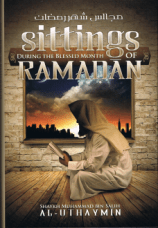
Majaalis Ramadan (Sittings in Ramadan) – Shaykh Uthaymeen | Abu Muhammad al Maghribee [Audio Series|En]

Sittings During the Blessed Month of Ramadan - Shaykh Muhammad bin Salih Al-Uthaymeen

We begin a series of classes Majaalis Ramadan (Sittings in Ramadan) from the works of our noble Shaykh Muhammad ibn Salih al-Uthaymeen rahimahullah.

You can read the Arabic text here.

As with all of our classes at Masjid Tawheed in Stone Mountain, GA, we encourage you to join us.

If you are not able to attend in person, please feel free to listen in via our Spreaker channel or our telelink line at 712-432-2856.

You can buy the above book (english) Here

[Soundcloud Playlist Link]

Contents 

  • Part 01 : The Virtues of reciting the Qur’an
  • Part 02 : The virtues of reciting specific Surahs of the Qur’an
  • Part 03 : Continuing with the virtues of reciting specific Surahs of the Qur’an
  • Part 04 : Continuing with the virtues of reciting the Qur’an
  • Part 05 : Manners pertaining to the Qur’an
  • Part 06 : Manners pertaining to the recitation of the Qur’an
  • Part 07 : The last ten days of Ramadan
  • Part 08 : The last ten days of Ramadan (Contd ..)
  • Part 09 : The description of Paradise
  • Part 10 : The description of the people of Paradise
  • Part 11 : Eid al-Fitr
  • Part 12 : End of Ramadan
  • Part 13End of Ramadan (Contd ..)
  • Pat 14 (Final Part) : Review what was covered so far

Posted fromhttp://followthesalaf.com/?tag=Majaalis+Ramadan

Person travelling from one country to another where the new crescent of Shawwal has been sighted

If a person travels from one country to another where the new crescent of Shawwal has been sighted, should he follow them and break his fast?

Q. 394. If a fasting person travels from one Islamic country to another and it was announced in the first country that the new crescent of Shawwal has been sighted, should he follow them and break his fast, bearing in mind that the new crescent of Shawwal has not yet been sighted in the second country?

A. If a person travels from one Islamic country to another, and the breaking of the fast in the country to which he has travelled was delayed, then he should remain (fasting) with them until they break their fast, because fasting is when the people fast and breaking the fast is when the people break their fast and ( ‘Eid) Al-Adha ( Sacrifice) is on the day when the people sacrifice their animals, even if it means that he increases a day or more. It is the same as if he travelled to a country where the sunset is late for his usual day might be lengthened by two or three hours, or more if he travelled to another country. The new crescent has not been seen there, and the Prophet (صلى الله عليه و سلم) ordered us to not fast unless we see the new crescent, and he also said: “Break your fast when you see it.”

As for the opposite, such as when he travels from a country in which confirmation of the start of the month is delayed to a country in which the start of the month has been confirmed, then he should break his fast with them and make up for what he has missed of Ramadan later. If he missed a day, he must make up for a day and if he missed two days, he must make up for two days.

We say that he makes it up in the second case, because it is not possible for the month to be less than twenty-nine days, nor for it to be more than thirty days. And we say to him: Break your fast, even if you have not completed twenty-nine days, because the new crescent has been seen, and once it has been seen, you must break your fast. And since you have fasted less than twenty-nine, because it is not possible for the month to be less than twenty-nine, so you must complete twenty-nine days, as opposed to the first situation, for you should not break your fast until the new crescent has been seen, and if it has not been seen, then you are still in Ramadan. So, how can you break your fast, for you must fast, even if the month was increased for you, it is only like the increase in the hours of the day .

Posted from : Fatawa Arkanul-Islam : Islamic Verdicts on the Pillars of Islam (Volume2)
By the Honorable Shaikh Muhammad bin Salih Al- ‘Uthaimeen
Collected and Arranged by Fahd bin Nasir bin Ibrahim As-Sulaiman
Published by dar-us-salam

Whoever Breaks his Fast with an Excuse, then he is Not Obliged to Fast for the rest of the Day – Shaykh Ibn Uthaymeen

Bismillaah

Q. 400. If a person breaks his fast due to some excuse, and then the excuse is removed during the day, should he fast for the remainder of the day?

A. He is not obliged to fast. This is because it has been made lawful for this man to break his fast on this day based upon an evidence from the Islamic Law. The Islamic Law allows one who is compelled to take medication for example, to take it, but if he takes, he breaks his fast. Therefore the prohibition of the day does not apply to him, because it has been permitted for him to break his fast, but he is required to compensate for it, and for us to require him to fast without any benefit is legally incorrect. So as long as this man does not benefit from fasting, it is not incumbent upon him.

An example of this would be a man who sees someone drowning in the water and he says: If I drank, it would be possible for me to save him, and if I did not drink, it would not be possible for me to save him, so he drinks and then saves him and he eats and drinks for the remainder of the day. This man is not prohibited from eating and drinking on this day, since it has been made lawful for him not to fast in accordance with the Islamic Law. Therefore, he is not required to fast.

For this reason, if there was a sick person, would we say to him: Do not eat unless you are hungry and do not drink unless you are thirsty? Meaning: Do not eat or drink except due to necessity. We would not say this to him, because it is permissible for the sick person to break his fast.

So, every person who breaks his fast in Ramadan in accordance with some legal evidence is not obliged to fast, and vice versa.

Whoever breaks his fast without an excuse, then he must fast, because it is not lawful for him to break his fast and he has transgressed the prohibition of that day without permission from the Islamic Law. So, we must compel him to fast the remainder of the day and to make up for it.

And Allah knows better.

Q. 398. What are the permissible excuses for breaking the fast?

A. The permissible excuses for breaking the fast are: Illness and travel, as mentioned in the Qur’an.

Among other excuses is that a woman is pregnant and she fears for herself or her child. Another excuse is that a woman is breast-feeding and she fears for herself or her breast-fed child if she fasts.

Another excuse is that a person needs to break his fast in order to save the life of someone. For example, he finds a drowning person in the sea, or someone who is surrounded on all sides by fire, and he needs to break his fast in order to save him – in that case, he may break his fast and save him.

Another such case would be if a person needed to break his fast in order to strengthen himself for Jihad in Allah’s Cause, that would also be a permissible cause for him to break his fast, because the Prophet sallallaahu`alaihi wa sallam said to his Companions, may Allah be pleased with them:

You will meet the enemy tomorrow morning, so breaking the fast stronger for you, so break your fast.” [1]

So, if there is a permissible excuse for breaking the fast, and a person breaks his fast due to it, it is not necessary for him to fast for the remainder of that day. Therefore, if it transpired that a person had broken his fast in order to save a person’s life, he should continue to eat and drink, even after saving him. This is because he broke his fast for a reason which permits him to break his fast, so it is not necessary for him to fast in that case, because the prohibition of breaking fast on that day has been removed due to the permissible cause for breaking the fast.

For this reason, we support the most authoritative opinion in this matter, which is that if a sick person became well during the day and he was not fasting, it is not necessary for him to fast, and if a traveller arrived during the day at his hometown and he was not fasting, it is not necessary for him to fast, and if a menstruating woman became clean during the day, it is not necessary for her to fast. This is because all of these people broke their fasts for legitimate reasons, and so on that day, there was no obligation upon them to fast, due to the lawful permission for breaking it at that time, so it is not necessary for them to fast.

This is as opposed to the case where it is confirmed that the month of Ramadan has begun during the day in that case, it is necessary to fast. The difference between the two cases is clear, because if the evidence appears (that Ramadan has begun) during the day, it has been confirmed that fasting on that day is obligatory for them, but they are excused for the time before the evidence became clear to them due to their ignorance of it. This is why, if they knew that this day was a day of Ramadan, it is obligatory for them to fast. But as for those other people whom we have described, it is permissible for them to break their fast, even though they are aware (that it is Ramadan) and the difference between them is clear.

[1] Reported by Muslim in the Book of Fasting, in the Chapter: The Reward of One Who Breaks His Fast on a Journey if He Undertakes a Task (1120).

Source: Fataawa Arkaan al-Islam by Shaykh Muhammad ibn ‘Uthaymeen (may Allaah have mercy o­n him), vol 2, dar-us-salam publications

Menses & Fasting – Shaykh ibn Uthaymeen

It is unlawful for a menstruating woman to perform all types of fasting: obligatory or optional.

It is, however, obligatory to make up for the missed obligatory days of fasting as explained by ‘Aisha (رضي الله عنها):

“We passed through this (period of menstruation), and we were ordered to complete (i.e., compensate) the fasts but we were not ordered to complete the prayers” (agreed upon Hadeeth) [34].

If the woman encounters menses while fasting then her fasting is negated even if her blood flow occurs a moment before sunset. If this day is one of the prescribed days of fasting then she must make up for this day once she becomes clean. If on her day of fasting she feels she is about to have her menses but no blood flow actually occurs till after sunset, then her fasting is complete and is not negated in accordance with the right opinion about this matter.

This is because there is no ruling regarding blood inside the woman’s body and because the Prophet (صلى الله عليه و سلم) when asked:

“Is it necessary for a woman to take a bath after she has a wet dream (nocturnal sexual discharge)?”

he replied: “Yes, if she notices a discharge.” [35]

So, he (صلى الله عليه و سلم) conditioned the ruling upon the actual seeing of the discharge and not upon its transfer (from inside-out). Similarly in the case of Haid, the ruling applies once there is an actual seeing of discharge.

Case: If a woman’s period continues till after dawn (Fajr), then no fasting will be acceptable from her on this day even if she becomes clean moments after dawn.

Case: If she becomes clean before Fajr and she fasted, then her fasting is correct even though she may have not taken her cleaning bath till after Fajr time. This is the same as in the case of the person who has Jannabah. If he (she) intends to fast and did not take his (her) bath until after Fajr, then his (her) fasting on this day is correct. This is in accordance with the Hadeeth of ‘Aisha (رضي الله عنها) who said that:

“The Prophet (صلى الله عليه و سلم) used to get up in a state of Jannabah (after sexual relations with his wives) and fast during the month of Ramadan.” [36]

Footnotes:

[33] Ibin Taymeeyah in Al-Fatawa (religious decrees) V. 26, P. 191.
[34] The text is from Saheeh Muslim, V.1, P. 191.
[35] Saheeh Al-Bukhari (Arabic-English) V.1, P. 171-2, Hadeeth # 280.
[36] Aisha (رضي الله عنها) said: “The dawn broke upon the Messenger of Allah (صلى الله عليه و سلم) during the Ramadan in a state of Jannabah not becuase of sexual dream

***

Question 10:

Suppose a woman becomes clean from her menses before Salat Al-Fajr but she took her bath after the commencement of the Salat time, and fasted that day. Is her fasting correct?

Answer by Shaykh Uthaymeen:

If a woman becomes clean during the month of Ramadan one minute before the commencement of the prescribed time of Salat Al-Fajr, then she must fast that day and her fasting is correct and it is not mandatory upon her to make up the fast because she fasted while she was clean even though she did not take her bath till after the rise of Fajr. This is similar to the case when a man has a wet dream or in a state of Jannabah. He can have his Suhor (meal before Fajr), fast and take his bath after Fajr.

I want to caution some women who may think that if they get their menses after breaking the fast and before Isha’ then their fasting was incorrect. This understanding is wrong. Their fasting is correct and complete even if they get their respective periods one moment after sunset (Maghrib).

***

Question 6:

A woman has reached sixty five years of age. She did not give birth to any child during the last nineteen years. For the past three years she had continuous bleeding. What should she do for fasting and what should women like her do (regarding Salat and Fasting)?

Answer by Shaykh ibn Uthaymeen:

This type of woman should refrain from fasting and Salat during the time of her regular cycle of menses. If for example she used to have her normal period of menses during the first six days of the month, then she should refrain from fasting and praying during the first six days of each month. Once that is done, she should take a bath and perform Salat and fast.

As to the how she offers her Salat, she should wash her private part real well and apply a pad to it and make ablution. She does this at the time of the obligatory prayers. She could also do the same for the optional prayers at times other than the times of the obligatory prayers.

Because of the difficulty encountered by such woman, it is allowable for her to combine (but not shorten) the Thuhr with the ‘Asr prayer (and pray either at time of Thuhr or at time of ‘Asr) and the Maghrib with the Isha’ (and pray either at time of Maghrib or at time of Isha’). This way she can do this type of preparation for her Salat three times (including one for Fajr prayer) instead of five times a day. She can perform optional prayers based upon her ablution for either of the combined prayers.

Question 5:

What should a woman do when she does not make up for the days she did not fast in Ramadan due to her menses?

Answer by Shaykh ibn Uthaymeen:

It is regrettable for something like this to happen amongst the believing women. This is either due to ignorance or laziness and both reasons are wrong! because the cure for ignorance is to ask those who know and the cure for laziness is the fear of Allah and His punishment. So a woman who may have done this should sincerely repent to Allah and seek His forgiveness. She should also try her best to find out the number of days she missed and make up for it. I ask Allah to accept the repentance of such women.

Source[eBook] Natural Blood of Women – Shaykh Uthaymeen – Dr Saleh As-Saleh

Umrah in Ramadhan – If a traveller arrives in Makkah and he is fasting, should he break his fast? – Shaykh ibn Uthaymeen

Q. 405. If a traveller arrives in Makkah and he is fasting, should he break his fast in order to gain strength to perform ‘Umrah?

A. We say that the Prophet (صلى الله عليه و سلم) entered Makkah on the twentieth of Ramadan in the year of the conquest of Makkah and he was not fasting, and he led the people of Makkah in a two Rak’ah prayer and he said to them:

Oh, people of Makkah! Complete the prayer (i.e. pray four Rak’ahs), for we are travellers.” [1]

It has been confirmed in Sahih Al-Bukhari that the Prophet (Sallallaahu alaihi wa sallam) did not fast for the remainder of the month, because he was a traveller, so the journey of a person performing ‘Umrah does not end with his arrival in Makkah, and he is not obliged to fast if he arrives while not fasting.

Some people might continue to fast even while they are travelling, thinking that to fast while travelling in the present day is not difficult for people. So, they will continue fasting even while travelling, then they arrive in Makkah and feel tired, and so they say to themselves: Should I continue my fast and delay the ‘Umrah until after I have broken my fast, or should I break my fast in order to perform the ‘Umrah immediately upon arrival in Makkah. We would say to them in these circumstances: It is better for you to break your fast in order to perform ‘Umrah immediately upon arrival in Makkah, in order to perform this rite. 

Because when the Prophet (صلى الله عليه و سلم) entered Makkah and he was performing his religious rites, he would go straight to the Masjid, even making his camel kneel outside the Masjid, entering it in order to perform the rites, for he was so preoccupied with it. Therefore, for those who perform ‘Umrah, breaking your fast in order to perform ‘Umrah briskly is better than remaining in a state of fasting, then performing your ‘Umrah after you have broken your fast at night.

It is confirmed from the Prophet (صلى الله عليه و سلم) that he was fasting on his journey to the battle for the conquest of Makkah, and the people came to him and said: “Oh, Messenger of Allah! Fasting has become difficult for the people and they are waiting to see what you will do.” And this was after ‘Asr, but the Prophet (صلى الله عليه و سلم) called for water and drank it while the people were watching. [2] So, the Prophet broke his fast during his journey, indeed, he broke his fast at the end of the day, and all of this was in order to make it clear to his people that this was permissible. Fasting while travelling, as some do, in spite of difficulty, contradicts the Sunnah; of this there is no doubt. To this applies the statement of the Prophet (صلى الله عليه و سلم):

It is not righteousness to fast while on a journey. ” [3]

Footnotes:

[1] Reported by Al-Bukhari in the Book of Battles, in the Chapter: The Battle of the Conquest in Ramadan (4275).
[2] Reported by Muslim in the Book of Fasting, in the Chapter: The Permissibility of Fasting or Breaking the Fast During the Month of Ramadan for the Traveller Without Disobedience (1114)
[3] Reported by Al-Bukhari in the Book of Fasting, in the Chapter: The Statement of the Prophet to the One Who Was Shaded and Upon Whom the Heat Was Oppressive: It is not righteousness to fast whilst on a journey. (1946); and by Muslim in the Book of Fasting, in the Chapter: The Permissibility of Fasting and Breaking the Fast During the Month of Ramadan for the Traveller Without Disobedience (1115).

From the Book “Fatawa Arkanul-Islam “
Islamic Verdicts on the Pillars of Islam (Volume Two)
By the Honorable Shaikh Muhammad bin Salih Al- ‘Uthaimeen

Ramdhan & Fasting Index Page – http://salaf-us-saalih.com/ramadhan/

“I am Allaah’s Slave and His Messenger” – Compiled & Translated by Dawud Burbank

بسم الله الرحمن الرحيم 

IMAAM AN-NASAA·EE reported in his “`Amalul-Yawm wal Laylah” (no. 250):

<<Aboo Bakr ibn Naafi` related to us, saying: Bahz narrated to us, saying: Hammaad ibn Salamah narrated to us, saying: Thaabit narrated to us: from Anas:

that some people said to Allaah’s Messenger (صلى الله عليه و سلم): “O best one of us, and the son of the best of us! O our chief and the son of our chief!” So Allaah’s Messenger (صلى الله عليه و سلم) said: << O people! Say what you have to say, and do not let Satan mislead you into following desires. I do not want you to raise me above the position which Allaah -the Most High – gave to me. I am Muhammad the son of ‘Abdullaah. His Slave and His Messenger. >>

Also reported by Ahmad, Ibn Humayd in “al-Muntakhab”, Ibn Mandah in “atTawheed”, and others.

Shaikh al-Albaanee said: “Its chain of narration is “Saheeh” to the standard of Muslim.” [“Ghaayatul-Maraam” (no. 127); “as-Saheehah” (nos. 1097 & 1572).

***

Shaikh Saalih al-Fawzaan -hafizahullaah- said in “I`aanatul-mustafeed bisharh Kitaabit-Tawheed” (2/435- ):

“…Their saying: “O our chief and the son of our chief!” was something the Prophet (صلى الله عليه و سلم) rebuked; and likewise their saying: “O best one of us and the son of the best of us! “The Prophet (صلى الله عليه و سلم) also criticised this, because the Messenger (صلى الله عليه و سلم) did not desire praise. Rather he wanted to be described with that which Allaah-the Most High – described him with: with Messengership and Prophethood, and that is sufficient honour for him (صلى الله عليه و سلم).

His saying: << And do not let Satan mislead you into following desires ( laa yastahwiyannakumush-Shaytaan). >> : (yastahwiyannakum) means: that he leads you into following desires which lead away from the path of Allaah -the Mighty and Majestic; or it is from “al-Hawiyy”, which means falling into destruction; meaning: let not Satan cause you to fall into misguidance, or let him not cause you to fall into desires which lead you astray from the path of Allaah -the Mighty and Majestic; for Satan misleads people in gradual stages, until he brings about their destruction. So the Muslim should be aware of Satan, and his misleading in gradual stages, and his leading into following desires. He should not relax with regard to Satan about anything, even if it is something slight, since it will become greater and larger.

Then he (صلى الله عليه و سلم) said:

<< I am Muhammad, Allaah’s Slave and His Messenger. >>

This is the correct way to mention him (صلى الله عليه و سلم) with praise: servitude and Messengership.

<< I do not love that you raise me above the position which Allaah -the Mighty and Majestic-gave to me. >>

This is the wisdom behind his (صلى الله عليه و سلم) forbiddance: that he feared for them, in their praising of him, that they would raise him above the position which Allaah gave to him; and that is Servitude (`Uboodiyyah) and Messengership (Risaalah). So he feared that they would start to believe that he had some aspects of Lordship ( Ruboobiyyah), just as happened to the Christians with regard to `Eesaa -`alaihis-Salaatu was-Salaam.

So the saying “His Slave” (`Abduhu ) prevents excessive praise (ghuluww); and the saying “His Messenger” (Rasooluhu) prevents belittlement of him (صلى الله عليه و سلم). So you should not just say that he is only a man and a human, and think that he has no distinction over the rest of mankind, as is said by the Unbelievers:

“You are nothing but a man like us” [Sooratush-Shu`araa·. (26): 154]

SO THESE TWO HADEETH [1] GIVE US SOME TREMENDOUS POINTS OF BENEFIT:

[1] i.e. This hadeeth along with a similar hadeeth of `Abdullaah ibn ash-Shikhkheerradiyallaahu `anhu.

THE FIRST POINT OF BENEFIT:

Is a warning against going beyond the limits (al-ghuluww) with regard to him (صلى الله عليه و سلم), by way of excessive praise; and that he should only be described with those attributes given to him by Allaah: Servitude ( al-`Uboodiyyah) and Messengership (ar-Risaalah).

As for going beyond the limits regarding him, and describing him as removing troubles and forgiving sins, and that rescue and relief can be sought from him- `alaihis-Salaatu was-Salaam-after his death: as actually occurs with many of those who have deviated today, in what they call “poems of praise of the Prophet”- such as “al-Burdah” of al-Boosayree; and its like from what has been said by the deviants; then this is excessiveness ( ghuluww) which has led to shirk; such as the saying of al-Boosayree:

‘O noblest one of the creation! I have none to seek protection
and shelter with besides you, when disasters strike;
And if you do not take hold of my hand in the Hereafter,
as a favour from you, then O how I shall fall!
Since from your generosity comes the whole world and its treasures;
and from your knowledge is the knowledge of the Preserved Tablet and the Pen.’

This is going beyond the due limits (ghuluww), and Allaah’s refuge is sought, which led to Unbelief and Shirk, to such an extent the he did not leave anything for Allaah at all! He ascribed everything to the Messenger (صلى الله عليه و سلم): This world and the Hereafter ascribed to the Messenger. The Preserved Tablet and the Pen ascribed to the Messenger. That none can save from the Torment on the Day of Resurrection except the Messenger. So what then remains for Allaah- the Mighty and Majestic?

This is a poem which they circulate, memorise, and recite during the “mawlid” (Innovated birthday celebrations). Likewise other poems of Kufr and Shirk, particularly that which they recite during the innovated mawlid (birthday celebrations) from poems of Shirk. The cause of all of this is exceeding the bounds (ghuluww) with regard to the Messenger (صلى الله عليه و سلم).

As for praising him (صلى الله عليه و سلم) with that which Allaah described him with, that he is a Slave [of Allaah] (`Abd) and Messenger (Rasool), and that he is the best of the creation, then there is no harm in this ; just as occurs in the poetry of the Companions who praised him, like the poetry of Hassaan ibn Thaabit, and Ka`b ibn Zuhayr, and likewise Ka`b ibn Maalik, and `Abdullaah ibn Rawaahah.

These are pure and good poems. The Prophet (صلى الله عليه و سلم) heard them and approved of them because they did not contain any excessive praise (ghuluww); rather they contained a mention of his (صلى الله عليه و سلم) characteristics…. >>. ”

***

Shaikh Muhammad ibn Saalih al-`Uthaymeen – rahimahullaah- said in “alQawlul-Mufeed `alaa Kitaabit-Tawheed”. ( 2/519-521):

“His saying: “I am Muhammad, the Slave of Allaah and His Messenger”: Muhammad is his personal name and “`Abdullaah’ (Allaah’s Slave) and “Rasooluhu” (His Messenger) are two attributes of his; and these two characteristics are the finest and most profound of the characteristics of the Messenger (صلى الله عليه و سلم). So therefore Allaah -the Most High – described him with Servitude with regard to the greatest of positions:

in the position of His sending the Qur·aan down to him. He-the Most High – said:

“Exalted is He who sent down the Criterion to His Slave” [Sooratul-Furqaan (25):1]

and He described him with it in the situation of the Night-Journey. He-the Most High – said:

“Perfect is He who took His Slave on a journey by night” [Sooratul-Israa· (17):1]

and He described him with it in the situation of his ascent through the heavens. He -the Most High – said:

“So He revealed to His Slave whatever He revealed” [Sooratun-Najm (53): 10]

and He described him with it in the situation of defending him and challenging his opponents. He-the Most High – said:

“And if you are in doubt concerning that which We sent down to Our Slave” [Sooratul-Baqarah (2):23]

and the same was the case with the (rest of the) Prophets, such as in His Saying – He the Most High:

“O descendants of those whom We carried in the ship along with Nooh. Indeed he was a thankful slave” [Sooratul-Israa· (17): 3]

So this is a special and specific Servitude, and it is the highest of the types of servitude. Then servitude to Allaah is the greatest of the attributes of mankind, since man will either worship Allaah or Satan. He-the Most High – said:

“Did I not command you, O descendants of Aadam, that you should not worship Satan. Indeed he is a clear enemy to you. And that you should worship Me alone. That is the Straight Path” [Soorah YaaSeen: (36):60-61]

Ibnul-Qayyim said:

“They fled away from the Servitude for which they were created, and were afflicted instead with servitude to the self and to Satan… (And His Messenger): Meaning: The One sent by Him to the whole of mankind. He- the Most High – said:

“Say: O Muhammad! I am indeed the Messenger of Allaah to you all” [Sooratul-A`raaf (7):158]

And Allaah’s Messenger (صلى الله عليه و سلم) is at the pinnacle of the levels of righteousness. He the Most High – said:

“And whoever obeys Allaah and the Messenger, then they will be along with those whom Allaah has bestowed favour upon; from the Prophets, their true and sincere followers, the martyrs, and the righteous; and what a fine company they are” [Sooratun-Nisaa· (4):69]

So amongst the Prophets was the Messenger (صلى الله عليه و سلم), indeed he was the most excellent of them…

And two groups went to extreme with regard to the Messenger (صلى الله عليه و سلم)

A group who went to such an extreme that they worshipped him, and they took him for times of ease and hardship, and they worshipped him and called upon him besides Allaah;

A group denied him; and claimed that he was a liar, a sorcerer, a poet, a madman, a soothsayer, and the like;

And his saying “Allaah’s Slave and His Messenger’ is a refutation of both of the groups…”

***

[Translated by Aboo Talhah Daawood ibn Ronald Burbank]

[Download PDF Here]

Posted fromhttps://alitisaambissunnah.wordpress.com

Related Links :

Committing Shirk in the Messengership of the Prophet ﷺ 

Writing ‘Ya Allaah & Ya Muhammad’ – Shaykh Rabee ibn Haadee

Ruling on Tabarruk by the Prophet’s ﷺ relics and supplicating to him – Shaik ibn Baaz

The Messenger ﷺ  did not stretch his hand from his grave to anyone – Ibn Baaz

Does the Prophet ﷺ have the knowledge of the unseen ? Dr. Saleh as-Saleh [Audio|En]

Was the Prophet ﷺ  created from light? – Al-Lajnah al-Daa’imah

Is the Prophet ﷺ Alive Now in his Grave ? – Dr. Saleh as Saleh [Audio|En]

Say (O Muhammad ﷺ): “I am only a man” – Explanation by Shaykh al-Fawzaan

Ruling On Qasidat al-Burda – Al´Allâmah ibn al-ʻUthaymīn [Video|Ar-En]

Q&A on The Qasidah Burdah of Busairi and the Ash’ari’s – Al-‘Allaamah Saalih al-Fawzaan [Video|Ar-En Subtitles]

Learn about our Prophet Muhammad (صلى الله عليه و سلم) – http://salaf-us-saalih.com/muhammad

Global Sighting vs. Local Sighting of the Moon – Shaykh Uthaymeen – Abu Muhammad al Maghribee [Audio|En]

Today we talk about global sighting vs. local sighting of the moon and two other opinions.

Part 03 : Listen / Download Mp3 Here (Time 01:02:32)

Posted from: Book Of Fasting – Sharh al-Mumti alaa Zaad al-Mustaqni – Shaykh Uthaymeen – Abu Muhammad al Maghribee [Audio|En]

Sourcehttp://followthesalaf.com

Zakah of a Person who is in Debt – Shaykh ibn Uthaymeen

Q. 359. Is it correct for a person who is in debt to give charity? And what legal obligations are lifted from the debtor? 

A. Charity is a form of spending which is commanded by the Islamic Law, and it is a form of Ihsan towards Allah’s worshippers, if it is given where it is needed. A person will be rewarded for his charity, and every man will be in the shade of his charity on the Day of Resurrection and it is accepted whether a person is in debt or not, as long as the conditions for its acceptance are met.

These conditions are that it is given purely and sincerely for Allah, the Almighty, the All-Powerful’s sake, that it is from honest earnings, and it is given where it is needed.

If these conditions are fulfilled, then the charity is accepted, according to the legal evidences; and it is not a condition that a person be free of debt. But if the debt covers all that he has, then it is not wise, nor is it logical that he should give charity while charity is recommended, not obligatory and that he should leave the debt which is an obligation on him. He should begin first with the obligation, then give charity.

Scholars have disagreed regarding the situation if a person gives charity when he has a debt covering all of his wealth: Some of them say that it is not permissible because it harms his creditor, and it causes this obligatory debt to remain unpaid. Some of them say that it is permissible, but that it contradicts what is more worthy.

In any case, it is not fitting for a person whose debt covers all that he has, to give charity until he has settled his debt, because an obligation takes precedence over a voluntary act of worship.

As for the legal obligations that are lifted from one who is indebted until such time as he pays it, they include Hajj, because Hajj is not incumbent upon a person who is in debt until he has paid it.

As for Zakah, scholars have differed regarding whether its obligation is lifted from the debtor until such lime as he pays the debt or not.

Among the scholars are those who say that the obligation of Zakah is lifted on the amount which is equivalent to the debt, whether the wealth is evident or not.

Among them are those who say that the obligation to pay Zakah is not lifted on the amount which is equivalent to the debt; rather he must pay Zakah on the whole amount which he possesses. If there is a debt incumbent on him, the Nisab is decreased.

There are those among them who discriminate, saying that if the wealth is concealed, wealth which is not seen and is not perceptible, such as money and trading merchandise, then the obligation to pay Zakah is lifted on the amount which is equivalent to the debt, while if the wealth is in the form of perceptible things, such livestock and the produce of the earth, then the obligation to pay Zakah is not lifted.

The correct view in my opinion is that the obligation to pay it is not lifted, regardless of whether the wealth is perceptible or not, and that every person who has wealth in his hand upon which Zakah is payable must pay his Zakah, even if he is in debt.

This is because Zakah is incumbent upon wealth, according to the Words of Allah, the Most High:

“Take Sadaqah (alms) from their wealth in order to purify them and sanctify them with it, and invoke Allah for them. Verily your invocations are a source of security for them; and Allah is All- Hearer, All-Knower” [At-Tawbah 9:103]

And the words of the Prophet to Mu’ath bin Jabal, may Allah be pleased with him, when he sent him to Yemen:

“Inform them that Allah has made incumbent upon them the payment of Zakah on their wealth; it is taken from the wealthy among them and distributed among their poor.” [2]

The Hadith is in Sahih Al-Bukhari with this wording. By this evidence from the Book (of Allah) and the Sunnah, the two things are separate, and there is no conflict between Zakah and a debt, because a debt remains an obligation and Zakah is incumbent upon wealth. So, each of them is incumbent in a place wherein the other is not incumbent, so there is no conflict between them, and no contradiction, and thus a debt remains the responsibility of its owner and Zakah remains incumbent on wealth, and he must pay it from the wealth in all circumstances.

[2] Reported by Al-Bukhari in the Book of Zakah, in the Chapter: The Obligation of Zakah ( 1 395 ); and by Muslim in the Book of Faith, in the Chapter: Calling to the Shahadatan and the Laws of Islam (19).

Posted from :
Fatawa Arkanul-Islam – Islamic Verdicts on the Pillars of Islam (Volume Two) – Prayer, Zakah, Fasting, Hajj
By the Honorable Shaikh Muhammad bin Salih Al- ‘Uthaimeen
Collected and Arranged by Fahd bin Nasir bin Ibrahim As-Sulaiman – Published by Dar-us-Salam

48 Questions and Answers on Fasting (سؤالاً في الصيام) by Shaykh al-Uthaymeen – Abu Muhammad al-Maghribee [Audio|En]

Benefitting from the Blessed Month of Ramadhan

Readings from the treatise “48 Questions and Answers on Fasting” (سؤالاً في الصيام) by Shaykh Muhammad ibn Saalih al-Uthaymeen , rahimahullaah. Delivered by Abu Muhammad al-Maghribi at the Islamic Center of Palm Beach , FL USA

Download the arabic text of the book at :
http://www.ibnothaimeen.com/all/books/article_16898.shtml

Part 01 : Listen / Download Mp3 Here (Time 1:20:08)

Part 02 : Listen / Download Mp3 Here (Time 1:09:21)

Part 03 : Listen / Download Mp3 Here (Time 52:34)

Part 04 : Listen / Download Mp3 Here (Time 32:44)

Part 05 : Listen / Download Mp3 Here (Time 59:39)

Part 06 : Listen / Download Mp3 Here (Time 2:01:37)

Audio Courtesyhttp://followthesalaf.com/home/2015/6/10/islamic-center-palm-beach-seminar-june-2015

Not every person who extends his hand for Zakah is Deserving of it – Shaykh ibn Uthaymeen

Q. 381. Is every person who extends his hand for Zakah deserving of it?

A. Not every person who extends his hand for Zakah is deserving of it, because there are those among mankind who extend their hands for money while they are wealthy. This type of person will come on the Day of Resurrection while his face will not have a bit of flesh on it, [1] may Allah protect us from that. He will come on the Day of Resurrection, on the Day when the witnesses will stand and the bones of his face will be visible, may Allah protect us from that, and the Prophet (صلى الله عليه و سلم) said:

“He who begs the riches of others to increase his own wealth is asking only for burning coals (in the Hereafter), so let him ask a little or much.” [2]

I would like to take this opportunity to warn those people who ask people in an importune manner when they are in possession of wealth. Indeed, I warn everyone who accepts Zakah when he is not entitled to receive it. I say to him: If you took Zakah to which you are not entitled, you are only consuming ill-gotten gains, may Allah protect us from that, and a person should fear Allah, for the Prophet (صلى الله عليه و سلم) said:

“Whoever tries to make himself self-sufficient, Allah will make him self-sufficient; and whoever abstains from asking others, Allah will make him content” [3]

But if a man extends his hand to you, and you believe it is most likely that he is entitled to it, and you gave him, then the Zakah will be counted, and you will have discharged your obligation, even if it became apparent after that that he was not entitled to it. There is no need to think that you have to pay the Zakah again (to someone else).

The evidence for this is the story of the man who gave money in charity, and he gave charity first to a prostitute and the people began to talk, saying: “Have you given money tonight to a prostitute?” He said: “All praise and thanks are to Allah.”

Then he gave charity on the second night and it fell into the hands of a thief and the people began to talk, saying: “Have you given money tonight to a thief?”

Then he gave charity on the third night to a rich man and the people began to talk, saying: “Have you given money tonight to a rich man?” He said: “All praise and thanks are to Allah for the prostitute, the thief and the rich man.”

Then it was said to him (by an angel): “Your charity has been accepted; as for the prostitute, haply (i.e perhaps) she may content herself with what you have given her and it may prevent her from committing illegal sexual intercourse, while as for the thief, haply he may content himself with what you have given him and he may refrain from stealing, while as for the rich man, haply, he may reflect and give charity” [4]

So, my brother, look at the honest intention, what is its effect: Therefore, if you gave the person who asked you, and then it became apparent that he was wealthy and you had given him something, believing that he was poor, it is not necessary for you to repay the Zakah.

Footnotes:

[l] Reported by Muslim in the Book of Zakah, in the Chapter: The Disapproval of Begging From the People (1040)
[2] Reported by Muslim in the Book of Zakah, in the Chapter: The Disapproval of Begging From the People ( 1041 ).
[3] Reported by Al-Bukhari in the Book of Zakah, in the Chapter: There is no Obligation to Give Charity Except Upon One Who is Wealthy (1427); and by Muslim in the Book of Zakah, in the Chapter: The Virtue of Contentment and Patience (1053).
[4] Reported by Al-Bukhari in the Book of Zakah, in the Chapter: If One Unwittingly Gave Charity to a Rich Person ( 1421 ); and by Muslim in the Book of Zakah, in the Chapter: Confirmation of the Reward of One Who Gives Charity, Even if the Charity Fell into the Hands of One Who is not Entitled to it (1022).

Posted from :
Fatawa Arkanul-Islam – Islamic Verdicts on the Pillars of Islam (Volume Two) – Prayer, Zakah, Fasting, Hajj
By the Honorable Shaikh Muhammad bin Salih Al- ‘Uthaimeen
Collected and Arranged by Fahd bin Nasir bin Ibrahim As-Sulaiman
Published by Dar-us-Salam

Book Of Fasting – Sharh al-Mumti alaa Zaad al-Mustaqni – Shaykh Uthaymeen – Abu Muhammad al Maghribee [Audio|En]

Kitab as-Siyam from Volume 6 of Sharh al-Mumti alaa Zaad al-Mustaqni by our noble Shaykh Muhammad ibn Salih al-Uthaymeen rahimahullah.

You may download a copy of the original Arabic text here: الشرح الممتع على زاد المستقنع

As with all of our classes at Masjid Tawheed in Stone Mountain, GA, we encourage you to join us.  If you are not able to attend in person, please feel free to listen in via our Spreaker channel or our telelink line at 712-432-2856.

Part 01 : Listen / Download Mp3 Here (Time 01:00:56)

Part 02 :Today we talk about fasting on Yawm as-Shak (Day of Doubt).

 Listen / Download Mp3 Here (Time 57:30)

Part 03 : Today we talk about global sighting vs. local sighting of the moon and two other opinions.

Listen / Download Mp3 Here (Time 01:02:32)

Part 04 : we start with the conditions that make it obligatory for someone to fast.

Listen / Download Mp3 Here (Time 01:00:49)

Part 05 :  we continue with the conditions that make it obligatory for someone to fast. In particular we talk about the traveler and the sick person.

Listen / Download Mp3 Here (Time 59:59)

Part 06 : we talk about the issue of whether a traveling person or menstruating woman for example has to start fasting if he reaches his destination before Maghrib or she finishes her cycle before Maghrib.

Listen / Download Mp3 Here (Time 01:01:15)

Part 07 : Tonight, we continue talking about the sick person and when he should fast and when he shouldn’t.

 Listen / Download Mp3 Here (Time 44:27)

Part 08 : Tonight, we go into the details of fasting during traveling.

Listen / Download Mp3 Here (Time 54:44)

Part 09 : This is the final class on Kitab as-Siyam from Volume 6 of Sharh al-Mumti alaa Zaad al-Mustaqni by our noble Shaykh Muhammad ibn Salih al-Uthaymeen rahimahullah.

Tonight, we talk about issues related to the pregnant and nursing women.

Listen / Download Mp3 Here (Time 58:58)

Posted fromhttp://followthesalaf.com/?tag=Sharh+al-Mumti

The Merits of the Sahaabah (Companions) – Shaykh Ibn Uthaymeen

A Sahaabee (Companion) is anyone that met the Prophet (sallAllaahu ‘alayhi wa sallam) while believing in him, and dying upon that condition.

The Companions (Sahaabah) of the Prophet (sallAllaahu ‘alayhi wa sallam) are the best from all those that accompanied the prophets, due to the statement of Allaah’s Messenger (sallAllaahu ‘alayhi wa sallam): “The best of people are my Companions.” [1] Al-Bukhaaree and others have reported this hadeeth.

The best among the Sahaabah are the Muhaajiroon (those who performed the migration from Makkah to Madeenah), due to their combining between migrating and giving support (in Allaah’s Cause). Then after them, are the Ansaar.

The best among the Muhaajiroon are the four righteous Khaleefahs: Abu Bakr, ‘Umar, ‘Uthmaan and ‘Alee.

Abu Bakr – He is “As-Siddeeq” ‘Abdullaah bin ‘Uthmaan bin ‘Aamir from the Tribe of Taym bin Marrah bin Ka’ab. He was the first male to believe in the Messenger of Allaah (sallAllaahu ‘alayhi wa sallam). He was his companion in the migration (Hijrah) and his deputy during times of prayer and Hajj. He was his Khaleefah (designated successor) for his nation. Five of those who were given the glad tidings of Paradise accepted Islaam through his hands.

They are ‘Uthmaan, Az-Zubair, Talha, ‘Abd-ur-Rahmaan bin ‘Awf and Sa’ad bin Abee Waqqaas. He died in Jumaadal-Al-Akhirah, in the 13th year of Hijrah, when he was 63 years old. The above five along with Abu Bakr, ‘Alee bin Abee Taalib and Zayd bin Haarithah form the eight that were the first of people to accept Islaam. Ibn Ishaaq stated this and what he meant by it, was that they were the first from amongst the males, after (the advent of) the Message.

Umar – He is Abu Hafs “Al-Faarooq” ‘Umar Ibn Al-Khattaab from the tribe of ‘Adiyy bin Ka’ab bin Lu’aa. He accepted Islaam in the sixth year after the Prophet (sallAllaahu ‘alayhi wa sallam) was sent, after nearly forty men and eleven women (had accepted Islaam). The Muslims were overjoyed by that occasion and Islaam spread in Makkah afterward. Abu Bakr entrusted him with the leadership of the Muslim nation, and so he rose to the hardship of the Khilaafah in the best manner. This was until he was killed and died as a martyr in Dhul-Hijjah of the year 23H, at the age of 63.

Uthmaan – He is Abu ‘Abdillaah “Dhun-Noorain” ‘Uthmaan bin ‘Affaan from the tribe of Umayyah bin ‘Abd-ish-Shams bin ‘Abd Manaaf. He accepted Islaam after the Prophet’s entrance into Daar-ul-Arqam. He was a rich and generous man. He was given the Khilaafah after ‘Umar Ibn Al-Khattaab (radyAllaahu ‘anhu), due to the agreement of the members of the governing body. He remained Khaleefah until he was killed and martyred in Dhul-Hijjah in the year 35H. He was 90 years old at the time of his death, according to one of several opinions.

Alee – He is Abul-Hasan ‘Alee bin Abee Taalib. The name of Abu Taalib was ‘Abd Manaaf bin ‘Abd-il-Muttallib. He was the first from the youth to accept Islaam. The Messenger of Allaah (sallAllaahu ‘alayhi wa sallam) gave him the banner on the Day of Khaibar and Allaah granted victory at his hands. He was given the Khilaafah after the murder of ‘Uthmaan. Thus, he became the Khaleefah, governing until he was killed himself, and martyred in the month of Ramadaan in the 40H, at the age of 63.

The best of these four is Abu Bakr, then ‘Umar, then ‘Uthmaan, then ‘Alee. This is based on the report of Ibn ‘Umar (radyAllaahu ‘anhu): “We used to make preference between the people during the time of the Prophet (sallAllaahu ‘alayhi wa sallam). So we preferred Abu Bakr, then ‘Umar Ibn Al-Khattaab, then ‘Uthmaan bin ‘Affaan.” This was reported by Al-Bukhaaree.[2] It is also based on (the hadeeth) in Abu Dawood: “We used to say, while the Messenger of Allaah (sallAllaahu ‘alayhi wa sallam) was alive: The best of the Prophet’s ummah after him, is Abu Bakr, then ‘Umar, then ‘Uthmaan.” At-Tabaraanee added to this in his report: “The Prophet would hear that and he would not oppose it.” I did not find the wording that the author mentions, in which there is the addition of ‘Alee bin Abee Taalib. [3]

The most deserving from them of the Khilaafah, after the Prophet, was Abu Bakr (radyAllaahu ‘anhu). This is since he was the best of them and foremost to them in accepting Islaam. Also, the Prophet (sallAllaahu ‘alayhi wa sallam) preferred him to lead the prayer. Furthermore, the Sahaabah agreed upon his superiority and upon giving him the oath of allegiance (bay’ah). And it is not befitting for Allaah to unite them in agreement upon an error. Then ‘Umar, since he was the best of the Sahaabah after Abu Bakr and because Abu Bakr entrusted the Khilaafah to him. Then ‘Uthmaan, due to his merits and due to his election by the Majlis Ash-Shooraa (governing body). They are the ones mentioned in this verse from a poem:

“’Alee, ‘Uthmaan, Sa’ad and Talha.
Zubair and Dhu ‘Awf — members of the governing body.”

Then comes ‘Alee, due to his merits and the consensus of the Muslims of his time upon it. These four are the rightly guided Khaleefahs, whom the Prophet (sallAllaahu ‘alayhi wa sallam) said concerning them: “Stick to my Sunnah and the Sunnah of the rightly-guided Khaleefahs after me. Bite onto it (the Sunnah) with your molar teeth.” And he (sallAllaahu ‘alayhi wa sallam) said: “The Khilaafah after me will endure for thirty years.” Ahmad, Abu Dawood and At-Tirmidhee reported this hadeeth and Al-Albaanee said that its chain of narration was hasan. Thus, the last part of it, was the Khilaafah of ‘Alee. This is as the author has stated and it is as if he places the Khilaafah of Al-Hasan subordinate to his father’s or just doesn’t acknowledge it (i.e. Al-Hasan’s Khilaafah) at all, due to his yielding it.

The Khilaafah of Abu Bakr (radyAllaahu ‘anhu) endured for two years, three months and nine nights, from the 13th of Rabee’-ul-Awwal 11H to the 22nd of Jumaadal-Akhirah 13H.

The Khilaafah of ‘Umar (radyAllaahu ‘anhu) lasted ten years, six months and three days, from the 23rd of Jumaadal-Akhirah 13H to the 26th of Dhul-Hijjah 23H.

The Khilaafah of ‘Uthmaan (radyAllaahu ‘anhu) lasted twelve years minus 12 days, from the month of Muharram 24H to the 18th of Dhul-Hijjah 35H.

The Khilaafah of ‘Alee (radyAllaahu ‘anhu) lasted four years and nine months from the 19th of Dhul-Hijjah 35H to the 19th of Ramadaan 40H.

Combined, the Khilaafah of these four (Companions) lasted twenty-nine years, six months and four days.

Thereafter, Al-Hasan bin ‘Alee (radyAllaahu ‘anhu) was given the oath of allegiance on the day that his father, ‘Alee died. Then, in the month of Rabee’-ul-Awwal 41H, the command was given to Mu’awiyah (radyAllaahu ‘anhu) and due to that, the signs which the Prophet (sallAllaahu ‘alayhi wa sallam) spoke of in his statement: “The Khilaafah after me will endure for thirty years” and his statement: “Indeed, this son of mine is a Sayyid (noble) and perhaps it will be that Allaah will bring peace between two large parties (i.e. that of Al-Hasan and Mu’awiyah) through him”[4] came to pass.

Al-Hasan was the grandson of the Messenger of Allaah (sallAllaahu ‘alayhi wa sallam) and the fruit of his offspring. He was the Ameer-ul-Mu’mineen(Commander of the Believers), son of the Ameer-ul-Mu’mineen ‘Alee bin Abee Taalib. He was born on the 15th of Ramadaan in the third year after Hijrah. He died while in Madeenah and was buried in the graveyard Al-Baqee’ in Rabee-ul-Awwal 50H.

Al-Husayn was the grandson of the Messenger of Allaah (sallAllaahu ‘alayhi wa sallam) and the fruit of his offspring. He was the son of ‘Alee bin Abee Taalib. He was born in Sha’baan in the fourth year after Hijrah and was killed at Karbala on the tenth of Muharram 61H.

FOOTNOTES:

[1] Saheeh Al-Bukhaaree: Book of the Virtues of the Companions of the Prophet (no. 3651) and Saheeh Muslim: Book of the Virtues of the Companions (no. 2533) from the hadeeth of Ibn Mas’ood (radyAllaahu ‘anhu). It is also reported on the authority of ‘Imraan bin Husayn (radyAllaahu ‘anhu) in Al-Bukhaaree (no. 2561, 3650, 6438 & 6695) and Muslim (no. 2535). Abu Hurairah (radyAllaahu ‘anhu) also reported it in Muslim (no. 534) as well as others. Furthermore, this is a mutawaatir hadeeth. Al-Haafidh Ibn Hajr stated the correctness of it being mutawaatir in the introduction to his Al-Isaabah.[2] Saheeh Al-Bukhaaree: Book of the Virtues of the Companions (no. 3655). And in another wording found in Al-Bukhaaree (no. 3697), it states: “During the lifetime of the Prophet, we used to not put anyone equal to Abu Bakr, then (the same was with) ‘Umar, then (the same was with) ‘Uthmaan. Then we left the (remaining) Companions of the Prophet alone, not distinguishing between any of them.”

[3] Isnaaduhu Saheeh: This is an authentic hadeeth reported by Abu Dawood (4628), At-Tirmidhee (3707) and Ibn Abee ‘Aasim in As-Sunnah (1190). Its chain of narration (isnaad) is authentic as has been stated by Al-Albaanee in his checking to As-Sunnah (2/567). As for the addition that Shaikh Ibn Al-‘Uthaimeen has mentioned, which is found in At-Tabaraanee, which is: “The Prophet would hear that and he would not oppose it”, then it is an authentic addition, which is established in many paths of narration found in Ibn Abee ‘Aasim (1194, 1195, 1196 & 1197), Ahmad (2/14) and others with authentic chains. Refer to the checking of Ibn Abee ‘Aasim’s As-Sunnah (2/568-569) as well as Fath-ul-Baaree (7/16-17)

[4] Saheeh Al-Bukhaaree: Book of Peace Making (no. 2704) from the hadeeth of Abu Bakrah (radyAllaahu ‘anhu).

Imaam Muhammad Ibn Saalih Al-‘Uthaimeen
Source: His Book Sharh Lum’at-ul-‘Itiqaad (pg. 140-143)
Translator: Isma’eel Alarcon

Was the Prophet (صلى الله عليه و سلم) Bewitched? – Shaykh Ibn Utahymeen

Question 43: It was reported from the Prophet (صلى الله عليه و سلم) that he was bewitched. So we would like you to talk about the means by which he (صلى الله عليه و سلم) was bewitched. Furthermore, is it contradictory to the status of Prophethood that bewitchment of the Prophet (صلى الله عليه و سلم) took place?

The Answer: It has been confirmed in the Saheehayn (al- Bukhaaree and Muslim collections of Ahaadeeth) and in other traditions that the Prophet (صلى الله عليه و سلم) was enchanted. His bewitchment, however, did not affect him from the aspect of Legislation or Revelation. The utmost thing in this respect is that he (صلى الله عليه و سلم) reached a stage whereby he began to fancy that he was doing a thing which he was not actually doing. The magic material intended for the Prophet (صلى الله عليه و سلم) was the cast of a Jew known by the name Labeed ibn al-A’sam. Allaah, The One free of all imperfection and The Most High, protected the Prophet (صلى الله عليه و سلم) from it, until he was informed of what occurred to him by way of inspiration. He used to seek refuge in Allaah against evil by the recitation of al-Mu’awwithatayn, soorat al- Falaq and soorat An-Naas.

And this kind of magic does not influence the state of Prophethood, since it did not affect the behavior of the Prophet (صلى الله عليه و سلم) regarding the Revelation and acts of worship, as we have mentioned earlier. Some people have denied that the Prophet (صلى الله عليه و سلم) was bewitched under the pretext that such saying necessitates believing the unbelievers, and even the wrongdoers who said:

You follow none but a witched man. [Qur’aan, soorat al-Israa’ (17): 47].

There is no doubt, however, that such saying does not obligate approving those unbelievers and wrongdoers in what they have attributed to the Prophet (صلى الله عليه و سلم). Since they claim that the Messenger (صلى الله عليه و سلم) is bewitched in what he utters from Revelation, and what he has brought is mere hallucination, like the hallucination of the bewitched. However, the bewitching that occurred to the Prophet (صلى الله عليه و سلم) did not affect him in anything of the Revelation whatsoever, or in anything of the acts of worship. And it is forbidden that we deny his enchantment based upon our misunderstanding of the texts.

Posted from eBookUnderstanding Worship – Fiqh ul-‘Ibadah – QA Format – Ibn Uthaymeen – Dr Saleh as Saleh

Ibn Uthaymeen about Anasheed

Scholar: Imâm Muhammad bin Sâlih bin ´Uthaymîn
Source: al-Liqâ’ ash-Shahrî (11)
Reference: Darulhadith, Sweden
Audio and translation courtesy of afatwa.com (site is down)

Question: There are some Islâmic Anâshîd that are sung together with tambourines (daff). They lead to enthusiasm and consist of good meanings. What is your opinion on it?

Shaykh Ibn ‘Uthaymîn: A lot is said about Islâmic Anâshîd. It was a long time ago I listened to them. They were okay when they first emerged. They were free from tambourines. They did not cause any tribulations and they were not sung in accordance with forbidden melodic tones. They have evolved through time. They began to be combined with percussion instruments, it may have been tambourines or something else. Subsequently, they further evolved and started to be sung with beautified, trying voices. Later on, they evolved even more and started to be sung as the forbidden songs. That is why I am not comfortable with them. It cannot be said that all of them are allowed just as it cannot be said that all of them are forbidden. They are allowed if they are free from the things I have mentioned. Nevertheless, if they are combined with tambourines, beautiful, trying voices or forbidden melodic tones, then they are not permissible to listen to.

The Forbiddance of Adhering Blindly to the Saying of a Scholar in Opposition To An Authentic Text – Shaykh Uthaymeen

The Forbiddence Of Adhering Blindly To The Saying Of A Scholar In Opposition To An Authentic Text, And The Severe Rebuke Due Upon One Who Is Guilty Of This (Part I)

Shaikh `Abdur-Rahmaan ibn Hasan ibn Muhammad ibn `Abdil-Wahhaab – rahimahullaah – said in “Fathul-Majeed‟ (2/527-530), in explanation of the saying of Ibn `Abbaas – radiyallaahu `anhumaa – :

“Stones will soon fall upon you from the sky. I say: Allaah‟s Messenger (صلى الله عليه وسلم) said…, and you say: Aboo Bakr and `Umar said!” :-

“…This saying from Ibn `Abbaas – radiyallaahu `anhumaa – was a response to those who said to him: “Aboo Bakr and `Umar – radiyallaahu `anhumaa – did not hold joining the `Umrah along with the Hajj (at-tamattu`), and they held that performing Hajj on its own (al-Ifraad) is better‟, or the like of that…

So in summary, it was because of this that Ibn `Abbaas said, when they countered the Hadeeth with the opinion of Aboo Bakr and `Umar -: “Stones are about to fall upon you from the sky…” – the hadeeth.

And Imaam ash-Shaafi`ee – rahimahullaah – said:

“The scholars are agreed, by consensus, that whoever is such that the Sunnah of Allaah‟s Messenger (صلى الله عليه وسلم) becomes clear to him, then it is not for him to leave it for the saying of anyone.”

And Imaam Maalik – rahimahullaahu ta`aalaa – said:

“There is none of us except that he rebuts and is rebutted, except for the occupant of this grave (صلى الله عليه وسلم)”,

and the speech of the imaams with this meaning is abundant…

…So the speech of Ibn `Abbaas – radiyallaahu `anhumaa – shows that whoever receives a textual proof, and he does not accept it, because of taqleed (blind-following) of his imaam, then it is obligatory to criticize him severely, because of his opposing the proof.

And Imaam Ahmad said: “Ahmad ibn `Umar al-Bazzaar narrated to us: Ziyaad ibn Ayyoob narrated to us: Aboo `Ubaydah al-Haddaad narrated to us: from Maalik ibn Deenaar: from `Ikrimah: from Ibn `Abbaas, who said:

“There is not one of us except that some of his sayings are taken, and some are left; except for the Prophet (صلى الله عليه وسلم).”

So therefore it is obligatory to criticise whoever leaves the proof in favour of anyone from the scholars, no matter who that is. The recorded sayings of the imaams clearly state this; and state that ‘taqleed’ (blind-following) is not allowable except in matters of ijtihaad (personal deduction) for which no proof is found in the Book or the Sunnah. So this is what some of the scholars meant by their saying: ‘There is to be no criticism in the matters of ijtihaad (personal deduction).’ As for the one who acts contrary to the Book and the Sunnah, then it is obligatory to refute him; just as was said by Ibn `Abbaas, ash-Shaafi`ee, Maalik, and Ahmad – and this is something agreed upon, as has preceded in the speech of Imaam ash-Shaafi`ee – rahimahullaahu ta`aalaa…”

The Forbiddence Of Adhering Blindly To The Saying Of A Scholar In Opposition To An Authentic Text, And The Severe Rebuke Due Upon One Who Is Guilty Of This (Part II)

Shaykh `Abdur-Rahmaan ibn Hasan ibn Muhammad ibn `Abdil-Wahhaab – rahimahullaah – said in “Fathul-Majeed‟ (2/532), in explanation of the saying of Imaam Ahmad:

“I am amazed at a people who are aware of the chain of narration and its authenticity, and yet they hold on to the opinion of Sufyaan, whereas Allaah – the Most High – says:

So let those who oppose the Messenger‟s command beware, lest a fitnah (affliction) befalls him, or a painful torment be inflicted upon him.[Sooratun-Noor (24):63]

Do you know what the affliction is? The affliction is Shirk. Perhaps if he rejects something from his saying, some deviation will fall into his heart and he is destroyed.”

“So the saying of Imaam Ahmad – rahimahullaah – “I am amazed at a people who are aware of the chain of narration and its authenticity…” is a criticism from him of that; and shows that it leads to deviation of the hearts, which causes a person to become a Disbeliever.

So this evil has become extremely widespread, particularly amongst those who claim attachment to knowledge. They do whatever they can to prevent people from acting upon the Book and the Sunnah; and they block people from following the Messenger (صلى الله عليه وسلم), and from honouring and respecting his commands and prohibitions. So from that is their saying: “No one except a “mujtahid‟ can use the Book and the Sunnah as proof, and “ijtihaad‟ has ended‟, and the saying: “This person who I am blindly following knows better than you do about hadeeth, and about the abrogating and abrogated narrations‟, and the like of these sayings, whose goal is just the abandonment of following of the Messenger (صلى الله عليه وسلم): he who does not speak from his own desires, in favour of dependence upon sayings of those who can err, and who is contradicted by other imaams and whose saying can be nullified by a textual proof. So there is not an imaam except that he only possessed a portion of knowledge; he did not possess all of it. So what is obligatory upon every legally responsible person, when a proof from the Book of Allaah or the Sunnah of His Messenger reaches him, and he understands its meaning, is that he accepts it and acts upon it, no matter who contradicts it.

It is just as He – the Most High – said:

Follow what has been sent down to you from your Lord; and do not take others besides Him: obeying them in disobedience to Him. Little do you remember! [Sooratul-A`raaf (7):3]

And He – the Most High – said:

Is it not sufficient for them that We sent down to you this Book which is recited to them?! In it there is mercy and a reminder for those who believe in it [Sooratul-`Ankaboot (29):51]

A statement of the consensus (ijmaa`) upon that has already preceded [1] , and an explanation that the blind-follower (muqallid) is not from the people of knowledge; and Aboo `Umar ibn `Abdil-Barr and others also report ijmaa` (consensus) upon that.

[1] Transl. Note: [i.e. from Imaam ash-Shaafi`ee.]

I say: And no one disagrees with this except for the ignorant ones from the blind-followers, because of their ignorance of the Book and the Sunnah, and because of their turning away from these two. So those people, even if they think that they are following the imaams, then in reality they have only contradicted them and followed other than their way. So we have already quoted the saying of Maalik, ash-Shaafi`ee, and Ahmad. However in the speech of Ahmad – rahimahullaah – there is an indication that “taqleed‟ (blind-following) before the proof reaches is not blameworthy; rather it is only criticised for one whom the proof has reached, and he opposes it in favour of the saying of one of the imaams.

So this only comes about as a result of their turning away from seeking to understand the Book of Allaah and the Sunnah of His Messenger; and turning instead to the books of the later people, and sufficing with them to the exclusion of the two parts of Revelation. So this resembles what occurred with the People of the Book: those about whom Allaah said:

They took their scholars and monks as lords besides Allaah [Sooratut-Tawbah (9):31],

an explanation of which will follow in the hadeeth of `Adiyy ibn Haatim.

So what is binding upon the one who is sincere is that when he reads the books of the scholars, and examines them, and becomes aware of their sayings, that he submits them to what is found in the Book, and the Sunnah; for every mujtahid from the scholars, and those who follow him and ascribe themselves to his madhhab, must mention his evidence; and the truth in any matter is one; and the imaams are rewarded for their ijtihaad.

Therefore the justly balanced person makes examination of their speech, and consideration of it a path to acquiring awareness of the different issues, and a means to bring them to mind, and a way to distinguish what is correct from what is incorrect – by means of the evidences which those who use the evidences mention; so that in this way he will become aware of which scholar was most fortunate in having the proof.

So the proofs for this fundamental principle are more than can be enumerated, in the Book of Allaah and in the Sunnah likewise….

And the imaams – rahimahumullaah – did not fall short in clarifying this matter. Rather they forbade that they be followed blindly when the Sunnah becomes clear, because they knew that there were matters of knowledge unknown to them, and that this knowledge could reach others, and this occurs a great deal; and this will not be hidden from one who examines the sayings of the scholars.

Aboo Haneefah – rahimahullaah – said:

“When a hadeeth comes from Allaah‟s Messenger (صلى الله عليه وسلم) then it is upon the head and the eyes; and if something comes from the Companions – radiyallaahu `anhum – then upon the head and the eyes; and if something comes from the Taabi`een, then we are men and they were men.”

And he said:

“If I say a saying, and the Book of Allaah contradicts it, then abandon my saying in favour of the Book of Allaah.” It was said: “If the saying of Allaah‟s Messenger (صلى الله عليه وسلم) contradicts it?‟ He said: “Abandon my saying for the narration of the Messenger (صلى الله عليه وسلم). It was said: “If the saying of the Companions contradicts it?‟ He said: “Abandon my saying for the saying of the Companions.”

And ar-Rabee` said: I heard ash-Shaafi`ee – rahimahullaah – say:

“If you find in my book something contrary to the Sunnah of Allaah‟s Messenger (صلى الله عليه وسلم), then take hold of the Sunnah of Allaah‟s Messenger (صلى الله عليه وسلم) and leave whatever I said.”

And he said:

“When a hadeeth is authentic with something contrary to my saying, then throw my saying against the wall.”

And Maalik said:

“Everyone is such that some of his sayings are taken and some are left, except for Allaah‟s Messenger (صلى الله عليه وسلم).”

And the like of this has already been mentioned from him, so there is no excuse for a blind-follower (muqallid) after this… .”

Shaykh Muhammad Ibn Saalih Al-`Uthaymeen On ‘Taqleed’ (Blindfollowing)

Shaykh Muhammad ibn Saalih al-`Uthaymeen – rahimahullaah – said in “al-Qawlul-Mufeed `alaa Kitaabit-Tawheed‟ (2/152):

“Some people commit a grievous mistake when it is said to them: “Allaah‟s Messenger (صلى الله عليه وسلم) said‟, he says: “But in the book of so and so there occurs such and such.‟ So it is upon him to fear Allaah, Who said to him in His Book:

And the Day when Allaah will call to them, and say, “What response did you give to the Messengers? [Sooratul-Qasas (28):65]

He did not say: “What response did you give to so and so?‟ As for the author of the book, then if it is known that he loves good, and intends good, then supplication for forgiveness and mercy is made for him if he errs. It is not to be said that he is infallible, and his saying used to contradict the saying of the Messenger (صلى الله عليه وسلم).”

Translated by Aboo Talhah Daawood ibn Ronald Burbank -rahimahullaah
www.alitisaambissunnah.wordpress.com

The Use Of Contraceptives to Avoid the Pregnancy – Shaykh Ibn Uthaymeen

FIRST: To Completely Prevent Pregnancy.

This is not permissible because:

  • (a) it will diminish the Islamic population and this is against the objective of Sharee’aa which aims at increasing the population of Muslims.
  • (b) the woman is unable to guarantee against the death of her existing children and thus she may die without having any children.

SECOND: To Temporarily Prevent Pregnancy.

This applies if the woman had many pregnancies and this is beginning to weaken her. If she wants to regulate her pregnancy so as to have it once every two years, then given the approval of her husband, it is permissible for her to use contraceptives as long as their use does not harm her. The Sahabah used to perform Coitus Interrupts [59] and they were not prevented (i.e., by the Prophet-صلى الله عليه و سلم). This method involves regular sexual intercourse with the wife except at the time of ejaculation, the husband pulls out and ejaculates outside the private part of the woman.

Footnotes:

[59] Narrated Jabir: “we used to practice Coitus Interrupts during the life of time of Allah’s Messenger (صلى الله عليه و سلم)”. Collected by Al-Bukhari in his in Saheeh (Arabic-English) V.7, P.102

Posted from : [eBook] Natural Blood of Women – Shaykh Uthaymeen – Translated by Dr Saleh As-Saleh

Also read : Birth Control & Family Limitation (of offspring) – Shaykh al-Albaani

The Sharee’ah is Based Upon two Principles: Sincerity to Allaah & Following the Messenger – Imam as-Sa’di

Al-Qawaa’id wal-Usool al-Jaami’ah wal-Furooq watTaqaaseem al-Badee’ah an-Naafi’ah – The Basic Rulings and Principles of Fiqh -The Beneficial, Eloquent Classifications and Differentiations

By Sh. ‘Abdur Rahmaan ibn Naasir As-Sa’di (rahimahullaah) (d. 1376 A.H./1956 C.E.)

Discussion based upon:
1-Sh. Ibn Sa’di’s original explanation
2-Our Sh. Muhammad ibn Saalih Al-‘Uthaimeen’s Commentary, and
3-Full explanation by our Sh. (Dr.) Sami ibn Muhammad As-Sghair (summer 1427 A.H./2006 C.E.)

Prepared by Saleh As-Saleh rahimahullaah

Foundation five is entitled:

The sharee’ah is based upon two principles, sincerity to Allaah (subhaanallaahu wa ta’aalaa) the One who deserves to be worshipped Alone, and following the Messenger (sallallaahu ‘alayhi wa sallam).

Click the Link below to read or download the PDF

The Basic Rulings and Principles of Fiqh 05 – Shaykh as-Sa’di – Dr Saleh as Saleh

Check other  Basic Rulings and Principles of Fiqh  at the link below

Explanation of Basic Rulings & Principles of Fiqh (Usuul ul Fiqh) – Shaykh Sa’adi – Dr. Saleh as Saleh

The fundamental principle concerning worship is prohibition & that of transactions, traditions is permissibility – Imam as-Sa’di

Al-Qawaa’id wal-Usool al-Jaami’ah wal-Furooq watTaqaaseem al-Badee’ah an-Naafi’ah – The Basic Rulings and Principles of Fiqh
The Beneficial, Eloquent Classifications and Differentiations
By Sh. ‘Abdur Rahmaan ibn Naasir As-Sa’di (rahimahullaah) (d. 1376 A.H./1956 C.E.)

Discussion based upon:
1-Sh. Ibn Sa’di’s original explanation
2-Our Sh. Muhammad ibn Saalih Al-‘Uthaimeen’s Commentary, and
3-Full explanation by our Sh. (Dr.) Sami ibn Muhammad As-Sghair (summer 1427 A.H./2006 C.E.)

Prepared by Saleh As-Saleh rahimahullaah

Foundation six is entitled:

The initial condition (al-Asl) concerning worship is prohibition; nothing is permitted except that which Allaah (subhaanallaahu wa ta’aalaa) and His Messenger (sallallaahu ‘alayhi wa sallam) legislated.

The initial condition concerning transactions and traditions is permissibility, except that which Allaah (subhaanallaahu wa ta’aalaa) and His Messenger (sallallaahu ‘alayhi wa sallam) made forbidden.

Click the Link below to read or download the PDF

The Basic Rulings and Principles of Fiqh 06 – Shaykh as-Sa’di – Dr Saleh as Saleh

Check other  Basic Rulings and Principles of Fiqh  at the link below

Explanation of Basic Rulings & Principles of Fiqh (Usuul ul Fiqh) – Shaykh Sa’adi – Dr. Saleh as Saleh