Congratulating on new Gregorian year, the new Hijri (lunar) year, and the Mawlid (the Prophet’s birthday) – alifta

Fatwas > Al-Muharram Fatwas > Congratulations on the new year or the occasion of Mawlid

The first question of Fatwa no. 20795

Q 1: Is it permissible to congratulate non-Muslims on the occasion of the new Gregorian year, the new Hijri (lunar) year, and the Mawlid (the Prophet’s birthday)?

A: It is not permissible to offer congratulations on such occasions; for it is not Mashru‘ (Islamically permissible) to celebrate them.

May Allah grant us success! May peace and blessings be upon our Prophet Muhammad, his family, and Companions!

Permanent Committee for Scholarly Research and Ifta’
http://www.alifta.com/Fatawa/FatawaChapters.aspx?View=Page&PageID=151&PageNo=1&BookID=10

Sacrificing an animal on the 10th of Muharram – Permanent Committee

The first question of Fatwa no. 7465

Q 1: What is the ruling on sacrificing an animal at a specific date and time every year? Many people believe that slaughtering on the 27th of Rajab, 6th of Safar, 15th of Shawwal and 10th of Muharram draw them close to Allah and is an act of ‘Ibadah (worship). Are these acts valid? Are they acts of Sunnah or Bid‘ah (innovation in religion) that contradicts Islam and its doer will not be rewarded for them?

A: All acts of ‘Ibadah that draw a Muslim close to Allah are Tawqifiy (bound by a religious text and not amenable to personal opinion).

There is no textual proof from the Qur’an or the authentic Sunnah that dictate a particular sacrifice on the mentioned days of these months. The Sahabah (Companions of the Prophet – may Allah be pleased with them) did not do so either and therefore, this is Bid‘ah. It is authentically reported that the Prophet (peace be upon him) said: Anyone who introduces anything into this matter of ours (Islam) that is not part of it will have it rejected. (Related by Al-Bukhari and Muslim)

May Allah grant us success! May peace and blessings be upon our Prophet Muhammad, his family, and Companions!

source : http://alifta.com

Would the Servants be Accountable for What They Conceal in Their Hearts ? – Tafsir Ibn Kathir

(2.284. To Allah belongs all that is in the heavens and all that is on the earth, and whether you disclose what is in yourselves or conceal it, Allah will call you to account for it. Then He forgives whom He wills and punishes whom He wills. And Allah is able to do all things.)

Allah states that His is the kingship of the heavens and earth and of what and whoever is on or between them, that He has perfect watch over them. No apparent matter or secret that the heart conceals is ever a secret to Him, however minor it is. Allah also states that He will hold His servants accountable for what they do and what they conceal in their hearts. In similar statements, Allah said,

(Say (O Muhammad ): “Whether you hide what is in your breasts or reveal it, Allah knows it, and He knows what is in the heavens and what is in the earth. And Allah is able to do all things) ﴿3:29﴾, and,

(He knows the secret and that which is yet more hidden.)

There are many other Ayat on this subject. In this Ayah (2:284), Allah states that He has knowledge of what the hearts conceal, and consequently, He will hold the creation accountable for whatever is in their hearts. This is why when this Ayah was revealed, it was hard on the Companions, since out of their strong faith and conviction, they were afraid that such reckoning would diminish their good deeds.

Imam Ahmad recorded that Abu Hurayrah said, “When

(To Allah belongs all that is in the heavens and all that is on the earth, and whether you disclose what is in yourselves or conceal it, Allah will call you to account for it. Then He forgives whom He wills and punishes whom He wills. And Allah is able to do all things)

was revealed to the Messenger of Allah , it was very hard for the Companions of the Messenger . The Companions came to the Messenger and fell to their knees saying, `O Messenger of Allah! We were asked to perform what we can bear of deeds: the prayer, the fast, Jihad and charity. However, this Ayah was revealed to you, and we cannot bear it.’ The Messenger of Allah said,

(Do you want to repeat what the People of the Two Scriptures before you said, that is, `We hear and we disobey’ Rather, say, `We hear and we obey, and we seek Your forgiveness, O our Lord, and the Return is to You.)

When the people accepted this statement and their tongues recited it, Allah sent down afterwards,

(The Messenger believes in what has been sent down to him from his Lord, and (so do)the believers. Each one believes in Allah, His Angels, His Books, and His Messengers. (They say,) “We make no distinction between one another of His Messengers and they say, “We hear, and we obey. (We seek) Your forgiveness, our Lord, and to You is the return (of all).”)

When they did that, Allah abrogated the Ayah (2:284) and sent down the Ayah,

(Allah burdens not a person beyond his scope. He gets reward for that (good) which he has earned, and he is punished for that (evil) which he has earned. “Our Lord! Punish us not if we forget or fall into error.”) until the end.”

Muslim recorded it with the wording; “When they did that, Allah abrogated it (2:284) and sent down,

(Allah burdens not a person beyond his scope. He gets reward for that (good) which he has earned, and he is punished for that (evil) which he has earned. “Our Lord! Punish us not if we forget or fall into error”.)

Allah said, `I shall (accept your supplication),’

(“Our Lord! Lay not on us a burden like that which You did lay on those before us (Jews and Christians)”)

Allah said, `I shall (accept your supplication),’

(“Our Lord! Put not on us a burden greater than we have strength to bear. ”)

Allah said, `I shall (accept your supplication),’

(“Pardon us and grant us forgiveness. Have mercy on us. You are our Mawla (Supporter and Protector) and give us victory over the disbelieving people.”)

Allah said, `I shall.”’

Imam Ahmad recorded that Mujahid said, “I saw Ibn `Abbas and said to him, `O Abu Abbas! I was with Ibn `Umar, and he read this Ayah and cried.’ He asked, `Which Ayah’ I said,

`(And whether you disclose what is in yourselves or conceal it.)’

Ibn `Abbas said, `When this Ayah was revealed, it was very hard on the Companions of the Messenger of Allah and worried them tremendously. They said: O Messenger of Allah! We know that we would be punished according to our statements and our actions, but as for what occurs in our hearts, we do not control what is in them.’ The Messenger of Allah said,

(Say, `We hear and we obey.’) They said, `We hear and we obey.’ Thereafter, this Ayah abrogated the previous Ayah,

(The Messenger believes in what has been sent down to him from his Lord, and (so do) the believers. Each one believes in Allah), until,

(Allah burdens not a person beyond his scope. He gets reward for that (good) which he has earned, and he is punished for that (evil) which he has earned.)

Therefore, they were pardoned what happens in their hearts, and were held accountable only for their actions.”’

The Group recorded that Abu Hurayrah said that the Messenger of Allah said,

(Allah has pardoned my Ummah for what they say to themselves, as long as they do not utter it or act on it.)

The Two Sahihs recorded that Abu Hurayrah said that the Messenger of Allah said,

(Allah said (to His angels), “If My servant intends to commit an evil deed, do not record it as such for him, and if he commits it, write it for him as one evil deed. If he intends to perform a good deed, but did not perform it, then write it for him as one good deed, and if he performs it, write it for him as ten good deeds.”)

Source : Tafsir Ibn Kathir : Surah No.2 (Surah Al Baqarah), Dar-us-Salam English Publication

Three Categories of People on the Day of Resurrection – Tafseer Ibn Kathir

Tafseer Ibn Kathir : 56. Al-Waqi’ah

(7. And you (all) will be in three groups. )
(8. So those on the right — how (fortunate) will be those on the right!)
(9. And those on the left — how (unfortunate) will be those on the left!)
(10. And those foremost will be foremost.)

Allah’s statement,

(And you (all) will be in three groups.) This means that people will be divided into three categories on the Day of Resurrection.

Some will on the right of Allah’s Throne, and they are those who were brought forth from `Adam’s right side. This category will be given their Books of Records in their right hand and will be taken to the right side. As-Suddi explained that they will comprise the majority of the residents of Paradise.

Another category is those who will be placed to the left of Allah’s Throne, and they are those who were brought forth from `Adam’s left side. This category will be given their Books of Records in their left hands and will be taken to the left side. They are the residents of the Fire, may Allah save us from their actions.

A third category is comprised of those who are the foremost and nearest before Allah. They are in a better grade and status and nearer to Allah than those on the right side. They are the chiefs of those on the right side, because they include the Messengers, Prophets, true believers and martyrs. They are fewer than those on the right side;

so Allah said,

(So those on the right — how will be those on the right! And those on the left — how will be those on the left! And those foremost will be foremost.) Allah divides people into these three groups upon their death, as indicated by the end of this Surah. Allah mentioned them in His statement as well,

(Then We gave the Book as inheritance to such of Our servants whom We chose. Then of them are some who wrong themselves, and of them are some who follow a middle course, and of them are some who are, by Allah’s leave, foremost in good deeds.)(35:32) Muhammad bin Ka`b, Abu Hazrah Ya`qub bin Mujahid said that,

(And those foremost will be foremost.) is about the Prophets, peace be upon them, while As-Suddi said that they are the residents of the utmost highs (Ahl Al-`Illiyyin, in Paradise). The meaning of foremost is that they were foremost in performing the acts of righteousness just as Allah commanded them,

(And march forth in the way to forgiveness from your Lord, and for Paradise as wide as the heavens and the earth.)(3:133) and,

(Race with one another in hastening towards forgiveness from your Lord, and Paradise the width whereof is as the width of the heaven and the earth.)(57:21) Therefore, those who rush to obey Allah in this life and are foremost in performing acts of righteousness, will be among the foremost believers honored in the Hereafter. Verily, the reward is according to the kind of deed, and as one does, so he is judged. So Allah said:

(These will be the nearest (to Allah). In the Gardens of Delight.)

Source : Quran : Tafsir Ibn Kathir :  Surah No.56 : Three Categories of People on the Day of Resurrection

Al-Muharram Fatwas – alifta

Check Here : http://alifta.com/Fatawa/FatawaChapters.aspx?languagename=en&View=Tree&NodeID=157&PageNo=1&BookID=10

Congratulations on the new year or the occasion of Mawlid
Yemeni calendar known as “Bayt Al-Faqih”
Combing hair during the first ten days of Muharram
Hadith: Anyone who bathes on the Day of ‘Ashura’ will not be sick during that whole year
Sawm on the Day of ‘Ashura’
Men and women swimming then shaking hands on the 9th and 10th of Muharram
Ruling on moon sighting for the night of ‘Ashura’
Ruling on relying on the calendar for Sawm on the Day of ‘Ashura’
Which is better: Sawm on the 10th with the 9th or the 10th with the 11th of Muharram?
Sacrificing an animal on the 10th of Muharram
Bid‘ahs committed during funerals
Act of Jahiliyyah in Muharram
A vow of sacrificing an animal at a specific time and distributing it to the poor
Hunting during Ramadan and the Sacred Months
Ruling on fasting Muharram, Sha‘ban and the ten days of Dhul-Hijjah

The Devil’s Inspiration – Tafseer Ibn Katheer

Allah said,

(And certainly, the Shayatin do inspire their friends to dispute with you,) Ibn Abi Hatim recorded that Abu Ishaq said that a man said to Ibn `Umar that Al-Mukhtar claimed that he received revelation. So Ibn `Umar said, “He has said the truth,” and recited this Ayah, (And certainly, the Shayatin do inspire their friends…)

Abu Zamil said, “I was sitting next to Ibn `Abbas at a time when Al-Mukhtar bin Abi `Ubayd was performing Hajj. So a man came to Ibn `Abbas and said, `O Ibn `Abbas! Abu Ishaq (Al-Mukhtar) claimed that he received revelation this night.’ Ibn `Abbas said, He has said the truth.’ I was upset and said, `Ibn `Abbas says that Al-Mukhtar has said the truth’ Ibn `Abbas replied, `There are two types of revelation, one from Allah and one from the devil. Allah’s revelation came to Muhammad , while the Shaytan’s revelation comes to his friends.’ He then recited, (And certainly, the Shayatin do inspire their friends…)

We also mentioned `Ikrimah’s commentary on the Ayah,

(Inspiring one another with adorned speech as a delusion.) Allah said next,

(to dispute with you,) Ibn Jarir recorded that Ibn `Abbas commented;

(Eat not of that on which Allah’s Name has not been mentioned…) until,

(…to dispute with you,) “The devils inspire their loyal supporters, `Do you eat from what you kill but not from what Allah causes to die”’ As-Suddi said; “Some idolators said to the Muslims, `You claim that you seek Allah’s pleasure. Yet, you do not eat what Allah causes to die, but you eat what you slaughter’ Allah said,

(and if you obey them…), and eat dead animals,

(then you would indeed be polytheists. ) Similar was said by Mujahid, Ad-Dahhak and several others among scholars of the Salaf.

Source : Quran : Tafsir Ibn Kathir :  Surah No.6

Which is better: Sawm on the 10th with the 9th or the 10th with the 11th of Muharram?

Alifta.net Fatwas > Al-Muharram Fatwas > Which is better: Sawm on the 10th with the 9th or the 10th with the 11th of Muharram?

Observing Sawm on the ninth and tenth of Muharram is better than on the tenth and eleventh

Question:

What is the ruling on observing Sawm (Fast) on the Day of ‘Ashura’ (10th of Muharram)? Is it better to observe Sawm on the day that precedes it, the day that succeeds it, all the three days, or on the Day of ‘Ashura’ only? Please clarify the matter. May Allah reward you with the best!

Answer:

It is a Sunnah (supererogatory act of worship following the example of the Prophet) to observe Sawm on the Day of ‘Ashura’ for the authentic Hadiths in which the Prophet (peace be upon him) stated so. The Prophet (peace be upon him) mentioned that the Jews used to observe Sawm on that Day because it was the day on which Allah (may He be Exalted) rescued Prophet Musa (Moses, peace be upon him) and his people and destroyed Pharaoh and his people. Our Prophet Muhammad thus, observed Sawm on the Day of ‘Ashura’ to express his gratitude to Allah, advised Muslims to do so, and directed us as well to observe Sawm on the day preceding or succeeding it. However, observing Sawm on the ninth and tenth of Muharram is better than doing so on the tenth and eleventh. The latter form is also sufficient for it contradicts the practice of the Jews as well. One may also observe Sawm on all three days, i.e. the ninth, the tenth, and the eleventh of Muharram as is reported in some narrations: Fast a day before (the Day of ‘Ashura’) and a day after it. But, it is Makruh (reprehensible) to observe Sawm on the Day of ‘Ashura’ only, i.e. without accompanying it by the preceding or the succeeding day. May Allah grant us success!
Source: Fatwas of Ibn Baz

Istirja (Inna Lillahi wa Inna Ilahi Raaji’oon) – Tafseer Ibn Katheer

Tafseer Ibn Katheer – Suratul Baqarah [Surah No.2]

(155. And certainly, We shall test you with something of fear, hunger, loss of wealth, lives and fruits, but give glad tidings to As-Sabirin (the patient).)
(156. Who, when afflicted with calamity, say: “Truly, to Allah we belong and truly, to Him we shall return.”)
(157. They are those on whom are the Salawat (i.e., who are blessed and will be forgiven) from their Lord, and (they are those who) receive His mercy, and it is they who are the guided ones.)

Allah informs us that He tests and tries His servants, just as He said in another Ayah:

(And surely, We shall try you till We test those who strive hard (for the cause of Allah) and As-Sabirin (the patient), and We shall test your facts (i.e., the one who is a liar, and the one who is truthful).) (47:31)

Hence, He tests them with the bounty sometimes and sometimes with the afflictions of fear and hunger. Allah said in another Ayah:

(So Allah made it taste extreme of hunger (famine) and fear.) (16:112)

The frightened and the hungry persons show the effects of the affliction outwardly and this is why Allah has used here the word `Libas’ (cover or clothes) of fear and hunger. In the Ayat above, Allah used the words:

(with something of fear, hunger,) meaning, a little of each. Then (Allah said),

(loss of wealth,) meaning, some of the wealth will be destroyed,

(lives) meaning, losing friends, relatives and loved ones to death,

(and fruits,) meaning, the gardens and the farms will not produce the usual or expected amounts. This is why Allah said next:

(but give glad tidings to As-Sabirin (the patient).)

He then explained whom He meant by `the patient’ whom He praised:

(Who, when afflicted with calamity, say: “Truly, to Allah we belong and truly, to Him we shall return.”) meaning, those who recite this statement to comfort themselves in the face of their loss, know that they belong to Allah and that He does what He wills with His servants. They also know that nothing and no deed, even if it was the weight of an atom, will be lost with Allah on the Day of Resurrection. These facts thus compel them to admit that they are Allah’s servants and that their return will be to Him in the Hereafter.

This is why Allah said:

(They are those on whom are the Salawat (i. e., who are blessed and will be forgiven) from their Lord, and (they are those who) receive His mercy,) meaning, Allah’s praise and mercy will be with them. Sa`id bin Jubayr added, “Meaning, safety from the torment.”

(and it is they who are the guided ones.) `Umar bin Al-Khattab commented: “What righteous things, and what a great heights.

(They are those on whom are the Salawat from their Lord, and (they are those who) receive His mercy) are the two righteous things.

(and it is they who are the guided ones) are the heights.”

The heights means more rewards, and these people will be awarded their rewards and more.

There are several Ahadith that mention the rewards of admitting that the return is to Allah by saying:(“Truly, to Allah we belong and truly, to Him we shall return.”) when afflictions strike.

For instance, Imam Ahmad reported that Umm Salamah narrated:

Once, Abu Salamah came back after he was with Allah’s Messenger and said: I heard Allah’s Messenger recite a statement that made me delighted. He said:(No Muslim is struck with an affliction and then says Istirja` when the affliction strikes, and then says: `O Allah! Reward me for my loss and give me what is better than it,’ but Allah will do just that.) Umm Salamah said: So I memorized these words. When Abu Salamah died I said Istirja` and said: “O Allah! Compensate me for my loss and give me what is better than it.” I then thought about it and said, “Who is better than Abu Salamah” When my `Iddah (the period of time before the widow or divorced woman can remarry) finished, Allah’s Messenger asked for permission to see me while I was dyeing a skin that I had. I washed my hands, gave him permission to enter and handed him a pillow, and he sat on it.

He then asked me for marriage and when he finished his speech, I said, “O Messenger of Allah! It is not because I do not want you, but I am very jealous and I fear that you might experience some wrong mannerism from me for which Allah would punish me. I am old and have children.” He said: (As for the jealousy that you mentioned, Allah the Exalted will remove it from you. As for your being old as you mentioned, I have suffered what you have suffered. And for your having children, they are my children too.) She said, “I have surrendered to Allah’s Messenger.” Allah’s Messenger married her and Umm Salamah said later, “Allah compensated me with who is better than Abu Salamah: Allah’s Messenger .’ [ Muslim reported a shorter version of this Hadith]

Source : Quran : Tafsir Ibn Kathir : Surah No.2

The Ruling on Listening to Unknown Speakers? Shaykh Falaah Ismaa’eel al-Mandakar

What is the Ruling on Listing to Unknown Speakers and Taking Knowledge from them?

ما حكم سماع أشرطة المجاهيل وأخذ العلم عنهم؟

Bismillah al-hamdulillaah wa salaatu wa salaam ‘alaa rasoolillaah wa ‘alaa aalihi wa sahbihi wa man tabi’a hudaahu wa bad.

The trials of today are very many. Innovations and mixing up innovators with the people of the sunnah and their outward call to the sunnah and salafiyyah is wide spread, for this reason one should be cautious. ‘Abdullaah ibn ‘Abbaas used to say, if a man said ‘I heard the Messenger of Allaah (sallallaahu ‘alayhi wa sallam) or the Messenger of Allaah (sallallaahu ‘alayhi wa sallam) said, we (used to) rush to him and went out to seek him, listening to him, but when the fitnah occurred they began asking about the men (who were narrating the knowledge) like how Ibn Seereen mentioned “we said: name to us your men” meaning they were known by whom they narrated from. So from there they would know if they would listen and accept or refuse and not listen. If that was the case in that time, then our time has more priority. It is a must that one determines and limits those whom he listens to, and from whom he reads from, and who he takes from, and (the works he) issues, and also who he sits with, this is very important. As for being a haatib layl (one who gathers wood at nigh i.e. blindly, heedlessly), listing to everyone and those who are unknown. No, it is feared that a trial will befall this one. Surely from the signs of success from Allaah and wanting good for his slave, it is uprightness and guidance that he helps him to sit, mix with and take from the people of the Sunnah. It is obligatory to have seriousness and diligence towards seeking out that which brings about success and guidance from Allaah, and Allah is the one who grants success.

بسم الله والحمدلله والصلاة والسلام على رسول الله وعلى آله وصحبه ومن تبع هداه وبعد ، الفتن اليوم كثيرة جدا, والبدع كثيرة جدا, وتلبس المبتدعة بأهل السنة وإعلانهم للسنة والسلفية كثير جدا؛ لذلك ينبغي الحذر. وإذا كان عبدالله بن عباس يذكر أنهم كانوا إذا قال رجل : سمعت رسول الله صلى الله عليه وسلم, أو قال رسول الله صلى الله عليه وسلم , ابتدرناه ،يبادرونه, يشرئبون إليه, يسمعون منه ، لكن لما وقعت الفتنة صاروا يسألون عن الرجال كما ذكر ابن سيرين: (قلنا : سموا لنا رجالكم). أي يعرفون عمن ينقلون, ومن ثم من خلال النقلة يعرفون هل يسمعون ويقبلون,أم يرفضون ولا يسمعون. فهذا إذا كان في ذلك الزمان, ففي زماننا أولى,لابد أن يحدد الإنسان لمن يسمع, ولمن يقرأ, وعمن يأخذ ويصدر, وعند من يجلس, هذا مهم جدا, أما أن يكون حاطب ليل يسمع للجميع وللمجاهيل ,لا,هذا تخشى عليه الفتنة ، وإن من علامات وصور توفيق الله وإرادته بعبده الخير والصلاح والهداية أن يوفقه إلى مجالسة ومخالطة والأخذ عن أهل السنة ، فالواجب الجد والاجتهاد والتحري استجلابا لتوفيق الله وهدايته ، والله الموفق

Shaykh Falaah Ismaa’eel al-Mandakar

mandakar.com/FatawaDetails.asp?ID=314

Translated by Muhammad Elmi

Weapons of Mass Distinction – Sayings of the Salaf

Abû Ishâq [Al-Fazârî] states:

The enemy was never able to stand up to the Companions of Allâh’s Messenger – Allâh’s praise and peace be upon him, so when the news of the defeat of the Romans came to Heraclius at Antioch he asked [his people], “Woe to you, tell me about these people who fight you, are they not humans like you?” They replied, “Indeed, they are.” He asked, “So are you more in number or them?” They replied, “We outnumber them greatly in all places.” He said, “So how is it that you are defeated whenever you meet them [in battle].” A senior and esteemed elder amongst them replied, “Because they stand in prayer at night, fast during the day, fulfill their agreements and promises, enjoin what is right and forbid what is evil, they are fair and just amongst themselves; and because we drink wine, fornicate, commit sin, break our agreements, steal, oppress and do injustice, enjoin the committing of what angers Allâh and forbid what pleases Allâh the Mighty and Majestic, and we cause evil and corruption in the land.” Heraclius said, “You are the one who has told me the truth.”

Abû Bakr Al-Daynûrî, Al-Mujâlasah wa Jawâhir Al-‘Ilm 4:91.

Posted from http://www.sayingsofthesalaf.net/weapons-of-mass-distinction/


Parable of Spending in Allah’s Cause : Tafseer Ibn Kathir

Tafseer Ibn Kathir – Surah Al Baqarah

(261. The parable of those who spend their wealth in the way of Allah, is that of a grain (of corn); it grows seven ears, and each ear has a hundred grains. Allah gives manifold increase to whom He wills. And Allah is All-Sufficient for His creatures’ needs, All-Knower.)

This is a parable that Allah made of the multiplication of rewards for those who spend in His cause, seeking His pleasure. Allah multiplies the good deed ten to seven hundred times.

Allah said, <<The parable of those who spend their wealth in the way of Allah…>>

Sa`id bin Jubayr commented, “Meaning spending in Allah’s obedience”.
Makhul said that the Ayah means, “Spending on Jihad, on horse stalls, weapons and so forth”.

The parable in the Ayah is more impressive on the heart than merely mentioning the number seven hundred. This Ayah indicates that Allah `grows’ the good deeds for its doers, just as He grows the plant for whoever sows it in fertile land.

The Sunnah also mentions that the deeds are multiplied up to seven hundred folds. For instance, Imam Ahmad recorded that Abu Mas`ud said that a man once gave away a camel, with its bridle on, in the cause of Allah and the Messenger of Allah said, (On the Day of Resurrection, you will have seven hundred camels with their bridles.)

Muslim and An-Nasa’i also recorded this Hadith, and Muslim’s narration reads, “A man brought a camel with its bridle on and said, `O Messenger of Allah! This is in the sake of Allah.’ The Messenger said, (You will earn seven hundred camels as reward for it on the Day of Resurrection. )

Another Hadith: Ahmad recorded that Abu Hurayrah said that the Messenger of Allah said,

(Every good deed that the son of Adam performs will be multiplied ten folds, to seven hundred folds, to many other folds, to as much as Allah wills. Allah said, “Except the fast, for it is for Me and I will reward for it. One abandons his food and desire in My sake.” The fasting person has two times of happiness: when he breaks his fast and when he meets his Lord. Verily, the odor that comes from the mouth of whoever fasts is more pure to Allah than the scent of musk. Fasting is a shield (against sinning), fasting is a shield.) Muslim recorded this Hadith.

Allah’s statement, <<Allah gives manifold increase to whom He wills >> is according to the person’s sincerity in his deeds.

<< And Allah is All-Sufficient for His creatures’ needs, All-Knower >> meaning, His Favor is so wide that it encompasses much more than His creation, and He has full knowledge in whoever deserves it, or does not deserve it. All the praise and thanks are due to Allah.

Four Birds and Prophet Ibraheem (Peace be upon him) – Tafseer Ibn Kathir

Source : Tafseer Ibn Kathir

(260. And (remember) when Ibrahim said, “My Lord! Show me how You give life to the dead.” He (Allah) said: “Do you not believe” He (Ibrahim) said: “Yes (I believe), but to be stronger in faith.” He said: “Take four birds, then cause them to incline towards you (then slaughter them, cut them into pieces), and then put a portion of them on every hill, and call them, they will come to you in haste. And know that Allah is All-Mighty, All-Wise.”)

The Khalil Supplicates to Allah to Show Him How He Resurrects the Dead

The scholars said that there are reasons behind this request by Ibrahim. For instance, when Ibrahim said to Nimrod, (My Lord (Allah) is He Who gives life and causes death,) he wanted to solidify his knowledge about resurrection by actually witnessing it with his eyes. Prophet Ibrahim said,

(“My Lord! Show me how You give life to the dead.” He (Allah) said: “Do you not believe” He (Ibrahim) said: “Yes (I believe), but to be stronger in faith.”)

Al-Bukhari recorded that Abu Hurayrah said that the Messenger of Allah said,

(We are more liable to be in doubt than Ibrahim when he said, “My Lord! Show me how You give life to the dead.” Allah said, “Don’t you believe” Ibrahim said, “Yes (I believe), but (I ask) in order to be stronger in faith.”)

The Prophet’s statement in the Hadith means, “We are more liable to seek certainty.”

The Answer to Al-Khalil’s Request:

Allah said,

(He said: “Take four birds, then cause them to incline towards you.”)

Scholars of Tafsir disagreed over the type of birds mentioned here, although this matter in not relevant due to the fact that the Qur’an did not mention it. Allah’s statement, (cause them to incline towards you) means, cut them to pieces. This is the explanation of Ibn `Abbas, `Ikrimah, Sa`id bin Jubayr, Abu Malik, Abu Al-Aswad Ad-Dili, Wahb bin Munabbih, Al-Hasan and As-Suddi.

Therefore, Ibrahim caught four birds, slaughtered them, removed the feathers, tore the birds to pieces and mixed the pieces together. He then placed parts of these mixed pieces on four or seven hills. Ibn `Abbas said, “Ibrahim kept the heads of these birds in his hand. Next, Allah commanded Ibrahim to call the birds to him, and he did as Allah commanded him. Ibrahim witnessed the feathers, blood and flesh of these birds fly to each other, and the parts flew each to their bodies, until every bird came back to life and came walking at a fast pace towards Ibrahim, so that the example that Ibrahim was witnessing would become more impressive. Each bird came to collect its head from Ibrahim’s hand, and if he gave the bird another head the bird refused to accept it. When Ibrahim gave each bird its own head, the head was placed on its body by Allah’s leave and power. ”

This is why Allah said,
(And know that Allah is All-Mighty, All-Wise) and no one can overwhelm or resist Him. Whatever Allah wills, occurs without hindrance, because He is the All-Mighty, Supreme above all things, and He is Wise in His statements, actions, legislation and decrees.

`Abdur-Razzaq recorded that Ma`mar said that Ayyub said that Ibn `Abbas commented on what Ibrahim said,

(but to be stronger in Faith), “To me, there is no Ayah in the Qur’an that brings more hope than this Ayah.” Ibn Abi Hatim recorded that Muhammad bin Al-Munkadir said that `Abdullah bin `Abbas met `Abdullah bin `Amr bin Al-`As and said to him, “Which Ayah in the Qur’an carries more hope for you” Ibn `Amr said,

(Say: “O `Ibadi (My servants) who have transgressed against themselves (by committing evil deeds and sins)! Despair not.) (39:53).

Ibn `Abbas said, “But I say that it is Allah’s statement,

(And (remember) when Ibrahim said, “My Lord! Show me how You give life to the dead.” He (Allah) said: “Do you not believe” He (Ibrahim) said: “Yes (I believe)…)

Allah accepted Ibrahim’s affirmation when he merely said, `Yes.’ This Ayah refers to the doubts that attack the heart and the thoughts that Shaytan inspires.” Al-Hakim also recorded this in Al-Mustadrak and said; “Its chain is Sahih but they did not record it.”

The Story of the Dead People – Tafseer Ibn Kathir

Source :Tafseer Ibn Kathir – Suratul Baqarah

( Did you (O Muhammad ) not think of those who went forth from their homes in the thousands, fearing death Allah said to them, “Die”. And then He restored them to life. Truly, Allah is full of bounty to mankind, but most men thank not.) [Surah Baqarah Verse243]

Ibn Abu Hatim related that Ibn `Abbas said that these people mentioned herein, were the residents of a village called Dawardan. `Ali bin `Asim said that they were from Dawardan, a village several miles away from Wasit (in Iraq).

In his Tafsir, Waki` bin Jarrah said that Ibn `Abbas commented,

(Did you (O Muhammad ) not think of those who went forth from their homes in thousands, fearing death) that they were four thousand persons who escaped the plague (that broke out in their land). They said, “We should go to a land

that is free of death!” When they reached a certain area, Allah said to them:

(“Die.”) and they all died. Afterwards, one of the Prophets passed by them and supplicated to Allah to resurrect them and Allah brought them back to life. So, Allah stated:

(Did you (O Muhammad ) not think of those who went forth from their homes in the thousands, fearing death)

Furthermore, several scholars among the Salaf said that these people were the residents of a city during the time of the Children of Israel. The weather in their land did not suit them and an epidemic broke out. They fled their land fearing death and took refuge in the wilderness. They later arrived at a fertile valley and they filled what is between its two sides. Then Allah sent two angels to them, one from the lower side and the other from the upper side of the valley. The angels screamed once and all the people died instantly, just as the death of one man. They were later moved to a different place, where walls and graves were built around them. They all perished, and their bodies rotted and disintegrated. Long afterwards, one of the Prophets of the Children of Israel, whose name was Hizqil (Ezekiel), passed by them and asked Allah to bring them back to life by his hand. Allah accepted his supplication and commanded him to say, “O rotted bones, Allah commands you to come together.” The bones of every body were brought together. Allah then commanded him to say, “O bones, Allah commands you to be covered with flesh, nerves and skin.” That also happened while Hizqil was watching. Allah then commanded him to say, “O souls, Allah commands you to return, each to the body that it used to inhabit.” They all came back to life, looked around and proclaimed, “All praise is due to You (O Allah!) and there is no deity worthy of worship except You.” Allah brought them back to life after they had perished long ago.

We should state that bringing these people back to life is a clear proof that physical resurrection shall occur on the Day of Resurrection.
This is why Allah said:
(Truly, Allah is full of bounty to mankind,) meaning, in that He shows them His great signs, sound proofs and clear evidences.

Yet, (but most men thank not.) as they do not thank Allah for what He has given them with in their worldly life and religious affairs.

The story of the dead people (2:244 above) also indicates that no caution can ever avert destiny and that there is no refuge from Allah, but to Allah Himself. These people departed from their land fleeing the epidemic and seeking to enjoy a long life. What they earned was the opposite of what they sought, as death came quickly and instantaneously and seized them all.

There is an authentic Hadith that Imam Ahmad reported that `Abdullah bin `Abbas said that `Umar bin Al-Khattab once went to Ash-Sham (Syria). When he reached the area of Sargh, he was met by the commanders of the army: Abu `Ubaydah bin Jarrah and his companions. They told him that the plague had broken out in Ash-Sham. The Hadith then mentioned that `Abdur-Rahman bin `Awf, who was away attending to some of his affairs, came and said, “I have knowledge regarding this matter. I heard Allah’s Messenger (Peace be upon him) say:

(If it (the plague) breaks out in a land that you are in, do not leave that land to escape from it. If you hear about it in a land, do not enter it.)

`Umar then thanked Allah and went back. This Hadith is also reported in the Sahihayn.

The Linguistic Definition of the word Masjid – Permanent Committee

Question: What is the Masjid, (mosque) linguistically and religiously?

Answer:

Linguistically, the masjid is the place of prostration.

Religiously, it is everything that is built for the Muslims to offer the five prayers in congregation.
It is also used to refer to that which is more general that this. Thus, it also includes that place that a person uses in his house(or has allocated) to offer the voluntary prayers in, or he uses it to perform the obligatory prayers when he is unable to offer them in the masjid where the people have established congregational prayer. From this is that which Al-Bukhari and others recorded from Jabir, may Allah be pleased with him, who said that the messenger of Allah sallahu alayhi was sallam said:

“I was given five (things) that no one was given before me. I was aided with Ar-Ru’b (fright cast into the hearts of enemies) for a month’s distance (of travel), and the earth was made a Masjid (place of prayer) for me and a means of purification. So any man from my nation (the Muslims) whom the (time for) prayer catches, then let him offer the prayer….”

(Al-Bukhari no. 33 and Muslim no.521)

Permanent Committee for Research and Verdicts
Fatawa Islamiyah vol.3 p.19 DARUSSALAM

Significance and Virtues of the Day of Arafah

Fasting on the day of Arafah is an expiation for two years. :

The ninth day of Dhul-Hijjah is the day of ’Arafah, since it is on this day that the pilgrims gather at the mountain plain of ’Arafah, praying and supplicating to their Lord. It is mustahabb (highly recommended) for those who are not pilgrims to fast on this day, since the Prophet (sallallaahu ’alayhi wa sallam) was asked about fasting on the day of ’Arafah, so he said, “It expiates the sins (Minor) of the past year and the coming year.” [Muslim (no. 1162)]

Imaam at-Tirmidhee (d.275H) – rahimahullaah – said,

“The People of Knowledge consider it recommended to fast on the day of ’Arafah, except for those at ’Arafah.” [Muslim (no. 1348)]

[ Source: The Month of Dhul-HijjahAl-Istiqaamah Magazine, Issue No.6 ]

Allah frees slaves from the fire on Arafat more than any other day

Likewise, the Prophet (sallallaahu ’alayhi wa sallam) said, ‘There is no day on which Allaah frees people from the Fire more so than on the day of ’Arafah. He comes close to those (people standing on ’Arafah), and then He revels before His Angels saying, ‘What are these people seeking.” [Jaami’ut-Tirmidhee (3/377)]

[ Source: The Month of Dhul-Hijjah – Al-Istiqaamah Magazine, Issue No.6 ]

Forgiveness of the Sins even if they are like the foam on the Sea

As for you staying till the evening in Arafah, then Allaah descends to the sky of the Duniya and He boasts about you to the Angels, and says: ‘My slaves have come to Me, looking rough, from every deep valley hoping for My mercy, so if your sins were equivalent to the amount of sand or the drops of rain or like the foam on the sea I will forgive them. So go forth My slaves! Having forgiveness and for what or who you have interceded for.’

[Reported by at-Tabarani in his book “al-Kabeer” and by al-Bazaar. Shaykh Al-Albani graded it Hassan. Taken from ‘Saheeh al-Targheeb wa Tarheeb’. Volume 2,Page 9-10, hadeeth no. 1112]

[Source : Ahadith regarding the benefits and blessings of HajjTranslated by Abbas Abu Yahya

Taken from ‘Saheeh al-Targheeb wa Tarheeb’ By the Shaykh Muhammad Nasr ud-Deen al-Albaani]

It is the day on which the religion was perfected and Allaah’s Favour was completed.

In Al-Saheehayn it was reported from ‘Umar ibn al-Khattaab (may Allaah be pleased with him) that a Jewish man said to him, “O Ameer al-Mu’mineen, there is an aayah in your Book which you recite; if it had come to us Jews, we would have taken that day as an ‘Eid (festival).” ‘Umar said, “Which aayah?” He said: “This day I have perfected your religion for you, completed My favour upon you, and have chosen for you Islam as your religion.” [al-Maa’idah 5:3 – interpretation of the meaning]. ‘Umar said, “We know on which day and in which place that was revealed to the Prophet (peace and blessings of Allaah be upon him). It was when he was standing in ‘Arafaah on a Friday.”

Allaah expresses His pride to His angels

It was reported from Ibn ‘Umar that the Prophet (peace and blessings of Allaah be upon him) said: “Allaah expresses His pride to His angels at the time of ‘Ishaa’ on the Day of ‘Arafaah, about the people of ‘Arafaah. He says, ‘Look at My slaves who have come unkempt and dusty.’”

Narrated by Ahmad and classed as saheeh by al-Albaani.

The standing on ‘Arafaat is the hajj.

The standing on ‘Arafaat is the hajj. The crowds should remind you of the Day of Resurrection. Humble yourself to Allaah, manifest your ‘uboodiyyah to Him Alone through du’aa, sincere intention and strong determination to free yourself from the sins of the past and to build up a commitment to rush for doing what is good. Think of becoming a better person when you return. Rid yourself of false pride and showing off because it may ruin what you gain on this day.

[Source : Hajj and Tawheed by Dr. Saleh as-Saleh]

The best supplication offered on the Day of ‘arafaat is that of the Prophet Muhammad (peace be upon him)

The best supplication offered on the Day of ‘arafaat is that of the Prophet Muhammad (Sallallaahu alaihi wa sallam)

Laa ilaaha illallaahu wahdahu laa shareeka lah, lahul-mulku walahul-hamdu wahuwa ‘ala kulli shay-in qadeer

(There is no true God worthy of being worshipped except Allaah, alone, without any partners, to Him belongs the Kingdom, and all-praise is due to Him, and He is able to do all things).

Source : Hajj and Tawheed by Dr. Saleh as-Saleh ( Pg 25)

The Messenger of Allaah (Sallallaahu ‘alayhi wasallam) said:

(( خَيرُ الدُّعَاءِ : دُعَاءُ يَومِ عَرَفَةَ ، وَ خَيرُ مَا قُلْتُ أَنَا وَ النَّبِيُّونَ مِنْ قَبْلِي :  لاَ إِلَهَ إِلاَّ اللهُ ، وَحْدَهُ لاَ شَرِيكَ لَهُ ، لَهُ المُلكُ ، وَ لَهُ الحَمدُ ، وَ هُوَ عَلَى كُلِّ شَيءٍ قَدِيرٌ ))

The best du’aa is the du’aa on the Day of ‘Arafah, and the best thing that I and the Prophets before me said is:

‘Laa ilaaha illallaah, wahdahu laa shareeka lah, lahul-Mulku wa lahul-hamd,  wa huwa ‘alaa kulli shayin qadeer’.”

(There is nothing that deserves to be worshipped in truth except Allaah, He is Alone and has no partner, to Him belongs the dominion and to Him belongs all praise, and He is All-Powerful over all things) [1]

[1]  At-Tirmidhee (#3585): Declared hasan by Shaykh al-Albaanee. SeeAs-Saheehah (#1503)

Posted by (Aboo Sufyaan Uthmaan Beecher)

Excellence of Fasting on the Day of Arafah – Al-Istiqaamah Magazine

FASTING THE DAY OF ’ARAFAH:

The ninth day of Dhul-Hijjah is the day of ’Arafah, since it is on this day that the pilgrims gather at the mountain plain of ’Arafah, praying and supplicating to their Lord.

It is mustahabb (highly recommended) for those who are not pilgrims to fast on this day, since the Prophet (sallallaahu ’alayhi wa sallam) was asked about fasting on the day of ’Arafah, so he said, “It expiates the sins of the past year and the coming year.” [4]

Likewise, the Prophet (sallallaahu ’alayhi wa sallam) said, ‘There is no day on which Allaah frees people from the Fire more so than on the day of ’Arafah. He comes close to those (people standing on ’Arafah), and then He revels before His Angels saying, ‘What are these people seeking.” [5]

Imaam at-Tirmidhee (d.275H) – rahimahullaah – said, “The People of Knowledge consider it recommended to fast on the day of ’Arafah, except for those at ’Arafah.” [6]

[4] Related by Muslim (no. 1162), from Aboo Qataadah (radiyallaahu ’anhu).

[5] Related by Muslim (no. 1348), from ’Aa‘ishah (radiyallaahu ’anhaa).

[6] Refer to Jaami’ut-Tirmidhee (3/377).

Source for the above :

The Month of Dhul-Hijjah – Al-Istiqaamah Magazine, Issue No.6

Salat-ul-Tasabih – A Strange Salah – Permanent Committee

Taken from : alifta.net

Q 2: There has been heated debate about salat-ul-Tasabih (supererogatory Prayer in which Allah is glorified 75 times in each unit of Prayer). I hope you will shed some light on this.

A: Salat-ul-Tasabih is not Mashru‘ (Islamically prescribed), as the Hadith that it is reported regarding it is not authentically narrated from the Prophet (peace be upon him). It also differs from the prescribed Salahs in regard to its form, words and actions, which is evidence that it is not prescribed. Certainly, the Salahs authentically reported from the Prophet (peace be upon him) are perfectly sufficient to dispense with this strange Salah, which is incompatible with what is known of the Purified Shar‘ (Law).

May Allah grant us success! May peace and blessings be upon our Prophet Muhammad, and his family and Companions!

Permanent Committee for Scholarly Research and Ifta’
Members : Bakr Abu Zayd, `Abdul-`Aziz Al Al-Shaykh, Salih Al-Fawzan, `Abdullah ibn Ghudayyan
Deputy Chairman : `Abdul-Razzaq `Afify
The Chairman : `Abdul-`Aziz ibn `Abdullah ibn Baz

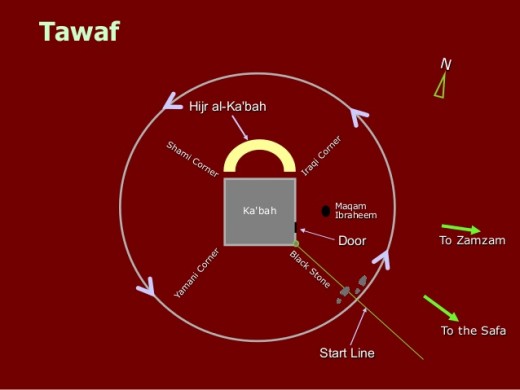
Salah (Prayer) inside the Ka’bah (Hijr) is preferred and is a means of drawing close (to Allaah)

Hijr Ka'bah Makkah Masjid al haram

Making Takbir, then du’aa to Allaah after praying two rak’ah inside the Ka’bah (Hijr) is a Sunnah

Question: Is salat inside the Ka’bah in any way superior to salat outside it, and is it permissible for a person to speak of what he has seen inside the ka’bah?

Answer by The Permanent Committee: Salat inside the Ka’bah is preferred, if it is possible to do so without any inconvenience, difficulty or harm to anyone, as the Prophet (salallaahu ‘alaihi wa sallam) entered it and prayed therein, according to an authentic narration in the Sahihain (Two Sahihs). And it has been reported from him (salallaahu ‘alaihi wa sallam) that he came out one day looking sad, and he said: “Verily, I fear that I may have placed a burden upon my Ummah (i.e. by entering the ka’bah).” [1]

And when ‘A`ishah (radiallaahu ‘anha) asked him about salat in the Ka’bah, he said: “Pray in the Hijr, because it is a part of the House.” [2]

This proves that salat inside the Ka’bah is preferred and is a means of drawing close (to Allaah) and an act of obedience, and in it is great merit.

However, it is not fitting that there should be crowding, or harm, or doing anything which causes difficulty to him or to the people. It is enough for him to pray in the Hijr, because it is a part of the House; and there is no objection to speaking about what he has seen inside the Ka’bah, such as its inscriptions, or what is on its ceiling or the like. There is no objection to a person talking and saying: “I saw such and such and such and such.” There is no sin in that.

The Sunnah, when one enters the Ka’bah, is to pray two rak’ahs and to say “Allaahu Akbar” and invoke Allaah, the Almighty, the All-Powerful with whatever supplications are easy for him at the end of it, especially those which have been reported (from the Prophet, salallaahu ‘alaihi wa sallam) because the Prophet (salallaahu ‘alaihi wa sallam) entered the Ka’bah and prayed therein, then he performed Takbir and supplicated Allaah. All of this has been authentically reported from him (salallaahu ‘alaihi wa sallam).

The Permanent Committee; Fatawa Islamiya, Volume 2

[1] Abu Dawud no. 2029.
[2] Abu Dawud no. 2028; Ahmad 6:92

Surah Al-Qiyamah (075) – The Resurrection – Qari Khalid al-Wassabee Must watch !!

Excellent video – with english subtititles