Book of Marriage – Shaykh ibn Uthaymeen – Dr Saleh as Saleh [Audio|En]

Book of Marriage – 01- Book of Marriage – Shaykh Ibn Al-‘Uthaymeen – Saleh-As-Saleh

Book of Marriage – 02- Forbidden To Marry a Mahram – One in Ihraam – One in ‘Iddaah- – Saleh-As-Saleh

Book of Marriage – 03- Introduction to Marriage – Its Rank and Importance – Saleh-As-Saleh

Book of Marriage – 04- Seeking Advices Before Marriage – Saleh-As-Saleh

Book of Marriage – 05- Marriage Is Half of the Deen – What Does This Mean – Saleh-As-Saleh

Book of Marriage – 06- Advice Concerning Net Relationships – Meeting Future Spouse on the Net – Saleh-As-Saleh

Book of Marriage – 07- Marriage Status When One Spouse Takes Shahaadah – Saleh-As-Saleh

Book of Marriage – 08- Discussion Following Topic of Spouse’s Shahaadah – Saleh-As-Saleh

FAQ – Marriage – Relationships

The Correct Response for Those Who Altered the Religion of Jesus – Ibn Taymiyyah – Dr Saleh as Saleh [Audio Series |En]

Al-Jawab As-Sahih Li-man Baddala Dina Al-Masih
Answering Those Who Altered The Religion Of Jesus Christ (peace be upon him)

Explanation of the classic book of Ibn Taymiyyah rahimahullaah. This book is one of the most important Islamic books which gives right answers about Christianity.

Al-Jawab As-Sahih Li-man Baddala Dina Al-Masih (Answering Those Who Altered the Religion of Jesus Christ) is a comprehensive study in which the author not only refutes the Christians’ allegations about Islam but also raises the contradictions of some Christian beliefs and even refutes their creedal principles. The book gains its originality from the fact that it is one of the strongest compilations ever laid down on its topic.

Through this Shaikhul-Islam Ibn Taimiyah responds to a letter from Cyprus from ‘Paul, The Monk; the Bishop of Sayda’, The letter was entitles ‘The Logically proven statement that expresses the right conviction and sound opinion’. The letter is comprised of all the excuses and pleas that Christian scholars and pious Christians use to defend their religion, in the past as well as in recent times, which are based on many rational and logical arguments. Upon that, Ibn Taimiyah stood up to confront and expose the falseness and corruption of such allegations, thereby, clarifying right from wrong in order that those with sound judgment can make use of it. He also aimed at outlining and clarifying the Books, Justice and Wisdom with which Allah sent His Messengers.

15 Mp3 Audio Series.

Part 01 | 02 | 03 | 04 | 05 | 06 | 07 | 08 | 09 | 10 | 11 | 12 | 13 | 14 | 15

CHAPTER ONE:

Their claim that Muhammad (peace be upon him) was not sent to them but to the Arabs of the Pre-Islamic era. It will also contain their claim that the verses of the Qur’an support this very idea as does logical contemplation.

  • Section One: The First Claim Of The Christians
    1. The Claim of the Christians that Muhammad was not sent to them but he was only sent to the Arabs of the Pre-Islamic era.
    2. Their plea that the Book with which Muhammad was sent is not written in their language.
    3. Their saying, “We do not need to follow this Messenger because we were sent other Messengers before him.
  • Section Two: The Refuting The Claims Of The Christians
    1. – Proofs that the Messenger Of Allah was sent to all Mankind
    2. – Some Qur’anic verses that prove the prophethood Of Muhammad
    3. – Refuting the Claim that the Qur’anic verses Contradict Each Other
    4. – Glad tidings about the Coming of Prophets
    5. – The Qur’an was Revealed in Arabic

CHAPTER TWO:

Their claim that Muhammad (peace be upon him) praised their religion (in the Qur’an) to the extent that their religion and practices should motivate them to adhere more to it.

  • Section One: The First Claim Of The Christians

The Christian Claim: Muhammad praised their religion, which they practice, in the Qur’an from the following aspects: (1). Glorifying Christ and his mother. (2). Glorifying the Bible. (3). Praising Synagogues. (4). Glorifying the Disciples, as they are messengers from Allah. (5). All that makes us hold fast to our religion and not follow any other man except Jesus Christ.

  • Section Two: The Refuting The Claims Of The Christians
    1. – Divine and Human Entities United
    2. – The Holy Spirit
    3. – Invented Monasticism
    4. – Misplaced Inference
    5. – Remembering Allah in Monasteries, Synagogues and Mosques
    6. – Praising Jesus Christ and His Followers
    7. – Reasons Why the Christians Deviated
    8. – The Book of Enlightenment

CHAPTER THREE:

Their claim that the prophethood of the early Prophets and their Books, like the Torah, Psalms and the Gospel assert the truth of their beliefs, namely: the Hypostases, trinity, unification and so on. Thus, they should adhere to them, as it is not acceptable for them to desert their beliefs as long as they are not abrogated by a text or annulled by rational deduction.

  • Section One: The Third Claim Of The Christians
  • Section Two: The Refuting The Claims Of The Christians
    1. Distortion of the Torah and The Gospel
    2. Invalidity Of the Comparison of their Books to the Qur’an
    3. Who Speaks Seventy-Two Languages
    4. Changes made in Torah and Gospel
  • Section Three: The Claim Of The Christians Regarding The Prophets Books Supporting Them And Attributing Injustice To The Jews
  • Section Four: Refuting The Christians Claim
  • Sections Five: The Christians Claim That The Qur’an Regards All Religions On An Equal Footing
  • Section Six: Reputing The Christians Claim

CHAPTER FOUR:

It includes their claim that the Trinity is proven according to logic and according to the revealed laws (i.e. the Prophetic traditions and their revealed Books) and that it agrees with the laws of Divinely revealed Books and Prophetic traditions.

  • Section One: The Claim Of The Christians
  • Section Two: The Refuting The Claims Of The Christians
    1. Invalidity of the Three Entities Being One God
    2. Baptizing in the Name of the Father and the Son

CHAPTER FIVE:

Their claim that they are monotheists, justifying their words that imply polytheism, such as the hypostases, through claiming that they resemble the words in the Book of the Muslims which imply personification and incarnation.

  • Section One: The Claim Of The Christians
  • Section Two: The Refuting The Claims Of The Christians
    1. The Christians Claim that the Attributes Serve as Names
    2. Their Claim Regarding Incarnation and Immanentism
    3. Their Claim Regarding God’s Appearance in Jesus
    4. The Difference Between Similarity and being Identical
    5. Christians Claim regarding the Three Hypostases
    6. The Invalidity of their Claim that they are Monotheists
    7. Among Their Scholars: Al-Hasan bin Ayyub

CHAPTER SIX:

Their claim that ‘Isa (Jesus, peace be upon him) was sent after Musa (Moses, peace be upon him) with a perfect religion (i.e. Christianity) and thus, there is no need for another religion (i.e. Islam) which aims at the same purposes and goals which have already been achieved. Thus, any religion after that of ‘Isa is invalid and therefore not acceptable.

  • Section One: The Claim Of The Christians
  • Section Two: The Refuting The Claims Of The Christians
  • Section Three: The Prophets Prophesied The Advent Of Muhammad
  • The Scriptures’ Witness For Muhammad (peace be upon him)
    • Sixteen Prophecies

You can read the PDF book @ archive.org Here

Related Links:

Understanding Worship (Fiqh ul-‘Ibadah) – Shaykh Uthaymeen | Dr Saleh as Saleh

Click the Below Link to Read or Download the PDF

Audio

Contents of this e-Book

Introduction by Dr. Saleh as-Saleh rahimahullaah

Questions & Answers

The Tawheed and Belief
The Purpose Behind The Creation Of Mankind

Question 1: What is the purpose of creating mankind?

Question 2: Is there a meaning for ‘Ibaadah (worship) such that it is possible for us to know of? Does it have a general and a specific meaning?

Question 3: Would those specifically choosing al-’Ibaadah al-Kawniyyah and excluding al-’Ibaadah ash-Shar’iyya, be rewarded?

The First Obligation upon the Slaves [of Allaah]

Question 4: What is the first obligation upon the creation?

The Relation of the Shaadah with the Types of Tawheed.

Question 5: But does the Shahaadah Comprise the Types of Tawheed?

The Meaning of Tawheed.

Question 6: What is the Meaning Tawheed?
Question 7: In General, What are the Types of Tawheed ?
Question 8: What are the Types of Tawheed? Please Clarify and Give Examples.

The Importance of Tawheed Al-Asmaa’ was Sifaat

Question 9: We would like some more details about this type of Tawheed i.e. Tawheed al-Asmaa’ was Sifaat.

The obligations Towards Each Type Tawheed

Question 10: What is obligatory upon us towards each of the types alone?

The Danger in Worshipping other than Allaah

Question 11: What is the ruling on directing any kind of worship to other than Allaah, The One free of all imperfections?

The Meaning of Ash-Shahaadataan

Question 12: What is the meaning of Ash-Shahaadataan: La Ilaaha Illallaah and Muhammad Rasoolulaah.

The Meaning of The Shahaadah: Muhammad is the Messenger of Allaah.

Question 13: You explained the meaning of the Shahaadah: La Ilaaha Illallaah. So, what is the meaning of the Shahaadha: Muhammad Rasoolullaah

The Difference Between the Profession with the Tongue and the Profession with the Heart

Question 14: However, what is the difference between the profession of the testimony of faith with the tongue and its profession with the heart? Is it obligatory to profess both?

A Doubt and its Rebuttle
Question 15: What lead to this question is that nowadays there is a group of people when they are called to worship Allaah they say: “Allaah is the Rabb of the hearts.” We would like also that you comment on this response?

The Meaning of Eemaan
Question 16: Briefly, what is the meaning of Eemaan [faith] and its pillars.

The Relation of Eemaan to the Hadeeth of Jibreel (alaihissalam)
Question 17: Is the aforementioned meaning the same as that which came in Prophet’s (alaihissalam) answer to Jibreel’s question about Eemaan?

Question 18: If a person is asked about Eemaan, should he say that it means the attestation that obligates acceptance and submission, or should he say that it means to believe in Allaah, His Angels, His Books, and His Messengers as the Messenger صَلَّى اللّٰهُ عَلَيْهِ وَسَلَّم explained?

The Meaning of Eemaan And Its Pillars
Question 19: We would like to expound on the meaning of Eemaan and also know of its pillars?

How to Respond to the Dahrees
Question 20: We know that the Dahrees, who are many nowadays and who are considered from the intellect because they think and infer, are agreed upon the belief in the non-existence of Allaah, The Mighty and Majestic. So, how to respond to people like this?

The Eemaan (Belief) and its Pillars
Question 21: What are the Pillars of Eemaan?

The Belief in the Angels
Question 22: Are there other things related to the belief in the angels?

The Belief in the Books
Question 23: What about the Third Pillar of Eemaan?

The Belief in the Messengers
Question 24: What do you say regarding the Fourth Pillar of Eemaan–Belief in the Messengers?

The Belief in the Last Day
Question 25: How can the belief in the Last Day be?

The Belief in al-Qadar
Question 26: What about the pillar of belief in al-Qadar.

The Increase and Decrease of Eemaan (Faith)

Question 27: Does Eemaan increase or decrease? What are the things that make it increase or decrease?

Question 28: There are those of the opinion that Eemaan neither increases nor decreases, and that sin wipes out Eemaan entirely, and that the person who commits it becomes a Kaafir! How to respond to those people?

Denying that Eemaan Increases and Decreases

Question 29: But what is the Islamic Ruling vis-à-vis the unattestation to the increase and decrease of faith?

The Manner of Judging by other than that which Allaah has revealed

Question 30: What is the manner of judging by other than what Allaah has revealed?

The Difference Between the Thaalim (Transgressor) and Faasiq (Disobedient Sinner`)

Question 31: You mentioned, however, about the Faasiq and the Thaalim things that are close, or possibly intermixed. And it is that the Thaalim rules by that which Allaah has not sent down whilst knowing that Allaah’s Judgment is better. But that he intends to gratify his thirst for revenge from someone. So he applies a judgment on someone that Allaah has not approved of. And then the Faasiq rules while knowing the Judgment of Allaah and that it is the right Judgment, but because of his own interest or lowly desire, or due to a certain bias to fulfill the desires of someone else, he rules by that which Allaah has not sent down. So what is the difference between the two?

SOOTHSAYING (Fortune-Telling)
Question 32: What is Soothsaying?

The Ruling Regarding Those Who go to Diviners
Question 33: It would be nice if we could know of the status of people who go to fortune-tellers.

Astrology and Its Ruling
Question 34: What is astrology (At-Tanjeem) and it’s ruling?

The Relation of Astrology with Fortune-Telling
Question 36: Is there a connection between astrology and divination?

Which One is More Dangerous?
Question 37: Which one, however, is more dangerous on the Muslims?

The Reality of Magic

Question 38: You mentioned in your talk that astrology is a form of magic, so what is magic?

Question 39: What is meant by subtleness in your saying, “Magic is everything that is subtle and whose cause is hidden”?

Question 40: What is the legal judgment regarding magic and its learning?

Is There a Reality to Magic?

Question 41: Is magic a true thing, or it is just conveying doubts, and fantasies to the people?

The Relation of Divination with Magic

Question 42: You mentioned divination and you defined the fortune-teller as well as the magician. Is there, however, a connection between divination and magic?

Was the Prophet (صَلَّى اللّٰهُ عَلَيْهِ وَسَلَّم ) Bewitched?

Question 43: It was reported from the Prophet (صَلَّى اللّٰهُ عَلَيْهِ وَسَلَّم) that he was bewitched. So we would like you to talk about the means by which he (صَلَّى اللّٰهُ عَلَيْهِ وَسَلَّم) was bewitched. Furthermore, is it contradictory to the status of Prophethood that bewitchment of the Prophet (صَلَّى اللّٰهُ عَلَيْهِ وَسَلَّم) took place?

The Reality of Ilhaad?

Question 44: What is Ilhaad–concerning Allaah’s Names and Attributes?

Types of Shirk

Question 45: Shall we then change [the topic] from knowledge concerning the types of Ilhaad to that regarding knowledge of the types of Shirk?

Defining the Types of Shirk

Question 46: We knew the types of shirk, but is there a specific definition for each type of it?

Is the relinquishing of worship called Shirk?

Question 47: It was mentioned, as in the narration reported by Saheeh Muslim, the saying of the Prophet (صَلَّى اللّٰهُ عَلَيْهِ وَسَلَّم): “Verily between man and between Shirk and Kufr (unbelief) is the abandonment of prayers.” –Is the abandonment of worship considered Shirk?

The Reality of the Deen of Islaam?

Question 48: What is the Religion of Islaam?

Question 49: So should we then understand that we have a general and a particular definition of Islaam?

The Taaghut and Its Types?

Question 50: What is the meaning of at-Taaghut and its derivations?

The Creed of the Muslims Regarding ‘Eesaa (Jesus alaihissalam)?

Question 51: What is the creed of the Muslims with regard to ‘Eesaa, son of Maryam? Also what is the ruling as to the saying that he was killed and crucified.

The Division of the Ummah

Question 52: What is the extent of the split up within the Ummah after the death of its Prophet Muhammad (صَلَّى اللّٰهُ عَلَيْهِ وَسَلَّم)?

The Characteristics of the Saved Group

Question 53: What is the most distinguished qualities of the saved group?

Question 54: Is it necessary that the characteristics in the four matters: ‘Aqeedah, worship, manners and transaction be totally or completely present without diminution? And in case anything of it is gets diminished, does this take the person out of the folds of the saved group or it doesn’t ?

Question 55: Is there something you want to add concerning the qualities of the saved sect?

The Correct and False Tawassul

Question 56: What is the correct and false Tawassul ?

A Fifth Kind of Tawassul

Question 57: Are there any other types of Tawassul in addition to the four that you have mentioned?

The Incorrect and Futile Tawassul and its Types.

Question 58: Having known the Correct Tawassul and its Types, then it is inevitable for us to know the Incorrect Tawassul and its Types.

The Affirmed and Annulled Intercession.
Question 59: What is the affirmed and nullified intercession?

The Creed of The Salaf with Regard to the Noble Qur’aan

Question 60: What is the creed of the Righteous Predecessors regarding the Noble Qur’aan?

The Most Prominent Rulings Regarding The Qur’anic Recital

Question 61: What is the most distinguished ruling of Qur’anic Recital?

The Recitation of Soorat al-Faatihah For the Prophet’s (صَلَّى اللّٰهُ عَلَيْهِ وَسَلَّم)Soul

Question 62: As regard those who bequeath that the Faatihah be recited on behalf of the Prophet’s soul, or on his behalf by the Prophet’s grave?

Appendix
Definition of Taaghut
Every Kufr is Taaghut, but not every Taaghut is Kufr
Very Important to Remember


Al-Wasiyyah As-Sughrah – The Concise Admonition (Legacy) – Ibn Taymiyah – Dr Saleh as Saleh [Audio|En]

In this series, Dr. Saleh As-Saleh explains Al-Wasiyyah As-Sughrah (Concise Admonition) authored by Shaikh Al-Islam Ibn Taymeyyah. Dr. Saleh As-Saleh handles some issues such as: taqwa, wisdoms behind creation of sins, repentance, resemblance to ways of Jews and Christians, sins and their consequences, trials and calamities expiating sins, best actions after the obligatory ones, remembrance of Allah and du’a and wisdoms of delay in response.

The following benefits are extracted from these audio series:

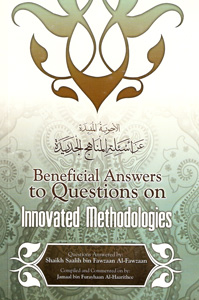
Beneficial Answers To Questions On Innovated Methodologies – Shaykh Saalih Fawzaan – Abu Muhammad al Maghribee [Audio|En]

Beneficial Answers To Questions On Innovated Methodologies - Shaykh Salih FawzaanThis is the weekly Wednesday evening class on the book Al Ajwibah Al Mufeedah ‘An As-ilat Al Manaahij Al Jadeedah (Beneficial Answers to Questions on Innovated Methodologies) by our noble Sheikh Saaleh al-Fawzaan, hafidhahullah.

You may download a copy of the original Arabic text here: الأجوبة المفيدة عن أسئلة المناهج الجديدة

As with all of our classes at Masjid Tawheed in Stone Mountain, GA, we encourage you to join us.

If you are not able to attend in person, please feel free to listen in via our Spreaker channel or our telelink line at 712-432-2856.

About the Book: 

Author: Shaikh Saalih Al-Fawzaan; Compiled by Jamaal bin Furayhaan Al-Haarithee
Publisher: Al-Ibaanah Book Publishing (01-May-04)
Pages: 208 Binding: Paperback

This is a translation of the tremendous book “Al-Ajwibatul-Mufeedah ‘an As’ilatil-Manaahij al-Jadeedah”, which is a compilation of questions presented to Shaykh Saalih al-Fawzaan and his responses to them. The source used for this was the 1997 second edition, published by Daar as-Salaf of Riyadh, Saudi Arabia.

From the topics covered in the book are: The Definition of the Salafee Manhaj, Obedience to the Rulers, Warning against Innovators, Exposition of Deviant Groups, Refutations of Innovated Practices such as Plays and Anaasheed (songs in the name of Islam), the Rulings on Groups and Parties, and Advice to the Students of Knowledge.

Altogether, this combination of a scholar’s guidance and wisdom with a student of knowledge’s research and investigation makes for an incredible and invaluable resource for Muslims everywhere to benefit from.

Beneficial Answers on Innovated Methodologies – 01 – 20140319
Beneficial Answers on Innovated Methodologies – 02 – 20140326
Beneficial Answers on Innovated Methodologies – 03 – 20140402
Beneficial Answers on Innovated Methodologies – 04 – 20140409
Beneficial Answers on Innovated Methodologies – 05 – 20140416
Beneficial Answers on Innovated Methodologies – 06 – 20140423
Beneficial Answers on Innovated Methodologies – 07 – 20140430
Beneficial Answers on Innovated Methodologies – 08 – 20140507
Beneficial Answers on Innovated Methodologies – 09 – 20140514
Beneficial Answers on Innovated Methodologies – 10 – 20140521
Beneficial Answers on Innovated Methodologies – 11 – 20140528
Beneficial Answers on Innovated Methodologies – 12 – 20140820
Beneficial Answers on Innovated Methodologies – 13 – 20140827
Beneficial Answers on Innovated Methodologies – 14 – 20140903
Beneficial Answers on Innovated Methodologies – 15 – 20140910

Question no. 32
Beneficial Answers on Innovated Methodologies – 16 – 20140917

Question no. 35
Beneficial Answers on Innovated Methodologies – 17 – 20140924

Question no. 51
Beneficial Answers on Innovated Methodologies – 18 – 20141022 Q51

Question no. 53
Beneficial Answers on Innovated Methodologies – 19 – 20141029 Q53

Question no. 55
Beneficial Answers on Innovated Methodologies – 20 – 20141105 Q55

Question 55, Footnote 153.
Beneficial Answers on Innovated Methodologies – 21 – 20141112

We continue with Question no. 60: How should we advise the rulers?
Beneficial Answers on Innovated Methodologies – 22 – 20141119

We continue with Question no. 61: Does Salafiyyah divide the Muslims?
Beneficial Answers on Innovated Methodologies – 23 – 20141126

We continue with the Question no. 62: What is Salafiyyah?
Beneficial Answers on Innovated Methodologies – 24 – 20141203

We start with Question no. 65: Is the one who performs an innovated action without knowing that it is an innovation, rewarded for it?
Beneficial Answers on Innovated Methodologies – 25 – 20141210

We continue with Question no. 67: What is the ruling of the one who loves a caller to Islam and doesn’t want him to be refuted?
Beneficial Answers on Innovated Methodologies – 26 – 20141217

We continue with Question no. 71: There are so many groups amongst the Muslims; which one is upon the truth and how can we tell?
Beneficial Answers on Innovated Methodologies – 27 – 20141231

We continue with the Question no. 74: What is the ruling on the one who speaks ill of the scholars?
Beneficial Answers on Innovated Methodologies – 28 – 20150114

We continue with Question no. 75: What is the ruling on taking disbelievers as allies?
Beneficial Answers on Innovated Methodologies – 29 – 20150121

We continue with the Question no. 78: What is the shaykh’s advice to those who accuse him of not outwardly repelling the faults of the rulers?
Beneficial Answers on Innovated Methodologies – 30 – 20150128

We continue with Question no. 85: What are the means that lead to unity?
Beneficial Answers on Innovated Methodologies – 31 – 20150204

We continue with Question no. 85: What are the actions that will lead to the unity of Muslims?
Beneficial Answers on Innovated Methodologies – 32 – 20150304

We cover Question no. 93: Is it possible for Muslims to be united even though they have different methodologies and creeds?
Beneficial Answers on Innovated Methodologies – 33 – 20150311

We cover Question no. 94: Is it possible for Muslims to be united even though they are split into different parties?
Beneficial Answers on Innovated Methodologies – 34 – 20150318

We cover Question no. 95: What is the ruling on suicide bombings?
Beneficial Answers on Innovated Methodologies – 35 – 20150325

We continue with Question no. 98: Are “protests” part of calling to Islam?
Beneficial Answers on Innovated Methodologies – 36 – 20150401

We continue with Question 99: What is your opinion of protests and demonstrations?
Beneficial Answers on Innovated Methodologies – 37 – 20150408

We continue with Question no. 102: Why did the Salaf warn against the “Qussaas” (the storytellers)?
Beneficial Answers on Innovated Methodologies – 38 – 20150415

We begin with Question no. 103: Where did these so-called Islamic groups come from?
Beneficial Answers on Innovated Methodologies – 39 – 20150422

We begin with Question no. 105: Who is the Jama’at at-Tableegh and what is their manhaj?
Beneficial Answers on Innovated Methodologies – 40 – 20150506

We continue with Question no. 108: Is there any advice that will serve as a guideline for those who have been deceived by the deviant groups?
Beneficial Answers on Innovated Methodologies – 41 – 20150513

These are ongoing series, check the below link for updates

Sourcehttp://followthesalaf.com/home/?tag=Beneficial+Answers+on+Innovated+Methodologies

Important Lessons for the Ummah – Shaykh Ibn Baaz – Dr. Saleh as Saleh [Audio|En]

Comprehensive, basic, summarized, necessary reference book by Shaykh bin Baaz (rahimahullaah)

Audio Lessons:

An-Nawawi 40 Hadeeth – Shaykh Uthaymeen | Dr. Saleh as Saleh [Audio|En]

Classical work of Imaam An Nawawi rahimahullaah.

The explanation is based upon that of Shaykh Ibn Al-‘Uthaymeen rahimahullah

The following posts are extracted from these audio series

Explanation of The Four Rules (Al-Qawaa’id-ul-Arba’ah) – Dr. Saleh as Saleh [Audio Series|En]

Book of Shaykh Muhammad bin AbdulWahab At-Tamimi rahimahullaah
Audio Series based on the explanation of Shaykh Uthaymeen rahimahullah

The treatise Al-Qawaa’id-ul-‘Arba’ah” [The Four Rules regarding Shirk] is well known throughout the Muslim world and needs no introduction. It is a basic discussion that provides fundamental principles regarding Shirk. Although short in size, it is an extremely valuable source of knowledge and a must–read for all students desiring to further their understanding of Islaam.

Part 01: Listen / Download Mp3 Here (Time 25:49)

In Part 01, Dr. Saleh As-Saleh explains from the Introduction of Author Shaykh Muhammad bin Abdul Wahhaab (rahimahullah): I ask Allaah, the Most Generous, Lord of the Great Throne to befriend you in this world and the Hereafter, and to make you blessed wherever you may be. And (I ask) that He make you from those who when they are given, are thankful; when they are tested, are patient; and when they sin, seek forgiveness (from Allaah). For indeed these three characteristics are the true signs of happiness.

Part 02: Listen / Download Mp3 Here (Time 40:11)

Part 02 Covers The Foundation of Al-Haneefiyyah, The Religion of Ibraaheem

Part 03: Listen / Download Mp3 Here (Time 40:58)

Part 03 Covers – Rule No. 1 and 2 of Four rules regarding Shirk

Part 04: Listen / Download Mp3 Here (Time 1:21:20)

Part 04 Covers – Rule No. 3 and 4 of Four rules regarding Shirk

The following Benefits are extracted from these audio series:

Related Links: 

The Three Fundamental Principles – Dr. Saleh as Saleh [Audio Series|En]

Bismillaah

The Three Fundamental Principles addresses the three questions which the person will be asked in the grave. This is the work of Imaam Muhammad bin Sulaymaan at-Tameemi rahimahullaah. Discussion based upon our Shaykh Ibn ‘Uthaymeen’s rahimahullaah and Shaykh Bin Baaz, rahimahullaah. Discussion also based upon Shaykh Saalih al-Fawzan’s and Shaykh ‘Abdullaah al-Fawzan’s may Allaah preserve them.

You can read the Translated Book at the below Links:

Audio Lessons by Dr. Saleh as Saleh (rahimahullah)

01 – Introduction To The Three Fundamentals Principles
02 – (1). Acquiring Sure Knowledge – Allaah – Prophet – Deen
03 – (2). Acting Accordingly To It – (3). Calling To It
04 – (4). Patience and Perseverance In the First Three
05 – (1). Allaah Created Us and Provided Sustenance
06 – (2). Worship Allaah Alone – (3) Al-Wala Wal-Bara
07 – The Greatest Matter of All
08 – What is Shirk – Its Types – Its Evil Consequences
09 – Identifying the Three Fundamental Principles
10 – My Lord Is Allaah My Creator and I Worship Him Only
11 – Know Allaah Through His Signs and His Creation
12 – Allaah Commanded Different Types of Worship
13 – (1) Du’a of Request and Du’a of Worship – (2) Fear
14 – (3) Having Hope and Longing for Allaah
15 – (4) Tawakkul – Having Trust and Reliance upon Allaah
16 – (5) Dread – (6) Humility – (7) Awe
17 – (8) Inaabah – Turning to Allaah  with Repentance and Obedience – (9) Isti’aanah Asking For Help
18 – (10) Isti’aadhah Seeking Refuge – (11) Isti’aathah Seeking Aid
19 – (12) Sacrificing
20 – (13) Vows
21 – Second Principle – Knowledge of the Deen
22 – The Pillars of Islam
23 – Meaning of Shahaadah – laa ilaaha illa Allaah
24 – Meaning of Muhammad the Messenger of Allaah
25 – Salaah Prayer – Zakaah Obligatory Charity
26 – Fasting – Hajj – Faith
27 – The Pillars of Faith – Belief in Allah
28 – Nemes and Attributes of Allaah
29 – Belief In the Angels
30 – Belief In the Books
31 – Belief In the Messengers – part 1
32 – Belief In the Messengers – part 2
33 – Belief In the Messengers – part 3
34 – Belief In the Last Day
35 – Belief In the Pre-Decree – The Good and the Bad of It
36 – The Third Matter – Ihsaan
37 – The Hadeeth of Jibreel
38 – Knowing the Prophet – part 1
39 – Knowing the Prophet – part 2
40 – Migration – Hijrah
41 – Resurrection
42 – Messengers and Taaghoots
43 – Tawheed – First and Last

Related Links:

Book Study Resources for “Three Fundamental Principles” 

Believing That Some Have The Choice To Leave Of The Sharee’ah Of Muhammad : Invalidator of Islam

The following is posted from Class 11  –  10 Invalidators of Islam – Shaikh Muhammad ibn Abdul-Wahhab al-Wasabi
The Ninth Invalidator: Believing That Some Have The Choice To Leave Of The Sharee’ah Of Muhammad (Sallallaahu ‘alayhi wa sallam)

Translation Of The Text In Al-Qawl-ul-Mufeed Fee Adillatit Tawheed:

Whosoever believes that some of the people have been given the choice to leave off the Sharee’ah of Muhammad (Sallallaahu ‘alayhi wa sallam), just as al-Khidr was given the choice to go outside the jurisdiction of the Sharee’ah of Moosa (alayhi assalam), then he has disbelieved. That is because every Prophet was sent specifically to his own people, so it is not obligatory for all the people to follow them. As for our Prophet, Muhammad (Sallallaahu ‘alayhi wa sallam), then he was sent for all peoples, so it is not lawful for anyone to oppose him, not to leave off his Sharee’ah.

Allaah the Exalted says,

Say (O Muhammad Sallallaahu ‘alayhi wa sallam): “O mankind! Verily, I am sent to you all as the Messenger of Allâh (Al-A’raf 7:158)

And Allaah the Glorified and Exalted says,

And We have sent you (O Muhammad Sallallaahu ‘alayhi wa sallam) not but as a mercy for the ‘Alamîn (mankind, jinns and all that exists). (Al-Anbiya 21:107)

And the statement of Allaah,

Blessed be He Who sent down the criterion (of right and wrong, i.e. this Qur’ân) to His slave (Muhammad Sallallaahu ‘alayhi wa sallam) that he may be a warner to the ‘Alamîn (mankind and jinns). (Al-Furqan 25:1)

And Allaah the Exalted says,

And We have not sent you (O Muhammad Sallallaahu ‘alayhi wa sallam) except as a giver of glad tidings and a warner to all mankind, but most of men know not. (Saba’ 34:28)

From Jaabir Ibn ‘Abdullaah al-Ansaaree (radiyallaahu ‘anhumaa), that the Prophet (Sallallaahu ‘alayhi wa sallam) said,

“I was given five things that no one before me was given: [i] I was aided by causing intimidation for a months time; [ii] the entire earth was made a masjid (place of prostration) and pure for me, so regardless of where a man from my Ummah is, whenever the Prayer reaches him, he may pray; [iii] and the spoils of war have been made lawful for me and they were not made lawful for anyone before me; [iv] and I have been given the intercession (shafaa’ah); [v] and every Prophet was sent specifically to his people and I have been sent to all of mankind.”

(al-Bukhaaree no. 328 & Muslim no. 521)

And Allaah the Exalted says,

Truly, the religion with Allâh is Islâm. (Aali Imran 3:19)

And Allaah the Exalted says,

And whoever seeks a religion other than Islâm, it will never be accepted of him, and in the Hereafter he will be one of the losers. (Aali Imran 3:85)

And Allaah the Exalted says,

This day, I have perfected your religion for you, completed My Favour upon you, and have chosen for you Islâm as your religion. (Al-Ma’idah 5:3)

And Allaah the Glorified and Exalted says,

Do they seek other than the religion of Allâh (the true Islâmic Monotheism worshipping none but Allâh Alone), while to Him submitted all creatures in the heavens and the earth, willingly or unwillingly. And to Him shall they all be returned. (Aali Imran 3:83)

And there occurs in a hadeeth,

“By Allaah if Moosaa was living, he would have no choice but to follow me”

(Da’eef – Shaykh Muqbil & Hasan by al-Albaanee al Irwaa’ no. 1589 & mentioned in Ibn Katheer of this verse)

Explanation Of The Text By Shaykh Al-Wasaabee:

Shaykh Ahmed (hafidhahullaah) mentioned to us that this ninth invalidator has a connection to the third invalidator, which is not stating the Christians and the Jews as disbelievers as Allaah has mentioned them as being disbelievers. The Prophet (Sallallaahu ‘alayhi wa sallam) has certain things that are specific to him, no other Prophet were given these things; one of these is that Muhammad (Sallallaahu ‘alayhi wa sallam) was sent for all the people. This is unlike the other Prophets who were sent specifically for their people and this is mentioned directly in the text from the Hadith from Jaabir Ibn ‘Abdullaah al- Ansaaree (radiyAllaahu ‘anhu).

The Shaykh then mentioned to us that Allaah (subhaana wa ta’laa) has completed the revelation with Muhammad (Sallallaahu ‘alayhi wa sallam) and that there remains no deen after Muhammad except Islaam and whoever holds onto anything other than Islaam then it will not be accepted from him. Also, his works will be refuted and not accepted. Whoever, from the people who have had news of this deen reach them, and verily the news of this deen of Islaam and Muhammad (Sallallaahu ‘alayhi wa sallam) has reached all the people, and they do not believe in it they will be the people of the fire.

The Shaykh also mentioned, concerning the verse in Sooratul Ma’idah:

This day, I have perfected your religion for you, completed My Favour upon you, and have chosen for you Islâm as your religion. (Al-Ma’idah 5:3)

That it was revealed in the farewell pilgrimage of the Prophet (Sallallaahu ‘alayhi wa sallam) and that after he (Sallallaahu ‘alayhi wa sallam) returned from the hajj to Medina he lived for a few days. Shaykh Ahmed mentioned that this ayah is a great verse and that it explains the greatness of Islaam until:

Narrated Tariq bin Shihab:

A Jew said to ‘Umar, “O Chief of the Believers, if this verse: ‘This day I have perfected your religion for you, completed My favors upon you, and have chosen for you, Islam as your religion.’ (5.3) had been revealed upon us, we would have taken that day as an ‘Id (festival) day.” ‘Umar said, “I know definitely on what day this Verse was revealed; it was revealed on the day of ‘Arafat, on a Friday.” (al-Bukhaaree no. 6800)

The Shaykh then mentioned to us that the Muslims to do not take their celebrations and their ‘Eid from themselves. The Muslims have 3 ‘Eids, ‘Eid of fitr and the ‘Eid of adha, which are the two ‘Eids that come yearly and the third ‘Eid which is yawmul Jum’ah. The Muslims do not take their ‘Eids like the Jews and Christians, who take their ‘Eids at every single matter, like for example the celebration of the birthday.

Shaykh Ahmed mentioned that anyone who takes a deen other than Islaam it will not be accepted from them and that there is no excuse that we enter is Islaam and that we don’t pray, hear and obey. Our return is to Allaah (subhaana wa ta’laa) using the explanation of the verse,

Do they seek other than the religion of Allâh (the true Islâmic Monotheism worshipping none but Allâh Alone), while to Him submitted all creatures in the heavens and the earth, willingly or unwillingly. And to Him shall they all be returned. (Aali Imran 3:83)

Our deen, the deen of Islaam, has abrogated all of the deens, and that there remains no other deen.

The Shaykh mentioned to us the statement of Allaah,

And We have sent down to you (O Muhammad Sallallaahu ‘alayhi wa sallam) the Book (this Qur’ân) in truth, confirming the Scripture that came before it and Mohayminan (trustworthy in highness and a witness) over it (old Scriptures). (Al-Ma’idah 5:48)

Aspects of the Days of Ignorance – Imaam Muhammad bin ‘Abdil-Wahhaab (Translated Text)

AUTHOR: Imaam Muhammad bin ‘Abdil-Wahhaab [Died 1206H]
TRANSLATED: Al-Ibaanah Book Publishing
PRODUCED BY: Al-Ibaanah.com

About the Book:

This is a translation of the classical treatise of Imaam Muhammad bin ‘Abdil-Wahhaab “Masaa’il-ul-Jaahiliyyah” (Aspects of the Days of Ignorance), which is a list of 128 points – each point representing one aspect of belief or practice that the people of the Days of Ignorance were upon, which Islaam came to oppose. The source used for this translation can be found on sahab.org.

The original Arabic text of the treatise is included within this translation so as to make this e-book a comprehensive reference guide and an easily-accessible study guide. Footnotes were added by the translator in order to clarify and provide evidence for some of the points that the author mentioned but didn’t provide proof or an explanation for. In recent times, this treatise has been explained by Shaikh Saalih Al-Fawzaan in several lectures. These lectures were recorded and transcribed and put into a book.

The subject matter of this treatise is one of great importance, for the aspects of the Days of Ignorance have not ceased to be acted upon till this very day. And the people that call towards these misguided beliefs and practices of the Days of Ignorance are many, such as innovators and people of desire. So it is important for the Muslim to learn what the People of the Days of Ignorance were upon in terms of beliefs, actions and practices, so that he may avoid that, since Islaam came to oppose these aspects.

Quotes from the Book: “These are the aspects that the people of the Days of Ignorance – both the people of the Book and the non-People of the Book – were upon, which the Messenger of Allaah opposed. They are from the matters that every Muslim is required to possess knowledge of. This is since with (understanding) one side of the opposite, the goodness of the other side of the opposite can be made apparent. And it is by (making apparent the) opposite of something that matters become clarified. The most important of these aspects (of the Days of Ignorance) and most severe in terms of danger was the absence of faith (Eemaan) in the heart, for what the Messenger of Allaah came with. And if approval for what the people of the Days of Ignorance were upon is further added to this (absence of faith), then the total ruin is achieved, as Allaah says: ‘And those who believe in the falsehood while disbelieving in Allaah, it is they who are the losers.’ [Surah Al-‘Ankaboot: 52]”

[3] They held the acts of opposing the figure of authority and failing to comply with him as being something virtuous. And they saw the acts of hearing and obeying as being humiliating and degrading. So Allaah’s Messenger opposed them and commanded that patience be observed when facing the oppression of the rulers. And he commanded with hearing and obeying them, as well as advising (them). And he spoke extensively in regards to that and he constantly brought it up and repeated it.”

[5] From their greatest principles was that they were deceived by (following) the majority, using that as a proof against the correctness of a matter. And they also used as evidence for declaring the falsehood of something, the fact that it was strange and that its adherents were few. So Allaah prescribed the opposite of that and He clarified this in many places of the Qur’aan.”

[23] They were deluded by the life of this world. So they perceived Allaah’s bestowal of worldly material (on someone), as an indication of He was pleased (with that person), as He says: ‘And they say: We are abundant in wealth and in children. And (because of that) we are not going to be punished.’ [Surah Saba’: 35]”

[Download the Book Here]

Sufficiency in Creed (Lum’at-ul-‘Itiqaad) – Imaam Ibn Qudaamah

AUTHOR: Imaam Ibn Qudaamah Al-Maqdisee [died 620H]
TRANSLATED: Al-Ibaanah Book Publishing
PRODUCED BY: Al-Ibaanah.com

About the Book:

This is a translation of the classic treatise Lum’at-ul-‘Itiqaad (Sufficiency in Creed) of the great Imaam, Abu Muhammad Muwaffaq-ud-Deen Ibn Qudaamah AI-Maqdisee, may Allaah have mercy on him.

In this book, Imaam Ibn Qudaamah presents the Creed of the Salaf as is the custom of the scholars of Ahlus-Sunnah wal-Jamaa’ah in every century — to preserve the authentic Creed by way of writing it down in books and spreading it So this Creed became well known amongst the scholars and studied in the gatherings of knowledge. In fact the treatise continues to be studied and reviewed by students of knowledge throughout the world.

This book was explained in recent times by Imaam Muhammad bin Saalih Al-Uthaimeen and assigned for study by the Board of Educational Institutes in Saudi Arabia. All footnotes and hadeeth verifications were extracted in abridged form from Ashraf bin Abdil-Maqsood’s checking of Imaam Ibn Al-Uthaimeen’s explanation of ‘Sufficiency in Creed’

We ask Allaah to make this treatise a benefit for the students of knowledge to study and acquire understanding of their Religion.

[Download the PDF Book Here]

Read the Book Below:

TABLE OF CONTENTS

1. Introduction
2. The Speech of Allaah
3. The Qur’aan is the Speech of Allaah
4. The Believers will see their Lord on the Day of Judgement
5. The Divine Decree and Ordainment of Allaah
6. Eemaan (Faith) is Speech and Action
7. Faith in Everything that the Messenger informed of
8. Muhammad, the Seal of the Prophets

INTRODUCTION

All praise is due to Allaah, the One praised in every tongue (i.e. language), the One worshipped in every era. There is not a place that is free of His Knowledge nor does one affair preoccupy Him over another. He is far beyond any equals and rivals, as well as being free of any wife or children. His Decree is carried out in all of His servants. No intellect can derive an example of Him with its pondering, nor can any heart attempt to depict Him.

“There is nothing whatsoever like Him (in comparison). And He is the AllHearer, the All-Seer.” [Surah Ash-Shoora (42): 11]

To Him belong the best of Names and the most honorable of Attributes.

“The Most Gracious (Allaah) rose over the Throne (in a manner that suits His majesty). To Him belongs all that is in the heavens and all that is on the earth, and all that is between them, and all that is under the soil. And if you speak aloud, then verily, He knows the secret and that which is yet more hidden. Allaah! None has the right to be worshipped except Him. To Him belong the best of Names.” [Surah TaHa (20): 5-8]

His knowledge encompasses everything. He subjugates all creatures by His Honor and Rule. And His knowledge and mercy engulf everything.

“He (Allaah) knows what happens to them (His creatures) in this world, and what will happen to them (in the Hereafter) but they will never encompass anything of His knowledge.” [Surah TaHa (20): 110]

He is described by what He has attributed to Himself in His Magnificent Book and upon the tongue of His honorable Prophet.

We are obligated to believe in and to welcome with submission and acceptance everything that is mentioned in the Qur’aan or that is authentically reported on the Prophet (sallAllaahu ‘alayhi wa sallam) concerning Allaah’s Attributes. And we must abandon opposing it (which is done) by radd (rejection), ta’weel (distortive misinterpretation), tashbeeh (comparison) and tamtheel (representation). As for what appears unclear from that, then we are obligated to affirm its wording and not oppose it’s (literal) meaning. We are to return the precise knowledge of it to the One who stated it and we entrust it upon the one who transmitted it, following the example of the ones who are deeply endowed with knowledge, those whom Allaah has praised in His manifest Book, saying:

“And those who are firmly grounded with knowledge say: ‘We believe in it (the Qur’aan); the whole of it (clear and unclear verses) is from our Lord.’” [Surah Aali ‘Imraan (3): 7]

And He says, dispraising the one who seeks the ta’weel (hidden meaning) of the unclear verses of His revelation.

“As for those in whose hearts there is deviation, they follow that which is not entirely clear thereof, seeking fitnah (mischief) and seeking for its ta’weel (hidden meanings), but no one knows its hidden meanings except Allaah.” [Surah Aali ‘Imraan (3): 7]

Thus Allah has placed the aspect of seeking after the hidden meanings (ta’weel) as a sign of deviation. And He has placed it at the same level of seeking after mischief, in the dispraise of it. Then He placed a barrier between them and that which they aspire and He cuts off their ambitions from what they seek after, by saying:

“But no one knows its hidden meanings except Allaah.” [Surah Aali ‘Imraan (3): 7]

Concerning the hadeeths: “Verily, Allaah descends to the lowest heaven” and “Verily, Allaah will be seen on the Day of Judgement” and what is similar to these ahaadeeth, Imaam Abu ‘Abdillaah Ahmad bin Hanbal (rahimahullaah) said:

“We believe in them and we attest to their verity, without saying how and without ascribing a (fixed) meaning for them. Nor do we reject any part from them. We know that whatever the Messenger came with is the truth. We do not reject what Allaah’s Messenger came with, nor do we describe Allaah with more than He has described Himself, without limits.

Allaah says: ‘There is nothing whatsoever like Him (in comparison). And He is the All-Hearer, the All-Seer.’ We say as He has said. We describe Him with what He has described Himself and we do not transgress that. The description of those who (attempt to) describe Him, cannot grasp Him. We believe in the Qur’aan, all of it, its clear verses as well as its unclear verses. We do not reject any of His Attributes due to a discomfort (that we may perceive towards it). We do not transgress the Qur’aan and the Hadeeth. And we have no knowledge of how to understand them, except through the affirmations of the Messenger and the confirmation of the Qur’aan.” Imaam Abu ‘Abdillaah Muhammad bin Idrees Ash-Shaafi’ee, may Allaah be pleased with him, said: “I believe in Allaah and in what has been reported concerning Allaah, upon what was intended by Allaah. And I believe in the Messenger of Allaah and in what has been reported concerning the Messenger of Allaah, upon what was intended by the Messenger of Allaah.”

This is the way that the scholars of the past and present have followed, may Allaah be pleased with them. They all unanimously agreed on acknowledging, accepting, and affirming what has been mentioned in the Book of Allaah and the Sunnah of His Messenger (sallAllaahu ‘alayhi wa sallam) concerning the Attributes, without turning towards the use of ta’weel.

We have been commanded to follow their way (the Prophet and his Companions) and to be guided by their example. And we have been warned of the newly invented matters and we have been informed that they are from among the things that lead astray. The Prophet (sallAllaahu ‘alayhi wa sallam) said: “Stick to my Sunnah and the Sunnah of the rightly-guided Khaleefahs (who will come) after me. Bite onto it (i.e. the Sunnah) with your molar teeth and beware of newly invented matters.

For indeed, every newly invented matter is an innovation and every innovation is a misguidance.” [1]

‘Abdullaah bin Mas’ood (radyAllaahu ‘anhu) said: “Follow (the Sunnah) and do not innovate! For you have been sufficed.” [2]

‘Umar bin ‘Abd-il-‘Azeez (rahimahullaah) said something with the meaning:

“Stop where the people have stopped! For, indeed, they stopped upon receiving knowledge. The clear evidences would suffice them and they were the strongest at manifesting it. If there were any addition (to the Religion), they would be most likely to have done it (first). So if you say: it was introduced after them, then no one introduces into it except for he who opposes their guidance and desires other than their example. They have described from it what was enough and they have spoken concerning it what has sufficed. What is above them is excessiveness. And what is below them is inadequacy. Some people have fallen short of them and so they have drawn away. And others have transgressed them and so they became extreme. But indeed, they were between these two, upon a straight guidance.”

Abu ‘Amr Al-Awzaa’ee (rahimahullaah) said: “Stick to the narrations of those who came before you (man salafa), even if the people reject you. And beware of the opinions of men, even if they beautify them for you with their speech.”

Muhammad bin ‘Abd-ir-Rahmaan Al-Adarmee (rahimahullaah) said to a man who was speaking of an innovation and calling the people towards it:

“Did the Messenger of Allaah (sallAllaahu ‘alayhi wa sallam), Abu Bakr, ‘Umar, ‘Uthmaan and ‘Alee have knowledge of it or did they not have knowledge of it?” He said: “They did not have knowledge of it.” He said: “So something which they had no knowledge of, you know!?!” The man said: “Then I say that they did have knowledge of it!” He said: “Was it sufficient for them that they not speak about it nor call the people towards it, or was it not sufficient for them?” The man said: “Of course it was sufficient for them.” He said: “So something which was sufficient for the Messenger of Allaah (sallAllaahu ‘alayhi wa sallam) and his Khaleefahs is not sufficient for you!?!” So the man refrained (from his call) and the Khaleefah, who was present there, said: “May Allaah not suffice the one who is not satisfied by what they found sufficient.”

Similarly, whoever does not feel content with what was sufficient for the Messenger of Allaah (sallAllaahu ‘alayhi wa sallam), his Companions, those who followed them in righteousness, the Imaams that came after them and those deeply endowed with knowledge, regarding reciting the verses on (Allaah’s) Attributes, reading the reports about them and leaving them the way they came (i.e. were reported), then may Allaah not suffice him.

Among what has been revealed in the verses concerning Allaah’s Attributes, is:

“And the Face of your Lord, full of Majesty and Honor, will remain forever.” [Surah Ar-Rahmaan (55): 27]

And His saying: “Nay, both His Hands are widely outstretched.” [Surah AlMaa’idah (5): 64]

His statement in which He informs us that ‘Eesaa bin Maryam said:

“You know what is in my inner-self, though I do not know what is in Your Self.” [Surah Al-Maa’idah (5): 116]

His statement: “And your Lord comes…” [Surah Al-Fajr (89): 22]

His saying:

“Do they then wait for anything other than that Allaah should come to them.” [Surah Al-Baqarah (2): 210]

His statement:

“Allaah is pleased with them and they are pleased with Him.” [Surah Al-Maa’idah (5): 119]

His saying:

“Allaah will bring a people whom He will love and they will love Him.” [Surah AlMaa’idah (5): 54]

His statement concerning the disbelievers:

“And the Anger of Allaah is upon them.” [Surah Al-Fath (48): 6]

His statement:

“That is because they followed that which discontented Allaah…” [Surah Muhammad (47): 28]

And His saying:

“But Allaah disliked their being sent forth.” [Surah At-Tawbah (9): 46]

From the Sunnah is the statement of the Prophet (sallAllaahu ‘alayhi wa sallam):

“Our Lord, may He be Blessed and Exalted, descends to the lowest heaven every night.” [3]

His (sallAllaahu ‘alayhi wa sallam) statement:

“Your Lord is amazed by the youth who does not possess childish manners.” [4]

And his (sallAllaahu ‘alayhi wa sallam) saying:

“Allaah laughs at two men – one of whom kills the other, then they both enter Paradise.” [5]

We believe in this and what is similar to it, from that which has an authentic chain and reliable reporters. We do not reject it nor do we negate it. Nor do we change its meaning with something that contradicts what is literally apparent from it. We do not compare it to the attributes of the creation nor by (using) the naming schemes of the innovators. And we know that Allaah, Glorified and Exalted, has no equal or comparison.

“There is nothing whatsoever like Him (in comparison). And He is the AllHearer, the All-Seer.” [Surah Ash-Shoora (42): 11]

Everything that is imagined by the intellect or pondered in one’s thoughts, then Allaah is contrary to that. Another example is His saying:

So Allaah revealed:

“But they give preference to others over themselves, even though they had a need for it.” [Surah Al-Hashr (59): 9]

“The Most Merciful rose over the Throne.” [Surah TaHa (20): 5]

And His statement:

“Do you feel secure that He, who is above the heavens…” [Surah Al-Mulk (67): 16]

And the statement of the Prophet (sallAllaahu ‘alayhi wa sallam):

“Our Lord, Allaah, who is above the heavens! Sanctified be your Name.” [6]

And his (sallAllaahu ‘alayhi wa sallam) saying to the slave girl: “Where is Allaah?” She said: “Above the heavens.” So he said: “Free her, for indeed, she is a believer.” Maalik bin Anas, Muslim and other scholars have reported this hadeeth.

The Prophet (sallAllaahu ‘alayhi wa sallam) said to Husayn (bin ‘Imraan): “How many gods do you worship?” He said: “Seven. Six in the earth and one above the heavens.” He (sallAllaahu ‘alayhi wa sallam) said “Who is it that you hope in and fear (most)?” He said: “The One that is above the heavens.” He said: “Then abandon the six and worship the One who is above the heavens, and I will teach you two supplications.” So he accepted Islaam and the Prophet taught him to say: “O Allaah, Grant me guidance and save me from the evil of my self.” [7]

What was reported in the previously revealed books, concerning the signs of the Prophet (sallAllaahu ‘alayhi wa sallam) and his Companions, is that: “They prostrate on earth while claiming that their god is above the heavens.”

Abu Dawood reported in his Sunan that the Prophet (sallAllaahu ‘alayhi wa sallam) said: “Indeed what is between one level of heaven and (another) level of heaven is a distance of such and such…” He continued until he (sallAllaahu ‘alayhi wa sallam) mentioned: “And above that is the Throne. And Allaah, the One free of all defects, is above that.” [8]

This and what is similar to it is from what the Salaf, may Allaah have mercy on them, have unanimously agreed on reporting and accepting. And we do not incline towards rejecting it (radd), nor toward distorting its meaning (ta’weel), nor towards making comparisons to it (tashbeeh), nor towards likening it (tamtheel).

Imaam Maalik bin Anas (rahimahullaah) was questioned once, and it was said to him: “O Abu ‘Abdillaah! (Allaah says): ‘The Most Merciful rose over the Throne.’ How does He rise?” So he (rahimahullaah) responded: “The Rising (Al-Istiwaa) is not something unkown. How (it is done) is incomprehensible. Believing in it is an obligation. And asking concerning it is an innovation.” Then he put someone in charge of the man and he was thrown out. [9]

THE SPEECH OF ALLAAH

From the Attributes of Allaah is that He speaks with a speech that is pre-existent. He causes whomsoever He wills to hear it. Moosaa heard it from Him without there being any intermediary. Jibreel heard it, as well as whomever He permits from His angels and messengers. He, the One free from all defects, will speak to the believers in the Hereafter and they will speak to Him. He will grant them permission and they will visit Him. Allaah says:

“And to Moosaa, Allaah spoke directly.” [Surah An-Nisaa (4): 164]

And Allaah says:

“He (Allaah) said: ‘O Moosaa, I have chosen you above men by My messages, and by My speaking (to you).’” [Surah Al-A’araaf (7): 144] And He says: “Those messengers! We preferred some of them over others; to some of them Allaah spoke (directly).” [Surah Al-Baqarah (2): 253]

And He says:

“It is not for any human being that Allaah should speak to him unless (it be) by Revelation, or from behind a veil.” [Surah Ash-Shuraa (42): 51]

And He says:

“And when he came to it (the fire), he was called by name: ‘O Moosaa! Verily, I am your Lord!’” [Surah TaHa (20): 11-12]

And Allaah says:

“Verily, I am Allaah! None has the right to be worshipped but I, so worship Me, and establish the prayer for My Remembrance.” [Surah TaHa (20): 14]

It is not permissible for anyone to say this (last ayah) except Allaah.

‘Abdullaah bin Mas’ood (radyAllaahu ‘anhu) said: “When Allaah speaks through revelation, the inhabitants of the heavens hear His Voice.” He reported this on the Prophet. [10]

‘Abdullaah bin Anees (radyAllaahu ‘anhu) reported that the Prophet (sallAllaahu ‘alayhi wa sallam) said: “Allaah will gather the creatures on the Day of Judgement, naked, barefoot, uncircumcised and not having anything with them. He will then call them with a voice that those who are far as well as those who are near will be able to hear: ‘I am Al-Malik (the King). I am Ad-Dayyaan (the Recompenser).’” [11]

In some narrations, it mentions that: One night Moosaa saw the Fire and it overthrew him so he became frightened from it. Then his Lord called to him: “O Moosaa!” So he responded quickly, being familiar with the voice: “Here I am to serve you! Here I am! I hear Your voice but I do not see Your place (i.e. where you are). Where are You?” He said: “I am above you and in front of you and on your right and on your left.” So he realized that this attribute did not befit anyone except Allaah. He (Moosaa) then said: “You are just as You say, my Lord. Do I hear Your speech or the speech of one of Your messengers (angels)?” He said: “No, rather My speech, O Moosaa.”

THE QUR’AAN IS THE SPEECH OF ALLAAH

From the Speech of Allaah, is the Glorious Qur’aan. It is the plain Book of Allaah and His firm rope. It is His straight path and the revelation of the Lord of the universe. The most honorable spirit (Jibreel) brought it to the heart of the best of messengers, in a clear Arabic language. It was revealed and not created. From Him it began and to Him it will return.

It consists of precise chapters, clear verses, and letters and words. Whoever recites it and does so properly (with ‘Iraab), he will have ten good deeds for every letter he recites. It has a beginning and an end, and it consists of sections and parts. It is that which is recited by the tongues, memorized in the hearts, listened to by the ears, and recorded in the scriptures (masaahif).

In it are verses that are clear and ambiguous, that which abrogates and those that are abrogated, those that are specific and those that are general, and those that contain obligations and prohibitions.

“Falsehood cannot approach it from before it or behind it. (It is) sent down by the All-Wise, Worthy of all praise (Allaah).” [Surah Fussilat (41): 42]

“Say: If mankind and jinn were to gather together to produce the likes of this Qur’aan, they would not produce the likes thereof, even if they helped one another.” [Surah Al-Israa (17): 88]

This is the Arabic Book of which the disbelievers said concerning it: “We will never believe in this Qur’aan.” [Surah Saba (34): 31]

And some of them said:

“This is nothing but the words of a human being!” [Surah Al-Mudaththir (74): 25]

So Allaah said:

“I will cast him into the Hellfire.” [Surah Al-Mudaththir (74): 26]

Some of them said that it was poetry, so Allaah said:

“And We have not taught him (i.e. Muhammad) poetry nor is it suitable for him. This is only a reminder and a plain Qur’aan.” [Surah YaaSeen (36): 69] Thus, when Allaah denies that it is poetry and confirms that it is a Qur’aan, there should not remain any doubt for the one possessing intellect, that the Qur’aan is that Arabic Book which is composed of words, letters and verses. This is because if it were not so, then they (disbelievers) would not have claimed that it was poetry.

Allaah, the Mighty and Sublime, says:

“And if you (disbelievers) are in doubt concerning what We have sent down (i.e. the Qur’aan) to Our slave (Muhammad), then produce a chapter the like thereof and call your witnesses besides Allaah.” [Surah Al-Baqarah (2): 23] It is not right for Him to challenge them with producing something that they neither know nor understand (i.e. it is words and letters, which they know).

Allaah says:

“And when Our clear verses are recited unto them, those who hope not to meet Us, say: ‘Bring us a Qur’aan other than this, or change it.’ Say (O Muhammad) ‘It is not for me to change it on my own accord. I only follow that which is revealed unto me.’” [Surah Yoonus (10): 15]

This confirms that the Qur’aan is (made of) verses, which are recited unto them (i.e. the disbelievers).

Allaah says:

“Nay, but they are clear verses that are preserved in the hearts of those who have been given knowledge.” [Surah Al-‘Ankaboot (29): 49]

And He says after having sworn upon it:

“This is indeed an honorable Qur’aan. In a Book well guarded (i.e. Al-Lawh-ulMahfoodh), which none can touch, except the purified (i.e. the angels).” [Surah
Al-Waaqi’ah (56): 77-79]

And Allaah says:

“Kaaf-Ha-Ya-‘Ayn-Saad” [Surah Maryam (19): 1]

“Ha-Meem. ‘Ayn-Seen-Qaaf” [Surat-ush-Shooraa (42): 1]

He commences twenty-nine chapters of the Qur’aan with individually separated letters. The Prophet (sallAallaahu ‘alayhi wa sallam) said: “Whoever recites the Qur’aan and recites it properly, there will be ten good deeds for him, for every letter from it. And whoever recites the Qur’aan and recites it improperly, there will be one good deed for him for every letter.” [12]

And he (sallAallaahu ‘alayhi wa sallam) said: “Read the Qur’aan before there comes to you a people who will throw forth its words as fast as an arrow (shoots out), yet it will not pass their throats. They will hasten its reward and not delay it.” [13]

Abu Bakr and ‘Umar (radyAllaahu ‘anhumaa) said: “To make ‘Iraab of the Qur’aan (recite it properly with all its rules) is more beloved to us than to memorize some of its letters.” [14]

‘Alee (radyAllaahu ‘anhu) said: “Whoever disbelieves in one letter from it, then he has disbelieved in all of it.” [15]

The Muslims (i.e. scholars) have unanimously agreed on the number of chapters (suwar), verses, words and letters of the Qur’aan. There is no disagreement amongst the Muslims (i.e. scholars) concerning the disbelief of one who denies a chapter (surah), verse (ayah), word, or letter from the Qur’aan, which has been agreed on. There is a clear decisive proof in this that it is (made of) letters.

THE BELIEVERS WILL SEE THEIR LORD ON THE DAY OF JUDGEMENT

The believers will see their Lord in the Hereafter with their own eyes and they will visit Him. He will speak to them and they will speak to Him. Allaah says: “(Some) Faces on that Day will be shiny and radiant. Looking at their Lord (Allaah).” [Surah Al-Qiyaamah (75): 22-23]

And He says: “Nay! Surely, they (evildoers) will be veiled from seeing their Lord that Day.” [Surah Al-Mutaffifeen (83): 15]

If Allaah is screened from these people (disbelievers) during a state in which they are in discontentment this indicates that the believers will see Him while being in (the opposite) a state of pleasure. If this were not so, there would be no distinction between the two.

The Prophet (radyAllaahu ‘anhu) said: “Indeed, you will see your Lord, just as you see this moon. There is no difficulty in your seeing it.” This is an authentic hadeeth that has been agreed upon. [16]

This statement is a comparison between one manner of seeing with another manner of seeing. It is not a comparison between what is being seen and something else that is being seen, for indeed, Allaah has neither comparisons nor equals.

THE DIVINE DECREE AND ORDAINMENT OF ALLAAH

From the Attributes of Allaah, is that He does whatsoever He wants. Nothing comes to pass, except by His desire (Iraadah) and nothing escapes His Will (Mashee’ah). There is nothing in this world that escapes from His Preordainment (Taqdeer) and nothing comes to pass except with His Administration (Tadbeer). There is no one that can go around the Preordainment (Qadar) that has been recorded for him. Nor can one transgress the limits of what has been decreed for him in the Written Tablet (Al-Lawhul-Mahfoodh). He wills all that the creation does. Had He made them infallible, they would not disobey Him, and had He willed that they all obey Him, they would surely obey Him. He created the creation and their actions, and He preordained their provision and lifespans. He guides whom He wills by His wisdom. Allaah says:

“He cannot be questioned as to what He does, while they will be questioned.” [Surah Al-Anbiyaa (21): 23]

Allaah says:
“Verily, We have created all things with Qadar (Divine Preordainment).” [Surah Al-Qamar (54): 49]

And He says:
“He has created everything, and so He has assigned its Preordainment.” [Surah Al-Furqaan (25): 2]

And He says:

“No calamity befalls on the earth or in yourselves, except that it is (written) in a Book (Al-Lawh-ul-Mahfoodh) before We bring it into existence.” [Surah Al-Hadeed (57): 22]

And He says:

“And whoever Allaah wills to guide, he opens his breast (i.e. heart) to Islaam. And whoever He wills to send astray, He makes his breast (i.e. heart) closed and constricted.” [Surah Al-Ana’aam (6): 125]

Ibn ‘Umar reported that Jibreel asked the Prophet (sallAllaahu ‘alayhi wa sallam) what Eemaan was, so he responded: “To believe in Allaah, His Angels, His Books, His Messengers, the Last Day and Al-Qadar, the good of it and the bad of it.” So Jibreel told him: “You have spoken truthfully.” Reported by Muslim [17]

And the Prophet (sallAllaahu ‘alayhi wa sallam) said: “I believe in Al-Qadar, the good of it and the bad of it, the sweet of it and the bitter of it.” [18]

One of the supplications that the Prophet (sallAllaahu ‘alayhi wa sallam) taught AlHasan bin ‘Alee and which he himself used to supplicate with during the Qunoot of
Witr, was: “And save me from the bad of what You have ordained.” [19]

We do not use the Qadaa and the Qadar of Allaah as an excuse for us to abandon following His commandments and avoiding His prohibitions. Rather, we are obligated to believe in and know that with Allaah lies the proof (eliminating all excuses) by His revealing of the Books and His sending of the Messengers. Allaah says:

“In order that mankind shall have no excuse (i.e. proof) against Allaah after the (coming of) Messengers.” [Surah An-Nisaa (4): 165]

We know that Allaah, High and Exalted, did not command or forbid except that which can be acted upon or abandoned. He did not force anyone to commit acts of disobedience nor did He compel anyone to abandon obeying Him. Allaah, the Most High, says:

“Allaah has not given any soul a responsibility, except that He has given it the ability (to carry out that responsibility).” [Surat-ul-Baqarah (2): 286]

And Allaah says:
“So fear Allaah as much as you are able to.” [Surah At-Taghaabun (64): 16]

And Allaah says:
“This Day every person will be recompensed for what he earned. There will be no injustice (upon anybody in their judgement) on that Day.” [Surah Ghaafir (40): 17]

This indicates that every servant possesses actions and things he earns – he will be recompensed for his good deeds with reward and for his bad deeds with punishment. This will occur by the Divine Execution (Al-Qadaa) and Decree (Al-Qadar) of Allaah.

EEMAAN IS SPEECH AND ACTION

Eemaan (Faith) is a statement of the tongue, an action of the limbs and a belief of the heart. It increases with obedience and decreases with disobedience. Allaah says:

“And they were commanded not, except that they should worship Allaah alone, making the Religion sincere to Him, and establish the prayer, and give the Zakaah. And that is the right religion.” [Surah Al-Bayyinah (98): 5]

So He has placed the worship of Allaah, the sincerity of the heart, the establishment of prayer and the giving of Zakaah, all as being from the Religion (i.e. Eemaan). The Prophet (sallAllaahu ‘alayhi wa sallam) said: “Eemaan consists of more than seventy branches. The highest of them is to testify that La ilaaha illa Allaah (None has the right to be worshipped except Allaah). And the lowest of them is removing a harmful object from the road.”

So he (sallAllaahu ‘alayhi wa sallam) placed speech and action as part of Eemaan (Faith). Allaah says:

“As for those who believe, it has increased their Eemaan.” [Surah At-Tawbah (9): 124]

And He says:
“In order that they may grow more in Eemaan (Faith), along with their (present) Eemaan.” [Surah Al-Fath (48): 4]

The Messenger of Allaah (sallAllaahu ‘alayhi wa sallam) said: “Whoever says: ‘Laa Illaaha Illaa Allaah’ and he has in his heart Eemaan, the weight of a wheat grain, or a mustard’s seed or an atom, he will be extracted from the Hellfire.” Therefore he (sallAllaahu ‘alayhi wa sallam) has placed Eemaan at different levels.

FAITH IN EVERYTHING THAT THE MESSENGER INFORMED OF

We are obligated to have Faith in everything that the Prophet (sallAllaahu ‘alayhi wa sallam) informed us about and in what has been authentically attributed to him through reports, whether we witnessed it or it was hidden from us. We know that it is a reality and the truth. This is the same with regard to whether we comprehend it or we do not comprehend it. We do not go beyond the outer actuality (i.e. literalness) of its meaning, such as the hadeeth concerning the Israa and the Mi’raaj.[20] It occurred while the Prophet was awake and not in a dream, for indeed the Quraish denied it and considered it something incredible. And they did not used to deny dreams.

Another example of that, is when the angel of death approached Moosaa in order to take his soul. He (Moosaa) struck him and gouged his eye, so he returned to his Lord who gave him his eye back.

Another example of that: are the signs of the Hour, such as the emergence of the Dajjaal, the descent of ‘Eesaa bin Maryam, who will then kill him, the coming out of Ya’jooj and Ma’jooj, the emergence of the Beast, the rising of the sun from the west, and all that is related to this from what has been authentically reported. [21]

The punishment and pleasure of the grave are true. The Prophet (sallAllaahu ‘alayhi wa sallam) would seek refuge from it (the punishment) and he commanded that it be done in every prayer.

The trial of the grave is true. The questioning of Munkar and Nakeer is true. The resurrection after death is true, and that will occur when Israafeel blows on the trumpet.

“And behold from the graves they will come out quickly to their Lord.” [Surah YaaSeen (36): 51]

Mankind will be gathered on the Day of Judgement, barefoot, naked, uncircumcised, and having nothing with them (i.e. possessions). They will stop at the final place of standing, until our Prophet (sallAllaahu ‘alayhi wa sallam) intercedes for them and Allaah, Blessed and Exalted, reckons with them (i.e. judges them). The Balances will be set up, the records will be distributed and the pages containing the deeds of each individual will be dispersed into the right hands and the left hands.

“Then as for him who will be given his record in his right hand, he surely, will receive an easy reckoning. And will return back to his family in joy! But whoever is given his record behind his back (or in his left hand), he will invoke (for his) destruction. And he shall enter a blazing Fire and made to taste it’s burning flames.” [Surah Al-Inshiqaaq (84): 7-12]

The Balance (Al-Meezaan) has two scales and a tongue, with which it will weigh the deeds.

“Then those whose Balances (of good deeds) are heavy, they are the successful. And those whose Balances (of good deeds) are light, they are those who lose their own selves, in Hell will they abide.” [Surah Al-Mu’minoon (23): 102- 103]

Our Prophet Muhammad (sallAllaahu ‘alayhi wa sallam) will have the Fountain (AlHawd) on the Day of Judgement. Its water is whiter than milk and sweeter than honey. Its drinking vessels are as numerous as the stars in the sky. Whosoever drinks a serving from it, will never thirst again after that.

The Bridge is true. The righteous ones will cross it and the evil ones will fall from it. Our Prophet (sallAllaahu ‘alayhi wa sallam) will intercede for the members of his ummah who have entered the Hellfire due to their major sins. Thus they will be

extracted from it due to his (sallAllaahu ‘alayhi wa sallam) interceding (for them), but only after having been set ablaze and burned to ashes and charcoal. Then they will enter Paradise due to his intercession.

There will also be interceding done by the rest of the prophets, believers and angels. Allaah says:
“And they cannot intercede except for him with whom He is pleased. And they stand in awe for fear of Him.” [Surah Al-Anbiyaa (21): 28]

The intercession of the interceders will be of no avail to the disbelievers. Paradise and the Hellfire are two creations that will not cease to exist. Paradise is the abode of the close friends of Allaah, while the Hellfire is the place of punishment for His enemies. The inhabitants of Paradise will abide therein (i.e. Paradise) forever. “Verily, the sinful evildoers will be in the torment of Hell to abide therein forever. (Their torment) will not be lightened for them, and they will be plunged into destruction with deep regrets and sorrows.” [Surah Az-Zukhruf (43): 74-75]

Death will be brought in the form of a sturdy ram and slaughtered between Paradise and Hellfire. Then it will be said: “O inhabitants of Paradise! Eternity for you and no (more) death! And O inhabitants of Hellfire! Eternity for you and no (more) death!” [22]

MUHAMMAD, THE SEAL OF THE PROPHETS

Muhammad is the Messenger of Allaah (sallAllaahu ‘alayhi wa sallam), the seal of the Prophets and the leader of those sent by Allaah. The Eemaan (Faith) of a servant is not valid until he believes in his message and bears witness to his prophethood. Mankind will not be judged on the Day of Judgement except with his (sallAllaahu ‘alayhi wa sallam) intercession. And no nation will enter Paradise, until his nation has entered it first.

He is the possessor of the banner of praise, the most praiseworthy station (almaqaam-ul-mahmood) and the flowing Fountain (Al-Hawd). He is the leader (Imaam) of the prophets, their spokesman and the one who holds their intercession. His (sallAllaahu ‘alayhi wa sallam) nation is the best of nations and his Companions are the best of those who accompanied prophets, may the peace of Allaah be upon them. The best of the Prophet’s ummah was Abu Bakr As-Siddeeq, then ‘Umar Al-Faarooq, then ‘Uthmaan Dhun-Noorain, and then ‘Alee Al-Murtadaa. May Allaah be pleased with all of them. This is due to what has been reported on ‘Abdullaah bin ‘Umar that he said: “We used to say, while the Prophet (sallAllaahu ‘alayhi wa sallam) was alive: ‘The best of this nation, after its Prophet, is Abu Bakr, then ‘Umar, then ‘Uthmaan, then ‘Alee.’ This would reach the Prophet and he would not oppose it.” [23]

It is authentically reported on ‘Alee that he said: “The best of this nation after its Prophet is Abu Bakr, then ‘Umar. And if I wanted to, I would have named the third.” [24]

Abu Ad-Dardaa reported that the Prophet (sallAllaahu ‘alayhi wa sallam) said: “The sun does not rise nor does it set upon anyone better, after the prophets and the messengers, than Abu Bakr.” [25]

He (Abu Bakr) was the most deserving of the Khilaafah from all of the creation, after the Prophet (sallAllaahu ‘alayhi wa sallam), due to his merits, his precedence, and also due to the Prophet’s preference of him to lead the prayer over all of his Companions, may Allaah be pleased with them. It is also due to the unity in agreement of the Companions upon his precedence and giving the oath of allegiance to him. And Allaah would not have united them in agreement upon something erroneous.

Then after him was ‘Umar, due to his merits and Abu Bakr’s empowering it to him. Then ‘Uthmaan due to the preference of him by the members of the governing council. Then ‘Alee due to his merits and the unanimous agreement of the people of his time on it.

These are the rightly guided Khaleefahs. They are the ones about whom the Messenger of Allaah (sallAllaahu ‘alayhi wa sallam) said: “Stick to my Sunnah and the Sunnah of the rightly-guided Khaleefahs (who will come) after me. Bite onto it (the Sunnah) with your molar teeth.”

The Prophet (sallAllaahu ‘alayhi wa sallam) said: “The Khilaafah after me will endure for thirty years.” [26] The last part of it occurred with the Khilaafah of ‘Alee, may Allaah be pleased with him.

We bear witness that the ten (individuals) will be in Paradise, just as the Prophet (sallAllaahu ‘alayhi wa sallam) bore witness to it, when he said: “Abu Bakr is in Paradise. ‘Umar is in Paradise. ‘Uthmaan is in Paradise. ‘Alee is in Paradise. Talha is in Paradise. Az-Zubair is in Paradise. Sa’ad is in Paradise. Sa’eed is in Paradise. ‘Abd-ur-Rahmaan bin ‘Awf is in Paradise. Abu ‘Ubaydah Ibn AlJarraah is in Paradise.” As for everyone else whom the Prophet (sallAllaahu ‘alayhi wa sallam) has testified will be in Paradise, then we bear witness to that (as well). This is reflected in his statement: “Al-Hasan and Al-Husayn are the (two) leaders of the youth in Paradise.”[27] And his statement to Thaabit bin Qays: “Indeed, he (Thaabit) is from the inhabitants of Paradise.” [28]

We do not ascertain for anyone from the people of the Qiblah (i.e. Muslims) that he will be in Paradise or the Hellfire, except for he whom the Messenger (sallAllaahu ‘alayhi wa sallam) has ascertained it for. However, we wish well for the good-doer and we fear for the evildoer.

We do not declare anyone from the people of our Qiblah (Muslims) a disbeliever due to a sin nor do we cast him out of the fold of Islaam based on a deed. We hold that Hajj and Jihaad are everlasting along with the obedience to every leader, whether he is righteous or evil. In addition, praying behind them (in congregation) is permissible.

Anas (radyAllaahu ‘anhu) reported that the Prophet (sallAllaahu ‘alayhi wa sallam) said: “Three things are from the essence of Eemaan: Refraining from (harming) anyone who says: ‘Laa Ilaaha Illaa Allaah’. We do not declare him a disbeliever due to a sin (he may have committed) nor do we cast him out of Islaam due to an action. The Jihaad is everlasting from the time that Allaah sent me to the time when the last part of my ummah fights the Dajjaal. Neither the oppression of a tyrant nor the justice of a righteous leader nullifies it. And (the third is) the belief in Al-Qadar (Divine Preordainment).” Abu Dawood reported it. [29]

From the Sunnah is: Loyalty to the Sahaabah, love for them, mentioning their good qualities, and asking Allaah to grant them mercy and to forgive them. And (also) refraining from mentioning their bad qualities and what they differed in, believing in their virtues and acknowledging their superiority. Allaah says:

“And those who came after them say: ‘Our Lord! Forgive us and our brothers who preceded us in Faith. And put not in our hearts any hatred against those who have believed.’” [Surah Al-Hashr (59): 10]

And Allaah says:

“Muhammad is the Messenger of Allaah. And those who are with him are severe against the disbelievers, while being merciful among themselves.” [Surah Al-Fath (48): 29]

The Prophet (sallAllaahu ‘alayhi wa sallam) said: “Do not revile my Companions, for indeed if one of you were to give in charity, the equivalent of mount Uhud in gold, it would not reach a mudd (handful) of one of them, nor even half of it.” [30]

From the Sunnah is: Being content with the wives of Allaah’s Messenger, the Mothers of the Believers, and the pure ones free from every type of evil. The best of them were Khadeejah Bint Khuwailid and ‘Aa’isha Bint As-Siddeeq, whom Allaah absolved from guilt in His Book. She is the wife of the Prophet in this world and the next. Whosoever discards her from what Allaah has absolved her from, has disbelieved in Allaah, the Most Great.

Mu’awiyah is the (maternal) Uncle of the Believers and one of those who wrote down the revelation of Allaah. He was one of the Khaleefahs of the Muslims, may Allaah be pleased with him.

From the Sunnah is: Hearing and obeying the Muslim leaders and the Khaleefahs (Ameer-ul-Mu’mineen), the righteous from among them as well as the evil. This is so long as they do not command us with disobedience to Allaah, for indeed, there is no obedience to anyone if it involves disobedience to Allaah.

It is obligatory to obey: Whoever is given the Khilaafah while the people agree and are pleased with him, as well as (to obey) the one who fought against the people till he became the Khaleefah and was proclaimed “Ameer-ul-Mu’mineen.” Opposing him, revolting against him and sowing the seeds of dissension amongst the Muslims against him is forbidden.

And from the Sunnah is: Making Hijrah from (i.e. Boycotting) the People of Innovations and separating oneself from them, abandoning arguing and disputing in the Religion, not looking into the books of the innovators and giving attention to their speech. And every newly invented matter in the Religion is an innovation.

Anyone who attributes himself with something other than Islaam and the Sunnah is an innovator, such as the Raafidah, the Jahmiyyah, the Khawaarij, the Qadariyyah, the Murji’ah, the Mu’atazilah, the Karaamiyyah, the Kilaabiyyah and those similar to them. These are sects of misguidance and groups of innovation. May Allaah grant us refuge from them.

In respect to an Imaam, concerning the (differing in the) subsidiary issues of the Religion, such as the four madhaahib (schools of thought), then it is not blameworthy. For indeed, differing in the subsidiary issues of the Religion is a mercy and those who differ in it are praiseworthy in their differing, and will be rewarded for their Ijtihaad. Their differing is a vast mercy and their agreement is a conclusive evidence. We ask Allaah that He protect us from innovations and fitnah and that He cause us to live upon Islaam and the Sunnah. And (we ask) that He make us from among those who follow the Messenger of Allaah when alive, and that He resurrect us in his company after death, by His Mercy and His Grace, Ameen.

This is the last of the Creed – all praise is due to Allaah, alone. And may Allaah send His peace and blessings upon our leader Muhammad, his family and his Companions.

Footnotes:

[1] An authentic hadeeth transmitted by Ahmad in his Musnad (4/126-127), Abu Dawood in his Sunan: Book of Adhering to the Sunnah (no. 4607) and At-Tirmidhee in his Sunan: Book of Knowledge (no. 2676). Ibn Maajah reported it in the introduction to his Sunan (no. 42 & 43) as did Ad-Daarimee in his Sunan (1/44) and Ibn Hibbaan (no. 102 of Al-Mawaarid). Al-Haakim (1/97), Ibn Abee ‘Aasim in As-Sunnah (pg. 17, no. 20,29 & 30), AlBayhaqee in Dalaa’il-un-Nubuwah (6/541) and Ibn ‘Abd-il-Barr in Jaami’ Bayaan-il-‘Ilm wa Fadlihi (1/222) also reported it. Al-Albaanee authenticated it in Saheeh Al-Jaami’-us-Sagheer (2/346) as well as his takhreej (checking) of As-Sunnah by Ibn Abee ‘Aasim (pg. 29-30).

[2] An authentic narration reported on Ibn Mas’ood by Ad-Daarimee (no. 211), At-Tabaraanee in Al-Kabeer (no. 8870), Al-Bayhaqee in Al-Madkhal (no. 204), and Ibn Wadaah in Al-Bid’a wan-Nahee ‘anhaa (pg. 10), Abu Khaithama in Al-‘Ilm (no. 54) and others.

[3] Saheeh Al-Bukhaaree: Book of Tahajjud (no. 1145) and Saheeh Muslim: Book of the Traveler’s Prayer (no. 758) from the hadeeth of Abu Hurairah.

[4] A weak hadeeth reported by Ahmad (4/151), Ibn Abee ‘Aasim in As-Sunnah (571), Abu Ya’laa (1479), AtTabaraanee in Al-Kabeer (17/309), Al-Qadaa’ee in Musnad ash-Shihaab (576), Tamaam Ar-Raazee in his Fawaa’id (1287) and Al-Bayhaqee in Al-Asmaa was-Sifaat (pg. 600). Al-Albaanee declared it weak in AdDa’eefah (no. 2426). Allaah’s Attribute of Amazement is still affirmed by the hadeeth reported in Saheeh AlBukhaaree (no. 4889) from Abu Hurairah about the guest. The Prophet said: “Allaah was indeed amazed at – or He laughed at – this man and this woman (who did a good deed by providing food for the Prophet’s guest).”

[5] Saheeh Al-Bukhaaree: Book of Jihaad (no. 2826) and Saheeh Muslim: Book of Leadership (no. 1890) from the hadeeth of Abu Hurairah.

[6]Abu Dawood reported this hadeeth and in its chain is Ziyaadah bin Muhammad. Al-Bukhaaree said that his hadeeth are rejected (munkar).

[7] A weak narration reported by Ibn Qudaamah in Al-‘Uluww (19). And from that path of narration, it was mentioned by Adh-Dhahabee in his Al-‘Uluww Lil-‘Alee-il-Ghafaar (23, 24).

[8] A weak hadeeth reported by Ahmad (1/206-207), Abu Dawood (4723), At-Tirmidhee (3320), Ibn Maajah (193) and many others. Al-Albaanee graded it da’eef in his checking of As-Sunnah by Ibn Abee ‘Aasim (no. 577) as did Al-Arna’oot in his notes to Al-‘Aqeedat-ut-Tahaawiyyah (2/365).

[9] An authentic narration reported by Ibn Qudaamah in Al-‘Uluww (104), Adh-Dhahabee in Al-‘Uluww (pg. 141- 142), Abu Nu’aim in Al-Hilyah (6/325-326), ‘Uthmaan bin Sa’eed ad-Daarimee in Ar-Radd ‘alal-Jahmiyyah (55), Al-Laalikaa’ee in Sharh Usool ‘Itiqaad Ahl-is-Sunnah (664), Abu ‘Uthmaan in ‘Aqeedat-us-Salaf (24-26) and others.

[10] An authentic hadeeth reported on Ibn Mas’ood in mawqoof form (as his saying), as well as in marfoo’ form (as a saying of the Prophet) in Saheeh Al-Bukhaaree, At-Tawheed of Ibn Khuzaimah and Sunan Abee Dawood.

[11] A good (hasan) hadeeth reported by Al-Bukhaaree in his Saheeh (1/173), (13/453) and in his book Al-Adab-ulMufrad (970). The hadeeth was also reported by Ahmad in his Musnad (3/495), Al-Bayhaqee in Al-Asmaa wasSifaat (pg. 78-79), Ibn Abee ‘Aasim in As-Sunnah (pg. 514) and Al-Haakim in Al-Mustadrak (2/437/574-575) who authenticated it, and Adh-Dhahabee agreed. Al-Albaanee said in his checking to As-Sunnah (514): “It is an authentic hadeeth.”

[12] A very weak hadeeth reported by At-Tabaraanee in Al-Awsat as is stated in Majma’-uz-Zawaa’id (7/163) on the authority of Ibn Mas’ood who said: “The Messenger of Allaah said: ‘Recite the Qur’aan pronouncing it properly (with ‘Iraab), for indeed whoever recites the Qur’aan and pronounces it properly will have ten good deeds. And ten evil deeds of his will be expiated and he will be raised ten levels.’” Al-Haythamee said of it: “In its chain is Nuhshal and he is rejected (matrook).” Nuhshal is Ibn Sa’eed bin Wardaan Al-Wardaanee. Ishaaq Ibn Raahawaih declared him a liar.

[13] An authentic hadeeth reported by Ahmad (5/338), Abu Dawood (831) and Ibn Hibbaan (1876 of Al-Mawaarid). Its chain of narration is saheeh as has been stated by Al-Albaanee in As-Saheehah (259). Ibn Qudaamah also mentioned the hadeeth in Al-Burhaan (pg. 35-36) from the report of Sahl bin Sa’ad.

[14] This is an extremely weak narration reported by Ibn Al-Anbaaree in Al-Waqf wal-Ibtidaa (1/20) with the wording: “Some ‘Iraab (pronouncing properly) of the Qur’aan is more pleasing to us than memorizing some of its letters.” Its chain is da’eef jiddan (very weak) for there is weakness and a break in its chain, according to Badr AlBadr’s notes to Lumu’at-ul-‘Itiqaad (19).

[15] Reported by Ibn Abee Shaybah (10/513-514) and Ibn Jareer (At-Tabaree) in his Tafseer (56).

[16] Saheeh Al-Bukhaaree: Book of the Times of Prayer (no. 573) and Saheeh Muslim: Book of Masjids and Places of Prayer (no. 633) from the hadeeth of Jareer bin ‘Abdillaah.

[17] Saheeh Muslim: Book of Faith (no. 1) and it is also found in the hadeeth of Abu Hurairah in Saheeh AlBukhaaree (no. 50) and Muslim (no. 5)

[18] The chain of this hadeeth is weak. It is reported by Al-Haakim in Ma’arifatu ‘Uloom-il-Hadeeth (31-32) and from that path of narration, by Al-‘Iraaqee in his Sharh of Al-Ulfiyyah (pg. 327), from the path of Yazeed ArRaqaashee on the authority of Anas bin Maalik.

[19] An authentic hadeeth reported by Ahmad (1723), Abu Dawood (1425-1426), At-Tirmidhee (464), An-Nassaa’ee (3/248) and Ibn Maajah (1178) and its chain is saheeh. Ahmad Shaakir (rahimahullaah) authenticated it in his notes to Sunan At-Tirmidhee.

[20] See the hadeeth of Al-Bukhaaree (no. 3207) and Muslim (no. 164) from the report of Anas bin Maalik on the authority of Maalik bin Sa’sah.

[21] Refer to An-Nihaayah of Ibn Katheer (rahimahullaah) and Al-Idhaa’ah of Sideeq Hasan Khaan (rahimahullaah) for this.

[22] Saheeh Al-Bukhaaree: Book of Commentary of Surah Maryam (no. 4730)

[23] Saheeh Al-Bukhaaree: Book of the Virtues of the Companions (no. 3655). And in another wording found in AlBukhaaree (no. 3697), it states: “During the lifetime of the Prophet, we used to not put anyone equal to Abu Bakr, then (the same was with) ‘Umar, then (the same was with) ‘Uthmaan. Then we left the (remaining) Companions of the Prophet alone, not distinguishing between any of them.”

[24] An authentic narration reported by Ahmad in his Musnad (1/106 & 110) and his son ‘Abdullaah in his Zawaa’id (1/10620110 & 127). Ibn Abee ‘Aasim also reported it in the book As-Sunnah (1201) and Al-Albaanee authenticated it in his checking of As-Sunnah (2/570)

[25] A hadeeth with a weak chain of narration reported by Ahmad in Fadaa’il-us-Sahaabah (135), Ibn Abee ‘Aasim in As-Sunnah (1224) and Abu Nu’aim (3/325) from the hadeeth of Abu Ad-Dardaa. Refer to the comments on this narration found in the checking of Fadaa’il-us-Sahaabah of Imaam Ahmad with the notes of Wasiyullaah bin Muhammad bin ‘Abbaas (1/152-153).

[26] An authentic hadeeth reported by Abu Dawood (4646-4647), At-Tirmidhee (2226) who declared it hasan, AnNasaa’ee in Fadaa’il-us-Sahaabah (52) and Al-Haakim (3/71 & 145) who authenticated it, and Adh-Dhahabee agreed. Refer to Al-Albaanee’s As-Saheehah (459) for a tremendous discussion on it as well as a refutation against those who claim it to be da’eef.

[27] Al-Albaanee authenticated it in As-Saheehah (796), saying: “For the most part, the hadeeth is authentic, without any doubt about it. Rather, it is mutawaatir as has been stated by Al-Manaawee.”

[28] Saheeh Al-Bukhaaree: Book of Virtues (no. 3613) and Saheeh Muslim: Book of Faith (no. 119) from the hadeeth of Anas.

[29] A weak hadeeth reported by Abu Dawood (2532) and Abu ‘Ubayd Al-Qaasim bin Salaam in his book AlEemaan (pg. 47). Its chain is weak for in it is Yazeed bin Abee Nushba and he is unknown as is stated in AtTaqreeb. Al-Mundhiree graded its chain weak in his abridgement to Sunan Abu Dawood (3/380) for this reason.]

[30] Saheeh Al-Bukhaaree: Book of the Virtues of the Companions (no. 3673) and Saheeh Muslim: Book of the Virtues of the Companions (no. 2541) from Abu Sa’eed Al-Khudree.

The following articles are extracted from the above book:

Faith In Everything That The Messenger Informed Of – Imaam Ibn Qudaamah Al-Maqdisee

The Conditions, Pillars and Requirements of the Prayer – Imaam Muhammad bin ‘Abdil-Wahhaab

AUTHOR: Imaam Muhammad bin ‘Abdil-Wahhaab
TRANSLATED: Al-Ibaanah Book Publishing
PRODUCED BY: Al-Ibaanah.com

About the Book:

This is a translation of the beneficial treatise of Imaam Muhammad bin ‘Abdil-Wahhaab, “Shuroot as-Salaat wa Arkaanuhaa wa Waajibaatuhaa.” [The Conditions, Pillars and Requirements of the Prayer]

In this short treatise, Imaam Muhammad bin ‘Abdil-Wahhaab, may Allaah have mercy on him, briefly outlines the nine conditions for the acceptance of one’s prayer, as well as the fourteen pillars and eight requirements of the prayer, mentioning some of their proofs and evidences from the Book and the Sunnah.

A condition is something that is required before the commencement of prayer in order for it to be valid. “The pillars are that which if one fails to perform any of them out of forgetfulness or intentionally, his prayer is rendered invalid because of his abandoning it. The requirements are that which if one fails to perform any of them intentionally, his prayer is rendered invalid due to his abandoning it, but if he leaves any of them due to forgetfulness, he is obligated to perform the (extra) prostrations for forgetfulness.”

The author also lists the conditions, obligations, requirements and nullifiers of wudoo (ablution). The translator has provided a quick reference guide as an appendix listing each of these points, as well as footnotes with hadeeth references and other comments gathered from several sources of this treatise.

Quotes from the Book:

“The things that nullify (nawaaqid) the ablution are eight: (1) Whatever comes out from the two private parts; (2) Any foul impure substance that comes out from the body; (3) Loss of consciousness (i.e. sleep/insanity); (4) Touching a woman with sexual desire; (5) Touching one’s private part with the hand, whether it is the frontal or rear (private part); (6) Eating the meat of camels; (7) Bathing a deceased person; and (8) Apostating from Islaam, may Allaah protect us from that!”

“The pillars of the prayer are fourteen: (1) Standing, if one has the ability to do so; (2) The opening Takbeer; (3) Reciting Surah Al-Faatihah; (4) Bowing; (5) Rising from Bowing; (6) Prostrating on all seven limbs; (7) Erecting oneself from it; (8) Sitting between the two prostrations; (9) Remaining tranquil (i.e. not rushing) during all of these pillars; (10) Maintaining the same sequence; (11) the Final Tashahhud; (12) Sitting for it; (13) Sending Salaat on the Prophet; and (14) the (final) two Tasleems.”

[Download the PDF Book]

The Nullifiers of Islaam – Imaam ‘Abdul-‘Azeez bin Baaz

AUTHOR:Imaam ‘Abdul-‘Azeez bin Baaz
SOURCE: Nawaaqid-ul-Islaam
PRODUCED BY: Al-Ibaanah.com

Know O Muslim brother that Allaah has obligated all of His servants to enter the fold of Islaam, to hold tightly onto it and to beware of those things that oppose it. And He sent His Prophet, Muhammad (sallAllaahu ‘alayhi wa sallam), to call the people to that, informing us that whoever follows him is guided, whereas whoever turns away from him is astray. In many ayaat (verses) of the Qur’aan, He has warned us about the things that cause one to apostate as well as all the rest of the types of Shirk (polytheism) and Kufr (disbelief).

The scholars, may Allaah have mercy on them, have mentioned in their chapters on the “Ruling of the Apostate”, that a Muslim may apostate from his Religion through various types of Nullifiers (of Faith), which cause his life and wealth to become permissible (for taking) and which causes him to leave from the fold of Islaam.

And from the most dangerous amongst them and those that occur most often are ten nullifiers [1] that we will mention to you in the following lines, in a summarized manner, so that you may beware of them and warn others about them, hoping that Allaah will protect and safeguard us from them. We will also mention a few short clarifications after them.

FirstShirk (associating partners) in the worship of Allaah.

Allaah says:

“Verily, Allaah does not forgive that partners be associated with Him in worship (Shirk), but He forgives what is less than that to whom He wills.”

[Surah An-Nisaa: 116]

And He says:

“Verily, the one who mixes partners in worship with Allaah (Shirk), then Paradise has been made forbidden for him and his final abode will be the Hellfire. And the wrongdoers will not have any helpers (in Hell).”

[Surah Al-Maa’idah: 72]

What falls into this is supplicating and invoking the deceased, seeking assistance from them, as well as making oaths to them and offering sacrificial animals to them.

Second: Whoever places intermediaries between himself and Allaah, asking them to intercede on his behalf, and relying on them, has committed disbelief according to the unanimous agreement of the scholars.

Third: Whoever does not hold the polytheists to be disbelievers, or has doubts about their disbelief or considers their ways and beliefs to be correct, has committed disbelief.

Fourth: Whoever believes that some guidance other than that of the Prophet’s (sallAllaahu ‘alayhi wa sallam) is more complete than his guidance and that someone else’s judgement is better than his judgement, such as those who prefer the judgement of the Tawaagheet (pl. of Taaghoot; false deities/religions) over his judgement, then he is a disbeliever.

Fifth: Whoever hates something that the Messenger came with, even though he may act on it, has disbelieved, based on Allaah’s saying:

“That is because they disliked what Allaah sent down, so He nullified their (good) deeds.”

[Surah Muhammad: 9]

Sixth: Whoever mocks or ridicules any part of the Messenger’s Religion or its rewards or punishments has committed an act of disbelief. The proof for this is Allaah’s statement:

“Say: ‘Was it Allaah and His verses and His Messenger that you were mocking? Make no excuses, you have disbelieved after having had faith.”

[Surah At-Tawbah: 65-66]

Seventh: Sorcery, which includes magic spells that causes a person to hate (sarf) [2] or love (‘atf) [3] someone/something. So whoever performs it or is pleased with it being done, has committed disbelief. The proof for this is Allaah’s statement:

“And neither of these two (angels) would teach anyone until they had first said to them: ‘We are only a trial (for the people), so do not commit disbelief.’”

[Surah Al-Baqarah: 102]

Eighth: Supporting and assisting the polytheists against the Muslims. The proof for this is Allaah’s statement:

“And whoever amongst you takes them (i.e. the disbelievers) as allies and protectors then he is indeed from among them. Verily, Allaah does not guide a wrong-doing [4] people.”

[Surah Al-Maa’idah: 51]

Ninth: Whoever believes that it is permitted for some people to be free of (implementing) the Sharee’ah (revealed laws) of Muhammad (i.e. Islaam), then he is a disbeliever, according to Allaah’s statement:

“And whoever seeks a Religion other than Islaam, it will never be accepted from him and in the Hereafter, he will be from among the losers.”

[Surah Aali ‘Imraan: 85]

Tenth: Turning away from Allaah’s Religion, not learning it or implementing it (is an act of disbelief). The proof for this is Allaah’s saying:

“And who does more wrong [5] than he who is reminded [6] of the ayaat (signs/verses) of his Lord, then turns away [7] from them. Verily, We shall extract retribution [8] from the criminals.”

[Surah As-Sajdah: 22]

There is no difference, with regard to (committing any of) these nullifiers, between the one who jokes, the one who is serious or the one who does so out of fear. However, the one who commits them due to being coerced (is excused). All of these (ten) matters are from the gravest in danger and from those that most often occur. So the Muslim must beware of them and fear from these acts befalling him.

What falls into the Fourth Nullifier are those who believe that the man-made laws and constitutions that the people have legislated are better than the Sharee’ah (laws) of Islaam.

Or those who believe that it is not correct to implement the Laws of Islaam in the twentieth century.

Or that this is a cause for the backwardness of the Muslims.

Or that it is limited to only playing a part in the relationship between the servant and his Lord and that it should not interfere in the other affairs of life.

What also falls under this fourth category are those who hold that carrying out Allaah laws, such as cutting off the hand of a thief or stoning a guilty adulterer is not befitting for this modern era.

What also falls under this category are those who believe that it is permissible to rule by other than the Laws of Allaah (Sharee’ah) in matters of interactions, penal laws and so on, even if he doesn’t believe that it is better than ruling by the Sharee’ah. This is since by doing this, he will be making lawful that which Allaah has made forbidden, according to the unanimous consensus (Ijmaa’).

Anyone that makes lawful that which Allaah has prohibited from the matters that one is required to know by necessity, such as fornication, alcohol, interest and ruling by other than Allaah’s Laws, then he is a disbeliever according to the Ijmaa’ (unanimous consensus) of the Muslims.

We seek refuge in Allaah from those things that bring about His Anger and painful Punishment. May the peace and blessings be on the best of His creatures, Muhammad (sallAllaahu ‘alayhi wa sallam).

FOOTNOTES:

[1] As mentioned by the Shaikh and Imaam, Muhammad bin ‘Abdil-Wahhaab, and other scholars, may Allaah have mercy on all of them.
[2] Sarf: A Magic act done in order to turn a person away from what he desires, such as turning a man away from loving his wife to loving another.
[3] ‘Atf: A Magic act done in order to turn a person towards something that he does not desire, using satanic methods (to achieve it).
[4] Dhaalimoon (wrong-doing people) here means the disbelievers.:
[5] Meaning: “There is no one that does more wrong…”
[6] Tadh-keer (Reminder) means: “Admonishing and drawing one’s attention to something that must be called to mind.”
[7] I’raad (turning away) means: “Refraining from and turning one’s back on.”
[8] Intiqaam (revenge/seeking retribution) means: “Responding with severity against something that had been done prior.”

Watch the Video:

PS: Embedded the Video from youtube Channel. We do not know the channel or vouch for accuracy of  other videos in the Channel.

Sharh as-Sunnah of Imaam Baarbaharee– Arabic Text & Audio

Click the Below Link to Read or Download the PDF / MS Word Doc of the Arabic Text

Sharh as-Sunnah Arabic Text (PDF) (156 Pages)

Sharh as-Sunnah Arabic Text (MS Word Doc)

Arabic Audio of the Matn (Text)

Listen / Download Mp3 Here (Time 1:07:09)

Source for abovehttp://archive.org/download/shaydzmi102/

Visit : Book Study Resources of Sharhu Sunnah – Imam Barbaharee

Sharh as-Sunnah (شرح السنة للبربهاري) of Imaam Baarbaharee– English Translation – Dawud Burbank

Explanation of the Creed  (Kitaab Sharh us-Sunnah) (شرح السنة للبربهاري)
(Abridged: 140 of 169 Points)

by Abu Muhammad Al-Hasan ibn ‘Alee ibn Khalaf Al-Barbahaaree  (d. 329H) rahimahullaah, The Imaaam of Ahlus-Sunnah wal-Jamaa’ah of his time

Translation: Abu Talhah Dawud Burbank

Click the below Link to read or download the PDF document

Sharh as-Sunnah – English Translation – Dawud Burbank [PDF]

Visit : Book Study Resources of Sharhu Sunnah – Imam Barbaharee

Imām Al-Barbahārī’s Sharh as-Sunnah شرح السنة للإمام البربهاري – Explained by Shaykh Muhammad Ramzān [Audio|Ar-En]

Imām Al-Barbahārī’s Sharh as-Sunnah شرح السنة للإمام البربهاري – Explained by Shaykh Muhammad bin Ramzān Al-Hājirī

Download the entire explanation here FREE in mp3 format:

http://ahlussunnahaudio.com/en/?p=1250

Shaykh Ahmad an-Najmi -Rahimhullah Rahmatin Waseeyah- said about Shaykh Muhammad bin Ramzaan Al-Haajiree:

“He is from the heads of Ahl AlSunnah.”

Similarly in the report of Naif Al-Mutairi – one of the Shaykh’s students- mentioned:

I narrate to you a conversation of one our brothers who telephoned Sheikh Ubaid Al-Jaabiree -may Allaah protect him- seeking a fatwa about an issue. And the Sheikh (Al-Jabiree) was busy, so he asked our brother, “Where are you from?” He said, “From Al-Jubail.” So the Shaykh (Al-Jabiree) said, “With you is Muhammad Ibn Ramzan, so call him and ask him.”

You can listen to the point by point at the below Youtube playlist

Visit : Book Study Resources of Sharhu Sunnah – Imam Barbaharee

Explanation of Aqeedah at-Tahaawiyyah – Dawud Burbank [Audio|En]

Al Aqeedatut Tahawiyyah, written Imaam Abu Ja’far At Tahaawee (died 321AH)  is a core book of aqeedah (creed and belief).

Lessons are  based upon Shaykh Saalih Fawzaan’s Explanation,translated by Abu Talhah Dawood Burbank rahimahullaah. The translator presents additional points from Shaykh al Albaani’s comments on Ibn Abil ‘Izz’s explanation too. The 63 Mp3 lessons are about an hour long each. This  translation is characterised by the precision that Abu Talhah became renowned for in all his translations.

Audios uploaded with the Permission of Abu Talha rahimahullaah

Aqeedat-ut-Tahaawiyyah – 01 – Abu Talhah Dawood Burbank
Aqeedat-ut-Tahaawiyyah – 02 – Abu Talhah Dawood Burbank
Aqeedat-ut-Tahaawiyyah – 03 – Abu Talhah Dawood Burbank
Aqeedat-ut-Tahaawiyyah – 04 – Abu Talhah Dawood Burbank
Aqeedat-ut-Tahaawiyyah – 05 – Abu Talhah Dawood Burbank
Aqeedat-ut-Tahaawiyyah – 06 – Abu Talhah Dawood Burbank
Aqeedat-ut-Tahaawiyyah – 07 – Abu Talhah Dawood Burbank
Aqeedat-ut-Tahaawiyyah – 08 – Abu Talhah Dawood Burbank
Aqeedat-ut-Tahaawiyyah – 09 – Abu Talhah Dawood Burbank
Aqeedat-ut-Tahaawiyyah – 10 – Abu Talhah Dawood Burbank
Aqeedat-ut-Tahaawiyyah – 11 – Abu Talhah Dawood Burbank
Aqeedat-ut-Tahaawiyyah – 12 – Abu Talhah Dawood Burbank
Aqeedat-ut-Tahaawiyyah – 13 – Abu Talhah Dawood Burbank
Aqeedat-ut-Tahaawiyyah – 14 – Abu Talhah Dawood Burbank
Aqeedat-ut-Tahaawiyyah – 15 – Abu Talhah Dawood Burbank
Aqeedat-ut-Tahaawiyyah – 16 – Abu Talhah Dawood Burbank
Aqeedat-ut-Tahaawiyyah – 17 – Abu Talhah Dawood Burbank
Aqeedat-ut-Tahaawiyyah – 18 – Abu Talhah Dawood Burbank
Aqeedat-ut-Tahaawiyyah – 19 – Abu Talhah Dawood Burbank
Aqeedat-ut-Tahaawiyyah – 20 – Abu Talhah Dawood Burbank
Aqeedat-ut-Tahaawiyyah – 21 – Abu Talhah Dawood Burbank
Aqeedat-ut-Tahaawiyyah – 22 – Abu Talhah Dawood Burbank
Aqeedat-ut-Tahaawiyyah – 23 – Abu Talhah Dawood Burbank
Aqeedat-ut-Tahaawiyyah – 24 – Abu Talhah Dawood Burbank
Aqeedat-ut-Tahaawiyyah – 25 – Abu Talhah Dawood Burbank
Aqeedat-ut-Tahaawiyyah – 26 – Abu Talhah Dawood Burbank
Aqeedat-ut-Tahaawiyyah – 27 – Abu Talhah Dawood Burbank
Aqeedat-ut-Tahaawiyyah – 28 – Abu Talhah Dawood Burbank
Aqeedat-ut-Tahaawiyyah – 29 – Abu Talhah Dawood Burbank
Aqeedat-ut-Tahaawiyyah – 30 – Abu Talhah Dawood Burbank
Aqeedat-ut-Tahaawiyyah – 31 – Abu Talhah Dawood Burbank
Aqeedat-ut-Tahaawiyyah – 32 – Abu Talhah Dawood Burbank
Aqeedat-ut-Tahaawiyyah – 33 – Abu Talhah Dawood Burbank
Aqeedat-ut-Tahaawiyyah – 33b – Abu Talhah Dawood Burbank
Aqeedat-ut-Tahaawiyyah – 34 – Abu Talhah Dawood Burbank
Aqeedat-ut-Tahaawiyyah – 35 – Abu Talhah Dawood Burbank
Aqeedat-ut-Tahaawiyyah – 36 – Abu Talhah Dawood Burbank
Aqeedat-ut-Tahaawiyyah – 37 – Abu Talhah Dawood Burbank
Aqeedat-ut-Tahaawiyyah – 38 – Abu Talhah Dawood Burbank
Aqeedat-ut-Tahaawiyyah – 39 – Abu Talhah Dawood Burbank
Aqeedat-ut-Tahaawiyyah – 40 – Abu Talhah Dawood Burbank
Aqeedat-ut-Tahaawiyyah – 41 – Abu Talhah Dawood Burbank
Aqeedat-ut-Tahaawiyyah – 42 – Abu Talhah Dawood Burbank
Aqeedat-ut-Tahaawiyyah – 43 – Abu Talhah Dawood Burbank
Aqeedat-ut-Tahaawiyyah – 44 – Abu Talhah Dawood Burbank
Aqeedat-ut-Tahaawiyyah – 45 – Abu Talhah Dawood Burbank
Aqeedat-ut-Tahaawiyyah – 46 – Abu Talhah Dawood Burbank
Aqeedat-ut-Tahaawiyyah – 47 – Abu Talhah Dawood Burbank
Aqeedat-ut-Tahaawiyyah – 48 – Abu Talhah Dawood Burbank
Aqeedat-ut-Tahaawiyyah – 48b – Abu Talhah Dawood Burbank
Aqeedat-ut-Tahaawiyyah – 49 – Abu Talhah Dawood Burbank
Aqeedat-ut-Tahaawiyyah – 50 – Abu Talhah Dawood Burbank
Aqeedat-ut-Tahaawiyyah – 51 – Abu Talhah Dawood Burbank
Aqeedat-ut-Tahaawiyyah – 52 – Abu Talhah Dawood Burbank
Aqeedat-ut-Tahaawiyyah – 53 – Abu Talhah Dawood Burbank
Aqeedat-ut-Tahaawiyyah – 54 – Abu Talhah Dawood Burbank
Aqeedat-ut-Tahaawiyyah – 55 – Abu Talhah Dawood Burbank
Aqeedat-ut-Tahaawiyyah – 55b – Abu Talhah Dawood Burbank
Aqeedat-ut-Tahaawiyyah – 56 – Abu Talhah Dawood Burbank
Aqeedat-ut-Tahaawiyyah – 57 – Abu Talhah Dawood Burbank
Aqeedat-ut-Tahaawiyyah – 58 – Abu Talhah Dawood Burbank
Aqeedat-ut-Tahaawiyyah – 59 – Abu Talhah Dawood Burbank
Aqeedat-ut-Tahaawiyyah – 60 – Abu Talhah Dawood Burbank

Transcripts : First 30 available out of 63 Lessons

Lesson 01 – Lesson 02 – Lesson 03 –Lesson 04 – Lesson 05
Lesson 06 – Lesson 07 – Lesson 08 – Lesson 09 – Lesson 10
Lesson 11 – Lesson 12 – Lesson 13 – Lesson 14 – Lesson 15
Lesson 16 – Lesson 17 – Lesson 18 – Lesson 19 – Lesson 20
Lesson 21 – Lesson 22 – Lesson 23 – Lesson 24 – Lesson 25
Lesson 26 – Lesson 27 – Lesson 28 – Lesson 29 – Lesson 30

Posted with Permission from late Abu Talha Dawud Burbank rahimahullaah
Audio and Transcripts Courtesy: ittibaa.com

Book Study Resource : Aqeedah at-Tahaawiyyah – Imam at-Tahaawi


Aqeeda Tahaawiyyah – Arabic Matn (Text) & Audio

Listen / Download Mp3 Here (Time 23:18)

Click the below link to read or download the Arabic Matn (Text) of Aqeedah Tahaawiyyah

Arabic Matn of Aqeedah Tahawiyyah (Doc)

Al-‘Aqeedatut -Tahaawiyyah – English Text – Dawud Burbank

Translated by Abu Talhah Dawud Burbank (rahimahullaah)

Click the Below Link to Read or Download PDF document

Al-‘Aqeedatut -Tahaawiyyah – English Text – Dawud Burbank [PDF]

Read the Text (Posted from above PDF):

The great scholar, Hujjatul- Islaam, Aboo Ja’far al- Waraaq at-Tahaawee, in Egypt, may Allaah have mercy upon him, said:

1. This is a mention of an explanation of the ‘Aqeedah (Creed and Belief), of the Ahul-Sunnah walJamaa’ah upon the way of the jurists of the Religion: Aboo Haneefah an-Nu’maan ibn Thaabit al-Koofee, and Aboo Yoosuf Ya’qoob ibn Ibraaheem al-Ansaaree, and Aboo ‘Abdillaah Muhammad ibn al-Hasan ash-Shaybaanee- may Allaah be pleased withthem all, and what they held as their Creed from the fundamentals of the Religion and what they held asReligion in obedience to the Lord of the creation.

2. We say with regard to Tawheed of Allaah, holding as our Creed and Belief- due to the guidance to correctness granted by Allaah: that Allaah is One, having no partner.

3. And there is nothing like Him.

4. And nothing renders Him incapable;

5. And nothing besides Him has the right to be worshipped.

6. Ancient without any beginning, remaining forever without any end.*

7. He does not perish, nor pass away.

8. Nothing occurs except what He wills.

9. He is not reached by people’s conjecture nor can He be grasped by their understanding.

10. He does not resemble the creation.

11. Ever-Living, He does not die.

12. The Independent Sustainer of everything Who does not sleep.

13. Creator without any need. Provider without anydifficulty.

14. Giver of death without any fear.

15. The One who resurrects without any exertion.

16. He has always had His attributes from before His act of creation.

17. He was not increased in anything by their being brought into existence which was not already His attribute.

18. And just as He has always possessed His attributes,then likewise He will always possess them forever.

19. He did not acquire the name ‘al-Khaaliq’ (TheCreator) after the creation of the creation.

20. Nor did He acquire the name ‘al-Baaree’ (TheOriginator and Maker) after bringing forth the beings.

21. He possessed the meaning of ‘ruboobiyyah’(Lordship and Nurturing) even when there were no slaves under His Lordship, and the meaning of being the Creator even when there was no creation.

22. And just as He is the One who is the Giver of life to the dead – after He gives them life, then He deservedthis name before He gave life to them; likewise He deserved the name ‘The Creator’ (al- Khaaliq) before He created and produced them.

23. This is because He has full power and ability overeverything.

24. And everything is totally dependent upon Him.

25. And every affair is easy for Him.

26. He has no need of anything.

27.[Meaning: There is nothing like unto Him, and He is the All- Hearing, the All- Seeing.]

28. He created the creation whilst having full Knowledge (of them).

29. And He decreed fixed limits for them.

30. And He laid down fixed time-spans for them.

31. And nothing was hidden from Him before He created them.

32. And He knew whatever they were going to do, before He created them.

33. And He commanded them to obey Him, and He forbade them from disobeying Him.

34. And everything occurs in accordance with His pre- decree.

35. And His Will is enacted, not the will of His servants-except what He wills for them, so whatever He willed for them occurs, and whatever he did not will for them does not occur.

36. He guides whoever He wishes, and protects and keeps safe as a favour (fadl) upon them; and He misguides whoever He wishes, and humiliates,1 and puts to trial from (His) Justice (‘adl).

37. All of them vary within His Will (Mashee.ah), between His Favour and His Justice.

38. He is Supreme and Exalted – High above having any opposites or rivals.

39. None can repel His Decree and none can delay His Judgement and none can overcome His commands.

40. We have Eemaan in all of that, and we are certain that everything comes from Him.

41. And that Muhammad ( صلى الله عليه وسلم) is His chosen slave, His selected Prophet and HisMessenger with whom He is pleased.

42. He is the last of the Prophets; the Imaam (leader) of those who have taqwaa (those who are dutiful toAllaah); the chief of the Messengers; and thebeloved one of the Lord of the whole creation.

43. And every claim to Prophethood after him is erroneous, and is baseless futile desires.

44. He is the one sent to the whole of the jinn and to allof mankind; with the Truth and the Guidance, and with light and radiance.

45. And that the Qur.aan is the Speech of Allaah.

46. It originated from Him as something spoken, without us knowing how; and He sent it down to His Messenger as Revelation.

47. And the Believers attest to it as being the truth upon that basis.

48. They have certainty that it is the Speech of Allaah – the Most High – in reality.

49. It is not something created such as the speech of mankind.

50. So whoever hears it and claims it is the speech of a human, then he has committed Unbelief.

51. So Allaah has blamed and criticised such a person and has threatened him with Hell-Fire.

52. So since Allaah has threatened with Hell those who say :[Meaning: This is nothing but the word of a human being]: then we know and we have full certainty that it is the Speech of the Creator of mankind.

53. And it does not resemble the speech of humans.

54. And whoever describes Allaah with any human characteristic, then he has disbelieved.

55. So whoever comprehends this, will take it as a lesson. 56. And will be prevented from the like of the saying of the Unbelievers.

57. And he will know that He – with His attributes is not like mankind.

58. And Seeing (Allaah) by the people of Paradise istrue, without their encompassing Him and without us knowing how it will be.

59. Just as is stated by the Book of our Lord,[Meaning: Some faces on that day will be radiant, looking at their Lord.

60. And its explanation is as Allaah- the Most High-wanted and knew.

61. And every authentic hadeeth reported from the Messenger (صلى الله عليه وسلم) then it is just as he said.

62. And its meaning is as he intended.

63. We do not enter into that, interpreting it in accordance with our opinions, nor forming ideas based upon our desires.

64. For no one will be safe in his Religion except one who submits to Allaah – the Mighty and Majestic – and to His Messenger (صلى الله عليه وسلم).

65. And who refers whatever is unclear to him back to one who knows it.

66. And Islam will not be firmly established except upon the basis of unrestricted submission and surrender.

67. So whoever seeks after that which his knowledge hasbeen prevented from, and who is not satisfied regarding his understanding with submission, thenhis seeking will block him from pure and sincereTawheed and from clear awareness and from correct Eemaan.

68. So he will waver between Unbelief and Eemaan, and believing and denying, and affirmation and rejection.

69. He will be a person suffering from whisperings, lost, doubting, neither being a true Believer upon Eemaan, nor an outright rejecter and denier.

70. And Eemaan (true Faith) in (ar-Ru.yah) the fact that the people of the Abode of Peace and Security will see Allaah – will not be correct from those of them who takes it to be in accordance with his own mistaken idea, or who misinterprets it with his own understanding.

71. Since the correct interpretation of the seeing, and the correct interpretation of every meaning ascribed to Lordship is to leave interpreting it, and to adhere to submission.

72. And upon this rests the Religion of Islaam.

73. And whoever does not guard himself against negating and against likening the Creator to thecreation, then he will slip and go astray and will not attain the correct declaration of Allaah being free of imperfections.

74. Since our Lord – the Majestic and Most High – hasthe attributes of Unity and Oneness.

75. Having the attributes of Uniqueness, with no one from the creation sharing in the meaning of that.

76. And He is highly Exalted above limits and goals, and having parts and limbs and appendages.

77. He is not contained by the six directions, contrary to all of the living things.

78. The ‘Mi’raaj’ (the Ascent through the Heavens) is true and the Prophet – may Allaah extol him and his followers and grant him peace and security-wastaken on the Night- Journey (al-Israa.).

79. And he was taken bodily, whilst awake, up to the heavens.

80. Then to whatever higher places Allaah wished, and Allaah bestowed honour upon him with whatever He wished.

81. And He revealed to him what He revealed to him. [Meaning: The heart did not lie about what it saw.]

82. So may Allaah extol him and grant him peace and security in the Hereafter and in this life.

83. And the Lake (al-Hawd) with which Allaah – the Most High will honour him, as a relief from thirst for his Ummah – is true.

84. And Intercession (ash-Shafaa’ah), which has been stored up for them, is true, as is related in the narrations.

85. And the Covenant (al-Meethaaq) which Allaah – the Most High – took from Aadam and his descendants is true.

86. And Allaah – the Most High – has always known the number of those who will enter Paradise, and the number of those who will enter the Fire, altogether.So that the number will not be increased, nor will itbe decreased.

87. And the same applies to their deeds; He knew whatever they would do.

88. Everyone will have what he was created for made easy for him.

89. Deeds will be in accordance with their conclusions.

90. And the fortunate person is the one who is fortunate by the decree of Allaah; and the wretched person is the one who is wretched by the decree of Allaah.

91. And Pre-decree (al-Qadr) is fundamentally the secret of Allaah – the Most High – within His creation.

92. Knowledge of it is not acquired by any Angel drawn near, nor any Prophet sent.

93. Delving deeply into it and looking into that leads to frustration and disappointment and is a ladder to deprivation, and is the level of arrogance.

94. So beware of that: beware of looking into it, thinking about it, and entertaining whispered ideas about it.

95. Since Allaah – the Most High – concealed the knowledge of Pre-Decree (al-Qadr) from His creation.

96. And He forbade them from striving to attain it.

97. Just as He – the Most High said in His Book: Meaning: He can not be questioned about what He does, but they will be questioned.]

98. So whoever asks: why did He do (such and such) then he has rejected the Judgement of the Book.

99. And whoever rejects the Judgement of the Book is one of the Unbelievers.

100. So this is in summary what is required by one whose heart is enlightened, from the beloved servants (Awliyaa.) of Allaah – the Most High.

101. And it is the level of those firmly grounded in knowledge.

102. Because knowledge (al-‘Ilm) is of two kinds: knowledge which is present within the creation, and knowledge which is absent from the creation.

103. So denying the knowledge which is present is Unbelief, and claiming to have the knowledge which is absent is Unbelief.

104. And Eemaan (true Faith) is not established except through acceptance of the knowledge which is present, and leaving aside seeking the knowledge which is absent.

105. And we have Eemaan in the Preserved Tablet (al- Lawh), and in the Pen (al-Qalam), and in everything which has been inscribed in it.

106. So if the whole of the creation were to gather together regarding something which Allaah – theMost High – had written in it [i.e. in the PreservedTablet] that it was going to occur, and they tried to stop it from happening, then they would not be able to do that. And if they all gathered together concerning something which Allaah – the Most High – did not write in it, to try to make it happen – then they would not be able to do that.

107. The Pen has run dry having written down whatever will occur until the Day of Resurrection. Andwhatever the servant misses out on then it was never going to come to him, and whatever befalls him, then it was never going to miss him.

108. And it is upon the servant to know that Allaah had prior knowledge of everything that was going to occur in His creation.

109. So He decreed that precisely and firmly.

110. There is nothing to cancel it out; and there is no one from His creation- in His heavens or on His earth-who can rebut it, remove it, change it, reduce it oradd to it.

111. And that is from the essential fundamentals of Eemaan, and the fundamental principals ofknowledge and awareness (of Allaah).

112. And it is from the affirmation of the Tawheed of Allaah- the Most High- and His Lordship just as He- the Most Highsaid in His Book [Meaning: He created everything and gave it a predecreed measure.] And He the Most High said: [Meaning: And the Command of Allaah is a Decree determined.

113. So woe to the one who becomes an adversary to Allaah- the Most High- regarding Pre-Decree.

114. And who presents a diseased heart to delve into it.

115. In his attempt to uncover the Hidden and Unseen (al- Ghayb) he has attempted to uncover a secret which issecure.

116. And what he has said about it causes him to become a sinful and great liar.

117. And the Throne (al-’Arsh) and the Foot-stool (al- Kursee) are true.

118. And He has no need of the Throne or of whatever is beneath it.

119. He encompasses everything and is above it.

120. And He has rendered His creation incapable of encompassing (everything).

121. And we say with Eemaan (true Faith) testifying to the truth and with full submission, that Allaah took Ibraaheem as an especially beloved one (Khaleel), and Allaah spoke directly to Moosaa.

122. And we have Eemaan (true Faith) in the Angels and the Prophets.

123. And in the Books which were sent down to the Messengers, and we bear witness that they were upon the clear truth.

124. And we call those who pray towards our ‘Qiblah’ (direction of Prayer): Muslims and Believers (Mu.minoon).

125. As long as they acknowledge that which the Prophet came with, and as long as they believe him in whatever he said and informed of.*

126. And we do not enter into vain speech concerning Allaah, nor do we dispute regarding Allaah’s Religion.

127. And we do not dispute concerning the Qur.aan; and we bear witness that it is the Speech of the Lord of the whole of creation.

128. The ‘Trustworthy Spirit’ (ar-Roohul-Ameen) [i.e. Jibreel] descended with it and he taught it to the chief of the Messengers- may Allaah extol him and grant him peace and security, and his true followers.

129. And it is the Speech of Allaah the -Most High- nothing from the speech of the created beings equals it.

130. And we do not say that it is created, and we do not oppose the united body of the Muslims.

131. And we do not declare anyone from the people of the Qiblah to be Unbelievers because of a sin – as long as the person does not consider the sin to be lawful.

132. And we do not say: ‘When a person has Eemaan then it will not be harmed by any sin which he commits.’

133. And we have hope for the doers of good from amongst the Believers that He will pardon them and enter them into Paradise by His Mercy: but we do not feel certain about their being safe, nor do we bear witness of Paradise for them.

134. And we seek forgiveness for their evil-doers, and we fear for them, but we do not cause them to despair.

135. And feeling totally secure and totally despairing-both of these take a person outside the Religion of Islaam.

136. And the true path for the people of the Qiblah lies between these two.

137. And the servant does not exit from Eemaan except by denying that which entered him into it.*

138. And Eemaan (true Faith) is to affirm with the tongue,and to believe with the heart. **

139. Everything which is authentically from the Messenger (( صلى الله عليه وسلم) from the Legislation and the clear explanation is all true.

140. Eemaan is one entity, and its people regarding it are the same. **

141. And variation in excellence between them is by fear and dutifulness, and by opposing desires, and by adhering to what has most right.

142. And all of the Believers are ‘Awliyaa.’ of (Servants loved by) the Most Merciful; and those having themost honour with Allaah are the ones who are the most obedient, and those who most closely followthe Qur.aan.

143. And Eemaan is (to truly believe) inAllaah, His Angels, His Books, His Messengers and the Last Day, and in Pre- Decree (al-Qadr): that which is sweet from it and what is bitter, that is from Allaah the Most High.

144. and we are Believers in all of that.

145. We do not differentiate between any of His Messengers, and we believe all of them regarding what they came with.

146. And those guilty of major sins (Ahlul-Kabaa.ir) [from the Ummah of Muhammad { صلى الله عليه وسلم] will not remain forever in the Fire, if they die as people upon Tawheed;

147. Even if they did not repent- as long as they meet Allaah upon awareness, (as true Believers) – then they will be under His Wish and Will (Mashee.ah), and His Judgement: if He wishes He will forgive them and pardon them, by His Favour, just as He- the Mightyand Majestic – said in His Book:[Meaning: And He forgives whatever islesser than that for whomever He wishes], and if He wishes He will punish them in the Fire, by His Justice.

148. Then He will bring them out of it through His Mercy and through the Intercession of those who will intercede- from those who were obedient to Him.

149. Then He will send them to His Paradise.

150. And that is because Allaah- the Most High – is the Guardian of those who have awareness (ma’rifah) of Him, and He does not treat them in the two abodes like those who deny Him: those who fail to receive His Guidance, and do not attain His Guardianship.

151. Allaah! O Guardian of Islaam and its people! Make us firm upon Islaam until we meet You with it.

152. And we hold praying the Prayer behind everyrighteous or sinful person from the people of theQiblah, and upon whoever dies from them.

153. And we do not declare about anyone from them that he is going to be in the Paradise or that he is going to be in the Fire.

154. Nor do we accuse them of Kufr (Unbelief), Shirk or Nifaaq (Hypocrisy) as long as nothing from that appears from them.

155. And we leave their hidden secrets to Allaah – theMost High.

156. And we do not hold using the sword against anyone from the Ummah of Muhammad ( صلى الله عليه وسلم), except upon those whom it becomes obligatory to use it upon.

157. And we do not hold rebelling against our rulers and those in authority over our affairs.

158. Even if they oppress.

159. And we do not make supplication against them.

160. And we do not take our hand away from obedience to them.

161. And we hold that obedience to them is a part of obedience to Allaah-the Mighty and Majestic-and an obligation, as long as they do not command with something sinful.

162. And we make supplication for them that they be rectified and kept secure.

163. And we follow the Sunnah and the ‘Jamaa’ah’ (the united body upon the truth), and we avoid separation, disputation and splitting.

164. And we love the people of justice and trustworthiness, and we have hatred for the people of injustice and treachery.

165. And we say: ‘Allaah knows best’ regarding whatever is unclear to us.

166. And we hold wiping (al-mash) upon leather socks -on journeys or in residence, as occurs in the narrations.

167. And the Hajj and Jihaad continue along with those in authority over the Muslims: those (leaders) who are righteous and those who are sinners, until the establishment of the Hour; nothing abolishes it or cancels it.

168. And we have Eemaan in the (Angels who are) noble scribes (al-Kiraamul-Kaatibeen), since Allaah has appointed them as guardians over us.

169. And we have Eemaan in the Angel of death(Malakul- Mawt), who is entrusted with taking the souls of the people.

170. And in the punishment of the grave for those who are deserving of it; and in Munkar and Nakeer questioning each person in his grave about his Lord, his Religion, and his Prophet – as occurs in the narrations from Allaah’s Messenger (صلى الله عليه وسلم) and from the Companions – may Allaah be pleased with them.

171. And the grave will either be a garden from the gardens of Paradise, or a pit from the pits of the Fire.

172. And we have Eemaan in the Resurrection (al-Ba’th), and in the recompensing for deeds on the Day ofResurrection; and in the presentation of deeds and in the Reckoning, and in the reading of the records; and in the reward and punishment; and in theBridge (as-Siraat) and in the Balance (al-Meezaan).

173. And the Paradise and the Fire are both already created; they will never finish or pass away.

174. And that Allaah- the Most High- created Paradise and the Fire before the rest of creation, and He created inhabitants for both of them.

175. So whoever He wishes from them will go toParadise, through His Favour (Fadl); and whoever He wishes from them will go to the Fire, from HisJustice (‘Adl).

176. And everyone will act in accordance with what has been decreed for him and is going towards the destination he was created for.

177. And good and evil are predecreed for the servants.

178. And the ability which is necessary for an action to be carried out with regard to the like of ‘tawfeeq’ (Allaah’s guiding to it and granting it), which is such that it is not permissible to ascribe it to the created being – then this comes along with the action. As for the capability from the aspect of health, capacity, power, and soundness of limbs, then this is present before the action and the address (in the Legislation) relates to this, and it is just as He – the Most High- said: [Meaning: Allaah does not burden a soul except with what it can bear.]

179. And the actions of the servants are created by Allaah, and earned by the servants.

180. And Allaah – the Most High- did not burden them except with what they are capable of.

181. And they are only capable of doing what they have been enjoined with.

182. And this is the explanation of ‘Laa hawla wa laaquwwata illaa billaah’ (There is no change and no power except with Allaah’s aid).We say: there is no manoeuvring for anyone, and no movement for anyone, and no moving away from disobedience to Allaah – except with the aid ofAllaah; and there is no power for anyone to establish obedience to Allaah, and to remain firm upon it,except by Allaah’s tawfeeq (His granting successful attainment ofthat).

183. And everything occurs with the Will (Mashee.ah) of Allaah – the Most High and His Knowledge, and His Ordainment and Pre-Decree.

184. His Will overcomes all wills.

185. And His Pre-Decree overcomes all efforts.

186. He does whatever He wishes and He is never unjust, [He is Pure and free of every evil and tribulation, and He is free and far removed from every deficiency and blemish.]

187. [Meaning]: He is not to be questioned about what He does, but rather they will be questioned.

188. And there is benefit for those who are dead in the living making supplication and their giving in charity.

189. And Allaah – the Most High-responds to supplications and fulfils their needs.

190. He owns and has mastery over everything, and nothing owns and has mastery over Him.

191. There is no independence from Allaah – the Most High – even for the blink of an eye.

192. And whoever thinks that he can do without Allaah for the blink of an eye has committed Unbelief, and has become from the people of destruction.

193. And Allaah becomes angry, and becomes pleased, but not like anyone from the creation.

194. And we love the Companions of Allaah’s Messenger (صلى الله عليه وسلم).

195. And we do not go beyond the due limits in love of any one of them.

196. And we do not disown and free ourselves from anyone of them.

197. And we hate whoever hates them,

198. And (we hate) whoever mentions them with other than good; and we do not mention them except with good.

199. And love of them is Religion (Deen), true-Faith(Eemaan), and goodness (Ihsaan); and hatred of them is Unbelief (Kufr), Hypocrisy (Nifaaq) and Transgression (Tughyaan).

200. And we affirm the Caliphate after Allaah’s Messenger ( صلى الله عليه وسلم): firstly for Aboo Bakr as-Siddeeq-radiyallaahu `anhu-, affirming his excellence and precedence over the whole of the Ummah; then for `Umar ibn al-Khattaabradiyallaahu `anhu-; then for `Uthmaan-radiyallaahu`anhu-; then for `Alee ibn Abee Taalib-radiyallaahu `anhu-; and they are the rightly guided Caliphs (al-Khulafaa. ur- Raashideen), and the rightly guided Imaams.

201. And the ten whom Allaah’s Messenger ( صلى الله عليه وسلم) named and to whom he gave glad tidings of Paradise–we bear witness that they will be in Paradise, just as Allaah’s Messenger ( صلى الله عليه وسلم) bore witness, and his word is the truth; and they are: Aboo Bakr, `Umar, `Uthmaan, `Alee, Talhah, az-Zubayr, Sa`d, Sa`eed, ` Abdur-Rahmaan ibn `Awf, and Aboo `Ubaydah ibnal- Jarraah – and he is the eminently trustworthy one of thisUmmah – radiyallaahu `anhum ajma`een- (mayAllaah be pleased with them all.)

202. And whoever speaks well of the Companions of Allaah’s Messenger ( صلى الله عليه وسلم), and his wives who were pure and free of having any stain upon their honour, and his offspring who were untainted and free of every impurity, then he is free of Hypocrisy.

203. And the early scholars from the Salaf (the earlypredecessors), and the Taabi`een (successors) who came after them: the people upon good and the narrations, and the people of Fiqh and discernment; are not to be mentioned except with fine words; and whoever speaks ill of them then he is not upon the correct path.

204. And we do not declare any of the ‘Awliyaa.’ (the beloved and obedient servants of Allaah) to be superior to any of the Prophets- `alaihimus-Salaam- and we say: a single Prophet is superior to all of the `Awliyaa.

205. And we believe in what is reported from their miracles (karaamaat), and in the narrations about them which are authentically related by the reliable narrators.

206. And we have Eemaan in the Signs of the Hour: such as the emergence of the Dajjaal,

207. And the descent of `Eesaa ibn Maryam- `alaihis-Salaamfrom heaven.

208. And we have Eemaan in the rising of the sun from where it sets.

209. And in the emergence of the beast of the earth (Daabbatul- Ard) from its place.

210. And we do not accept as true the saying of a fortune teller (kaahin) or a diviner (‘arraaf).

211. Nor anyone who claims anything which goes against the Book, the Sunnah, and the consensus (ijmaa`) of the Ummah.

212. And we hold that the united body upon the truth (al- Jamaa’ah) is what is true and correct, and that separation is deviation and punishment.

213. And the Religion of Allaah upon the earth and in the heavens is one, and it is the Religion of Islaam.

214. He – the Most High – said: [Meaning: The Religion with Allaah is Islaam], and He – the Most High- said :[Meaning: And I am pleased for you with Islaam asyourReligion].

215. And it lies between extremism and falling short,

216. And between ‘tashbeeh’ (likening the creation to the Creator) and ‘ta`teel’ (negating Allaah’s attributes)

217. And between fatalism (al-jabr) and denying Pre-Decree.

218. And between feeling secure and despairing.

219. So this is our Religion and our creed and belief,outwardly and inwardly; and we free ourselves before Allaah of everyone who opposes what we have mentioned and made clear.

220. And we ask Allaah- the Most High – to make us firm upon Eemaan (true Faith) – and to conclude our lives with it.

221. And that He keeps us safe from the variant heretic ideas and the opinions which cause separation.

222. And the corrupt sects

223. like the Mushabbihah,

224. and the Mu’tazilah,

225. And the Jahmiyyah and the Jabariyyah.

226. And theQadariyyah

227. And from those who go against the Sunnah and the Jamaa`ah and ally themselves with misguidance.

228. And we are free of them, and we hold them to be misguided and corrupt, and preservation and guidance to what is correct is granted by Allaah.

Footnotes:
1 This would probably be better translated as ‘abandons’ or ‘forsakes’ (jazaakillaahukhairan to the sister who pointed this out).

Translated by Abu Talhah Dawud Burbank (rahimahullaah)

* Points requiring correction or clarification [see the explanation of Shaikh al-Fawzaan.]