Lowering the Gaze & the Sweetness of Iman – Shaykh Abdussalam al Shuwayir حفظه الله [Video|Ar-En subtitles]

Lowering the Gaze & the Sweetness of Iman
Shaykh Abdussalam al Shuwayir حفظه الله [Video|Ar-En subtitles]
https://www.youtube.com/watch?v=qzyStw-uOMg [4 min]

The Prophet (ﷺ) said: “O youth, whoever amongst you is able to get married, then get married”. And this shows us the emphasis of performing this action and it is from the affairs that are pleasing to Allah. Indeed, it helps lower the gaze and protects the private parts.

Lowering the gaze, O noble brothers, is from the affairs that Allah commanded us with in His Book. Allah says addressing the men: “Tell the believing men to lower their gaze (from looking at forbidden things), and protect their private parts.” (Al-Nur: 30) Then He addresses the women and says: “Tell the believing women to lower their gaze (from looking at forbidden things), and protect their private parts.” (Al-Nur:31)

This lowering of the gaze is from the affairs that has a place in the heart. Due to this Allah (ﷻ) coupled the lowering of the gaze with the action of the heart. Allah said: “Allah knows the fraud of the eyes, and all that the breasts conceal.” (Al-Ghafir:19) Therefore, you might be walking with your friend and you might look at something while he doesn’t know what you are looking at. And perhaps you might sneak a glance at something that is prohibited and he doesn’t know what it is you are looking at.

Therefore, it is stated in the Hadith that is with Ahmad and al-Hakim, the Hadith of Ibn Mas’ud, that the Prophet (ﷺ) said: “Whoever lowers his gaze from what Allah prohibits, while he is able to look at it, wanting what is with Allah (ﷻ), He will place in his heart the sweetness of Iman”.

And the people of knowledge say that the reason for the sweetness of Iman, after the Tawhid of Allah (ﷻ) and making one’s worship sincerely for Him, by freeing the heart from being attached to other than Him, is giving concern to those acts of worship done in secret. Therefore, an individual will not find an act of worship whereby he tastes the sweetness of Iman like the night prayer and spending in secret because only Allah (ﷻ) knows when one spends his wealth in secret. And wealth possesses sweetness and love in the heart. And from them is lowering the gaze and restraint.

During these times, lowering the gaze has become from the difficult affairs. An individual can be in his home with the doors closed and curtains drawn. And no one knows anything about him except Allah (ﷻ). Then he looks at his phone or at the screen in front of him. So he is looking at matters that are prohibited that no one else can see. However, if he remembers what is with Allah (ﷻ), and then he lowers his gaze hoping for what is with Allah (ﷻ), then let him rejoice because he will taste the sweetness of Iman. This is what the Prophet (ﷺ) said.

Many people say: I heard that Sufyan said that ‘there is a tremendous sweetness in seeking knowledge’, but I don’t experience it. And I heard that Ibrahim Ibn Adh’ham said that ‘there is a pleasure in the night prayer, if the children of the kings knew, they would fight us for it with their swords’, but I don’t experience it. And I heard that Abdullah Ibn Zubayr said that when he would stand for his prayer, he would be so preoccupied with his worship that he wouldn’t know who was beside him, to the extent that a hornet would come to him and sting him several times and he still wouldn’t move. Then he would say: I was preoccupied from it.

And in the Sunan of Abi Dawud, one of the companions would be shot by an arrow and he didn’t break his prayer saying: I was reading a Surah that is more beloved to me than the worldly life and all that is in it.

These affairs benefitted these people, but we don’t experience in our hearts what they experienced, due to two reasons that I mentioned to you earlier which is the issue of the actions of the heart, being attached to Allah (ﷻ), from negating partners and making one’s worship sincere. And from the types of making one’s worship sincerely for Allah is the sincerity of the actions of the heart. So you don’t rely upon, nor seek aid from, nor hope from, nor fear except Allah (ﷻ). And the second affair is giving concern to the acts of worship that are done in secret. And the Shaykh Taqi al-Din has a priceless statement regarding the acts of worship done in secret that he included in his book al-Istiqamah. And how it is that everyone has a door regarding acts of worship done in secret opened for him that are not opened for others. Therefore, giving concern to the acts of worship done in secret is important, in agreement to the statement of the Prophet (ﷺ): Indeed, it helps lower the gaze… Along with striving against the soul, the individual takes the means and from them is marriage.

The Softening of the Heart in Ramadhan | Shaykh Abdussalam al-Shuway’ir حفظه الله

The Softening of the Heart in Ramadhan | Shaykh Abdussalam al-Shuway’ir حفظه الله [Video | En subtitles] – https://youtu.be/AqHUQX3cJAc [3:43 min]

From the tremendous characteristics acquired during this month is what is related to the softening of the heart. Indeed, this month is a means for the softening of the heart. And the softness of the heart is from the characteristics of the believer. And from the effects of the softness of the heart is that it brings about tears.

Indeed, if the heart softens, the eyes flow with tears.

And it comes down out of the fear of Allah ﷻ. Due to this, our Lord said in Al-Ma’idah:83:

When they listen to what has been sent down to the Messenger you see their eyes overflowing with tears…

If an individual reads the Speech of Allah abundantly, and contemplates over its meanings. Indeed, his heart will soften, and his eyes will relent. The greatest month wherein the Qur’an is read is the month of Ramadhan.

Due to this, Allah coupled the Qur’an with this month. He said in Al-Baqarah:185:

The month of Ramadan in which was revealed the Qur’an, a guidance for mankind and clear proofs for the guidance and the criterion.

In the Sahih from the Hadith of Ibn Abbas رضي الله عنه, who said that the Prophet ﷺ was the most generous of people. And the most generous he would be was during Ramadhan when Jibril would come to him and study the Qur’an with him. Jibril would study the Qur’an with the Prophet. He would read the Qur’an once every Ramadhan, except the year he passed away, wherein he studied it with Jibril twice.

Therefore, this month is the month of the Qur’an. The Qur’an is read and recited in this month. And in it, the greatest stories are mentioned. And in it, the greatest narrations are mentioned, in reading the beginning of the Book of Allah.

Muhammad Nasr al-Marwazi spoke extensively about the narrations of the Salaf in their recitation of the Qur’an in this month specifically. And the scholars recommend that the month of Ramadhan should not be devoid of a completion of the Qur’an. And that the Tarawih prayers should not be devoid of a completion of the Qur’an.

Whoever reads the Qur’an in the month of Ramadhan and his heart is not softened, and tears don’t come down from his eyes, then it is feared that he has a hard heart. Therefore, Hasan al-Basri رَحِمَهُ ٱللَّٰهُ said:

The people continue to cry when they remember Allah and when they read the Qur’an.

What he meant by: ‘The people’ are the companions of the Messenger of Allah ﷺ. Therefore, this is one of the tremendous objectives, which is refining the character and softening the heart.

And the more an individual’s eyes flows with tears, the more of an effect it will have upon his heart, since there is a connection between the eyes and the heart. Listen to the Statement of Allah, Al-Ghafir:19:

Allah knows the fraud of the eyes, and all that the breasts conceal

Some of the people of knowledge derive from this that there is a connection between the eyes and the heart. Verily, if the heart has fear, then the eyes will shed tears. And the affair of the heart is hidden and what the eyes see are hidden. And other than that which the people of knowledge derive from this tremendous verse.

When the Hearts Are Not Filled With the Love of Allah – Shaykh Saleh Ale ash Shaykh حفظه الله [Video | En subtitles]

When the Hearts Are Not Filled With the Love of Allah – Shaykh Saleh Ale ash Shaykh حفظه الله [Video|En subtitles] – https://www.youtube.com/watch?v=hTEyqTpu3ho [1:32 min]

Shortcomings in worship, the absence of humility and submission, committing evil actions, falling into the impermissible, and falling short in the obligations only occur when the love of Allah is not filled in the hearts.

And when He is not exalted with the utmost exaltation and He is not feared.

The more the individual contemplates and looks, the more he will know the signs that show that Allah alone is the Lord and He is the One administering, meaning, that which is included in Tawhid al-Rububiyyah- and that everything is in His Hands.

The more these hearts are filled and are submissive and humbled, even if all of mankind plotted, they wouldn’t pay any attention to it.

The absence of giving importance to the understanding of Tawhid al-Rububiyyah leads to weakness in the hearts towards the people and weakness in the hearts in holding fast to the religion.

And one’s submission will be weak because he doesn’t exalt Allah and he doesn’t see the marvelous creation of Allah in everything.

And the individual said well when he said: And in everything has a sign that shows that He is One.

When Afflicted With Doubts – Shaykh Saleh al Usaymi [Video|Ar-En]

When Afflicted With Doubts – Shaykh Saleh al Usaymi [Video|Ar-En]
https://youtu.be/a96vxcyIn8c [2 mins]

The practice of the Salaf in removing doubts by asking the scholars.

He said: The practice of the Salaf in removing doubts by asking the scholars.

Not by asking Google, not that an individual searches the websites when he has doubts. No! If you were able to be safe from doubts it wouldn’t have intruded in your heart! So this individual is unable to remove it. Rather, the one that is able to remove it is the one who inherited from the Prophet ﷺ in explaining the religion. You should go back to a scholar and put forth this doubt to him in order for him to remove it for you. Don’t go back to other than him because if you went back to other than him, the doubt will increase and it will be established your heart.

Afterwards, he said:

The scholars will answer it with what will remove the doubt from him. And this is because they only ascribe the statement to the Messenger

How will the scholar remove the doubt? With proofs, not with their opinions, or with desires, or with what the people of the land were brought up upon. No! Rather these doubts are removed with proofs. So none has the ability to remove doubts unless he has with him an army of proofs. If he doesn’t have an army of proofs, he will be from the humiliated. So the strong from the scholars is the one who is strengthened by an army of proofs from the Statements of Allah and the statements of His Messenger ﷺ. If a doubt takes over the heart of the creation, then he has the weapons that he can repel these doubts from himself and the Muslims. So when a doubt befalls the slave, then he is commanded to ask a firmly grounded scholar about it. And the firmly grounded scholar is commanded to repel these doubts with the Statement of Allah and the statement of His Messenger ﷺ.

Fitan (Trials) & Istiqamah (Steadfastness)
https://abdurrahman.org/fitan-trials-istiqamah-steadfastness/

Subscribe to Scholarly Subtitles telegram Channel:
https://t.me/Scholarly_Subtitles

The Means in Attaining the Heart’s ease – Shaykh Abdurrazzaq al Badr [Video | Ar-En Subtitles]

The Means in Attaining the Heart’s ease – Shaykh Abdurrazzaq al Badr
https://youtu.be/k3ixE30gsjk [17:29 min] [Arabic|English Subtitles]

Hearthttps://abdurrahman.org/category/islam/heart/

For anxiety and sorrow:

اللّهُمَّ إِنِّي عَبْدُكَ ابْنُ عَبْدِكَ ابْنُ أَمَتِكَ نَاصِيَتِي بِيَدِكَ، مَاضٍ فِيَّ حُكْمُكَ، عَدْلٌ فِيَّ قَضَاؤكَ أَسْأَلُكَ بِكُلِّ اسْمٍ هُوَ لَكَ سَمَّيْتَ بِهِ نَفْسَكَ أَوْ أَنْزَلْتَهُ فِي كِتَابِكَ، أَوْ عَلَّمْتَهُ أَحَداً مِنْ خَلْقِكَ أَوِ اسْتَأْثَرْتَ بِهِ فِي عِلْمِ الغَيْبِ عِنْدَكَ أَنْ تَجْعَلَ القُرْآنَ رَبِيعَ قَلْبِي، وَنورَ صَدْرِي وجَلَاءَ حُزْنِي وذَهَابَ هَمِّي

Allaahumma ‘innee ‘abduka, ibnu ‘abdika, ibnu ‘amatika, naasiyatee biyadika, maadhin fiyya hukmuka, ‘adlun fiyya qadhaa’uka, ‘as’aluka bikulli ismin huwa laka, sammayta bihi nafsaka, ‘aw ‘anzaltahu fee kitaabika, ‘aw ‘allamtahu ‘ahadan min khalqika, ‘awista’tharta bihi fee ‘ilmil-ghaybi ‘indaka, ‘an taj’alal-Qur’aana rabee’a qalbee, wa noora sadree, wa jalaa’a huznee, wa thahaaba hammee

O Allah, I am Your slave and the son of Your male slave and the son of Your female slave. My forehead is in Your Hand (i.e. You have control over me). Your Judgment upon me is assured and Your Decree concerning me is just. I ask You by every Name that You have named Yourself with, revealed in Your Book, taught any one of Your creation or kept unto Yourself in the knowledge of the unseen that is with You, to make the Qur’an the spring of my heart, and the light of my chest, the banisher of my sadness and the reliever of my distress.

[Ahmad 1/391, and Al-Albani graded it authentic]

From the Tremendous Signs of a Sound Heart during the Prayer – Shaykh ‘Abdurrazzāq al Badr [Video|Ar-En subtitles]

From the Tremendous Signs of a Sound Heart during the Prayer – Shaykh ‘Abdurrazzāq al Badr [Video|Ar-En subtitles]
https://youtu.be/0OS1MXvQ_Nc [3 min]

As-Salah (The Prayer):
https://abdurrahman.org/salah/

Shaykh ‘Abdurrazzāq al Badr حفظه الله :
https://abdurrahman.org/tag/shaykh-abdur-razzaaq-ibn-abdul-muhsin/

Subscribe to our Youtube channel for regular updates:
https://www.youtube.com/c/AbdurRahmanMeda?sub_confirmation=1

Looking After the Heart and Not Being Deceived by the Actions – Shaykh Sāleh al ‘Usaymī [Video|Ar-En Subtitles]

Looking After the Heart and Not Being Deceived by the Actions
Shaykh Sāleh al ‘Usaymī حفظه الله
https://youtu.be/4I57hawZtIQ [Arabic | English Subtitles] [7 min]

Exerting Efforts Towards Accomplishing Sincere Righteous Actions : One of the causes for the increase of eemaan – Shaykh ‘Abdur-Razzaak al-‘Abbaad

Bismillaah

Exerting Efforts Towards Accomplishing Sincere Righteous Actions

Another cause for the increase and strengthening of eemaan is for the Muslim to exert efforts towards enacting sincere righteous actions for the countenance of Allaah; he should try to do more (good) deeds and to do them on a regular basis.

This is because for every action that Allaah has legislated, which the Muslim undertakes and with which he makes his intention behind it sincere, it increases him in eemaan, since eemaan increases because of obedience and ample acts of worship.

Furthermore, the servitude that Allaah has enjoined on His slaves and demanded them to enact, the obligatory and voluntary of them, are distributed among the heart, the tongue and the limbs. Each of them has a servitude specific to it.

Examples of the servitude of the heart that are specific to it are sincerity, love, tawakkul, inaabah, hope, fear, reverence, awe, contentment, patience and other actions of the heart.

Examples of servitude of the tongue that are specific to it are reading the Qur’aan, takbeer, tasbeeh, tahleel, seeking forgiveness, praising and commending Allaah, sending salaah and salaam upon His Messenger and other actions that can only be done by the tongue.

As for the servitude of the limbs that are specific to it, examples of this are sadaqah, hajj, prayer, ablution, proceeding towards the mosque and other such actions that are only possible with the use of the limbs.

Thus, these actions of the heart as well as those of the tongue and the limbs are all from eemaan and are inherently present within the true meaning of the word eemaan. To perform such actions and to increase in them will therefore result in an increase of eemaan and to neglect them and to lessen the performance of them will result in a deficiency of eemaan.

i. Actions of the Heart

In reality, actions of the heart are the foundation of the religion. They are its uppermost part and the most important of ordinances. In fact, apparent [i.e., actions of the limbs and tongue, which are sensed. [t]] actions are not accepted if they are void of any actions of the heart; the reason being that the acceptance of all actions are stipulated by sincerity to Allaah and sincerity is an action of the heart.

This is why actions of the heart are mandatory upon everyone and the abandonment of such actions can never be deemed praiseworthy under any condition whatsoever.

People are of three levels with regard to the accomplishment of these actions, similar to the case with actions of the body: one who oppresses his own self, one who suffices with that which is obligatory and one who chases after the good.

Consequently, it is imperative of every Muslim that he starts with the purification and rectification of his heart and with having concern for it, before he concentrates with the rectification of his exterior, as no consideration is given to the rectification of the outer whilst the inner is corrupt.

In addition, when the Muslim does rectify his heart with purifying actions, sincerity, truthfulness and love for Allaah and His Messenger, his limbs will turn upright as in the hadeeth of an-Nu’maan Ibn Basheer that is recorded in the two Saheehs. He said: “I heard the Messenger of Allaah – sallallahu alaihe wa-sallam – say: … Indeed, and within the body is a morsel of flesh; if it is sound, then the whole body will be sound and if it is corrupt, then the whole body will be corrupt. Indeed, it is the heart.”” [Al-Bukhaaree. (1/127 Fath) and Muslim, 3/1220]

This hadeeth contains the greatest indication that the rectification of the slave’s outer movements is directly connected to the rectification of the activity of his heart and inner soul.

If his heart is pure, there being only love of Allaah, love of that which Allaah loves, fear of Him and of falling into that which He hates, the movements of his limbs will all become sound. This is in sharp contrast to a corrupt heart which is conquered by a love for desires, chasing lusts and placing the wants of the self first. Whoever is in such a predicament, the movements of his limbs will all be corrupt.

For this reason, it is said that the heart is the king of the limbs and that the rest of the limbs are its soldiers. In addition to this, the limbs are an obedient army to the heart; they race to its obedience and towards the execution of its commands, not opposing it in any matter whatsoever. Thus, if the king is righteous, this army will be a righteous one. If on the other hand, the king is corrupt, the army will, because of this resemblance, also be corrupt.

Only the heart that is pure is of benefit before Allaah, as Allaah says:

يَوْمَ لَا يَنفَعُ مَالٌ وَلَا بَنُونَ إِلَّا مَنْ أَتَى اللَّهَ بِقَلْبٍ سَلِيمٍ

The Day whereon neither wealth nor sons will avail, except for the one who comes to Allaah with a pure heart. [Soorah ash-Shu’araa’ (26):88-89]

The pure heart is the one that is free of all diseases, blights and distasteful matters. It is the heart that contains nothing but love of Allaah, fear of Him and fear of anything that will distance him from Allaah. [See Jaami’ al-‘Uloom wa al-Hikam of Ibn Rajab, page 71]

Shaykh al-Islaam says: “Moreover, the heart is the foundation. If it embodies knowledge and intention, this will take effect on the body without fail. It is not possible for the body to play truant to what the heart desires… so if the heart is righteous as a result of its knowledge and action on eemaan, this absolutely necessitates the rectification of the body in apparent speech and action in accordance with complete eemaan.” [al-Fataawaa, 7/187]

Consequently, for one to endeavor to fully fight his self in rectifying his heart and to fill it with love of Allaah and of statements and actions that Allaah loves, is one of the most formidable ways in which one increases his outer and inner eemaan.

Ibn Rajab says: “…the heart cannot be rectified unless there settles within it knowledge of Allaah, His greatness, love of Him, fear and awe of Him, hope and tawakkul in Him and for it to be overflowing with this. This is the reality of tawheed and the meaning of’ none has the right to be worshipped except Allaah.’

So there can be no question for the rectification of the hearts until its deity, which it worships, knows, loves and fears is one deity, having no partner. If there were in the heavens and the earth a deity being worshipped other than Allaah, the heavens and earth would as a result become corrupt, as Allaah says:

لَوْ كَانَ فِيهِمَا آلِهَةٌ إِلَّا اللَّهُ لَفَسَدَتَا

Had there been therein (i.e., the heavens and earth) deities besides Allaah, then for sure both would have been ruined… [Soorah al-Anbiyaa’ (21):22]

One concludes from this that righteousness cannot be attained by the celestial and earthly worlds until the activity of its inhabitants are made all for Allaah. The movement of the body is dependent on the activity of the heart and its intention. If therefore, the heart’s movement and desire are for Allaah alone, it will become sound and all the movements of the body will become sound. If, however, the movement and intent of the heart are for other than Allaah, it will become corrupt and the activity of the body will also become corrupt in accordance to the (level of) corruption within the activity of the heart.” [Jaami’ al-‘Uloom wa al-Hikam, page 71. See al-Waabil as-Sayyib of Ibn al-Qayyim, page 12]

It has been authenticated on the Prophet that he said: Whoever loves for Allaah, hates for Allaah, gives for Allaah and withholds for Allaah has indeed perfected eemaan.” [Related by Aboo Daawood, 4/220, at-Tabaraanee in al-Kabeer, number 7737, Ibn Battah in al-Ibaanah, 2/658 and others. Al-Albaanee declared it saheeh, see as-Silsilah as-Saheehah, 1/658]

‘The meaning of this is that with all the motions of the heart and limbs, if they are all for Allaah, the eemaan of the servant, both the interior and exterior, will be complete and the goodness of the activity of the heart necessitate goodness of the activity of the limbs.

Thus, if the heart is good, there being only desire of Allaah and of that which He desires, the limbs will only proceed towards that which Allaah desires. Consequently, the limbs hasten towards that which incurs the pleasure of Allaah, they refrain from what Allaah dislikes or what is feared that would be disliked by Allaah even if it is not sure of that.’ [Jaami’ al ‘Uloom wa al-Hikam, page 72]

Whenever the hearts become righteous with eemaan, truthfulness, sincerity and love and no desire for other than Allaah is left in the heart, all the limbs will attain righteousness and they will not move except for Allaah and only in areas that His pleasure will be attained.

Furthermore, the heart is always occupied in thought, either about its essential afterlife and its betterment, or about the welfare of its worldly life and living, or its thoughts center on misgivings, false aspirations and hypothetical circumstances.

The sum and substance of the rectification of the heart is that you occupy it with thoughts on that which constitute its welfare and true and actual success.

Hence, in the area of knowledge and conceptions, one occupies it with knowledge of what binds one of Tawheed and its rights, of death and what leads on from it up until entering Paradise and Hellfire and of the ill actions and the ways to protect oneself from committing them. In the area of intentions and resolutions, one occupies it with desires of that which will cause one benefit and to reject desires that which will bring harm upon him. [See al-Fawaa’id of ibn al-Qayyim, page 310 and 311]

Indeed, of immense assistance to the servant in this regard is to increase the beneficial observations, which are enacted in the heart, so that his attachment with Allaah strengthens, as the existence of righteous actions is associated to the establishment and great number of these observations in the heart.

Ibn al-Qayyim, may Allaah have mercy upon him, said: “We will by the aid and tawfeeq granted by Allaah, point out these observations in a manner that will make known the reality of this matter:

The first observation of the traveler to Allaah and the home of the hereafter, is that there exists in his heart an observation of this world and its insignificance, its trivial fulfillment, extensive futility, vile participants and rapid demise… Thus, if the servant undertakes this observation of the world, his heart will migrate from this world and it will travel to seek the home of the hereafter.

At this moment, an observation of the hereafter and its continuity is enacted in his heart. That it is in all truth, the real life. Its inhabitants will never migrate or depart from it. Rather, it is the place of settling, the last stopping point of all travelers and the end of the journey…

Thereafter, an observation of the Fire is made in his heart, of its combustion, blaze and the depth of its pit; its intense heat and the immense torment of its inhabitants. He observes them as they are brought forth to it with blackened faces, blue eyed with iron chains and fetters around their necks. When they reach the fire, its doors will be opened in front of their faces and they will witness that abominable sight, whereupon their hearts will be become severed out of regret and sorrow…

Consequently, if this observation is accomplished in the heart of the servant, he will be stripped of sins, disobedience and of following desires and will instead don the guise of fear and caution… How distant he will actually be from disobedience and violations is dependent on the strength of this observation.

This observation will melt away, roast through and expel the destructive remnants and elements within his heart and thereupon, the heart will find the sweetness of well being and its pleasure.

Thereafter, an observation of Paradise is established in the heart and of what Allaah has prepared in it for its inhabitants: things that no eye has ever seen, no ear has ever heard and no imagination of has ever been made within the heart of a person. This is besides the detailed types of bliss Allaah has portrayed to His servants upon the tongue of His Messenger, guaranteeing the loftiest types of pleasure concerning foods, drink, clothes, palaces, delight and happiness. So, enacted in his heart is an observation of an abode, within which Allaah has placed everlasting bliss in its entirety.

Its ground is musk and its pebbles are pearls. Its structure is made up of bricks of gold and silver and of pearly embroidery. Its drink is sweeter than honey, possesses a fragrance more pleasant than musk, is cooler than camphor and tastier than ginger. In relation to its women, if the face of one of them were to be revealed to this world, it would overpower the radiance of the sun. The clothes of the inhabitants are made of the silk of sarsenet and brocades. Their servants are youths looking like scattered pearls. Their fruit will be everlasting, whose season is not limited and supply not cut off Therein are thrones raised high. Their food is the flesh of the fowls they desire. They will have drink of wine, there being no harmful effect within it and they will not suffer intoxication. Their vegetation is the fruit that they desire. Their view will be of fair females possessing wide lovely eyes like preserved pearls. They will be reclining upon thrones and in that Garden being made happy. In it are what the souls covet, what gratifies the eyes and they will abide in it forever.

If one adds to this observation, the observation of the day of Mazeed “… looking at the face of the Lord and listening to His speech without an intermediary… If this observation is attached to the ones before it, there and then, will the heart race towards its Lord faster than the procession of the wind moving in its direction and the heart will not on its way bother to glance, neither left nor right…” [Madaarij as-Saalikeen, 3/250-252]

Hence, if such observations are manifested in the heart of the servant and he contemplates over them, it will be of great help towards the purification of his heart and its eradication of denounced characteristics and ignoble desires and towards the evacuation of any attachment to other than Allaah. Furthermore, it will be a great motive for worship, love, fear, repentance and of feeling in need of Allaah.

The intent here is to highlight that one of the greatest incentives for eemaan, one of its most beneficial consolidators and most important reasons for its increase and development is the rectification of the heart through eemaan, love of Allaah, His Messenger, of that which Allaah and His Messenger love and to purify it from anything that opposes or nullifies this.

Allaah is the one who grants tawfeeq.

 … لِّلَّذِينَ أَحْسَنُوا الْحُسْنَىٰ وَزِيَادَةٌ

* i.e., the day of increase. Allaah says in the Qur’aan: For those who do righteousness is al-Husnaa and more … [Soorah Yoonus (10):26]

لَهُم مَّا يَشَاءُونَ فِيهَا وَلَدَيْنَا مَزِيدٌ

Allaah also says, There (i.e., Jannah), they will have all that they desire, and We have more [Soorah Qaaf (50):35]

Husnaa has been explained to mean Jannah and ‘more’ to mean seeing Allaah. This is attested to by the hadeeth recorded in Saheeh Muslim and Sunan at-Tirmidhee and related by Suhayb ar-Roomee, may Allaah be pleased with him, in which the Prophet said:

When the people of Jannah enter Jannah, Allaah will say ‘Would you like something I con increase you with?’ They will reply, ‘Have you not whitened our faces? Have you not admitted us into jannah and saved us from the Fire?’

The Prophet then said: “Then the veil will be lifted and they will not have been given anything more beloved to them than seeing their Lord.” In a similar narration, the end reads: “The Prophet then recited this aayah: “For those who do righteousness is al-Husnaa and more…” [t]

ii. Actions of the Tongue

As for actions of the tongue like the remembrance of Allaah, praising and commending Him, reading His Book, sending salaah and salaam upon His Messenger, ordering the good, forbidding the evil, tasbeeh, seeking forgiveness, supplication and other actions that are performed by use of the tongue, without doubt, performing such actions, on a regular basis and often is one of the greatest causes for the increase of eemaan.

Shaykh Ibn as-Sa’dee, may Allaah have mercy upon him, says: “One of the causes that procures eemaan is to greater the remembrance of Allaah at all times and to also supplicate much, which is the core of worship.

Remembrance of Allaah implants the tree of eemaan in the heart. It nourishes and develops it. The more the servant increases in his remembrance of Allaah, the stronger his eemaan will become.

Just as eemaan calls to much remembrance, whoever loves Allaah will mention Him much. [As the saying goes: “Whoever loves something, increases in his mention of it” [t]] Indeed, love of Allaah is eemaan, or rather, it is its spirit.” [Al-Tawdeeh wa al-Bayaan, pg. 32]

Ibn al-Qayyim mentions in his book al-Waabil as-Sayyib that remembrance has a hundred benefits. He listed seventy-three of these benefits [See al-Waabil as-Sayyib, pg. 84 and onwards], such as that remembrance repels Shaytaan. It pleases the Most Beneficent, causes depression and anxiety to disappear and brings joy and happiness. It strengthens the heart and body, illuminates the face and heart, brings about sustenance and many other tremendous benefits that he mentioned, may Allaah have mercy upon him, which are attained because of the remembrance of Allaah.

Undoubtedly, the greatest and most beneficial benefit in the remembrance of Allaah is the fact that it increases eemaan, strengthens it and stabilizes it. Accordingly, a number of texts are related ‘in the Book and Sunnah, which command and encourage the remembrance of Allaah. They beckon for its increase and show its excellence and importance. Allaah says:

وَاذْكُرُوا اللَّهَ كَثِيرًا لَّعَلَّكُمْ تُفْلِحُونَ ..

… and remember Allaah much so that you may succeed.” [Soorah al-Jumu’ah (62):10]

Allaah says:

وَالذَّاكِرِينَ اللَّهَ كَثِيرًا وَالذَّاكِرَاتِ أَعَدَّ اللَّهُ لَهُم مَّغْفِرَةً وَأَجْرًا عَظِيمًا ..

… and (for) men and women who remember Allaah much, Allaah has prepared for them forgiveness and a great reward. [Soorah al-Ahzaab (33):35]

Allaah says:

… إِنَّمَا الْمُؤْمِنُونَ الَّذِينَ إِذَا ذُكِرَ اللَّهُ وَجِلَتْ قُلُوبُهُمْ

Indeed, the believers are none other than those whom when Allaah is mentioned, their hearts tremble with fear… [Soorah al-Anfaal (8):2]

Allaah says:

أَلَا بِذِكْرِ اللَّهِ تَطْمَئِنُّ الْقُلُوبُ…

… Verily, it is in the remembrance of Allaah that the hearts (truly) attain tranquility [Soorah ar-Ra’d (13):28]

As recorded in Saheeh Muslim, Aboo Hurayrah, may Allaah be pleased with him, reports: “The Messenger of Allaah was on his way to Makkah when he passed by a mountain known as jumdaan. He said, ‘Travel through, this is Jumdaan: the mufarridoon have excelled.’ Someone asked, ‘Who are the mufarridoon O Messenger of Allaah?’ He replied, ‘Men and women who remember Allaah much.’” [Muslim, 4/2062]

Aboo Dardaa’, may Allaah be pleased with him, relates the Prophet saying: “Should I not inform you of the best of your deeds, the most sanctifying of them before your Lord and which does more to raise your status with Him. (A deed,) that is better for you than the disbursement of gold and money, or battle with the enemy whereby you strike at their necks and they strike at yours?” They said: “What is it O Messenger of Allaah?” He replied: “Remembrance of Allaah.”

[Related by Ahmad, 5/195; Ibn Maajah, 2/1245; at-Tirmidhee, 5/459; at-Tabaraanee in ad-Du’aa’, 3/1636; al-Haakim, 1/496; Aboo Nu’aym in al-Hilya, 2/12; al-Baghawee in Sharh as-Sunnah, 5/10 and al-Mundhiree mentioned it in at-Targheeb wa at-Tarheeb, 2/395 via many chains from Ziyaad Ibn Abee Ziyaad from Abee Bahriyyah from Aboo Dardaa’ from the Prophet. Al-Haakim declared: “This hadeeth has a chain of narration that is saheeh and it has not been related by al-Bukhaaree or Muslim.” Adh-Dhahabee agreed. Ibn ‘Abdil-Barr states: “This is related with a connection to the Prophet via chains that are good,” Al-Baghawee and al-Mundharee declared its chain of narration to be hasan.]

‘Abdullah Ibn Busr mentioned that a man said to the Prophet : “O Messenger of Allaah, the rites of eemaan are much for me, so tell me of something that I might hold fast to.” He answered: Let not your tongue cease from the remembrance of Allaah.”[Related by Ibn Abee Shaybah, 10/301 & 13/458; at-Tirmidhee, 5/458; Ibn Maajah, 2/1246 and al-Haakim, 1/495. At-Tirmidhee declared: “The hadeeth is hasan ghareeb.” Al-Haakim said: “This hadeeth has a chain of narration that is saheeh and it has not been related by al-Bukhaaree or Muslim.” Adh-Dhahabee agreed. Al-Albaanee mentioned in his checking of al-Kalim at-Tayyib, page 25: “Its chain of narration is Saheeh”]

Recorded in the Saheehayn is the hadeeth of Aboo Hurayrah, may Allaah be pleased with him, in which he reports the Messenger of Allaah as saying: Allaah says, ‘Indeed I am as My servant presumes Me to be and I am with him when he remembers Me. So if he remembers Me to himself I remember him to Myself and if he remembers Me amongst a company, I remember him amongst a company that is better than them … [Al-Bukhaaree, (13/384 with Fath) and Muslim, 4/2061] Many other texts are likewise indicative of the excellence and importance of remembrance and of the virtue of engaging in it.

Consequently, if a person turns away from all of this and does not engage his tongue with remembrance of Allaah, his tongue will be engrossed with matters besides it such as backbiting, slander, mockery, lies and obscene language. This is because the slave cannot but speak. Thus, if he does not speak with the remembrance of Allaah and of His commands, he will speak of these things.

Ibn al-Qayyim says: “For the tongue does not keep quiet at all. It is either a tongue that remembers or a tongue that is frivolous and it has to be one of these two.

It is the (nature of the) soul; if you do not preoccupy it with truth, it will occupy you with falsehood. It is the (nature of the) heart; if you do not accommodate it with love of Allaah, it will dwell with love of creation and this is a certain reality. It is the (nature of the) tongue, if you do not preoccupy it with remembrance, it will most definitely occupy you with frivolity.

Thus, choose for your own self one of the two courses and confer upon it one of the two standings.” [Al-Waabil as-Sayyib, pages 166- 167 and also see page 87]

iii. Actions of the Limbs

As for the actions of the heart like prayer, fasting, hajj, sadaqah, jihaad and other acts of obedience, they are also reasons for the increase of eemaan.

To exert efforts therefore, towards enacting acts of obedience, which Allaah has made incumbent upon His slaves and performing acts that achieve nearness (to Allaah), which Allaah has recommended His servants to undertake and to accomplish these acts in a proficient and complete manner, is one of the most tremendous causes behind the strengthening and increase of eemaan.

Allaah says:

قَدْ أَفْلَحَ الْمُؤْمِنُونَ الَّذِينَ هُمْ فِي صَلَاتِهِمْ خَاشِعُونَ وَالَّذِينَ هُمْ عَنِ اللَّغْوِ مُعْرِضُونَ وَالَّذِينَ هُمْ لِلزَّكَاةِ فَاعِلُونَ وَالَّذِينَ هُمْ لِفُرُوجِهِمْ حَافِظُونَ إِلَّا عَلَىٰ أَزْوَاجِهِمْ أَوْ مَا مَلَكَتْ أَيْمَانُهُمْ فَإِنَّهُمْ غَيْرُ مَلُومِينَ فَمَنِ ابْتَغَىٰ وَرَاءَ ذَٰلِكَ فَأُولَٰئِكَ هُمُ الْعَادُونَ وَالَّذِينَ هُمْ لِأَمَانَاتِهِمْ وَعَهْدِهِمْ رَاعُونَ  وَالَّذِينَ هُمْ عَلَىٰ صَلَوَاتِهِمْ يُحَافِظُونَ أُولَٰئِكَ هُمُ الْوَارِثُونَ الَّذِينَ يَرِثُونَ الْفِرْدَوْسَ هُمْ فِيهَا خَالِدُونَ

“Successful indeed are the believers: those who offer their prayers with all solemnity and full submissiveness; who turn away from al-Laghw; who pay the zakaah; who guard their chastity, except from their wives or those that their right hands possess, for them, they are free from blame. However, whoever seeks beyond that, then they are the transgressors; those who are faithfully true to their amaanaat and covenants and those who strictly guard their prayers. These are indeed the inheritors, who shall inherit Firdaws. They shall abide therein forever.” [Soorah al-Mu’minoon (23):1-11]

These precious qualities, each one of them profits and develops eemaan. They are also characteristics of eemaan and fall under its explanation.

So, the attendance of the heart in prayer and the event of the praying person striving with his self to call to mind and heart what he is saying and doing, such as recitation, remembrance, supplication, standing, sitting, bowing and prostration, are reasons for the increase and development of eemaan.

Allaah named prayer ‘eemaan’ when He said:

… وَمَا كَانَ اللَّهُ لِيُضِيعَ إِيمَانَكُمْ …

… and Allaah would never cause your eemaan [i.e., the prayers that were performed towards the direction of Jerusalem, before the commandment of changing the qiblah to the Ka’bah in Makkah. [t]] to be lost …[Soorah al-Baqarah (2):143]

Furthermore, concerning the statement of Allaah:

 … إِنَّ الصَّلَاةَ تَنْهَىٰ عَنِ الْفَحْشَاءِ وَالْمُنكَرِ ۗ وَلَذِكْرُ اللَّهِ أَكْبَرُ …

… and establish the prayer. Verily, the prayer prevents from all obscenities and evil deeds. And the remembrance of Allaah is greater … [Soorah al-Ankaboot (29):45]

Prayer is the greatest obstructer of every obscene and evil deed that negates eemaan. In addition, prayer also embodies the remembrance of Allaah, which nourishes and develops eemaan because of His saying:

… And the remembrance of Allaah is greater …

Likewise, zakaah also nurtures and increases eemaan, (both) the obligatory type of zakaah and its recommended type, as the Prophet has said, “… and sadaqah is proof.” i.e., a proof for the eemaan of its giver. Hence, it is evidence of eemaan and it nourishes and develops it.

Further, to avert from al-Laghw, which is any speech or action that is void of good. Instead they (i.e., the believers) speak and do well, and abandon evil in both speech and action. This is without doubt, from eemaan and eemaan increases and profits from it.

This is why whenever the Companions, may Allaah be pleased with them, and those after them sensed heedlessness or their eemaan was in disarray, they would say to each other, ‘Sit with us so that we may have eemaan for an hour’. So they would remember Allaah and remember his religious and worldly favors causing their eemaan to renew itself.

Again, abstaining from forbidden and indecent acts, especially, the obscenity of fornication, this is definitely a great sign for eemaan. The believer, because of the fear he has concerning his standing in front of his Lord, he:

نَهَى النَّفْسَ عَنِ الْهَوَىٰ …

… restrained himself from impure evil desires and lusts. [Soorah an-Naazi’aat (79):40]

… in response to the necessity of eemaan and to nourish what he already possesses of eemaan.

In addition, observing trusts and contracts and preserving them is from the signs of eemaan and related in a hadeeth: “… and there is no eemaan for the one who is not trustworthy.” [Related by Ahmad, 3/135; Ibn Abee Shaybah in both his Musannaf, 11/11 and al-Eemaan, pg.5; Ibn Hibbaan in his Saheeh, (1/208 al-Ihsaan) and al-Baghawee in Sharh as-Sunnah, 1 /75. Al-Baghawee declared, “This is a hasan hadeeth” It was declared saheeh by al-Albaanee in his tahqeeq of al-Eemaan by Ibn Abee Shaybah]

If you would like to know of the eemaan and religion of a slave, then inspect his condition: does he fulfill all of his trusts and contracts, the verbal and financial or trusts concerning rights? Does he observe the rights, covenants and oaths, the ones between himself and Allaah or those between himself and his fellow servants? If the answer is in the positive then he is a person of religion and eemaan. If however that is not the case, his religion and eemaan will be deficient in accordance to the level of his infringement of these obligations.

Allaah ended these aayaat with the issue of safeguarding the prayers with respect to their limits, rights and times. This is because preservation of this, is of similar standing to the water that flows around the garden of eemaan. So it irrigates it, nurtures it and produces its crop upon every occasion.

The tree of eemaan is in need of constant irrigation at all times; this irrigation is the maintenance of acts of obedience and worship of the day and night. It also demands the obliteration of anything that harms it, such as alien and harmful rocks and growths; this is in reference to the abstention from unlawful matters in both speech and action. Whenever these undertakings are accomplished, this garden will witness its geese and it will produce its assorted crop.

In light of this clarification, the strong effect of righteous actions on the increase of eemaan has become clear to us. It is also clear that the performance and increase of these acts are a tremendous cause for the increase of eemaan.

Shaykh al-Islaam says: “The perfection of eemaan is in enacting the commands of Allaah and His Messenger and refraining from the prohibitions of Allaah and His Messenger. Consequently, if one does not perform certain commandments and replaces them by embarking on certain prohibitions; this will result in a proportional decrease of eemaan.”

Thus, prayer is eemaan, hajj is eemaan, sadaqah is eemaan, jihaad is eemaan and all the actions that Allaah has ordered His slaves with are eemaan. If the servant does these acts his eemaan will increase and the performance of these actions will be a cause for the increase of his eemaan, on the condition of sincerity and adherence.

Shaykh Muhammad al-‘Uthaymeen, may Allaah preserve him, states: “The increase of eemaan has causes, some of these are: performing acts of obedience because eemaan increases in proportion to the fineness, type and abundance of the action. Thus the finer the action the greater will be the increase of eemaan; the fine aspect of the action is determined by the degree of sincerity and adherence. As for the type of action, the obligatory type is better than the recommended and some forms of worship are more emphasized and virtuous than others; the more virtuous the act of obedience is the greater will be the resultant increase in eemaan. As for the abundance of the action, then eemaan increases as a result of it because action is from eemaan, so it is not surprising that eemaan increases because of an increase of the action.” [Fath Rabb al-Bariyyah, pg. 65]

In addition, other great righteous actions that increase eemaan, which have not yet been mentioned are da’wah to Allaah and keeping company with virtuous people. Because of the importance and great benefit of these two matters in the increase of eemaan, its discussion is imperative.

As for da’wah to Allaah and to His religion, consulting each other with the truth and patience, calling to the fundamentals of the religion, to the adherence of its laws by way of ordering the good and forbidding the evil and sincerely advising the Muslims, this is all from the incentives and causes for eemaan.

With this, the servant perfects himself and others, as Allaah has sworn by time, [Refer to Soorah al-‘Asr (103). [t]] that the whole genus of humans are in a state of loss except for the one who is categorized with four qualities: eemaan and righteous actions, which both constitute the perfection of the self (thirdly) mutual consultation with the truth, which is beneficial knowledge, righteous action and the true religion and (fourthly) mutual consultation with patience in all of this, and with these (last) two, others are perfected.

This is because da’wah to Allaah itself and advising His servants are amongst the greatest fortifiers of eemaan. The person involved in da’wah has to work to aid this da’wah and establish the proofs and evidences for its realization. He has to undertake matters from their proper channels and approach issues from their rightful paths. These issues are from the ways and channels of eemaan.

Shaykh al-Islaam states: “The reason for the presence of eemaan and its constituents sometimes traces back to the servant (himself) and at other times back to others, for example, one is destined to interact with someone who invites him to eemaan, orders him with good and forbids him from evil. He explains to him the signs of the religion, its proofs and evidences. He shows him what to consider, what befalls him, what to take heed from. In addition (to this), there are many other reasons.” [Al-Fataawa, 7/650]

Furthermore, the reward is always from the same class as the action. So, just as the person strives to perfect his fellow servants, advises them, consults them with truth and to be patience in all this, Allaah will most definitely compensate him with rewards similar to his actions. Allaah will assist him with a light and spirit from Him and with strength of eemaan and tawakkul.

Eemaan and strong tawakkul on Allaah bring about victory over the enemies of the devils of men and jinn as Allaah has said:

إِنَّهُ لَيْسَ لَهُ سُلْطَانٌ عَلَى الَّذِينَ آمَنُوا وَعَلَىٰ رَبِّهِمْ يَتَوَكَّلُونَ

“Verily, he (i.e., Shaytaan) has no power over those who have eemaan and put their trust solely on their Lord.” [Soorah an-Nahl (16):99]

Moreover, this person is also occupied with aiding the truth and whoever turns to undertake something, then he will most definitely be granted certain triumphs in knowledge and eemaan according to his truthfulness and sincerity.

One who commands the good and forbids the evil must therefore remain adherent to truthfulness and sincerity when commanding and forbidding in order for it to bear fruit and produce pure eemaan in him as well as those whom he is propagating to. He must also observe wisdom and leniency when inviting, be patient with those whom he is calling and to have knowledge of that which he is calling them to.

If these features are realized within him, his da’wah will bear fruit and benefit by the will of Allaah and it will be a cause for the strengthening of his eemaan and of those whom he is calling.

As for keeping company with virtuous people, clinging to them, accompanying them and coveting to benefit from them, this is a great cause for the increase of eemaan. The reason being that these type of gatherings embody reminder of Allaah, fear of Him and His punishment, targheeb, tarheeb and other matters, which are of the greatest of causes towards the increase of eemaan.

As Allaah says:

وَذَكِّرْ فَإِنَّ الذِّكْرَىٰ تَنفَعُ الْمُؤْمِنِينَ

“And remind, for indeed, reminding benefits the believers” [Soorah adh-Dhaariyaat (51):55]

Allaah also says:

فَذَكِّرْ إِن نَّفَعَتِ الذِّكْرَىٰ سَيَذَّكَّرُ مَن يَخْشَىٰ وَيَتَجَنَّبُهَا الْأَشْقَى

“Therefore, remind, in case the reminder benefits; those who fear will remember and the wretched will avoid it.” [Soorah al-A’laa (87):9-11]

This shows that possessors of believing hearts benefit greatly from reminders and from being in congregations of remembrance. It provokes activity and resolution within them and obligates profit and elevation. This is in stark contrast to gatherings of frivolity and foolishness, for these are immense reasons for the decrease and fading away of eemaan.

To this effect, our righteous predecessors were the most concerned with gatherings of remembrance and the most distant from meetings of frivolity and foolishness. Many of their statements that indicate this have preceded, like the accounts of ‘Umayr Ibn Habeeb al-Khatmee and Mu’aadh Ibn Jabal, may Allaah be pleased with them.

There is another cause, with which I will end the discussion on these causes, which one must pay attention to and not neglect. The Muslim has to train and adapt himself to fight everything that causes a decrease, weakness or disappearance of eemaan.

“Since, in relation to eemaan, just as one must enact all the causes that strengthen and develop eemaan, then likewise, in addition to this, one must repel the preventive matters and obstacles (towards the attainment and increase of eemaan). Repelling these are accomplished by the abandonment of disobedience; being repentant of the disobedience one does commit; safeguarding the limbs from the unlawful issues and opposing the trials and afflictions of misconceptions that weaken the desires of eemaan, which are in essence, the desire and love for good. Endeavoring after this can only be accomplished by abandoning desires that (would otherwise) negate those desires (of eemaan), such as desire of the soul for evil and by opposing the soul that constantly commands evil.

When the servant preserves himself from falling into the trials and tribulations of misconceptions and desires, his eemaan will become complete and his certainty will become strong.” [At-Tawdeeh wa al-Bayaan of Ibn as-Sa’dee, page 37]

Posted from  the Book: Causes Behind the Increase and Decrease of Eemaan, by Shaykh ‘Abdur-Razzaak al-‘Abbaad. Al-Hidaayah Publications

Related Links:

Deeds of the Heart – Dawud Adib [Audio|En]

Bismillaah

Al-Haafidh ibn Hajr al-Asqalaanee, may Allah have mercy upon him and provide us with his knowledge, said:

“The heart has been singled out for this because it is the leader of the body, and through the purification of the leader the subjects become purified, and with his corruption they become corrupted. So if you, O servant of Allah, with to cure your heart then it is upon you to be truthful with regards to seeking refuge with Allah and putting your trust in Him, to pray a great deal of superogatory prayers, to perform the actions of obedience to Allah frequently, to pray the night prayer while the people are sleeping, and to treat your heart by making it continuously stick to the remembrances and by befriending only the righteous … and to frequently recite the Qur’an. And Allah will indeed allow all of this to be preserved by him.”

Related Links:

About Hope and Hoping too much – Shaykh Uthaymeen | Dr. Saleh as-Saleh [Audio|En]

Chapter (4) : About hope and hoping too much

باب فِي الأَمَلِ وَطُولِهِ

وَقَوْلِ اللَّهِ تَعَالَى:

,{ فَمَنْ زُحْزِحَ عَنِ النَّارِ وَأُدْخِلَ الْجَنَّةَ فَقَدْ فَازَ وَمَا الْحَيَاةُ الدُّنْيَا إِلاَّ مَتَاعُ الْغُرُورِ }

And whoever is removed away from the Fire and admitted to Paradise, he indeed is successful. The life of this world is only the enjoyment of deception (a deceiving thing) [3:185]

ذَرْهُمْ يَأْكُلُوا وَيَتَمَتَّعُوا وَيُلْهِهِمُ الأَمَلُ فَسَوْفَ يَعْلَمُونَ }

Leave them to eat and enjoy, and let them be preoccupied with (false) hope. They will come to know! [15:3]

وَقَالَ عَلِيٌّ  :

ارْتَحَلَتِ الدُّنْيَا مُدْبِرَةً، وَارْتَحَلَتِ الآخِرَةُ مُقْبِلَةً، وَلِكُلِّ وَاحِدَةٍ مِنْهُمَا بَنُونَ، فَكُونُوا مِنْ أَبْنَاءِ الآخِرَةِ، وَلاَ تَكُونُوا مِنْ أَبْنَاءِ الدُّنْيَا، فَإِنَّ الْيَوْمَ عَمَلٌ وَلاَ حِسَابَ، وَغَدًا حِسَابٌ وَلاَ عَمَلَ.

بِمُزَحْزِحِهِ} بِمُبَاعِدِهِ}

Hadith

حَدَّثَنَا صَدَقَةُ بْنُ الْفَضْلِ، أَخْبَرَنَا يَحْيَى، عَنْ سُفْيَانَ، قَالَ حَدَّثَنِي أَبِي، عَنْ مُنْذِرٍ، عَنْ رَبِيعِ بْنِ خُثَيْمٍ، عَنْ عَبْدِ اللَّهِ ـ رضى الله عنه ـ قَالَ خَطَّ النَّبِيُّ صلى الله عليه وسلم خَطًّا مُرَبَّعًا، وَخَطَّ خَطًّا فِي الْوَسَطِ خَارِجًا مِنْهُ، وَخَطَّ خُطُطًا صِغَارًا إِلَى هَذَا الَّذِي فِي الْوَسَطِ، مِنْ جَانِبِهِ الَّذِي فِي الْوَسَطِ وَقَالَ ‏

‏ هَذَا الإِنْسَانُ، وَهَذَا أَجَلُهُ مُحِيطٌ بِهِ ـ أَوْ قَدْ أَحَاطَ بِهِ ـ وَهَذَا الَّذِي هُوَ خَارِجٌ أَمَلُهُ، وَهَذِهِ الْخُطُطُ الصِّغَارُ الأَعْرَاضُ، فَإِنْ أَخْطَأَهُ هَذَا نَهَشَهُ هَذَا، وَإِنْ أَخْطَأَهُ هَذَا نَهَشَهُ هَذَا ‏”

‌‌‏Narrated `Abdullah:

The Prophet (ﷺ) drew a square and then drew a line in the middle of it and let it extend outside the square and then drew several small lines attached to that central line, and said, “This is the human being, and this, (the square) in his lease of life, encircles him from all sides (or has encircled him), and this (line), which is outside (the square), is his hope, and these small lines are the calamities and troubles (which may befall him), and if one misses him, an-other will snap (i.e. overtake) him, and if the other misses him, a third will snap (i.e. overtake) him.”

Sahih al-Bukhari 6417  | In-book : Book 81, Hadith 6 | English : Vol. 8, Book 76, Hadith 426

Hadith

حَدَّثَنَا مُسْلِمٌ، حَدَّثَنَا هَمَّامٌ، عَنْ إِسْحَاقَ بْنِ عَبْدِ اللَّهِ بْنِ أَبِي طَلْحَةَ، عَنْ أَنَسٍ، قَالَ خَطَّ النَّبِيُّ صلى الله عليه وسلم خُطُوطًا فَقَالَ ‏

‏ هَذَا الأَمَلُ وَهَذَا أَجَلُهُ، فَبَيْنَمَا هُوَ كَذَلِكَ إِذْ جَاءَهُ الْخَطُّ الأَقْرَبُ ‏”

‌‌‏Narrated Anas bin Malik:

The Prophet (ﷺ) drew a few lines and said, “This is (man’s) hope, and this is the instant of his death, and while he is in this state (of hope), the nearer line (death) comes to Him.”

Sahih al-Bukhari 6418 | In-book : Book 81, Hadith 7  | English : Vol. 8, Book 76, Hadith 427

Listen to the Explanation by Dr. Saleh as-Saleh (Based on the explanation of Shaykh Uthaymeen):

[Download Mp3]

SourceHadeeth – Al-Bukhari Book of Ar-Riqaaq

Related Links:

https://abdurrahman.org/finaljourney/

Ar-Rajaa’ (Hope) will not be correct except along with Righteous Action – Shaykh Fawzan | Dawud Burbank [Audio|En]

Bismillaah

Sharh-ul-Usool-ith-Thalaathah : Lesson 22 Part B
Shaykh Saalih al-Fawzan | Dawud Burbank [Audio|English]

[Souncloud Audio Link


Ar-Rajaa’ (hope and longing) and its Proof

Imaam Muhammad ibn ‘Abdul-Wahhaab (rahimahullaah) said: 

And the proof for ar-Rajaa’ (hope and longing) is His saying, He the Most High:

فَمَن كَانَ يَرْجُو لِقَاءَ رَبِّهِ فَلْيَعْمَلْ عَمَلًا صَالِحًا وَلَا يُشْرِكْ بِعِبَادَةِ رَبِّهِ أَحَدًا

So whoever has hope in the meeting with his Lord and in His reward then let him perform righteous actions and not associate anyone in worship with his Lord [18:110] 16


[16]: Shaykh Saalih al-Fawzan’s Explanation:

His saying, He the Most High, “man kaana yarjoo”: meaning he has hope for the reward of Allaah the Mighty and Majestic and in seeing Him openly on the Day of Resurrection, whoever has hope in seeing Allaah openly with his eyes on the day of resurrection, then let him perform righteous deeds, he should carry out the means which will enable him to attain this goal, which is the reward of entry into Paradise and of being saved from the Fire and of looking upon the Face of Allaah – this necessarily follows on, because whoever enters Paradise, then he will see Allaah, the Mighty and Majestic.

فَمَن كَانَ يَرْجُو لِقَاءَ رَبِّهِ فَلْيَعْمَلْ عَمَلًا صَالِحًا وَلَا يُشْرِكْ بِعِبَادَةِ رَبِّهِ أَحَدًا

So whoever has hope in the meeting with his Lord and in His reward then let him perform righteous actions [18:110]

This shows that hope alone is not sufficient, rather there must be action, as for your just having hope in Allaah, but you do not act, then this is to abandon the use of the means. So praiseworthy hope is that which occurs along with righteous action. As for hoping which is not praiseworthy, then it hope which does not have righteous action along with it.

And righteous action is that which fulfills two conditions:

  1. The first: is that it is done purely and sincerely for Him, the Mighty and Majestic.
  2. The second: is that it is done following the Messenger sallallaahu ‘alaihi wa sallam.

So an action will not be righteous unless it fulfills these two conditions: that it is done purely and sincerely seeking the Face of Allaah, it does not contain any shirk, and that it should be a correct action, done upon the Sunnah of Allaah’s Messenger sallallaahu ‘alaihi wa sallam, not containing innovation. So if the two conditions are met then it will be a righteous action, and if any condition is missing, then it will be a corrupt action, it will not benefit the person who does it.

So action which contains shirk will be rejected for the person, and likewise action which contains innovation, it will be rejected for the person. He sallallaahu ‘alaihi wa sallam said:

Whoever does an action which is not in accordance with our affair, then it will be rejected” [1]

So this aayah contains ar-Rajaa’ (hope and longing), and that it is an act of worship to Allaah the Mighty and Majestic. And it shows that hope will not be correct except along with righteous action.

[1] Reported by al-Bukhaaree in disconnected form straight after hadeeth 7350, and reported by Muslim as hadeeth 1718/17 from a hadeeth of ‘Aa’ishah radiy Allaahu ‘anhaa. And also reported by al-Bukhaaree in connected form as hadeeth 2697 and Muslim as hadeeth 1718/17 from ‘Aa’ishah radiy Allaahu ‘anhaa, that she said, Allaah’s Messenger sallallaahu’ alaihi wa sallam said, “Whoever introduces into this affair of ours that which is not from it will have it rejected”.

Sharh-ul-Usool-ith-Thalaathah. Explanation of the Three Fundamental Principles of Imaam Muhammad ibn ‘Abdil-Wahhaab by Shaykh Saalih ibn Fowzaan al-Fowzaan hafizahullaah. Translated by  Daawood  Burbank, rahimahullaah

Posted with kind permission from Dawud Burbank rahimahullaah

Listen to the Full Audio Series:
Sharh Usool-ith-Thalaathah – Shaykh Fawzan | Dawud Burbank

Book Study Resources – Three Fundamental Principles

Related Links:

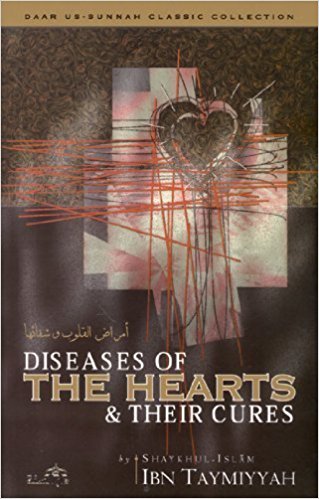
[Book Study] Diseases of the Hearts and Their Cures – Imam Ibn Taymiyyah

Diseases of the Hearts and Their Cures - Imam Ibn Taymiyyah

Paperback: 141 Pages Publisher:Dar us-Sunnah Publishers

Buy the Book  @ http://www.authenticstatements.com/bk-00051/

This is a treatise that is found in ‘Fataawaa’ of Shaykh-ul-Islaam Ibn Taymiyyah. The book discusses: the diseases of the hearts and their cures; the diseases of envy, and the diseases of desire and envy.

“Know O beloved reader that it is most important to spend one’s time and energy in treating the heart, and hastening to correct and purify it from sickness and all sins. This is due to the heart occupying a great and lofty position in Islaam, for it is the place to which the Lord looks and the storehouse for tawheed, faith, and sincerity. Actions are distinguished, one from the other, with respect to their excellence in the Sight of Allah in accordance with the condition of the heart, not by their number or form, but rather due to the strength of the caller, his or her truthfulness, his or her sincerity and the extent to which he or she prefers Allah over himself or herself …

Al-Haafidh ibn Hajr al-Asqalaanee, may Allah have mercy upon him and provide us with his knowledge, said:

“The heart has been singled out for this because it is the leader of the body, and through the purification of the leader the subjects become purified, and with his corruption they become corrupted. So if you, O servant of Allah, with to cure your heart then it is upon you to be truthful with regards to seeking refuge with Allah and putting your trust in Him, to pray a great deal of superogatory prayers, to perform the actions of obedience to Allah frequently, to pray the night prayer while the people are sleeping, and to treat your heart by making it continuously stick to the remembrances and by befriending only the righteous … and to frequently recite the Qur’an. And Allah will indeed allow all of this to be preserved by him.”

Main Audio Resources for the Book Study

Diseases of the Hearts & Their Cures – Seminar @ Masjid tawheed Radio
https://www.spreaker.com/show/diseases-of-the-hearts-and-their-cures

The Heart and Its Diseases – Dr Saleh as Saleh [Audio|En] – 4 Mp3 Lectures
Based upon the work of Ibn Taymiyyah and Ibnul Qayyim rahimahumullaah
https://abdurrahman.org/2015/02/21/the-heart-and-its-diseases-dr-saleh-as-saleh/

Supplementary Resources

Signs of an Upright and Healthy Sound Heart – Shaykh Khaalid adh-Dhufayree [Audio|Ar-En]
This a enlightening lecture delivered by the Noble Shaykh, Khalid ibn Dahwi adh-Dhufayree (May Allaah preserve him), from the well known scholars of Kuwait, regarding the signs of an Upright Heart. [mpubs.org]
https://abdurrahman.org/2012/12/26/signs-of-an-upright-heart-shaykh-khaalid-adh-dhufayree-audioar-en/

Polishing the Hearts : Imaam ibn al-Qayyim al-Jawziyyah
https://abdurrahman.org/2014/01/30/polishinghearts/

Rust on the Heart – Two Causes it & Two Removes it : Imam Ibn al Qayyim – Dr. Saleh as-Saleh [Short Clip]
https://abdurrahman.org/2014/01/10/rust-on-the-heart-two-causes-it-two-removes-it/

[Book] A Treatise In Condemnation Of The Hardness Of The Heart By Imām Ibn Rajab
http://www.authenticstatements.com/a-treatise-in-condemnation-of-the-hardness-of-the-heart-by-im-m-ibn-rajab/

Rejuvenating the heart after repeatedly sinning – Shaykh Muhammad bin Haadee
https://abdurrahman.org/2015/08/11/rejuvenating-the-heart-after-repeatedly-sinning/

The Backbiting Of The Heart – Imaam An-Nawawee
https://abdurrahman.org/2015/04/11/the-backbiting-of-the-heart-imaam-an-nawawee/

How the Shaytaan Finds His Way into Somebody’s Heart ? – Permanent Committee
https://abdurrahman.org/2014/08/14/how-the-shaytaan-finds-his-way-into-somebodys-heart/

What Rightens the Heart, and What Corrupts it? – Abu Muhammad al-Maghribee [Mp3|En]
https://abdurrahman.org/2012/11/30/what-rightens-the-heart-and-what-corrupts-it-abu-muhammad-al-maghribee-mp3en/

Dead Hearts and Empty Supplications – Sayings of the Salaf
https://abdurrahman.org/2010/01/16/dead-hearts-and-empty-supplications-sayings-of-the-salaf/

Mahkmoom Heart and a Truthful Tongue – Silsilah Ahadeeth As-Saheehah of Shaykh Al-Albaani
https://abdurrahman.org/2009/11/08/mahkmoom-heart-and-a-truthful-tongue/

Would the Servants be Accountable for What They Conceal in Their Hearts ? – Tafsir Ibn Kathir
https://abdurrahman.org/2009/12/21/would-the-servants-be-accountable-for-what-they-conceal-in-their-hearts/

Detachment of the Heart From the Created – Ibn Taymiyah | Dr. Saleh-As-Saleh [Audio|En]

[Alternative Download Link]

Posted from Audio Series:
The Concise Admonition – Shaikal-Islam Ibn Taymiyah rahimahullaah

“We placed veils upon their hearts so that they understand it not” – Explained by Shaykh Al Albaani

[7] Question:

Allaah says:

وَجَعَلْنَا عَلَىٰ قُلُوبِهِمْ أَكِنَّةً أَن يَفْقَهُوهُ وَفِي آذَانِهِمْ وَقْرًا
“And We placed veils upon their hearts – so that they understand it not – and deafness in their ears.” [Surah Al-An’aam: 25]

Some people perceive this ayah to contain a sense of coercion in it (on the part of Allaah). So what is your opinion with regards to this?

[7] Answer:

This “placing” is an existential (kawnee) type of placing. In order to understand this, we must explain the meaning of Allaah’s Divine Desire (Iraadah). Divine Desire is divided into two categories.

The Shar’ee (Legislative) Desire and the Kawnee (Existential) Desire

The Legislative Desire is everything that Allaah has legislated for His servants and incited them to do, such as acts of worship and obedience, regardless of their rulings, whether obligatory or recommended. Allaah desires and loves these acts of worship and obedience.

As for the Existential Desire, it may at times be something that Allaah did not legislate but yet preordained. This type of Desire is only called “Existential Desire” since its term was derived from Allaah’s statement:

إِنَّمَا أَمْرُهُ إِذَا أَرَادَ شَيْئًا أَن يَقُولَ لَهُ كُن فَيَكُونُ

“Verily, His Command – when He desires something – is only that He says to it ‘Be’ and it is.” [Surah YaaSeen: 82]

The word “something” here is an indefinite noun which consists of everything, whether acts of obedience or acts of disobedience. Such things come into existence by Allaah’s saying to it: “Be.” Meaning: It occurs through His Will, Ordainment, and Pre- Decree. So if we come to realize this Existential Desire, which includes everything regardless if it is an act of obedience or an act of disobedience, it will definitely lead us back to the subject of Al-Qadaa wal-Qadar (Allaah’s Divine Ordainment and Pre- Decree, since Allaah’s statement: “Verily, His Command – when He desires something – is only that He says to it ‘Be’ and it is” means that the thing to which He said “Be” is something He decreed, which will definitely come into existence.

Everything, according to Allaah, is decreed – it either consists of good or it consists of evil. However, that which applies from it to us – the two species of mankind and jinn who have been ordered by Allaah and are accountable for our actions – is that we look at what we do. The things we do either occur purely from our desire and free choice or they occur in spite of what we desire. Acts of obedience or disobedience do not apply to this second category and the end result of it is not Paradise or Hellfire. It is only the first category that the religious laws revolve around. And it is based on this that a person will be rewarded with either Paradise or the Hellfire. This means that whatever a person does based on his own desire and whatever he chases after through His actions and free choice, this is what he will be held accountable for. If it is good, then he will have good and if it is bad, then he will have bad.

The fact that a person has a free choice in a large portion of his actions is a fact that cannot be argued with whether religiously or intellectually.

As for religiously, there are numerous texts from the Qur’aan and Sunnah that confirm that a person may choose to do what he is ordered to do and abandon what he is forbidden from doing. These texts are too numerous to mention.

As for intellectually, it is clear to every person that is void of whims and desires that whenever he speaks or walks or eats or drinks or does anything that involves his free will, he is choosing on his own to do that action and not being forced to do that at all. For example, if I wish to speak right now, there is naturally no one that can force me to do that. However, this speech (of mine) is pre-decreed. What is meant by my speaking these words in spite of it being pre-decreed is that it is pre-ordained along with my free choice of what I will say and talk about. However, I have the ability to remain silent to make clear – to those doubtful about what I’m saying – that I have a free choice in the matter of speaking.

So therefore, the fact that a person has a free choice and a free will is something that cannot be disputed or argued against. And as for one who does argue against such a fact, then this person is only arguing philosophically and casting doubts on self-evident intuitions. And when a person reaches this stage, he can no longer be talked to (logically).

Therefore, the actions of a human being are divided into two categories:

1. Those that are done out of his choice and free will
2. Those that are done as a result of him being forced and coerced to

We have nothing to say about the actions that are done due to coercion – not from a religious perspective or from a real-life perspective. The religion is only concerned with the matters of free choice and free will. This is the truth of the matter. If we implant this into our minds, we will be able to understand the afore-mentioned ayah: “And We placed veils upon their hearts.” This refers to the Existential Placing. We must remember that the afore-mentioned ayah: “Verily, His Command – when He desires something” refers to the Existential Desire. However, it is not done against the will and choice of this person whom Allaah has placed veils over his heart.

Here is an example of this from an actual perspective: When a human being is created, he is formed while his flesh is still soft and tender. Then as he gets older and older, his flesh becomes harder and his bones become stronger. However, not all people are the same in this regard. So lets say for example this person is devoted to (learning) some type of study or science. What part of the body will grow strong in this person? His mind will strengthen. His brain will become stronger in the field that he preoccupies it with and applies all of its abilities on. However, from a physical standpoint, his body will not strengthen nor will his muscles develop.

The opposite of this is exactly true as well, for there may be a person that completely applies himself physically. So everyday he engages in sports and physical training – as we say today. Such a person’s muscles and body will progress and become strong. And he will acquire an image just like those that we see sometimes in real-life and sometimes in pictures in which for example the bodies of these athletes have become all muscle. Was this person created this way? Or did he earn and acquire for himself this strong physique loaded with muscles? This is something that he has attained based on his own actions and free choice.

This is the same example as someone who lingers in his misguidance, rejection, disbelief and denial and as a result attains this condition of these veils being placed by Allaah over his heart, not because Allaah compelled and forced this upon him but rather due to his actions and free choice.

So this is the existential placing which these disbelieving people have acquired (for themselves). They have gotten themselves to this point, which the ignorant think they were forced into, when in reality, such a fate was not obliged upon them, but rather came about due to what their own hands earned. And Allaah does not oppress His servants.

Footnotes:
15 See Silsilat-ul-Ahaadeeth as-Saheehah (2468)

Source: Posted by AbdurRahman.Org from the Book PDF: How are we Obligated to Interpret the Qur’aan? Shaykh al-Albanee. [ Download complete PDF book]

The Pillars of Kufr (Disbelief) – Imam Ibn al Qayyim | Dr Saleh as Saleh [Short Audio|En]

Based on Ibn Qayyim al-Jawziyyah rahimahullaah

Listen / Download Mp3 Here (Time 14:51)

Transcription of the Audio:

Bismillaah hir Rahman nir Raheem. Alhumdulillahi Rabbil Aalameen
Wa sallallahu ala Muhammadin wa ala aalihi wa sahbihi wa sallam

The pillars of Kufr are four, they are,

  • Haughtiness and disdainfullnes : This prevents the person from submission i.e. yielding.
  • Envy (Al Hasad) : This prevents him from accepting the naseehah i.e. the advice and from exerting it.
  • Anger (Al Ghadab) : This prevents him from being just.
  • Lusts : This prevents him from giving himself to worship.

If the pillar of false pride and haughtiness is demolished, then submission will become easy for him. If the pillar of envy is demolished, then it becomes easier for him to accept advice and to offer it. If the pillar of anger is demolished, it becomes easy for him to be just and humble. If the pillar of lust is demolished, it becomes easy for him to be patient and ready for worship.

The demolishing of mountains is much more easier than demolishing these four pillars for the one who is  afflicted with it, specially if they are entrenched in him and became as a firmed attribute, because no action can be upright with the presence of these pillars and no soul can be sanctified and purified having these established in it and whenever the person wants to exert himself to do or to act, these four pillars come and corrupt his work. And all other defects originate from these four and if these four are established in the heart it will make him see falsehood in the form of the truth and truth in the form of falsehood and good in the form of wrong and wrong in the form of good and it will make this life grow nearer to him and make the hereafter far removed from him.

If you contemplate the Kufr of the nations before, you will see that the Kufr of the nations originated from these four pillars and upon these four pillars the punishment will befall. The intensity of the punishment and it’s severity will depend upon how these four and entrenched. So whoever opens for himself these four pillars is indeed has opened all the doors of evil, sooner or later and whoever has closed the doors of these then he indeed has closed all the doors of evil because these four prevents submissiveness, sincerity, repentance and longing and turning to Allah, acceptance of the truth, the advice to the Muslims, humbleness to Allah and to his creation. This is what these four pillars can do.

The origin of these four pillars is from man’s ignorance concerning his Lord and ignorance concerning himself.  Had he known of his Lord qualified with the most perfect and magnificent attributes and had he known himself qualified with all forms of defects, he wouldn’t be haughty, angry, envious of others because envy in fact is one form of opposition to Allah because he dislikes the favour and blessing of Allah which he bestowed upon his slave while Allah loves that. Not only that, he likes that it to be rifted from his brother and Allah does not like that. So he is opposing Allah in his pre-decree and what Allah loves and his honour and that is why Iblees (Satan) is enemy  because his sin was due to haughtiness, arrogance and envy.

How can these be removed?

These two qualities, knowing Allah and Tawheed, and content with him and pleased with him and turning to him, takes away these two qualities of haughtiness and envy and taking anger away by knowing oneself that the self does not deserve all that so that to be angry for it and to avenge for its all sake. In this case this will prompt it to be contempt once this is taken out. Otherwise then this will be preference for the self over its creator and originator. The greatest thing to repel this defect is to train the self to get angry for Allah’s sake and whatever at any time enters the self this type of anger for Allah’s sake, there will exit the anger for its self and the opposite is true. As to the lust, its cure, its healing is in the correct knowledge. Yielding to the self’s lust deprives it from the correct knowledge and putting it on a diet in that respect puts it on the linkage with the correct knowledge. The more you are open the door for lusts, the more you are trying to deprive the self  from the correct knowledge and the more you close it, the more you will be linked to the correct knowledge.

Anger is like the wild animal. If its owner releases it, it starts by eating him up first. Lust is like the fire when the person ignites it it begins by burning him there in first. Al-Kibr, haughtiness, false pride, arrogance is like confronting the king regarding the king’s possession and kingdom, if he does not destroy you he will expel you. Envy is like opposing someone who is more powerful and more stronger than you.

This is based on Imam Ibn Al Qayim’s (rahimahAllah) specification of these four pillars of Kufr.

Transcribed by brother AbdulRazak bin AbdulAleem for AbdurRahman.org, May Allah reward him, ameen.


When he is advised in regard to certain things with which he disobeys Allaah, he says: “at-Taqwaa is here in my Chest” – Rebuttal by Shaykh ibn Uthaymeen

Advising the one who says “Taqwa is here” and he continues to Sin

A Doubt and its Rebuttle

Question 15: What lead to this question is that nowadays there is a group of people when they are called to worship Allaah they say: “Allaah is the Rabb of the hearts.” We would like also that you comment on this response?

The Answer: We say that Allaah is indeed the Rabb of the hearts as well as the tongues. He is not the Rabb of the hearts only; and if the hearts become good then the limbs become good, because the Prophet صلى الله عليه و سلم says:

Verily, there is a piece of flesh in the body, if it becomes good [reformed], the whole of the body becomes good but if it gets spoilt the whole body gets spoilt and that is the heart. [29]

This Hadeeth renders the futile and false the claim by some, who when you advise him in regard to certain things with which he disobeys Allaah, he says: “at-Taqwaa [30] is right here,” and he points towards his chest.[31]

His is a word of truth intended to imply something futile. In fact a word may be true in its general sense, but the speaker intends to imply by it a futile meaning. Indeed think of the Saying of Allaah, The Most High, concerning the Mushriks:

The Mushriks will say: “If Allaah had willed, we would have not committed Shirk, nor would our fathers, and we would not have forbidden anything [against His Will]! [Qur’aan, soorat al-An’aam (6): 148].

So, they said: “If Allaah had willed, we would have not committed Shirk,” and they were truthful in that which they said. Because if Allaah had willed, they would have not committed Shirk. They, however, did not intend the truth by using this word. Rather, they wanted to justify their staying on their Shirk and the lifting of punishment from upon them. This is why Allaah, The Most High, Said:

Likewise belied those who were before them, [they argued falsely with Allaah’s Messengers], till they tasted of Our Wrath. [Qur’aan, soorat al-An’aam (6): 148].

So, of no avail to them was the use of al-Qadar [32] [Allaah’s Pre-decree] as a plea when they intended it to be a justification for continuing on their Shirk, and an excuse for lifting the blame and punishment from upon themselves. [33]

The actual fact, however, is exactly as they have put it: “If Allaah had not willed, they would not have committed Shirk,” as Allaah, The Most High, said to His Messenger:

Follow what has been inspired to you [O Muhammad صلى الله عليه و سلم] from your Rabb, Laa Ilaaha Illaa Huwa [none has the right to be worshipped but He] and turn aside from the Mushriks. Had Allaah willed, they would have not committed Shirk. [Qur’aan, soorat al-An’aam (6): 106-107].

There is, however, a difference between the two cases. In the latter case, Allaah Said to His Prophet (what means): “Had Allaah willed, they would have not committed Shirk,” in order to clarify that their Shirk occurs by His Will, and that He, The One free of all imperfections, The Most High, has a Wisdom as to the committing of Shirk by them; and in order to comfort His Prophet (صلى الله عليه و سلم) that this action of theirs (Shirk) takes place by His, The Exalted and Most High’s, Will.

Therefore, the important thing is that the person who says when you give him advice: “at-Taqwaa is here [i.e. in his heart],” has said a true word indeed. However, he intended by it something futile and false, because the one who said: “at- Taqwaa is here…” is the Prophet صلى الله عليه و سلم, the same one who also said:

“Verily, there is a piece of flesh in the body, if it becomes good [reformed], the whole of the body becomes good…”

If there is Taqwaa in the heart, then it is imperative that there is Taqwaa in the limbs, and the outward actions are a sign of the inward actions of the heart.

Footnotes:

[29] An agreed upon hadeeth. See Saheeh al-Bukhaaree, vol.1, no. 49.
[30] The true meaning of at-Taqwaa is fearing Allaah and hoping for His Mercy by executing His Commands and staying away from all that He has forbidden.
[31] The Prophet (صلى الله عليه و سلم) in the authentic hadeeth reported by Muslim said: “A Muslim is the brother of a Muslim. He neither oppresses him nor humiliates him nor looks down upon him. The Taqwaa is here [and while saying so] he pointed towards his chest thrice.” See Saheeh Muslim, vol. 4, no.6219.
[32] Al-Qadar: Allaah’s Pre-ordainment of the creation in accordance with His Foreknowledge, and in accordance with His Wisdom.
[33] In his book Sharh al-Usool ath-Thalaathah, Shaykh Muhammd Bin ‘Uthaymeen, may Allaah’s Mercy be upon him, said: “If there had been any excuse for them in al-Qadar then Allaah would not have sent down His Punishment upon them.” See Sharh al-Usool ath-Thalaathah [English Translation by brother Daawood Burbank], p.186, Daar al- Hidaayah Publishing, Birmingham, U.K.

Posted from eBook – Understanding Worship – Fiqh ul-‘Ibadah – QA Format – Ibn Uthaymeen – Dr Saleh as Saleh

A Must Read – You Do Not Know What Is In My Heart – Q&A With Shaykh Ahmad Bazmool

The Backbiting Of The Heart – Imaam An-Nawawee

Know that having bad thoughts about someone is forbidden just like having bad speech about him. So just as it is forbidden for you to speak to others about the defects of a person, it is likewise forbidden for you to speak to yourself about that and to hold bad thoughts for him.

Allaah says:

O you who believe, avoid much (types) of suspicion. Verily some (forms) of suspicion is a sin.” [Surah Al-Hujuraat: 12]

And Abu Hurairah (radhi Allaahu anhu) reported that Allaah’s Messenger (sall Allaahu alayhi wa sallam) said:

“Beware of suspicion, for indeed suspicion is the most untruthful form of speech.” [39]

The ahaadeeth with this same understanding I have mentioned here are many. What the backbiting of the heart means, is: When the heart has firm conviction and holds bad thoughts about someone. But as for the notions that occasionally display in one’s mind or when one talks to himself, then as long as these thoughts do not remain established and continuous in him, it is excused according to the consensus of the scholars. This is since he has no choice in the matter as to stop it from occurring nor can he find any way to liberate himself from it when it does occur. This is the understanding of what has been authentically established (in the texts).

The Messenger of Allaah (sall Allaahu alayhi wa sallam) said: “Indeed, Allaah has permitted for my ummah that which their souls whisper to them, so long as they do not speak it out (audibly) or act upon it.” [40]

The scholars say: “This refers to the notions that form in one’s mind, but do not become settled or established there.”

And they said: “This is regardless if the notion consists of backbiting, disbelief or so on (i.e. it is pardoned, so long as it does not settle). So (for example) whoever’s mind becomes flooded with thoughts of disbelief, but they are only thoughts, without him intending to have them carried out, and he then rids himself of these thoughts right after they occur, he is not a disbeliever nor is there any sin on him.

We have already stated previously, in the chapter on the (internal) whisperings, the authentic hadeeth, in which the Companions said: “O Messenger of Allaah! Some of us find things in our thoughts that are too tremendous to speak of.” So he (sall Allaahu alayhi wa sallam) said: “That is the confirmation of Faith.” [41]

And this goes for the other reports we have mentioned in that chapter that bear the same understanding.

The reason for these thoughts being excused is due to what we have stated previously that these thoughts are impossible to prevent. Rather, one is only able to prevent those thoughts from becoming settled and established in one’s mind. This is why the heart’s being resolute and determined on these thoughts is forbidden.

So whenever these thoughts, which consist of backbiting or any other sin, present themselves in your mind, it is an obligation on you to repel them, turn away from them and mention some excuse or explanation that will change what seems apparent.

We stated previously that if someone is presented with a notion of bad thoughts for another person, he should cut off those bad thoughts. But this is unless there is some (religiously) legislated benefit that leads to thinking (about that person) in this manner. So if such a reason exists, holding these thoughts about his deficiencies is permissible, as well as warning against them, as can be seen in the jarh (criticism) of certain witnesses, narrators and others we have mentioned in the Chapter on “What Type of Backbiting is Permissible.”

Footnotes

[39] Saheeh – Reported by Al-Bukhaaree (10/484 of al-Fath) and Muslim (2563)
[40] Saheeh – Reported by Al-Bukhaaree (5/160 of al-Fath) and Muslim (127 and 202)
[41] Saheeh – Reported by Muslim (132); Translator’s Note: This hadeeth shows the Companions’ zeal and enthusiasm in commanding themselves with good and forbidding themselves from evil, such that they would even fight against the evil notions that passed through their minds. But as it is impossible to prevent such thoughts from occurring every now and then, they asked the Prophet (sall Allaahu alayhi wa sallam) about this. His response to them meant that their trying to repel these thoughts showed their strong Eemaan (Faith) and love for good.

Source Guarding the Tongue – Imaam an-Nawawee (Al-Ibaanah e-Book)

An Upright Heart : One of the Keys for Obtaining Knowledge – Shaykh Abdullaah Adh-Dhufairee

Fourth: An Upright Heart

The heart is the container where knowledge is stored. If the container is firm, it will store and protect what is placed in it, and if the container is damaged, it will lose what is placed in it.

The Messenger of Allaah (صلى الله عليه و سلم) made the heart the foundation of everything, as he said:

“Verily, there is a morsel of flesh in the body that if it is correct, the entire body will be correct, and if it is corrupt, the entire body will be corrupt. Indeed, it is the heart.”

An upright heart comes about through awareness of Allaah and knowledge of His Names, Attributes and Actions. It also comes about by way of reflecting on His signs and creations, and by pondering on the Qur’aan. An upright heart also comes about due to one constantly prostrating (in prayer) and frequently observing the night prayer.

One should also avoid the things that corrupt and sicken the heart, since if these things are present in the heart, it will not be able to carry the knowledge. And even if the heart does carry it, it will not be understood, as Allaah says about the hypocrites – those with diseased hearts:

They have heart with which they do not comprehend.” [Surah Al-Araaf: 179]

The diseases of the heart are of two types: Desires and Doubts

Desires are such as love for this worldly life and its pleasures and being preoccupied with that; love for unlawful images; listening to unlawful things such as musical voices and instruments; and looking at the forbidden.

Doubts are such as corrupt beliefs; innovated actions; and ascribing to innovated ideological movements.

Some other diseases of the heart that also serve as obstacles before knowledge are: jealousy, spite and pride.

Some other things that corrupt the heart are: excessive sleep, excessive speech and excessive eating.

Therefore, one should avoid these diseases and corruptors in order to rectify the heart and make it upright.

Posted from : Ten Guidelines for Obtaining Knowledge – Shaykh Abdullaah Adh-Dhufairee
The treatise has been introduced and praised by Shaikh Ahmad An-Najmee, one of the elder scholars in Saudi Arabia, thus indicating its importance and benefit. 


A Heart That Does Not Pump Tawheed Is A Dead Heart – Abu Muhammad Al-Maghribi [Audio|En]

Listen / Download Mp3 Here (Time 37:08)
[audio https://salafiaudio.files.wordpress.com/2014/09/a-heart-that-does-not-pump-tawheed-is-a-dead-heart-abu-muhammad-al-maghribi.mp3]

The Heart and Its Diseases – Dr Saleh as Saleh [Audio|En]

The Heart and Its Diseases – Based upon the work of Ibn Taymiyyah and Ibnul Qayyim rahimahumullaah

01- The Heart – Ibn Taymiyah and Ibnul Qayyim – 5:04

02- The Heart – Its Three Types – 19:31

03- The Heart – Its Diseases – 67:40

04- The Heart – Benefit In Seeking Guidance (audio corrupted..)