Moosaa’s call was directed to tawheed, NOT to gain rulership and authority – Shaykh Rabee’

Moosaa, the one to whom Allaah spoke directly, the strong and trustworthy.

We see that his call was directed to tawheed and carried the lights of guidance and wisdom. Moosaa was brought up and was raised in the palaces of the greatest tyrant who claimed divinity. He knew the various types of corruption, unbelief, tyranny, injustice and despotism from what he witnessed in the palaces. He saw things which it is difficult to imagine or think possible. He also saw the enslavement of his people, the Children of Israa’eel, and their humiliation, and their women taken as slaves, and the killing of their children, to such an extent that it surpassed any oppression known to mankind. Allaah, the Most High, says,

“Pharaoh exalted himself haughtily in the land, and divided its people into castes. He enslaved a group of them (i.e., the Children of Israa’eel), killing their sons and letting their women live. He was indeed one of the corrupt evil-doers.”[1]

The people of Pharaoh were also people of shirk and idol-worship without a doubt.

So how did Moosaa begin? Was his call directed to correction of the ‘aqeedah of this idolatrous nation? Or did it begin with a demand for the restoration of the rights of the Children of Israa’eel, and a struggle to gain rulership and authority from the hands of the tyrant, and at the head of them Pharaoh, who claimed divinity for himself?

The call of Moosaa was just like the call of his forefathers and brothers from the earlier Prophets. His Lord instructed him and inspired him with the principle of tawheed, and chose him to carry his revelation, and to establish worship of Him. Allaah, the Most High, says,

“Has not the story of Moosaa come to you? When he saw a fire and said to his family, ‘Remain where you are for I have seen a fire. Perhaps I can bring a fire-brand from it or find someone who can show us the way.’ So when Moosaa came to the fire his Lord called him, ‘O Moosaa, I am your Lord. Remove your shoes, indeed you are in the purified valley of Tuwaa. I have chosen you as My Messenger, so listen to and heed what I reveal to you. Indeed I am Allaah. None has the right to be worshipped but Me. So worship Me and do not worship anything else besides Me, and establish Prayer for My remembrance. Indeed the Final Hour is certainly coming, which I keep hidden from all except Myself, in order to reward each soul according to its good or bad deeds.’”[2]

So this was the beginning of his Messengership; he was inspired and ordered with the ‘aqeedah of tawheed. He was ordered to establish it in himself and to represent it in his life. Then he was entrusted with the duty of calling to this sublime principle and was sent by Allaah to the Pharaoh. Allaah furthermore explained to him the correct manner of giving da’wah and the wise way in which he was to face the Pharaoh. Allaah, the Most High, said: 

“Go to Pharaoh who has transgressed all bounds in his haughtiness, pride, unbelief, and say, ‘Will you not purify yourself from the sin of unbelief and be obedient to your Lord? And that I guide you to the worship of your Lord, so that you may submit fearfully to Him and obey Him.’”[3]

He also supported him with his brother Haaroon in order for the proof to be established to the utmost, and He taught them to use gentleness and mildness in da’wah since that is the best way to attain the guidance of those whom Allaah wishes to guide:

“Go both of you to Pharaoh, indeed he has transgressed beyond all bounds, and speak mildly with him that he might accept admonition and fear and be obedient to his Lord.”[4]

So they carried out the order of their Lord and called him to Allaah, hoping for him to be guided and purified, so that he should be one of those who fear Allaah and fear and beware of the evil consequences of shirk and oppression. But he did not respond to this wise and composed call. So Moosaa manifested the great signs and clear proofs of his Prophethood and the truthfulness of his Messengership. But the despotic tyrant Pharaoh merely increased in his transgression and rejection of the truth:

“But Pharaoh denied the signs which Moosaa came with and disobeyed his order for him to fear and obey his Lord. Then he turned away from what he ordered him (i.e., obedience to his Lord) and instead worked evil and corruption, and he gathered his people and his followers and said, ‘I am your lord, the most high.’ So Allaah seized him with punishment for his latter and his earlier saying.”[5] 

The Escalation of the Tyranny of the Pharaoh and how Moosaa and his People Faced it with Patient Perseverance and Forbearance

“The chiefs of Pharaoh’s people said, ‘Will you leave Moosaa and his people to cause mischief in the land when they have abandoned worship of you and worship of your gods?’ He said, ‘We will kill their sons and let their women live, and will have full power over them.’”[6]

So what was the sin of Moosaa and his people in the view of these criminals? No crime except that they called to the tawheed of Allaah and to remain firm upon it, and to disbelieve in Pharaoh and his idols. Then what was the response of Moosaa with respect to these disgraceful and outrageous transgressions which exceeded all bounds in its barbarity and ferocity?!

His response was to remain firm upon correct belief, and to have patience and forbearance, and to seek the aid of Allaah in facing these calamities. Then he awaited the good outcome, and victory as a consequence and a good fruit of this remaining firm and this patient perseverance.

“Moosaa said to his people, ‘Seeks Allaah’s help and be patient, the earth is Allaah’s, He gives it as a heritage to whom He pleases from His servants. The final outcome is in favour of those who fear Allaah by avoiding disobedience of Him and doing what He orders.’”[7]

Then when no hope that the Pharaoh and his people would believe remained, and the suffering which the Children of Israa’eel were subjected to increased in severity, the sole request which Moosaa made to the Pharaoh was that he should allow the Children of Israa’eel the freedom to leave the land of Egypt and emigrate to wherever Allaah willed that they should go, in order to save them from the torment inflicted upon them.

“So go to the Pharaoh, saying, ‘We are the Messengers sent by your Lord, to order you to free the Children of Israa’eel. So release them and cease tormenting them. Indeed we bring you a clear sign from your Lord, and peace and safety from Allaah’s punishment are for those who follow the guidance.’”[8]

It was a sublime call to the tawheed of Allaah containing light and wisdom. It was also accompanied by an eager desire for the guidance of those who were being called, and that they should be purified. It also contained a clear example of the utmost patience and forbearance in enduring great harm, and in facing tyranny and haughty oppression. It also shows the way to face the most difficult situations with wisdom and forbearance, whilst having the strongest hope in Allaah, that He will assist and grant victory to the Believers and destroy the unbelieving oppressors. Including clear lessons for those who make their call purely seeking the Face of Allaah and desire to rectify mankind and to turn to their Lord, and for them to be guided to His Straight Path.

Footnotes :

[1] Soorah al-Qasas (28):4.

[2] Soorah Taa Haa (20):9-15.

[3] Soorah an-Naazi’aat (79):17-19.

[4] Soorah Taa Haa (20):43-44.

[5] Soorah an-Naazi’aat (79):21-25.

[6] Soorah al-A’raaf (7):127.

[7] Soorah al-A’raaf (7):128.

[8] Soorah Taa Haa (20):47.

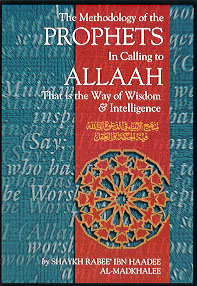
[Excerpted from the book : “The Methodology of the Prophets in Calling to Allaah – that is the way of wisdom and intelligence” – by Shaykh Rabee hafidhahullaah, translated by Dawud Burbank rahimahullah]

Download the full PDF Book:
https://abdurrahman.org/dawah/methodology-of-the-prophets-in-calling-to-allaah/

The most important part of the call of the Messengers – Tawheedul-Uloohiyyah (Singling out Allaah with all Worship) – Shaykh Rabee

The Importance of Tawheedul-Uloohiyyah
(Singling out Allaah with all Worship)

I will discuss tawheed of Allaah with regard to worship (Tawheedul-Uloohiyyah) and its importance because of two reasons:

Firstly, that it is the most important part of the call of the Messengers presented to us in the Qur’aan, and because it was the reason for the continual struggle between them and their enemies, the proud and haughty, and the obstinate, in every nation. It has continued as the reason for conflict until this day, and perhaps it will continue as such until the Day of Resurrection, as a trial and test for the inheritors of the Messengers, and in order to raise their station.

Secondly, the most severe and dangerous deviation afflicting the Muslims in the east and the west is with regard to it, and this affects the majority of the ignorant amongst the Muslims and many of those who are educated and those who associate themselves with knowledge. So we will begin by presenting the calls of the Prophets in general, and then present the call of some of them in particular.

Allaah, the Most High, says,

“We sent a Messenger to every nation ordering them that they should worship Allaah alone, obey Him and make their worship purely for Him, and that they should avoid everything worshipped besides Allaah. So from them there were those whom Allaah guided to His religion, and there were those who were unbelievers for whom misguidance was ordained. So travel through the land and see the destruction that befell those who denied the Messengers and disbelieved.”[1]

Allaah, the Most High, says,

“We did not send any Messenger before you, O Muhammad (صلّى الله عليه وسلّم )  , except that We revealed to him that none has the right to be worshipped except Allaah, so make all of your worship purely for Him.”[2]

He, the Most High, says after mentioning a number of stories of the Prophets, alayhimus-salaatu was-salaam: 

“This religion of yours is a single religion, and I am your Lord, so worship Me alone.”[3] 

Allaah, the Most High, says:

“O Messengers, eat from the food which Allaah has made lawful, and do correct and righteous deeds. Indeed, I am fully aware of whatever you do. Indeed this religion of yours is a single religion, and I am your Lord so keep yourselves safe from My punishment by obeying Me.”[4]

Al-Haafidh Ibn Katheer said, “Mujaahid, Sa’eed ibn Jubayr, Qataadah and Abdur-Rahmaan ibn Zayd ibn Aslam said about the saying of Allaah, the Most High,  which means, ‘Your religion is one.’[5] Then the meaning of these two Aayaat occurs in the Sunnah in his (صلّى الله عليه وسلّم )   saying, “I am the closest of the people to ‘Eesaa ibn Maryam in this world and the Hereafter. The Prophets are brothers, their mothers are different, but their religion is one.”[6]

Also Allaah, the Most High, says about the Messengers who were firmest in determination (oolul-‘adham), alayhimus-salaatu was -salaam:

“Your Lord prescribed for you O people, the same religion which He prescribed for Nooh, and that which We revealed to you O Muhammad (صلّى الله عليه وسلّم ), and which He prescribed for Ibraaheem, and Moosaa, and ’Eesaa, that you should establish the religion, acting upon what is prescribed, and not split into sects with regard to it. It is intolerable to the polytheists that you call them to sincerely worship Allaah alone and reject worship of all else besides Him. But Allaah chooses for His religion whomever He pleases and He guides those who turn to Him in repentance and obedience, to act in obedience to Him, and to follow the guidance with which He sent His Messenger.”[7]

This was the call of all the Prophets, and at the head of them the Messengers who were firmest in determination. So the Prophets who numbered one hundred and twenty four thousand [8] followed a single methodology in their call, and began from a single starting point which is tawheed, the greatest issue and most important principle which they conveyed to all mankind, throughout the ages and despite their varying societies, lands and times.

This is a proof that this is the single way which must be followed in calling the people to Allaah, and it is something laid down by Allaah to be followed by all of His Prophets and their true and sincere followers. It is not permissible to change or replace it, nor to turn away from it.

Examples From the Calls of Some of the Messengers

Allaah, the Most High, has informed us about some of the individuals from the greater Prophets, and how they faced their people. We see that all of them proceeded upon the universal way laid down for them by Allaah and they followed the methodology established for all of them by Allaah. Not a single one of them is at variance with it. Allaah, the Most High, says,

“And We sent Nooh to his people saying, ‘I am a clear warner sent to you, that you should worship none besides Allaah. Indeed, if you do not make all your worship purely for Him I fear for you the torment of a painful Day.’ The chiefs of the disbelievers amongst his people said, ‘We see that you are but a man like ourselves and we do not see you followed except by the lowest of the people, in what is apparent to us. Nor do we see that you have any excellence over us, rather we think that you are a liar.’”[9]

Allaah, the Most High, says,

“And to ’Aad We sent Hood, saying, ‘O my people worship Allaah, making all of your worship purely for Him, since there is none besides Him having the right to be worshipped by you. Will you not fear your Lord?’ The leaders of those who disbelieved amongst his people said, ‘We see you upon error (due to your abandonment of our religion and worship of our gods) and we think that you are a liar (in claiming to be a Messenger from the Lord of the Worlds).’ He said, ‘O my People, I am not upon error, I am indeed a Messenger sent by the Lord of the Worlds. I convey to you the Message of my Lord and am sincere in my advice and faithful to my trust. Do you wonder that Allaah should send admonition for you through a man from amongst you, warning you of Allaah’s punishment and to fear Him? And remember the blessings of Allaah upon you in that He made you successors to the people of Nooh (after drowning them for their unbelief and denial of their Messenger), and He increased you in height and size. So remember the favours bestowed upon you by Allaah, so that you may be successful.’ They said, ‘Do you come to us warning us of punishment from Allaah for that which we practise as religion, so that we should instead worship Allaah alone and forsake what our fathers used to worship? We will not do that, so bring us the punishment which you threaten us with if you are truthful.’ He said, ‘Allaah’s punishment and wrath have become unavoidable for you. Do you dispute with me about mere idols which you and your fathers have given names to, things which can neither bring harm nor benefit, and Allaah has given no proof or excuse for their worship? Then wait for Allaah’s judgement between us, I too shall wait.’ So We saved Hood and those with him through Our Mercy (due to their eemaan and their worship of Allaah alone), and we annihilated those who rejected Our signs and were not Believers.”[10]

This was the call of the Messengers, all of them followed this methodology in their da’wah to Allaah: they called first to the tawheed of Allaah, and that He alone must be singled out with all worship. Then their people opposed them because of this, except those whom Allaah guided, facing them with mockery, charging them with being liars and seeking to ridicule them. As Allaah, the Most High, says:

“Many Prophets were sent to the earlier peoples, and no Prophet came to them except that the people met him with mockery.”[11]

There is nothing more severe and hurtful to lofty believing souls than accusations of falsehood, ridicule and mockery. These things are more hurtful to them than being struck with swords and imprisonment and punishment. This fact is mentioned by the Arab poet who said, “Being harmed by close relatives is more painful to the soul than being struck with a sharpened sword.”

’Aa’ishah, radiyallaahu ’anhaa, asked the Prophet (صلّى الله عليه وسلّم )  , “Has there been a day more severe upon you than the Day of Uhud?” So he said, “Your tribe has troubled me greatly, and the most troublesome thing which I experienced from them was on the day of ’Aqabah when I presented myself to ’Abd Yaaleel ibn ’Abd Kulaal and he didn’t respond as I had hoped. So I returned overwhelmed with sorrow and did not recover until I reached Qarnuth-Tha’aalib.[12] I raised my head and saw a cloud shading me, then I looked and saw Jibreel in it, and he called me saying, ‘Allaah has heard what your people said to you and their reply, and Allaah has sent the Angel of the mountains to you, for you to order him to do whatever you wish.’ So the Angel of the mountains called me and greeted me with salaam and then said, ‘O Muhammad, Allaah has heard what your people said to you, and I am the Angel of the mountains, and my Lord has sent me to you for you to order me as you wish. So what do you wish?’ So Allaah’s Messenger (صلّى الله عليه وسلّم )   said, “No, rather I hope that from their offspring will come those who will worship Allaah alone and not worship anything else besides Him.”[13]

This hadeeth clearly shows the da’wah of Allaah’s Messenger (ﷺ) and his perseverance in that, and his mildness with his people. See how he was patient with them and asked for them to be spared from destruction which would have wiped them out. He instead hoped for good from Allaah, and hoped that from their offspring would come those who worshipped Allaah alone, not worshipping anything besides Him. Indeed what a noble and lofty goal, which is not realized except by those who taste the blessing of tawheed and know its station.

The books of Seerah[14] detail some of the answers given by those who mocked him and their scornful stance when he invited them to Islaam. They mention that he went to a number of the nobles and leaders of the tribe of Thaqeef, and they were three brothers, ’Abd Yaleel, Mas’ood and Habeeb… and he sat with them and called them to Allaah and asked them to support Islaam and stand with him against those of his people who opposed him. So one of them said, “If it is actually true that Allaah has sent you, then He is tearing down the covering of the Ka’bah.” The second said, “Could Allaah not find anyone to send but you?” The third said, “By Allaah, I will never speak with you. If you are truly a Messenger from Allaah as you claim, then you are more serious than to have me reply to your words, and if you are lying against Allaah then it is not proper that I should ever speak to you.” So Allaah’s Messenger (صلّى الله عليه وسلّم )   left having despaired of good from Thaqeef.[15]

What we see from the hadeeth and the stroy is that mockery and scorn and harm caused by the foolish idolaters was more severe to the Prophets than any other trouble, even more so than the fierce battles in which lives are spent and the blood of their pure companions is shed. Indeed on the Day of Uhud more than seventy Companions of Allaah’s Messenger (صلّى الله عليه وسلّم )   were martyred.[16] Amongst them: Mus’ab ibn ’Umayr,[17] and Hamzah ibn ’Abdil- Muttalib[18] the paternal uncle of Allaah’s Messenger (صلّى الله عليه وسلّم )  , and Allaah’s Messenger (صلّى الله عليه وسلّم )   was injured in the face and his incisor was broken.[19] He also suffered along with his Companions at the hands of the hypocrites, and suffered great harm and hardship before that in Makkah, and at Badr and other battles. Yet despite all of this, the severest trouble which he faced was on the Day of Taa’if because of the mockery and contempt which he faced to such a degree that it is unbearable for pure souls. Furthermore Allaah’s Messenger (صلّى الله عليه وسلّم )   said, Those who suffered the severest trials are the Prophets, then those who are most like them, then those who are most like them after that.[20]

So those who are most like them, and then those who are next closest are those who proceed upon their methodology in calling to Allaah, and called to what they called to, i.e. to the tawheed of Allaah and that He is to be singled out with all worship, and to rejection of all shirk (attribution of any form or part of worship to anyone besides Allaah). Such people will suffer similar harm and trials as suffered by the Prophets who are their example. It is because of this fact that you see many of the callers departing away from this difficult methodology, and this rugged path, since the caller who follows it will have to face opposition from his mother, his father, his brother, his friends and those whom he loves. He will be opposed by the society which will treat him as an enemy and seek to mock and harm him. So many callers divert their attention to other aspects of Islaam which do have their place, and are not denied by anyone who truly believes in Allaah, except that those aspects do not involve that difficulty and hardship and do not bring about mockery and harm particularly in Islamic societies. This is because the majority of the people of the ummah of Islaam are willing to gather around these type of callers, and they throw praise and honour upon them instead of mockery and harm, unless they pose a threat to the rulers and are a danger to their positions, in which case they suppress them brutally. For example political parties which oppose the rulers and threaten to dethrone them. In such a case the rulers will show no love to relatives or friends, Muslims or disbelievers.

Then in any case we say to those callers: no matter how much noise they make, and no matter how high they raise their voices in the name of Islaam, restrain yourselves because you have left the way prescribed by Allaah and His Straight Path, upon which the Prophets and their followers proceeded in calling to tawheed of Allaah and to making the religion purely for Him. So no matter how much you speak and raise your voices in the name of Islaam, you are still deviating from the methodology of the Prophets which was laid down by Allaah. No matter how much effort you expend, and how much you manage to extend your da’wah and your own methodology, you are still preoccupying yourselves with the means to the exclusion of the goal. Then what use are the means[21] if they merely harm the goal, and they themselves grow at its expense.

Indeed woe to those callers who obstinately persist upon the methodologies which they themselves have innovated, those who fight against the methodology of the Prophets in calling to the tawheed of Allaah, beneath dazzling banners and slogans which captivate the simple minded and those ignorant of the methodology and way of the Prophets.

Footnotes

[1] Soorah an-Nahl (16):36.

[2] Soorah al-Ambiyaa (21):25.

[3] Soorah al-Ambiyaa (21):92.

[4] Soorah al-Muminoon (23):51-52.

[5] Tafseer Ibn Katheer (5/365).

[6] Reported by al-Bukhaaree (Eng. trans. 4/434 no.652) and Muslim (Eng. trans. 4/1260 no.5834).

[7] Soorah ash-Shooraa (42):13.

[8] As shown by the hadeeth of Aboo Dharr, reported by al-Bukhaaree in, at-Taareekhul-Kabeer (5/447), and Ahmad in al-Musnad (5/178 and 179) by way of al-Mas’oodee, from Aboo ’Umar ad-Dimashqee, from ’Ubayd ibn al-Hashaas, from Aboo Dharr. It is also reported by Ibn Hibbaan as occurs in al-Mawaarid (no.94), and Aboo Nu’aym in al-Hilyah (1/166-168) and he indicated other chains of narration from Aboo Dharr. It is also reported by Ahmad (5/265), Ibn Abee Haatim in his Tafseer (quoted by Ibn Katheer (2/324), and at-Tabaraanee (8/258)). It also has a further chain of narration from Aboo Umaamah quoting the number of the Messengers (Rusul) which is three hundred and thirteen, and that is reported by at-Tabaraanee (8/139) and Ibn Hibbaan, as occurs in al-Mawaarid (no.2085). Ibn Katheer said, “It is reported by at-Tabaraanee and its narrators are those of the Saheeh except Ahmad ibn Khaleed al-Halabee, and he is reliable.”

[9] Soorah Hood (11):25-27.

[10] Soorah al-A’raaf (7):65-72.

[11] Soorah az-Zukhruf (43):6-7.

[12] A place between Makkah and at-Taa’if also called Qarnul-Manaazil.

[13] Reported by al-Bukhaaree (Eng. trans. 4/300 no.454) and Muslim (Eng. trans. 3/987 no.4425).

[14] Books about the life of the Prophet (ﷺ).

[15] Al-Bidaayah wan-Nihaayah,’(3/135) and ad-Durar Fikhtisaaril-Maghaazee was-Siyaar (p.35) of Ibn ’Abdul-Barr.

[16] Al-Bukhaaree, rahimahullaah, said, (Eng. trans. 5/279 ch. 25), “Chapter: The Muslims who were killed on the Day of Uhud… ’Amr ibn ’Alee narrated to us: Mu’aadh ibn Hishaam narrated to us, saying: My father narrated to me from: Qataadah, who said, ‘We do not know of any tribe amongst the Arabs who lost more martyrs, and will have superiority on the Day of Resurrection, than the Ansaar.’ And Qataadah said: Anas ibn Maalik narrated to us: that seventy of the Ansaar were martyred on the day of Uhud, and seventy on the day of Bir Ma’oonah, and seventy on the day of al-Yamaamah.

[17] From Khabbaab, radiyallaahu ’anhu, who said, “We emigrated along with the Prophet (ﷺ) seeking thereby only the Face of Allaah, so our reward became assured with Allaah. Then there were some of us who died not having taken anything from his reward. From them was Mus’ab ibn ’Umayr who was killed on the day of Uhud and did not leave anything behind except a small striped sheet. When we covered his head with it his feet were uncovered, and when we covered his feet with it his head was uncovered. So the Prophet said, ‘Cover his head with it, and place idhkhir (a sweet smelling rush) upon his feet.’” (Reported by al- Bukhaaree (Eng. trans.5/281/no. 408), Muslim (Eng. trans. 2/446/no. 2050 ), Ahmad and an- Nasaa’ee.

[18] The story of his martyrdom is to be found in Saheeh al-Bukhaaree (Eng. trans. 5/74-277/no. 399 ) and the Musnad of Imaam Ahmad (3/500-501).

[19] From Anas, radiyallaahu ‘anhu, who said: “On the day of Uhud the Prophet (ﷺ) was injured in the face and said, ‘How can a people who injure the face of the Prophet (ﷺ) be successful?’ And so the Aayah, “Not for you is the decision…’ (Soorah Aal-’Imraan (3):128) was sent down.” Reported by al-Bukhaaree (Eng. trans. 5/272 ch.20 and Muslim (Eng. trans. 2/985 no.4417), and Muslim also reports (Eng. trans. 2/984/4414) the hadeeth of Sahl ibn Sa’d with the wording, “Allaah’s Messenger (ﷺ) was wounded in his face and his incisor was broken and his helmet was crushed upon his head.”

[20] Reported by Tirmidhee (4/602 no.2398), Ibn Maajah (2/1334 no. 4023), ad-Daarimee (2/228, no. 2786) and Ahmad (1/172, 174, 180, 185), all of them by way of ’Aasim ibn Abin-Nujood, who is generally acceptable (sudooq), but makes mistakes; from Mus’ab ibn Sa’d, Tirmidhee declared it to be hasan saheeh. But Tirmidhee’s declaration of its direct authenticity is debatable, and it as if he took into account other witnesses for it, since there are other supporting narrations for it:

(1) From Aboo Sa’eed al-Khudree, reported by Ibn Maajah (no. 4024), and its chain of narration is declared saheeh in az-Zawaa’id.

(2) The hadeeth of Faatimah bint al-Yamaan reported by Ahmad (6/329).

(3) The hadeeth of Aboo Hurairah indicated by Tirmidhee after reporting the original hadeeth.

[21] Rule is a means to calling to Allaah as Allaah, the Most High, says:

“Those who, when We establish them in the land, they establish the Prayer, pay the Zakaat, call the people to make all of their worship purely for Allaah, and to His obedience and to what is known by the People of eemaan to be good: And they warn against attribution of partners in worship to Allaah, and disobedience to Him.” [Soorah al-Hajj (22):41].

[Excerpted from the book : “The Methodology of the Prophets in Calling to Allaah – that is the way of wisdom and intelligence” – by Shaykh Rabee hafidhahullaah, translated by Dawud Burbank rahimahullah]

Download the full PDF Book:
https://abdurrahman.org/dawah/methodology-of-the-prophets-in-calling-to-allaah/

The Torture Endured by the Companions Because of their Adherence to Tawheed – Shaykh Rabee ibn Hadee

The Companions of Allaah’s Messenger (صلّى الله عليه وسلّم)   suffered the worst forms of torture because of their adherence to the correct ‘aqeedah, and their making all worship purely and sincerely for Allaah alone, and their rejection of shirk and kufr.

From ’Abdullaah ibn Mas’ood, radiyallaahu ‘anhu, who said, “The first people to openly proclaim their Islaam were seven: Allaah’s Messenger (صلّى الله عليه وسلّم)  , Aboo Bakr, ’Ammaar and his mother Sumayyah, Suhayb, Bilaal and al-Miqdaad. So as for Allaah’s Messenger (صلّى الله عليه وسلّم)  , Allaah gave him protection through his uncle Aboo Taalib. As for Aboo Bakr, Allaah gave him protection through his people. But as for the rest of them, the Mushriks would take hold of them and dress them in iron armour and place them to scorch and roast in the sun. There was not one of them except that they responded to them except Bilaal, for his soul became as nothing to him for Allaah’s sake, and his people had no respect for him. So they gave him to the children who used to drag him around the streets of Makkah and he would say repeatedly, ‘(He who has the right to worship is) One, One.’”[1]

In the Seerah of Ibn Hishaam [2] there occurs: ’Umayyah ibn Khalf used to take him (Bilaal) out in the midday heat of the sun, and throw him down upon his back, on the ground of the flat valley bed of Makkah, and he would order for a large rock to be placed on his chest. Then he would say, “By Allaah, you will stay like this until you die, unless you disbelieve in Muhammad (صلّى الله عليه وسلّم)   and you worship al-Laat and al-’Uzzaa.” So he would say, whilst he was in that condition, “(He who alone has the right to worship is) One, One.”

Sumayyah was tortured until death because of the ‘aqeedah of tawheed not becasue she was a political leader. So from Mujaahid who said, “The first martyr in Islaam was Sumayyah the mother of ’Ammaar. Aboo Jahl thrust a spear into her abdomen.”[3]

Ibn Sa’d said, “She accepted Islaam early on in Makkah and she was one of those who was tortured to force them to abandon their religion. But she bore and endured it until Aboo Jahl came to her and thrust a spear into her abdomen and she died.”[4]

Footnotes:

[1] Reported by al-Haakim in al-Mustadrak (3/284) and he declared it saheeh and adh-Dhahabee mentioned it in Siyar A’laamin-Nubalaa (1/348) and he said, “It has a saheeh chain of narration…”

[2] Seerah of Ibn Hishaam (1/318).

[3] At-Tabaqaat of Ibn Sa’d (8/264/265). He said, “Ismaa’eel ibn ’Umar, Abul-Mundhir related to us that Sufyaan ath-Thawree narrated to us from Mansoor from Mujaahid who said…” This is a saheeh chain of narration to Mujaahid.

[4] Tabaqaat Ibn Sa’d (8/264).

[Excerpted from the book : “The Methodology of the Prophets in Calling to Allaah – that is the way of wisdom and intelligence” – by Shaykh Rabee hafidhahullaah, translated by Dawud Burbank rahimahullah]

Download the full PDF Book:
https://abdurrahman.org/dawah/methodology-of-the-prophets-in-calling-to-allaah/

Yoosuf (عليه السلام) and his call to Tawheed – Shaykh Rabee ibn Hadee

Yoosuf (عليه السلام)

The noble one, son of the noble one, son of the noble one.[1] About whom Allaah sent down a long Soorah relating his noble life to us, and its stages, from his childhood to his death, and how his circumstances changed, and the difficulties that he faced, and how he faced everything with the Strength of Prophethood and his patient perseverance, wisdom and mildness.

Yoosuf, ’alayhis-salaam, saw the corrupt outlook of the Pharaohs in Egypt and their oppression, and he knew the beliefs of the nation amongst whom he lived. He knew the corruption of their beliefs and their idolatry, which led them to take idols and cattle as gods to worship besides Allaah. The stroy of this noble Prophet, ‘alayhis-salaam, is long, and from it, we will examine the story of his imprisonment and his da’wah at that time. Allaah, the Most High, says,

“And two young men entered the prison along with him. One of them said, ‘I saw in a dream that I was pressing grapes,’ and the other one said, ‘I saw in a dream that I was carrying bread upon my head and birds were eating from it.’ ‘Inform us of the interpretation of this for indeed we see that you are one of the doers of good.’ He said, ‘No food will come to you to eat except that I will inform you about it fully before it comes to you. This is from the knowledge which my Lord has taught me as I have remained free of the religion of a people who do not believe in the oneness of Allaah and who are disbelievers in the Hereafter. Rather I follow the religion of my fathers, Ibraaheem, Ishaaq and Ya’qoob. It is not fitting that we should worship anything else along with Allaah. This is from Allaah’s favour upon us and upon the people, yet most of the people do not give thanks for Allaah’s favours. O my two companions in the prison, is it better that you worship many different lords, or that you worship only Allaah, the One, Who subdues and has full power over everything? You do not worship besides Allaah except idols which you call gods, which you and your forefathers give names to, for which Allaah has sent down no authority. Authority is for Allaah alone. He ordered that you worship none but Him, that is the Straight and true religion, yet most of the people do not know (and are people of shirk).’”[2]

This noble Prophet, ’alayhis-salaam, lived in their palaces and was therefore well aware of the corruption of their administration and their rulers. He experienced at first hand their plots, their oppression, their unjust persecution and imprisonment by them. Furthermore he lived amongst an idolatrous nation who worshipped idols, cattle and stars. So where was correction to begin? What was the starting point?

Did he begin calling to Allaah, whilst he was wrongfully imprisoned along with others who were oppressed like him, by inciting them and rousing them against the despotic and tyrant rulers? This would be without a doubt a political response, and was an opportunity open to him. Or did he begin his call from the starting point adopted by his noble forefathers, and at the head of them Ibraaheem, the chosen and beloved Friend of Allaah and the Imaam of the call to tawheed; which was the starting point for all the Messengers of Allaah? There is no doubt that the single way of correction and rectification in every time and place is the way of calling to correct ‘aqeedah and tawheed and that all worship should be made purely and sincerely for Allaah alone.

Therefore Yoosuf began from this starting point, following his noble fathers, proud of their ‘aqeedah, and deriding and exposing the foolishness of the idolaters and their practice of taking idols, cattle and stars as lords to be worshipped besides Allaah.

So after clearly explaining this, and openly calling to tawheed and to rejection of shirk, he emphasised his call and his argument by his saying,

“Authority and command is for Allaah alone.”[3], [4]

Then he explained this authority and command to mean the tawheed of Allaah, and that He alone is to be worshipped:

“…That is the Straight and true reigion, yet most of the people do not know (and are people of shirk).”[5]

Also Yoosuf, ’alayhis-salaam, attained the highest position in this state[6] whilst calling to the tawheed of Allaah and establishing the clear proofs for his call and his Prophethood. Allaah, the Most High, says, in explanation of this,

“The king of Egypt said, ‘Bring him to me, I will make him my personal servant.’ So when he spoke to Yoosuf, he said, ‘Verily, this day you have with us a position of rank and full trust.’ He said, ‘Place me in charge of the storehouses and wealth of the land, indeed I will guard them faithfully and with full knowledge.’”[7]

And he said, giving thanks to his Lord and Protector,

“O my Lord, You have bestowed upon me something of dominion and have taught me the interpretation of dreams. O Originator and Creator of the heavens and the earth, You are my Lord and Protector in this world and the Hereafter. Cause me to die as a Muslim and join me with the righteous.”[8]

Furthermore Allaah says in explanation of his da’wah, upon the tongue of the Believer from the family of the Pharaoh:

“And Yoosuf came to you previously (before Moosaa) with clear signs yet you have not ceased doubting about what he came to you with. Until when he died you said, ‘Allaah will not send any Messenger after him.’ This is the state of those whom Allaah leads astray, those who are disbelievers in Him and doubt the truthfulness of the Messengers.”[9]

So from the knowledge to be learned from the life-story of Yoosuf, ’alayhis-salaam, which is presented to us in those noble Aayaat is that the call to tawheed is something very essential. Furthermore there is to be no leniency or relaxation in fighting against shirk, it is not permissible to keep silent about it, whatever the circumstances of the caller to Allaah; rather it is not permissible for any Muslim to ever accept it or be relaxed about it. So this shows the high station of ‘aqeedah, and its importance with Allaah, and with His Prophets and His Messenger. It also shows the very great difference and the distance between it and the details of Islaam.

It is not permissible for the Muslim, particularly the caller, to take up any position which violates his ‘aqeedah or is contrary to it, or that he is a fortune-teller, those who are Mushriks, or that he is a custodian of their idols. If he does any of this then he is one of the misguided Mushriks. With regard to the legislative aspect, if the Islamic state is established, it must apply the Sharee’ah of Allaah, otherwise:

“And whoever does not judge by what Allaah has revealed then they are the ones guilty of unbelief.”[10]

The unbelief (kufr) here is explained in detail by the scholars of Islaam, from the Companions and others, that it may be major Kufr, when the person disdains the Sharee’ah of Allaah and declares it lawful to judge by something else, and it may be lesser Kufr (i.e., that which does not take a person out of Islaam) when he does not declare it lawful to judge by other than it, but gives in to his desires and because of that judges by other than what Allaah sent down.

However when the Islamic state has not been established, then Allaah does not a burden a soul with more than it is capable of. So the Muslim may take up a position in a non-Muslim state with the condition that he establishes justice, and that he does not obey them ina matter which involves disobedience to Allaah, and does not judge by other than what Allaah sent down. This was what the Prophet of Allaah, Yoosuf, did. He took up a position as a deputy for a unbelieving king, and he did not judge according to his laws:

“He could not have taken and kept his brother according to the king’s law.”[11]

Furthermore, he established justice between the subjects and called them to the tawheed of Allaah. So this contains a decisive reply to those who give little importance to the ‘aqeedah of Tahweed. Those who gloss over and accomodate when it comes to the shirk which has filled the world, and they regard the callers to tawheed and the enemies of shirk with contempt and scorn. They turn up their noses and are too proud to ‘lower’ themselves to the level of the callers to tawheed, and they are very wily and astute concerning political affairs, but nothing is more burdensome and disagreeable to their hearing and their hearts than listening to or saying a word regarding tawheed or shirk. These types of callers have caused themselves to fall into a deep abyss, whilst they think that they have reached the highest peaks. Can a people ever prosper whose stance with regard to the call of the Prophets is like this, unless they sincerely repent to Allaah from what they are upon?

Footnotes:

[1] As indicated in the hadeeth of Ibn ’Umar, radiyallaahu ’anhumaa, from the Prophet (sallallaahu ‘alaihi wa sallam) that he said, “The noble one, son of the noble one, son of the noble one: Yoosuf the son of Ya’qoob, the son of Ishaaq, the son of Ibraaheem, ’alayhis-salaam.Reported by al-Bukhaaree (Eng. trans. 4/390/596), and Ahmad in al-Musnad (2/96), and also the hadeeth of Aboo Hurairah, radiyallaahu ’anhu, that Allaah’s Messenger (sallallaahu ‘alaihi wa sallam) was asked about the noblest of the people, so he said, “Those most pious and obedient to Allaah.” They said, “It is not this that we are asking about.” He said, “Then the noblest of the people is Yoosuf, the Prophet of Allaah, son of the Prophet of Allaah, son of the Prophet of Allaah, son of the chosen and beloved Friend of Allaah.” They said, “It is not this that we are asking about.” He said, “Then is it about the origins of the Arabs that you ask? Then the people are of various origins. The best of them in the times of ignorance are the best of them in Islaam when they attain knowledge and understanding in the religion.” Reported by al-Bukhaaree (Eng. trans. 4/390/597).

[2] Soorah Yoosuf (12):36-40.

[3] Soorah Yoosuf (12):40.

[4] This Aayah is one of the basic principles from the principles of tawheed, as Allaah has explained upon the tongue of Yoosuf, ’alayhis-salaam. What is most unfortunate is that you see that many of the political reformers have explained it in a way that is far removed from its primary meaning, that all worship is to be made purely and sincerely for Allaah alone, and have instead explained it to have a political meaning, which is establishment of the state which they claim will establish Allaah’s Sharee’ah upon the earth as His deputies/vicegerents. Then they go beyond bounds in this direction till they cause the people to forget the principal meaning of the Aayah, and they understand nothing from it except this new meaning, and there is no action and no ability except by the will of Allaah. They do the same with all or most of the Aayaat of tawheed.

[5] Soorah Yoosuf (12):40.

[6] Shaykhul-Islaam Ibn Taymiyyah, rahimahullaah, said in al-Hisbah (p.7), “Likewise Yoosuf the truthful and honest, was a minister for the Pharaoh of Egypt, and he and his people were mushriks. So Yoosuf performed whatever justice and good he was able to and called them as far as possible to correct eemaan.”

[7] Soorah Yoosuf (12):54-55.

[8] Soorah Yoosuf (12):101.

[9] Soorah Ghaafir:(40):34.

[10] Soorah al-Maa’idah (5):44.

[11] Soorah Yoosuf (12):76.

[Excerpted from the book : “The Methodology of the Prophets in Calling to Allaah – that is the way of wisdom and intelligence” – by Shaykh Rabee hafidhahullaah, translated by Dawud Burbank rahimahullah]

Download the full PDF Book:
https://abdurrahman.org/dawah/methodology-of-the-prophets-in-calling-to-allaah/

Ibraaheem (عليه السلام): His fervent, vigorous and incessant call to the tawheed of Allaah – Shaykh Rabee

Ibraaheem

The Father of the Prophets and the Leader of those who worship Allaah alone, upon the true religion, Ibraaheem, the Chosen and Beloved Friend of Allaah (Khaleelullaah), who was such that Allaah ordered the best of the Messengers and the final Prophet, and his ummah, to emulate him, to take his call as an example, and to follow his way and methodolgy.[1]

Allaah, the Most High, says:

“And remember when Ibraaheem said to his father Aazar, ‘Will you take idols for worship? Indeed I see that you and those who worship idols along with you are upon clear error.’ Likewise We showed Ibraaheem the heavens and the earth (and how they are a proof that the Creator alone should be worshipped), so that he should be one of those who have Faith with certainty. So when the night covered him with darkness he saw a star and said, (as an argument to show his people the error of worshipping anything besides Allaah), ‘This is (what you claim to be) my Lord?!’ Then when it set, he said, ‘I do not love that which passes away.’ Then when he saw the moon rising up he said, ‘This is (what you claim to be) my Lord?!’ Then when it set he said, ‘If my Lord did not keep me firm upon the guidance then I would surely be one of the misguided.’ Then when he saw the sun, he said, ‘This is (what you claim to be) my Lord?! This is greater than the others.’ Then when it set he said, ‘O my people, I am free from all that you associate as partners in worship with Allaah. Indeed I have turned my face in worship to Him who has created the heavens and the earth, making all worship purely for Him, and I am not from those who worship anything besides Allaah.’”[2]

So this was a fervent, vigorous and incessant call to the tawheed of Allaah, and to make all of religion purely for Him, and to the elimination and rejection of shirk. It begins with the family and extends to the nations, waging war upon shirk and the idols and shaking the very foundations of attribution of any worship to the stars. So the chosen and beloved Friend of Allaah proceeded upon the soundest way in debating and arguing in order to establish Allaah’s Proof and to refute shirk and to show its fallacy and reject the doubts used to support it. So his use of the word ‘idols’ shows contempt for their phoney and supposed gods, and an exposure of their foolishness. He observed the aforementioned celestial bodies one after the other, each one succeeded the previous one which set and became absent, in order to use their condition as a clear proof of the fallacy of their having any divinty or right to worship as his people claimed. Who was it who protected and guarded them and controlled their affairs and the affairs of the creation when they passed and set?! Therefore they must reject the false divinity and right to worship which they claimed for them and disbelieve in that. It was upon them to wash their hands of them and turn instead to their true God, He Who created and brought into existence the heavens and the earth. He Who does not pass away or depart. He Who knows all about their condition and is fully aware of all their movements and periods of rest. He Who protects and preserves them and controls their affairs. They were strong proofs extracted from the situation they experienced and the visible creation.

Allaah, the Most High, says:

“And recite to your people from the Book (the Qur’aan), O Muhammad (صلّى الله عليه وسلّم )  , about Ibraaheem. He was one who was fully truthful and one sent as a Prophet by Allaah. When he said to his father, ‘Why do you worship that which cannot hear, nor see, nor benefit you, nor remove any harm from you at all?! O my father, Allaah has given me knowledge which has not come to you, so accept the sincere advice I give you, and I will show you the Straight Way, upon which you will not go astray. O my father, do not worship Satan (by obeying him in his call for you to worship the idols) – indeed Satan is one disobedient to the Most Merciful (Allaah). O my father, I fear for you, knowing that if you die upon attribution of partners to Allaah in worship, and upon worship of Satan, that Allaah’s punishment and torment will be upon you, and that you will merely be a companion of Satan in the Hell-fire.’ He replied, ‘Do you reject my gods, O Ibraaheem? If you do not cease abusing and reviling them I will certainly revile you. Go away from me if you wish to remain safe from me.’ Ibraaheem said, ‘But you are safe from me harming you, I will rather ask my Lord to guide you and forgive your sins. He has always been most Gracious and Kind to me. I shall keep away from you and all that you worship besides Allaah, and I will worship and invoke my Lord, making all of worship purely for Him. I hope that I shall not be one unblest in my worship and supplications.’ So when he separated himself from them and all that they worshipped besides Allaah, We gave him a family who were better than them, Ishaaq and Ya’qoob, and we made all of them Prophets, and we bestowed our mercy upon them all, and granted them renown and praise upon the tongues of the people.”[3]

So this was a fervent call to tawheed, established firmly upon knowledge, reason and intellect, and upon good and sound manners. Guiding the misguided to the Straight Path. It was opposed by blind bigotry and partisanship, based upon desires, ignorance, stubborness and obsinate pride: otherwise how could anyone worship and humble themselves to those who cannot hear, nor see, nor help them in any way?!

Indeed the knowledge of tawheed, O reader, is that knowledge which all the Prophets were honoured with, and with it they assaulted falsehood, ignorance and shirk. So ignorance of this knowledge, the knowledge carried by the Prophets, which guides to the truth and saves from misguidance and shirk, ignorance of this is fatal and is a deadly poison which kills the intellect and the ability to think.

“O my Father, Allaah has given me knowledge which has not come to you, accept the sincere advice which I give to you, and I will show you the Straight Way, upon which you will not go astray.”[4]

Then after these robust efforts in da’wah expended by Ibraaheem in calling to Allaah, calling the family and the nation, establishing the irrefutable proofs upon his father and his people, after this he took this great call and confronted that haughty and tyrannical ruler who claimed divinity, he faced him with the full strength and bravery. Allaah, the Most High, says:

“Do you not consider the one (Namrood) who, because Allaah had granted him an extended kingdom disputed with Ibraaheem about his Lord. Ibraaheem said to him, ‘It is my Lord (Allaah) Who gives life and death.’ He said, ‘I give life and cause death.’ Ibraaheem said, ‘Allaah causes the sun to rise from the east, so if you are truthful then cause it to rise from the west.’ So the unbeliever was confounded, and Allaah does not guide the unbelievers to find proof against the people of truth.”[5]

So Ibraaheem called this tyrant and claimant to divinity to the tawheed of Allaah, and to eemaan in His Lordship. But he exceeded all bounds in his arrogance and haughtily refused to accept the tawheed of Allaah and to give up on his claims to Lordship. So Ibraaheem debated with him in this brilliant manner whose proof was clear. Ibraaheem said,

“It is my Lord (Allaah) Who gives life and death.”[6]

So the stupid tyrant replied that he too could give life and death – meaning that he killed whom he pleased and spared whom he pleased. This answer of his was merely a pretence and a means of fooling the ignorant, and was a way of avoiding the question, since what Ibraaheem referred to was the fact that his Lord created mankind, animals and plants and gave them life, and brought them into existence from nothing. Then He causes them to die with His Power, and that He gives the humans and animals death at the end of their appointed life-spans, due to visible causes which He shows and without visible causes. So when Ibraaheem saw that he tried to create a pretence to evade the issue, which might fool some of the ignorant and common folk, he then said, as a means of showing the futility of what his saying entailed, that if you are as you claim, then,

“‘Allaah causes the sun to rise from the east, so if you are truthful then cause it to rise from the west.’ So the unbeliever was confounded.”[7]

So the unbeliever was left confounded and at a loss for words. His argument was overthrown, he was silenced, struck dumb and falsehood was rendered futile as is always the case. So this contains a lesson for those who listen attentively and witness it, that the call to tawheed represents the peak of sincerity, wisdom and intelligence; it proceeds in the due and correct manner, and as Allaah has willed, not merely struggling for kingship, nor seeking to fight for leadership.

If the goal of Ibraaheem had been to attain rulership and authority he would have taken a different methodology to this, and he would have found people who gathered around him and supported him. But Allaah refuses, and His Prophets and the pious callers from the true followers of the Prophets in every time and place, they all refuse except to follow the way of guidance and truth, and to clearly proclaim the truth and to establish the proof against the proud and obstinate.

So Ibraaheem established this great obligation in the best and most complete manner. He established the proof upon his father and his people, upon those who governed them and upon all of his nation. Then when he saw that they were persisting in their shirk and their unbelief and were established upon falsehood and misguidance, he resorted to censure and correction by means of the hand and use of strength. So where did his change and correction begin, and what was the correct and rightly guided means for correction of the dire situation which had beset his nation? Did he seek to overthrow the state because it was the root of all the evils and corruption and the source of shirk and misguidance?! How can that be denied when the ruler claimed lordship for himself and persisted in that claim? So why did Ibraaheem not consider a revolution against this unbelieving government, and at the head of it a tyrant who claimed divinity, and by so doing wipe out all the forms of corruption and shirk, and establish in its place the divinely-guided state headed by Ibraaheem, ’alayhis-salaatu was-salaam?! The answer is the Prophets were far removed from following any such way or even considering it, since this is the way of the oppressors, the ignorant and the foolish, those who seek after this world and strive for authority in it.

Rather the Prophets were callers to tawheed and pioneers guiding to the truth, and seeking to save the people from falsehood and shirk. So when they applied themselves to correction and changing the state of affairs, and they were the most knowledgeable and intelligent of the people, then they necessarily began with striking at the true sources of shirk and misguidance. This is what Ibraaheem, the mild, wise and rightly guided, the heroic and brave, did. Allaah, the Most High, says:

“We guided Ibraaheem to the truth at a young age before the time of Moosaa and Haaroon, and We knew that he was fitting for that and was a person of true and certain eemaan who would worship Allaah alone and not associate any partner with Him. When he said to his father and his people, ‘What are these idols which you worship and are devoted to?!’ They said, ‘We found our fathers worshipping them and have followed them in that.’ He said, ‘Both you and they in worshipping the idols are in clear error.’ They said, ‘Are you serious in your saying that you have come with the truth, or are you merely being frivolous?’ He said, ‘Rather, I bring you the truth. Your Lord, other than Whom none has the right to be worshipped, is the sole Lord and Creator of the heavens and the earth, He Who created you all, not any of the idols to which you are devoted. I am a witness to the fact that none but Him is deserving of your worship.’ Ibraaheem said in secret (but was overheard by a single man from his people), ‘By Allaah, I intend to destroy their idols when they go off to their festival.’ So he broke them to pieces except for the largest of them (upon which he tied the axe with which he had broken the others), so that they might take heed and abandon worship of their idols after witnessing their weakness and futility. The people said, ‘Who has done this to our gods?! Whoever has done it is certainly a criminal.’ Those who had heard the saying of Ibraaheem said, ‘We heard a youth speaking, he is called Ibraaheem.’ They said, ‘Bring him before the eyes of the people, that they may testify against him.’ They said, ‘Is it you who did this to our gods, O Ibraaheem?’ He said, ‘Rather this one, the largest of them did it. Ask the idols who had it done to them, if it is that they can speak.’ So they turned to themsleves and said, ‘You know that they are unable to speak.’ He said, ‘Then will you worship besides Allaah that which cannot benefit you at all, nor harm you. Woe to you and the idols which you worship besides Allaah. Have you no sense to see the futility of your worship of the idols?’ They said, ‘Burn him and aid your gods, if you do indeed wish to aid them and continue to worship them.’ We said, ‘O fire, be cool and safe for Ibraaheem.’ They wished to cause harm to him, but it was they whom We caused to be the losers.”[8]

So Allaah guided Ibraaheem to the truth knowing that he was fitting for that. This wise and rightly-guided Prophet faced corruptions in beliefs (’aqeedah) and corruption in rule and authority. A nation whose thinking was degenerate, people whose minds were astray, so that they worshipped idols in the form of pieces of wood, rocks and stars. They were also ruled by a corrupt and evil government lead by a tyrant who claimed divinity, yet the people submitted to his leadership. So where was Ibraaheem to begin his correction? Should he have begun by attacking the ruler, since for certain he had ruled by other than the revelaed Law of Allaah and ruled by the laws of ignorance. There is no doubt about that. He also openly claimed Lordship and the right to make and lay down the law. Or should he have begun with correction of beliefs (‘aqeedah). Correcting the ‘aqeedah of the nation and the ‘aqeedah of the government of ignorance?!

The Qur’aan informs us that this rightly-guided Prophet, the Imaam of the Prophets, began with correction of ‘aqeedah, that is the call to the tawheed of Allaah, and to make all worship purely and sincerely for Him alone, and fighting and wiping out shirk, and demolishing its causes, and tearing it out from the roots. So that is what he did: he called them to the tawheed of Allaah, and to renounce the worship of everything besides Him. He argued with them about this matter and they argued with him. But he refuted them with powerful arguments and clear proofs, and he stripped them of everything they sought to use as a proof until they admitted their wrongdoing, misguidance, and their blind-following and stubborn and fatal acceptance of the ways of their forefathers.

“They said, ‘We found our fathers worshipping them and have followed them in that.’”[9]

So when Ibraaheem saw obstinate following of desires and intellects as hard as rock, he made a wise and brave plan to destroy their idols. He carried out this plan with full vigour, bravery and courage. Then this heroic act[10] incited the government and the nation against him, and they called him for judgement in public and laid down the charge before him,

“Is it you who did this to our gods, O Ibraaheem?”[11]

So he responded to them in a mocking and sarcastic manner,

“Rather this one, the largest of them did it. Ask the idols who had it done to them, if it is that they can speak.”[12]

So this mocking reply was like a thunder-bolt striking their imbecilic minds.

“Then they relapsed and said, ‘You know that they are unable to speak.’”[13]

So when he had divested them of the weapon of argument, they resorted to using force, the weapon used by everyone lacking proof in every time and place,

“They said, ‘Burn him and aid your gods, if you do indeed wish to aid them and continue to worship them.’”[14]

But Allaah saved His chosen and beloved friend, Ibraaheem, and He threw back the plot of the unbelievers upon them.

“We said, ‘O fire, be cool and safe for Ibraaheem.’ They wished to cause harm to him, but it was they whom we caused to be the losers.”[15]

So the fact that Ibraaheem was saved from harm in that huge fire, which Allaah caused to become cool and safe for Ibraaheem, was a very great sign, indeed one of the greatest of Allaah’s signs proving his Prophet hood, his truthfulness, and the correctness of what he came with, i.e., tawheed and the declaration of the fultility of the shirk and misguidance which his people were upon.

Then Allaah rewarded Ibraaheem, ’alayhis-salaam, for this wise da’wah, and this outstanding jihaad and sacrifice,

“We saved Ibraaheem and Loot from their enemies and took them to the land which We have blessed for all the worlds. And We bestowed upon him Ishaaq (his son) and Ya’qoob (his grandson) as an extra favour upon him. And We made all of them those who acted in obedience to Allaah and avoided what He forbade. And We made them leaders to be followed, guiding the people according to Our orders and calling them to worship and obey Allaah. And We inspired in them the doing of those deeds which are good, and establishment of the Prayer, and payment of the Zakaat. And they were worshippers of Us alone.”[16]

Footnotes:

[1] As indicated by the saying of Allaah, the Most High:

“Then We revealed to you, O Muhammad (*), that you should follow the religion of Ibraaheem who was a Muslim upon the true religion and was not one of those who worshipped idols and associated partners with Allaah.” [Soorah an-Nahl (16):123].

And the saying of Allaah, the Most High:

“Say, O Muhammad (*): Allaah has indeed spoken the Truth, so follow the religion of Ibraaheem who was upright, upon the religion of Islaam, and he did not make any share of his worship for any created being.” [Soorah Aal-’Imraan (3):95].

[2] Soorah al-An’aam (6):74-79.

[3] Soorah Maryam (19):41-50.

[4] Soorah Maryam (19):43.

[5] Soorah al-Baqarah (2):258.

[6] Soorah al-Baqarah (2):258.

[7] Soorah al-Baqarah (2):258.

[8] Soorah al-Ambiyaa (21):51-70.

[9] Soorah al-Ambiyaa (21):53.

[10] The great heroic action and the wise call to tawheed and to the elimination of shirk, is counted by many of the callers to correction these days as being an example of preoccupying onesself with minor and insignificant matters. And there is no action nor power except by the will of Allaah. Indeed it is not the eyes that are blind, but rather the hearts. They think that da’wah must begin with a call to the correction and rectification of rulership and government, not correction of ’aqeedah. In this view Ibraaheem and all the other Prophets were in error with regard to the correct methodology of da’wah. (al-Fawzaan).

[11] Soorah al-Ambiyaa (21):62.

[12] Soorah al-Ambiyaa (21):63.

[13] Soorah al-Ambiyaa (21):65.

[14] Soorah al-Ambiyaa (21):68.

[15] Soorah al-Ambiyaa (21):70.

[16] Soorah al-Ambiyaa (21):71-73.

[Excerpted from the book : “The Methodology of the Prophets in Calling to Allaah – that is the way of wisdom and intelligence” – by Shaykh Rabee hafidhahullaah, translated by Dawud Burbank rahimahullah]

Download the full PDF Book:
https://abdurrahman.org/dawah/methodology-of-the-prophets-in-calling-to-allaah/

Nooh (عليه السلام) and his call to Tawheed for 950 years – Shaykh Rabee’ ibn Haadee

Nooh (عليه السلام)

Nooh was the second father of all mankind, and the first of the Messengers (Rusul) to the people of the Earth. This great Prophet lived a very long life: he called his people for nine hundred and fifty years to the tawheed of Allaah and to making all worship purely for Him. He did not become weary of this, nor lose interest. He called them night and day, in private and in the open. Allaah, the Most High, says,

“Indeed We sent Nooh as a Messenger to his people ordering him to warn his people before a painful punishment should come to them. He said, ‘O my People, I am a plain and clear warner to you, that you should worship Allaah alone, avoid disobedience to Him and obey me. If you do so He will forgive you your sins and grant you respite until an appointed term. Indeed when the term decreed by Allaah comes it cannot be delayed, and if you knew you would submit to and obey your Lord.’ Nooh said, ‘O my Lord, I have called my people day and night to worship You alone and warned them of Your punishment but my calling them to the truth only results in them turning away from it.[1] Whenever I call them to worship You alone and to obey You, and to disassociate themselves from the worship of everything but You, so that You may forgive them, they thrust their fingers in their ears and cover themselves up with their garments, so as not to hear. Then they persist in their disbelief and arrogantly and obstinately refuse to follow and submit to the truth. Then I called them loudly and openly, and I called them individually and privately. I said to them, ‘Ask your Lord to forgive your sins and repent to your Lord from your unbelief and association of others in worship with Him, and make your worship sincerely and purely for Him, then He will forgive you, indeed He greatly forgives those who turn to Him in repentance and seek His forgiveness. He will then send you rain in abundance, and grant you increase in wealth and children, and provide you with gardens and rivers. What is wrong with you that you do not have awe and fear of Allaah, when it is He that created you in successive stages? Do you not see how Allaah has created the seven heavens one above the other, and has placed the moon therein as a light and has made the sun a lamp? Allaah it is who created you and brought you from the earth, and He it is who will return you to it, and then resurrect you from it. Allaah – it is Who spread out the earth for you, so that you may travel about upon wide roads.’’ Nooh said, ‘O my Lord, they have rejected my call and opposed it, and have instead followed the call of those whose wealth and children only increase them in error and take them further away from their Lord. Furthermore the leaders have plotted a mighty plot, and they have said, “Do not abandon your gods. Do not abandon Wadd, nor Suwaa, nor Yaghooth, nor Ya’ooq, nor Nasr.” Indeed many have gone astray due to the idols. O Allaah, grant no increase to the transgressors except in error.[2] Due to their sins they were drowned in the Flood and entered into the Fire, and they could find no one to save them from Allaah’s punishment.”[3]

So what did the da’wah of this noble Messenger comprise of, and Allaah has told us the summary of his noble da’wah which continued for nine hundred and fifty years?! Indeed it was an earnest and painstaking call to the tawheed of Allaah and to make all worship purely for Him. It was a tireless effort and he used every possible means available to him to convince them of his call. He called them privately and individually, and he called them openly. He encouraged them and warned them, informing them of the promise of good for the obedient, and evil for the disobedient. He gave them practical and intellectual proofs, from themselves and their lives, and what they saw before them with regards to the heavens and the earth, and the clear signs and lessons contained in them. All of this failed to benefit them and did not cause them to accept. Rather they persisted in their disbelief and error, and they rejected all this obstinately and arrogantly. They persisted in their adherence to the idols and false and futile objects of worship. So the result of this persistence and obstinancy was destruction and annihilation in this world, and everlasting torment in the Hell-fire in the Hereafter.

At this point we may ask: why did this great Prophet continue for such an extremely long period of time, expending huge efforts, untiringly and without languidness, calling to the starting point of tawheed?! Why did Allaah praise him so highly, and cause him to be remembered, and make him one of those Messengers who were the firmest of all in their determination (oolul-‘adhm)? Does the call to tawheed deserve all this esteem? Is this methodology an establishment of this procedure for this noble Prophet in opposition to logic, wisdom and intellect? Or is it pure and certain wisdom, and what is demanded by correct logic and sound and perceptive intellect? Why did Allaah approve of following this methodology in da’wah for 950 years, and commend him, and cause his name and his story to endure, and impose it as a duty upon the greatest of the Messengers and the one having the greatest intellect of all the people, that he should take him as an example to follow in his da’wah and his perseverance?

The just answer, established upon intellect and wisdom, and upon understanding the status and position of Prophet hood, and having the greatest trust in it and giving it its due respect, is that the call to tawheed and striving to wipe out shirk and to purify the earth from it, does indeed deserve all of this. It is indeed wisdom itself and is demanded by natural inclination and intellect. It is furthermore, a binding obligation upon every caller to Allaah that they understand this methodology, this great and divinely inspired da’wah and great goal, and that they devote all their effort and energy to its attainment and its being propagated throughout all of Allaah’s earth. Furthermore that they work together, cooperate and unite, and sincerely attest to each others’ truthfulness. Just as the Messengers, the callers to tawheed, were: the earlier ones telling of the coming of the later ones and the later ones attesting to the truthfulness of the previous ones and promoting their call, and following the same way. It is also binding upon us to believe that if there was any other methodology better and more correct than this methodology, that Allaah would have chosen that for His Messengers and would have favoured them with it. So is it fitting for any Believer to turn away from it and choose a different methodology for himself, and to arrogantly seek to attack this divinely laid down methodology and its callers?!

Footnotes:

[1] At-Tabaree reports from Qataadah, “It has reached us that a man would take his son to Nooh and say to his son, ‘Beware of this man, don’t let him lead you astray, for I remember when I was your age, my father brought me to him and warned me against him just as I am warning you.’”

[2] This supplication of Nooh against them came after he was informed by Allaah that they were not going to be Believers, as explained by al-Baghawee.

[3] Soorah Nooh (71):1-24.

[Excerpted from the book : “The Methodology of the Prophets in Calling to Allaah – that is the way of wisdom and intelligence” – by Shaykh Rabee hafidhahullaah, translated by Dawud Burbank rahimahullah]

Download the full PDF Book:
https://abdurrahman.org/dawah/methodology-of-the-prophets-in-calling-to-allaah/

People of Tawheed who are guilty of major sins will not remain forever in the Fire – Dawud Burbank [Audio|En]

Aqeedah Tahaawiyyah: Lesson 36  : Point [146]

146. And those guilty of major sins (Ahlul-Kabaa’ir) [from the Ummah of Muhammad] will not remain forever in the Fire, if they die as people upon Tawheed

[Souncloud Audio Link]

At-Ta`leeqaat Al-Mukhtasarah `alaa Matn Al-`Aqeedah AtTahaawiyyah. By Shaykh Saalih ibn Fawzaan al-Fawzaan hafizahullaah. Translated by Aboo Talhah Daawood Burbank, rahimahullaah, in 1426AH

Posted with kind permission from Dawud Burbank rahimahullaah

Listen to the Full Audio Series of Aqeedah Tahaawiyyah:
Explanation of Aqeedah at-Tahaawiyyah – Dawud Burbank [Audio|En]

Book Study Resource : Aqeedah at-Tahaawiyyah – Imam at-Tahaawi

Imaamah, Khilaafah & al-Haakimiyyah – Refutation of Maududi – by Shaykh Rabee

The following is excerpted from Appendix I of  the book : “The Methodology of the Prophets in Calling to Allaah – that is the way of wisdom and intelligence” – by Shaykh Rabee hafidhahullaah, translated by Dawud Burbank rahimahullah

Appendix I [1]

All praise is for Allaah alone, and may He send praises and blessings of peace upon the Messenger of Allaah, and upon his family and true followers, and his Companions and those who follow his way.

To proceed, I praise Allaah, with abundant, pure and blessed praise for every blessing which He has bestowed on me, and I give thanks to Him, the Most High, and praise and extol Him, and I cannot praise and extol Him as truly befits Him, and no-one can do so.

Then from the blessings which Allaah has bestowed on me is that He has enabled me, despite my weakness, to speak the truth openly according to my capability, whether in writing or face to face encounters, so I thank Him and praise Him with praise such as would fill the heavens and the earth and whatever is between them. I also ask that He grants me firmness upon that until I meet Him and that He is pleased with me. I further ask that He grants me increase in guidance to what is correct, and protection, and I do not forget, and all praise is for Allaah, that when my book, ‘The Methodology of the Prophets in Calling to Allaah – That is the Way of Wisdom and Intellect,’ was published it was accepted by the true Muslim youth in every place with joy and was greatly welcomed. This was because it made the call of the Prophets clear to them, until it became as clear as the sun in the middle of the day, and it removed confusion, distortions and the deception of some writers whose hearts were like those of devils in the form of humans those whose only concern is to gather the people around them and around their fraudulent slogans. It does not worry such people that this gathering of people should include the Raafidees (extreme Shee’ah), the hypocrites, the heretical Khawaarij,[2] the extreme Sufis who are guilty of apostasy, the ignorant and their like from the worshippers of the graves, or whichever of the wretched and unfortunate groups.

It does not worry them that this type of people rally together with them and rally to their slogans, despite the evil consequences of this in this world and the Hereafter. This is because they are as they were described by Allaah’s Messenger (صلّى الله عليه وسلّم )  , “Callers to the gates of Hell, whoever answers their call will be thrown into it,” and because they are as the sincere, truthful and trustworthy Messenger (صلّى الله عليه وسلّم )   described them, “Devils in the bodies of humans.” If this is not the case then what is it that causes them, and those who follow their lead, to flee from and separate themselves from the clear and radiant way and methodology of the Prophets, which is made clear by the Qur’aan and shown to be their way and their methodology?

Tawheed of Allaah with regard to this His names and attributes, tawheed of Allaah in His lordship, and tawheed of Allaah in His worship, and to disbelieve and reject everything that is worshipped besides Him – that is the pure religion. Allaah the Most High, says:

“We sent a Messenger to every nation, ordering them that they should worship Allaah alone, obey Him and make their worship purely for Him, and that they should avoid everything worshipped besides Allaah.”[3]

He said:

“We did not send any Messenger before you, O Muhammad (صلّى الله عليه وسلّم )  , except that We revealed to Him that none has the right to be worshipped except Allaah – so make all of your worship purely for Allaah.”[4]

Study any of the other da’wahs of the sects and parties – other than the Salafee[5] da’wah – do you see this methodology or any trace of it in their schooling, their persons, or their jamaa’aat? Then show it to me if you are truthful. As for myself I do not find in these sects and parties except that they wage a fierce war against this methodology and its people. I do not see except belittlement and mockery of this methodology and its people. I do not see except hatred and enmity for this methodology and its people, and I do not see except warm greetings and respect from them for the deviant and misguided calls and their people. Indeed you will frequently see and hear the last of these from those who disguise themselves as Salafees but are in reality closer in relation to their enemies, and there are ties and relationships between them which are such as they are known only to Allaah.

Then there are some who are passionately in love with the state of superstitions, innovations and misguidance who think- and evil are their thoughts, and evil is the lie which they invent- that Imake a separation between the religion and the State, and that I dispute about the importance of the subject of authority of sovereignty.

“What a serious word it is that comes out of their mouths! What they say is nothing but a lie”[6]

So this book displeased them and it made clear the falsity of their calls and their misrepresentation and distortion of Islaam and of the text concerning tawheed – particularly with regard to the da’wah of the Messengers, may Allaah’s praise and blessings of peace be upon them. The book did not join them in welcoming the state of the Raafidee Shee’ahs. Nor did it support them in seeking establishment of statelets founded upon the building of the tombs and upon the belief that the pious who have died know the Hidden and Unseen and have some control over the creation. Nor did it support them in seeking establishment of statelets based upon any such things as have preceded, nor in accepting the misguidance and shirk of secularism which seeks to disguise itself in the guise of Islaam.

Rather the book, and all praise is for Allaah, made clear that the true and trustworthy da’wah is that which follows the methodology of the Prophets in calling to Allaah, and the state which is established upon this correct methodology – that is the Islamic state. Then despite the fact that the book was dealing with a particular topic – which was to explain the methodology of the Prophets in calling to Allaah – it still gave attention to mentioning the Islamic state which it mentioned repeatedly and emphasised a number of times. It even had a chapter headed: “The view of the scholars of Islaam concerning leadership (al-Imaamah) and their proofs of its obligation”. Then the scholars sayings about that were quoted and their proofs mentioned. However what angered the people of innovations and desires, and the callers to falsehood, is that I placed leadership and the state in the place given to them by Allaah and which was accepted by the scholars of Islaam. I did not support the people of innovation and desires in their abandonment of the methodology of the Prophets in calling to tawheed, and fighting shirk, innovations and the rest of the types of misguidance and deviation, and fighting idolatry and grave-worship.

Nor did I support them in making leadership (al-Imaamah) the most important matter, and the most fundamental principle – which is something which has led people to rejection of the methodology of the Prophets and has lead them to fight against it. It has also led them to fling themselves into the arms of the Raafidee Shee’ah, and to having affection for them, and to allying themselves with them, defending them and to falsley adorning their ideology which is at war with Islaam, in opposition to the Book and the Sunnah and waging war against the Companions of Allaah’s Messenger (صلّى الله عليه وسلّم )   and his pure wives and the rest of the Muslims and their scholars. Indeed it goes beyond that to the point that they declare these great people to be disbelievers and make the foulest attacks against them.

I did not support them in this misguidance and this loathsome excess, so they disliked the book and thought evil about its author. So they said the falsehood which they said in order to turn the youth who thirst for the truth away from the irrefutable and clear truth in this book. This book which openly spoke the truth and placed both correct creed and belief (‘aqeedah) and the state in the place given to them by Allaah – without going beyond the bounds or falling short, and without distorting and deception. Then it is essential that I explain to the youth the distinction between the state (ad-Dawlah) and the dominion and sovereignty of Allaah (al-Haakimiyyah). As for the state, then it is a gathering of people who may be disbelievers, may be misguided deviants, or may be Believers. Then the people may be gathered under a rightly- guided khilaafah, or restricted kingships- which has been the case with the Islamic states after the rightly -guided khilaafah. So these individuals who form the Believing state are no more than the means to implement the Sharee’ah of Allaah- the establishment of jihaad, the ordering of good and forbidding of evil, establishment of the Prescribed Punishments and retribution, and the protection of the ummah from the plots and aggression of the enemies against the lands of the Muslims and against their souls, their wealth and their honour. So the Muslims must establish a state to accomplish these great obligations – either : by giving the pledge of allegiance to a khaleefah whom all of the Muslims are united upon; or by the fact that an individual from the ummah gains ascendancy and has power, an army and authority – which means that the benefit of the ummah lies in accepting him as long as he proclaims Islaam, establishes the laws and the creed (‘aqeedah) and protects the ummah from its enemies and does whatever is required, the details of which are known and mentioned in the source works of Islaam; or by the fact that some individuals gain ascendancy over some areas as happened in the lands of Islaam after the weakening of the khilaafah, so overall benefit necessitated submitting to this situation.

As for dominion and sovereignty then these are attributes of Allaah and qualities particular to Him alone, as He, the Most High, says:

“Judgement and command is for Allaah alone, He ordered that you should worship none but Him. That is the true and straight religion.”[7]

So this authority and sovereignty is not denied except by one who is a disbeliever in Allaah and is severe in his enmity to Allaah, His Messenger and His Books. Indeed one who even denies Allaah’s authority in the slightest matter, not to mention with regard to fundamental matters, then he is a disbeliever in Allaah, outside the fold of Islaam if he knowingly denies that. As for the ignorant person, then he has excuse until the proof is established against him.

What I have said applies to the rulers, the ruled and to indivduals and groups (Jamaa’aat). This has been affirmed by the trustworthy scholars of Islaam, and from them Shaykhul-Islaam Ibn Taymiyyah, rahimahullaah,[8] and his student Ibnul-Qayyim.[9] So whoever accepts and abides by this rule and authority in the fundamentals of the religion and its details, and in matters of creed and belief, and matters of worship, and dealings and political affairs, and economic affairs, and manners, and social affairs – then he is a Believer. But he who does not abide by it all or some of these then he is a disbeliever, whether he is an individual or a group, a ruler or one ruled, a caller or one called. Indeed I fear, by Allaah, for many of the sects, parties and individuals that they may fall into disbelief due to their not abiding by the rule and authority of Allaah with regard to the fundamentals of the religion, indeed with regard also to its details. I fear for many of them, against whom the proof has been established and to whom the truth has been made clear, yet still they persist in opposing the call to tawheed and oppose waging war against shirk and innovation, aswell as opposing its people and to cutting from them. Instead these people incite others against and warn against those who call with the call of the Prophets, and those who seek truly and sincerely to amend the affairs. After establishment of the proof against such a person he would fall into the abyss of disbelief.

Then I call all of the ummah – its rulers and its ruled, its indivduals, sects, and parties, to all have true belief in the all-encompassing authority and sovereignty of Allaah which covers the fundamental matters of the religion and its details, and that they should fully abide by it with regard to the fundamental matters of the religion and its details. I also call the heads of the states, from those who abide generally by the rule and authority of Allaah, and yet are negligent in some areas of practice, I call them to abide by it totally and unrestrictedly in every field, in the matter of ‘aqeedah, and worship, and dealings, and economics, and politics, and with regard to ordering good and forbidding evil, and that they should strive to fight against shirk and innovations, and against sins and against evil – particularly usury and the rest of the major sins which harm the ummah and its manners. Indeed Allaah prevents by means of the rulers those who are not prevented by the Qur’aan. They should be fully aware that Allaah will question them about every small and large matter which they are responsible for. “Each of you is a guardian and is responsible for thoses whom he is in charge of.” I also remind them of the saying of the Prophet, “There is no ruler having authority over Muslim subjects who dies while he is decieving them except that Allaah has forbidden Paradise for him.”[10] and his saying, “There is no servant whom Allaah places in authority over some people, and he does not deal with them sincerely and honestly, except that he will not find the fragrance of Paradise.”[11]

From sincerity to the ummah is that you encourage them to abide by the ruler of Allaah and His Sharee’ah, by teaching them, directing them, encouraging and warning them, and by ordering the good and forbidding the evil, and by establishing prescribed punishment and using every means which will cause them to respect the Sharee’ah of Allaah in ‘aqeedah, worship, political affairs and manners.

I also call the heads of state in Islamic lands who do not abide by the Sharee’ah of Allaah that they should turn back to Allaah and respect His religion which is found in the Book and the Sunnah, and that they should cling to the creed and beliefs of this religion and its rulings, and to be proud of that – since therein lies honour and nobility. However total disgrace and humiliation comes from submission to laws laid down by the most despicable humans, the enemies of this ummah whether they are Jews, Christians, Magians or atheists. So I call such leaders to respect the feelings of the ummah of Islaam which has striven and fought and sacrificed millions of its sons for the achievement of a noble and lofty goal – which is that it should be ruled by Islaam, and Islaam alone is the religion of Allaah, the Creator of this creation, the Creator of mankind and jinn so that they should worship Him alone and submit to His revealed laws alone. They should abide by the Sharee’ah of Allaah and impose it upon the ummah in creed and beliefs, in manners, in teaching and in Islamic curriculae which education and training are to be based upon.

I also enjoin the scholars of the ummah, and its callers, and parties and groups that they should sincerely advise all of the ummah, its elders and its youth, its males and its females, and unite them upon the Book of Allaah, the Sunnah of his Messenger, and upon the methodology and understanding of the Salalafu-Saalih (the Pious Predecessors), the Companions, the Taabieen and those who followed them upon good, the imaams of guidance, the scholars of fiqh, the scholars of hadeeth and of tafseer, in creed and beliefs, in worship, in manners, in dealings, in economic affairs, and all the other affairs of Islaam and eemaan. Then they should fully comprehend the Sayings of Allaah, the Most High,

“And whoever does not judge by what Allaah has revealed then they are the ones guilty of unbelief.”[12]

“And whoever does not judge by what Allaah has revealed then they are the transgressors.”[13]

“And whoever does not judge by what Allaah has revealed then they are the disobedient.”[14]

They should understand that these Sayings of Allaah apply to all individuals, groups, rulers and subjects. So to restrict it to refer it to the rulers alone and not to the people of deviant sects and misguidance, those who do not judge by the Sharee’ah of Allaah in their creed and beliefs, nor in their worship and their behaviour, then this is from ignorance, misguidance and foolishness, since Allaah sent these Aayaat down concerning the Jews at a time when they had not had any state or authority for centuries. He sent these Aayaat down concerning them at a time when He had imposed humiliation and lowliness upon them. I have explained the authority and sovereignty of Allaah in this broad and all-embracing sense in the book itself.

I should also not fail to draw attention to an error made by the author of ‘Meezaanul-I’tidaal litaqyeem Kitaabil-Mawridiz-Zallaal fir-Tanbeeh ‘alaa Akhtaa’iz Zilaal,’ who is ’Isaam ibn Muhammad ibn Taahir al-Barqaawee, who attributed to me something which my tongue has never uttered and which I never believed, nor have I ever written such a thing. Furthermore I seek Allaah’s refuge from what he said, and I declare myself free before Allaah from it, and I ask Allaah to save me and all the Muslims from it.

Al-Barqaawee said in a footnote (p.15) to his aforementioned book: “This also reminds me of what Shaykh Rabee’ ibn Haadee al-Madkhalee, hafizahullaahu ta’aalaa, did in his book, ‘Manhajul-Anbiyaa fid-Da’wah illallaah…’ when he criticised the view of al-Maududi, rahimahullaah ta’aalaa, about the importance of leadership (imaamah), khilaafah, and judging by that which Allaah sent down, since he also sought to use as evidence the saying of Shaykhul-Islaam Ibn Taymiyyah about the position of the imaamah with the Raafidee (Shee’ahs). So he took up six pages in quoting the discussion of Shaykhul-Islaam with those Raafidee (Shee’ahs). However the numerous and great differences between the beliefs of the Raafidees concerning the imaamah and the infallibility of the Imaams, and the twelve imaams and so on, and between what al-Maududi and others call to, i.e. the necessity and importance of striving to return to judging by the Sharee’ah, through the khilaafah, and to establish a single ruler for the people of Islaam; the differences between these two are well known. Even if the words of Shaykhul-Islaam Ibn Taymiyyah contain something which is fitting in this regard, yet most of it, if a just person were to examine it, is not fitting to this discussion, rather it applies to the matter of imaamah with the Raafidee (Shee’ah) with its well known details… so he should not have quoted it all… for fear of deception.”

Al-Barqaawee’s scales are unbalanced and he has not judged between myself and al-Maududi with justice, and perhaps he has forgotten the saying of Allaah:

“And weigh justly with the true balance.”[15]

And His saying,

“Woe to those who give short measure to others. Those who demand full measure from others, but when they give them in measure or weight then they give them less than their due. Do these people not think that they will be ressurected for reckoning on a formidable Day. The Day when all mankind will stand before the Lord of the Worlds.”[16]

O brother al-Barqaawee, I was debating the view of al-Maududi about the importance of the matter of leadership (imaamah), the khilaafah and judging by that which Allaah has sent down!

As regards the fact of their importance, then no Believer having a trace of eemaan would dispute that. But O brother you have failed to note the point of disagreement between myself and al-Maududi. I debated with the view of al-Maududi with regard to his going beyond the due limits about leadership to such an extent that no Muslim who has respect for Islaam could remain silent about this excess, and it was of such a level that even the misguided would not accept it, not to mention the people of hadeeth and the Salafees. Indeed very many scholars from his own land, from the Salafees and others have replied to him. Then this excess of his has travelled and has reached many Arab and Islamic lands, and it has fooled an overwhelming majority of authors and youth, which has led to great neglect of the ‘aqeedah of tawheed, and even comtempt of it and of its people. It has also led people to treat shirk and innovation lightly and has caused al-Maududi and his like to ally themsleves with and to befriend the devotees of the graves and even the Raafidees (Shee’ah), and to gather these people under their banner, to treat them as brothers, to love and defend them and their beliefs and creed, and this is something which is a reality and is clear to everyone possessing intellect and religion. So since the matter has reached this frightful state, I replied to al-Maududi with regard to some of his excess in order to make the people in general aware, and also the people of the Arabian Peninsula, to which the followers of al-Maududi and their helpers direct their attention. So they seek to wipe away the ’aqeedah of tawheed, and the ’aqeedah of true and correct alliance and enmity (al-Walaa wal-Baraa). Do you think that my reply to al-Maududi was so unreasonable that you seek to defend his view with falsehood, and by forgetting to judge justly, to the point that you take my words to mean something which I did not say, and which they did not mean?! Listen to what al-Maududi says:

“The question of leadership is the most important matter in human life and its most fundamental principle.” Then try to defend this saying with clear and unequivocal texts from the Book of Allaah and the Sunnah of His Messenger, and the words of the Companions and the scholars of Islaam. If you have not seen this, then you must adjust your scales in order to establish justice, equity and fairness, and to abandon the excess which has led al-Maududi and his followers to scorn the call of the Prophets and the goal of their da’wah, and to turn the affairs upside down. Listen to his saying: “The true goal of the religion is to establish the system of the rightly guided and righteous leadership (imaamah).” So to him this is the true goal of the religion. So tawheed, and the Prayer, and Zakaat, and jihaad and other matters from the religion become only means to reach this goal in the view of al-Maududi. So produce the clear proofs from the Book of Allaah and the Sunnah of His Messenger (صلّى الله عليه وسلّم )  , in place of al-Maududi, to support this and if you are unable then do not be too embarrassed to say, ‘This poor weak servant, Rabee’ ibn Haadee, has spoken the truth and has been sincere towards Islaam and the Muslims, and has put matters in their due place.’ Then listen to the saying of al-Maududi: “This is the purpose for which the Prayer, Fasting, the Zakaat and the Hajj have been made obligatory in Islaam. Then the fact that they are called acts of worship does not mean that they are themselves worship, rather its meaning is that they prepare mankind for the true and fundamental worship, and these are a training course which are essential for that.’ He also says, ‘You think that standing facing the Qiblah, placing the right hand upon the justify, and rukoo’ with your hands upon your knees, and prostration upon the ground, and reciting particular words, and these actions and movements are themselves worship; and you think that fasting from the start of Ramadaan until the start of Shawwaal, and going hungry and thirsty from morning until evening, you think that this is worship; and you think that reciting a number of Aayaat from the Qur’aan is worship; and you think that performing Tawaaf around the Ka’bah is worship. In summary you have called the manifestation of certain actions worship, and when a person performs these actions with their form and manners you think that he has worshipped Allaah… but the truth is that the worship which Allaah created you for, and which he ordered you to perform is something else.”[17]

Are you pleased by this derisive manner about speaking about the great pillars of Islaam and those who worship in this way? These are not, in the view of al-Maududi, forms of worship for which man was created, rather the worship for which man was created and which they were ordered to fulfil is something else. O Barqaawee, do you take this as your religion before Allaah? That the forms of worship are only a training course which if applied will… etc. Is this something stated textually in the Qur’aan and the Sunnah, and which the Prophets came with and which was accepted by the best of the people of this ummah? If you agree with al-Maududi then bring the proofs to support his saying. Otherwise bite upon your knuckles in regret and grief for having deserted the truth and offended its people and helped falsehood. This, O my brother, was the subject of my debate with al-Maududi, and about which I quoted the words of Shaykhul-Islaam concerning the exceeding of the bounds by the Raafidees about leadership (imaamate). What I quoted from him was all relevant, not just a part of it as al-Barqaawee claimed. Then if you were correct, O Barqaawee, then why did you not explain what was relevant from the words of Shaykhul-Islaam and what was not? As for the claim of ‘infallibility’ for the ‘twelve imaams,’ then I did not attribute it to al-Maududi, nor did I debate about it with him, nor did I quote Shaykhul-Islaam’s words about it. So your words are totaly opposed to justice! As for your equity and justice which you set up for yourself in judging between Sayyid Qutb and ad-Duwaysh, then I do not know what you have done. Indeed you have totally failed to be just between myself and al-Maududi, and how would it have harmed you to speak the truth? Then as for the khilaafah, I do not know if you read what I wrote and quoted from the scholars of Islaam, or if you merely took the subject with the tips of your fingers with your eyes closed, thinking that justice and equity would be achieved that easily. So read this and that anew and speak the truth, supporting it with proof, not alarmism and agitation!

As for judging by that which Allaah sent down, then how can you imagine that I would dispute about it with al-Maududi or anyone else, when it is something known necessarily in the religion, and not even the deviant and deviated sects dispute about it?! So I seek Allaah’s refuge from what the author of ‘al-Meezaan,’ attributed to me. Rather read again what I wrote concerning the authority and sovereignty of Allaah, and that it comprehends every part of the religion, and you will see the extent of the mistake of al-Barqaawee, may Allah guide him. Then finally the points of criticism of al-Maududi and his like are so many that this introduction is not the place for them. But in summary, he is one of those furthest from abiding by the authority and sovereignty of Allaah with regard to his ’aqeedah and his Fiqh, and with regard to his stance on the Sunnah of Allaah’s Messenger (صلّى الله عليه وسلّم )  , and his stance with regard to the Companions of Allaah’s Messenger (صلّى الله عليه وسلّم )  , and with regard to their enemies the Raafidee Shee’ah. Indeed he and his followers have alliance and friendship with those Raafidees, they support them and they praise their Taaghoot, al-Khomeini and his students, the Aayatur-Raafidiyyah. So noble reader be aware of this, and judge the people according to the truth, and do not judge the truth according to its people, and beware of falling into the abyss of over-exaggerated respect for personalities so that it leads you to reject the truth, and to argue against its people.

May Allaah guide and grant the ummah to loving the truth and its people. Indeed my Lord hears and responds to supplications.

Written by:
Rabee’ ibn Haadee al-Madkhalee,
13/6/1413H.

Footnotes

[1] In the orignal Arabic print this was the “Introduction to the Second Edition.”

[2] For more details on the Shee’ah and the Khawaarij refer to the Book “The Devils Deception”

[3] Soorah an-Nahl (16):36.

[4] Soorah al-Ambiyaa (21):25.

[5] Publisher’s note: One who attributes himself to the salaf. The salaf being primarily the Companions of the Prophet (صلّى الله عليه وسلّم ), and the two generations that came after them (taabi’een and the atbaa at-taabi’een). Therefore a Salafee will always refer to the Qur’aan and Sunnah, relying on the explanation of the salaf.

[6] Soorah al-Kahf (18):5.

[7] Soorah Yoosuf (12):40.

[8] Minhaajus-Sunnah an- Nabawiyyah (3/32) where he clearly explains that one not accepting the rule and authority of Allaah is a disbeliever, and he explains how that applies in matters of knowledge and action.

[9] Madaarijus- Saalikeen (91/336).

[10] Reported by al- Bukhaaree (Eng. trans. 9/197/no.265).

[11] Al-Bukhaaree (Eng. trans. 9/197/264).

[12] Soorah al-Maa’idah (5):44.

[13] Soorah al-Maa’idah (5):45.

[14] Soorah al-Maa’idah (5):47.

[15] Soorah al-Israa (17):35.

[16] Soorah al-Mutaffifeen (83):1-6.

[17] Quoted from the book, “The book of al-Maududi, what is for it and what is against it,” of Muhammad Zakariyyaa al-Kandahlaawee (pp.45-46), 2nd Edn.

[Excerpted from the book : “The Methodology of the Prophets in Calling to Allaah – that is the way of wisdom and intelligence” – by Shaykh Rabee hafidhahullaah, translated by Dawud Burbank rahimahullah]

Download the full PDF Book:
https://abdurrahman.org/dawah/methodology-of-the-prophets-in-calling-to-allaah/

Da’wah of the present day groups (jamaa’aat) who have neglected the importance of ‘aqeedah (correct belief and creed) – Shaykh Saalih Fawzan

[The following is excerpted from : Shaykh Saalih Fawzan’s hafidhahullaah Introduction to the book : “The Methodology of the Prophets in Calling to Allaah – that is the way of wisdom and intelligence” – by Shaykh Rabee hafidhahullaah, translated by Dawud Burbank rahimahullah]

[The following is the continuation of the article @ The Pillars which support the correct Da’wah – Shaykh Salih al-Fawzan]

.. So whichever call is not built upon these foundations, and whatever methodology is not from the methodology of the Messengers – then it will be frustrated and fail, and it will be toil without any benefit. The clearest proofs of this are those present day groups (jamaa’aat) which set out a methodology and programme for themselves and their da’wah which is different to the methodology of the Messengers. These groups have neglected the importance of ‘aqeedah (correct belief and creed) – except for a very few of them – and instead call for the correction of side-issues. So one group calls for the correction of rule and politics, and demands establishment of the prescribed punishments, and that Islamic Law be applied in judging amongst the people, and this is indeed something very important, but it is not what is most important – since how can one seek to establish and apply Allaah’s Judgement upon the thief and the fornicator before seeking to establish and apply Allaah’s Judgement upon the mushrik, the one who attributes worship to others besides Allaah?! How can we demand that Allaah’s Judgement be applied to two men disputing about a sheep or a camel before demanding that Allaah’s Judgement be applied to those who worship idols and graves, and those who deny or hold heretical beliefs with regard to Allaah’s Names and Attributes, divesting them of their true meanings, or distorting them?! Are these people not greater criminals than those who fornicate, drink wine and steal?! Those are crimes against mankind, whereas shirk and denial of Allaah’s Names and Attributes are crimes against the Creator, the One free of all imperfections, and the right of the Creator has precedence over the rights of the creation.

Shaykhul-Islaam Ibn Taymiyyah says in his book, al-Istiqaamah (1/466): “So these sins along with correct tawheed are better than corrupted tawheed in the absence of these sins.”[1]

Then another jamaa’ah affiliates itself with da’wah, except that its methodology is also at variance with the methodology of the Messengers. They give no importance to correct ‘aqeedah, rather they give importance to worshipping and practising some dhikr (remembrance of Allaah) in the way of the Sufis.[2]They concentrate upon going out (khurooj) and touring the lands, and what is important to them is that they manage to attract the people to join them, without caring about their beliefs and creed (‘aqeedah). All of these are innovated ways, taking as their starting point matters which were justify until last in the call of the Messengers. This is just like the case of one who seeks to cure a body whose head has been cut off, since the place of ‘aqeedah in the religion is like the head with regard to the body. So it is necessary for these groups to correct their concepts and understanding by referring back to the Book and the Sunnah in order to know the methodology of the Messengers in calling to Allaah. For indeed Allaah, the One free of all imperfections, informed that correct rule and sovereignty, which is the central part of the call of the former Jamaa’ah whom we mentioned, cannot be achieved except after correcting ‘aqeedah such that all worship is for Allaah alone, and worship of everything else is abandoned. Allaah, the Most High, says:

“Allaah has promised those who truly believe (have true eemaan) amongst you, and act in obedience to Allaah and His Messenger, that He will grant them rulership upon the earth just as He granted it to those before them, and that He will establish their religion for them, grant them authority to practise the religion which He chose for them and ordered. And He will certainly change their situation to one of security, after their fear, providing that they worship and obey Me, not associating anything else in worship with Me. Then whoever rejects this favour by disobedience to their Lord, then they are the rebellious transgressors.”[3]

So these people wish to establish the Islamic State before purifying the lands of idolatrous beliefs which take shape in the worship of the dead, and devotion to tombs, such as is no different to the worship of al-Laat, al-’Uzzaa and the third of them Manaat,[4] rather it is worse. So they are attempting that which is impossible.

Indeed establishment and application of the Sharee’ah and the prescribed punishments; establishment of the Islamic State; avoidance of whatever is prohibited; and achievement of whatever is obligatory – all of these things are from the rights of tawheed, and matters which perfect it and follow on from it. So how can we give attention to that which is subsidiary whilst neglecting that which is of primary importance?

It is my view that the fact that these groups are at variance with the methodology of the Messengers in calling to Allaah is a result of their ignorance of this methodology, and the ignorant person is not suitable to be a caller, since one of the most important conditions for da’wah is knowledge, as Allaah, the Most High, says about His Prophet,

“Say, Muhammad (صلّى الله عليه وسلّم )  , this is my way, I call to Allaah (i.e. to the testification that none has the right to be worshipped except Allaah, alone, with no partner) upon certain knowledge – I, and those who follow me. I declare Allaah free and far removed from all that they associate as partners with Him, and I am free of those who worship anything else along with Him.”[5]

So one of the most important qualifications for a caller (daa’ee) is knowledge.[6] Then we see that these groups (Jamaa’aat) which attribute themselves to da’wah are at variance with each other. Each group lays down a programme different to the programme of the others and follows a different methodology to it. This is the inevitable consequence of contradicting the methodology of the Messenger (صلّى الله عليه وسلّم )  , since the way and methodology of the Messenger (صلّى الله عليه وسلّم )   is a single way, containing no division, nor divergence, as Allaah, the Most High, says,

“Say, Muhammad (صلّى الله عليه وسلّم )  , this is my way, I call to Allaah (i.e. to the testification that none has the right to be worshipped except Allaah, alone, with no partner) upon certain knowledge – I, and those who follow me.”[7]

So the followers of the Messenger (صلّى الله عليه وسلّم )   are upon this single way and are not divided and split. Rather those who contradict this way are the ones who divide amongst themselves, as Allaah, the Most High, says,

“This is my Straight Path, so follow it, and do not follow any of the other paths, for they will split you and take you away from that way which He prescribed for you.”[8]

So because these groups (Jamaa’aat) are a threat to Islaam which may obstruct it, or prevent people from entering into it, then this is something which must be properly explained, and it must be made clear that this is something which is not from Islaam at all. Allaah, the Most High, says,

“Those who divide up the true religion and break up into sects and parties, you, O Muhammad, have nothing to do with them.”[9]

So since explanation of this is obligatory and it is binding to make it clear, a group of scholars having sincere concern for Islaam and the required level of knowledge and research took on the task of indicating the mistakes of these groups and explaining where they are at variance in da’wah with the methodology of the Prophets, so that they may return to what is correct. Indeed the truth is that which the Muslim always seeks, and so that those who do not realise their errors may not be beguiled by them. So from these scholars who took on this great duty of acting upon the saying of the Prophet (صلّى الله عليه وسلّم )  , “The religion is sincerity/sincere advice, the religion is sincerity/sincere advice, the religion is sincerity/sincere advice.” We said, “To whom, O Messenger of Allaah?” He said, “To Allaah, and to His Book, and to His Messenger, and to the rulers of the Muslims and their common folk,” – from those who explained this matter and gave sincere advice about it is the noble Shaykh, Dr. Rabee’ ibn Haadee al-Madkhalee in his book entitled, ‘The Methodology of the Prophets in Calling to Allaah, That is the Way of Wisdom and Intelligence.’ For he explains, may Allaah grant him success and reward him with good, the Methodology of the Messengers in calling to Allaah, as it is shown in the Book of Allaah and the Sunnah of His Messenger (صلّى الله عليه وسلّم )  . He presents the methodologies of the variant groups in the light of this in order to clearly show the difference between the methodology of the Messengers and these differing and contrasting methodologies which are at variance with it. He discusses these methodologies in the scholarly way and in a just way, whilst quoting examples and witnesses to what he says. So his book, and all praise and thanks are for Allaah, accomplishes the goal, and is fully sufficient for those who desire the truth, and is a proof upon those who are stubborn and obstinate in opposing what is correct.

So we ask Allaah to reward him for his work, and to cause it to be of benefit, and may Allaah send praise and blessings of peace upon Muhammad, his family and true followers, and His Companions.

Written by Saalih ibn Fawzaan
Teacher in Imaam Muhammad ibn Sa’ud Islamic University.

Footnotes:

[1] The proof for this is the Saying of Allaah, the Most High, “Allaah does not forgive that partners should be set up with Him in worship, but He forgives whatever is lesser than that to whom He pleases.” [Soorah an-Nisaa (4):48]

[2] Publisher’s Note: For more information about Sufism refer to “The Reality of Sufism” by Muhammad ibn Rabee’ ibn Haadee al-Madkhalee (Al-Hidaayah Publishing and Distribution, U.K., 1995).

[3] Soorah an-Noor (24):55.

[4] Publisher’s Note: These were some of the idols that were worshipped by the Quraysh at the time of the Prophet (صلّى الله عليه وسلّم ).

[5] Soorah Yoosuf (12):108.

[6] But some of those who claim to be callers to Islaam, if you were to ask them, “What is Islaam?” “What are the things which negate Islaam?” Then they would not be able to give a correct answer, so how can it be permissible for such a person to be a caller (daa’ee)?!

[7] Soorah Yoosuf (12):108.

[8] Soorah al-An’aam (6):153.

[9] Soorah al-An’aam (6):159.

[Excerpted from : Shaykh Saalih Fawzan’s hafidhahullaah Introduction to the book : “The Methodology of the Prophets in Calling to Allaah – that is the way of wisdom and intelligence” – by Shaykh Rabee hafidhahullaah, translated by Dawud Burbank rahimahullah]

Download the full PDF Book:
https://abdurrahman.org/dawah/methodology-of-the-prophets-in-calling-to-allaah/

All of the Prophets began with correction of matters of ‘Aqeedah, and by waging war upon Shirk and its manifestations – Shaykh Rabee’ ibn Haadee

.. So I am amazed at the situation of many callers today who see the manifestation of shirk in front of their eyes, yet it does not cause them any concern whatsoever and they do not give any attention to it. Indeed what is even worse is that they complain about those who criticise it and who feel pained by this evil state of affairs which remains from the days of ignorance.

.. intellect, wisdom and the natural way therefore necessitates that the starting point is to wage war against the danger of shirk, and that the call of the Prophets and their followers should continue fighting it for as long as anything of it remains, or any form or manifestation of it continues. So if a nation is afflicted by matters damaging to its ‘aqeedah, and shirk which destroys its ‘aqeedah, and also is beset by economic and political problems, then where is wise treatment of the problems to begin?! As for the Prophets, then they did not begin except with applying their full efforts to treating problems facing ‘aqeedah. Then beginning by seeking to treat the most dangerous problem is a matter about which all humans with intellect agree upon.

So, for example, if a person with intellect saw a snake and an ant moving towards a person, then his intellect would lead him to hasten to repel or kill the snake due to the greater danger which it poses to a person. It is not possible that he would divert his attention to the ant, nor even to a thousand such ants. Also if a number of people possessing intellect saw that a fierce lion and a number of rats attacked them all at once, then they would all strive together to prevent the attack of the lion and they would forget all the rats, even if a group of frogs came with them. And if a group of travellers came to a point where they had no choice but to take one of two roads: the first passed by volcanoes which were emitting flames and fire, and flinging out rocks and boulders. Then the second road passed through areas of thorny bushes, and sun-baked ground and was subject to the heat of the sun. Then anyone with intellect would not choose except to take the second road.

So now let us think about the most severe problems and ills. I mean the problems in political affairs, social affairs and economic affairs, and the worst of these is corruption in matters relating to rulership and judgement. Then let us weigh this against corruption in matters of ‘aqeedah. So are these two things equal in weight with Allaah and with the Prophets, or is it the case that one is more severe, dangerous and worse in its consequences?!! So in the scale of Allaah and the scale of the Prophets the most dangerous of these two, and the one which has the greater demand for attention throughout the ages, and with all the Messengers, is shirk and its manifestations, whose evil and corruption cannot be matched by any other evil no matter how great. So upon this we repeat and say, “All of the Prophets began with correction of matters of ‘aqeedah, and by waging war upon shirk and its manifestations,” and this is what is demanded by wisdom and intellect and that is due to the following reasons:

Firstly, that corruption relating to matters of the ‘aqeedah of the people: shirk, false superstitions and beliefs, and the various types of misguidance, is thousands of times more dangerous than the corruption resulting from the corruption in rulership and other affairs. Indeed if we do not say and firmly believe this then we have without knowing it discredited and belittled the Messengers, and we seek Allaah’s refuge from misguidance. Indeed this corruption encompasses the ruler and the ruled. So the rulers themselves in every time and place, except for the Believers from them, humble themselves to the idols, false-gods and tombs. They construct them, protect them, worship them and present offerings to them. They firmly believe that they have some supernatural power over and above their own authority. So they hold that these things cause harm and benefit for them due to the unseen power and authority which they think they possess, or at the very least they think they can intercede with Allaah in order for their problems to be reduced. The clearest example of the submission of the rulers to the idols is the example of the despot who claimed divinity, the Pharaoh, who said, boasting:

“I am your Lord, the Most High.”[1]

And he said:

“I know of no other god for you besides me.”[2]

Since the leaders of his people said to him:

“Will you leave Moosaa and his people to cause mischief in the land when they have abandoned worship of you and worship of your gods?”[3]

Also Namrood, the king of the Chaldeans who claimed lordship for himself. When Ibraaheem, ‘alayhis-salaam, broke the idols, Namrood sought to burn Ibraaheem to take revenge for these idols, because they were the gods which he worshipped. Likewise the kings of India and Persia worship idols and worship fire. The kings of Rome in the past and the present-day rulers of Europe and America worship the cross and worship images. And how many of the past and present-day rulers of the Muslims are afflicted by the trial caused by the dead, so that they build tombs over them, and their hearts are attached to them in love, hope and fear. They fall into that which Allaah’s Messenger (صلّى الله عليه وسلّم ) feared for his ummah and which he warned against. So the seriousness and the soundness of the methodology will therefore be clear to you, and also the importance of the firm stance taken by the Messenger (صلّى الله عليه وسلّم ) with regard to idols and tombs. Furthermore the wisdom of Ibraaheem will become clear to you, and the depth of his thinking and its extent when he made the enduring call which resounds in all corners and in every generation.

“And keep me and my sons far removed from worshipping the idols. O my Lord, they have caused the misguidance of many of the people. So whoever follows me in what I am upon (eemaan in Allaah, making worship purely for Allaah and disassociation from the worship of idols) then he is from my people (upon my way and religion), and whoever disobeys me, then indeed You are the Most Forgiving, Most Merciful.”[4]

So you see Ibraaheem, who was fully upon the truth and the right way, seeking Allaah’s refuge from the evils and danger of the idols, and not seeking His refuge from the evils and danger of the rulers, despite the level of their corruption and their danger.

Secondly, the people were upon a single religion (Islaam), upon guidance, but then they diverged from it, so Allaah sent the Prophets as bringers of good tidings of reward for the obedient Believers, and warners of Allaah’s punishment for the disobedient unbelievers.

Allaah, the Most High, says:

“We do not send Our Mesengers except with good news for the obedient that Paradise and success on the Day of Resurrection is the reward for obedience to Me, and with a warning for those who disobey and reject My commands that We will punish them, so that they may die aware of that. So whoever believes the Messengers and acts righteously in this world by following what they are upon then there will be no fear upon them when they meet their Lord, nor will they grieve about what they justify behind in the world.”[5]

And Allaah, the Most High, says:

“Messengers who were sent with the good news of Allaah’s reward for those who obey Allaah, do as He commands and believe in His Messengers, and warners of Allaah’s punishment for those who disobey Allaah, contravene His commands and disbelieve in His Messengers, so that those who disbelieve in Allaah and worship others besides Him may have no excuse to avoid punishment after the sending of the Messengers.”[6]

Allaah’s Mesenger (صلّى الله عليه وسلّم ) said, “There is no one to whom granting excuse is more beloved than Allaah, therefore He sent the bringers of good-tidings and the warners.”[7]

Allaah, the Most High, says:

“So are the Messengers charged with anything but to clearly convey the Message?”[8]

Allaah, the Most High, says: 

“The Messenger’s duty is but to clearly convey the Message.”[9]

Allaah, the Most High, says:

“So if you deny Our Messenger, O people, and reject his command for you to worship your Lord and to free yourselves from the worship of idols, then nations before you denied their Messengers who called them to the truth, so Allaah sent His punishment upon them and will do the same with you. The Messenger’s duty is but to clearly convey the Message.”[10]

So this duty of warning and bringing good tidings and conveying the Message is a very exalted, sublime and lofty duty. It is enough in this regard that it was the duty of the Prophets and fully concorded with their lofty station, since it the hardest and the greatest task taken up by mankind. It was then taken up by their inheritors from the true and sincere callers who follow their methodolgy, therefore Allaah’s Mesenger (صلّى الله عليه وسلّم ) said, “The people who are most severely tried are the Prophets, then those most like them, then those most like them.” We have also already mentioned the extent of the difficulties faced by the caller to tawheed and that others are unable to persevere in this sphere.

Thirldy, Allaah, the One free of all imperfections, and the Most High, did not start by commanding and making it a duty upon them, as is seen from the stories of their lives, that they should establish states and cause the downfall of others, and this is perfect wisdom since the call to establish a state attracts the seekers of this world, and those who seek after self-elevation and positions of power, and those who have personal goals and grudges, and aspirations and ambitions.[11] So these types of people quickly respond to the call to establish a state which they think will enable them to attain their goals, their desires and their ambitions.

Due to the like of these considerations, and Allaah knows best, and due to other reasons known by Allaah, the Creator, the All-Knowing, the All-Wise, the calls of the Prophets and their methodologies were far removed from using these flashy and attractive slogans or those which clearly appeal to short-term ambitions and desires. Rather they followed a methodology which is wise, unblemished and noble. It involves being tried and tested. So they are followed upon this way and believed in by every true and sincere person free of selfish ambitions and personal goals. Such a person does not desire through his eemaan, his tawheed and his obedience to Allaah’s Messenger (صلّى الله عليه وسلّم ) except Paradise and the Pleasure of his Lord. He does not fear except from His Anger and His severe punishment. Therefore they are only followed generally by the poor, the needy and the weak. Allaah, the Most High, says, quoting what the people of Nooh said:

“They said, ‘Are we to believe in you, O Nooh, and affirm what you call us to, when it is only the lowly people who follow you?’”[12]

He said concerning the people of Saalih:

“The heads of the people who haughtily rejected Faith said to those who they held to be lowly, to those who believed in and followed Saalih and what he came with, ‘Do you really know that Saalih is one sent by Allaah?’ They said, ‘We indeed attest and believe in the truth and guidance which Allaah has sent him with.’ The haughty ones said, ‘We deny and disbelieve that which you believe in.’”[13]

Also amongst the questions which Heraclius asked Aboo Sufyaan was, “Is it the noble of the people who follow him or the weak amongst them?” Aboo Sufyaan replied, “Rather it is the weak amongst them.” So Heraclius said, “I asked you ‘Is it the noble of the people who follow him or the weak amongst them,’ and you mentioned that it is the weak amongst them, and it is they who are the followers of the Mesengers.” So the call to establish a state is far far easier, and people respond more quickly to it since most people are seekers after this world and followers of desires.

Also because of the reasons, the consequences and the difficulties in the way of the calls of the Messengers we find that they are not followed except by a small number of people. So Nooh remained, for nine hundred and fifty years,[14] calling to Allaah, yet despite this:

“None but a few believed along with him.”[15]

From Ibn ‘Abbaas, radiyallaahu ‘anhumaa, who said, “Allaah’s Messenger (صلّى الله عليه وسلّم ) said, ‘The nations were presented before me, and I saw a Prophet and with him was a small group of people, and I saw a Prophet along with one man or two men, and a Prophet accompanied by nobody. Then I saw a huge crowd of people and I thought that they were my ummah. So it was said to me, “This is Moosaa and his people. But rather look to the horizon.” So I looked and saw a huge crowd, so it was said to me, “This is your ummah, and from them are seventy thousand who will enter Paradise without any reckoning.”’”[16] 

As for Ibraaheem, the chosen and beloved Friend of Allaah, who refuted and silenced the mushriks with irrefutable and clear proofs. Allaah says regarding him and those who believed along with him:

“So Loot belived in him and attested to the truth of what he came with, and Ibraaheem said, ‘Indeed I will emigrate (to the land of Shaam) for the sake of my Lord. Indeed He is the All-Mighty, the All-Wise.’”[17]

With regard to Loot and those who were saved from the punishment along with him, and perhaps they were his daughters alone:

“So We brought out those who were Believers from the town, and We did not find there except a single household of Muslims.”[18]

But none of this diminishes the rank of the Prophets by the slightest degree, rather they are upon the highest rank and are the noblest and most distinguished of the people and the most honourable. They stand above all the people in manhood, bravery, excellence of language and eloquence, and in their clarity of explanation, their sincerity and sacrifice.

They also established their duty of calling to tawheed, propagating the Message, giving the good tidings and the warnings, and they fulfilled this in the most complete manner. So the fact that they had few followers or some of them had no followers, is purely the fault of the nations which refused to accept the call since, in their view, they did not satisfy their lowly goals. Then it may be that they respond to his call, or a large number of them do so, and so they gain a state, as a goodly fruit due to their eemaan, their affirmation of what the Prophet came with, and their righteous actions.

They thus establish the obligation upon them of fighting Jihaad to raise up the Word of Allaah, and of following and applying the Sharee’ah and the prescribed punishments and other matters prescrbed for them by Allaah. This is what happened with our Prophet Muhammad (صلّى الله عليه وسلّم ) and his noble Companions. Allaah crowned their eemaan, their righteous actions, and their exemplary perseverance when facing the harm and oppression of the mushriks, by aiding them and making their Deen uppermost, and by establishing them upon the earth as Allaah, the Most High, says:

“Allaah has promised those who truly believe (have true eemaan) amongst you, and act in obedience to Allaah and His Messenger, that He will grant them rulership upon the earth just as He granted it to those before them, and that He will establish their religion for them grant them authority to practice the religion which He chose for them and ordered. And He will certainly change their situation to one of security, after their fear, providing that they worship and obey Me, not associating anything else in worship with Me.”[19]

Then sovereignty was offered to Allaah’s Messenger (صلّى الله عليه وسلّم ) in Makkah but he refused and he continued calling to tawheed and waging war against shirk and the idols. So when Quraysh became troubled by the call of Allaah’s Messenger (صلّى الله عليه وسلّم ) they sent ’Utbah ibn Rabee’ah and he came to Allaah’s Messenger (صلّى الله عليه وسلّم ) and said, “O son of my brother, you know the excellence you hold amongst us with regard to your position in the tribe and your lineage, but you have brought a matter which is very serious for your people. Because of it you have split their united body, caused their youth to behave foolishly and you have abused their idols with it, and their religion. You have also declared their fore-fathers to be infidels because of it. So listen to me and I will offer you some things which you may consider, and hopefully some of them will be acceptable to you.” So Allaah’s Messenger (صلّى الله عليه وسلّم ) said, “Speak, O Abul-Waleed, I will listen.” He said, “O son of my brother, if what you desire by this matter that you have come with is wealth, then we will gather wealth for you from our wealth until you are one of the richest of us. And if you wish by it for high position, then we will give you such authority that we will not do anything without your approval, and if you wish by it for sovereignty, then we will make you sovereign over us. But if it is the case that what comes to you is a demon which you see and cannot get rid of, then we will seek after a medical cure for you and will expend our money until we can get you cured of it. Since a demon may take hold of a person until he is cured and relieved of it,” or as he said. Allaah’s Messenger (صلّى الله عليه وسلّم ) was listening to him, then he said, “Have you finished, O Abul-Waleed?” He said, “Yes.” He said, “Then listen to me.” He said, “I will do so.” He said:

“In the name of Allaah, the Most Merciful, the Bestower of Mercy. Haa Meem. This Qur’aan is the Revelation sent down by the Most Merciful, the Bestwoer of Mercy. A Book whose Aayaat are made clear, a recital in pure Arabic for those who know (the pure Arabic language), bringing them good tidings of Paradise if they believe in it and act upon it, and as a warning to those who disbelieve in it and do not act in obedience to Allaah, that they will receive punishment and dwell forever in Hell in the Hereafter. But most of them turn away haughtily and refuse to listen to it.”[20]

Then Allaah’s Messenger (صلّى الله عليه وسلّم ) continued reciting it to him. When ’Utbah heard it he remained silent and sat with his hands behind his back, resting upon them and listening. So when Allaah’s Messenger (صلّى الله عليه وسلّم ) came to the Aayah of prostration in it he prostrated and then said, “You have heard what you have heard O Abul-Waleed, so now it is up to you…” So ’Utbah went back to Quraysh and when he sat with them they said, “What has happened with you, O Abul-Waleed?” He said, “What happened is that I heard the like of which, by Allaah, I have never heard. By Allaah, it is not sorcery, nor poetry, nor divining. O Quraysh, obey me and let the decision be mine. Leave the man and let him continue in what he is upon. Keep away from him since, by Allaah, his saying which I heard will come to have great importance. So if the (other) Arabs kill him, then you will be rid of him due to the action of others, and if he conquers the Arabs, then his sovereignty is your sovereignty, his power is your power and you will be the ones fortunate with regard to him.” They said, “By Allaah, he has performed magic upon you with his tongue, O Abul-Waleed.” He said, “This is my opinion with regard to him, you may do whatever you see fit.”[21]

Ibn Ishaaq reports with his chain of narration to Ibn ’Abbaas that a group of Quraysh gathered and made an offer close to the offer made by ’Utbah and his saying to Allaah’s Messenger (صلّى الله عليه وسلّم ) . So he (صلّى الله عليه وسلّم ) answered them by saying, “I am not afflicted by what you say. I have not come with that which I have come with seeking your wealth, nor seeking status above you, nor sovereignty over you, but rather Allaah has sent me as a Messenger to you, and has sent down a Book to me, and has ordered me to be a bringer of good tidings and a warner to you. So I have conveyed to you the revealed Messages from my Lord, and I have sincerely advised you. So if you accept what I have brought to you then you will have your share in this world and the Hereafter. But if you refuse to accept it from me then I will patiently await Allaah’s Order, until Allaah judges between me and you…”[22]

Likewise Allaah’s Messenger (صلّى الله عليه وسلّم ) rejected the request of one of the tribes that they should be in charge of the affairs after his death, if the report is authentic. Ibn Ishaaq said that az-Zuhree narrated to me that Allaah’s Messenger (صلّى الله عليه وسلّم ) came to Banoo ’Aamir ibn Sa’sa’ah and called them to Allaah, the Mighty and Majestic, and presented himself to them. So a man from them called Bayharah ibn Firaas said, “By Allaah, if I were to take hold of this young man from Quraysh I would devour the Arabs with him,” then he said, “If we give you our pledge of allegiance upon your affair, then Allaah gives you victory over those who oppose you, then will we be in authority after you?” He said, “The affair is for Allaah, He places authority wherever He wills.” So he said to him, “Are we to risk our necks before the Arabs for you, then when Allaah grants you victory, authority will be for other than us?! We have no need of your affair.” So they rejected him.[23]

Footnotes:

[1] Soorah an-Naazi’aat (79):24.

[2] Soorah al-Qasas (28):38.

[3] Soorah al-A’raaf (7):127.

[4] Soorah Ibraaheem (14):35-36.

[5] Soorah al-An’aam (6):48.

[6] Soorah an-Nisaa (4):165.

[7] Reported by al-Bukhaaree (Eng. trans. (9/378 no.512) and Muslim (Eng. trans. 2/782 no.3572) and Ahmad (4/238) and ad-Daarimee (no.2233).

[8] Soorah an-Nahl (16):35.

[9] Soorah an-Noor (24):54.

[10] Soorah al-’Ankaaboot (29):18.

[11] As has happened with many political calls, and from the latest of them the call of the Ikhwaanul-Muslimeen who have been joined by the like of those called “the free officers” and many people with self interest.

[12] Soorah ash-Shu’araa (36):111.

[13] Soorah al-A’raaf (7):75-76.

[14] Soorah al-’Ankaaboot (29):14.

[15] Soorah Hood (11):40.

[16] Reported by al-Bukhaaree (Eng. trans. 7/407 no.606 and 8/359 no.549) and Muslim (Eng. trans 1/141 no.625) and Ahmad (1/271).

[17] Soorah al-’Ankaaboot (29):26.

[18] Soorah adh-Dhaariyaat (51):35-36.

[19] Soorah an-Noor (24):55.

[20] Soorah Fussilat (41):1-4.

[21] Reported by Ibn Ishaaq in his Seerah, he said, “Yazeed ibn Abee Ziyad narrated to me: from Muhammad ibn Ka’b al-Qurazee who said: It was related to me that ’Utbah ibn Rabee’ah…” And he reported the narration: as-Seerah of Ibn Hishaam (1/293-294). It also has a supporting witness in the hadeeth of Jaabir which is reported by ’Abd ibn Humayd and Aboo Ya’laa which has preceded.

[22] As-Seerah of Ibn Hishaam (1/295-296): Ibn Ishaaq said: A person of knowledge narated to me: from Sa’eed ibn Jubayr and ’Ikrimah the mawlaa of Ibn ’Abbaas: from ’Abdullaah ibn ’Abbaas, radiyallaahu ’anhumaa, who said, “A group of Quraysh gathered: ’Utbah ibn Rabee’ah, Shaybah ibn Rabee’ah and Aboo Sufyaan…” And this strengthens the previous narration, each of them supporting the other.

[23] Ibn Hishaam’s Seerah (1/424-425) and as-Seeratun-Nabawiyyah of adh-Dhahabee (pp.189-190).

[Excerpted from the book : “The Methodology of the Prophets in Calling to Allaah – that is the way of wisdom and intelligence” – by Shaykh Rabee hafidhahullaah, translated by Dawud Burbank rahimahullah]

Download the full PDF Book:
https://abdurrahman.org/dawah/methodology-of-the-prophets-in-calling-to-allaah/

Kitaab-ut-Tawheed – Dawud Burbank [Audio Series|En]

An Explanation of Kitab Al-Tawhid by Allama Abd-Rahman Al-Sadi

Audio lessons are by Abu Talhah rahimahullaah, mainly based upon Imam  AbdurRahman Al-Sadi’s explanation, which can be bought here and used as study aid while listening to the series. In addition, Dawud Burbank rahimahullaah also explains some Points from Shaykh Uthaymeen and other Imaams as well.

Here is the brief description of the Book from the Publisher:

This book is a brief yet extremely beneficial explanation of Sheikh al-Islam Muhammad ibn Abd al-Wahhab’s famous Kitab al-Tawhid. The book, as the title suggests, deals with the subject of worshipping Allah alone without associating partners with Him. The author highlights many matters that have become common among Muslims even though they are clearly acts of shirk or associating partners with Allah. Not only is this book distinguished due to the importance of the subject matter but also due to the methodology adopted by the author for which he is well known. The reader will find that the majority of the book consists of verses of the Qur’an, ahadith of the Prophet (صلى الله عليه وسلم) and sayings of the early Muslims.  The explanation presented at the end of each chapter of Kitab al-Tawhid is that of the renowned scholar Allamah Abd al-Rahman al-Sa di, counted among the major scholars of recent times. He was born in al-Qasim, Saudi Arabia, in the year 1307AH, and from a young age became engrossed in the attainment of knowledge. His dedication and thirst for knowledge led him to become an authority in many of the Islamic sciences as is evident from the books that he authored. He passed away in the year 1376 AH, may Allah have mercy on him.

Click on the Links below to Download Mp3

[01][02][03][04][05][06][07][08][09][10]
[11][12][13][14][15][16][17][18][19][20] 
[21]
[22][23][24][25][26][27][28][29][30]
[31][32][33][34][35][36][37][38][39][40]
[41][42][43][44][45][46][47][48][49][50]
[51][52][53][54][55][56][57][58][59][60]
[61][62][63][64][65][66][67][68][69-Final]

Alternative Download Page:

https://archive.org/details/Kitaab-ut-Tawheed-Dawud-Burbank

Posted with kind permission from Dawud Burbank rahimahullaah .
Audio Courtesy: ittibaa.com

The following benefits are extracted from the series

The covenant (meethaaq) which Allaah, the Most High, took from Aadam and his descendants – Shaykh Fawzan | Dawud Burbank [Audio|En]

Aqeedah Tahawiyyah : Lesson 05

         والميثاقُ الذي أخَذَهُ اللهُ تعالَى مِنْ آدمَ وذُريَّتِهِ حَقٌّ‏‏‏‏‏.

[85] And the covenant (meethaaq) which Allaah, the Most High, took from Aadam and his descendants, is true.


The Explanation – Point [85]

The meethaaq (ميثاق – covenant) which Allaah, the Most High, took from Aadam and his descendants, that they would worship Him and not associate anything in worship along with Him, this is true. Just as occurs in the hadeeth that the Prophet sallAllaahu `alayhi wa sallam informed us, that Allaah extracted the descendants of Aadam from his back, and they were like tiny red ants, and He caused them to bear witness upon themselves to His Unity. And He took their meethaaq (covenant) that they would worship Him, and not associate anything in worship along with Him.[1] So we have eemaan (true faith) in this. However, this agreement and covenant is not sufficient (in itself). Rather, it was essential along with it, to send the Messengers. So therefore, Allaah sent the Messengers. And if this had been sufficient alone, then Allaah would not have sent the Messengers. However, He sent the Messengers in order to remind by means of them, and to call the people to what is contained in it.

And as for His saying, He, the Most High,

 And remember when your Lord took out from the descendants of Aadam, their offspring.
(Sooratul-A`raaf (7), aayah 172)

Some of the people of Tafseer (explainers of the Qur·aan), they hold that this refers to the agreement and the covenant which Allaah took from the descendants of Aadam; but that is not the case. Rather, it is something else. And Allaah says,

“From their backs” and He did not say, “…from the back of Aadam”. And the completion of the aayah is,

And He caused them to witness upon themselves, “Am I not your Lord?” So they said, “Yes indeed!”
(Sooratul-A`raaf (7), aayah 172)

And some of the scholars say the meaning of this is: the fitrah (الفطرة – the inborn nature) which Allaah created them upon, and the signs within the creation which Allaah set up; so that from them, they should know and be aware of their Lord.

So Allaah, the Perfect, created them upon the nature of tawheed and upon Islaam.[2]

And set your face straight upon the Religion, turning away from shirk, which is the inborn way upon which Allaah created all of the people. (Sooratur-Room (30), aayah 30)

And that (natural inborn way upon which Allaah created the people) is the religion of Islaam and the religion of tawheed. So, Islaam means: the tawheed which the Messengers came with. And that means: worshipping Allaah alone, and associating no partner with Him; and that is the straight and true Religion.

Yet, along with this, He set up evidences proving His Lordship, from that which they witness in themselves with regard to the amazing way in which they have been created and in the amazing signs which are a proof for the Creator, He the Perfect and Most High. And likewise, He set up for them, in front of them, in the heavens and the earth and in the created beings, that which is a proof for the Creator. For indeed these created things must have a Creator; they could not have just appeared or come about without a Creator.

Is it that they were created by nothing, or are they the ones who created? Or did they create the heavens and the earth? No, they do not have certainty. (SooratutToor (52), aayaat 35-36)[3]

                فيا عجبًا كيف يعصى الإله             أم كيف يجحده الجاحد

                وفي كل شيء له آيـــة                     تدل على أنه واحـــد

So how amazing – how can the One deserving of all worship be disobeyed

                                    Or how can the obstinate denier deny Him

                        When every single thing contains an evidence for Him

Proving that He is One!

So everything in front of you proves the Unity of Allaah and bears witness that He is alone in having created all these created things.

Those things which you call upon besides Allaah could never create a fly, even if they gathered together to do it. (Sooratul-Hajj (22), aayah 73)

So, the Creator is Allaah, the Perfect. No one creates along with Him. So therefore, how can something else besides Him be worshipped, from those things which do not create and do not provide provision, and do not possess the ability to bring benefit for themselves nor harm?! So the meaning of the aayah:

وَإِذْ أَخَذَ رَبُّكَ

 (Sooratul-A`raaf (7), aayah 172)

The ‘witnessing’ of this aayah refers to the witness of the correct inborn nature, and the witness of the created beings to the Unity of Allaah, the Perfect and Most High. And there is no possibility for anyone to have an excuse on the Day of Resurrection, and therefore say,

We were unaware of this
(Sooratul-A`raaf (7), aayah 172)

So, using blind-following of others is not correct in the face of decisive proofs and clear evidences.

End of explanation of point [85][4]

Footnotes:

[1] From Ibn `Abbaas radiyAllaahu `anhumaa, from the Prophet sallAllaahu `alayhi wa sallam, that he said,

“Allaah took the covenant (meethaaq) from the back of Aadam `alayhis-salaam at Na`maan – meaning `Arafah – so He took out from his backbone every one of his descendants whom He was going to produce, and spread them out in front of Him, then He spoke to them and said, ‘Am I not your Lord?’ So they said, ‘Yes, indeed we bear witness…’ the aayaat until ‘…those who call upon other than Allaah’.” (Sooratul-`Araaf (7), 172-173).”

 This hadeeth is reported by Ahmad and Al-Haakim and he declared it authentic, and AdhDhahabee agreed and Al-Haythamee said, “Its narrators are those of the Saheeh” and its chain of narration was declared authentic by Shaykh Ahmad Shaakir in his checking of the Musnad, and the hadeeth was declared authentic by Shaykh Al-Albaanee in AsSaheehah, no. 1623.

[2] From Aboo Hurayrah radiyAllaahu `anh, who said, “The Prophet sallAllaahu `alayhi wa sallam said,

‘There is no child who is born except that he is born upon the fitrah (natural way of Islaam). And then his parents turn him into a Jew or a Christian or a Magian. It is just like when an animal gives birth to a baby animal – do you find it mutilated?’” Then Aboo Hurayrah recited the aayah,

The natural way upon which Allaah created the people. 
(Sooratur-Room (30), aayah 30)

The hadeeth is reported by Al-Bukhaaree as hadeeth 1358.

[3] Translator’s Side Point: Regarding these aayaat, the great Mufassir, Shaykh `Abdur-Rahmaan ibn Naasir As-Sa`dee, points out the way in which these aayaat are an evidence (in his Tafseer) and he said:

This is evidence upon them, using an affair which does not enable them (those who deny Allaah) to do anything except to submit to the truth, or to depart from what is necessitated by the intellect and the Religion. An explanation of that is to say that those people who deny Allaah’s sole right to worship, and who deny His Messenger, that this necessitates their denying that Allaah created them. And it is confirmed in the intellect, along with the Legislation, that the affair cannot escape one of three affairs: either they were created by nothing, meaning that they have no Creator who created them; rather, they came about not having been brought into existence, and having nothing that brought them into existence; this is something impossible. Or, they are the creators of themselves, and this is also impossible because it cannot be imagined that something has produced itself. So, when these two affairs are nullified and are clearly impossible, then the third matter becomes certain – that it is Allaah who created them. And when that becomes certain, then it becomes known that Allaah, the Most High, He is therefore, the One alone who deserves to be worshipped and that He is the One for whom worship is right and befitting, and it is not right or befitting for anyone besides Him, He the Most High.

[4] Translator’s Side Point: Shaykh Al-Fawzaan hafizahullaah takes the view of those who explain the aayah (And He caused them to witness upon themselves, “Am I not your Lord?” So they said, “Yes indeed!” – Al-A`raaf (7), aayah 172) to refer to the inborn nature that Allaah has placed in the people, and that it doesn’t refer to the taking out of the souls of the descendants of Aadam from him and their being verbally asked to bear witness. As he indicated, there are some people who held that (view). In that regard, Shaykh Al-Albaanee rahimahullaah, was one of those who held the other view – that the aayah from Sooratul-A`raaf and the hadeeth and this meethaaq is one and the same thing. Shaykh Al-Albaanee refutes those who disagree with that, and you will find it in AsSaheehah, Volume 4, pages 161-162 thereabouts, under hadeeth 1623. Part of what he mentions, is that he says:

Ibn Al-Anbaaree said, “The position of the people of Hadeeth and the major ones from the people of knowledge, hold that this aayah means that Allaah took out the descendants of Aadam from his back and then from the backs of his descendants. And they were in the form of little ants and then He took from them the covenant (meethaaq) that He is their Creator and that they are created beings. So they bore witness to that and accepted it, and this was after intellect had been given to them which enabled them to understand what was presented to them – just as happened to the mountain when it was addressed – intellect was given to it, and the camel when it prostrated, and the palm tree when it was heard.”

Just as he (Ibn Al-Anbaaree) quoted from Ishaaq ibn Raahawayh, that he said, “The people of knowledge agreed that Allaah created the souls before the bodies and that He caused them to speak and bear witness.”

Then, Shaykh Al-Albaanee goes on to explain that there is no contradiction between this aayah from Sooratul-A`raaf and between the hadeeth of Ibn `Abbaas radiyAllaahu `anhumaa, and there is no reason that we should take it to be anything except what is apparent from it – that it refers to Allaah extracting the descendants of Aadam from his back and causing them to bear witness to this covenant.

Likewise, there is also mention by Al-Haafiz Al-Hakamee in Ma`aarij Al-Qabool (معارج القبول). He mentioned the same thing as well – that there is no contradiction between these two. And Al-Haafiz Al-Hakamee mentioned that the covenants are actually three (3) covenants. The first covenant is when the people were taken from the back of Aadam and they bore witness to His Unity, and to the fact that none has the right to be worshipped besides Him. Then the second covenant that he mentions, is the fitrah – as was referred to in the aayah from Sooratur-Room. And the third covenant is what the Messengers came with – that Allaah sent the Messengers ordering the people and commanding the people to worship Allaah alone; and that third one is what establishes Allaah’s proof upon the creation. Then Al-Haafiz Al-Hakamee said, “So there is no contraction between any of these; rather, they are all confirmed by the Book and the Sunnah.” And he mentioned, “And as for the saying that this aayah from Sooratul-A`raaf refers to the covenant, and that the descendants of Aadam were taken from his back and bore witness, then that was the saying of the great majority of the people of Tafseer (rahimahumullaah).” Wallaahu A`lam.

At-Ta`leeqaat Al-Mukhtasarah `alaa Matn Al-`Aqeedah AtTahaawiyyah
By Shaykh Saalih ibn Fawzaan al-Fawzaan hafizahullaah
Translated by Aboo Talhah Daawood Burbank, rahimahullaah

Transcribed by Sideeqa Ali

Posted with kind permission from Dawud Burbank rahimahullaah

Listen to the Full Audio Series of Aqeedah Tahaawiyyah:
Explanation of Aqeedah at-Tahaawiyyah – Dawud Burbank [Audio|En]

Aqeedah of the Salaf: The Hawd & The Kawthar (The Pool & The River) – Abu Muhammad al-Maghribee [Audio|En]

The Explanation of the Creed of the Salaf,  by Imaam Abee Uthmaan Ismaa’eel bin Abdir-Rahmaan As-Saaboonee,rahimahullaah, as explained by our noble sheikh al-Allaamah Rabee’ bin Haadee Al-Madkhalee, hafidhahullaah.

Audio Lecture by: Abu Muhammad al Maghribee (hafidhahullaah)

[The below is the Text from the Book]

The Hawd & The Kawthar (The Pool & The River)

[89] They believe in the Hawd [102] and the Kawthar. Also in the entering of a group of Ahl ut-Tawheed into Paradise without account. There will also be a group from them who will have an easy reckoning, without any harm befalling them, or any punishment overtaking them. A group from them who had sinned will enter the Fire, then they will be freed and led out of it and joined up with their brothers who preceded them in entering Paradise. [103]

They ( i.e. Ahl Hadeeth ) know with certainty and truth that the sinful from amongst the Ahl ut Tawlieed will not remain in the Fire eternally, and will not be left there forever. [104] As for the unbelievers, they shall abide in Hell forever and never come out of it nor shall they ever be reprieved. Allaah will never leave in the Fire anyone, who was disobedient from Ahl ul-Eemaan.

Footnotes:

[102] TRANSLATORS NOTE ~ The Messenger of Allaah, (صلى الله عليه وسلم) , said:

My pool takes one month to cross. Its water is whiter then milk and its smell is nicer than musk. Its drinking cups are like the stars in the sky. One who drinks from it will never be thirsty again.

Related by al-Bukhaaree [ 6579]

[103] TRANSLATORS NOTE ~ Contrary to what the Mu’tazilah say.

[104] TRANSLATORS NOTE ~ Contrary to what the Khawaarij say.


Part 01:

Part 02:

Listen to the full audio explanation of the Book:
http://followthesalaf.com/?tag=Aqeedatus-Salaf

O Shaykh how did you Learn Tawheed?

Shaykh Hamad al-Ansaari said:

‘I entered Makkah and I saw the gathering of Hamid Faqeeh. I saw that he was strong in Salafi Tawheed, so I sat there until the Adhan of Isha. Then when I was alone with him I asked him: ‘O Shaykh how did you learn Tawheed?

He said: your question is excellent.’

Then he narrated the famous story to me.’

Shaykh Hamad al-Ansaari also said:

‘I met with Shaykh Hamid Faqeeh once and I said to him: Salafiyoon are a rarity in Egypt, and you are a Salafi, so how did Salafeeyah come to you?’

He said: ‘I had graduated from the university of Cairo or Azhar, and while I was travelling back to my village carrying my university certificate I passed by a farm and I saw an old Shaykh sitting there and I gave him Salam, so he said to me what is that in your hands?’

I said: ‘A graduation certificate.’

Next to the Shaykh was the book ‘Kitab al-Tawheed’ with its explanation of ‘Fath al-Majeed’ the Shaykh stood up and walked off to take care of something and he was away for sometime. I picked up the book to read, then later on the Shaykh returned, I asked him about this book, and I told him that I was amazed by it. He began explaining the ‘Aqeedah of the Salaf to me. He said: ‘O my son it is upon you to spread Tawheed and the ‘Aqeedah of the Salaf, because indeed you did not learn that in the university from where you graduated.’

So from then on I began calling to the ‘Aqeedah of the Salaf, and this Shaykh was a farmer in that farm.’

Source: https://followingthesunnah.wordpress.com/2012/09/13/a-brief-biography-of-shaykh-allaama-al-muhaddith-hamad-al-ansaari

Fearing Others Besides Allah – Shaykh Abdur-Rahman Ibn Hasan Ali-Shaykh

Title: Fearing Others Besides Allah
Original Title: فتح المجيد
Original Author: ‘Abdur-Raḥmān Ibn Ḥasan Āli-Shaykh
Translator: Abu az-Zubayr Harrison ( hafidhahullaah)

Contents:

The First Verse: That is only Satan who frightens (you) of his supporters
The Types of Fearing Others Besides Allah
The Second Verse: The mosques of Allah are only to be maintained by those who believe in Allah and the Last Day
The Third Verse: “And of mankind are some who say, “We believe in Allah,” but if they are made to suffer for the sake of Allah…”
The Ḥadīth: “Whoever seeks the pleasure of Allah by angering people, Allah will suffice him regarding people.”

The First Verse:

Allah (تعالى ) says:

That is only Satan who frightens (you) of his supporters. So do not fear them, but fear Me, if you are indeed believers. [1]

Fear is one of the most dignified and important religious principles. Fear of Allah summarizes all forms of worship which must be made solely and sincerely for Allah.

Allah says (about His messengers):

And they, from fearing Him, are frightened. [2]

And He (تعالى ) says (about the angels):

They fear their Lord above them.[3]

And He (تعالى ) says (about the believers):

But whoever has feared standing before his Lord will have two gardens.[4]

And:

So fear only Me.[5]

And Allah says:

So do not fear people, but fear Me. [6]

There are many verses in the Quran similar to these.

Fear of other than Allah can be divided into three types.

1. The first type of fear is an inward, spiritual fear. This type is the religious fear one has of other than Allah such as fearing idols and false gods, being afraid that they may afflict him with something he dislikes. An example is the verse in which Allah narrated that the people of Prophet Hūd said to him:

“We only say that some of our gods have possessed you with evil.” He said, “Indeed, I call Allah to witness, and you witness yourselves, that I am free from whatever you associate with Allah.” [7]

Allah also says about this type of fear:

And they threaten you with those (they worship) other than Him. [8]

This is exactly the same type of fear those who worship grave inhabitants have as well as idol worshippers; such people fear these false gods. They threaten the people who believe only in Allah with the punishment of such false deities when the believers criticize their misplaced worship, encouraging them to instead sincerely worship Allah alone. This type of fear completely invalidates tawḥīd – the worship of Allah alone.

2. The second type of fearing others besides Allah is when one chooses not to do what he is religiously obligated to do out of fear of other people. This type of fear is impermissible and it is a form of associating others with Allah which contradicts complete tawḥīd. And it is this type of fear for which the opening verse was revealed; Allah (تعالى ) says:

Those to whom hypocrites said, “The people have certainly gathered against you, so fear them.” But it (only) increased them in faith and they said, “Sufficient for us is Allah and (He is) the best disposer of affairs.” So they returned with favor from Allah and bounty, no harm having touched them. They pursued the pleasure of Allah, and Allah is the possessor of great bounty. That is only Satan who frightens (you) of his supporters. So do not fear them, but fear Me, if you are indeed believers. [9]

Similarly, in a ḥadīth

Allah (تعالى ) will ask a worshipper on the Day of Resurrection, “What prevented you, when you saw some wrongdoing, from changing it?” The person will answer, “My Lord, the fear of people.” He will say, “I was more deserving that you fear Me.” [10]

3. The third type of fearing others besides Allah is the natural fear. It is the instinctive fear of an enemy, a wild animal, or similar things. There is nothing wrong with this type of fear as Allah (تعالى ) said relaying the story of Prophet Mūsá ( عليه السلام) :

So he escaped it (the city), fearful and anticipating (apprehension). He said, “My Lord, save me from the wrongdoing people.” [11]

As for the meaning of “That is only Satan who frightens (you) of his supporters” in the opening verse,12 it means he tries to make you afraid of his allies. And as for “So do not fear them, but fear Me”, this is a commandment from Allah (تعالى ) to believers that they must not fear others besides Him. It is an order that they should limit their emotion of fear to Allah alone, fearing none other. This is the complete sincerity and devotion Allah requires from his worshippers and with which He is pleased. So when they ensure their fear is for none other than Allah, as well as all other aspects of worship, He will in return give them what they hope for and keep them safe and secure from the fears of this life and the hereafter as He (تعالى ) says:

Is Allah not sufficient for His servant? And yet they threaten you with other than Him.[13]

The great scholar Ibn al-Qayyim ( رحمه الله  تعالى ) said:

Part of the plot of the enemy of Allah is that he tries to frighten believers with his soldiers and supporters. He does so in order that the believers will be too scared to oppose and strive against them, too scared to encourage his supporters to do good or forbid them from doing evil. As such, Allah, the Most High, informs us that this is all part of the plot and deception of Satan and his intimidation and frightening (of believers). Yet He has forbidden us from fearing them by saying—and this is the interpretation of most interpreters—that Satan is only trying to make the believers scared of his supporters. Qatādah says, “He (Satan) makes them (his supporters) seem greater, more significant in the believer’s hearts.” So whenever a worshipper’s faith in Allah becomes stronger, the fear of Satan’s supporters becomes less, and when his faith weakens, his fear of them becomes greater. Therefore, this verse shows that sincerity in fear is one of the conditions of complete faith.

The Second Verse

Allah (تعالى ) says:

The mosques of Allah are only to be maintained by those who believe in Allah and the Last Day and establish prayer and give charity and fear none other besides Allah. It is expected that those will be of the rightly guided.[14]

Here, Allah tells us the mosques of Allah are to be maintained only by people of faith in Allah and the last day (the Day of Judgment). They are those who both believe with their hearts and worship with their limbs, and they make their fear sincerely and exclusively for Allah and no other. For these, He has confirmed the maintenance of places of worship after He forbade it for those who worship others besides Him. This is because the establishment and care of such places of worship is to be done with obedience (to Allah) and righteous actions. As for one who worships other than Allah, even if he were to perform a seemingly righteous action:

Their deeds are like a mirage in a desert which a thirsty one thinks is water until, when he comes to it, he finds it is nothing but finds Allah before him. [15]

Or:

Their deeds are like ashes which the wind blows forcefully on a stormy day.[16]

Considering that, true goodness does not result from such action or person. So places of worship, the mosques, should be maintained and populated with only true faith, the most dignified of which is tawḥīd and righteous deeds free of all forms of deficiency such as the worship of other than Allah and unfounded religious innovation. All of that is included in the meaning of the word “faith” (īmān) according to mainstream Muslims who follow the Sunnah.

About “and (they) fear none other besides Allah” in the verse, Ibn ‘Aṭiyyah says,

“It means the type of fear which is based on honor, worship, and obedience. And while it may be inevitable that people are afraid of worldly dangers, they must ultimately fear the decree and control of Allah alone regarding (the consequences) of such worldly dangers.”

Ibn al-Qayyim ( رحمه الله ) says,

“Fear is worship of the heart, and it is not fitting to be given to others besides Allah, similar to repentance, love, reliance, hope, and other aspects of worship of the heart.”

As for “It is expected that those will be of the rightly guided”, Ibn Abī Ṭalḥah reported that Ibn ‘Abbās ( رضي الله عنه ) ماsaid, “He is saying, ‘They are the rightly guided.’ Any time the Arabic word ‘( عَسَىasá – “perhaps,” “it is expected,” etc.) is used in the Quran, it means it is something destined to happen.” [17]

The Third Verse

Allah (تعالى ) says:

And of mankind are some who say, “We believe in Allah.” But if they are made to suffer for the sake of Allah, they consider the trial of mankind as (if it were equal to) the punishment of Allah. [18]

Ibn Kathīr ( رحمه الله ) says:

Allah (تعالى ) informs us about the characteristics of some people who dishonestly claim to believe, but their belief is only with their tongues and not firm in their hearts. For such people, when a trial or tribulation comes to them in this life, they believe it is from the resentment and wrath of Allah and then leave Islam. Ibn ‘Abbās ( رضي الله عنه ما ) said, “It becomes a tribulation from which he leaves his religion when harmed for the sake of Allah.”

Ibn al-Qayyim ( رحمه الله ) says:

When people are sent a messenger, they become one of two types of individuals: those who respond, “I believe,” and those who do not. Those who refuse continue on with their sin and disbelief. As for he who says he believes, he is then tested by his Lord with trial and affliction; the affliction is only a test however. This is to distinguish the truthful from the untruthful. As for those who do not believe (in the messenger), he should not think that Allah is incapable (of testing him), or that he will escape from Him. As a consequence, whoever believes in the messengers and obeys them, the messengers’ enemies will begin to show enmity toward him and afflict him with whatever will harm him (in this life). And those who neither believe in the messengers nor obey them, they will be recompensed in this life and in the hereafter and will still eventually experience what harms them. Yet their harm is greater and more lasting than that experienced in life by the messenger’s followers.

So even though every soul will experience some type of harm, whether it believes or refuses belief, a believer is hurt in this life only as a trial for him then he will be rewarded for it both in this life and in the hereafter. But he who refuses to believe, he may experience his delight in this life, again only as a trial for him, then he experiences a permanent harm and everlasting pain (in the hereafter).

Everyone must live among others and people have their own ideas and plans. People want other individuals to agree and conform to them in their plans. If one does not agree with them, choosing instead to contradict them, they seek to harm and punish him. Even if he were to conform to them, he would still be harmed, sometimes by the very people he agrees with, sometimes by others. For example, if a person of religion who is conscientious of Allah is among sinful or oppressive people, he may feel he has no way of escaping their wickedness and oppression except by either agreeing and conforming to what they are upon or at least by remaining silent regarding their evil. Were he to support them or remain silent, he may save himself from their evil and tribulations. But they will then have gained influence and power over him, humiliating him and perhaps harming him with affliction even greater than he had feared had he criticized them and differed from them. Even if he were safe from them, he may simply be humiliated and harmed by other than them.

The solution is to remember what the Mother of the Believers, ‘Āishah ( رضي الله عنها ), said to Muā’wiyah ( رضي الله عنه ): Whoever seeks the pleasure of Allah by angering people, Allah will suffice him regarding people. And whoever seeks the pleasure of people by angering Allah, Allah will entrust him to people.” [19]

So when Allah guides an individual, inspiring within him His guidance and saving him from the evil of his own soul, such a person would refuse to support and agree with others in sinful acts. He would patiently bear whatever enmity they show him for it. He will then have his reward in this life and the hereafter as did the messengers and their followers.

Allah (تعالى ) then informs us about those who enter the faith without true insight. When he is harmed for the sake of Allah, he considers the tribulation of people—and it is the hurt he feels from them and their hatred which the messengers and their followers always experience from those who oppose them—he makes such tribulation of people, by his fleeing from it and avoiding whatever upsets them, equal to the punishment of Allah from which believers should more rightfully flee with true faith.

True believers with complete insight, however, flee from the punishment of Allah toward belief in Him. They bear patiently with whatever temporary harm they may suffer (from people) for Him, harm from which they will soon escape. But the other individual (who refuses to differ from sinful people), from his weak insight and unclear understanding of faith, flees from the harm of those who oppose the messengers toward agreeing with them and following them. In doing so, he flees from the punishment of people and into the punishment of Allah. He equates the harm of people, by his action of fleeing from it in what angers Allah, with the punishment of Allah. How unbefitting it is that he seeks safety and refuge (from people’s harm) in the scorching fire, running away from the pain of an hour to the pain of eternity.

Also in this verse is a refutation of the Murjiah Karrāmiyah sect (who claim that merely expressing faith with the tongue is sufficient to be saved). This is because such peoples’ statement, “We believe in Allah,” as mentioned in the verse, did not benefit them when they refused to patiently bear the harm of those who would hurt them for the sake of Allah. So proclaiming faith alone is of no benefit without actions. True religious faith of any person is only correct when it combines three aspects: belief in the heart and its actions (emotions in accordance with faith), statements with the tongue, and actions with the limbs. That is the position of all mainstream Muslims who follow the Sunnah, past and present, and Allah (سبحانه وتعالى) knows best.

Such action (conforming to sinfulness, refusing to differ from it) is a form of flattering the creation despite the truth, and the only one saved from such action is one whom Allah saves.

The Ḥadīth

‘Āishah ( رضي الله عنه ) reported that Allah’s messenger (صلّى الله عليه وسلّم ) said:

“Whoever seeks the pleasure of Allah by angering people, Allah will suffice him regarding people. And whoever seeks the pleasure of people by angering Allah, Allah will entrust him to people.” [20]

Ibn Ḥibbān recorded this ḥadīth with that wording and al-Tirmidhī recorded it by way of a man from Medina who said that Mu’āwiyah ( رضي الله عنه ) wrote to ‘Āishah ( رضي الله عنها) : “Write and advise me but be concise.” She replied, greeting him with “Peace be on you,” then wrote that she heard the messenger of Allah (صلّى الله عليه وسلّم ) say, “Whoever seeks the pleasure of Allah by angering people, Allah will suffice him regarding people. And whoever seeks the pleasure of people by angering Allah, Allah will entrust him to people.”

The scholar of Islam (Ibn Taymiyyah) says:

‘Āishah wrote this ḥadīth to Mu’āwiyah and it has been reported from her in a marfū’ form [21] that she said, “Whoever seeks the pleasure of Allah by angering people, Allah will suffice him regarding people. And whoever seeks the pleasure of people by angering Allah, they will not protect him from Allah in any way.” That is the marfū’ form.

It has also been reported in a mawqūf form [22] that she said, “Whoever pleases Allah at the expense of angering people, Allah will be pleased with him and cause people to be pleased with him too. But whoever pleases people at the expense of angering Allah, He will make those who praise him revert back to criticizing him.”

This is the greatest understanding of religion. Whoever seeks to please Allah, even if it means angering people, he has rightfully feared Allah and has become His righteous worshipper. Allah in return assumes the responsibility of protecting the righteous and He is sufficient for his worshipper.

And whoever fears Allah, He will make a way for him to get out (from every difficulty), and He will provide him from (sources) he could never imagine.[23]

Allah will certainly suffice him from having to rely on people. As for trying to please all people, that is impossible anyway.

As for, “seeking the pleasure of people by angering Allah,” in doing this, the person gives preference to people’s acceptance and happiness over that of Allah. This happens when the honor and respect for Allah and His greatness has not settled in his heart. If it had, it would have prevented him from seeking to gain the pleasure of the creation by gaining the anger of his creator, his Lord, and owner – the very One who controls all hearts, removes all difficulties, and forgives all sins. Based on this, such a choice (preferring to please people by angering Allah) is a form of associating others in worship with Allah because he considers pleasing the creation a higher priority than pleasing Allah. He seeks to get closer to creation by way of displeasing Allah. And no one is saved from this except one whom Allah saves and for whom He gives the success of truly knowing Him. This is attained by knowing what befits Allah by believing in His characteristics and rejecting any false notions which reduce His perfection and knowing tawḥīd of His lordship and sole right to worship. With Allah alone is success.

Ibn Rajab ( رحمه الله ) said:

If one realizes that anyone of creation on earth—and the earth is merely dirt—is himself (created) from dirt, then why would someone give preference to obeying someone from dirt over obeying the Lord of lords? How can he please dirt by angering the Owner, the Bestower? That is certainly an amazing thing.

In this ḥadīth, there is a severe reprimand for whoever fears people, preferring their acceptance and pleasure over Allah. And perhaps his punishment for doing so may even be a test or affliction in his religion—we seek refuge with Allah from that—as He says:

So He punished them with hypocrisy in their hearts until the day they will meet Him because they failed Allah in what they promised Him and because they used to lie. [24]

Footnotes:

[1] The Quran, Sūrah Āli ‘Imrān, 3:175
[2] Sūrah al-Anbiyā, 21:28
[3] Sūrah al-Naḥl, 16:50
[4] Sūrah al-Raḥmān, 55:46
[5] Sūrah al-Naḥl, 16:51
[6] Sūrah al-Māidah, 5:44
[7] Sūrah Hūd, 11:54
[8] Sūrah al-Zumar, 39:36
[9] Sūrah Āli ‘Imrān, 3:173-175
[10] Recorded by Aḥmad (3/27, 29, 77), Ibn Ḥibbān (1845), Ibn Mājah (4017), and others. Shaykh ‘Abdul ‘Azīz Ibn Bāz said it is authentic in his checking of Fatḥ al-Majīd. Shaykh Nāṣir al-Dīn al-Albānī said the similar narration of Ibn Mājah is authentic in Ṣaḥīḥ Sunan Ibn Mājah (no. 3244).
[11] Sūrah al-Qaṣaṣ, 28:21
[12] The verse again (Sūrah Āli ‘Imrān, 3:175):
“إِنَّمَا ذَلِكُمُ الشَّيْطَانُ يُخَوِّفُ أَوْلِيَاءَهُ فَلا تَخَافُوهُمْ وَخَافُونِ إِن كُنتُم مُّؤْمِنِينَ ”
That is only Satan who frightens (you) of his supporters. So do not fear them, but fear Me, if you are indeed believers.
[13] Sūrah al-Zumar, 39:36
[14] Sūrah al-Tawbah, 9:18
[15] Sūrah al-Nūr, 24:39
[16] Sūrah al-Nūr, 24:39
[17] Shaykh ‘Abdul ‘Azīz Ibn Bāz noted in his checking of Fatḥ al-Majīd that Ibn Kathīr mentioned that Ibn ‘Abbās also said, “It is similar to the verse in which Allah says to his prophet ( ): صلّى الله عليه وسلّم”It is expected that your Lord will resurrect you to a praised station” (Sūrah al-Isrá,17:79) and this refers to his intercession.” Muhammad Ibn Isḥāq Ibn Yassār said, “‘( عَسَىasá) mentioned in the Quran is truth from Allah.”
[18] Sūrah al-‘Ankabūt, 29:10
[19] This ḥadīth is recorded by al-Tirmidhī and the explanation will come on pg.14 of this article.
[20] Recorded by Ibn Ḥibbān (1542 – )مواردand al-Tirmidhī (2414) and al-Albānī said it is authentic in Ṣaḥīḥ Sunan alTirmidhī (1967).
[21] Muḥammad Ibn Ṣaliḥ al-‘Uthaymīn explains in his booklet Muṣṭalaḥ al-Ḥadīth that a marfū’ narration is one in which is either explicitly attributed to the prophet ( ) صلّى الله عليه وسلّمor considered to be attributed to him based on other ruling factors.
[22] Ibn al-‘Uthaymīn explains also in Muṣṭalaḥ al-Ḥadīth that a mawqūf narration is one that is attributed only to the narrating companion and not raised to the status of being attributed to the prophet ( .) صلّى الله عليه وسلّم
[23] Sūrah al-Ṭalāq, 65:2,3
[24] Sūrah al-Ṭawbah, 9:77

PS: The Arabic verses and hadith  are not posted in this article, please refer to PDF for the same.

[Download Original PDF]

Posted fromhttp://www.authentic-translations.com

Some Actions which Conflict with Aqeedah & Tawheed

Some Actions which Conflict with Aqeedah & Tawheed

1 – Reading Star Signs

Shaykh Salih Alaa ash – Shaykh -hafidhullaah- said :

‘Whoever reads the page which contains star signs and he knows the star sign of when he was born, or he knows that star sign which is significant for him, and he reads the comments mentioned in that star sign then it is as if he has asked a soothsayer/fortune teller. So his prayer would not be accepted for forty days.

If he attests to it and believes in that star sign then he has disbelieved in that which was revealed to Muhammad – sallAllaahu alayhi wa sallam- . . .’ (the Shaykh continues saying: ) ‘and if he brings home newspapers which contain these type of things then it is as if he brought a soothsayer / fortune teller into his house.’

[Tamheed Sharh Kitaab al Tawheed p. 349 ]

2 – Watching Magical Acrobatic Stunts & Circus Antics

Shaykh Salih Al-Fawzaan -hafidhullaah- said :

‘It is not permissible to use magic in the form of acrobatic stunts or circus antics or anything similar to that. Like the one who pulls a car with his hair, or a car is driven over him and does not harm him. . . . . all of this is magical imagery, so it is not allowed to perform it or to be happy with it, nor to attract your friends to do this in front of Muslims. Because it is clear evil, it is obligatory to reject and terminate it and to cleanse the Muslim lands of it . . . if those who go to see magic in the form of acrobatic stunts even though they are not pleased with going to see them, they have carried out something which is prohibited and they are sinful for it.

If they are pleased with this and they know that this is done by magic then they have fallen into disbelief because of it.’

[Daroos fee sharh Nawaqid al Islaam p. 152-156]

3 – Wearing an Engagement Ring

This enters under the saying of the Messenger – sallAllaahu alayhi wa sallam:

‘Indeed incantations, amulets and Tiwalah [1] (a form of magic) are Shirk.’

Collected by Ahmad and Abu Dawood.

Shaykh Muhammad Ibn Uthaymeen -rahimullaah – gave the example that an engagement ring is a Tiwalah and he explained:

‘If the people believe that it can benefit or harm, then with this intention it is from the minor Shirk, and even if this intention is not there – and this is highly unlikely that he does not have this intention – it is resemblance of the Christians since it is taken from them.’

[Al-Qawl al-Mufeed ala Kitaab al Tawheed 1 /228-229]

4 – Wearing Brass Bracelets to Battle Against Rheumatism

Shaykh AbdulAziz Ibn Baz – rahimullaah – said regarding these type of bracelets after having exhausted all the evidences:

‘The opinion which I hold in this issue is leaving these previously mentioned bracelets and not to use them; this is to block the path leading to Shirk, to terminate the aspect of any Fitnah with these bracelets and to incline to them, also that souls become attached to them.

Also, in having the incentive in turning the Muslim with his heart to Allaah -Subhanahu- and to have trust in Him, and reliance on Him sufficing with the means which are in accordance with the Sharia’ and their allowance is well known with committing Shirk.’

[Majmoo’ Fatawa ash-Shaykh Ibn Baaz vol.1 p.207]

All Praise belongs to Allaah, may His peace and blessings be upon our final Prophet Muhammad, his family, his companions and all those who follow his guidance.

[1] See for a further explanation:
https://followingthesunnah.wordpress.com/2008/05/18/part-25-ahadeeth-of-tawheed-from-the-aspectsof-shirk/

[PDF Download]

Sourcehttps://followingthesunnah.wordpress.com

He is not an Angel, he doesn’t have the Treasures and he doesn’t know the unseen – Ibn Taimiyyah

Neither Wealthy, Nor Knowledge of the Unseen, Nor an Angel
By Shaykh ul-Islaam Ahmad bin AbdulHaleem Ibn Taymeeyah -Rahimullaah-

Translated By Abbas Abu Yahya

قُلْ لَا أَقُولُ لَكُمْ عِنْدِي خَزَائِنُ اللَّهِ وَلَا أَعْلَمُ الْغَيْبَ وَلَا أَقُولُ لَكُمْ إِنِّي مَلَكٌ إِنْ أَتَّبِعُ إِلَّا مَا يُوحَى إِلَيَّ

<<Say (O Muhammad): “I don’t tell you that with me are the treasures of Allah, nor (that) I know the unseen; nor I tell you that I am an angel. I but follow what is revealed to me by inspiration.”>> [Soorah Ana’am : 50]

Shaykh ul-Islaam Ahmad bin AbdulHaleem Ibn Taymeeyah (d.728 A.H.) -Rahimullaah- said:

‘Indeed the Messenger –sallAllaahu alayhi wa sallam– was ordered to free himself from claiming these three things with Allaah’s statement << Say : ‘I don’t tell you that with me are the treasures of Allaah, nor (that) I know the unseen; nor I tell you that I am an angel. I but follow what is revealed to me by inspiration.’ >> This is also what Nuh -alayhi as-Salam- said and he was the first of the main Messengers, the first Messenger [1] whom Allaah Ta’ala sent to the people of the earth. Here, too now, is the seal of the Messengers and the seal of the main Messengers and they have both freed themselves from this claim. This is because people sometimes seek knowledge of the unseen from the Messenger–sallAllaahu alayhi wa sallam, as in the saying of Allaah:

وَيَقُولُونَ مَتَى هَذَا الْوَعْدُ إِنْ كُنْتُمْ صَادِقِينَ

<< They say: “When will this promise (i.e. the Day of Resurrection) come to pass? if you are telling the truth.” >> [Mulk:25]

And

يَسْأَلُونَكَ عَنِ السَّاعَةِ أَيَّانَ مُرْسَاهَا قُلْ إِنَّمَا عِلْمُهَا عِنْدَ رَبِّي

<< They ask you about the Hour (Day of Resurrection): “When will be its appointed time?” Say: “The knowledge thereof is with my Lord (Alone). >> [al-Aa’raaf: 187]

Also they sometimes seek this knowledge to be persuaded of the truth, as in the saying of Allaah :

وَقَالُوا لَنْ نُؤْمِنَ لَكَ حَتَّى تَفْجُرَ لَنَا مِنَ الْأَرْضِ يَنْبُوعًا () أَوْ تَكُونَ لَكَ جَنَّةٌ مِنْ نَخِيلٍ وَعِنَبٍ فَتُفَجِّرَ الْأَنْهَارَ خِلَالَهَا تَفْجِيرًا () أَوْ تُسْقِطَ السَّمَاءَ كَمَا زَعَمْتَ عَلَيْنَا كِسَفًا أَوْ تَأْتِيَ بِاللَّهِ وَالْمَلَائِكَةِ قَبِيلًا () أَوْ يَكُونَ لَكَ بَيْتٌ مِنْ زُخْرُفٍ أَوْ تَرْقَى فِي السَّمَاءِ وَلَنْ نُؤْمِنَ لِرُقِيِّكَ حَتَّى تُنَزِّلَ عَلَيْنَا كِتَابًا نَقْرَؤُهُ قُلْ سُبْحَانَ رَبِّي هَلْ كُنْتُ إِلَّا بَشَرًا رَسُولًا

<< And they say: “We shall not believe in you, until you cause a spring to gush forth from the earth for us; “Or you have a garden of date-palms and grapes, and cause rivers to gush forth in their midst abundantly; “Or you cause the heaven to fall upon us in pieces, as you have pretended, or you bring Allaah and the angels before (us) face to face; “Or you have a house of adornable materials (like silver and pure gold, etc.), or you ascend up into the sky, and even then we will put no faith in your ascension until you bring down for us a Book that we would read.” Say : “Glorified (and Exalted) be my Lord (Allaah) above all that evil they (polytheists) associate with Him! Am I anything but a man, sent as a Messenger?”>> [al-Israa: 90-93]

Sometimes, they would regard the human need a Messenger had as shameful, as in the saying of Allaah :

وَقَالُوا مَالِ هَذَا الرَّسُولِ يَأْكُلُ الطَّعَامَ وَيَمْشِي فِي الْأَسْوَاقِ لَوْلَا أُنْزِلَ إِلَيْهِ مَلَكٌ فَيَكُونَ مَعَهُ نَذِيرًا () أَوْ يُلْقَى إِلَيْهِ كَنْزٌ أَوْ تَكُونُ لَهُ جَنَّةٌ يَأْكُلُ مِنْهَا

<< And they say: “Why does this Messenger eat food, and walk about in the markets (like ourselves). Why is not an angel sent down to him to be a warner with him? “Or (why) has not a treasure been granted to him, or why has he not a garden whereof he may eat?” >> [Furqan : 7]

Therefore, Allaah ordered the Messenger to inform them that he neither knew the unseen, nor did he possess the treasures of Allaah, nor was he an Angel who was not in need of eating or wealth. Rather, he was a follower of what was revealed to him, following that which was revealed to him is the Deen, which is obedience to Allaah and he was commanded to worship Him with knowledge and actions, both inward and outward. A person attains from those three things, according to the amount Allaah Ta’ala gives him. He learns from him what He has taught him and has ability according to what Allaah gives him the capability to do, and he suffices himself with that which Allaah enriched him with in matters which would otherwise oppose general practices or the practice of the majority of the people.’

[Majmoo 11/312-313]

[1] T.N. Adam -alayhi as-Salam was the first Prophet & Nuh -alayhi as-Salam – was the first Messenger.

Day 6 – Bite Size Ramadan – 1437 A.H. – Miraath Publications

Posted from: https://followingthesunnah.wordpress.com

Related Beneficial Links:

“I am Allaah’s Slave and His Messenger” – Compiled & Translated by Dawud Burbank

Deviated Beliefs of Sufis Regarding the Prophet Muhammad (صلى الله عليه و سلم) – Dr Saleh as Saleh

FAQ and Clarification of Misconceptions Concerning Prophet Muhammad ﷺ – Dr Saleh as Saleh [Audio|En]

Does the Prophet صلى الله عليه وسلم have the knowledge of the unseen ? – Dr. Saleh as-Saleh

Was the Prophet (peace be upon him) created from light? – Al-Lajnah al-Daa’imah

Ruling On Qasidat al-Burda – Al´Allâmah Muḥummed Ibn Ṣāliḥ al-ʻUthaymīn [Video|Ar-En]

Prohibition of Using Names Like: Abdul-Naby, Ghulam Ahmad, Ghulam Mustafa

Wearing Ring, Twine or the like for Protection is Shirk – Dr. Saleh-As-Saleh [Audio|En]

Kitaab ut Tawheed – 20- Ch 07 – Wearing Rings For Protection Is Shirk

Posted from: The Beneficial Saying on The Book of Tawheed
Book by Shaykh Muhammaad bin AbdulWahhaab at-Tamimi rahimahullaah,
Explanation is based upon that of Shaykh Ibn Al-‘Uthaymeen rahimahullaah

The below is posted from the book by dar-us-salam

CHAPTER No: 7

To wear a Ring, Twine, or anything similar to them for prevention or lifting of Harm or Affliction, is an act of Shirk

Allah the Almighty said:

“Say: Tell me then, the things that you invoke besides Allah, -if Allah intended some harm for me, could they remove His harm, or if He (Allah) intended some mercy for me, could they withhold His Mercy? Say: Sufficient for me is Allah; in Him those who trust (i.e. believers) must put their trust.” (39:38)

Imran bin Husain (May Allah be pleased with him) narrated:

The Prophet (May the peace and blessing of Allah be upon him) once saw a man with a brass ring on his hand and asked him, “What is this?” The man replied, “To overcome the weakness of old age.” He said, “Remove it, for, it can only add to your weakness. Should death overtake you while you are wearing it, you would never succeed.”

[This Hadith was recorded by Ahmad (bin Hanbal) (May Allah be pleased with him) with a good chain of narrators.]

He also recorded a Marfu’ Hadith; Uqbah bin Aamir (May Allah be pleased with him) narrated that Prophet Muhammad (May the peace and blessing of Allah be upon him) said:

“Whoever wears talisman or an amulet would never see his wish fulfilled by Allah. And whoever hangs a sea shell would never get peace and rest.”

In an another version the Prophet (May the peace and blessing of Allah be upon him) is reported to have said:

“Whoever wears a talisman has committed Shirk (polytheism).”

Ibn Abi Hatim reported about Hudhaifah (May Allah be pleased with him):

He saw a man with a piece of twine on his hand (as a protection or cure from fever) so he cut the twine and read the verse: “Most of them believe in Allah and still practise Shirk (polytheism).” (12: 106)

Daily horoscope in newspapers – The Permanent Committee

Fatwa no. 17727

Q: Some Arab newspapers and magazines dedicate pages to the horoscope, talking about zodiac signs such as Aries, Taurus, Gemini and others. They claim that people born under these signs will probably be moody because the zodiac conflicts a lot during this period. There are many things written in these pages, a copy of which is attached to the message and many Muslim youth read them. Please clarify the Islamic ruling on zodiac signs and your advice to Muslims and to those responsible for the magazines.

A: This is considered the same as divination used by fortune-tellers to inform people if they will be happy or miserable and if they should be optimistic or pessimistic. This is a prohibited idea dating back to the days of Jahiliyyah (pre-Islamic time of ignorance). It is not permissible to practice, follow or spread these ideas. It is even more misleading and misguiding to Muslims to spread such ideas in newspapers, as they involve claiming to know Ghayb (the Unseen), which is the sole Right of Allah (Glorified and Exalted be He) Who says,

Say: “None in the heavens and the earth knows the Ghaib (Unseen) except Allâh, nor can they perceive when they shall be resurrected.” [Surah Al-Naml, 27: 65]

Allah also says,

“And with Him are the keys of the Ghaib (all that is hidden), none knows them but He. And He knows whatever there is in the land and in the sea; not a leaf falls, but he knows it. There is not a grain in the darkness of the earth nor anything fresh or dry, but is written in a Clear Record.” [Surah Al-An`am, 6: 59]

Allah even denied that His Messenger Muhammad (peace be upon him) knew the Ghayb. Allah says,

“Say (O Muhammad صلى الله عليه وسلم): I don’t tell you that with me are the treasures of Allâh, nor (that) I know the Unseen; nor I tell you that I am an angel. I but follow what is revealed to me.” Say: “Are the blind and the one who sees equal? Will you not then take thought?[Surah Al-An`am, 6: 50]

He (Glorified be He) says,

“And I do not say to you that with me are the Treasures of Allâh, nor that I know the Ghaib (Unseen), nor do I say I am an angel, and I do not say of those whom your eyes look down upon that Allâh will not bestow any good on them. Allâh knows what is in their inner-selves (as regards belief, etc.). In that case, I should, indeed be one of the Zâlimûn (wrong-doers, oppressors).” [Surah Hud, 11: 31]

The Prophet (peace be upon him) said,

“Anyone who acquires a branch of the knowledge of astrology has acquired a branch of magic (of which they acquire more as long as) they continue to do so.”

There are many Ayahs (Qur’anic verses) and Hadiths in this regard. Muslim scholars unanimously agree on this well-established ruling prohibiting astrology.

Thus, it is the duty of every Muslim seeking the best for themselves and their religion to avoid this form of manipulating people’s minds and beliefs, to fear Allah regarding themselves and their nation and not to spread misleading ideas among Muslims.

On the other hand, Muslim rulers (may Allah grant them success) should prevent this practice and punish those who spread it according to the Islamic prescribed punishment.

May Allah grant us success. May peace and blessings be upon our Prophet Muhammad, his family, and Companions.

The Permanent Committee for Scholarly Research and Ifta’

Member Member Member Member Chairman
Bakr Abu Zayd `Abdul-`Aziz Al Al-Shaykh Salih Al-Fawzan `Abdullah ibn Ghudayyan `Abdul-`Aziz ibn `Abdullah ibn Baz

http://www.alifta.net/Fatawa/FatawaChapters.aspx?languagename=en&View=Page&PageID=10631&PageNo=1&BookID=7

Exiting from the Fire for those who Worshipped Allaah Alone – Silsilah Ahadeeth As-Saheehah

20 – Exiting from the Fire for those who Worshipped Allaah Alone

225 – When the believers will have finished from the fire on the Day of Judgment and become secure. Then one of you arguing for the truth, in the Duniya for his companion will not be more intense than the debating of the believers with their Lord, regarding their brothers whom had been entered into the fire.

He said: they will say: Our Lord! These are our brothers they used to pray along with us, and fast along with us, and perform the Hajj along with us, and you have entered them into the fire.

He said: that Allaah will say: “go and take out those whom you know.”

So they will come to them, and they will know them by their faces. The fire would not have eaten their faces. From amongst them there will be, he whom the fire has reached half way up his shins, and he whom the fire has reached to his ankles, and they will take them out.

The believers will say: “We took out those whom You have commanded to take out.”

Then Allaah will say: “Take out he who has the weight of a dirham of Emaan in his heart. Then the one who has the weight of half a dirham,’ until He says: He who has an atom’s weight in his heart.

Abu Sa’eed said: whoever does not believe this, then let him read this Ayaah : << Surely! Allaah wrongs not even of the weight of an atom, but if there is any good (done), He doubles it, and gives from him a great reward. >>

He said: The Believers will say: “O our Lord! Indeed we have taken out those whom You have commanded to take out.’ Then there will not remain anyone in the fire who has good in himself.”

He said: Then Allaah will say: the Angels have interceded, and the Prophets have interceded, and the believers have interceded and The Most Merciful of those who shows mercy remains.

He said : Then Allaah will grab a handful from the fire – or He said : two handfuls – of people who never did any good for Allaah at all, indeed they will be burnt so much that they will have become charcoal.

He said: they will be brought to water, which is said to be called the water of life. It will be poured on them they will sprout out like the seed sprouts after what is left over by the torrential floods, they will come out of their bodies like pearls, and they will have a stamp on their necks, saying: those freed by Allaah.

He said: it will be said to them: Enter into Paradise, whatever you wish for or anything you see then it is for you, and I have something with Me which is better than that. He said: They will say: Our Lord! What can be better than this?

He said: Allaah will say: My being pleased with you, I will never be angry with you.”

1661- “Indeed Allaah Azza wa Jal will take out a people from the fire after nothing remains of them except for their faces and Allaah will enter them into Paradise.” The hadeeth is in saheeh al-Bukhari (4/463-464) by a different narration on the authority of Abu Sa’eed in a narration ascribed to the Prophet -sallAllaahu alayhi wa sallam, and he mentions the whole of the hadeeth of the intercession; and in it, is stated: “Allaah Ta’aala will say:

Go to those whom you find in their hearts the equivalent to a dinar of Emaan and take them out of the fire, Allaah prohibits the fire from their faces…

1450 – “Take out of the fire whoever has in his heart the equivalent of an atom worth of Emaan.”

1451- “Some people from the people of Tawheed will be punished in the fire, until they will be like charcoal, then mercy will reach them. They will be taken out and thrown at the doors of Paradise. He said: then the people of Paradise will sprinkle water upon them, they will sprout like seeds left over, sprouts after the torrential floods, then they will enter paradise.”

Posted from: The Ahadeeth of Tawheed, Part 05, Explained By the Muhaaddith, the Allaamah, Shaykh Naasirud-Deen al-Albaanee (rahimullaah), Source: Silsilah Ahadeeth As-Saheehah of Shaykh Al-Albaani (rahimahullaah), Translated by: Abbas Abu Yahya (hafidhahullaah)

Reference: AbdurRahman.org