That which is permissible to do in the Salaah (from Al-Mulakhas Al-Fiqhi) – Abu Muhammad al-Maghribee [Mp3|En]

Audio Courtesy : http://followthesalaf.com

From the book Al-Mulakhas al-Fiqhi (A Summary of Islamic Jurisprudence) by Sheikh Saaleh al-Fawzaan. The book of Salaah: Chapter: That which is permissible to do in the Salaah.

Listen / Download Mp3 Here  (Time 49:00)

The Good Deed and The Bad Deed – Shaykh Fawzan | Abu Muhammad al-Maghribee [Mp3|En]

Audio Courtesy: followthesalaf.com

Based on a lecture by our beloved Shaikh Saalih Al-FawzaanHafithahullah.

Listen /Download Mp3 Part01 Here  (Time 01:03:02)

Listen /Download Mp3 Part02 Here  (Time 01:01:57)

Allah, the Exalted, says:  “So hasten towards all that is good”. (2:148)

Abu Hurairah (May Allah be pleased with him) reported: Messenger of Allah (sallallaahu ’alayhi wa sallam) said,

“Be prompt in doing good deeds (before you are overtaken) by turbulence which would be like a part of the dark night. A man would be a believer in the morning and turn to disbelief in the evening, or he would be a believer in the evening and turn disbeliever in the morning, and would sell his Faith for worldly goods.”

[Muslim].

Abdullah Ibn ‘Abbas (May Allah be pleased with them) reported:Messenger of Allah (sallallahu alayhi wassallam) said that Allah, the Glorious, said:

“Verily, Allah (subhanahu wa ta’ala) has ordered that the good and the bad deeds be written down. Then He explained it clearly how (to write): He who intends to do a good deed but he does not do it, then Allah records it for him as a full good deed, but if he carries out his intention, then Allah the Exalted, writes it down for him as from ten to seven hundred folds, and even more. But if he intends to do an evil act and has not done it, then Allah writes it down with Him as a full good deed, but if he intends it and has done it, Allah writes it down as one bad deed”.

[Al-Bukhari and Muslim]

The Path that Leads to Jannah – Abu Muhammad al-Maghribee [Mp3|En]

Given in North Palm Beach, FL
http://followthesalaf.com/
[Mp3|English]

Listen / Download Part 01 Here (Time 55:45)

Listen / Download Part 02 Here (Time 31:57)

Listen / Download Part 03 Here (Time 01:04:38)

Listen / Download Part 04 Here (Time 44:46)

Listen / Download Part 05 Here(Time 54:07 )

Listen / Download Part 06 Here (Time 32:20)

Listen / Download Part 07 Here (Time 25:09)

Listen / Download Part 08 Here (Time 49:11 )

Worship Allah upon Sound Knowledge – Abu Muhammad al-Maghribee [Audio|En]

Worship Allah upon Sound Knowledge
Abu Muhammad al-Maghribee (hafidhahullaah)
http://followthesalaf.com
[Mp3|Eng]

This talk was given on Saturday, May 26, 2012 in Masjid Eebaadur-Rahmaan in Marietta, GA.

If Allah intends good for a person, He will give him correct understanding of the religion.” Bukhaari

Listen / Download mp3: (57:04 min)

Pathways to Guidance (Tareeq al Hidaaya) – Abu Muhammad al Maghribee [Mp3|Eng]

Bismillaah, wal-hamdulilaah, was-salaatu was-salaamu ‘alaa rasoolillaah,
as Salaamu ‘Alaykum wa Rahmatullaahi wa Barakaatuh

Pathways to Guidance (Tareeq al Hidaaya)
Abu Muhammad al Maghribee [Mp3|Eng]
http://followthesalaf.com

It is based on a beautiful talk given by Sheikh Abdur-Razzaaq ibn Abdil-Muhsin al-Abbaad al-Badr, hafidhahumullah.

Listen / Download Part 01:

Listen / Download Part 02:

Do Not Oppress One Another – Abu Muhammad al-Maghribee [Mp3|Eng]

Bismillaah, wal-hamdulilaah, was-salaatu was-salaamu ‘alaa rasoolillaah,
as Salaamu ‘Alaykum wa Rahmatullaahi wa Barakaatuh

Friday Khutbah – Do Not Oppress One Another
Abu Muhammad al-Maghribee (hafidhahullaah)
http://followthesalaf.com

Listen / Download Mp3 Here (29:18 min)

Based on Sheikh Fawzaan‘s explanation of Hadith #24 in An-Nawawee’s collection of 40 Hadith;On the authority of Abu Dharr (radiAllaahu anhu) from the Messenger (sallallaahu alayhi wa sallam) from his Lord (‘azza wa jall) that He said:

O My servants ! I have forbidden dhulm (oppression) for Myself, and I have made it forbidden amongst you, so do not oppress one another…. (Hadeeth Qudsi)

Sheikh Fawzaan mentioned three types of dhulm (oppression);

1. Dhulm (oppression) between a servant and his Lord – Shirk
2. Dhulm (oppression) between a servant and his nafs (own self) – Base Desires and Sins
3. Dhulm (oppression) between one person and others


Some Notes

Those who believe and do not mix their faith with Dhulm, these are the ones for whom there is faith, and they are rightly guided.” [Sooratul An’aam][Here Dhulm – to associate partners with Allaah.]

Avoid oppression, because oppression will result in deep darkness on the Day of Ressurection.” [Recorded by Muslim and others]

Avoid the oppressed’s supplication (against you), even if he was a kafir, because there is no barrier in its way (to Allah).” [Recorded by Ahmed, Abu Ya’la , and others. Verified to be hasan by al-Albani as sahih no 767 and sahih ul-jami no 119]

Whoever has oppressed his brother in regard to his honor or property should beg for his forgiveness today – before it will be taken from him on a day when there will be no dinars or dirhams: If he has good deeds, some of them will be taken to the amount of his oppression; and if he has no good deeds, some of his (oppressed) companion’s sins will be taken and loaded upon him.” [Recorded by al-Bukhari and Ahmed]

Good Manners in Dealing with the Creation – Abu Muhammad al Maghribee [Audio|En]

 Book Study – Upright Moral Character by Ibn Uthaymeen – Part 04
Abu Muhammad al-Maghribee (hafidhahullaah)
http://followthesalaf.com
(mp3/english)

This lecture was given on Monday May 21, 2012.  This is part 4 in our lecture mini-series covering the book مكارم الأخلاق (Upright Moral Character) by our noble Sheikh Ibn Uthaymeen.

Yesterday we discussed the first kind of good manners, good manners with Allah, the Creator.

Today we will read about the second kind of good manners, good manners in dealing with the creation (the people). Our noble Sheikh Ibn Uthaymeen describes good manners with the people as including three things. 

Listen to find out what they are, in shaa Allah.

Listen / Download mp3: (Duration 01:16:19)

Must Read – Good Manners when Dealing with the Creation – Shaikh Muhammad bin Saalih Al-’Uthaimeen ( Chapter from the Book – Upright Moral Character)

Having Good Manners with the Creator – Abu Muhammad al Maghribee [Audio|En]

 Book Study – Upright Moral Character by Ibn Uthaymeen – Part 03
Abu Muhammad al-Maghribee (hafidhahullaah)
http://followthesalaf.com
(mp3/english)

This lecture was given on Sunday May 20, 2012.  This is part 3 in our lecture mini-series covering the book مكارم الأخلاق (Upright Moral Character) by our noble Sheikh Ibn Uthaymeen.

Many people believe that good manners are just in dealing with other people – being nice to others.  This is a deficient understanding.  Rather a person must have good manners with his Creator first!

So know that good character has two forms; Good manners with one’s Creator and good manners with the creation. 

The focus of today will be on having good manners with the Creator. 

So what 3 things are from good manners with our Creator?

Listen and find out…

Listen / Download mp3: (Duration 01:15:10)

Which is better, good character which is inborn or the good character which is sought after and attained? – Abu Muhammad al Maghribee (mp3/english)

 Book Study – Upright Moral Character by Ibn Uthaymeen – Part 02
Abu Muhammad al-Maghribee (hafidhahullaah)
http://followthesalaf.com
(mp3/english)

This lecture was given on Saturday May 19, 2012.  This is part 2 in our lecture mini-series covering the book مكارم الأخلاق (Upright Moral Character) by our noble Sheikh Ibn Uthaymeen.

Today we begin with the point by the Sheikh regarding the question:

Which is better, good character which is inborn and natural or the good character which is sought after and attained by effort on the part of the person?

And what are the categories of people regarding good manners?

Listen to find out…

Listen / Download mp3: (Duration 61:11:00)


Upright Moral Character (Makarim al-Akhlaq) – Shaykkh Ibn Uthaymeen – Abu Muhammad al Maghribee [Audio|En]

Upright Moral Character Book Study – Upright Moral Character by Ibn Uthaymeen
Abu Muhammad al-Maghribee (hafidhahullaah)

This lecture was given on Friday May 18, 2012 at Masjid at-Tawheed in Stone Mountain, GA.

Today we begin studying from the book مكارم الأخلاق Makarim al-Akhlaq (Upright Moral Character) by our noble Sheikh Muhammad bin Saaleh al-Uthaymeen, rahimahullah. This was originally a talk that the Sheikh gave to the youth in a summer camp regarding good manners.

You may find the original arabic text of the book on the Sheikh’s website at:
http://www.ibnothaimeen.com/all/index/makaremalakhlaq.pdf

This is a topic of great importance, so please take the time to listen and benefit, in shaa Allah.

Part 01: We begin with a few stories from the life of our Sheikh, rahimahullah, and then with the introduction and the text of the book.

Listen / Download mp3: (Time 01:11:48)

Part 02 : Listen / Download Mp3 Here (Time 01:01:11)

Part 03 : Listen / Download Mp3 Here (Time 01:15:10)

Part 04 : Listen / Download Mp3 Here (Time 01:16:19)

Part 05 : Listen / Download Mp3 Here (Time 01:11:11)

http://followthesalaf.com/home/?tag=Makarim+al-Akhlaq

The Status of Manners in Islaam – Abu Muhammad al-Maghribee (mp3/english)

Friday Khutbah – The Status of Manners in Islaam
Abu Muhammad al-Maghribee (hafidhahullaah)
http://followthesalaf.com
(mp3/english)

This khutbah was given on Friday, May 18, 2012 at Masjid at-Tawheed, Stone Mountain, GA.

The khutbah is regarding the Importance of Correct Islamic Manners and is a prelude to the lecture series “Upright Moral Character” that followed over the next several days.

Listen / Download mp3:


Preparing Yourself for the Day of Judgement – Abu Muhammad al-Maghribee [Audio|En]

Preparing Yourself for the Day of Judgement
Abu Muhammad al-Maghribee
http://followthesalaf.com
(mp3/english)

This lecture was given on Saturday, May 12, 2012 at Masjid at-Tawheed and is based on a lecture of our Noble Sheikh, Dr Saaleh al-Fawzaan regarding the preparations for the Day in which we will each stand in front of our Lord.

We prepare for many things in life; a new job, moving, a visitor coming… even just to leave the house, we prepare. So what preparations are we making for the Hereafter?

Every soul shall taste death…” Surat al-Anbiyaa (21:35)

Listen / Downlaod Mp3 Here 

Allaah says “Remember Me, I Will Mention You” – Abu Muhammad al-Maghribee (mp3/english)

Friday Khutbah – “Remember Me, I Will Mention You” (2:152)
This khutbah was given on Friday, May 4, 2012.
Abu Muhammad al-Maghribee
(mp3/english)
http://followthesalaf.com

فَاذْكُرُونِي أَذْكُرْكُمْ وَاشْكُرُواْ لِي وَلاَ تَكْفُرُونِ

Therefore remember Me (by praying, glorifying, etc.). I will remember you, and be grateful to Me (for My countless Favours on you) and never be ungrateful to Me. (Al-Baqarah 2:152)

This is a topic of utmost importance… Dhikr (remembrance) of Allah.

Imaam as-Sa’adee, rahimahullah, said that the Dhikr of Allah is one of the GREATEST means to attain success!

And look at how easy it is.  It doesn’t cost money.  It doesn’t make you tired or hungry.  It doesn’t take you away from your business.

Yet how many of us are negligent in this.  We should not simply reserve the time of prayer for the Remembrance of Allah.  Rather we should remember Him in all of our affairs; while buying and selling, working, walking here and there, while doing household duties, and more….

And may Allah make us all from those mentioned in Surat al-Ahzaab:

وَالذَّاكِرِينَ اللَّهَ كَثِيراً وَالذَّاكِرَاتِ أَعَدَّ اللَّهُ لَهُم مَّغْفِرَةً وَأَجْرًا عَظِيمًا

….And the men and the women who remember Allâh much with their hearts and tongues (while sitting, standing, lying, etc.), Allâh has prepared for them forgiveness and a great reward (i.e. Paradise). (Al-Ahzab 33:35)

Listen / Download Audio:


Explanation of Important Lessons for Every Muslim – Ibn Baaz – Abu Muhammad [Audio|En]

Explanation of Important Lessons for Every Muslims
By Sheikh Abdul-Azeez ibn Baaz
Audio Lessons : Abu Muhammad al-Maghribee  (mp3/English)
http://followthesalaf.com

You can read the eBook @ https://abdurrahman.org/2016/02/16/important-lessons-for-the-muslim-ummah-ebook/

Click On Part No. to Download the mp3

Download mp3 ListenDescription

Part 01

Part 02

Part 03

Part 04

Part 05

Part 06

Part 07

Part 08

Part 09

Part 10

Part 11In today’s class we covered the final Pillar – Hajj

Part 12In today’s class we began the introduction to the Pillars of Emaan (faith).  Do you know the difference between Islaam and Emaan?

Part 13In today’s class we continued with the discussion on Emaan, its increases and decreases and the effects of disobedience on Emaan.

Part 14In today’s class we discussed the actions which nullify one’s Eemaan (faith) and Islaam.

Part 15

Part 16 : we began studying the 2nd Pillar of Eemaan – Belief in the Angels

Part 17  – Missing

Part 18: we began studying the 4th Pillar of Eemaan – Belief in the Messengers.

Posted fromhttp://followthesalaf.com/home/?tag=Important+Lessons

Gems of Guidance For Our Youth – Abu Muhammad al Maghribee [Audio|En]

Download mp3 / Part 01:

Download mp3 / Part 02:

Download mp3 / Part 03:

Posted from: http://followthesalaf.com/tag/youth

Menses and Postnatal Bleeding – From the book Al-Mulakhas al-Fiqhi by Sheikh Saaleh al-Fawzaan – Abu Muhammad al-Maghribee [Audio|En]

From the book Al-Mulakhas al-Fiqhi by Sheikh Saaleh al-Fawzaan
Abu Muhammad al-Maghribee (mp3/english)
http://followthesalaf.com

These audios are based on the Book A Summary of Islamic Jurisprudence (Al-Mulakhas al-Fiqhi) by Sheikh Saaleh al-Fawzaan. It is Published in 2 volumes by Al-Maiman Pulishing house. The below two audios are based on the 13th Chapter under “Purification” Section of the Volume 1.

Part 01 / Download mp3:

Part 02 / Download mp3:
In this class we covered al-istihaadhah (irregular bleeding) and its rulings.

Chapter of Sincerity and Significance of Intention – Abu Muhammad al-Maghribee [Audio|En]

Based Explanation of Riyaadus-Saaliheen by Sheikh Muhammad ibn al-Uthaymeen, rahimahullah. Abu Muhammad al-Maghribee (mp3/english)
http://followthesalaf.com

Read the ahadeeth of this Chapter in Riyaadus-Saaliheen
@ Sincerity and Significance of Intentions and all Actions, Apparent and Hidden

Part 01 /Download:

Where is the proper place of the intention?  Is it on the tongue or in the heart?  Listen and find out. And you’ll also hear of a piece of advice from Sheikh ibn al-Uthaymeen for a person when he intends to do something good and then is affected by whisperings of the shaytaan regarding his intention.

Part 02 /Download:

The Sheikh explains that the hadith “Indeed actions are but by intentions….” is a mizaan (scale) for the hidden actions.  Listen to find out why this is and also to find out which hadith is a mizaan for the apparent actions.

Part 03 /Download:

Chapter of Sincerity and Presence of Intention – Continued

Part 04 /Download:

In this class we begin with the proofs that when a person has good intention to perform a righteous action, but then has a valid excuse for not performing the action, he will be rewarded just as if he had done it.

Part 05 /Download:

In this class we begin with the hadith narrated by Sa’d ibn abee Waqqas (one of the 10 promised paradise) that the Messenger, sallallahu alaihi wasallam, visited him in his illness and instructed him not to bequeath more than 1/3 of his wealth, and that even that was a lot.

Part 06 /Download:

In this class we study the 14 benefits that our sheikh ibn al-Uthaymeen brought regarding the hadith narrated by Sa’d ibn abee Waqqas (one of the 10 promised paradise) when the Messenger, sallallahu alaihi wasallam, visited him in his illness.

Regarding the Dream of the Messenger, sallallahu alaihi wasallam – Sheikh Ali at-Tuwaijree [Audio|Ar-En]

Abu Muhammad al-Maghribee
http://followthesalaf.com

This telelink lecture was given by our Noble Sheikh Ali at-Tuwaijree on Friday, April 6, 2012.

The Sheikh, hafidhahullah, gave us a summarized explanation of the hadith narrated by Samurah ibn Jundub when he said that that the Messenger of Allaah (peace and blessings of Allaah be upon him) often used to ask his companions, ‘Did any one of you see a  dream?’ So dreams would be described to him by those who Allaah willed should speak. One morning, the Prophet (peace and blessings of Allaah be upon him) said:

“Last night, two men came to me and said to me, ‘Let us go!’, and I set out with them….”

The Sheikh also gave us some general advice regarding dreams, wajazaahum Allahu khairan.

Download /Listen mp3

The Dream of the Prophet Sallalahu Alaihi wa Sallam 

Narrated Samura bin Jundub:

Allah’s Apostle very often used to ask his companions, “Did anyone of you see a dream?” So dreams would be narrated to him by those whom Allah wished to tell.

One morning the Prophet said,

“Last night two persons came to me (in a dream) and woke me up and said to me, ‘Proceed!’

I set out with them and we came across a man Lying down, and behold, another man was standing over his head, holding a big rock. Behold, he was throwing the rock at the man’s head, injuring it. The rock rolled away and the thrower followed it and took it back. By the time he reached the man, his head returned to the normal state. The thrower then did the same as he had done before. I said to my two companions, ‘Subhan Allah! Who are these two persons?’ They said, ‘Proceed!’

So we proceeded and came to a man Lying flat on his back and another man standing over his head with an iron hook, and behold, he would put the hook in one side of the man’s mouth and tear off that side of his face to the back (of the neck) and similarly tear his nose from front to back and his eye from front to back. Then he turned to the other side of the man’s face and did just as he had done with the other side. He hardly completed this side when the other side returned to its normal state. Then he returned to it to repeat what he had done before. I said to my two companions, ‘Subhan Allah! Who are these two persons?’ They said to me, ‘Proceed!’

So we proceeded and came across something like a Tannur (a kind of baking oven, a pit usually clay-lined for baking bread).” I think the Prophet said, “In that oven there was much noise and voices.” The Prophet added, “We looked into it and found naked men and women, and behold, a flame of fire was reaching to them from underneath, and when it reached them, they cried loudly. I asked them, ‘Who are these?’ They said to me, ‘Proceed!’

And so we proceeded and came across a river.” I think he said, “…. red like blood.” The Prophet added, “And behold, in the river there was a man swimming, and on the bank there was a man who had collected many stones. Behold. while the other man was swimming, he went near him. The former opened his mouth and the latter (on the bank) threw a stone into his mouth whereupon he went swimming again. He returned and every time the performance was repeated, I asked my two companions, ‘Who are these (two) persons?’ They replied, ‘Proceed! Proceed!’

And we proceeded till we came to a man with a repulsive appearance, the most repulsive appearance, you ever saw a man having! Beside him there was a fire and he was kindling it and running around it. I asked my companions, ‘Who is this (man)?’ They said to me, ‘Proceed! Proceed!’

So we proceeded till we reached a garden of deep green dense vegetation, having all sorts of spring colors. In the midst of the garden there was a very tall man and I could hardly see his head because of his great height, and around him there were children in such a large number as I have never seen. I said to my companions, ‘Who is this?’ They replied, ‘Proceed! Proceed!’

So we proceeded till we came to a majestic huge garden, greater and better than I have ever seen! My two companions said to me, ‘Go up and I went up’ The Prophet added, “So we ascended till we reached a city built of gold and silver bricks and we went to its gate and asked (the gatekeeper) to open the gate, and it was opened and we entered the city and found in it, men with one side of their bodies as handsome as the handsomest person you have ever seen, and the other side as ugly as the ugliest person you have ever seen. My two companions ordered those men to throw themselves into the river. Behold, there was a river flowing across (the city), and its water was like milk in whiteness. Those men went and threw themselves in it and then returned to us after the ugliness (of their bodies) had disappeared and they became in the best shape.” The Prophet further added, “My two companions (angels) said to me, ‘This place is the Eden Paradise, and that is your place.’ I raised up my sight, and behold, there I saw a palace like a white cloud! My two companions said to me, ‘That (palace) is your place.’ I said to them, ‘May Allah bless you both! Let me enter it.’ They replied, ‘As for now, you will not enter it, but you shall enter it (one day)

I said to them, ‘I have seen many wonders tonight. What does all that mean which I have seen?’
They replied, ‘We will inform you:

As for the first man you came upon whose head was being injured with the rock, he is the symbol of the one who studies the Quran and then neither recites it nor acts on its orders, and sleeps, neglecting the enjoined prayers. As for the man you came upon whose sides of mouth, nostrils and eyes were torn off from front to back, he is the symbol of the man who goes out of his house in the morning and tells so many lies that it spreads all over the world.

And those naked men and women whom you saw in a construction resembling an oven, they are the adulterers and the adulteresses;,and the man whom you saw swimming in the river and given a stone to swallow, is the eater of usury (Riba) and the bad looking man whom you saw near the fire kindling it and going round it, is Malik, the gatekeeper of Hell and the tall man whom you saw in the garden, is Abraham and the children around him are those children who die with Al-Fitra (the Islamic Faith).”

The narrator added: Some Muslims asked the Prophet, “O Allah’s Apostle! What about the children of pagans?” The Prophet replied, “And also the children of pagans.”

The Prophet added, “My two companions added,

‘The men you saw half handsome and half ugly were those persons who had mixed an act that was good with another that was bad, but Allah forgave them.’”

Source: Sahih Bukhari Volume 9, Book 87, Number 171: [Interpretation of Dreams ]

Effects of Worship on the Life of the Muslim – Sheikh Abdul-Muhsin al-Abbaad – Abu Muhammad al-Maghribee [Audio|En]

Sheikh Abdul-Muhsin al-Abbaad
Abu Muhammad al-Maghribee (mp3/english)
http://followthesalaf.com

This was taken from lecture given by our Noble Sheikh Abdul-Muhsin al-Abbaad al-Badr, hafidhahullah entitled  أثر العبادات في حياة المسلم

Download/Part 01:

We begin the lecture with a brief biography of the Sheikh Abdul-Muhsin al-Abbaad al-Badr. What is the meaning of “ebaadah”? What are some of its types?  What are its conditions? How do you know if an action is righteous?

Download/Part 02:

In this portion we finish the introduction with the narrations and statements of our Salafus-Saaleh regarding adhereing to that which the Companions were upon, radiyallaahu ‘anhum.

The Sheikh explains how great evil and innovation can start as something small and then continues with explaining how Taqwa and righteous actions leads to happiness, tranquility, security and increase in provision.

Download/Part 03:

In this lesson we begin with the ayaat in Surat at-Talaq:

وَمَن يَتَّقِ اللَّهَ يَجْعَل لَّهُ مَخْرَجًا

And whosoever fears Allâh and keeps his duty to Him, He will make a way for him to get out (from every difficulty). (At-Talaq 65:2)

وَيَرْزُقْهُ مِنْ حَيْثُ لَا يَحْتَسِبُ وَمَن يَتَوَكَّلْ عَلى اللَّهِ فَهُوَ حَسْبُهُ إِنَّ اللَّهَ بَالِغُ أَمْرِهِ قَدْ جَعَلَ اللَّهُ لِكُلِّ شَيْءٍ قَدْرًا

 And He will provide him from (sources) he never could imagine. And whosoever puts his trust in Allâh, then He will suffice him. Verily, Allâh will accomplish his purpose. Indeed Allâh has set a measure for all things. (At-Talaq 65:3)

وَمَن يَتَّقِ اللَّهَ يَجْعَل لَّهُ مِنْ أَمْرِهِ يُسْرًا

….and whosoever fears Allâh and keeps his duty to Him, He will make his matter easy for him. (At-Talaq 65:4)

وَمَن يَتَّقِ اللَّهَ يُكَفِّرْ عَنْهُ سَيِّئَاتِهِ وَيُعْظِمْ لَهُ أَجْرًا

…. and whosoever fears Allâh and keeps his duty to Him, He will remit his sins from him, and will enlarge his reward. (At-Talaq 65:5)

So who from us does not want a way out from every difficulty?  Who does not want his or her affairs to become easy?  And who does not want his or her sins to be forgiven and reward enlarged?

Listen to what the Sheikh has explained about these ayaat and more…

Download/Part 04:

In this part we study what the Sheikh said regarding how we understand the hadith of Ibn Abbaas that the Messenger, sallallahu alaihi wasallam, said to him:

احْفَظْ اللَّهَ يَحْفَظْكَ

“Preserve Allah and He will Preserve You.”

And also the tremendous benefit in the statement of the Sheikh, “Get to know Allah in times of ease and He will know you in times of hardship.”

Listen for more gems like these…

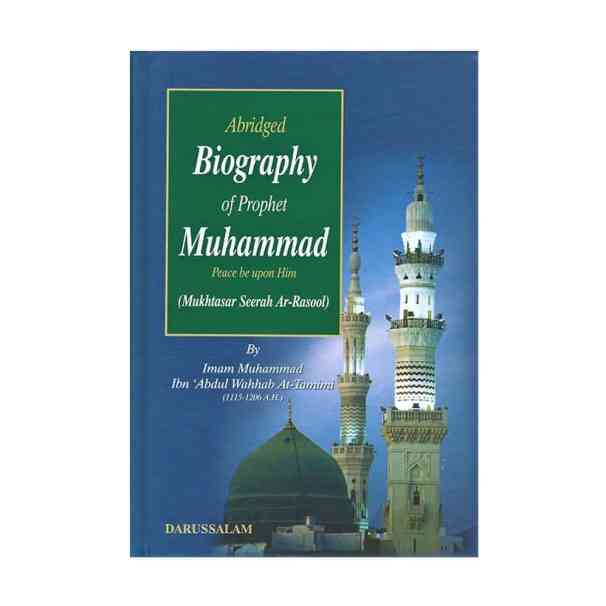
Abridged Seerah of Prophet Muhammad ﷺ – Imam Muhammad bin AbdulWahhaab | Abu Muhammad al Maghribee [Audio Series |En]

Abridged Biography of Prophet Muhammad (Peace be upon him)

Abridged Seerah of Prophet Muhammad sallallahu alaihi wasallam
by  Shaykh Muhammad bin AbdulWahhaab
Abu Muhammad al Maghribee
http://followthesalaf.com

The Book can be purchased at darussalam.com here

[Soundcloud Playlist Link]

Class # Contents:

  • Class 01: Who were the first to embrace Islaam and who was the first martyr of Islaam?
  • Class 02: Covered many topics, such as the first bloodshed in Islaam and the first Hijra
  • Class 03: Reviewed the Second Hijrah to Habasha and continued with discussing the request of the Quraish that an-Najaashee to return the Muslims to the Quraish.
  • Class 04: Ended the last class with the death of An-Najaashee and begin this class with the entrance of Hamza into Islaam, radiyallahu anhumaa.
  • Class 05: Death of Khadijah, the wife of the Messenger, sallallahu alaihi wasallam, and Abi Taalib.
  • Class 06: Questioning of the Quraysh to the messenger, sallallahu alaihi wasallam, regarding the soul and the people of the cave.
  • Class 07: In last class we read about the questions of the Quraysh regarding the Soul and the People of the Cave.  Today we continue reading about the questions and the blessing of being guided to al-Islaam
  • Class 08: Continue with the section “Their Request for Signs” (meaning the Quraysh)
  • Class 09: Departure of the Prophet, sallallahu alaihi wasallam, for Taif

Titles of the other classes will be added soon, inshaa’ Allaah