Warning against the Fitnah of Takfir – Shaykh al Albaani

Warning against the Fitnah of Takfīr
حتذير من فتنة التكفري :Original Title
Author: Muḥammad Nāṣir al-Din al-Albānī
Translator: Abbas Abu Yahya
Website source: – authentic-translations.com

Contents

Translator’s Foreword
Author’s Introduction
The Principles of Understanding the Book and the Sunnah
A Disbelief Less Than Disbelief
The Relationship Between Takfīr and Rebellion
Making Takfīr of Sinners is Not Permissible
Purification and Education

Click the below link to read or download the full document

Warning against the Fitnah of Takfir – Shaykh al Albanee [PDF]

Ways the Misguided Youth Bent on Takfir and Bombings Contradict Islaam – Shaykh Abd al-Muhsin al-‘Abbad

Ways the Misguided Youth Bent on Takfīr & Bombings Contradict Islam
بذل النصح والتذكري لبقايا ااملفتونني بالتكفري والتفجري :Original Title
Author: ‘Abd al-Muḥsin al-‘Abbād
Translated by: Abu az-Zubayr Harrison – authentic-translations.com

This translation consists of some points explained by ‘Abd al-Muḥsin al-‘Abbād in his work titled: “A Reminder to Those Obsessed with Takfīr and Bombings”.

Takfīr: Excommunicating, or the indiscriminate considering and labeling of Muslims as
disbelievers. [Translator’s Note]

Contents of the PDF

Making Takfīr of Other Muslims
Killing Muslims without Right
Committing Suicide
Killing Non-Muslims Who were Promised Safety
Causing Those Once Safe & Secure to Live in Fear
Destroying the Property of Others
Armed Hijacking of Vehicles to Escape
Disguising Themselves in Women’s Clothing

Click the below link to read or download the full document

Ways the Misguided Youth Bent on Takfir & Bombings Contradict Islam-Abd al-Muhsin al-Abbad [PDF]

Ibn al-Uthaymin on Terrorism and Related Issues

Ibn al-‘Uthaymīn on Terrorism & Related Issues
الفتاوى الشرعية يف القضايا العصرية :Original Title
Author: Muḥammad Ibn Ṣāliḥ al-‘Uthaymīn
Translator : Abu az-Zubayr Harrison – authentic-translations.com

Click the below link to read or download the full article PDF:

Terrorism & Related Issues – Shaykh Ibn Uthaymeen [PDF]

It’s Not the Salafis Guilty of Terrorist Acts – Shaykh Ahmad al-Najmi

السلفيون بريئون من األعمال اإلرهابية :Original Title
Author: Aḥmad Ibn Yaḥyá al-Najmī
Translator : Abu az-Zubayr Harrison – authentic-translations.com

Click the below link to read or download the full article PDF:

It is Not the Salafis Guilty of Terrorist Acts – Shaykh Ahmad al-Najmi [PDF]

Muslim and non-Muslim women exchanging visits – Shaykh Ibn Baaz

Q 6: I have some non-Muslim and Muslim neighbors about whom I have some reservations. What is the ruling on exchanging visits with them?

A: Visits exchanged in such circumstance are a good thing enjoined by Islam when they are for the purpose of guidance, advice, and cooperation in righteousness and piety.

The Prophet (peace be upon him) said:

“Allah (Glorified and Exalted be He) says, ‘My Love is due to those who love one another for My Sake, who sit with one another for My Sake, who visit one another for My Sake, and who are generous to one another for My Sake.’” (Related by Imam Malik [may Allah be merciful to him] with a Sahih (authentic) Sanad (chain of narrators)][1]

Also, the Prophet (peace be upon him) said: “There are seven whom Allah will shade with His Shade on the Day when there will be no shade but His Shade…” among them he (peace be upon him) mentioned: “Two men who love each other for the sake of Allah, meeting for that and parting upon that.” [2]

The example given is that of two men, but the ruling is general and applies to two men or two women. Thus, if a Muslim visits another Muslim or non-Muslim for the purpose of calling them to Allah, teaching them and guiding them to goodness without seeking worldly gain or taking the Commands of Allah lightly, this is a good act.

It is good for a Muslim woman to visit her sister in Islam and advise her to avoid Tabarruj (woman’s public display of her adornment or charms), unveiling the face or taking lightly what Allah prohibits. Similarly, it is good to visit her Christian or non-Christian female neighbor, such as a Buddhist woman or the like, to advise, teach, or instruct her. Actually, this comes under the heading of the Prophet’s words: “Religion is sincerity (well-wishing). Religion is sincerity. Religion is sincerity.“[3]  If she responds positively, all praise is to Allah; if she does not then you should give up the visits which do not serve any useful purpose.

Visiting for the purpose of gaining worldly benefits, playing, exchanging idle talks, eating or the like is not permissible to be made to non-Muslims, whether they are the Christians or others. Such visits may corrupt one’s religious commitment or morals, because the Kafirs (disbelievers) are enemies to us and we do not feel love towards them [as a reaction for their Shirk, disbelief, rejection of truth, enmity, sinning, transgression against Allah, etc. Ed]. Thus, we should not take them as protectors or confidants.

However, visits are required when they are made for the purpose of calling to Allah, urging to do goodness, and warning against evil. In Surah (Qur’anic chapter) Al-Mumtahinah, Allah (Glorified be He) says: “Indeed there has been an excellent example for you in Ibrâhîm (Abraham) and those with him, when they said to their people: “Verily, we are free from you and whatever you worship besides Allâh: we have rejected you, and there has started between us and you hostility and hatred for ever until you believe in Allâh Alone”” [Surah Al-Mumtahanah, 60: 4]

[1] Ahmad ibn Hanbal, Musnad, vol. 5, p. 233; and Malik, Al-Muwatta*, Book on miscellaneous matters, no. 1779.

[2] Al-Bukhari, Sahih, Book on Adhan, no. 660; Muslim, Sahih, Book on Zakah, no. 1031; Al-Tirmidhy, Sunan, Book on asceticism, no. 2391; Al-Nasa*y, Sunan, Book on the manners of judges, no. 5380; Ahmad ibn Hanbal, Musnad, vol. 2, p. 439; and Malik, Al-Muwatta*, Book on miscellaneous matters, no. 1777.

[3] Muslim, Sahih, Book on faith, no. 55; Al-Nasa*y, Sunan, Book on Al-Bay`ah, no. 4198; Abu Dawud, Sunan, Book on manners, no. 4944; and Ahmad ibn Hanbal, Musnad, vol. 4, p. 102.

http://www.alifta.net/Fatawa/FatawaChapters.aspx?languagename=en&View=Page&PageID=405&PageNo=1&BookID=14

O Abu ‘Abdullah! Are you groaning?

There are also some Angels who write down the deeds of human beings.

“But verily, over you (are appointed Angels in charge of mankind) to watch you, honorable, writing down (your deeds), they know all that you do” (Al-Infitar 82:10-12)

“Not a word does he (or she) utter, but there is a watcher by him ready (to record it)” (Qaf 50: 18)

One of the companions of Imam Ahmad, may Allah have mercy upon him, visited him while he was sick. He found him groaning from the sickness. He said:

“O Abu ‘Abdullah! Are you groaning? Tawus said ‘Indeed, the Angels write down everything, even the groan of a sick person, because Allah says:

Not a word does he (or she) utter, but there is a watcher by him ready (to record it(Qaf 50: 18)”‘

Therefore, Abu ‘Abdullah began to have (more) patience, and he stopped groaning,[1] because everything is written down. “Not a word does he (or she) utter? – Meaning any word uttered by you is written. However, you might be rewarded or punished for it. This is based on the saying that was said.

[1] For what was reported by Salih bin Al-Imam Ahmad, he said: “During his sickness prior to death, my father said: ‘Take out the book of ‘Abdullah bin Idris.’ then said: ‘Read to me the narration of Laith that Tawus used to dislike groaning during sickness.’ After that I did not hear to my father a groan till he died.” Siyar A’lam An-Nubula (11:215).

Source : Al-’Aqidah Al-Wasitiyyah (2 Vol. Set) – Author: Muhammad bin Salih Al-’Uthaimin – Publisher: Darussalam Publishers & Distributors

The Heaven Creaks And It Has Every Right To Creak – Sahih Hadith

Among them (Angels) are those who are in (constant) bowing and prostration to Allah in the heavens.

The Prophet (Sallallaahu ‘alaihi wa sallam) said:

“The heaven Atat (creak) and it has every right to creak.”

And the Atit is the Sarir Ar-Rahl (camel’s creaking). Meaning: If there was a heavy load on top of the camel, you would hear to it a creaking sound due to the heavy weight of the load.

The Prophet (Sallallaahu ‘alaihi wa sallam) said:

“The heaven creaks and it has every right to creak. There is no place that could contain four fingers in the heavens except that there is an Angel standing, bowing, or prostrating to Allah therein.” [1]

So these Angles cover the vastness of the heavens.

[1] Reported by Abmad (5:173), At-Tirmidhi (2312), Ibn Majah (4190) and Al-Hakim (2:510), from Abu Dharr, may Allah be pleased with him. And his wording is: “The heaven creaks, and it has every right to creak. There is no space for four fingers, except that there is an Angel there, placing its head in prostration to Allah.” The Hadith is referenced by Al-Albani in As-Sahihah (1722).

Source : Al-’Aqidah Al-Wasitiyyah (2 Vol. Set) – Author: Muhammad bin Salih Al-’Uthaimin
Publisher: Darussalam Publishers & Distributors 

Musical Ring Tones on Mobile Phones – Permanent Committee

Fatwa no. 20842

Q: Most mobiles have musical ring tones. Is it permissible to use these musical tones instead of the regular ring tone?  Could you kindly advise and direct us to what is beneficial for Muslims? May Allah reward you and protect you from harm! 

A: It is not permissible to use musical tones on mobiles or other devices, because listening to musical instruments is prohibited as indicated by Shar‘y (Islamic legal) evidence. It is enough to use the regular ring tone.

May Allah grant us success! May peace and blessings be upon our Prophet Muhammad, his family, and Companions!

Permanent Committee for Scholarly Research and Ifta’
Chairman : Imam Ibn Baz rahimahullaah

Source: Fatwas of the Permanent Committee

“Tell me the most astonishing thing your female Jinn has told you of” – Sahih Bukhari

Narrated ‘Abdullah bin ‘Umar:

I never heard ‘Umar saying about something that he thought it would be so-and-so, but he was quite right.

Once, while ‘Umar was sitting, a handsome man passed by him, ‘Umar said, “If I am not wrong, this person is still on his religion of the pre-lslamic period of ignorance or he was their foreteller. Call the man to me.” When the man was called to him, he told him of his thought. The man said, “I have never seen such a day on which a Muslim is faced with such an accusation.”

‘Umar said, “I am determined that you should tell me the truth.”

He said, “I was a foreteller in the pre-lslamic period of ignorance.

Then ‘Umar said, “Tell me the most astonishing thing your female Jinn has told you of.”

He said,

“One-day while I was in the market, she came to me scared and said, ‘Haven’t you seen the Jinns and their despair and they were overthrown after their defeat (and prevented from listening to the news of the heaven) so that they (stopped going to the sky and) kept following camel-riders (i.e. ‘Arabs)?”

‘Umar said, “He is right.” and added,

“One day while I was near their idols, there came a man with a calf and slaughtered it as a sacrifice (for the idols). An (unseen) creature shouted at him, and I have never heard harsher than his voice. He was crying, ‘O you bold evil-doer! A matter of success! An eloquent man is saying: None has the right to be worshipped except you (O Allah).’ On that the people fled, but I said, ‘I shall not go away till I know what is behind this.’ Then the cry came again: ‘O you bold evil-doer! A matter of success! An eloquent man is saying: None has the right to be worshipped except Allah.’ I then went away and a few days later it was said, “A prophet has appeared.”

Sahih Bukhari Volume 5, Book 58, Number 206 – Merits of the Helpers in Madinah (Ansaar). Muhsin Khan English Translation


Praying while Traveling – Shaykh Muhammad Ibn Salih al-Uthaymin

Author: Muhammad Ibn Saalih Al-‘Uthaymeen
Taken from Fataawaa Arkaan Al-Islaam (no. 312 & 315) by Shaykh Ibn Al-‘Uthaymeen.
Translated by Abu az-Zubayr Harrison authentic-translations.com

Click the below Link to read or download the PDF

Praying while Traveling-Shaykh Uthaymeen [PDF]

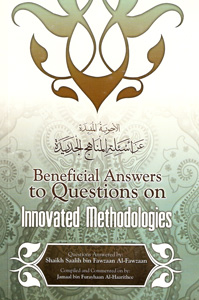
Beneficial Answers To Questions On Innovated Methodologies – Shaykh Saalih Fawzaan – Abu Muhammad al Maghribee [Audio|En]

Beneficial Answers To Questions On Innovated Methodologies - Shaykh Salih FawzaanThis is the weekly Wednesday evening class on the book Al Ajwibah Al Mufeedah ‘An As-ilat Al Manaahij Al Jadeedah (Beneficial Answers to Questions on Innovated Methodologies) by our noble Sheikh Saaleh al-Fawzaan, hafidhahullah.

You may download a copy of the original Arabic text here: الأجوبة المفيدة عن أسئلة المناهج الجديدة

As with all of our classes at Masjid Tawheed in Stone Mountain, GA, we encourage you to join us.

If you are not able to attend in person, please feel free to listen in via our Spreaker channel or our telelink line at 712-432-2856.

About the Book: 

Author: Shaikh Saalih Al-Fawzaan; Compiled by Jamaal bin Furayhaan Al-Haarithee
Publisher: Al-Ibaanah Book Publishing (01-May-04)
Pages: 208 Binding: Paperback

This is a translation of the tremendous book “Al-Ajwibatul-Mufeedah ‘an As’ilatil-Manaahij al-Jadeedah”, which is a compilation of questions presented to Shaykh Saalih al-Fawzaan and his responses to them. The source used for this was the 1997 second edition, published by Daar as-Salaf of Riyadh, Saudi Arabia.

From the topics covered in the book are: The Definition of the Salafee Manhaj, Obedience to the Rulers, Warning against Innovators, Exposition of Deviant Groups, Refutations of Innovated Practices such as Plays and Anaasheed (songs in the name of Islam), the Rulings on Groups and Parties, and Advice to the Students of Knowledge.

Altogether, this combination of a scholar’s guidance and wisdom with a student of knowledge’s research and investigation makes for an incredible and invaluable resource for Muslims everywhere to benefit from.

Beneficial Answers on Innovated Methodologies – 01 – 20140319
Beneficial Answers on Innovated Methodologies – 02 – 20140326
Beneficial Answers on Innovated Methodologies – 03 – 20140402
Beneficial Answers on Innovated Methodologies – 04 – 20140409
Beneficial Answers on Innovated Methodologies – 05 – 20140416
Beneficial Answers on Innovated Methodologies – 06 – 20140423
Beneficial Answers on Innovated Methodologies – 07 – 20140430
Beneficial Answers on Innovated Methodologies – 08 – 20140507
Beneficial Answers on Innovated Methodologies – 09 – 20140514
Beneficial Answers on Innovated Methodologies – 10 – 20140521
Beneficial Answers on Innovated Methodologies – 11 – 20140528
Beneficial Answers on Innovated Methodologies – 12 – 20140820
Beneficial Answers on Innovated Methodologies – 13 – 20140827
Beneficial Answers on Innovated Methodologies – 14 – 20140903
Beneficial Answers on Innovated Methodologies – 15 – 20140910

Question no. 32
Beneficial Answers on Innovated Methodologies – 16 – 20140917

Question no. 35
Beneficial Answers on Innovated Methodologies – 17 – 20140924

Question no. 51
Beneficial Answers on Innovated Methodologies – 18 – 20141022 Q51

Question no. 53
Beneficial Answers on Innovated Methodologies – 19 – 20141029 Q53

Question no. 55
Beneficial Answers on Innovated Methodologies – 20 – 20141105 Q55

Question 55, Footnote 153.
Beneficial Answers on Innovated Methodologies – 21 – 20141112

We continue with Question no. 60: How should we advise the rulers?
Beneficial Answers on Innovated Methodologies – 22 – 20141119

We continue with Question no. 61: Does Salafiyyah divide the Muslims?
Beneficial Answers on Innovated Methodologies – 23 – 20141126

We continue with the Question no. 62: What is Salafiyyah?
Beneficial Answers on Innovated Methodologies – 24 – 20141203

We start with Question no. 65: Is the one who performs an innovated action without knowing that it is an innovation, rewarded for it?
Beneficial Answers on Innovated Methodologies – 25 – 20141210

We continue with Question no. 67: What is the ruling of the one who loves a caller to Islam and doesn’t want him to be refuted?
Beneficial Answers on Innovated Methodologies – 26 – 20141217

We continue with Question no. 71: There are so many groups amongst the Muslims; which one is upon the truth and how can we tell?
Beneficial Answers on Innovated Methodologies – 27 – 20141231

We continue with the Question no. 74: What is the ruling on the one who speaks ill of the scholars?
Beneficial Answers on Innovated Methodologies – 28 – 20150114

We continue with Question no. 75: What is the ruling on taking disbelievers as allies?
Beneficial Answers on Innovated Methodologies – 29 – 20150121

We continue with the Question no. 78: What is the shaykh’s advice to those who accuse him of not outwardly repelling the faults of the rulers?
Beneficial Answers on Innovated Methodologies – 30 – 20150128

We continue with Question no. 85: What are the means that lead to unity?
Beneficial Answers on Innovated Methodologies – 31 – 20150204

We continue with Question no. 85: What are the actions that will lead to the unity of Muslims?
Beneficial Answers on Innovated Methodologies – 32 – 20150304

We cover Question no. 93: Is it possible for Muslims to be united even though they have different methodologies and creeds?
Beneficial Answers on Innovated Methodologies – 33 – 20150311

We cover Question no. 94: Is it possible for Muslims to be united even though they are split into different parties?
Beneficial Answers on Innovated Methodologies – 34 – 20150318

We cover Question no. 95: What is the ruling on suicide bombings?
Beneficial Answers on Innovated Methodologies – 35 – 20150325

We continue with Question no. 98: Are “protests” part of calling to Islam?
Beneficial Answers on Innovated Methodologies – 36 – 20150401

We continue with Question 99: What is your opinion of protests and demonstrations?
Beneficial Answers on Innovated Methodologies – 37 – 20150408

We continue with Question no. 102: Why did the Salaf warn against the “Qussaas” (the storytellers)?
Beneficial Answers on Innovated Methodologies – 38 – 20150415

We begin with Question no. 103: Where did these so-called Islamic groups come from?
Beneficial Answers on Innovated Methodologies – 39 – 20150422

We begin with Question no. 105: Who is the Jama’at at-Tableegh and what is their manhaj?
Beneficial Answers on Innovated Methodologies – 40 – 20150506

We continue with Question no. 108: Is there any advice that will serve as a guideline for those who have been deceived by the deviant groups?
Beneficial Answers on Innovated Methodologies – 41 – 20150513

These are ongoing series, check the below link for updates

Sourcehttp://followthesalaf.com/home/?tag=Beneficial+Answers+on+Innovated+Methodologies

The difference between Ibadah (Worship) and Obedience – Imam Ibn Baaz

In the Name of Allah, the Most Gracious, the Most Merciful

An extract from my letter I sent to His Excellency Shaykh Abu Al-A`la Al-Mawdudy concerning the difference between `Ibadah and obedience

On 2/4//1392 A.H., Abu Al-A`la Al-Mawdudy sent me a letter no. 1526, dated 2 Safar, 1392 A.H. explaining his case and Tufayl’s, his successor in the leadership of Islamic Group. I replied in the same year when I was the President of the Islamic University in Al-Madinah Al-Munawwarah and the following is some of my reply:

Some brothers from Milbar living in the country told me that Your Eminence opine that `Ibadah is clarified by obedience and that when someone obeys another, he worships him. `Ibadah is also interpreted as enslavement and idolization.

Furthermore, Shaykh `Umar ibn Ahmad Al-Millibary, owner of Al-Salsabil Magazine, wrote to me concerning this issue asserting what is mentioned about you and the Group. He sent me a copy of a survey pertaining to this question. You will find an enclosed copy of it.

This question appears strange for me so I determined to write to you before I receive your letter to know whether these statements which are attributed to you are true. So, please let me know your opinion. I see that obedience has a wider scope than `Ibadah. Every act of `Ibadah a person does in compliance with Allah’s Shari`ah is seen as obedience, but not every act of obedience to anything other than Allah (Exalted be He) is seen as `Ibadah. This matter needs more elaboration. Obedience to Allah (Exalted be He) is seen as `Ibadah when a person seeks to please Him. However, it may be valid or corrupt depending on whether the requirements of `Ibadah are met.

Please tell me in details your view on this question. It adds further explanation that `Ibadah may be denied when tainted with Shirkas Allah says concerning Mushrik (one who associates others with Allah in His Divinity or worship), “Nor will you worship that which I worship.” Surah Al-Kafirun, 109: 3 . Ibadah is negated because of their acts of Shirk. It is known that they worship Allah (Exalted be He) during times of hardships through showing Tawhid, performing Hajj and `Umrah, offering Sadaqah and so on.

Since these acts of `Ibadah are spoiled by Shirk, disbelief in the Hereafter and other kinds of disbelief during times of prosperity, it is permissible to negate the `Ibadah of people who show it. Furthermore, I would like to explain another point. The person who obeys the authorities or rulers in something forbidden by Allah (Exalted be He) is not seen worshipping them when he does not believe in the permissibility of obedience to anyone in something opposing Allah’s Shari`ah. They rather obey these rules out of fear of their evils or vain desires while they know that they are sinful. Due to their act of obedience, such persons are sinners, not Mushriks, unless they obey such rulers in matters which do not involve Shirk. Examples of these matters include striking, killing, and taking someone’s money unjustly. There are many other examples that come under this heading. I think this view is known by the people of knowledge whose status is below yours. I find it imperative to ask you about this and know your detailed opinion so that I can refute any claim against you and support you with sure knowledge and show the truth concerning the Islamic Group to any one who seeks it.

If what is attributed to you is true, we can discuss it thoroughly and examine the problematic issues using the evidence. The truth is the long-sought aim of everyone.

We ask Allah (Exalted be He) to grant us success to do what pleases Him and to comprehend His Religion and to adhere to it. May Allah purify our hearts and deeds and make the truth our long-sought aim wherever we are, for He is the Most Generous. As-salamu `alaykum warahmatullah wabarakatuh (May Allah’s Peace, Mercy, and Blessings be upon you!)

President of the Islamic University in Al-Madinah Al-Munawwarah
Abdul-`Aziz ibn `Abdullah ibn Baz

Sourcehttp://www.alifta.net/Fatawa/FatawaChapters.aspx?languagename=en&View=Page&PageID=442&PageNo=1&BookID=14

Happiness, Misery, and Signs of Their People – Ibn Qayyim Al-Jawziyyah

Original Title : السعادة والشقاوة وعالمة أهلها )الفواْئد)
Original Author: Ibn Qayyim Al-Jawziyyah
Translator : Abu az-Zubayr Harrison –  authentic-translations.com
This article is taken from Ibn Qayyim Al-JAwziyyah’s famous book, “Al-Fawaaid” (no. 112)

Click below link to read or download article PDF

Happiness, Misery, and Signs of Their People-Ibn al Qayyim [PDF]

From the signs of happiness and joy is that whenever a worshipper increases in knowledge, his humbleness and mercy increases. Whenever he increases in acts of worship, his fear and caution increases. Whenever he increases in age, his greed decreases. Whenever he increases in wealth, his generosity and spending increases. And whenever he increases in status and position, his nearness to the people increases as does his fulfilling their needs and being humble with them.

And from the signs of misery is that whenever a worshipper increases in knowledge, his pride and arrogance increases. Whenever he increases in acts of worship, his bragging increases as does his belittling of people while always giving himself the benefit of the doubt. And whenever he increases in status and position, his arrogance and ego increases.

All of these things are trials from Allaah and a test by which He tests His servants, and because of them, some people attain happiness and others become miserable.

Similarly, some things people honor and admire are also trials like possessions, authority, and wealth. Allaah says about His prophet, Sulaymaan, when he saw the throne of Bilqees in front of
him:

“هَذَا مِنْ فَضْلِ رَبِّي لِيَبْلُوَنِي أَأَشْكُرُ أَمْ أَكْفُرُ “

This is from the favor of My Lord to test me whether I will be grateful or ungrateful. [Soorah An-Naml, 27:40]

So, blessings are tests from Allaah that make apparent the gratitude of the grateful, and the ingratitude of the ungrateful. In the same way, hardhips are also trials from Him سُبْحَانَه .He tests by way of blessings and hardships.

Allaah says:

“فَأَمَّا الإِنْسَانُ إِذَا مَا ابْتَلاهُ رَبُّهُ فَأَكْرَمَهُ وَنَعَّمَهُ فَيَقُولُ رَبِّي أَكْرَمَنِ وَأَمَّا إِذَا مَا ابْتَلاهُ فَقَدَرَ عَلَيْهِ
رِزْقَهُ فَيَقُولُ رَبِّي أَهَانَنِ “

And as for man, when his Lord tests him and is generous to him and favors him, he says, “My Lord has honored me!” But when He tests him and restricts his provision, he says, “My Lord has humiliated me!” [Soorah Al-Fajr, 89:15-16]

In other words, it’s not the case that everyone I increase with honor and blessings, that’s My way of honoring him. And everyone I tighten his sustenance and test him, it’s not necessarily that I’m humiliating him.

Story of Prophet Yusha Bin Nun (Joshua) – Riyadus Saliheen- Dr.Saleh As-Saleh [Audio|En]

Listen / Download Mp3 Here (Time 32:46)

The following is posted from Riyadus Saliheen Published by Dar-us-Salam

Abu Hurairah (May Allah be pleased with him) reported that the Messenger of Allah (sallallaahu ’alayhi wa sallam) said:

“One of the earlier Prophets who was out on an expedition proclaimed among his people that no man should follow him who had married a woman with whom he wished to cohabit but had not yet done so, or who had built houses on which he had not yet put the roofs, or who had bought sheep or pregnant she-camels and was expecting them to produce young. He, then, went on the expedition and approached the town at the time of the ‘Asr prayer or little before it. He then told the sun that both it and he were under command and prayed Allah to hold it back for them, so it was held back till Allah gave him victory. He collected the spoils and it (meaning fire) came to devour these, but did not. He said that among the people there was a man who stole from the booty. He told them that a man from every tribe must swear allegiance to him, and when a man’s hand stuck to his, he said: “There is thief among you and every individual of your tribe must swear allegiance to me”. (In course of swearing of allegiance,) hands of two or three persons stuck to his hand. He said: “The thief is among you”. They brought him a head of gold like a cow’s head and when he laid it down, the fire came and devoured the spoils. Spoils were not allowed to anyone before us, then Allah allowed spoils to us as He saw our weakness and incapacity and allowed them to us”.

[Al-Bukhari and Muslim].

Commentary:

1. In the opinion of Imam As-Suyuti, the Prophet (sallallaahu ’alayhi wa sallam) referred to in this Hadith was Prophet Yusha` bin Nun (Joshua). His conduct shows that it is necessary to make suitable arrangements for the worldly needs of those who are engaged in the Cause of Allah so that they can concentrate on their struggle without any distraction.

2. The lawfulness of the booty of war fought in the way of Allah is a specialty of the Muslim Ummah. Before the advent of Islam (the Shar’iah of Prophet Muhammad (sallallaahu ’alayhi wa sallam)), the booty of war which was free from dishonesty used to be consumed by fire. This Hadith also confirms the miracle of the Prophet Yusha’ (Joshua) in which the movement of the sun was stopped until he had conquered the village.

The reward of the patient in this world and in the Hereafter – Imam Ibn Baaz

Q: Could you please tell us about the reward that Allah prepares for the patient in this world and in the hereafter and those who are obedient to Him (Exalted be He)?

A: Allah (Glorified be He) created mankind and Jinn (creatures created from fire) to worship Him Alone and not to associate any partner with Him. He (Exalted be He) thus says:

“And I (Allâh) created not the jinn and mankind except that they should worship Me (Alone).” Surah Al-Dhariyat, 51: 56

Allah (Exalted be He) also says:

“O mankind! Worship your Lord (Allâh), Who created you and those who were before you so that you may become Al-Muttaqûn (the pious – See V.2:2).” Surah Al-Baqarah, 2: 21

The `Ibadah (worship) that mankind and Jinn are created for and commanded to do is to obey Allah (Exalted be He), avoid His prohibitions, and mention Him abundantly. The essence of `Ibadah is to believe in Tawhid (belief in the Oneness of Allah) and to manifest this through making Du`a’ (supplication) to Allah Alone, fearing Allah Alone, longing for His Mercy, and being sincere to Him in all forms of `Ibadah such as Salah (Prayer), Sawm (Fast), and so on.

Allah (Exalted be He) promises His obedient slaves that He will bestow upon them abundant goodness and praised rewards in this world and in the hereafter. Allah (Exalted be He) promised them that He will grant them Jannah (Paradise) and dignity in the Hereafter. Thus, Allah (Exalted be He) says:

“So be patient. Surely, the (good) end is for Al-Muttaqûn (the pious)” Surah Hud, 11: 49

Allah (Exalted be He) also says:

“…but give glad tidings to As-Sâbirûn (the patient).” Surah Al-Baqarah, 2: 155

“Who, when afflicted with calamity, say: “Truly! To Allâh we belong and truly, to Him we shall return.”” Surah Al-Baqarah, 2: 156

“They are those on whom are the Salawât (i.e. who are blessed and will be forgiven) from their Lord, and (they are those who) receive His Mercy, and it is they who are the guided ones.” Surah Al-Baqarah, 2: 157

He (Exalted be He) also says:

“Only those who are patient shall receive their reward in full, without reckoning.” Surah Al-Zumar, 39: 10

Allah (Glorified and Exalted be He) also says:

“Whoever works righteousness – whether male or female – while he (or she) is a true believer (of Islâmic Monotheism) verily, to him We will give a good life (in this world with respect, contentment and lawful provision), and We shall pay them certainly a reward in proportion to the best of what they used to do (i.e. Paradise in the Hereafter).” Surah Al-Nahl, 16: 97

Moreover, the Prophet (peace be upon him) said:

Nobody is given a blessing better and greater than patience.” [1]

He (peace be upon him) also said:

Wonderful are the affairs of a believer, for there is good in every affair of them. If they have an occasion to feel delight, they thank ‘Allah’, thus there is good for them in it; and if they suffer from an affliction, they endure it patiently, which is good for them. This is not the case with anyone else except a believer.[2]

Thus, the patient person has a praised reward in this world and in the hereafter or he will be rewarded in Jannah and dignified in the hereafter. It is worth mentioning that such a reward will only be given to the patient person who shows patience regarding being pious, adherence to obedience of Allah, and enduring the hardships that they encounter in this world; poverty, illness, and so on. Allah (Glorified be He) says:

“It is not Al-Birr (piety, righteousness, and each and every act of obedience to Allâh, etc.) that you turn your faces towards east and (or) west (in prayers); but Al-Birr is (the quality of) the one who believes in Allâh, the Last Day, the Angels, the Book, the Prophets” Surah Al-Baqarah, 2: 177

until His Saying:

“…and who are patient in extreme poverty and ailment (disease) and at the time of fighting (during the battles). Such are the people of the truth and they are Al-Muttaqûn (the pious).” Surah Al-Baqarah, 2: 177

Generally speaking, patience and piety always lead to praised consequences. Allah (Exalted be He) tells the believers regarding their enemy:

“But if you remain patient and become Al-Muttaqûn [the pious – See V.2:2], not the least harm will their cunning do to you. Surely, Allâh surrounds all that they do.” Surah Al-`Imran, 3: 120

Footnotes :

[1] Al-Bukhari, Sahih, Book on Zakah, no. 1469; Muslim, Sahih, Book on Zakah, no. 1053; Al-Tirmidhy, Sunan, righteousness, and upholding ties of kinship, no. 2024; Al-Nasa*y, Sunan, Book on Zakah, no. 2588; Abu Dawud, Sunan, Book on Zakah, no. 1644; Ahmad ibn Hanbal, Musnad, vol. 3, p. 94; Malik, Al-Muwatta*, Book on general matters, no. 1880; and Al-Darimy, Sunan, Book on Zakah, no. 1646.’

[2] Muslim, Sahih, Book on asceticism and heart-softening narrations, no. 2999; Ahmad ibn Hanbal, Musnad, vol. 6, p. 16; and Al-Darimy, Sunan, Book on heart-softening narrations, no. 2777.’

Source : http://www.alifta.net/Fatawa/FatawaChapters.aspx?languagename=en&View=Page&PageID=886&PageNo=1&BookID=14

The Characteristics of Modern-Day Khawarij as Told by the Rulings of Contemporary Scholars

Original Title : صفات خوارج العصر من فتاوى علماء العصر
Author: Various Scholars
Translated by: Abu az-Zubayr Harrison – authentic-translations.com

This article is a compilation of quotes from contemporary scholars. The Arabic text can be found at: http://fatwa1.com/anti-erhab/Irhabion/khwarjalasar.html.

Click the below link to read or download the full document

The Characteristics of Modern-Day Khawarij as Told by the Rulings of Modern-Day Scholars [PDF]

The Saudi Arabian Government – Shaykh Ibn Uthaymeen

Original Title : الفتاوى الشرعية يف القضايا العصرية
Author: Muḥammad Ibn Ṣāliḥ al-‘Uthaymīn
Translated by: Abu az-Zubayr Harrison – authentic-translations.com

Question: What is your reply to one who says that most of the evils present in the land of Tawḥīd (referring to Saudi Arabia) come from the government itself, and that the leaders are not Salafī (following the righteous Muslim predecessors)?

Click the below link to read or download the full document

The Saudi Arabian Government – Shaykh ibn Uthaymeen [PDF]

Tafseer – Explanation Surah 18 Al-Kahf – Shaykh ibn Uthaymeen – Dr Saleh as Saleh [Audio|En]

Based Upon the Tafseer of Shaykh Ibn Al-‘Uthaymeen rahimahullaah

Tafseer – 18. Al-Kahf – 01 to 10 – Saleh-As-Saleh

Verses 11-19 – Not Available

Tafseer – 18. Al-Kahf – 20 to 24 – Saleh-As-Saleh

Verses 25-26 – Not Available

Tafseer – 18. Al-Kahf – 27 to 30 – Saleh-As-Saleh

Tafseer – 18. Al-Kahf – 30 to 40 – Saleh-As-Saleh

Tafseer – 18. Al-Kahf – 41 to 44 – Saleh-As-Saleh

Tafseer – 18. Al-Kahf – 45 to 48 – Saleh-As-Saleh

Tafseer – 18. Al-Kahf – 49 to 51 – Saleh-As-Saleh

Tafseer – 18. Al-Kahf – 51 to 52 – Saleh-As-Saleh

Tafseer – 18. Al-Kahf – 52 to 57 – Saleh-As-Saleh

Tafseer – 18. Al-Kahf – 57 to 73 – – Saleh-As-Saleh

Tafseer – 18. Al-Kahf – 74 to 83 – Saleh-As-Saleh

Tafseer – 18. Al-Kahf – 83 to 86 – Saleh-As-Saleh

Tafseer – 18. Al-Kahf – 86 to 97 – Saleh-As-Saleh

Tafseer – 18. Al-Kahf – 98 – Saleh-As-Saleh

Tafseer – 18. Al-Kahf – 99 to 105 – Saleh-As-Saleh

Principles of Tafseer – Shaykh Ibn Uthaymeen – Dr Saleh as Saleh [Audio|En]

Principles of Tafseer: is the science that look into the rules of explaining the Quran. This series is based on the book ’Usool Al-Tafseer’ for Shaikh Muhammad Bin Saleh Al-Othaimeen (may Allah’ mercy be on him)

  1. Introduction – Definition
  2. Pre- and Post-Hijrah Revelation
  3. Reasons for Revelation
  4. Arrangement and Compilation
  5. Foundation – Meaning
  6. Mufassiruun – Companions
  7. Impossibility of Contradictions
  8. Oaths in the Quraan
  9. Narrations
  10. Israelites
  11. Translations of the Quraan
  12. Types of Abrogations
  13. Israelites
  14. Clear Verses and Others Verses

Tafseer – Explanation of Surah Al-Faatihah – Dr Saleh as Saleh [Audio|En]

Listen / Download Mp3 Here (Time 42:48)

A Concise Interpretation of the Opening Surah of the Quraan, Al-Fatihah [PDF]
Based upon the Tafseer of Shaykh Ibn Al’Uthaymeen, rahimahullaah

The Opening Soorah (Chapter)

This Soorah has been named Al-Faatihah (The Opening) because the Grand Qur’aan is commenced therewith. It is also called Al-Mathaanee (repeatedly recited verses) because it is recited in every Rak’ah (unit of prayer), and it has other names as well.

1. { بِسْمِ اللَّهِ الرَّحْمَٰنِ الرَّحِيمِ }I begin and commence [the task of recitation, or any other lawful task or affair] seeking the aid of the name of Allaah in the accomplishment [of the particular task] and in the pursuance of the right way [in the intended affair], and in petitioning for acceptance [of this or any other good deed].

{ الله } : Allaah is the ‘Alam (identifying name or title) of the Rabb, [01] the Blessed and the Most High, who, and non else besides Him, is worshipped rightfully and deservingly. This is the most particular name of the names of Allaah, the Most High, and cannot be applied to other than Him, the One free of all imperfection.

{ الرَّحْمَان } Ar-Rahmaan: The One whose Mercy encompasses the entire creation.

{ الرَّحِيم } Ar-Raheem: The One who has Mercy upon the believers. Both, Ar-Rahmaan and Ar-Raheem, are two names of the names of Allaah, the Most High.

2. { الْحَمْدُ لِلَّهِ رَبِّ الْعَالَمِينَ } This is a statement of praise which Allaah praised Himself with. Implicit therein is an ordinance to His slaves to celebrate His Praise, for He, alone, is the One worthy of [all] praise. And He, the One free of all imperfection (Subhaanahu), is the One who originated all of creation, the One who takes charge (guards, protects, maintains, etc.) of their affairs; the One who nurtures and sustains all of His creation with His favours and blessings, and His friends (awliyaa’) with eemaan (faith) and righteous deeds.

3. { الرَّحْمَانAr-Rahmaan: The One whose Mercy encompasses the entire creation.
{ الرَّحِيمAr-Raheem: The One who has Mercy upon the believers.

4. { مَالِكِ يَوْمِ الدِّينِ } : It is He [Allaah], the One free of all imperfection, the only Owner (and the only Ruling Judge) of the Day of Resurrection (Yawmul Qiyaamah) which is the Day of Requital of deeds. Restricting [His] Dominion to the Day of Recompense (Yawmuddeen) is because no one will claim [the ownership of] anything on the Day of Resurrection, and because no soul shall speak except by His [Allaah’s] Leave. In the Muslim’s recitation of this Aayah in every Rak’ah of his prayers, there is a reminder for him of the Last Day, and an incitement to make himself ready by doing righteous deeds and refraining from sinful and evil acts.

5. { إِيَّاكَ نَعْبُدُ وَإِيَّاكَ نَسْتَعِينُ }We solely single You out [O Allaah] with all acts of obedience and all worship, and to You alone we appeal for aid in all of our affairs, for indeed all the matters are in Your Hand, none [else] possess not even an ant’s weight of it!

In this Aayah there is proof that it is not permissible for the ‘Abd [slaveworshipper of Allaah] to direct anything from the types of worship except to Allaah alone. In it there is a healing for the hearts from the ailment of devotion to other than Allaah, and from the diseases of Riyaa’ (showing off in good works), vanity, and arrogance.

6. { اهْدِنَا الصِّرَاطَ الْمُسْتَقِيمَ }Show us, guide us, and grant us the ability to purse the Straight Path and make us firmly established upon it until we meet You. The Straight Path is Islaam, the clear Way leading to attain the Pleasure of Allaah and His Jannah (Paradise), and which the end (last) of Allaah’s Messenger and Prophets [i.e. Muhammad(صَلَّى اللّٰهُ عَلَيْهِ وَسَلَّم)] directed us to it. There can be no way for the ‘Abd to attain happiness except by being upright on it.

7. { صِرَاطَ الَّذِينَ أَنْعَمْتَ عَلَيْهِمْ غَيْرِ الْمَغْضُوبِ عَلَيْهِمْ وَلَا الضَّالِّينَ }The Way of those upon whom You have conferred Your Favours of the Prophets, the Siddeeqeen,[2] the martyrs, and the righteous. Indeed, they are the ones worthy of guidance and who deserve to be rightly directed. And make us not of those who pursed the way of those who were the objects of Allaah’s Anger (Al-Maghdoobi ‘Alayhim), the Jews and likewise, who knew the truth but did not apply it; nor of those who have gone astray, the ones who were misguided and consequently have strayed away for the right path. These are An-Nasaara (the Christians) and whoever follows their way.

In this du’aa (invocation) there is a cure for the Muslim’s heart from the ailment of Jahd (knowingly denying the truth), ignorance, and misguidance, and a proof that the greatest favour at all is that of Islaam. So whoever is more knowledgeable of the truth and more pursuant of it is more entitled to the Straight Path. Without a doubt that among mankind, aside from the Prophets ‘Alayhimus-Salaam, the companions of Allaah’s Messenger (صَلَّى اللّٰهُ عَلَيْهِ وَسَلَّم) have the best claim to this [Path]. Indeed, the Aayah proves their excellence and their great rank and standing, Radiyallaahu ‘Anhum (may Allaah be pleased with them).

It is praiseworthy for the reader to say “Aameen” after the recitation of Al-Faatihah which means “O Allaah, respond.” It is not, however, an Aayah of Sooarat Al-Faatihah as this is agreed upon by the scholars. For this reason they unanimously agreed that it is not to be written in the copies (Masaahif, sing. Mus’haf) of the Noble Qur’aan.

The slave hoping for Allaah’s Mercy and Forgiveness
Saleh As-Saleh, 1421 A.H
Revised 3rd of Dhul Qi’dah, 1427, Nov. 24th 2006

Footnotes:

[1] Rabb: Allaah is sole Rabb: He is the One Who gave all things the power to grow, to move and to change, to Whom belongs the Creation and Commandment; the Master Who has no equal in His Sovereignty, Predominance, and Highness, the One Who Provides for and Sustains all that exists, and who brings into existence things from nothing. The word “Lord” used in translating the word Rabb into the English Language, is not truly equivalent to the comprehensive meaning of the name Ar-Rabb.

[2] Siddeeqeen (Sing. Siddeeq): One who eminently, or always, accepting, or confirming the truth in his saying, belief, and deeds. They are the followers of the Prophets who were first and foremost to believe in them, like Abu Bakr As-Siddeeq, Radiyallaahu ‘Anhu.

Related Linkhttps://abdurrahman.org/tafseer-ul-quran