Eemaan is NOT one entity, and its people regarding it are NOT the same – Dawud Burbank [Audio|En]

Aqeedah Tahaawiyyah: Lesson 35  : Point [140-141]

140.Eemaan is one entity, and its people regarding it are the same. **
141.And variation in excellence between them is by fear and dutifulness, and by opposing desires, and by adhering to what has most right.

Quote from Shaykh Fawzan:

“This is a mistake. Because eeman is not one entity and its people are not all the same. Rather eeman varies in levels of excellence and it increases and it decreases, except in the view of the murji’ah”

[Souncloud Audio Link]

At-Ta`leeqaat Al-Mukhtasarah `alaa Matn Al-`Aqeedah AtTahaawiyyah. By Shaykh Saalih ibn Fawzaan al-Fawzaan hafizahullaah. Translated by Aboo Talhah Daawood Burbank, rahimahullaah, in 1426AH

Posted with kind permission from Dawud Burbank rahimahullaah

Commentary from Imam Ibn Baz (Source : alifta.net)

His statement, “Faith is the same for the faithful in terms of its basis” is disputable, even Batil (null and void), for the faithful are not the same in terms of faith. Rather, they vary considerably in faith. The faith of the messengers is not like that of others. Similarly, the faith of the Rightly-Guided Caliphs and the rest of the Sahabah (Companions of the Prophet), may Allah be pleased with them, is like not that of others. Likewise, the faith of Mu’mins (believers) is not like that of Fasiqs (people flagrantly violating Islamic law). Faith varies according to the awareness of Allah, His names, attributes, and Shari`ah (Islamic law), according to Ahl-ul-Sunnah wal-Jama`ah (adherents to the Sunnah and the Muslim mainstream), unlike Al-Murji’ah (a deviant Islamic sect claiming that Faith is restricted to belief, not deeds) and those who follow them. Allah is the One sought for help.

Listen to the Full Audio Series of Aqeedah Tahaawiyyah:
Explanation of Aqeedah at-Tahaawiyyah – Dawud Burbank [Audio|En]

Book Study Resource : Aqeedah at-Tahaawiyyah – Imam at-Tahaawi

Related Link: Eeman – https://abdurrahman.org/belief/imaan-faith-pillars/

Everything which is authentic (whether Mutawatir or Ahad) from the Messenger صَلَّى اللّٰهُ عَلَيْهِ وَسَلَّم from the Legislation and the clear explanation is all true

Aqeedah Tahaawiyyah: Lesson 35  : Point [139]

Dawud Burbank [Audio|En]

139.Everything which is authentic from the Messenger صَلَّى اللّٰهُ عَلَيْهِ وَسَلَّم from the Legislation and the clear explanation is all true.

[Souncloud Audio Link]

At-Ta`leeqaat Al-Mukhtasarah `alaa Matn Al-`Aqeedah AtTahaawiyyah. By Shaykh Saalih ibn Fawzaan al-Fawzaan hafizahullaah. Translated by Aboo Talhah Daawood Burbank, rahimahullaah, in 1426AH

Posted with kind permission from Dawud Burbank rahimahullaah

Listen to the Full Audio Series of Aqeedah Tahaawiyyah:
Explanation of Aqeedah at-Tahaawiyyah – Dawud Burbank [Audio|En]

Book Study Resource : Aqeedah at-Tahaawiyyah – Imam at-Tahaawi

Please Read:  The Virtue of Abu Ubayda and using Khabar al-Ahad as a proof – Shaykh al-Alabanee – Translated by Abbas Abu Yahya

Related Link: Sunnah – https://abdurrahman.org/sunnah/

Eemaan (true faith) is the Belief of the Heart, Speech of the Tongue and Actions of the Limbs – Aqeedah Tahawiyyah | Dawud Burbank

Aqeedah Tahaawiyyah: Lesson 34  : Point [138]

138.And Eemaan (true Faith) is to affirm with the tongue,and to believe with the heart. **

[Souncloud Audio Link]

At-Ta`leeqaat Al-Mukhtasarah `alaa Matn Al-`Aqeedah AtTahaawiyyah. By Shaykh Saalih ibn Fawzaan al-Fawzaan hafizahullaah. Translated by Aboo Talhah Daawood Burbank, rahimahullaah, in 1426AH

Posted with kind permission from Dawud Burbank rahimahullaah

Listen to the Full Audio Series of Aqeedah Tahaawiyyah:
Explanation of Aqeedah at-Tahaawiyyah – Dawud Burbank [Audio|En]

Book Study Resource : Aqeedah at-Tahaawiyyah – Imam at-Tahaawi

Related Link: Iman – abdurrahman.org/belief/imaan-faith-pillars/

The Believer exiting from Eemaan – Aqeedah Tahawiyyah | Dawud Burbank [Audio|En]

Aqeedah Tahaawiyyah: Lesson 34  : Point [137]

137.And the servant does not exit from Eemaan except by denying that which entered him into it.

[Souncloud Audio Link]

At-Ta`leeqaat Al-Mukhtasarah `alaa Matn Al-`Aqeedah AtTahaawiyyah. By Shaykh Saalih ibn Fawzaan al-Fawzaan hafizahullaah. Translated by Aboo Talhah Daawood Burbank, rahimahullaah, in 1426AH

Posted with kind permission from Dawud Burbank rahimahullaah

Commentary from Shaykh Ibn Baz : ( from alifta.net)

This restriction should be considered. A disbeliever embraces Islam on the pronunciation of the Two Shahadahs (Testimonies of Faith) if he has not already pronounced them. If he has already pronounced them, he re-embraces Islam by Tawbah (repentance to Allah) for the cause for his disbelief. He may get out of the fold of Islam for many reasons other than ingratitude, as indicated by scholars in the Chapter on the Ruling on the Murtad (Apostate). Such causes include blasphemy against Islam or the Prophet, peace be upon him, or making a mockery of Allah, His Messenger, Book, or anything of His Shar` (Law) for Allah, Exalted be He, says: “Say, ‘Is it Allah and His verses and His Messenger that you were mocking?’ Make no excuse; you have disbelieved after you had believed.

One of the causes for disbelief is idolatry, supplicating to the dead, making Istighathah (beseeching for help) to them and the like, for this contradicts the testimony of “There is none worthy of Worship except Allah,” which indicates that worship is an exclusive right of Allah Alone.

Other causes for disbelief are making Du`a’ (supplication), Istighathah, Ruku` (bowing), Sujud (Prostration), slaughtering, making a vow, and the like to something other than Allah. He who does any of these things to something other than Allah, including idols, angels, Jinn (creatures created from fire), the dead, and other creatures, commits Shirk (associating others with Allah in His Divinity or worship) and does not act upon the testimony of “There is none worthy of Worship except Allah”.

All such acts bring one out of the fold of Islam, according to the Ijma` (consensus of scholars) of the scholars. These are not merely acts of ingratitude. The evidence for this is derived from the Book of Allah and the Sunnah of the Prophet. There are many other acts that cause a Muslim to be declared a disbeliever and they are not then merely acts of ingratitude. Such acts are cited by the scholars in the Chapter on the Ruling on the Murtad. So you can refer to them. May Allah grant us success.

Listen to the Full Audio Series of Aqeedah Tahaawiyyah:
Explanation of Aqeedah at-Tahaawiyyah – Dawud Burbank [Audio|En]

Book Study Resource : Aqeedah at-Tahaawiyyah – Imam at-Tahaawi

Feeling totally secure and totally despairing – both of these take a person outside the Religion of Islaam – Aqeedah Tahawiyyah

Aqeedah Tahaawiyyah: Lesson 33B  : Point [135]
Dawud Burbank – Audio|English

135. And feeling totally secure and totally despairing-both of these take a person outside the Religion of Islaam

[Souncloud Audio Link]

At-Ta`leeqaat Al-Mukhtasarah `alaa Matn Al-`Aqeedah AtTahaawiyyah. By Shaykh Saalih ibn Fawzaan al-Fawzaan hafizahullaah. Translated by Aboo Talhah Daawood Burbank, rahimahullaah, in 1426AH

Posted with kind permission from Dawud Burbank rahimahullaah

Listen to the Full Audio Series of Aqeedah Tahaawiyyah:
Explanation of Aqeedah at-Tahaawiyyah – Dawud Burbank [Audio|En]

Book Study Resource Aqeedah at-Tahaawiyyah – Imam at-Tahaawi

Love, Hope and Fear abdurrahman.org/category/islam/hope-fear/


Al-Fitrah (Natural Disposition) : Riyaad-us-Saaliheen – Dawood Burbank [Audio|En]

Listen to the four part audio Series from Dawud Burbank (rahimahullaah), may Allaah grant him Jannatul Firdous, ameen

Ahadeeth Covered in these Lessons:

Abu Hurairah (May Allah be pleased with him) reported: The Prophet (sallallaahu alayhi wa sallam) said, “There are five acts which conform to the pure nature: Circumcision, removing of the pubic hair, clipping the nails, plucking the underarm hair and trimming the moustache.” [Al-Bukhari and Muslim].

Aishah (May Allah be pleased with her) reported: The Messenger of Allah (sallallaahu alayhi wa sallam) said, “There are ten demands of pure nature: trimming the moustache, letting the beard grow, using Miswak (tooth-stick), snuffing up water into the nose (in ablution), paring the nails, washing the bases of the finger joints; plucking the underarm hair, removing of the pubic hair and removing impurities with water from the affected part after a call of nature.”

The subnarrator said: I forgot the tenth but it might possibly be the rinsing of the mouth (in ablution). [Muslim].

Ibn `Umar (May Allah be pleased with them) reported: The Prophet (sallallaahu alayhi wa sallam) said, “Trim the moustaches and let the beard grow.” [Al-Bukhari and Muslim].

Above ahadeeth are taken from Riyaad-us-Saliheen english edition of Dar-us-salam Publication

Posted with kind permission from Dawud Burbank rahimahullaah

Related Link:

Tahara (Purification) : https://abdurrahman.org/tahara-purification/

The Excellence of using Siwak(Miswak) – Riyad-us-Saliheen – Dawud Burbank [Audio|En]

Read the ahadeeth from Riyadus-saliheen at the below Link:
https://abdurrahman.org/2014/09/04/riyad-us-saliheen-imaam-nawawi-chapter-215/

Listen the Three Part Audio Series  from Dawud Burbank, may Allaah grant him Jannatul Firdous, ameen

Tahhara & Purification : https://abdurrahman.org/tahara-purification/

Declaring the People of Qiblah to be Unbelievers because of a Sin – Aqeedah Tahawiyyah | Dawud Burbank

Aqeedah Tahaawiyyah: Lesson 33B  : Point [131] 

131. And we do not declare anyone from the people of the Qiblah to be Unbelievers because of a sin – as long as the person does not consider the sin to be lawful.

[Souncloud Audio Link]

At-Ta`leeqaat Al-Mukhtasarah `alaa Matn Al-`Aqeedah AtTahaawiyyah. By Shaykh Saalih ibn Fawzaan al-Fawzaan hafizahullaah. Translated by Aboo Talhah Daawood Burbank, rahimahullaah, in 1426AH

Posted with kind permission from Dawud Burbank rahimahullaah

Listen to the Full Audio Series of Aqeedah Tahaawiyyah:
Explanation of Aqeedah at-Tahaawiyyah – Dawud Burbank [Audio|En]

Book Study Resource : Aqeedah at-Tahaawiyyah – Imam at-Tahaawi

Takfeer  & People of Takfeer – abdurrahman.org/category/islam/takfeer/

we do not say that Qur’an is created, and we do not oppose the united body of the Muslims – Aqeedah Tahawiyyah | Dawud Burbank

Aqeedah Tahaawiyyah: Lesson 33  : Point [130] 

130.And we do not say that it is created, and we do not oppose the united body of the Muslims

[Souncloud Audio Link]

At-Ta`leeqaat Al-Mukhtasarah `alaa Matn Al-`Aqeedah AtTahaawiyyah. By Shaykh Saalih ibn Fawzaan al-Fawzaan hafizahullaah. Translated by Aboo Talhah Daawood Burbank, rahimahullaah, in 1426AH

Posted with kind permission from Dawud Burbank rahimahullaah

Listen to the Full Audio Series of Aqeedah Tahaawiyyah:
Explanation of Aqeedah at-Tahaawiyyah – Dawud Burbank [Audio|En]

Book Study Resources : Aqeedah at-Tahaawiyyah – Imam at-Tahaawi

Related Link:  Qur’an Index Page – https://abdurrahman.org/quran/

The “Trustworthy Spirit” (ar-Roohul-Ameen) [Jibreel] – Aqeedah Tahawiyyah – Dawud Burbank [Audio|En]

Aqeedah Tahaawiyyah: Lesson 33  : Point [128] 

127.And we do not dispute concerning the Qur’aan; and we bear witness that it is the Speech of the Lord of the whole of creation. (Listen Here)

128. The ‘Trustworthy Spirit’ (ar-Roohul-Ameen) [i.e. Jibreel] descended with it and he taught it to the chief of the Messengers- may Allaah extol him and grant him peace and security, and his true followers.

[Souncloud Audio Link]

At-Ta`leeqaat Al-Mukhtasarah `alaa Matn Al-`Aqeedah AtTahaawiyyah. By Shaykh Saalih ibn Fawzaan al-Fawzaan hafizahullaah. Translated by Aboo Talhah Daawood Burbank, rahimahullaah, in 1426AH

Posted with kind permission from Dawud Burbank rahimahullaah

Listen to the Full Audio Series of Aqeedah Tahaawiyyah:
Explanation of Aqeedah at-Tahaawiyyah – Dawud Burbank [Audio|En]

Book Study Resources : Aqeedah at-Tahaawiyyah – Imam at-Tahaawi

Related Links:  

Qur’an Index Page – https://abdurrahman.org/quran/

Angels: abdurrahman.org/angels

We do not dispute concerning the Qur’aan; & We bear witness that it is the Speech of the Lord of the whole of creation – Aqeedah Tahawiyyah

Aqeedah Tahaawiyyah: Lesson 33  : Point [127] 

127.And we do not dispute concerning the Qur’aan; and we bear witness that it is the Speech of the Lord of the whole of creation.

[Souncloud Audio Link]

At-Ta`leeqaat Al-Mukhtasarah `alaa Matn Al-`Aqeedah AtTahaawiyyah. By Shaykh Saalih ibn Fawzaan al-Fawzaan hafizahullaah. Translated by Aboo Talhah Daawood Burbank, rahimahullaah, in 1426AH

Posted with kind permission from Dawud Burbank rahimahullaah

Listen to the Full Audio Series of Aqeedah Tahaawiyyah:
Explanation of Aqeedah at-Tahaawiyyah – Dawud Burbank [Audio|En]

Book Study Resources : Aqeedah at-Tahaawiyyah – Imam at-Tahaawi

Related Link:  Qur’an Index Page – https://abdurrahman.org/quran/

Believers acknowledge that which the Prophet came with & they believe him in whatever he said & informed of – Aqeedah Tahawiyyah – Dawud Burbank [Mp3|En]

This is the continuation Point 124 of Aqeedah Tawiyyah

Aqeedah Tahaawiyyah: Lesson 32  : Point [125] 

124. And we call those who pray towards our ‘Qiblah’ (direction of Prayer): Muslims and Believers (Mu.minoon) (listen this point Here)

125. As long as they acknowledge that which the Prophet came with, and as long as they believe him in whatever he said and informed of

Pivotal Quotes from Shaykh Fawzan:

But if they reject anything that is related as being said by the Prophet صلى الله عليه وسلم and do not acknowledge it, then they would be disbelievers, even if they believed in some of what has been related from the Prophet صلى الله عليه وسلم

If someone disbelieves in some of the authentic hadiths, on the other hand, then is also a disbeliever. If someone rejects a hadith in al-Bukahri, and the hadith is authentic. and he says, I do not believe in this hadith because it contradicts the modern science then subhaanallaah! Would you have doubts about what the prophet صلى الله عليه وسلم has said and not have doubts about what people say?

[Souncloud Audio Link]

At-Ta`leeqaat Al-Mukhtasarah `alaa Matn Al-`Aqeedah AtTahaawiyyah. By Shaykh Saalih ibn Fawzaan al-Fawzaan hafizahullaah. Translated by Aboo Talhah Daawood Burbank, rahimahullaah, in 1426AH

Posted with kind permission from Dawud Burbank rahimahullaah

Listen to the Full Audio Series of Aqeedah Tahaawiyyah:
Explanation of Aqeedah at-Tahaawiyyah – Dawud Burbank [Audio|En]

Book Study ResourcesAqeedah at-Tahaawiyyah – Imam at-Tahaawi

Related Links:

House Fly – One Wing Carrying Disease and the Other Carrying the Cure – Dr. Saleh as Saleh

https://abdurrahman.org/category/islam/science/

We call those who pray towards our ‘Qiblah’: Muslims & Believers – Aqeedah Tahaawiyyah – Dawud Burbank [Audio|En]

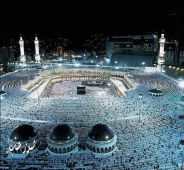
ARMV-kabah-makkahAqeedah Tahaawiyyah: Lesson 32  : Point [124] 

And we call those who pray towards our ‘Qiblah’ (direction of Prayer): Muslims and Believers (Mu.minoon)

[Souncloud Audio Link]

Listen to the next related point 125. As long as they acknowledge that which the Prophet came with, and as long as they believe him in whatever he said and informed of.  (Listen here)

At-Ta`leeqaat Al-Mukhtasarah `alaa Matn Al-`Aqeedah AtTahaawiyyah. By Shaykh Saalih ibn Fawzaan al-Fawzaan hafizahullaah. Translated by Aboo Talhah Daawood Burbank, rahimahullaah, in 1426AH

Posted with kind permission from Dawud Burbank rahimahullaah

Listen to the Full Audio Series of Aqeedah Tahaawiyyah:
Explanation of Aqeedah at-Tahaawiyyah – Dawud Burbank [Audio|En]

Book Study Resources Aqeedah at-Tahaawiyyah – Imam at-Tahaawi

Takfeer & People of Takfeer https://abdurrahman.org/category/islam/takfeer/

We do not enter into vain speech concerning Allaah, nor do we dispute regarding Allaah’s Religion – Dawud Burbank [Audio|En]

Aqeedah Tahaawiyyah: Lesson 32  : Point [126] 

We do not enter into vain speech concerning Allaah,nor do we dispute regarding Allaah’s Religion

[Souncloud Audio Link]

At-Ta`leeqaat Al-Mukhtasarah `alaa Matn Al-`Aqeedah AtTahaawiyyah
By Shaykh Saalih ibn Fawzaan al-Fawzaan hafizahullaah
Translated by Aboo Talhah Daawood Burbank, rahimahullaah, in 1426AH

Posted with kind permission from Dawud Burbank rahimahullaah

Listen to the Full Audio Series of Aqeedah Tahaawiyyah:
Explanation of Aqeedah at-Tahaawiyyah – Dawud Burbank [Audio|En]

The knowledge of Allaah is the basis of every other knowledge, for the one who knows of Allaah knows other than Him

Based upon the work of Shaykh Ibn Al-‘Uthaymeen
Explained by Dr Saleh As-Saleh, rahimahumaa Allaah

The most honorable and greatest knowledge is the knowledge of Allaah, whom there is no God except Him, the true God, the Lord of all that exists. And the knowledge of Allaah is the basis of every other knowledge, for the one who knows of Allaah knows other than Him.

[Souncloud Audio Link]

The one who knows of Allaah knows other than Him, and the one who is ignorant of Allaah is therefore by all means ignorant of every other thing.

Allaah says,

وَلَا تَكُونُوا كَالَّذِينَ نَسُوا اللَّـهَ فَأَنسَاهُمْ أَنفُسَهُمْ ۚ أُولَـٰئِكَ هُمُ الْفَاسِقُونَ

‘And be not like those who forgot Allaah, so He made them forget themselves. Those are the defiantly disobedient.’ {Suraah Anfaal 8: 47}

And don’t be like those who forgot Allaah- because of their disobedience, so He let them forget their own selves- for they were not able to do righteous deeds.

If you contemplate this aaayah, you will find a noble and honourable meaning and a great one implicated in this verse that anyone who forgets Allaah, Allaah will make him forget his own self, and therefore will not realise his reality nor would he realise that which benefits or harms him.’

So he will be crippled like cattle, even cattle could be more knowledgeable of its benefits in this sense. What is meant is that the knowledge of Allaah is the basis and foundation of every other knowledge and it is the basis of the slave of Allaah to know of his happiness, and to perfect his affairs and to work for his other life.

Therefore he would properly estimate Allaah, the proper estimation He deserves. And it will lead him to be shy of Allaah, out of love and magnification- his heart being attached to Him, yearning to meet Allaah and be close to Him, turning His affairs to Him and having awe and fear of Him. And mankind, with this respect, differ in such an estimation of Allaah.

The prophet  said in invocation to Allaah,

…لا أحصي ثناء عليك أنت كما أثنيت على نفسك

[صحيح مسلم و غيره]

‘I cannot enumerate praising You, as You (o Allaah) are as You have praised Yourself’ [Muslim and others]

The prophet  indicating those most knowledgeable of Allaah, even invoke Allaah with this saying:

…لا أحصي ثناء عليك أنت كما أثنيت على نفسك

‘I cannot enumerate praising You, as You are as You have praised Yourself (O Allaah)’

Love and eagerness are matters that follow the knowledge of Allaah, so the knowledge of Allaah brings forth and leads to love of Him and yearning to meet Him.

And therefor the knowledge of Allaah, is the most great and honorable knowledge and this leads to the proper estimation of Allaah, loving Him and eagerness to meet Him. The more a person is knowledgeable of Allaah, the more perfection he is in his love of Him.

Ad therefore ‘whoever believes in Allaah and His names and attributes’ and knows of Him in this respect will love Him more, and then he would achieve a state of sweetness in his heart, and this sweetness puts him in a state whereby he will always love to meet Allaah and be close to Him, and to sense and look at His Face, and listen to Him and to His words.

The knowledge itself leads to the proper estimation of Allaah.

Maalik ibn Dinaar rahimahullaah said ‘the people of this life they left it and didn’t take the best of it,’ they said to him, ‘and what is it o Abaa Yahya?’ He said, ‘knowing  of Allaah The Most Mighty and Majestic.’

Those who know of Allaah are the ones who have really tasted what is best in this life, and that is the knowledge of Allaah in this life as Maalik bin Dinaar stated.

وَمَا قَدَرُوا اللَّـهَ حَقَّ قَدْرِهِ إِذْ قَالُوا مَا أَنزَلَ اللَّـهُ عَلَىٰ بَشَرٍ مِّن شَيْءٍ ۗ

‘And they did not appraise Allaah with true appraisal when they said, “Allaah did not reveal to a human being anything.”’ {Suraah Al-An’aam 6: 91}

‘They (kuffar) did not estimate Allaah with the estimation due to Him’ when they said that Allaah sent nothing down to the human being- so what is meant by saying what is due to Him is what is meant by the proper estimation of Him.

When the knowledge of Allaah is strengthened then his eagerness for Allaah also strengthens.

Abdullah ibn Masoud radhi Allaahu anhu said, ‘the believer will not feel at rest without the meeting of his Lord Allaah, therefore anyone who sets his resting coat in this life in the meeting of Allaahسبحانه و تعلى, then it is as if He has reached that.’

Meaning the believer would not have any real rest without being keen about the matter of meeting Allaah, yearning so that he can reach Him. As Allaah سبحانه و تعلى says,

الَّذِينَ آمَنُوا وَتَطْمَئِنُّ قُلُوبُهُم بِذِكْرِ اللَّـهِ ۗ أَلَا بِذِكْرِ اللَّـهِ تَطْمَئِنُّ الْقُلُوبُ

Those who have believed and whose hearts are assured by the remembrance of Allaah. Unquestionably, by the remembrance of Allaah hearts are assured.” {Suraah Ar-Ra’ad 13: 28}

This is what ibn Masoud was speaking about in his saying that there will be no real rest for the believer unless he meets Allaahسبحانه و تعلى; therefore this matter should be alive, as mentioned in the aayah in Suraatur Ra’ad, they will achieve that.

Allaah gave the prophets عليهم السلام the choice between increasing their stay on earth or death, and they would choose the meeting with Allaah the most High.

As Imaam Bukhaari entitled the chapter in his saheeh – “the one who loves to meet Allaah, Allaah will love to meet Him”. Under this chapter he gave the situation with the prophet  from his wife,

حدثنا بشر بن محمد حدثنا عبد الله قال يونس قال الزهري أخبرني سعيد بن المسيب في رجال من أهل العلم أن عائشة قالت كان النبي صلى الله عليه وسلم يقول وهو صحيح إنه لم يقبض نبي حتى يرى مقعده من الجنة ثم يخير فلما نزل به ورأسه على فخذي غشي عليه ثم أفاق فأشخص بصره إلى سقف البيت ثم قال اللهم الرفيق الأعلى فقلت إذا لا يختارنا وعرفت أنه الحديث الذي كان يحدثنا وهو صحيح قالت فكانت آخر كلمة تكلم بها اللهم الرفيق الأعلى

موطأ مالك, صحيح البخاري, صحيح مسلم, مسند أحمد

Aisha (رضي الله عنها) who said, ‘Rasoolullah صلى الله عليه وسلم used to say, ‘no prophets soul will be taken by Allaah until he sees his seat in Paradise then he will be given the choice’ so when he صلى الله عليه وسلم  became ill and the moment of death approached and his head was on my thigh, when he صلى الله عليه وسلم used to go into the state of unconsciousness and woke up, finally I saw him gaze in the direction of the roof and said ‘O Allaah, the Highest companionship.’ Aisha said, ‘so I knew he didn’t choose us, and I remember the statement he  صلى الله عليه وسلم used to say to us and it is true. And the last words he spoke was ‘Allaahumma rafeequl a’laa.’ (O Allaah, the Highest companionship)

[Muwatta of Maalik, Bukhaari, Muslim and Ahmed (with slight difference in wording)]

So how is it that these rough hearts and stone hearts are able to accuse other Muslims when they speak about knowing Allaah’s names and attributes and defending them in the proper way, as Allaah intended and as Allaah affirmed for Himself, and by the prophet Muhammad صلى الله عليه وسلم .

Knowing Allaah: Through His Beautiful Names
Dr Saleh As Saleh رحمه الله d.1421AH

Listen to the full audio series @
https://abdurrahman.org/2014/12/13/the-meaning-of-allaahs-most-beautiful-names-dr-saleh-as-saleh/

Aqeedah Tahaawiyyah – Extracted Clips – Dawud Burbank

The following are some of the Extracted clips from the Aqeedah Tahaawiyyah Audio Series by Dawud Burbank rahimahullah. These Complete Series can be accessed Here.

  1. We call those who pray towards our ‘Qiblah’: Muslims & Believers – Aqeedah Tahaawiyyah – Dawud Burbank [Audio|En]
  2. We do not enter into vain speech concerning Allaah, nor do we dispute regarding Allaah’s Religion – Dawud Burbank [Audio|En]
  3. And we say that Allaah took Ibraaheem as an especially beloved one (Khaleel) and that Allaah spoke directly to Moosaa – Dawud Burbank [Audio|En]
  4. We have eemaan in the Preserved Tablet (Al-Lawh Al-Mahfooz) and in the Pen (Al-Qalam), and whatever Allaah wrote in Al-Lawh Al-Mahfooz – Dawud Burbank [Audio|En]
  5. Different Types of Confirmed Intercession – Aqeedah Tahaawiyyah – Dawud Burbank [Audio|En]
  6. The Intercession (ash-shafaa’ah) which Allaah has stored up for them is something TRUE – Dawud Burbank [Audio|En]
  7. The Hawd (the Lake) with which Allaah will honour Muhammad as a relief for his Ummah is true – Dawud Burbank [Audio|En]
  8. Allaah knows the number of people who will enter into Paradise and those who will enter into the Fire – Dawud Burbank [Audio|En]
  9. The Throne (Al-`Arsh) and the Footstool (Al-Kursee) are true – Aqeedah Tahawiyyah – Dawud Burbank [Audio|En]
  10. He (Allaah) does not resemble the creation – Shaykh Fawzan | Dawud Burbank [Clip|En]
  11. There is nothing like Him (Allaah) – Shaykh Fawzan | Dawud Burbank [Audio|En]
  12. The Denial of any partner for Allaah will not be complete except by negating three types of shirk – Shyakh Albani | Dawud Burbank [Audio|En]
  13. Allaah is Al-Hayy (the Living One) who does not die – Shaykh Fawzan | Dawud Burbank [Audio|En]
  14. The covenant (meethaaq) which Allaah, the Most High, took from Aadam and his descendants – Shaykh Fawzan | Dawud Burbank [Audio|En]
  15. Allaah is Al-Qayyoom (the Independent Sustainer of everything), who does not sleep – Shaykh Fawzan | Dawud Burbank [Audio|En]
  16. Deviance of those who negate the Ru’yah (’Seeing Allaah’ by the people of Paradise) – Shaykh Fawzan | Dawud Burbank [Audio|En]
  17. ‘Seeing Allaah’ by the people of Paradise is true, without their encompassing Him and without us knowing how it will be – Shaykh Fawzan | Dawud Burbank [Audio|En]
  18. Qur’aan is the Speech of Allaah & He sent it down to His Messenger as revelation – Shaykh Fawzan | Dawud Burbank [Audio|En]
  19. Nothing occurs except what He (Allaah) wills – Shaykh al-Fawzaan | Dawud Burbank [Audio|En]
  20. Muhammad ﷺ is a Messenger to the whole of the jinn and to all of mankind – Shaykh Fawzan | Dawud Burbank [Audio|En]
  21. Allah does not perish nor (does He) pass away – Shaykh al-Fawzan | Dawud Burbank [Audio|En]
  22. He is the Ancient One without any beginning, the One who Persists without any ending – Shaykh al-Fawzan | Dawud Burbank [Audio|En]
  23. Correct and Incorrect Meanings of “Laa ilaaha illAllaah” – Shaykh al-Fawzan | Dawud Burbank [Audio|En]
  24. Allaah Guides Whoever He Wishes And Misguides Whoever He Wishes – Aqeedah Tahaawiyyah | Dawud Burbank [Audio|En]
  25. Israa wa Mi’raaj – Aqeedah Tahaawiyyah – Shaykh Al-Fawzaan | Dawud Burbank
  26. Allah is not reached by people’s conjecture nor can He be grasped by their understanding – Shaykh Fawzan | Dawud Burbank [Short Clip|En]
  27. There is nothing like unto Him and He is the All-Hearing, the All-Seeing – Shaykh Fawzan | Dawud Burbank [Short Clip|En]
  28. Every affair is easy for Him (Allaah) – Shaykh Fawzan | Dawud Burbank [Short Clip|En]
  29. Everything is totally dependent upon Allaah – Shaykh Fawzan | Dawud Burbank [Audio|En]
  30. Allaah has always had His Attributes, before His act of creation – Shaykh Fawzan | Dawud Burbank [Audio|En]
  31. Muhammad is the last of the Prophets and every claim to Prophethood after him is futile and is Unbelief – Shaykh Fawzan | Dawud Burbank [Audio|En]
  32. Allaah has no need of the Arsh (Throne) and whatever is beneath it – Shaykh Fawzan | Dawud Burbank [Audio|En]
  33. He (Allaah) is the Creator without any need, Provider without any difficulty – Shaykh Fawzan | Dawud Burbank [Audio|En]
  34. Deeds will be in accordance with their conclusions – Shaykh Fawzan | Dawud Burbank [Audio|En]

And we say that Allaah took Ibraaheem as an especially beloved one (Khaleel) and that Allaah spoke directly to Moosaa – Dawud Burbank [Audio|En]

Aqeedah Tahaawiyyah: Lesson 30   : Point [121] 

 ونَقُولُ‏:‏ إِنَّ اللهَ اتخَذَ إبراهيمَ خَلِيلاً، وكَلَّمَ اللهُ مُوسى تكْلِيماً، إِيماناً وتَصْدِيقاً وتَسْلِيماً

[121]  And we say that Allaah took Ibraaheem as an especially beloved one (Khaleel) and that Allaah spoke directly to Moosaa, saying that with eemaan (true faith) and testifying to the truth and with full submission.

[Souncloud Audio Link]

The Explanation – Point [121]

From the `aqeedah (creed and belief) of the Muslims, is that the Messengers (Rusul) are the most excellent of the creation and that the Messengers (Rusul) vary in levels of excellence. So they hold as their creed and belief, that Allaah took Ibraaheem as a Khaleel (an especially beloved one) just as Allaah, the Most High, said,

“..and Allaah took Ibraaheem as a Khaleel (an especially beloved)”  (Sooratun-Nisaa· (4), aayah 125)

And this word ‘al-khullah’ (الخلة), it means: the highest of the levels of love. So Allaah, the Majestic and Most High, has love for His believing servants and for the muttaqeen ( المتقين – the people of taqwaa – those are dutiful to Him) and He has love for the muhsineen (المحسنين – the doers of good) and He loves those who frequently repent (التوابين – at-tawwaabeen) and He loves al-muttatahhireen (المتطهرين – those people who purify themselves). However, al-khullah is a special degree which has not been attained except by two of the creation: Ibraaheem and Muhammad `alayhimassalaatu was-salaam. Just as he `alayhissalaatu was-salaam said,

“Allaah took me as an especially beloved one (Khaleel) just as He took Ibraaheem as an especially beloved one (Khaleel).” [1]

“And Allaah spoke directly to Moosaa”  (Sooratun-Nisaa· (4), aayah 164)

So, He (Allaah) gave excellence to some of the Prophets over others, even though all of them were upon a very high level. However, Allaah, the Majestic and Most High, gave excellence to some over others.

“Those are the Messengers; We gave excellence to some of them over others. From them are those to whom Allaah spoke directly and He raised some in degrees of excellence.” (Sooratul-Baqarah (2), aayah 253)

So, every Prophet was given by Allaah, the Mighty and Majestic, a degree of excellence particular to him. So he gave to Ibraaheem and Muhammad `alayhimassalaatu was-salaam, al-khullah (that He made them His specially beloved). And He gave to Moosaa the excellence that He spoke to him directly, without an angel in-between. And Moosaa heard His Speech; so He the Perfect called to him (ناداه – naadaahu) and spoke privately to him (ناجاه – naajaahu). And the term ‘al-munaadaat’ (المنادات) means ‘a raised voice’ and ‘al-munaajaat’ (المناجات) is ‘speaking with a low voice’. Both of these occurred for Moosaa `alayhissalaatu was-salaam and this was a virtue not attained by anyone besides him. And He said at the end of the aayah, “takleemaa (تكليما – with Speech)” for emphasis so that no one could say that this was something metaphorical. So when He has emphasized it with this verbal noun, this proves that it is true and real Speech from Allaah, the Mighty and Majestic. So this contains affirmation of al-Kalaam (الكلام – Speech) for Allaah, the Mighty and Majestic. And it contains affirmation of the virtue of Moosaa `alayhissalaatu was-salaam over other Prophets with regard to this characteristic. And the fact that a Prophet had a particular quality special to him does not necessitate that he is better than the others unrestrictedly. Rather, it means that he was more excellent than other Prophets with regard to this particular quality.

End of explanation of point [121][2]

Footnotes:

[1] Reported by Muslim as a hadeeth of Jundub radiyAllaahu `anh, and something similar occurs in Al-Bukhaaree but not with this particular wording.

[2] Translator’s Side Point: The explainer, Ibn Abil-`Izz, in his explanation of AtTahaawiyyah, he said,

“And just as the station of al-khullah (being an especially beloved one of Allaah) which is confirmed for Ibraaheem salawaatullaahi `alayhi he is shared in that by our Prophet sallAllaahu `alayhi wa sallam, as has already preceded. And likewise, the status of being spoken to directly which is confirmed for Moosaa salawaatullaahi `alayhi, then he is shared with that by our Prophet sallAllaahu `alayhi wa sallam, as well, as occurs in the hadeeth of the Israa· (the Ascent through the heavens).”

At-Ta`leeqaat Al-Mukhtasarah `alaa Matn Al-`Aqeedah AtTahaawiyyah
By Shaykh Saalih ibn Fawzaan al-Fawzaan hafizahullaah
Pages 125-128 (Points 118-121)

Translated by Aboo Talhah Daawood Burbank, rahimahullaah, in 1426AH
Transcribed by Sideeqa Ali

Posted with kind permission from Dawud Burbank rahimahullaah

Listen to the Full Audio Series of Aqeedah Tahaawiyyah:
Explanation of Aqeedah at-Tahaawiyyah – Dawud Burbank [Audio|En]

Opening Du’a in Prayer : O Allah , separate me from my sins as You have separated the East from the West – Dr. Saleh as Saleh [Audio|En]

Excellent Explanation of the Opening Supplication in Salah (Prayer)

[Alternative Mp3 Download Link]

Posted from Audio series: Salah – Described – Dr Saleh as Saleh [Audio|En]

Du’a at the start of the prayer :

Narrated Abu Huraira: Allah’s Messenger ﷺ used to keep silent between the Takbir and the recitation of Qur’an and that interval of silence used to be a short one. I said to the Prophetﷺ  “May my parents be sacrificed for you! What do you say in the pause between Takbir and recitation?” The Prophet ﷺ said, “I say,

اللَّهُمَّ بَاعِدْ بَيْنِي وَبَيْنَ خَطَايَايَ كَمَا بَاعَدْتَ بَيْنَ الْمَشْرِقِ وَالْمَغْرِبِ، اللَّهُمَّ نَقِّنِي مِنْ خَطَايَايَ، كَمَا يُنَقَّى الثَّوْبُ الْأَ بْيَضُ مِنَ الدَّنَسِ، اللَّهُمَّ اغْسِلْنِي مِنْ خَطَايَايَ بِالثَّلْجِ وَالْمَاءِ وَالْبَرَدِ

Allaahumma baa’id baynee wa bayna khataayaaya kamaa baa’adta baynal-mashriqi walmaghribi, Allaahumma naqqinee min khataayaaya kamaa yunaqqath-thawbul-‘abyadhu minad-danasi, Allaahum-maghsilnee min khataayaaya, bith-thalji walmaa’i walbarad

O Allah , separate me from my sins as You have separated the East from the West. O Allah, cleanse me of my transgressions as the white garment is cleansed of stains . O Allah , wash away my sins with ice and water and frost.

Al-Bukhari 1/181, Muslim 1/419

Translation Source: From the Book “Fortress of the Muslim” ,
Dr. Sa’eed bin Ali Al-Qahtani, Dar-us-Salam Publication

We have eemaan in the Preserved Tablet (Al-Lawh Al-Mahfooz) and in the Pen (Al-Qalam), and whatever Allaah wrote in Al-Lawh Al-Mahfooz – Dawud Burbank [Audio|En]

Lesson 27   : Point [105] 

 ونُؤْمِنُ باللَّوْحِ والقلمِ وبجميعِ مَا فيه قَدْ رُقِمَ‏‏‏‏‏

And we have eemaan in the Preserved Tablet (Al-Lawh) and in the Pen (Al-Qalam), and in everything which has been inscribed in it.

https://soundcloud.com/abdurrahmanorg/we-have-eemaan-in-al-lawh-al-mahfoo-al-qalam-and-whatever-allaah-wrote-in-al-lawh-al-mahfooz

The Explanation – Point [105]

This follows on from what preceded from the speech about Pre-ordainment and Pre-decree. And it has already preceded that from the levels of having eemaan (true faith) in Pre-ordainment and Pre-decree is having eemaan (true faith) in whatever He wrote in Al-Lawh Al-Mahfooz (the Inscribed or Preserved Tablet).  And that is, that Allaah created the creation and the first thing that He created was the Pen (Qalam) and He said to it, “Write!” So it replied, “What should I write?” So He said, “Write whatever is going to happen until the Day of Resurrection.” So the Pen wrote down, by the command of Allaah for it to write down, whatever was going to happen until the Day of Resurrection, as occurs in the hadeeth.[1]

And no one knows how the Preserved Tablet (Al-Lawh) is, and how the Pen is, except Allaah. And they are two created things from the things which Allaah the Mighty and Majestic has created; we have eemaan in that. And so, therefore, the author said: “We have eemaan (true faith) in the Preserved Record and in the Pen, and in whatever has been inscribed in it.” Meaning: Al-Lawh Al-Mahfooz (The Preserved Tablet) and the writing that is in it.

And this is the second level from the levels of eemaan in Pre-ordainment and Pre-decree, and it is: eemaan in the writing in the Preserved Tablet.

End of explanation of point [105][2][3]

Footnotes

[1] This is a hadeeth reported by Aboo Daawood and At-Tirmidhee and Aboo Ya`laa from the statement of the Prophet sallAllaahu `alayhi wa sallam, and it is also reported by Al-Bayhaqee as a statement of the Companion, which carries the ruling of being from the Prophet sallAllaahu `alayhi wa sallam. It was declared Saheeh by Shaykh Al-Albaanee rahimahullaah.

[2] Translator’s Side Point: Shaykh Muhammad ibn `Abdul `Azeez ibn Manee`, made a note on this point: We have eemaan in the Preserved Tablet; he said:

“Allaah, the Most High said,

Indeed, it is a Praiseworthy Qur·aan contained in a Preserved Tablet.
(Sooratul-Burooj (85), aayaat 21-22)

So, the Noble Qur·aan is written down in the Preserved Tablet, just as Allaah, the Perfect, mentioned. And Jibreel `alayhis-salaam heard it from Allaah and conveyed it to our Prophet Muhammad `alayhis salaatu was-salaam. So it was sent down from your Lord in truth, and He did not say ‘from the Preserved Tablet’. And there is no contradiction between its being in the Preserved Tablet and between its being sent down from Allaah, as was clarified by Shaykhul-Islaam Ibn Taymiyyah. And Shaykhul-Islaam said also, that the Preserved Tablet is above the heavens and there occurs in a hadeeth that no one looks into it except Allaah, the Mighty and the Majestic.

I say: So this shows the misguidance of those who state that the soul of a person can see what is contained in the Preserved Tablet. This is just a statement from the philosophers and from the people of superstitious stories from the worshippers – whether righteous or unrighteous, as is their firm belief. So beware of it because it is a lie.

As for the Pen which is mentioned, then it is what Allaah created; and it wrote the measure of everything in the Preserved Tablet just as occurs in the hadeeth of `Ubaadah ibn AsSaamit reported by Aboo Daawood from the Prophet sallAllaahu `alayhi wa sallam that he said,

‘The first thing that Allaah created was the Pen and He said to it, “Write!” So it said, “O my Lord, and what shall I write?” He said, “Write down the decreed measure of everything right until the Hour is established.”’

And the scholars disagree – was the Pen the very first thing that was created or was it the `Arsh (Allaah’s Throne)? They have two sayings in that regard. Ibn Al-Qayyim mentions both of them in his Nooniyyah and he preferred the view that the Pen was created after the `Arsh (Throne).”

[3] Translator’s Side Point: Shaykh Al-Albaanee rahimahullaah, he said on this point:

“I say, with regard to the Preserved Tablet, it is what is mentioned in the saying of Allaah, the Most High,

Indeed, it is a Praiseworthy Qur·aan contained in a Preserved Tablet.
(Sooratul-Burooj (85), aayaat 21-22)

And that is from the Ghayb (Hidden and Unseen) which it is obligatory that we have eemaan (truly believe) in it. And its true reality is not known except to Allaah. And the belief that some righteous people can look into what’s contained in it – this belief is kufr (unbelief) in the aayaat and ahaadeeth which clearly state that no one knows the Ghayb (Hidden and Unseen) except Allaah, the Most High.”

Translator’s Side Point: With regard to the point about which was created first: the Pen or the Throne, Shaykh Al-Albaanee (rahimahullaah), he said:

“The explainer (Ibn Abil-`Izz in his explanation of AtTahaawiyyah), he explained here, that the scholars differed whether the Pen was the very first thing created or the Throne (`Arsh). The scholars had two sayings in that regard and there is no third (saying). (Some of the scholars of the Sunnah said that Allaah’s Throne was first and then the Pen was created and some said that the Pen was created and then after that, Allaah’s Throne was created, and there is no third saying).”

Shaykh Al-Albaanee said:

“And in my view the most preferable one is the first (that the Pen was the very first thing created) as is clearly stated in my note (that he made for AtTahaawiyyah). And I say now, whether what is most correct is this or that, then this difference shows that the scholars are agreed that there was a first created thing. And the idea that created things came into creation and there is always something before it, they are contrary to this agreement (of the scholars).”

At-Ta`leeqaat Al-Mukhtasarah `alaa Matn Al-`Aqeedah At-Tahaawiyyah
By Shaykh Saalih ibn Fawzaan al-Fawzaan hafizahullaah
Pages 113-117 (Points 98-105)
Translated by Aboo Talhah Daawood Burbank, rahimahullaah, in 1426AH
Transcribed by Sideeqa Ali

Posted with kind permission from Dawud Burbank rahimahullaah

Listen to the Full Audio Series of Aqeedah Tahaawiyyah:
Explanation of Aqeedah at-Tahaawiyyah – Dawud Burbank [Audio|En]

Opening Du’a in Prayer : Subhaanaka Allaahumma wa bihamdika, wa tabaarakasmuka – Explained by Dr. Saleh as Saleh [Audio|En]

Excellent Explanation of the Opening Supplication in Salah (Prayer)

[Alternative Mp3 Download Link]

Posted from Audio series: Salah – Described – Dr Saleh as Saleh [Audio|En]

Dua at the start of the prayer

It was narrated from ‘Aishah that when the Prophet (ﷺ) started Salat he would say:

سُبْحانَكَ اللَّهُمَّ وَبِحَمْدِكَ، وَتَبارَكَ اسْمُكَ، وَتَعَالَى جَدُّكَ، وَلاَ إِلَهَ غَيْرُكَ

Glory is to You O Allah, and praise. Blessed is Your Name and Exalted is Your Majesty. There is none worthy of worship but You.

Subhaanaka Allaahumma wa bihamdika, wa tabaarakasmuka, wa ta’aalaa jadduka, wa laa ‘ilaaha ghayruka.

Abu Dawud 775, Ibn Majah 806, An-Nasa’I 899, At-Tirmithi 283. See Al-Albani, Sahih At-Tirmithi 1/77 and Sahih Ibn Majah 1/135.

Translation Source: From the Book “Fortress of the Muslim” ,
Dr. Sa’eed bin Ali Al-Qahtani, Dar-us-Salam Publication

Audio Courtesy : From the website of Dr. Saleh as Saleh rahimahullaah
Visit http://understand-islam.net/site/