Forty Benefits arising from sending Salaat upon Allaah’s Messenger (صلى الله عليه و سلم) – Imaam Ibnul-Qayyim

بسم الله الرحمن الرحيم

Sending Salaat* Upon The Prophet (صلى الله عليه و سلم)
[* i.e. saying “Allaahumma salli ‘alaa Muhammad…”)

Imaam an-Nasaa·ee –rahimahullaah- reported in his “Sunan” (no.1297):

“Ishaaq ibn Mansoor related to us, saying: Muhammad ibn Yoosuf narrated to us, saying: Yoonus ibn Abee Ishaaq narrated to us: from Burayd ibn Abee Maryam who said: Anas ibn Maalik narrated to us, saying: Allaah’s Messenger (صلى الله عليه و سلم) said:

<<Whoever sends a single salaat upon me, then Allaah will send ten salawaaat upon Him, and ten sins will be removed from him, and he will be raised by ten ranks >>.”

Shaikh al-Albaanee-rahimahullaah- declared it “Saheeh”.

Shaikh al-Albaanee said in “Sifatus-Salaat” (p.165): ‘‘The most correct saying about the meaning of salaat upon the Prophet (صلى الله عليه و سلم) is the saying of Abul-‘Aaliyah:

“Allaah’s salaat upon His Prophet is His extolling him [[to the Angels]] and exalting him; and the salaat of the Angels and others upon him is to request this from Allaah -the Most High”; and what is meant is seeking increase, not the initiation of salaat al-Haafiz [Ibn Hajr] mentioned it in “al-Fath”.”

Imaam Ibnul-Qayyim -rahimahullaah, in his book “Jalaa·ul-Afhaam fee Fadlis-Salaati was-Salaam ‘alaa khayril anaam (صلى الله عليه و سلم)”, mentions forty benefits arising from sending salaat upon Allaah’s Messenger (صلى الله عليه و سلم):

1. Compliance with the Command of Allaah-the Perfect and Most High. [i.e. in Aayah 65 of Sooratul-Ahzaab].

2. Conformity with Him- He the Perfect- in sending salaat upon him, even though the two forms of salaat are different. So our salaat upon him is a supplication and a request, whereas the salaat of Allaah-the Most High-upon him is extolling and ennobling….

3. Conformity with the Angels in it.

4. Attaining ten salawaat [[plural of salaat]] from Allaah by the person who sends salaat upon him once.

5. That he is raised by ten levels.

6. That he has ten good deeds written for him.

7. That ten sins are erased from him.

8. That it is to be hoped that his supplication will be responded to if he precedes it with that. So it causes the supplication to ascend to the Lord of creation, when prior to this it was suspended between the heavens and the earth.

9. It is a means to attain his (صلى الله عليه و سلم) Intercession, if it is accompanied by a request for alwaseelah (a singular station in Paradise) for him, or even if it is on its own…

10. It is a means for forgiveness of sins …

11. It is a cause for Allaah to suffice the servant with regard to whatever concerns him.

12. It is a means for the person to gain nearness to him (صلى الله عليه و سلم) on the Day of Resurrection…

13.( It has the position of being like an act of charity upon a needy person.)**

14. It is a cause for the fulfillment of your needs.

15. It is a cause for Allaah to send salaat upon the person, and for the salaat of His Angels upon him.

16. It is a cleansing (zakaat) and purification for the person.

17. (It is a cause for the servant to receive glad tidings of Paradise before his death…) **

18. (It is a means for salvation from the terrors of the Day of Resurrection…) **

19. It is a cause for the Prophet (صلى الله عليه و سلم) to respond to the one who sends salaat and salaam upon him.

20. (It is a cause for the servant to remember that which he has forgotten.) **

21. It is a cause of good for the gathering, and for its not becoming a source of regret for its people on the Day of Resurrection.

22. (It is a means to repel poverty…) **

23. It repels from the person the description of being a miser, if he sends salaat upon him whenever he (صلى الله عليه و سلم) is mentioned.

24. He becomes saved from being supplicated against that his nose should be cleaved in dust, for abandoning it when he (صلى الله عليه و سلم) was mentioned.

25. It puts its companion upon the path to Paradise, and it causes the one who abandons it to err with regard to it.

26. It saves from the stench of a gathering wherein Allaah and His Messenger are not mentioned, and where Allaah-the Most High- is not praised and extolled, and where salaat is not sent upon His Messenger (صلى الله عليه و سلم).

27. It is a means for the completion of the speech which was begun with praise of Allaah and salaat upon His Messenger (صلى الله عليه و سلم).

28. (It is a cause for the servant”s light to be increased upon the Bridge (as-Siraat).) **

29. It takes the servant away from coarseness.

30. It is a cause for Allaah –the Perfect- to bestow favourable praise upon the one who sends salaat upon him, praising him to the inhabitants of the Heavens and the earth. This is because the one who sends salaat upon him is asking Allaah to extol His Messenger, and to honour, and ennoble him. So recompense conforms to the type of deed, so the one who sends salaat must in turn receive some form of this.

31. It is a cause of blessing for the one who sends salaat, in his self, his deeds, and his life, and the means of his welfare. This is because the one who sends salaat is supplicating to his Lord that He should bless him and his true followers; and this supplication will be answered; and recompense conforms to the deed.

32. It is a means for his attaining the Mercy of Allaah, since mercy is either the meaning of the salaat –upon the saying of some; or it is otherwise something necessitated by it, and required from it-upon the correct saying. So the one who sends salaat upon him must certainly receive Mercy.

33. It is a means to perpetuate his love of the Messenger (صلى الله عليه و سلم),and to increase it, and to multiply it; and that is one of the essential fundamentals of Eemaan, which it will not be complete without; since the more a servant mentions the one he loves, and remembers him in his heart, and remembers his fine qualities, and those things which instill love of him, then his love of him will increase, and yearning for him will grow, and this will overcome his whole heart. But if he turns away from mentioning him and from thinking of him and of his fine qualities in his heart, then love of him will be reduced in his heart. So there is nothing more pleasing to the one who loves than seeing the one whom he loves, and nothing gives greater pleasure to his heart than mentioning him, and thinking of him and of his fine qualities. So when this becomes strong in his heart, then his tongue will praise and extol him…

34. That salaat upon him (صلى الله عليه و سلم) is a cause of his loving that person. So because it is a cause for the one who sends salaat upon him to increase in love of him, likewise it is a cause for him to love the one who sends salaat upon him (صلى الله عليه و سلم).

35. It is a means for the guidance of the person and for his heart to have life…

36. (It is a cause for the one who sends salaat upon him (صلى الله عليه و سلم) to have his name presented to him, and for his being mentioned to him…) **

37. (It is a cause for the feet to be planted firmly upon the Siraat, and for the person”s passing over it…) **

38. That sending salaat upon him fulfils the slightest part of his right…

39. That it comprises remembrance of Allaah and thankfulness to Him, and recognition of His Favour upon His servants in sending him. So the one who sends salaat upon him (صلى الله عليه و سلم) includes in his salaat upon him remembrance of Allaah and remembrance of His Messenger…

40. That salaat upon him from the person is supplication (du’aa), and the persons du’aa. to his Lord and his requests to his Lord are of two types:

(i) His requesting his own needs and concerns, and whatever he requires throughout the night and the day. So this is supplication and request, and is to give precedence to that which the servant loves and seeks;

(ii) His requesting that He should extol His chosen and beloved servant, and increase him in nobility and honour, and make mention of him, and elevate him. So there is no doubt that Allaah-the Most High-loves that, and his Messenger (صلى الله عليه و سلم) loves it. So the one who sends salaat upon him (صلى الله عليه و سلم) has turned his requests, that which he desires, and that which he seeks towards that which is loved by Allaah-the Most High- and His Messenger; and he has given preference to that over his own needs and requirements. Indeed this that he seeks has become the most beloved of things to him, and that which he most prefers. So he has given preference to that which Allaah and His Messenger love over that which he himself loves. So he has given preference to Allaah and to what He loves over everything else, and recompense conforms to the action. So whoever gives preference to Allaah over everything else, then Allaah will give preference to him over others…””

[(**) The verifier of the book (Zaa·id an-Nushayree) indicates that these points (nos.13, 17, 18, 20, 22, 28, 36, & 37) are based upon weak ahaadeeth.]

[Translated by Aboo Talhah Daawood ibn Ronald Burbank]

[Download PDF Here ]

Posted fromhttps://alitisaambissunnah.wordpress.com/

All Posts related to Durood (Sending Salaat on the Messenger صلى الله عليه و سلم) :

The places of prayer are to be for Allaah alone, so do not invoke or worship anyone along with Allaah

Sharh-ul-Usool-ith-Thalaathah by Shaikh Saalih al-Fawzaan
Translated by Dawud Burbank rahimahullaah
Below in the Transcription of the Audio Explanation of Dawud Burbank

And the proof is His saying, He the Most High:

And that the places of prayer are to be for Allaah alone, so do not invoke or worship anyone along with Allaah. [72:18]9 


[9]:

Allaah is not pleased that anyone should be associated with Him, no matter who it is, and this is stated clearly in the Book and in the Sunnah, however, to one who uses the intellect and who thinks carefully, and who discards blind following and the use of false and futile excuses, and who is alert to his own benefit. And the proof that Allaah is not pleased that anyone else besides Him should be associated with Him no matter who it is, is His saying, He the Most High:

And that the places of prayer are to be for Allaah alone, so do not invoke or worship anyone along with Allaah. [72:18] 

Al-Masaajid, (the mosques), are the houses of Allaah and they are the places which are prepared for the Salaah (prayer) and they are the most beloved of places to Allaah, and they are houses which Allaah has commanded should be raised and in which His Name should be mentioned. Then these mosques must be made a place for the worship of Allaah alone, nothing for other than Allaah must occur within them, so graves are not to be built in them, nor tombs because the Prophet sallallaahu‘alaihiwasallam cursed those who did that, and he informed that this is the practice of the Jews and the Christians and he forbade us from that at the end of his life, whilst he was in the throes of death ‘alaihissalaatuwassalaam with his saying:

“Indeed those who came before you used to take the graves as places of prayer…”  (he said this whilst he was dying), “…Indeed do not take the graves as places of prayer, for I certainly forbid you from that.”[1] 

And he sallallaahu‘alaihiwasallam said:

“Allaah’s curse is upon the Jews and the Christians, they took the graves of their Prophets as places of prayer.”[2]

So the mosques, it is obligatory that they be purified from traces of shirk and idolatory and that they not be built upon the graves, nor should the dead be buried in them after they have been built, rather they should be places for the worship of Allaah alone, the prayer should be established in them, and the Name of Allaah should be mentioned in them, and the Qur’aan should be recited in them, and beneficial lessons should be established in them, and people should remain in them for worship. This is the role of the mosques.

As for having in them idols which are worshipped besides Allaah, then these are not mosques, these are shrines of shirk, even if their people call them mosques, because Allaah says:

And that the mosques, the places of prayer, are for Allaah [72:18]

Meaning: not for anyone else besides Him. And because the mosques, they are the place where the people gather and meet, so it is obligatory that they should be pure and free of shirk and bid‘ah (innovations) and false superstitions, because the people acquire knowledge in them and worship, so if anything from shirk and false superstitions are found in the mosques, then they will be influenced by that and they will propagate it upon earth, so it is obligatory that mosques should be purified from shirk.

And the greatest of them is al-Masjid-ul-Haraam (the Sacred Mosque, in Makkaah), just as Allaah, the Majestic and Most High commanded that it should be purified, He the Most High said:

And remember when We showed the site for the House to Ibraaheem and commanded him, that you should not associate anything with Me, and purify My house, for those people who are performing Tawaaf and for those who are standing in prayer and performing the bowing and prostration. [22:26] 

Purify it from what? Purify it from shirk, and from innovations and false superstitions, just as it is also to be purified from impurities and filthy things.

So His saying, He the Most High:

Do not call upon or invoke [72:18] 

The, “laa”, is the, ‘no of prohibition’. And the, “tad‘oo”, is a present tense verb which is in the jussive form because of the prohibiting, “laa”, and the sign that it is the jussive form is the removal of the, ‘noon’. So the factor which makes it jussive is the, ‘no of prohibition’.

So do not invoke, O people, anyone along with Allaah, do not supplicate for help from anyone along with Allaah, such as saying, “O Allaah, O Muhammad”, “O Allaah, O Abd-ul-Qaadir”, or saying, “O Abd-ul-Qaadir, O Muhammad”, or the like of that, because Allaah is not pleased with that and will not accept it.

And His saying He the Most High, “ahadan”, (anyone): is in indefinite form in the context of a prohibition, so therefore it is general to everyone, no-one is excepted, neither any angel drawn close nor any prophet sent, nor any idol, nor any object of worship, nor any grave, nor any Shaikh, nor any beloved servant of Allaah, nor any living person, nor any dead person, no matter who it is.

So it is general covering everyone who is called upon besides Allaah

So do not call upon, do not invoke anyone along with Allaah. [72:18]

So this aayah shows that worship will not benefit except with tawheed, and that if shirk is mixed with it, then it becomes null and void and it will be an affliction for the person. Then He the Most High said:

And the places of prayer are for Allaah [72:18]

It is obligatory that they be built purely and sincerely, that the intention of the one building them should not be to show off or to be heard of or to be remembered as they say, or to be just Islaamic antiquities, all of this is futile.

Mosques should be built for worship and with the intention of worship, and the intention in them should be purely and sincerely for Allaah the Mighty and Majestic, and also they should be built from good and pure earnings, they should not be built from forbidden earnings because they are for Allaah the Mighty and Majestic, and:

“Allah does not accept except what is good and pure”[3]

So the mosques are to be built from lawful spending and the intention of their builders is that it is to be done purely and sincerely seeking the Face of Allaah the Mighty and Majestic, he should not intend by building it to obtain praise from the people, or to be remembered, or for show, or to be heard of, because building the mosques is worship and worship, it is obligatory that it should be done purely and sincerely for Allaah the Mighty and Majestic.

Footnotes

[1]  Reported by Muslim as hadeeth 532 from a hadeeth of Jundub ibn ‘Abdillaah al-Bajalee radiyallaahu‘anhu

[2] Reported by al-Bukhaaree as hadeeth 435 and 436 and by Muslim as hadeeth 531 from a hadeeth of ‘Aa’ishah and of Ibn ‘Abbaas radiyallaahu‘anhum

[3]  Reported by Muslim hadeeth 1015 from a hadeeth of Aboo Hurayrah radiyallaahu‘anhu with the wording that Allaah’s Messenger sallallaahu‘alaihiwasallam said, “O mankind, Allaah is Pure, He does not accept except what is good and pure.”

Visit the below link for other transcripts :
Sharh-ul-Usool-ith-Thalaathah by Shaikh Saalih al-Fawzaan

Authentic Adhkaar (Remembrance) after the Obligatory Salaah (Prayer) – Dawud Burbank

Dhikr #1

Dhikr After Obligatory Prayer - Dawud Burbank - 01

(1) MUSLIM reported (no. 591): “Daawood ibn Rushayd narrated to us: alWaleed narrated to us : from al-Awzaa`ee: from Aboo Ammaar-his name is Shaddaad ibn `Abdillaah: from Aboo Asmaa. : from Thawbaan who said: “When Allaah’s Messenger (صلى الله عليه و سلم) finished his Prayer he would seek forgiveness three times, and say:

اللّهُـمَّ أَنْـتَ السَّلامُ ، وَمِـنْكَ السَّلام ، تَبارَكْتَ يا ذا الجَـلالِ وَالإِكْـرام

[O Allaah You are the Flawless One, and from You comes peace and security.
Blessed are You, Possessor of Majesty and Honour].

al-Waleed said: So I said to al-Awzaa`ee: ‘How is seeking forgiveness done?’

He said: “You say : “… أَسْـتَغْفِرُ الله  أَسْـتَغْفِرُ الله ”

(I seek Allaah’s forgiveness, I seek Allaah’s forgiveness….)”.

-The wording of the four ‘Sunan’ in a hadeeth of `Aa.ishah- radiyallaahu `anhaa-(declared authentic by Shaikh al-Albaanee) is:

اللّهُـمَّ أَنْـتَ السَّلامُ ، وَمِـنْكَ السَّلام ، تَبارَكْتَ يا ذا الجَـلالِ وَالإِكْـرام

[O Allaah You are the Flawless One, and from You comes peace and security.
Exalted are You, O Possessor of Majesty and Honour].

Dhikr #2

Dhikr After Obligatory Prayer - Dawud Burbank - 02

(2) AL-BUKHAAREE reported (no.844): “Muhammad ibn Yoosuf narrated to us, saying: Sufyaan narrated to us: from `Abdul-Malik ibn `Umayr: from Warraad-the scribe of al-Mugheerah ibn Shu`bah who said: al-Mugheerah dictated to me in a letter to Mu`aawiyah that the Prophet (صلى الله عليه و سلم) used to say after every Obligatory Prayer:

La ilaha illal-lahu wahdahu la shareeka lah, lahul-mulku walahul-hamd, wahuwa ‘ala kulli shayin qadeer, allahumma la mani’a lima a’tayt, wa la mu’tiya lima mana’t, wala yanfa’u thal-jaddi minkal-jad

None has the right to be worshipped except Allaah, alone, having no partner. Sovereignty is His and all praise is for Him, and He has full power over everything. O Allaah no one can hold back what You give, and no one can give what You hold back, and no one’s riches can benefit them against You.”

Dhikr #3

Dhikr After Obligatory Prayer - Dawud Burbank - 03

(3) MUSLIM reported (no.594): “And Muhammad ibn `Abdillaah ibn Numayr narrated to us: My father narrated to us: Hishaam narrated to us: from AbuzZubayr who said: “Ibn az-Zubayr used to say at the end of every Prayer when he had given the Salutation:

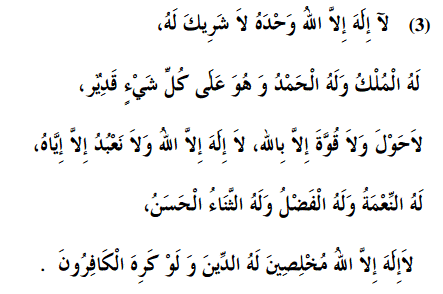
La ilaha illal-lah, wahdahu la shareeka lah, lahul-mulku walahul-hamd, wahuwa ‘ala kulli shayin qadeer. la hawla wala quwwata illa billah, la ilaha illal-lah, wala na’budu illa iyyah, lahun-niAAmatu walahul-fadl walahuth-thana-ol- hasan, la ilaha illal-lah mukhliseena lahud-deen walaw karihal-kafiroon.

[None has the right to be worshipped except Allaah, alone, having no partner. Sovereignty is His and all praise is for Him, and He has full power over everything. There is no change and no ability except with (the Aid of) Allaah. None has the right to be worshipped except Allaah, and we do not worship except Him. All blessings are from Him and all favour is from Him, and fine praise is for Him. None has the right to be worshipped except Allaah, we make the Religion purely and sincerely for Him-even though the Disbelievers detest that],

and he said: “Allaah’s Messenger (صلى الله عليه و سلم) used to repeat these words after every Prayer.”

Dhikr #4

Dhikr After Obligatory Prayer - Dawud Burbank - 04

(4) (a) Saying: ‘Subhaanallaah’, ‘al-hamdu lillaah’, and ‘Allaahu Akbar’- thirty three times each after every Prayer.
[al-Bukhaaree (no. 843) and Muslim (no. 595) from a hadeeth of Aboo Hurairah-radiyallaahu `anhu]

or (b) Saying: ‘Subhaanallaah’ -thirty-three times, ‘al-hamdu lillaah’ -thirty-three times, and ‘Allaahu akbar’ -thirty-four times-after every Prayer. [Reported by Muslim (no. 596) from a hadeeth of Ka`b ibn `Ujrah-radiyallaahu `anhu]

or (c) Saying: ‘Subhaanallaah’ -thirty-three times, ‘al-hamdu lillaah’ -thirty-three times, and ‘Allaahu akbar’ -thirty-three times- and then: لا إلهَ إلاّ اللّهُ وَحْـدَهُ لا شريكَ لهُ، لهُ الملكُ ولهُ الحَمْد، وهُوَ على كُلّ شَيءٍ قَـدير
whoever does so after every Prayer then his sins will be forgiven even if they are like the foam of the sea.
[Reported by Muslim (no.597) from a hadeeth of Aboo Hurairah-radiyallaahu `anhu]

or (d) Saying: ‘Subhaanallaah’ -twenty-five times, ‘al-hamdu lillaah’ -twenty-five times, ‘Allaahu akbar’ -twenty-five times ‘Laa ilaaha illallaah’ -twenty-five times
[Reported by an-Nasaa.ee (no. 1350) from a hadeeth of Zayd ibn Thaabit-radiyallaahu `anhu and declared ‘Saheeh’ by Shaikh al-Albaanee-rahimahullaahu.]

or (e) ) Saying: ‘Subhaanallaah’ -ten times, ‘al-hamdu lillaah’ -ten times, ‘Allaahu akbar’ -ten times.
[Reported by al-Bukhaaree (no.6329)-from a hadeeth of Aboo Hurairah-radiyallaahu `anhu]

Dhikr #5

Dhikr After Obligatory Prayer - Dawud Burbank - 05

(5) ABOO DAAWOOD reported (no. 1522): “ `Ubaydullaah ibn `Umar ibn Maysarah narrated to us: `Abullaah ibn Yazeed al-Muqri. narrated to us: Haywah ibn Shurayh narrated to us, saying: I heard `Uqbah ibn Muslim say: Aboo `Abdir-Rahmaan al-Hubulee narrated to me: from as-Sunaabihee: from Mu`aadh ibn Jabal: that Allaah’s Messenger (صلى الله عليه و سلم ) took hold of his hand and said:

<>
So he said: << I counsel you, O Mu`aadh: Do not leave off saying at the end of every Prayer:

اللّهُـمَّ أَعِـنِّي عَلـى ذِكْـرِكَ وَشُكْـرِك ، وَحُسْـنِ عِبـادَتِـك

[O Allaah help me upon remembrance of You, giving thanks to You, and worshipping You in a fine manner].>>

And Mu`aadh counselled as-Sunaabihee with that, and as-Sunaabihee counselled Aboo `Abdir-Rahmaan with it.”

[Shaikh al-Albaanee-rahimahullaah-said in ‘Saheeh Sunan Abee Daawood’ (no. 1362): “ I say: Its chain of narration is ‘Saheeh’ and it was declared ‘Saheeh’ by Ibn Khuzaymah and Ibn Hibbaan (2017)…

And the hadeeth is reported by Ahmad (5/244-245), Ibn Khuzaymah in his ‘Saheeh’ (751), and likewise Ibn Hibbaan (no. 2345), and Aboo Nu`aym in ‘al-Hilyah’ (1/241 & 5/130) through other chains from `Abdullaah ibn Yazeed al-Muqri… with it, and they add: “And Aboo `Abdir-Rahmaan counselled `Uqbah ibn Muslim.” And Aboo Nu`aym added: “And `Uqbah counselled Haywah, and Haywah counselled Aboo `Abdir-Rahmaan al-Muqri., and Aboo `Abdir-Rahmaan al-Muqri., counselled Bishr ibn Moosaa, and Bishr ibn Moosaa counselled Muhammad ibn Ahmad ibn al-Hasan, and Muhammad ibn Ahmad al-Hasan counselled me.

Aboo Nu`aym-rahimahullaah said: “And I counsel you (all) with it.” I say: This hadeeth is from the famous hadeeth reported with a serial chain, mentioning love, and I was given ijaazah to narrate it by the virtuous Shaikh Raaghib at-Tabbaakhrahimahullaah, and he narrated it to me… and he reported its isnaad in this manner mentioning love at each stage of the chain.]

Dhikr #6

Dhikr After Obligatory Prayer - Dawud Burbank - 06

(6) AT-TIRMIDHEE reported (no.2903): “Qutaybah narrated to us, saying: Ibn Lahee`ah narrated to us: from Yazeed ibn Abee Habeeb: from `Alee ibn Rabaah: from `Uqbah ibn `Aamir who said: “Allaah’s Messenger (صلى الله عليه و سلم) commanded me to recite the two Soorahs of seeking refuge (alMu`awwidhatayn) at the end of every Prayer..” [Declared ‘saheeh’ by Shaikh al-Albaanee-rahimahullaah.]

Dhikr #7

Dhikr After Obligatory Prayer - Dawud Burbank - 07

(7) AN-NASAA.EE reported in ‘`Amalul-Yawm wal-Laylah’ (no. 100): “alHusayn ibn Bishr related to us in Tarsoos-we wrote from him, saying: Muhammad ibn Himyar narrated to us, saying: Muhammad ibn Ziyaad narrated to us: from Aboo Umaamah who said: Allaah’s Messenger (صلى الله عليه و سلم) said:<> [Shaikh al-Albaanee declared the hadeeth ‘Saheeh’ in ‘as-Saheehah’ (no. 972)].

Dhikr #8

Dhikr After Obligatory Prayer - Dawud Burbank - 08

(8) AL-BUKHAAREE reported (no. 2822): “Moosaa ibn Ismaa`eel narrated to us: Aboo `Awaanah narrated to us: `Abdul-Malik ibn `Umayr narrated to us, saying: I heard `Amr ibn Maymoon al-Awdee say: Sa`d used to teach his sons these words, just as a teacher teaches boys to write, and he used to say that Allaah’s Messenger (صلى الله عليه و سلم) would seek refuge (with Allaah) from them at the end of the Prayer:

Allahumma innee a’oothu bika minal-jubn, wa-a’oothu bika min an oradda ila arthalil- ‘umur, wa-a’oothu bika min fitnatid-dunya wa wa-a’oothu bika min ‘athabil-qabr.

[O Allaah! I seek Your refuge from cowardice, and I seek Your refuge from being brought back to senile old age, and I seek Your refuge from the trials of the world, and I seek your refuge from the punishment of the grave]

So I narrated it to Mus`ab and he affirmed it.”

Dhikr #9

Dhikr After Obligatory Prayer - Dawud Burbank - 09

(9) AN-NASAA.EE reported (no. 1347): `Amr ibn `Alee related to us, saying: Yahyaa narrated to us: from `Uthmaan ash-Shahhaam: from Muslim ibn Abee Bakrah who said: My father used to say at the end of the Prayer:

[O Allaah! I seek Your refuge from Unbelief, and poverty, and the punishment of the grave].

So I used to say it, so my father said: “Who did you take this from?” So I said: “From you!” He said: “Allaah’s Messenger (صلى الله عليه و سلم ) used to say it at the end of the Prayer.”

[Shaikh al-Albaanee said: “Its isnaad is ‘Saheeh’”]

Dhikr #10

Dhikr After Obligatory Prayer - Dawud Burbank - 10

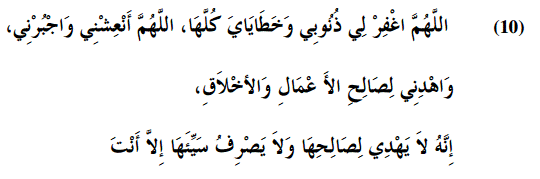
(10) IBNUS-SUNNEE reported in `Amalul-Yawm wal-Laylah’ (no. 116), and AT-TABARAANEE in ‘al-Kabeer’ (nos.7811 & 7893) (& 7982)… from Aboo Umaamah-radiyallaahu `anhu-who said:

“I never drew near to Allaah’s Messenger (صلى الله عليه و سلم ) at the end of an obligatory or optional Prayer except that I heard him saying:

[O Allaah forgive me all of my sins and shortcomings. O Allaah raise me and restore me, and guide me to righteous deeds and manners; no one can guide to that which is righteous from them, nor repel that which is bad from them besides You].”

[Declared ‘hasan’ (i.e. due to supporting narrations) by Shaikh al-Albaanee in ‘SaheehulJaami`’ (no. 1266) and Shaikh Saleem al-Hilaalee in ‘Saheeh Kitaabil-Adhkaar’ (189/154).]

Dhikr #11

Dhikr After Obligatory Prayer - Dawud Burbank - 11

(11) AN-NASAA.EE reported [Book of ‘Sahw’ (Forgetfulness)]:Chapter (87): Another type of dhikr after the Salutation (no.1344):

“Muhammad ibn Ishaaq as-Saaghaanee related to us, saying: Aboo Salamah alKhuzaa`ee-Mansoor ibn Salamah narrated to us, saying: Khallaad ibn Sulaymaan narrated to us, saying Aboo Salamah said: and he was on e of those who were fearful: From Khaalid ibn Abee `Imraan: from `Urwah: from `Aa.ishah: that when Allaah’s Messenger (صلى الله عليه و سلم) had sat in a gathering or prayer he would say some words. So `Aa.ishah asked him about the words, so he said:

<

[I declare You free of all imperfections, O Allaah, and all praise is for You. I seek Your forgiveness and turn in repentance to You.].”

[Shaikh al-Albaanee-rahimahullaah-declared it ‘Saheeh’.]

[Compiled and translated by Abu Talhah Dawud Burbank rahimahullaah]

Click the below link to read or download PDF

Authentic Adhkaar (Remembrance) after the Salaah (Prayer) – Dawud Burbank [PDF]

Morning and Evening supplications – Abu Talhah Dawood Burbank

Click the below link to read or download PDF

Morning and Evening supplications – Abu Talhah Dawood Burbank [PDF]


Precious Remembrance (Morning & Evening Supplications) – Shaykh Uthaymeen

Du'a : Precious Remembrance –  Shaykh Muhammad Saleh Al Uthaymeen

Click the below link to read or download PDF

The Precious Remembrance – Shaykh Uthaymeen [PDF]

Total 23 Supplications are mentioned in the Book

01. {Soorat-ul-Baqarah: 1-5}

الم  ذَٰلِكَ الْكِتَابُ لَا رَيْبَ ۛ فِيهِ ۛ هُدًى لِّلْمُتَّقِينَ الَّذِينَ يُؤْمِنُونَ بِالْغَيْبِ وَيُقِيمُونَ الصَّلَاةَ وَمِمَّا رَزَقْنَاهُمْ يُنفِقُونَ وَالَّذِينَ يُؤْمِنُونَ بِمَا أُنزِلَ إِلَيْكَ وَمَا أُنزِلَ مِن قَبْلِكَ وَبِالْآخِرَةِ هُمْ يُوقِنُونَ أُولَٰئِكَ عَلَىٰ هُدًى مِّن رَّبِّهِمْ ۖ وَأُولَٰئِكَ هُمُ الْمُفْلِحُونَ

02. {Soorat-ul-Baqarah: 255} Aaayatul-Kursee

03. {Soorat-ul-Baqarah: 285-286}

آمَنَ الرَّسُولُ بِمَا أُنزِلَ إِلَيْهِ مِن رَّبِّهِ وَالْمُؤْمِنُونَ ۚ كُلٌّ آمَنَ بِاللَّهِ وَمَلَائِكَتِهِ وَكُتُبِهِ وَرُسُلِهِ لَا نُفَرِّقُ بَيْنَ أَحَدٍ مِّن رُّسُلِهِ ۚ وَقَالُوا سَمِعْنَا وَأَطَعْنَا ۖ غُفْرَانَكَ رَبَّنَا وَإِلَيْكَ الْمَصِيرُ  لَا يُكَلِّفُ اللَّهُ نَفْسًا إِلَّا وُسْعَهَا ۚ لَهَا مَا كَسَبَتْ وَعَلَيْهَا مَا اكْتَسَبَتْ ۗ رَبَّنَا لَا تُؤَاخِذْنَا إِن نَّسِينَا أَوْ أَخْطَأْنَا ۚ رَبَّنَا وَلَا تَحْمِلْ عَلَيْنَا إِصْرًا كَمَا حَمَلْتَهُ عَلَى الَّذِينَ مِن قَبْلِنَا ۚ رَبَّنَا وَلَا تُحَمِّلْنَا مَا لَا طَاقَةَ لَنَا بِهِ ۖ وَاعْفُ عَنَّا وَاغْفِرْ لَنَا وَارْحَمْنَا ۚ أَنتَ مَوْلَانَا فَانصُرْنَا عَلَى الْقَوْمِ الْكَافِرِينَ

04. {Soorat-ul-Ghaafir: 1-3}

حم  تَنزِيلُ الْكِتَابِ مِنَ اللَّهِ الْعَزِيزِ الْعَلِيمِ غَافِرِ الذَّنبِ وَقَابِلِ التَّوْبِ شَدِيدِ الْعِقَابِ ذِي الطَّوْلِ ۖ لَا إِلَٰهَ إِلَّا هُوَ ۖ إِلَيْهِ الْمَصِيرُ

05. {Soorat-ul-Hashr: 23-24}

هُوَ اللَّهُ الَّذِي لَا إِلَٰهَ إِلَّا هُوَ الْمَلِكُ الْقُدُّوسُ السَّلَامُ الْمُؤْمِنُ الْمُهَيْمِنُ الْعَزِيزُ الْجَبَّارُ الْمُتَكَبِّرُ ۚ سُبْحَانَ اللَّهِ عَمَّا يُشْرِكُونَ هُوَ اللَّهُ الْخَالِقُ الْبَارِئُ الْمُصَوِّرُ ۖ لَهُ الْأَسْمَاءُ الْحُسْنَىٰ ۚ يُسَبِّحُ لَهُ مَا فِي السَّمَاوَاتِ وَالْأَرْضِ ۖ وَهُوَ الْعَزِيزُ الْحَكِيمُ

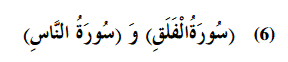
06. Recite Soorat-ul-Ikhlaas & Soorat-ul-Falaq and Soorat-un-Naas

07. أعُوذُ بِكَلِمَاتِ اللّهِ التَّامَّاتِ مِنْ شَرِّ مَا خَلَقَ

08. بِسْمِ اللّهِ الَّذِي لاَ يَضُرُّ مَعَ اسْمِهِ شَيْئٌ فِي الأرْضِ وَ لاَ فِي السَّمَا ءِ وَ هُوَ السَّمِيعُ العَلِيمُ

09. رَضِيْتُ بِاللّهِ رَبًّا وَ بِالإسْلاَمِ دِيْنًا وَ بِمُحَمَّدٍ نَبِيًّا

10. أصْبَحْنَا وَ أصْبَحَ المُلْكُ لِلّهِ وَ الحَمْدُ لِلّهِ لاَ إلَهَ إلاَّ الّلهُ وَحْدَهُ لاَ شَرِيْكَ لَهُ لَهُ المُلْكُ وَ لَهُ الحَمْدُ وَ هُوَ عَلَى آُلِّ شَيْئٍ قَدِيْرٌ رَبِّ أسْأَلُ كَ خَيْرَ مَا فِي هَذَا اليَوْمِ وَ خَيْرَ مَا بَعْدَهُ وَ أعُوذُ بِكَ مِنْ شَرِّ مَا فِي هَذَ ا اليَوْمِ وَ مِنْ شَرِّ مَا بَعْدَهُ رَبِّ أعُوذُ بِكَ مِنَ الكَسَلِ وَ الهَرَمِ وَ سُو ءِ الكَبِيْرِ وَ أعُوذُ بِكَ مِنْ عَذَابٍ فِي النَّارِ وَ عَذَابٍ فِي القَبْرِ

11. اللّهُمَّ بِكَ أصْبَحْنَا وَ بِكَ أمْسَيْنَا وَ بِكَ نَحْيَا وَ بِكَ نَمُوتُ وَ إلَيْ كَ النُّشُورُ

12. اللَّهُمَّ مَا أصْبَحَ بِيِ مِنْ نِعْمَةٍ أوْ بِأحَدٍ مِنْ خَلْقِكَ فَمِنْكَ وَحْدَكَ لاَ شَرِيْكَ لَكَ فَلَكَ الحَمْدُ وَ لَكَ الشُّكْرُ

13. الَّهُمَّ إنِّي أصْبَحْتُ فِي نِعْمَةٍ مِنْكَ وَ عَافِيَة وَ ستر فَأتِم نِعْمَتَكَ عَلَيَّ وَ عَافِيَتُكَ وَ سترك فِي الدُّنْيَا وَ الآخِرَة

14. اللَّهُمَّ إنِّي أعُوذُ بِكَ مِنَ الهَمِّ وَ الحُزْنِ وَ أعُوذُ بِكَ مِنَ العَجْزِ وَ الكَسَلِ وَ أعُوذُ بِكَ مِنَ الجُبْنِ وَ البُخْلِ وَ أعُوذُ بِكَ مِنْ غَلَبَةِ الدَّيْنِ وَ مِنْ قَهْرِ الرِّجَالِ

15. اللّهُمَّ إنِّي أسْأَلُكَ العَافِيَةَ فِي الدُّنْيَا وَ الآخِرَةِ اللّهُمَّ إنِّي أسْأَلُكَ العَفْ وَ وَ العَافِيَةَ فِي دِيْنِي وَ دُنْيَايَ وَ أهْلِي وَ مَالِي اللّهُمَّ اسْتُرْ عَوْرَاتِي وَ آمِنْ رَوْعَاتِي اللّهُمَّ احْفَظْنِي مِنْ بَيْنِ يَدَيَّ وَ مِنْ خَلْفِي وَ عَنْ يَمِيْنِي وَ عَنْ شِمَالِي وَ مِنْ فَوْقِي وَ أعُوذُ بِعَظَمَتِكَ أنْ أُغْتَالَ مِنْ تَحْتِي

16. اللّهُمَّ أنْتَ رَبِّي لاَ إلَهَ إلاَّ أنْتَ خَلَقْتَنِي وَ أنَا عَبْدُكَ وَ أنَا عَلَى عَهْدِ كَ وَ وَعْدِكَ مَا اسْتَطَعْتُ أعُوذُ بِكَ مِنْ شَرِّ مَا صَنَعْتُ أبُوءُ لَكَ بِنَعْمَتِ كَ عَلَيَّ وَ أبُوءُ بِذَنْبِي فَاغْفِرْ لِي إنَّهُ لاَ يَغْفِرُ الذُّنُوبَ إلاَّ أنْتَ

17. اللَّهُمَّ فَاطِرَ السَّمَواتِ والأرضِ عَالمَ الغَيْب وَالشَّهَادةِ، ربَّ كُلِّ شَيءٍ وَمَلِيكَهُ. أَشْهَدُ أَن لاَ إِله إِلاَّ أَنتَ، أَعُوذُ بكَ منْ شَرِّ نَفسي وشَرِّ الشَّيْطَانِ وَشِرْكهِ وَ أنْ أقْتَرِفَ عَلَي نَفْسِي سُوءََ أوْ أجُرَّهُ إلَى مُسْلِمِِ

18. اللَّهُمَّ إنِّي أصْبَحْتُ أُشْهِدُكَ وَ أُشْهِدُ حَمْلَةَ عَرْشِكَ وَ مَلاَئِكَتَكَ وَ أنْبِيَاءَكَ وَ جَمِيْعَ خَلْقِكَ بِأنَّكَ أنْتَ اللّهُ لاَ إلَهَ إلاَّ أنْتَ وَ أنَّ مُحَمَّدًً ا عَبْدُكَ وَ رَسُولُكَ

19.  لَا إِلَهَ إِلَّا اللَّهُ وَحْدَهُ لَا شَرِيكَ لَهُ لَهُ الْمُلْكُ وَلَهُ الْحَمْدُ وَهُوَ عَلَى كُلِّ شَيْءٍ قَدِيرٌ

20. حَسْبِيَ اللَّهُ لاَ إلَهَ إلاَّ هُوَ عَلَيْهِ تَوَآَّلْتُ وَ هُوَ رَبُّ العَرْشِ العَظِيْمِ

21. حَسْبِيَ اللّهُ وَ آَفَى سَمِعَ اللّهُ لِمَنْ دَعَا لَيْسَ وَرَاءَ اللّهِ مَرْمًى

22. سُبْحَانَ اللّهِ وَ بِحَمْدِهِ

23. أَسْتَغْفِرُ اللّهَ وَ أَتُوبُ إِلَيْهِ

Having Sincerity for Allaah During Supplication – Shaykh AbdurRazzaq bin Abdul-Muhsin

Lessons of Creed Acquired From The Hajj – By ‘AbdurRazzaq bin ‘Abdul-Muhsin al-Badr, Translated By Abbas Abu Yahya

Chapter 12

Having Sincerity for Allaah During Supplication

Indeed from the great acts of worship the Muslims increase upon and show great concern for during the Hajj is Dua’, which is the most important form and best type of worship. The Prophet -sallAllaahu alayhi wa sallam- described in the authentic hadeeth that Dua’ in itself is worship due to its great status and lofty nature. This is why there are many texts from the Qur’aan and Sunnah showing the great importance and high status of Dua’.

The texts comprise praise for making Dua’, encouragement to make Dua’ and inspire different ways to make Dua’, sometimes with a command to make Dua’, sometimes explaining its position and status, sometimes praising the people who make Dua’ and sometimes mentioning the great and different types of reward for those who make Dua’ and warning against those who neglect to make Dua’ or refuse to do so out of haughtiness or arrogance.

Allaah Ta’ala says:

<< Invoke your Lord with humility and in secret.  He likes not the aggressors. And do not do mischief on the earth, after it has been set in order and invoke Him with fear and hope; Surely, Allaah’s Mercy is (ever) near unto the good doers. >> [Araaf: 55-56]

And He says:

<< He is The Ever Living, Lâ ilâha illa Huwa (none has the right to be worshipped but He), so invoke Him making your worship pure for Him Alone (by worshipping Him Alone, and none else, and by doing righteous deeds sincerely for Allaah’s sake only, and not to show off, and not to set up rivals with Him in worship). All the praises and thanks be to Allaah, The Lord of the all that exists >> [Ghafir: 65]

And He says:

<< And when My slaves ask you concerning Me, then (answer them), I am indeed near (to them by My Knowledge). I respond to the invocations of the supplicant when he calls on Me (without any mediator or intercessor). So let them obey Me and believe in Me, so that they may be led aright. >> [al-Baqarah: 186]

And He says:

<< And your Lord said: ‘Invoke Me, (and ask Me for anything) I will respond to your (invocation). Verily! Those who scorn My worship [i.e. do not invoke Me and do not believe in My Oneness,] they will surely enter Hell in humiliation!’ >> [Ghafir:60]

There are many Ayaat with this meaning.

What increases the pilgrims in their concern for Dua’ and strengthens them in it during the Hajj is that they have combined the virtue and honour of the place they are in with the virtue and honour of the time period they are in, along with what descends upon their hearts of gentleness, humility and turning towards Allaah, especially on the Day of ‘Arafat which is the greatest and most noble of days.

Shaykh al-Islaam Ibn Taymeeyah -Rahimullaah- said:

‘Indeed it is known that on the evening of ‘Arafat Eemaan, mercy, light and blessings which cannot be expressed descend upon the hearts of the pilgrims.’[1]

It is established on the authority of the Prophet -sallAllaahu alayhi wa sallam- regarding the great matter of Dua’ on the Day of ‘Arafat and in explanation of its excellence, that he said:

‘The best of Dua’ is the Dua’ of the Day of ‘Arafat.’[2]

Ibn Abdul Barr -Rahimullaah- said:

‘… and from the Fiqh of the previous hadeeth is that the Dua’ of the Day of ‘Arafat is better than all other Dua’. Also, in this hadeeth, is evidence that the Dua’s on the Day of ‘Arafat are all, generally, answered.’[3]

During Hajj there are specific places at which it is necessary for the Muslim to stop. It is appropriate to make Dua’ at these places emulating the Prophet – sallAllaahu alayhi wa sallam-, as it is established that the Prophet -sallAllaahu alayhi wa sallam- would stop there, face the Qiblah and supplicate to Allaah Azza wa Jal.

There are six places in particular:

(1) In ‘Arafat – as previously mentioned.
(2) In the places of al-Haraam where the Hajj rites take place, as Allaah Ta’ala said:

<<Then when you leave ‘Arafat, remember Allaah at Mash’ar-il-Haram>> [al-Baqarah:198]

(3,4) On as-Safa and al-Marwa as is established in Saheeh Muslim from the hadeeth of Jaabir -RadhiAllaahu anhu- that when the Prophet -sallAllaahu alayhi wa sallam- used to stand on as-Safa he would say Allaahu Akbar three times and would say:

‘There is none worthy of worship in truth except Allaah Alone, He has no partners, to Him belongs the Dominion and for Him is all praise, and He is capable of all things.’ [4]

He would do that three times and make Dua’ and would do likewise on al-Marwa.’[5]

(5,6) After the stoning the two Jamaraat (the small one and medium one) as it is established in Saheeh Bukhari:

Abdullaah bin Umar –Radhi Allaahu anhu- used to stone the small Jamaarah with seven small pebbles and used to recite Takbeer on throwing each stone. He then, would proceed further until he reached level ground, where he would stay for a long time, facing the Qibla to supplicate to Allaah whilst raising his hands. Then he would stone the medium Jamaarah similarly and would go to the left towards the level ground, where he would stand for a long time facing the Qibla to supplicate to Allaah whilst raising his hands. Then he would stone the big Jamaarah from the middle of the valley but he would not stay by it. Ibn Umar used to say: ‘This is what I saw the Messenger of Allaah doing.’[6]

So these are the six places where it is established that the Prophet -sallAllaahu alayhi wa sallam-stood, made Dua’ and raised his hands. Dua’ is a great matter and has a high status in Hajj. Generally, Dua’ has an innate nature in all aspects of worship, it is the spirit and essence of worship and it is established from the Prophet -sallAllaahu alayhi wa sallam- that he said: ‘Dua’ is worship.’[7]

If making Dua’ has distinguished status and a high rank then it is obligatory upon the Muslim to have a great concern for the significance of Dua’. He should understand that he is bound by its conditions and should be refined by its manners. He should be on-guard to avoid any actions that would prevent a Dua’ from being answered and he should be aware of the times when Dua’ is most likely to be answered.

The most important matter in this great act that is necessary for the Muslim to check, is that his Dua’ is solely and sincerely for Allaah – Azza wa Jal. So he does not make Dua’ except to Allaah, he does not seek aid except from Allaah, nor does he request assistance, support and help or cure except from Allaah. This is because Dua’, as previously mentioned, is worship and directing any act of worship to other than Allaah is Major Shirk which takes a person outside of Islaam. We seek refuge in Allaah.

Allaah Ta’ala said:

<< And invoke not besides Allaah any that will neither profit you, nor hurt you, but if (in case) you did so, you shall certainly be one of the Zâlimûn (polytheists and wrong-doers).

And if Allaah touches you with hurt, there is none who can remove it but He; and if He intends any good for you, there is none who can repel His Favour which He causes to reach whomsoever of His slaves He will. And He is The Oft-Forgiving, Most Merciful >> [Yunus : 106-107]

<< And whoever invokes (or worships), besides Allaah, any other ilâh (god), for whom he has no proof, then his reckoning is only with his Lord. Surely! the disbelievers will not be successful >> [al-Muminoon:117]

<< He is The Ever Living, Lâ ilâha illa Huwa (none has the right to be worshipped but He), so invoke Him making your worship pure for Him Alone (by worshipping Him Alone, and none else, and by doing righteous deeds sincerely for Allaah’s sake only, and not to show off, and not to set up rivals with Him in worship). All the praises and thanks be to Allaah, The Lord of the all that exists >> [Ghafir: 65]

<< And the mosques are for Allaah (Alone), so invoke not anyone along with Allaah >>[Jinn : 18]

Again, there are many Ayaat with this meaning.

From the manners of making Dua’ is what Allaah Ta’ala mentioned in His saying:

<< Invoke your Lord with humility and in secret.  He likes not the aggressors. And do not do mischief on the earth, after it has been set in order and invoke Him with fear and hope; Surely, Allaah’s Mercy is (ever) near unto the good – doers >>[al-‘Aaraaf: 55-56]

In his Dua’, the Muslim combines bringing presence of the heart and the feeling of dire need of what is sought with the Dua’. He does this causing it to coincide with the best times for Dua’ along with Khushoo’ (humility) in the heart, subservience to his Lord, submission to Him, imploring Him, having graciousness, having faced the Qibla in a state of purification, raising his hands to Allaah, beginning with praise and exaltation of Allaah and joining this with prayer upon Muhammad -sallAllaahu alayhi wa sallam- who is His slave and Messenger. After this, he puts forward, to Allaah, his requests of repentance and forgiveness, then beseeches Allaah, earnestly asking of Him with total subservience to Him, supplicating to Him with fervent desire and dread and seeking closeness to Him with His Names, Attributes and Tawheed. He makes this Dua’ with sincerity and so this Dua’ is not about to ever be rejected. This is especially so if all of this coincides with supplications the Prophet -sallAllaahu alayhi wa sallam- taught as well as the best times and places for the answering of supplications along with the greatest Name of Allaah, whereby if He is asked He bestows and if He is called with it, He answers the supplication.

From the supplications established in the books of Sunnah is: that the Prophet -sallAllaahu alayhi wa sallam- heard a man saying: ‘O Allaah. I ask of You, whereby I testify that You are Allaah, there is no god except You, The One, The SelfSufficient, Who is not begotten nor does He beget and there is none that resembles Him.’ So the Prophet -sallAllaahu alayhi wa sallam- said: ‘Indeed you have asked Allaah with His greatest name which if He is asked by, He bestows, and if He is supplicated to with it, He answers.’[8]

[1] Majmoo’al-Fatwa (5/374)
[2] Narrated by tirmidhee in Sunan from the hadeeth of Abdullah bin Amr. It was graded hasan by the ‘Allama al-Albani in silsilah as-Saheehah nad he said: ‘the hadeeth is Thabit due to the collection of supporting evidences.’
[3] Tamheed (6/41)
[4] La ilaha ‘illa Allaahu wahdahu la shareeka lahu, lahul mulku wa lahul hamdu wa huwa ala kulli shayin qadeer
[5] Saheeh Muslim
[6] Saheeh al-Bukharee
[7] Narrated by Ahmad and Tirmidhi
[8] Narrated by Abu Dawood, Tirmidhi, Nisa’ee in Sunan al-Kubra, Ibn Majah & Ibn Hibban.

Posted from below PDF :
Lessons Of Creed Acquired From The Hajj – Chapter 12 – Abbas Abu Yahya

What to say upon hearing the Athan/Azan (call to prayer) – Hisn al Muslim

Repeat what the Mu’aththin says, except for when he says:

“حَيَّ عَلَى الصَّلاَةِ وَحَيَّ عَلَى الْفَلَاحِ”

Hayya ‘alas-Salaah (hasten to the prayer) and Hayya ‘alal-Falaah (hasten to salvation). Here you should say:

“لَا حَوْلَ وَلَا قُوَّةَ إِلَّا بِاللهِ”

Laa hawla wa laa quwwata ‘illaa billaah.
There is no might and no power except by Allah.

Reference: Al-Bukhari 1/152, Muslim 1/288.


Wa ‘anaa ‘ash-hadu ‘an laa ‘ilaaha ‘illallaahu wahdahu laa shareeka lahu wa ‘anna Muhammadan ‘abduhu wa Rasooluhu, radheetu billaahi Rabban, wa bi-Muhammadin Rasoolan wa bil’islaami deenan.

I bear witness that none has the right to be worshipped but Allah alone, Who has no partner, and that Muhammad is His slave and His Messenger. I am pleased with Allah as my Lord, with Muhammad as my Messenger and with Islam as my religion.1 [To be recited in Arabic after the Mu’aththin’s Tashahhud or the words of affirmation of Faith] 2

Reference:
[01] Muslim 1/290.
[02] Ibn Khuzaymah 1/220.


اللّهُـمَّ رَبَّ هَذِهِ الدّعْـوَةِ التّـامَّة وَالصّلاةِ القَـائِمَة آتِ محَـمَّداً الوَسيـلةَ وَالْفَضـيلَة وَابْعَـثْه مَقـامـاً مَحـموداً الَّذي وَعَـدْتَه إِنَّـكَ لا تُـخْلِفُ الميـعاد.

Allaahumma Rabba haathihid-da ‘watit-taammati wassalaatil-qaa’imati, ‘aati Muhammadanil-waseelata walfadheelata, wab ‘ath-hu maqaamam-mahmoodanil-lathee wa’adtahu

After replying to the call of Mu’aththin. you should recite in Arabic Allah’s blessings on the Prophet.

O Allah , Lord of this perfect call and established prayer. Grant Muhammad the intercession and favor, and raise him to the honored station You have promised him

Reference:

Al-Bukhari 1/152, and the addition between brackets is from Al-Bayhaqi 1/410 with a good (Hasan) chain of narration. See ‘Abdul-Azlz bin Baz’s Tuhfatul-‘Akhyar, pg. 38.

Between the call to prayer and the ‘Iqamah, you should supplicate Allah for yourself. Invocation during this time is not rejected.

Source: Hisn al Muslim, Darus-salam English Publication , with slight editing

Benefit: Person requesting someone to supplicate Allaah for him – Shaykh Ibn Uthaymeen

From the kind of permissible Tawassul: that a person asks someone to supplicate to Allaah, The Most High, for him, if it is hoped for that this person’s supplication will be answered.

However, it should be that the person requesting someone to supplicate Allaah for him intends to benefit himself and his brother, the one from whom he asked the supplication, so that the request is not solely for his own interest. Since if you want to benefit your friend as well as yourself, then this will end up as something good for him.

This is because when a man supplicates to Allaah for his brother in his absence, the angel says: “Aameen, and for you the same.” Similarly when someone supplicates Allaah for his brother, then he is from those who do good by virtue of this supplication, and Allaah loves those who do good.”

Translated by Dr Saleh as Saleh rahimahullaah
SourceUnderstanding Worship – Fiqh ul-‘Ibadah – Shaykh ibn Uthaymeen – Page 159

Related Linkhttps://abdurrahman.org/dua

Ruling on Tabarruk by the Prophet’s relics and supplicating to him – Shaik ibn Baaz

Click on the Below Link to Read or Download the PDF

Ruling on Tabarruk by the Prophet’s relics and supplicating to him – Shaykh Ibn Baaz

Source : alifta.com

The Incorrect and Futile Tawassul (Means of nearness to Allaah) and its Types – Shaykh ibn Uthaymeen

Bismillah ir-Rahman ir-Rahim (بسم الله الرحمن الرحيم)

The Incorrect and Futile Tawassul and its Types

Question 58: Having known the Correct Tawassul and its Types, then it is inevitable for us to know the Incorrect Tawassul and its Types.

The Answer: The incorrect and futile Tawassul is to use an unprescribed way, something which is not affirmed as a legal way by Sharee’ah, as a means of nearness to Allaah, The Most High. Since Tawassul in this manner is from nonsense and falsehood that contradicts the intellectual and textual proofs.

And from this is that a person uses the supplication of a deceased man as Tawassul to Allaah (عز و جل). He asks this deceased person to supplicate to Allaah for him. Then this is not a correct and prescribed means. Rather it is foolishness on the part of the one who asks this deceased man to supplicate to Allaah for him. Since once he dies, the actions of the deceased cease to exist, and it is impossible for him to supplicate to Allaah for anyone. Even the Prophet (صلى الله عليه و سلم), it is not possible that he supplicates to Allaah for anyone after his (صلى الله عليه و سلم) death. For this reason, the companions (Radi Allahu Anhum) did not use as Tawassul to Allaah by asking the Prophet (صلى الله عليه و سلم) to invoke Allaah for them after his death.

In fact, when the people suffered a drought at the time of ‘Umar Ibn al-Khattaab (رضي الله عنه), he said: “O Allaah we used to ask Your Prophet to supplicate on our behalf to You and You would bless us with rain, and now we ask the uncle of our Prophet [i.e. al-‘Abbaas (رضي الله عنه)] to supplicate to You on our behalf, so bless us with rain.” So al-‘Abbaas (رضي الله عنه) stood up and supplicated to Allaah (عز و جل). Had the matter of asking the deceased’s supplication to Allah been a permissible and correct way, then ‘Umar and those with him from the companions would have asked that from Allaah’s Messenger (صلى الله عليه و سلم). Since the response to his supplication is more likely to take place than that of ‘al-‘Abbaas ibn ‘Abdul-Muttalib (رضي الله عنه). What is important, therefore, is that Tawassul to Allaah by means of asking supplication from the deceased is false and impermissible.

And from the incorrect type of Tawassul is to seek nearness to Allaah by means of the status of the Prophet (صلى الله عليه و سلم), saying: “O Allaah, I ask you by the rank of Your Prophet [to grant me] such and such.” This is since the status of the Prophet (صلى الله عليه و سلم) is not something of benefit to you. It is only beneficial to the Prophet (صلى الله عليه و سلم), but as regard to you then it is of no benefit to you that you use as Tawassul to Allaah, The Most High. And as we have mentioned, Tawassul is seeking the correct means that is fruitful. So, what is of benefit to you in that the Prophet (صلى الله عليه و سلم) has an honourable status with Allaah? And if you want to make correct Tawassul to Allaah, then say: “O Allaah, I ask You by my Eemaan in Your Prophet, or by my love of Your Prophet” or the like, then this is from the correct and beneficial means.

Translated by Dr Saleh as Saleh rahimahullaah
SourceUnderstanding Worship – Fiqh ul-‘Ibadah – Shaykh ibn Uthaymeen

Praying for the Absolute Destruction of Jews and Christians – Shaykh Salih Ali-Shaykh

Ṣāliḥ Āli-Shaykh on Praying for the Absolute Destruction of Jews & Christians
الفتاوى الشرعية يف القضايا العصرية :Original Title
Author: Ṣāliḥ Āli-Shaykh
Translated by: Abu az-Zubayr Harrison – authentic-translations.com

Question: We have read a verdict from you published in “al-Da’wah” magazine that one should not pray for the overall destruction of Jews and Christians. Hearing this, we were confused by the seemingly contrasting supplication of prophet Nūh (alaihissalam). We hope you will explain this verdict of yours with the evidence.

Click the below link to read or download the full document

Praying for the Absolute Destruction of Jews & Christians -Salih Ali-Shaykh- Authentic-Translations.com [PDF]

Manners of Making Duaa – Dr. Saleh as Saleh [Audio|Text]

Listen / Download Mp3 Here (Time 34:23)

This summary outlines the fourteen key etiquettes of making Du’a (supplication) as detailed in the sermon. The etiquettes begin with praising Allah and sending blessings upon the Prophet before supplicating, followed by the importance of admitting one’s sins, as exemplified by the prayer of Prophet Yunus and the “Sayyid al-Istighfar.” The sermon emphasizes supplicating with humility, hope, and fear, and with firm determination, avoiding phrases like “if You wish.” Other crucial manners include being persistent in Du’a, making supplication in all states (both ease and hardship), and refraining from praying against oneself, family, or wealth. The physical aspects of Du’a are also covered, such as repeating the supplication three times, facing the Qibla, raising one’s hands, performing ablution (Wudu), and using a Siwak. Finally, the sermon highlights the significance of preceding one’s Du’a with a righteous deed and having a noble intention or objective behind the supplication.


بِسْمِ اللَّـهِ الرَّحْمَـٰنِ الرَّحِيمِ. الْحَمْدُ لِلَّهِ رَبِّ الْعَالَمِينَ وَصَلَّى اللَّهُ عَلَى نَبِيِّنَا مُحَمَّدٍ وَعَلَى آلِهِ وَصَحْبِهِ وَسَلَّمَ.
In the name of Allah, the Most Gracious, the Most Merciful. All praise is for Allah, the Lord of the worlds, and may Allah’s peace and blessings be upon our Prophet Muhammad, his family, and his companions.

We continue the discussion on the subject of du’a. And last time we spoke about the conditions of du’a. And in addition to the fact that du’a has conditions to it, then there also there are etiquettes that makes it perfected. And from the etiquettes, this is the subject of today’s topic is the أَدَبُ الدُّعَاءِ the etiquettes and manners of du’a.

From the أَدَب the etiquette or manner in du’a is praising Allah subhanahu wa ta’ala and making salah upon the Prophet sallallahu alaihi wasallam before the du’a. Praising Allah and making salah upon his Prophet sallallahu alaihi wasallam before the du’a.

It is reported from Fadalah bin ‘Ubayd that while the Prophet alayhi salatu wassalam was sitting, a man came in and he prayed and said, اللَّهُمَّ اغْفِرْ لِي O Allah, forgive me وَارْحَمْنِي and have mercy upon me.

The messenger sallallahu alaihi wasallam said, “You hasted. If you pray and you sit, then praise Allah by all that which He deserves, وَصَلِّ عَلَيَّ then make salah upon me, ثُمَّ ادْعُهُ then invoke Him.”

So he directed him to praise Allah subhanahu wa ta’ala first and then make salah upon him alayhi salatu wassalam.

Then another man came and prayed. And this other man praised Allah subhanahu wa ta’ala and made salah upon the Prophet sallallahu alaihi wasallam. The Prophet alayhi salatu wassalam told him,

أَيُّهَا الْمُصَلِّي ادْعُ تُجَبْ
“You the one who prayed, invoke Allah and you will be answered.”

This hadith is reported by at-Tirmidhi and by Abu Dawud and Sheikh al-Albani rahimahullah said that it is Sahih in Sahih al-Jami’.

And he sallallahu alaihi wasallam said in the other hadith reported by at-Tabarani and others, he said,

كُلُّ دُعَاءٍ مَحْجُوبٌ
“Every du’a is hindered,

meaning from being answered,

حَتَّى يُصَلَّى عَلَى النَّبِيِّ صلى الله عليه وسلم
until salah upon the Prophet sallallahu alaihi wasallam is made.”

This is reported by at-Tabarani or in at-Tabarani in al-Awsat from ‘Ali radiyallahu ta’ala anhu. And also in al-Firdaws by ad-Daylami from Anas. And it is also reported raised to ‘Umar radiyallahu ta’ala anhu. But this is in at-Tirmidhi and Sheikh al-Albani rahimahullah graded it as hasan, graded it as hasan, as good.

So this is the first etiquette. The second etiquette is admitting one’s sin and confessing of one’s mistakes and wrongdoings. And that’s why the du’a of Yunus alayhi assalam is from the greatest invocations, if it is not the greatest. Why? Because it comprised his confession and attestation to the oneness of Allah subhanahu wa ta’ala and His uniqueness. In addition to his confessing his sin and wrongdoing and doing injustice to himself, as Allah subhanahu wa ta’ala said regarding this in Surah al-Anbiya, chapter 21 verse 87.

فَنَادَىٰ فِي الظُّلُمَاتِ أَن لَّا إِلَـٰهَ إِلَّا أَنتَ سُبْحَانَكَ إِنِّي كُنتُ مِنَ الظَّالِمِينَ
But he cried through the darkness (saying): “La ilaha illa Anta [none has the right to be worshipped but You (O Allah)], Glorified (and Exalted) are You [above all that (evil) they associate with You]. Truly, I have been of the wrong-doers.” (21:87)

And remember Dhun-Nun, Yunus, Jonah, when he went off in anger and imagined that we shall not punish him, meaning the calamities which had befallen him, but he cried through the darkness saying,

لَّا إِلَـٰهَ إِلَّا أَنتَ سُبْحَانَكَ
“La ilaha illa Anta [none has the right to be worshipped but You (O Allah)], Glorified (and Exalted) are You [above all that (evil) they associate with You].

لَّا إِلَـٰهَ إِلَّا أَنتَ سُبْحَانَكَ إِنِّي كُنتُ مِنَ الظَّالِمِينَ
Truly, I have been of the wrong-doers.”

Similarly, the situation holds regarding the great du’a known as سَيِّدُ الِاسْتِغْفَارِ Sayyid al-Istighfar, which is most superior of istighfar, asking Allah subhanahu wa ta’ala for forgiveness, which is considered the best in structure. And one of the causes for its merits is that it involves the confession concerning sin and wrongdoing.

As came in the hadith of Shaddad bin Aws radiyallahu anhu from the Prophet sallallahu alaihi wasallam that he said,

سَيِّدُ الِاسْتِغْفَارِ
Sayyid al-Istighfar, the most superior of istighfar, is for the slave to say,

اللَّهُمَّ أَنْتَ رَبِّي لَا إِلَهَ إِلَّا أَنْتَ خَلَقْتَنِي وَأَنَا عَبْدُكَ وَأَنَا عَلَى عَهْدِكَ وَوَعْدِكَ مَا اسْتَطَعْتُ أَعُوذُ بِكَ مِنْ شَرِّ مَا صَنَعْتُ أَبُوءُ لَكَ بِنِعْمَتِكَ عَلَيَّ وَأَبُوءُ بِذَنْبِي فَاغْفِرْ لِي فَإِنَّهُ لَا يَغْفِرُ الذُّنُوبَ إِلَّا أَنْتَ
“O Allah, You are my Rabb, there is no true God worthy of worship but You. You created me and I am Your slave, and I am keeping to Your covenant and promise as much as possible or able to. I seek refuge in You from the evil I have done. I testify or confess of Your favor upon me, and I admit and acknowledge, and I confess to my sin, so forgive me, and no one forgives sins except You.” (Volume 8, hadith 318 in Sahih al-Bukhari)

The Prophet sallallahu alaihi wasallam said, “If somebody recites it during the day,

مَنْ قَالَهَا مِنَ النَّهَارِ مُوقِنًا بِهَا فَمَاتَ مِنْ يَوْمِهِ قَبْلَ أَنْ يُمْسِيَ فَهُوَ مِنْ أَهْلِ الْجَنَّةِ
if somebody recites it during the day with firm faith in it and dies on the same day before the evening, he will be from the people of Paradise.

وَمَنْ قَالَهَا مِنَ اللَّيْلِ وَهُوَ مُوقِنٌ بِهَا فَمَاتَ قَبْلَ أَنْ يُصْبِحَ فَهُوَ مِنْ أَهْلِ الْجَنَّةِ
And if somebody recites it at night with firm faith in it and dies before the morning, he will be from the people of Paradise.”

نَسْأَلُ اللَّهَ سُبْحَانَهُ وَتَعَالَى مِنْ فَضْلِهِ We ask Allah subhanahu wa ta’ala from His bounty. So this is the second, the second etiquette or manner.

The third one is being in a state of humbleness and calmness with hope and fear, with hope and fear.

Allah subhanahu wa ta’ala described His prophets alayhimussalam as in Surah al-Anbiya 21:90.

إِنَّهُمْ كَانُوا يُسَارِعُونَ فِي الْخَيْرَاتِ وَيَدْعُونَنَا رَغَبًا وَرَهَبًا وَكَانُوا لَنَا خَاشِعِينَ
Verily, they used to hasten on to do good deeds, and they used to call on Us with hope and fear, and used to humble themselves before Us. (21:90)

So we answered his call and we bestowed upon him Yahya, where he said, “Verily they used to hasten on to do good deeds and they used to call on us with hope and fear. And they used to call on us with hope and fear and used to humble themselves before us.” This is the point of evidence. Verily, they used to hasten on to do good deeds, and they used to call on us with hope and fear and used to humble themselves before us. This is the third etiquette.

The fourth etiquette, having firmness and determination when making the du’a or concerning the issue. As in the hadith reported by al-Bukhari and Muslim, and in Bukhari volume 8, hadith 351. Abu Hurairah radiyallahu ta’ala anhu said that Rasulullah sallallahu alaihi wasallam said,

لَا يَقُولَنَّ أَحَدُكُمْ اللَّهُمَّ اغْفِرْ لِي إِنْ شِئْتَ اللَّهُمَّ ارْحَمْنِي إِنْ شِئْتَ لِيَعْزِمِ الْمَسْأَلَةَ فَإِنَّهُ لَا مُكْرِهَ لَهُ
“None of you should say, ‘O Allah, forgive me if You wish.’ ‘O Allah, be merciful to me if You wish.’ But he should always appeal to Allah with determination, for nobody can force Allah to do something against His will. Nobody can force Allah to do something against His will.”

This is the fourth etiquette, having firmness and determination when making the du’a or concerning the issue.

And the fifth one, the fifth etiquette is insistence in du’a. This is from the beautiful etiquettes which indicates the true hope for that which is with Allah azza wa jall. In addition to the fact that Allah subhanahu wa ta’ala loves those insisting in du’a as came in the hadith of ‘Aisha radiyallahu ta’ala anha. And this hadith is reported in at-Tabarani and others. And in it, the wording is

إِنَّ اللَّهَ يُحِبُّ الْمُلِحِّينَ فِي الدُّعَاءِ
“Allah loves those who insist in du’a.”

I have to mention that with respect to the narration by ‘Aisha which we mentioned earlier, we didn’t mention concerning the degree of the hadith. This hadith,

إِنَّ اللَّهَ يُحِبُّ الْمُلِحِّينَ
“Allah loves those who insist in du’a,”

as I said, is supported in at-Tabarani

فِي الدُّعَاءِ
in ad-Du’a

and al-‘Uqayli فِي الضُّعَفَاءِ الْكَبِيرِ in ad-Du’afa’ al-Kabir وابن عدي في الكامل wa Ibn ‘Adi fi al-Kamil and others from the way of Baqiyyah ibn al-Walid and who said that Yusuf ibn as-Safar عَنِ الزُّهْرِيِّ، عَنْ عُرْوَةَ، عَنْ عَائِشَةَ from az-Zuhri, from ‘Urwah, from ‘Aisha, then he reported it.

Al-Hafiz Ibn Hajar said in his book al-Fath that at-Tabarani reported it in the du’a with good chain with trustworthy chain of narrators except that there is the point of known in hadith as ‘an’anah Baqiyyah ibn al-Walid from ‘Aisha. And there is criticism also by others to the narration and some have declared it weak and others considered it inauthentic and some of the scholars even considered it to be fabricated. This is with respect to the status of this narration.

We continue then. The sixth manner or etiquette,

الدُّعَاءُ فِي كُلِّ الْأَحْوَالِ
making du’a under all circumstances,

under all circumstances, meaning at times of ease, at times of difficulty, under hardship. Because of the hadith reported by Abu Hurairah radiyallahu ta’ala anhu, he said that the Messenger sallallahu alaihi wasallam said,

مَنْ سَرَّهُ أَنْ يَسْتَجِيبَ اللَّهُ لَهُ عِنْدَ الشَّدَائِدِ وَالْكُرَبِ فَلْيُكْثِرِ الدُّعَاءَ فِي الرَّخَاءِ
“Whoever is pleased that Allah or wants is that Allah subhanahu wa ta’ala responds to his du’a at times of hardship and distress, then let him make abundant du’a at the times of ease.”

The seventh is avoiding du’a against one’s family, one’s wealth, and one’s self. Why? Because the objective of the du’a is to seek what is beneficial and to ward off harm. And making du’a against one’s family, wealth and self, there is no benefit in that. Rather this is pure harm upon the person. What he is going to gain from the corruption, for example, of his family, or destruction of his wealth, or of himself, etc. And that’s why in the hadith reported by Muslim, or collected by Muslim, the Prophet alayhi salatu wassalam said,

لَا تَدْعُوا عَلَى أَنْفُسِكُمْ
“Do not invoke Allah against yourselves,

وَلَا تَدْعُوا عَلَى أَوْلَادِكُمْ
and don’t invoke Allah against your children,

وَلَا تَدْعُوا عَلَى أَمْوَالِكُمْ
and don’t invoke Allah against your wealth,

lest you may meet an hour where you ask Allah and He will respond to you. So this is the seventh etiquette.

The eighth etiquette is to repeat the du’a three times. To repeat the du’a three times, to repeat the invocation three times. As reported in Sahih Muslim from the hadith of Ibn Mas’ud, the lengthy hadith of Ibn Mas’ud, and that’s when the Prophet sallallahu alaihi wasallam finished his salah, he raised his voice, then he invoked Allah against Quraysh. And that when he used to make du’a, he used to make it in thrice.

ثُمَّ قَالَ: اللَّهُمَّ عَلَيْكَ بِقُرَيْشٍ
Then he said, “O Allah, deal with Quraysh.”

اللَّهُمَّ عَلَيْكَ بِقُرَيْشٍ، اللَّهُمَّ عَلَيْكَ بِقُرَيْشٍ
“O Allah, deal with Quraysh. O Allah, deal with Quraysh.”

The ninth etiquette is to face the Qiblah. Face the Qiblah. And in the hadith reported by al-Bukhari and Muslim, and it is in al-Bukhari volume 8, hadith 354. From Abdullah bin Zayd radiyallahu anhu qaal,

خَرَجَ النَّبِيُّ صلى الله عليه وسلم إِلَى هَذَا الْمُصَلَّى يَسْتَسْقِي فَدَعَا وَاسْتَسْقَى ثُمَّ اسْتَقْبَلَ الْقِبْلَةَ وَقَلَبَ رِدَاءَهُ
“The Prophet sallallahu alaihi wasallam came to the Musalla and then he made du’a and sought Allah for rain, then he directed himself towards the Qiblah and turned his rida’, the upper garment, inside out.”

Allah’s messenger went out to this Musalla praying place to offer the prayer of Istisqa seeking Allah for rain. He invoked Allah for rain and then faced the Qiblah and turned his rida’, his upper garment inside out.

The tenth etiquette is raising the hands with du’a. Abu Musa al-Ash’ari radiyallahu ta’ala anhu said, and this hadith is in Bukhari and Muslim,

دَعَا النَّبِيُّ صلى الله عليه وسلم
“The Prophet sallallahu alaihi wasallam made du’a,”

then he raised his hands,

وَرَأَيْتُ بَيَاضَ إِبْطَيْهِ
“and I saw the whiteness of his armpits.”

And in the hadith of Ibn ‘Umar reported by al-Bukhari and also an-Nasa’i, the hadith of Ibn ‘Umar, may Allah be pleased with both of them, said that

رَفَعَ النَّبِيُّ صلى الله عليه وسلم يَدَيْهِ
“The Prophet sallallahu alaihi wasallam raised his hands,”

وَقَالَ
and he said,

اللَّهُمَّ إِنِّي أَبْرَأُ إِلَيْكَ مِمَّا صَنَعَ خَالِدٌ
“O Allah, I declare myself free of what Khalid had done.”

And also from the hadith of Salman al-Farisi radiyallahu anhu reported by Abu Dawud and at-Tirmidhi, Ibn Majah, and Sheikh al-Albani considered it as Sahih or hasan rather good in Sahih al-Jami’, the hadith of Salman that the messenger sallallahu alaihi wasallam said,

إِنَّ رَبَّكُمْ تَبَارَكَ وَتَعَالَى حَيِيٌّ كَرِيمٌ
“Your Rabb, Allah subhanahu wa ta’ala, most blessed and most high, is hayyun karim, one who He is bashful and generous.

يَسْتَحْيِي مِنْ عَبْدِهِ إِذَا رَفَعَ يَدَيْهِ إِلَيْهِ أَنْ يَرُدَّهُمَا صِفْرًا
He is shy if His slave for His slave to raise his hands to him and then turns them empty.”

This raising of the hands applies to the general du’a, and to all cases where there is proof to raise the du’a, to raise the hands in du’a, like for example raising the hands in du’a while on the Safa and Marwa and in istisqa seeking Allah subhanahu wa ta’ala for rain. Yawm al-Jumu’ah, the day of Jumu’ah, istisqa while making the khutbah. Why we say this? Because there are invocations where hands are not raised, like the du’a upon entrance to the to the house or leaving one’s house, going out, or upon entrance to the toilet or leaving it, upon leaving it. There is no proof for raising the du’a under such situations, raising the hands rather under such situations. So therefore the guiding or the guidance in this is raising the hands is applicable to in cases of general du’a or when there is a proof indicating as such.

From the etiquettes is using the siwak, using the siwak to brush one’s teeth. And this is directed in the following manner. The du’a is worship by the tongue. And cleaning the mouth when making the du’a is a good etiquette. And that’s why the sunnah is replete regarding the legality of using the siwak for salah. And the reason is to clean the place where the dhikr is going to be established in the salah, where the remembrance of Allah subhanahu wa ta’ala is to be established.

From the etiquettes of du’a is to introduce before the du’a a righteous deed, like giving in charity or doing good to a poor person or offering two raka’ah or fasting, so that these righteous deeds be means for the du’a to be answered. The evidence for this is in the hadith of the three who went into a cave and a rock fell and closed the entrance to the cave, and so they were trapped there. And we discussed this hadith in the classes before. The Prophet sallallahu alaihi wasallam told us that each one of them sought means of nearness to Allah by a righteous deed which he did sincerely for Allah’s sake, and Allah then accepted the du’a of each person and made the rock move away finally and they came out safe. So this is a manner or etiquette to introduce a righteous deed before one’s du’a.

The thirteenth etiquette is al-wudu, al-wudu, making wudu, the ritual purification. As in the hadith of Abu Musa al-Ash’ari which is in al-Bukhari and in Muslim. May Allah be pleased with him. After the Prophet sallallahu alaihi wasallam finished from the expedition of Hunayn, the battle of Hunayn, and in the hadith,

فَدَعَا بِمَاءٍ فَتَوَضَّأَ
“he called for water to be brought, so he made wudu,

then he raised his hands and said,

اللَّهُمَّ اغْفِرْ لِعُبَيْدٍ أَبِي عَامِرٍ
‘O Allah, forgive ‘Ubayd Abi ‘Amir,’

وَرَأَيْتُ بَيَاضَ إِبْطَيْهِ
and I saw the whiteness of his armpits.”

The fourteenth etiquette, one’s aim should be good. One’s objective should be good. Like if one puts an objective as a means of nearness to Allah if his du’a is answered, that a righteous deed may be manifested. Like for example, saying, “Allahumma irzuqni malan, O Allah, give me wealth so I can spend it in ways of truth and to help by it Your deen, Islam.” Or, “O Allah, bestow upon me knowledge so that I can teach it, teach Your deen to the people and spread goodness.” “O Allah, bestow upon me a good husband or a good wife so that I suffice myself and protect myself from falling into haram,” and so forth.

This is indicated as in the du’a of Musa alayhi assalam in Surah Taha. Chapter 20, verses 25 to 35.

قَالَ رَبِّ اشْرَحْ لِي صَدْرِي وَيَسِّرْ لِي أَمْرِي وَاحْلُلْ عُقْدَةً مِّن لِّسَانِي يَفْقَهُوا قَوْلِي وَاجْعَل لِّي وَزِيرًا مِّنْ أَهْلِي هَارُونَ أَخِي اشْدُدْ بِهِ أَزْرِي وَأَشْرِكْهُ فِي أَمْرِي كَيْ نُسَبِّحَكَ كَثِيرًا وَنَذْكُرَكَ كَثِيرًا إِنَّكَ كُنتَ بِنَا بَصِيرًا
[Musa (Moses)] said: “O my Lord! Open for me my chest (grant me self-confidence, contentment, and boldness). And ease my task for me; And make loose the knot (the defect) from my tongue, (i.e. remove the incorrectness from my speech) That they understand my speech, And appoint for me a helper from my family, Harun (Aaron), my brother; Increase my strength with him, And let him share my task (of conveying Allah’s Message and Prophethood), That we may glorify You much, And remember You much, Verily! You are of us Ever a Well-Seer.” (20:25-35)

What was the outcome? Allah subhanahu wa ta’ala answered his request and bestowed favor upon him.

And this is also indicated by the hadith of Ibn ‘Amr radiyallahu anhuma which is reported in Abu Dawud and Sheikh al-Albani rahimahullah considered it as hasan, good. He said that the Prophet sallallahu alaihi wasallam said, “If anyone of you comes to visit an ill person, then let him say, invoke Allah saying,

اللَّهُمَّ اشْفِ عَبْدَكَ يَنْكَأُ لَكَ عَدُوًّا أَوْ يَمْشِي لَكَ إِلَى صَلَاةٍ
‘O Allah, bestow your healing upon such and such person, so that he can stand to defeat an enemy of you, or that he walks to offer salah for You.'”

These are 14 manners in du’a and there is more but insha’Allah Ta’ala sufficient for today. I ask Allah subhanahu wa ta’ala to make this a benefit for myself and for all of you.

وَالْحَمْدُ لِلَّهِ رَبِّ الْعَالَمِينَ وَصَلَّى اللَّهُ عَلَى نَبِيِّنَا مُحَمَّدٍ وَعَلَى آلِهِ وَصَحْبِهِ وَسَلَّمَ.
And praise be to Allah, the Lord of the worlds, and may Allah’s peace and blessings be upon our Prophet Muhammad, his family, and his companions.

Clips Extracted from the above Lecture:

Conditions of Invocations (Dua) – Dr. Saleh as Saleh [Audio|En]

Listen / Download Mp3 Here (Time 48:17)
[audio http://salafiaudio.files.wordpress.com/2014/09/duaa-understanding-and-rulings-03-conditions-of-invocations-saleh-as-saleh.mp3]

Merits of Supplications (Dua) – Dr. Saleh as Saleh [Audio|En]

Listen / Download Mp3 Here (Time 28:56)
[audio http://salafiaudio.files.wordpress.com/2014/09/duaa-understanding-and-rulings-02-merits-of-supplications-saleh-as-saleh.mp3]

Dua : Understanding and Rulings – Intro – Dr. Saleh as Saleh [Audio|En]

Listen / Download Mp3 Here (Time 31:51)
[audio http://salafiaudio.files.wordpress.com/2014/09/duaa-understanding-and-rulings-01-introduction-saleh-as-saleh.mp3]

Dua : Understanding and Rulings – Dr. Saleh as Saleh [Audio|En]

01 Introduction

02 Merits of Supplications

03 Conditions of Invocations

04 Manners of Making Duaa

Why Invocations (Duaa) Not Answered – Dr. Saleh as Saleh [Audio|En]

Listen / Download Mp3 Here (Time 21:28)
[audio http://salafiaudio.files.wordpress.com/2014/09/points-of-benefit-in-duaa-10-why-invocations-are-not-answered-saleh-as-saleh.mp3]

Delay In Response To the Duaa – Dr. Saleh as Saleh [Audio|En]

Listen / Download Mp3 Here (Time 10:38)
[audio http://salafiaudio.files.wordpress.com/2014/09/points-of-benefit-in-duaa-09-delay-in-response-to-the-duaa-saleh-as-saleh.mp3]

Places of Duaa in Salaat (Prayer) – Dr. Saleh as Saleh [Audio|En]

Listen / Download Mp3 Here (Time 3:36)

Bismillaa hirrahmaa nirraheem,
Alhamdhulillaahi Rabbil Aalameen,
wa sallallaahu ala nabiyyina muhammadin wa alaa aalihi wa sahbihi wasallam

The places of duaa in salah:

  • First in the dua al istifthah – in the opening duaa.
  • Second in the isthiaadha – seeking refuse in Allah from shythaan.
  • Three – In the basmalah – in the saying of bismillaah hirrahmaa nirraheem.
  • Fourth – In the second half of Soorah al Fathiha and
  • Fifth – in saying ameen.
  • Sixth in rukooh and the
  • Seventh uprising from rukooh,
  • Eight in dua al-qunooth and this applies to the Witr or if there is a certain important matter or calamity that occurs then this duaa can be also performed in the salah.
  • Nineth is in sujood,
  • Tenth – between the two sajdhas, between the two prostrations.
  • Eleventh in the first Tashahud and
  • Twelve in as-salah al-Ibraaheemiyyah, the salah on prophet Ibraheem (alaihissalaam) and
  • Thirteenth – invocations following Tashahud before tasleem and
  • Fourteenth – with tasleem itself.

These are the places of duaa in salah

in shaa Allaah (wa ta’aala) will go over their meanings in the next coming points of benefit.

Alhamdhulillaahi Rabbil Alameen wa sallallaahu ala nabiyyina Muhammadin wa ala aalihi wa sahbihi wasallam.

Transgressing in Duaa (Invocation) – Dr. Saleh as Saleh [Audio|En]

Listen / Download Mp3 Here (Time 5:49)
[audio http://salafiaudio.files.wordpress.com/2014/09/points-of-benefit-in-duaa-07-transgressing-in-duaa-saleh-as-saleh.mp3]