Shaytan says : “If you miss him now , you will never catch him again”

When death befalls someone, he should know that it is an hour of serious suffering because it is a moment of severe pain, when he is leaving all objects of love, his loved ones, and to all that the horror of the throes of death and fear of where his wealth go. Then Shaytan comes and attempts to have the slave [of Allah] become discontent with his Lord, he tells him ‘Look at you! What made you die? Is it painful? You are leaving your wife, your children and you will be laid under the ground? So he might cause him to become discontent with his Lord, hating Allaah’s decree, making him say things that include any kind of objection , or he might make him unjust in his will, giving some of the inheritors preference over others, to on and so forth. In this case, we need to cure the whispers of Shaytaan and cure the self .

Abu Dawood reported from Abu al-Yusr (radiy Allaahu anhu) that the Prophet (Sallallaahu ‘alaihi wa sallam) used to say,

 أعوذ بك أن يتخبطني الشيطان عند الموت

Aoodhubika an ya takhabaTani ash-Shaytaan ‘indal Mawt

“I seek refuge in You that Shaytaan flounders me at death: [1]

In that minute Shaytaan tells his assistants,

“If you miss him now [i.e. you do not succeed to lead him astray before he dies], you will never catch him again [i.e. you will never be able to deviate him at any other time].”

As for the cure for these trials we should first mention that whoever is mindful of Allah while in good health, Allah will protect him when he is ill, and whoever observes Allah in his thoughts, Allah will protect him when he moves his bodily parts.

Al-Khattaab said,

“His seeking refuge in the ‘floundering of Shaytaan at death‘, that is if Shaytaan seizes him when he leaves this world, preventing him from repenting or hinders him from mending his affairs, leaving an injustice or he makes him despair from the mercy of Allaah or makes him hate death or be sorry for this life, so he becomes discontented with Allah’s decree in dissolution, going to the hereafter, so one has a bad end and he meets his Lord while he is discontented with Him.

It was narrated that the Shaytaan is never tougher on a man as in death and he tells his assistants: ‘Take this person! if you miss him today you will never catch him again.’ We seek refuge in Allah from his evil, we ask him to bless our death and to have a good end.”

[1] Reported by Abu Dawood 1552-1553, al-Nasa’i[8:283] through the chain of Afla’ Mawla (emancipated slave) of Abu Ayyub from Abu al-Yusr that the Prophet (Sallallaahu ‘alaihi wa sallam) used to pray, “O Allah! I seek refuge in you from dying under abolishment, not being deliberate, I seek refuge in you from drowning, from burning and from senility, I seek refuge in you that Shaytaan flounders me at death, I seek refuge in you that I die while escaping from fighting for Your sake and I seek refuge in you from dying because of a sting.”

Source: from the Book “Disciplining the Soul” by Ibn al Jawzi (rahimahullaah) , published by Dar as-Sunnah

Related Links:

Jinn & Devils Index Page:
https://abdurrahman.org/jinn-shayateen-devils/

Seeking Refuge in Allah from Shaitan :
https://authentic-dua.com/category/dua-dhikr/shaitan-devil/

Ruling on the so-called science of summoning spirits – Shaykh Ibn Baaz

 A speech by His Eminence published in the local and Islamic newspapers in 1395 A.H

All praise be to Allah, and peace and blessings be upon the Messenger of Allah, his family, his Companions, and those who follow his guidance.

The so-called science of summoning spirits is widespread among many people including writers and others. They claim that they summon the souls of the dead through a method invented by those who practice such jugglery. They further claim that they ask such souls about the dead, whether they are in bliss or torture, as well as other such affairs as they may think the dead know about.

I have investigated the issue thoroughly to find that it is a false science and a satanic jugglery that aims at corrupting beliefs and morals, confusing Muslims, and claiming to know the Ghayb (the Unseen) in many respects.

Therefore, I considered it proper to write a brief note to clarify the truth, advise the Ummah, and ward off confusion. Undoubtedly, this issue, as any other issue, should be referred to the Qur’an and the Sunnah so that we might verify what they or one of them verify and reject what they or one of them rejects. In this regard, Allah (Glorified and Exalted be He) says: O you who believe! Obey Allâh and obey the Messenger (Muhammad صلى الله عليه وسلم), and those of you (Muslims) who are in authority. (And) if you differ in anything amongst yourselves, refer it to Allâh and His Messenger (صلى الله عليه وسلم), if you believe in Allâh and in the Last Day. That is better and more suitable for final determination.

With regards to soul-related issues, they have to do with matters relating to the Ghayb, the truth about which is exclusively known by Allah (Glorified and Exalted be He). It is impermissible to discuss them unless substantiated by a Shar`y (Islamic legal) evidence. Allah (Exalted be He) says: (He Alone is) the All-Knower of the Ghaib (Unseen), and He reveals to none His Ghaib (Unseen).” Except to a Messenger (from mankind) whom He has chosen (He informs him of unseen as much as He likes), and then He makes a band of watching guards (angels) to march before him and behind him. Allah (Glorified be He) also says in Surah Al-Naml: Say: “None in the heavens and the earth knows the Ghaib (Unseen) except Allâh”

Scholars differed regarding what is intended by the Ruh (the Spirit) in the Ayah (Qur’anic verse) in Surah Al-Isra’ that reads: And they ask you (O Muhammad صلى الله عليه و سلم) concerning the Rûh (the spirit); Say: “The Rûh (the spirit) is one of the things, the knowledge of which is only with my Lord. And of knowledge, you (mankind) have been given only a little.” Some scholars view that it refers to the soul that is in the bodies. Accordingly, the Ayah indicates that the soul is a divine secret unknown to humankind and no one can know about it except what Allah tells. Thus, it is something that is known exclusively to Allah who concealed it from creatures. The Qur’an and authentically reported Hadiths indicate that the souls of the dead survive after the death of bodies. The following Ayah indicates the same fact: It is Allâh Who takes away the souls at the time of their death, and those that die not during their sleep. He keeps those (souls) for which He has ordained death and sends the rest for a term appointed. It is also authentically reported that on the Day of Badr, the Prophet (peace be upon him) ordered that the corpses of twenty-four leaders of Quraysh should be thrown into one of the dirty dry wells of Badr. (It is a habit of the Prophet, peace be upon him, that whenever he conquered some people, he used to stay at the battlefield for three nights). So, on the third day of the Battle of Badr, he ordered that his she-camel be saddled, then he set out, and his Companions followed him saying among themselves, ‘Definitely, he (peace be upon him) is proceeding for some great purpose.’ When he (peace be upon him) halted at the edge of the well, he addressed the corpses of the Quraishi infidels by their names and their fathers’ names, ‘O so-and-so, son of so-and-so, and O so-and-so, son of so-and-so!Would it have pleased you if you had obeyed Allah and His Messenger? We have found true what your Lord promised us. Have you too found true what your Lord promised you?’ `Umar said, ‘O Messenger of Allah! You are speaking to bodies that have no souls!’ The Messenger of Allah (peace be upon him) said, ‘By Him in Whose Hand is the soul of Muhammad, you do not hear what I say better than they do, but they cannot answer.’ The Prophet (peace be upon him) is authentically reported to have said: The deceased person hears the footsteps of those who escort him to his final destination after they leave him.

The great scholar Ibn Al-Qayyim (may Allah be merciful to him) said: “The Salaf (righteous predecessors) are unanimously in agreement with that, and they believed, according to many transmitted reports, that a dead person recognizes the visit of a living person and becomes cheerful about it.”

Furthermore, Ibn Al-Qayyim recorded that Ibn `Abbas (may Allah be pleased with him and his father) gave an interpretation of the Ayah that reads: It is Allâh Who takes away the souls at the time of their death, and those that die not during their sleep. He keeps those (souls) for which He has ordained death and sends the rest for a term appointed.

He said: “I was told that the souls of both the living and the dead meet while sleeping and ask each other questions. However, Allah maintains the souls of the dead and sends the souls of the living back to their bodies.”

Ibn Al-Qayyim (may Allah be merciful to him) commented, saying: “The meeting between the souls of the living and the dead is proven by the fact that a living person might see in his dream a dead person and ask him about things not known by the former for which the latter gives an answer that might correspond with the real fact.”

This is the view held by the Salaf that the souls of the dead survive until a time known only to Allah. However, it is not authentically reported that they communicate with the living people at any time other than that of sleeping.

Claims of jugglers that they have the ability to summon the soul of any dead person they like, talk to, and ask it questions are all false. Actually, such are false claims that have no textual or rational grounds. Rather, Allah Alone is the One Who knows about and disposes of souls. He Alone is the One capable of returning them to bodies whenever He so wills. In fact, He Alone is the One who disposes of His Kingdom and no one can interfere with His Plan. However, those who claim otherwise are those who claim to know things they are totally ignorant about and deliberately lie to people regarding the news they report about souls,which they spread either in order to earn money, to prove themselves able to do things they actually cannot do or to confuse people and thus corrupt their religion and `Aqidah (creed).

In addition, souls summoned by such jugglers are souls of devils they make use of after worshipping and obeying the commands of such devils. The latter do what the former asks and thus deceive people and impersonate the claimed dead people.

Allah (Exalted be He) says in this regard: And so We have appointed for every Prophet enemies – Shayâtîn (devils) among mankind and jinn, inspiring one another with adorned speech as a delusion (or by way of deception). If your Lord had so willed, they would not have done it; so leave them alone with their fabrications. (Tafsîr Qurtubi) (And this is in order) that the hearts of those who disbelieve in the Hereafter may incline to such (deceit), and that they may remain pleased with it, and that they may commit what they are committing (all kinds of sins and evil deeds).

He (Exalted be He) also says: And on the Day when He will gather them (all) together (and say): “O you assembly of jinn! Many did you mislead of men,” and their Auliyâ’ (friends and helpers) amongst men will say: “Our Lord! We benefited one from the other, but now we have reached our appointed term which You did appoint for us.” He will say: “The Fire be your dwelling-place, you will dwell therein forever, except as Allâh may will. Certainly your Lord is All-Wise, All-Knowing.”

Scholars of Tafsir (exegesis of the meanings of the Qur’an) say that Jinn benefit from humans in the sense that the latter worship them through sacrificing, vowing for and supplicating to them. On the other hand, humans benefit from Jinn in the sense that the latter fulfill the requests which the former ask of them. In return, they tell them about things that only the Jinn may get to know from remote places, or about things they overhear, or merely about lies, which happens in most cases. Supposing that such people do not offer acts of worship for the souls they summon, even then such a practice may not be considered permissible. This is because merely asking devils, soothsayers, jugglers, and diviners is impermissible. Believing what they say is more unlawful and sinful and even falls under disbelief. In this regard, the Prophet (peace be upon him) said: Anyone who visits a diviner and asks him about anything, his Salahs (Prayers) extending to forty nights will not be accepted. It is also reported in Musnad Ahmad and the Sunan (Hadith compilations classified by jurisprudential themes) that the Prophet (peace be upon him) said: Anyone who resorts to a diviner and believes in what he says has disbelieved in what was revealed to Muhammad (peace be upon him).

****

So many Hadiths and traditions were related in this regard. Undoubtedly, the so-called summoned souls are included under those things prohibited by the Prophet (peace be upon him), as they are of the same kind of souls of devils used by diviners and jugglers and thus have the same ruling. They may not be summoned or believed. In fact, such are all prohibited, abhorred, and false practices based on the above-quoted Hadiths and traditions to this effect. This is also because the statements they report from such souls are included under knowledge of the Ghayb. Allah (Glorified be He) says: Say: “None in the heavens and the earth knows the Ghaib (Unseen) except Allâh”

Such souls might also belong to the devils who used to accompany the dead people, while they were alive, whose souls are summoned. Thus, they may tell some events that had passed to the dead person while alive. Therefore, they may neither be summoned, asked, nor believed as substantiated by the above-quoted evidence. Actually, those people summon no more than devils and Jinn and make use of them in return for acts of worship, which should not be offered to anyone except Allah. Thus, such people commit major Shirk (associating others with Allah in His Divinity or worship that takes the Muslim out of Islam). We seek refuge with Allah.

The Permanent Committee for Scholarly Research and Ifta’ in the Saudi House of Fatwa issued a Fatwa on Hypnotism included under summoning spirits, which states:

“Hypnotism is a kind of fortune-telling or magic whereby the hypnotist uses the Jinn to overpower the subject and then speak through his tongue and give him strength to do things by means of controlling his faculties. This is true if the Jinni is sincere to the hypnotist and obeys him in return for the things by means of which the hypnotist draws close to him. So, the Jinni makes the subject obey the commands of the hypnotist and helps him do things he is asked by the hypnotist to do. Thus, it is impermissible to use hypnotism in finding out stolen objects or lost thingsor in treating diseases or doing anything. Rather, it is an act of Shirk, for the reasons stated above and because it implies relying on other than Allah in things beyond ordinary means which Allah has made accessible for His creatures and permitted them to use.”

End of quote.

Among scholars who disclosed the truth about such false claims is Dr. Muhammad Muhammad Husayn in his book “Modern Spirituality, Truth and Objectives.” He was one of those deceived by such jugglery for a while but Allah guided him to truth to uncover the falsehood of such claims after he had gone deeply into them and found them no more than superstitions and jugglery. He stated that those who practice summoning spirits make use of a variety of methods. Beginners use a small cup to receive them therein. Others make use of the basket method on whose edge a pen is fastened to write answers to the questions of questioners. However, others depend on an intermediary such as in the case of Hypnotism.

He added that he has doubts about those who claim to summon spirits and that they are supported by certain sponsors in view of the huge propaganda made for them. Therefore, many newspapers and magazines that have never been active in any spiritual or hereafter-related fields hurried to be updated with them and publish their claims. Such magazines have never called to religion or belief in Allah. He also added that they concern themselves with reviving the Pharaonic and other pre-Islamic ideologies. Moreover, he added that those who promote these ideas are people who lost a dear person, and thus try to console themselves through fancies. In this regard, the most famous person who promoted such an idea is Mr. Oliver Lodge who lost his son in World War I. The same applies to the founder of Spiritualism movement in Egypt Ahmad FahmyAbul-Khayr whose long awaited son died in 1937.

Dr. Muhammad Muhammad Husayn stated that he practiced such a false practice starting with the method of cup and table, which he found them unpersuasive. He ended up using the method of an intermediary and tried to watch the so-called embodiment of souls or hear their direct voice that they deem the evidence of the truthfulness of their claims. Neither he nor others were successful because this cannot be materialized in the actual fact. Rather, they are no more than exact deceptions based on secret skillful tricks that aim at destroying religions.

Universal destructive Zionism is not far away this. When the man came to realize the truth about such false ideas and to lose confidence in them, he forsook them and decided to make clear the truth to people. He began to say that those deviated people work hard to extract deep-rooted faith and `Aqidah out of people’s hearts and plunge them into a confusing mix of doubts and illusions. Those who claim to summon spirits describe the Messengers of Allah (peace be upon them) as no more than spiritual intermediaries as claimed by their leader Arthur Findlay in his book “On the Edge of the Ether.” Speaking about prophets, the author describes them as high class intermediaries, and their miracles as no more than spiritual phenomena as those that happen in the room where spirits are summoned.

Dr. Husayn further said: “If they fail to summon a spirit, they will say that the intermediary is unsuccessful or tired, that attendants are incompatible or that among attendants are dubious or challenging people.”

Among their false claims is their claim that Jibril (Gabriel, peace be upon him) attends and blesses their sessions (may Allah damn them). This was a brief outline of the ideas of Dr. Muhammad Muhammad Husayn on the subject.

According to what we mentioned above as well as the opinion of the Committee and Dr. Muhammad Muhammad Husayn on Hypnotism, it becomes clear how false are the claims of those who allege that they talk to souls, including summoning the souls of the dead and asking them what they would like to know. It also becomes clear that all these are satanic acts and jugglery falling under acts warned against by the Prophet (peace be upon him), such as consulting diviners, soothsayers, augurs and the like. It is thus obligatory on officials in Muslim states to ban and eliminate such falsehood and prescribe deterrent penalties against those indulgent in them. It is also obligatory on editors-in-chief of Muslim newspapers not to publish such falsehood which might defame their newspapers. Rather, they have to criticize and refute it and warn people against the traps, deceptions and illusions of devils from among both human and Jinn. Indeed, Allah says the truth and guides to the straight path. We ask Him to reform the states of Muslims, grant them clear understanding of the religion, and protect them against the deception of criminals and the illusions of the friends of devils. Indeed, He is the Patron, Capable of all things. May peace and blessings be upon our Prophet Muhammad.

Posted from : http://www.alifta.net/Fatawa/fatawaDetails.aspx?languagename=en&View=Page&PageID=209&PageNo=1&BookID=14

Iblis said: “These ropes are the various lusts with which I strike on the children of Adam”

Thabit Al-Bunani said: ‘It was reported to us that once Iblis manifested himself before Prophet Yahya (‘alaihis-salaam).’ Observing that he had numerous ropes on him, Yahya inquired:

“O Iblis! What are these ropes that I see on you?”

He replied:

“These ropes are the various lusts with which I strike on the children of Adam.”

Yahya asked: ‘Does there exist a rope for me too?’

Satan said: ‘Yes.’ When you satiate yourself with food, you experience weightiness and it is for this reason you become disinclined to perform prayers, remembrance and supplications.

Hearing this, Yahya vowed: By Allah! Never shall I eat to my fill, ever again.

Iblis responded by pledging: And by Allah, never shall I give advice to a Muslim, ever again.’

[Ahmad in al-Zuhd page 96]

Posted from the excellent Book – The Devil’s Deceptions (Talbis Iblis): By Imam Abu’l Faraj Ibn Al Jawzi. Darussunnah Publishers.You are encouraged to buy this very beneficial Book – around 600 pages.

Visithttps://abdurrahman.org/jinn-shayateen-devils/

How the Shaytaan Finds His Way into Somebody’s Heart ? – Permanent Committee

Question:

Through what avenues does the Shaytaan find a way to make suggestions to man?

Answer:

There are many avenues;

He might try to incite someone to fornicate, for example. He first incites his victim to be alone with women, then to look at them, then to talk to them, then perhaps to listen to them sing, and so on until he achieves his end: when his victim fornicates.

Shaytaan may attack a person through his stomach, by tempting him into eating what is unlawful, into drinking alcohol, or even into taking drugs.

Shaytaan may find that a person has an inordinate love for owning things, so he biguiles him into gaining wealth through unlawful means: stealing, swindling, practicing usury, usurping, cheating.

He may find that a person has a great deal of pride, so he will encourage him to belittle others, to be haughty with those inferior to him in society,

and the list of Shaytaan’s tricks is endless.

May Allaah send peace and blessings on Muhammad, his family, and his Companions.

Permanent Committee for Research and Verdicts
Fataawa Islamiyah, vol. 8, p314
Dar-us-salam publications

Protecting the Home by Recitation of the Qur’aan – Saheeh Ahadeeth

Aboo Hurayrah رضى الله عنه narrated that the Messenger of Allaah صلى الله عليه وسلم said:

“Do not make your homes like graveyards, indeed shaytaan avoids the home in which Sooratul-Baqarah is read.”  [1]

Ibn Mas’ood رضى الله عنه narrated that the Messenger of Allaah صلى الله عليه وسلم said: 

“Verily everything has a high point, and the highest point of the Qur’aan is Sooratul-Baqarah, and verily shaytaan, if he hears Sooratul-Baqarah recited, he leaves the house in which Sooratul-Baqarah is recited.” [2]

And the Messenger of Allaah صلى الله عليه وسلم said:

“Recite Sooratul-Baqarah in your homes, for indeed shaytaan does not enter a house in which Sooratul-Baqarah is recited in.”  [3]

Aboo Mas’ood narrated that the Messenger of Allaah صلى الله عليه وسلم said:

“Whoever recites the two verses from the end of Sooratul-Baqarah in a night, they will suffice him.” [4]

‘Uqbah bin ‘Aamir narrated that the Messenger of Allaah صلى الله عليه وسلم said:

“Recite these two aayaat that are at the end of Sooratul-Baqarah, for indeed my Lord gave them to me from under the ‘Arsh.” [5]

And the Messenger of Allaah صلى الله عليه وسلم said:

“(( Qul Huwal-llaahu Ahad )) and the Mu’awwidhatayn [Sooratul-Falaq and Sooratun-Naas]  when you reach evening and when you reach the morning 3 times suffice you from everything.”  [6]

[1] Muslim, at-Tirmidhee(#2877), Ahkaamul-Janaa’iz (p.212) of Shaykhal-Albaanee
[2]  Declared hasan by Shaykh al-Albaanee.  See As-Saheehah (#588)
[3] Declared hasan by Shaykh al-Albaanee.  As-Saheehah (# 1521) * Note:  What is intended, and Allaah knows best, is the actual recitation of the Qur’aan by the occupants themselves, not playing audio files (or cds, cassettes) in the home. {A.S.}
[4] Al-Bukhaaree, Muslim, Aboo Daawood (#1397), at-Tirmidhee (#2881), Ibn Maajah (#1368 and 1369)
[5] as-Saheehah (#1482)
[6] Saheeh. Refer to Saheehul-Jaami’ (#4406) and al-Mishkaat (#2163)

Source for above : [eBook] Protecting oneself from shaytaan and from harm through the Words of Remembrance found in the Authentic Sunnah

Issues Related to the Legislative Rulings of al-I’tikaaf – By Shaykh Badr ibn Muhammad al-Badr al-‘Anazy (حفظهالله)

Translated by Abu Afnaan Muhammad Abdullah (حفظهالله)

This highly informative article is a compilation by our Shaykh ‘Badr ibn Muhammad al-Badr al-‘Anazy (حفظهالله) regarding several pertinent issues related to the issue I’tikaaf. The compilation is a series of questions that the Shaykh presented to his Shaykh the AllaamahSaalih ibn Muhammad al-Luhaydaan (حفظهالله). This article was translated by our noble brother Abu Afnaan Muhammad Abdullah (حفظهالله).

The issues addressed are:

1. When does the time for al-I’tikaaf start?

2. What is the shortest time (duration) of al-I’tikaaf?

3. What is the ruling of travelling for al-I’tikaaf in a masjid other than the threemasaajid?

4. What is the ruling of making al-I’tikaaf in a masjid where the Jumu’ah prayer is not established?

5. What is the validity of al-I’tikaaf in a room inside the masjid?

6. Does al-I’tikaaf become nullified by mere intention?

7. Is it permissible to leave from the place where one is making al-I’tikaaf for something that is necessary/inevitable?

8. Is it permissible to make al-I’tikaaf conditional (upon something else)?

9. Is it permissible to talk to friends while in the place of al-I’tikaaf?

10. Is fasting a condition for al-I’tikaaf?

11. What is the authenticity of the hadeeth: “There is no I’tikaaf except in the threemasaajid.”?

12. When does the time for al-I’tikaaf end?

13. Is it permissible to make up al-I’tikaaf for the one who didn’t make it?

14. Can the person making al-I’tikaaf go to the courtyard of the masjid?

Source: mpubs.org

Itikaaf of women : It is not done at home – Dr. Saleh as Saleh [Audio|En]

Listen / Download Mp3 Here (Time 3:51)

Ruling on Itikaf in a Masjid other than the Three Holy Masjids – Ibn Baz Fatwas

Fatwas of Ibn Baz

Q. What is the degree of authenticity of the Hadith: There should be no I`tikaf (seclusion for worship in a Masjid) except in the Three Masjids (mosques) If it is authentic, does it actually mean that there should be no I`tikaf except in the Three Masjids (i.e., the Sacred, Prophet’s, and Al-Aqsa)?

A. It is valid to observe I`tikaf in any Masjid other than the three Masjids, on condition that congregational Salah (Prayer) is established therein. For, if this condition is not fulfilled, it becomes invalid to observe I`tikaf there.

However, this does not apply if a person vows to observe I`tikaf in any of the three Masjids, for they are then obliged to fulfill their vow. May Allah guide us all to do what pleases Him.

As-salamu `alaykum warahmatullah wabarakatuh (May Allah’s Peace, Mercy, and Blessings be upon you!).

Chairman of the Departments of Scholarly Research,
Ifta’, Daw`ah, and Guidance

Posted from http://alifta.org

Making peace treaties with the Jews or other Kuffaar(disbelievers) does not necessitate supporting and befriending them – Ibn Baz

Q 1: Some people understood from your answer to the first question in the interview about concluding treaties with the Jews that signing a peace treaty or truce with the Jews who captured the lands and committed transgressions is unconditionally permissible. They also understood that they have to support and befriend the Jews. Making peace with them requires the Muslims not to stir hatred and disavowal of the Jews in the educational curriculum or mass media in the Muslim countries. The world is now witnessing a phase of international reconciliation and peaceful coexistence. It is not allowed to arouse feelings of religious hatred among people. Would you please explain this issue.

A 1: Making peace with the Jews or other disbelievers does not necessitate support and friendship. It ensures that both sides enjoy safety and peace and may engage in other dealings such as sale, purchase, and exchange of ambassadors. These actions do not require the Muslims to support or befriend the disbelievers.

The Prophet (peace be upon him) concluded peace treaties with the people of Makkah. This act did not force the Muslims to befriend or support the pagans, but the feelings of hatred remain until the Opening of Makkah and people entered into the religion of Allah (Exalted be He) in multitudes.

Similarly, he (peace be upon him) made peace with the Jews of Al-Madinah for an unlimited period when he emigrated to Al-Madinah. He (peace be upon him) used to buy things from them, talk to them and call them to Islam but it was not necessary to befriend or support them. Furthermore, the Prophet (peace be upon him) died while his armor was in pawn with a Jew in return for food.

When Banu Al-Nadir, a Jewish tribe, committed high treason, they were expelled from Al-Madinah. When Qurayzhah breached the covenant and joined a besieging army of the enemy that came from Makkah to fight the Prophet (peace be upon him) on the Day of Ahzab, the Prophet (peace be upon him) fought them killing their leaders and taking their women and offspring captives. When Sa`d Ibn Mu`adh (may Allah be pleased with him) judged them, he judged that the men must be killed and the women and children taken captives. So, the Prophet (peace be upon him) said that he judged according to the judgment of Allah (Exalted be He) from above the seven heavens.

The Muslims among the Sahabh and their followers often declared a truce with the Christians and other non-Muslims without having to support or befriend them.

Allah (Glorified be He) says, Verily, you will find the strongest among men in enmity to the believers (Muslims) the Jews and those who are Al-Mushrikûn [Sooratul-Maa‘idah 5:82]

Allah (Glorified be He) also says: Indeed there has been an excellent example for you in Ibrâhîm (Abraham) and those with him, when they said to their people: “Verily, we are free from you and whatever you worship besides Allâh: we have rejected you, and there has started between us and you hostility and hatred for ever until you believe in Allâh Alone” [Sooratul-Mumtahinah 60:4]

He (Glorified be He) also says, O you who believe! Take not the Jews and the Christians as Auliyâ’ (friends, protectors, helpers), they are but Auliyâ’ of each other. And if any amongst you takes them (as Auliyâ’), then surely he is one of them. Verily, Allâh guides not those people who are the Zâlimûn (polytheists and wrong-doers and unjust).[Sooratul-Maa‘idah 5:51]

Allah (Glorified be He) also says: You (O Muhammad صلى الله عليه وسلم) will not find any people who believe in Allâh and the Last Day, making friendship with those who oppose Allâh and His Messenger (Muhammad صلى الله عليه وسلم), even though they were their fathers or their sons or their brothers or their kindred (people).[Sooratul-Mujaadilah 58:22]

There are many Ayahs that convey the same meaning.

Here is another situation showing that making peace with the Jews or other disbelievers, when necessary, does not necessitate supporting and befriending them. When the Prophet (peace be upon him) conquered Khaybar, he made peace with the Jews and agreed that they take care of the palms and fields and the harvest was to be halved between them and the Muslims. This agreement was unlimited and they stayed in Khaybar under this agreement as the Prophet (peace be upon him) said, We will let you stay on this (condition), as long as we will.[1] According to another narration, “We will let you stay, as long as Allah will let you stay.” [2] They stayed there until `Umar (may Allah be pleased with him) evacuated them. It is narrated that when `Abdullah ibn Rawahah (may Allah be pleased with him) estimated the value due on the fruits of the palm trees one year, they alleged that the value was unjust. He (may Allah be pleased with them) told them, “By Allah! My hatred for you and my love for the Muslims will never make me treat you unjustly. If you will, accept my bulk assessment of the outcome that I made for you; otherwise we accept it all.”

Hence, these situations indicate that making peace treaties and truce with the enemies of Allah does not require us to support or befriend them, as some of those who are not aware of the rulings of the purified Shari`ah believe.

It should be clear that making peace treaties with the Jews or other disbelievers does not require us to change the educational curriculum or other dealings based on support and befriending. May Allah grant us success.

Footnotes:

[1] Narrated by Al-Bukhari, Book on sharecropping, Chapter on when the Owner of the land says, “I will let you remain as long as Allah lets you remain”…, no. 2338; and Muslim, Book on sharecropping, Chapter on sharecropping in return for part of the fruits and plants, no. 1551.

[2] Narrated by Al-Bukhari, Book on conditions, Chapter on when a precondition is made in the sharecropping: “If I wish, I can expel you.”, no. 2730.’

Source: alifta.com – Fatwas of Ibn Baz rahimahullaah

The Objective of Studying Aqeedah & Tawheed – By Shaykh Muhammed Aman Al-Jami [Video|Ar-En Subtitles]

DaruTawheed Oxford

* The ruling on whoever fasts but does not pray – Permanent Committee & Shaykh ibn Uthaymeen

Question:

I have witnessed some of the Muslim youth fasting, but they do not pray. Is the fast of the person who fasts but does not pray accepted? I have heard some of the preachers telling these youth to break their fast and not to fast, as he who does not pray has no fast?

Answer:

Whomever the prayer is obligatory upon and he intentionally abandons it, rejecting its obligation, then he has disbelieved according to the consensus of the scholars. Whoever abandons it due to being lax and lazy about it, then he has disbelieved according to the correct opinion from the opinions of the people of knowledge. When it is ruled that he is a disbeliever, then his fasting and other acts of worship are nullified. This due to Allah’s statement: And if they had associated partners with Allah, all that they used to do would have been of no benefit to them.

However such a person should not be ordered to abandon fasting. This is because his fasting will only increase him in goodness and closeness to the religion. Also, due to the fear of his heart, it is hoped that it will lead him to return to the performance of the prayer and repentance from abandoning it. And success is from Allah.

May Allah send blessings and peace upon our Prophet Muhammad, his family and his Companions.

Permanent Committee for Research and Verdicts
Fatawa Islamiyah Page no. 247 Vol: 2

The Fasting of the One who has abandoned the Prayer – Shaykh Muhammad bin Saalih al-`Uthaymeen

Question:

Noble Shaykh, what is the ruling upon the fasting of the one who has abandoned the prayer?

Answer:

Check the answer @ http://www.fatwaislam.com/fis/index.cfm?scn=sc&sc=10&c=2

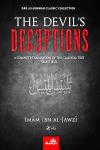
[Book Reco] The Devil’s Deceptions (Talbis Iblis): By Imam Abu’l Faraj Ibn Al Jawzi

The Devil's Deceptions (Talbis Iblis) - By Imam Abul Faraj Ibn Al Jawzi

Paperback 592 Pages
ISBN : 9780904336051
Publisher : Dar as-Sunnah

About The Book

It is from enmity and hopelessness of the devil that his endeavour to misguide mankind from the Path of Allah will persist. This misguidance takes many shades and forms; be it from planting seeds of doubt, or giving rise to deviant ideas antithetical to the sacred teachings of Islam, and essentially becoming entangled within regressive intellectual and rhetorical discourses. The Ummah has suffered varying levels of deviation, some of which remain prevalent today, while more continue to be uncovered – and such is the impact of delusive plottings of the devil and his allies.

This book is the sixth instalment from Dar as-Sunnah of the illustrious Imam, Abu’l-Faraj Ibn Jawzi. Being a complete translation of his well-known and prized work, Ibn Jawzi enumerates within it, many of the mechanisms and modus operandi used by the devil in deceiving and leading mankind away from the Straight Path. It is of particular value and importance because only by unearthing and accentuating some of the traps of the devil, can mankind avoid them as well as navigate others away from falling prey to his harm.

Speaking about the devil and his plotting, the author wrote that, “he was only able to do so while creeping during the night of ignorance. Had the dawn of knowledge shone on him, he would have been exposed. Thus I decided to warn from his plots for identifying evil is a form of warning from it.”

This translation of Tablees Iblees will provide important analysis in developing self-awareness and critical thinking to ward off many deceptions of the devil, which have plagued mankind from the time of Adam. For such reasons alone, this work is a valuable addition to the scholarly discourse it presents to the English speaking world.

About the Author:

‘Abu’l-Faraj Jamal al-Din Abdul Rahman ibn Ali Ibn Muhammad ibn Ali Ibn Ubayd Allah Ibn al-Jawzi al-Qurashi al Tamimi al Bakri al-Baghdadi al-Hanbali (509/510-597) was the Imam of the Hanbalis and foremost orator of kings and commoners in his time, whose gatherings reportedly reached one hundred thousand.

A hadith master, philologist, commentator of Qur’an, expert jurist, physician, and historian of superb character and exquisite manners.
Ibn al-Jawzi was a prolific author of over seven hundred books.

He was the author of a vast number of works of which several have been printed in recent times. He was famous as a preacher and the traveller Ibn Jubair gives an enthusiastic account of two of his sermons heard in Baghdad.

He was born in 509/510 AH in the city of Baghdad and grew up studying under the leading scholars of the time, He also was noted for his scholarship in the fields of history, linguistics, tafseer and fiqh. In fact, he became the leading scholar of the Hanbali Madhab of his time and played an important role in reviving and spreading it, especially after the become a favorite of the Abassid Caliph, al Mustadi

Ibn al-Jawzi was severely tried towards the end of his life when his criticism of Shaykh `Abd al-Qadir al-Gilani – his senior of forty years – led to accusations made against him to the Sultan al-Nasir by the Shaykh’s children and supporters. He was taken from Baghdad to the city of Wasit where he remained imprisoned for five years.

Ibn al-Jawzi passed away in 597 AH, two years after his release from Imprisonment.

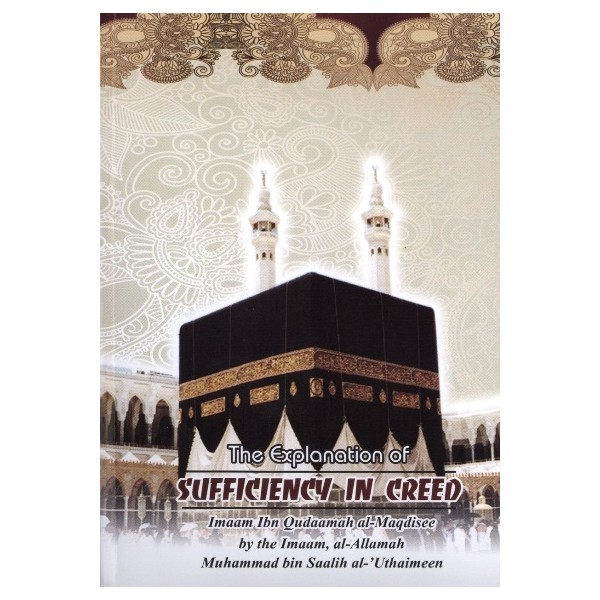
[Book Reco] The Explanation of the Sufficiency in Creed (Lum’at-ul-‘Itiqaad) : Shaikh Muhammad bin Saalih Al-‘Uthaimeen

The Explanation of the Sufficiency in Creed (Lum'at-ul-'Itiqaad) : Shaikh Muhammad bin Saalih Al-'Uthaimeen

In this book, we present the classical treatise on Creed of Imaam Ibn Qudaamah Al-Maqdisee, rahimahullaah, known as Lum’at-ul-‘Itiqaad, which is studied all over the Muslim world. Imaam Muhammad bin Saalih Al-‘Uthaimeen, rahimahullaah, has provided an in depth explanation for the points touched on by the author in a clear and simple manner. Furthermore, the narrations mentioned in the book have been verified and lengthy and extensive footnotes have been provided to make this book a valuable source of reference.

Shaikh Muhammad bin Saalih Al-‘Uthaimeen said in his introduction to this book: ‘This is a brief commentary of the book ‘Lum’at-ul-‘Itiqaad”, written by Abu Muhammad ‘Abdullaah bin Ahmad Ibn Qudaamah Al-Maqdisee (rahimahullaah), who was born in Sha’baan in 541H in a village from the districts of Nablis (present-day Palestine) and who died on the day of ‘Eed-ul-Fitr in 620H.

In this book, the author (rahimahullaah) gathered together the main points of the Islaamic Creed (‘Aqeedah). For this reason, the Board of the Educational Institutes assigned this book to be studied and taught during the second semester of the first year of study, so that it may serve as a pillar upon which one can establish his Creed at this stage.

Because I saw the importance of this book in terms of the topics it touches upon, its methodology and the lack of there being any explanation for it, I became determined, while seeking assistance from Allaah and hoping that He grant me correctness in intention and action, to put forth some words on it, in the attempt to clarify its ambiguous parts, explain its meanings and bring to light its main points.’

No doubt this book is of great importance for the Muslim with regard to establishing the correct Creed. This book is deserving of being taught and studied so that it may serve as a foundation for both the students of knowledge and the common Muslims. The topics touched upon by the author relate to the authentic Creed and Methodology, which all Muslims are obligated to have knowledge of. Consequently, we encourage everyone to purchase a copy of this magnificent book.

View the Table of Contents and Introduction @ http://www.dar-us-salam.com/inside/RA20-SufficiencyinCreed.pdf

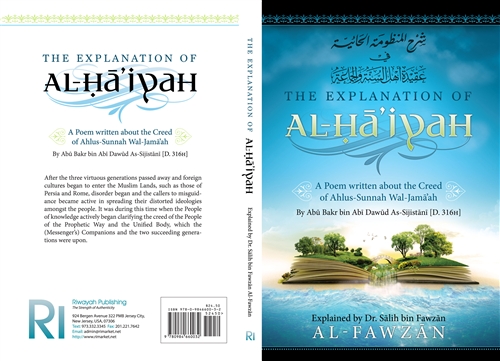
[Book Reco] The Explanation of Al-Haaiyah – Shaykh Salih Al-Fawzan

The Explanation of Al-Haaiyah - Shaykh Salih Al-Fawzan

This is the highly beneficial English translation of Dr. Salih Al-Fawzan’s Explanation of Al-Haaiyah, a classical poem written by Abu Bakr bin Abi Dawud As-Sijistani about the Creed of Ahl As-Sunnah. 

Specifications: 
246 Pages
Printed on Beautiful Natural Paper
Dimensions: 6X9

Buy @ http://www.rimarket.net/product-p/eng0007s.htm

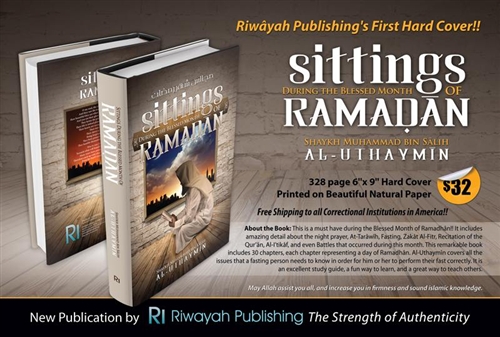
[Book Reco] Sittings During the Blessed Month of Ramadan – Shaykh Muhammad bin Salih Al-Uthaymeen

Sittings During the Blessed Month of Ramadan - Shaykh Muhammad bin Salih Al-Uthaymeen

Sittings During the Blessed Month of Ramadan, an amazing book by the Great Scholar Muhammad bin Salih Al-Uthaymeen, is filled with Qur’anic Verses, Prophetic Narrations, statements of wisdom from the early scholars, and beneficial poetry from scholars such as Ibn Rajab. It is made up of 30 chapters or Sittings, over 320 pages. This book includes details not only about Ramadan, but also details about Paradise, the hell fire, and the deeds done to reach either location. The Sheikh discusses, in detail, the rulings about Zakat Al-Fitr, as well as those who are qualified to receive the charity. This book is a book which both the student of knowledge and the laymen can tremendously benefit from. It is a book the whole family is in need of, and answers many reoccurring questions that are asked. every year, and includes diagrams and charts to make things easy to understand. Each chapter begins with a very poetic introduction, mentioning the Names and Attributes of Allah, and then transitions into the topic of that chapter. This book is a library builder and everyone is encouraged to benefit from this book and to convey the information to others. In conclusion, this book is a fun learning tool and teaching guide.

Buy at http://www.rimarket.net/product-p/eng0008s.htm

The Khilafah has Arrived. . . !!!- By Shaykh Muhammad bin Umar Bazmool

The Khilafah has Arrived. . . !!![1] – By Shaykh Muhammad bin Umar Bazmool
Translated by Abbas Abu Yahya

Shaykh Muhammad bin Umar Bazmool wrote:

‘My Noble Muslim brother, do not let yourself be deceived by the statement ‘Khilafah Rashida’ (Guided Caliphate), and the claim to having established the ‘Khilafah Rashida’!!

Can the shadow be straight if the twig is bent!?

Can guidance, and the truth, and establishing the Deen be reached by way of warring against the Deen and opposing it!?

Have you ever asked yourself: the ‘Khilafah Rashida’ has been absent for hundreds of years and there has not been from the Muslim scholars who have called and claimed to establishing a state and then these scholars going on to  rebelling against the established authority of the leaders in command at that time?

Will the Ummah of Islaam gather together upon misguidance?

Can you imagine: that if this matter was true that the Muslims or the scholars did not know about ‘Khilafah Rashida’ (Guided Caliphate), and these people know about it at this time?

Will the ‘Khilafah Rashida’ become a reality by rebelling against the leaders in authority, and invalidating the contract which is between them and their people while we have the Messenger sallAllaahu alayhi wa sallam saying, as what is brought from Ibn Abbas -Radhi Allaahu anhumma:

مَنْ رَأَى مِنْ أَمِيرِهِ شَيْئًا يَكْرَهُهُ فَلْيَصْبِرْ عَلَيْهِ فَإِنَّهُ مَنْ فَارَقَ الْجَمَاعَةَ شِبْرًا فَمَاتَ إِلَّا مَاتَ مِيتَةً جَاهِلِيَّةً.

From the Prophet sallAllaahu alayhi wa sallam– who said:

‘Whoever sees from his leader something which he dislikes then he should be patient upon that, indeed whoever separates  himself from the Jammah (the collective Muslim Ummah) a hand span and dies then he dies the death of ignorance.’

Collected by Bukhari in ‘Kitab al-Fitn’, chapter the saying of the Prophet sallAllaahu alayhi wa sallam: ‘you will see. ..’ Hadeeth no. 7054 & by Muslim in ‘Kitab al-Imaraah, chapter the obligation of adhering to the Jammah of the Muslims when Fitn appear, Hadeeth no. 1848.

From Nafa’ who said: Abdullaah bin Umar came to Abdullaah bin Muteea’ when he was in command of a place called al Hurra at the time of Yazeed bin Muwaweeya and said:

اطْرَحُوا لِأَبِي عَبْدِ الرَّحْمَنِ وِسَادَةً!

‘Throw a pillow for Abu Abdurahman to recline upon.’

Abdullaah ibn Umar said:

إِنِّي لَمْ آتِكَ لِأَجْلِسَ أَتَيْتُكَ لِأُحَدِّثَكَ حَدِيثًا سَمِعْتُ رَسُولَ اللَّهِ -صلى الله عليه وسلم- يَقُولُهُ،
سَمِعْتُ رَسُولَ اللَّهِ -صلى الله عليه وسلم- يَقُولُ:

He answered:  ‘I did not come to you to sit with you. I came to you to narrate a hadeeth which I heard the Messenger of Allaah saying, I heard the Messenger of Allaah sallAllaahu alayhi wa sallam saying:

مَنْ خَلَعَ يَدًا مِنْ طَاعَةٍ لَقِيَ اللَّهَ يَوْمَ الْقِيَامَةِ لَا حُجَّةَ لَهُ وَمَنْ مَاتَ وَلَيْسَ فِي عُنُقِهِ بَيْعَةٌ مَاتَ مِيتَةً جَاهِلِيَّةً.

‘Whoever casts off his hand from obedience then he meets Allaah on the day of judgement without any justification and whoever dies and he does not have allegiance upon his shoulders dies the death of ignorance.’

Collected by Muslim in ‘Kitab al-Imaraah’, chapter the obligation of adhering to the Jammah of the Muslims when Fitn appear. Hadeeth no.1851.

Will the ‘Khilafah Rashida’ be established upon making the sacred blood of the innocent to be spilt, so that the people of Islaam are killed, and the people of Shirk and worshippers of idols are served. The Messenger -sallAllaahu alayhi wa sallam-said as is brought from Abdullah bin Umar:

(إِنَّ مِنْ وَرَطَاتِ الْأُمُورِ الَّتِي لَا مَخْرَجَ لِمَنْ أَوْقَعَ نَفْسَهُ فِيهَا سَفْكَ الدَّمِ الْحَرَامِ بِغَيْرِ حِلِّهِ)
Indeed from the critical problematic matters from which there is no exit for the one who immerses himself into them, is spilling unlawful blood without it being allowed. ‘

Collected by Bukhari in ‘Kitab ad-Deeyaat’, Chapter the saying of Allaah <<whoever kills a believer intentionally>>  Hadeeth no. 6866.

From Abdullaah who said that the Messenger of Allaah sallAllaahu alayhi wa sallam-said:

(لَا يَحِلُّ دَمُ امْرِئٍ مُسْلِمٍ يَشْهَدُ أَنْ لَا إِلَهَ إِلَّا اللَّهُ وَأَنِّي رَسُولُ اللَّهِ إِلَّا بِإِحْدَى ثَلَاثٍ: الثَّيِّبُ الزَّانِي وَالنَّفْسُ بِالنَّفْسِ وَالتَّارِكُ لِدِينِهِ الْمُفَارِقُ لِلْجَمَاعَةِ).

‘The blood of a Muslim may not be legally spilt[2] other than in one of three [instances]: the married person who commits adultery; a life for a life; and one who forsakes his religion and abandons the Jammah.’

Collected by Bukhari in ‘Kitab ad-Deeyaat’, Chapter the saying of Allaah <<a life for a life>>  Hadeeth no. 6878 and by Muslim in ‘Kitab al-Qasama wal Muharibeen wal Qassas wa Deeyat, Hadeeth no. 1676.

Do you not know my noble Muslim brother that by you carrying out this opposition you are aiding the enemies of Allaah – the Magnificent & the Most High-  in their plans and strategies in busying the people of Islaam and cause them to become weak, and cause them to overpower each other,  so that they do not develop or bring to reality the glory which they were once upon!?

Will the forth coming ‘Khilafah Rashida’ be upon the hands of those who have enmity to the Sunnah and its people, they do not regard the ties with the people of the Sunnah, either of kinship or of covenant with them!?

Will the establishment of the Deen be a reality at the hands of one who is ignorant of the Deen and does not know the Deen.  Wisdom says: ‘a lost thing cannot be given?’

Be careful do not become entangled and then become regretful,  when regret will be of no benefit!

Know with certainty that the ‘Khilafah Rashida’ is coming however its path is by returning to the Deen, and by following what the Messenger -sallAllaahu alayhi wa sallam- and his Companions Radhi Allaahu anhumm– were upon.

The way to Change the situation is by changing what is with oneself,  Allaah – the Magnificent & the Most High- said:

﴿إِنَّ اللهَ لَا يُغَيِّرُ مَا بِقَوْمٍ حَتَّى يُغَيِّرُوا مَا بِأَنْفُسِهِمْ وَإِذَا أَرَادَ اللهُ بِقَوْمٍ سُوءًا فَلَا مَرَدَّ لَهُ وَمَا لَهُمْ مِنْ دُونِهِ مِنْ وَالٍ﴾

<< Allaah will not change the good condition of a people as long as they do not change their state of goodness themselves (by committing sins and by being ungrateful and disobedient to Allaah). But when Allaah wills a people’s punishment, there can be no turning back of it, and they will find besides Him no protector. >> [Ra’ad: 11]

Allaah has promised to grant authority on the earth, with strength and security for whoever worshipped Him alone and did not associate anything with Him,  and did righteous actions, Allaah – the Magnificent & the Most High-  said:

‏﴿وَعَدَ اللَّـهُ الَّذِينَ آمَنُوا مِنكُمْ وَعَمِلُوا الصَّالِحَاتِ لَيَسْتَخْلِفَنَّهُمْ فِي الْأَرْ‌ضِ كَمَا اسْتَخْلَفَ الَّذِينَ مِن قَبْلِهِمْ وَلَيُمَكِّنَنَّ لَهُمْ دِينَهُمُ الَّذِي ارْ‌تَضَىٰ لَهُمْ وَلَيُبَدِّلَنَّهُم مِّن بَعْدِ خَوْفِهِمْ أَمْنًا ۚ يَعْبُدُونَنِي لَا يُشْرِ‌كُونَ بِي شَيْئًا ۚ وَمَن كَفَرَ‌ بَعْدَ ذَٰلِكَ فَأُولَـٰئِكَ هُمُ الْفَاسِقُونَ﴾

<< Allaah has promised those among you who believe, and do righteous good deeds, that He will certainly grant them succession to (the present rulers) in the earth, as He granted it to those before them, and that He will grant them the authority to practise their religion, that which He has chosen for them (i.e. Islaam). And He will surely give them in exchange a safe security after their fear (provided) they (believers) worship Me and do not associate anything (in worship) with Me. But whoever disbelieved after this, they are the Fâsiqoon (rebellious, disobedient to Allaah).>> [Noor: 55]

So we must bring this in to reality of we want the ‘Khilafah Rashida’, Allaah is the Guardian to give success.’

Written by the Professor Dr. Muhammad bin Umar Bazmool
A Member of the Education Committe in Umm al-Qurra University of Makkah al-Mukkaramah
Taken from [http://www.alwaraqat.net/content.php?6297]

[1] For Further clarification & analysis see:

http://dawatussalafiyyah.wordpress.com/2014/07/05/the-caliphate-of-isis-a-response-by-shaykh-as-suhaymee/

The Caliph in Iraq is an Impostor and a Dajjal | Shaykh Saalih as-Suhaymee

http://safeshare.tv/w/TAheiGMScm

http://mtws.posthaven.com/isis-is-a-terrorist-organization-explained-by-shaykh-muhammad-bin-haadee

[2]Who implements the ruling of punishments?

Shaykh Salih ‘Ala Shaykh said:

‘Here is an issue connected to this hadeeth: if there is a country where there is no leader or Muslim ruler who can carry out that verdict, then is it allowed for any Muslim to carry out its ruling if one of these verdicts are established?

The answer: No, as is the saying of the general people of knowledge.  They make the condition for carrying out rulings which are connected to the allowance of spilling blood, wealth and honour, or things similar to this, that it is only for the leader, and if there is no leader then it is not allowed for anyone to carry it out.’

He continues:

‘That he is in a country where there is no-one who can carry out the rulings of Allaah –Jala wa ‘Uulaa – then it is not allowed to carry out the rulings of capital punishment, because this is for the Muslim leader.

The Prophet sallAllaahu alayhi wa sallam- was in Makkah and the Companions were in some countries where the Sharia’ was not established,  however, they did not carry out capital punishment, likewise the scholars were in some countries, like they were in the lands of the al-Ubaydeeyah and those similar to them, and the scholars did not carry out punishments of death and those type of punishments similar to it.’

[Taken from ‘Sharh al-Arbaeen an-Nawawi’ – Shaykh Salih ‘Ala Shaykh]

Posted with Permission from Abbas Abu Yahya hafidhahullah

Zakaat : Al-Mulakhas al-Fiqhi of Sheikh Saaleh al-Fawzaan – Abu Muhammad Al Maghribee [Audio|En]

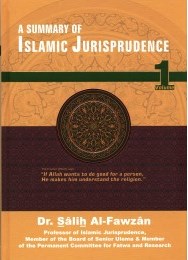
al-mulakhas-al-fiqhi-a-summary-of-islamic-jurisprudence

From the book Al-Mulakhas al-Fiqhi (A Summary of Islamic Jurisprudence) by Sheikh Saaleh al-Fawzaan.  You may download a copy of the original arabic text here: الملخص الفقهي

Zakaat - Al-Mulakhas al-Fiqhi of Sheikh Saaleh al-Fawzaan

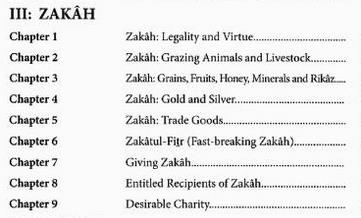
Part III: Zakah of Volume 1. Here are all the lessons covering Chapters 1 through 9

In this class we begin reading from the chapter of Zakaat (obligatory charity)
Part 01: Download Mp3 Here (Time 01:00:02) (Feb 3rd 2014) (Ch 1)

In this class we continue reading from the chapter of Zakaat (obligatory charity)
Part 02: Download Mp3 Here (Time 48:02) (Feb 10th 2014) (Ch 2)

Today we will continue with the section regarding the zakaat due on grazing livestock
Part 03: Download Mp3 Here (Time 48:30) (Feb 24th 2014) (Ch 2)

Today we will continue with the section regarding the zakaat due on grains, fruits, honey, etc…
Part 04: Download Mp3 Here (Time 46:48) (March 3, 2014) (Ch 3)

Part 05: Download Mp3 Here (Time 32:44) (2014-03-10) (Ch 3)

Part 06: Download Mp3 Here (Time 44:04) (2014-03-17) (Ch 4)

Part 07: Download Mp3 Here (Time 48:38) (2014-03-24) (Ch 4)

Part 08: Download Mp3 Here (Time 42:52) (2014-03-31) (Ch 5)

Part 09: Download Mp3 Here (Time 43:29) (2014-04-07) (Ch 5)

Part 10: Download Mp3 Here (Time 53:53) (2014-04-14) (Ch 6)

Part 11: Download Mp3 Here (Time 37:52) (2014-04-21) (Ch 7)

Part 12: Download Mp3 Here (Time 54:02) (2014-04-28) (Ch 8)

Part 13: Download Mp3 Here (Time 44:38) (2014-05-05) (Ch 8)

Part 14: Download Mp3 Here (Time 56:36) (2014-05-12) (Ch8 and Ch9)

Posted with Permission from: http://followthesalaf.com/

Ramadhaan: An Opportunity For Immense Reward : Shaykh Abdullah an-Najmi [Audio|Ar-En]

Ramadhan is upon us


Listen / Download Mp3 Here (Time 50:57)

[audio https://salafiaudio.files.wordpress.com/2014/07/ramadhaan-an-opportunity-for-immense-reward-by-shaykh-abdullah-an-najmi.mp3]

Posted with permission from mpubs.org

The Salaf in Ramadhaan – by Shaykh Muhammad Ibn Zayd al-Madkhalee [Audio|En]

Listen / Download Mp3 Here (Time 42:37)
[audio https://salafiaudio.files.wordpress.com/2014/06/the-salaf-in-ramadhaan-by-shaykh-muhammad-ibn-zayd-al-madkhalee.mp3]

Posted with Permission from: mpubs.org

Advice To Those Seeking Knowledge – From the work of Imam Muqbil – Abu Muhammad Al-Maghribee [Audio|En]

This was a talk given at Masjid Muqbil in Philadelphia, PA on Thursday, June 6, 2013.

This talk was taken from a work of one of the great imaams of our time, Imaam Abee Abdir-Rahmaan Muqbil ibn Haadee, rahimahullah.

Listen / Download Mp3 Here (Time 01:14:38)
[audio https://salafiaudio.files.wordpress.com/2014/06/advice-to-those-seeking-knowledge-imam-muqbil-abu-muhammad-al-maghribee.mp3]

Posted with Permission from : followthesalaf.com