An-Nur (The Light): One of Allaah’s Names – Dr. Saleh as Saleh & Imam Ibn Kathir

Shaykh Abdur-Rahman ibn as-Sa’di :

The Light of the heavens and the earth, the One Who illuminates the hearts of the gnostics with knowledge of Him, faith in Him and His guidance. He is the One Who has lighted the heavens and the earth with lights that He has placed therein. His veil is light and were He to uncover it then the Face of the Glorious would burn everything from the creation that His Sight fell upon.

“Allah is the Light of the heavens and the earth. The parable of His Light is as if there were a niche and within it a lamp, the lamp is in a glass, and the glass as if it were a brilliant star, lit from a blessed tree, an olive, neither of the east or of the west, whose oil would almost glow forth (of itself) even though no fire touches it. Light upon light! Allah guides to His Light whom He Wills. Allah sets forth parables for mankind, and Allah Knows everything.” (24:35)

Dr. Saleh As-Saleh (rahimahullaah):

Excerpt:

Those who negate Allaah’s Attribute of An-Nur erred by thinking that if they would affirm the Attribute of An-Nur, it would mean that Allaah is the light falling upon walls and gardens, etc.! The fact however is that the created light is an effect of the Attribute of An-Nur. We know that Ar-Rahmah (Mercy) is an Attribute of Allaah established with Him. The rahmah (mercy) present on earth is an effect of Allaah’s Attribute of Ar-Rahmah separted from Him. The knowledge of the creature is a distinct and separate effect of Allaah’s Attribute of Knowledge. The saying of ‘Abdullaah ibn Mas’oud does not mean or imply that the light on walls and on the surface of the earth is the essence of the Light of Allaah’s most honourable Face.”

Read the full article: Explaining the Meaning of An-Nur (The Light) One of Allaah’s Names – 16 Pages – by Dr. Saleh As-Saleh [PDF]

—-

Noorus-Samaawaati Wal-Ardh (Light of the Heavens and the Earth)

Allah says:as-s

“Allah is the Light of the Heavens and the Earth. the parable of His light is as if therewere a niche and within it a lamp; the lamp is in a glass, the glass as it were a brilliant star, lit from a blessed tree, an olive, neither of the east nor of the west, whose oil would almost glow forth of itself, though no fire touched it. Light upon Light! Allah guides to His Light whom He wills. And Allah sets forth parables for mankind, and Allah is All-Knower of everything.” [An-Noor 24:35]

The Prophet Muhammad sallallahu ‘alaihi wa sallam (sallallahu ‘alaihi wa sallam) said:

Oh Allah for You is the praise and You are the Light of the Heavens and the Earth and all therein… [Al-Bukhaari and Muslim]

This is a great Attribute since it describes the One Possessing Majesty and Honor and deserving of glorification and praise and Who if He were to remove the veil from His Noble Countenance all that would be exposed to it in the creation would be disintegrated and His Light would illuminate all the creation and it is the Light from his Countenance that brings light to all darkness and that lights up the Arsh, the Kursi and the seven levels of heaven, indeed all the universe.

His Light is of two types:

1. That which is perceived (hissee) such as the light that emanates from the universe and that would not exist without His light.
2. The spiritual (ma’nawee) which reaches the hearts and the hearing and the vision and that constitutes the light for the slaves in this life and the next.

“Allah guides with His Light whom He wills”. And just as Allah has mentioned, He is the Light of the Heavens and the Earth, He has also called His Book and His Messenger and the Revelation light. – As-Sadee

What must be avoided are the excesses of the Sufis who went too far and did not distinguish between Light as a description of the self and the light of faith and knowledge. Due to worshipping and deifying without complete knowledge some among them perceived the light that comes to the heart from the sincere worship of Allah meant that the person themselves became a part of Allah or had a part of Allah the Most Holy in them so much incorrect and ugly speech emanated from them due to delusion and ignorance in this regard and Allah is Most High and free from what they wrongly attributed to Him.

The people of knowledge however distinguished between the Light that is a part of Allah and His Attribute and the light given to the creation both perceived and spiritual. The believer who perfects his faith is given light in his heart from Allah so that he sees the reality of things and he can clearly distinguish between falsehood and truth until it becomes a part of his life and his power toward good in knowledge and action. He is cleared of doubts and confusion and gets knowledge and clarity and is freed from lusts and negligence and darkness. His speech and actions are characterized as light and he is surrounded by it, while the disbeliever or the hypocrite, the rebellious and unmindful wander about confused and in darkness and all this is due to what they have themselves done .

The Parable of the Light of Allah

[The following is from Tafsir Ibn Kathir]

`Ali bin Abi Talhah reported that Ibn `Abbas said:

(Allah is the Light of the heavens and the earth.) means, the Guide of the inhabitants of the heavens and the earth. Ibn Jurayj said: “Mujahid and Ibn `Abbas said concerning the Ayah:

(Allah is the Light of the heavens and the earth.) He is controlling their affairs and their stars and sun and moon.” As-Suddi said concerning the Ayah:

(Allah is the Light of the heavens and the earth.) by His Light the heavens and earth are illuminated. In the Two Sahihs, it is recorded that Ibn `Abbas, may Allah be pleased with him, said: “When the Messenger of Allah got up to pray at night, he would say:

(O Allah, to You be praise, You are the Sustainer of heaven and earth and whoever is in them. To You be praise, You are the Light of the heavens and the earth and whoever is in them. ) It was narrated that Ibn Mas`ud said, “There is no night or day with your Lord; the Light of the Throne comes from the Light of His Face.”

(The parable of His Light) There are two views concerning the meaning of the pronoun (His). The first is that it refers to Allah, may He be glorified and exalted, meaning that the parable of His guidance in the heart of the believer is

(as a niche) This was the view of Ibn `Abbas. The second view is that the pronoun refers to the believer, which is indicated by the context of the words and implies that the parable of the light in the heart of the believer is as a niche. So the heart of the believer and what he is naturally inclined to of guidance and what he learns of the Qur’an which is in accordance with his natural inclinations are, as Allah says:

(Can they who rely on a clear proof from their Lord, and whom a witness from Him recites it (can they be equal with the disbelievers)) [11:17]. The heart of the believer in its purity and clarity is likened to a lamp in transparent and jewel-like glass, and the Qur’an and Shari`ah by which it is guided are likened to good, pure, shining oil in which there is no impurity or deviation.

(as (if there were) a niche) Ibn `Abbas, Mujahid, Muhammad bin Ka`b and others said, “This refers to the position of the wick in the lamp.” This is well-known, and hence Allah then says:

(and within it a lamp.) This is the flame that burns brightly. Or it was said that the niche is a niche in the house. This is the parable given by Allah of obedience towards Him. Allah calls obedience to Him as light, then He calls it by other numerous names as well. Ubayy bin Ka`b said, “The lamp is the light, and this refers to the Qur’an and the faith that is in his heart.” As-Suddi said, “It is the lamp.”

(the lamp is in a glass,) means, this light is shining in a clear glass. Ubayy bin Ka`b and others said, “This is the likeness of the heart of the believer.”

(the glass as it were a star Durriyyun,) Some authorities recite the word Durriyyun with a Dammah on the Dal and without a Hamzah, which means pearls, i.e., as if it were a star made of pearls (Durr). Others recite it as Dirri’un or Durri’un, with a Kasrah on the Dal, or Dammah on the Dal, and with a Hamzah at the end, which means reflection (Dir’), because if something is shone on the star it becomes brighter than at any other time. The Arabs call the stars they do not know Darari. Ubayy bin Ka`b said: a shining star. Qatadah said: “Huge, bright and clear.”

(lit from a blessed tree,) means, it is derived from olive oil, from a blessed tree.

(an olive,) This refers to the blessed tree mentioned previously.

(neither of the east nor of the west,) means, it is not in the eastern part of the land so that it does not get any sun in the first part of the day, nor is it in the western part of the land so that it is shaded from the sun before sunset, but it is in a central position where it gets sun from the beginning of the day until the end, so its oil is good and pure and shining. Ibn Abi Hatim recorded that Ibn `Abbas commented on:

(an olive, neither of the east nor of the west,) “This is a tree in the desert which is not shaded by any other tree or mountain or cave, nothing covers it, and this is best for its oil.” Mujahid commented on:

(neither of the east nor of the west, ) saying; “It is not in the east where it will get no sun when the sun sets, nor is it in the west where it will get no sun when the sun rises, but it is in a position where it will get sun both at sunrise and sunset.” Sa`id bin Jubayr commented:

(an olive, neither of the east nor of the west, whose oil would almost glow forth (of itself)) “This is the best kind of oil. When the sun rises it reaches the tree from the east and when it sets it reaches it from the west, so the sun reaches it morning and evening, so it is not counted as being in the east or in the west.”

(whose oil would almost glow forth (of itself), though no fire touched it.) `Abdur-Rahman bin Zayd bin Aslam said (this means) because the oil itself is shining.

(Light upon Light!) Al-`Awfi narrated from Ibn `Abbas that this meant the faith and deeds of a person. As-Suddi said:

(Light upon Light!) “Light of the fire and the light of the oil: when they are combined they give light, and neither of them can give light without the other. Similarly the light of the Qur’an and the light of faith give light when they are combined, and neither can do so without the other.”

(Allah guides to His Light whom He wills.) means, Allah shows the way to the ones whom He chooses, as it says in the Hadith recorded by Imam Ahmad from `Abdullah bin `Amr, who said, “I heard the Messenger of Allah say:

(Allah created His creation in darkness, then on the same day He sent His Light upon them. Whoever was touched by His Light on that day will be guided and whoever was missed will be led astray. Hence I say: the pens have dried in accordance with the knowledge of Allah, may He be glorified.)”

(And Allah sets forth parables for mankind, and Allah is All-Knower of everything.) Having mentioned this parable of the Light of His guidance in the heart of the believer, Allah ends this Ayah with the words:

(And Allah sets forth parables for mankind, and Allah is All-Knower of everything.) meaning, He knows best who deserves to be guided and who deserves to be led astray. Imam Ahmad recorded that Abu Sa`id Al-Khudri said, “The Messenger of Allah said:

(Hearts are of four kinds: the heart that is clear like a shining lamp; the heart that is covered and tied up; the heart that is upside-down; and the heart that is clad in armor. As for the clear heart, it is the heart of the believer in which is a lamp filled with light; as for the covered heart, this is the heart of the disbeliever; as for the upside-down heart, this is the heart of the hypocrite, who recognizes then denies; as for the armor-clad heart, this is the heart in which there is both faith and hypocrisy. The parable of the faith in it is that of legume, a sprout that is irrigated with good water, and the likeness of the hypocrisy in it is that of sores that are fed by blood and pus. Whichever of the two prevails is the characteristic that will dominate.) Its chain of narrators is good (Jayyid) although they (Al-Bukhari and Muslim) did not record it.

Taken From Tafsir ibn Kathir

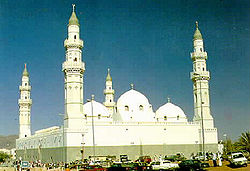
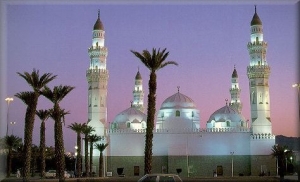
Virtues of Masjid Quba, Madina – Tafseer Ibn Kathir

Masjid-Quba

The Following is taken from Tafseer Ibn Kathir

Allah encouraged His Prophet to pray in Masjid Quba’ which, from the first day, was built on Taqwa, obedience to Allah and His Messenger , for gathering the word of the believers and as an outpost and a fort for Islam and its people. This is why Allah the Exalted said,

(Verily, the Masjid whose foundation was laid from the first day on Taqwa is more worthy that you stand therein (to pray).) in reference to the Masjid of Quba’.

An authentic Hadith records that the Messenger of Allah said,

(One prayer in Masjid Quba’ is just like an `Umrah.)

It is recorded in the Sahih that the Messenger of Allah used to visit Masjid Quba’ while riding and walking.

Other Notes:

It is prescribed for the visitor to Madeenah and for the one who lives there to go to the Mosque of Quba’ and pray there, following the example of the Prophet (peace and blessings of Allaah be upon him) and seeking the reward of ‘Umrah.

It was narrated that Sahl ibn Haneef said: The Messenger of Allaah (peace and blessings of Allaah be upon him) said: Whoever goes out until he comes to this mosque – meaning the Mosque of Quba’ – and prays there, that will be equivalent to ‘Umrah.” Narrated by Ahmad, 3/437; al-Nasaa’i, 699; classed as saheeh by al-Albaani in Saheeh al-Targheeb, 1180, 1181.

In Sahih Muslim it is narrated that the Messenger of Allaah (peace and blessings of Allaah be upon him) used to go to the mosque of Quba’ every Saturday, walking or riding, and he would pray two rak’ahs there. Narrated by al-Bukhaari, 1191; Muslim, 1399

Masjid-Quba-

The Life of this World is Fleeting Enjoyment : Imam Ibn Kathir

Imam Ibn Kathir
Tafsir Ibn Katheer (Abridged) Volume 9
© Darussalam 2000

“Know that the life of this world is only play and amusement, pomp and mutual boasting among you, and rivalry in respect of wealth and children.  (It is) like a rain (Ghayth), thereof the growth is pleasing to the tiller; afterwards it dries up and you see it turning yellow; then it becomes straw.  But in the Hereafter (there is) a severe torment, and (there is) forgiveness from Allah and (His) pleasure.  And the life of this world is only a deceiving enjoyment.” [57:20]

Allah the Exalted degrades the significance of this life and belittles it by saying,

“that the life of this world is only play and amusement, pomp and mutual boasting among you, and rivalry in respect of wealth and children.”

Meaning, this is the significance of this life to its people, just as He said in another Ayah,

“Beautified for men is the love of things they covet; women, children, much of gold and silver (wealth), branded beautiful horses, cattle and well-tilled land.  This is the pleasure of the present world’s life; but Allah has the excellent return with Him.” ( 3:14 )

Allah the Exalted also sets a parable for this life, declaring that its joys are fading and its delights are perishable, saying that life is,

“Like a rain (Ghayth),” which is the rain that comes down to mankind, after they had felt despair.  Allah the Exalted said in another Ayah,

“And He is it Who sends down the Ghayth (rain) after they have despaired.” (42:28)

Allah’s statement,

“thereof the growth is pleasing to the tiller;” meaning that farmers admire the vegetation that grows in the aftermath of rain.  And just as farmers admire vegetation, the disbelievers admire this life; they are the most eager to acquire the traits of life, and life is most dear to them,

“afterwards it dries up and you see it turning yellow; then it becomes straw.”

Meaning, that vegetation soon turns yellow in color, after being fresh and green.  After that, the green fades away and becomes scattered pieces of dust.  This is the parable of this worldly life, it starts young, then matures and then turns old and feeble.  This is also the parable of mankind in this life; they are young and strong in the beginning.  In this stage of life, they look youthful and handsome.  Slowly, they begin growing older, their mannerism changes and their strength weakens.  They then grow old and feeble; moving becomes difficult for them, while doing easy things becomes beyond their ability.  Allah the Exalted said,

“Allah is He Who created you in (a state of) weakness, then gave you strength after weakness, then after strength gave (you) weakness and gray hair.  He creates what He wills.  And He is the All-Knowing, the All-Powerful.” (30:54)

This parable indicates the near demise of this life and the imminent end of it, while in contrast, the Hereafter is surely coming.  Those who hear this parable should, therefore, be aware of the significance of the Hereafter and feel eagerness in the goodness that it contains,

“But in the Hereafter (there is) a severe torment, and (there is) forgiveness from Allah and (His) pleasure.  And the life of this world is only a deceiving enjoyment.”

Meaning, surely, the Hereafter that will certainly come contains two things either severe punishment or forgiveness from Allah and His good pleasure.

Allah the Exalted said,

“And the life of this world is only a deceiving enjoyment.”

Meaning, this life is only a form of enjoyment that deceives those who incline to it.  Surely, those who recline to this life will admire it and feel that it is dear to them, so much so, that they might think that this is the only life, no life or dwelling after it.  Yet, in reality, this life is insignificant as compared to the Hereafter.

Imam Ahmad recorded that `Abdullah said that the Messenger of Allah, sallallahu `alayhi wa sallam, said,

” Paradise is nearer to any of you than the strap of his shoe, and so is the (Hell) Fire.” [Ahmad 1:387]

Al-Bukhari collected this Hadith through the narration of Ath-Thawri [Fath al-Bari 11:328].  This Hadith indicates the close proximity of both good and evil in relation to mankind.  If this is the case, then this is the reason Allah the Exalted encouraged mankind to rush to perform acts of righteousness and obedience and to avoid the prohibitions.  By doing so, their sins and errors will be forgiven and they will acquire rewards and an exalted status.  Allah the Exalted said,

“Race with one another in hastening towards forgiveness from your Lord, and Paradise the width whereof is as the width of the heaven and the earth.”

Allah the Exalted said in another Ayah,

“And march forth in the way (to) forgiveness from your Lord, and for Paradise as wide as the heavens and the earth, prepared for those who have Taqwa.” (3:133)

Allah said here,

“prepared for those who believe in Allah and His Messengers.  That is the grace of Allah which He bestows on whom He is pleased with.  And Allah is the Owner of the great bounty.”

Meaning, “This, that Allah has qualified them for, is all a part of His favor, bounty and compassion.”  We mentioned a Hadith collected in the Sahih in which the poor emigrants said to the Messenger, sallallahu `alayhi wa sallam, “O Allah’s Messenger!  The wealthy people will get higher grades and permanent enjoyment.”  He asked, “Why is that?”  They said, “They pray like us and fast as we do.  However, they give in charity, whereas we cannot do that, and they free servants, whereas we cannot afford it.”  The Prophet, sallallahu `alayhi wa sallam, said, “Shall I tell you of a good deed that, if you acted upon, you would catch up with those who have surpassed you? None would overtake you and be better than you, except those who might do the same.  Say, “Glorious is Allah,” Allah is Most Great”, and “Praise be to Allah”, thirty three times each after every prayer.”  They later came back and said, “Our wealthy brethren heard what we did and they started doing the same.”  Allah’s Messenger, sallallahu `alayhi wa sallam, said,

“This is the favor that He gives to whom He wills.” [Muslim 1:416]

Who shall inherit Firdaws? Tafsir Ibn Kathir

1-10 Verses of Al-Momin Surah
Tafsir Ibn Kathir

What is Jannat ul Firdaus?

It was recorded in the Two Sahihs that the Messenger of Allah said: (If you ask Allah for Paradise, then ask him for Al-Firdaws, for it is the highest part of Paradise, in the middle of Paradise, and from it spring the rivers of Paradise, and above it is the (Mighty) Throne of the Most Merciful.)

Who shall inherit Firdaws? (1-10 Verses of Al-Monin Surah)

  1. Successful indeed are the believers.
  2. Those who with their Salah are Khashi`un (with fear and with tranquillity).
  3. And those who turn away from Al-Laghw.
  4. And those who pay the Zakah.
  5. And those who guard their private parts.
  6. Except from their wives or their right hand possessions, for then, they are free from blame.
  7. But whoever seeks beyond that, then those are the transgressors.
  8. Those who are faithfully true to their Amanat and to their covenants are Ra`un.
  9. And those who strictly guard their Salawat.
  10. These are indeed the heirs.
  11. Who shall inherit Firdaws. They shall dwell therein forever.

The Success is for the believers whose qualities are described here

(Successful indeed are the believers) means, they have attained victory and are blessed, for they have succeeded.

***These are the believers who have the following characteristics ***

(Those who with their Salah are Khashi`un.)

`Ali bin Abi Talhah reported that Ibn `Abbas said: “(Khashi`un) means those with fear and with tranquillity.” This was also narrated from Mujahid, Al-Hasan, Qatadah and Az-Zuhri.

It was reported from `Ali bin Abi Talib, may Allah be pleased with him, that Khushu` means the Khushu` of the heart. This was also the view of Ibrahim An-Nakha`i.

Al-Hasan Al-Basri said, “Their Khushu` was in their hearts.” So they lowered their gaze and were humble towards others.

Khushu` in prayer is only attained by the one who has emptied his heart totally, who does not pay attention to anything else besides it, and who prefers it above all else. At that point it becomes a delight and a joy for eyes, as in the Hadith recorded by Imam Ahmad and An-Nasai from Anas, who said that the Messenger of Allah said:(Fragrance and women have been made dear to me, and Salah was made the joy of my eye.)

(And those who turn away from Al-Laghw.)

It refers to falsehood, which includes Shirk and sin, and any words or deeds that are of no benefit.

As Allah says: (And if they pass by Al-Laghw, they pass by it with dignity)[25:72].

Qatadah said: “By Allah, there came to them from Allah that which kept them away from that (evil).”

(And those who pay the Zakah.)

Most commentators say that the meaning here is the Zakah that is paid on wealth, even though this Ayah was revealed in Makkah, and Zakah was ordained in Al-Madinah in the year 2 H. The apparent meaning is that the Zakah that was instituted in Al-Madinah is the one based upon the Nusub and the specific amounts, apart from which it seems that the basic principle of Zakah was enjoined in Makkah. As Allah says in Surat Al-An`am, which was also revealed in Makkah: (but pay the due thereof on the day of their harvest, ) [6:141]

It could be that what is meant here by Zakah is purification of the soul from Shirk and filth, as in the Ayah:(Indeed he succeeds who purifies himself (Zakkaha). And indeed he fails who corrupts himself.) [91:9-10]

It could be that both meanings are intended, purification of the soul and of one’s wealth, because that is part of the purification of the soul, and the true believer is one who pays attention to both matters. And Allah knows best.

(And those who guard their private parts. Except from their wives and their right hand possessions, for then, they are free from blame. But whoever seeks beyond that, then those are the transgressors.)

It means, those who protect their private parts from unlawful actions and do not do that which Allah has forbidden; fornication and homosexuality, and do not approach anyone except the wives whom Allah has made permissible for them or their right hand possessions from the captives.

One who seeks what Allah has made permissible for him is not to be blamed and there is no sin on him.

Allah says: (they are free from blame. But whoever seeks beyond that) meaning, other than a wife or slave girl, (then those are the transgressors.) meaning , aggressors.

(Those who are faithfully true to their Amanat and to their covenants)

When they are entrusted with something, they do not betray that trust, but they fulfill it, and when they make a promise or make a pledge, they are true to their word.

This is not like the hypocrites about whom the Messenger of Allah said: (The signs of the hypocrite are three: when he speaks he lies, when he makes a promise he breaks it, and when he is entrusted with something he betrays that trust.)

(And those who strictly guard their Salawat.)

It means, they persistently offer their prayers at their appointed times, as Ibn Mas`ud said: “I asked the Messenger of Allah , `O Messenger of Allah, which deed is most beloved to Allah’ He said, (Prayer at the appointed time.) I said, `Then what’ He said,(Kindness to one’s parents. ) I said, `Then what’ He said,(Jihad in the way of Allah.)

It was recorded in the Two Sahihs. Qatadah said: “At the fixed times, with the proper bowing and prostration.”

Allah begins and ends this list of praiseworthy qualities with Salah, which is indicative of its virtue, as the Prophet said: (Adhere to righteousness, you will never be able encompass it all. Know that the best of your deeds is Salah. None will preserve his Wuddu’ except the believer.)

Having described them with these praiseworthy characteristics and righteous deeds, Allah then says:

(These are indeed the heirs. Who shall inherit Firdaws. They shall dwell therein forever.)

It was recorded in the Two Sahihs that the Messenger of Allah said: (If you ask Allah for Paradise, then ask him for Al-Firdaws, for it is the highest part of Paradise, in the middle of Paradise, and from it spring the rivers of Paradise, and above it is the (Mighty) Throne of the Most Merciful.)

Ibn Abi Hatim recorded that Abu Hurayrah said, “The Messenger of Allah said:(There is not one among you who does not have two homes, a home in Paradise and a home in Hell. If he dies and enters Hell, the people of Paradise will inherit his home, and this is what Allah said: (These are indeed the heirs.)

Ibn Jurayj narrated from Layth from Mujahid:(These are indeed the heirs.) “The believers will inherit the homes of the disbelievers because they were created to worship Allah Alone with no partner or associate. So when these believers did what was enjoined on them of worship, and the disbelievers neglected to do that which they were commanded to do and for which they had been created, the believers gained the share that they would have been given if they had obeyed their Lord. Indeed, they will be given more than that as well.”

This is what was reported in Sahih Muslim from Abu Burdah, from his father, from the Prophet who said: (Some of the Muslims will come on the Day of Resurrection with sins like mountains, but Allah will forgive them and put (their burden of sin) on the Jews and Christians.)

According to another version: the Messenger of Allah said: (When the Day of Resurrection comes, Allah will appoint for every Muslim a Jew or Christian, and it will be said, “This is your ransom from the Fire.”) `

Umar bin `Abd Al-`Aziz asked Abu Burdah to swear by Allah besides Whom there is no other God, three times, that his father told him that from the Prophet , and he swore that oath. I say: this Ayah is like Allah’s saying: (Such is the Paradise which We shall give as an inheritance to those of Our servants who have had Taqwa.) [19:63] (This is the Paradise which you have been made to inherit because of your deeds which you used to do.) [43:72]

Righteousness comes from Taqwa : Tafseer Ibn Kathir

Tafseer Ibn Kathir – Surah A-Baqarah (2:189)

Allah said:

(It is not Al-Birr (piety, righteousness, etc.) that you enter the houses from the back, but Al-Birr is from Taqwa. So enter houses through their proper doors.)

Al-Bukhari recorded that Al-Bara’ said, “During the time of Jahiliyyah, they used to enter the house from the back upon assuming the Ihram. Thereafter, Allah revealed (the following Ayah):

(It is not Al-Birr (piety, righteousness, etc.) that you enter the houses from the back but Al-Birr is from Taqwa. So enter houses through their proper doors.)

Abu Dawud At-Tayalisi recorded the same Hadith from Al-Bara’ but with the wording; “The Ansar used to enter their houses from the back when returning from a journey. Thereafter, this Ayah (2:189 above) was revealed…”

Al-Hasan said, “When some people during the time of Jahiliyyah would leave home to travel, and then decide not to travel, they would not enter the house from its door. Rather, they would climb over the back wall. Allah the Exalted said:

(It is not Al-Birr (piety, righteousness) that you enter the houses from the back,).”

Allah’s statement:
(…and have Taqwa of Allah that you may be successful.) Have Taqwa of Allah, means to do what He has commanded you and refrain from what He has forbidden for you,

(that you may be successful.) tomorrow when you stand before Him and He thus rewards you perfectly.

Isti’adhah : Seeking Refuge with Allah : Tafsir Ibn Kathir

Tafseer Ibn Kathir – Surah Fatihah

[1] Why the Devil is called Shaytan ?

In the Arabic language, Shaytan is derived from Shatana, which means the far thing. Hence, the Shaytan has a different nature than mankind, and his sinful ways are far away from every type of righteousness. It was also said that Shaytan is derived from Shata, (literally `burned’), because it was created from fire. Some scholars said that both meanings are correct, although they state that the first meaning is more plausible. Further, Siybawayh (the renowned Arab linguistic) said, “The Arabs say, `So-and-so has Tashaytan,’ when he commits the act of the devils. If Shaytan was derived from Shata, they would have said, Tashayyata (rather than Tashaytan).” Hence, Shaytan is derived from the word that means, far away. This is why they call those who are rebellious (or mischievous) from among the Jinns and mankind a `Shaytan’. Allah said,

(And so We have appointed for every Prophet enemies ـ Shayatin (devils) among mankind and Jinn, inspiring one another with adorned speech as a delusion (or by way of deception)) (6:112).

In addition, the Musnad by Imam Ahmad records that Abu Dharr said that the Messenger of Allah said,

(O Abu Dharr! Seek refuge with Allah from the devils of mankind and the Jinns.) Abu Dharr said, “I asked him , `Are there human devils’ He said, (Yes.)” Furthermore, it is recorded in Sahih Muslim that Abu Dharr said that the Messenger of Allah said,

(The woman, the donkey and the black dog interrupt the prayer (if they pass in front of those who do not pray behind a Sutrah, i.e. a barrier).) Abu Dharr said, “I said, `What is the difference between the black dog and the red or yellow dog’ He said,

(The black dog is a devil.).”

Also, Ibn Jarir At-Tabari recorded that `Umar bin Al-Khattab once rode a Berthawn (huge camel) which started to proceed arrogantly. `Umar kept striking the animal, but the animal kept walking in an arrogant manner. `Umar dismounted the animal and said, “By Allah! You have carried me on a Shaytan. I did not come down from it until after I had felt something strange in my heart.” This Hadith has an authentic chain of narrators.

[2] What does Isti`adhah mean

Isti`adhah means, “I seek refuge with Allah from the cursed Satan so that he is prevented from affecting my religious or worldly affairs, or hindering me from adhering to what I was commanded, or luring me into what I was prohibited from.” Indeed, only Allah is able to prevent the evil of Satan from touching the son of Adam. This is why Allah allowed us to be lenient and kind with the human devil, so that his soft nature might cause him to refrain from the evil he is indulging in. However, Allah required us to seek refuge with Him from the evil of Satan, because he neither accepts bribes nor does kindness affect him, for he is pure evil. Thus, only He Who created Satan is able to stop his evil. This meaning is reiterated in only three Ayat in the Qur’an. Allah said in Surat Al-A`raf,

(Show forgiveness, enjoin what is good, and turn away from the foolish (i.e. don’t punish them).) (7:199)

This is about dealing with human beings. He then said in the same Surah,

(And if an evil whisper comes to you from Shaytan, then seek refuge with Allah. Verily, He is Hearing, Knowing (7: 200).)

Allah also said in Surat Al-Mu’minun,

(Repel evil with that which is better. We are Best-Acquainted with the things they utter. And say: “My Lord! I seek refuge with You from the whisperings (suggestions) of the Shayatin (devils). And I seek refuge with You, My Lord! lest they should come near me.” (23:96-98).)

Further, Allah said in Surat As-Sajdah,

(The good deed and the evil deed cannot be equal. Repel (the evil) with one which is better, then verily he, between whom and you there was enmity, (will become) as though he was a close friend. But none is granted it (the above quality) except those who are patient ـ and none is granted it except the owner of the great portion (of happiness in the Hereafter, i.e. Paradise and of a high moral character) in this world. And if an evil whisper from Shaytan tries to turn you away (from doing good), then seek refuge in Allah. Verily, He is the Hearing, the Knowing) (41:34-36).

[3] The Tafsir of Isti`adhah (seeking Refuge)

Allah said,

(Show forgiveness, enjoin what is good, and stay away from the foolish (i.e. don’t punish them). And if an evil whisper comes to you from Shaytan (Satan), then seek refuge with Allah. Verily, He is Hearing, Knowing) (7:199-200),

(Repel evil with that which is better. We are Best-Acquainted with things they utter. And say: “My Lord! I seek refuge with You from the whisperings (suggestions) of the Shayatin (devils). And I seek refuge with You, My Lord! lest they should come near me.”) (23:96-98) and,

(Repel (an evil) with one which is better, then verily he with whom there was enmity between you, (will become) as though he was a close friend. But none is granted it except those who are patient ـ and none is granted it except the owner of the great portion (of happiness in the Hereafter, i.e. Paradise and of a high moral character) in this world. And if an evil whisper from Shaytan tries to turn you away (O Muhammad ) (from doing good), then seek refuge in Allah. Verily, He is the Hearing, the Knowing.) (41:34-36) These are the only three Ayat that carry this meaning. Allah commanded that we be lenient human enemy, so that his soft nature might make him an ally and a supporter. He also commanded that we seek refuge from the satanic enemy, because the devil does not relent in his enmity if we treat him with kindness and leniency. The devil only seeks the destruction of the Son of Adam due to the vicious enmity and hatred he has always had towards man’s father, Adam. Allah said,

(O Children of Adam! Let not Shaytan deceive you, as he got your parents ﴿Adam and Hawwa’ (Eve)﴾ out of Paradise) (7:27),

(Surely, Shaytan is an enemy to you, so take (treat) him as an enemy. He only invites his Hizb (followers) that they may become the dwellers of the blazing Fire) (35:6) and,

(Will you then take him (Iblis) and his offspring as protectors and helpers rather than Me while they are enemies to you What an evil is the exchange for the Zalimun (polytheists, and wrongdoers, etc)) (18:50).

The devil assured Adam that he wanted to advise him, but he was lying. Hence, how would he treat us after he had vowed,

(“By Your might, then I will surely, mislead them all. Except Your chosen servants among them (i.e. faithful, obedient, true believers of Islamic Monotheism).”) (38:82-83)

Also, Allah said,

(So when you ﴿want to﴾ recite the Qur’an, seek refuge with Allah from Shaytan, the outcast (the cursed one). Verily, he has no power over those who believe and put their trust only in their Lord (Allah). His power is only over those who obey and follow him (Satan), and those who join partners with Him.) (16:98-100).

[4] The Meaning of Ar-Rajim

Ar-Rajim means, being expelled from all types of righteousness. Allah said,

(And indeed We have adorned the nearest heaven with lamps, and We have made such lamps Rujuman (as missiles) to drive away the Shayatin (devils)) (67:5).

Allah also said,

(Verily, We have adorned the near heaven with the stars (for beauty). And to guard against every rebellious devil. They cannot listen to the higher group (angels) for they are pelted from every side. Outcast, and theirs is a constant (or painful) torment. Except such as snatch away something by stealing, and they are pursued by a flaming fire of piercing brightness) (37:6-10).

Further, Allah said,

(And indeed, We have put the big stars in the heaven and We beautified it for the beholders. And We have guarded it (near heaven) from every Shaytan Rajim (outcast Shaytan). Except him (devil) who steals the hearing then he is pursued by a clear flaming fire.) (15:16-18).

There are several similar Ayat. It was also said that Rajim means, the person who throws or bombards things, because the devil throws doubts and evil thoughts in people’s hearts. The first meaning is more popular and accurate.

[5] Virtues of the Isti`adhah

The Isti`adhah cleanses the mouth from the foul speech that it has indulged in. It also purifies the mouth and prepares it to recite the speech of Allah. Further, the Isti`adhah entails seeking Allah’s help and acknowledging His ability to do everything. The Isti`adhah also affirms the servant’s meekness, weakness and inability to face the enemy of his inner evil, whom Allah alone, Who created this enemy, is able to repel and defeat. This enemy does not accept kindness, unlike the human enemy. There are three Ayat in the Qur’an that affirm this fact. Also, Allah said,

(Verily, My servants (i.e. the true believers of Islamic Monotheism) ـ you have no authority over them. And sufficient is your Lord as a Guardian.) (17:65).

We should state here that the believers, whom the human enemies kill, become martyrs, while those who fall victim to the inner enemy – Satan – become bandits. Further, the believers who are defeated by the apparent enemy – disbelievers – gain a reward, while those defeated by the inner enemy earn a sin and become misguided. Since Satan sees man where man cannot see him, it is befitting that the believers seek refuge from Satan with Whom Satan cannot see. The Isti`adhah is a form of drawing closer to Allah and seeking refuge with Him from the evil of every evil creature.

[6] Is the Isti`adhah (seeking Refuge) required

The majority of the scholars state that reciting the Isti`adhah (in the prayer and when reciting the Qur’an) is recommended and not required, and therefore, not reciting it does not constitute a sin. However, Ar-Razi recorded that `Ata’ bin Abi Rabah said that the Isti`adhah is required in the prayer and when one reads the Qur’an. In support of `Ata’s statement, Ar-Razi relied upon the apparent meaning of the Ayah,

(Then seek refuge.) He said that the Ayah contains a command that requires implementation. Also, the Prophet always said the Isti`adhah. In addition, the Isti`adhah wards off the evil of Satan, which is neccessary, the rule is that the means needed to implement a requirement of the religion is itself also required. And when one says, “I seek refuge with Allah from the cursed devil.” Then this will suffice.

[7] Seeking Refuge before reciting the Qur’an

Allah said,

(So when you ﴿want to﴾ recite the Qur’an, seek refuge with Allah from Shaytan, the outcast (the cursed one).) meaning, before you recite the Qur’an. Similarly, Allah said,

(When you intend to offer As-Salah (the prayer), wash your faces and your hands (forearms)) (5:6) meaning, before you stand in prayer, as evident by the Hadiths that we mentioned. Imam Ahmad recorded that Abu Sa`id Al-Khudri said, “When the Messenger of Allah would stand up in prayer at night, he would start his prayer with the Takbir (saying “Allahu Akbar”; Allah is Greater) and would then supplicate,

(All praise is due to You, O Allah, and also the thanks. Blessed be Your Name, Exalted be Your sovereignty, and there is no deity worthy of worship except You.)

He would then say thrice,

(There is no deity worthy of worship except Allah,).

He would then say,

(I seek refuge with Allah, the Hearing, the Knowing, from the cursed Satan, from his coercion, lures to arrogance and poems.).”

The four collectors of the Sunan recorded this Hadith, which At-Tirmidhi considered the most famous Hadith on this subject.

Abu Dawud and Ibn Majah recorded that Jubayr bin Mut`im said that his father said, “When the Messenger of Allah started the prayer, he said,

(Allah is the Greater, truly the Greatest (thrice); all praise is due to Allah always (thrice); and all praise is due to Allah day and night (thrice). O Allah! I seek refuge with You from the cursed Satan, from his Hamz, Nafkh and Nafth.).” `Amr said, “The Hamz means asphyxiation, the Nafkh means arrogance, and the Nafth means poetry.” Also, Ibn Majah recorded that `Ali bin Al-Mundhir said that Ibn Fudayl narrated that `Ata’ bin As-Sa’ib said that Abu `Abdur-Rahman As-Sulami said that Ibn Mas`ud said that the Prophet said,

(O Allah! I seek refuge with You from the cursed devil, from his Hamz, Nafkh and Nafth.)

He said, “The Hamz means death, the Nafkh means arrogance, and the Nafth means poetry.”

[8] Seeking Refuge with Allah when One is Angry

In his Musnad, Al-Hafiz Abu Ya`la Ahmad bin `Ali bin Al-Muthanna Al-Mawsili reported that Ubayy bin Ka`b said, “Two men disputed with each other in the presence of the Messenger of Allah and the nose of one of them became swollen because of extreme anger. The Messenger of Allah said,

(I know of some words that if he said them, what he feels will go away, ‘I seek refuge with Allah from the cursed Satan.’)”

An-Nasa’i also recorded this Hadith in his book, Al-Yawm wal-Laylah.

Al-Bukhari recorded that Sulayman bin Surad said, “Two men disputed in the presence of the Prophet while we were sitting with him. One of them was cursing the other fellow and his face turned red due to anger. The Prophet said,

(I know of a statement which if he said it, will make what he feels disappear, `I seek refuge with Allah from the cursed Satan.’) They said to the man, `Do you not hear what the Messenger of Allah is saying’ He said, `I am not insane.”’ Also, Muslim, Abu Dawud and An-Nasa’i recorded this Hadith.

There are many other Hadiths about seeking refuge with Allah. One can find this subject in the books on supplication and the virtues of righteous, good deeds.

Allah’s Love is Attained by Following the Messenger : Tafseer Ibn Kathir

Tafseer Ibn Kathir – Surah 3 : Ale Imraan :

(31. Say (O Muhammad to mankind): “If you (really) love Allah, then follow me (i.e. Muhammad), Allah will love you and forgive you your sins. And Allah is Oft-Forgiving, Most Merciful.”) (32. Say: “Obey Allah and the Messenger.” But if they turn away, then Allah does not like the disbelievers.)

This honorable Ayah judges against those who claim to love Allah, yet do not follow the way of Muhammad . Such people are not true in their claim until they follow the Shari`ah (Law) of Muhammad and his religion in all his statements, actions and conditions. It is recorded in the Sahih that the Messenger of Allah said,

(Whoever commits an act that does not conform with our matter (religion), then it will be rejected of him.)

This is why Allah said here,

(Say (O Muhammad to mankind): “If you (really) love Allah, then follow me, Allah will love you…”) meaning, what you will earn is much more than what you sought in loving Him, for Allah will love you. Al-Hasan Al-Basri and several scholars among the Salaf commented, “Some people claimed that they love Allah. So Allah tested them with this Ayah;

(Say (O Muhammad to mankind): “If you (really) love Allah, then follow me, Allah will love you…”). ”

Allah then said,

(“And forgive you your sins. And Allah is Oft-Forgiving, Most Merciful.”) meaning, by your following the Messenger , you will earn all this with the blessing of his mission. Allah next commands everyone,

(Say: “Obey Allah and the Messenger.” But if they turn away) by defying the Prophet ,

(then Allah does not like the disbelievers.) thus, testifying that defiance of the Messenger’s way constitutes Kufr. Indeed, Allah does not like whoever does this, even if he claims that he loves Allah and seeks a means of approach to Him, unless, and until, he follows the unlettered Prophet, the Final Messenger from Allah to the two creations: mankind and the Jinn. This is the Prophet who, if the previous Prophets and mighty Messengers were to have been alive during his time, they would have no choice but to follow, obey him, and to abide by his Law.

Returning the Salam, With a Better Salam : Tafseer Ibn Kathir

Tafseer Ibn Kathir . The Noble Qur’an An-Nisa 4:86

Allah said,

(When you are greeted with a greeting, greet in return with what is better than it, or (at least) return it equally.) meaning, if the Muslim greets you with the Salam, then return the greeting with a better Salam, or at least equal to the Salam that was given. Therefore, the better Salam is recommended, while returning it equally is an obligation.

Imam Ahmad recorded that Abu Raja’ Al-`Utaridi said that `Imran bin Husayn said that a man came to the Messenger of Allah and said, “As-Salamu `Alaykum”. The Prophet returned the greeting, and after the man sat down he said, “Ten.” Another man came and said, “As-Salamu `Alaykum wa Rahmatullah, O Allah’s Messenger.” The Prophet returned the greeting, and after the man sat down he said, “Twenty.” Then another man came and said, “As-Salamu `Alaykum wa Rahmatullah wa Barakatuh.” The Prophet returned the greeting, and after the man sat down he said, “Thirty.” This is the narration recorded by Abu Dawud. At-Tirmidhi, An-Nasa’i and Al-Bazzar also recorded it. At-Tirmidhi said, “Hasan Gharib”.

There are several other Hadiths on this subject from Abu Sa`id, `Ali, and Sahl bin Hanif. When the Muslim is greeted with the full form of Salam, he is obliged to return the greeting equally.

As for Ahl Adh-Dhimmah the Salam should not be initiated nor should the greeting be added to when returning their greeting. Rather, as recorded in the Two Sahihs their greeting is returned to them equally.

Ibn `Umar narrated that the Messenger of Allah said,

(When the Jews greet you, one of them would say, `As-Samu `Alayka (death be unto you).’ Therefore, say, `Wa `Alayka (and the same to you).’) In his Sahih, Muslim recorded that Abu Hurayrah said that the Messenger of Allah said,

(Do not initiate greeting the Jews and Christians with the Salam, and when you pass by them on a road, force them to its narrowest path.) Abu Dawud recorded that Abu Hurayrah said that the Messenger of Allah said,

(By He in Whose Hand is my soul! You will not enter Paradise until you believe, and you will not believe until you love each other. Should I direct you to an action that would direct you to love each other Spread the Salam among yourselves.)

Say not to anyone who greets you: “You are not a believer;” : Tafseer Ibn kathir

Tafseer Ibn kathir

Surah 4: Ayah 94.

O you who believe! When you go (to fight) in the cause of Allah, verify (the truth), and say not to anyone who greets you: “You are not a believer;” seeking the perishable goods of the worldly life. There is much more benefit with Allah. Even as he is now, so were you yourselves before, till Allah conferred on you His Favors, therefore, be cautious in discrimination. Allah is Ever Well-Aware of what you do.

Imam Ahmad recorded that `Ikrimah said that Ibn `Abbas said, “A man from Bani Sulaym, who was tending a flock of sheep, passed by some of the Companions of the Prophet and said Salam to them. They said (to each other), `He only said Salam to protect himself from us.’ Then they attacked him and killed him. They brought his sheep to the Prophet , and this Ayah was revealed,

(O you who believe!), until the end of the Ayah.” At-Tirmidhi recorded this in his (chapter on) Tafsir, and said, “This Hadith is Hasan, and it is also reported from Usamah bin Zayd.” Al-Hakim also recorded it and said, “Its chain is Sahih, but they did not collect it.” Al-Bukhari recorded that Ibn `Abbas commented;

(and say not to anyone who greets you: “You are not a believer;”), “A man was tending his sheep and the Muslims caught up with him. He said, `As-Salamu `Alaykum.’ However, they killed him and took his sheep. Allah revealed the Ayah;

(And say not to anyone who greets you: “You are not a believer; seeking the perishable goods of the worldly life).” Ibn `Abbas said; “The goods of this world were those sheep.” And he recited,

(Peace) Imam Ahmad recorded that Al-Qa`qa` bin Abdullah bin Abi Hadrad narrated that his father `Abdullah bin Abi Hadrad said, “The Messenger of Allah sent us to (the area of) Idam. I rode out with a group of Muslims that included Abu Qatadah, Al-Harith bin Rab`i and Muhallam bin Juthamah bin Qays. We continued on until we reached the area of Idam, where `Amr bin Al-Adbat Al-Ashja`i passed by us on his camel. When he passed by us he said Salam to us, and we did not attack him. Because of some previous problems with him, Muhallam bin Juthamah killed him and took his camel. When we went back to the Messenger of Allah and told him what had happened, a part of the Qur’an was revealed about us,

(O you who believe! When you go (to fight) in the cause of Allah), until,

(Well-Aware).” Only Ahmad recorded this Hadith. Al-Bukhari recorded that Ibn `Abbas said that the Messenger of Allah said to Al-Miqdad,

(You killed a believing man who hid his faith with disbelieving people, after he had announced his faith to you. Remember that you used to hide your faith in Makkah before.) Al-Bukhari recorded this shorter version without a complete chain of narrators. However a longer version with a connected chain of narrators has also been recorded. Al-Hafiz Abu Bakr Al-Bazzar recorded that Ibn `Abbas said, “The Messenger of Allah sent a military expedition under the authority of Al-Miqdad bin Al-Aswad and when they reached the designated area, they found the people had dispersed. However, a man with a lot of wealth did not leave and said, `I bear witness that there is no deity worthy of worship except Allah.’ Yet, Al-Miqdad killed him, and a man said to him, `You killed a man after he proclaimed: “There is no deity worthy of worship except Allah. By Allah I will mention what you did to the Prophet .’ When they went back to the Messenger of Allah, they said, `O Messenger of Allah! Al-Miqdad killed a man who testified that there is no deity worthy of worship except Allah.’ He said,

(Summon Al-Miqdad before me. O Miqdad! Did you kill a man who proclaimed, “There is no deity worthy of worship except Allah” What would you do when you face, “There is no deity worthy of worship except Allah tomorrow”) Allah then revealed;

(O you who believe! When you go (to fight) in the cause of Allah, verify (the truth), and say not to anyone who greets you: “You are not a believer;” seeking the perishable goods of the worldly life. There are much more profits and booties with Allah. Even as he is now, so were you yourselves before till Allah conferred on you His Favors, therefore, be cautious in discrimination). The Messenger of Allah said to Al-Miqdad,

(He was a believing man who hid his faith among disbelieving people, and he announced his faith to you, but you killed him, although you used to hide your faith before, in Makkah.)” Allah’s statement,

(There is much more benefit with Allah.) means, better than what you desired of worldly possessions which made you kill the one who greeted you with the Salam and pronounced his faith to you. Yet, you ignored all this and accused him of hypocrisy, to acquire the gains of this life. However, the pure wealth with Allah is far better than what you acquired. Allah’s statement,

(so were you yourselves before, till Allah conferred on you His Favors.) means, beforehand, you used to be in the same situation like this person who hid his faith from his people. We mentioned the relevant Hadiths above. Allah said,

(And remember when you were few and were reckoned weak in the land). `Abdur-Razzaq recorded that Sa`id bin Jubayr commented about Allah’s statement,

(so were you yourselves before), “You used to hide your faith, just as this shepherd hid his faith.” Allah said,

(therefore, be cautious in discrimination), then said,

(Allah is Ever Well-Aware of what you do.) and this part of the Ayah contains a threat and a warning, as Sa`id bin Jubayr stated.

Whosoever turns away blindly from the remembrance of the Most Gracious, We appoint for him Shaytan to be a Qarin – Surah Tafsir Ibn Kathir

And whosoever Ya`shu (turns away blindly) from the remembrance of the Most Gracious, We appoint for him Shaytan to be a Qarin (a companion) to him. And verily, they hinder them from the path, but they think that they are guided aright!. Till, when (such a one) comes to Us, he says, “Would that between me and you were the distance of the two easts (or the east and west) a worst companion (indeed)!” (Surah Zukhruf 43:36-38)

(And whosoever Ya`shu (turns away blindly)) means, whoever willfully ignores and turns away

(from the remembrance of the Most Gracious,) Al-`Asha (the root of Ya`sh) refers to weakness of vision; what is meant here is weakness of insight.

(We appoint for him Shaytan to be a Qarin (a companion) to him.) This is like the Ayat:

(And whoever contradicts and opposes the Messenger after the right path has been shown clearly to him) (4:115),

(So when they turned away, Allah turned their hearts away) (61:5), and

(And We have assigned for them intimate companions, who have made fair seeming to them, what was before them and what was behind them) (41:25). Allah says here:

(And verily, they hinder them from the path, but they think that they are guided aright! Until, when he comes to Us,) meaning, for this person who willfully neglects true guidance, We send to him a Shaytan to lead him astray and show him the path to Hell. When he comes before Allah on the Day of Resurrection, he will complain about the Shaytan who was appointed to accompany him.

(he says, “Would that between me and you were the distance of the two easts – a worst companion (indeed)!”) Some of them recited it; (حَتْى إِذَا جَاءَانَا) (Till, when they both come to Us.) referring to the companion Shaytan and the one whom he accompanies.

Surah Tafsir Ibn Kathir – Surah Zukhruf 43:36-38

Darussalam English publication

Related Links:

The Sermon of Iblis to the Disbelievers on the Day of Judgement – Tafseer Ibn Katheer

Shaytan disowns His Followers on the Day of Resurrection

(And Shaytan will say when the matter has been decided: “Verily, Allah promised you a promise of truth. And I too promised you, but I betrayed you. I had no authority over you except that I called you, and you responded to me. So blame me not, but blame yourselves. I cannot help you, nor can you help me. I deny your former act in associating me (Shaytan) as a partner with Allah (by obeying me in the life of the world). Verily, there is a painful torment for the wrongdoers.”) (Ibrahim 14:22)

Allah narrates to us what Iblis will say to his followers after Allah finishes with the judgement between His servants, sending the believers to the gardens of Paradise and the disbelievers to the lows (of the Fire). Iblis, may Allah curse him, will stand and address the latter, in order to add depression to their depression, sorrow to their sorrow and grief to their grief. He will declare,

(Verily, Allah promised you a promise of truth.) by the words of His Messengers that if you follow them, you will gain safety and deliverance. Truly, Allah’s promise was true and correct news, while I promised you then betrayed you.’ Allah said in another Ayah,

(He (Shaytan) makes promises to them, and arouses in them false desires; and Shaytan’s promises are nothing but deceptions.) (4:120)

(I had no authority over you) Shaytan will say, `I had no proof for what I called you to, nor evidence for what I promised you,

(except that I called you, and you responded to me.) even though the Messengers establish the proof and unequivocal evidences against you and affirmed the truth of what they were sent to you with. But you disobeyed the Messengers and ended up earning this fate,

(So blame me not,) today,

(but blame yourselves.), because it is your fault for defying the proofs and following me in the falsehood that I called you to.’ Shaytan will say next,

(I cannot help you), I cannot benefit, save, or deliver you from what you are suffering,

(nor can you help me.), nor can you save me and deliver me from the torment and punishment I am suffering,

(I deny your former act of associating me (Shaytan) as a partner with Allah.) or because you associated me with Allah before,’ according to Qatadah. Ibn Jarir commented; “I deny being a partner with Allah, the Exalted and Most Honored.” This opinion is the most plausible, for Allah said in other Ayat,

(And who is more astray than one who calls on others besides Allah, such as will not answer him till the Day of Resurrection, and who are (even) unaware of their calls to them And when mankind are gathered, they will become their enemies and will deny their worshipping.) (46:5-6) and,

(Nay, but they (the so-called gods) will deny their worship of them, and become opponents to them.)(19:82) Allah said next,

(Verily, the wrongdoers), who deviate from truth and follow falsehood, will earn a painful torment. It appears that this part of the Ayah narrates the speech that Shaytan will deliver to the people of the Fire after they enter it, as we stated. `Amir Ash-Sha`bi said, “On the Day of Resurrection, two speakers will address the people. Allah the Exalted will say to `Isa, son of Maryam,

(Did you say unto men: “Worship me and my mother as two gods besides Allah”) (5:116) until,

(Allah will say: “This is a Day on which the truthful will profit from their truth.”)(5:119) Shaytan, may Allah curse him, will stand and address the people,

(I had no authority over you except that I called you, and you responded to me.) Allah next mentioned the final destination of the miserable ones, who earned the disgrace and torment and having to listen to Shaytan address them, then He mentioned the final destination of the happy ones.

Source : Darussalam’s English Publication of Tafseer Ibn Katheer, Surah Ibraheem 14:22

الرَّبّ Ar-Rabb (The Lord and Nurturer) : One of the Names of Allaah

 الرَّبّ  Ar-Rabb (the Lord and Nurturer) the Lord and Master who has none like Him in His Lordship, the One Who nurtures and rectifies the affairs of the creation by the favours which He showers upon them, the Sovereign Owner Who alone creates and commands, the One Who controls the affairs and grants blessings, the One Who nurtures, the Creator, the Provider, the One Who aids and the One Who guides.

[SourceThe Ninety-Nine Names of Allaah – Dawud Burbank [Audio|En] & Transcribed PDF]

The Meaning of Ar-Rabb, the Lord

Ar-Rabb is the owner who has full authority over his property. Ar-Rabb, linguistically means, the master or the one who has the authority to lead. All of these meanings are correct for Allah. When it is alone, the word Rabb is used only for Allah. As for other than Allah, it can be used to say Rabb Ad-Dar, the master of such and such object. Further, it was reported that Ar-Rabb is Allah’s Greatest Name.

Source : Tafseer Ibn Kathir, Surah Fathiha, Dar-us-salam English publication

Shaikh Saalih ibn Saalih al-Fawzaan haafidhahullaah said in Sharh Usool-ith-Thalaathah:

And Ar-Rabb (the Lord) is the One Who is worshipped,

and the proof is His saying, He the Most High:

يَا أَيُّهَا النَّاسُ اعْبُدُوا رَبَّكُمُ الَّذِي خَلَقَكُمْ وَالَّذِينَ مِن قَبْلِكُمْ لَعَلَّكُمْ تَتَّقُونَ

الَّذِي جَعَلَ لَكُمُ الْأَرْضَ فِرَاشًا وَالسَّمَاءَ بِنَاءً وَأَنزَلَ مِنَ السَّمَاءِ مَاءً فَأَخْرَجَ بِهِ مِنَ الثَّمَرَاتِ رِزْقًا لَّكُمْ ۖ فَلَا تَجْعَلُوا لِلَّهِ أَندَادًا وَأَنتُمْ تَعْلَمُونَ

O mankind, single out your Lord with all worship, He Who created you and those who came before you so that you may be dutiful to Him, seeking to avoid His anger and His punishment. He Who made the earth a resting place for you and the sky a canopy, and He sent down from the clouds rain, and He brought out with it crops and fruits from the earth as provision for you, so do not set up rivals for Allaah whilst you know that you have no Lord besides Him. [2:21-22] (#9)

[#9]: His saying, “And Ar-Rabb (the Lord) is the One Who is worshipped”: meaning, He is the One Who deserves to be worshipped, as for other than Him, then it does not deserve worship, because it is not a Lord. This is the intent of the speech of the Shaikh rahimahullaah in his saying, “Ar-Rabb (the Lord) is the One Who is worshipped”, meaning He is the One Who deserves worship. Then also it is not sufficient that a person just affirms Ar-Ruboobiyyah (Lordship), rather he must affirm Al-‘Uboodiyyah (Allaah’s deserving all worship), He the Perfect and Most High, and he must carry it out making it purely and sincerely for Him, the Perfect and Most High. So since he has affirmed that He is Ar-Rabb (the Lord) then it is binding upon him to affirm that he is Al-Ma‘bood (the One Who therefore deserves to be worshipped), and that others besides Him do not deserve anything from worship.

Source : Sharh Usool-ith-Thalaathah – Explanation of the Three Fundamental Principles – of Imaam Muhammad ibn ‘Abdil-Wahhaab [1115-1206 H], Explained by Shaikh Saalih ibn Saalih al-Fawzaan haafidhahullaah, Lesson 20: The Lord is the One Who is Worshipped; The Meaning and Types of Worship (And Ar-Rabb (the Lord) is the One Who is worshipped…)

الْحَمْدُ لِلَّهِ رَبِّ الْعَالَمِينَ
<<All the praises and thanks be to Allâh, the Lord of the ‘Alamîn (mankind, jinns and all that exists)>>. (Surah Faathiha v.2)

(V.1:2) Lord: The actual word used in the Qur’ân is Rabb. There is no proper equivalent for Rabb in the English language. It means the One and the Only Lord for all the universe, its Creator, Owner, Organizer, Provider, Master, Planner, Sustainer, Cherisher, and Giver of security. Rabb is also one of the Names of Allâh.

Source : Surah Fatiha – Translation of the meanings of The Noble Qur’an , in the English Language , By Dr. Muhammad Taqiuddeen al-Hilaalee and Dr. Muhammad Muhsin Khan

Ad-Dahr (time) is not one of the Names of Allaah

We know that Ad-Dahr (time) is not one of the Names of Allaah, for it does not possess a meaning that reaches the highest extent of goodness. As for the Prophet’s (saws) statement: “Do not curse time, for indeed, Allaah is Ad-Dahr (time)”,[2] then its meaning is that He is the “Owner of time – the One who dispenses it”. This change occurs based on the evidence found in his (saws) statement in the second narration (of this hadeeth) in which Allaah said: “In My hand is the Command. I turn (in cycles) the night and the day.” [3]

Footnotes:
[2] Saheeh Muslim: Book of Words from Good Manners (no. 2246) from the hadeeth of Abu Hurairah. Al-Haafidh Ibn Hajr said in Al-Fath (10/565): “Ahmad has transmitted it from another path from the hadeeth of Abu Hurairah with the wording: ‘Do not curse time, for indeed Allaah has stated: ‘I am Ad-Dahr (Time). The days and the nights belong to Me. I will renew them, vanquish them and bring forth kings after kings.’ And its chain of narration is authentic.”

A Point of Benefit:
The great scholar Ibn Al-Qayyim said in Zaad Al-Ma’aad (2/355): “Anyone that curses time is lingering between two states of which there is no doubt that he is from one of them. Either he has cursed Allaah Himself or he has ascribed a partner to him (Shirk). For indeed, if he believes that Allaah is the only one that did that and he curses whomsoever did it, then he has cursed Allaah.”

[3] Saheeh Al-Bukhaaree: Book of Tawheed (no. 7491) and Saheeh Muslim: Book of Words from Good Manners (no. 2246) from the hadeeth of Abu Hurairah.

Source : Important Principles concerning Allaah’s Names & Attributes
Author:Imaam Muhammad Ibn Saalih Al-‘Uthaimeen

Question: What is the ruling on abusing time (ad-Dahr)?

Answer: ad-Dahr (Time) is a subjugated form of creation from Allah’s many creations. It is not permissible to abuse it. It has been established in the Saheeh that the Messenger of Allah (peace & blessings of Allah be upon him) said: {Indeed Allah says, “The son of Adam harms Me when he abuses ad-Dahr (Time), and I am ad-Dahr (Time), I turn the night and the day, by My hand I control every thing.”} Thus regarding ad-Dahr (Time) there is nothing that is in His Hand in which He created ad-Dahr in addition to creating the universe to be confined to ad-Dahr. So the meaning of Allah is ad-Dahr is that He created ad-Dahr and the entire universe is confined to ad-Dahr and Allah knows best.

Shaykh ‘Abdullah bin Humayd (rahimahullah)
Translated by Aboo ‘Imraan al-Mekseekee-may Allah guide him

Arabic source: fatawa.al-islam.com/fatawa/Display.asp?FatwaID=847&ParentID=707&Page=3

(Do not abuse Ad-Dahr (time), for Allah is Ad-Dahr.) They said, “During the time of Jahiliyyah, when an affliction, a calamity or a disaster struck them, the Arabs used to say, `Woe to Ad-Dahr (time)!’ So they used to blame such incidents on Ad-Dahr, cursing Ad-Dahr in the process. Surely, it is Allah the Exalted and Most Honored Who causes these (and all) things to happen. This is why when they cursed Ad-Dahr, it was as if they were cursing Allah Himself, since truthfully, He causes all incidents to happen. Therefore, abusing Ad-Dahr was prohibited due to this consideration, for it was Allah Whom they meant by abusing Ad-Dahr, which — as we said– they accused of causing (distressful) incidents.” This is the best explanation for this subject, and it is the desired meaning. Allah knows best.

We should mention that Ibn Hazm and those of the Zahiriyyah like him made an error when they used this Hadith to include Ad-Dahr among Allah’s most beautiful Names.

Source : Tafseer Ibn kathir, 45. Al-Jathiyah

The Jinns stealing Information from the Sky before the the Messenger was sent and striking Them with flaming Fire after His Coming – Tafseer Ibn Kathir

Allah informs about the Jinns when He sent His Messenger Muhammad and revealed the Qur’an to him. Among the ways He protected it (the Qur’an) was by filling sky with stern guards guarding it from all of its sides. The devils were then expelled from the places where they used to sit prior to that. This was so that they could not steal anything from the Qur’an and tell it to the soothsayers, thereby causing matters to be confused and mixed up. If this happened it would not be known who was being truthful. Allah did this out of His kindness to His creation, His mercy upon His servants and His protection of His Mighty Book (the Qur’an).

This is why the Jinns said,

(And we have sought to reach the heaven; but found it filled with stern guards and flaming fires. And verily, we used to sit there in stations, to (steal) a hearing, but any who listens now will find a flaming fire watching him in ambush.) meaning, whoever would like to steal some information by listening, he will find a flaming fire waiting in ambush for him. It will not pass him or miss him, but it will wipe him out and destroy him completely.

(And we know not whether evil is intended for those on earth, or whether their Lord intends for them guidance.) meaning, `we do not know if this — the matter which has occurred in the sky — is intended for those who are in the earth or if their Lord intends some guidance for them.’ They stated this in such a manner out of their etiquette in phrasing their speech, because they did not attribute the doing of evil to anyone and they attributed the good to Allah. Verily, it has been recorded in the Sahih,

(And evil is not attributed to You (Allah).) It used to be that shooting stars (meteors) occurred before this, however it did not happen much, rather only occasionally. As was reported in the Hadith of Ibn `Abbas when he said, “While we were sitting with the Messenger of Allah a shooting star flashed in the sky. So the Prophet said,

(What did you all used to say about this) We replied, “We used to say that a great person has been born and a great person has died.” The Prophet said,

(This is not so, rather whenever Allah decrees a matter in the heaven…)’‘ and then he went on to narrate the rest of the Hadith which we have already mentioned in its entirety in Surah Saba’. This is what caused them to seek the reason for this occurrence. So they set out searching in the east and the west. Then they found the Messenger of Allah reciting (the Qur’an) while leading his Companions in prayer. Thus, they knew that this Qur’an was the reason for the sky being guarded. Therefore, some among them believed in it and the others became more rebellious in their transgression. A discussion of this has preceded in a Hadith of Ibn `Abbas concerning Allah’s statement in Surat Al-Ahqaf,

(And (remember) when We sent towards you (Muhammad) a group of the Jinn (quietly) listening to the Qur’an.) (46:29) There is no doubt that when so many shooting stars began appearing in the sky, it horrified humans and Jinns alike. They were very disturbed and alarmed by it. They thought that it was the destruction of the world. As-Suddi said, “The sky was never guarded except if there was a Prophet in the earth or the religion of Allah was victorious and dominant in the earth.” So the devils before the time of Muhammad had taken sitting stations for themselves in the heaven of this world and they would listen to the matters that occurred in the heaven. But when Allah sent Muhammad as a Prophet and Messenger, they were suddenly pelted one night (with the flaming, shooting stars).

So the people of Ta’if were frightened because of this and they began to say, `The dwellers of the sky have been destroyed.’ This was because they saw the severe fires in the sky and the shooting flames. They began freeing their servants and abandoning their luxuries. So `Abd Yalayl bin `Amr bin `Umayr said to them and he was referred to for judgement among them “Woe to you O people of Ta’if! Hold on to your wealth and look at these guiding stars in the sky.If you see them remaining in their place, then the dwellers of the sky have not been destroyed, rather this has happened because of Ibn Abi Kabshah (– meaning Muhammad ). And if you look and see that you can no longer see these stars, then verily the dwellers of the sky have been destroyed.” So, they looked and saw that the stars still remained, and thus, they kept their wealth. The devils also were frightened during that night. They went to Iblis and informed him of what happened to them. So he (Iblis) said, “Bring me a handful of dirt from every land so that I may smell it.” So they brought it and he smelled it and said, “It is your friend in Makkah.” Then he sent a group of seven Jinns to Makkah, and they found the Prophet of Allah standing in prayer in Al-Masjid Al-Haram while reciting the Qur’an. They drew near to him eager to hear the Qur’an, until their chests almost pressed against him. Then they accepted Islam and Allah revealed their matter to His Messenger . We have mentioned this chapter in its entirety in the first section of the Kitab As-Sirah with lengthy discussion. Allah knows best and unto Him is all praise and blessings.

Source : Tafseer Ibn Katheer Surah Al-Jinn, Darussalam publication

Among the Causes of the Transgression of the Jinns were that Humans sought Refuge with Them – Tafseer Ibn Kathir

Allah says,

(And verily, there were men among mankind who took shelter with the males among the Jinn, but they increased them in Rahaq.) (27:7) meaning,

`we (Jinn) used to think that we had some virtuous status over mankind because they used to seek refuge with us whenever they (men) would settle in a valley or any place in the wilderness, the open country steppes and other places.’

This was the custom of the Arabs in the pre-Islamic days of ignorance. They used to seek refuge with the greatest Jinn of a particular place so that no harm or evil would afflict them. Like one would do if he entered into the land of his enemies, in the vicinity of a great and powerful man, he would seek the protection and guardianship of that man. So when the Jinns saw that the humans were seeking refuge with them due to their fear of them, they increased them in Rahaq which means fear, terror and fright. They did this so that the people would be more afraid of them and seek refuge with them even more. As Qatadah said concerning this Ayah, (but they increased them in Rahaq.) means, “the Jinns were courageous and increased in insolence against them.”

As-Suddi said, “A man used to set out with his family (on a journey) until he came to a piece of land where he would settle. Then he would say, `I seek refuge with the master (Jinn) of this valley from the Jinns, or that myself, my wealth, my child or my animals are harmed in it.”

Qatadah said, “When they sought refuge with them instead of Allah, the Jinns would overcome them with harm because of that.”

Ibn Abi Hatim recorded from `Ikrimah that he said,

“The Jinns used to fear humans just like humans fear them, or even worse. So whenever humans would come to a valley the Jinns would flee. So the leader of the people would say, `We seek refuge with the leader of the inhabitants of this valley.’ So the Jinns said, `We see these people fleeing from us just like we flee from them.’ Thus, the Jinns started coming near the humans and afflicting them with insanity and madness.”

Thus, Allah said, (And verily, there were men among mankind who took shelter with the males among the Jinn, but they increased them in Rahaq.) meaning, in sin. Abu `Aliyah, Ar-Rabi` and Zayd bin Aslam, all said, (in Rahaq) “This means in fear.” Mujahid said, “The disbelievers would increase in transgression.”

Source :  Tafseer Ibn Kathir, Surah al-Jinn 27:7 , Darussalam english publication

Visithttps://abdurrahman.org/jinn-shayateen-devils/

Khalid bin Al-Walid killing the Devil at the idol Al-Uzza – Tafseer Ibn Kathir

An-Nasa’i recorded that Abu At-Tufayl said,

“When the Messenger of Allah conquered Makkah, he sent Khalid bin Al-Walid to the area of Nakhlah where the idol of Al-`Uzza was erected on three trees of a forest. Khalid cut the three trees and approached the house built around it and destroyed it. When he went back to the Prophet and informed him of the story, the Prophet said to him,

(Go back and finish your mission, for you have not finished it.) Khalid went back and when the custodians who were also its servants of Al-`Uzza saw him, they started invoking by calling Al-`Uzza! When Khalid approached it, he found a naked woman whose hair was untidy and who was throwing sand on her head. Khalid killed her with the sword and went back to the Messenger of Allah , who said to him,

(That was Al-`Uzza!)”

Source: Tafseer Ibn Katheer – 053:an-Najm,  Dar-us-salam english publication

Do the Jinn know the Ghayb (unseen)? – Permanent Committee & Tafseer Ibn Katheer

The knowledge of Ghayb is one of the attributes of Lordship, thus no one knows the Ghayb of Heaven and Earth except Allah;

Allah (may He be Exalted) says,

And with Him are the keys of the Ghayb (all that is hidden), none knows them but He.  (Surah Al-An`am, 6: 59)

He (Great is His Majesty) also says,

Say: “None in the heavens and the earth knows the Ghayb (Unseen) except Allâh” (Surah Al-Naml, 27: 65)

The Jinn do not know the Ghayb, and this is proven in His Saying (may He be Exalted),

Then when We decreed death for him [Sulaimân (Solomon)], nothing informed them (jinn) of his death except a little worm of the earth which kept (slowly) gnawing away at his stick. So when he fell down, the jinn saw clearly that if they had known the Unseen, they would not have stayed in the humiliating torment. (Surah Saba’, 34: 14 )

Therefore, anyone who claims to know the Ghayb will be a Kafir (disbeliever) and anyone who believes in this claim will be a Kafir as well, for they will be denying the Qur’an.

May Allah grant us success! May peace and blessings be upon our Prophet Muhammad, his family and Companions!

Permanent Committee for Scholarly Research and Ifta’
Source: http://www.alifta.com/

The below is taken from Tafseer Ibn Kathir:
[from dar-us-salam english publication]

(14. Then when We decreed death for him, nothing informed them (Jinn) of his death except a little worm of the earth which kept (slowly) gnawing away at his stick. So when he fell down, the Jinn saw clearly that if they had known the Unseen, they would not have stayed in the humiliating torment.) 

[Noble Qur’an – Soorah Saba 34:14]

Allah tells us how Sulayman, peace be upon him, died and how Allah concealed his death from the Jinn who were subjugated to him to do hard labor. He remained leaning on his stick, which was his staff, as Ibn `Abbas may Allah be pleased with him, Mujahid, Al-Hasan, Qatadah and others said. He stayed like that for a long time, nearly a year. When a creature of the earth, which was a kind of worm, ate through the stick, it became weak and fell to the ground. Then it became apparent that he had died a long time before. It also became clear to Jinn and men alike that the Jinn do not know the Unseen as they (the Jinn) used to imagine and tried to deceive people.

This is what Allah says:

(nothing informed them (Jinn) of his death except a little worm of the earth which kept (slowly) gnawing away at his stick. So when he fell down, the Jinn saw clearly that if they had known the Unseen, they would not have stayed in the humiliating torment.) meaning, it became clear to the people that they (the Jinn) were lying.

Battle of Badr : Shaytan’s false promises to Mushrikeen – Tafseer Ibn Kathir

And (remember) when Shaytan made their (evil) deeds seem fair to them and said, “No one of mankind can overcome you this day (of the battle of Badr) and verily, I am your neighbor (for each and every help).” But when the two forces came in sight of each other, he ran away and said “Verily, I have nothing to do with you. Verily, I see what you see not. Verily, I fear Allah for Allah is severe in punishment.”) [Soorah al-Anfal (8): 48]

(And (remember) when Shaytan made their (evil) deeds seem fair to them and said, “No one of mankind can overcome you today and verily, I am your neighbor.”)

Shaytan, may Allah curse him, made the idolators’ purpose for marching seem fair to them. He made them think that no other people could defeat them that day. He also ruled out the possibility that their enemies, the tribe of Bani Bakr, would attack Makkah, saying, “I am your neighbor.” Shaytan appeared to them in the shape of Suraqah bin Malik bin Ju`shum, the chief of Bani Mudlij, so that, as Allah described them,

(He﴿ Shaytan ﴾ makes promises to them, and arouses in them false desires; and Shaytan’s promises are nothing but deceptions) (4:120).

Ibn Jurayj said that Ibn `Abbas commented on this Ayah, (8:48)

“On the day of Badr, Shaytan, as well as, his flag holder and soldiers, accompanied the idolators. He whispered to the hearts of the idolators, `None can defeat you today! I am your neighbor.’ When they met the Muslims and Shaytan witnessed the angels coming to their aid, (he ran away), he went away in flight while proclaiming, (Verily, I see what you see not.)”

`Ali bin Abi Talhah said, that Ibn `Abbas said about this Ayah,

(“No one of mankind can overcome you today and verily, I am your neighbor’)

“Shaytan, as well as, his devil army and flag holders, came on the day of Badr in the shape of a Suraqah bin Malik bin Ju`shum, man from Bani Mudlij, Shaytan said to idolators, `None will defeat you this day, and I will help you.’ When the two armies stood face to face, the Messenger of Allah took a handful of sand and threw it at the faces of the idolators, causing them to retreat. Jibril, peace be upon him, came towards Shaytan, but when Shaytan, while holding the hand of a Mushrik man, saw him, he withdrew his hand and ran away with his soldiers. That man asked him, `O Suraqah! You claimed that you are our neighbor’ He said, (Verily, I see what you see not. Verily, I fear Allah for Allah is severe in punishment) Shaytan said this when he saw the angels.”

Source : Tafseer Ibn Kathir -Shaytan makes Evil seem fair and deceives the Idolators (darussalam english publication)

Jinn and Shayaateen (Devils) Index Page
https://abdurrahman.org/jinn-shayateen-devils/

What the Jinn says about Raafidah – Tafsir Ibn Kathir

Al-Haafidh Ibn Katheer – Allaah have mercy upon him – reports the following incident in his tafseer of Surah Al-Jinn, verse 11:

Ahmad b. Sulaymaan al-Najjaad said in his Amaalee: … Abu Mu’aawiyah said, I heard Al-A’mash say,

“ ‘A jinni once came to us and I asked him:

what is the favorite food amongst you?’

He replied, ‘Rice.’

So we gave some to them and I saw handfuls of rice being lifted and I couldn’t see anyone [picking them up].

I asked, ‘Do these false desires (bid’ah) that are amongst us exist amongst you?’

He replied, ‘Yes.’

I asked, ‘How are the Raafidah amongst you?’

He replied, ‘The worst of us.’”

Ibn Katheer said, ‘I presented this chain of narration to our Shaykh, Al-Haafidh Abu Al-Hajjaaj Al-Mizzee and he said, ‘This chain of narration is saheeh all the way to Al-A’mash.’’

Source : Tafsir Ibn Kathir (darussalam english publication)
: Surah Al-Jinn : The Jinns testify that among Them there are Believers, Disbelievers, Misguided and Guided

Remembrance Allaah is a Fortified Fort and the Best Refuge from Shaytan – Tafseer Ibn Kathir

Bismillaah

Yahya was commanded by Allaah with Tawheed, singling out Allaah with all worship, without ascribing partners to Him.

Imam Ahmad narrated that Al-Harith Al-Ash’ari said that the Prophet of Allaah sallallaahu alaihi wa sallam said:

Allaah commanded Yahya bin [son of] Zakariya to implement five commands and to order the Children of Israel to implement them, but Yahya was slow in carrying out these commands.

‘Isa (Jesus, son of Mary) said to Yahya, ‘You were ordered to implement five commands and to order the Children of Israel to implement them. So either order, or I will do it.’

Yahya said, ‘My brother! I fear that if you do it before me, I will be punished or the earth will be shaken under my feet.’

Hence, Yahya bin Zakariya called the Children of Israel to Bayt Al-Maqdis (Jerusalem), until they filled the Masjid. He sat on the balcony, thanked Allaah and praised him and then said, ‘Allaah ordered me to implement five commandments and that I should order you to adhere to them.

The first is that you worship Allaah alone and not associate any with Him.

The example of this command is the example of a man who bought a servant from his money with paper or gold. The servant started to work for the master, but was paying the profits to another person. Who among you would like his servant to do that? Allaah created you and sustains you. Therefore, worship Him alone and do not associate anything with Him.

I also command you to pray, for Allaah directs His Face towards His servant’s face, as long as the servant does not turn away. So when you pray, do not turn your heads to and fro.

I also command you to fast. The example of it is the example of a man in a group of men and he has some musk wrapped in a piece of cloth, and consequently, all of the group smells the scent of the wrapped musk. Verily, the odor of the mouth of a fasting person is better before Allaah than the scent of musk.

I also command you to give charity. The example of this is the example of a man who was captured by the enemy. They tied his hands to his neck and brought him forth to cut off his neck. He said to them, ‘Can I pay a ransom for myself?’ He kept ransoming himself with small and large amounts until he liberated himself.

I also command you to always remember Allaah. The example of this deed is that of a man who the enemy is tirelessly pursuing. He takes refuge in a fortified fort. When the servant remembers Allaah, he will be resorting to the best refuge from Satan.

Source:  Tafsir Ibn Kathir, Volume 1, Ayah 21, Surah Baqarah,  Dar-us-salam publications

https://abdurrahman.org/jinn-shayateen-devils/