A Brief Overview of some Deviant Sects – Shaykh Uthaimeen

A Brief Overview of some Deviant Sects

AUTHOR: Imaam Muhammad bin Saalih Al-‘Uthaimeen
SOURCE: His explanation of Lum’at-ul-‘Itiqaad of Ibn Qudaamah (pg. 161-163)
PRODUCED BY: Al-Ibaanah.com

There are certain signs that indicate people of innovation, such as.

1. They attribute themselves to something other than Islaam and the Sunnah, due to what they have introduced from innovations in speech, action and belief.

2. They cling fanatically to their opinions and do not turn to the truth, even if it is clearly conveyed to them.

3. They hate the scholars of Islaam and the Religion.

From their groups are:

1. Ar-Raafidah – They are the ones who go to extremes with regard to the Members of the Household (Aali Bait). They declare the companions that opposed them as being disbelievers or they accuse them of evil (fisq). They are divided into many sects, among which are the extremists, who claim that ‘Alee is god, and among which are other than them. Their innovation first appeared during the Khilaafah of ‘Alee bin Abee Taalib when ‘Abdullaah bin Saba’ said to him: “You are God.” Due to this, ‘Alee commanded that they be set on fire. However, their leader, ‘Abdullaah bin Saba’, escaped to another city.

They hold various views concerning the Attributes of Allaah, so among them are those who performtashbeeh, those who perform ta’teel and those who are in conformity (with the correct view of the attributes). They are called the Raafidah because they rejected (rafd) Zayd bin ‘Alee Ibnul-Husayn bin ‘Alee bin Abee Taalib, when they asked him about Abu Bakr and ‘Umar and so he said “rahimahullaah” for both of them.

So they rejected him and distanced themselves from him. And they named themselves Shee’ah because of their claim and notion that they are taking sides (tashayu’) with the Aali Bait and that they support them and that they are reclaiming their right to Imaamship.

2. Al-Jahmiyyah – They attribute themselves to Al-Jahm bin Safwaan who was killed by Saalim or Salim bin Ahwaz in the year 121H. Their views concerning the Attributes of Allaah are composed ofta’teel (denial) and nafee (negation). Concerning Al-Qadar, they hold the opinion that mankind is coerced to do deeds (al-jabr).

Their view concerning Eemaan is that of Irjaa, which means that they believe Eemaan is merely the confirmation of the heart, and that statements and actions are not part of Eemaan. So according to them, someone who commits a major sin is a believer with complete Eemaan (i.e. Eemaan does not increase or decrease). So they are the Mu’atazilah, Jabariyyah and Murji’ah all in one and they are divided into many sects.

3. Al-Khawaarij – They are the ones who set out to kill ‘Alee bin Abee Taalib (radyAllaahu ‘anhu) due to his rulership. Their methodology consists of freeing themselves from ‘Uthmaan (radyAllaahu ‘anhu) and ‘Alee (radyAllaahu ‘anhu), setting out against the Imaam if he opposes the Sunnah and declaring disbelief upon the one who commits a major sin. They believe that this type of person will remain in the Hellfire forever. They are divided into numerous groups.

4. Al-Qadariyyah – Their methodology consists of negating Al-Qadar from the actions of the servant and that his desire and ability are independent from the Desire and Ability of Allaah. The first to manifest this view openly was Mu’bad Al-Juhnee, in the last part of the era of the Sahaabah. He learned it from a Majoosee man from Al-Basrah.

They are divided into two groups, one that is extreme and one that is not extreme. The extremist group rejects the attributes of knowledge, desire, ability and creating from Allaah in favor of the actions of the servant. This type of people has now become extinct or close to it. Those that are not extreme believe that Allaah is knowledgeable of the actions of the servant. However, they reject its occurring by His desire, ability and creating. This is what their belief is founded upon.

5. Al-Murji’ah – They believe that actions are deferred from Eemaan (Al-Irjaa). Thus actions, according to them, are not part of it. Eemaan is simply the complying of the heart. Thus the sinner, according to them, is a believer with complete Eemaan, even if he does what he does from the disobedient acts or he abandons what he abandons from the obedient acts. And if we ruled that someone that abandoned one of the commandments of the Religion is a disbeliever, then that would be due to the absence of the complying in his heart not due to his abandonment of that deed. These are the views of the Jahmiyyah. And it, along in comparison with the views of the Khawaarij, are the two opposite extremities.

6. Al-Mu’atazilah – They are the followers of Waasil bin Ataa’, who withdrew (‘Itizaal) from the gathering of Al-Hasan Al-Basree. He determined that the sinner is in a level between two levels. Thus, he is neither a believer nor a disbeliever, yet he will reside eternally in the Hellfire. ‘Amr bin ‘Ubaid followed him in that and their views concerning the Attributes of Allaah are based on ta’teel, like the Jahmiyyah, and concerning Al-Qadar, like that of the Qadariyyah.

They reject the relation of the Qadaa and the Qadar of Allaah to the actions of the servant. In regards to the one who commits a major sin, they hold that he will remain in the Hellfire forever and that he is extracted from the fold of Eemaan into a level between the two levels of belief and disbelief. Thus they oppose the views of the Jahmiyyah in regards to these two principles.

7. Al-Karaamiyyah – They are the followers of Muhammad bin Karaam, who died in 225H. They incline towards tashbeeh and hold the belief of Irjaa. They are further divided into numerous groups.

8. As-Saalimah – They are the followers of a man who was called Ibn Saalim. Their views consist of tashbeeh.

These are the groups mentioned by the author. He then said “And those similar to them”, such as the Ash’ariyyah. They are the followers of Abul-Hasan ‘Alee bin Ismaa’eel Al-Ash’aree. At first, he inclined towards the views of the Mu’tazilah sect, until he reached forty years of age. Then he openly announced his repentance from that to the public and exposed the falsehood of the Mu’tazilah. So he took hold of the methodology of the Ahl-us-Sunnah, may Allaah have mercy on him.

As for those who attribute themselves to him, they remained upon a specific methodology, which is known as the Ash’ariyyah sect. They do not confirm any of Allaah’s attributes, except seven, which they believe are proven by intellect. And they distort the meaning of the rest of them. The seven (they affirm) are the ones mentioned in this verse:

“He is Living, Knowing, Able and has Speech
Desire, and likewise Hearing and Seeing”

They also commit other innovations with regard to the meaning of Speech, Al-Qadar and other than that.


Published: July 11, 2004 | Modified: July 11, 2004

Beneficial Sayings from Kitaab ut-Tawheed – Dr. Saleh as Saleh [Audio|En]

Book by Shaykh Muhammaad bin AbdulWahhaab at-Tamimi rahimahullaah

Explanation is based upon that of Shaykh Ibn Al-‘Uthaymeen rahimahullaah

01- Meaning of Tawheed
02- Purpose of our Existence
03- Ch 02 – Excellence of Tawheed – It Expiates Sins
04- Right of Allaah – Right of the Slave
05- Hadeeth of Mu’adh Ibn Jabal – part 2
06- Hadeeth of ‘Ubadah Ibn As Saamit – part 1
07- Jesus – Spirit FROM Allaah – hadeeth part 2
08- Hadeeth of ‘itban bin Malik
09- Ch 03 – Purifying Tawheed From Shirk
10- Hadeeth of Husayn Ibn Abdur Rahmaan
11- Hadeeth of Ibn Abbas
12- Ch 04 – Fear of Shirk
13- Hadeeth of Ibn Mas’ud
14- Hadeeth of Jaabir
15- Ch 05 – The Call To Tawheed
16- Hadeeth of Sa’ad Ibn Sahl
17- Ch 06 – Explanation of Tawheed and the Testimony
18- Tawheed Requires Negation and Affirmation
19- Hadeeth Whoever Says laa ilaaha illallaah
20- Ch 07 – Wearing Rings For Protection Is Shirk
21- Ch 07 – Hadeeth – ‘Uqbah Ibn Amir – Abu Hatim
22- Ch 08 – Incantations – Talisman – 1
23- Ch 08 – Incantations – Talisman – 2
24- Ch 09 – Seeking Blessings From Tree or Stone – 1
25- Ch 09 – Seeking Blessings From Tree or Stone – 2
26- Ch 10 – Slaughtering For Other Than Allaah – 1
27- Ch 10 – Slaughtering For Other Than Allaah – 2
28- Ch 11 – Forbidden Places of Slaughtering – 1
29- Ch 11 – Forbidden Places of Slaughtering – 2
30- Ch 12 – Making Vow to Other Than Allaah is Shirk
31- Ch 13 – Seeking Refuge in Other than Allaah is Shirk
32- Ch 14 – Seeking Help From Other Than Allaah is Shirk -1
33- Ch 14 – Seeking Help From Other Than Allaah is Shirk -2
34- Ch 15 – Incapacity of Partners Man Gives to Allaah – 1
35- Ch 15 – Incapacity of Partners Man Gives to Allaah – 2
36- Ch 16 – No One Deserves to Be Partner With Allaah – 1
37- Ch 16 – No One Deserves to Be Partner With Allaah – 2
38- Ch 17 – Allaah Has No Need of an Intercessor – 1
39- Ch 17 – Allaah Has No Need for an Intercessor – 2
40- Ch 18 – Guidance of Direction – Guidance of Success
41- Ch 19 – Excessive Praise of the Righteous – 1
42- Ch 19 – Excessive Praise of the Righteous – 2
43- Ch 19 – Excessive Praise of the Righteous – 3
44- Ch 20 – Acts of Worship at a Grave – 1
45- Ch 20 – Acts of Worship at a Grave – 2
46- Ch 21 – Excess in Raising up Graves of Righteous -1
47- Ch 21 – Excess in Raising up Graves of Righteous – 2
48- Ch 22 – The Prophet Protected Tawheed and Blocked Shirk
49- Ch 23 – Those of This Ummah Who Worship idols – 1
50- Ch 23 – Those of This Ummah Who Worship Idols – 2
51- Ch 23 – Those of This Ummah Who Worship Idols – 3
52- Ch 23 – Those of This Ummah Who Worship Idols – 4
53- Ch 24 – What Is Mentioned Concerning Magic – 1
54- Ch 24 – What Is Mentioned Concerning Magic – 2
55- Ch 25 – Types of Magic – 1
56- Ch 25 – Types of Magic – 2
57- Ch 26 – Concerning Fortune Tellers and the Like – 1
58- Ch 26 – Concerning Fortune Tellers and the Like – 2
59- Ch 27 – Counteracting Magic with Magic

The following benefits are extracted from these series:

Belief In The Books (Scriptures) – Shaykh Uthaymeen – Dr Saleh as-Saleh

Click the Below link to read  :

Belief In The Books (Scripures)

From the Book Explaining the Fundamentals of faith – by  Shaykh Muhammad Saleh Al Uthaymeen, Translated by Dr. Saleh as Saleh.

The Divine Pre-Decree and Ordainment of Allaah (Al-Qadaa wal-Qadar) – Shaykh Uthaymeen

AUTHOR: Imaam Muhammad bin Saalih Al-‘Uthaimeen
TRANSLATED: Al-Ibaanah.Com
PRODUCED BY: Al-Ibaanah.com

About the Book:

This is a translation of a small booklet called “Al-Qadaa wal-Qadar (The Divine Pre-Decree and Ordainment of Allaah), which is a lecture from Imam Muhammad bin Saalih Al-Uthaimeen that was later transcribed and published. The current translation came from the Maktabat-ul-‘llm edition.

In this treatise, Shaikh Ibn Al Uthaimeen clarifies the correct belief of Ahlus-Sunnah with regard to the Divine Pre-Decree, while refuting the false notions of some groups who deviated with regard to this issue such as the Qadariyyah, who believe that Allaah has no part in a person’s actions, and the Jabariyyah, who believe that a person is forced to do perform his sayings an actions by Allaah. He then lists and discusses the four levels for believing in Allaah’s Divine Pre-Decree, which are: Knowledge, Recording, Will and Creation.

By presenting this treatise, we hope to provide a basic and easy guide for beginning and intermediate students to learn and understand this fundamental aspect of the Religion, which is also one of the Six Pillars of Faith.

Click the below link to read the eBook in PDF format.

The Devine Decree and Pre-Ordainment – by Shaykh Muhammad Saleh Al Uthaymeen [PDF]

Belief In Al-Qadar – Shaykh Uthaymeen – Dr. Saleh as Saleh

Click the Below link to read :

Belief In Al-Qadr

From the Book Explaining the Fundamentals of faith – by  Shaykh Muhammad Saleh Al Uthaymeen, Translated by Dr. Saleh as Saleh.

The Difference between a Messenger (Rasul) and a Prophet (Nabiyy)

Question:

Is there any difference between a Messenger and a Prophet?

Answer:

Yes, the scholars say that a Prophet is one who receives Revelation from Allaah of a law, but he is not commanded to propagate it, only to practice it himself, without being called upon to disseminate it.

A Messenger is one who receives Revelation from Allaah of a law and he is called upon to propagate it and to act upon it.

Every Messenger is a Prophet, but not every Prophet is a Messenger.

The Prophets are more in number than the Messengers, and Allaah has related the stories of some of the Messengers in the Quran and others He has not related. Allaah, the Most High says: And indeed We have sent Messengers before you (O Muhammad (sallallaahu alaihi wa sallam)): Of some of them We have related to you their story, and some of them we have not related to you their story. And it was not given to any Messenger that he should bring a Sign except by the leave of Allaah. [1] Based upon this Verse, it is plain that every Prophet mentioned in the Quran is a Messenger.

[1] Ghafir 40:78

Shaykh Muhammad bin Saalih al-`Uthaymeen
Fatawa Islamiyah Vol. 1 Page 226

Clarification regarding making distinction among the messengers – Shaykh Uthaymeen |Dr. Saleh as-Saleh [Audio|En]

Clarification regarding making distinction among the messengers

Those Messengers! We preferred some to others; to some of them Allah spoke (directly); others He raised to degrees (of honour); and to ‘Iesa (Jesus), the son of Maryam (Mary), We gave clear proofs and evidences, and supported him with Ruh-ul-Qudus [Jibrael (Gabriel)] (Surah Baqarah 2:253)

Say (O Muslims), “We believe in Allah and that which has been sent down to us and that which has been sent down to Ibrahim (Abraham), Isma’il (Ishmael), Ishaque (Isaac), Ya’qub (Jacob), and to Al-Asbat [the twelve sons of Ya’qub (Jacob)], and that which has been given to Musa (Moses) and ‘Iesa (Jesus), and that which has been given to the Prophets from their Lord. We make no distinction between any of them, and to Him we have submitted (in Islam). (Surah Baqarah 2:136)

The answer is based upon the clarification from Shaykh Uthaymeen rahimahullaah

Listen / Download Mp3 Here (Time 8:10)

Source : UnderStand-islam.net

Belief In The Messengers – Shaykh Uthaymeen – Dr. Saleh as Saleh

Click the Below link to read :

Belief In The Messengers

From the Book Explaining the Fundamentals of faith – by  Shaykh Muhammad Saleh Al Uthaymeen, Translated by Dr. Saleh as Saleh.

Belief In The Angels – Shaykh Uthaymeen – Dr. Saleh as Saleh

Click the Below link to read :

Belief In The Angels

From the Book Explaining the Fundamentals of faith – by  Shaykh Muhammad Saleh Al Uthaymeen, Translated by Dr. Saleh as Saleh.

[eBook] Natural Blood of Women – Shaykh Uthaymeen – Dr Saleh As-Saleh

Natural Blood of Women
By Shaykh Muhammad bin Salih  Al-Utheimeen

الدماء الطبيعية للنساء
الشيخ محمد بن صالح العثيمين

Translated & Researched by Dr. Saleh-As Saleh
Published & Distributed by Daar Al-Bukhari

Click the below Link to read the Book in PDF Format

Natural Blood of Women – Shaykh Uthaymeen – Dr Saleh As-Saleh [PDF]

Table of Contents:

  1. Introduction
  2. Chapter One: The Meaning of Menses
  3. Chapter Two: The Age at which Menses Starts & Ends
  4. Chapter Three: Changes In The State Of Menses
  5. Chapter Four: Laws About Menses
    1. First: Menses and Salat (Prayers)
    2. Second: Menses and Fasting
    3. Third: Menses & Tawaff Around The Ka’ba
    4. Fourth: Exemption From The Farewell Tawaff
    5. Sixth : Menses & Legal Sexual Intercourse
    6. Seventh: Menses & Divorce
    7. Eighth: Menses & The Idda of Divorce
    8. Ninth: A Free Uterus
    9. Tenth: Obligation To Have Ghusl
  6. Chapter Five: Istihadah
    • Several States of Istihadah
    • The One Who Resembles The Mustahadah
    • Rulings About The Mustahadah
  7. Chapter Six: Nifass And Its Rulings
    • The Laws of Nifass
  8. Chapter Seven: The Use of Haid-Inhibitors/Stimulants
    1. The Use of Haid-Inhibitors (Period delaying Pills) and Stimulants
  9. Chapter Eight: The Use of Contraceptives
    1. The Use Of Contraceptives to Avoid the Pregnancy
  10. Chapter Nine: The use of Abortive means
  11. Ending Remarks
  12. Appendix – Question & Answers

Visit the Link below to Listen to the audio 

http://salaf-us-saalih.com/2014/12/05/rulings-on-natural-blood-of-women-shaykh-uthaymeen-dr-saleh-as-saleh/

Rulings on The Response to the Adhaan (Call for Salaah) – Dr Saleh as Saleh

Bismillaah

Umdat al-Ahkaam – Hadeeth No.63

All Praise is due to Allaah, and may the salaah and salaam be on Prophet Muhammad, his household, the noble companions, and those who follow them until the Day of Resurrection.

Abi Sa’eed al-Khudri (radiyallaahu ‘anhu) reported that the Messenger of Allaah (sallallaahu ‘alayhi wa sallam) said:

إِذَا سَمِعْتُمُ النِّدَاءَ فَقُولُوا مِثْلَ ما يَقُولُ الْمُؤَذِّنُ ‏

Whenever you hear the adhaan, say what the Mu’adhdhin is saying.” [01]

Benefit: Ruling Concerning Following the Statements of the Mu’adhdhin

The mu’adhdhin (caller) makes the adhaan for the five prescribed prayers and also on the day of jumu’ah; when he calls, he does so aloud making it inevitable that one must hear his voice in order to respond.

In this hadeeth, the instruction of the Prophet (صَلَّى اللّٰهُ عَلَيْهِ وَسَلَّم) “say what the Mu’adhdhin is saying” implies that every statement made by the mu’adhdhin should be repeated verbatim by those that hear it. This covers the entire adhaan excluding two statements, specifically the hayyalatan (i.e. “hayya ‘ala’-salaah” – come for salaah and “hayya ‘ala’-falaah” – come for success), for which the responder says “Laa hawla wa laa quwwata illa billaah” (There is no power or strength except with Allaah); this is the instruction of the Prophet (صَلَّى اللّٰهُ عَلَيْهِ وَسَلَّم) as recorded by Muslim in his Saheeh.[02] Therefore, for all other statements made by the mu’adhdhin, the responder repeats them exactly word for word.

Likewise, the responder must make all statements following the mu’adhdhin with his tongue; doing so with one’s heart is insufficient since the Prophet (صَلَّى اللّٰهُ عَلَيْهِ وَسَلَّم) directed the responder to “say”, which in general entails utterance by the tongue.

Benefit: Types of Saying

“Saying” is of four types.

1) In the heart – There are no rulings from sharee’ah that depends on this. That is why there is no effect legally if someone recites the Qur’aan with his heart since it is not a saying. Similarly, if someone says in his heart that his wife is divorced, then this statement is not implemented as it has no effect.

Furthermore, if someone makes an oath not to speak to a specific person and says in his heart “In shaa Allaah”, then this exception is of no benefit to him, and if he talks to that person in the future, then he breaks his oath, which makes the expiation binding upon him.

2) To utter by one’s tongue and moving the lips

3) To make one’s self hear – There is a difference between the second and the third types of saying since a person may move his tongue without making himself hear.

4) To make others hear him – This is known as al-jahr (loudness)

If a person makes salaah without moving his lips, then this salaah is invalid since he did not actually “say” takbeeratul-ihraam, al-Fatiha, and the rest of the Qur’aan that he recites. However, it is not a condition that he makes himself hear.

Benefit: Following the Mu’adhdhin if you can See but not Hear Him

If you see the mu’adhdhin but you are unable to hear him, then you do not repeat after him as the condition is hearing him.

Benefit: General Principles When Following the Mu’adhdin

This hadeeth indicates that you follow the mu’adhdhin even if there is more than one caller. The Prophet (صَلَّى اللّٰهُ عَلَيْهِ وَسَلَّم) said, “Whenever you hear the adhaan.” Thus, if you hear multiple callers, then you follow them as this is remembrance. The scholars said that this is applicable as long as the person is not in salaah since the praying individual is not called. Similarly, if the person has already prayed, then the generality of the hadeeth implies that it is still applicable to him, making it appropriate that he responds.

Benefit: Wisdom of Allaah (سبحانه و تعالى)

When a person is responding to the adhaan, he is getting a share of the reward; therefore, Allaah (سبحانه و تعالى) gives him a reward even if he is not establishing the worship. Therefore, Allaah (سبحانه و تعالى) has enabled the believer to share in rewards through related matters.

Examples:

1) Although a person may not be making hajj, he is still able to attain specific rewards during that prescribed period. When the hujjaj (pilgrims) make the sacrifice, a person who is not performing hajj may also make a sacrifice.

2) It is known that during hajj, the pilgrims stay away from certain prohibited things while in ihraam. Likewise, it is prescribed that those who are not doing hajj but still intend to make a sacrifice not cut their hair, nails, etc.

3) In addition, it is legislated that those not performing hajj pray salaat al-‘Eid.

Benefit: Accompanying the Adhaan

The response must be said in a manner accompanying the adhaan

Benefit: Prerecorded Adhaan

A recording is simply relating and copying a voice. There is no legal effect to it so no response is required. However, if someone hears the adhaan being broadcast live, then he may follow it.

Example: A recording of qur’aan is played from a tape or over the radio, and the reciter comes to a point where sujood at-tilaawah is legislated. The listener does not make sujood as he is not sharing with the reciter in time.

Benefit: Mu’adhdhin Following Another Mu’adhdhin

If a caller completes the adhaan and hears other mu’adhdhineen (pl. of mu’adhdhin) making adhaan, then he may follow them because he falls under the general wording of the hadeeth.

Benefit: Following Multiple Callers

  • If someone hears a number of callers, then he follows whoever it is possible to follow, hear, and understand.
  • If multiple mu’adhdhineen are the same in this rank, then he follows the one ahead of the others.
  • If multiple mu’adhdineen are of the same rank and none is first, then he follows the caller at the masjid he intends to make salaah.

Benefit: Person in Salaah Following the Mu’adhdhin

The famous saying regarding this is that repeating after the caller can distract the musallee (i.e. person in salaah). The Prophet (صَلَّى اللّٰهُ عَلَيْهِ وَسَلَّم) said:

“Verily, the mind is occupied and busy with more important matters during the salaah.” [03]

Shaykh al-Islaam ibn Taymiyyah (rahimahullaah) held another opinion; he maintained that the person in salaah may respond because this response is remembrance whose cause existed in salaah. Similarly, he said it is permissible to say “al-hamdullillaah” if you sneeze or return the salaam because the Prophet (صَلَّى اللّٰهُ عَلَيْهِ وَسَلَّم) responded to that while in salaah. However, when it comes to following the mu’adhdhin, consideration is required because the response to the adhaan is prolonged and is far longer than returning the salaam, which is simply responded to with the hand, finger, or head. Thus, it is precautionary not to respond.

Benefit: Responding While Answering the Call of Nature

Excluded from responding is the one that it is answering the call of nature. This is based on the hadeeth of the Prophet (صَلَّى اللّٰهُ عَلَيْهِ وَسَلَّم),

I do not like to remember Allaah except in a state of purity

Benefit: Mu’adhdhin Responding to Himself

Concerning the mu’adhdhin repeating after himself, there are two opinions.

1) He responds to himself in order to combine the reward of adhaan with the reward of responding.
2) What is apparent in the hadeeth is that there must be a hearer and someone else that is heard. As such, the mu’adhdhin would not respond to himself.

Benefit: Following the Iqaamah

What is apparent in this hadeeth is the following of the adhaan only. However, another opinion holds that the iqaamah is also referred to as an adhaan as in the hadeeth that the Prophet (صَلَّى اللّٰهُ عَلَيْهِ وَسَلَّم) said,

Between the adhaanayn (i.e. two adhaan), there is salaah” [04]

Some scholars have contended that since the Prophet (صَلَّى اللّٰهُ عَلَيْهِ وَسَلَّم) referred to the iqaamah as adhaan, it is permissible to repeat after the muqeem (the one that performs the iqaamah). In addition, they took as evidence the hadeeth in Sunan Abu Dawood that the Prophet (صَلَّى اللّٰهُ عَلَيْهِ وَسَلَّم) commanded the people to also follow the iqaamah, but this hadeeth has weakness. However, following the muqeem could cause the person to delay making takbeeratul-ihraam and entering the salaah.

Benefit: Volume of the Response

The response in this hadeeth is in principle. There are no indications of a link between the essence of the remembrance and the description of the sound (loud or silent). Moreover, there is no benefit in being loud in the response.

Benefit: Missing Following Mu’adhdhin Due to a Legal Excuse

When someone has a legal excuse for being unable to follow the mu’adhdhin (e.g. answering the call of nature), then he may make up what he missed. Similarly, if someone first hears the mu’adhdhin during the middle of the adhaan, then he starts following from the beginning and completes the following with the mu’adhdhin.

Example: Someone first hears the mu’adhdhin at “hayya ‘ala’-salaah.” The person should start from the beginning at “Allaahu Akbar” until he catches up with the mu’adhdhin and then continue to follow him.

Benefit: Adhaan of a Child

With respect to the child that has reached the age of distinction, Shaykh al-Islaam ibn Taymiyyah (rahimahullaah) held the opinion that the adhaan which is collective duty is permissible from him but not the adhaan which is in individual duty.

I ask Allaah to make this a benefit for myself and for all those that read it and/or convey it. All Praise is due to Allaah, and may the salaah and salaam be on Prophet Muhammad, his household, the noble companions and those who follow them until the Day of Resurrection.

Saleh As-Saleh
15th of Dhul Qi’dah 1428 AH.
Corresponding to Dec 25th , 2007

Footnotes:

[01] Reported in Saheeh al-Bukhaari (English translation vol. 1, hadeeth no. 585) and Malik’s Muwatta (English Translation book 3, hadeeth no 2)

[02] Hadeeth from ‘Umar bin al-Khattab (English Translation book 4, hadeeth 748).

[03] Reported in Saheeh al-Bukhaari (English translation vol. 5, hadeeth no. 215).

[04] Agreed upon. Reported from Abdullaah bin Mughaffal al-Muzani (radiyallaahu ‘anhu) in Saheeh al-Bukhaari (English translation vol. 1, hadeeth no. 597 & 600) and in Saheeh Muslim (English translation no. 1822, book 4).

Based upon the sharh (explanation) of Hadeeth No.63 from Umdat al-Ahkaam by our Shayekh Muhammad bin Saalih al-‘Uthaimeen (rahimahullaah) and More recently by our Shayekh Sh. (Dr.) Sami ibn Muhammad As-Sghair (hafidhahullaah) in his sharh of the Umdah in 1428 AH

Prepared by Saleh As-Saleh. Transcribed and first edited by Br. Abu Abdullaah al-Amreeki, Jazaahullaahu Khairan,from live duroos in Paltalk’s “Understanding Islam 1” room.Text further edited by sis Umm Ahmad al-Kanadiyyah, Jazaahaallaahu Khairan,and finally reviewed and checked by Saleh as-Saleh.

Click the Below Link to read the PDF document.
Rulings on The Response to the Adhaan – Dr Saleh as Saleh [PDF]

Related Linkhttps://abdurrahman.org/salah/adhan-call-to-prayer/

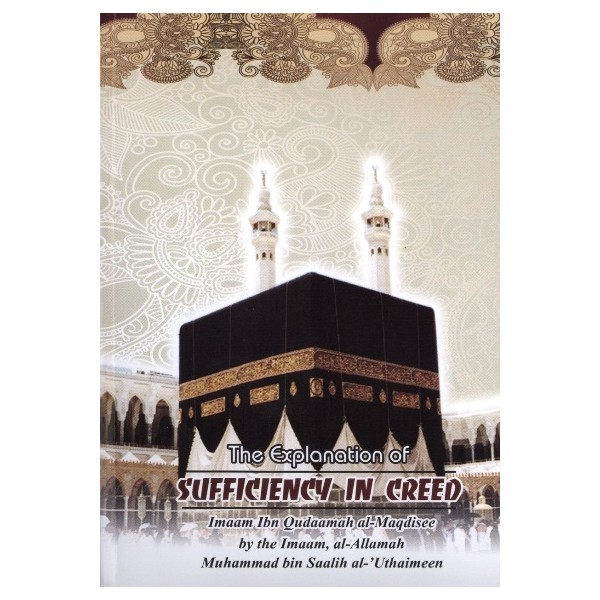
[Book Reco] The Explanation of the Sufficiency in Creed (Lum’at-ul-‘Itiqaad) : Shaikh Muhammad bin Saalih Al-‘Uthaimeen

The Explanation of the Sufficiency in Creed (Lum'at-ul-'Itiqaad) : Shaikh Muhammad bin Saalih Al-'Uthaimeen

In this book, we present the classical treatise on Creed of Imaam Ibn Qudaamah Al-Maqdisee, rahimahullaah, known as Lum’at-ul-‘Itiqaad, which is studied all over the Muslim world. Imaam Muhammad bin Saalih Al-‘Uthaimeen, rahimahullaah, has provided an in depth explanation for the points touched on by the author in a clear and simple manner. Furthermore, the narrations mentioned in the book have been verified and lengthy and extensive footnotes have been provided to make this book a valuable source of reference.

Shaikh Muhammad bin Saalih Al-‘Uthaimeen said in his introduction to this book: ‘This is a brief commentary of the book ‘Lum’at-ul-‘Itiqaad”, written by Abu Muhammad ‘Abdullaah bin Ahmad Ibn Qudaamah Al-Maqdisee (rahimahullaah), who was born in Sha’baan in 541H in a village from the districts of Nablis (present-day Palestine) and who died on the day of ‘Eed-ul-Fitr in 620H.

In this book, the author (rahimahullaah) gathered together the main points of the Islaamic Creed (‘Aqeedah). For this reason, the Board of the Educational Institutes assigned this book to be studied and taught during the second semester of the first year of study, so that it may serve as a pillar upon which one can establish his Creed at this stage.

Because I saw the importance of this book in terms of the topics it touches upon, its methodology and the lack of there being any explanation for it, I became determined, while seeking assistance from Allaah and hoping that He grant me correctness in intention and action, to put forth some words on it, in the attempt to clarify its ambiguous parts, explain its meanings and bring to light its main points.’

No doubt this book is of great importance for the Muslim with regard to establishing the correct Creed. This book is deserving of being taught and studied so that it may serve as a foundation for both the students of knowledge and the common Muslims. The topics touched upon by the author relate to the authentic Creed and Methodology, which all Muslims are obligated to have knowledge of. Consequently, we encourage everyone to purchase a copy of this magnificent book.

View the Table of Contents and Introduction @ http://www.dar-us-salam.com/inside/RA20-SufficiencyinCreed.pdf

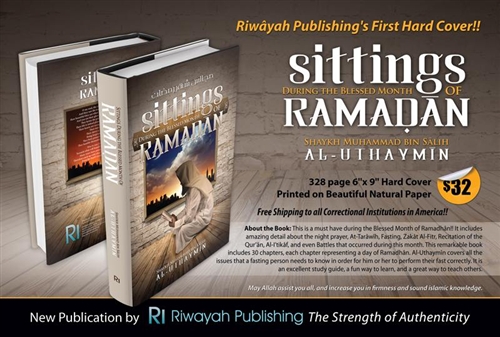
[Book Reco] Sittings During the Blessed Month of Ramadan – Shaykh Muhammad bin Salih Al-Uthaymeen

Sittings During the Blessed Month of Ramadan - Shaykh Muhammad bin Salih Al-Uthaymeen

Sittings During the Blessed Month of Ramadan, an amazing book by the Great Scholar Muhammad bin Salih Al-Uthaymeen, is filled with Qur’anic Verses, Prophetic Narrations, statements of wisdom from the early scholars, and beneficial poetry from scholars such as Ibn Rajab. It is made up of 30 chapters or Sittings, over 320 pages. This book includes details not only about Ramadan, but also details about Paradise, the hell fire, and the deeds done to reach either location. The Sheikh discusses, in detail, the rulings about Zakat Al-Fitr, as well as those who are qualified to receive the charity. This book is a book which both the student of knowledge and the laymen can tremendously benefit from. It is a book the whole family is in need of, and answers many reoccurring questions that are asked. every year, and includes diagrams and charts to make things easy to understand. Each chapter begins with a very poetic introduction, mentioning the Names and Attributes of Allah, and then transitions into the topic of that chapter. This book is a library builder and everyone is encouraged to benefit from this book and to convey the information to others. In conclusion, this book is a fun learning tool and teaching guide.

Buy at http://www.rimarket.net/product-p/eng0008s.htm

Does swallowing mucus (sputum or phlegm) invalidate the fast? – Shaykh Al-Albani & Shaykh Uthaymeen

Translated by Rasheed ibn Estes Barbee

http://mtws.posthaven.com/does-swallowing-mucus-invalidate-the-fast-answered-by-shaykh-al-albani

Video Courtesy: Bilal Nahim

Question:

What is the ruling on swallowing sputum or phlegm by a fasting person?

Answer by Shaykh Uthaymeen (rahimaullaah):

If sputum of phlegm does not reach the mouth, then it does not break the fast, and there is only one opinion on this in the Mathhab.
If it does reach the mouth, then he swallows it, the scholars hold two opinions regarding it:

Some of them hold that it breaks the fast, including it in the same category as food and drink. Others hold that it does not break the fast, including it in the same category as saliva, for saliva does not break the fast, even if one collected his saliva and swallowed it, his fast is not invalidated.

When the scholars disagree, it is necessary to refer to the Book (of Allaah) and the Sunnah; and if we are in doubt at to whether this matter invalidates the act of worship or it does not invalidate it, then the basic principle is that it is not invalidated and based upon this, swallowing sputum does not break the fast.

The important thing is that a person leaves his sputum, and does not try to draw it into his mouth, then he should expel it, whether he is fasting or not. As for breaking the fast, it requires an evidence which will be a convincing proof for a person before Allaah, the Almighty, the All-Powerful, for the invalidation of the fast.

Shaykh Muhammad bin Saalih al-`Uthaymeen
Fatawa Arkaanul-Islaam,
Dar-us-Salam English Publication, vol.2, p.666

Masturbation and its effect upon Worship –  Shaykh Muhammad ibn Saalih Al-‘Uthaymeen

Question:

Noble Shaykh, I hope for from you—may Allaah grant you Tawfeeq, and may He benefit me and those listening—and answer to my question; rather, my problem which affects me in my life and my worship; and I fear that it will separate me from my religion. So I want from you a remedy which will heal me and other than myself from the youth; specifically since we are nearing this blessed month. The problem is the secret habit; what is its ruling? Does it make Ghusl obligatory? Does it affect the prayer, fasting, and (other acts of) worship? Open for us a door by way of which we can exit; may Allaah open for you and the listeners the eight doors of paradise.

Watch the Video for the Shaykh’s answer

Translated by Raha ibn Donald Batts
Source: Silsilah Al-Liqaa’ Ash-Shahree (no. 8)  

Read the full article :
http://mtws.posthaven.com/masturbation-and-its-effect-on-worship-shaykh-muhammad-al-uthaymeen

Video Courtesy: Bilal Nahim

How does a Father Teach his Children Tawheed? – Shaykh al-Uthaymeen


Video Courtesy : Bilal Nahim

كيف يعلم الأب أبناءه التوحيد؟
Translated By Abbas Abu Yahya

Shaykh Allama Muhammad bin Salih al-Uthaymeen -Rahimullaah- was asked:

How does a father teach his children Tawheed?

 He answered:

 ● ‘He teaches them Tawheed just like he teaches them other matters of the Deen. From the best of what is in this subject is the book ‘The Three Principles’ by Shaykh-ul-Islaam Muhammad bin AbdulWahab. If he makes them memorise it by heart and explains to them its meanings appropriately to their understanding and their intellects.

Then there comes a lot of goodness from this. This is because this book is built upon questions and answers, and clear easy expressions, which have no complexity.

Then the father shows them the Ayaat of Allaah (His signs) so that he can practically implement what is mentioned in this small book.

For example,  the sun, the father asks, who created it? Likewise the moon,  the stars,  the night and day, you say to them:

‘The sun, who created it? Allaah.

The moon?   Allaah,  the night?  Allaah, the day?  Allaah.  Allaah -Azza wa Jal- created all of these. This is so that one can water the tree of the Fitrah (the natural disposition) because the human himself has been created with his natural disposition upon Tawheed of Allaah -Azza wa Jal.

 Like the Prophet -sallAllaahu alayhi wa sallam- said:

(كل مولود يولد على الفطرة ، فأبواه يهودانه أوينصرانه أو يمجسانه)

‘Every newborn is born upon the Fitrah (natural disposition), so it is his parents who either make him into a Jew or into a Christian or into a Majoos (fire worshipper).’

● Also he teaches them Wudu, how to make Wudu by demonstration and saying: This is how one does Wudu, and he performs the Wudu in front of him.

● Likewise the Salah (prayer), along with taking aid with Allaah Ta’ala, and asking Allaah -Azza wa Jal- for guidance for them. Also, that one keeps away from any statement which opposes good behaviour or every prohibited action, so he should not get them used to lying,  cheating and treachery,  nor lowly manners.

Even if the father was trialed by prohibited actions, like if he was trialed by smoking,  he should not smoke in front of them because they will get used to it and it will become easy upon them to do it as well.

 One should know that every man of a household is responsible for the people of the house, due to the saying of Allah Tabaraka wa Ta’ala:

(يَا أَيُّهَاالَّذِينَ آمَنُوا قُوا أَنفُسَكُمْ وَأَهْلِيكُمْ نَاراً)

《 O you who believe! Ward off from yourselves and your families a Fire (Hell)》[Tahreem: 6]

Our protecting them from the fire cannot be except if we get them used to righteous actions and to leave off bad actions. The Messenger of Allaah -sallAllaahu alayhi wa sallam- affirmed that in his saying:

(الرجل راع في أهله ومسؤول عن رعيته)
‘A man is a shepherd for his family and he is responsible for his flock.’

A father should know that their being righteous is beneficial to him in this world and the hereafter Indeed from the closest of people to their fathers and mothers are the righteous children, male and female.

(وإذا مات الإنسان انقطع عمله إلا من ثلاث: صدقة جارية، أو علم ينتفع به،أو ولد صالح يدعو له )
‘When a person dies his actions cease except for three: continuous charity,  or knowledge people benefit from,  or a righteous child who supplicates for him.’

We ask Allah Ta’ala to aid all of us upon carrying out the trust and responsibility.’

[Silsilah Noor ala Darb. Tape: 350 side A]

Shaykh Ibn Uthaymeen about the Arab rulers [Video|Ar-En Subtitles]

Scholar: Imâm Muhammad bin Sâlih bin ´Uthaymîn
Source: Liqâ’ al-Bâb al-Maftûh (51 B)
Reference: Darulhadith.com

Claim : Peace treaties with Kuffar is Kufr – Shaykh ibn Uthaymin [Video|Ar-En Subtitles]

Scholar: Imâm Muhammad bin Sâlih bin ´Uthaymîn
Source: Liqâ’ al-Bâb al-Maftûh (78 B) 1415-06-14/1994-11-17
Sound-file: http://www.ibnbaz.se/713-6474481
Reference: Darulhadith.com, Sweden
Audio and Translation courtesy of aFatwa.com

Question: Regarding peace with the disbelievers, some say that it is unrestricted disbelief. Others say that it isn’t…

Understanding Islaam : Shaykh ibn al-‘Uthaymeen

Shaykh Muhammad ibn Saalih al-‘Uthaymeen
Sharh Usoolul-Eemaan (pp.4-7)
Al-Istiqaamah magazine , Issue No.1 – Dhul-Hijjah 1416H / May 1996

The Shaykh said in Sharh Usoolul-Eemaan (pp.4-7):

[1] The deen (religion) of Islaam: It is the way of life that Allaah sent the Prophet Muhammad sallallaahu ‘alayhi wa sallam with. By it, Allaah terminated the validity of all other religions, perfected this religion for His worshippers, completed His favour upon them and has chosen only this religion for them – no other religion will be accepted by Him from anyone. Allaah – the Most High – said:

“Muhammad is not the father of any man amongst you. Rather he is the Messenger of Allaah and the khaatim (last and final) of the Prophets.” [Soorah al-Ahzaab 33:40].

“This day I have perfected your religion for you, completed My favour upon you, and have chosen for you Islaam as your religion.” [Soorah al-Maa’idah 5:3].

“Indeed the religion with Allaah is Islaam.” [Soorah Aal-‘Imraan 3:19].

“Whosoever seeks a religion other than Islaam, never will it be accepted from him, and in the Hereafter he will be one of the losers.” [Soorah Aal-‘Imraan 3:85].

And Allaah – the Most High – obligated all of mankind to take Islaam as their religion. So Allaah said, whilst addressing His Messenger sallallaahu ‘alayhi wa sallam:

“Say: O Mankind! Indeed I have been sent to you all as the Messenger of Allaah; to Whom belongs the dominion of the heavens and the earth. None has the right to be worshipped except Him; it is He who gives life and cause death. So believe in Allaah and His Messenger – the Prophet who can neither read nor write – who believes in Allaah and His Words. So follow the Messenger of Allaah so that you may be rightly-guided.” [Soorah al-A’raaf 7:158].

And in Saheeh Muslim (1/93), from Abu Hurayrah radiallaahu ‘anhu that Allaah’s Messenger sallallaahu ‘alayhi wa sallam said: “By Him in whose Hand is the life of Muhammad! There is no one from this nation, be he a Jew or a Christian, who hears of me and dies whilst not having eemaan (faith) in what I have been sent with, except that he will be one of the companions of the Hellfire.”

And eemaan (faith) in the Prophet implies: affirming that which he was sent with, along with acceptance of it and submission to it. Without these two matters, mere affirmation is not sufficient. This is why even though Abu Taalib (the Prophet’s uncle) affirmed what was sent to the Prophet sallallaahu ‘alayhi wa sallam and that Islaam was the best of religions, yet he did not accept his message nor submit to it; and thus he did not have eemaan in the Prophet sallallaahu ‘alayhi wa sallam.

[2] The religion of Islaam contains all that was beneficial from the previous religions. It is suitable for implementation in any age, any where and by any nation. Allaah – the Most High – said, whilst addressing His Messenger sallallaahu ‘alayhi wa sallam:

“And We have sent down to you the Book in truth, confirming the Scripture that came before it, testifying to the truth contained therein whilst exposing the falsehood that has been added therein.” [Soorah al-Maa’idah 5:48].

That Islaam is suitable for implementation in any age, any where and by any nation does not mean that it becomes submissive to nations – being altered and changed by them – as some people falsely think. But rather it means that whenever it is truly adhered to then it brings benefit and goodness to that nation, as well as reforming and correcting it – in whatever age or place.

[3] The religion of Islaam is the religion of truth. It is the way of life that Allaah – the Most High – guaranteed His help and victory to those who truly adhere to it, and that He would make it dominant over all other religions. Allaah – the Most High – said:

“It is He who has sent His Messenger with the guidance and the religion of truth, that it may prevail over all other religions, even if the pagans detest it.” [Soorah at-Tawbah 9:33].

And Allaah – the Most High – said:

“Allaah has promised to those amongst you who truly have eemaan (true faith and belief) and act in obedience to Allaah and His Messenger, that He will grant them ruler ship upon the earth, just as He granted it to those before them, and that He will establish their Religion for them and grant them the authority to practice their Religion which He chose and ordered them with. And He will certainly change their situation to one of security, after their fear. Providing that they worship and obey Me, not associating anything else in worship with Me. Then, whoever rejects this favour by disobedience to their Lord – then they are the rebellious transgressors.” [Soorah an-Noor 24:55].

[4] The religion of Islaam is a complete religion comprising both ‘aqeedah (beliefs) and sharee’ah (laws).

  • It commands them with tawheed (to single out Allaah alone for worship) and prohibits them from shirk (associating partners with Allaah, in that which is particular to Him).
  • It commands them with being truthful and prohibits them from lying.
  • It commands them with ‘adl (justice) and prohibits them from injustice and oppression.
  • It commands them with fulfilling trusts and prohibits them from acting treacherously.
  • It commands them keeping promises and prohibits them from breaking them.
  • It commands them with kindness and good treatment of parents and prohibits them from disobedience to them in that which is not sinful.
  • It commands them with joining the ties of relations and prohibits them from severing them.
  • It commands them with good treatment of neighbours and prohibits the causing of harm to them.

In short, Islaam orders alls that is good, from manners and morals, and prohibits all that is evil from it. Likewise, it orders all actions which are righteous and good and prohibits all actions that are evil and harmful. Allaah – the Most High – said:

“Indeed Allaah enjoins upon you justice, kindness and the giving of good to relatives and near ones. And He prohibits you from all shameful and evil deeds, oppression and transgression. Thus He admonishes you, that you may take heed and be reminded.” [Soorah an-Nahl 16:90].

Why is My Supplication Not Answered? Shaykh Ibn Uthaymeen

By the Noble Scholar, Shaykh Muhammad Ibn Saalih al-’Uthaymeen [1]
Majmoo’ul-Fataawaa war-Rasaa‘il (no. 155)
Al-Istiqaamah Magazine, Issue No.3 – Rabî’ul-Awwal 1417H / August 1996.

[Q]: ‘Allaah says: ‘‘And your Lord says: Call upon Me and I will, respond to your supplication.’’ [Soorah Ghaafir 40:60] So why is it that a person’s du’aa (supplication) is sometimes unanswered?’

[A]: ‘‘All praise is due to Allaah, Lord of the worlds. May the Prayers and Peace be upon our Prophet Muhammad, and upon his Family and his Companions.  I ask Allaah for the ability to be correct in belief, speech and actions, for myself and for my brothers.

Allaah says:

‘‘And your Lord says: Call upon Me and I will respond to your supplication. Verily those who are too arrogant to worship Me will, enter Hell in humiliation.’’ [Soorah Ghaafir 40:60]

The questioner stated that he did indeed make du’aa (supplication) to Allaah – the Mighty and Majestic – but it was not answered by Allaah. So he is in doubt with respect to this noble aayah (verse), in which Allaah promises to answer the one who supplicates to Him, and indeed Allaah – the Most Perfect – never breaks His promise.

So the clarification of this is that there are certain conditions that need to be fulfilled in order for a supplication to be answered.  These conditions are:

Firstly: Sincerity to Allaah – the Mighty and Majestic. That is to say, one must be sincere in his du’aa (supplication), so he turns to Allaah – the One free from all imperfections with an attentive heart, being truthful in his turning to Him, knowing that Allaah – the Most Perfect, the Most High – is capable of answering his du’aa (supplication) and hoping that the du’aa will be answered.

Secondly: During du’aa, the caller should feel that he is in need of Allaah – the Most Perfect, the Most High – in fact in dire need; and that only Allaah alone answers the supplication of the one in distress and the One who removes evil.

Thirdly: That the one making du’aa should refrain from haraam (unlawful) matters, as this acts as a barrier between the person and his du’aa (supplication) being answered – as has been established in the authentic hadeeth, from the Prophet (sallallaahu ’alayhi wa sallam) who said: ‘‘Indeed Allaah – the Most High -is good and accepts only that which is good. Allaah has ordered the Believers to do that which He commanded the Messengers. Allaah – the Most High -has said:

‘‘O you Messengers! Eat of the good things and do righteous actions.’’ [Sooratul-Mu‘minoon 3:51 ]

And Allaah – the Most High – says:

‘‘O you who Believe! Eat of the good things wherewith We have provided you. ’’ [Sooratul-Baqarah 2:172]

Then he mentioned (the case of) a man who, having journeyed far is dishevelled and dusty and who spreads out his bands to the sky (saying): ‘O Lord! O Lord,’ whilst his food is unlawful, his drink unlawful and he is nourished unlawfully. So how can he be answered!’ [2] So the Prophet (sallallaahu ’alayhi wa sallam) explained the un-likelihood that this person’s du’aa would be answered, even after fulfilling the apparent factors which aid the du’aa being answered. The apparent factors being:

[i]: Raising ones’ hands towards the sky, meaning towards Allaah – the Mighty and Majestic – since Allaah is above the heavens, above His ’Arsh (Throne). Extending the hands out towards Allaah -the Mighty and Majestic – is amongst the causes of du’aa being responded to, as is shown in the narration from the Prophet (sallallaahu ’alayhi wa sallam) that he said: ‘‘Indeed your Lord is Alive, Most generous. He feels shy that when his servant raises his bands towards Him, calling upon Him, that He should return him empty, having nothing.’’[3]

[ii]: This man called upon Allaah – the Most High – using the name Rabb (Lord).  Seeking tawassul (the means of nearness to Allaah) with this name is also regarded as one of the causes for du’aa to be responded to, since the Rabb is the Creator, the Owner, the Governor of all affairs – and the reigns of the Heavens and the earth are in His Hands.  Due to this, you will find that most of the supplications made in the Noble Qur‘aan are by this name:

‘‘Our Lord! We have heard the call of one calling us to faith: ‘Believe you in the Lord,’ and we have believed. Our Lord! Forgive us our sins, and remit from us our evil deeds, and take to Yourself our souls in the company of the righteous. Our Lord! Grant us what You did promise unto us through Your Messengers, and do not disgrace us on the Day of judgement, for You never break Your promise. And their Lord has accepted of them, and answered them: Never will I suffer to be lost the work of any of you, whether male or female.’’ [Soorah Aal-‘lmraan 3:193-195]

So tawassul (seeking the means of nearness to Allaah) by this name is one of the causes for the du’aa to be responded to.

[iii]: This man was a traveller, and journeying is often a cause for du’aa to be responded to, because a person feels more in need of Allaah – the Mighty and Majestic – when travelling, than when a person is resident with his family. He was dusty and dishevelled, seeming very insignificant in himself, as if the most important thing to him was to implore Allaah and to call upon Him – in any condition he may be – whether dusty and dishevelled, or in ease and oppulance. Being dusty and dishevelled is also instrumental, like in the hadeeth attributed to the Prophet (sallallaahu ’alayhi wa sallam) in which he said: Indeed Allaah boasts to the people of the Heaven about the people standing at ’Arafah, saying: ‘‘Look at My servants who have come to Me dusty and dishevelled.’’ [4] However, these factors did not bring about anything, because his food, his nourishment and his clothing were all haraam (unlawful). So the Prophet (sallallaahu ’alayhi wa sallam) remarked: ‘‘So how can he be answered!’’

Therefore, if these conditions are not satisfied, then the question concerning the du’aa (supplication) being answered will seem distant. However, if the conditions are satisfied and the one supplicating is still not answered, then this is due to a wisdom which Allaah – the Mighty and Majestic – knows, and the one supplicating does not know what this wisdom is; and maybe that you like a thing and it is bad for you.

So when these conditions are fulfilled and the one supplicating is not answered, then either he has been protected from an evil which is greater than what he has asked for, or Allaah stores it for him until the Day of Resurrection, and he then gets a greater reward. This is so, because the one who makes du’aa – calling upon Allaah alone, fulfilling the conditions and not being answered, but rather being saved from a greater evil – is in the position of having carried out the causes yet has been prevented from being answered, and therefore has a two-fold reward. One reward for making du’aa (supplication), and another reward for bearing the trial of not being answered. So that which is greater and more complete is stored for him with Allaah – the Mighty and Majestic.

Also of importance is that the one supplicating should not express dissatisfaction if his du’aa is apparently not being answered, for this action in itself is a reason for the du’aa not being answered – as the Prophet (sallallaahu ’alayhi wa sallam) said: ‘‘A servants du’aa continues to be answered as long as be does not ask for anything sinful or breaking the ties of relations, and as long as be does not become impatient.’’ It was said: How does one become impatient O Messenger of Allaah? He said: ‘‘He says: I have supplicated, I have supplicated, yet it has not been answered.’’ [5] He therefore becomes dispondant and abandons supplicating. So it is not befitting that the one supplicating should become impatient about being answered, then become disappointed and dispondant, and thereby abandon making du’aa. Rather, one should call upon Allaah, since every du’aa you make to Allaah is an act of worship, which brings you closer to Him and increases your reward.

So my brother, you should take to making du’aa (supplication) in all affairs, be it general or specific, in difficulty or in ease. And if it was that supplication was only a means of worshipping Allaah – the One free from all imperfections, the Most High – then that would be sufficient. So it is more befitting that a person strives in this – and with Allaah lies the success and the ability.’’

Footnotes:

[1] Majmoo’ul-Fataawaa war-Rasaa‘il (no. 155)
[2] Related by Muslim (no. 1015) from Aboo Hurayrah (radiyallaahu ’anhu)
[3] Saheeh: Related by Ahmad (5/438) and Aboo Daawood (no. 1488). It was authenticated by al-Haafidh Ibn Hajar in Fathul-Baaree (11/143).
[4] Saheeh: Related by Ibn Hibbaan (no. 1006), from ’Abdullaah Ibn ’Amr (radiyallaahu ’anhu). It was authenticated by Shaykh al-Albaanee in Saheehul-Jaami’ (no. 1868).
[5] Related by al-Bukhaaree (11/140) and Muslim (no. 2735), from Aboo Hurayrah (radiyallaahu ’anhu)