What and When to Supplicate with whilst Performing Umrah

Compiled & Translated By Abbas Abu Yahya

1 – Making the Intention for Umrah:

لبيك اللهم بعمرة

Labbayk Allaahumma bi Umrah


2 – Saying the Talbeeyah:

Jabir -Radi Allaahu anhu- said:

The Messenger of Allaah sallAllaahu alayhi wa sallam raised his voice with Tawheed: :

لَبَّيْكَاللَّهُمَّ  لَبَّيْكَ،لَبَّيْكَلاشَرِيكَ  لَكَ  لَبَّيْكَ،إِنَّالْحَمْدَوَالنّعْمَةَ  لَكَ  وَالْمُلْكَلاشَرِيكَ  لَكَ

 Labbaykallaahumma labbaik, labbaika laa shareeka laka labbaik innal hamda wan ni’mata laka wal mulk-laa shareeka lak

Here I am O Allaah, here I am, You have no partner, here I am, Verily all praise is for You, and every bounty is from You, and all dominion is Yours – You have no partner. [1]


3 – Making Dua’ When Seeing the Ka’abah

Shaykh Albaani said:

‘if one of you sees the Ka’abah he can raise his hands – due to this being established from Ibn ‘Abbas -Radi Allaahu anhu, but it is not established from the Prophet sallAllaahu alayhi wa sallamthat he made a specific Dua’ here – and he can make Dua’ with whatever is easy for him, and if he makes Dua’ with what Umar -Radi Allaahu anhu- did then that is good due to it being established from Umar -Radi Allaahu anhu:

اللَّهُمَّ أَنْتَ السَّلَامُ وَمِنْك السَّلَامُ فَحَيِّنَا رَبَّنَا بِالسَّلَامِ

‘Allaahumma Anta as-Salaam, wa Min kas-Salam fa hayyina Rabbana bis-Salaam’

‘O Allaah You are as-Sallam, and from You is peace and security, so grant us life O our Lord with peace and security.’ [2]


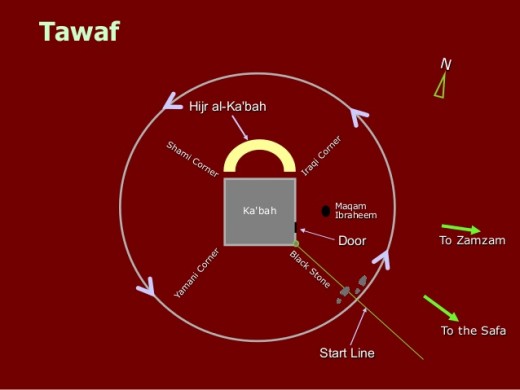
4 – When beginning the Tawaf at the Hajr al-Aswad [The Black Stone]

Shaykh Albaani said:

‘It is the Sunnah to say Takbeer [Say: Allaahu Akbar (Allaah is the greatest)] at the Hajr al-Aswad on every circuit due to the hadeeth of Ibn Abbas -Radi Allaahu anhu- who said: the Prophet sallAllaahu alayhi wa sallam– made Tawaf of the House upon his camel, and every time he came to the Hajr al-Aswad corner, he would indicate to it with what he had with him in his hand and say Takbeer.

As for saying ‘Bismillaah’ (In the Name of Allaah), then it is authentic from Ibn Umar that he would point to the stone and say;

بسم الله والله أكبر

‘Bismillaah wa Allaahu Akbar’. [3]


5 – The Dua’ between the Yemeni Corner & the Black Stone

From Abdullaah bin as-Saib -Radi Allaahu anhu- who said: I heard the Messenger of Allaah sallAllaahu alayhi wa sallamsay: between the two corners [the Yemeni corner & the black stone]:

 رَبَّنَا آتِنَا فِي الدُّنْيَا حَسَنَةً وَفِي الْآخِرَةِ حَسَنَةً وَقِنَا عَذَابَ النَّارِ

<<Our Lord! Give us in this world that which is good and in the Hereafter that which is good, and save us from the torment of the Fire!>> [4]

6 – The Dua’ Upon Mount Safa & Marwa

From Jabir -Radi Allaahu anhu- who said: Then the Prophet sallAllaahu alayhi wa sallam went out to Safa and when he came close to Safa he recited:

إِنَّ الصَّفَا وَالْمَرْوَةَ مِنْ شَعَائِرِ الله فَمَنْ حَجَّ الْبَيْتَ أَوِ اعْتَمَرَ فَلا جُنَاحَ عَلَيْهِ أَنْ يَطَّوَّفَ بِهِمَا وَمَنْ تَطَوَّعَ خَيْرًا فَإِنَّ الله شَاكِرٌ عَلِيمٌ

 <<Verily! As-Safa and Al-Marwah  are of the Symbols of Allaah. So it is not a sin on him who perform Hajj or ‘Umrah of the House (the Ka’bah at Makkah) to perform the going between them (As-Safa and Al-Marwah). And whoever does good voluntarily, then verily, Allaah is All-Recogniser, All-Knower.>>

نَبْدَأُ بِمَا بَدَأَ اللَّهُ بِهِ

Nabda Bima Bada Allaahu Bihi, so he sallAllaahu alayhi wa sallam began at Safa and climbed it until he could see the Ka’abah, and he faced the Qiblah [the Ka’abah], and he singled out Allaah and said the Takbeer three times الله أكبر الله أكبر الله أكبر

 [Allaahu Akbar, Allaahu Akbar, Allaahu Akbar]

Then he sallAllaahu alayhi wa sallamwould say

لَا إلَهَ إلَّا الله وَحْدَهُ لَا شَرِيكَ لَهُ لَهُ الْمُلْكُ ، وَلَهُ الْحَمْدُ وَهُوَ عَلَى كُلِّ شَيْءٍ قَدِيرٌ ، لَا إلَهَ إلَّا الله أَنْجَزَ وَعْدَهُ وَنَصَرَ عَبْدَهُ وَهَزَمَ الْأَحْزَابَ وَحْدَهُ

 ‘There is none worthy of worship in truth except Allaah Alone, He has no partners, to Him belongs the Dominion and for Him is all praise, and He is capable of all things. He kept His promise, and aided His slave, and He Alone defeated all the clans of (non-believers).’

La ilaha ‘illa Allaahu wahdahu la shareeka lahu, lahul mulku wa lahul hamdu wa huwa ala kulli shayin qadeer, Anjaza Waaddahu, wa nasra ‘abdahu wa Hazama al-Ahzaab Wahaddahu’

He sallAllaahu alayhi wa sallamwould say this three times and would make Dua’ between saying this. Then he sallAllaahu alayhi wa sallamwould do the same thing on Marwa as he did on Safa.’ 5 

7 – The Dua’ during the Sa’ee between Safa & Marwa

Shaykh Albaani said:

‘And if he makes Dua’ in the Sa’ee by saying:

رَبِّ اغْفِرْ وَارْحَمْ ، إِنَّكَ أَنْتَ الأَعَزُّ الأَكْرَمُ

‘Rabb Ighfir warrham, innaka Anta al-‘Aa’azz al-Akram.’

‘O Lord forgive me and have mercy on me, Indeed You are the Most Honourable and the Most Generous.’

Then this is permissible to say due to it being established from a number of the Salaf.’ 6

Footnotes

  1. Albaani – ‘Hajjatul Nabi’ p.55
  2. Manasik al-Hajj wa Umrah p.20
  3. Albaani – ‘Hajjatul Nabi’ p.57
  4. Saheeh Sunnan Abu Dawood 1892
  5. Albaani – ‘Hajjatul Nabi’ p.58-59
  6. Manasik al-Hajj wa Umrah p.27


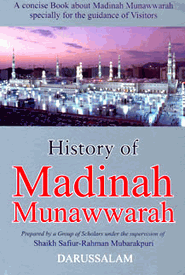
History of Madinah Munawwarah – Shaikh Safiur-Rahman Mubarakpuri

history-of-madina-mubarakpuri

History of Madinah Munawwarah (Shaikh Safiur-Rahman Mubarakpuri)

Publisher: Darussalam Publishers and Distributors (2002)
Pages: 152 Binding: Paperback

You can buy Here or read most of the book @ Google Books Here

Description from the publisher:

In this book, mention has been made about the different aspects of Al-Madinah, and the most important historical events are recorded that have direct effect on the establishment and sacredness of Al-Madinah as well as its religious weight.

This book has highlighted the sites that are highly important whenever Al-Madinah is mentioned like the Prophet’s Mosque, Quba Mosque and others. A great part of the book is designated to speak about the Prophet’s Mosque updating the expansions and the improvements that has taken place from the time of Muhammad (Sallallaahu alaihi wa sallam) till the Saudi era. It contains more than fifty, pictures taken from original documented resources. The pictures vary from old to new dealing with many aspects. The book is a genuine addition to the Islamic library in, its subject both for the researcher and the regular reader. This book sought scientific trustworthiness, by presenting only the correct Ahadith and authentic reports.

Sahih Bukhari : Book 27: Minor Pilgrammage (Umra)

Translation of Sahih Bukhari, Book 27:

Minor Pilgrammage (Umra)

Volume 3, Book 27, Number 1:

Narrated Abu Huraira:

Allah’s Apostle said, “(The performance of) ‘Umra is an expiation for the sins committed (between it and the previous one). And the reward of Hajj Mabrur (the one accepted by Allah) is nothing except Paradise.”


Volume 3, Book 27, Number 2:

Narrated Ibn Juraij:

Ikrima bin Khalid asked Ibn ‘Umar about performing ‘Umra before Hajj. Ibn ‘Umar replied, “There is no harm in it.” ‘Ikrima said, “Ibn ‘Umar also said, ‘The Prophet had performed ‘Umra before performing Hajj.'”


Volume 3, Book 27, Number 3:

Narrated ‘Ikrima bin Khalid:

“I asked Ibn ‘Umar the same (as above).”


Volume 3, Book 27, Number 4:

Narrated Mujahid:

Ursa bin AzZubair and I entered the Mosque (of the Prophet) and saw ‘Abdullah bin Umar sitting near the dwelling place of Aisha and some people were offering the Duha prayer. We asked him about their prayer and he replied that it was a heresy. He (Ursa) then asked him how many times the Prophet had performed ‘Umra. He replied, ‘Four times; one of them was in the month of Rajab.” We disliked to contradict him. Then we heard ‘Aisha, the Mother of faithful believers cleaning her teeth with Siwak in the dwelling place. ‘Ursa said, “O Mother! O Mother of the believers! Don’t you hear what Abu ‘Abdur Rahman is saying?” She said, “What does he say?” ‘Ursa said, “He says that Allah’s Apostle performed four ‘Umra and one of them was in the month of Rajab.” ‘Aisha said, “May Allah be merciful to Abu ‘Abdur Rahman! The Prophet did not perform any ‘Umra except that he was with him, and he never performed any ‘Umra in Rajab.”


Volume 3, Book 27, Number 5:

Narrated ‘Ursa bin Az-Zubair:

I asked ‘Aisha (whether the Prophet had performed ‘Umra in Rajab). She replied, “Allah’s Apostle never performed any ‘Umra in Rajab.”


Volume 3, Book 27, Number 6:

Narrated Qatada:

I asked Anas how many times the Prophet had performed ‘Umra. He replied, “Four times. 1. ‘Umra of Hudaibiya in Dhi-l-Qa’da when the pagans hindered him; 2. ‘Umra in the following year in Dhi-l-Qa’da after the peace treaty with them (the pagans); 3. ‘Umra from Al-Jr’rana where he distributed the war booty.” I think he meant the booty (of the battle) of Hunain. I asked, “How many times did he perform Hajj?” He (Anas) replied, “Once. “


Volume 3, Book 27, Number 7:

Narrated Qatada:

I asked Anas (about the Prophet’s ‘Umra) and he replied, “The Prophet performed ‘Umra when the pagans made him return, and Umra of al-Hudaibiya (the next year), and another ‘Umra in Dhi-l-Qa’da, and another ‘Umra in combination with his Hajj.”


Volume 3, Book 27, Number 8:

Narrated Hammam:

The Prophet performed four ‘Umra (three) in Dhi-l-Qa’da except the (one) ‘Umra which he performed with his Hajj: His ‘Umra from Al-hudaibiya, and the one of the following year, and the one from Al-Jr’rana where he distributed the booty (of the battle) of Hunain, and another ‘Umra with his Hajj.


Volume 3, Book 27, Number 9:

Narrated Abu Ishaq:

I asked Masruq, ‘Ata’ and Mujahid (about the ‘Umra of Allah’s Apostle). They said, “Allah’s Apostle had performed ‘Umra in Dhi-l-Qa’da before he performed Hajj.” I heard Al-Bara’ bin ‘Azib saying, “Allah’s Apostle had performed ‘Umra in Dhi-l-Qa’da twice before he performed Hajj.”


Volume 3, Book 27, Number 10:

Narrated Ata:

I heard Ibn ‘Abbas saying, “Allah’s Apostle asked an Ansari woman (Ibn ‘Abbas named her but ‘Ata’ forgot her name), ‘What prevented you from performing Hajj with us?’ She replied, ‘We have a camel and the father of so-and-so and his son (i.e. her husband and her son) rode it and left one camel for us to use for irrigation.’ He said (to her), ‘Perform ‘Umra when Ramadan comes, for ‘Umra in Ramadan is equal to Hajj (in reward),’ or said something similar.”


Volume 3, Book 27, Number 11:

Narrated Aisha:

We set out along with Allah’s Apostle shortly before the appearance of the new moon (crescent) of the month of Dhi-l-Hijja and he said to us, “Whoever wants to assume Ihram for Hajj may do so; and whoever wants to assume Ihram for ‘Umra may do so. Hadn’t I brought the Hadi (animal for sacrificing) (with me), I would have assumed Ihram for ‘Umra.” (‘Aisha added,): So some of us assumed Ihram for ‘Umra while the others for Hajj. I was amongst those who assumed Ihram for ‘Umra. The day of ‘Arafat approached and I was still menstruating. I complained to the Prophet (about that) and he said, “Abandon your ‘Umra, undo and comb your hair, and assume Ihram for Hajj;.” When it was the night of Hasba, he sent ‘Abdur Rahman with me to At-Tan’im and I assumed Ihram for ‘Umra (and performed it) in lieu of my missed ‘Umra.


Volume 3, Book 27, Number 12:

Narrated ‘Amr bin Aus:

Abdul Rahman bin Abu Bakr told me that the Prophet had ordered him to let ‘Aisha ride behind him and to make he perform ‘Umra from At-Tan’im.


Volume 3, Book 27, Number 13:

Narrated Jabir bin ‘Abdullah:

The Prophet and his companions assumed Ihram for Hajj and none except the Prophet and Talha had the Hadi with them. ‘Ali had come from Yemen and he had the Hadi with him. He (‘Ali) said, “I have assumed Ihram with an intention like that of Allah’s Apostle has assumed it.” The Prophet ordered his companions to intend the Ihram with which they had come for ‘Umra, to perform the Tawaf of the Ka’ba (and between Safa and Marwa), to get their hair cut short and then to finish their Ihram with the exception of those who had the Hadi with them. They asked, “Shall we go to Mina and the private organs of some of us are dribbling (if we finish Ihram and have sexual relations with our wives)?” The Prophet heard that and said, “Had I known what I know now, I would not have brought the Hadi. If I did not have the Hadi with me I would have finished my Ihram.” ‘Aisha got her menses and performed all the ceremonies (of Hajj) except the Tawaf . So when she became clean from her menses, and she had performed the Tawaf of the Ka’ba, she said, “O Allah’s Apostle! You (people) are returning with both Hajj and ‘Umra and I am returning only with Hajj!” So, he ordered ‘Abdur Rahman bin Abu Bakr to go with her to At-Tan’im. Thus she performed ‘Umra after the Hajj in the month of Dhi-l-Hijja. Suraqa bin Malik bin Ju’sham met the Prophet at Al-‘Aqaba (Jamrat-ul ‘Aqaba) while the latter was stoning it and said, “O Allah’s Apostle! Is this permissible only for you?” The Prophet replied, “No, it is for ever (i.e. it is permissible for all Muslims to perform ‘Umra before Hajj.”


Volume 3, Book 27, Number 14:

Narrated ‘Aisha:

We set out with Allah’s Apostle shortly before the appearance of the new moon of Dhi-l-Hiija and he said, “Whoever wants to assume Ihram for ‘Umra may do so, and whoever wants to assume Ihram for Hajj may do so. Had not I brought the Hadi with me, I would have assumed Ihram for ‘Umra.” Some of the people assumed Ihram for ‘Umra while others for Hajj. I was amongst those who had assumed Ihram for ‘Umra. I got my menses before entering Mecca, and was menstruating till the day of ‘Arafat. I complained to Allah’s Apostle about it, he said, “Abandon your ‘Umra, undo and comb your hair, and assume Ihram for Hajj.” So, I did that accordingly. When it was the night of Hasba (day of departure from Mina), the Prophet sent ‘Abdur Rahman with me to At-Tanim.

The sub-narrator adds: He (‘AbdurRahman) let her ride behind him. And she assumed Ihram for ‘Umra in lieu of the abandoned one. Aisha completed her Hajj and ‘Umra, and no Hadi, Sadaqa (charity), or fasting was obligatory for her.


Volume 3, Book 27, Number 15:

Narrated Al-Aswad:

That ‘Aisha said, “O Allah’s Apostle! The people are returning after performing the two Nusuks (i.e. Hajj and ‘Umra) but I am returning with one only?” He said, “Wait till you become clean from your menses and then go to At-Tan’im, assume Ihram (and after performing ‘Umra) join us at such-and-such a place. But it (i.e. the reward if ‘Umra) is according to your expenses or the hardship (which you will undergo while performing it).”


Volume 3, Book 27, Number 16:

Narrated ‘Aisha:

We set out assuming the Ihram for Hajj in the months of Hajj towards the sacred precincts of Hajj. We dismounted at Sarif and the Prophet said to his companions, “Whoever has not got the Hadi with him and likes to make it as ‘Umra, he should do it, but he who has got the Hadi with him should not do it.” The Prophet and some of his wealthy companions had the Hadi with them, so they did not finish Ihram after performing the ‘Umra. The Prophet came to me while I was weeping. He asked me the reason for it. I replied, “I have heard of what you have said to your companions and I cannot do the ‘Umra.” He asked me, “What is the matter with you?” I replied, “I am not praying.” He said, “There is no harm in it as you are one of the daughters of Adam and the same is written for you as for others. So, you should perform Hajj and I hope that Allah will enable you to perform the ‘Umra as well.” So, I carried on till we departed from Mina and halted at Al-Mahassab. The Prophet called ‘Abdur-Rahman and said, “Go out of the sanctuary with your sister and let her assume Ihram for ‘Umra, and after both of you have finished the Tawaf I will be waiting for you at this place.” We came back at mid-night and the Prophet asked us, “Have you finished?” I replied in the affirmative. He announced the departure and the people set out for the journey and some of them had performed the Tawaf of the Ka’ba before the morning prayer, and after that the Prophet set out for Medina.


Volume 3, Book 27, Number 17:

Narrated Safwan bin Ya’la bin Umaiya from his father who said:

“A man came to the Prophet while he was at Ji’rana. The man was wearing a cloak which had traces of Khaluq or Sufra (a kind of perfume). The man asked (the Prophet ), ‘What do you order me to perform in my ‘Umra?’ So, Allah inspired the Prophet divinely and he was screened by a place of cloth. I wished to see the Prophet being divinely inspired. ‘Umar said to me, ‘Come! Will you be pleased to look at the Prophet while Allah is inspiring him?’ I replied in the affirmative. ‘Umar lifted one corner of the cloth and I looked at the Prophet who was snoring. (The sub-narrator thought that he said: The snoring was like that of a camel). When that state was over, the Prophet asked, “Where is the questioner who asked about ‘Umra? Put off your cloak and wash away the traces of Khaluq from your body and clean the Sufra (yellow color) and perform in your Umra what you perform in your Hajj (i.e. the Tawaf round the Ka’ba and the Sa’i between Safa and Marwa). “


Volume 3, Book 27, Number 18:

Narrated Hisham Ibn ‘Urwa from his father who said:

While I was a youngster, I asked ‘Aisha the wife of the Prophet. “What about the meaning of the Statement of Allah;

“Verily! (the mountains) As-Safa and Al Marwa, are among the symbols of Allah. So, it is not harmful if those who perform Hajj or ‘Umra of the House (Ka’ba at Mecca) to perform the going (Tawaf) between them? (2.158) I understand (from that) that there is no harm if somebody does not perform the Tawaf between them.” ‘Aisha replied, “No, for if it were as you are saying, then the recitation would have been like this: ‘It is not harmful not to perform Tawaf between them.’ This verse was revealed in connection with the Ansar who used to assume the Ihram for the idol Manat which was put beside a place called Qudaid and those people thought it not right to perform the Tawaf of As-Safa and Al-Marwa. When Islam came, they asked Allah’s Apostle about that, and Allah revealed:–

“Verily! (the mountains) As-Safa and Al-Marwa Are among the symbols of Allah. So, it is not harmful of those who perform Hajj or ‘Umra of the House (Ka’ba at Mecca) to perform the going (Tawaf) between them.” (2.158) Sufyan and Abu Muawiya added from Hisham (from ‘Aisha): “The Hajj or ‘Umra of the person who does not perform the going (Tawaf) between As-Safa and Al-Marwa is incomplete in Allah’s sight.


Volume 3, Book 27, Number 19:

Narrated Isma’il:

Abdullah bin Abu Aufa said: “Allah’s Apostle performed ‘Umra and we too performed ‘Umra along with him. When he entered Mecca he performed the Tawaf (of Ka’ba) and we too performed it along with him, and then he came to the As-Safa and Al-Marwa (i.e. performed the Sai) and we also came to them along with him. We were shielding him from the people of Mecca lest they may hit him with an arrow.” A friend of his asked him (i.e. ‘Abdullah bin Aufa), “Did the Prophet enter the Ka’ba (during that ‘Umra)?” He replied in the negative. Then he said, “What did he (the Prophet ) say about Khadija?” He (Abdullah bin Aufa) said, “(He said) ‘Give Khadija the good tidings that she will have a palace made of Qasab in Paradise and there will be neither noise nor any trouble in it.”


Volume 3, Book 27, Number 20:

Narrated ‘Amr bin Dinar:

We asked Ibn ‘Umar whether a man who had performed the Tawaf of the Ka’ba but had not performed the Tawaf between As-Safa and Al-Marwa yet, was permitted to have sexual relation with his wife. He replied, “The Prophet arrived (at Mecca) and circumambulated the Ka’ba seven times and then offered a two Rak’at prayer behind Maqam-lbrahim and then performed the going (Tawaf) between As-Safa and Al-Marwa (seven times) (and verily, in Allah’s Apostle you have a good example.” And we asked Jabir bin ‘Abdullah (the same question) and he replied, “He should not go near her till he has finished the going (Tawaf) between As-Safa and Al-Marwa.”


Volume 3, Book 27, Number 21:

Narrated Abu Musa Al-Ashari:

I came to the Prophet at Al-Batha’ while his camel was kneeling down and he asked me, “Have you intended to perform the Hajj?” I replied in the affirmative. He asked me, ‘With what intention have you assumed Ihram?” I replied, “I have assumed Ihram with the same intention as that of the Prophet. He said, “You have done well. Perform the Tawaf of the Ka’ba and (the Sai) between As-safa and Al-Marwa and then finish the Ihram.” So, I performed the Tawaf around the Ka’ba and the Sai) between As-Safa and Al-Marwa and then went to a woman of the tribe of Qais who cleaned my head from lice. Later I assumed the Ihram for Hajj. I used to give the verdict of doing the same till the caliphate of ‘Umar who said, “If you follow the Holy Book then it orders you to remain in the state of Ihram till you finish from Hajj, if you follow the Prophet then he did not finish his Ihram till the Hadi (sacrifice) had reached its place of slaughtering (Hajj-al-Qiran).”


Volume 3, Book 27, Number 22:

Narrated Al-Aswad:

Abdullah the slave of Asma bint Abu Bakr, told me that he used to hear Asma’, whenever she passed by Al-Hajun, saying, “May Allah bless His Apostle Muhammad. Once we dismounted here with him, and at that time we were traveling with light luggage; we had a few riding animals and a little food ration. I, my sister, ‘Aisha, Az-Zubair and such and such persons performed ‘Umra, and when we had passed our hands over the Ka’ba (i.e. performed Tawaf round the Ka’ba and between As-Safa and Al-Marwa) we finished our lhram. Later on we assumed Ihram for Hajj the same evening.”


Volume 3, Book 27, Number 23:

Narrated ‘Abdullah bin ‘Umar:

Whenever Allah’s Apostle returned from a Ghazwa, Hajj or ‘Umra, he used to say Takbir thrice at every elevation of the ground and then would say, “None has the right to be worshipped but Allah; He is One and has no partner. All the kingdoms is for Him, and all the praises are for Him, and He is Omnipotent. We are returning with repentance, worshipping, prostrating, and praising our Lord. He has kept up His promise and made His slave victorious, and He Alone defeated all the clans of (non-believers).”


Volume 3, Book 27, Number 24:

Narrated Ibn Abbas:

When the Prophet arrived at Mecca, some boys of the tribe of Bani ‘Abdul Muttalib went to receive him, and the Prophet made one of them ride in front of him and the other behind him.


Volume 3, Book 27, Number 25:

Narrated Ibn Umar:

Whenever Allah’s Apostle left for Mecca, he used to pray in the mosque of Ash-Shajra, and when he returned (to Medina), he used to pray in the middle of the valley of Dhul-Hulaifa and used to pass the night there till morning.


Volume 3, Book 27, Number 26:

Narrated Anas: The Prophet never returned to his family from a journey at night. He


Volume 3, Book 27, Number 27:

Narrated Jabir: The Prophet forbade going to one’s family at night (on arrival from a


Volume 3, Book 27, Number 28:

Narrated Humaid:

Anas said, “Whenever Allah’s Apostle returned from a journey, he, on seeing the high places of Medina, would make his she-camel proceed faster; and if it were another animal, even then he used to make it proceed faster.”

Narrated Humaid that the Prophet used to make it proceed faster out of his love for Medina.


Volume 3, Book 27, Number 29:

Narrated Anas:

As above, but mentioned “the walls of Medina” instead of “the high places of Medina. Al-Harith bin Umar agrees with Anas.


Volume 3, Book 27, Number 30:

Narrated Abu Ishaq:

I heard Al-Bara’ saying, “The above Verse was revealed regarding us, for the Ansar on returning from Hajj never entered their houses through the proper doors but from behind. One of the Ansar came and entered through the door and he was taunted for it. Therefore, the following was revealed: —

“It is not righteousness That you enter the houses from the back, But the righteous man is He who fears Allah, Obeys His order and keeps away from What He has forbidden So, enter houses through the proper doors.” (2.189)


Volume 3, Book 27, Number 31:

Narrated Abu Huraira:

The Prophet said, “Traveling is a kind of torture as it prevents one from eating, drinking and sleeping properly. So, when one’s needs are fulfilled, one should return quickly to one’s family.”


Volume 3, Book 27, Number 32:

Narrated Zaid bin Aslam from his father:

I was with Ibn ‘Umar on the way to Mecca, and he got the news that Safiya bint Abu Ubaid was seriously ill. So, he hastened his pace, and when the twilight disappeared, he dismounted and offered the Maghrib and ‘Isha’ prayers together. Then he said, “I saw that whenever the Prophet had to hasten when traveling, he would delay the Maghrib prayer and join them together (i.e. offer the Maghrib and the Isha prayers together).”


The Foundations of Kabah : Shaykh al-Albanee

source: Silsilat ul-ahaadeeth us-saheeha – the series of authentic narrations – hadeeth no. 43
assaheeha translations.

The Prophet (sallAllaahu ‘alayhi wa sallam) said: “O ‘Aaisha, if your people had not recently been polytheists (and new converts to Islaam), and if I had enough means to reconstruct it, I would have spent the treasure of the Ka’bah in the way of Allaah, and I would have demolished the Ka’bah and made it at a level with the ground. Then I would have rebuilt it on its original foundations laid by Ibraaheem (Abraham) and made two doors for it – a door facing the east, for the people to enter, and a door facing the west, for their exit… And I would expand (the Ka’bah) by six cubits (around three meters) of area from al-Hijr (the unroofed portion of the Ka’bah which is at present in the form of a semi-circular, wall-surrounded area in the north side of the Ka’bah); (in [another] narration: I would have included the space of al-Hijr in it ), for when the Quraish had rebuilt the Ka’bah, they reduced its (area). And if your people would take initiative after me in rebuilding it, then come along with me so that I could show you what they have left out of it.” He [sallAllaahu ‘alayhi wa sallam] showed her about seven cubits (three and a half meters) of area (from the side of al-Hijr).

In [another] narration from her (‘Aaisha), she said: “I asked the Messenger of Allaah (sallAllaahu ‘alayhi wa sallam) about the wall (i.e., al-Hijr): ‘Is it regarded as part of the House (the Ka’bah)?’ He [sallAllaahu ‘alayhi wa sallam] replied, ‘Yes.’ I said: ‘Then why did they not include it in the House?’ He [sallAllaahu ‘alayhi wa sallam] said, ‘Your people ran short of the means/money (to do so).’ I said: ‘Why is it that the level of its door is raised high?’ He [sallAllaahu ‘alayhi wa sallam] said, ‘Your people did it to admit whomever they liked, and prevent whomever they disliked; (in [another] narration: (They did it) out of vanity so that (they might be in a position) to grant admittance to only whom they wished. So when a person intended to enter it, they called him to climb (the stairs), and when he was about to enter, they pushed him and he fell down). Were your people not close to the Pre-lslamic Period of Ignorance (i.e. they have recently embraced Islaam) and were I not afraid that their hearts might deny (my action), then surely I would have included the (area of the) wall inside (the building of) the House and I would have made its gate touch the ground.’”

Then, when Ibn uz-Zubayr ruled, he demolished it and made two doors for it. (In [another] narration: That was what urged Ibn uz-Zubayr to demolish (the Ka’bah). Yazeed bin Rumaan said: ‘I saw Ibn uz-Zubayr when he demolished it, rebuilt it and included al-Hijr in it. And I saw the original foundations of Ibraaheem (‘alayhi ssalaam) which were of stones joined together resembling the humps of camels.’)

*the translation of the above hadeeth, for the most part, was taken directly from the already translated text of saheeh al-bukhaari and saheeh muslim*

shaykh al-albaani (rahimahullaah) summarizes a number of benefits from the above narration:

“This hadeeth indicates two things:

First: that it is obligatory to delay carrying out rectification, if an evil greater than [its good] results from it. And from it, the scholars of fiqh took their famous principle: ‘Repelling the evil [comes] before bringing the good.’

Second: that the honorable Ka’bah is now in need of the reconstructions that the hadeeth includes, due to the disappearance of the reason for the sake of which the Messenger of Allaah (sallAllaahu ‘alayhi wa sallam) left that – and (the reason) is that the hearts of those who were recently polytheists in his time (sallAllaahu ‘alayhi wa sallam) would have a dislike [for it]. And Ibn Battaal has reported from some of the scholars that: ‘the dislike that he (sallAllaahu ‘alayhi wa sallam) feared was that they would accuse him of boasting by himself over them.’

It is possible to list those reconstructions in what follows:

  • 1- Expanding the Ka’bah and building it upon the foundation of Ibraaheem (‘alayhi ssalaat wa ssalaam), and that is by adding approximately six cubits (three meters) of al-Hijr
  • 2- Leveling its ground with the surface of the Haram (Al-Masjid ul-Haraam)
  • 3- Opening another door for it from the Western side
  • 4 – Making the two doors low with the ground to organize and facilitate entering it and exiting from it for everyone who wishes

And indeed, ‘Abdullaah bin uz-Zubayr (radi Allaahu ‘anhumaa) had carried out the fulfillment of this reconstruction completely during his rule in Makkah, but the unjust political administration returned the Ka’bah after him to its previous state!”

the shaykh then mentions the following hadeeth as narrated by Muslim and Abu Nu’aym on the authority of ‘Ataa who said:

“The House was burnt during the time of Yazeed bin Mu’aawiya when the people of Shaam had fought (in Makkah), and it happened with it (the Ka’bah) what was (in store for it). Ibn uz-Zubayr left it (in the same state) until the people came in the season (of Hajj) – he wanted to encourage them or urge them on (to war) against the people of Shaam. When the people had arrived, he said to them, ‘O people, advise me about the Ka’bah. Should I demolish it and then build it from its very foundation, or should I repair whatever has been damaged of it?’ Ibn ‘Abbaas [radi Allaahu ‘anhu] said, ‘An idea has occurred to me, according to which I think that you should only repair whatever has been damaged for it, and leave the House (in the same state) in which people embraced Islaam, (and leave) the stones (in the same state) in which people embraced Islaam and upon which the Prophet (sallAllaahu ‘alayhi wa sallam) was sent.’ So, Ibn uz-Zubayr said, ‘If the house of any one of you was burnt, he would not be pleased until he had reconstructed it, then how about the House of your Lord (which is far more important than your house)?! Indeed, I will seek good advice from my Lord thrice and then I will make up my mind about this affair.’

After seeking good advice thrice, he made up his mind to demolish it. The people were suspicious and fearful that calamity might fall from heaven on those persons who would be first to climb over it (for the purpose of demolishing it), until a man climbed it and threw down one of its stones. When the people saw no calamity befalling him, they followed him and demolished it until they leveled it to the ground. Then, Ibn uz-Zubayr erected pillars and hung curtains on them until the walls were raised. And Ibn uz-Zubayr said, ‘Indeed I heard ‘Aaisha say that the Prophet (sallAllaahu ‘alayhi wa sallam) said: (he then mentioned the first portion of the hadeeth [mentioned in the beginning], then he said) – I today have the means to spend and I don’t fear the people (that they would protest against this change).’ So he expanded it by five cubits (around two and a half meters) of area from the side of al-Hijr until it appeared as the original foundation (upon which Ibraaheem had built the Ka’bah), and the people saw it; and it was upon this foundation that he raised the wall. The length of the Ka’bah was eighteen cubits (around nine meters), and when he had expanded it, he found it to be short (since the addition was made to its width, so naturally the length appeared to be small compared to its width). Therefore, he expanded its length by ten cubits (around five meters). He also constructed two doors, one of which (was meant) for entrance and the other one for exit.

Then, when Ibn uz-Zubayr was killed, al-Hajjaaj wrote to ‘Abd ul-Malik bin Marwaan informing him about it, and telling him that Ibn uz-Zubayr had built (the Ka’bah) on the very foundation (which was laid by Ibraaheem) and which reliable persons among the people of Makkah had seen. Then, ‘Abd ul-Malik wrote to him: ‘Indeed, we are not concerned with disgracing Ibn uz-Zubayr in anything. As for what he added in the side of its length, keep it intact; and as for what he added from the side of al-Hijr, return it to its (previous) foundation, and close up the door which he opened.’ Thus, he (al-Hajjaaj) demolished it (that portion) and rebuilt it on its (previous) foundation.”

*the translation of the above hadeeth, for the most part, was taken directly from the already translated text of saheeh muslim*

shaykh al-albaani continues:

“That is what al-Hajjaaj the oppressor did by the command of ‘Abd ul-Malik the mistaken one, and I don’t think that his regret later on clears him of his mistake. Muslim and Abu Na’eem have also narrated from ‘Abdullaah bin ‘Ubayd who said: Al-Haarith bin ‘Abdillaah came to ‘Abd ul-Malik bin Marwaan as an envoy during his Khilaafa (Caliphate), and ‘Abd ul-Malik said, ‘I don’t think that Abu Habeeb (i.e., Ibn uz-Zubayr) heard from ‘Aaisha that which he claimed to hear from her.’ Al-Haarith said: ‘But yes, I [myself] heard it from her.’ He (‘Abd ul-Malik) said, ‘You heard her saying what?’ He (Al-Haarith) said, ‘She said: the Messenger of Allaah (sallAllaahu ‘alayhi wa sallam) said: (he then mentioned the hadeeth).’ ‘Abd ul-Malik said to Al-Haarith, ‘You heard her saying this?’ He said, ‘Yes.’ Then, he (‘Abd ul-Malik) scratched the ground with his staff for a while and then said, ‘I wish that I had left it and not changed [the reconstructions carried out by Ibn uz-Zubayr].’

And there is in [another] narration from them both (Muslim and Abu Na’eem) from Abu Qaz’ah that: While ‘Abd ul-Malik bin Marwaan was going around the House, he at that time said, ‘May Allaah fight Ibn uz-Zubayr since he uttered a lie upon the mother of the believers, saying: I heard her say: (he then mentioned the hadeeth).’ So, Al-Haarith bin ‘Abdillaah bin Rabee’ah said, ‘Don’t say this O leader of the believers, for I [myself] heard the mother of the believers saying this.’ He (‘Abd ul-Malik) said, ‘If I had heard it before I demolished it (the Ka’bah), I would have left it upon what Ibn uz-Zubayr had built.’

I (Shaykh al-Albaani) say: it was (obligatory) upon him, before the demolition, to verify and to ask the people of knowledge about that, whether it was allowed for him to criticize ‘Abdullaah bin uz-Zubayr and accuse him of uttering a lie upon the Messenger of Allaah (sallAllaahu ‘alayhi wa sallam). And his truthfulness (radi Allaahu ‘anhu) became clear to ‘Abd ul-Malik by Al-Haarith‘s agreeing with it, as many a group from ‘Aaisha (radi Allaahu ‘anhaa) agreed with it. And I have collected their narrations…in this hadeeth, and the hadeeth is detailed from ‘Aaisha. Therefore, I indeed fear that ‘Abd ul-Malik had prior knowledge about the hadeeth before he demolished the House, but he pretended that he did not hear about it except through Ibn uz-Zubayr. So when Al-Haarith bin ‘Abdillaah opposed him, that he also had heard it (the hadeeth) from ‘Aaisha, he (‘Abd ul-Malik) showed regret at what he had done, [but] it was too late for regrets.

On the other hand, it has reached us that there is an idea or plan to expand the area of tawaaf (circumambulation) around  the Ka’bah and transfer the Maqaam Ibraaheem (the Standing Place of Ibraaheem) (‘alayhi ssalaat wa ssalaam) to another place. So in relation to this, I suggest to those responsible (for the Ka’bah) that they hasten to expand the Ka’bah before everything (else) and rebuilt it upon the foundation of Ibraaheem (‘alayhi ssalaat wa ssalaam), fulfilling the noble, honorable Prophetic wish in this hadeeth, and saving the people from the problems of crowding at the door of the Ka’bah which is witnessed every year, and from the domination of the guard over the door who prevents whoever he wishes from entering and allows whoever he wishes, for the sake of a few dirhams!”

Authentic Hadeeths mentioning the virtues of Zamzam water? Ibn Baz

Question:Are there any authentic Hadeeths that mention the virtues of Zamzam water?Answer:

There are Hadeeths which indicate that Zamzam water is noble and blessed. In a Hadeeth confirmed in the Sahih, the Prophet (sallAllaahu `alayhi wa sallam) said about Zamzam water:

“Indeed it is blessed, and that like food, it fills.” (Muslim no. 2473)

And in Abu Dawud’s narration, there is this addition:

“And a cure for illness.” (Abu Dawud At-Tiyalsi 2nd Volume no. 61)

So this Hadeeth proves its virtues, that it is a filling food, a cure for illness, and that it is blessed.

The Sunnah is to drink it as the Prophet (sallAllaahu `alayhi wa sallam) drank it, but it is also permissible to make ablution with it, to use it to purify yourself after you have relieved yourself, and if necessary, to take a shower using it when you are Junub (impure).

It is confirmed that on one occasion, water poured forth from between the Prophet’s fingers, and then people took what they needed from that water, using it to drink, to make ablution, to wash their clothes, or to purify themselves after relieving themselves.

Zamzam water may not be the same as the water that poured forth from between the Prophet’s fingers, but it is also not more blessed, for each has its place as pure water. If it is permissible to use the water that miraculously poured forth from between the Prophet’s fingers for all the purposes mentioned above, then it is also permissible in the case of Zamzam.

Shaykh `Abdul-`Azeez Bin Baz
Fatawa Islamiyah, Vol. 7, Pages 195-196, DARUSSALAM

Ruling on performing Umrah before Obligatory Hajj – Permanent Committee

Fatawa from Permanent Committee

Q3: Is it permissible for a person to perform `Umrah before the obligatory Hajj?

A: Yes, it is permissible for a person to perform `Umrah before Hajj because the Prophet (peace be upon him) and his Companions performed `Umrah before the obligatory Hajj.

May Allah grant us success! May peace and blessings be upon our Prophet Muhammad, his family, and Companions!

Permanent Committee for Scholarly Research and Ifta’
Source:http://www.alifta.com/

Q 11: What is the ruling on a person who performs `Umrah (lesser pilgrimage) before Hajj, although the former is only an act of Sunnah?

A: The correct view of the two rulings of the scholars is that `Umrah is obligatory, because Allah states:Surah Al-Baqarah, 2: 196 And perform properly (i.e. all the ceremonies according to the ways of Prophet Muhammad peace be upon him) the Hajj and ‘Umrah (i.e. the pilgrimage to Makkah) for Allâh. There are also other Hadiths narrated in this regard. If a Muslim performs `Umrah before Hajj during the months of Hajj and performs Hajj in the same year, then he has performed Tamattu` Hajj (combining Hajj and `Umrah with a break in between) which is better than the Ifrad Hajj (performing Hajj only) and Qiran Hajj (combining Hajj and `Umrah simultaneously) for the one who has not brought a hadiy with him. It is reported that the Prophet (peace be upon him) told the Sahabah (Companions of the Prophet) who did not bring sacrificial animals: Make it `Umrah, for if I had formerly known what I came to know lately, I would not have driven the Hadiy with me and would have finished the state of Ihram along with the people when they finished it.

May Allah grant us success! May peace and blessings be upon our Prophet Muhammad, his family, and Companions!

Permanent Committee for Scholarly Research and Ifta’

Source: http://www.alifta.com/

Ar-Rawdah an-Nabawiyah : A garden from the gardens of Paradise

Rawda

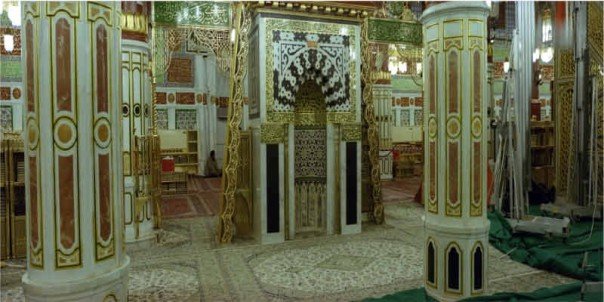
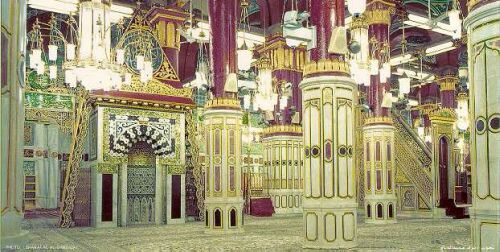
The heart of the Prophet’s masjid houses a very special but small area named ar-Rawdah an-Nabawiyah, which extends from Muhammad’s tomb to his pulpit. Pilgrims attempt to visit and pray in ar-Rawdah, for there is a tradition that supplications and prayers uttered here are never rejected. Entrance into ar-Rawdah is not always possible (especially during the Hajj season), as the tiny area can accommodate only a few hundred people. Ar-Rawdah has two small gateways manned by Saudi police officers. The current marble pulpit was constructed by the Ottomans. The original pulpit was much smaller than the current one, and constructed of palm tree wood, not marble. Ar-Rawdah an-Nabawiyah is considered part of Jannah (Heaven or Paradise).

It is prescribed for the one who visits the Prophet’s Mosque to pray two rak’ahs in the Rawdah or whatever he wants of naafil prayers, because it is proven that there is virtue in doing so. It was narrated from Abu Hurayrah that the Prophet (peace and blessings of Allaah be upon him) said: “The area between my house and my minbar is one of the gardens ( riyaad, sing. rawdah) of Paradise, and my minbar is on my cistern (hawd)” Narrated by al-Bukhaari, 1196; Muslim, 1391.

And it was narrated that Yazeed ibn Abi ‘Ubayd said: “I used to come with Salamah ibn al-Akwa’ and he would pray by the pillar which was by the mus-haf, i.e. in the Rawdah. I said, ‘O Abu Muslim, I see that you are keen to pray by this pillar!’ He said, ‘I saw that the Prophet (peace and blessings of Allaah be upon him) was keen to pray here.’” Narrated by al-Bukhaari, 502; Muslim, 509.

Being keen to pray in al-Rawdah does not justify being aggressive towards people or pushing the weak aside, or stepping over their necks.

Women who want to pray in Rawdah area can enter the masjid through the Gates 21 – 25. Rawdah area for women is open after Fajr, Zuhr and Isha Prayers. It is open after Fajar for long time and 15 – 20 min after Zuhr prayer

Rawda


How to wear the upper garment known as Rida’ for Ihram : Ibn Baz

Fatwa by Shaykh Ibn Baz Fatawa Islamiyah , Darussalam, Vol 4, Page 127

Q. Is it better for the Muhrim to cover the two shoulders or to uncover one of them during the Ihram?

A. The sunnah for the Muhrim is that he places the Rida’ (upper garment) over both of his shoulders and put its ends on his chest. This is the Sunnah and it is what the Prophet (Sallalahu Alahi wa Sallam) did.

So, if the person wants to perform the Tawaf of Arrival (Tawaful-Qudum) , he does Al-Idhtiba’. This is by him placing the center of his Rida’ under his right armpit and its edges over his left shoulder. Thus he uncovers his right shoulder. This is specifically for the Tawaf of Arrival, meaning when the person first arrives in Makkah for Hajj or ‘Umrah.

Then when he completes the Tawaf, he adjusts the Rida’ and places it over both of his shoulders, and he prays two Rak’ahs of Tawaf.

The person who always keeps one shoulder uncovered, this is opposed to the Sunnah, and so is uncovering both of the shoulders. The Sunnah is only to cover both of them with the Rida’ while the person is in Ihram. If the person takes off the Rida’ and does not cover his shoulders while he is sitting or eating or talking with his brothers, there is no harm in that.

However, the Sunnah is that when the person wears the Rida’, it should be over his two shoulders and its ends should be on his chest.

History of Makkah – Shaikh Safiur-Rahman Mubarakpuri

history-of-makkah-mubarakpuri

History of Makkah Mukarramah (Shaikh Safiur-Rahman Mubarakpuri)

Publisher: Darussalam Publishers and Distributors (2002)
Pages: 176 Binding: Paperback

You can buy Here or read most of the book @ Google Books Here

Description from the publisher:

Mentions the different aspects of Makkah, and records the most important historical events that have direct effect on the establishment and sacredness of Makkah as well as its religious weight. Highlights the sites that are highly important whenever Makkah is mentioned like the Black Stone, Zamzarn Well and others. Designates a great part of the book speaking about the Holy Ka’bah and the Holy Mosque updating the extensions and the improvements, that have taken place from the time of Muhammad (S) to the Saudi era.At the end of the book there is a complete appendix about Hajj and its rites.

Excellence of Supplications at Al-Multazim

Iltizaam Between The Corner And The Door ( from Rites of Hajj and Umrah – by Shaik Nasiruddin Albanee )

38. And he may cling to the place between the corner and the Door – placing his chest and face and forearms upon this place.(45)

This is narrated by two isnaads from the Prophet by which the hadith reaches the level of hasan – and is increased in strength by the fact that a group of the Sahaabah acted on it – from them Ibn ‘Abbaas – may Allaah be pleased with him – who said: “This is the Multazam between the Corner and the Door. And it is authentically narrated from ‘Urwah ibn az-Zubair also – see ‘As-Sahaabah, no.2138.

And Ibn Taimiyyah said in his ‘Mansak’ (p.387): “And if he wishes to come to the Multazam – and that is what is between the Black stone and the Door – and he places upon it his chest and face and forearms and hands – and makes du’aa – and he asks Allaah for whatever he needs – then he may do so. And he may do so before the Farewell Tawaaf there being no difference in this being at that time or any other – and the Sahaabah used to do so when they entered Makkah – and if he stands near the Door making du’aa without iltizaam of the House then that is also good, and when he leaves he does not stand or turn or walk backwards.”

Shaykh Ibn ‘Uthaymeen (may Allaah have mercy on him) said:

This is a matter concerning which the scholars differed, although it was not narrated from the Prophet (peace and blessings of Allaah be upon him) (i.e. that was not narrated in a saheeh hadeeth, as the ahaadeeth that were narrated concerning this were deemed to be da’eef or weak). Rather it was narrated from some of the Sahaabah (may Allaah be pleased with them). So is iltizaam (clinging) Sunnah? When should it be done – upon arrival or when about to leave, or at any time?

The reason for this difference of opinion among the scholars is that it is not narrated in the Sunnah of the Prophet (peace and blessings of Allaah be upon him), rather the Sahaabah (may Allaah be pleased with them) used to do that when they arrived in Makkah.

The fuqaha’ said: He (the pilgrim) should do that when about to leave, and should cling to the multazam, which is the area between the corner where the Black Stone is located and the door…

Based on this, there is nothing wrong with iltizaam (clinging to the Ka’bah in this area) so long as that does not involve annoying others.

Al-Sharh al-Mumti’, 7/402, 403.

Ajwa Dates Keep Away Harm, Poison And Magic

ajwa-dates

Ajwa Dates Keep Away Harm, Poison And Magic

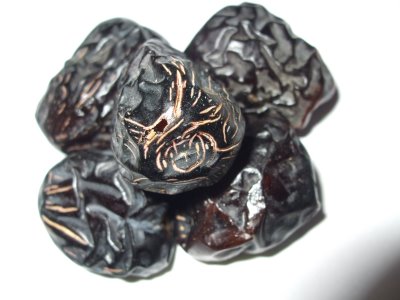
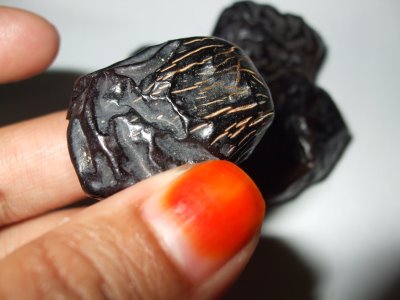
Ajwa (عجوة) is a soft dry variety of date fruit from Saudi Arabia. It is cultivated at Madina . A delightfully soft and fruity date with fine texture.

The Messenger (Sallallaahu Álayhi Wasallam) said, “Whoever has seven Ajwa dates every morning he will not be harmed on that day by poison or magic.” [Saheeh al-Bukhaaree (5445) (5768) (5769) (5779)].

The Messenger (Sallallaahu Álayhi Wasallam) said, “Ajwa dates are from paradise.” [Tirmidhee (2068) he said hasan Saheeh and it was authenticated by Shaikh al-Albaani].

Referring to eating seven Ajwa dates, the Messenger (Sallallaahu Álayhi Wasallam) said, “He will not be harmed by anything until he reaches the evening.” [Saheeh Muslim (2047)].

These dates cost around 70 Saudi Riyals per KiloGram.

There are also “imitations” or some sold an inferior quality dates and “conned” the customers as “AJWA dates” To know whether its AJWA, look closely at the dates. There are very fine white lines on the dates.

 ajwa-white-lines

Madina Dates Keep Away Harm

The Messenger (Sallallaahu Álayhi Wasallam) said, “Whoever has seven dates between the two areas (the east and west of Madina) as soon as he wakes up every morning, he will not be harmed on that day by poison until the evening.” [Saheeh Muslim (154) (2047)].

Dates In One’s Home

The Messenger (Sallallaahu Álayhi Wasallam) said, “O Aisha! A house that has no dates in it their family is hungry. Oh Aisha! A house that has no dates in it their family is hungry.” [Saheeh Muslim (153), (2046)]

Related Post: 

Ajwa Dates contain Cancer-Preventing property – King Saud University (KSU)

Brief illustration of Hajj and Umrah [Fiqh al-Ebaadaat by Sh. Uthaymeen] – Abu Muhammad al-Maghribee [Audio|En]

This is a brief illustration of Hajj and Umrah taken from the book Fiqh al-Ebaadaat by our noble sheikh Muhammad bin Saaleh al-Uthaymeen, rahimahullah.

Listen / Download Mp3 Here (Time 47:31)

Posted from: http://followthesalaf.com

Only Performing one Umrah in one Journey – Compiled and translated By Abbas Abu Yahya

Audio Excerpt: Miraath Publications – BiteSize Ramadhaan 1434 Articles – Day 12

Shamsuddeen Muhammad bin Abee Bakr Ibn Qayyim aj-Jawzeeyah (d.751 A.H.) -Rahimullaah- said:

‘The Messenger -sallAllaahu alayhi wa sallam- would not perform an extra Umrah exiting out of Makkah, after already having performed one, as many of the people do nowadays. Rather all the Umrahs that the Messenger performed were upon entering Makkah.

He -sallAllaahu alayhi wa sallam- lived in Makkah for thirteen years after the revelation had first descended, and it is not reported from the outset about him that he performed Umrah exiting from Makkah in that time period.

So, the Umrah that the Messenger of Allaah -sallAllaahu alayhi wa sallam- performed and legislated, is the Umrah of entering into Makkah, there is no Umrah for the person who is in Makkah and he goes outside the boundary of Makkah whereby he can enter again and perform Umrah. This was not ever done by anyone at the time of the Prophet, except by ‘Aeysha alone out of all those who were with her. This was because she had made the intention and entered into Ihram but had begun her menstrual cycle. So the Prophet ordered her to connect up her Umrah with the Hajj, and informed her that her Tawaf of the House and going between Safa and Marwa, would indeed be sufficient for her Hajj and Umrah together (instead of performing a separate Umrah).

So she found that her female companions were returning with a Hajj and a separate Umrah, since they had intended to perform Hajj at-Tamattu (with an Umrah and a Hajj), and they had not begun their menstrual cycle and did not have to combine their Umrah in with the Hajj. However, she would have only returned with an Umrah within her Hajj, so he -sallAllaahu alayhi wa sallam- ordered her brother to take her to perform an Umrah from at-Tan’eem, to soothe her heart, and her brother did not perform an Umrah from Tan’eem in that Hajj nor did anyone else from those who were with him.’

[Taken from: ‘Zad al-Ma’ad’ 1/94]

Muhammad Nasir- Deen Al-Albaani (d.1420A.H) -Rahimullaah- was asked:

‘Is it permissible for me to perform Umrah twice in one journey, since I am from Jordan. The first one from Abyaar Ali (the local name for the Meeqat Dhul Hulayfah just outside Madina), and the second from at-Tan’eem (outskirts of Makkah), just like ‘Aeysha -Radhi Allaahu anha. If this is not permissible, then can I perform it for my deceased father or mother? May Allah reward you with goodness.

The Shaykh answered:

‘The person who wants to repeat an Umrah then it is necessary for him to return to the Meeqat from whence he entered into Ihraam, whether that is for his own self or for his parents.
As for entering into Ihraam from at-Tan’eem, from whence the Noble lady ‘Aeysha entered into Ihraam, then this ruling is specific for ‘Aeysha and those who are in a similar condition to her.

I term this Umrah from at-Tan’eem as the Umrah of the menstruating woman. The reason for this is because when ‘Aeysha -Radhi Allaahu anha- went out with the Prophet -sallAllaahu alayhi wa sallam- to perform the farewell Hajj, and she had entered into Ihraam to perform Umrah, but when she reached a place close to Makkah, known as ‘Sarif’ the Messenger -sallAllaahu alayhi wa sallam- entered upon her and found her crying. So he said to her:

مالك أنفست

‘Why are you crying? Have you started your menstrual cycle?’

She replied: ‘Yes, O Messenger of Allaah.’

He –sallAllaahu alayhi wa sallam- said:

هذا أمر قد كتبه الله على بنات آدم، فاصنعي ما يصنع الحاج غير ألَّا تطوفي ولا تصلي

‘This is a matter which Allaah has written for the daughters of Adam, so do that which the person performing Hajj does, except do not perform the Tawaf and do not perform the Salat.’

So she did not perform the Tawaf or the Salat until she had become clean in Araafat, then she continued with the rites of Hajj and accomplished Hajj completely. When the Messenger -sallAllaahu alayhi wa sallam- had decided to travel and return to Madina, he entered upon ‘Aeysha in her tent and again he found her crying.

He asked her: ‘What is wrong with you?’

She said: ‘What is wrong with me? The people are returning with Hajj and Umrah, and I am returning with Hajj without Umrah.’

The reason was because her menstruation had caused her Umrah to be changed to a Hajj, a Hajj Mufrad (Hajj without Umrah), so here she is saying, she is crying out of grief of what she missed out from performing an Umrah before performing the Hajj, whereas her co-wives like Umm Salamah and other than her, returned with Umrah and Hajj, and that is why was crying.

She said: ‘Why should I not cry? The people are returning with a Hajj and Umrah and I am returning with a Hajj.’ So the Messenger -sallAllaahu alayhi wa sallam- had compassion on her and ordered her brother AbdurRahmaan bin Abi Bakr as-Siddiq to accompany her, with him on his camel and go out with her to at-Tan’eem. So he did that and she returned, and performed an Umrah and soothed her soul.

This is why we say, if a woman is afflicted with that which had afflicted ‘Aeysha from amongst the women, whereby her menstrual cycle started, while she wanted to perform Umrah, and she could not complete the Umrah, so that her Umrah was changed into a Hajj. So here a woman can perform Umrah in place of what she missed out on, in the same way that Allaah legislated upon the tongue of His Messenger for ‘Aeysha, so the woman who was menstruating goes out again to at-Tan’eem and comes and performs an Umrah.

As for men then, Alhamdulillah they do not menstruate so they do not take the ruling of the menstruating woman. The proof is, as some of the scholars of Seerah and history of the Companions, say: a hundred thousand Companions performed Hajj with the Messenger, not one of them did an Umrah the like of the Umrah of ‘Aeysha -Radhi Allaahu anha, so if that was something good then they would have proceeded us in that action. Therefore, the person who wants to perform an Umrah returns to the Meeqat and enters into Ihraam from there, whether for himself or for his mother and father.

This is sufficient and praise be to Allaah Lord of all the worlds.’

[Taken from: ‘Silsilah Huda wa Noor’ no.2]

Posted from: http://www.miraathpublications.net/day-12-only-performing-one-umrah-in-one-journey

What Did Abu Dharr Eat During His 30 Days In Makkah – Dr Murtaza bin Baksh [Video – Urdu/English]


Video Courtesy : Bilal Nahim

It was reported in Sahih Muslim that the Prophet, sallallahu ‘alayhi wa sallam, said to Abu Dharr, who had stayed near the Ka’bah and its coverings for forty days and nights with no food or drink other than (Zamzam), “How long have you been here?” Abu Dharr said, “I have been here for thirty days and nights.” The Prophet, sallallahu ‘alayhi wa sallam, said, “Who has been feeding you?” He said, “I have had nothing but Zamzam water, and I have gotten so fat that I have folds of fat on my stomach. I do not feel any of the tiredness or weakness of hunger and I have not become thin.” The Prophet, sallallahu ‘alayhi wa sallam, said, “Verily, it is blessed, it is food that nourishes.” [Narrated by Imam Muslim, 2473]

The Terms ‘al-Munawarah’ and ‘al-Mukkarama’ – Shaykh Hamad al-Ansaari (rahimahullaah)

The Term ‘al-Munawarah’

Hamad al-Ansaari (rahimahullaah) said:

‘I searched for the origin of what people say these days of al-Madina ‘al-Munawarah’ and I found that the first people to label it ‘al-Munawarah’ were the ‘Uthmaanyoon’.  As for the Companions and the Successors and those after them, then for many centuries they called it al-Madina an-Nabaweeyah.’

AbdulAwal bin Hamad al-Ansaari commented:

‘I noticed from my father -Rahimullaah- that if he saw a person write ‘al-Munawarah’, he would say to him to wipe out the word ‘al-Munawarah’ and write ‘an-Nabaweeyah.’[28]

‘Indeed the people of knowledge apply the term ‘an-Nabaweeya’ to al-Madina.’[29]

The Shaykh also said:

‘Applying the word ‘al-Munawarah’ after the word al-Madina was introduced by the non-Arabs.  What was well known by the Companions and the Successors was the addition ‘an-Nabaweeyah’. Likewise, adding the term ‘al-Mukkarama’ to Makkah is not known.’[30]

Source : Taken from A Brief Biography of Shaykh, ‘Allaama, al-Muhaddith Hamad al-Ansaari – Translated & Compiled  By  Abbas Abu Yahya

Salah (Prayer) inside the Ka’bah (Hijr) is preferred and is a means of drawing close (to Allaah)

Hijr Ka'bah Makkah Masjid al haram

Making Takbir, then du’aa to Allaah after praying two rak’ah inside the Ka’bah (Hijr) is a Sunnah

Question: Is salat inside the Ka’bah in any way superior to salat outside it, and is it permissible for a person to speak of what he has seen inside the ka’bah?

Answer by The Permanent Committee: Salat inside the Ka’bah is preferred, if it is possible to do so without any inconvenience, difficulty or harm to anyone, as the Prophet (salallaahu ‘alaihi wa sallam) entered it and prayed therein, according to an authentic narration in the Sahihain (Two Sahihs). And it has been reported from him (salallaahu ‘alaihi wa sallam) that he came out one day looking sad, and he said: “Verily, I fear that I may have placed a burden upon my Ummah (i.e. by entering the ka’bah).” [1]

And when ‘A`ishah (radiallaahu ‘anha) asked him about salat in the Ka’bah, he said: “Pray in the Hijr, because it is a part of the House.” [2]

This proves that salat inside the Ka’bah is preferred and is a means of drawing close (to Allaah) and an act of obedience, and in it is great merit.

However, it is not fitting that there should be crowding, or harm, or doing anything which causes difficulty to him or to the people. It is enough for him to pray in the Hijr, because it is a part of the House; and there is no objection to speaking about what he has seen inside the Ka’bah, such as its inscriptions, or what is on its ceiling or the like. There is no objection to a person talking and saying: “I saw such and such and such and such.” There is no sin in that.

The Sunnah, when one enters the Ka’bah, is to pray two rak’ahs and to say “Allaahu Akbar” and invoke Allaah, the Almighty, the All-Powerful with whatever supplications are easy for him at the end of it, especially those which have been reported (from the Prophet, salallaahu ‘alaihi wa sallam) because the Prophet (salallaahu ‘alaihi wa sallam) entered the Ka’bah and prayed therein, then he performed Takbir and supplicated Allaah. All of this has been authentically reported from him (salallaahu ‘alaihi wa sallam).

The Permanent Committee; Fatawa Islamiya, Volume 2

[1] Abu Dawud no. 2029.
[2] Abu Dawud no. 2028; Ahmad 6:92

Umar and the Black Stone – From Ibn Hajr, Fath Al-Bârî, and other hadîth commentaries

Al-Bukhârî reports that ‘Umar – Allâh be pleased with him – came to the Black Stone (performing tawâf, circumambulation), kissed it, and said, “I know that you are a stone, you do not cause benefit or harm; and if it were not that I had seen Allâh’s Messenger – peace and blessings of Allâh be upon him – kiss you, I would never have kissed you.”

Al-Bukhârî, Al-Sahîh, Chapter on what has been said about the Black Stone.

Points to note

· The illustrious Companion and Caliph ‘Umar reminded us in this narration of the pure belief that benefit and harm are not caused by created objects and thus should not be sought from them. Only Allâh has control over these things.

· We are reminded that acts of worship are taken from Allâh’s Messenger, and a person is not supposed to make up his own way of worship, he must follow the manner of worship that the Prophet taught and practiced.

· We also learn that once an action is confirmed in the Sunnah, the believer submits and complies and practices it because it is confirmed that Allâh’s Messenger did it, even if we don’t know the wisdom behind it.

· This narration is also an example of how a responsible person tries to clarify and do away with any misunderstandings that people may have about matters of faith. The people had recently left their unbelief and polytheism, so ‘Umar wanted to make it clear that kissing the Black Stone is by no means done as an act of devotion to it, as people used to do with their stone idols.

Adapted from Ibn Hajr, Fath Al-Bârî, and other hadîth commentaries.

Source: http://www.sayingsofthesalaf.net/index.php/umar-and-the-black-stone/

The Mother of Ishmael (peace be upon him) – Sahih Bukhari

Sahih Bukhari Volume 4, Book 55, Number 583:

Narrated Ibn Abbas:

The first lady to use a girdle was the mother of Ishmael. She used a girdle so that she might hide her tracks from Sarah. Abraham brought her and her son Ishmael while she was suckling him, to a place near the Ka’ba under a tree on the spot of Zam-zam, at the highest place in the mosque. During those days there was nobody in Mecca, nor was there any water So he made them sit over there and placed near them a leather bag containing some dates, and a small water-skin containing some water, and set out homeward. Ishmael’s mother followed him saying, “O Abraham! Where are you going, leaving us in this valley where there is no person whose company we may enjoy, nor is there anything (to enjoy)?” She repeated that to him many times, but he did not look back at her Then she asked him, “Has Allah ordered you to do so?” He said, “Yes.” She said, “Then He will not neglect us,” and returned while Abraham proceeded onwards, and on reaching the Thaniya where they could not see him, he faced the Ka’ba, and raising both hands, invoked Allah saying the following prayers:

‘O our Lord! I have made some of my offspring dwell in a valley without cultivation, by Your Sacred House (Kaba at Mecca) in order, O our Lord, that they may offer prayer perfectly. So fill some hearts among men with love towards them, and (O Allah) provide them with fruits, so that they may give thanks.’ (14.37) Ishmael’s mother went on suckling Ishmael and drinking from the water (she had).

When the water in the water-skin had all been used up, she became thirsty and her child also became thirsty. She started looking at him (i.e. Ishmael) tossing in agony; She left him, for she could not endure looking at him, and found that the mountain of Safa was the nearest mountain to her on that land. She stood on it and started looking at the valley keenly so that she might see somebody, but she could not see anybody. Then she descended from Safa and when she reached the valley, she tucked up her robe and ran in the valley like a person in distress and trouble, till she crossed the valley and reached the Marwa mountain where she stood and started looking, expecting to see somebody, but she could not see anybody. She repeated that (running between Safa and Marwa) seven times.”

The Prophet said, “This is the source of the tradition of the walking of people between them (i.e. Safa and Marwa).” When she reached the Marwa (for the last time) she heard a voice and she asked herself to be quiet and listened attentively. She heard the voice again and said, ‘O, (whoever you may be)! You have made me hear your voice; have you got something to help me?” And behold! She saw an angel at the place of Zam-zam, digging the earth with his heel (or his wing), till water flowed from that place. She started to make something like a basin around it, using her hand in this way, and started filling her water-skin with water with her hands, and the water was flowing out after she had scooped some of it.”

The Prophet added, “May Allah bestow Mercy on Ishmael’s mother! Had she let the Zam-zam (flow without trying to control it) (or had she not scooped from that water) (to fill her water-skin), Zam-zam would have been a stream flowing on the surface of the earth.”

The Prophet further added, “Then she drank (water) and suckled her child. The angel said to her, ‘Don’t be afraid of being neglected, for this is the House of Allah which will be built by this boy and his father, and Allah never neglects His people.’

The House (i.e. Kaba) at that time was on a high place resembling a hillock, and when torrents came, they flowed to its right and left. She lived in that way till some people from the tribe of Jurhum or a family from Jurhum passed by her and her child, as they (i.e. the Jurhum people) were coming through the way of Kada’. They landed in the lower part of Mecca where they saw a bird that had the habit of flying around water and not leaving it. They said, ‘This bird must be flying around water, though we know that there is no water in this valley.’ They sent one or two messengers who discovered the source of water, and returned to inform them of the water. So, they all came (towards the water).” The Prophet added, “Ishmael’s mother was sitting near the water. They asked her, ‘Do you allow us to stay with you?” She replied, ‘Yes, but you will have no right to possess the water.’ They agreed to that.” The Prophet further said, “Ishmael’s mother was pleased with the whole situation as she used to love to enjoy the company of the people. So, they settled there, and later on they sent for their families who came and settled with them so that some families became permanent residents there. The child (i.e. Ishmael) grew up and learnt Arabic from them and (his virtues) caused them to love and admire him as he grew up, and when he reached the age of puberty they made him marry a woman from amongst them.

After Ishmael’s mother had died, Abraham came after Ishmael’s marriage in order to see his family that he had left before, but he did not find Ishmael there. When he asked Ishmael’s wife about him, she replied, ‘He has gone in search of our livelihood.’ Then he asked her about their way of living and their condition, and she replied, ‘We are living in misery; we are living in hardship and destitution,’ complaining to him. He said, ‘When your husband returns, convey my salutation to him and tell him to change the threshold of the gate (of his house).’ When Ishmael came, he seemed to have felt something unusual, so he asked his wife, ‘Has anyone visited you?’ She replied, ‘Yes, an old man of so-and-so description came and asked me about you and I informed him, and he asked about our state of living, and I told him that we were living in a hardship and poverty.’ On that Ishmael said, ‘Did he advise you anything?’ She replied, ‘Yes, he told me to convey his salutation to you and to tell you to change the threshold of your gate.’ Ishmael said, ‘It was my father, and he has ordered me to divorce you. Go back to your family.’ So, Ishmael divorced her and married another woman from amongst them (i.e. Jurhum).

Then Abraham stayed away from them for a period as long as Allah wished and called on them again but did not find Ishmael. So he came to Ishmael’s wife and asked her about Ishmael. She said, ‘He has gone in search of our livelihood.’ Abraham asked her, ‘How are you getting on?’ asking her about their sustenance and living. She replied, ‘We are prosperous and well-off (i.e. we have everything in abundance).’ Then she thanked Allah’ Abraham said, ‘What kind of food do you eat?’ She said. ‘Meat.’ He said, ‘What do you drink?’ She said, ‘Water.” He said, “O Allah! Bless their meat and water.” The Prophet added, “At that time they did not have grain, and if they had grain, he would have also invoked Allah to bless it.” The Prophet added, “If somebody has only these two things as his sustenance, his health and disposition will be badly affected, unless he lives in Mecca.” The Prophet added,” Then Abraham said Ishmael’s wife, “When your husband comes, give my regards to him and tell him that he should keep firm the threshold of his gate.’ When Ishmael came back, he asked his wife, ‘Did anyone call on you?’ She replied, ‘Yes, a good-looking old man came to me,’ so she praised him and added. ‘He asked about you, and I informed him, and he asked about our livelihood and I told him that we were in a good condition.’ Ishmael asked her, ‘Did he give you any piece of advice?’ She said, ‘Yes, he told me to give his regards to you and ordered that you should keep firm the threshold of your gate.’ On that Ishmael said, ‘It was my father, and you are the threshold (of the gate). He has ordered me to keep you with me.’

Then Abraham stayed away from them for a period as long as Allah wished, and called on them afterwards. He saw Ishmael under a tree near Zamzam, sharpening his arrows. When he saw Abraham, he rose up to welcome him (and they greeted each other as a father does with his son or a son does with his father). Abraham said, ‘O Ishmael! Allah has given me an order.’ Ishmael said, ‘Do what your Lord has ordered you to do.’ Abraham asked, ‘Will you help me?’ Ishmael said, ‘I will help you.’ Abraham said, Allah has ordered me to build a house here,’ pointing to a hillock higher than the land surrounding it.” The Prophet added, “Then they raised the foundations of the House (i.e. the Ka’ba). Ishmael brought the stones and Abraham was building, and when the walls became high, Ishmael brought this stone and put it for Abraham who stood over it and carried on building, while Ishmael was handing him the stones, and both of them were saying, ‘O our Lord! Accept (this service) from us, Verily, You are the All-Hearing, the All-Knowing.’ The Prophet added, “Then both of them went on building and going round the Ka’ba saying: O our Lord ! Accept (this service) from us, Verily, You are the All-Hearing, the All-Knowing.” (2.127)