
Posted from: http://understand-islam.net
Listen / Download the Audio:
Transcendence of Allaah – Refuting Doubts About Uluw (87:31 Min)
—
Islamic Knowledge – Islam, Sunnah, Salafiyyah

Posted from: http://understand-islam.net
Listen / Download the Audio:
Transcendence of Allaah – Refuting Doubts About Uluw (87:31 Min)
—
The following audio Clip Extracted from Part 1 of the Series – Knowledge & Etiquette in Seeking it
—
Related Links:
Ilm-ul-Kalam (Knowledge Of Theological Rhetoric) – Ibn Baz
What the Salaf Said Regarding Theological Rhetoric (ilm al Kalaam)
—
Posted from: The Caller to Allaah – Manners and Qualities
Explanation of: ‘Umdatul-Ahkaam (The Reliance of Rulings: a Collection of Authentic Ahadeeth of Fiqh Relevance)
Collected by Imam Taqiyy-ud-deen ‘Abdul Ghani bin ‘Abdilwaahid bin ‘ali Al-Maqadissee (rahimahullaah).Prepared by Saleh As-Saleh .Based Upon the Explanation of Our Shaykh Muhammad bin Saalih Al-‘Uthaimeen (rahimahullaah)
—
The Book of Purification
Narrated Abu Hurayrah (May Allaah be pleased with him): Allaah’s Apostle (sallAllaahu ‘alayhi wa sallam) said,
“The prayer of a person who does hadath (passes, urine, stool or wind) is not accepted till he performs (repeats) the ablution.”
[Sahih al-Bukhari, Volume 1, Book 4, Number 137 and Sahih Muslim Kitaab at-Taharah #559]
The narrator is Abu Hurayrah (radiyallaahu ‘anhu). His name is ‘Abdur-Rahmaan bin Sakhir ad-Dawsee. He accepted Islaam in the year of the battle of Khaybar (6 AH), and he witnessed the battle. He was in the company of the Prophet (sallallaahu ‘alayhi wasallam), and was very much interested in the hadeeth of the Prophet (sallallaahu ‘alayhi wasallam).
The Prophet (sallallaahu ‘alayhi wasallam), testified to Abu Hurayrah’s keenness regarding the hadeeths.
Ibn ‘Umar (May Allaah be pleased with him and his father) said: “You were closest to the Prophet (sallallaahu ‘alayhi wasallam), being with him, and most knowledgeable in hadeeth”. The same had been reported from ‘Umar (radiyallaahu ‘anhu) himself.
Al-Imaam al- Bukhaaree (rahimahullaah) said: “Abu Hurayrah was the most diligent one in preserving the narrations of the Prophet (sallallaahu ‘alayhi wasallam), in his time”.
The people of knowledge related that Abu Hurayrah (may Allaah be pleased with him) narrated 5,374 hadeeths. He died in the year 57 AH in the city of Madeenah.
The subject of this hadeeth is “The ruling concerning salaah without wudhuu’”. In this hadeeth it is clear that the importance of salaah ranks high with Allaah (subhaanahu wa ta’aalaa), because it is the best of worship after the shahaadah. And it is the relation between the slave and his Lord. And for this reason, the believer is not permitted to indulge in the salaah until he is pure, as this hadeeth illustrates. So Allaah (subhaanahu wa ta’aalaa), does not accept the salaah of the slave and will not reward him for it if he breaks the wudhuu’ until he repeats the ablution.
1. The hadeeth tells that from the salaah, there is the salaah which is accepted and the salaah which is rejected. The salaah which is in accordance with the shari’ah is accepted. And the salaah which is in opposition to the shari’ah is rejected. This applies to all types of worship, because the Prophet (sallallaahu ‘alayhi wasallam) said: “Whoever does an action which is not in accordance with our matter, then it is rejected.” [Al- Bukhaaree and Muslim]. So it must comply with the shari’ah to be accepted.
2. Whether the salaah is an obligatory one or an optional one (even the salaatul-janaazah i.e. funeral prayer), it is not accepted if the person performs it while in a state of ritual impurity, even if he forgets being in such a state. It is only accepted when he repeats the wudhuu’. Similarly, the salaah of one in a state of sexual defilement is not accepted if he performs the salaah before taking the ghusl – the complete bath.
3. The salaah of the muhdith (the one in a state of ritual impurity), is forbidden until he makes the wudhuu’, because Allaah does not accept it. And offering means of nearness to Allaah, knowing that Allaah does not accept them, is like mocking at Allaah.
4. If a person makes wudhuu’ to perform a certain salaah then the second salaah approaches and he attains the time of the second salaah while in a state of purity then it is not an obligation on him to redo the wudhuu’. He or she can pray on the same wudhuu’ done for the previous salaah. And this is very important because some people think that it is an obligation to make wudhuu’ for each salaah. It is not an obligation as long as the state of wudhuu’ is maintained.
5. Ritual purity is a condition for the correctness and acceptance of the salaah.
6. Breaking the wudhuu’ during salaah invalidates the salaah.
a. Responding to the call of nature or passing wind
b. Intoxication, unconsciousness, deep sleep and insanity
c. Touching the genitals skin to skin, and some scholars conditioned that it must be with a sexual desire
d. Sexual activity which necessitates a ghusl
e. Eating camel’s meat
f. Apostasy (ar-Ridda)
g. Washing a dead body or carrying it. There is a difference of opinion on this, but to be on the precautionary side, one does that. The Prophet (sallallaahu `alayhi was-sallam) said: “He who washes the dead let him take a bath, and he who carries the dead let him make wudhuu’.”
[Ahmed, Abu Daawood and at-Tirmidhee, and Al-Albani graded it as saheeh as in saheeh sunan Abi Daeeod, 2:609)].
1. What is the full name of Abu Hurayrah?
2. When did he accept Islaam?
3. How many Hadeeths did he report?
4. When did he die?
5. If someone prayed without having wudhuu’ due to forgetfulness, is his salaah acceptable or not?
6. Is it a must to have (make) wudhuu’ for each salaah?
[Download PDF version of this article]
Posted from: Explanation of Umdatul Ahkaam – by Saleh as Saleh [PDFs]
Al-Qawaa’id wal-Usool al-Jaami’ah wal-Furooq watTaqaaseem al-Badee’ah an-Naafi’ah
The Basic Rulings and Principles of Fiqh
The Beneficial, Eloquent Classifications and Differentiations
Foundation -11
By Sh. ‘Abdur Rahmaan ibn Naasir As-Sa’di (rahimahullaah)
Discussion based upon:
1-Sh. Ibn Sa’di’s original explanation
2-Our Sh. Muhammad ibn Saalih Al-‘Uthaimeen’s Commentary, and
3-Full explanation by our Sh. (Dr.) Sami ibn Muhammad As-Sghair (summer 1427 A.H./2006 C.E.)
All Praise is due to Allaah, and may the salaah and salaam be on Prophet Muhammad, his household, the noble companions, and those who follow them until the Day of Resurrection. This is a continuation of the explanation of The Basic Rulings and Principles of Fiqh – The Beneficial, Eloquent Classifications and Differentiations by Imaam ‘Abd ar-Rahman bin Naasir as-Sa’di (rahimahullaah).
Foundation eleven is entitled:
The asl (i.e. previous state or condition) remains in effect, and certainty is not annulled by mere doubt.
This great foundation covers many matters including:
1) Acts of worship
2) Salaah (prayer)
3) Zakaah
4) Fasting
5) Hajj
6) Nikaah (marriage)
7) Divorce
Evidence for Foundation 11
This foundation is established on the authentic hadeeth from ‘Abbaad bin Tamim ( radiyallaahu ‘anhu):
“My uncle (radiyallaahu ‘anhu) asked Allaah’s Messenger (sallallaahu ‘alayhi wa sallam) about a person who imagined to have passed wind during the salaah. Allaah’s Messenger (صلى الله عليه وسلم) replied: ‘He should not leave his salaah unless he hears sound or smells something.’” [1]
Therefore, the person should not discontinue his prayer due to mere doubt. He should only leave when he is certain he has invalidated his state of purity.
Examples:
1) A person makes wudhu and later doubts whether he performed an act that would nullify it. In such a situation, the asl is the existence and continuity of purity. The fact that he thinks he may have done a ritual impurity is not to be considered as in origin, the person was in a state of purity. Certainty is never annulled except by certainty; it can never be annulled by mere doubt. Rather, it is strange that some people when they have doubts, they experience whispering which drives them to remove the doubt with certainty by intentionally invalidating their wudhu.
2) A person was certain that he was in a state of ritual impurity. Later, he doubts whether he made wudhu. In this case, the asl is that the state of ritual impurity remains in effect.
Therefore, the asl remains, and it does not cease except when there is certainty that renders it annulled.
Purity (at-tahaarah) is the origin of things (e.g. water, clothing, etc.); whenever someone doubts the purity of something, then he builds upon the asl that it is pure. For instance, if some water from a drain falls on him or he steps in moisture, then the origin is that this water is pure. However, if someone is sure filth has fallen on his garment but later doubts whether he washed it, then the asl is that the ritual impurity remains.
In salaah, a person may doubt exactly how many rakaah he has performed. Such situations are divided into two categories: preponderance and total doubt. For example, if someone doubts how many rakaah he has already prayed (e.g. three or four units) but preponderates a certain number, then he builds on that preponderance and later makes two prostrations of forgetfulness (sujuud as-sahw).
The evidence for relying on preponderance came in the sunnah from the hadeeth of Abdullaah bin Masood (radhi Allaahu anhu):
“The Prophet (صلى الله عليه وسلم) prayed [and the subnarrator Ibrahim (rahimahullaah) said, ‘I do not know whether he prayed more or less than usual’], and when he had finished the prayers he was asked, ‘O Messenger of Allaah! Has there been any change in the prayers?’ He (صلى الله عليه وسلم) said, ‘What is it?’ The people said, ‘You have prayed so much and so much.’ So the Prophet bent his legs, faced the qiblah and performed two prostrations (of sahw) and finished his prayers with tasleem (by turning his face to the right and left saying: ‘As-salaamu ‘alaykum wa rahmatullaah’). When he turned his face to us, he (صلى الله عليه وسلم) said, ‘If there had been anything changed in the prayer, surely I would have informed you, but I am a human being like you and liable to forget like you. So if I forget, remind me and if anyone of you is doubtful about his prayer, he should follow what he thinks to be correct (falyataharra as-sawab) and complete his prayer accordingly and finish it and do two prostrations (of sahw).’” [2]
However, when a person is in total doubt concerning how many rakaah he has already completed (e.g. two or three), then he builds upon certainty which is the lesser number; he then makes sujuud as-sahw.
Example:
1) A person is unsure whether he prayed three or four rakaah and is unable to determine which is more likely. He should therefore build on certainty which is the lesser number (i.e. three) and make sujuud as-sahw.
2) A person is not certain whether he prayed three or four rakaah but preponderates that he prayed four. He should therefore build on the preponderance (i.e. four rakaah) and make sujuud as-sahw.
In addition, preponderance is used to determine the number of completed rounds in tawaaf and walks in saa’ee between Safa and Marwah. For instance, if a person is in total doubt as to whether he completed six or seven walks in saa’ee, then he builds on certainty and considers it to be as if he made six trips. Similarly, if he is able to preponderate that it is the sixth walk, then he should consider it the sixth and bring the seventh. However, there is no sujuud as-sahw legislated for tawaaf or saa’ee given the weakness of the narration from ibn ‘Abbaas (radhi Allaahu anhu) that the tawaaf is salaah. This foundation also is applicable to washing a utensil seven times after a dog has licked it. If someone is entirely unsure whether he washed it three or four times, then he builds upon certainty, but if he is able to preponderate, then he builds upon that.
When making up missed prayers or days of fasting, the person builds on certainty. However, this can be problematic. For instance, someone is unsure whether he broke his fast three or four days in Ramadan. In principle, he is certain he broke it at least three times. However, this origin is opposed by another asl, which is the obligation to fulfill that which is binding upon one’s self. This can not be attained except by fasting four days.
Similarly, if someone does not know if he missed five salaah or six, then in origin he certainly missed at least five, but this is in opposition to the obligation to free one’s responsibility. This can not be fulfilled except by performing six. In this case, he brings that which is higher.
If someone knows that he missed one salaah on a given day but does not remember which prayer (e.g. duhr, ‘asr, etc.), then there are the following opinions concerning that:
1) The person should pray all five prayers because it is possible the missed salaah is any one of them.
2) He should pray one salaah with four rakaah, another salaah with three rakaah, and one salaah of two rakaah. This is because the salaah of four rakaah would cover for duhr, ‘asr, and isha’ while the other two salaah would cover for maghrib and fajr respectively.
3) Our Shaykh, Muhammad bin Saalih al-Uthaymeen (rahimahullaah) said, “He should exert the effort until he preponderates which is the correct one.” If the person sincerely attempts to recall which salaah he missed, Allaah (subhaanallaahu wa ta’aalaa) will let him remember.
There are many different situations in which doubt in divorce can occur. They include:
1) A person doubts whether he uttered the statement of divorce at all. In this situation, the asl is that he did not say it, and the couple is still married. This is because the marriage is certain and is not annulled by mere doubt.
2) If someone doubts whether he conditioned the divorce on something, then the asl is that the divorce is unconditional.
3) Someone conditions his divorce on some matter. Later, he doubts whether the condition was fulfilled. The origin therefore is that it did not take place.
4) A person divorced his wife but is uncertain how many times he uttered the statement (i.e. once, twice or thrice). The asl is that he said it once.
5) A man has two wives (for example Hind and Fatimah), and he doubts which of his wives he uttered the divorce concerning. This matter should be decided by drawing lots. If the lot came on Fatimah, then she is divorced, and Hind remains his wife. If he later remembers he actually divorced Hind or found a paper documenting that, then he leaves Hind and returns Fatimah as long as the drawing of the lots and the accompanying decree was not issued by a judge (if it was performed by a judge, then it would be classified as the judge’s direct ruling). However, if Fatimah got married to someone else in the meantime, then the husband can not return Fatimah because she is now the right of her new husband unless he brings proof, such as a document with testimony, that the divorce was for Hind; in this case, Fatimah can return to him.
6) A person doubts whether his wife finished her waiting period. The asl is that she has not finished it and is still in her ‘iddah.
Concerning suckling, doubts affect whether or not there is prohibition (tahreem) to marry the wet nurse and her daughters. Cases include:
1) Doubt exists concerning whether a particular child nursed from a woman at all. The asl in this situation is that he did not.
2) Someone doubts whether he suckled from a woman five times or less than that. This person builds upon certainty, which is that he suckled on less than five occasions.
3) There is doubt around when a child suckled from a wet nurse. In this matter, the scholars have two opinions.
a. Some scholars hold that for tahreem to exist, the child must have suckled within the first two years. If there is doubt as to whether a child suckled from a woman within the first two years, then in principle the asl would be that he suckled within that period, which would entail tahreem. However, the scholars have explained that since this asl leads to tahreem, the origin is that there is no forbiddance.
b. Other scholars have mentioned that the condition for tahreem is whether the child suckled before or after weaning. If there is doubt as to whether the child suckled before or after weaning, then in principle the asl would be before weaning. However, just as with the other opinion, the scholars have explained that in origin there is actually no forbiddance in this case.
Thus, with either opinion, there is no tahreem.
4) A mother is certain that a woman in a particular household nursed her child but is unsure as to which specific woman did it. In this case, the tahreem is upon all of the women in the household. For example, if there are two women in that house, then both women and their daughters are haraam for him to marry.
5) A woman is certain that she nursed a child in a particular household but is unsure as to which child. Therefore, it is as if she nursed all of them. Hence, all of the boys of this house are prohibited from marrying her as well as her daughters, and they become mahaarim (pl. of mahram) for her and her daughters.
When a person is hunting game, doubt can exist concerning whether the animal was killed by his shot or some other cause. Such situations are divided into two categories.
1) No cause is found for the death of the animal other than the shot. Therefore, the meat is halaal.
Example: Someone says the basmalah and shoots an animal. He later finds the animal dead with no sign of another cause for its death. As such, the asl is the nonexistence of another cause, which makes the meat halaal.
2) Another cause is found for the animal’s death that is equally or close to equally as likely as the shot to have killed it. Therefore, the meat of the animal is haraam. This is proven by the hadeeth of Adi bin Hatim (radhi Allaahu anhu) that the Messenger (صلى الله عليه وسلم) said,
“When you set off your dog, recite the name of Allaah, and if it catches (game for you) and you find it alive, then slaughter it. If you find it dead and that (your dog) has eaten nothing out of that, (even then) you may eat it, but if you find along with your dog another dog and a kill has been made, then do not eat, for you do not know which of the two has killed it. And if you shoot your arrow, recite the name of Allaah, but if it (game) goes out of your sight for a day and you do not find on that but the mark of your arrow, then eat that it you so like, but if you find it drowned in water, then do not eat that.” [3]
Example: A person shot an animal, but the shot did not kill it immediately. The animal was later found dead in a pool of water. It can not be known whether the shot killed the animal or it drowned. Thus, as proven by the hadeeth of Adi (radhi Allaahu anhu), this meat is forbidden.
Under this foundation many matters fall; anyone that studies fiqh will surely be benefited by it and will be better able to relate matters to their principles and origins. In summary, the continuity of the asl remains whenever the existence of a cause to nullify it is doubted. Similarly, in every matter where there is a doubt about the number, we build on preponderance, and if there is no preponderance, then we build on certainty.
The eleventh foundation in Imaam ‘Abd ar-Rahman bin Naasir as-Sa’di’s book, al- Qawaa’id wal-Usool al-Jaami’ah wal-Furooq wat-Taqaaseem al-Badee’ah an- Naafi’ah (The Basic Rulings and Principles of Fiqh – The Beneficial, Eloquent Classifications and Differentiations), is entitled:
The asl remains in effect, and certainty is not annulled by mere doubt.
All Praise is due to Allaah, and may the salaah and salaam be on Prophet Muhammad, his household, the noble companions and those who follow them until the Day of Resurrection.
[1] Agreed upon. Reported in Saheeh al-Bukhaari (English translation vol. 1, hadeeth no. 139) and with a similar wording in Saheeh Muslim (English translation no. 702, book 3).
[2] Reported in Saheeh al-Bukhaari (English translation vol. 1, hadeeth no. 394).
[3] Agreed upon. Reported in Saheeh Muslim (English translation no. 4741, book 21) and with a similar wording in Saheeh al-Bukhaari (English translation vol. 7, hadeeth no. 384, 385, 386, 392, 393, 394, & 395).
Posted from: Explanation of Basic Rulings and Principles of Fiqh of Shaykh Ibn Sa’di
Allah, the Exalted, says:
“O you who believe! Obey Allah and obey the Messenger (Muhammad (sallallaahu alayhi wa sallam)), and those of you (Muslims) who are in authority.” (4:59)
Ibn `Umar (May Allah be pleased with them) reported: The Prophet (sallallaahu alayhi wa sallam) said,
“It is obligatory upon a Muslim to listen (to the ruler) and obey whether he likes it or not, except when he is ordered to do a sinful thing; in such case, there is no obligation to listen or to obey.”
[Al-Bukhari and Muslim].
Ibn `Umar (May Allah be pleased with them) reported: Messenger of Allah (sallallaahu alayhi wa sallam) said,
“One who withdraws his hand from obedience (to the Amir) will find no argument (in his defense) when he stands before Allah on the Day of Resurrection; and one who dies without having sworn allegiance will die the death of one belonging to the Days of Ignorance.”
[Muslim].
–
Posted from : Audio Series :
The Correct Creed – Based upon the book of Shaykh al Burjiss
Related Links:
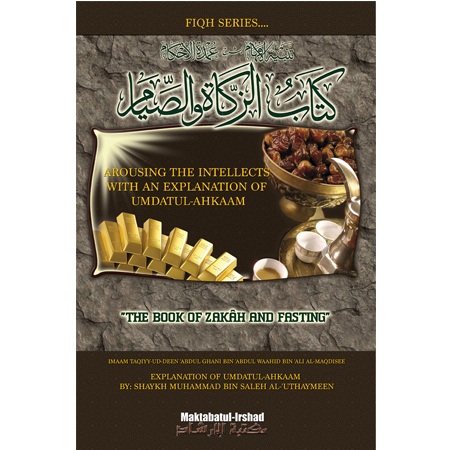
The book, “Umdatul-Ahkaam”, is compiled by hadeeths only from the Saheehs of Imaam Bukhaaree and Imaam Muslim. The majority of the hadeeths in “Umdatul- Ahkaam” are Muttafaqoon ‘alayh (agreed upon): meaning that they are recorded by both Sheikhs, in their respectable Saheehs. There are very few hadeeths in this book which are only reported by Imaam Bukhaaree or only by Imaam Muslim. Therefore, all the hadeeths of “Umdatul-Ahkaam” are authentic hadeeths.
The book, “Umdatul-Ahkaam”, is also assigned in Saudi Arabia as a course of hadeeth for the first class in the intermediate school and Sheikh Muhammad ibn Saalih al-‘Uthaymeen (rahimahullah) has written a brief commentary on the narrations that is very beneficial for the seeker of knowledge.
The book, “Umdatul-Ahkaam”, is compiled by Imaam, Aboo Muhammad `Abdul-Ghanee bin `Abdul-Waahid bin `Aalee ibn Suroor al-Jamma`ili al-Maqdisi ad- Dimashqee. Jamaa`ili in relation to Jamma`il which is a village in the mountains of Nablus from the land of Palestine. Al-Maqdisi – the one who lived in al-Quds (Jerusalem), ad Dimashqi – then Damascus.
Audio Series by Dr. Saleh As-Saleh rahimahullaah:

Ibn `Umar (May Allah be pleased with them) reported: Abu Bakr (May Allah be pleased with him) said: “Show reverence to Messenger of Allah (sallallaahu alayhi wa sallam) by honouring the members of his family.” [Al-Bukhari].
Yazid bin Haiyan reported: I went along with Husain bin Sabrah and `Amr bin Muslim to Zaid bin Arqam (May Allah be pleased with them) and, as we sat by his side, Husain said to him, “Zaid, you acquired great merits, you saw Messenger of Allah (sallallaahu alayhi wa sallam), listened to him talking, fought by his side in (different) battles, and offered Salat (prayer) behind him. Zaid, you have indeed earned great merits. Could you narrate to us what you heard from Messenger of Allah (sallallaahu alayhi wa sallam)?” Zaid said, “By Allah! I have grown old and have almost spent up my age and I have forgotten some of the things which I remembered in connection with Messenger of Allah (sallallaahu alayhi wa sallam), so accept what I narrate to you, do not compel me to narrate what I fail to narrate”. He then said, “One day Messenger of Allah (sallallaahu alayhi wa sallam) stood up to deliver a Khutbah at a watering place known as Khumm between Makkah and Al-Madinah. He praised Allah, extolled Him, and exhorted (us) and said, `Amma Ba`du. O people, I am a human being. I am about to receive a messenger (the angel of death) from my Rubb and I will respond to Allah’s Call, but I am leaving with you two weighty things: the first is the Book of Allah, in which there is right guidance and light, so hold fast to the Book of Allah and adhere to it.’ He exhorted (us to hold fast) to the Book of Allah and then said, `The second is the members of my household, I remind you (to be kind) to the members of my family. I remind you (to be kind) to the members of my family. Husain said to Zaid, “Who are the members of his household, O Zaid? Aren’t his wives the members of his family?” Thereupon Zaid said, “His wives are the members of his family. (But here) the members of his family are those for whom Zakat is forbidden”. He asked, “Who are they?” Zaid said, “Ali and the offspring of `Ali, `Aqil and the offspring of `Aqil and the offspring of Ja`far and the offspring of `Abbas.” Husain asked, “For all of them the acceptance of Zakat is forbidden?” Zaid (May Allah be pleased with him) said, “Yes”.
[Sahih Muslim].
[Source for above hadiths: Riyad-us-saliheen Darussalam English Translation]
Posted from : Audio Series :
The Correct Creed – Based upon the book of Shaykh al Burjiss
Related Links:
As for the Ahl-ul-Sunnah wal-Jammah, and they are the Companions of the Prophet -sallAllaahu alayhi wa sallam– and those who followed them in goodness, they say that the sinner does not stay in the Hell-Fire for eternity as a long as he does not make something prohibited as permissible. However, if he dies knowing that it is a sin, but the Shaytaan prompted him to commit the sin, then he does not stay in the Hell-Fire for eternity, in fact he is under the Will of Allaah, if Allaah wants He will pardon him and enter him into Paradise due to his Islaam and Eemaan and if Allaah wants, He will punish him in the Hell-Fire according to the amount of sin, then after he has been purified and cleared Allaah will take him out of the Hell-Fire to Paradise.
.. Therefore, whatever is less than Shirk then it is under the Will of Allaah, and committing suicide is less then Shirk, likewise is Zina (adultery & fornication), stealing and drinking alcohol. All of these things are sins that are less than Shirk, and those who carry them out are under the Will of Allaah. If a person dies while committing that sin then it is up to Allaah – Subhanahu – if He wants to forgive him due to righteous actions and the Islaam which is with him, or if Allaah wants, He will punish him in the Hell-Fire according to the amount of sins that he had committed.
– Ibn Baaz (Ref Here)
Posted from : Audio Series :
The Correct Creed – Based upon the book of Shaykh al Burjiss
Related Links:
Posted from : Audio Series :
The Correct Creed – Based upon the book of Shaykh al Burjiss
The Transcribed Text from the audio:
بسم الله الرحمن الرحيم
In the name of Allah, The Most Beneficent, The Most Merciful. I testify that there is no true God worthy of worship except Allah and that Muhammad is Allah’s true slave and messenger. May Allah’s salah and salaam be upon the noble prophet, the believers of his family and the noble companions and those who follow on their path until the Day of resurrection. I ask Allah (سُبْحَانَهُ وَتَعَالَىٰ) to make us from those who follow their path until the Day we meet Him (سُبْحَانَهُ وَتَعَالَىٰ) while pleased with us.
We continue with the discussion on correct creed. What we are going to cover now is correct creed with the respect to karaamaat and the miracles.
It is from the creed of Ahlul sunnah and from the basic foundations of their creed is to believe in the karaamaat. Karamaat means charisma that occur by the Auliya’, those righteous who are close to Allah.This forms part of the principles of the creed of Ahlul sunaah.
Who is the Walee? The walee is defined in the Qur’an: ٱلَّذِینَ ءَامَنُوا۟ وَكَانُوا۟ یَتَّقُونَ These are the auliya’, those who believe and are pious, complying with the commands of Allah and are abstaining from his prohibitions, these are Auliya, the friends of Allah (سُبْحَانَهُ وَتَعَالَىٰ). These are the righteous who are close to Allah. This is defined clearly in Surah Yunus in chapter 10 verse 62 and 63.
Allah (سُبْحَانَهُ وَتَعَالَىٰ) says
أَلَاۤ إِنَّ أَوۡلِیَاۤءَ ٱللَّهِ لَا خَوۡفٌ عَلَیۡهِمۡ وَلَا هُمۡ یَحۡزَنُونَ
“No doubt verily the Auliya’ no fear shall come upon them”
Who are they?
Then comes the definition:
ٱلَّذِینَ ءَامَنُوا۟ وَكَانُوا۟ یَتَّقُونَ
“Those who believe in Tawheed and feared Allah much (by abstaining from evil deeds and sins and by doing righteous deeds).”
And the karamaah is a matter that transcends the conceivable or customary or natural, Allah makes occur on the hands of one of His auliya’ as He chooses as a help on some religious matter or a worldly matter.
And the karamaah does not reach the level of the miracles, which is to the prophets and the messengers.So all those ordinary occurrences and habits which Allah manifests through the Auliya’ in terms of various knowledges, spiritual experiences, powers, influences, and those that are mentioned in the Qur’an like in surah al kahf the people of the cave and also regarding former communities and about the initial period of the sahaabah and the successors of this ummah and also those that all exist in this ummah till today and will continue to remain till the Day of Judgement. Allah makes them manifest on the hands of the friends of Allah. The happenings of the karaamaat, the charisma through the followers guidance of Allah’s messenger is true and these karaamaat as we said is an unusual event which Allah manifests through one of His auliya’ for supporting a mundane or a spiritual matter.
And the difference between karaamaat and miracles, miracles mean mujizat implies that miracles is the claim of prophethood and messengership but karaamaat does not imply this.
And there are a number of points of wisdom and aims in the manifestation of karaamaat and the important among these are as follows:
(1) They are like miracles which prove the perfection of the power of Allah and the dominance of His will. They are like miracles in the sense that whatever Allah wills, He is the Greatest performer of it. Allah has an addition to this methods and known causes other methods also which are beyond the access of the human knowledge nor can the human sense organs their reason.
The story of the people of the cave (ashabul kahf) is one of such evidences, including that sleep that Allah imposed upon them for a long time along with protecting their bodies from being disintegrated.
Another of these is the provision being given to Maryam (alaihassalam), the daughter of ‘Imran, in the arches on which zakariya had left astonished and said “where do you get it from these provisions?” She said “from Allah.”
And likewise the fact Maryam becoming pregnant and the birth of Jesus alayhis salaam without a father.
And talking by Jesus while still in cradle and this did not occur only with Jesus, meaning there are those who spoke in the cradle other than Jesus as authentically reported in Bukhari and Muslim from the hadith of Abu Huraira (radhiyallaahu anhu) from the prophet (ﷺ) who said that three ones are only who spoke in the cradle, three only, Jesus is one of them.
The second one: There was a man amongst the children of Israeel, his name was Jurayj, this man was praying one time and his mother came and called upon him, she needed something from him. So he talked to himself “shall I respond or shall I continue the prayers?” So she invoked and said “O Allah! don’t make him die until he sees the faces of the woman who solicits sex. And while he was in his place of worship a woman came and she talked to him into illegal sexual intercourse and he refused. So she went to a shepherd and asked him for the same thing and she seduced him into that. She gave birth to a child and she went to say that this is the child of Jurayj, so the people came to him and broke the door of his place of worship and brought him down, insulted him. So he went to make ablution and prayed to Allah concerning this child from this prostitute. So He came to the child and talked to the child and said “Who is your father?” The child spoke in the cradle and said “the shepherd”. So everyone was amazed and astonished and they came apologised and said “we will build your place of worship from gold” He said “no, just build it from mud.”
And the third one: one woman was suckling her child and this took place a woman from children of Israeel, a man who was on his mount passed by. So she liked that man and said “O Allah! make my son like him this”, the child left her breast and directed himself towards the rider and said “O Allah! don’t make me like him” and then he came back to suckle. And Abu Huraira said: while the prophet was reciting the hadeeth to them as if I remember looking at the prophet ﷺ suckling his finger. Then a slave-girl passed by the woman and then she said “O Allah! don’t make my son like her” he left her breast and said “O Allah! make me like her” So she talked to her child “why?” and he said that rider was a tyrant from the tyrants and this girl they say that she was a thief, stole certain things and that she committed adultery while she was innocent.
So this hadeeth tells us of some of these karaamaat and from this we know that three spoke in the cradle Eesa (alayhis salaam), the child who spoke to Jurayj and this child of this woman from the children of Israeel.
Also from this is the story of the man in surah Al Baqarah whom Allah (سُبْحَانَهُ وَتَعَالَىٰ) made him die for a hundred years then resurrected him.
And the story of the three who from the children of Israeel who went to a cave and a huge rock came and blocked the entrance of the cave and they invoked Allah (سُبْحَانَهُ وَتَعَالَىٰ) each by his own righteous deed and Allah made the rock move until they had a clearance to leave and save them.
And there are many other instances and that the karaamaat exist in this ummah until Day of resurrection because of it is belief and righteousness.
Now if anyone comes up with an extraordinary matter, transcends the norm this can not be a purification for this person that he is a friend of Allah until his actions refer to the Qur’an and Sunnah and it becomes evident that he is a follower of the Qur’an and Sunnah openly and outwardly manifesting his Worship of Allah in accordance to the Sunnah.
The friends of Allah are true and existing and they have merits as in the hadeeth of Sahih Bukhari: Allah (سُبْحَانَهُ وَتَعَالَىٰ) says “whoever stand in enmity towards any of the auliya’ then he is at war with Him (glorious and exalted be He).”
The karaamaat of the auliya’ are in fact the miracles of the prophets, for the auliya’ receive these karaamaat by following the guidance of their prophets and acting accordingly.
The karaamaat of the auliya’, and now we know the definition of auliya’, it is that glad tidings in which Allah has given them in the world itself. The Bushra which is called tidings means every such thing which proves their being protectors, supporters, friends and having good end in here and hereafter.
As we said earlier the karaamaat still exists in the ummah and will be found until the Day of resurrection and observation is the best argument to prove it.
The philosophers have denied the karaamaat of the friends of Allah even as they have denied the miracles of the prophets.
The Mu’tazila sect and some of Ash’ari sects have also denied the occurrence of the karaamaat claiming these are like miracles but this is a false claim as we have mentioned that it does not imply a claim of Prophethood in no way.
One must remain vigilant from the Dajjal, the false liars of these innovators and the deeds of the misguided people and satanic show of extraordinary occurrences who call themselves sufi, such as entering into the fire, striking one’s body with weapons, catching hold of snakes and foretelling about the unseen and so forth.These are not karaamaat. The karaamaat are performed by the auliya’ of Allah and these are not the auliya’ of Allah but these are shayateen in the form of men.
We ask Allah (سُبْحَانَهُ وَتَعَالَىٰ) to protect us from all false Creed and all innovations and to guide the ummah to follow the path of the prophet ﷺ and the righteous predecessors.
PS: May Allah accept and reward the sister who transcribed this audio, ameen
Karamat-ul-Awliya’
The fourth question of Fatwa no. 9027
The Permanent Committee for Scholarly Research and Ifta’
Q 4: Do the Awliya’ (pious people) perform Karamahs (extraordinary events caused by Allah for or through a pious person)? Can they change anything in the heavens or on earth? Do they intercede with Allah for others while they are in Barzakh (period between death and the Resurrection) or not?
A: Karamah is an extraordinary event which Allah (Exalted be He) bestows on a pious person as an honor to protect him against harm, benefit him, or help him defend people’s rights.
But a pious person cannot perform these events whenever he wishes just as the prophet could not perform miracles by himself whenever he wished. It is Allah Alone Who helps them to do all these things.
Allah (Exalted be He) says:
And they say: “Why are not signs sent down to him from his Lord? Say: “The signs are only with Allâh, and I am only a plain warner.”
Also pious people are not empowered with any superiority to change things in the heavens or on earth except for what Allah enables them just like all other humans. They can make changes in things like farming, building, trading, and such works which ordinary humans do with Allah’s Will. In Barzakh, pious people cannot intercede for anyone whether alive or dead, as Allah (Exalted be He) says: Say: “To Allâh belongs all intercession.”
Allah also says:
And those whom they invoke instead of Him have no power of intercession – except for those who bear witness to the truth knowingly (i.e. believed in the Oneness of Allâh, and obeyed His Orders), and they know (the facts about the Oneness of Allâh).
Moreover, He says:
Who is he that can intercede with Him except with His Permission
Whoever believes that pious people govern the universe or that they know the Ghayb (Unseen), is a Kafir (disbeliever), as Allah (Glorified and Exalted be He) says:
To Allâh belongs the dominion of the heavens and the earth and all that is therein, and He is Able to do all things.
Also Allah (Glorified be He) says:
Say: “None in the heavens and the earth knows the Ghaib (Unseen) except Allâh”
Allah (Glorified be He) removes all ambiguity whatsoever and declares the truth in a clear-cut manner when addressing the Prophet (peace be upon him):
Say (O Muhammad صلى الله عليه وسلم): “I possess no power over benefit or harm to myself except as Allâh wills. If I had the knowledge of the Ghaib (Unseen), I should have secured for myself an abundance of wealth, and no evil should have touched me. I am but a warner, and a bringer of glad tidings unto people who believe.”
May Allah grant us success. May peace and blessings be upon our Prophet Muhammad, his family, and Companions.
The Permanent Committee for Scholarly Research and Ifta’
Member – Member – Deputy Chairman – Chairman
Abdullah ibn Qa`ud – `Abdullah ibn Ghudayyan -`Abdul-Razzaq `Afify – `Abdul-`Aziz ibn `Abdullah ibn Baz
Related Links:
[Mp3] Messengers and Taaghoots
–
Audio Source: From the series : The Three Fundamental Principles – Dr. Saleh as Saleh
Visit the Page : Iman & Pillars
[Mp3] The Authoritative Validity of the Sunnah
–
Posted from: Sources of Knowledge in Islam – Dr Saleh as Saleh [Audio Series|En]
Related Link: abdurrahman.org/sunnah
Download Links : Part 01 – 02– 03
Audio Source: From the audio series : The Three Fundamental Principles – Dr. Saleh as Saleh [Audio|En]
Visit the Page : Iman & Pillars
Audio Source: Short clip extracted from the audio series : The Three Fundamental Principles – Dr. Saleh as Saleh [Audio|En]
The following is excerpted from the Book – The Three Fundamental Principles by Shaykh Muhammad ibn Salih al-Uthaymeen, Translated by Dawud Burbank
And the evidence for turning repentantly (aI-inaabah) is the Saying of Allaah, the Most High:
“So turn, O you people, repentantly and obediently to your Lord. and submit obediently to Him”[78] [Soorah az-Zumar (39):54]
[78] Al-Inaabah is to turn to Allaah, the Most High, in obedience, and avoiding disobedience to Him, and its meaning is close to that of repentance (tawbah), except that it is more subtle in meaning, and conveys the sense of dependence upon Allaah and fleeing for retuge to Him, and it cannot be except for Allaah, the Most High.
Its evidence is the Saying of Allaah, the Most High,
“So turn, O you people, repentantly and obediently to your Lord. and submit obediently to Him“ [Soorah az-Zumar (39):54]
What is meant by the Saying of Allaah, the Most High. “…submit obediently to Him” is: Islaam as preseribed and required of us in the Sharee’ah and that is to submit to the laws and commandments of Allaah. This is because submission to Allaah, the Most High, is of two types:
Submission of all the creation, which is to submit to whatever He has decreed should exist and occur in the creation about which the creation has no choice. So this is general and covers everyone in the heavens and the earth, the Believers and the unbelievers, the righteous and the wicked. No one can possibly disdain and depart from this. The evidence for it is the Saying of Allaah, the Most High.
”And to Him everyone in the heavens and the earth submit. willingly or unwillingly. and to Him you will all be returned.” [Soorah Aal-‘lmraan (3)283]
Submission to the laws and prescriptions of Islaam, and this is to submit in obedience. This is particular to those who are obedient to Allaah, the Messengers and those who follow them upon good. The evidences for this in the Qur’aan are many: and from them is the Aayah mentioned by the author [Soorah az-Zumar (39):54]
Mp3 – Download Part 01
Mp3 – Download Part 02
“Men are the protectors and maintainers of women, because Allah has made one of them to excel the other, and because they spend (to support them) from their means. Therefore the righteous women are devoutly obedient (to Allah and to their husbands), and guard in the husband’s absence what Allah orders them to guard (e.g. their chastity, their husband’s property, etc.). As to those women on whose part you see ill-conduct, admonish them (first), (next), refuse to share their beds, (and last) beat them (lightly, if it is useful), but if they return to obedience, seek not against them means (of annoyance). Surely, Allah is Ever Most High, Most Great.” [Qur’an 4:34 – Muhsin Khan Translation]
abdurrahman.org/audio-saleh-as-saleh – Audios of Dr. Saleh as Saleh
[Mp3] Fast of Shawwal After Completing Ramadan – Saleh-As-Saleh
Explanation of Bulugh al Maraam Hadith No:553
Posted from: Kitâb as-Siyâm (Book of Fasting) | Bulugh al-Marâm | Shaykh Uthaymeen | Dr. Saleh as Saleh [Audio Series|En]
Referenced Hadith:
عن أبي أيوب رضي الله عنه أن رسول الله صلى الله عليه وسلم قال:
“من صام رمضان ثم أتبعه بست من شوال كان كصيام الدهر”
((رواه مسلم
Abu Ayyub (رضي الله عنه) reported:
The Messenger of Allah (صلى الله عليه وسلم ) said,
“He who observes As-Saum (the fasts) in the month of Ramadan, and also observes As-Saum for six days in the month of Shawwal, it is as if he has observed As-Saum for the whole year.”
[Sahih Muslim]
Source: From Riyad-us-Saliheen (Book 9, Hadith 1254 ) : Dar-us-salam English Publication


 AbdurRahman.Org
You must be logged in to post a comment.