we do not say that Qur’an is created, and we do not oppose the united body of the Muslims – Aqeedah Tahawiyyah | Dawud Burbank

Aqeedah Tahaawiyyah: Lesson 33  : Point [130] 

130.And we do not say that it is created, and we do not oppose the united body of the Muslims

[Souncloud Audio Link]

At-Ta`leeqaat Al-Mukhtasarah `alaa Matn Al-`Aqeedah AtTahaawiyyah. By Shaykh Saalih ibn Fawzaan al-Fawzaan hafizahullaah. Translated by Aboo Talhah Daawood Burbank, rahimahullaah, in 1426AH

Posted with kind permission from Dawud Burbank rahimahullaah

Listen to the Full Audio Series of Aqeedah Tahaawiyyah:
Explanation of Aqeedah at-Tahaawiyyah – Dawud Burbank [Audio|En]

Book Study Resources : Aqeedah at-Tahaawiyyah – Imam at-Tahaawi

Related Link:  Qur’an Index Page – https://abdurrahman.org/quran/

The “Trustworthy Spirit” (ar-Roohul-Ameen) [Jibreel] – Aqeedah Tahawiyyah – Dawud Burbank [Audio|En]

Aqeedah Tahaawiyyah: Lesson 33  : Point [128] 

127.And we do not dispute concerning the Qur’aan; and we bear witness that it is the Speech of the Lord of the whole of creation. (Listen Here)

128. The ‘Trustworthy Spirit’ (ar-Roohul-Ameen) [i.e. Jibreel] descended with it and he taught it to the chief of the Messengers- may Allaah extol him and grant him peace and security, and his true followers.

[Souncloud Audio Link]

At-Ta`leeqaat Al-Mukhtasarah `alaa Matn Al-`Aqeedah AtTahaawiyyah. By Shaykh Saalih ibn Fawzaan al-Fawzaan hafizahullaah. Translated by Aboo Talhah Daawood Burbank, rahimahullaah, in 1426AH

Posted with kind permission from Dawud Burbank rahimahullaah

Listen to the Full Audio Series of Aqeedah Tahaawiyyah:
Explanation of Aqeedah at-Tahaawiyyah – Dawud Burbank [Audio|En]

Book Study Resources : Aqeedah at-Tahaawiyyah – Imam at-Tahaawi

Related Links:  

Qur’an Index Page – https://abdurrahman.org/quran/

Angels: abdurrahman.org/angels

Sujud-ul-Tilawah (Prostration of Recitation)

ARMV-quran

The following Question and Answers are extracted from the Fatwa from The Permanent Commitee ( Link Here& Fatwa of Ibn Baz.. Download the PDF of these Fatawa Here

What is the ruling on Sujud-ul-Tilawah (Prostration of Recitation)?

Sujud-ul-Tilawah is an act of Sunnah.

When someone is reciting the Qur’an and does Sujud-ul-Tilawah (Prostration of Recitation), should they say Takbir (saying: “Allahu Akbar [Allah is the Greatest]”) when prostrating and when rising up from the Sujud (prostration) or just when prostrating?

They should say Takbir when prostrating, as related by Abu Dawud in his Sunan (Hadith compilation classified by jurisprudential themes) on the authority of Ibn `Umar (may Allah be pleased with them) who said, The Messenger of Allah (peace be upon him) used to recite the Qur’an to us. When he came upon Ayat-ul-Sujud (Qur’anic verses of Prostration), he would say Takbir and prostrate, and we would prostrate.

A Muslim should not say Takbir when rising from the Sujud, as it was not confirmed that he (peace be upon him) did so. Sujud-ul-Tilawah is an act of worship and acts of worship are Tawqifiy (bound by a religious text and not amenable to personal opinion), they are limited to what was proved in the Shari`ah texts.

It was related that the Takbir is only said when going into Sujud-ul-Tilawah and not when rising from it, unless the Ayat-ul-Sujud are recited while offering Salah (prayer), then the Takbir is said when prostrating and when rising from the Sujud. There are many Sahih (authentic) Hadith that mention how the Prophet (peace be upon him) used to offer Salah, which report that he used to say Takbir when prostrating and when rising from prostration.

Should Taslim (salutation of peace ending the Prayer) be made when Sujud-ul-Tilawah is performed during recitation of the Qur’an outside Salah (Prayer)?

There is no Nas (Islamic text from the Qur’an or the Sunnah) to support that Taslim should be made after performing it; therefore, no Taslim should follow Sujud.

Should they recite the Tashahhud (a recitation in the sitting position in the second/ last unit of Prayer) and should they say the Taslim (salutation of peace ending the Prayer)?

The Tashahhud should not be said during Sujud-ul-Tilawah nor the Taslim, as the Prophet (peace be upon him) did not do so. Sujud-ul-Tilawah is an act of worship and acts of worship, as was mentioned, are Tawqifiy. So you should not resort to Qiyas (analogy) and include the Taslim or Tashahhud in the Sujud-ul-Tilawah as it is in Salah.

If someone is offering Salah and one of Ayat-ul-Sujud (Qur’anic verses of Prostration) is recited at the end of the Surah (Qur’anic chapter), should they start to recite the next Surah after rising up from Sujud (prostration) or just proceed directly to Ruku` (bowing)?

It is not obligatory for someone who offers Salah and performs Sujud-ul-Tilawah at the end of Surahs such as Al-A`raf, Al-Najm, and Al-`Alaq, to recite more Qur’an after rising from Sujud-ul-Tilawah and before bending for Ruku`; but there is nothing wrong if they do.

Some people believe that it is not a requirementto be in a state of Taharah (ritual purification) and face the Qiblah (Ka`bah-direction faced in Prayer)when performing Sujud-ul-Tilawah (Prostration of Recitation), while others say that it is. Which opinion is correct?

Some scholars consider Sujud-ul-Tilawah a Salah (Prayer) and, on the basis of this opinion, stipulate the conditions of Taharah, facing the Qiblah, Takbir (saying: “Allahu Akbar [Allah is the Greatest]”) when prostrating and upon rising from Sujud, and offering Taslim (salutation of peace ending the Prayer). Other scholars consider it an act of `Ibadah (worship), yet not similar to Salah, and therefore do not deem the abovementioned conditions – such as Taharah, facing the Qiblah, and the other conditions – necessary. This is the preponderant opinion, as we do not have any evidence supporting the necessity of meeting these conditions. However, whenever it is possible to face the Qiblah or be ritually pure when performing Sujud-ul-Tilawah, this is preferred, to avoid the divergent opinions of scholars.

What is the Du`a’ (supplication) that should be said in Sujud-ul-Tilawah?

The Du`a’ that should be said is the same as that said in Sujud during Salah.

Is it permissible for a menstruating woman to do the Sujud-ul-Tilawah (Prostration of Recitation) and the Sujud-ul-Shukr (Prostration of Thankfulness to Allah)? If it is not permissible, can she glorify Allah verbally (by saying: “Subhana Allah [Glory be to Allah]”) when hearing Ayat-ul-Sujud (Qur’anic verses of Prostration)?

Firstly: When a woman is allowed to recite the Qur’an, she is permitted to do the Sujud-ul-Tilawah, whether she listens to it or recites it.The soundest opinion is that it is permissible for a woman to recite from memory, but not from the Mus-haf (copy of the Qur’an), and she is permitted to prostrate, because it is not a Salah (prayer), but a way of showing submissiveness to Allah and an act of worship, like Dhikr (Remembrance of Allah).

Secondly: It is not conditional for a reciter or a listener to be in a state of Taharah (ritual purification) to perform Sujud-ul-Tilawah or Sujud-ul-Shukr, because they do not have the same ruling of Salah.

Is it permissible for a woman reciting the Qur’an to prostrate upon coming across one of Ayat-ul-Sujud (Qur’anic verses of Prostration) while she is not wearing Khimar (veil covering to the waist)?

It is better that her head be covered when she prostrates, but hopefully it is not wrong if she performs Sujud-ul-Tilawah (Prostration of Recitation) without covering her head, because Sujud-ul-Tilawah does not have the same ruling as Salah (Prayer). Rather, Sujud-ul-Tilawah is a way of showing submission to Allah (Glorified be He) and a means of approach, similar to reciting Adhkar (invocations and remembrances said at certain times on a regular basis) and performing other righteous works.

What is the ruling on passing in front of a worshiper who is performing Sujud-ul-Tilawah (Prostration of Recitation)?

There is nothing wrong in this.

Sajdatut-Tilawah is a Sunnah

Question: If I come across a Verse in which there is a prostration when I am reciting the Quran at my desk, or when I am teaching the students, or in any place, should I perform Sajdatut-Tilawah, or not? And is the prostration for the reciter and the listener both?

Answer: Sajdatut-Tilawah is a Sunnah for the reciter and for the listener and it is not an obligation, nor is it prescribed for the listener except in following of the reciter.

So if you recite a Verse in which there is a prostration in your office or the place of instruction, it is lawful for you to make prostration and it is prescribed for the students to prostrate with you, because they are the listeners. And if you do not observe the prostration, there is no objection.

Shaykh `Abdul-`Azeez Bin Baz
Fatawa Islamiyah Vol. 2 Page 282, Darussalam English Publication

Q: What are the Ayahs (Qur’anic verses) requiring prostration when recited and which of them are obligatory? ( alifta Link Here)

Answer from Shaykh Ibn Baz:

Any Sujud-ul-Tilawah (Prostration of Recitation) is Sunnah (supererogatory act of worship following the example of the Prophet) and is not obligatory.

There are fifteen prostrations of recitation in the Qur’an, according to the correct opinion of scholars: one at the end of Surah Al-A`raf, one in Surah Al-Ra`d, one in Surah Al-Nahl, one in Surah Al-Isra’, one in Surah Maryam, two in Surah Al-Hajj, one in Surah Al-Furqan, one in Surah Al-Naml, one in Surah Al-Sajdah, one in Surah Sad, one in Surah Fussilat, one at the end of Surah Al-Najm, one in Surah Al-Inshiqaq that begins with: When the heaven is split asunder, and the last one in Surah Al-`Alaq that begins with: Read! In the Name of your Lord These are fifteen positions for prostration.

It is an act of the Sunnah to prostrate upon reciting them and if one does not prostrate, there is no sin, as the Prophet (peace be upon him) read Surah Al-Najm at times and did not offer Sujud (prostration). This indicated that Sujud-ul-Tilawah is not obligatory. `Umar (may Allah be pleased with him) also said: “Allah has not made Sujud-ul-Tilawah obligatory; only if we want to.” This shows that whoever prostrates is rewarded and whoever does not prostrate is absolved.

The Ruling on reciting the Verses of Prostration in the Quiet Prayers

Question: What is the ruling on reciting a Verse in which there is a prostration in the quiet prayers, such as Zuhr prayer or Asr prayer?

Answer: It is disliked for the Imam to recite a Verse of prostration in the quiet prayers, because he has no alternative in that case but either to prostrate for it or not. If he does not do so, he is abandoning a Sunnah, and if he does so, he will cause confusion in the minds of the worshippers. Therefore it is better to avoid the cause of such confusion. But if he does recite it, he should not prostrate, so as not to confuse the worshippers.

Shaykh `Abdul-`Azeez Bin Baz
Fatawa Islamiyah Vol. 2 Page 282, Darussalam English Publication

Related Links:

We do not dispute concerning the Qur’aan; & We bear witness that it is the Speech of the Lord of the whole of creation – Aqeedah Tahawiyyah

Aqeedah Tahaawiyyah: Lesson 33  : Point [127] 

127.And we do not dispute concerning the Qur’aan; and we bear witness that it is the Speech of the Lord of the whole of creation.

[Souncloud Audio Link]

At-Ta`leeqaat Al-Mukhtasarah `alaa Matn Al-`Aqeedah AtTahaawiyyah. By Shaykh Saalih ibn Fawzaan al-Fawzaan hafizahullaah. Translated by Aboo Talhah Daawood Burbank, rahimahullaah, in 1426AH

Posted with kind permission from Dawud Burbank rahimahullaah

Listen to the Full Audio Series of Aqeedah Tahaawiyyah:
Explanation of Aqeedah at-Tahaawiyyah – Dawud Burbank [Audio|En]

Book Study Resources : Aqeedah at-Tahaawiyyah – Imam at-Tahaawi

Related Link:  Qur’an Index Page – https://abdurrahman.org/quran/

Believers acknowledge that which the Prophet came with & they believe him in whatever he said & informed of – Aqeedah Tahawiyyah – Dawud Burbank [Mp3|En]

This is the continuation Point 124 of Aqeedah Tawiyyah

Aqeedah Tahaawiyyah: Lesson 32  : Point [125] 

124. And we call those who pray towards our ‘Qiblah’ (direction of Prayer): Muslims and Believers (Mu.minoon) (listen this point Here)

125. As long as they acknowledge that which the Prophet came with, and as long as they believe him in whatever he said and informed of

Pivotal Quotes from Shaykh Fawzan:

But if they reject anything that is related as being said by the Prophet صلى الله عليه وسلم and do not acknowledge it, then they would be disbelievers, even if they believed in some of what has been related from the Prophet صلى الله عليه وسلم

If someone disbelieves in some of the authentic hadiths, on the other hand, then is also a disbeliever. If someone rejects a hadith in al-Bukahri, and the hadith is authentic. and he says, I do not believe in this hadith because it contradicts the modern science then subhaanallaah! Would you have doubts about what the prophet صلى الله عليه وسلم has said and not have doubts about what people say?

[Souncloud Audio Link]

At-Ta`leeqaat Al-Mukhtasarah `alaa Matn Al-`Aqeedah AtTahaawiyyah. By Shaykh Saalih ibn Fawzaan al-Fawzaan hafizahullaah. Translated by Aboo Talhah Daawood Burbank, rahimahullaah, in 1426AH

Posted with kind permission from Dawud Burbank rahimahullaah

Listen to the Full Audio Series of Aqeedah Tahaawiyyah:
Explanation of Aqeedah at-Tahaawiyyah – Dawud Burbank [Audio|En]

Book Study ResourcesAqeedah at-Tahaawiyyah – Imam at-Tahaawi

Related Links:

House Fly – One Wing Carrying Disease and the Other Carrying the Cure – Dr. Saleh as Saleh

https://abdurrahman.org/category/islam/science/

We call those who pray towards our ‘Qiblah’: Muslims & Believers – Aqeedah Tahaawiyyah – Dawud Burbank [Audio|En]

ARMV-kabah-makkahAqeedah Tahaawiyyah: Lesson 32  : Point [124] 

And we call those who pray towards our ‘Qiblah’ (direction of Prayer): Muslims and Believers (Mu.minoon)

[Souncloud Audio Link]

Listen to the next related point 125. As long as they acknowledge that which the Prophet came with, and as long as they believe him in whatever he said and informed of.  (Listen here)

At-Ta`leeqaat Al-Mukhtasarah `alaa Matn Al-`Aqeedah AtTahaawiyyah. By Shaykh Saalih ibn Fawzaan al-Fawzaan hafizahullaah. Translated by Aboo Talhah Daawood Burbank, rahimahullaah, in 1426AH

Posted with kind permission from Dawud Burbank rahimahullaah

Listen to the Full Audio Series of Aqeedah Tahaawiyyah:
Explanation of Aqeedah at-Tahaawiyyah – Dawud Burbank [Audio|En]

Book Study Resources Aqeedah at-Tahaawiyyah – Imam at-Tahaawi

Takfeer & People of Takfeer https://abdurrahman.org/category/islam/takfeer/

[Book Study] Aqeedah Tahaawiyyah (The Creed of Imam al-Tahawi)

A Commentary On The Creed Of Imaam al-Tahaawee By Shaykh Saalih al-Fawzaan
Purchase the Book  Here 

A commentary by Shaykh Salih al-Fawzan on al-Aqidah al-Tahawiyyah, the most widely acclaimed and accepted work on the creed of Ahlus Sunnah wal-Jama’ah.

From the Publisher: Before you is the English translation of Sharh al-‘Aqidah al-Tahawiyah by Shaykh Salih al-Fawzan. This is an explanation of the renowned treatise on the Islamic creed entitled al-‘Aqidah al-Tahawiyah (The Creed of Imam al-Tahawi). The author of this treatise is Imam Abu Ja’far al-Tahawi (239-321 A.H.), one of the leading authorities on the Hanafī madhab. The period Imam al-Tahawi lived in was the zenith of the dissemination of the Islamic sciences and he was just one of the giants that this era produced. To illustrate this: his teachers included Imām Isma’il ibn Yahya al-Muzani (a major student of Imām al-Shāfi’ī), those he collected hadith from included Imām al-Nasai (author of ‘Sunan al-Nasai’, one of the ‘Sahih Sittah’) and his students included the great muhaddith Imām al-Tabarani. The purpose of his treatise was to state the creed of the early scholars of the Hanafī madhab and to indicate its correlation with the views of Ahl al-Sunnah wa’l-Jamā’ah in general. As Shaykh al-Fawzan states in his explanation: “This entails a refutation against those who associate themselves with the Hanafī school of fiqh in modern or recent times: They associate themselves with the Hanafī school but contradict Imam Abū Hanīfah in creed; rather they only follow his views in jurisprudence. They adopt the creed of those who profess kalām (theological dialectic) and the logicians.”

READ – Biography of  Imaam Abu Ja’far Ahmad Ibn Muhammad At-Tahaawee

Book Study Resources :

Aqeeda Tahaawiyyah – Arabic Matn (Text) & Audio

Al-‘Aqeedatut -Tahaawiyyah – English Translated Text – Dawud Burbank

Explanation of Aqeedah at-Tahaawiyyah – Dawud Burbank 
Lessons are  based upon Shaykh Saalih Fawzaan’s Explanation, translated by Abu Talhah Dawood Burbank rahimahullaah. The translator presents additional points from Shaykh al-Albaani’s comments on Ibn Abil ‘Izz’s explanation too. The 60 lessons are about an hour long each. This translation is characterized by the precision that Abu Talhah became renowned for in all his translations. 30 PDF Transcripts available for the first 30 audio lessons.

Aqeedah Tahaawiyyah – Extracted Clips – Dawud Burbank
These are some of the Extracted clips from the Aqeedah Tahaawiyyah Audio Series by Dawud Burbank rahimahullah.

We do not enter into vain speech concerning Allaah, nor do we dispute regarding Allaah’s Religion – Dawud Burbank [Audio|En]

Aqeedah Tahaawiyyah: Lesson 32  : Point [126] 

We do not enter into vain speech concerning Allaah,nor do we dispute regarding Allaah’s Religion

[Souncloud Audio Link]

At-Ta`leeqaat Al-Mukhtasarah `alaa Matn Al-`Aqeedah AtTahaawiyyah
By Shaykh Saalih ibn Fawzaan al-Fawzaan hafizahullaah
Translated by Aboo Talhah Daawood Burbank, rahimahullaah, in 1426AH

Posted with kind permission from Dawud Burbank rahimahullaah

Listen to the Full Audio Series of Aqeedah Tahaawiyyah:
Explanation of Aqeedah at-Tahaawiyyah – Dawud Burbank [Audio|En]

Da’wah of the present day groups (jamaa’aat) who have neglected the importance of ‘aqeedah (correct belief and creed) – Shaykh Saalih Fawzan

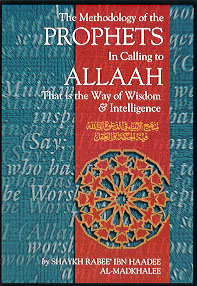
[The following is excerpted from : Shaykh Saalih Fawzan’s hafidhahullaah Introduction to the book : “The Methodology of the Prophets in Calling to Allaah – that is the way of wisdom and intelligence” – by Shaykh Rabee hafidhahullaah, translated by Dawud Burbank rahimahullah]

[The following is the continuation of the article @ The Pillars which support the correct Da’wah – Shaykh Salih al-Fawzan]

.. So whichever call is not built upon these foundations, and whatever methodology is not from the methodology of the Messengers – then it will be frustrated and fail, and it will be toil without any benefit. The clearest proofs of this are those present day groups (jamaa’aat) which set out a methodology and programme for themselves and their da’wah which is different to the methodology of the Messengers. These groups have neglected the importance of ‘aqeedah (correct belief and creed) – except for a very few of them – and instead call for the correction of side-issues. So one group calls for the correction of rule and politics, and demands establishment of the prescribed punishments, and that Islamic Law be applied in judging amongst the people, and this is indeed something very important, but it is not what is most important – since how can one seek to establish and apply Allaah’s Judgement upon the thief and the fornicator before seeking to establish and apply Allaah’s Judgement upon the mushrik, the one who attributes worship to others besides Allaah?! How can we demand that Allaah’s Judgement be applied to two men disputing about a sheep or a camel before demanding that Allaah’s Judgement be applied to those who worship idols and graves, and those who deny or hold heretical beliefs with regard to Allaah’s Names and Attributes, divesting them of their true meanings, or distorting them?! Are these people not greater criminals than those who fornicate, drink wine and steal?! Those are crimes against mankind, whereas shirk and denial of Allaah’s Names and Attributes are crimes against the Creator, the One free of all imperfections, and the right of the Creator has precedence over the rights of the creation.

Shaykhul-Islaam Ibn Taymiyyah says in his book, al-Istiqaamah (1/466): “So these sins along with correct tawheed are better than corrupted tawheed in the absence of these sins.”[1]

Then another jamaa’ah affiliates itself with da’wah, except that its methodology is also at variance with the methodology of the Messengers. They give no importance to correct ‘aqeedah, rather they give importance to worshipping and practising some dhikr (remembrance of Allaah) in the way of the Sufis.[2]They concentrate upon going out (khurooj) and touring the lands, and what is important to them is that they manage to attract the people to join them, without caring about their beliefs and creed (‘aqeedah). All of these are innovated ways, taking as their starting point matters which were justify until last in the call of the Messengers. This is just like the case of one who seeks to cure a body whose head has been cut off, since the place of ‘aqeedah in the religion is like the head with regard to the body. So it is necessary for these groups to correct their concepts and understanding by referring back to the Book and the Sunnah in order to know the methodology of the Messengers in calling to Allaah. For indeed Allaah, the One free of all imperfections, informed that correct rule and sovereignty, which is the central part of the call of the former Jamaa’ah whom we mentioned, cannot be achieved except after correcting ‘aqeedah such that all worship is for Allaah alone, and worship of everything else is abandoned. Allaah, the Most High, says:

“Allaah has promised those who truly believe (have true eemaan) amongst you, and act in obedience to Allaah and His Messenger, that He will grant them rulership upon the earth just as He granted it to those before them, and that He will establish their religion for them, grant them authority to practise the religion which He chose for them and ordered. And He will certainly change their situation to one of security, after their fear, providing that they worship and obey Me, not associating anything else in worship with Me. Then whoever rejects this favour by disobedience to their Lord, then they are the rebellious transgressors.”[3]

So these people wish to establish the Islamic State before purifying the lands of idolatrous beliefs which take shape in the worship of the dead, and devotion to tombs, such as is no different to the worship of al-Laat, al-’Uzzaa and the third of them Manaat,[4] rather it is worse. So they are attempting that which is impossible.

Indeed establishment and application of the Sharee’ah and the prescribed punishments; establishment of the Islamic State; avoidance of whatever is prohibited; and achievement of whatever is obligatory – all of these things are from the rights of tawheed, and matters which perfect it and follow on from it. So how can we give attention to that which is subsidiary whilst neglecting that which is of primary importance?

It is my view that the fact that these groups are at variance with the methodology of the Messengers in calling to Allaah is a result of their ignorance of this methodology, and the ignorant person is not suitable to be a caller, since one of the most important conditions for da’wah is knowledge, as Allaah, the Most High, says about His Prophet,

“Say, Muhammad (صلّى الله عليه وسلّم )  , this is my way, I call to Allaah (i.e. to the testification that none has the right to be worshipped except Allaah, alone, with no partner) upon certain knowledge – I, and those who follow me. I declare Allaah free and far removed from all that they associate as partners with Him, and I am free of those who worship anything else along with Him.”[5]

So one of the most important qualifications for a caller (daa’ee) is knowledge.[6] Then we see that these groups (Jamaa’aat) which attribute themselves to da’wah are at variance with each other. Each group lays down a programme different to the programme of the others and follows a different methodology to it. This is the inevitable consequence of contradicting the methodology of the Messenger (صلّى الله عليه وسلّم )  , since the way and methodology of the Messenger (صلّى الله عليه وسلّم )   is a single way, containing no division, nor divergence, as Allaah, the Most High, says,

“Say, Muhammad (صلّى الله عليه وسلّم )  , this is my way, I call to Allaah (i.e. to the testification that none has the right to be worshipped except Allaah, alone, with no partner) upon certain knowledge – I, and those who follow me.”[7]

So the followers of the Messenger (صلّى الله عليه وسلّم )   are upon this single way and are not divided and split. Rather those who contradict this way are the ones who divide amongst themselves, as Allaah, the Most High, says,

“This is my Straight Path, so follow it, and do not follow any of the other paths, for they will split you and take you away from that way which He prescribed for you.”[8]

So because these groups (Jamaa’aat) are a threat to Islaam which may obstruct it, or prevent people from entering into it, then this is something which must be properly explained, and it must be made clear that this is something which is not from Islaam at all. Allaah, the Most High, says,

“Those who divide up the true religion and break up into sects and parties, you, O Muhammad, have nothing to do with them.”[9]

So since explanation of this is obligatory and it is binding to make it clear, a group of scholars having sincere concern for Islaam and the required level of knowledge and research took on the task of indicating the mistakes of these groups and explaining where they are at variance in da’wah with the methodology of the Prophets, so that they may return to what is correct. Indeed the truth is that which the Muslim always seeks, and so that those who do not realise their errors may not be beguiled by them. So from these scholars who took on this great duty of acting upon the saying of the Prophet (صلّى الله عليه وسلّم )  , “The religion is sincerity/sincere advice, the religion is sincerity/sincere advice, the religion is sincerity/sincere advice.” We said, “To whom, O Messenger of Allaah?” He said, “To Allaah, and to His Book, and to His Messenger, and to the rulers of the Muslims and their common folk,” – from those who explained this matter and gave sincere advice about it is the noble Shaykh, Dr. Rabee’ ibn Haadee al-Madkhalee in his book entitled, ‘The Methodology of the Prophets in Calling to Allaah, That is the Way of Wisdom and Intelligence.’ For he explains, may Allaah grant him success and reward him with good, the Methodology of the Messengers in calling to Allaah, as it is shown in the Book of Allaah and the Sunnah of His Messenger (صلّى الله عليه وسلّم )  . He presents the methodologies of the variant groups in the light of this in order to clearly show the difference between the methodology of the Messengers and these differing and contrasting methodologies which are at variance with it. He discusses these methodologies in the scholarly way and in a just way, whilst quoting examples and witnesses to what he says. So his book, and all praise and thanks are for Allaah, accomplishes the goal, and is fully sufficient for those who desire the truth, and is a proof upon those who are stubborn and obstinate in opposing what is correct.

So we ask Allaah to reward him for his work, and to cause it to be of benefit, and may Allaah send praise and blessings of peace upon Muhammad, his family and true followers, and His Companions.

Written by Saalih ibn Fawzaan
Teacher in Imaam Muhammad ibn Sa’ud Islamic University.

Footnotes:

[1] The proof for this is the Saying of Allaah, the Most High, “Allaah does not forgive that partners should be set up with Him in worship, but He forgives whatever is lesser than that to whom He pleases.” [Soorah an-Nisaa (4):48]

[2] Publisher’s Note: For more information about Sufism refer to “The Reality of Sufism” by Muhammad ibn Rabee’ ibn Haadee al-Madkhalee (Al-Hidaayah Publishing and Distribution, U.K., 1995).

[3] Soorah an-Noor (24):55.

[4] Publisher’s Note: These were some of the idols that were worshipped by the Quraysh at the time of the Prophet (صلّى الله عليه وسلّم ).

[5] Soorah Yoosuf (12):108.

[6] But some of those who claim to be callers to Islaam, if you were to ask them, “What is Islaam?” “What are the things which negate Islaam?” Then they would not be able to give a correct answer, so how can it be permissible for such a person to be a caller (daa’ee)?!

[7] Soorah Yoosuf (12):108.

[8] Soorah al-An’aam (6):153.

[9] Soorah al-An’aam (6):159.

[Excerpted from : Shaykh Saalih Fawzan’s hafidhahullaah Introduction to the book : “The Methodology of the Prophets in Calling to Allaah – that is the way of wisdom and intelligence” – by Shaykh Rabee hafidhahullaah, translated by Dawud Burbank rahimahullah]

Download the full PDF Book:
https://abdurrahman.org/dawah/methodology-of-the-prophets-in-calling-to-allaah/

Some People go to Hajj without any provisions claiming they are putting trust in Allaah – Shaykh Saalih Fawzan

Some people would go on the pilgrimage (Hajj) with Muslims and not bring any provisions or supplies with them. They would do this claiming that they were putting their trust in Allaah and that they would be provided for without them having to bring provisions along with them. So Allaah said: “And take provision with you for the journey, but indeed the best provision is Taqwaa (righteousness)” [Surah Al-Baqarah: 197], ordering them to take provisions.

Provisions are of two types: The Provision of this world and the provision of the Hereafter.

The provision of the worldly life comes in the form of food, drink, clothes, and all of the other things that a person needs when he travels.

As for the provision for the journey in the Hereafter, then it is Taqwaa. Allaah says: “But indeed the best provision is Taqwaa.” [Surah Al-Baqarah: 197]

So take provisions for your worldly life and take provisions for your Hereafter. Take provisions for your worldly life with food, drink and the necessary supplies for traveling so that you will not need to depend on others. And take provisions for your Hereafter with Taqwaa, which can be defined as implementing Allaah’s commandments while abandoning His prohibitions.

So what is meant by Taqwaa is taking a wiqaayah, or a defense that protects you from Allaah’s punishment and anger, and protects you from the Fire. Such a defense can only be achieved by performing righteous actions. And with the Taqwaa of Allaah you will be able to save yourself from the Hellfire, as Allaah says: “Then We shall save those who used to fear Allaah and were dutiful to Him. And We shall leave the wrongdoers therein (humbled) to their knees (in Hell).” [Surah Maryam: 72]

So therefore, nothing grants salvation except for righteous deeds. Faith in Allaah and righteous deeds are the provisions of the Hereafter, and they are a protection from His anger, His fire and His punishment. The servant is commanded to seek after the requirements of his religious and worldly affairs. He is obligated to seek after the requirements of his affairs of this life and the next. He is obligated to put his trust in Allaah and to implement the means. So there must be a combination of this and that.

No one should understand the meaning of relying upon Allaah to be: Abandoning the require means. This is wrong. Nor should anyone understand that implementing the means suffices over putting one’s trust in Allaah. Rather, both – (1) relying upon Allaah and (2) implementing the required means – must be present.

Source : Excerpted from the following excellent Article :
Relying on Allaah and Abiding by the Means : Shaykh Saalih Al-Fawzaan
Haqeeqat-ut-Tawakkul (pg. 15-25). Al-Ibaanah.com

The astronomical reports about the timing of the eclipse must not be taken as the basis for offering Salat-ul-Kusuf (Eclipse Prayer)

The astronomical reports about the timing of the eclipse must not be taken as the basis for offering Salat-ul-Kusuf. Some people of knowledge, including Shaykh-ul-Islam Ibn Taymiyyah and his knowledgeable disciple Ibn Al-Qayyim, may Allah be merciful with both of them, supported this view saying that the astronomers may sometimes be wrong and then these reports are not reliable and people should not offer Salat-ul-Kusuf depending on them. Rather, they have to offer the Salah upon seeing the eclipse when it is happening.

The publications of the astronomers’ reports about the timing of eclipse should be banned by the Ministry of Information lest some people should be deceived by them. These publications may make people feel less fear upon seeing the eclipse. Allah (Exalted be He) has made them to be frightening and hence, people remember, fear, invoke Allah, and treat their slaves well. May Allah grant us success!

Excerpted from : “How should Salat-ul-Kusuf be done? Fatwas of Ibn Baz – alifta.net”

Source : Browse by Volume Number > Volume 13 > Completion of the Book of Salah (Prayer) > Salat-ul-Kusuf > the manner of Salat Al-Kusuf

The knowledge of Allaah is the basis of every other knowledge, for the one who knows of Allaah knows other than Him

Based upon the work of Shaykh Ibn Al-‘Uthaymeen
Explained by Dr Saleh As-Saleh, rahimahumaa Allaah

The most honorable and greatest knowledge is the knowledge of Allaah, whom there is no God except Him, the true God, the Lord of all that exists. And the knowledge of Allaah is the basis of every other knowledge, for the one who knows of Allaah knows other than Him.

[Souncloud Audio Link]

The one who knows of Allaah knows other than Him, and the one who is ignorant of Allaah is therefore by all means ignorant of every other thing.

Allaah says,

وَلَا تَكُونُوا كَالَّذِينَ نَسُوا اللَّـهَ فَأَنسَاهُمْ أَنفُسَهُمْ ۚ أُولَـٰئِكَ هُمُ الْفَاسِقُونَ

‘And be not like those who forgot Allaah, so He made them forget themselves. Those are the defiantly disobedient.’ {Suraah Anfaal 8: 47}

And don’t be like those who forgot Allaah- because of their disobedience, so He let them forget their own selves- for they were not able to do righteous deeds.

If you contemplate this aaayah, you will find a noble and honourable meaning and a great one implicated in this verse that anyone who forgets Allaah, Allaah will make him forget his own self, and therefore will not realise his reality nor would he realise that which benefits or harms him.’

So he will be crippled like cattle, even cattle could be more knowledgeable of its benefits in this sense. What is meant is that the knowledge of Allaah is the basis and foundation of every other knowledge and it is the basis of the slave of Allaah to know of his happiness, and to perfect his affairs and to work for his other life.

Therefore he would properly estimate Allaah, the proper estimation He deserves. And it will lead him to be shy of Allaah, out of love and magnification- his heart being attached to Him, yearning to meet Allaah and be close to Him, turning His affairs to Him and having awe and fear of Him. And mankind, with this respect, differ in such an estimation of Allaah.

The prophet  said in invocation to Allaah,

…لا أحصي ثناء عليك أنت كما أثنيت على نفسك

[صحيح مسلم و غيره]

‘I cannot enumerate praising You, as You (o Allaah) are as You have praised Yourself’ [Muslim and others]

The prophet  indicating those most knowledgeable of Allaah, even invoke Allaah with this saying:

…لا أحصي ثناء عليك أنت كما أثنيت على نفسك

‘I cannot enumerate praising You, as You are as You have praised Yourself (O Allaah)’

Love and eagerness are matters that follow the knowledge of Allaah, so the knowledge of Allaah brings forth and leads to love of Him and yearning to meet Him.

And therefor the knowledge of Allaah, is the most great and honorable knowledge and this leads to the proper estimation of Allaah, loving Him and eagerness to meet Him. The more a person is knowledgeable of Allaah, the more perfection he is in his love of Him.

Ad therefore ‘whoever believes in Allaah and His names and attributes’ and knows of Him in this respect will love Him more, and then he would achieve a state of sweetness in his heart, and this sweetness puts him in a state whereby he will always love to meet Allaah and be close to Him, and to sense and look at His Face, and listen to Him and to His words.

The knowledge itself leads to the proper estimation of Allaah.

Maalik ibn Dinaar rahimahullaah said ‘the people of this life they left it and didn’t take the best of it,’ they said to him, ‘and what is it o Abaa Yahya?’ He said, ‘knowing  of Allaah The Most Mighty and Majestic.’

Those who know of Allaah are the ones who have really tasted what is best in this life, and that is the knowledge of Allaah in this life as Maalik bin Dinaar stated.

وَمَا قَدَرُوا اللَّـهَ حَقَّ قَدْرِهِ إِذْ قَالُوا مَا أَنزَلَ اللَّـهُ عَلَىٰ بَشَرٍ مِّن شَيْءٍ ۗ

‘And they did not appraise Allaah with true appraisal when they said, “Allaah did not reveal to a human being anything.”’ {Suraah Al-An’aam 6: 91}

‘They (kuffar) did not estimate Allaah with the estimation due to Him’ when they said that Allaah sent nothing down to the human being- so what is meant by saying what is due to Him is what is meant by the proper estimation of Him.

When the knowledge of Allaah is strengthened then his eagerness for Allaah also strengthens.

Abdullah ibn Masoud radhi Allaahu anhu said, ‘the believer will not feel at rest without the meeting of his Lord Allaah, therefore anyone who sets his resting coat in this life in the meeting of Allaahسبحانه و تعلى, then it is as if He has reached that.’

Meaning the believer would not have any real rest without being keen about the matter of meeting Allaah, yearning so that he can reach Him. As Allaah سبحانه و تعلى says,

الَّذِينَ آمَنُوا وَتَطْمَئِنُّ قُلُوبُهُم بِذِكْرِ اللَّـهِ ۗ أَلَا بِذِكْرِ اللَّـهِ تَطْمَئِنُّ الْقُلُوبُ

Those who have believed and whose hearts are assured by the remembrance of Allaah. Unquestionably, by the remembrance of Allaah hearts are assured.” {Suraah Ar-Ra’ad 13: 28}

This is what ibn Masoud was speaking about in his saying that there will be no real rest for the believer unless he meets Allaahسبحانه و تعلى; therefore this matter should be alive, as mentioned in the aayah in Suraatur Ra’ad, they will achieve that.

Allaah gave the prophets عليهم السلام the choice between increasing their stay on earth or death, and they would choose the meeting with Allaah the most High.

As Imaam Bukhaari entitled the chapter in his saheeh – “the one who loves to meet Allaah, Allaah will love to meet Him”. Under this chapter he gave the situation with the prophet  from his wife,

حدثنا بشر بن محمد حدثنا عبد الله قال يونس قال الزهري أخبرني سعيد بن المسيب في رجال من أهل العلم أن عائشة قالت كان النبي صلى الله عليه وسلم يقول وهو صحيح إنه لم يقبض نبي حتى يرى مقعده من الجنة ثم يخير فلما نزل به ورأسه على فخذي غشي عليه ثم أفاق فأشخص بصره إلى سقف البيت ثم قال اللهم الرفيق الأعلى فقلت إذا لا يختارنا وعرفت أنه الحديث الذي كان يحدثنا وهو صحيح قالت فكانت آخر كلمة تكلم بها اللهم الرفيق الأعلى

موطأ مالك, صحيح البخاري, صحيح مسلم, مسند أحمد

Aisha (رضي الله عنها) who said, ‘Rasoolullah صلى الله عليه وسلم used to say, ‘no prophets soul will be taken by Allaah until he sees his seat in Paradise then he will be given the choice’ so when he صلى الله عليه وسلم  became ill and the moment of death approached and his head was on my thigh, when he صلى الله عليه وسلم used to go into the state of unconsciousness and woke up, finally I saw him gaze in the direction of the roof and said ‘O Allaah, the Highest companionship.’ Aisha said, ‘so I knew he didn’t choose us, and I remember the statement he  صلى الله عليه وسلم used to say to us and it is true. And the last words he spoke was ‘Allaahumma rafeequl a’laa.’ (O Allaah, the Highest companionship)

[Muwatta of Maalik, Bukhaari, Muslim and Ahmed (with slight difference in wording)]

So how is it that these rough hearts and stone hearts are able to accuse other Muslims when they speak about knowing Allaah’s names and attributes and defending them in the proper way, as Allaah intended and as Allaah affirmed for Himself, and by the prophet Muhammad صلى الله عليه وسلم .

Knowing Allaah: Through His Beautiful Names
Dr Saleh As Saleh رحمه الله d.1421AH

Listen to the full audio series @
https://abdurrahman.org/2014/12/13/the-meaning-of-allaahs-most-beautiful-names-dr-saleh-as-saleh/

He should not look down upon a point of benefit that comes to him by way of someone that is young in age or old in age – Shaykh Saalih Abdil-‘Azeez Aali Shaikh

When Imaam Ahmad was suffering from his final sickness, at times, he would feel pain and groan out loud. So when one of his students came and heard him, he narrated to him with a chain of narration from Muhammad bin Sireen that Anas bin Maalik (radyAllaahu ‘anhu) used to consider it detested (makrooh) to groan. After that, he did not hear Ahmad groan again until he passed away.

This mentality on the part of the student and the teacher is that which will enable the student of knowledge, through the Grace of Allaah, to become a scholar in the future, if Allaah wills. And this is the mentality which will enable him to benefit and cause him to always be preoccupied with knowledge – day and night, he is learning. He should not look down upon a point of benefit that comes to him by way of someone that is young in age or old in age. Some people receive points of benefit from individuals that are younger than them (in age and knowledge), and so they feel arrogant towards him or they don’t give that point their full attention. The reason for this is because they have elevated themselves over the knowledge. And when one elevates himself over knowledge, he will not be from those who are able to acquire it.

Rather, a younger or smaller person may have some knowledge that an older or bigger person doesn’t. And likewise one who is younger or smaller may understand some aspects of knowledge whereas one who is older and bigger may not. But if he explains it to him, he should benefit from it. The scholars have mentioned a clear example for this, which is the story of prophet Sulaymaan and the hoopoe bird. Even though the hoopoe bird was lowly in terms of stature and composure and Sulaymaan was elevated in terms of stature, composure and position in the sight of Allaah and before all of creation, the hoopoe bird said to him: “I have grasped knowledge of something that you have not grasped. And I have come to you from Saba’ (Sheba) with certain news.” [Surah An-Naml: 22]

So the hoopoe bird knew something that Sulayman was unaware of. The people of knowledge have derived from this story that you should not be arrogant with someone that brings you a point of benefit (from knowledge), regardless if he is young and lowly or old and prominent.

Source:  Three Required Characteristics for Seeking Knowledge -Shaikh Saalih bin ‘Abdil-‘Azeez Aali Shaikh. al-ibaanah.com translation.

All of the Prophets began with correction of matters of ‘Aqeedah, and by waging war upon Shirk and its manifestations – Shaykh Rabee’ ibn Haadee

.. So I am amazed at the situation of many callers today who see the manifestation of shirk in front of their eyes, yet it does not cause them any concern whatsoever and they do not give any attention to it. Indeed what is even worse is that they complain about those who criticise it and who feel pained by this evil state of affairs which remains from the days of ignorance.

.. intellect, wisdom and the natural way therefore necessitates that the starting point is to wage war against the danger of shirk, and that the call of the Prophets and their followers should continue fighting it for as long as anything of it remains, or any form or manifestation of it continues. So if a nation is afflicted by matters damaging to its ‘aqeedah, and shirk which destroys its ‘aqeedah, and also is beset by economic and political problems, then where is wise treatment of the problems to begin?! As for the Prophets, then they did not begin except with applying their full efforts to treating problems facing ‘aqeedah. Then beginning by seeking to treat the most dangerous problem is a matter about which all humans with intellect agree upon.

So, for example, if a person with intellect saw a snake and an ant moving towards a person, then his intellect would lead him to hasten to repel or kill the snake due to the greater danger which it poses to a person. It is not possible that he would divert his attention to the ant, nor even to a thousand such ants. Also if a number of people possessing intellect saw that a fierce lion and a number of rats attacked them all at once, then they would all strive together to prevent the attack of the lion and they would forget all the rats, even if a group of frogs came with them. And if a group of travellers came to a point where they had no choice but to take one of two roads: the first passed by volcanoes which were emitting flames and fire, and flinging out rocks and boulders. Then the second road passed through areas of thorny bushes, and sun-baked ground and was subject to the heat of the sun. Then anyone with intellect would not choose except to take the second road.

So now let us think about the most severe problems and ills. I mean the problems in political affairs, social affairs and economic affairs, and the worst of these is corruption in matters relating to rulership and judgement. Then let us weigh this against corruption in matters of ‘aqeedah. So are these two things equal in weight with Allaah and with the Prophets, or is it the case that one is more severe, dangerous and worse in its consequences?!! So in the scale of Allaah and the scale of the Prophets the most dangerous of these two, and the one which has the greater demand for attention throughout the ages, and with all the Messengers, is shirk and its manifestations, whose evil and corruption cannot be matched by any other evil no matter how great. So upon this we repeat and say, “All of the Prophets began with correction of matters of ‘aqeedah, and by waging war upon shirk and its manifestations,” and this is what is demanded by wisdom and intellect and that is due to the following reasons:

Firstly, that corruption relating to matters of the ‘aqeedah of the people: shirk, false superstitions and beliefs, and the various types of misguidance, is thousands of times more dangerous than the corruption resulting from the corruption in rulership and other affairs. Indeed if we do not say and firmly believe this then we have without knowing it discredited and belittled the Messengers, and we seek Allaah’s refuge from misguidance. Indeed this corruption encompasses the ruler and the ruled. So the rulers themselves in every time and place, except for the Believers from them, humble themselves to the idols, false-gods and tombs. They construct them, protect them, worship them and present offerings to them. They firmly believe that they have some supernatural power over and above their own authority. So they hold that these things cause harm and benefit for them due to the unseen power and authority which they think they possess, or at the very least they think they can intercede with Allaah in order for their problems to be reduced. The clearest example of the submission of the rulers to the idols is the example of the despot who claimed divinity, the Pharaoh, who said, boasting:

“I am your Lord, the Most High.”[1]

And he said:

“I know of no other god for you besides me.”[2]

Since the leaders of his people said to him:

“Will you leave Moosaa and his people to cause mischief in the land when they have abandoned worship of you and worship of your gods?”[3]

Also Namrood, the king of the Chaldeans who claimed lordship for himself. When Ibraaheem, ‘alayhis-salaam, broke the idols, Namrood sought to burn Ibraaheem to take revenge for these idols, because they were the gods which he worshipped. Likewise the kings of India and Persia worship idols and worship fire. The kings of Rome in the past and the present-day rulers of Europe and America worship the cross and worship images. And how many of the past and present-day rulers of the Muslims are afflicted by the trial caused by the dead, so that they build tombs over them, and their hearts are attached to them in love, hope and fear. They fall into that which Allaah’s Messenger (صلّى الله عليه وسلّم ) feared for his ummah and which he warned against. So the seriousness and the soundness of the methodology will therefore be clear to you, and also the importance of the firm stance taken by the Messenger (صلّى الله عليه وسلّم ) with regard to idols and tombs. Furthermore the wisdom of Ibraaheem will become clear to you, and the depth of his thinking and its extent when he made the enduring call which resounds in all corners and in every generation.

“And keep me and my sons far removed from worshipping the idols. O my Lord, they have caused the misguidance of many of the people. So whoever follows me in what I am upon (eemaan in Allaah, making worship purely for Allaah and disassociation from the worship of idols) then he is from my people (upon my way and religion), and whoever disobeys me, then indeed You are the Most Forgiving, Most Merciful.”[4]

So you see Ibraaheem, who was fully upon the truth and the right way, seeking Allaah’s refuge from the evils and danger of the idols, and not seeking His refuge from the evils and danger of the rulers, despite the level of their corruption and their danger.

Secondly, the people were upon a single religion (Islaam), upon guidance, but then they diverged from it, so Allaah sent the Prophets as bringers of good tidings of reward for the obedient Believers, and warners of Allaah’s punishment for the disobedient unbelievers.

Allaah, the Most High, says:

“We do not send Our Mesengers except with good news for the obedient that Paradise and success on the Day of Resurrection is the reward for obedience to Me, and with a warning for those who disobey and reject My commands that We will punish them, so that they may die aware of that. So whoever believes the Messengers and acts righteously in this world by following what they are upon then there will be no fear upon them when they meet their Lord, nor will they grieve about what they justify behind in the world.”[5]

And Allaah, the Most High, says:

“Messengers who were sent with the good news of Allaah’s reward for those who obey Allaah, do as He commands and believe in His Messengers, and warners of Allaah’s punishment for those who disobey Allaah, contravene His commands and disbelieve in His Messengers, so that those who disbelieve in Allaah and worship others besides Him may have no excuse to avoid punishment after the sending of the Messengers.”[6]

Allaah’s Mesenger (صلّى الله عليه وسلّم ) said, “There is no one to whom granting excuse is more beloved than Allaah, therefore He sent the bringers of good-tidings and the warners.”[7]

Allaah, the Most High, says:

“So are the Messengers charged with anything but to clearly convey the Message?”[8]

Allaah, the Most High, says: 

“The Messenger’s duty is but to clearly convey the Message.”[9]

Allaah, the Most High, says:

“So if you deny Our Messenger, O people, and reject his command for you to worship your Lord and to free yourselves from the worship of idols, then nations before you denied their Messengers who called them to the truth, so Allaah sent His punishment upon them and will do the same with you. The Messenger’s duty is but to clearly convey the Message.”[10]

So this duty of warning and bringing good tidings and conveying the Message is a very exalted, sublime and lofty duty. It is enough in this regard that it was the duty of the Prophets and fully concorded with their lofty station, since it the hardest and the greatest task taken up by mankind. It was then taken up by their inheritors from the true and sincere callers who follow their methodolgy, therefore Allaah’s Mesenger (صلّى الله عليه وسلّم ) said, “The people who are most severely tried are the Prophets, then those most like them, then those most like them.” We have also already mentioned the extent of the difficulties faced by the caller to tawheed and that others are unable to persevere in this sphere.

Thirldy, Allaah, the One free of all imperfections, and the Most High, did not start by commanding and making it a duty upon them, as is seen from the stories of their lives, that they should establish states and cause the downfall of others, and this is perfect wisdom since the call to establish a state attracts the seekers of this world, and those who seek after self-elevation and positions of power, and those who have personal goals and grudges, and aspirations and ambitions.[11] So these types of people quickly respond to the call to establish a state which they think will enable them to attain their goals, their desires and their ambitions.

Due to the like of these considerations, and Allaah knows best, and due to other reasons known by Allaah, the Creator, the All-Knowing, the All-Wise, the calls of the Prophets and their methodologies were far removed from using these flashy and attractive slogans or those which clearly appeal to short-term ambitions and desires. Rather they followed a methodology which is wise, unblemished and noble. It involves being tried and tested. So they are followed upon this way and believed in by every true and sincere person free of selfish ambitions and personal goals. Such a person does not desire through his eemaan, his tawheed and his obedience to Allaah’s Messenger (صلّى الله عليه وسلّم ) except Paradise and the Pleasure of his Lord. He does not fear except from His Anger and His severe punishment. Therefore they are only followed generally by the poor, the needy and the weak. Allaah, the Most High, says, quoting what the people of Nooh said:

“They said, ‘Are we to believe in you, O Nooh, and affirm what you call us to, when it is only the lowly people who follow you?’”[12]

He said concerning the people of Saalih:

“The heads of the people who haughtily rejected Faith said to those who they held to be lowly, to those who believed in and followed Saalih and what he came with, ‘Do you really know that Saalih is one sent by Allaah?’ They said, ‘We indeed attest and believe in the truth and guidance which Allaah has sent him with.’ The haughty ones said, ‘We deny and disbelieve that which you believe in.’”[13]

Also amongst the questions which Heraclius asked Aboo Sufyaan was, “Is it the noble of the people who follow him or the weak amongst them?” Aboo Sufyaan replied, “Rather it is the weak amongst them.” So Heraclius said, “I asked you ‘Is it the noble of the people who follow him or the weak amongst them,’ and you mentioned that it is the weak amongst them, and it is they who are the followers of the Mesengers.” So the call to establish a state is far far easier, and people respond more quickly to it since most people are seekers after this world and followers of desires.

Also because of the reasons, the consequences and the difficulties in the way of the calls of the Messengers we find that they are not followed except by a small number of people. So Nooh remained, for nine hundred and fifty years,[14] calling to Allaah, yet despite this:

“None but a few believed along with him.”[15]

From Ibn ‘Abbaas, radiyallaahu ‘anhumaa, who said, “Allaah’s Messenger (صلّى الله عليه وسلّم ) said, ‘The nations were presented before me, and I saw a Prophet and with him was a small group of people, and I saw a Prophet along with one man or two men, and a Prophet accompanied by nobody. Then I saw a huge crowd of people and I thought that they were my ummah. So it was said to me, “This is Moosaa and his people. But rather look to the horizon.” So I looked and saw a huge crowd, so it was said to me, “This is your ummah, and from them are seventy thousand who will enter Paradise without any reckoning.”’”[16] 

As for Ibraaheem, the chosen and beloved Friend of Allaah, who refuted and silenced the mushriks with irrefutable and clear proofs. Allaah says regarding him and those who believed along with him:

“So Loot belived in him and attested to the truth of what he came with, and Ibraaheem said, ‘Indeed I will emigrate (to the land of Shaam) for the sake of my Lord. Indeed He is the All-Mighty, the All-Wise.’”[17]

With regard to Loot and those who were saved from the punishment along with him, and perhaps they were his daughters alone:

“So We brought out those who were Believers from the town, and We did not find there except a single household of Muslims.”[18]

But none of this diminishes the rank of the Prophets by the slightest degree, rather they are upon the highest rank and are the noblest and most distinguished of the people and the most honourable. They stand above all the people in manhood, bravery, excellence of language and eloquence, and in their clarity of explanation, their sincerity and sacrifice.

They also established their duty of calling to tawheed, propagating the Message, giving the good tidings and the warnings, and they fulfilled this in the most complete manner. So the fact that they had few followers or some of them had no followers, is purely the fault of the nations which refused to accept the call since, in their view, they did not satisfy their lowly goals. Then it may be that they respond to his call, or a large number of them do so, and so they gain a state, as a goodly fruit due to their eemaan, their affirmation of what the Prophet came with, and their righteous actions.

They thus establish the obligation upon them of fighting Jihaad to raise up the Word of Allaah, and of following and applying the Sharee’ah and the prescribed punishments and other matters prescrbed for them by Allaah. This is what happened with our Prophet Muhammad (صلّى الله عليه وسلّم ) and his noble Companions. Allaah crowned their eemaan, their righteous actions, and their exemplary perseverance when facing the harm and oppression of the mushriks, by aiding them and making their Deen uppermost, and by establishing them upon the earth as Allaah, the Most High, says:

“Allaah has promised those who truly believe (have true eemaan) amongst you, and act in obedience to Allaah and His Messenger, that He will grant them rulership upon the earth just as He granted it to those before them, and that He will establish their religion for them grant them authority to practice the religion which He chose for them and ordered. And He will certainly change their situation to one of security, after their fear, providing that they worship and obey Me, not associating anything else in worship with Me.”[19]

Then sovereignty was offered to Allaah’s Messenger (صلّى الله عليه وسلّم ) in Makkah but he refused and he continued calling to tawheed and waging war against shirk and the idols. So when Quraysh became troubled by the call of Allaah’s Messenger (صلّى الله عليه وسلّم ) they sent ’Utbah ibn Rabee’ah and he came to Allaah’s Messenger (صلّى الله عليه وسلّم ) and said, “O son of my brother, you know the excellence you hold amongst us with regard to your position in the tribe and your lineage, but you have brought a matter which is very serious for your people. Because of it you have split their united body, caused their youth to behave foolishly and you have abused their idols with it, and their religion. You have also declared their fore-fathers to be infidels because of it. So listen to me and I will offer you some things which you may consider, and hopefully some of them will be acceptable to you.” So Allaah’s Messenger (صلّى الله عليه وسلّم ) said, “Speak, O Abul-Waleed, I will listen.” He said, “O son of my brother, if what you desire by this matter that you have come with is wealth, then we will gather wealth for you from our wealth until you are one of the richest of us. And if you wish by it for high position, then we will give you such authority that we will not do anything without your approval, and if you wish by it for sovereignty, then we will make you sovereign over us. But if it is the case that what comes to you is a demon which you see and cannot get rid of, then we will seek after a medical cure for you and will expend our money until we can get you cured of it. Since a demon may take hold of a person until he is cured and relieved of it,” or as he said. Allaah’s Messenger (صلّى الله عليه وسلّم ) was listening to him, then he said, “Have you finished, O Abul-Waleed?” He said, “Yes.” He said, “Then listen to me.” He said, “I will do so.” He said:

“In the name of Allaah, the Most Merciful, the Bestower of Mercy. Haa Meem. This Qur’aan is the Revelation sent down by the Most Merciful, the Bestwoer of Mercy. A Book whose Aayaat are made clear, a recital in pure Arabic for those who know (the pure Arabic language), bringing them good tidings of Paradise if they believe in it and act upon it, and as a warning to those who disbelieve in it and do not act in obedience to Allaah, that they will receive punishment and dwell forever in Hell in the Hereafter. But most of them turn away haughtily and refuse to listen to it.”[20]

Then Allaah’s Messenger (صلّى الله عليه وسلّم ) continued reciting it to him. When ’Utbah heard it he remained silent and sat with his hands behind his back, resting upon them and listening. So when Allaah’s Messenger (صلّى الله عليه وسلّم ) came to the Aayah of prostration in it he prostrated and then said, “You have heard what you have heard O Abul-Waleed, so now it is up to you…” So ’Utbah went back to Quraysh and when he sat with them they said, “What has happened with you, O Abul-Waleed?” He said, “What happened is that I heard the like of which, by Allaah, I have never heard. By Allaah, it is not sorcery, nor poetry, nor divining. O Quraysh, obey me and let the decision be mine. Leave the man and let him continue in what he is upon. Keep away from him since, by Allaah, his saying which I heard will come to have great importance. So if the (other) Arabs kill him, then you will be rid of him due to the action of others, and if he conquers the Arabs, then his sovereignty is your sovereignty, his power is your power and you will be the ones fortunate with regard to him.” They said, “By Allaah, he has performed magic upon you with his tongue, O Abul-Waleed.” He said, “This is my opinion with regard to him, you may do whatever you see fit.”[21]

Ibn Ishaaq reports with his chain of narration to Ibn ’Abbaas that a group of Quraysh gathered and made an offer close to the offer made by ’Utbah and his saying to Allaah’s Messenger (صلّى الله عليه وسلّم ) . So he (صلّى الله عليه وسلّم ) answered them by saying, “I am not afflicted by what you say. I have not come with that which I have come with seeking your wealth, nor seeking status above you, nor sovereignty over you, but rather Allaah has sent me as a Messenger to you, and has sent down a Book to me, and has ordered me to be a bringer of good tidings and a warner to you. So I have conveyed to you the revealed Messages from my Lord, and I have sincerely advised you. So if you accept what I have brought to you then you will have your share in this world and the Hereafter. But if you refuse to accept it from me then I will patiently await Allaah’s Order, until Allaah judges between me and you…”[22]

Likewise Allaah’s Messenger (صلّى الله عليه وسلّم ) rejected the request of one of the tribes that they should be in charge of the affairs after his death, if the report is authentic. Ibn Ishaaq said that az-Zuhree narrated to me that Allaah’s Messenger (صلّى الله عليه وسلّم ) came to Banoo ’Aamir ibn Sa’sa’ah and called them to Allaah, the Mighty and Majestic, and presented himself to them. So a man from them called Bayharah ibn Firaas said, “By Allaah, if I were to take hold of this young man from Quraysh I would devour the Arabs with him,” then he said, “If we give you our pledge of allegiance upon your affair, then Allaah gives you victory over those who oppose you, then will we be in authority after you?” He said, “The affair is for Allaah, He places authority wherever He wills.” So he said to him, “Are we to risk our necks before the Arabs for you, then when Allaah grants you victory, authority will be for other than us?! We have no need of your affair.” So they rejected him.[23]

Footnotes:

[1] Soorah an-Naazi’aat (79):24.

[2] Soorah al-Qasas (28):38.

[3] Soorah al-A’raaf (7):127.

[4] Soorah Ibraaheem (14):35-36.

[5] Soorah al-An’aam (6):48.

[6] Soorah an-Nisaa (4):165.

[7] Reported by al-Bukhaaree (Eng. trans. (9/378 no.512) and Muslim (Eng. trans. 2/782 no.3572) and Ahmad (4/238) and ad-Daarimee (no.2233).

[8] Soorah an-Nahl (16):35.

[9] Soorah an-Noor (24):54.

[10] Soorah al-’Ankaaboot (29):18.

[11] As has happened with many political calls, and from the latest of them the call of the Ikhwaanul-Muslimeen who have been joined by the like of those called “the free officers” and many people with self interest.

[12] Soorah ash-Shu’araa (36):111.

[13] Soorah al-A’raaf (7):75-76.

[14] Soorah al-’Ankaaboot (29):14.

[15] Soorah Hood (11):40.

[16] Reported by al-Bukhaaree (Eng. trans. 7/407 no.606 and 8/359 no.549) and Muslim (Eng. trans 1/141 no.625) and Ahmad (1/271).

[17] Soorah al-’Ankaaboot (29):26.

[18] Soorah adh-Dhaariyaat (51):35-36.

[19] Soorah an-Noor (24):55.

[20] Soorah Fussilat (41):1-4.

[21] Reported by Ibn Ishaaq in his Seerah, he said, “Yazeed ibn Abee Ziyad narrated to me: from Muhammad ibn Ka’b al-Qurazee who said: It was related to me that ’Utbah ibn Rabee’ah…” And he reported the narration: as-Seerah of Ibn Hishaam (1/293-294). It also has a supporting witness in the hadeeth of Jaabir which is reported by ’Abd ibn Humayd and Aboo Ya’laa which has preceded.

[22] As-Seerah of Ibn Hishaam (1/295-296): Ibn Ishaaq said: A person of knowledge narated to me: from Sa’eed ibn Jubayr and ’Ikrimah the mawlaa of Ibn ’Abbaas: from ’Abdullaah ibn ’Abbaas, radiyallaahu ’anhumaa, who said, “A group of Quraysh gathered: ’Utbah ibn Rabee’ah, Shaybah ibn Rabee’ah and Aboo Sufyaan…” And this strengthens the previous narration, each of them supporting the other.

[23] Ibn Hishaam’s Seerah (1/424-425) and as-Seeratun-Nabawiyyah of adh-Dhahabee (pp.189-190).

[Excerpted from the book : “The Methodology of the Prophets in Calling to Allaah – that is the way of wisdom and intelligence” – by Shaykh Rabee hafidhahullaah, translated by Dawud Burbank rahimahullah]

Download the full PDF Book:
https://abdurrahman.org/dawah/methodology-of-the-prophets-in-calling-to-allaah/

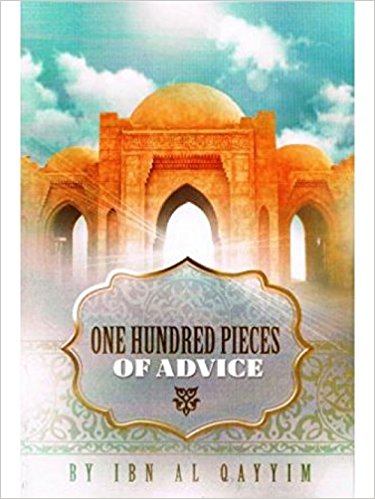
[Book Study] One Hundred Pieces Of Advice – Imam Ibn al-Qayyim

One Hundred Pieces Of Advice By Ibn al-Qayyim

100 Pieces of Advice from Imam Ibnul-Qayyim

One hundred treasured advices extracted from the writings of the illustrious scholar, Imām Ibn al-Qayyim (may Allāh have mercy upon him):

Topics include:

Ten ways to acquire Allāh’s love
Ten ways to be patient and avoid sins
Ten ways to be patient during a calamity
Ten benefits to lowering your gaze
Ten ways sins are expiated
Ten barriers between the slave and his Lord
Ten reasons knowledge is not put into action
Ten ways to open your heart
Ten ways to protect against envy
Ten ways to protect against the plots of the Shayṭān

Classes are based on the book translated into English by Ustaadh Rasheed Barbee and is available for purchase at AuthenticStatements.com
http://www.authenticstatements.com/one-hundred-pieces-of-advice-by-ibn-al-qayyim/

Taught at Masjid Tawheed on Wednesdays after between Maghrib and Ishaa Salah by Abu Muhammad al-Maghribi.   Listen to the available audio @ the link below (classes are in progress..)
https://www.spreaker.com/show/100-advices-by-imam-ibnul-qayyim

Related Links:
Check other Book Study Resources – https://abdurrahman.org/islamic-book-study/

Know that your possessions and your children are but a trial (fitnah) – Explained by Shaikh Muhammad Baazmool

[The following article has been extracted from Al-Ibaanah e-Book :
Your Flesh and Blood : The Rights of Children – Shaikh Muhammad Baazmool ]

Know that children are a source of trials (fitnah).

Allaah says:

وَاعْلَمُوا أَنَّمَا أَمْوَالُكُمْ وَأَوْلَادُكُمْ فِتْنَةٌ وَأَنَّ اللَّهَ عِندَهُ أَجْرٌ عَظِيمٌ

“And know that your possessions and your children are but a trial and that surely, with Allaah is a mighty reward.” [Surah Al-Anfaal 8: 28]

It is stated in Adwaa-ul-Bayaan:

“Allaah ordered the people in this noble ayah to be aware that their properties and children are a trial for them by which they will be tested. Will your wealth and your children be a cause for you to fall into that which Allaah is displeased with?! Elsewhere (in the Qur’aan), He adds to this saying that wives are also a trial just like wealth and children, thus ordering the individual to beware of them putting him into that which Allaah is not pleased with.

Then He orders the individual – if he should see something he dislikes from these enemies who are the closest and most special of people to him, i.e. his children and wives – to forgive them, pardon them and not hold them accountable. So he should beware of them firstly and then pardon them if some thing should occur from them. This is found in His statement in Surah At-Taghaabun:

يَا أَيُّهَا الَّذِينَ آمَنُوا إِنَّ مِنْ أَزْوَاجِكُمْ وَأَوْلَادِكُمْ عَدُوًّا لَّكُمْ فَاحْذَرُوهُمْ ۚ وَإِن تَعْفُوا وَتَصْفَحُوا وَتَغْفِرُوا فَإِنَّ اللَّهَ غَفُورٌ رَّحِيمٌ – 64:14

إِنَّمَا أَمْوَالُكُمْ وَأَوْلَادُكُمْ فِتْنَةٌ ۚ وَاللَّهُ عِندَهُ أَجْرٌ عَظِيمٌ – 64:15

‘O you who believe, verily among your wives and your children are enemies for you, so beware of them. But if you pardon (them) and overlook and forgive (their faults), then verily, Allaah is All-Forgiving, Most-Merciful. Your wealth and your children are only a trial, whereas Allaah – with Him is a great reward.’ [Surah At-Taghaabun 64: 14-15]

He then asserts somewhere else (in the Qur’aan) that it is forbidden for the believers to let their wealth and children divert them from His Remembrance, stating that whoever let’s this happen is a loser who has been duped out of his shares. The ayah being referred to is Allaah’s saying:

يَا أَيُّهَا الَّذِينَ آمَنُوا لَا تُلْهِكُمْ أَمْوَالُكُمْ وَلَا أَوْلَادُكُمْ عَن ذِكْرِ اللَّهِ ۚ وَمَن يَفْعَلْ ذَٰلِكَ فَأُولَٰئِكَ هُمُ الْخَاسِرُونَ – 63:9

‘O you who believe, let not your properties or your children divert you from the Remembrance of Allaah. And whosoever does that, they are the losers.’ [Surah AlMunaafiqoon 63: 9]

The word ‘fitnah’, as mentioned in these verses, means a trial and a test. This is one of the many meanings this word possesses in the Qur’aan.” [28]

~~

Neither the wife nor the children of an individual will pick up the burden of his shortcomings and deficiencies on his behalf. Allaah says:

لَن تَنفَعَكُمْ أَرْحَامُكُمْ وَلَا أَوْلَادُكُمْ ۚ يَوْمَ الْقِيَامَةِ يَفْصِلُ بَيْنَكُمْ ۚ وَاللَّهُ بِمَا تَعْمَلُونَ بَصِيرٌ – 60:3

“Neither your relatives nor your children will be of avail to you on the Day of Resurrection. He will judge between you. And Allaah is All-Seer of what you do.” [Surah Al-Mumtahanah 60: 3]

So children are a source of fitnah – they are a trial and a test. Allaah will test us by them. So we should fear Allaah with regard to them and give them the proper rights that they deserve. Or should we forfeit these rights, when Allaah will ask us about them?!

Al-Hasan (rahimahullah) reported: ‘Ubaidullaah bin Ziyad went to visit Ma’qil bin Yassaar while he was suffering from the illness that he eventually died from. So Ma’qil said: “I will indeed narrate a hadeeth to you that I heard from Allaah’s Messenger (صلّى الله عليه وسلّم ) . I heard the Prophet (صلّى الله عليه وسلّم ) say:

‘There is no servant whom Allaah has granted responsibility over a group of people, then fails to look after them in an honest manner, except that he will not experience the fragrance of Paradise.’

And in another narration of this hadeeth:

“There is no servant whom Allaah has granted responsibility over a group of people, then dies on the day that he dies whilst in a state of deceiving his people, except that Allaah makes Paradise forbidden for him.” [29]

Children are a source for causing one to divert away from the Remembrance of Allaah. At times, they may even lead you to disobey Him. In these cases, they are an enemy that you should beware of!

The Messenger of Allaah (صلّى الله عليه وسلّم ) has instructed us how to expiate this fitnah. Hudhaifah ( رضي الله عنه ) reported: “We were sitting one day with ‘Umar ( رضي الله عنه ) when he asked us: ‘Which one of you memorized the words of Allaah’s Messenger (صلّى الله عليه وسلّم ) concerning trials?’ I replied: ‘I did, just as he (صلّى الله عليه وسلّم ) said it.’ He said: ‘You are quick to respond!!’ I said:‘A man’s trials with regard to his family, his wealth, his children and his neighbor are expiated by prayer, fasting, charity, and commanding (good) and forbidding (evil).’” [30]

Footnotes:

[28] Adwaa-ul-Bayaan (2/51-52) of Imaam Muhammad Al-Ameen Ash-Shanqeetee
[29] Reported by Al-Bukhaaree in his Saheeh: Book of Rulings (no. 7150) and Muslim in his Saheeh: Book of Faith (no. 142)
[30] Reported by Al-Bukhaaree and Muslim

URL of this article: http://wp.me/p1VJ3-bMK


How the Prophet (ﷺ) and his Companions used to live, and how they gave up their interest in the world

Narrated Abu Huraira ( رضي الله عنه ) :

By Allah except Whom none has the right to- be worshipped, (sometimes) I used to lay (sleep) on the ground on my liver (abdomen) because of hunger, and (sometimes) I used to bind a stone over my belly because of hunger. One day I sat by the way from where they (the Prophet (ﷺ) and his companions) used to come out. When Abu Bakr ( رضي الله عنه )  passed by, I asked him about a Verse from Allah’s Book and I asked him only that he might satisfy my hunger, but he passed by and did not do so. Then `Umar ( رضي الله عنه ) passed by me and I asked him about a Verse from Allah’s Book, and I asked him only that he might satisfy my hunger, but he passed by without doing so.

Finally Abu-l-Qasim (the Prophet (ﷺ) ) passed by me and he smiled when he saw me, for he knew what was in my heart and on my face. He said, “O Aba Hirr (Abu Huraira)!” I replied, “Labbaik, O Allah’s Messenger (ﷺ)!” He said to me, “Follow me.” He left and I followed him. Then he entered the house and I asked permission to enter and was admitted. He found milk in a bowl and said, “From where is this milk?” They said, “It has been presented to you by such-and-such man (or by such and such woman).” He said, “O Aba Hirr!” I said, “Labbaik, O Allah’s Messenger (ﷺ)!” He said, “Go and call the people of Suffa to me.”

These people of Suffa were the guests of Islam who had no families, nor money, nor anybody to depend upon, and whenever an object of charity was brought to the Prophet, he would send it to them and would not take anything from it, and whenever any present was given to him, he used to send some for them and take some of it for himself. The order of the Prophet upset me, and I said to myself, “How will this little milk be enough for the people of As- Suffa? [1] though I was more entitled to drink from that milk in order to strengthen myself”, but behold! The Prophet (ﷺ) came to order me to give that milk to them. I wondered what will remain of that milk for me, but anyway, I could not but obey Allah and His Apostle so I went to the people of As-Suffa and called them, and they came and asked the Prophet’s permission to enter. They were admitted and took their seats in the house. The Prophet (ﷺ) said, “O Aba-Hirr!” I said, “Labbaik, O Allah’s Messenger (ﷺ)!” He said, “Take it and give it to them.” So I took the bowl (of milk) and started giving it to one man who would drink his fill and return it to me, whereupon I would give it to another man who, in his turn, would drink his fill and return it to me, and I would then offer it to another man who would drink his fill and return it to me.

Finally, after the whole group had drunk their fill, I reached the Prophet (ﷺ) who took the bowl and put it on his hand, looked at me and smiled and said. “O Aba Hirr!” I replied, “Labbaik, O Allah’s Messenger (ﷺ)!” He said, “There remain you and I.” I said, “You have said the truth, O Allah’s Messenger (ﷺ)!” He said, “Sit down and drink.” I sat down and drank. He said, “Drink,” and I drank. He kept on telling me repeatedly to drink, till I said, “No. by Allah Who sent you with the Truth, I have no space for it (in my stomach).” He said, “Hand it over to me.” When I gave him the bowl, he praised Allah and pronounced Allah’s Name on it and drank the remaining milk.

Bukhari 6452
Book reference  : Book 81, Hadith 41

Footnotes:

[1] They were about eighty men or more and it is one miracle of the prophet(ﷺ) that a small  bowl of milk (hardly one kilogram) could be sufficient for over eighty men to drink to their fill.

Source: Saheeh al-Bukhari, Translated by Dr. Muhammad Muhsin Khan

And we say that Allaah took Ibraaheem as an especially beloved one (Khaleel) and that Allaah spoke directly to Moosaa – Dawud Burbank [Audio|En]

Aqeedah Tahaawiyyah: Lesson 30   : Point [121] 

 ونَقُولُ‏:‏ إِنَّ اللهَ اتخَذَ إبراهيمَ خَلِيلاً، وكَلَّمَ اللهُ مُوسى تكْلِيماً، إِيماناً وتَصْدِيقاً وتَسْلِيماً

[121]  And we say that Allaah took Ibraaheem as an especially beloved one (Khaleel) and that Allaah spoke directly to Moosaa, saying that with eemaan (true faith) and testifying to the truth and with full submission.

[Souncloud Audio Link]

The Explanation – Point [121]

From the `aqeedah (creed and belief) of the Muslims, is that the Messengers (Rusul) are the most excellent of the creation and that the Messengers (Rusul) vary in levels of excellence. So they hold as their creed and belief, that Allaah took Ibraaheem as a Khaleel (an especially beloved one) just as Allaah, the Most High, said,

“..and Allaah took Ibraaheem as a Khaleel (an especially beloved)”  (Sooratun-Nisaa· (4), aayah 125)

And this word ‘al-khullah’ (الخلة), it means: the highest of the levels of love. So Allaah, the Majestic and Most High, has love for His believing servants and for the muttaqeen ( المتقين – the people of taqwaa – those are dutiful to Him) and He has love for the muhsineen (المحسنين – the doers of good) and He loves those who frequently repent (التوابين – at-tawwaabeen) and He loves al-muttatahhireen (المتطهرين – those people who purify themselves). However, al-khullah is a special degree which has not been attained except by two of the creation: Ibraaheem and Muhammad `alayhimassalaatu was-salaam. Just as he `alayhissalaatu was-salaam said,

“Allaah took me as an especially beloved one (Khaleel) just as He took Ibraaheem as an especially beloved one (Khaleel).” [1]

“And Allaah spoke directly to Moosaa”  (Sooratun-Nisaa· (4), aayah 164)

So, He (Allaah) gave excellence to some of the Prophets over others, even though all of them were upon a very high level. However, Allaah, the Majestic and Most High, gave excellence to some over others.

“Those are the Messengers; We gave excellence to some of them over others. From them are those to whom Allaah spoke directly and He raised some in degrees of excellence.” (Sooratul-Baqarah (2), aayah 253)

So, every Prophet was given by Allaah, the Mighty and Majestic, a degree of excellence particular to him. So he gave to Ibraaheem and Muhammad `alayhimassalaatu was-salaam, al-khullah (that He made them His specially beloved). And He gave to Moosaa the excellence that He spoke to him directly, without an angel in-between. And Moosaa heard His Speech; so He the Perfect called to him (ناداه – naadaahu) and spoke privately to him (ناجاه – naajaahu). And the term ‘al-munaadaat’ (المنادات) means ‘a raised voice’ and ‘al-munaajaat’ (المناجات) is ‘speaking with a low voice’. Both of these occurred for Moosaa `alayhissalaatu was-salaam and this was a virtue not attained by anyone besides him. And He said at the end of the aayah, “takleemaa (تكليما – with Speech)” for emphasis so that no one could say that this was something metaphorical. So when He has emphasized it with this verbal noun, this proves that it is true and real Speech from Allaah, the Mighty and Majestic. So this contains affirmation of al-Kalaam (الكلام – Speech) for Allaah, the Mighty and Majestic. And it contains affirmation of the virtue of Moosaa `alayhissalaatu was-salaam over other Prophets with regard to this characteristic. And the fact that a Prophet had a particular quality special to him does not necessitate that he is better than the others unrestrictedly. Rather, it means that he was more excellent than other Prophets with regard to this particular quality.

End of explanation of point [121][2]

Footnotes:

[1] Reported by Muslim as a hadeeth of Jundub radiyAllaahu `anh, and something similar occurs in Al-Bukhaaree but not with this particular wording.

[2] Translator’s Side Point: The explainer, Ibn Abil-`Izz, in his explanation of AtTahaawiyyah, he said,

“And just as the station of al-khullah (being an especially beloved one of Allaah) which is confirmed for Ibraaheem salawaatullaahi `alayhi he is shared in that by our Prophet sallAllaahu `alayhi wa sallam, as has already preceded. And likewise, the status of being spoken to directly which is confirmed for Moosaa salawaatullaahi `alayhi, then he is shared with that by our Prophet sallAllaahu `alayhi wa sallam, as well, as occurs in the hadeeth of the Israa· (the Ascent through the heavens).”

At-Ta`leeqaat Al-Mukhtasarah `alaa Matn Al-`Aqeedah AtTahaawiyyah
By Shaykh Saalih ibn Fawzaan al-Fawzaan hafizahullaah
Pages 125-128 (Points 118-121)

Translated by Aboo Talhah Daawood Burbank, rahimahullaah, in 1426AH
Transcribed by Sideeqa Ali

Posted with kind permission from Dawud Burbank rahimahullaah

Listen to the Full Audio Series of Aqeedah Tahaawiyyah:
Explanation of Aqeedah at-Tahaawiyyah – Dawud Burbank [Audio|En]

Opening Du’a in Prayer : O Allah , separate me from my sins as You have separated the East from the West – Dr. Saleh as Saleh [Audio|En]

Excellent Explanation of the Opening Supplication in Salah (Prayer)

[Alternative Mp3 Download Link]

Posted from Audio series: Salah – Described – Dr Saleh as Saleh [Audio|En]

Du’a at the start of the prayer :

Narrated Abu Huraira: Allah’s Messenger ﷺ used to keep silent between the Takbir and the recitation of Qur’an and that interval of silence used to be a short one. I said to the Prophetﷺ  “May my parents be sacrificed for you! What do you say in the pause between Takbir and recitation?” The Prophet ﷺ said, “I say,

اللَّهُمَّ بَاعِدْ بَيْنِي وَبَيْنَ خَطَايَايَ كَمَا بَاعَدْتَ بَيْنَ الْمَشْرِقِ وَالْمَغْرِبِ، اللَّهُمَّ نَقِّنِي مِنْ خَطَايَايَ، كَمَا يُنَقَّى الثَّوْبُ الْأَ بْيَضُ مِنَ الدَّنَسِ، اللَّهُمَّ اغْسِلْنِي مِنْ خَطَايَايَ بِالثَّلْجِ وَالْمَاءِ وَالْبَرَدِ

Allaahumma baa’id baynee wa bayna khataayaaya kamaa baa’adta baynal-mashriqi walmaghribi, Allaahumma naqqinee min khataayaaya kamaa yunaqqath-thawbul-‘abyadhu minad-danasi, Allaahum-maghsilnee min khataayaaya, bith-thalji walmaa’i walbarad

O Allah , separate me from my sins as You have separated the East from the West. O Allah, cleanse me of my transgressions as the white garment is cleansed of stains . O Allah , wash away my sins with ice and water and frost.

Al-Bukhari 1/181, Muslim 1/419

Translation Source: From the Book “Fortress of the Muslim” ,
Dr. Sa’eed bin Ali Al-Qahtani, Dar-us-Salam Publication

We have eemaan in the Preserved Tablet (Al-Lawh Al-Mahfooz) and in the Pen (Al-Qalam), and whatever Allaah wrote in Al-Lawh Al-Mahfooz – Dawud Burbank [Audio|En]

Lesson 27   : Point [105] 

 ونُؤْمِنُ باللَّوْحِ والقلمِ وبجميعِ مَا فيه قَدْ رُقِمَ‏‏‏‏‏

And we have eemaan in the Preserved Tablet (Al-Lawh) and in the Pen (Al-Qalam), and in everything which has been inscribed in it.

https://soundcloud.com/abdurrahmanorg/we-have-eemaan-in-al-lawh-al-mahfoo-al-qalam-and-whatever-allaah-wrote-in-al-lawh-al-mahfooz

The Explanation – Point [105]

This follows on from what preceded from the speech about Pre-ordainment and Pre-decree. And it has already preceded that from the levels of having eemaan (true faith) in Pre-ordainment and Pre-decree is having eemaan (true faith) in whatever He wrote in Al-Lawh Al-Mahfooz (the Inscribed or Preserved Tablet).  And that is, that Allaah created the creation and the first thing that He created was the Pen (Qalam) and He said to it, “Write!” So it replied, “What should I write?” So He said, “Write whatever is going to happen until the Day of Resurrection.” So the Pen wrote down, by the command of Allaah for it to write down, whatever was going to happen until the Day of Resurrection, as occurs in the hadeeth.[1]

And no one knows how the Preserved Tablet (Al-Lawh) is, and how the Pen is, except Allaah. And they are two created things from the things which Allaah the Mighty and Majestic has created; we have eemaan in that. And so, therefore, the author said: “We have eemaan (true faith) in the Preserved Record and in the Pen, and in whatever has been inscribed in it.” Meaning: Al-Lawh Al-Mahfooz (The Preserved Tablet) and the writing that is in it.

And this is the second level from the levels of eemaan in Pre-ordainment and Pre-decree, and it is: eemaan in the writing in the Preserved Tablet.

End of explanation of point [105][2][3]

Footnotes

[1] This is a hadeeth reported by Aboo Daawood and At-Tirmidhee and Aboo Ya`laa from the statement of the Prophet sallAllaahu `alayhi wa sallam, and it is also reported by Al-Bayhaqee as a statement of the Companion, which carries the ruling of being from the Prophet sallAllaahu `alayhi wa sallam. It was declared Saheeh by Shaykh Al-Albaanee rahimahullaah.

[2] Translator’s Side Point: Shaykh Muhammad ibn `Abdul `Azeez ibn Manee`, made a note on this point: We have eemaan in the Preserved Tablet; he said:

“Allaah, the Most High said,

Indeed, it is a Praiseworthy Qur·aan contained in a Preserved Tablet.
(Sooratul-Burooj (85), aayaat 21-22)

So, the Noble Qur·aan is written down in the Preserved Tablet, just as Allaah, the Perfect, mentioned. And Jibreel `alayhis-salaam heard it from Allaah and conveyed it to our Prophet Muhammad `alayhis salaatu was-salaam. So it was sent down from your Lord in truth, and He did not say ‘from the Preserved Tablet’. And there is no contradiction between its being in the Preserved Tablet and between its being sent down from Allaah, as was clarified by Shaykhul-Islaam Ibn Taymiyyah. And Shaykhul-Islaam said also, that the Preserved Tablet is above the heavens and there occurs in a hadeeth that no one looks into it except Allaah, the Mighty and the Majestic.

I say: So this shows the misguidance of those who state that the soul of a person can see what is contained in the Preserved Tablet. This is just a statement from the philosophers and from the people of superstitious stories from the worshippers – whether righteous or unrighteous, as is their firm belief. So beware of it because it is a lie.

As for the Pen which is mentioned, then it is what Allaah created; and it wrote the measure of everything in the Preserved Tablet just as occurs in the hadeeth of `Ubaadah ibn AsSaamit reported by Aboo Daawood from the Prophet sallAllaahu `alayhi wa sallam that he said,

‘The first thing that Allaah created was the Pen and He said to it, “Write!” So it said, “O my Lord, and what shall I write?” He said, “Write down the decreed measure of everything right until the Hour is established.”’

And the scholars disagree – was the Pen the very first thing that was created or was it the `Arsh (Allaah’s Throne)? They have two sayings in that regard. Ibn Al-Qayyim mentions both of them in his Nooniyyah and he preferred the view that the Pen was created after the `Arsh (Throne).”

[3] Translator’s Side Point: Shaykh Al-Albaanee rahimahullaah, he said on this point:

“I say, with regard to the Preserved Tablet, it is what is mentioned in the saying of Allaah, the Most High,

Indeed, it is a Praiseworthy Qur·aan contained in a Preserved Tablet.
(Sooratul-Burooj (85), aayaat 21-22)

And that is from the Ghayb (Hidden and Unseen) which it is obligatory that we have eemaan (truly believe) in it. And its true reality is not known except to Allaah. And the belief that some righteous people can look into what’s contained in it – this belief is kufr (unbelief) in the aayaat and ahaadeeth which clearly state that no one knows the Ghayb (Hidden and Unseen) except Allaah, the Most High.”

Translator’s Side Point: With regard to the point about which was created first: the Pen or the Throne, Shaykh Al-Albaanee (rahimahullaah), he said:

“The explainer (Ibn Abil-`Izz in his explanation of AtTahaawiyyah), he explained here, that the scholars differed whether the Pen was the very first thing created or the Throne (`Arsh). The scholars had two sayings in that regard and there is no third (saying). (Some of the scholars of the Sunnah said that Allaah’s Throne was first and then the Pen was created and some said that the Pen was created and then after that, Allaah’s Throne was created, and there is no third saying).”

Shaykh Al-Albaanee said:

“And in my view the most preferable one is the first (that the Pen was the very first thing created) as is clearly stated in my note (that he made for AtTahaawiyyah). And I say now, whether what is most correct is this or that, then this difference shows that the scholars are agreed that there was a first created thing. And the idea that created things came into creation and there is always something before it, they are contrary to this agreement (of the scholars).”

At-Ta`leeqaat Al-Mukhtasarah `alaa Matn Al-`Aqeedah At-Tahaawiyyah
By Shaykh Saalih ibn Fawzaan al-Fawzaan hafizahullaah
Pages 113-117 (Points 98-105)
Translated by Aboo Talhah Daawood Burbank, rahimahullaah, in 1426AH
Transcribed by Sideeqa Ali

Posted with kind permission from Dawud Burbank rahimahullaah

Listen to the Full Audio Series of Aqeedah Tahaawiyyah:
Explanation of Aqeedah at-Tahaawiyyah – Dawud Burbank [Audio|En]