The best supplication offered on the Day of ‘arafaat is that of the Prophet Muhammad (peace be upon him)

The best supplication offered on the Day of ‘arafaat is that of the Prophet Muhammad (Sallallaahu alaihi wa sallam)

Laa ilaaha illallaahu wahdahu laa shareeka lah, lahul-mulku walahul-hamdu wahuwa ‘ala kulli shay-in qadeer

(There is no true God worthy of being worshipped except Allaah, alone, without any partners, to Him belongs the Kingdom, and all-praise is due to Him, and He is able to do all things).

Source : Hajj and Tawheed by Dr. Saleh as-Saleh ( Pg 25)

The Messenger of Allaah (Sallallaahu ‘alayhi wasallam) said:

(( خَيرُ الدُّعَاءِ : دُعَاءُ يَومِ عَرَفَةَ ، وَ خَيرُ مَا قُلْتُ أَنَا وَ النَّبِيُّونَ مِنْ قَبْلِي :  لاَ إِلَهَ إِلاَّ اللهُ ، وَحْدَهُ لاَ شَرِيكَ لَهُ ، لَهُ المُلكُ ، وَ لَهُ الحَمدُ ، وَ هُوَ عَلَى كُلِّ شَيءٍ قَدِيرٌ ))

The best du’aa is the du’aa on the Day of ‘Arafah, and the best thing that I and the Prophets before me said is:

‘Laa ilaaha illallaah, wahdahu laa shareeka lah, lahul-Mulku wa lahul-hamd,  wa huwa ‘alaa kulli shayin qadeer’.”

(There is nothing that deserves to be worshipped in truth except Allaah, He is Alone and has no partner, to Him belongs the dominion and to Him belongs all praise, and He is All-Powerful over all things) [1]

[1]  At-Tirmidhee (#3585): Declared hasan by Shaykh al-Albaanee. SeeAs-Saheehah (#1503)

Posted by (Aboo Sufyaan Uthmaan Beecher)

Excellence of Fasting on the Day of Arafah – Al-Istiqaamah Magazine

FASTING THE DAY OF ’ARAFAH:

The ninth day of Dhul-Hijjah is the day of ’Arafah, since it is on this day that the pilgrims gather at the mountain plain of ’Arafah, praying and supplicating to their Lord.

It is mustahabb (highly recommended) for those who are not pilgrims to fast on this day, since the Prophet (sallallaahu ’alayhi wa sallam) was asked about fasting on the day of ’Arafah, so he said, “It expiates the sins of the past year and the coming year.” [4]

Likewise, the Prophet (sallallaahu ’alayhi wa sallam) said, ‘There is no day on which Allaah frees people from the Fire more so than on the day of ’Arafah. He comes close to those (people standing on ’Arafah), and then He revels before His Angels saying, ‘What are these people seeking.” [5]

Imaam at-Tirmidhee (d.275H) – rahimahullaah – said, “The People of Knowledge consider it recommended to fast on the day of ’Arafah, except for those at ’Arafah.” [6]

[4] Related by Muslim (no. 1162), from Aboo Qataadah (radiyallaahu ’anhu).

[5] Related by Muslim (no. 1348), from ’Aa‘ishah (radiyallaahu ’anhaa).

[6] Refer to Jaami’ut-Tirmidhee (3/377).

Source for the above :

The Month of Dhul-Hijjah – Al-Istiqaamah Magazine, Issue No.6

Salat-ul-Tasabih – A Strange Salah – Permanent Committee

Taken from : alifta.net

Q 2: There has been heated debate about salat-ul-Tasabih (supererogatory Prayer in which Allah is glorified 75 times in each unit of Prayer). I hope you will shed some light on this.

A: Salat-ul-Tasabih is not Mashru‘ (Islamically prescribed), as the Hadith that it is reported regarding it is not authentically narrated from the Prophet (peace be upon him). It also differs from the prescribed Salahs in regard to its form, words and actions, which is evidence that it is not prescribed. Certainly, the Salahs authentically reported from the Prophet (peace be upon him) are perfectly sufficient to dispense with this strange Salah, which is incompatible with what is known of the Purified Shar‘ (Law).

May Allah grant us success! May peace and blessings be upon our Prophet Muhammad, and his family and Companions!

Permanent Committee for Scholarly Research and Ifta’
Members : Bakr Abu Zayd, `Abdul-`Aziz Al Al-Shaykh, Salih Al-Fawzan, `Abdullah ibn Ghudayyan
Deputy Chairman : `Abdul-Razzaq `Afify
The Chairman : `Abdul-`Aziz ibn `Abdullah ibn Baz

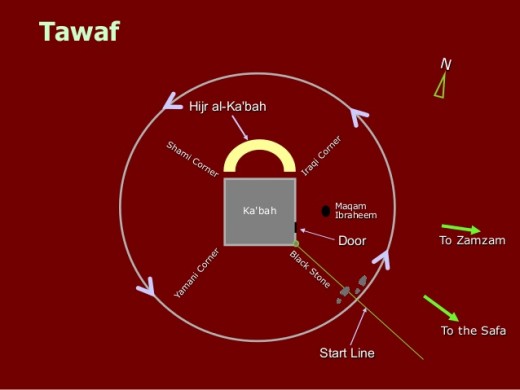
Salah (Prayer) inside the Ka’bah (Hijr) is preferred and is a means of drawing close (to Allaah)

Hijr Ka'bah Makkah Masjid al haram

Making Takbir, then du’aa to Allaah after praying two rak’ah inside the Ka’bah (Hijr) is a Sunnah

Question: Is salat inside the Ka’bah in any way superior to salat outside it, and is it permissible for a person to speak of what he has seen inside the ka’bah?

Answer by The Permanent Committee: Salat inside the Ka’bah is preferred, if it is possible to do so without any inconvenience, difficulty or harm to anyone, as the Prophet (salallaahu ‘alaihi wa sallam) entered it and prayed therein, according to an authentic narration in the Sahihain (Two Sahihs). And it has been reported from him (salallaahu ‘alaihi wa sallam) that he came out one day looking sad, and he said: “Verily, I fear that I may have placed a burden upon my Ummah (i.e. by entering the ka’bah).” [1]

And when ‘A`ishah (radiallaahu ‘anha) asked him about salat in the Ka’bah, he said: “Pray in the Hijr, because it is a part of the House.” [2]

This proves that salat inside the Ka’bah is preferred and is a means of drawing close (to Allaah) and an act of obedience, and in it is great merit.

However, it is not fitting that there should be crowding, or harm, or doing anything which causes difficulty to him or to the people. It is enough for him to pray in the Hijr, because it is a part of the House; and there is no objection to speaking about what he has seen inside the Ka’bah, such as its inscriptions, or what is on its ceiling or the like. There is no objection to a person talking and saying: “I saw such and such and such and such.” There is no sin in that.

The Sunnah, when one enters the Ka’bah, is to pray two rak’ahs and to say “Allaahu Akbar” and invoke Allaah, the Almighty, the All-Powerful with whatever supplications are easy for him at the end of it, especially those which have been reported (from the Prophet, salallaahu ‘alaihi wa sallam) because the Prophet (salallaahu ‘alaihi wa sallam) entered the Ka’bah and prayed therein, then he performed Takbir and supplicated Allaah. All of this has been authentically reported from him (salallaahu ‘alaihi wa sallam).

The Permanent Committee; Fatawa Islamiya, Volume 2

[1] Abu Dawud no. 2029.
[2] Abu Dawud no. 2028; Ahmad 6:92

Surah Al-Qiyamah (075) – The Resurrection – Qari Khalid al-Wassabee Must watch !!

Excellent video – with english subtititles

The Etiquettes of Slaughtering – Imaam Muhammad bin Saalih Al-‘Uthaimeen

AUTHOR: Imaam Muhammad bin Saalih Al-‘Uthaimeen
SOURCE: Talkhees Ahkaam-ul-Udhiyah wadh-Dhakaat
PRODUCED BY: Al-Ibaanah.com

There are certain etiquettes one must abide by when slaughtering an animal for a sacrificial offering. However, these etiquettes are not conditional for the validity of a sacrifice. So the sacrifice is still valid even in their absence. Among these etiquettes are:

1. He should face the Qiblah with the animal at the time of slaughtering.

2. He must slaughter the animal in a good manner, which is by quickly and firmly passing a sharpened blade over the neck area.

Some scholars hold the view that this etiquette is obligatory based on the implication found in the Prophet’s saying: “Verily Allaah has prescribed proficiency in everything. So when you kill, kill proficiently. And when you sacrifice, sacrifice proficiently. Each of you should sharpen his blade and lessen the pain inflicted on his sacrificial offering.” [Reported by Muslim]

This opinion is the correct view.

3. The slaughter of a camel must be done by cutting the area just below the neck and above the chest. This is known as nahr. As for all other types of animals, their necks should be sliced.

A camel should be slaughtered while standing and with its (front) left leg tied. If it is difficult to do it this way, the camel can be slaughtered while kneeling.

As for all of the other animals, they are to be slaughtered while lying flat on their left side. However, if the one slaughtering is a lefty, he may use his left hand and lay the animal down on its right side. This is so long as doing it this way is easier upon the animal and more convenient for the one slaughtering.

It is also prescribed for him to place his foot on the collar of the animal to give him better control. As for making the animal kneel and tying its legs together, there is no basis for this in the Sunnah. Some scholars mentioned that one of the reasons why the legs should not be tied is so that the outflow of blood can increase as a result of the animal’s constant motion and instability.

4. The throat and esophagus of the animal should be cut in addition to its jugular veins. For more on this, refer to the discussion on this under the eighth condition of slaughtering.

5. The blade should be concealed from the view of the animal when sharpening it. This means that the animal should not see the blade until the time of the actual slaughter.

6. One should glorify Allaah (by saying Allaahu Akbar) after mentioning His Name (by saying Bismillaah) when slaughtering.

7. One should name the person whom the sacrificial offering (udhiyah) or ‘aqeeqah is being performed for after mentioning Allaah’s Name and glorifying Him. He should also ask Allaah to accept it from him.

So for example, he should say: “In the Name of Allaah, Allaah is the Greatest. O Allaah, this is from You and for You on behalf of me” if he is performing the slaughter for himself or “…on behalf of so and so” if the slaughter is being done on behalf of someone else. And he should say: “O Allaah, accept this from me” if he is performing the slaughter for himself or “…accept this from so and so” if the slaughter is being done on behalf of someone else.

Published on: December 18, 2007

The Conditions of a Sacrificial Offering – Shaykh Ibn Uthaymeen

AUTHOR: Imaam Muhammad bin Saalih Al-‘Uthaimeen
SOURCE: Talkhees Ahkaam-ul-Udhiyah wadh-Dhakaat (pg. 12-16)
PRODUCED BY: Al-Ibaanah.com

There are six conditions that a sacrificial offering (udhiyah) must meet:

The First Condition: The sacrificial offering must be an animal from among cattle, which include camels and cows, or smaller livestock such as sheep and goats. This is based on Allaah’s statement:

“And for every nation We have appointed religious ceremonies that they may mention the Name of Allaah over the beasts of cattle that He has given them for food.” [Surah Al-Hajj: 34]

The term “beasts of cattle” refers to camels, cows, sheep and goats. This definition is well known amongst the Arabs as stated by Al-Hasan, Qataadah, and others.

The Second Condition: It must have reached the required age that is in accordance with the religious standards such as six-months for sheep and one-year and up for everything else. The Prophet said: “Do not slaughter any animal except for one that is mature in age unless that is difficult for you, in which case you may slaughter a premature one from among sheep.” [Reported by Muslim] [1]

“Mature in age” is the age at which an animal is considered fully developed as well as any age beyond that, while “premature” is the age before that. With respect to a camel, a mature-aged one is one that has completed five years. With respect to a cow, a mature-aged one is one that has completed two years. A mature-aged sheep is that which is one-year old while a premature sheep is one that has competed half a year (up to one year).

So based on this, it is invalid to slaughter a camel, cow, and goat if it is under its respective “mature” age as well as a sheep if it is under six months of age.

The Third Condition: The animal must be free of any defect that would prevent its slaughter from being valid and acceptable. These defects are of four types:

1. Clear defectiveness of the eye: This is when the animal’s eye becomes sunken or it sticks out to the point that it looks like a knob or it becomes a pale white indicating clearly that it is one-eyed.

2. Clear illness: This is when the animal exhibits signs of sickness, such as a fever that keeps it from grazing and causes a loss of appetite, or an obvious scabies infection that will spoil its meat and harm a person’s health (if he eats it), or a deep wound that threatens to affect its health and so on.

3. Clear limping: This is when the animal is unable to step safely (without hurting itself) when walking.

4. Emaciation that causes brain loss: This is based on what the Prophet said when he was asked about what types of animals one should avoid when sacrificing. He gestured with his hand and said: “They are four: The lame animal that clearly walks crookedly; the one-eyed animal that clearly has a defect in the eye; the sick animal that clearly has signs of illness; and the emaciated animal that is (usually) not picked.” [2]

This hadeeth was reported by Maalik in al-Muwatta from Al-Baraa’ bin ‘Aazib. In another version of this report narrated by Al-Baraa’ found in the Sunan collections, he said: “The Messenger of Allaah stood up amongst us and said: ‘Four types (of animals) are not permissible to use as sacrificial offerings…’ and he went on to mention them.” [3]

So therefore if these four defects are found in an animal, they prevent its slaughter and sacrifice from being valid. This goes as well for any other defect that is similar to or worse than these, which means that it is also not valid to sacrifice the following types of animals:

1. A blind animal that cannot see with both its eyes.

2. An animal suffering from nausea until it releases its load and its harm is removed.

3. An animal that has been assisted in giving birth if natural delivery is difficult until the threat of danger is removed.

4. An animal afflicted by something fatal such as choking, falling from a high place, and so on until the threat of danger is removed.

5. A crippled animal, which is an animal that cannot walk due to a physical disability.

6. An animal with one of its front legs or back legs broken.

So if these last defects are added to the four mentioned in the narrations, the types of animals that cannot be slaughtered become ten in total. There are these six types plus the animals that suffer from the four previously mentioned defects.

The Fourth Condition: The sacrificial offering must be owned by the one slaughtering it or if not, he must have the right to slaughter it based on religious grounds or based on the approval of the animal’s owner. So if someone sacrifices an animal that does not belong to him, such as one that has been confiscated, stolen, or taken under false pretenses, such a sacrifice is not valid. This is since it is not permissible to draw near to Allaah by way of disobeying Him.

It is also valid if an orphan’s guardian sacrifices an animal for him using his (i.e. the orphan’s) money if this is what the orphan is accustomed to and if his heart will be broken if one is not sacrificed.[4] It is also permissible for a representative to perform the sacrifice using the funds of the person commissioning him with his permission.

The Fifth Condition: No other person’s right should be associated to the animal being slaughtered. So for example, it is not valid to sacrifice an animal that is being held as mortgage on a loan.

The Sixth Condition: The animal should be slaughtered in the specific time-frame legislated in the Religion, which is from the time after the ‘Eid Prayer on the Day of Sacrifice[5] until the sun sets on the last of the days of Tashreeq, which is the thirteenth day of Dhul-Hijjah. So therefore, the days in which the sacrifice is permitted are four: the day of ‘Eid, after prayer, and the three days after that (i.e. the days of Tashreeq).

So whoever performs the sacrifice before the end of the ‘Eid Prayer or after the sun sets on the thirteenth day (of Dhul-Hijjah), his sacrificial offering is not valid. This is based on what Imaam Al-Bukhaaree reported from Al-Baraa’ bin ‘Aazib who narrated that the Prophet said: “Whoever sacrifice an animal before the (‘Eid) Prayer), it is just meat that he presents to his family and not a sacrificial offering at all.” [6]

Al-Bukhaaree also reported that Jundub bin Sufyaan Al-Bajlee narrated: “I witnessed the Prophet say: ‘Whoever slaughters an animal before praying (the ‘Eid Prayer) should slaughter another animal (as sacrifice) in its place.’” [7]

Nubaishah Al-Hadhlee narrated that Allaah’s Messenger said: “The days of Tashreeq are days of eating, drinking and remembrance of Allaah.” [Reported by Muslim] [8]

However, if one has a valid excuse for delaying the slaughter past the days of Tashreeq, such as if the animal runs away from him, due to negligence on his part, and he only finds it after the time-frame for slaughtering has passed. Another example is if a person entrusts someone to slaughter the animal for him but that person forgets to do it until the time has passed. In situations such as these, there is no sin in slaughtering after the prescribed time-frame since there is a valid reason for the delay.

This is also based on the analogy of it being similar to a person who sleeps passed the time of prayer or forgets to do it until its time passes, for he may pray it either when he wakes up or when he remembers.

It is allowed to perform the sacrifice any time during the days of Tashreeq, whether day or night. However, slaughtering during the daytime is better, and doing it on the day of ‘Eid after the two khutbahs is better than that. Each day is better than the day that comes after it, in terms of performing the sacrifice, since that reflects one’s quickness and eagerness to carry out good deeds.

Footnotes:

[1] Saheeh Muslim: Book of Sacrificial Offerings (1963)

[2] Al-Muwatta: Book of Sacrificial Offerings (1)

[3] Sunan Abee Dawood: Book of Sacrificial Offerings (2802); Sunan at-Tirmidhee: Book of Sacrificial Offerings (1497); Sunan an-Nasaa’ee: Book of Sacrificial Offerings (4369); Sunan Ibn Maajah: Book of Sacrificial Offerings (3144); and Musnad Ahmad (4/300)

[4] Translator’s Note: Perhaps the orphan is accustomed to the sacrifice because this was his experience with his parents before he lost them. So if this tradition that he used to partake in with his family is not kept, it will cause his heart to be broken.

[5] Translator’s Note: The Day of Sacrifice, i.e. Yawm-un-Nahr, is the day of ‘Eid, while the days of Tashreeq are the three days that follow it.

[6] Saheeh al-Bukhaaree: Book of Sacrificial Offerings (5545) and Saheeh Muslim: Book of Sacrificial Offerings (1961)

[7] Saheeh al-Bukhaaree: Book of Sacrificial Offerings (5562) and Saheeh Muslim: Book of Sacrificial Offerings (1960)

[8] Saheeh Muslim: Book of Fasting (1141)

Published on: December 8, 2007

Hajj Contemplations – Dr. Saleh as-Saleh rahimahullaah

Source : Transcribed from : Hajj and Tawheed | Dr. Saleh as-Saleh rahimahullaah

1. This is a journey that was taken by Prophets and Messengers before you. Those who take the path of the Prophets magnify the tawheed of Allah and His House. There are those, however, who come to perform hajj and their hearts are attached to other than Allaah. They invoke the dead and the righteous, whether present or absent. This is the opposite of tawheed, it is shirk no matter what they call it because it is setting up rivals besides Allaah. So, free your intention from any kind of devotion to other than Allaah. Repent and come with a sincere heart submitting to Allaah remembering what Ibraheem and his son Ismaa’eel said when they were raising the foundations of Allah’s House, the ka’bah:

“Our Lord! And make us submissive unto You and of our offspring a nation submissive unto You, and show us our Manasik (all the ceremonies of pilgrimage – Hajj and ‘Umrah, etc.), and accept our repentance. Truly, You are the One Who accepts repentance, the Most Merciful.”

(Baqarah 2:128)

2. You are set to depart and you may or may not return to your home. Make this journey to Allaah’s House as Allaah wants it. Think of the next journey that is surely coming, the one that leads to the meeting of Allaah, Most High. This raises questions like: What did I prepare for that Day? Am I following Allaah’s Commands? Am I a follower of the sunnah of Muhammad salAllahu ‘alayhi wasallam? Do I really know of Allaah? Am I a believer that Allaah is above the seven heavens over his ‘arsh as He has stated in His Book and as His Messengers have asserted? Am I a believer that believes Allah has a true Face that suits His Majesty as He has affirmed in the Qur’aan and as has been affirmed by His Prophet Muhammad salAllaahu ‘alayhi wasallam? Am I a believer in all of Allaah’s Names, Attributes and Actions which He has affirmed in His Book and by His Messengers? Or do I just take and accept by my doubt, rejecting, or distorting the meanings of Allaah’s Attributes and Actions?

And invoke not any other ilah (god) along with Allah, La ilaha illa Huwa (none has the right to be worshipped but He). Everything will perish save His Face. His is the Decision, and to Him you (all) shall be returned.

(Al-Qasas 28:88)

3. Know, may Allaah’s Mercy be upon you, that when you reach the meeqaat there is another meeqaat that is still to come. It is the meeqaat (appointed meeting) on the Day of Ressurection:

Say (O Muhammad salAllaahu ‘alayhi wasalaam): “(Yes) verily, those of old, and those of later times. All will surely be gathered together for appointed Meeting of a known Day. (Al-Waqi’ah 56:49-50)

4. When you start the talbiyah remember the Command of Allaah ‘azza wa jall to the Prophet Ibraaheem ‘alayhi salaam:

And proclaim to mankind the Hajj (pilgrimage). They will come to you on foot and on every lean camel, they will come from every deep and distant (wide) mountain highway (to perform Hajj). (Al-Hajj 22:27)

The talbiyah you make is in response to the Prophet Ibraaheem’s proclamation to visit Allaah’s house of worship. Allaah is Most Great.

5. Upon entering Makkah remember that you are in the Secure Sanctuary:

Have We not established for them a secure sanctuary (Makkah), to which are brought fruits of all kinds, a provision from Ourselves, but most of them know not.

(Al-Qasas 28:57)

Let one commit himself to repentance, having a good opinion of Allaah, hoping that Allaah will grant him security from His Punishment.

6. You will enter one of the gates of al-Masjid al-Haraam. Then there you are before the magnificent House of Allaah, Most High, the ka’bah. Now you see what you hoped to see for a long time. Thank Allaah subhanahu wa ta’ala for making this possible and hope that He ‘azza wa jall will grant you the greatest reward of seeing His Majestic Face on the Day of Resurrection. This thankfulness is not just in saying “alhamdu-lillaah,” but also by obeying Allaah while on hajj and for the rest of your life.

7. You start your tawaaf knowing that it is a great time for magnifying Allaah the Exalted. Remember Him ‘azza wa jall by His Names, Attributes and Actions. Also while in tawaaf try to reflect upon the time when Prophet Muhammad salAllaahu ‘alayhi wasallam was prevented from doing the same thing you are doing today. Then think about what he did in clearing out the site from the symbols signifying worship to other than Allaah! All idols were demolished. Busy yourself with du’aa. Ask Allaah, the Most Great, to make you hold to the correct belief and Path of the salaf and make you die on it. Ask Allaah to save you from all forms of shirk and bid’ah.

8. While in sa’yi, contemplate on Haajar, the mother of Ismaa’eel, when she asked her husband Ibraaheem ‘alayhi salaam: “Did Allah order you to do this (leaving her and her baby Ismaa’eel in Makkah)? He said: “Yes.” Her great response was: “Then He (Allaah) will not neglect us!” Think about this great dependence upon Allaah when you are in the sa’yi walking the same path which Haajar took in search for water and for means of life around the mounts of Safa and Marwah.Think about her endurance, perseverance and trust in Allaah. The sa’yi exemplifies the strong belief that we are in need of One Who Sustains and Provides – Allaah, the Exalted.

Think about Ibraaheem’s invocation on his way homeward to Palestine:

O our Lord! I have made some of my offspring to dwell in an uncultivable valley by Your Sacred House (the Ka’bah at Makkah); in order, O our Lord, that they may perform As-Salat (Iqamat-as-Salat), so fill some hearts among men with love towards them, and (O Allah) provide them with fruits so that they may give thanks. (Ibrahim 14:37)

Men and fruits came to Makkah from many places. Ibraaheem ‘alayhi salaam returned to visit and later to share with his son Ismaa’eel the noble task of raising the foundations of the ka’bah.

9. The standing on ‘Arafaat is the hajj. The crowds should remind you of the Day of Resurrection. Humble yourself to Allaah, manifest your ‘uboodiyyah to Him Alone through du’aa, sincere intention and strong determination to free yourself from the sins of the past and to build up a commitment to rush for doing what is good. Think of becoming a better person when you return. Rid yourself of false pride and showing off because it may ruin what you gain on this day.

10. You gathered the pebbles and you are about to embark on stoning the jamaraat. This is an act of obedience and remembrance of Allaah, Most Magnificent. The Prophet salAllaahu ‘alayhi wasallam said: “When you cast the small pebbles (i.e. at the jamaraat), it will be a light for you on the Day of Resurrection.” (1)

11. When performing the sacrifice remember the saying oh Allaah, the Most High:

It is neither their meat nor their blood that reaches Allah, but it is piety from you that reaches Him. (Al-Hajj 22:37)

12. When you have completed your hajj, do not think that the remembrance of Allaah has ended. Listen to what Allah ‘azza wa jall says:

So when you have accomplished your Manasik [i.e. the rites of hajj] remember Allah as you remember your forefathers or with a far more remembrance.

(Al-Baqarah 2:200)

Special note: If you go to Madeenah then the objective of your visit should be according to the sunnah and not bid’ah. Your intention is to set on a journey to visit the Prophet’s mosque and not his grave. When you reach the mosque and you pray upon entering then you may go to the grave and say, “Assalamu ‘alayka ayyuhan-nabiyy.” (2) The same salaam is also mentioned when you pass by Abu Bakr and ‘Umar without innovations like:

a. Visiting the grave of the Prophet salAllahu ‘alayhi wasallam before praying in the mosque.

b. Making du’aa facing the grave.

c. Seeking nearness to Allaah by means of the Prophet salAllaahu ‘alayhi wasallam. This is a prohibited form of tawassul.

d. Seeking intercession from the Prophet salAllaahu ‘alayhi wasallam.

e. Placing the hands upon the grills around the room containing the Prophet’s grave to seek blessings, etc. (3)

Remember the Prophet’s salAllaahu ‘alayhi wasallam sayings:

“Do not make my grave an ‘eed (place of celebration)…” (4)

“May Allaah’s curse be on the Jews and Christians for taking the graves of their Prophets as places of worship.” (5)

“Those before you took the graves of their Prophets as places of worship. Do not take graves as places of worship for verily I forbid you to do so.” (6)

13. The journey is not meant to gain any material reward. It is a selfless sacrifice solely for Allaah, Most Majestic. It demands true love and fear of Him. It should be performed with full consciousness of one’s heart, with full humility and submission to Allaah. It should not be thought of as a tourist-type excursion or be performed as mere physical rites. It develops sincerity, piety, humility, self-control, sacrifice, and true knowledge of the meaning of submission and obedience to Allaah, Most High. It helps the pilgrim to be a better person who is devoted to Allaah in every aspect of his life.

Footnotes:

(1) Reported by Al-Bazzaar in his Zawaa’id (p. 113) on the authority of Ibn ‘Abbas. Al-Haafith Ibn Hajar reported that its isnaad is hasan. This hadeeth is reported by Shaykh Al-Albaani in his Silsilat al-Ahaadeeth as-Saheehah, V.6, hedeeth #2515

(2) The position of the scholars regarding visiting the gravesites by women can be summarized as follows:

(a) Disliked but not unlawful, (b) Allowable, if done infrequently. If a woman is known as being unable to behave herself within the limits of sharee’ah at a gravesite, then she should be prevented from visiting the graves, (c) Forbidden, and (d) A grave sin

Many scholars state that women visiting the Prophet’s mosque may pronounce the salaam upon the Prophet salAllaahu ‘alayhi wasallam wherever the person may be. The Prophet salAllahu ‘alayhi wasallam is in a state of barzakh (a state of existence that begins with death and lasts until the Day of Resurrection), the nature of which is only known to Allaah, Most High. [See ash-Sharhul Mumti’, V.5, pp. 475-478]

3. Refer to Shaykh Al-Albaani’s book Manaasik al-Hajj wal ‘Umrah for more details.

4. Collected by Abu Daawood, [sunan Abee Daawwood (English Translation), V.2, pp. 542-543,
hadeeth #2037], and Ahmad (2:367). Shaykh Al-Albaani stated its isnaad (chain of narrators) is hasan (correct). [See Tahtheer as-Saajid min Ittikhaathil Quboor Masaajid by Shaykh Muhammad Naasirud-Deen Al-Albaani (4th edition), [Beirut: al-maktab al-islaami, 1403/1983], p.97]

5. Collected by Al-Bukhari [Saheeh al-Bukhari (Arabic/English), V.2, p.232,
hadeeth#414],and Muslim [Saheeh Muslim (English trans.), V.1, p.268,
hadeeth #1074], Abu Daawood, At-Tirmithee, An-Nassaa’i, and Ibn Majah.

6. Saheeh Muslim, (English trans.), V.1, p. 269, hadeeth #1063

Source

Begin with Yourself – Gems and Jewels

A man went to Ibn ‘Abbas radiAllaahu ‘anhu and said, “O Ibn ‘Abbas, I want to enjoin people to do good and forbid them from doing evil.” Ibn ‘Abbas said, “And have you reached that level?” He said, “I hope that that is so.” He said, “If you do not fear to be exposed by three verses of Allah’s Book, then do so.” The man asked, “And what are they?” He mentioned this verse:

Enjoin you Al-Birr (piety and righteousness and each and every act of obedience to Allâh) on the people and you forget (to practise it) yourselves.” (Baqarah 2:44)

And then asked, “Have you applied the implications of this verse?” He said, “No.” Ibn ‘Abbas then mentioned the second verse:

O you who believe! Why do you say that which you do not do? Most hateful it is with Allâh that you say that which you do not do. (As-Saff 61:2-3)

After that he asked, “Have you applied the implications of this verse?” He said, “No.” He then mentioned the third verse regarding Shu’aib alayhi salaam:

“I wish not, in contradiction to you, to do that which I forbid you.” (Hud 11:88)

And then he asked, “Have you applied the implications of this verse? He said, “No.”

Ibn ‘Abbas said, “Then begin with yourself.

Source : Transcribed from: Gems and Jewels | Compiled by: Abdul-Malik Mujahid | DarusSalam

Knowledge is Goodness in this World – Imam Ibn al Qayyim

Sparkles from the Pearls Of knowledge –
Taken from ‘Miftah dar as-Sa’ada’(Key to the land of happiness) By Shaykh ul-Islaam Ibn Qayyim al-Jawziyyah
Translated by Abbas Abu Yahya

Al-Hasan said regarding “the saying of Allaah Ta’aala << “Our Lord! Give us in this world that which is good!” >> [ Baqarah: 201]

It is knowledge and worship.

And regard Allaah’s saying <<and in the Hereafter that which is good>> [ Baqarah : 201 ]

It is Paradise.”

This is from the best explanations of this Ayaah indeed the greatest of the goodness of this world, is beneficial knowledge and good actions.

Vol 1/102/397

Source : Sparkles from the Pearls of Knowledge – Ibn al Qayyim

The Obligation of Seeking Refuge from Four Things Before the Dua’ in Tashahud – Shaykh al-Albaani

Taken from the ‘Original Sifat as-Salah
By Shaykh Muhadith Nasir as-Sunnah ,Muhammad Nasir- Deen Al-Albaani
Translated by Abbas Abu Yahya

‘The Messenger -sallAllaahu alayhi wa sallam- used to say: ‘If one of you finishes from the [last] (1) Tashahud; then he should seek refuge (2) with Allaah from four things; [he says:
‘O Allaah I seek refuge with You] from the punishment of the Hell-Fire, and from the punishment of the grave, and from the Fitna of life and death, and from the evil of the Fitna (trials) of the Maseeh ad-Dajjal.’ [then he makes Dua’ for himself with that which appears apparent to him (3)] [He -sallAllaahu alayhi wa sallam- would make Dua’ with it in Tashahud] (4) [He -sallAllaahu alayhi wa sallam- used to teach it to his Companions Radi Allaahu anhum just as he would teach them a Soorah from the Qur’aan.](5)

_________________

Shaykh Albani’s footnotes:

(1) The benefit of this extra wording is the legislation of this ‘seeking refuge’ in the last Tashahud rather than the first Tashahud; this is in contrast to what Ibn Hazm said in ‘al-Muhalla’ (3/271) and Ibn Daqeeq al-Eid followed him in this, whereby he said: ‘The chosen way is to make Dua’ in the first Tashahud, like making Dua’ in the last Tashahud, due to the general authentic hadeeth:

‘If one of you makes Tashahud; then he should seek refuge with Allaah from …’

Al-Hafidh said in ‘al-Talkhees’ (3/507):

‘And he commented that it is in ‘as-Saheeh’ (al-Bukhari) from Abu Huriara with the wording:

‘If one of you finishes from the last Tashahud; then he should seek refuge with Allaah from …’

Ibn al-Qayyim said in ‘Za’ad’:

‘The Messenger -sallAllaahu alayhi wa sallam- did not seek refuge in the first Tashahud – from the punishment of the grave and punishment of the Fire …. Etc.

Whoever recommended saying it, (in the last Tashahud) had understood this standing from the general texts, but the absolute texts indeed correctly clarified its position, and restricted it to the last Tashahud.’

Then al-Hafidh said in ‘al-Fath’ (2/253) after bringing the hadeeth:

‘So in this hadeeth this ‘seeking refuge’ is specified to after finishing the Tashahud; and this Dua’ precedes all other Duas. As for when the person praying is given the permission to choose which Dua’ he wants to supplicate with, then this is after the ‘seeking refuge’ and before giving the Salams.’

I say (Albani): ‘And the extra wording is at the end of the hadeeth – ‘then he makes Dua’ for him-self with what he wants.’ And this is a text to show that seeking refuge is in the second Tashahud.’

(2) This shows clearly that seeking refuge is obligatory and some of the Ahl-ul-Dhahir hold this opinion – and from them is Ibn Hazm (3/271)).

Al-Hafidh said (2/256):

‘Some of the people claimed that there is a consensus that it is not obligatory, however there is a problem with this; because AbdurRazaq narrated with an authentic Isnaad from Tawwoos, indicating that he holds the ‘seeking refuge’ to be obligatory. This was when he asked his son; if he had said it after the Tashahud?

And his son replied: No.

Tawwoos ordered him to repeat the prayer.’

I say (Albani): Indeed Muslim narrated this in his ‘Saheeh’ (2/94) as it came from Tawwoos.

Al-Hafidh said:

‘Ibn Hazm was over generalizing when he said that you should also say it in the first Tashahud.

Ibn al-Mundhir said: if it was not for the hadeeth of Ibn Mas’ood whereby he narrated that: ‘then the person has a choice of what to make Dua’ with’ then I would have said it was obligatory.’

I say (Albani): This choice of making Dua’ excludes ‘seeking refuge from these four things’, so due to the evidence this choice of making Dua’ becomes restricted, to be said after finishing ‘seeking refuge from these four things’ – has as preceded – ; so the truth is that it is obligatory, and Allaah knows best.

(3) From the hadeeth of Abu Huraira -Radi Allaahu anhu- collected by Muslim, Abu ‘Awaanah, Ibn Majah and Ahmad.

(4) From the hadeeth of Abdullaah bin Abbas -Radi Allaahu anhu- collected by Abu Dawood and this sanad is Hasan, its narrators are all narrators of Muslim.

(5) From the hadeeth of Abdullaah bin Abbas -Radi Allaahu anhu- collected by Malik and Muslim, and from him Abu Dawood, Nisae’ and Tirmidhi.

[‘Original Sifat as-Salah’ vol. 3/p.998 – 1001]

Mahkmoom Heart and a Truthful Tongue – Silsilah Ahadeeth As-Saheehah of Shaykh Al-Albaani

On the authority of Abdullaah bin ‘Amr who said: Someone asked :

O Messenger of Allaah! Who are the best of the people?’

He answered: ‘Everyone who has a mahkmoom heart and a truthful tongue.’

They asked: ‘We know what a truthful tongue is, but what is a mahkmoom heart?’

He said: ‘A pious, pure one, which has no sin in it nor is it oppressive, nor does it have hatred and jealousy.’

Silsilah Ahadeeth As-Saheehah of Shaykh Al-Albaani – No.948

Source : Some Ahadeeth pertaining to Manners, Righteousness & Keeping Good Relations – 01 | 02 | 03 | 04 | 05 | 06| 07 | 08 – Taken from Silsilah Ahadeeth As-Saheehah of Shaykh Al-Albaani – Translated by Abbas Abu Yahya

Ruling Regarding Standing for National Anthems or Flags – Permanent Commitee

Q: Is it permissible to stand in honor of a national anthem or flag?

A: It is not permissible for a Muslim to stand in honor of a national anthem or flag; this is a repudiated Bid‘ah (innovation in religion) as it did not happen during the time of the Messenger of Allah (peace be upon him) or that of the Rightly-Guided Caliphs (may Allah be pleased with them). It also runs counter to the perfection of due, pure Tawhid (monotheism) and to the sincerity of dedicating all glorifications to Allah Alone. It is a means that can lead to Shirk (associating others with Allah in His Divinity or worship) and involves imitation of the Kufar (disbelievers) and their bad customs, as well as their excessive glorification of their leaders and their exaggerated ceremonies. The Prophet (peace be upon him) prohibited acting like and imitating the disbelievers.

May Allah grant us success. May peace and blessings be upon our Prophet Muhammad, his family, and Companions.

The Permanent Committee for Scholarly Research and Ifta’
Chairman : Shaykh Abdul-`Aziz ibn `Abdullah ibn Baz

Fatwas of the Permanent Committee>Group 1>Volume 1: `Aqidah (1)>Creeds>Venerating other than Allah>Standing up as a way of honoring the national anthem


Cure For Self Amazement – Imaam Ibnul Qayyim

Imam Ibnul Qayyim (rahimahullaah) states in Al Fawaa-id that Ibn Sad (rahimahullaah) mentions in At Tabaqaat about Umar Bin Abdul Azeez (rahimahullaah) that:

Whenever he delivered a khutbah on the mimbar, and feared being amazed by himself; he would terminate it (i.e. the khutbah)

And whenever he wrote a letter and feared amazement by way of it; he would tear it.

And he would say: ”O Allaah! I seek refuge in you from the evil of my nafs.’

Source: Al Fawaa-id of Imaam Ibnul Qayyim (rahimahullaah) (page: 225)

What does Isti’adhah mean? – Tafseer Ibn Kathir

Isti’adhah : Seeking Refuge with Allah – Tafseer Ibn Kathir – Surah Fatihah

Isti`adhah : “a uthu billahi minash Shaitaanir Rajeem”

Isti`adhah means, “I seek refuge with Allah from the cursed Satan so that he is prevented from affecting my religious or worldly affairs, or hindering me from adhering to what I was commanded, or luring me into what I was prohibited from.” Indeed, only Allah is able to prevent the evil of Satan from touching the son of Adam. This is why Allah allowed us to be lenient and kind with the human devil, so that his soft nature might cause him to refrain from the evil he is indulging in. However, Allah required us to seek refuge with Him from the evil of Satan, because he neither accepts bribes nor does kindness affect him, for he is pure evil. Thus, only He Who created Satan is able to stop his evil. This meaning is reiterated in only three Ayat in the Qur’an. Allah said in Surat Al-A`raf,

(Show forgiveness, enjoin what is good, and turn away from the foolish (i.e. don’t punish them).) (7:199)

This is about dealing with human beings. He then said in the same Surah,

(And if an evil whisper comes to you from Shaytan, then seek refuge with Allah. Verily, He is Hearing, Knowing (7: 200).)

Allah also said in Surat Al-Mu’minun,

(Repel evil with that which is better. We are Best-Acquainted with the things they utter. And say: “My Lord! I seek refuge with You from the whisperings (suggestions) of the Shayatin (devils). And I seek refuge with You, My Lord! lest they should come near me.” (23:96-98).)

Further, Allah said in Surat As-Sajdah,

(The good deed and the evil deed cannot be equal. Repel (the evil) with one which is better, then verily he, between whom and you there was enmity, (will become) as though he was a close friend. But none is granted it (the above quality) except those who are patient ـ and none is granted it except the owner of the great portion (of happiness in the Hereafter, i.e. Paradise and of a high moral character) in this world. And if an evil whisper from Shaytan tries to turn you away (from doing good), then seek refuge in Allah. Verily, He is the Hearing, the Knowing) (41:34-36).

The Tafsir of Isti`adhah (seeking Refuge)

Allah said,

(Show forgiveness, enjoin what is good, and stay away from the foolish (i.e. don’t punish them). And if an evil whisper comes to you from Shaytan (Satan), then seek refuge with Allah. Verily, He is Hearing, Knowing) (7:199-200),

(Repel evil with that which is better. We are Best-Acquainted with things they utter. And say: “My Lord! I seek refuge with You from the whisperings (suggestions) of the Shayatin (devils). And I seek refuge with You, My Lord! lest they should come near me.”) (23:96-98) and,

(Repel (an evil) with one which is better, then verily he with whom there was enmity between you, (will become) as though he was a close friend. But none is granted it except those who are patient ـ and none is granted it except the owner of the great portion (of happiness in the Hereafter, i.e. Paradise and of a high moral character) in this world. And if an evil whisper from Shaytan tries to turn you away (O Muhammad ) (from doing good), then seek refuge in Allah. Verily, He is the Hearing, the Knowing.) (41:34-36) These are the only three Ayat that carry this meaning. Allah commanded that we be lenient human enemy, so that his soft nature might make him an ally and a supporter. He also commanded that we seek refuge from the satanic enemy, because the devil does not relent in his enmity if we treat him with kindness and leniency. The devil only seeks the destruction of the Son of Adam due to the vicious enmity and hatred he has always had towards man’s father, Adam. Allah said,

(O Children of Adam! Let not Shaytan deceive you, as he got your parents ﴿Adam and Hawwa’ (Eve)﴾ out of Paradise) (7:27),

(Surely, Shaytan is an enemy to you, so take (treat) him as an enemy. He only invites his Hizb (followers) that they may become the dwellers of the blazing Fire) (35:6) and,

(Will you then take him (Iblis) and his offspring as protectors and helpers rather than Me while they are enemies to you What an evil is the exchange for the Zalimun (polytheists, and wrongdoers, etc)) (18:50).

The devil assured Adam that he wanted to advise him, but he was lying. Hence, how would he treat us after he had vowed,

(“By Your might, then I will surely, mislead them all. Except Your chosen servants among them (i.e. faithful, obedient, true believers of Islamic Monotheism).”) (38:82-83)

Also, Allah said,

(So when you ﴿want to﴾ recite the Qur’an, seek refuge with Allah from Shaytan, the outcast (the cursed one). Verily, he has no power over those who believe and put their trust only in their Lord (Allah). His power is only over those who obey and follow him (Satan), and those who join partners with Him.) (16:98-100).

Continue reading the full article @ Isti’adhah : Seeking Refuge with Allah – Tafseer Ibn Kathir – Surah Fatihah

Story of Barsisa, the worshipper – Imam Ibn al-Jawzi

Shytaan appears as a sincere adviser to humans

Source : Quoted in ibn al-Jauzi, Talbees Iblees, p.39

“And he swore unto them (saying): Lo! I am a sincere adviser unto you” (al-Araaf 21).

Wahb ibn Munabbih has related the following lengthy story from the people of the book.” We present it here to show the way of Shytan in his attempt to mislead mankind. The story warns humans about Shytan”s “sincere advice”. One must oppose the thing that Shytan is calling to. Wahb said,

There was a pious worshipper of the tribe of Israel. He was the most pious person of his time. During his time, there were three brothers who had a sister. She was a virgin. And they had no sister other than her. They were all about to leave the town to go to war. They did not know with whom to leave their sister and who they could trust to look after her. They all agreed to leave her with that pious person. They all trusted him. They went to him and asked if they could leave her with him. She would be in the building next to him until they return from the fighting. He refused their request and sought refuge in Allah from them and their sister. They persisted until he finally acquiesced. He said, “Put her in the house next to my place of worship.” So they put her in that house and they left, leaving her there. She remained living next to that pious person for some time. He would put food for her in front of his building of worship. Then he would lock the door and return to his place of worship. He would then tell her to come out of her house and take the food. Then Shytan approached him softly. He encouraged him to treat her kindly. He told him that it was not good to make the woman come out of her house during the day as someone may come upon her. If he took the food directly to her door that would mean a greater reward for him.

He continued for some time to go to her door and place the food at the front of her door without speaking to her. Then Iblees came again and encouraged him to do good and get more reward. He said, “If you took her the food and placed it in the house for her, you would get a greater reward.” He continued to encourage him. So he started to take the food into her house. He continued like that for some time.

Then Iblees came again and again encouraged him to do good. He said, “If you talk to her for a while she will be put to ease by your conversation as she is in a state of fear and she is all alone.” He then started talking to her from atop his place of worship.

Then Iblees came again. He said, “If you were to come down and talk to her while she sits at her door and talks to you, that would be even more comforting for her.” He continued to encourage him until he came down and sat at his door and would talk to her. The girl would come out of her building and sit at her door and they would talk for a while.

Then Iblees came again and encouraged him to get great rewards for treating her well. He said, “If you were to go from the door of your place of worship and sit close to her door, that would be even more comforting for her.” He continued exhorting him until he did so. He continued that act for a while. Then Iblees came again. This time he said, “If you enter her house and talk to her, and not make her show her face in public it would be even better for you.” He continued exhorting him until he entered her house and spent the whole day talking to her. Then when night fell, he returned to his place of worship.

Then Iblees came to him after that and continued to make her more appealing to him. Until the worshipper got upon her and kissed her. And Iblees continued to make her look nice in his eyes and desire her until he finally had sex with her. She got pregnant and gave birth to a boy. Then Iblees came and told the worshipper, “Do you not realize what the brothers of the girl will do to you when they see she has given birth to your son” You will not be safe if your matter becomes clear. You should go to the boy and kill it and bury it, that way you can conceal your affair and they will not do anything to you for what you did to her.” Then he said to him, “Do you think she will conceal from her brothers what you did to her and your killing of her son. Take her, kill her and bury her with her son.” He continued spurring him on until he killed her and threw her in the ditch with her son. Then he put a large rock over them and leveled it.

Then he returned to his place of worship and worshipped therein. He stayed in that state for as long as Allah willed until the brothers came back from the fighting. They came to him and asked him about their sister. He mourned her loss and started to cry. He said, “She was the best of women and that is her grave.” The brothers came to the grave and cried over their sister and asked Allah to have mercy on her. They stayed at her grave for a few days and then went to their families. When the night overtook them and they went to their beds, Shytan came to them in their sleep in the form of a traveler. He started with the eldest and asked him about their sister. The brother told him what the pious man had stated and how they were shown her grave. Shytan told him that the pious man had lied. He said, “He did not tell you the truth about your sister. He got her pregnant and she had his son and then he killed and buried her out of fear of you. Then he threw them in a ditch he dug behind the door of the house she was staying in, to the right of the entrance. Go and enter the house in which she stayed and on the right of the entrance you will find everything I told you about.” Then he went to the middle brother and did the same. Then he went to the youngest brother and did the same. When they woke, they were all surprised at what they had seen. When they met each other, they all said, “Isaw an amazing thing last night,” and they informed each other of what they had seen.

The eldest said, “That dream has nothing to it so just ignore it.” The youngest said, “I will not leave it until I go and look at that place.” They all went until they reached the door of the place where there sister stayed. They opened the door and looked for the place that was described to them in their dreams. They found their sister and her son buried in a ditch, as they were told. They asked the worshipper about it and he confirmed what Iblees had told them. They then took him and were about to crucify him. When they had him on the wooden cross, Shytan said to him, “You know that I am your companion who tempted you by the woman until you got her pregnant and you killed her and her son. If you obey me today and deny Allah, who formed and shaped you, I will rescue you from your predicament.” The worshipper then belied Allah. When he belied Allah, Shytan left from being between him and the others and they were able to crucify him.”

Many scholars related this story in their commentary to the following verse,

“Or the likeness of Shytan when he tells man to disbelieve, then, when he disbelieves, says to him,  “Lo! I am innocent of you. Lo! I fear Allah, the Lord of the Worlds” ” (Surah al-Hasr 16).

They mention that this verse refers to this worshipper and to others similar to him. Allah knows best.

This story, and others similar to it, are from the Israaeeliyaat or stories which have their source in the books or tales of the Jews and Christians. We do not say it is true nor do we say it is false, but it is allowed to narrate them as the Prophet (peace be upon him) said, “Narrate stories about the Tribe of Israel if there is no harm in that.

When Does a Slave Know that a Trial is a Test or a Punishment? – Imam Ibn Baz

Taken From the Fatawaa of our Shaykh, Allaama Mufti of the Kingdom of Saudi Arabia Abdul Azeez bin Abdullaah Bin Baz. Translated by Abbas Abu Yahya [Taken from : binbaz.org.sa via Sahab.net]

Question:

If a person is put to trial with a sickness or an evil affliction physically or with his wealth, how does he know that this trial is a test or Anger from Allaah?

Answer:

Allaah Azza Wa Jal tests His slaves in prosperity and adversity, in hardship and ease. He sometimes tests them with these things to raise their grade and to enhance the status of those people and to double their good deeds. Like what Allaah did for the Prophets and Messengers – alayhim as-Salaat wa as-Salaam, as well as the righteous people from the worshippers of Allaah.

Like the Prophet – sallAllaahu alayhi wa sallam – said: the most severely of the people to be trialed are the Prophets, then those who are next in grade, then the next.

Sometimes Allaah does this due to the sins and transgression of the people, so that the punishment can be hurried.

Like Allaah Subhanahu said:

<< And whatever of misfortune befalls you, it is because of what your hands have earned. And He pardons much. >>

So, what is general for humans is that they are deficient, and they do not observe all the obligatory duties. Therefore, what afflicts them is due to their sins and shortcomings with regard to Allaah’s commands.

For this reason, if someone from the righteous slaves of Allaah is afflicted with some disease or something similar, then this is from the type of trials for the Prophets and Messengers, raising of their grades and increase of reward, to be an example for others, in having patience and contentment.

So briefly, it could be a test to raise grades and to make the reward greater, like Allaah does for some of the righteous people. It could be expiation for evil deeds, as is mentioned in the saying of Allaah Ta’ala:

<< whosoever works evil, will have the recompense thereof >>

Also the saying of the Prophet – sallAllaahu alayhi wa sallam –: A Muslim is not afflicted with distress, nor sorrow, nor disease nor hardship, nor sadness nor any harm except that Allaah expiates from his sins even by a thorn that pricks him.

The saying of the Prophet – sallAllaahu alayhi wa sallam – whom so ever Allaah intends good for, Allaah compels him with a trial. It could be that this is a punishment which has been hastened due to transgression by the slave and him not having hastened in repenting as is mentioned in the hadeeth of the Messenger – sallAllaahu alayhi wa sallam – that he said:

‘If Allaah intends good for His slave then He hastens his punishment in this world, and if Allaah prescribes evil for His slave, then Allaah holds back his sins until He recompenses them for him on the Day of Judgment.’

[ Narrated by Tirmidhi & he declared it hasan]

All Praise belongs to Allaah, may His peace and blessings be upon our final Prophet Muhammad, his family, his Companions and all those who follow his guidance.

Tawakkul does not mean that you should jump into a pool of water while you cannot swim – alifta

Q: If Tawakkul (putting trust in Allah) does not mean that you should jump into a pool of water while you cannot swim, nor put yourself in danger by a physical movement without previous training, nor sit in a room full of insects without using insecticide and expose oneself to affliction of a disease, nor leave a drawer opened exposing its contents to loss, then what is the meaning of Tawakkul? We appreciate your guidance, and many thanks to you.

A: Tawakkul means that a person should put their trust in Allah (may He be Exalted) Alone. It is an obligatory act and one of the tenets of Iman (faith). Allah (may He be Exalted) says:Surah Al-Ma’idah, 5: 23 … and put your trust in Allâh if you are believers indeed. 

Tawakkul is one of the powerful moral means helping to achieve goals and fulfill purposes.

However, a Muslim should combine it with other means, whether they are acts of `Ibadah (worship) like Du`a’ (supplication), Salah (Prayer), Sadaqah (voluntary charity) or maintaining the ties of kinship, or other material means which Allah has predestined that their effects follow from their causes like the examples mentioned by the questioner here. We should have Tawakkul to follow the way of Allah’s Messenger (peace be upon him) in this regard as he was the best person who had Tawakkul. He used to consider other appropriate material means along with his Tawakkul. So, whoever ignores the material means thinking that it is sufficient for them to have Tawakkul, contradict the way of Allah’s Messenger (peace be upon him). This type of Tawakkul is not permissible. Rather, it is recklessness and not a Shar`y (Islamically lawful) Tawakkul.

May Allah grant us success! May peace and blessings be upon our Prophet Muhammad, his family and Companions!

Permanent Committee for Scholarly Research and Ifta’

source : alifta.net

Partisanship to a Scholar or a Da’ee – Shaikh Saalih bin Fawzaan Al-Fawzaan

Question:

What is the ruling of an individual who loves a scholar or a Da’ee and says: I love him very much, I do not want to listen to anyone refuting him and I take his word even if it goes against the evidence, because the shaykh has more knowledge of the evidence than us?

Answer:

This is detestable and blameworthy partisanship and it is not allowed. We love the scholars-and all praise is to Allaah-and we love the Du’aat (callers) for the sake of Allaah, the Mighty and Majestic. However if one from amongst them makes an error in an issue, we make clear the truth in that issue with the evidence and this does not decrease our love for the one who is refuted nor does it decrease his status.

Imaam Maalik-rahimahullaah- said: “There is no one from amongst us except that he will refute or be refuted, except the companion of this grave.” Meaning the Messenger of Allaah SAllaahu Alihee Wasallam.

If we refute some of the people of knowledge and some of the people of virtue, this does not mean that we hate him or dispraise him, we only make clear what is correct and for this reason some of the scholars, when some of their colleagues made an error, said: “So and so is beloved to us, however the truth is more beloved to us than him. “ And this is the correct way.

Do not understand from this that to refute some of the scholars in an issue where they have erred in, means lowering them or having hatred for them. Rather the scholars have not ceased refuting each other and at the same time being brothers and having mutual love. It is not allowed for us to take everything that an individual says unquestionably, whether he is correct or in error, because this is partisanship.

The one whose statement is taken absolutely and nothing from it is left, is the Messenger of Allaah Sallaahu Alihee Wasallam. Because he is a Messenger from his Lord and does not speak from his desires. As for other than them (messengers), then sometimes they make errors and sometimes they are correct, even though they may be from the best of the people, they are Mujtahidoon that make mistakes at times and are correct at others. No one is infallible from falling into error except the Messenger of Allaah Sallaahu Alihee Wasallam. It is therefore Waajib that we know this and that we do not remain silent upon error, due to love of an individual. Rather it is upon us that we make the error clear.

The Prophet Sallaahu Alihee Wasallam said: “The religion is sincere advice. We said: To whom. He said: To Allaah, His book, His messenger, the leaders of the Muslims and their general people.”

So clarification of an error is advice for all, as for concealing it, then this goes against advice.

Reference: Q67 Beneficial Answers to Questions on New Methodologies.”(Q: 67).

A Precious Gem: The Complaint of the Ignorant Person – Imam Ibn Al-Qayyim

The Complaint Of The Ignorant Person
[From ‘al-Fawaa·id’ (p.114) of Imaam Ibnul-Qayyim -rahimahullaah]

“The ignorant person complains about Allaah to the people, and this is the limit of ignorance of the One complained about and the one complained to; for if he had known his Lord he would not have complained concerning Him, and if knew the people he would not complain to them.

One of the Salaf saw a man complaining to another man about his poverty and need, so he said: ‘O person! By Allaah! You have not done anything more than complain about One Who is Merciful to you, to one who is not merciful to you.’

In that regard it has been said:

‘If you make a complaint to the son of Aadam,

then you are only complaining about the Merciful One to someone who is not merciful.’

And the one who is truly aware complains to Allaah alone; and the one who is the most aware, from those who are truly aware, is the one who makes his complaints to Allaah about himself, not about the people; so he is therefore complaining about the reasons which cause the people to overwhelm him. So he is looking to His Saying -He the Most High:

[And whatever misfortune befalls you, then it is because of the sins that your hands have committed.] [Sooratush-Shooraa (42):30]

And His Saying:

[Whatever good reaches you, is from Allaah; but whatever evil befalls you, then it is on account of yourself.] [Sooratun-Nisaa· (4):79]

And His Saying:

[Why is it that when a single disaster struck you, even though you had struck the enemy with one twice as great, you said: ‘From where is this?’ Say: ‘It is on account of yourselves.’] [Soorah Aal `Imraan (3):165]

So the levels are three:

  • the lowest/most despicable of them is that you complain about Allaah to His creation; and
  • the highest of them is that you complain about yourself to Him; and
  • the middle one is that you complain about His creation to Him.”

[Translated by Aboo Talhah Daawood ibn Ronald Burbank rahimahullaah]

Posted from PDF @ www.alitisaambissunnah.wordpress.com