[Must Watch] The Immense Calamity of the Smart Phone – Advice from Shaykh Abdur Razzaaq al Badr حفظه الله
http://mtws.posthaven.com/itikaf-with…
Translated by Rasheed ibn Estes Barbee حفظه الله
Video Courtesy: Bilal Nahim
Islamic Knowledge – Islam, Sunnah, Salafiyyah

[Must Watch] The Immense Calamity of the Smart Phone – Advice from Shaykh Abdur Razzaaq al Badr حفظه الله
http://mtws.posthaven.com/itikaf-with…
Translated by Rasheed ibn Estes Barbee حفظه الله
Video Courtesy: Bilal Nahim
The following lessons are on the book on Hajj, Tabseer an-Naasik fi Ahkaam al-Manaasik by our noble Shaykh Abdul-Muhsin al-Abbaad al-Badr, hafidhahullah.
You may download a copy of the Arabic text here: تبصير الناسك بأحكام الناسك.
—
Posted from: http://followthesalaf.com/home/?tag=Tabseer+an-Naasik
Some Short Benefits extracted from these series
This is the weekly Sunday evening class on the book Al-Minhatu Ar-Rabbaaniyah Fee Sharh Al-Arba’een An-Nawawiyah by Shaikh Saalih Al-Fawzaan.
You may download the original text in Arabic here: المنحة الربانية شرح الأربعين النووية
As with all of our classes at Masjid Tawheed in Stone Mountain, GA, we encourage you to join us. If you are not able to attend in person, please feel free to listen in via our Spreaker channel or our telelink line at 712-432-2856.
Explanation of 40 Hadith Nawawi – 01 – 120108
Explanation of 40 Hadith Nawawi – 02 – 120115
Explanation of 40 Hadith Nawawi – 03 – 120122
Explanation of 40 Hadith Nawawi – 04 – 120205
Explanation of 40 Hadith Nawawi – 05 – 120212
Explanation of 40 Hadith Nawawi – 06 – 121111
continue the explanation of hadeeth #8
Explanation of 40 Hadith Nawawi – 07 – 130203
we begin the explanation of hadeeth #10
Explanation of 40 Hadith Nawawi – 08 – 130210
we continue with the explanation of hadeeth #10
Explanation of 40 Hadith Nawawi – 09 – 130217
we begin the explanation of hadeeth #16
Explanation of 40 Hadith Nawawi – 10 – 130421
we begin the explanation of hadeeth #17
Explanation of 40 Hadith Nawawi – 11 – 130428
Hadeeth #18
Explanation of 40 Hadith Nawawi – 12 – 130505
Hadeeth #19
Explanation of 40 Hadith Nawawi – 13 – 130512
Hadeeth #19
Explanation of 40 Hadith Nawawi – 14 – 130519
Explanation of 40 Hadith Nawawi – 15 – 130526
Hadith no. 20
Explanation of 40 Hadith Nawawi – 16 – 130602
we begin the explanation of Hadith 21
Explanation of 40 Hadith Nawawi – 17 – 130616
we begin with the hadith #23
Explanation of 40 Hadith Nawawi – 18 – 130825
we continue with the hadith #23
Explanation of 40 Hadith Nawawi – 19 – 130901
we continue again with the explanation of the hadith #23
Explanation of 40 Hadith Nawawi – 20 – 130908
we begin with the explanation of the hadith #24
Explanation of 40 Hadith Nawawi – 21 – 131110
we continue the explanation of the hadith #24
Explanation of 40 Hadith Nawawi – 22 – 131117
we continue with the explanation of the hadith #24
Explanation of 40 Hadith Nawawi – 23 – 131124
we continue with the explanation of the hadith #24
Explanation of 40 Hadith Nawawi – 24 – 131208
we continue with the explanation of the hadith #24
Explanation of 40 Hadith Nawawi – 25 – 131215
Today we finish the explanation of the hadith #24
Explanation of 40 Hadith Nawawi – 26 – 131222
We continue with hadith #25
Explanation of 40 Hadith Nawawi – 27 – 140202
We will be beginning with hadith #27
Explanation of 40 Hadith Nawawi – 28 – 140223
Explanation of 40 Hadith Nawawi – 29 – 140309
Explanation of 40 Hadith Nawawi – 30 – 140316
Explanation of 40 Hadith Nawawi – 31 – 140323
Explanation of 40 Hadith Nawawi – 32 – 140406
Explanation of 40 Hadith Nawawi – 33 – 140413
Explanation of 40 Hadith Nawawi – 34 – 140420
Explanation of 40 Hadith Nawawi – 35 – 140504
Explanation of 40 Hadith Nawawi – 36 – 140511
Hadith #32
Explanation of 40 Hadith Nawawi – 37 – 140518
Hadith #33
Explanation of 40 Hadith Nawawi – 38 – 140525
Hadith #34
Explanation of 40 Hadith Nawawi – 39 – 140601
Hadith #35
Explanation of 40 Hadith Nawawi – 40 – 140817
Hadith #35
Explanation of 40 Hadith Nawawi – 41 – 140824
Explanation of 40 Hadith Nawawi – 42 – 140831
Hadith #35
Explanation of 40 Hadith Nawawi – 43 – 140907
Explanation of 40 Hadith Nawawi – 44 – 140914
Hadith #36 continued
Explanation of 40 Hadith Nawawi – 45 – 140921
We continue with hadith no. 38: Worship for the sake of Allah is a means of attaining nearness to Him and His Love
Explanation of 40 Hadith Nawawi – 46 – 141116
We continue with hadith no. 38
Explanation of 40 Hadith Nawawi – 47 – 141123
We continue with hadith no. 39
Explanation of 40 Hadith Nawawi – 48 – 141207
We continue with hadith no. 40
Explanation of 40 Hadith Nawawi – 49 – 141214
We continue with hadith no. 40
Explanation of 40 Hadith Nawawi – 50 – 141221
We continue with Hadith no. 41
Explanation of 40 Hadith Nawawi – 51 – 150111
we conclude the book with the final hadith: Hadith no. 42
Explanation of 40 Hadith Nawawi – 52 – Final – 150118
Posted from: http://followthesalaf.com/home/?tag=40+hadith
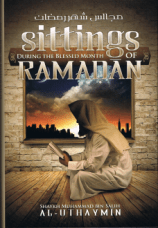
We begin a series of classes Majaalis Ramadan (Sittings in Ramadan) from the works of our noble Shaykh Muhammad ibn Salih al-Uthaymeen rahimahullah.
You can read the Arabic text here.
As with all of our classes at Masjid Tawheed in Stone Mountain, GA, we encourage you to join us.
If you are not able to attend in person, please feel free to listen in via our Spreaker channel or our telelink line at 712-432-2856.
You can buy the above book (english) Here
Contents
Posted from : http://followthesalaf.com/?tag=Majaalis+Ramadan
From Anas – RadhiAllaahu anhu – who said: ‘A Bedouin came to the Prophet – sallAllaahu alayhi wa sallam – and said: ‘O Messenger of Allaah! Teach me some goodness.’
So the Prophet – sallAllaahu alayhi wa sallam – took him by the hand and said:
” قل: سبحان الله، والحمد لله، ولا إله إلا الله، والله أكبر.
‘Say: ‘Far is Allaah from imperfection, and all praise be to Allaah, and there is none worthy of worship in truth except Allaah, and Allaah is the Greatest.’
(Subhana Allaahi, wal hamdu lillaahi, wa la illaah ila Allaah, wa Allaahu Akbar.)’
The Bedouin counted them on his hand, when he finished he began to reflect then came back to the Prophet.
The Prophet – sallAllaahu alayhi wa sallam – smiled and said:
‘The desperate one has reflected.’
Then the Bedouin came and said:
‘O Messenger of Allaah! ‘Far is Allaah from imperfection, and all praise be to Allaah, and there is none worthy of worship in truth except Allaah, and Allaah is the Greatest.’ This is for Allaah, what is for me?’
The Prophet – sallAllaahu alayhi wa sallam – said:
اللهم اغفر لي وارحمني وعافني وارزقني واهدني
‘Say: O Allaah forgive me, and have mercy on me, and pardon me, and provide for me, and guide me.’
The Prophet – sallAllaahu alayhi wa sallam – said to him:
‘O Bedouin! If you say: ‘SubhanAllah’, Allaah says: ‘you have spoken the truth,
If you say: ‘Alhamdulillah’, Allaah says: ‘ you have spoken the truth,
If you say: ‘La ilaha ‘illa Allaah’, Allaah says: ‘you have spoken the truth,
If you say: Allaahu Akbar, Allaah says: ‘you have spoken the truth,
If you say: O Allaah forgive me, Allaah says: I have done so,
If you say: O Allaah have mercy on me, Allaah says: I have done so,
If you say: O Allaah give me provision, Allaah says: I have done so,
Then the Bedouin counted it seven times on his fingers, then went away.’
Shaykh al-Muhaddith al-Albaani -Rahimullaah – said :
Collected by al-Bayhaqi in ‘Shuab al-Eemaan’, and this Isnaad is Jayyid (good) its narrators are trustworthy as for al-Hasan bin Tawab; then I had become exhausted searching about him until I found who he was. So I performed a Sajdah to Allaah thankful for His success and I ask Him for an increase in His excellence.’
[Taken from : ‘Silsilah Saheehah’ No. 3336 by the Shaykh al-Muhaddith al-Albaani -Rahimullaah ]
Related Links:
If a person travels from one country to another where the new crescent of Shawwal has been sighted, should he follow them and break his fast?
Q. 394. If a fasting person travels from one Islamic country to another and it was announced in the first country that the new crescent of Shawwal has been sighted, should he follow them and break his fast, bearing in mind that the new crescent of Shawwal has not yet been sighted in the second country?
A. If a person travels from one Islamic country to another, and the breaking of the fast in the country to which he has travelled was delayed, then he should remain (fasting) with them until they break their fast, because fasting is when the people fast and breaking the fast is when the people break their fast and ( ‘Eid) Al-Adha ( Sacrifice) is on the day when the people sacrifice their animals, even if it means that he increases a day or more. It is the same as if he travelled to a country where the sunset is late for his usual day might be lengthened by two or three hours, or more if he travelled to another country. The new crescent has not been seen there, and the Prophet (صلى الله عليه و سلم) ordered us to not fast unless we see the new crescent, and he also said: “Break your fast when you see it.”
As for the opposite, such as when he travels from a country in which confirmation of the start of the month is delayed to a country in which the start of the month has been confirmed, then he should break his fast with them and make up for what he has missed of Ramadan later. If he missed a day, he must make up for a day and if he missed two days, he must make up for two days.
We say that he makes it up in the second case, because it is not possible for the month to be less than twenty-nine days, nor for it to be more than thirty days. And we say to him: Break your fast, even if you have not completed twenty-nine days, because the new crescent has been seen, and once it has been seen, you must break your fast. And since you have fasted less than twenty-nine, because it is not possible for the month to be less than twenty-nine, so you must complete twenty-nine days, as opposed to the first situation, for you should not break your fast until the new crescent has been seen, and if it has not been seen, then you are still in Ramadan. So, how can you break your fast, for you must fast, even if the month was increased for you, it is only like the increase in the hours of the day .
Posted from : Fatawa Arkanul-Islam : Islamic Verdicts on the Pillars of Islam (Volume2)
By the Honorable Shaikh Muhammad bin Salih Al- ‘Uthaimeen
Collected and Arranged by Fahd bin Nasir bin Ibrahim As-Sulaiman
Published by dar-us-salam
Imaam Muslim -rahimahullaah- reported in his ‘Saheeh’ [The Book of Purification]: (no.234): “Muhammad ibn Haatim ibn Maymoon narrated to me: `Abdur-Rahmaan ibn Mahdee narrated to us: Mu`aawiyah ibn Saalih narrated to us: from Rabee`ah -meaning Ibn Yazeed: from Aboo Idrees alKhawlaanee: from `Uqbah ibn `Aamir; And Aboo `Uthmaan narrated to me: from Jubayr ibn Nufayr: from `Uqbah ibn `Aamir, who said:
‘We were tending camels, and my turn came, so I brought them back in the evening. So then I found Allaah’s Messenger (صلى الله عليه و سلم) standing, speaking to the people, and I caught from what he was saying:
<<There is not one of you who performs the wudoo·, and he performs the wudoo· well, and then he stands and prays two rak`ahs, turning his full attention to them with his heart and his face, except that Paradise will be binding for him>>.’
He said: So I said: ‘How fine this is!’ So then someone in front of me said: “That which came before it was even finer.” So I looked, and it was `Umar. He said: “I saw that you came just now. So he had (already) said:
<<There is not one of you who performs the wudoo·, and he performs the wudoo· completely -or: and he performs it fully, then he says:

(Ashhadu an laa ilaaha illallaah, wa anna Muhammadan `abduhu wa Rasooluh) ‘I testify that none has the right to be worshipped except Allaah, and that Muhammad is His Slave and His Messenger’,
except that the eight gates of Paradise are opened for him: he may enter through whichever of them he wishes >>.”
And Aboo Bakr ibn Abee Shaybah narrated it to us: Zayd ibn al-Hubaab narrated to us: Mu`aawiyah ibn Saalih narrated to us: from Rabee`ah ibn Yazeed: from Aboo Idrees al-Khawlaanee and Aboo `Uthmaan: from Jubayr ibn Nufayr ibn Maalik al-Hadramee: from `Uqbah ibn `Aamir al-Juhanee: that Allaah’s Messenger (صلى الله عليه و سلم) said.., and he mentioned its like, except that he said:
<<Whoever performs the wudoo·, and says:

(Ashhadu an laa ilaaha illallaah, wahdahu laa shareeka lahu, wa ashhadu anna Muhammadan `abduhu wa Rasooluh)
<<‘I testify that none has the right to be worshipped except Allaah, alone, with no partner; and I testify that Muhammad is His Slave and His Messenger’>>.”
Imaam at-Tirmidhee -rahimahullaah-reported in his ‘Sunan’ [The Book of Purification from Allaah’s Messenger (صلى الله عليه و سلم) : Chapter (41): What should be said after the wudoo·] (no.55):
“Ja`far ibn Muhammad ibn `Imraan ath-Tha`labee, al-Koofee, narrated to us, saying: Zayd ibn Hubaab narrated to us: from Mu`aawiyah ibn Saalih: from Rabee`ah ibn Yazeed ad-Dimashqee: from Aboo Yazeed al-Khawlaanee and Aboo `Uthmaan: from `Umar ibn al-Khattaab, who said: Allaah’s Messenger (صلى الله عليه و سلم) said:
<<Whoever performs the wudoo, and he performs the wudoo well, then he says:

(Ashhadu an laa ilaaha illallaah, wahdahu laa shareeka lahu, wa ashhadu anna Muhammadan `abduhu wa Rasooluh. Allaahummaj `alnee minat-Tawwaabeena waj`alnee minal- Mutatahhireen)
<< ‘I testify that none has the right to be worshipped except Allaah, alone, with no partner; and I testify that Muhammad is His Slave and His Messenger’ O Allaah! Make me from those who constantly repent, and make me from those who purify themselves’>>.”
[Declared ‘Saheeh’ by Shaikh al-Albaanee -rahimahullaah: ‘Saheehut-Tirmidhee’ (no. 48).]
[Translated by Aboo Talhah Daawood ibn Ronald Burbank rahimahullaah]
Posted from PDF: https://alitisaambissunnah.wordpress.com
Khutbah on December 13, 2013
It was narrated that ‘Aishah said: When the Messenger of Allah (blessings and peace of Allah be upon him) prayed, he would stand for so long that his feet became swollen. ‘Aishah said: O Messenger of Allah, are you doing this when Allah has forgiven your past and future sins? He said: “O ‘Aishah, should I not be a thankful slave?”
Narrated by al-Bukhari and Muslim.
Listen / Download Mp3 Here (Time 29:50)
Audio Posted from: http://followthesalaf.com/home/2013/12/13/friday-khutbah-giving-thanks
اللّهُـمَّ أَعِـنِّي عَلـى ذِكْـرِكَ وَشُكْـرِك ، وَحُسْـنِ عِبـادَتِـك
Allaahumma a-innee alaa Dhikrika wa shukrikawa husni ibaadatika
O Allah! Help me to remember you, to thank you, and to worship you in the best of manners[Reference: Abu Dawud 2/86, An-Nasa’i 3/53. See also Al-Albani Sahih Abu Dawud 1 /284]
More : http://salaf-us-saalih.com/category/islam/gratitude-shukr-thanking/
This khutbah was given at Masjid At-Tawheed on Friday, August 23, 2013.
O mankind! Be afraid of your Lord (by keeping your duty to Him and avoiding all evil), and fear a Day when no father can avail aught for his son, nor a son avail aught for his father. Verily, the Promise of Allah is true, let not then this (worldly) present life deceive you, nor let the chief deceiver (Satan) deceive you about Allah.
[Surat Luqmān 31:33, Muhsin Khan Translation]
Sahl bin Sa’d narrated that the Messenger of Allah (sal Allahu alaihi wa sallam) said:
“If this world was worth a mosquito’s wing in the sight of Allaah, then He would not allow the disbeliever to have a sip of water from it.”
(Hasan) [Chapters on Zuhd: Jami At-Tirmidhi, Saheeh al Albaani]
Listen / Download Mp3 Here (Time 35:15)
Audio Posted from: http://followthesalaf.com/home/2013/8/23/friday-khutbah
This khutbah was given on 2014-10-17 at Masjid Tawheed in Stone Mountain, GA.
Listen / Download Mp3 Here (Time 32:39)
Posted from: http://followthesalaf.com/home/2014/11/14/khutbah
Allaah – the Most High – said:
“O you who Believe! Have taqwah (fear and obedience) of Allaah as you should do, and do not die except that you are Muslims. And hold fast all together to the rope of Allaah and do not be divided. And remember the favour of Allaah upon you, for you were once enemies one to another, but He joined your hearts together, so that by His Grace, you became brothers. And you were on the brink of a pit of Fire, and He saved you from it. Thus does Allaah make His Signs clear to you, that you may become guided. Let there arise out of you a group of people inviting to all that is good, enjoining all that is good and forbidding all that is evil. They are the ones who are successful. And do not be like those who split up and differed amongst themselves, after the clear proofs had come to them. For them is a tremendous punishment. On the Day of Resurrection, some faces will be white and some faces will be black.”
[Soorah Aal-‘Imraan 3:102-105]
Visit : http://salaf-us-saalih.com/category/islam/unity-of-ummah/
From the Lecture How to Prepare for and Welcome Ramadaan – Dr Murtaza bin Baksh (Urdu)
Translated by: Aboo Bilal Nahim ibn Abd al Majid حفظه الله
Video Courtesy: Bilal Nahim
The Messenger (sallallaahu ‘alayhi wa sallam) said,
“Verily Allaah loves three things for you and he hates three things for you. He loves that you worship Him alone, and that you do not join anyone else in your worship of him and that you do not worship other than him, He loves that you hold tight altogether to the rope of Allaah and that you do not be divided.
And Allaah hates for you hearsay (he said and she said – qeela wa qaal – spreading rumours), he hates for you excessive questioning (questioning that brings about no benefit), thirdly, he hates for you the wasting of money.”
This Khutbah is based on the explanation of Shaykh Rabee ibn Hadee (hafidhahullaah)
Listen / Download Mp3 Here (Time 31:43)
[audio https://salafiaudio.files.wordpress.com/2015/06/verily-allaah-loves-three-things-for-you-and-he-hates-three-things-for-you-abu-muhammad-al-maghribee.mp3]
Audio Posted from: http://followthesalaf.com
Khutbah on January 3, 2014, given at Masjid Tawheed in Stone Mountain, GA
Brilliant lecture, benefit from it, insha’ Allaah
Listen / Download Mp3 Here (Time 29:59)
[audio https://salafiaudio.files.wordpress.com/2015/06/ways-to-success-and-happiness-140103-abu-muhamamd-al-maghribee.mp3]
Posted from : http://followthesalaf.com/home/2014/1/3/friday-khutbah-ways-to-success
Khutbah on April 4, 2014, given at Masjid Tawheed in Stone Mountain, GA
Listen / Download Mp3 Here (Time 34:59)
[audio https://salafiaudio.files.wordpress.com/2015/06/strive-hard-in-your-deen-to-the-best-of-your-ability-abu-muhammad-al-maghribee.mp3]
Posted from: http://followthesalaf.com/home/2015/6/10/khutbah-1
Shaykh Muhammad Amaan Jaamee (rahimahullaah) narrated this to Imam as-Sa’dee (rahimahullaah)
This story was conveyed by Falaah Isma’eel (hafidhahullaah).
Listen to this 5 min humorous & beneficial clip
Listen / Download Mp3 Here (Time 5:17)
[audio https://salafiaudio.files.wordpress.com/2015/06/story-of-a-sufi-shaykh-from-africa-who-dont-pray-abu-muhammad-al-maghribee.mp3]
This short clip has been extracted from the Class # 3 of the below lecture series
48 Questions and Answers on Fasting (سؤالاً في الصيام) by Shaykh al-Uthaymeen – Abu Muhammad al-Maghribee [Audio|En]
Related Link: http://salaf-us-saalih.com/category/islam/soofeeyah/
Source: http://www.binbaz.org.sa/node/19904
Translated by Abu Afnaan Muhammad Abdullah hafidhahullaah
Video Courtesy: Bilal Nahim
Question:
Does ‘Umrah in the month of Ramadan satisfy for the obligation of Hajj due to the Messenger’s (صلى الله عليه وسلم) statement, “Whoever performs ‘Umrah in Ramadan is like the one who makes Hajj with me.”
Shaykh Abdul- Azeez Bin Baaz:
Umrah in Ramadan does not compensate for Hajj. However, it has the merit/virtue of Hajj due to his (صلى الله عليه وسلم) statement, ‘Umrah in Ramadan equals a Hajj’ or he said ‘a Hajj with me‘.
This means in regards to merit and reward and it does not mean it is equivalent to it and replaces it such that he does not have to perform Hajj. No, rather he still must perform the Hajj, the Hajj of Islam (the obligatory Hajj) even if he makes ‘Umrah in Ramadan according to all of the scholars. Thus, with ‘Umrah in Ramadan, the merit of Hajj is attained from the aspect of reward and excellence, but it does not compensate for the Hajj of Islam.
Related Links:

Q. 400. If a person breaks his fast due to some excuse, and then the excuse is removed during the day, should he fast for the remainder of the day?
A. He is not obliged to fast. This is because it has been made lawful for this man to break his fast on this day based upon an evidence from the Islamic Law. The Islamic Law allows one who is compelled to take medication for example, to take it, but if he takes, he breaks his fast. Therefore the prohibition of the day does not apply to him, because it has been permitted for him to break his fast, but he is required to compensate for it, and for us to require him to fast without any benefit is legally incorrect. So as long as this man does not benefit from fasting, it is not incumbent upon him.
An example of this would be a man who sees someone drowning in the water and he says: If I drank, it would be possible for me to save him, and if I did not drink, it would not be possible for me to save him, so he drinks and then saves him and he eats and drinks for the remainder of the day. This man is not prohibited from eating and drinking on this day, since it has been made lawful for him not to fast in accordance with the Islamic Law. Therefore, he is not required to fast.
For this reason, if there was a sick person, would we say to him: Do not eat unless you are hungry and do not drink unless you are thirsty? Meaning: Do not eat or drink except due to necessity. We would not say this to him, because it is permissible for the sick person to break his fast.
So, every person who breaks his fast in Ramadan in accordance with some legal evidence is not obliged to fast, and vice versa.
Whoever breaks his fast without an excuse, then he must fast, because it is not lawful for him to break his fast and he has transgressed the prohibition of that day without permission from the Islamic Law. So, we must compel him to fast the remainder of the day and to make up for it.
And Allah knows better.
Q. 398. What are the permissible excuses for breaking the fast?
A. The permissible excuses for breaking the fast are: Illness and travel, as mentioned in the Qur’an.
Among other excuses is that a woman is pregnant and she fears for herself or her child. Another excuse is that a woman is breast-feeding and she fears for herself or her breast-fed child if she fasts.
Another excuse is that a person needs to break his fast in order to save the life of someone. For example, he finds a drowning person in the sea, or someone who is surrounded on all sides by fire, and he needs to break his fast in order to save him – in that case, he may break his fast and save him.
Another such case would be if a person needed to break his fast in order to strengthen himself for Jihad in Allah’s Cause, that would also be a permissible cause for him to break his fast, because the Prophet sallallaahu`alaihi wa sallam said to his Companions, may Allah be pleased with them:
“You will meet the enemy tomorrow morning, so breaking the fast stronger for you, so break your fast.” [1]
So, if there is a permissible excuse for breaking the fast, and a person breaks his fast due to it, it is not necessary for him to fast for the remainder of that day. Therefore, if it transpired that a person had broken his fast in order to save a person’s life, he should continue to eat and drink, even after saving him. This is because he broke his fast for a reason which permits him to break his fast, so it is not necessary for him to fast in that case, because the prohibition of breaking fast on that day has been removed due to the permissible cause for breaking the fast.
For this reason, we support the most authoritative opinion in this matter, which is that if a sick person became well during the day and he was not fasting, it is not necessary for him to fast, and if a traveller arrived during the day at his hometown and he was not fasting, it is not necessary for him to fast, and if a menstruating woman became clean during the day, it is not necessary for her to fast. This is because all of these people broke their fasts for legitimate reasons, and so on that day, there was no obligation upon them to fast, due to the lawful permission for breaking it at that time, so it is not necessary for them to fast.
This is as opposed to the case where it is confirmed that the month of Ramadan has begun during the day in that case, it is necessary to fast. The difference between the two cases is clear, because if the evidence appears (that Ramadan has begun) during the day, it has been confirmed that fasting on that day is obligatory for them, but they are excused for the time before the evidence became clear to them due to their ignorance of it. This is why, if they knew that this day was a day of Ramadan, it is obligatory for them to fast. But as for those other people whom we have described, it is permissible for them to break their fast, even though they are aware (that it is Ramadan) and the difference between them is clear.
[1] Reported by Muslim in the Book of Fasting, in the Chapter: The Reward of One Who Breaks His Fast on a Journey if He Undertakes a Task (1120).
Source: Fataawa Arkaan al-Islam by Shaykh Muhammad ibn ‘Uthaymeen (may Allaah have mercy on him), vol 2, dar-us-salam publications
“My Ummah will continue to be upon good for as long as they hasten to break the fast and delay the pre-dawn meal.”
The other matter which I want to remind you of is what occurs in the previous hadeeth, “And they delay the pre-dawn meal” meaning: what is required here is the opposite to the case of the Iftaar. So he (صلى الله عليه و سلم) commanded us to hasten to perform the Iftaar. But as for the Suhoor, then it should be delayed. But what happens today is totally contrary to this, since many people eat their Suhoor before the appearance of Fajr by perhaps an hour. This is not befitting. This is contrary to the Sunnah shown by the saying of the Prophet (صلى الله عليه و سلم) and by his practice. So the Companions of the Prophet (صلى الله عليه و سلم) used to leave the Suhoor so late, that one of them would almost hear the Adhaan and he would still be eating because he had delayed the Suhoor.
Indeed there is an authentic hadeeth reported from the Prophet (صلى الله عليه و سلم) which shows the ease afforded by Islaam, to be counted as one of the principles of Islaam, which the Muslims are proud of, especially with regard to the matter of Fasting, since Allaah, the Mighty and Majestic, concluded the Aayahs concerning Fasting with His Saying:
‘Allaah desires ease for you, and He does not desire to make things difficult for you’. So from this ease is his (صلى الله عليه و سلم) saying, “If one of you hears the call to Prayer and the vessel is in the hand of one of you, then let him not put it down until he fulfils his need from it.”
” If one of you hears the call to Prayer and the vessel” the vessel containing food, whether it be milk, some drink, water, anything which a person may take as Suhoor, and he hears the Adhaan, then he should not say, Now the food is forbidden due to the Adhaan being heard. The person who has had enough, it is not allowed for him to then have any more, whether it be a drink, or some fruit, when he has had his fill of whatever he was eating.
But as for the one who hears the Adhaan and he has not yet taken what he needs from the food and the drink, then the Messenger (صلى الله عليه و سلم) made that lawful for him. So he clearly said, in the clear and eloquent Arabic language, “If one of you hears the call to Prayer, and the vessel is in his hand, then let him not put it down until he fulfils his need from it.”
And what is meant here by the call is the second call, the second Adhaan. It is not the first Adhaan, which they wrongly call the Adhaan of Imsaak (i.e. withholding). We must know that there is no basis for calling the first Adhaan the Adhaan for withholding (imsaak).
The second Adhaan is when we are to withhold, and this is clearly stated in the Quraan, since Allaah, the Mighty and Majestic, says:
‘And eat and drink until the white thread of dawn becomes clear to you from the black thread of the night.’
So eating becomes forbidden at the start of the time of the Fajr Prayer. There is no separation between these two things. There is no withholding from food and drink for a quarter of an hour, or less than that, or more than that, before the start of the time for the Fajr Prayer. Not at all.
Because the Prayer becomes due when the true dawn appears, and food becomes forbidden for the fasting person when the true dawn appears. So there is no separation between these two matters at all.
So therefore there occurs in the hadeeth agreed upon by al-Bukharee and Muslim, from the hadeeth of Abdullaah Ibn ¹Umar Ibn al-Khattaab -radiyallaahu `anhu, that the Prophet (صلى الله عليه و سلم) said, “Let not the Adhaan of Bilaal deceive you…” meaning, the first Adhaan, “…because he gives the Adhaan in order to awaken the person who is sleeping, and so that the person who wishes to eat the pre-dawn meal can do so. So eat and drink until Ibn Umm Maktoon gives the Adhaan.”
Ibn Umm Maktoom, whose name was ‘Amr, was a blind man, and he was the one about whom the Saying of Allaah, the Exalted and Most High, came down:
‘He frowned and turned away, that a blind man had come to him’ to the end of the Aayaat. So he used to give the second Adhaan, the Adhaan which means that eating becomes prohibited and that it is now time for the Fajr Prayer.
How did he used to give the Adhaan when he was blind? This is a question, which naturally occurs to some people. ‘Amr Ibn Umm Maktoom used to climb on the roof of the mosque, but he could not see the dawn, so he would wait until someone passing by saw the dawn. So when someone saw that the dawn had appeared and spread across the horizon, they would say to him, It is morning. It is morning. Then he would give the Adhaan.
So you will notice here that the Adhaan of ‘Amr ibn Umm Maktoom was after the Fajr had appeared, and had been seen by the people whilst they were walking in the streets. So when it was said to him, “It is morning. It is morning,” he would give the Adhaan.
So therefore there is latitude in the affair, since the muadhdhin would be delayed in giving the Adhaan until he heard the people telling him, “It is morning, it is morning.” And then Allaah’s Messenger (صلى الله عليه و سلم) said: “If one of you hears the call to Prayer and the vessel is in his hand, then let him not put it down until he has fulfilled his need from it.”
So Allaah, the Mighty and Majestic, spoke truly when He said at the end of those Aayahs related to Fasting: ‘Allaah desires to make things easy for you, and He does not desire to make things difficult for you.’ and ‘…that you should complete the number of days, and that you should glorify Allaah by mentioning takbeer for His having guided you, and that you should be thankful. ‘
So therefore from the Fiqh that is to be criticized, and which runs contrary to this Sunnah, is that a person says, “If someone hears the Adhaan and has some food in his mouth, then he must spit it out.” So this is over strictness, and (ghuluww) exceeding the limits in the Religion, and the Lord of all of the creation admonished us, and reminded us, in His Book and in the Sunnah of His Prophet (صلى الله عليه و سلم) that we should not exceed the due limits in our Religion. So He said, in the Noble Qur·aan:
‘O People of the Book! Do not exceed the limits in your religion, and do not say anything about Allaah except the truth.’
And our Messenger (صلى الله عليه و سلم) said to us, or he (صلى الله عليه و سلم) said, “Beware of (ghuluww) exceeding the limits in the Religion. Because those who came before you were destroyed by their exceeding the limits in their Religion.”
So Allaah¹s Messenger (صلى الله عليه و سلم) has made it clear to us that there is latitude and a margin of ease in the matter of a person’s taking suhoor, to the extent that he said: “If one of you hears the call to Prayer whilst the vessel is in his hand, then let him not put it down until he has completed his need from it.”
So it is opposition to Allaah and to the Messenger that a person says that one who hears the Adhaan whilst he has food in his mouth must spit it out onto the ground. This is not from the Sunnah. Rather this is contrary to the Sunnah, and is contrary to the clear command of the Messenger (صلى الله عليه و سلم) .
And I have been asked many times, so I will not leave open the need for such a question, but rather I will precede you in (answering) it, by stating that this hadeeth is to be found in some of the most famous books of the Sunnah. From them being the Sunan of Aboo Daawood, and it is the third book from the well-known six books. The first of which is Saheehul-Bukhaaree, the second being Saheeh Muslim, and the third being the Sunan of Aboo Daawood.
This hadeeth is to be found in it, and it is likewise reported by Aboo ‘Abdillaah al-Haakim in his Mustadrak, and it is likewise reported by the Imaam of the Sunnah, Imaam Ahmad Ibn Hanbal, rahimahullaah, in his tremendous book known as the Musnad of Imaam Ahmad.
So the hadeth is not a strange hadeeth, rather it is a well-known hadeeth, and was reported by the Imaams of the Sunnah in the early times, and with an authentic chain of narration.
So here I say, to conclude this talk, since perhaps some of you have questions, which we will answer if Allaah wills, so I will conclude it with his (صلى الله عليه و سلم) saying “Allaah loves that His allowances be acted upon just as He loves that His prescribed duties be carried out,” and in one narration, “Just as He hates that disobedience to Him be committed.”
So there are two narrations, “Allaah loves that His allowances be acted upon just as He loves that His prescribed duties be carried out”, and the second narration is, ” as He hates that disobedience to Him be committed.”
So therefore the Muslim should not practice false piety, and (as a result) refrain from obeying the Prophet (صلى الله عليه و سلم) in that which he encouraged us upon and clarified to us.
The above is posted from : (Beautiful Talk) Sunnahs Neglected in Ramadaan– Imaam Muhammad Naasir-ud-Deen Al-Albaanee rahimahullaah , Translated by Dawud Burbank rahimahullaah
Shaikh al-Albaanee, may Allaah have mercy upon him, said,
“Allaah, the Exalted and Most High, says in the Noble Quraan:
‘O you who believe! Fasting is prescribed for you as it was prescribed for those before you, so that you may become people having Taqwaa.’ [Sooratul-Baqarah (2): 183]
So in this Aayah, as will not be hidden to all those who are present, Allaah, the Mighty and Majestic, informs the Ummah of Muhammad (صلى الله عليه و سلم) , through this Aayah, that He has made Fasting obligatory upon them just as He had made its like obligatory upon the nations before us. This is a matter that is well-known to all of the Muslims who read this Aayah, and clearly understand its meaning. But what I wish to speak about is something else, a matter which very few of the general people notice – and this is the saying of Allaah, the Exalted and Most High, at the end of this Aayah:
‘…So that you may become people having Taqwaa.’
So Allaah, the Mighty and Majestic, when He commands His believing servants, or obligates them with some Legislation, (then He) usually just mentions the command, without explaining the wisdom behind it. This is because the general wisdom behind Allaah, the Mighty and Majestic, placing duties upon His servants is that He should test them by it, so that it should become apparent (as to) those who will obey Him and those who will disobey Him, the Exalted and Most High.
However in this Aayah, He mentioned something that is not found frequently in the Noble Quraan, which is that He mentioned the reason for the order to Fast, by His Saying:
‘…So that you may become people having Taqwaa.’
So the wisdom behind the Believers’ fasting is not just that they should prevent themselves from enjoyable and permissible good things, even though this is an obligation upon the fasting person – but this is not the only thing that is required and intended by this Fasting. Allaah, the Mighty and Majestic, concluded His command to fast by saying:
‘…So that you may become people having Taqwaa.’
Meaning: that the wisdom behind the prescription of Fasting is that the Muslim should increase in obedience to Allaah, the Exalted and Most High, in the month of Fasting, and become more obedient than he was before it.
Also the Prophet (صلى الله عليه و سلم) clearly stated and completely clarified this point of divine wisdom, by his (صلى الله عليه و سلم) saying, as is reported in the Saheeh of al-Bukhaaree (no. 1903), that he (صلى الله عليه و سلم) said,
“Whoever does not abandon falsehood in speech and action, then Allaah has no need that he should leave his food and drink.”
Meaning: that Allaah, the Mighty and Majestic, did not intend and desire, by the obligation of Fasting – which is to withhold for a stated time, well known to you all – that they should only withhold from eating and drinking. Rather they should also withhold from that which Allaah, the Mighty and Majestic, has forbidden with regard to sins and acts of disobedience to Him; and from that is falsehood in speech and action.
So the Messenger (صلى الله عليه و سلم) is emphasizing the Aayah:
‘…So that you may become people having Taqwaa.’
i.e. that you should, as an act of worship to draw you closer to Allaah, the Mighty and Majestic, in addition to withholding from food and drink, also withhold from forbidden actions such as backbiting, carrying tales to cause harm to people, false witness, lying and so on, with regard to those forbidden manners that we are all aware of.
Therefore it is obligatory that all the Muslims should be aware that actions, which disrupt the Fast, are not just the physical acts, which are generally known, which are eating, drinking and sexual intercourse. The Fast is not just that you withhold from this. Therefore some of the scholars differentiate, and divide those things which disrupt the Fast into two categories, and this is what I intend by this talk of mine at this time that is blessed, if Allaah wills.
This is especially important since those who deliver Khutbahs and admonish the people during Ramadaan, when they speak about those things which disrupt the Fast, then they only speak about the material things, those things that we have just mentioned – eating, drinking and sexual intercourse. But what they should do, as sincere advisers and people who give reminder to the Muslims in general, is to concentrate a great deal upon the second category of things which disrupt the Fast. This is because the people have become used to thinking that Fasting is just to refrain from the first category, to withhold from the material things. But there is another category of things, which disrupt the Fast, which we are able to call the non-material things that disrupt the Fast. So you have just heard his (صلى الله عليه و سلم) saying, “Whoever does not abandon falsehood in speech and action, then Allaah has no need that he should leave his food and drink.”
Therefore every fasting person should examine himself and see: is he just withholding from the material things, or is he also withholding from those non-material things? Meaning: has he made his manners and behavior good when the blessed month of Ramadaan comes? If that is the case, then he has fulfilled the Saying of Allaah, the Exalted and Most High, at the end of the Aayah: ‘…So that you may become people having Taqwaa.’
But as for the one who restricts himself in his fasting to just withholding from food and drink, but who continues and persists upon the evil manners which he was upon previously, before Ramadaan, then this is not the Fasting that is desired and required from the wisdom behind the legislation of this noble month, which our Lord, the Mighty and Majestic indicates in His Saying:
‘…So that you may become people having Taqwaa.’
So therefore we advise and remind our brother Muslims that they should remember this other category of things, those that are non-material, which disrupt the Fast, and it is something which the admonishers and those who seek to direct the people to the correct way rarely speak about, not to mention the general people, who are not aware of this category of things which disrupt the fast, i.e., the non-material things.
This is what I wanted to remind our brothers who are present in this fine gathering about, if Allaah wills, so that it may be a cause for their increasing in acts of worship, seeking to draw closer to Allaah, the Exalted and Most High, in this blessed month, the month of Fasting, which is such that we hope that Allaah, the Exalted and Most High, will guide and grant us all the success of fulfilling the due right of this blessed month, which is that we withhold from both the material and the non-material things that disrupt the Fast.
The above is posted from : (Beautiful Talk) Sunnahs Neglected in Ramadaan– Imaam Muhammad Naasir-ud-Deen Al-Albaanee rahimahullaah , Translated by Dawud Burbank rahimahullaah
So here two matters were mentioned, and they are neglected by most of the people, and they are: hastening to break the fast, and delaying the pre-dawn meal (Suhoor).
As for neglect of the first matter, which is hastening to break the Fast, then in the view of some people it contradicts another hadeeth, which is his (صلى الله عليه و سلم) saying, “My Ummah will continue to be upon good for as long as they hasten to pray the Maghrib Prayer.”
So here we have two commands, to hasten with two matters. So it appears to some people that we cannot hasten to perform both of them together.
But reconciling between the command to hasten with breaking the Fast and the command to hasten to pray the Maghrib Prayer is a very easy matter. So it is something that our Prophet (صلى الله عليه و سلم) made clear to us by his action and practice.
He (صلى الله عليه و سلم) used to break the Fast with three dates. He would eat three dates. Then he would pray the Maghrib Prayer, then he would eat again if he found that he needed to eat the evening meal.
But today we fall into two offences:
(i) Firstly we delay the Adhaan from its legislated time.
(ii) Then after this delay comes another delay, which is that we sit down for a meal – except for a few people who are eager and pray the Maghrib Prayer in the mosque. But the majority of the people wait until they hear the Adhaan, and then they sit down to eat as if they are having a dinner, or their evening meal, and not just breaking their fast.
So the Adhaan these days – in most of the lands of Islaam, is, unfortunately, I have to say, and not just in Jordan, and I have known this from investigation, in most of the lands of Islaam – the Adhaan for Maghrib is given after the time it becomes due. And the reason for this is that we have abandoned adhering to and applying the Islamic rulings, and instead we have come to depend upon astronomical calculations. We depend upon the timetable. But these time-tables are based upon astronomical calculations which count the land as being a single flat plane. So they give a time for this flat plane, whereas the reality is that the land, particularly in this land of ours varies, varying between the depression of valleys and the elevation of mountains. So it is not correct that a single time be given which covers the shore, the planes and the mountains. No, each part of the land has its own time. So therefore whoever is able in his place of residence, in his city or his village, to see the sun set with his own eye, then whatever time it sets at, that is the hastening that we have been commanded with in his (صلى الله عليه و سلم) saying, which we just mentioned: ‘My Ummah will continue to be upon good as long as they hasten to break the fast.’ So the Prophet (صلى الله عليه و سلم) was careful to implement this Sunnah by teaching it, and by putting it into practice.
As for his teaching, then he (صلى الله عليه و سلم) said, in the hadeeth reported by al-Bukharee in his ‘Saheeh’ (no. 1954), “If the night appears from this side,” and he pointed towards the east, “and the day has departed from here,” and he pointed towards the west, “and the sun has set, then the fasting person’s fast is broken” What does ‘the fasting person’s fast is broken’ mean? It means he has entered under the ruling that he should break his fast.
So then comes the previous ruling where the Messenger (صلى الله عليه و سلم) encouraged hastening to break the Fast, and the Messenger (صلى الله عليه و سلم) used to implement this, even when he was riding on a journey. So it is reported in the ‘Saheeh’ of al-Bukharee (no.1955) that:
the Prophet (صلى الله عليه و سلم) ordered one of his Companions to prepare the Iftaar for him. So he replied, ‘O Messenger of Allaah it is still daytime before us.’ Meaning: the light of the sun, so even though it had set, yet its light was still clear in the west. So the Messenger (صلى الله عليه و سلم) did not respond to what he had said, rather he re-emphasized the command to him to prepare the Iftaar. So the narrator of the hadeeth who said, We could see daylight in front of us, meaning: the light of day, the light of the sun, When we broke our fast, said, “If one of us had climbed onto his camel he would have seen the sun.”
The sun had set from here, and the Messenger (صلى الله عليه و سلم) ordered one of the Companions to prepare the Iftaar – Why? To hasten upon good “My Ummah will continue upon good for as long as they hasten to break the Fast.”
So what is important is that we notice that the Iftaar, which is legislated to be hastened must be done with a few dates. Then we must hasten to perform the Prayer. Then after this the people can sit and eat as they need. This is the first matter, which I wanted to remind you of, and it is how to reconcile the two things that the Prophet (صلى الله عليه و سلم) commanded we should hasten to perform.
The first being the command to hasten the breaking of the Fast, and the second being the command to hasten the Maghrib Prayer. So the Iftaar should be done with some dates, as occurs in the Sunnah, and if dates are not available, then with some gulps of water. Then the Prayer should be prayed in congregation in the mosque.
The above is posted from : (Beautiful Talk) Sunnahs Neglected in Ramadaan – Imaam Muhammad Naasir-ud-Deen Al-Albaanee , Translated by Dawud Burbank rahimahullaah


 AbdurRahman.Org
You must be logged in to post a comment.