The Meaning of Allaah being the “Best of Plotters” – Shaykh al Albaani

From the Book: How are we Obligated to Interpret the Qur’aan? Shaykh al-Albanee.
[ Download complete PDF book]

[5] Question: Allaah informs us about Himself saying:

وَمَكَرُواْ وَمَكَرَ اللّهُ وَاللّهُ خَيْرُ الْمَاآِرِينَ
“And they plotted and Allaah too plotted. And Allaah is the best of plotters.”
[Surah Aali ‘Imraan: 54]

Perhaps the minds of some people may limit the understanding of this ayah to just its apparent meaning. And maybe we are not in need of explaining it. But how is it that Allaah is the best of plotters?

[5] Answer:

This question is easy by the Grace of Allaah. This is since we are able to understand that plotting is not always necessarily characterized with being evil nor is it always necessarily characterized with being good. So perhaps a disbeliever may plot against a Muslim however this Muslim is bright and clever and not heedless and stupid. So he is aware of the plots of his disbelieving opponent and thus deals with him in retaliation to his plot. This is such that the end result is that this Muslim through his good plotting compels the disbeliever’s evil plot to backfire on his own self. So can it be said that when this Muslim plotted against the disbeliever, he engaged in an illegal affair? No one says this.

It is easy to comprehend this fact from the statement of the Prophet صلى الله عليه وسلم: “War is deception.” [14] What can be said about deception is exactly the same that can be said about plotting. A Muslim deceiving his Muslim brother is forbidden. However, if a Muslim deceives a disbeliever who is an enemy to Allaah and an enemy to His Messenger, this is not forbidden. On the contrary, it is obligatory. The same goes for a Muslim plotting against a disbeliever who intends to plot against him, such that this Muslim reverses the plot of this disbeliever. This is a good form of plotting. This is a human being and that is a human being. But what do we say with respect to the Lord of all that exists, the All-Able, the All-Knowing, the All-Wise?

He invalidates the plots of all the plotters. This is why Allaah says: “And Allaah is the best of plotters.” So when Allaah describes Himself with this description, our attention shuld be directed to the fact that plotting – even on the part of humans – is not always negative. This is since Allaah says: “The best of plotters.” So there is plotting that is good and plotting that is bad. So whoever plots for a good reason should not be condemned. And Allaah, Mighty and Majestic, is as He says, the “best of plotters.”

In brief, I say: Whatever suppositions may come to your mind, Allaah is contrary to that. So if a person imagines something that is not befitting to Allaah, then he should know right away that he is wrong. Hence this ayah contains praise for Allaah, so there is nothing in it that is impermissible to ascribe to Allaah.

Footnotes:

[14] Saheeh Al-Bukhaaree (3030) and Saheeh Muslim (1740)


Why was the Ka’bah Called Baytullaah Al-Haraam (Inviolable House of Allah)? – Dr Saleh As-Saleh [Short Clip|En]

FAQ – Clarifications – Why Was the Kabah Called Baytullaah Al-Haraam?

Source: Important Matters Requiring Clarification

Transcription of the Audio:

Bismillah hir Rahman nir Raheem. Alhamdulillahi Rabbil Aalameen wa sallalaahu ala nabeeyena Muhammad wa alaa alihi wa sahbhi wa sallama tasleeman kaseera

The Second Question is why was the Ka’abah called Baytullah Al Haraam, The inviolable house of Allah ?.

The Ka’bah was called Baytullah i.e The House of Allah. That is because it is the place of magnification of Allah(عز و جل) Most Mighty and Most Majestic.People come to it from all places in order to offer an obligation which Allah had ordained upon them and also because people direct themselves in its direction while in their prayers, wherever they may be fulfilling one of the conditions of the Salah i.e. directing one self towards the Qibla.

As Allah (سُبْحَانَهُ وَ تَعَالَى) stated in Surah Al- Baqarah (2:144) :

قَدۡ نَرَىٰ تَقَلُّبَ وَجۡهِكَ فِى ٱلسَّمَآءِ‌ۖ فَلَنُوَلِّيَنَّكَ قِبۡلَةً۬ تَرۡضَٮٰهَا‌ۚ فَوَلِّ وَجۡهَكَ شَطۡرَ ٱلۡمَسۡجِدِ ٱلۡحَرَامِ‌ۚ وَحَيۡثُ مَا كُنتُمۡ فَوَلُّواْ وُجُوهَكُمۡ شَطۡرَهُ ۥ‌ۗ وَإِنَّ ٱلَّذِينَ أُوتُواْ ٱلۡكِتَـٰبَ لَيَعۡلَمُونَ أَنَّهُ ٱلۡحَقُّ مِن رَّبِّهِمۡ‌ۗ وَمَا ٱللَّهُ بِغَـٰفِلٍ عَمَّا يَعۡمَلُونَ

Verily! We have seen the turning of your (Muhammad’s صلى الله عليه وسلم) face towards the heaven. Surely, We shall turn you to a Qiblah (prayer direction) that shall please you, so turn your face in the direction of Al-Masjid- Al-Harâm (at Makkah). And wheresoever you people are, turn your faces (in prayer) in that direction. Certainly, the people who were given the Scriptures (i.e. Jews and the Christians) know well that, that (your turning towards the direction of the Ka’bah at Makkah in prayers) is the truth from their Lord. And Allâh is not unaware of what they do.

And Allah (سُبْحَانَهُ وَ تَعَالَى) narrated it to Himself added it when he mentioned the Ka’abah as an honour and magnification of it.

That is because that which is related to Allah in the construct of the statements by Allah (سُبْحَانَهُ وَ تَعَالَى) is divided into two types:

1) The Attribute of Himself (سُبْحَانَهُ وَ تَعَالَى)
2) The creature of  his creation

If it is an attribute, then it is related because it is established with Him and Allah(عز و جل) is qualified by it, it is His attribute like Allah’s hearing, Allah’s sight, Allah’s knowledge, Allah’s ability, Allah’s speech and other than that from His most mighty and magnificent attributes.

If it s a creature from his creation, then it is added to Allah (عز و جل) in the construct as away of honouring and magnification and in this way Allah (سُبْحَانَهُ وَ تَعَالَى)  related the Ka’abah to Himself when He said in Surah Al Hajj (22:26):

وَطَهِّرۡ بَيۡتِىَ لِلطَّآٮِٕفِينَ

And (remember) when We showed Ibrahim (Abraham) the site of the (Sacred) House (the Ka’bah at Makkah) (saying): “Associate not anything (in worship) with Me, [La ilaha ill-Allah (none has the right to be worshipped but Allah Islamic Monotheism], and sanctify My House for those who circumambulate it, and those who stand up for prayer, and those who bow (submit themselves with humility and obedience to Allah), and make prostration (in prayer, etc.);” )

So He said ‘My House’ (سُبْحَانَهُ وَ تَعَالَى). He narrated it it to Himself in the construct of the verse.

And also He added to Himself the masaajid (the Mosques) as He said in Surah Al Baqarah (2:114):

ومن اظلم ممن منع مساجد الله ان يذكر فيها اسمه وسعى في خرابها اولئك ما كان لهم ان يدخلوها الا خائفين لهم في الدنيا خزي ولهم في الاخرة عذاب عظيم

And who is more unjust than those who forbid Allah’s Name be glorified and mentioned much (i.e. prayers and invocations, etc.) in Allah’s Mosques and strive for their ruin? It was not fitting that such should themselves enter them (Allah’s Mosques) except in fear. For them there is disgrace in this world, and they will have a great torment in the Hereafter.

You see that now, Allah (سُبْحَانَهُ وَ تَعَالَى) added the mosques in the  construct to Himself in the relation ‘ ‘Allah’s Mosques” and also  (سُبْحَانَهُ وَ تَعَالَى) He may do the same regarding some of his creatures in order to make clear His comprehensive possession as in His statement  (سُبْحَانَهُ وَ تَعَالَى) in Surah Al Jasiya (45:13):

“وسخر لكم ما في السماوات وما في الارض جميعا منه ان في ذلك لايات لقوم يتفكرون”

And has subjected to you all that is in the heavens and all that is in the earth; it is all as a favour and kindness from Him. Verily, in it are signs for a people who think deeply.

So therefore  in summary  Allah  (سُبْحَانَهُ وَ تَعَالَى) referred the Ka’abah to Himself as an honour and magnification and no one should think that Allah (سُبْحَانَهُ وَ تَعَالَى) reffered the ka’abah to Himself because it is “a place in which He resides”. This is impossible because (سُبْحَانَهُ وَ تَعَالَى) encompasses everything and nothing from his creatures encompass Him, rather His Kursee(سُبْحَانَهُ وَ تَعَالَى) encompasses the Heavens and the Earth, as Allah Stated in Surah Al Baqarah (2:255) that his Kursee extends over the Heavens and the Earth.

And in Surah Zumar (39:67):

وما قدروا الله حق قدره والارض جميعا قبضته يوم القيامة والسماوات مطويات بيمينه سبحان

And on the Day of Resurrection the whole of the earth will be grasped by His Hand and the heavens will be rolled up in His Right Hand.

And He is above His heavens ascended the throne in the most majestic way that befits Him and it’s not possible that He ( سُبْحَانَهُ وَ تَعَالَى) dwells in any of his creation.

And Allah knows the best.

Transcribed by AbdurRazak bin AbdulAleem, verified and corrected by AbdurRahman.Org 

Source: AbdurRahman.Org

The meaning of “Tabaarak Allaah” and “mubaarak” – Shaykh Saalih Fawzaan

Tabaarak Allaah”: means: tremendously great is the One whose actions are these, He the Perfect and Most High. And whose Ability is such and these are the things which He has created, He the Exalted and Most High.

And, “Tabaarak”: is a verb which is used specifically for Him, He the Perfect, so it cannot be applied to anyone besides Him. And al-Barakah (blessing) it means abundance of good and its increase, and the blessings which come from Allaah the Majestic and Most High do not end. As for a created being, it cannot be said about him, “tabaarak”. Rather it can be said to him, “mubaarak” meaning, “May you receive blessing”, meaning may Allaah put blessing into him and make him blessed. And all blessing is from Allaah the Perfect and Most High.

Sharh-ul-Usool-ith-Thalaathah by Shaikh Saalih al-Fawzaan
Explained by Dawud Burbank rahimahullaah
Above are the Excerpts from Transcribed Audio

Allaahu Akbar – Allaah is Greater

Allaahu Akbar
Allaah is Greater

Allaah – the Most High – says:

“That He will call you to account for what your hearts have earned.” [Soorah al-Baqarah 2:225].

“The day when neither wealth nor children will be of any avail, except he who comes to Allaah with a dean and pure heart.” [Soorah ash-Shu’araa 79:88-89].

The Prophet sallallaahu ‘alayhi wa sallam said:

“Indeed, there is a piece of flesh in the body; if it is sound then all the body is sound. However, if it is diseased, then all the body is diseased Truly that is the heart.” [1]

Al-Haafidh Ibn Rajab (d.795H) – rahimahullaah -said:

“So know that the world – and whatever is above it and below it in the water- will not be corrected except when the actions of its people are all for Allaah. The actions of the body follow on from the actions and intentions of the heart. So when the actions and intentions of the heart are purely for Allaah alone, then it is corrected, and likewise the actions of the body will also be correct. However, if the actions and intentions of the heart are for other than Allaah, then it is corrupted, and likewise the actions of the body will be corrupted in proportion to how much the heart is corrupted.” [2]

And he said: “Hearts will not be corrected until the ma’rifah (knowledge and realisation) of Allaah – being in awe of His greatness, loving Him, fearing Him, hoping in Him, relying and trusting in Him – is not firmly implanted in them. This is the reality of Tawheed and the meaning of the saying: Laa ilaaha illallaah (that none has the right to be worshipped except Allaah). Thus, hearts will not be corrected until Allaah is made the ilaah (deity) to be known, to be loved, feared and hoped in, and that He – along with this – becomes the only ilaah (deity) worthy of this, without associating any partner to Him in this.” [3]

Indeed, we may begin to appreciate the greatness of Allaah – the Most High’s – and being in awe of Him, by considering some narrations regarding what He – the Most High – has created.

The Prophet sallallaahu ‘alayhi wa sallam said:

“Indeed I see what you do not see and hear what you do not hear. Heaven has groaned, and it has a right to do so. By Him in Whose Hand is my soul! There is not in the heaven a space equivalent to four fingers, except than an angel has prostrated his forehead to Allaah in it. By Allaah! If you knew what I know, you would laugh little and weep a lot, and you would not take delight in women in their beds, but rather would go to the wilderness and implore Allaah for help.” [4]

He sallallaahu ‘alayhi wa sallam said:

“The seven Heavens compared to the Kursee (the Chair) is like a ring which is thrown into a desert. And such is the magnitude of the ‘Arsh (the Throne of Allaah) compared with the Kursee.” [5]

He sallallaahu ‘alayhi wa sallam also said:

“I have been given permission to relate to you about the Angels of Allaah – the Most High – that carry the ‘Arsh (Throne). Between one of the Angel’s ear and shoulder is a distance of seven hundred year journey.” [6]

And he sallallaahu ‘alayhi wa sallam also said:

“Al-Baytul-Mamoor is in the seventh heaven [directly above the Ka ‘bah]. Each day seventy thousand angels enter it, and they will not return until the Day of Resurrection.” [7]

So: “the need of the servants for this (type of) knowledge is greater then every other need; end it is the most necessary of all things for them, since there is no life for the hearts, nor any delight, nor any tranquility, except through knowing their Lord, the only One Who deserves to be worshipped, their Creator – with His Names, His Attributes and His Actions, and that He – along with all that – is more beloved to the person than anything else. So man’s striving is with regards to everything that will draw him nearer to Allaah, to the exclusion of the creation … So the people who know Allaah the best, are the ones who best follow the way to Him; and know best whet lies at the end of the way.” [8]

1.Related by al-Bukhaaree (1/126) and Muslim (no.1599) from an-Nu’maan ibn Basheer radiallaahu ‘anhumaa.
2. Jaami’ al-‘Uloom wal-Hikam (p120).
3. Jaami’ al-‘Uloom wal-Hikam (p.120).
4. Hasan: Related by Ibn Maajah (no.4190) and at-Tirmidhee (2/51),who authenticated it, from Abu Dharr radiallaahu ‘anhu.
5. Saheeh: Related by Ibn Abee Shaybah in Kitaabul-‘Arsh (1/114) and al-Bayhaqee in as-Asmaa was-Sifaat (p 290), from Abu Dharr radiallaahu ‘anhu. The hadeeth is authentic due to its various routes of transmission – as Shaykh al-Albaanee has explained in as-Saheehah (no.109).
6. Saheeh: Related by Abu Daawood (no.4727) and al-Bayhaqee in as-Asmaa was-Sifaat, (no.398), from Jaabir radiallaahu ‘anhu. It was authenticated by Imaam adh-Dhahobee in al-‘Uluww (p.58).
7. Saheeh: Related by Ahmad (3/153), from Anas radiallaahu ‘anhu. And the addition is related by Ibn Jareer at-Tabaree in his Tafseer (11/27). The hadeeth was authenticated by al-Albaanee in as-Saheehah (no.477).
8. Sharhul-‘Aqeedatit-Taahawiyyah (p.27) of Imaam Ibn Abil-‘lzz.

Sometimes Allâh refers to Himself by “We” or “Us” – Dr. Saleh as Saleh

One may notice that sometimes Allâh refers to Himself by We or Us. This is not an indication of different “personalities” or “forms” of Allâh as it is the case in the Trinity concept of the Catholic Church. Allâh (God) is One.

The use of We and Us is always associated with verses referring to Allâh’s Greatness in His Lordship e.g. Creation, Power, Might, etc… This is very common in the Arabic Language. a king issues orders or statements by saying “We” or “Us.” The power and might of any king is imperfect. Allâh Glorification of Himself is Perfect because He is Perfect.

In His address to mankind by calling them to direct their worship to Him, Allâh always refers to Himself by I, Me and Myself.

All of this is well understood in Arabic and also in other Semitic languages. Even in English, there is the “Royal We and Us” as we hear it from statements by members of the Royal Family in England and elsewhere. To Allâh, however, belongs the Best Examples, Names, Attributes, and Actions.

Tafseer – Surah An–Nabaa – Dr Saleh as Saleh rahimahullaah based on the explanation of Shaykh ibn Uthaymeen rahimahullaah

Allaah’s Attributes of Mocking and Ridiculing – Shaykh Al-Albaanee

[3] Question:

What should be said concerning Allaah’s saying: “Allaah mocks at them…” [13] and “Allaah ridicules them…”, [Surah At-Tawbah: 79] as well as what is similar to that from the Mutashaabihaat (unclear) verses?

Answer:

The Salaf (Predecessors) used to say concerning these ayaat as well as those similar to them: “Leave them as they are stated.” But they did not mean by this to leave them the way they are without attaching any understanding to them. Rather, they meant by it, to leave them the way they are stated according to their correct understanding, without making comparisons for (the Attributes of Allaah stated in) them (tashbeeh), describing their manner (takyeef), misinterpreting them (ta’weel) and denying them (ta’teel). Allaah says:

“There is nothing whatsoever like Him (in comparison). And He is the All-Hearer, the All- Seer.” [Surah Ash-Shooraa: 11]

In this ayah, there is tanzeeh (negation of all anthropomorphic qualities from Allaah) as well as ithbaat (affirmation) for two attributes for Himself, which are hearing and seeing. The understanding of this elimination of all similarities to Allaah (tanzeeh) is that we must (also) affirm the attributes that Allaah has described Himself with or the Messenger, sallAllaahu ‘alayhi wa sallam, has described Him with, as it befits His grandness, may He be Glorified and Exalted. And we do not say “how” that is, such as by saying: “His hearing is like our hearing and His seeing is like our seeing.”

Likewise, we do not misinterpret that (i.e. make ta’weel) as has been done by some of the extremists from the Mu’tazilah, such that they have misinterpreted Allaah’s hearing and seeing to be His knowledge. And this is in spite of Allaah’s describing Himself with knowledge in many other ayaat of the Noble Qur’aan! Thus, the misinterpretation (ta’weel) of these individuals of hearing and seeing for knowledge constitutes ta’teel (denial of Allaah’s Attributes). The scholars say about this: “The one who commits ta’teel worships nothing, while the one who commits tajseem worships a statue.” [14]

Based on this, we say, concerning the two ayahs mentioned previously in the question, which contain Allaah’s mocking and ridiculing, that it is a mocking and a ridiculing that is befitting for Allaah. And it is not like that which limited intellects may perceive it to be, from that which has comparisons to the
creation.

[13] Surah Al-Baqarah: 15
[14] Translator’s Note: This is because the one who commits ta’teel (mu’attil) denies all of Allaah’s Attributes, so it is as if he is worshipping nothing. On the other hand, the one who commits tajseem (mujassim) ascribes anthropomorphic qualities to Allaah, for example saying His eyes are like our eyes and His hand is like our hands. So it is like He is worshipping a statue.

[Al-Asaalah, Issue #3]

Fataawaa of Shaikh Al-Albaanee (rahimahullaah) From Al-Asaalah Magazine Issues 1-21
Translated and Arranged by: Isma’eel Alarcon

The Meaning of Allaah’s Most Beautiful Names – Dr Saleh as Saleh [Audio|En]

Based upon the work of Shaykh Ibn Al-‘Uthaymeen
Explained by Dr Saleh As-Saleh, rahimahumaa Allaah

The full transcription of these excellent audio series will be released soon as a PDF, inshaa Allaah

Knowing Allaah – Saleh-As-Saleh

The Names are all Husna – part 1 – Saleh-As-Saleh

The Names are all Husna – part 2 – Saleh-As-Saleh

The Meaning of Names – 01 to 50 – Saleh-As-Saleh

The Meaning of Names – 51 to 74 – Saleh-As-Saleh

The Meaning of Names – 75 to 92 – Saleh-As-Saleh

The Meaning of Names – 93 to 100 – Saleh-As-Saleh

The Meaning of Names – 101 to 112 – Saleh-As-Saleh

الصَّمَد As-Samad: One of the Names of Allaah

الصَّمَد  As-Samad (the Perfect Lord and Master upon Whom the whole of creation depends), the Lord and Master Whose control is complete, upon Whom the whole of the creation depends for its needs because of His perfection in His self, His names, His attributes and His actions. The One Who remains and never passes away, the One Who neither eats nor drinks, free of all needs.

[SourceThe Ninety-Nine Names of Allaah – Dawud Burbank [Audio|En] & Transcribed PDF]

“Allāh is As-Samad” – Shaykh ibn Uthaymeen

Concerning his statement: “Allāh is As-Samad

This is a clause of continuation, after He mentioned Al-Ahadai’yyah (the oneness), he mentioned As-Samadiyyah, and used a definite clause for both, to indicate exclusivity. That is Allah, alone, is As-Samad.

What is the meaning of As-Samad?

It is said that As-Samad means He is the Perfect One, in His Knowledge, His Power, His Wisdom, His ’Izzah (Honor and Might), His Sovereignty and in all His Attributes.

It is also said: As-Samad is the one who does not have any cavity – that is without intestines nor abdomen. That is why it is said: The Angels are Samad because they do not have cavities; they do not eat nor drink. This meaning is related from Ibn ’Abbas, may Allah be pleased with him.[1] And this does not negate the first meaning, because it indicates His self sufficiency from all of His creation.

And it is said: As-Samad has the meaning of the Ma’ful form, that is Al-Masmudu ilaihi;He who is betaken to by the creation of their needs, with the meaning that they incline to Him and they reach out for Him, and surrender their needs to Him. So it has the meaning of the everyone is in need of.

These interpretations do not contradict one another in relation to Allah, the Mighty and Sublime, and as such we say that each of these meanings are affirmed due to the lack of contradiction among them. We interpret it with a comprehensive interpretation; we say As-Samad is the One Who is Perfect in His Attributes, the One whom all His creatures are in need of; they are dependent upon Him. Therefore, the tremendous meaning of the word As-Samad becomes clear to you. He is the One independent of any need from all other than Him, Perfect in all of What is attributed to Him, and that all other than Him is in need of Him.

If somebody says to you: “Allah rose above the Throne, does His rising above the Throne mean that He is in need of the Throne, such that if the Throne was removed, He would fall?” The answer is no! Never! Because Allah is Samad, perfect without need of the Throne. Rather the Throne, the heavens, the Kursi and all creatures are in need of Allah; He is independent of any need from them. We derive this from the word As-Samad.

If somebody asks: “Does Allah eat and drink?” I say: Never; because Allah is Samad.” With this, we recognize that the word As-Samad is a word that covers all the perfect Attributes of Allah, and it relates to all the imperfect attributes of the creatures. That is why the are in need of Allah, the Mighty and Sublime.

References :

[1] Reported by Ibn Abi ’Asim in As-Sunnah (665) with a weak Chain of transmission from Ibn Abbas. It is authentically transmitted from Mujahid; “As-Samad: the one without an abdomen as is in As-Sunnah of Ibn Abi ’Asim (673) and Ibn Kathir authenticated its report from the Companion ‘Abdullah bin Buraidah.

SourceAl-’Aqidah Al-Wasitiyyah (2 Vol. Set) – Author: Shaykh Muhammad bin Salih Al-’Uthaimin – Publisher: Darussalam Publishers & Distributors


The Fruit of the Belief that Allah is the All-Hearer and the All-Seer – Shaykh Ibn Uthaymeen

“There is nothing like unto Him, and He is the All-Hearer, the All-Seer” (Ash-Shura 42:11)

The fruit of a person’s faith in this, is that it leads the servant to give Him the utmost reverence, because there is nothing like Him among the creatures. So, exalt this Magnificent Lord that does not have an equal; Or else there will not be any benefit here to your faith that; “There is nothing like unto Him”

When you believe that He is the All-Hearer, you Will soon be cautious regarding every statement that angers Allah, because you know that He hears you, and You fear His punishment. You will soon avoid every statement that involves disobedience of Allah, the Mighty and Sublime, because you believe He is the All-Hearer. If this belief does not make this happen to you, know that your belief that Allah as the All-Hearer, is without a doubt, deficient.

If you truly believe that Allah is the All-Hearer, you would not say anything except that which pleases Him, particularly when you are talking about His Shari’ah, as in the case of a Mufti or a scholar. For this is indeed worse. Allah, Glorious is He, says:

(Then who does more wrong than one who invents a lie against Allah, to lead mankind astray without knowledge. Certainly Alla’h guides not the people who are Zalimz’n (wrongdoers)) (Al-An’am 8:144)

Indeed this is among the worst forms of wrongdoing. That is why He said:

(Verity! Allah guides not the people who are Zalimin wrongdoers)) (Al-Ahqaf 46:10)

This among the punishments for the one who gives religious verdicts without knowledge; that he will not be guided, because he is a wrongdoer.

Be warned my brother Muslim, against saying anything that does not please Allah, whether you say that regarding Allah, or otherwise.

The fruit of the belief that Allah is the All-Seer, is that you will not do anything that angers Allah, because you know that whenever you are looking at something that is prohibited, while the people do not know it is an unlawful glance, Allah, the Exalted sees this glance, and He knows what is in your heart:

{Allah knows the fraud of the eyes, and all that the breasts conceal}(Ghafir 40:19)

When you believe in this, it is not possible that you ever do anything that does not please Him.

You should be shy before Allah, as you are shy before the nearest of the people to you, the most respected of them before you. Therefore, if we believe that Allah is the All-Seer, we will soon guard against every action that will lead to angering Allah; otherwise, our faith in that will be deficient.

If somebody points with his finger, his lip, his eye, or head, to something that is unlawful, while the people around him are unaware, Allah, the Exalted, sees him. Whoever believes in Him, then he should beware of this; If we believe in What is implicated by Allah’s Names Attributes, then we would have a complete state steadfastness (Istiqamah) among ourselves. And the One whose Help is sought.

SourceAl-’Aqidah Al-Wasitiyyah (2 Vol. Set) – Author: Muhammad bin Salih Al-’Uthaimin – Publisher: Darussalam Publishers & Distributors

Allaah’s Perfection : Mercy and Justice – Dr. Saleh as Saleh [Audio|En]

Listen / Download Mp3 Here (Time 1:37:56)

Based upon the hadeeth qudsi ‘O My slaves’

On the authority of Abu Dharr al-Ghifari (may Allah be pleased with him) from the Prophet (Sallallaahu ‘alayhi wa sallam) is that among the sayings he relates from his Lord (may He be glorified) is that He said:

O My servants, I have forbidden oppression for Myself and have made it forbidden amongst you, so do not oppress one another. O My servants, all of you are astray except for those I have guided, so seek guidance of Me and I shall guide you, O My servants, all of you are hungry except for those I have fed, so seek food of Me and I shall feed you. O My servants, all of you are naked except for those I have clothed, so seek clothing of Me and I shall clothe you. O My servants, you sin by night and by day, and I forgive all sins, so seek forgiveness of Me and I shall forgive you. O My servants, you will not attain harming Me so as to harm Me, and will not attain benefitting Me so as to benefit Me. O My servants, were the first of you and the last of you, the human of you and the jinn of you to be as pious as the most pious heart of any one man of you, that would not increase My kingdom in anything. O My servants, were the first of you and the last of you, the human of you and the jinn of you to be as wicked as the most wicked heart of any one man of you, that would not decrease My kingdom in anything. O My servants, were the first of you and the last of you, the human of you and the jinn of you to rise up in one place and make a request of Me, and were I to give everyone what he requested, that would not decrease what I have, any more that a needle decreases the sea if put into it. O My servants, it is but your deeds that I reckon up for you and then recompense you for, so let him finds good praise Allah and let him who finds other that blame no one but himself.

It was related by Muslim (also by at-Tirmidhi and Ibn Majah).

Allaah is the Creator of both Good and Evil – Shaykh al-Albaani

The Prophet ﷺ said: “If you marry a woman or buy a slave, place your hand on her forehead, say ‘bismillaah’ and supplicate for blessing and say:

اللَّهُمَّ إِنِّي أَسْأَلُكَ مِنْ خَيْرِهَا وَخَيْرِ مَا جَبَلْتَهَا عَلَيْهِ وَأَعُوذُ بِكَ مِنْ شَرِّهَا وَشَرِّ مَا جَبَلْتَهَا عَلَيْهِ

(O Allaah, indeed I ask You for the good in her and the good characteristics that You created in her, and I seek refuge in You from the evil in her and the evil characteristics that You created in her)

And if you buy a camel, place your hand on top of its hump and say the same.”[1]

Shaikh al-Albaani:

“This hadeeth has evidence that Allaah is the Creator of good and evil, contrary to those – such as the Mu`tazilah and others – who hold that evil is not from His creation تبارك وتعالى. There is nothing in Allaah’s being Creator of evil that contradicts His Perfection تعالى, rather it is from His Perfection تبارك وتعالى. Details of that are present in comprehensive volumes, one of the best being the bookShifaa ul-`aleel fi l-qadhaa.i wa l-qadari wa tta`leel by Ibn ul-Qayyim, so look through it if you wish.

And is this supplication legislated when buying something like a car? My answer is: yes, due to the good that is hoped from it and the evil that is feared from it.”


[1] Saheeh Abu Daawood 2160, Saheeh al-Jaami` 360 and others

[aadaab uz-zifaaf 20-21 / asaheeha translations]

~ asaheeha translation

الحَيِّي al-Hayyee (The Shy One): One of the Names of Allaah

الحَيِّي  Al-Hayyiyu (the One Who honourably disdains anything unbecoming His mercy and generosity), the One Who honourably disdains to leave the servants who supplicate to Him empty handed, the One Who covers up the sins of the servants and does not expose them, the One Who does not do anything unbecoming His extensive mercy, His perfect generosity and His forbearance, rather He pardons the faults of the servants and covers them.

[SourceThe Ninety-Nine Names of Allaah – Dawud Burbank [Audio|En] & Transcribed PDF]

The following is Translated & Compiled by Abbas Abu Yahya

1 – Allaah says:

<<Verily, Allaah is not ashamed to set forth a parable>>

[al-Baqarah: 26]

2 – What is mentioned in the hadeeth of Ya’ala bin Umayyah Radi Allaahu anhu:

that the Messenger of Allaah -sallAllaahu alayhi wa sallam- saw a man bathing at an open place where there was no partitioning and without a wrapping garment, so the Messenger -sallAllaahu alayhi wa sallam- climbed the Mimbar, and he praised Allaah and glorified Him and said:

‘Indeed Allaah – Azza wa Jal – is The Shy One, The One who Conceals, He loves modesty and covering up, so if one of you bathes (outside) then he should cover up.’

[Narrated by Abu Dawood and Nisaa’ee – authenticated by Albaani in ‘Irwa’ no. 2335]

3 – The hadeeth of Salman Radi Allaahu anhu who said: The Messenger of Allaah -sallAllaahu alayhi wa sallam- said:

‘Indeed your Lord – Tabaaraka wa Ta’ala – is The Shy One, The Generous, Allaah is Shy from His slave if the slave raises his hands towards Him, that He would return them without anything.’

[Narrated by Abu Dawood, Tirmidhi and Ibn Maajah – authenticated by Albaani in ‘Irwa’ no. 2335]

4 – The author Muhammad al-Hamood an-Najdi said:

‘Know – may Allaah have mercy upon me and you – that the greatest modesty which is necessary to have is with Allaah Ta’ala, He Who fluctuates His blessings and His virtue day and night. We cannot do without Him even for a blink of an eye. We are under His Hearing and Sight, and nothing of our condition, statements and actions is absent from Him.

Just like Allaah –Azza wa Jal- said:

<<Whatever you (O Muhammad) may be doing, and whatever portion you may be reciting from the Qur’aan, – and whatever deed you (mankind) may be doing (good or evil), We are Witness thereof, when you are doing it. And nothing is hidden from your Lord (so much as) the weight of an atom on the earth or in the heaven. Not what is less than that or what is greater than that but is (written) in a Clear Record. >> [Yunus: 61]

[Summarised from ‘an-Nahaj al-Asma’ fee Sharh ‘Asmaa Allaah al-Hussna 3/99-]

5  – Shaykh Muhammad Khaleel Haraas -Rahimullaah- said:

‘The Name of Allaah Ta’ala al-Hayyee (The Shy One) is a Name which is appropriate to Him, and it is not like the Hayya (Modesty) of the creation, which is a change and effect, which seizes a person when he is frightened by that which brings him shame or fault.  Rather it is leaving that which is not appropriate with His abundant Mercy and His perfect Generosity and Kindness, and His great Pardoning and His Gentleness.

So the slave of Allaah openly sins even though modesty is the thing that he is in most need of, and modesty is the weakest thing he has, and he uses Allaah’s blessings to sin.  However, Allaah – Subhanahu– along with His perfection in not needing anything whatsoever and His complete ability over modesty, is shy from the slave from removing his veil and humiliating him, so Allaah covers up the slave with that which disguises him from the means of covering up, then after that Allaah pardons his sins and forgives them.  Just like the hadeeth of Ibn Umar Radi Allaahu anhu:

‘Indeed Allaah comes close to the believer, and covers him then asks him, between Himself and the slave: Did you not do such and such, on such and such day? Until the slave of Allaah acknowledges his sins, and is certain that he will definitely be destroyed and Allaah says to him: I covered up your sins in the Dunyaa and today I will forgive them for you.’

[Narrated by Bukhari and Muslim – Taken from ‘an-Nahaj al-Asma’ fee Sharh ‘Asmaa Allaah al-Hussna 3/103]

All Praise belongs to Allāh , may His Praise and blessings be upon our final Prophet Muhammad, his family, his companions and all those who follow his guidance.

Shaytan inspires with doubts like ‘Who Created Allaah ?’ – Shaykh al Albanee

Taken from Silsilah Ahadeeth As-Saheehah of Shaykh Al-Albaani
Translated by Abbas Abu Yahya

Shaykh al-Albani refutes this doubt by researching the following Ahadeeth:

On the authority of ‘Aa’ishah Radi Allaahu anha who said that the Messenger of Allaah sallAllaahu alayhi wa sallam said: ‘If the Shaytan comes to one of you and says: ‘Who created you?’ say ‘Allaah.’ Then he will say: who created Allaah? So if one of you finds this situation then say: ‘I have believed in Allaah and His Messengers.’ This doubt will then leave you.’

Narrated by Ahmad graded Hasan by Albani [saheehah 116]

In another narration also in Saheehah (Hadeeth No.117), the Prophet -sallAllaahu alayhi wa sallam- said: ‘The Shaytan comes to one of you and says: ‘Who created this? Who created that? Who created this?Until he says who created your lord? So if this reaches you then seek refuge in Allaah and it will end.’

Narrated by Bukhari, Muslim and Ibn Sunni.

In the wording narrated by Abu Hurairah, the Messenger of Allaah sallAllaahu alayhi wa sallam said:

‘The people will question one another so much that one of them will say: So Allaah created the creation, then who created Allaah Azza wa Jal? So if they say this, then say:

قُلْ هُوَ اللَّهُ أَحَد ٌ ,اللَّهُ الصَّمَد ُ, لَمْ يَلِدْ وَلَمْ يُولَد ْ, وَلَمْ يَكُن لَّهُ كُفُوًاأَحَدٌالإخلاص: ١ – ٤

<< Say: He is Allaah, The One. Allaahus-Samad, He does not beget nor was he begotten, and there is none like unto Him. >>

Then he should spittle to his left three times and seek refuge from the Shaytan.

Narrated by Abu Dawood & Ibn Sunni and graded Hasan by Albani.

Then Shaykh Albani comments by saying:

Fiqh al-Hadeeth:

These authentic Ahadeeth indicate that it is obligatory for the one Shaytan whispers to, by saying ‘who created Allaah?’, that he turns away from debating with him and responds with what wasmentioned in the previous Ahadeeth, the summary of which is:

I have believed in Allaah and His Messengers. ‘He isAllaah, The One, Allaahus-Samad, He does not beget nor was He begotten, and there is none like unto Him.’ Then he should spittle to his left three times and seek refuge from the Shaytan. This (then) stops him from being carried away by the whisperings of Shaytan.

I truly believe that whoever does this sincerely, out of obedience to Allaah and His Messenger, these whisperings will definitely leave him and his Shaytan will be defeated due to the saying of the Messenger of Allaah sallAllaahu alayhi wa sallam: ‘Then this doubt will leave you.’

This noble prophetic teaching is more beneficial and more definitive against whisperings than intellectual debate in this issue, since it is very rare that such a debate will be beneficial. What is sad is that the majority of people are neglectful of this noble prophetic teaching! So take heed O Muslims, learn the Sunnah of your Prophet and implement it, in it is cure and honour for you.’

[Silsilah Saheehah: 118]

Click the below link to read the PDF document:

Shytaan inspires with doubts like ‘Who Created Allaah?’ – Taken from Silsilah Ahadeeth As-Saheehah of Shaykh Al-Albaani [PDF]

Prohibition of Addressing somebody as ‘The King of Kings’

Imam Al-Nawawi’s Riyad-us-Saliheen
Chapter 320
Prohibition of Addressing somebody as ‘The King of Kings’

1724. Abu Hurairah (May Allah be pleased with him) said: The Prophet (sallallaahu ’alayhi wa sallam) said, “The most disgraceful man near Allah is a man who calls himself (or likes others to call him) Malikul-Amlak (i.e., king of kings).”
[Al-Bukhari and Muslim].

Abomination of saying: “Forgive me if you wish, O Allah!”

Imam Al-Nawawi’s Riyad-us-Saliheen
Chapter 332
Abomination of saying: “Forgive me if you wish, O Allah!”

1743. Abu Hurairah (May Allah be pleased with him) said: The Messenger of Allah (sallallaahu ’alayhi wa sallam) said, “You must not supplicate: `O Allah! forgive me if You wish; O Allah bestow mercy on me if You wish.’ But beg from Allah with certitude for no one has the power to compel Allah.
[Al-Bukhari and Muslim]

Another narration of Muslim is: “A supplication should be made in full confidence and one should persistently express his desire (before Allah) in his supplication, for no bounty is too great for Allah to bestow (upon his slaves).

1744. Anas (May Allah be pleased with him) said: The Messenger of Allah (sallallaahu ’alayhi wa sallam) said, “When one of you supplicates, let him be decisive and he should not say: `O Allah, bestow upon me such and such if You wish’, because no one has the power to compel Him.”
[Al-Bukhari and Muslim].

About Begging in the Name of Allah

Imam Al-Nawawi’s Riyad-us-Saliheen
Chapter 319
About Begging in the Name of Allah

1722. Jabir (May Allah be pleased with him) said: The Messenger of Allah (sallallaahu ’alayhi wa sallam) said, “No one should ask in the Face of Allah for anything except Jannah.
[Abu Dawud].

1723. Ibn `Umar (May Allah be pleased with them) said: The Messenger of Allah (sallallaahu ’alayhi wa sallam) said, “Grant shelter to him who begs for it in the Name of Allah, give to him who begs in the Name of Allah, accept the invitation of him who invites you, and requite him who does a favour to you, but if you are unable to requite him, go on praying for him till you are sure that you have requited him adequately.”
[Abu Dawud and An-Nasa’i].

Prohibition of Swearing in the name of anything besides Allah

Imam Al-Nawawi’s Riyad-us-Saliheen
Chapter 314
Prohibition of Swearing in the name of anything besides Allah

1707. Ibn `Umar (May Allah be pleased with them) said: The Prophet (sallallaahu ’alayhi wa sallam) said, “Allah has prohibited you from taking an oath by your fathers. He who must take an oath, may do so by swearing in the Name of Allah or he should remain silent.
[Al-Bukhari and Muslim].

1708. `Abdur-Rahman bin Samurah (May Allah be pleased with him) said: The Messenger of Allah (sallallaahu ’alayhi wa sallam) said, “Swear neither by the name of Taghut (i.e., false deities, false leaders, etc.) nor by your fathers.
[Muslim].

1709. Buraidah (May Allah be pleased with him) said: The Messenger of Allah (sallallaahu ’alayhi wa sallam) said, “He who swears by Amanah (trust) is not one of us.
[Abu Dawud with authentic Isnad].

1710. Buraidah (May Allah be pleased with him) reported: The Messenger of Allah (sallallaahu ’alayhi wa sallam) said, “If anyone swears that in such and such case he will be free from Islam and afterwards he turns out to be a liar, he will be as he has sworn; but if he is speaking the truth, he will not revert safely to Islam.
[Abu Dawud].

1711. Ibn `Umar (May Allah be pleased with them) said: I heard a man saying: “No, by the Ka`bah.” I admonished him: “Do not swear by any thing besides Allah, for I heard the Messenger of Allah (sallallaahu ’alayhi wa sallam) saying, `He who swears by anyone or anything other than Allah, has indeed committed an act of Kufr or Shirk’.”
[At-Tirmidhi].

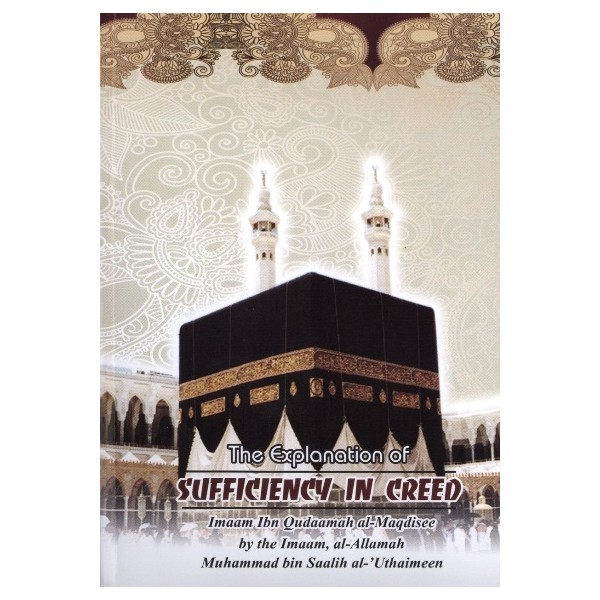
[Book Reco] The Explanation of the Sufficiency in Creed (Lum’at-ul-‘Itiqaad) : Shaikh Muhammad bin Saalih Al-‘Uthaimeen

The Explanation of the Sufficiency in Creed (Lum'at-ul-'Itiqaad) : Shaikh Muhammad bin Saalih Al-'Uthaimeen

In this book, we present the classical treatise on Creed of Imaam Ibn Qudaamah Al-Maqdisee, rahimahullaah, known as Lum’at-ul-‘Itiqaad, which is studied all over the Muslim world. Imaam Muhammad bin Saalih Al-‘Uthaimeen, rahimahullaah, has provided an in depth explanation for the points touched on by the author in a clear and simple manner. Furthermore, the narrations mentioned in the book have been verified and lengthy and extensive footnotes have been provided to make this book a valuable source of reference.

Shaikh Muhammad bin Saalih Al-‘Uthaimeen said in his introduction to this book: ‘This is a brief commentary of the book ‘Lum’at-ul-‘Itiqaad”, written by Abu Muhammad ‘Abdullaah bin Ahmad Ibn Qudaamah Al-Maqdisee (rahimahullaah), who was born in Sha’baan in 541H in a village from the districts of Nablis (present-day Palestine) and who died on the day of ‘Eed-ul-Fitr in 620H.

In this book, the author (rahimahullaah) gathered together the main points of the Islaamic Creed (‘Aqeedah). For this reason, the Board of the Educational Institutes assigned this book to be studied and taught during the second semester of the first year of study, so that it may serve as a pillar upon which one can establish his Creed at this stage.

Because I saw the importance of this book in terms of the topics it touches upon, its methodology and the lack of there being any explanation for it, I became determined, while seeking assistance from Allaah and hoping that He grant me correctness in intention and action, to put forth some words on it, in the attempt to clarify its ambiguous parts, explain its meanings and bring to light its main points.’

No doubt this book is of great importance for the Muslim with regard to establishing the correct Creed. This book is deserving of being taught and studied so that it may serve as a foundation for both the students of knowledge and the common Muslims. The topics touched upon by the author relate to the authentic Creed and Methodology, which all Muslims are obligated to have knowledge of. Consequently, we encourage everyone to purchase a copy of this magnificent book.

View the Table of Contents and Introduction @ http://www.dar-us-salam.com/inside/RA20-SufficiencyinCreed.pdf

The consensus of Ahlus Sunnah regarding three principles related to Allah’s Attributes – Shaykh ‘Abdul Qaadir al-Junayd

Selected pearls from the books of the People of Knowledge and Fiqh

The consensus (amongst Ahlus Sunnah) which has been conveyed regarding three principles related to Allah’s Attributes

The First Principle: Regarding Allah the Most High’s Attributes, there is no place for the intellect (in deriving) them.

Al-Haafidh as-Sijzee mentioned in his book “Ar-Radd ‘ala man Ankara al-Harf wa as-Sawt”, pg. 121: “The Imaams have agreed that the Attributes are not derived except by way of refrainment” (i.e.refraining from affirming an Attribute for Allah until there is proof).

The Second Principle: Belief in the Attributes of Allah is by affirming their literal meaning not figurative.

Al-Haafidh Ibn ‘Abdil Barr mentioned in his book “at-Tamheed”, 145/7:

“There is a consensus amongst Ahlus Sunnah that the Attributes (of Allah) are affirmed, all of them, which have come in the Qur’aan and Sunnah and believing in them and understanding them according to their apparent meaning, not figuratively, except that they (Ahlus Sunnah) do not establish the ‘how’ of these Attributes nor do they establish or determine the reality of them.”

However, Ahlul Bid’ah, the Jahmiyyah and Mu’tazilah – all of them – and the Khawaarij deny them (Allah’s Attributes) and they do not understand any of them according to their literal meaning.

Those who deny Allah’s Attributes also claim that whoever affirms them, then he is one who has likened Allah to His creation and conversely, those who do so are considered from amongst the people who negate the One Who is worshipped according to those who affirm Allah’s Attributes.

The ‘Allaamah al-Maqreezee  mentioned in his book “al-Muwaa’idh wal I’tibaar bi Dhikr al-Khutat wal Aathaar”, 188/4:

“And all of them (Ahlus Sunnah) have narrated understanding the Attributes as they have come.”

The Third Principle: The literal meaning texts of the Attributes are known to us in light of their linguistic meaning and they are unknown to us with regards to the ‘how’ of these Attributes.

Al-Imaam adh-Dhahabee mentioned in his book “al-‘Arsh”, 195/1 whilst commenting on the statement of Imaam Maalik: “The ascension of Allah on His Throne is not unknown (its known linguistically) and the ‘how’ of it is incomprehensible”:

“And what Imaam Maalik said is what the texts have come with and this is what ALL of the Salaf were upon.”

Selected by Shaykh ‘Abdul Qaadir al-Junayd 

Translated by Abu Afnaan Muhammad Abdullah
Courtesy: mpubs.org

** Why is it Important to Have Knowledge of The Names and Attributes of Allaah? – Shaikh ‘Abdur-Razzaaq bin ‘Abdil-Muhsin Al-’Abbaad

Shaikh ‘Abdur-Razzaaq bin ‘Abdil-Muhsin Al-’Abbaad (hafidhahullaah) mentions the most important reasons behind knowing and understanding and applying the Names and Attributes of Allaah The Most High. Along with the benefits and rewards that come as a result of that in this life as well as in the Hereafter. The Shaikh lists these reasons as follows:

Read the full article Here (wrightstreetmosque.com)