The Taaghoot are many, and their Heads are Five – Shaykh Ubayd al-Jaabiree

Allaah made it obligatory upon all the servants to reject and disbelieve in at-taaghoot, and to believe in Allaah. Ibnul Qayyim (May Allaah have mercy upon him) said:

“At-taaghoot is anyone whom the servants go beyond the due bounds, whether it is someone worshipped, obeyed or followed.”

The taaghoot are many, and their heads are five:

1. Iblees (Satan), may Allaah’s curse be upon him.
2. Whoever is worshipped and is pleased with that.
3. Whoever calls the people to worship them.
4. Whoever claims to possess anything from the knowledge of the affairs of the hidden and unseen.
5. Whoever judges by other than what Allaah sent down.

The proof is the saying of Allaah, the Most High:
“No one is to be compelled to enter the religion; true guidance has been made clear and distinct from falsehood. So whoever rejects at-taaghoot and truly believes and worships Allaah alone, then has grasped the firmest handhold that will never break.”

This is the meaning of ‘laa ilaha illa Allaah’.

This is pointing to the fact that it is obligatory to worship Allaah alone and sincerely without any partners, because the first thing that Allaah commanded the servants with was to believe in Allaah and disbelieve in at-taaghoot. Moreover, they are many but their heads are five.

It means their leaders and those who a blindly followed by them.

1. Iblees; he is the outcast and accursed Satan to whom Allaah said: “My curse is upon you till the day of resurrection.” [Saad 38:78]
Iblees was with the angels, in their company and performing their actions. Then when he was commanded to prostrate to Aadam, the foulness, disdain and haughty pride within him was manifested and he refused to prostrate, became haughty and became from the disbelievers. So he was cast out from the Mercy of Allaah, the Mighty and Majestic.

2. Whoever is worshipped and pleased with that; he is the one who is worshipped besides Allaah and is pleased that he is being worshipped besides Allaah; he is one of the heads of the taaghoots and Allaah’s refuge is sought from that and it is the same whether he is worshipped in his lifetime or after his death, if he dies whilst having been pleased with that.

3. Whoever calls people to the worship of himself; it is anyone who calls the people to worship him, even if they do not do so. He’s one of the heads of the taaghoots whether the people responded to his call or not.

4. Whoever claims to possess anything from the knowledge of the affairs of the unseen and hidden; al-ghayb is whatever is hidden and unseen by man and it of two types: That which exists at present and that which lies in the future. What is hidden in the present is a relative matter, something may be known to one person and unknown to another. But the hidden and unseen of the future is something absolute and not know to anyone except Allaah alone, or to a messenger granted such knowledge by Allaah. So whoever claims such knowledge is a disbeliever.

5. Whoever judges by other than what Allaah has revealed; judging by that which Allaah, the Most High, sent down is from the tawheed of Lordship (ar-rooboobiyyah) since it is applying the judgement of Allaah, which pertains to His Lordship and His complete sovereignty and authority.

Therefore Allaah, the Most High, calls those who are followed upon other than what Allaah sent down ‘lords’ for their followers. He says:
“They have taken their learned men and their rabbis as lord besides Allaah, and also the Messiah, the son of Mary. But they were not commanded except to worship Allaah alone. None has the right to be worshipped except Him. How free and far removed is Allaah from the partners they associate with Him.” [At-Tawbah 9:31]

So Allaah calls those who are followed ‘lords’ since they are taken as legislators along with Allaah, the Most High, and He called them those who followed them their worshippers/devotees due to their having submitted to them and obeyed them in contradiction to the judgement of Allaah, the Perfect and Most High. ‘Adiyy ibn Haatim said to Allaah’s Messenger (Peace be upon him) that they did not worship them, to which the Prophet replied:

“Indeed they used to prohibit lawful things for them, and make lawful that which is forbidden for them, and they followed them – so that is their worship of them.” [Ahmad and Tirdmidhi] (Authenticated by Al-Albaanee)

SourceA Gift For The Intellect In Explanation Of The Three Fundamental Principles Of Islaam – By Sheikh Ubaid Al-Jaabiree (Hafizahullah)

The Perfect Investment – Tafsir Ibn Kathir

We go through our entire lives looking for that perfect investment; whether it be our education, our jobs or our wealth. We put in so much time to gather information and to make sure that our investment will yield a satisfying return. In the end though, there is no certainty of the return on investment that we will gain, it could be 5%, 10%, or even -10%. We never know whether we will gain or lose from the investment that we make.

However, there is an alternative. The alternative is investing in the deen of Allah. In this investment, you will never lose, and that is the promise of Allah . As we all know, Allah is the one who never breaks any promise and He is The One and Only that we can count on. So, when He promises something, you can consider it a done deal.

“Who is he that will loan to Allah a beautiful loan, which Allah will double unto his credit and multiply many times? It is Allah that gives (you) Want or plenty, and to Him shall be your return”. – [Surah Baqarah, 2:245]

Tafsir Ibn Kathir on the above ayah:

Allah said:
(Who is he that will lend to Allah a goodly loan so that He may multiply it to him many times)

In this Ayah, Allah encourages His servants to spend in His cause. Allah mentioned this same Ayah in several other parts of His Glorious Qur’an. The Hadith that mentions that Allah descends (every night down on the nearest heaven to us when the last third of the night remains) states that Allah says:

(Who would give a loan to He Who is neither poor nor unjust.)

Allah’s statement:
(He may multiply it to him many times), is similar to His statement:

(The likeness of those who spend their wealth in the way of Allah, is as the likeness of a grain (of corn); it grows seven ears, and each ear has a hundred grains. Allah gives manifold increase to whom He wills.) (2:261)

We will mention this Ayah later on. Allah then said:

(And it is Allah that decreases or increases (your provisions), ) meaning, `Spend (in Allah’s cause) and do not be anxious.’ Certainly, Allah is the Sustainer Who increases or decreases the provisions to whomever He wills among His servants. Allah’s wisdom is perfect, and,

(and unto Him you shall return.) on the Day of Resurrection.

Al-Fawa’id – A Collection Of Wise Sayings – Imam Ibn Al-Qayyim

Source : Al-Fawa’id A Collection Of Wise Sayings Imam Ibn Al-Qayyim

There are two kinds of meeting between friends:
The first is a meeting based on sociability and spending time, in which are more disadvantages than advantage, the least of which is corruption of the heart, and wasting time.

The Second kind is a meeting for the sake of supporting one another, and recommending one another to the truth and to patience. This is the best kind, yet there are still three disadvantages therein,

1. Flattering each other.
2. Being excessively talkative.
3. That such meetings become a habit or routine and they fail to achieve their aims.

Enjoying health, this worldly life, status, a wife or children, then surely those feelings are temporary and will eventually dissipate.

There are three kinds of passive feelings, which affect the heart and they are either related to the past, which causes sorrow, or related to the future so as to cause grief, of finally related to the present so as to cause distress.

If the heart is not pure or honourable enough, and distance from every evil and malice, then it is unworthy to love, know and aspire to Allah. On the contrary, the lowest description of man’s heart is that he loves and aspires to this worldly life instead to Allah, the Almighty.

When man’s love, knowledge and aspiration is directed in this worldly way, the heart becomes narrow and gloomy as it is distant from the source of its revival and life.

Subsequently, the hearts of man can be divided into two kinds, the first of which is the heart of those, who incline to the Beneficent, which is the source of brightness, life, happiness, pleasure, delight and blessings.

The second one is the throne of the devil where narrowness, darkness, death, sorrow, distress and grief are settled therein. This heart is obsessed by sorrow for the past, and grief and distress for the present.

In order for a place to contain something, it must be free from whatever contradicts it. This principle applies to mankind and all creation as well as to belief and desires.So, if the hearts is obsessed by belief in falsehood, there will be no place for truth.

Accordingly, if the tongue is involved in trivial discourse, one shall be incapable of useful speech, unless falsehood is abandoned.

Hence, if the body is busy doing wrong actions, then acts of worship will be inapplicable unless these contradictory actions are abandoned.

Stand firm against evil thoughts, for if you fail to do so, they will become ideas, if you do not, they will become desires, so fight against them. If you do not, they will become a form of determination and intention, if you do not resist, they will become actions, and if you do not follow them up with their opposite, they will become habits that will be hard to quit.

He, who did not make use of his eye, did not make use of his ear.

The servant has a veil between him and Allah and another one between him and people. Whoever tore this veil between him and Allah, Allah will tear the veil between him and people.

The servant has a Lord that he will stand in front of and a house that he will live in, so he must seek the pleasure of Allah before meeting Him and he should furnish his house before moving into it.

Loosing time is harder than death, as loosing time keeps you away from Allah and the Hereafter, while death keeps you away from worldly life and people.

The whole world from its beginning until its end is not worth an hour of sadness, so what about the sadness of whole life.

What we love today will catch up with what we hate tomorrow, and what we hate today will catch up with what we love tomorrow.

The most precious reward during life is to busy yourself with most suitable and useful matters in their exact and suitable time.

How can he be rational who sells Paradise and what is in it, for one hour of passing pleasure?

The pious man will leave this worldly life while he did not obtain satisfaction in two matters: crying for himself and praising Allah.

If you are afraid of any creature, you will run away from it. When you are afraid of Allah, you will love Him and seek to be close to Him.

If knowledge is useful without actions, Allah, the Exalted would never have dispraised the people of the book, and if actions were useful without devotions, He would never have have dispraised the hypocrite.

Piety has Three Levels

1. Protecting the heart and limbs against sin and forbidden actions.

2. Protecting them against undesirable matters.

3. Protecting against curiosity and whatever is not of one’s concern.

The first will grant life to the servant, the second will grant his health and power, and the third will grant him happiness and joy.

The sea of pleasures may drown its owner and the swimmer fears to open his eyes under water.

Passing days are like dreams, the coming ones are wishes, and the time separating them is wasted.

Buy for yourself (through doing good deeds) while there is still a market and you have the ability to buy.

If you do not work hard and face difficulties along your way in seeking glory, you will never taste honor and relief when you attain victory.

It was said to one of the worshippers: You are tiring yourself so much! He said: I want to achieve comfort from it.

The human being was honoured with blessings of faith and good health, but he misused them, so they were justly taken away from him.

The truth will only be shown to perceptive people who will use the light of their minds to see the consequences of the matters they face.

The pleasures of life are similar to brides who are dressing for those who will prefer and choose; them or the brides (rewards) of the Hereafter, and whoever knows the significant difference between the two, will choose the best (the Hereafter).

Affliction are but trials by which the faithful are distinguished from the unfaithful, and if you were to succeed therein, they would be turned to supporters by which you could attain your objective.

No one can indulge in unlawfulness except for two reasons, the first of which is failing to trust in Allah, despite the fact that if one obeys Him, he will surely be granted the best of lawful gains.

The second reason is knowing that whoever abandons anything for the sake of Allah, surely He will grant him something better than what he has abandon.

Unfortunately, his vain desires surpass his patience and his inclination overpowers his mind, The first one has poor knowledge, and the second one has poor insight.

How can one feel secure, who has an unmerciful wife, an unforgiving son, a distrusting neighbour, a friend who gives no advice, a partner who misjudges him, an enemy whose hostility never ceases, a soul that is inclined to evil, an adorned world, vain desires, influential lusts, furious anger, the deception of Satan, and controlling weakness? If Allah rescued and guided him, all those problems would be under control, and if Allah deserted and abandoned him, leaving him on his own, all these distresses would cause his destruction.

He who tastes the pleasure of good health, surely the bitterness of patience will become easy for him.

The aim has priority in estimation, it is the last in existence, it is the principle according to the mind, and it is the end of the journey.

One Sin led to his Repentance – Stories of Repentance

A righteous man was once asked to tell the story of the pivotal moment of his life, the moment in which he first began to apply the teachings of Islam, and the following was his answer:

When I was a young man, I would not hesitate to perpetrate any sin that was made available to me. Then, one day, I saw a young woman who was perhaps the most beautiful woman I had ever seen. Much tempted by her, I indicated to her that I wanted her to approach me. She seemed nervous, but I thought that she would probably agree to satisfy my sexual desires for money. She approached me with what seemed to be a great deal of trepidation, and when she actually stood before me, she looked extremely terrified.

Feeling sorry for her, I said, ‘Do not fear, for I will not harm you.’

But my words did not lessen her terrible fright in the least; in fact, her situation worsened. She began to tremble like a palm tree leaf trembles with the wind.

I said, ‘Tell me your story.’

She said, ‘By Allah, o my brother, never before this day have I offered my body in this way. Dire need is what has driven me to this, for I have three daughters who have not eaten a single morsel of food for three days now. It was pity for them that brought me to this low point in my life.’

For the first time in my life, I felt pity; her story moved me, and I no longer entertained the intention of taking advantage of her. After she told me where she lived, I took a great deal of money, clothing and food to her house. When I returned to my house, I told my mother what had happened.

My mother knew that I had a book in which I would record all of my evil deeds, and so she said to me, ‘My son, you are a man who has never performed a good deed except for the good deed that you performed today. I know that you have a book in which you record your evil exploits, go now and write in it your good deed.’

I stood up, went to my book, opened it, and found that all of its pages were blank- except for the first page on which was written a single line.

إِنَّ الْحَسَنَاتِ يُذْهِبْنَ السَّيِّئَاتِ

Verily, the good deeds remove the evil deeds (i.e. small sins)

[Hud : 114]

At that very moment, I raised my hands to the sky and said, ‘By your Might and Majesty, never again will I disobey You.’ “

The above is taken from Stories of Repentance published by dar-us-salam.com

al-Khashyah (Dread) and al-Khawf (Fear) – Shaykh Zayd Al-Madkhalee & Shaykh Ubayd al-Jaabiree

Both of them mean utter debasement in front of Allaah the Mighty and Majestic and total submission to Him, openly and in secret. This comes along with perfect love for Allaah the Blessed and Exalted. Due to this, the Scholars divided between al-khashyah (dread) and al-khawf (fear). They said, “Indeed, al-khashyah is fear accompanied by glorification, whereas al-khawf can be accompanied by glorification and it can occur without glorification as well.” And this is true, since a person can fear an enemy. However, his fear of the enemy does not mean that he glorifies him. And he could fear a predatory animal, but his fear of that animal does not mean that he glorifies it. However, al-khashyah cannot be applied unless it is accompanied by glorification.

Allaah the Mighty and Majestic said,

“And they stand in awe for fear of Him.” [Sooratul-Anbiyaa‘ 21:28]

Likewise, Allaah the Mighty and Majestic said about the Scholars who are the best of the creation,

“Indeed, those who fear Allaah the most from amongst His creation are the Scholars.” [Soorah Faatir 35:28]

That is, the Scholars of the Sharee’ah, the Scholars of the Book of Allaah and the Sunnah of His Prophet (’alayhis-salaatu was-salaam) who act upon their knowledge. So whoever observes this khashyah for other than Allaah, then he has committed Shirk. Allaah the Blessed and Exalted warned against that in His statement,

“So do not fear them, but fear Me.” [Sooratul-Baqarah 2:150]

Khasyah (awe) is fear founded upon knowledge of the greatness of the one whom you fear.It is something more particular than khawf. For example, if you fear someone but don’t know whether he is able to catch you or not, then this is khawf. But when you fear someone and know that he is fully able to seize hold of you then this is khashyah.

Taken from the below:

1. The Path To Attaining Clarification Concerning The Three Fundamental Principles – By The Noble Shaykh Zayd Ibn Muhammad Ibn Haadee Al-Madkhalee , Prepared By Fawaaz Ibn ’Alee Al-Madkhalee

2. A Gift For The Intellect In Explanation Of The Three Fundamental Principles Of Islaam : By Sheikh Ubaid Al-Jaabiree (Hafizahullah)

Man is fickle when Ease comes to Him after Difficulty – Tafsir Ibn Kathir

Surah No.41 :(Fussilat)

(49. Man does not get tired of asking for good; but if an evil touches him, then he gives up all hope and is lost in despair.) (50. And truly, if We give him a taste of mercy from Us, after some adversity has touched him, he is sure to say: “This is due to my (merit); I think not that the Hour will be established. But if I am brought back to my Lord, surely there will be for me the best with Him. “Then, We verily will show to the disbelievers what they have done, and We shall make them taste a severe torment.) (51. And when We show favor to man, he turns away and becomes arrogant; but when evil touches him, then he has recourse to long supplications.)

Allah tells us that man never gets bored of asking his Lord for good things, such as wealth, physical health, etc., but if evil touches him — i.e., trials and difficulties or poverty —

(then he gives up all hope and is lost in despair.), i.e., he thinks that he will never experience anything good again.

(And truly, if We give him a taste of mercy from Us, after some adversity has touched him, he is sure to say: “This is due to my (merit)…”) means, if something good happens to him or some provision comes to him after a period of difficulty, he says, `this is because of me, because I deserve this from my Lord.’

(I think not that the Hour will be established.) means, he does not believe that the Hour will come. So when he is given some blessing, he becomes careless, arrogant and ungrateful, as Allah says:

(Nay! Verily, man does transgress. Because he considers himself self-sufficient.) (96:6)

(But if I am brought back to my Lord, surely there will be for me the best with Him.) means, `if there is a Hereafter after all, then my Lord will be generous and kind to me just as He was in this world.’ So he expects Allah to do him favors in spite of his bad deeds and lack of certain faith. Allah says:

(Then, We verily will show to the disbelievers what they have done, and We shall make them taste a severe torment.) Thus Allah threatens punishment and vengeance to those whose conduct and belief is like that.

(And when We show favor to man, he turns away and becomes arrogant;) means, he turns away from doing acts of obedience and is too proud to obey the commands of Allah. This is like the Ayah:

(But ﴿Fir`awn﴾ turned away along with his hosts) (51:39).

(but when evil touches him,) means, difficulties,

(then he has recourse to long supplications.) means, he asks at length for one thing. Long supplications are those which are long on words and short on meaning. The opposite is concise speech which is brief but full of meaning. And Allah says:

(And when harm touches man, he invokes Us, lying on his side, or sitting or standing. But when We have removed his harm from him, he passes on as if he had never invoked Us for a harm that touched him!) (10:12)

Source : Quran : Tafsir Ibn Kathir :  Surah No.41 :(Fussilat)

Ar-Rajaa (hope and longing) – Shaykh Ubayd al-Jaabiree

The evidence for hope and longing (ar-rajaa) is the saying of Allaah, the Most High:

“So whoever hopes to see His Lord and be rewarded by Him, then let him perform righteous deeds and make it purely and sincerely for Him; and let him not make any share of it to anyone other than his Lord.” [Al-Kahf 18:110]

“The evidence for hope and longing (ar-rajaa)” –

  • Hope and longing is one of the pillars that worship is built upon;
  • this means that a person is optimistic about obtaining the Mercy and Pardon of Allaah.
  • It is obligatory upon the servant that they combine both hope and fear because hope causes a person to long for the Mercy of Allaah and fear prevents them from perpetrating an act that earns the anger of Allaah.
  • Some of the people of knowledge have said that fear and hope are like the ‘two wings of the servant’.
  • Ar-rajaa is that a person wishes for something that may be attained and is close or it may be something far off but is treated as being close.
  • This earnest hope which comprises humility and submission may only be directed to Allaah and directing it to other than this is shirk; whether minor or major depends on state of the heart of the person in this case.

“is the saying of Allaah, the Most High: “So whoever hopes to see His Lord and be rewarded by Him, then let him perform righteous deeds and make it purely and sincerely for Him;” – Meaning,

  • whoever desires and longs to meet their Lord, then sheer desire is not enough but he should also perform righteous deeds.
  • This verse is a proof that it is obligatory to perform righteous deeds.
  • A righteous deed is everything that brings the servant closer to Allaah, whether it is an obligation or a recommended act.
  • A person who hopes but does not act is delusional and has false hopes; this is blameworthy.

“and let him not make any share of it to anyone other than his Lord.”” – Meaning,

  • he should not commit major shirk that expels him from the religion or minor shirk that negates the completeness of tawheed.

Source: A Gift For The Intellect In Explanation Of The Three Fundamental Principles Of Islaam – By Sheikh Ubaid Al-Jaabiree (Hafizahullah) With some notes from the sharh by Sheikh Salih al Uthaymeen (Rahimahullah)

Two Categories of Du’a – Shaykh Zayd Al-Madkhalee

Two Categories of Du’a

Ad-Du’aa‘: And ad-du’aa‘ is divided into two categories:

[i] the du’aa‘ of worship and
[ii] the du’aa‘ of asking.

And both of them fall into the essence of worship.

[1]: So the du’aa‘ of worship is to direct every act of worship, whether it is related to one’s wealth or body or both of them together, to Allaah the Blessed and Exalted. This is to be done in a manner that is in agreement with the purified Sharee’ah of Allaah and His upright commands. And at the beginning of this type of worship is the Tawheed of Allaah the Blessed and Exalted as is proven by the truthful statement, “And I have not created the Jinn, nor the mankind, except to worship Me.” [Sooratudh-Dhaariyaat 51:56]

That is, so that they single Me out with knowledge that the Tawheed of a servant cannot be completed, except by freeing oneself from Shirk which is the opposite of Tawheed. This is because when we have to know Tawheed with its Sharee’ah meaning, we say, ‘It is to single out Allaah with worship and to exonerate Him from Shirk, to be free from it and its people, whether it is committed in a small amount or in abundance and whether it is major or minor.’ So Tawheed cannot be completed, except after attaining complete freedom from Shirk and its people and all of its forms and manifestations. Due to this, the Scholars have stated, “There is no walaa‘ (allegiance), except with baraa‘ (enmity).”104

[2]: ad-du’aa‘ul-mas‘alah (supplication of request):

And du’aa‘ul-mas‘alah is to request something from Allaah the Blessed and Exalted in order to bring about a worldly or religious benefit and to remove a harm the like thereof. So the request in this way is a form of worship. It is not permissible to direct this towards anyone other than Allaah the Blessed and Exalted. Indeed, the Scholars have divided du’aa‘ul-mas‘alah into various categories. From them is that which it is not permissible to seek except from Allaah the Blessed and Exalted alone. So whoever directs anything from it to other than Allaah the Mighty and Majestic, then he has committed major Shirk with Allaah. And that is like the one who calls upon other than Allaah with regards to that which no one is capable of granting besides Allaah the Blessed and Exalted, from bringing about benefit or removing harm. As for seeking something from the creation that they are capable of granting, then there is no prohibition with regards to that.

Source:

The Path to Attaining Clarification Concerning the Three Fundamental Principles 
By The Noble Shaykh Zayd Ibn Muhammad Ibn Haadee al-Madkhalee
An Explanation of Shaykhul-Islaam Muhammad Ibn ‘Abdul-Wahhaab’s ‘Thalaathatul-‘Usool’

You fast and pray more than the Companions of Muhammad (sal’Allahu ‘alayhi wa sallam) but they were better than you.’ – Ibn Rajab

Ibn Mas’ud said to his companions, ‘You fast and pray more than the Companions of Muhammad (sal’Allahu ‘alayhi wa sallam) but they were better than you.’ They asked, ‘How so?’ He replied, ‘They were more abstinent of this world and desirous of the Hereafter.’ Hence he indicated that the superiority of the Companions lay in the attachment of their hearts to the Hereafter, their desire for it, their turning away from this world, and their thinking little of it even if it be readily available to them. Their hearts were empty of the world and filled with the Hereafter. This is what they inherited from their Prophet (sal’Allahu ‘alayhi wa sallam). He (sal’Allahu ‘alayhi wa sallam) was one whose heart was most devoid of the world and most attached to Allah and the Abode of the Hereafter, this despite his outwardly interacting with the creation, fulfilling the duties of Prophethood, and implementing the politics of religion and world.

This was the state of the Khulafa who came after him and those who followed them in goodness such as al-Hasan and ‘Umar ibn ‘Abdul-‘Aziz. There were, in their times, those who fasted more than them and prayed more than them, but their hearts had not attained the levels of theirs in terms of leaving the world and turning to the Hereafter, and settling there.

Posted from the Book “The Journey to Allah” Ibn Rajab Al-Hanbali
Dar us Sunnah Publishers

Would the Servants be Accountable for What They Conceal in Their Hearts ? – Tafsir Ibn Kathir

(2.284. To Allah belongs all that is in the heavens and all that is on the earth, and whether you disclose what is in yourselves or conceal it, Allah will call you to account for it. Then He forgives whom He wills and punishes whom He wills. And Allah is able to do all things.)

Allah states that His is the kingship of the heavens and earth and of what and whoever is on or between them, that He has perfect watch over them. No apparent matter or secret that the heart conceals is ever a secret to Him, however minor it is. Allah also states that He will hold His servants accountable for what they do and what they conceal in their hearts. In similar statements, Allah said,

(Say (O Muhammad ): “Whether you hide what is in your breasts or reveal it, Allah knows it, and He knows what is in the heavens and what is in the earth. And Allah is able to do all things) ﴿3:29﴾, and,

(He knows the secret and that which is yet more hidden.)

There are many other Ayat on this subject. In this Ayah (2:284), Allah states that He has knowledge of what the hearts conceal, and consequently, He will hold the creation accountable for whatever is in their hearts. This is why when this Ayah was revealed, it was hard on the Companions, since out of their strong faith and conviction, they were afraid that such reckoning would diminish their good deeds.

Imam Ahmad recorded that Abu Hurayrah said, “When

(To Allah belongs all that is in the heavens and all that is on the earth, and whether you disclose what is in yourselves or conceal it, Allah will call you to account for it. Then He forgives whom He wills and punishes whom He wills. And Allah is able to do all things)

was revealed to the Messenger of Allah , it was very hard for the Companions of the Messenger . The Companions came to the Messenger and fell to their knees saying, `O Messenger of Allah! We were asked to perform what we can bear of deeds: the prayer, the fast, Jihad and charity. However, this Ayah was revealed to you, and we cannot bear it.’ The Messenger of Allah said,

(Do you want to repeat what the People of the Two Scriptures before you said, that is, `We hear and we disobey’ Rather, say, `We hear and we obey, and we seek Your forgiveness, O our Lord, and the Return is to You.)

When the people accepted this statement and their tongues recited it, Allah sent down afterwards,

(The Messenger believes in what has been sent down to him from his Lord, and (so do)the believers. Each one believes in Allah, His Angels, His Books, and His Messengers. (They say,) “We make no distinction between one another of His Messengers and they say, “We hear, and we obey. (We seek) Your forgiveness, our Lord, and to You is the return (of all).”)

When they did that, Allah abrogated the Ayah (2:284) and sent down the Ayah,

(Allah burdens not a person beyond his scope. He gets reward for that (good) which he has earned, and he is punished for that (evil) which he has earned. “Our Lord! Punish us not if we forget or fall into error.”) until the end.”

Muslim recorded it with the wording; “When they did that, Allah abrogated it (2:284) and sent down,

(Allah burdens not a person beyond his scope. He gets reward for that (good) which he has earned, and he is punished for that (evil) which he has earned. “Our Lord! Punish us not if we forget or fall into error”.)

Allah said, `I shall (accept your supplication),’

(“Our Lord! Lay not on us a burden like that which You did lay on those before us (Jews and Christians)”)

Allah said, `I shall (accept your supplication),’

(“Our Lord! Put not on us a burden greater than we have strength to bear. ”)

Allah said, `I shall (accept your supplication),’

(“Pardon us and grant us forgiveness. Have mercy on us. You are our Mawla (Supporter and Protector) and give us victory over the disbelieving people.”)

Allah said, `I shall.”’

Imam Ahmad recorded that Mujahid said, “I saw Ibn `Abbas and said to him, `O Abu Abbas! I was with Ibn `Umar, and he read this Ayah and cried.’ He asked, `Which Ayah’ I said,

`(And whether you disclose what is in yourselves or conceal it.)’

Ibn `Abbas said, `When this Ayah was revealed, it was very hard on the Companions of the Messenger of Allah and worried them tremendously. They said: O Messenger of Allah! We know that we would be punished according to our statements and our actions, but as for what occurs in our hearts, we do not control what is in them.’ The Messenger of Allah said,

(Say, `We hear and we obey.’) They said, `We hear and we obey.’ Thereafter, this Ayah abrogated the previous Ayah,

(The Messenger believes in what has been sent down to him from his Lord, and (so do) the believers. Each one believes in Allah), until,

(Allah burdens not a person beyond his scope. He gets reward for that (good) which he has earned, and he is punished for that (evil) which he has earned.)

Therefore, they were pardoned what happens in their hearts, and were held accountable only for their actions.”’

The Group recorded that Abu Hurayrah said that the Messenger of Allah said,

(Allah has pardoned my Ummah for what they say to themselves, as long as they do not utter it or act on it.)

The Two Sahihs recorded that Abu Hurayrah said that the Messenger of Allah said,

(Allah said (to His angels), “If My servant intends to commit an evil deed, do not record it as such for him, and if he commits it, write it for him as one evil deed. If he intends to perform a good deed, but did not perform it, then write it for him as one good deed, and if he performs it, write it for him as ten good deeds.”)

Source : Tafsir Ibn Kathir : Surah No.2 (Surah Al Baqarah), Dar-us-Salam English Publication

Three Categories of People on the Day of Resurrection – Tafseer Ibn Kathir

Tafseer Ibn Kathir : 56. Al-Waqi’ah

(7. And you (all) will be in three groups. )
(8. So those on the right — how (fortunate) will be those on the right!)
(9. And those on the left — how (unfortunate) will be those on the left!)
(10. And those foremost will be foremost.)

Allah’s statement,

(And you (all) will be in three groups.) This means that people will be divided into three categories on the Day of Resurrection.

Some will on the right of Allah’s Throne, and they are those who were brought forth from `Adam’s right side. This category will be given their Books of Records in their right hand and will be taken to the right side. As-Suddi explained that they will comprise the majority of the residents of Paradise.

Another category is those who will be placed to the left of Allah’s Throne, and they are those who were brought forth from `Adam’s left side. This category will be given their Books of Records in their left hands and will be taken to the left side. They are the residents of the Fire, may Allah save us from their actions.

A third category is comprised of those who are the foremost and nearest before Allah. They are in a better grade and status and nearer to Allah than those on the right side. They are the chiefs of those on the right side, because they include the Messengers, Prophets, true believers and martyrs. They are fewer than those on the right side;

so Allah said,

(So those on the right — how will be those on the right! And those on the left — how will be those on the left! And those foremost will be foremost.) Allah divides people into these three groups upon their death, as indicated by the end of this Surah. Allah mentioned them in His statement as well,

(Then We gave the Book as inheritance to such of Our servants whom We chose. Then of them are some who wrong themselves, and of them are some who follow a middle course, and of them are some who are, by Allah’s leave, foremost in good deeds.)(35:32) Muhammad bin Ka`b, Abu Hazrah Ya`qub bin Mujahid said that,

(And those foremost will be foremost.) is about the Prophets, peace be upon them, while As-Suddi said that they are the residents of the utmost highs (Ahl Al-`Illiyyin, in Paradise). The meaning of foremost is that they were foremost in performing the acts of righteousness just as Allah commanded them,

(And march forth in the way to forgiveness from your Lord, and for Paradise as wide as the heavens and the earth.)(3:133) and,

(Race with one another in hastening towards forgiveness from your Lord, and Paradise the width whereof is as the width of the heaven and the earth.)(57:21) Therefore, those who rush to obey Allah in this life and are foremost in performing acts of righteousness, will be among the foremost believers honored in the Hereafter. Verily, the reward is according to the kind of deed, and as one does, so he is judged. So Allah said:

(These will be the nearest (to Allah). In the Gardens of Delight.)

Source : Quran : Tafsir Ibn Kathir :  Surah No.56 : Three Categories of People on the Day of Resurrection

The Devil’s Inspiration – Tafseer Ibn Katheer

Allah said,

(And certainly, the Shayatin do inspire their friends to dispute with you,) Ibn Abi Hatim recorded that Abu Ishaq said that a man said to Ibn `Umar that Al-Mukhtar claimed that he received revelation. So Ibn `Umar said, “He has said the truth,” and recited this Ayah, (And certainly, the Shayatin do inspire their friends…)

Abu Zamil said, “I was sitting next to Ibn `Abbas at a time when Al-Mukhtar bin Abi `Ubayd was performing Hajj. So a man came to Ibn `Abbas and said, `O Ibn `Abbas! Abu Ishaq (Al-Mukhtar) claimed that he received revelation this night.’ Ibn `Abbas said, He has said the truth.’ I was upset and said, `Ibn `Abbas says that Al-Mukhtar has said the truth’ Ibn `Abbas replied, `There are two types of revelation, one from Allah and one from the devil. Allah’s revelation came to Muhammad , while the Shaytan’s revelation comes to his friends.’ He then recited, (And certainly, the Shayatin do inspire their friends…)

We also mentioned `Ikrimah’s commentary on the Ayah,

(Inspiring one another with adorned speech as a delusion.) Allah said next,

(to dispute with you,) Ibn Jarir recorded that Ibn `Abbas commented;

(Eat not of that on which Allah’s Name has not been mentioned…) until,

(…to dispute with you,) “The devils inspire their loyal supporters, `Do you eat from what you kill but not from what Allah causes to die”’ As-Suddi said; “Some idolators said to the Muslims, `You claim that you seek Allah’s pleasure. Yet, you do not eat what Allah causes to die, but you eat what you slaughter’ Allah said,

(and if you obey them…), and eat dead animals,

(then you would indeed be polytheists. ) Similar was said by Mujahid, Ad-Dahhak and several others among scholars of the Salaf.

Source : Quran : Tafsir Ibn Kathir :  Surah No.6

Istirja (Inna Lillahi wa Inna Ilahi Raaji’oon) – Tafseer Ibn Katheer

Tafseer Ibn Katheer – Suratul Baqarah [Surah No.2]

(155. And certainly, We shall test you with something of fear, hunger, loss of wealth, lives and fruits, but give glad tidings to As-Sabirin (the patient).)
(156. Who, when afflicted with calamity, say: “Truly, to Allah we belong and truly, to Him we shall return.”)
(157. They are those on whom are the Salawat (i.e., who are blessed and will be forgiven) from their Lord, and (they are those who) receive His mercy, and it is they who are the guided ones.)

Allah informs us that He tests and tries His servants, just as He said in another Ayah:

(And surely, We shall try you till We test those who strive hard (for the cause of Allah) and As-Sabirin (the patient), and We shall test your facts (i.e., the one who is a liar, and the one who is truthful).) (47:31)

Hence, He tests them with the bounty sometimes and sometimes with the afflictions of fear and hunger. Allah said in another Ayah:

(So Allah made it taste extreme of hunger (famine) and fear.) (16:112)

The frightened and the hungry persons show the effects of the affliction outwardly and this is why Allah has used here the word `Libas’ (cover or clothes) of fear and hunger. In the Ayat above, Allah used the words:

(with something of fear, hunger,) meaning, a little of each. Then (Allah said),

(loss of wealth,) meaning, some of the wealth will be destroyed,

(lives) meaning, losing friends, relatives and loved ones to death,

(and fruits,) meaning, the gardens and the farms will not produce the usual or expected amounts. This is why Allah said next:

(but give glad tidings to As-Sabirin (the patient).)

He then explained whom He meant by `the patient’ whom He praised:

(Who, when afflicted with calamity, say: “Truly, to Allah we belong and truly, to Him we shall return.”) meaning, those who recite this statement to comfort themselves in the face of their loss, know that they belong to Allah and that He does what He wills with His servants. They also know that nothing and no deed, even if it was the weight of an atom, will be lost with Allah on the Day of Resurrection. These facts thus compel them to admit that they are Allah’s servants and that their return will be to Him in the Hereafter.

This is why Allah said:

(They are those on whom are the Salawat (i. e., who are blessed and will be forgiven) from their Lord, and (they are those who) receive His mercy,) meaning, Allah’s praise and mercy will be with them. Sa`id bin Jubayr added, “Meaning, safety from the torment.”

(and it is they who are the guided ones.) `Umar bin Al-Khattab commented: “What righteous things, and what a great heights.

(They are those on whom are the Salawat from their Lord, and (they are those who) receive His mercy) are the two righteous things.

(and it is they who are the guided ones) are the heights.”

The heights means more rewards, and these people will be awarded their rewards and more.

There are several Ahadith that mention the rewards of admitting that the return is to Allah by saying:(“Truly, to Allah we belong and truly, to Him we shall return.”) when afflictions strike.

For instance, Imam Ahmad reported that Umm Salamah narrated:

Once, Abu Salamah came back after he was with Allah’s Messenger and said: I heard Allah’s Messenger recite a statement that made me delighted. He said:(No Muslim is struck with an affliction and then says Istirja` when the affliction strikes, and then says: `O Allah! Reward me for my loss and give me what is better than it,’ but Allah will do just that.) Umm Salamah said: So I memorized these words. When Abu Salamah died I said Istirja` and said: “O Allah! Compensate me for my loss and give me what is better than it.” I then thought about it and said, “Who is better than Abu Salamah” When my `Iddah (the period of time before the widow or divorced woman can remarry) finished, Allah’s Messenger asked for permission to see me while I was dyeing a skin that I had. I washed my hands, gave him permission to enter and handed him a pillow, and he sat on it.

He then asked me for marriage and when he finished his speech, I said, “O Messenger of Allah! It is not because I do not want you, but I am very jealous and I fear that you might experience some wrong mannerism from me for which Allah would punish me. I am old and have children.” He said: (As for the jealousy that you mentioned, Allah the Exalted will remove it from you. As for your being old as you mentioned, I have suffered what you have suffered. And for your having children, they are my children too.) She said, “I have surrendered to Allah’s Messenger.” Allah’s Messenger married her and Umm Salamah said later, “Allah compensated me with who is better than Abu Salamah: Allah’s Messenger .’ [ Muslim reported a shorter version of this Hadith]

Source : Quran : Tafsir Ibn Kathir : Surah No.2

Four Birds and Prophet Ibraheem (Peace be upon him) – Tafseer Ibn Kathir

Source : Tafseer Ibn Kathir

(260. And (remember) when Ibrahim said, “My Lord! Show me how You give life to the dead.” He (Allah) said: “Do you not believe” He (Ibrahim) said: “Yes (I believe), but to be stronger in faith.” He said: “Take four birds, then cause them to incline towards you (then slaughter them, cut them into pieces), and then put a portion of them on every hill, and call them, they will come to you in haste. And know that Allah is All-Mighty, All-Wise.”)

The Khalil Supplicates to Allah to Show Him How He Resurrects the Dead

The scholars said that there are reasons behind this request by Ibrahim. For instance, when Ibrahim said to Nimrod, (My Lord (Allah) is He Who gives life and causes death,) he wanted to solidify his knowledge about resurrection by actually witnessing it with his eyes. Prophet Ibrahim said,

(“My Lord! Show me how You give life to the dead.” He (Allah) said: “Do you not believe” He (Ibrahim) said: “Yes (I believe), but to be stronger in faith.”)

Al-Bukhari recorded that Abu Hurayrah said that the Messenger of Allah said,

(We are more liable to be in doubt than Ibrahim when he said, “My Lord! Show me how You give life to the dead.” Allah said, “Don’t you believe” Ibrahim said, “Yes (I believe), but (I ask) in order to be stronger in faith.”)

The Prophet’s statement in the Hadith means, “We are more liable to seek certainty.”

The Answer to Al-Khalil’s Request:

Allah said,

(He said: “Take four birds, then cause them to incline towards you.”)

Scholars of Tafsir disagreed over the type of birds mentioned here, although this matter in not relevant due to the fact that the Qur’an did not mention it. Allah’s statement, (cause them to incline towards you) means, cut them to pieces. This is the explanation of Ibn `Abbas, `Ikrimah, Sa`id bin Jubayr, Abu Malik, Abu Al-Aswad Ad-Dili, Wahb bin Munabbih, Al-Hasan and As-Suddi.

Therefore, Ibrahim caught four birds, slaughtered them, removed the feathers, tore the birds to pieces and mixed the pieces together. He then placed parts of these mixed pieces on four or seven hills. Ibn `Abbas said, “Ibrahim kept the heads of these birds in his hand. Next, Allah commanded Ibrahim to call the birds to him, and he did as Allah commanded him. Ibrahim witnessed the feathers, blood and flesh of these birds fly to each other, and the parts flew each to their bodies, until every bird came back to life and came walking at a fast pace towards Ibrahim, so that the example that Ibrahim was witnessing would become more impressive. Each bird came to collect its head from Ibrahim’s hand, and if he gave the bird another head the bird refused to accept it. When Ibrahim gave each bird its own head, the head was placed on its body by Allah’s leave and power. ”

This is why Allah said,
(And know that Allah is All-Mighty, All-Wise) and no one can overwhelm or resist Him. Whatever Allah wills, occurs without hindrance, because He is the All-Mighty, Supreme above all things, and He is Wise in His statements, actions, legislation and decrees.

`Abdur-Razzaq recorded that Ma`mar said that Ayyub said that Ibn `Abbas commented on what Ibrahim said,

(but to be stronger in Faith), “To me, there is no Ayah in the Qur’an that brings more hope than this Ayah.” Ibn Abi Hatim recorded that Muhammad bin Al-Munkadir said that `Abdullah bin `Abbas met `Abdullah bin `Amr bin Al-`As and said to him, “Which Ayah in the Qur’an carries more hope for you” Ibn `Amr said,

(Say: “O `Ibadi (My servants) who have transgressed against themselves (by committing evil deeds and sins)! Despair not.) (39:53).

Ibn `Abbas said, “But I say that it is Allah’s statement,

(And (remember) when Ibrahim said, “My Lord! Show me how You give life to the dead.” He (Allah) said: “Do you not believe” He (Ibrahim) said: “Yes (I believe)…)

Allah accepted Ibrahim’s affirmation when he merely said, `Yes.’ This Ayah refers to the doubts that attack the heart and the thoughts that Shaytan inspires.” Al-Hakim also recorded this in Al-Mustadrak and said; “Its chain is Sahih but they did not record it.”

The Story of the Dead People – Tafseer Ibn Kathir

Source :Tafseer Ibn Kathir – Suratul Baqarah

( Did you (O Muhammad ) not think of those who went forth from their homes in the thousands, fearing death Allah said to them, “Die”. And then He restored them to life. Truly, Allah is full of bounty to mankind, but most men thank not.) [Surah Baqarah Verse243]

Ibn Abu Hatim related that Ibn `Abbas said that these people mentioned herein, were the residents of a village called Dawardan. `Ali bin `Asim said that they were from Dawardan, a village several miles away from Wasit (in Iraq).

In his Tafsir, Waki` bin Jarrah said that Ibn `Abbas commented,

(Did you (O Muhammad ) not think of those who went forth from their homes in thousands, fearing death) that they were four thousand persons who escaped the plague (that broke out in their land). They said, “We should go to a land

that is free of death!” When they reached a certain area, Allah said to them:

(“Die.”) and they all died. Afterwards, one of the Prophets passed by them and supplicated to Allah to resurrect them and Allah brought them back to life. So, Allah stated:

(Did you (O Muhammad ) not think of those who went forth from their homes in the thousands, fearing death)

Furthermore, several scholars among the Salaf said that these people were the residents of a city during the time of the Children of Israel. The weather in their land did not suit them and an epidemic broke out. They fled their land fearing death and took refuge in the wilderness. They later arrived at a fertile valley and they filled what is between its two sides. Then Allah sent two angels to them, one from the lower side and the other from the upper side of the valley. The angels screamed once and all the people died instantly, just as the death of one man. They were later moved to a different place, where walls and graves were built around them. They all perished, and their bodies rotted and disintegrated. Long afterwards, one of the Prophets of the Children of Israel, whose name was Hizqil (Ezekiel), passed by them and asked Allah to bring them back to life by his hand. Allah accepted his supplication and commanded him to say, “O rotted bones, Allah commands you to come together.” The bones of every body were brought together. Allah then commanded him to say, “O bones, Allah commands you to be covered with flesh, nerves and skin.” That also happened while Hizqil was watching. Allah then commanded him to say, “O souls, Allah commands you to return, each to the body that it used to inhabit.” They all came back to life, looked around and proclaimed, “All praise is due to You (O Allah!) and there is no deity worthy of worship except You.” Allah brought them back to life after they had perished long ago.

We should state that bringing these people back to life is a clear proof that physical resurrection shall occur on the Day of Resurrection.
This is why Allah said:
(Truly, Allah is full of bounty to mankind,) meaning, in that He shows them His great signs, sound proofs and clear evidences.

Yet, (but most men thank not.) as they do not thank Allah for what He has given them with in their worldly life and religious affairs.

The story of the dead people (2:244 above) also indicates that no caution can ever avert destiny and that there is no refuge from Allah, but to Allah Himself. These people departed from their land fleeing the epidemic and seeking to enjoy a long life. What they earned was the opposite of what they sought, as death came quickly and instantaneously and seized them all.

There is an authentic Hadith that Imam Ahmad reported that `Abdullah bin `Abbas said that `Umar bin Al-Khattab once went to Ash-Sham (Syria). When he reached the area of Sargh, he was met by the commanders of the army: Abu `Ubaydah bin Jarrah and his companions. They told him that the plague had broken out in Ash-Sham. The Hadith then mentioned that `Abdur-Rahman bin `Awf, who was away attending to some of his affairs, came and said, “I have knowledge regarding this matter. I heard Allah’s Messenger (Peace be upon him) say:

(If it (the plague) breaks out in a land that you are in, do not leave that land to escape from it. If you hear about it in a land, do not enter it.)

`Umar then thanked Allah and went back. This Hadith is also reported in the Sahihayn.

The Linguistic Definition of the word Masjid – Permanent Committee

Question: What is the Masjid, (mosque) linguistically and religiously?

Answer:

Linguistically, the masjid is the place of prostration.

Religiously, it is everything that is built for the Muslims to offer the five prayers in congregation.
It is also used to refer to that which is more general that this. Thus, it also includes that place that a person uses in his house(or has allocated) to offer the voluntary prayers in, or he uses it to perform the obligatory prayers when he is unable to offer them in the masjid where the people have established congregational prayer. From this is that which Al-Bukhari and others recorded from Jabir, may Allah be pleased with him, who said that the messenger of Allah sallahu alayhi was sallam said:

“I was given five (things) that no one was given before me. I was aided with Ar-Ru’b (fright cast into the hearts of enemies) for a month’s distance (of travel), and the earth was made a Masjid (place of prayer) for me and a means of purification. So any man from my nation (the Muslims) whom the (time for) prayer catches, then let him offer the prayer….”

(Al-Bukhari no. 33 and Muslim no.521)

Permanent Committee for Research and Verdicts
Fatawa Islamiyah vol.3 p.19 DARUSSALAM

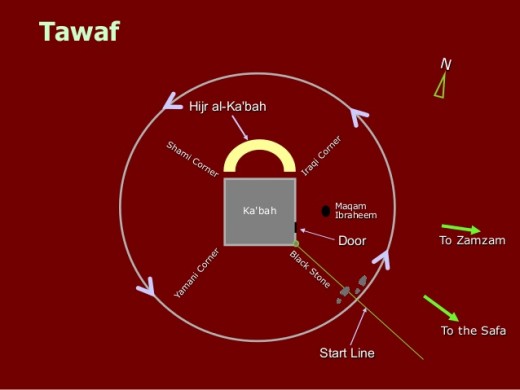
Salah (Prayer) inside the Ka’bah (Hijr) is preferred and is a means of drawing close (to Allaah)

Hijr Ka'bah Makkah Masjid al haram

Making Takbir, then du’aa to Allaah after praying two rak’ah inside the Ka’bah (Hijr) is a Sunnah

Question: Is salat inside the Ka’bah in any way superior to salat outside it, and is it permissible for a person to speak of what he has seen inside the ka’bah?

Answer by The Permanent Committee: Salat inside the Ka’bah is preferred, if it is possible to do so without any inconvenience, difficulty or harm to anyone, as the Prophet (salallaahu ‘alaihi wa sallam) entered it and prayed therein, according to an authentic narration in the Sahihain (Two Sahihs). And it has been reported from him (salallaahu ‘alaihi wa sallam) that he came out one day looking sad, and he said: “Verily, I fear that I may have placed a burden upon my Ummah (i.e. by entering the ka’bah).” [1]

And when ‘A`ishah (radiallaahu ‘anha) asked him about salat in the Ka’bah, he said: “Pray in the Hijr, because it is a part of the House.” [2]

This proves that salat inside the Ka’bah is preferred and is a means of drawing close (to Allaah) and an act of obedience, and in it is great merit.

However, it is not fitting that there should be crowding, or harm, or doing anything which causes difficulty to him or to the people. It is enough for him to pray in the Hijr, because it is a part of the House; and there is no objection to speaking about what he has seen inside the Ka’bah, such as its inscriptions, or what is on its ceiling or the like. There is no objection to a person talking and saying: “I saw such and such and such and such.” There is no sin in that.

The Sunnah, when one enters the Ka’bah, is to pray two rak’ahs and to say “Allaahu Akbar” and invoke Allaah, the Almighty, the All-Powerful with whatever supplications are easy for him at the end of it, especially those which have been reported (from the Prophet, salallaahu ‘alaihi wa sallam) because the Prophet (salallaahu ‘alaihi wa sallam) entered the Ka’bah and prayed therein, then he performed Takbir and supplicated Allaah. All of this has been authentically reported from him (salallaahu ‘alaihi wa sallam).

The Permanent Committee; Fatawa Islamiya, Volume 2

[1] Abu Dawud no. 2029.
[2] Abu Dawud no. 2028; Ahmad 6:92

Begin with Yourself – Gems and Jewels

A man went to Ibn ‘Abbas radiAllaahu ‘anhu and said, “O Ibn ‘Abbas, I want to enjoin people to do good and forbid them from doing evil.” Ibn ‘Abbas said, “And have you reached that level?” He said, “I hope that that is so.” He said, “If you do not fear to be exposed by three verses of Allah’s Book, then do so.” The man asked, “And what are they?” He mentioned this verse:

Enjoin you Al-Birr (piety and righteousness and each and every act of obedience to Allâh) on the people and you forget (to practise it) yourselves.” (Baqarah 2:44)

And then asked, “Have you applied the implications of this verse?” He said, “No.” Ibn ‘Abbas then mentioned the second verse:

O you who believe! Why do you say that which you do not do? Most hateful it is with Allâh that you say that which you do not do. (As-Saff 61:2-3)

After that he asked, “Have you applied the implications of this verse?” He said, “No.” He then mentioned the third verse regarding Shu’aib alayhi salaam:

“I wish not, in contradiction to you, to do that which I forbid you.” (Hud 11:88)

And then he asked, “Have you applied the implications of this verse? He said, “No.”

Ibn ‘Abbas said, “Then begin with yourself.

Source : Transcribed from: Gems and Jewels | Compiled by: Abdul-Malik Mujahid | DarusSalam

Cure For Self Amazement – Imaam Ibnul Qayyim

Imam Ibnul Qayyim (rahimahullaah) states in Al Fawaa-id that Ibn Sad (rahimahullaah) mentions in At Tabaqaat about Umar Bin Abdul Azeez (rahimahullaah) that:

Whenever he delivered a khutbah on the mimbar, and feared being amazed by himself; he would terminate it (i.e. the khutbah)

And whenever he wrote a letter and feared amazement by way of it; he would tear it.

And he would say: ”O Allaah! I seek refuge in you from the evil of my nafs.’

Source: Al Fawaa-id of Imaam Ibnul Qayyim (rahimahullaah) (page: 225)

What does Isti’adhah mean? – Tafseer Ibn Kathir

Isti’adhah : Seeking Refuge with Allah – Tafseer Ibn Kathir – Surah Fatihah

Isti`adhah : “a uthu billahi minash Shaitaanir Rajeem”

Isti`adhah means, “I seek refuge with Allah from the cursed Satan so that he is prevented from affecting my religious or worldly affairs, or hindering me from adhering to what I was commanded, or luring me into what I was prohibited from.” Indeed, only Allah is able to prevent the evil of Satan from touching the son of Adam. This is why Allah allowed us to be lenient and kind with the human devil, so that his soft nature might cause him to refrain from the evil he is indulging in. However, Allah required us to seek refuge with Him from the evil of Satan, because he neither accepts bribes nor does kindness affect him, for he is pure evil. Thus, only He Who created Satan is able to stop his evil. This meaning is reiterated in only three Ayat in the Qur’an. Allah said in Surat Al-A`raf,

(Show forgiveness, enjoin what is good, and turn away from the foolish (i.e. don’t punish them).) (7:199)

This is about dealing with human beings. He then said in the same Surah,

(And if an evil whisper comes to you from Shaytan, then seek refuge with Allah. Verily, He is Hearing, Knowing (7: 200).)

Allah also said in Surat Al-Mu’minun,

(Repel evil with that which is better. We are Best-Acquainted with the things they utter. And say: “My Lord! I seek refuge with You from the whisperings (suggestions) of the Shayatin (devils). And I seek refuge with You, My Lord! lest they should come near me.” (23:96-98).)

Further, Allah said in Surat As-Sajdah,

(The good deed and the evil deed cannot be equal. Repel (the evil) with one which is better, then verily he, between whom and you there was enmity, (will become) as though he was a close friend. But none is granted it (the above quality) except those who are patient ـ and none is granted it except the owner of the great portion (of happiness in the Hereafter, i.e. Paradise and of a high moral character) in this world. And if an evil whisper from Shaytan tries to turn you away (from doing good), then seek refuge in Allah. Verily, He is the Hearing, the Knowing) (41:34-36).

The Tafsir of Isti`adhah (seeking Refuge)

Allah said,

(Show forgiveness, enjoin what is good, and stay away from the foolish (i.e. don’t punish them). And if an evil whisper comes to you from Shaytan (Satan), then seek refuge with Allah. Verily, He is Hearing, Knowing) (7:199-200),

(Repel evil with that which is better. We are Best-Acquainted with things they utter. And say: “My Lord! I seek refuge with You from the whisperings (suggestions) of the Shayatin (devils). And I seek refuge with You, My Lord! lest they should come near me.”) (23:96-98) and,

(Repel (an evil) with one which is better, then verily he with whom there was enmity between you, (will become) as though he was a close friend. But none is granted it except those who are patient ـ and none is granted it except the owner of the great portion (of happiness in the Hereafter, i.e. Paradise and of a high moral character) in this world. And if an evil whisper from Shaytan tries to turn you away (O Muhammad ) (from doing good), then seek refuge in Allah. Verily, He is the Hearing, the Knowing.) (41:34-36) These are the only three Ayat that carry this meaning. Allah commanded that we be lenient human enemy, so that his soft nature might make him an ally and a supporter. He also commanded that we seek refuge from the satanic enemy, because the devil does not relent in his enmity if we treat him with kindness and leniency. The devil only seeks the destruction of the Son of Adam due to the vicious enmity and hatred he has always had towards man’s father, Adam. Allah said,

(O Children of Adam! Let not Shaytan deceive you, as he got your parents ﴿Adam and Hawwa’ (Eve)﴾ out of Paradise) (7:27),

(Surely, Shaytan is an enemy to you, so take (treat) him as an enemy. He only invites his Hizb (followers) that they may become the dwellers of the blazing Fire) (35:6) and,

(Will you then take him (Iblis) and his offspring as protectors and helpers rather than Me while they are enemies to you What an evil is the exchange for the Zalimun (polytheists, and wrongdoers, etc)) (18:50).

The devil assured Adam that he wanted to advise him, but he was lying. Hence, how would he treat us after he had vowed,

(“By Your might, then I will surely, mislead them all. Except Your chosen servants among them (i.e. faithful, obedient, true believers of Islamic Monotheism).”) (38:82-83)

Also, Allah said,

(So when you ﴿want to﴾ recite the Qur’an, seek refuge with Allah from Shaytan, the outcast (the cursed one). Verily, he has no power over those who believe and put their trust only in their Lord (Allah). His power is only over those who obey and follow him (Satan), and those who join partners with Him.) (16:98-100).

Continue reading the full article @ Isti’adhah : Seeking Refuge with Allah – Tafseer Ibn Kathir – Surah Fatihah