The Ruling of the Dome Built upon the Grave of the Messenger of Allaah – Imam Muqbil

A Research Paper Prepared by Abu AbdurRahmaan Muqbil bin Hadi al-Waadi’ee

Translated by Abbas Abu Yahya

All are in PDF Format

  1. Introduction
  2. Allaah Ta’ala Honouring His Prophet Muhammad – sallAllaahu alayhi wa sallam
  3. The Sharia’s stance against extremism
  4. The consultation amongst the Companions of where the Messenger – sallAllaahu alayhi wa sallam – should be buried
  5. When was the grave of the Messenger – sallAllaahu alayhi wa sallam – first entered into his masjid?
  6. When was the dome built on the grave of the Messenger – sallAllaahu alayhi wa sallam?
  7. The dislike of the dome by the people of knowledge
  8. The Prophet – sallAllaahu alayhi wa sallam – prohibited building on top of graves
  9. The prohibition of the Messenger – sallAllaahu alayhi wa sallam – of taking graves as masajid
  10. Taking graves as masajid is the way of the Jews and the Christians
  11. The Prohibition of praying to graves, upon them and in a graveyard
  12. The conclusion of what is obligatory upon the Muslims regarding this dome and other domes


Advice and Guidelines for those Performing Hajj – Shaikh Muhammad Ibn Jameel Zaynoo

Author:Shaikh Muhammad Ibn Jameel Zaynoo
Source:Al-Asaalah Magazine Issue 11 (pg. 45-47) 

Translator:isma’eel alarcon – al-ibaanah.com

Know, my fellow brother, that there are certain etiquettes to the Hajj, which one must abide by and adorn himself with, such as:

1. Maintain cleanliness in your clothes, your tent, the place where you stay, and in your food and drink. This is because keeping clean will aid in preserving your health and in repelling sicknesses.

2. Beware of dropping filth or spoiled food in the roads that people use, for it will cause those performing Hajj to be bothered, and it will cause diseases to spread. So one must remove harmful objects from the road and put them in their proper place (i.e. garbage).

3. Bear the harm that comes from your neighbors with patience, and do not (let that cause you to) harm any of your brothers. Instead, repel their harm in a manner that is better, such as by using kind words.

4. Avoid sexual relations, committing sins, arguing and debating with falsehood, so that your Hajj can be accepted. Listen to the words of Allaah:

“So whoever intends to perform Hajj therein (in the months of Hajj), then he must NOT have sexual relations, nor commit sin, nor debate unjustly during Hajj.” [Surah Al-Baqarah: 197]

And the Prophet (Sallallaahu ‘alaihi wa Sallam) said:

“Whoever goes to Hajj and he does not have sexual relations in it nor does he commit sin, he returns back (from Hajj) like the day when his mother gave birth to him (i.e. free from sins).” [Reported by Al-Bukhaaree and Muslim]

5. Be lenient in your buying and selling, and show good manners. And do not deal with anyone in a manner that he is not pleased with.

6. Beware of smoking, displaying bad manners and insulting others, for reviling a Muslim is sinfulness and fighting against him is disbelief.

7. Do not waste your time in the market places – buying and selling – or in gossiping with the “he said/she said” talk.

8. Be gentle with those around you when performing Tawaaf, kissing the Stone, the Sa’ee, and when throwing the stones (Ramee) and so on. This is from the gentleness that is required, for Allaah’s Messenger (Sallallaahu ‘alaihi wa Sallam) said:

“Whoever is deprived of gentleness, he is deprived of all kinds of good.” [Reported in Saheeh Muslim]

9. Do not raise your voice out loud when making du’aa (supplication) during Tawaaf, because it disturbs the others making Tawaaf.

10. Do not push and shove people, especially when kissing the Black Stone. If it is too crowded and there is too much shoving, it is enough for you to just point in its direction.

And when casting the stones (Ramee), it is not permissible for you to use large stones, because this has been forbidden in the religious texts and because it will cause harm to those standing (in front of you).

Also, do not throw your shoes (instead of rocks) – as some ignorant people do – for this is a reprehensible act!

Avoid touching the glass surrounding the Prophet’s grave, and avoid touching the walls of the Ka’abah. Rather what is to be touched and kissed from it is (only) the Black Stone. The Yemeni Corner is also touched. [1]

11. You must shave your head or cut your hair very short when in the state of Hill (out of Ihraam), but beware of shaving the beard off, for that is forbidden according to the unanimous agreement of the scholars.

Allaah says:

“…with (the hair on) their heads shaven or cut short…”

Allaah’s Messenger (Sallallaahu ‘alaihi wa Sallam) said:

“Trim the moustaches and leave the beards to grow – Do the opposite of the Majoos.” {Reported by Muslim]

12. Beware of supplicating and calling out to other than Allaah, such as calling to deceased people or others not present. This is from the types of Shirk that Allaah has forbidden in His saying:

“And do not call besides Allaah that which can neither bring you benefit nor cause you harm. If you do that, then you will be from the wrong-doers.”

What is meant by “wrong-doers” in this ayah are the polytheists (those who commit shirk). If a Muslim commits Shirk, his good deeds become nullified and his Hajj is lost, as Allaah says:

“And if you commit Shirk, We will surely cancel out your good deeds and you will indeed be from the losers.” [Surah Az-Zumar: 65]

13. Beware of Riyaa, which is doing a deed for the sake of being seen or heard.

An example of this when someone goes to Hajj so that it can be said of him “Hajji so and so.” The title Hajji (or Al-Hajj in Arabic) was not a term that was known to the righteous predecessors (Salaf as-Saalih), so we cannot hear from any of them that he said about his brother “Hajji so and so.” Rather, this is from the innovations of those in recent times. So have sincerity in your Hajj and say as Allaah’s Messenger (Sallallaahu ‘alaihi wa Sallam) said:

“O Allaah, (this is) a Hajj with no riyaa or sam’ah in it.” [2]

14. Increase in your recitation of the Qur’aan and acting on what is in it, your performing of Tawaaf, your sending of Salaat on the Prophet. And make a lot of supplication, especially at night, because Allaah’s Messenger (Sallallaahu ‘alaihi wa Sallam) said:

“Whoever wakes in the night and says when he awakens: ‘Laa Ilaaha IllAllaah wahdahu laa shareeka lahu. Lahul-Mulk wa lahul-Hamd wa Huwa ‘alaa Kulli shay’in Qadeer. SubhaanAllaah wal-Hamdu Lillaah wa Laa Ilaaha IllAllah wa-Allaahu Akbar wa laa Hawla wa laa Quwata Illaa Billaah.’[3]

And then he says: ‘Allaahumma Ighfir Lee’ or some supplication, he will be answered. And if he makes ablution and prays, his prayer will be accepted.” [Saheeh Al-Bukhaaree]

Footnotes:

[1] Translator’s Note: The Prophet (Sallallaahu ‘alaihi wa Sallam) said:

“Touching the Black Stone and the Yemeni Corner removes sins.”

[Reported by At-Timrimidhee and Ibn Khuzaimah and authenticated by Al-Albaanee in his book on Hajj.

[2] Translator’s Note: Riyaa means doing deeds to be seen and Sam’ah means doing deeds to be heard.

[3] Translator’s Note: This means:

“There is no deity worthy of worship except Allaah – alone and with no partner. To Him belongs the Dominion and the Praise and He is Able over all things. Glory be to Allaah, all praise be to Allaah, and there is no deity worthy of worship except Allaah. And there is no movement nor power except by Allaah’s permission.”

The next phrase means: “O Allaah, forgive me.”

Authentic Hadeeths mentioning the virtues of Zamzam water? Ibn Baz

Question:Are there any authentic Hadeeths that mention the virtues of Zamzam water?Answer:

There are Hadeeths which indicate that Zamzam water is noble and blessed. In a Hadeeth confirmed in the Sahih, the Prophet (sallAllaahu `alayhi wa sallam) said about Zamzam water:

“Indeed it is blessed, and that like food, it fills.” (Muslim no. 2473)

And in Abu Dawud’s narration, there is this addition:

“And a cure for illness.” (Abu Dawud At-Tiyalsi 2nd Volume no. 61)

So this Hadeeth proves its virtues, that it is a filling food, a cure for illness, and that it is blessed.

The Sunnah is to drink it as the Prophet (sallAllaahu `alayhi wa sallam) drank it, but it is also permissible to make ablution with it, to use it to purify yourself after you have relieved yourself, and if necessary, to take a shower using it when you are Junub (impure).

It is confirmed that on one occasion, water poured forth from between the Prophet’s fingers, and then people took what they needed from that water, using it to drink, to make ablution, to wash their clothes, or to purify themselves after relieving themselves.

Zamzam water may not be the same as the water that poured forth from between the Prophet’s fingers, but it is also not more blessed, for each has its place as pure water. If it is permissible to use the water that miraculously poured forth from between the Prophet’s fingers for all the purposes mentioned above, then it is also permissible in the case of Zamzam.

Shaykh `Abdul-`Azeez Bin Baz
Fatawa Islamiyah, Vol. 7, Pages 195-196, DARUSSALAM

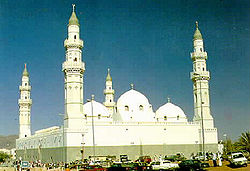
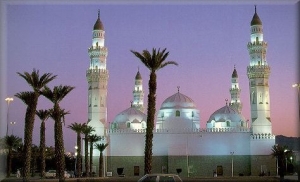
Virtues of Masjid Quba, Madina – Tafseer Ibn Kathir

Masjid-Quba

The Following is taken from Tafseer Ibn Kathir

Allah encouraged His Prophet to pray in Masjid Quba’ which, from the first day, was built on Taqwa, obedience to Allah and His Messenger , for gathering the word of the believers and as an outpost and a fort for Islam and its people. This is why Allah the Exalted said,

(Verily, the Masjid whose foundation was laid from the first day on Taqwa is more worthy that you stand therein (to pray).) in reference to the Masjid of Quba’.

An authentic Hadith records that the Messenger of Allah said,

(One prayer in Masjid Quba’ is just like an `Umrah.)

It is recorded in the Sahih that the Messenger of Allah used to visit Masjid Quba’ while riding and walking.

Other Notes:

It is prescribed for the visitor to Madeenah and for the one who lives there to go to the Mosque of Quba’ and pray there, following the example of the Prophet (peace and blessings of Allaah be upon him) and seeking the reward of ‘Umrah.

It was narrated that Sahl ibn Haneef said: The Messenger of Allaah (peace and blessings of Allaah be upon him) said: Whoever goes out until he comes to this mosque – meaning the Mosque of Quba’ – and prays there, that will be equivalent to ‘Umrah.” Narrated by Ahmad, 3/437; al-Nasaa’i, 699; classed as saheeh by al-Albaani in Saheeh al-Targheeb, 1180, 1181.

In Sahih Muslim it is narrated that the Messenger of Allaah (peace and blessings of Allaah be upon him) used to go to the mosque of Quba’ every Saturday, walking or riding, and he would pray two rak’ahs there. Narrated by al-Bukhaari, 1191; Muslim, 1399

Masjid-Quba-

Ruling on performing Umrah before Obligatory Hajj – Permanent Committee

Fatawa from Permanent Committee

Q3: Is it permissible for a person to perform `Umrah before the obligatory Hajj?

A: Yes, it is permissible for a person to perform `Umrah before Hajj because the Prophet (peace be upon him) and his Companions performed `Umrah before the obligatory Hajj.

May Allah grant us success! May peace and blessings be upon our Prophet Muhammad, his family, and Companions!

Permanent Committee for Scholarly Research and Ifta’
Source:http://www.alifta.com/

Q 11: What is the ruling on a person who performs `Umrah (lesser pilgrimage) before Hajj, although the former is only an act of Sunnah?

A: The correct view of the two rulings of the scholars is that `Umrah is obligatory, because Allah states:Surah Al-Baqarah, 2: 196 And perform properly (i.e. all the ceremonies according to the ways of Prophet Muhammad peace be upon him) the Hajj and ‘Umrah (i.e. the pilgrimage to Makkah) for Allâh. There are also other Hadiths narrated in this regard. If a Muslim performs `Umrah before Hajj during the months of Hajj and performs Hajj in the same year, then he has performed Tamattu` Hajj (combining Hajj and `Umrah with a break in between) which is better than the Ifrad Hajj (performing Hajj only) and Qiran Hajj (combining Hajj and `Umrah simultaneously) for the one who has not brought a hadiy with him. It is reported that the Prophet (peace be upon him) told the Sahabah (Companions of the Prophet) who did not bring sacrificial animals: Make it `Umrah, for if I had formerly known what I came to know lately, I would not have driven the Hadiy with me and would have finished the state of Ihram along with the people when they finished it.

May Allah grant us success! May peace and blessings be upon our Prophet Muhammad, his family, and Companions!

Permanent Committee for Scholarly Research and Ifta’

Source: http://www.alifta.com/

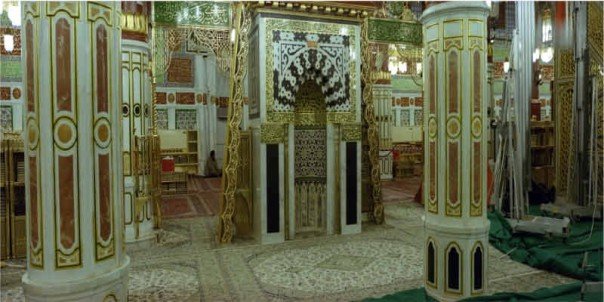
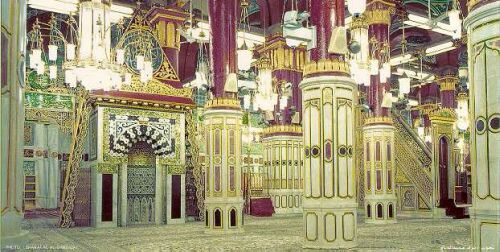
Ar-Rawdah an-Nabawiyah : A garden from the gardens of Paradise

Rawda

The heart of the Prophet’s masjid houses a very special but small area named ar-Rawdah an-Nabawiyah, which extends from Muhammad’s tomb to his pulpit. Pilgrims attempt to visit and pray in ar-Rawdah, for there is a tradition that supplications and prayers uttered here are never rejected. Entrance into ar-Rawdah is not always possible (especially during the Hajj season), as the tiny area can accommodate only a few hundred people. Ar-Rawdah has two small gateways manned by Saudi police officers. The current marble pulpit was constructed by the Ottomans. The original pulpit was much smaller than the current one, and constructed of palm tree wood, not marble. Ar-Rawdah an-Nabawiyah is considered part of Jannah (Heaven or Paradise).

It is prescribed for the one who visits the Prophet’s Mosque to pray two rak’ahs in the Rawdah or whatever he wants of naafil prayers, because it is proven that there is virtue in doing so. It was narrated from Abu Hurayrah that the Prophet (peace and blessings of Allaah be upon him) said: “The area between my house and my minbar is one of the gardens ( riyaad, sing. rawdah) of Paradise, and my minbar is on my cistern (hawd)” Narrated by al-Bukhaari, 1196; Muslim, 1391.

And it was narrated that Yazeed ibn Abi ‘Ubayd said: “I used to come with Salamah ibn al-Akwa’ and he would pray by the pillar which was by the mus-haf, i.e. in the Rawdah. I said, ‘O Abu Muslim, I see that you are keen to pray by this pillar!’ He said, ‘I saw that the Prophet (peace and blessings of Allaah be upon him) was keen to pray here.’” Narrated by al-Bukhaari, 502; Muslim, 509.

Being keen to pray in al-Rawdah does not justify being aggressive towards people or pushing the weak aside, or stepping over their necks.

Women who want to pray in Rawdah area can enter the masjid through the Gates 21 – 25. Rawdah area for women is open after Fajr, Zuhr and Isha Prayers. It is open after Fajar for long time and 15 – 20 min after Zuhr prayer

Rawda


How to wear the upper garment known as Rida’ for Ihram : Ibn Baz

Fatwa by Shaykh Ibn Baz Fatawa Islamiyah , Darussalam, Vol 4, Page 127

Q. Is it better for the Muhrim to cover the two shoulders or to uncover one of them during the Ihram?

A. The sunnah for the Muhrim is that he places the Rida’ (upper garment) over both of his shoulders and put its ends on his chest. This is the Sunnah and it is what the Prophet (Sallalahu Alahi wa Sallam) did.

So, if the person wants to perform the Tawaf of Arrival (Tawaful-Qudum) , he does Al-Idhtiba’. This is by him placing the center of his Rida’ under his right armpit and its edges over his left shoulder. Thus he uncovers his right shoulder. This is specifically for the Tawaf of Arrival, meaning when the person first arrives in Makkah for Hajj or ‘Umrah.

Then when he completes the Tawaf, he adjusts the Rida’ and places it over both of his shoulders, and he prays two Rak’ahs of Tawaf.

The person who always keeps one shoulder uncovered, this is opposed to the Sunnah, and so is uncovering both of the shoulders. The Sunnah is only to cover both of them with the Rida’ while the person is in Ihram. If the person takes off the Rida’ and does not cover his shoulders while he is sitting or eating or talking with his brothers, there is no harm in that.

However, the Sunnah is that when the person wears the Rida’, it should be over his two shoulders and its ends should be on his chest.

History of Makkah – Shaikh Safiur-Rahman Mubarakpuri

history-of-makkah-mubarakpuri

History of Makkah Mukarramah (Shaikh Safiur-Rahman Mubarakpuri)

Publisher: Darussalam Publishers and Distributors (2002)
Pages: 176 Binding: Paperback

You can buy Here or read most of the book @ Google Books Here

Description from the publisher:

Mentions the different aspects of Makkah, and records the most important historical events that have direct effect on the establishment and sacredness of Makkah as well as its religious weight. Highlights the sites that are highly important whenever Makkah is mentioned like the Black Stone, Zamzarn Well and others. Designates a great part of the book speaking about the Holy Ka’bah and the Holy Mosque updating the extensions and the improvements, that have taken place from the time of Muhammad (S) to the Saudi era.At the end of the book there is a complete appendix about Hajj and its rites.

Excellence of Supplications at Al-Multazim

Iltizaam Between The Corner And The Door ( from Rites of Hajj and Umrah – by Shaik Nasiruddin Albanee )

38. And he may cling to the place between the corner and the Door – placing his chest and face and forearms upon this place.(45)

This is narrated by two isnaads from the Prophet by which the hadith reaches the level of hasan – and is increased in strength by the fact that a group of the Sahaabah acted on it – from them Ibn ‘Abbaas – may Allaah be pleased with him – who said: “This is the Multazam between the Corner and the Door. And it is authentically narrated from ‘Urwah ibn az-Zubair also – see ‘As-Sahaabah, no.2138.

And Ibn Taimiyyah said in his ‘Mansak’ (p.387): “And if he wishes to come to the Multazam – and that is what is between the Black stone and the Door – and he places upon it his chest and face and forearms and hands – and makes du’aa – and he asks Allaah for whatever he needs – then he may do so. And he may do so before the Farewell Tawaaf there being no difference in this being at that time or any other – and the Sahaabah used to do so when they entered Makkah – and if he stands near the Door making du’aa without iltizaam of the House then that is also good, and when he leaves he does not stand or turn or walk backwards.”

Shaykh Ibn ‘Uthaymeen (may Allaah have mercy on him) said:

This is a matter concerning which the scholars differed, although it was not narrated from the Prophet (peace and blessings of Allaah be upon him) (i.e. that was not narrated in a saheeh hadeeth, as the ahaadeeth that were narrated concerning this were deemed to be da’eef or weak). Rather it was narrated from some of the Sahaabah (may Allaah be pleased with them). So is iltizaam (clinging) Sunnah? When should it be done – upon arrival or when about to leave, or at any time?

The reason for this difference of opinion among the scholars is that it is not narrated in the Sunnah of the Prophet (peace and blessings of Allaah be upon him), rather the Sahaabah (may Allaah be pleased with them) used to do that when they arrived in Makkah.

The fuqaha’ said: He (the pilgrim) should do that when about to leave, and should cling to the multazam, which is the area between the corner where the Black Stone is located and the door…

Based on this, there is nothing wrong with iltizaam (clinging to the Ka’bah in this area) so long as that does not involve annoying others.

Al-Sharh al-Mumti’, 7/402, 403.

Ajwa Dates Keep Away Harm, Poison And Magic

ajwa-dates

Ajwa Dates Keep Away Harm, Poison And Magic

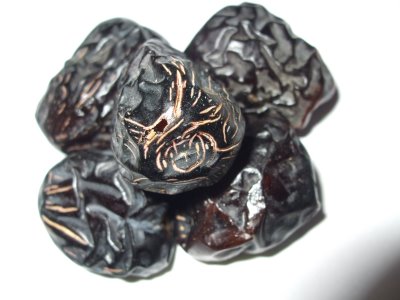
Ajwa (عجوة) is a soft dry variety of date fruit from Saudi Arabia. It is cultivated at Madina . A delightfully soft and fruity date with fine texture.

The Messenger (Sallallaahu Álayhi Wasallam) said, “Whoever has seven Ajwa dates every morning he will not be harmed on that day by poison or magic.” [Saheeh al-Bukhaaree (5445) (5768) (5769) (5779)].

The Messenger (Sallallaahu Álayhi Wasallam) said, “Ajwa dates are from paradise.” [Tirmidhee (2068) he said hasan Saheeh and it was authenticated by Shaikh al-Albaani].

Referring to eating seven Ajwa dates, the Messenger (Sallallaahu Álayhi Wasallam) said, “He will not be harmed by anything until he reaches the evening.” [Saheeh Muslim (2047)].

These dates cost around 70 Saudi Riyals per KiloGram.

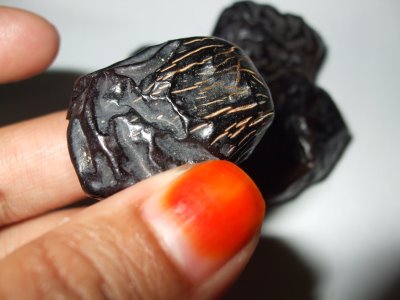
There are also “imitations” or some sold an inferior quality dates and “conned” the customers as “AJWA dates” To know whether its AJWA, look closely at the dates. There are very fine white lines on the dates.

 ajwa-white-lines

Madina Dates Keep Away Harm

The Messenger (Sallallaahu Álayhi Wasallam) said, “Whoever has seven dates between the two areas (the east and west of Madina) as soon as he wakes up every morning, he will not be harmed on that day by poison until the evening.” [Saheeh Muslim (154) (2047)].

Dates In One’s Home

The Messenger (Sallallaahu Álayhi Wasallam) said, “O Aisha! A house that has no dates in it their family is hungry. Oh Aisha! A house that has no dates in it their family is hungry.” [Saheeh Muslim (153), (2046)]

Related Post: 

Ajwa Dates contain Cancer-Preventing property – King Saud University (KSU)

[Video] How to Perform Funeral/Janazah Salah : Shaykh ibn Uthaymeen

The sheikh rahimahu Allah explains in details how to perform salatu-janazah (funeral prayer). This includes the du’a and the takbeer and for whom it is.

Salat-ul-Kusuf (Prayer on a solar eclipse) and Salat-ul-Khusuf (Prayer on a lunar eclipse)

The fifth question of Fatwa no. 9527
Q 5: How many Rak‘ahs (units of Prayer) are there in Salat-ul-Khusuf (Prayer on a lunar eclipse)? And what is to be recited in them?

A: Salat-ul-Kusuf (Prayer on a solar eclipse) and Salat-ul-Khusuf (Prayer on a lunar eclipse) are each comprised of two Rak‘ahs (units of Prayer). Recitation in both Salahs (Prayers) is performed out loud. In each Rak‘ah, there are two Ruku‘s (bowing), the second of which is always shorter than the first, and there are also two recitations. After the Takbirat-ul-Ihram (saying: “Allahu Akbar [Allah is the Greatest]” upon starting Prayer), Surah Al-Fatihah and a long Surah are recited. After the first Ruku‘, Surah Al-Fatihah and a long Surah are recited, which is shorter than the preceding recitation. There are two Sujuds (Prostrations) in each Rak‘ah. This is the most authentic report mentioned regarding this Salah.

May Allah grant us success! May peace and blessings be upon our Prophet Muhammad, his family, and Companions!
Permanent Committee for Scholarly Research and Ifta’
Deputy Chairman     Chairman
`Abdul-Razzaq `Afify     `Abdul-`Aziz ibn `Abdullah ibn Baz
Source : alifta.net

How should Salat-ul-Kusuf be done? Fatwas of Ibn Baz – alifta.net

Q: How should Salat-ul-Kusuf (Prayer on a solar eclipse) and Salat-ul-Khusuf (Prayer on a lunar eclipse) be performed? Is there any difference between them? What is your opinion on the reports published by the papers about the timings of a solar or lunar eclipse?

A: There are authentic Hadith in which the Prophet (peace be upon him) showed how Salat-ul-Kusuf can be performed. He (peace be upon him) ordered that people should be called to it by announcing as-salatu jami’ah “‘Gather for Salah”.

The most authentic reports concerning this Salah show that it consists of two Rak’ahs and that in each Rak’ah one should make two recitations and perform two Ruku’ (bowings) and two Sujud (prostrations). The person should make lengthy recitation, Ruku’ and Sujud. The first recital and Ruku’ should be longer than the second ones. Similarly, the recitation in the second Rak`ah should be shorter than the second recital in the first Rak`ah. The person should make Ruku’ in the second Rak`ah for a shorter time than the two Ruku’ in the first one. During the second Rak`ah, the person should make a second recital and Ruku’ for a shorter time than the first in the same Rak`ah.

As for the two Sujud, it is a Sunnah (recommended) to be lengthy providing that this does not cause any difficulty to the Ma’mums because this was the Prophet’s (peace be upon him) way.

Upon completing Salah, the Imam, if he is knowledgeable, is allowed to give a sermon and tell people that the solar and lunar eclipse are two signs of Allah (Exalted be He) by which He frightens His servants. The Muslims, upon seeing it, are prescribed to offer Salah, remember Allah (Exalted be He), make Du`a’ and Takbir, give in charity and emancipate a believing slave until the end of the eclipse. The Prophet (peace be upon him) said, <<Verily the sun and the moon are two signs among the signs of Allah by which He frightens His servants and they do not eclipse on account of the death or birth of anybody>>. So when you see either of them, observe Prayer, and supplicate Allah (may He be Exalted) till it is cleared from you. Another narration reads, <<So whenever you see them, haste to remember Allah, invoke Him and ask Him for forgiveness.>> It is narrated in some Hadith that the person should give in charity and emancipate slaves.

The astronomical reports about the timing of the eclipse must not be taken as the basis for offering Salat-ul-Kusuf. Some people of knowledge, including Shaykh-ul-Islam Ibn Taymiyyah and his knowledgeable disciple Ibn Al-Qayyim, may Allah be merciful with both of them, supported this view saying that the astronomers may sometimes be wrong and then these reports are not reliable and people should not offer Salat-ul-Kusuf depending on them. Rather, they have to offer the Salah upon seeing the eclipse when it is happening.

The publications of the astronomers’ reports about the timing of eclipse should be banned by the Ministry of Information lest some people should be deceived by them. These publications may make people feel less fear upon seeing the eclipse. Allah (Exalted be He) has made them to be frightening and hence, people remember, fear, invoke Allah, and treat their slaves well. May Allah grant us success!

Source : Browse by Volume Number > Volume 13 > Completion of the Book of Salah (Prayer) > Salat-ul-Kusuf > the manner of Salat Al-Kusuf

Eclipse Prayer can be done individually or in congregation

Question: Do we have to pray Salaatul Khusoof (eclipse prayer) even if we do not witness it? And are there any specific ad’iyah (pl. duâaa) that we have to say in the day or during the eclipse?

Answer: The Prophet صلى الله عليه و سلم said: “The sun and the moon are two signs from the signs of Allaah. They do not eclipse for the death of anyone neither their life (i.e. birth). Allaah uses these to strike fear into His slaves. So when you see them offer the prayer and supplicate until the eclipse passes away.”[1] If someone establishes that an eclipse is present then he should pray the Eclipse Prayer (Salaatul Khusoof), whether he has to pray it individually or in congregation and similarly whether it is a man or a woman. It is performed as described in the Shareeâah (Legislation).

Answered by: Abdullaah Abdur-Rahmaan Al-Ghudayyaan
Title of Lecture: The Four Principles by Muhammad ibn Abdul-Wahhaab
Date of the Lecture: May 6, 2006
[1] Reported by An-Nisaaee 3/152, Shaikh Al-Albaanee رحمه الله says Saheeh in Sunan An-Nisaaâee (#1502).

Related Links:

  1. Performing Salat-ul-Khusuf at times forbidden for supererogatory Salah – Fatwas of Nur `Ala Al-Darb
  2. Repeating Salat-ul-Kusuf if it has not passed – Fatwas of Nur `Ala Al-Darb
  3. Catching a Rak`ah of Salat-ul-Kusuf – Fatwas of Nur `Ala Al-Darb

“The one who prayed badly” (radhi-Allaahu anhu) – Shaykh Al-Albanee

In Hadeeth and Fiqh literature, this term refers to the Companion mentioned in the following hadeeth of Saheeh al-Bukhaaree (Book of Prayer, English translation by Dr. Muhammad Muhsin Khan); many other narrations of this incident are found in the various collections of hadeeth, and provide an important source of instructions from the Prophet (sal-Allaahu ‘alayhe wa sallam) regarding the correct way to pray:

Narrated Abu Hurayrah (radhi-yAllaahu `anhu):

The Messenger of Allaah (sal-Allaahu ‘alayhe wa sallam) entered the mosque and a person followed him. The man prayed and then went to the Prophet (sal-Allaahu ‘alayhe wa sallam) and greeted him; he returned the greeting and said (to him):

«Go back and pray, for you have not prayed.» The man went back and prayed in the same way as before, and then returned and greeted the Prophet (sal-Allaahu ‘alayhe wa sallam), who said

«Go back and pray, for you have not prayed», three times. The man said: “By Him Who sent you with the Truth, I cannot do so any better than this, so please teach me.” He said:

«When you stand for the Prayer, say takbeer and then recite what is easy for you from the Qur.aan (from what you know by heart); then bow until you feel at ease in rukoo`; then raise your head and stand up straight, then prostrate until you feel at ease in sajdah; then sit with calmness until you feel at ease, and do likewise in all your prayers.»

[further narrations of this hadeeth found in the other works of Hadeeth such as Sunan Abee Daawood, etc. contain further details.]

Source:   From “The Prohet’s Prayer Described”  appendix 3 – by Shaykh Al-Albanee

Worshipping Allaah out of Love, Fear and Hope – Ad-Dawah ilalLaah Magazine

Source: Ad-Dawah ilalLaah Magazine

One of the most beautiful this about the concept of worship in Islaam is the truly unique way in which it incorporates the feelings of love, fear and hope within the hearts of the worshippers of Allah. Understanding how to combine these three qualities into the worship (‘ibaadah) of Allah is one of the most essential things that every Muslim must grasp, ,not least because every sect which has drifted from the Straight Path has strayed in this aspect of worship. The deviation of the other Religions in this regards is clear for all to see: “God is Love! Jesus is Love!” say the Christians, denying the fact that God should be feared too. As for the Jews, then their hearts are filled only with hope – hope in the belief that the Fire will not touch them since they are the “Promised People”.

In Islaam however, no worship is complete without the presence of all three qualities: LOVE of Allah, Hope in His Mercy and FEAR of His Punishment. Contemplate the opening Soorah of the Qur’aan – Sooratul Faatihah – and you will see for yourself.

Aaayah 1: “All Praise [and Thanks] are for Allah, Rabb of all the worlds.”

In this opening aayah (verse) of the Qur’aan, we have LOVE of Allah and every time we recite this aayah we are testifying to our love for Allah. How is that you ask? IT is because in this aayah, we are acknowledging that Allah is our Rabb and the Rabb of all the worlds. Rabb is usually translated as ‘the Lord’, but this translation does not do justification to this name of Allah and all the meanings that this name carries. In reality Rabb means that Allah is the Creator of everything; He sustains and nourishes everything; He gives life and death; anything good which we have is from Him; everything is dependent on Him and nothing can happen unless He wills it. Furthermore, for the Muslim He – the Rabb – is the One who has guided us to the Truth and given us good morals and manners.

Thuis when we testify that Allah is out Rabb, then we are acknowledging that He is the One who has given us so many blessings – so many that is we tried to enumerate His blessings upon us, we could not count them. So how could we not love Him? After all, we know that when someone gives us even a small gift or shows even a small act of kindness towards us, then we develop so much love for them on account of that – so imagine then the love we should[1] have for our Rabb who has given us everything: nice families, shelter, security, food, health, and above all, Guidance to Islaam and the Sunnah. We should be overwhelming in our love for Him and thank Him and say: “All Praises [and Thanks] are for Allah, Rabbil-‘aalameen.”

Aayah 2: “The Rahman [Merciful] and the Raheem [Mercy-Giving].”

In the first aayah of Sooratul-Faatihah, Allah mentioned that He was ar-Rabb. In the next aayah two more of His beautiful names are mentioned: ar-Rahmaan and ar-Raheem. Ar-Rahman means that He is the Most Merciful, that is, His Nature or His Essence is Merciful. Ar-Raheem means that He is the Giver of Mercy, in other words, His actions are full of Mercy and He shows Mercy to His creation.[2]

When we mention these two names of Allah, then we have HOPE. Since He has described Himself as so full of Mercy then we have hope that He will forgive out sins, and no matter how numerous out sins may be, we should never lose this hope, because Allah has told us: “O My slaves who have transgressed against themselves! Despair not of the Mercy of Allah verily Allah forgives all sins [except shirk]. Truly He is the Oft-Forgiving, the Mercy-Giving.” [az-Zumar (39):53].

The need to have FEAR in our worship is shown by the next aayah of Sooratul-Faatihah:

Aayah 3: “King/Master of the Day of Judegment.”

When we recite this aayah we are reminding ourselves of the Day of Judgement – that awful Day, when we shall all stand before Allah, naked, uncircumcised and barefooted. Some will be sweating so much that it will go seventy arm-length into the earth. People will appear drunk though they are no. On this Day, every person will stand before Allah and account for his sins, knowing that not even the smallest action which he did is hidden from Allah:

“So whosoever does good equal to the weight of an atom shall see it. And whosoever does evil equal to the weight of an atom shall see it.” [az-Zalzalah (99):7-8].

So when we recite this third aayah of Sooratul-Faatihah, we remind ourselves of this Judgement and accountability and that should bring about in us a sense of fear – that maybe out evil actions will be too great and we will be responsible for it – may Allah protect us from such a fate.

Then the next verse goes on to say:

“You alone we worship.” i.e. we single out Allah for our worship. And how do we worship Him? With LOVE, HOPE and FEAR. And in order to achieve these qualities, we need Allah’s assistance, so we say then: “We seek Your Aid.” [1:4].

STRIKING THE BALANCE

After understanding the need to have love, fear and hope in our worship, the question that now arises is: in what proportions should these qualities be present in our worship? Again we turn to the Qur’aan for our answer.

“Call upon Him with Fear and Hope.” [al-A’raff(7):56].

And also:

“Their sides forsake their beds, to invokde their Lord in Fear and Hope.” [as-Sajdah(32):16].

So both fear and hope should be present inour hearts in equal proportions. Anas – radiAllaahu ‘anhu – reported that the Prophet, sallallaahu ‘alaihi wa sallam entered upon a young boy who was dying. The Prophet sallallaahu ‘alaihi wa sallam asked: “How are you?” The boy replied: “O Messenger of Allah, I am in-between hoping in Allah and fearing for my sins.” The Prophet sallallaahu ‘alaihi wa sallam said: “The like of these two qualities do not unite in the heart of a servant except that Allah gives him what he hopes for and protects him from what he feared.”[3]

Therefore, whenever we do a good action, we should have hope that it has been accepted by Allah, but at the same time we should also have fear that maybe it isn’t enough or that the good deed has not been worthy of acceptance. Likewise when we sin, we should have hope that Allah will accept out Repentance and forgive us, but we should also fear that we may be accountable for it.

This balance should also be reflected in out da’wah (which of course is also worship). So when we invite others to the Truth, we should not give them the impression that they have “nothing to worry about”; nor do we suggest that they are doomed forever. Rather, we couple warnings with encouragement. We inform them of the horrors of the Fire as well as telling them about the bliss of Paradise. Just as we find Allah telling us in the Qur’aan:

“Verily your Lord is Quick in Punishment and verily He is Oft-Forgiving, the Giver of Mercy.” [al-A’raaf(7):167].

And our Righteous Predecessors used to say:

“He who worships Allah with hope only is a Murji’ee. He who worships Him in fear only is a Harooree [Khaarijee]. And he who worships Allah in love only is a Zindeeq [e.g. Soofees, Christians]. But he who worships Allah in fear, love and hope is a Muwahhid Mu’min [a believer upon Tawheed.” [4]

The Murji’ah were a sect that emerged within the first century of Islaam. The people of this sect (known as murji’ees) believe that sins do not affect faith, i.e. no matter what sins a person commits, his eemaan (faith) is complete and perfect. They worship Allah only with hope because they belive that as along as one believed and testified to Islaam, they would enter Paradise regardless of their actions.

Unfortunately, all too often nowadays we find a somewhat similar attitude amongst the Muslims today, which is why we find that so often when we try to advise someone to turn to the Deen and abandon sin, they just point to their hearts and say, “Allah knows what’s in my heart”, or that “Allah forgives” or something similar.

As for the Khawaarij, they worshipped Allah in fear only because they held that anyone who committed major sins was a disbeliever and would therefore dwell in Hellfire forever. This, of course, is gross extremism and a straying from the correct Path. The Prophet sallallaahu ‘alaihi wa sallam said: “There were two men from Banoo Israa’eel who strove equally. One of them committed sins and the other strove hard in worship. And the one who strove in worship continued to see the other sin and kept saying to him: ‘Desist’. So one day, he found him committing a sin and so said to him: ‘Desist’. So he replied: “Leave me to my Lord; have you been sent as a watcher over me?” He said: “By Allah, Allah will nor forgive you, nor will Allah admit you to Paradise.” Then their sould were taken and they came together before the Lord of the Worlds. So He said to the one who strove in worship: “Did you have knowledge of Me, or did you have any power over what was in my Hands?” And He said to the sinner: “Go and enter Paradise through My Mercy.” And He said to the other: “Take him to the Fire.” Aboo Hurairah said: “By Him is Whose Hand is my soul! He spoke a word which destroyed this world and the Hereafter for him.”[5]

Therefore we should never say of anyone that he or she is a ‘lost cause’ or ‘doomed’ or the like since this is a great sin. However, we fear for those who commit major sins because they have been threatened with punsihment in the Qur’aan. It is up to Allah whether He chooses to punish them or whether He will forgive them.

The Zanaadiqah – or the heretics – are groups, such as many of the Soofees who have become like the Christians and reduced the religion to just ‘love’ and so all their talk and all their mystical practices are centred around developing more ‘love’.

It is thus clear how imbalances in any of the three qualities of worship can lead to major deviation and straying from the True Guidance, Therefore it is important for every Muslim to inculcate all three things in his heart properly. As was mentioned before, the fear and hope should be in equal proportions[6] but as for love, then that should be uppermost, As Fudayl ibn Iyyaad (d.187H) said: “The love is better than fear. The fear checks us from sinning, and the love makes us to do what is prescribed with an open heart.”[7]

May Allah Subhaanahu wa Ta’aala grant us what we hope for and protect us from what we fear. Aameen.

Footnotes

1 This is why the Prophet, sallallaahu ‘alaihi wa sallam encouraged us to give gifts to one another. He said: “Give gifts to one another, you will come to love one another.” [Hasan – Collected in al-Bukhaaree’s al-Adabul-Mufrad & declared hasan by al-Albaanee in al-Irwaa(1601).

2 As explained by Ibnul-Qayyim (d.751H) in Badaa’i-ul-Faawaa’id & others.

3 Hasan – Collected by at-Tirmidhee & Ibn Maajah. Authenticated by al-Albaanee in Ahkaamul-Janaa’iz (no. 2).

4 Quoted by ibn Rajab in at-Takhweef minan-Naar as the saying of one of the Salaf.

5 Saheeh – Reported by Aboo Hurairah & collected in Aboo Daawood (eng. trans. vol.3 p.1365 no.4883). Authenticatd by al-Albaanee in Saheehul-Jaami (4455).

6 This was the opinion of most of the Salaf. Al-Fudayl ibn ‘Iyyaad said that when one is healthy and well, then fear should predominate, but when terminally ill then hope should predominate – so that one should strive to do good when well and not despair of Allah’s Mercy when terminally ill. [At-Takhweef minan-Naar].

7 Reported in at-Takhweef minan-Naar of Ibn Rajab. Note that some scholars hold that fear is better than love. Allah knows best.

Virtues of the Prayer : Imaam Muhammad Ibn Saalih Al-‘Uthaimeen

Bismillaah

Source: Sifat Salaat-in-Nabee, by Shaykh Uthaymeen
Translator: Isma’eel alarcon, Produced by: al-ibaanah

The Prayer: is the second pillar from the pillars of Islaam and the most important pillar of Islaam after the Shahaadah (testimony) of Faith.

The Prayer: is a link between the servant and his Lord. The Prophet (Sallallaahu ‘alaihi wa Sallam) said: “Indeed, when one of you prays, he speaks privately with his Lord.” [Reported by Al-Bukhaaree] And Allaah says in the qudsee hadeeth:

“I have divided the prayer between Myself and My servant into two parts, and My servant will have what he asks for.

So when the servant says: ‘Al-Hamdulillaahi Rabb-il-‘Alameen’, Allaah says: ‘My servant has praised Me.’And when he says: ‘Ar-Rahmaan-ir-Raheem’, Allaah says: ‘My servant has extolled Me.’ And when he says: ‘Maaliki-yawm-id-Deen’, Allaah says: ‘My servant has honored Me.’ And when he says: ‘Iyyaaka Na’bdu wa Iyyaaka Nasta’een’, Allaah says: ‘This is between Me and My servant and My servant will have what he asks for.’ And when he says: ‘Ihdinaas-Siraat-al-Mustaqeem. Siraat-aladheena an’amta ‘alaihim. Ghairil-Maghdoobi ‘alaihim wa lad-Daalleen’, Allaah says: ‘This is for My servant and for My servant will be what he asks for.’” [Reported by Muslim]

The Prayer: is a garden of ‘ibaadaat (acts of worship), in which every splendid type of worship is found. There is the takbeer, by which the prayer is initiated, the standing in which the person praying recites the words of Allaah, the bowing in which he extols his Lord, the rising from the bowing position, which is filled with the praising of Allaah, the prostration in which he glorifies Allaah by His highness and in which he implores him through supplication, the sitting in which there is the tashahhud and (more) supplication and the closing with tasleem.

The Prayer: is a means of support and assistance in times of distress and grief. And it prevents one from evil and shameful deeds. Allaah says: “Seek assistance in patience and prayer.” And He says: “Recite what has been revealed to you from the Book and establish the prayer. Verily, the prayer prevents one from evil and shameful deeds.

The Prayer: is the light of the believers in their hearts and in their place of gathering (on the Day of Judgement). The Prophet (Sallallaahu ‘alaihi wa Sallam) said: “The prayer is light.” And he (Sallallaahu ‘alaihi wa Sallam) said: “Whoever guards it (his prayers), it will be a light, a proof and a (means of) salvation for him on the Day of Judgement.” [Reported by Ahmad, Ibn Hibbaan and At-Tabaraanee]

The Prayer: is the joy and delight of the believers’ souls. The Prophet (Sallallaahu ‘alaihi wa Sallam) said: My delight was placed in the prayer.” [Reported by Ahmad and An-Nasaa’ee]

The Prayer: wipes away sins and expiates evil deeds.

The Prophet (Sallallaahu ‘alaihi wa Sallam) said: “Do you think that if there was a river by the door of one of you and he bathed in it five times a day that there would remain any dirt on him?” They (the Companions) answered: “There would not remain any dirt on him.” The Prophet (Sallallaahu ‘alaihi wa Sallam) said: “That is how it is with the five (daily) prayers, through them Allaah washes away the (minor) sins.” [Reported by Al-Bukhaaree and Muslim]

And the Prophet (Sallallaahu ‘alaihi wa Sallam) said: “The five (daily) prayers and Jumu’ah (prayer) to Jumu’ah (prayer) are an expiation for what (sins) occur between them so long as one is not guilty of major sins.” [Reported by Muslim]

The Prayer in Congregation:

Ibn ‘Umar (radiAllaahu anhu) reported that the Prophet (Sallallaahu ‘alaihi wa Sallam) said: “Prayer in congregation is better than praying alone by twenty-seven degrees.” [Reported by Al-Bukhaaree and Muslim]

Ibn Mas’ood (radiAllaahu anhu) said: “Whoever would be happy to meet Allaah tomorrow as a Muslim, then let him preserve (in establishing) these five prayers from the place where they are called from (i.e. masjids), for verily, Allaah has legislated for your Prophet the ways of guidance. And indeed these (five prayers in the masjid) are from the ways of guidance. And if you were to pray in your homes as this man who refrains (to pray in the masjid) prays in his home, then you would have abandoned the Sunnah of your Prophet. And if you were to abandon the Sunnah of your Prophet (Sallallaahu ‘alaihi wa Sallam) you would go astray. There is not a man that performs the ablution and does it well, then sets out to go to one of these masjids except that Allaah records a good deed for him for every step he takes and raises him up one level and erases one evil deed due to it. You have certainly seen us, and no one would refrain from the prayer (in the masjid) except the hypocrite whose hypocrisy was well known. And indeed a man would be brought supported by two men until he was made to stand in the row (for prayer).” [Reported by Muslim]

Al-Khushoo’ (Submissiveness) in the Prayer, which means that 1) the heart is present and attentive, and 2) preserving that condition – are both from the means of entering Paradise.

Allaah says: “Successful indeed are the believers. Those who in their prayers are submissive. And those who turn away from vain talk. And those who pay their Zakaat. And those who protect their private parts – Except in front of their spouses or those (women) whom their right hands possess, for indeed they are not held to blame (in that). So whoever seeks beyond that, then those are the transgressors. And those who keep their trusts and covenants. And those who preserve their prayers. They are the inheritors – the ones who will inherit Al-Firdaus (highest level in Paradise), in which they will abide forever.”

Being sincere to Allaah in the prayer and performing it according to the manner it is described in the Sunnah are the two fundamental conditions for its acceptance. The Prophet (Sallallaahu ‘alaihi wa Sallam) said: “Verily, actions are by intentions and every person will have what he intended.” [Reported by Al-Bukhaaree and Muslim] And he (Sallallaahu ‘alaihi wa Sallam) said: “Pray as you have seen me pray.” [Reported by Al-Bukhaaree]

Written by Muhammad Ibn Saalih Al-‘Uthaimeen
On 4-13/1406H

Related Linkhttps://abdurrahman.org/salah

Useful Table Chart for Sujuud as Sahw (Prostrations of Forgetfulness) : Dr. Saleh as Saleh

[Download the MS Word Document]

Based on Shaykh ibn Uthaymeen’s Book .

1. Additions Of the Same Kind As Found In Salaah

Causes of
Sujuud as Sahw
If One Remembers What To Do Do Sujuud
1. a- Additions in actionsexamples:
– extra rakaa
– extra sujuud
– during the addition – stop doing this addition
– continue and finish salaah
– must do sujuud as sahw
after tasleem
– soon after tasleem – must do sujuud as sahw after tasleem
– after long time
– example 30 minutes
– salaah is invalid .
another example
of addition in action:
– tasleem before end of salaah
– during the addition – stop doing this addition
– continue and finish salaah
– must do sujuud as sahw
after tasleem
– soon after this tasleem – go back to sitting position
– stand up to do missing rakaa
– do tashahhud and tasleem
– must do sujuud as sahw
after tasleem
– after long time
– example 30 minutes
– salaah is invalid .
1. b – additions in sayings 
example: “subhaana Rabbiyal ‘adheem” said in sujuud
– soon after tasleem – sunnah to do sujuud as sahw after tasleem
– after long time
– example 30 minutes
– nothing upon him .

2. Omissions in Salaah rukn {pillar} – wajib {obligation} – sunnah

3. Doubt – Ash Shakk :wavering between two matters such that none has distinction over the other

Causes of
Sujuud as Sahw
If One Remembers What To Do Do Sujuud
2. a – omissions of rukn – {pillar}some examples:
– omission of al Fatiha
– omission of rukuu
– omission of standing fully erect after doing rukuu
– before reaching the place of the missing rukn in the next rakat – return and do this missing rukn
– build on this to complete salaah
– must do sujuud as sahw
after tasleem
– after reaching the place of the missing rukn in the next rakat rakaa with missed rukn is cancelled and present rakaa replaces it
– build on this to complete salaah
– must do sujuud as sahw
after tasleem
– after tasleem
and omission is in last rakaa
– return and do this missing rukn
– complete the rakaa
– make tashahud and tasleem
– must do sujuud as sahw
after tasleem
– after tasleem
and omission is not in last rakaa
– do a complete rakaa and tasleem
– must do sujuud as sahw
after tasleem
– after a long time
– example 30 minutes
– salaah is invalid .
2. b – omissions of
wajib – {obligation}
example:
omitting the first tashahhud
– when having determination to move but did not move yet – return to do missing obligation
{in this example it is tashahhud}
– continue and finish salaah
no
– when starting to move but did not finish to stand fully yet – return to do missing obligation
{in this example it is tashahhud}
– continue and finish salaah
– do sujuud as sahw
after tasleem
– after finishing to stand up correctly – return is forbidden
– continue and finish salaah
– do sujuud as sahw
before tasleem
2. c- omissions in sunnah 
saying or action
– before the tasleem – recommended only if this omitted sunnah is a usual habit of this person before tasleem
.
rukn and wajib – pillar and obligation
Commonality -> deliberate omission of either one INVALIDATES salaahDifference -> omitted rukn MUST be made up — omitted wajib is compensated by sujuud as sahw
.
Causes of Sujuud as Sahw If One Remembers What To Do Do Sujuud
3. Doubt – ash shakk 
a – without preponderance

Example: he doubts if he is in 3rd or in 4th rakaa of a 4 rakaat salaah
– during salaah. build up on certainty, i.e. the least,
and in this example it is the 3rd rakaa
– do the 4th rakaa and do tashahud
– do sujuud as sahw
before tasleem
b – with preponderance – {Dhan}
Example: doubt if he is in 3rd or 4th rakaa or a 4 rakaat salaah
– during salaah and
– there is preponderation this is the 3rd rakaa
build up on the preponderation this is the 3rd rakaa
– do the 4th rakaa and do tashahud
– do sujuud as sahw
after tasleem
– during salaah and
– there is preponderation this is the 4th rakaa
build up on the preponderation this is the 4th rakaa
– finish salaah
– do sujuud as sahw
after tasleem
.
Doubt is not to be considered in three situations ->1. when the doubts are frequent and due to whispering {waswas}
2. when it is a thought that came on the mind, delusion {wahm}
3. when the doubt arises AFTER the execution of the worship, unless there is certainty {yaqeen}in principle the salah is complete because it was performed by a sane, fitting, legally responsible person and it is so unless the person is certain it was not complete and in this case he returns to what is certain

4. Different Situations

a. Droping of Sujuud As Sahw – b. Repetition of Forgetfulness
and other cases where there is no sujuud as sahw

Situations Cases What To Do Do Sujuud
a. Droping of sujuud as sahw 1. if he remembers long time after tasleem
– example: 30 minutes
. .
2. if he nullifies his wudhu after salaah . .
3. if he begins doing another salaah
– two situations depending on the length of time between the two salaat
time is long -> – obligation drops no
time is short ->
– he may return to the first salaah
– he does sujuud as sahw
– then he continues the 2nd salaah
– he does sujuud as sahw
either before or after tasleem in the 1st salaah
.
after tasleem in the 2nd salaah
4. if he leaves the mosque a – obligation drops no
b – obligation remains
– Imaam Ahmad (1)
– Shaykh Ibn Taymiyah (2)
see footnotes
b. repetition of forgetfulness in the same salaah – in the same salaah, there are many mistakes requiring sujuud as sahw – preponderating opinion ->
one instance of sujuud as sahw
either before or
after tasleem
– a mistake requiring sujuud as sahw before tasleem and
– also a mistake requiring sujuud as sahw after tasleem
– first opinion ->
one instance of sujuud as sahw
before tasleem (3)
– a strong opinion ->
two instances of sujuud as sahw
before and also
after tasleem
.
Sujuud as sahw is NOT applicable in the following situations -> 
– funeral prayer, janazah
– sujuud of thankfulness
– sujuud of recitation
– compensation for sujuud as sahw
.

5. Ma-muum {follower} – Masbuuq {one joining late} – Imaam

and other situations

Situations What To Do Do Sujuud
1. a – the ma-muum
he begins salaah with imaam
and imaam makes a mistake
– he follows the imaam follows imaam
1. b- the ma-muum
he begins salaah with imaam
and he makes a mistake
– imaam bears this for him
2. a- the masbuuq
he joins imaam late in salaah
and he makes a mistake
if his own mistake is AFTER he departed from imaam
– he completes his salaah
– he does sujuud as sahw
either after or before his own tasleem
2. b – the masbuuq he joins imaam late in salaah
and imaam does sujuud as sahw
before tasleem
– he follows imaam in sujuud as sahw
– then he completes his salaah
follows imaam
if he did not stand up fully before imaam makes sujuud as sahw
– he must return and do sujuud as sahw with the imaam
– them he completes his salaah
follows imaam
if he is standing up fully before imaam makes sujuud as sahw
– he completes his salaah and he does sujuud as sahw
after his own tasleem
2. c – the masbuuqhe joins imaam late in salaah
and imaam does sujuud as sahw
after tasleem
if he did NOT meet the imaam in his mistake
– he completes his salaah
if he MET the imaam in his mistake
– he completes his salaah and he does sujuud as sahw
after his own tasleem
if he does not know if he met or not the imaam in his mistake
– he completes his salaah
sujuud as sahw
is not binding
2. d – the masbuuq 
he joins imaam late in salaah
and imaam makes a mistake
example: imaam forgot a rakaa and he is alerted and returns
– he joins the imaam and prays with him
– he completes his own salaah after the imaam finishes his salaah
2. e – the masbuuqhe forgot he joined late and he makes tasleem with imaam if he remembers
– he completes his salaah and he does sujuud as sahw
after his own tasleem
he does not return to complete his salaah
– his salaah is invalid
.
3. a – the imaam
he makes a mistake in the sunnah of the salaah and he is alerted
example: imaam recite al Fatiha loud in a silent salaah
– sujuud as sahw is not obligation
– it is ok even if it is done before tasleem
after tasleem
is preferable
3. b – the imaam
he makes an extra rakaa and he is alerted
if he returns, his salaah is valid after tasleem
if he does not return
– his salaah is invalid
.
3. c – the imaamhe forgets the first tashahud
and is alerted when standing fully erect
it is forbidden for him to return
– he completes his salaah and he does sujuud as sahw
before tasleem
if he returns and he does not know it is forbidden
– he had now made an addition in standing
– he makes sujuud as sahw
after tasleem
if he returns after standing fully erect and he knows it is forbidden
– his salaah is invalid
.
4. a person enters witr with intention of doing 2 + 1 rakaat if he forgets to say tasleem after two rakaat
– witr can be prayed in three rakaat and there is nothing upon him
no
5. a person makes mistake in recitation – it does not change the format of salaah, there is nothing upon him no


1. one narration by Imaam Ahmad saying he does the sujuud as sahw whether the separation was long or short

2. one opinion by Shaykh Ibn Taymiyah saying the sujuud as sahw continues even after a long separation

3. The sujuud as sahw is preferably before tasleem because it is more part of salaah


The Meaning of Worship (Ibaadah) : Shaykh ’Abdur-Rahmaan aalush-Shaykh

Author:Shaykh ’Abdur-Rahmaan Ibn Hasan aalush-Shaykh (d.1258H)
Source:His commentary Fathul-Majeed li-Sharh Kitaabit-Tawheed (1/84-90)
Translator:Al-Ibaanah Magazine

THE MEANING OF WORSHIP: [1]

The statement of Allaah, the Most High: “I did not create the Jinn, nor mankind, except to worship Me.” [Sooratudh-Dhaariyaat 51:56]

Shaykhul-Islaam Ibn Taymiyyah (d.728H) – rahimahullaah – said:

“Worship (al-’Ibaadah) is obedience to Allaah by following that which He ordered upon the tongues of His Messengers.” He also said, “Worship (al-’Ibaadah) is a comprehensive term covering everything that Allaah loves and is pleased with – whether saying, or actions, outward and inward.” [2]

Ibnul-Qayyim (d.751H), rahimahullaah, said:

“Worship revolves around fifteen principles. Whosoever completes them has completed the stages of ’uboodiyyah (servitude to Allaah). The explanation of this is that ’ibaadah is divided between the heart, the tongue, and the limbs. And that for each one of these three come five types of rulings, covering all actions: waajib (obligatory), mustahabb (recommended), haraam (prohibited), makrooh (disliked), and mubaah (permissible).” [3]

Imaam al-Qurtubee (d.671H), rahimahullaah, said:

“The root of ’ibaadah is humility and submissiveness. The various duties that have been prescribed upon the people are called ’ibaadaat (acts of worship), since what is required is that these acts of worship must be done with humility and submissiveness to Allaah, the Most High.” [4]

Ibn Katheer (d.774H), rahimahullaah, said:

“And ’ibaadah is obedience to Allaah by acting upon what He commands, and abandoning what He forbids; and this is the reality and essence of Islaam. And the meaning of Islaam is: istislaam (submission and surrender) to Allaah, the Most High, along with the utmost compliance, humility, and submissiveness to Him.”

He also said whilst explaining the above aayah:

“Indeed Allaah, the Most High, created the creation so that they could worship Him alone, without associating any partner with Him. Whoever obeys Him will be completely rewarded, whereas whoever disobeys Him would be punished with a severe punishment. And He has informed that He is neither dependant, nor does He have any need for them. Rather, it is they who are in dire need of Him, in every condition and circumstance, since He is the One who created, sustains, and provides for them.” [5]

THE MEANING OF TAAGHOOT:

The statement of Allaah, the Most High: “And to every nation We sent Messengers, ordering them that they should worship Allaah alone, obey Him, and make their worship purely for Him; and that they should avoid at-Taaghoot.” [Sooratun-Nahl 16:36]

And at-taaghoot is from the word at-tughyaan, which means: going beyond the limits.

’Umar Ibnul-Khattaab (radiyallaahu ’anhu) said:

“The taaghoot is Shaytaan.” [6]

Jaabir (radiyallaahu ’anhu) said:

“The taaghoots are the soothsayers and fortune-tellers upon whom the devils descend.” [7]

Imaam Maalik (d.179H), rahimahullaah, said:

“Taaghoot: that which is worshipped besides Allaah.” [8]

So this is what has been mentioned by certain people. However, Imaam Ibnul-Qayyim, rahimahullaahu, has given a very comprehensive definition, so he said, “The taaghoot is all that which causes the person to exceed the limits with regards to that which is worshipped, followed, or obeyed. So the taaghoot in any nation is whosoever turns to other than Allaah and His Messenger for matters of judgement; or is pleased to be worshipped besides Allaah; or is followed without a clear proof from Allaah; or is obeyed in that which is known to be disobedience to Allaah.” [9]

Footnotes:

[1] Fathul-Majeed li-Sharh Kitaabit-Tawheed (1/84-90)

[2] Majmoo’ul-Fataawaa (10/149) of Ibn Taymiyyah.

[3] Madaarijus-Saalikeen (1/109)

[4] Al-Jaami’ li-Ahkaamil-Qur‘aan (1/225), and (17/56) of al-Qurtubee.

[5] Tafseerul-Qur‘aanil-’Adtheem (7/402)

[6] Related by at-Tabaree in Jaami’ul-Bayaan ’an-Ta‘weelil-Qur‘aan (no. 5834), al-Haafidh Ibn Hajar said in Fathul-Baaree (8/251), “Its chain of narrators is strong.”

[7] Related by at-Tabaree in his Tafseer (no. 5845)

[8] Related by as-Suyootee in ad-Durarul-Manthoor (2/22), by way of Ibn Abee Haatim.

[9] I’laamul-Muwaqqi’een (1/53)

Ruling for Holding a Second Jamaa’ah in the Same Masjid : Shaykh Albanee

Author:Imaam Muhammad Naasir-ud-Deen Al-Albaanee
Source:Al-Asaalah Magazine: Issue 13-14 (Contained in the E-Book: Fataawaa of Shaikh Al-Albaanee)
Translator:isma’eel alarcon

Question: What is the religious ruling concerning holding a second congregational prayer in the masjid?

Answer: The scholars of Fiqh have differed with regard to the ruling on holding the second congregational prayer. However, before we mention the difference of opinion and clarify which is the most correct of them, we must first identify the type of congregation that they differ on.

The subject of disagreement is with regard to the congregation that is established in a masjid that has a regular employed Imaam and mu’adhin. As for the congregations that are established in any other place, be it in ones home, a masjid built on the road (i.e. musalla) or a store, then there is nothing that prevents one from having repeated congregations in those places.

The scholars who hold the opinion that it is disliked to have numerous congregations in the above type of masjid, the one that has a regular Imaam and a regular mu’adhin, derive their ruling from two evidences. The first is textual and comes from the Divine Legislator, while the other is theoretical and it is a contemplation of the narrations and the wisdom behind the prescription of the prayer in congregation.

As for the textual evidence, then they have investigated and found that the Prophet (Sallallaahu ‘alaihi wa Sallam) went throughout his life leading the people in congregational prayer in his masjid. Nevertheless, whenever any individual from his Companions entered the masjid and found that the congregational prayer had finished, he would pray alone and he would not wait (for others to come). Nor would he turn towards his left or right, as the people do today, looking for one or more people so that one of them can pray with them as an Imaam.

The Salaf never used to do any of this. So when one of them would enter the masjid and find that the people had prayed, he would pray by himself. This is what Imaam Ash-Shaafi’ee concluded in his book Al-Umm, and his discussion on this topic is from the moist comprehensive of talks that I have seen from the discussions of the Imaams on this issue, such that he said:

“If a group of people enter a masjid and find that the Imaam has already prayed, then they should pray individually. But if they pray in a congregation, then their prayer is acceptable and correct, however, I hate that they do this for it was not from the customs of the Salaf.”

Then he said: “As for the masjid that is on the highway, which doesn’t have a regular employed Imaam and mu’adhin, then there is no harm in holding numerous congregational prayers in it.”

Then he said: “And we have memorized that a group from the Prophet’s Companions missed the congregational prayer, so they prayed individually. Even though they had the ability to congregate and pray together a second time, they did not do this because they hated to hold the (same) congregational prayer in the masjid twice.”

This is the saying of Imaam Ash-Shaafi’ee. And what he mentioned that the Companions used to pray individually when they would miss the congregational prayer, has been mentioned as a ta’leeq narration in shortened form. And Al-Haafidh Abu Bakr Ibn Abee Shaybah transferred that to his famous book Al-Musannaf. He reported it with a strong chain of narration on the authority of Al-Hasan Al-Basree that when the Companions would miss prayer in congregation, they would pray individually.

Ibn Al-Qaasim related this understanding in his Mudawwanat-ul-Imaam Maalik on a group of the Salaf, such as Naafi’ the servant of Ibn ‘Umar, Saalim Ibn ‘Abdillaah and others, that when they would miss the prayer, they would pray individually and they would not establish the congregation a second time.

Also, Imaam At-Tabaraanee reported in his Mu’jam Al-Kabeer with a good chain of narration from Ibn Mas’ood that he went out one day with two of his companions from his house to the masjid in order to pray in the congregation. But when they got there, they found the people leaving the masjid for they had finished the prayer. So he returned to his home and led them in prayer. So this returning of Ibn Mas’ood – being who he was due to his accompaniment of the Messenger (Sallallaahu ‘alaihi wa Sallam) and his knowledge and understanding of Islaam – if he knew the prescription of praying numerous congregations in one masjid, he would have entered with his two companions and prayed in congregation with them. This is since he knew the saying of the Prophet (Sallallaahu ‘alaihi wa Sallam): “The best prayer of a man is the one he performs in his house, except for the obligatory prayer.” So what was it that prevented Ibn Mas’ood (raa) from praying this obligatory prayer in the masjid? – his knowledge that if he prayed it in the masjid, he would have to pray it alone. So he held that if he congregated in his home that would be better than if he and those with him prayed individually by themselves in the masjid.

So this is a collection of the quotes that support the point of view of the majority of the scholars that have disliked numerous congregations held in the described masjid in the manner mentioned previously.

Thereafter, people will not miss finding other evidences, while doing some deduction and precise investigation. Thus, the two Imaams, Al-Bukhaaree and Muslim, have reported from the hadeeth of Abu Hurairah (raa) that the Prophet (Sallallaahu ‘alaihi wa Sallam) said, “I felt a strong desire to command a man to lead the people in prayer. Then command some men to fetch firewood, then go to the people who have left off praying in congregation and set their houses on fire. By the One in whose hand the soul of Muhammad is, if one of them knew that he would find two good hunted game in the masjid, he would surely come to witness the two.” In this hadeeth, the Prophet (Sallallaahu ‘alaihi wa Sallam) threatened those who refrained from attending the congregational prayer in the masjid with burning them with fire. I believe that this hadeeth alone informs us of the previously mentioned ruling or it informs us of what Imaam Ash-Shaafi’ee has stated and what Ibn Abee Shaybah has related. And that was that the Companions would not repeat the prayer in congregation in the masjid. This is since, if we were to assume that the second and third congregations were legislated in the masjid, then there came this severe threat from Allaah’s Messenger (Sallallaahu ‘alaihi wa Sallam) to those who refrained from the congregational prayer, which congregation is it that they are refraining from? And for which congregation that they refrained from attending was this severe threat intended?

If it is said: “For the first congregation”, then it must said: These other congregations are not legislated. And if it is said: “This severe threat only applies to the one who refrains from every congregation, however many even if their number is continuous. So then in this case, the argument of Allaah’s Messenger (Sallallaahu ‘alaihi wa Sallam) against anyone of those people who refrained from any of the congregations would not be established at all. This is since if he were to surprise one of them, after having put someone in charge to lead the prayer, by going to his house and finding him spending leisure time with his wife and children. And so he (Sallallaahu ‘alaihi wa Sallam) would reprimand him for this, saying: “Why don’t you go pray in congregation?” He would simply reply to him: “I will pray with the second or third congregation.” So will the Messenger’s (Sallallaahu ‘alaihi wa Sallam) argument be established against him? Due to this, the Messenger’s strong desire to authorize someone to take his place and for him (Sallallaahu ‘alaihi wa Sallam) to surprise those who refrained from attending the congregational prayer and burn their houses down, is the greatest proof that there is no second congregation at all. This is with respect to the textual reports that the scholars have relied on for support.

As for the investigation, then it is from the following angle: There are many ahaadeeth reported that state the virtue of the prayer in congregation. From them is the Prophet’s (Sallallaahu ‘alaihi wa Sallam) saying: “Prayer in congregation is better than praying alone by twenty-five – and in one report – by twenty-seven degrees.” So this great virtue was only stated for the prayer in congregation.

And there is stated in other ahaadeeth that: “The prayer of a man along with another man is more purer in the sight of Allaah, than his praying alone. And the prayer of a man along with two other men is purer in the sight of Allaah than his praying with one man.” This is because every time the congregation increases in its number of individuals, its reward multiplies with Allaah.

So if we keep this understanding in mind and then look at the consequences of the opinion that allows the holding of numerous congregations in the masjid that has a regular Imaam, then it has the worst consequences. This is because the opinion for holding repetitive congregations will lead to the minimizing of the amount of people who attend the first congregation. And this contradicts the incitement that we find in the hadeeth: “The prayer of one man along with another man is purer that his praying alone” since this hadeeth encourages that there be many people in the congregation. And holding the opinion that the congregations can be repeated in the masjid, by necessity, leads towards a minimization of the amount of people in the prescribed first congregation and a division of the Muslims’ unity.

And there is something else that requires careful examination. And it is that we must remember that the hadeeth of Ibn Mas’ood (raa) in Saheeh Muslim, similar to the hadeeth of Abu Hurairah (raa): “I strongly desired to command a man and so he would lead the people in prayer.” It was stated with respect to those who refrained from performing the Jumu’ah prayer. So when we know that Ibn Mas’ood (raa) placed a threat, of a specific type, on every person that refrains from attending the Jumu’ah and the congregational prayer, then we realize that these two prayers are with regard to their link to the congregation. For indeed, this threat means that there is to be no second congregation after any of these two prayers. Thus, the Jumu’ah prayer – until now – is preserved in its singularity and there is no opinion held stating that it is prescribed to have numerous (Jumu’ah) prayers in one masjid. All of the scholars, in spite of their differences agree on this. Due to this, we can see the masjids crowded with people on the day of Jumu’ah. And if it doesn’t escape out minds, we must remember that from the causes of the masjids being filled on the day of Jumu’ah is that there are those who attend Jumu’ah yet do not attend any of the other (regular) prayers. However, there is no doubt that the cause for the masjids being filled with people on the day of Jumu’ah is that the Muslims do not practice – and all praise is for Allaah – the act of repeating the Jumu’ah prayer (continuously) in the same masjid. So if the Muslims were to treat the congregational prayer like they treat the Jumu’ah prayer and like the way the matter was during the time of Allaah’s Messenger (Sallallaahu ‘alaihi wa Sallam), the masjids would be filled with people. This is since every person that constantly prays in congregation will always have in his mind that if he misses the first congregation, he will not be able to attain it after that. So this belief will serve as an incentive for him to closely guard his attending of the congregational prayer. And the opposite is true also. If a Muslim holds inside that if he misses this first congregation, then he can always find a second one or a third one or sometimes even a tenth one, then this is from the things that weaken his enthusiasm and aspiration in attending the first congregation.

There are two things that remain before us:

First we must clarify that those who held the view that the second congregation, according to the particularization mentioned previously, was not legislated, and who said that doing it was disliked, they are the majority of the Imaams of the Salaf. Amongst them are the three Imaams – Abu Haneefah, Maalik and Ash-Shaafi’ee. Imaam Ahmad is also amongst them according to one report. However, this report is not well known amongst his followers today, even though one of his most specialized students, Abu Dawood As-Sijistaanee mentioned it. Thus, he reported from him in his book Masaa’il Al-Imaam Ahmad that he (Ahmad) said: “Repeating the congregational prayer in the two sacred masjids (i.e. of Makkah and Madinah) bears the highest level of disapproval (kiraaha).” So this, from the aspect of preference, indicates to us that there also exists the disapproval of repeating the congregations in other masjids as well. However, it (the level of disapproval) is more severe in the two (sacred) masjids. So in this report, Imaam Ahmad is in conformity with the other three Imaams.

Secondly, the other report on Imaam Ahmad – the one which is more known to his students – he (rahimahullaah) and those interpreters who followed him, base their support for it on a hadeeth reported by At-Tirmidhee, Imaam Ahmad and others. It is the hadeeth of Abu Sa’eed Al-Khudree, in which he said: “A man entered the masjid when the Messenger (Sallallaahu ‘alaihi wa Sallam) had already prayed and his Companions were gathered around him (Sallallaahu ‘alaihi wa Sallam). This man wanted to pray, so the Prophet (Sallallaahu ‘alaihi wa Sallam) said: ‘Is there not a man who can give charity to this person by praying with him?’ So a man stood up and prayed with him.” And in the report of Abu Bakr Al-Baihaqee, which is found in his Sunan Al-Kubraa, it is stated that this man was Abu Bakr As-Siddeeq. However, this report has weakness in its chain. The report that is authentic doesn’t name the man in it. So these (scholars) have used this hadeeth as evidence and say: “The Messenger (Sallallaahu ‘alaihi wa Sallam) has approved of the second congregation!”

The response to the use of this evidence is that we must consider that the congregation, which the hadeeth talks about, is not the same congregation that is being indicated in the question. This is since the congregation that the hadeeth refers to the congregation of a man who enters the masjid after the first congregation has finished and wants to pray alone. But the Messenger (Sallallaahu ‘alaihi wa Sallam) incited those of his Companions who had prayed with him already to let one of them get up and volunteer and pray a voluntary prayer. So someone did it and that is the way it occurred. So this congregation consists of two people: The one leading the prayer (imaam) and the one being led (ma’moom). The Imaam is praying his obligatory prayer, while the ma’moom is praying a voluntary prayer. So who is the one who put this congregation together? If it were not for the one praying voluntarily, there would be no congregation. So therefore, this is a supererogatory and voluntary congregation, and not an obligatory congregation. And the differing (mentioned in the question) is only with regard to the second obligatory congregation. So due to this, using the hadeeth of Abu Sa’eed Al-Khudree as evidence for this area of dispute is not correct. And what further confirms this is the fact that the hadeeth states: “Is there not a man who can give charity to this person by praying with him?” In this incident that occurred, there was someone who gave charity and there was someone who received charity. So if we were to ask a person with the least amount of knowledge and understanding: “Who is the one giving the charity and who is the one receiving the charity in this situation, which the Messenger (Sallallaahu ‘alaihi wa Sallam) has approved of?” The answer would be: “The one giving the charity is the person praying the voluntary prayer, who had already prayed the obligatory prayer behind Allaah’s Messenger (Sallallaahu ‘alaihi wa Sallam), while the one who is receiving the charity is the person who arrived late.”

Now if we were to throw this same question on the congregation that is in dispute right now: for example six or seven people enter the masjid, and find that the Imaam has already prayed. So one of them leads the prayer and the rest follow him in a second congregation. So who is the one giving the charity amongst these people? And who is the one receiving the charity? No one can give the same answer as in the first example. So this congregation (of people) that has entered after the Imaam finished praying, all of them are praying their obligatory prayer. There is no one giving charity, nor is there anyone receiving charity. On the contrary, this obscurity is quite obvious and clear in the first example. The one giving charity is the person who is praying the voluntary prayer, who already prayed behind Allaah’s Messenger (Sallallaahu ‘alaihi wa Sallam). His prayer was recorded as twenty-seven levels (of reward). So because of that, he is rich and therefore able to give away in charity to others. And the one who leads the prayer – and if it were not for that person giving charity, he would have prayed alone – he is poor and in need for someone to give him charity. This is since he did not earn what the person who is giving him charity earned (from reward).

So the reason for this person being the one giving the charity and that person being the one receiving the charity is clear. As for the scenario that is in dispute now, then the scenario is not clear, for all of the people (praying) are poor, since they have all missed out on the virtue of the first congregation. So the saying of Allaah’s Messenger (Sallallaahu ‘alaihi wa Sallam) “Is there not a man who can give charity to this person by praying with him” doesn’t apply here. Therefore, in a situation like this, it is not valid to use this incident (mentioned in the hadeeth) as evidence. Nor can it be used in reference to this issue, which is the area of our discussion.

We will link this to another evidence they use as proof, which is the Prophet’s (Sallallaahu ‘alaihi wa Sallam) saying: “Praying in the congregation is more virtuous than praying alone by twenty-seven degrees.” So they use the generality (in the hadeeth) as evidence, meaning they understand that the word “the” before the word congregation is for a general inclusion (of all congregations). This means that (according to them) every congregational prayer is more virtuous than praying alone. We respond by saying, basing it on the previously mentioned evidences that “the” is not for a general inclusion, but rather it is for a specific designation. This means that the congregational prayer – which the Messenger (Sallallaahu ‘alaihi wa Sallam) prescribed, incited towards, ordered the people to attend, threatened those who abandoned it with burning their houses and which those who abandoned it were described as being hypocrites – is the prayer in congregation that is more virtuous than praying alone. And it is the first congregational prayer. And Allaah, the Most High, knows best.


Prophet Muhammad’s (Sallalaahu Alaihi Wasallam) Manner Of Performing Prayers : Imam Ibn Baaz

Printed & Published by
Presidency Of Islamic Researches Ifta And Propagation
Printing And Translation Agency Riyadh,
Prophet Muhammad's Manner Of Performing Prayers - Ibn Baaz

All praise be to Allah alone, and may His peace and blessings be upon His messenger and bondsman our Prophet Mohammed, his family and his companions.

The objective of this concise pamphlet is to explain how prophet Mohammed (Peace and blessings of Allah be upon him) used to perform his prayers. I would like to present this explanation to every male and female Muslim so that they may strive to take up the Prophet’s manner in performing their prayers as a model for them.

It was narrated by Al Bukhari that Prophet Mohammed (Peace and blessings of Allah be on him) had said: “Perform your prayers in the same manner you had seen me doing.”

Therefore, here is the explanation for the Prophet’s manner of prayer:

(1) To perform completely the ablution, adopting the method commanded by Allah in the Quran: “O ye who believe, when ye prepare for prayer, wash your faces and your hands (and arms) to the elbows, rub your heads(with water) and (wash) your feet to the ankles.”(5:6)

The Prophet (peace and blessings of Allah be on him) said: “Prayer without ablution is invalid.”

(2) To turn one’s face and whole body towards the Ka’aba, The Holy House at Makkah, intending by heart to perform the prayer which he wants to fulfill, whether it is an obligatory prayer or a supererogatory prayer, the worshipper in all cases, should not pronounce his intention openly, because neither the Prophet nor his companions used to utter the intention for prayer. Thus, pronouncing the intention for prayer in audible voice is a heresy and an illicit action. Whether the individual be an Imam or performs his prayer individually, he should make (A Sutra) i.e. a curtain for his prayer. Directing the face towards the Qibla (The Ka’aba at Makkah) is an imperative condition for every prayer. However, there are few exceptions for this rule explained in authoritative books for whom who wish to refer.

(3) To pronounce “Takbirat Al Ihram” that is to say “Allahu Akbar” celebrating by that the greatness of Allah and looking meanwhile, downwards to the place where he will prostrate.

(4) To raise one’s hands up to the level of the shoulders or near to the lobes of his ears, while pronouncing “Takbirat Al‑ Ihram”.

(5) To put one’s right hand over his left hand and left wrist, and put them both over his chest, as the Prophet (peace and blessings of Allah be upon him) used to do.

(6) It is advisable that the worshipper recite this opening supplication saying: “Allahumma bald bayni wa bayena khatayaya kama boadta bayena al‑mashriki wal maghribi, Allahumma naqqiniy min khatayaya kama yonaqa al thawbo alabyndo min aldans… Allahumma igysilniy min khatayaya bilmai wathalgi walbarad.”

This supplication means: “O Allah, separate me from my sins as You have separated the east and west. O Allah, cleanse me of my sins as the white rope is cleansed from dirt. O Allah, wash off my sins with water, snow and hail.”

Or, may say instead:

“Sobhanaka Allahumma wa bihamdika wa~abaraka Ismoka wata’la jaddoka wala ilaha ghayroka”

“Praise and glory be to Allah. Blessed be Your Name, exalted be Your Majesty and Glory. There is no god but You.”

Or he may say any other supplications which the Prophet, (peace and blessings of Allah be on him) used to say in his prayers. It is better to recite these supplications alternately, the first one in the morning prayer “Fajr”, the second in the noon prayer “Zuhr”, each one by turn, in conformity with what the Prophet used to do.

After reciting the opening supplication, the worshipper says:

“Aouzo billahi min al‑shaytani‑r‑ragim”

Which means:

“I seek protection of Allah against the accursed Satan.”

Then says:

“Bism illahi‑Rahmani Raheem”

Which means:

“In the name of Allah, the All Merciful, the All Compassionate.”

and recites the Fatiha (The opening Sura of the glorious Quran).

Prophet Mohammed, may peace and blessings be upon him, said: “Prayer without reciting the Fatiha is invalid”.

The worshipper should say “A’meen” after reciting the Fatiha loudly if the prayer is said loudly, and whisper it in inaudible prayers. To be in conformity with the traditions of the Prophet, the worshipper‑is advised to recite verses from medium size Suras of the Quran in the Zuhr (noon), Asr (late afternoon), and Isha (night) prayers. As for the Fajr (morning) prayer, the worshipper is advised to recite a passage from the long Suras of the Quran. He has the choice in Maghrib prayer (Evening prayer) either to recite passages from the long Suras or from the short Suras 6 of the Quran.

(7) Then, the worshipper bows in “Ruku” raising his hands up to the level of his shoulders or ears while saying “Allahu Akbar” “Allah is Great” then bends down, making his head and back on one level and putting his hands with the fingers spread on his knees.

The worshipper should feel serenity and tranquillity while bowing, he should say thrice at least:

“Subhana Rabbiayl A’zim”

Which means:

“Glory be to my Lord, the Almighty.”

It is advisable to say while bowing in addition to that:

“Subhanak‑Allahumma Rabbana wa bi hamdika, Allahumma Ighfir liy”

Which means:

“Glory be to Thee, O Allah, and I praise Thee, forgive me my sins.”

(8) To raise one’s head up from bowing, raising one’s hands to the level of his shoulders or ears, saying, in case of being Imam or praying alone:

“Sami’a Allahu liman hamidah”

Which means:

“Allah listens to him who praises Him”

While resuming the standing position, he should say:

“Rabbana wa laka al hamdu hamdan katheera’n tayyiban mobarakan feehiy mil’a ssamawati wa mila alardhi wa mil’a ma baynahoma wa mil’a ma Shita min shiyin ba’ad”

This supplication means:

“Our Lord, praise be fore Thee only, praises plentiful and blessed as to fill the heavens, the earth, what in between, and fill that which will please Thee besides them.”

But if the worshipper is a follower, and led in his prayer by the Imam he should say when rising up “Rabbana wa lake alhamd…” etc.

It is advisable for the Imam, the follower, or who prays alone to add also:

“You Allah who deserve all praises and all glory, your praising is the best and most true of whatever Your servant can say, we all are Your servants, Our Lord, no one can ever deprive aught of what You have bestowed and no one can ever give aught of what You have deprived.”

The worshipper is advised to put his hands on his chest, as he had done before he bowed. Both Wa’il Ibn Haggar and Sahl Ibn Sai’yd reported that this was the manner of the Prophet when he used to raise his head up after bowing.

(9) To prostrate saying “Allahu Akbar” “Allah is Great”. He should touch the ground with his knees before touching it with his hands, if that is possible to him. If not, he is permitted to touch the ground by his hand before his knees. His fingers and toes should be directed towards the Qibla Makkah, and his hands should be stretched, and the fingers close together and not separated. In prostration, the worshipper should use these seven organs: The forehead, the nose, both hands, both knees and the internal parts of the toes.

These seven organs should touch the ground. Then the worshipper should say thrice or more:

“Subhana Rabbiyal A’ala”

Which means:

“Glorified is my Lord, the Exalted.”

It is advisable to say:

“Subhanaka Allahuma Rabbana wa bi hamdika, Allahuma Ighfir‑ liy.”

This means:

“Glory be to Thee, Our Lord, and I praise Thee. Our Lord, forgive me my sins.”

It is recommendable for the worshipper to exceed more and more in supplications and ask for more from his Lord, because the Prophet, may peace and blessings of Allah be on him, said (which means):

“As for bowing “Ruku” you should glorify your Lord during performing it, as for prostration, you should do your best to supplicate and ask for more from Him, because your supplications during prostration are more worthy to be accepted.”

The worshipper should ask his Lord for prosperity both in this worldly life and in the Hereafter. Whether it is an obligatory prayer or an optional prayer, the worshipper, while prostrating, should neither bring his hands close to his sides, nor stick his abdomen to his thighs, or his thighs to his legs. The worshipper’s arms should be raised up from the ground because the Prophet, may peace and blessings of Allah be on him, prohibited putting the arms and stretching them on the ground, ordering that “adjust your prostration, keep straight in it, and stretch not your hands on the ground as dogs do.”

(10) He should raise his head from prostration saying: “Allahu Akbar” and lays his left foot flat on the ground and sits upon it, keeping his right foot erected, his hands on his thighs and knees, and says:

“O my Lord, forgive me, have mercy on me, guide me, provide me with your blessings and console me.”

The worshipper should feel tranquillity during this pause.

(11) To prostrate again saying “Allahu Akbar” and repeating during his prostration what he did and said in the first prostration.

(12) Then the worshipper raises his head saying “Allahu Akbar” taking a pause similar to the pause between the two prostration; this is called “the pause for rest.” It is recommended for the worshipper to do such a pause, but there is no sin if he desists from it. Then the worshipper rises up and stands supporting on his knees, or on the ground if he cannot support himself on the knees, reads the Fatihah (The opening Sura of the glorious Quran) and some other verses of the Quran and do as just as he did in the first Rakaah (unit of prayer). Those who pray behind the Imam should not compete with him in the prayer actions as the Prophet (peace and blessings of Allah be upon him) said (which means):

The Imam is to be followed, if he says: “Allahu Akbar” which means “Allah is Great” then say the same after him. If he bows in “Ruku” bow after him. If he says “Samia‑l‑lahu liman hamidah” which means “Allah hears him who praises Him”, then say: “Rabbana wa laka‑l‑hamd” which means “Our Lord! All praises are for Thee”; and if he prostrates, then prostrate after him”. (Bukhari V:1 P.37)

(13) If the prayer consists of two Rakaat (two units of prayer) as the morning prayer “Fajr”, Feast prayer “Eid”, or the Friday prayer “Jumu’a”, the worshipper sits after the second prostration, with his right foot erect, sitting on his left foot laid down, putting his right hand on his right thigh, all his fingers close‑fisted save the index finger which he uses to point out as a sign for his monotheistic belief, and his left hand is put on his left thigh. There is nothing in the way, if the worshipper keeps both the little and ring fingers closed, while rounding his thumb and middle finger in a ring‑shape, and uses his index finger to point out as a sign for his monotheistic belief. It has been related that the Prophet, may peace and blessings of Allah be on him, had practiced both of these ways, thus, it is advisable for the worshipper to perform the first way once and the other on the second time.

The worshipper reads the Tashahud while sitting and says:

“Al‑tahiyatu lilahi wasalawatu watayibatu Assalamu alayha ayuha‑n‑nabiyu wa rahmat‑u‑llahi wa barakatuhu. Assalamu alayina wa ala ibadi‑l‑lahi‑s‑salalihiyn. Ashadu ala ilaha ila lahu wa ashadu anna Muhammadan abdoho wa raswuloh. Allahuma salliy ala Muhammad wa ala aali Muhamad, kama salayata ala Ibrahima wa aali Ibrahim. Inaka Hamidon Majid. Wa barik ala Mohammad wa ala aali Muhammad kama barkta ala Ibrahima wa aali Ibrahima. Inaka Hamidon Majid.”

This means:

“Greetings, prayers and the good things of life belong to Allah. Peace, mercy and blessing of Allah be on you, O Prophet. May peace be upon us and on the devout slaves of Allah. I testify that there is no god but Allah and I testify that Mohammed is His slave and messenger. O Allah, bless Mohammed and his family as You blessed Ibrahim and his family. You are the Most‑ Praised, The Most‑glorious. O Allah, bestow Your grace on Mohammed and his family as You bestwoed it on lbrahim and his family. You are the Most‑Praised, The Most‑glorious.”

After reciting the Tashahud, the worshipper asks Allah’s protection from four evils, he should say:

“My Lord, I ask your protection from torment of the Hell, torment of the grave the trials in life‑time and after death, and from the impostor Antichrist.” The worshipper may ask Allah for prosperity in this worldly life and in the Hereafter, supplicate Allah to bestow His favors on his parents and other Muslims. He could do this in both obligatory and optional prayers. It has been reported by Ibn Massoud that the Prophet, peace and blessings of Allah be on him, taught him how to recite the Tashahud and told him that the worshipper should invoke Allah and ask Him for the more beloved wishes which he likes, or, as it has been related in other wordings, the worshipper should ask Allah for whatever he wishes. In this manner, the servant can ask Allah for all the prosperity of this worldly life and the life to come.

The worshipper terminates his prayer by turning his face to the right saying: “As‑salamu alai kum wa rahmatu Allah” and to the left saying this salutation which means “Peace and mercy of Allah be on you.”

(14) In case of a three Rakaat prayer (prayer consisting of three units) as that of Maghrib prayer, (evening prayer), or a four Rakaat prayer like that of noon prayer (Zuhr), Asr prayer (late afternoon prayer) or, Isha prayer (night prayer), the worshipper stands up after reciting the Tashahud according to the manner stated before, and raises his hands up to the level of his shoulders saying (Allahu Akbar). The worshipper puts his hands over his chest as it had been explained before, and recites only the Fatiha. There is no objection if he adds to the Fatiha some other verses of the Quran while performing the third or fourth Rakaat (units of prayer) of noon prayer (Zuhr), because this was stated to be one of the manners adopted by the Prophet, may peace and blessings of Allah be on him, according to the tradition reported by Abi Saied.

After the third Rakaah of Maghrib prayer (evening prayer), and the fourth Rakaah of Zuhr (noon), Asr (afternoon) and Isha (night) prayers, the worshipper recites the Tashahud and terminates his prayers by saying: “Assalamu‑alaikum wa rahmatu Allah” while turning first to the right, and second to the left as it has been explained before.

It is not an obligatory duty, but it is a recommendable prophetic tradition to invoke Allah after terminating the prayer by asking Him forgiveness thrice and saying before turning one’s face towards his followers if he is the Imam: “O Allah, Thou art peace and from Thee is peace, Thou art blessed, O possessor of Glory and Honour.”

It is advisable for the worshipper to say:

“There is no god but Allah. He is the One. He has no partner. His is the dominion and to Him alone is the praise. He has power over all things. O Lord, none may withhold what You have given and none may give what You have withheld and the riches cannot avail a wealthy person with Thee. There is no might or power except by the support of Allah, There is no god but Allah and we do not worship but Him alone. To Him alone belong all bounties, to Him alone belong all grace, and to Him worthy praise is accorded. There is no god but Allah, to Whom we are sincere in devotion, even though the unbelievers may detest it.”

It is also advisable to the worshipper to extol Allah 33 times by saying (Subhana Allah). Praise Him by saying (Al Hamdu El‑Allah) 33 times also by saying “Allahu Akbar” and the worshipper completes his supplications to be one hundred by saying once: “There is no god but Allah. He is the One. He has no partner. His is the dominion and to Him alone is the praise. He has power over all things.”

The worshipper adds to that the recitation of the verse of the Throne “Ayat Al‑ Kursiy”, Surat Al‑Ikhlas, Surat El‑Falaq, and Surat Al‑Nas. It is recommendable to recite these Suras thrice after the Fajr prayer (Morning prayer), and the Maghrib prayer (evening prayer) because this was reported to be one of the traditions of the Prophet, peace and blessings of Allah be on him. As it had been stated before, all these after‑prayer supplications are optional and not obligatory.

Every Muslim, whether be male or female, is recommended to pray 12 Rakaat of supererogatory prayers every day: four of these Rakaat (units of prayers) are before noon prayer, two after it, two after Maghrib prayer, two after Isha (night) prayer and two before the morning prayer ‑ These supererogatory prayers are called (Rawatib) which means: “Certain supererogatory exercises of optional prayers.” The Prophet peace and blessings of Allah be on him, preserved the performance of these optional prayers wherever he settled. During his travels, he used to practice the two optional Rakaat before the morning prayer and also the Witr prayer (after the Isha prayer).

There is no objection to perform these optional prayers in the mosque, but it is better to perform it at home, because the Prophet, peace and blessings of Allah be on him, said “The best of the prayers are those which are furfilled at one’s own home, with exception to obligatory prayers which should be performed in congregation at the mosque.”

Observance of fulfilling these optional prayers is a means for gaining admission to paradise. The Prophet, may peace and blessings of Allah be on him, said (which means): “Whoever prays optionally twelve Rakoat every one day and night, Allah will reward him by an established dwelling in the paradise. “

It is also advisable to the Muslim to pray four optional Rakaat before Asr prayer (afternoon prayer), two before Maghrib prayer (evening prayer), and two before Isha prayer (night prayer), because this manner was reported to be one of the traditions of the Prophet. Allah, the Almighty says: “Ye have indeed in the Messenger of Allah an excellent exemplar” (33:21).

And the Prophet (May the peace and blessings of Allah be upon him) said (which means): “Perform your prayer in the same manner as you had seen me doing.”

Allah is He Who is Able to render us success and prosperity, and may Allah give His blessings and peace to our Prophet Mohammed son of Abdullah, his family, his companions and whoever follows his way till doomsday.

President of Supreme Head Office for Religious Researches, Ifta, Call and Guidance Departments.
(Shiekh Abdul Aziz Abdullah Bin Baz)

Click the Below Link to read or Download the scanned PDF

Prophet Mohammad’s Manner Of Performing Prayers – Ibn Baaz [PDF]