Part 01: Listen / Download Mp3 Here (Time 56:09)
Part 02: Listen / Download Mp3 Here (Time 55:34)
Part 03: Listen / Download Mp3 Here (Time 01:03:47)
Posted from: http://followthesalaf.com/?tag=Family+Matters
Islamic Knowledge – Islam, Sunnah, Salafiyyah

Part 01: Listen / Download Mp3 Here (Time 56:09)
Part 02: Listen / Download Mp3 Here (Time 55:34)
Part 03: Listen / Download Mp3 Here (Time 01:03:47)
Posted from: http://followthesalaf.com/?tag=Family+Matters
Knowing If Your Deeds Have Been Accepted – Shaykh Ṣāliḥ b. Fawzān Al-Fawzān حفظه الله
https://owaisalhashimi.info/al-fawzan…
Translated by Owais Al-Hashimi حفظه الله
Video Courtesy: Bilal Nahim
“Educating our Children” is taken from one of the works of our noble Sheikh Abdur-Razzaq al-Badr hafidhahullaah.
Family Matters – Educating Our Children – 01 – 20130420
[audio https://salafiaudio.files.wordpress.com/2015/07/family-matters-educating-our-children-01-20130420-abu-muhammad-al-maghribee.mp3]
Family Matters – Educating Our Children – 02 – 20130427
[audio https://salafiaudio.files.wordpress.com/2015/07/family-matters-educating-our-children-02-20130427-abu-muhammad-al-maghribee.mp3]
Family Matters – Educating Our Children – 03 – 20130504
[audio https://salafiaudio.files.wordpress.com/2015/07/family-matters-educating-our-children-03-20130504-abu-muhammad-al-maghribee.mp3]
Family Matters – Educating Our Children – 04 – 20130511
[audio https://salafiaudio.files.wordpress.com/2015/07/family-matters-educating-our-children-04-20130511-abu-muhammad-al-maghribee.mp3]
Family Matters – Educating Our Children – 05 – 20130518
[audio https://salafiaudio.files.wordpress.com/2015/07/family-matters-educating-our-children-05-20130518-abu-muhammad-al-maghribee.mp3]
Posted from: http://followthesalaf.com/?tag=Family+Matters
Visit “Children” index Page : http://salaf-us-saalih.com/children
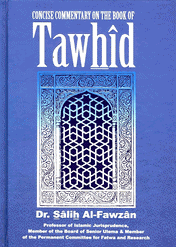 This is the weekly Saturday morning class on the book Al-Mulakhas fee Sharh Kitaabit-Tawheed (Concise Commentary on the Book of Tawhid) by Shaykh Saalih al-Fawzaan.
You may download the original text in Arabic here: الملخص في شرح كتاب التوحيد
As with all of our classes at Masjid Tawheed in Stone Mountain, GA, we encourage you to join us.
If you are not able to attend in person, please feel free to listen in via our Spreaker channel or our telelink line at 712-432-2856.
Al-Mulakhas fee Sharh Kitaabit-Tawheed – 01 – 20120128 Ch2
Al-Mulakhas fee Sharh Kitaabit-Tawheed – 02 – 20120204 Ch3
Al-Mulakhas fee Sharh Kitaabit-Tawheed – 03 – 20120211 Ch3
Al-Mulakhas fee Sharh Kitaabit-Tawheed – 04 – 20120225 Ch4
Al-Mulakhas fee Sharh Kitaabit-Tawheed – 05 – 20120310 Ch4
Al-Mulakhas fee Sharh Kitaabit-Tawheed – 06 – 20120317 Ch5
Al-Mulakhas fee Sharh Kitaabit-Tawheed – 07 – 20120324 Ch5
Al-Mulakhas fee Sharh Kitaabit-Tawheed – 08 – 20120325 Ch5
Al-Mulakhas fee Sharh Kitaabit-Tawheed – 09 – 20120331 Ch6
Al-Mulakhas fee Sharh Kitaabit-Tawheed – 10 – 20120407 Ch6
Al-Mulakhas fee Sharh Kitaabit-Tawheed – 11 – 20120408 Ch7
Al-Mulakhas fee Sharh Kitaabit-Tawheed – 12 – 20120505 Ch7
Al-Mulakhas fee Sharh Kitaabit-Tawheed – 13 – 20120512 Ch7
Al-Mulakhas fee Sharh Kitaabit-Tawheed – 14 – 20120519 Ch8
Al-Mulakhas fee Sharh Kitaabit-Tawheed – 15 – 20120526 Ch8
Al-Mulakhas fee Sharh Kitaabit-Tawheed – 16 – 20120602 Ch9
Al-Mulakhas fee Sharh Kitaabit-Tawheed – 17 – 20120714 Ch11
Al-Mulakhas fee Sharh Kitaabit-Tawheed – 18 – 20120915 Ch12
Al-Mulakhas fee Sharh Kitaabit-Tawheed – 19 – 20120922 Ch13
Al-Mulakhas fee Sharh Kitaabit-Tawheed – 20 – 20120929 Ch14
Al-Mulakhas fee Sharh Kitaabit-Tawheed – 21 – 20121006 Ch14
Al-Mulakhas fee Sharh Kitaabit-Tawheed – 22 – 20121013 Ch15
Al-Mulakhas fee Sharh Kitaabit-Tawheed – 23 – 20121110 Ch15
Al-Mulakhas fee Sharh Kitaabit-Tawheed – 24 – 20121117 Ch15
Al-Mulakhas fee Sharh Kitaabit-Tawheed – 25 – 20121201 Ch16
Al-Mulakhas fee Sharh Kitaabit-Tawheed – 26 – 20121208 Ch16
Al-Mulakhas fee Sharh Kitaabit-Tawheed – 27 – 20121215 Ch17
Al-Mulakhas fee Sharh Kitaabit-Tawheed – 28 – 20121229 Ch17
Al-Mulakhas fee Sharh Kitaabit-Tawheed – 29 – 20130105 Ch18
Al-Mulakhas fee Sharh Kitaabit-Tawheed – 30 – 20130119 Ch19
Al-Mulakhas fee Sharh Kitaabit-Tawheed – 31 – 20130202
Al-Mulakhas fee Sharh Kitaabit-Tawheed – 32 – 20130209
Al-Mulakhas fee Sharh Kitaabit-Tawheed – 33 – 20130223 Ch20
Al-Mulakhas fee Sharh Kitaabit-Tawheed – 34 – 20130302 Ch20
Al-Mulakhas fee Sharh Kitaabit-Tawheed – 35 – 20130309 Ch21
Al-Mulakhas fee Sharh Kitaabit-Tawheed – 36 – 20130316 Ch22
Al-Mulakhas fee Sharh Kitaabit-Tawheed – 37 – 20130426
Al-Mulakhas fee Sharh Kitaabit-Tawheed – 38 – 20130504
Al-Mulakhas fee Sharh Kitaabit-Tawheed – 39 – 20130511
Al-Mulakhas fee Sharh Kitaabit-Tawheed – 40 – 20130518
Al-Mulakhas fee Sharh Kitaabit-Tawheed – 41 – 20130601
Al-Mulakhas fee Sharh Kitaabit-Tawheed – 42 – 20130615
Al-Mulakhas fee Sharh Kitaabit-Tawheed – 43 – 20131109
Al-Mulakhas fee Sharh Kitaabit-Tawheed – 44 – 20131116
Al-Mulakhas fee Sharh Kitaabit-Tawheed – 45 – 20131123 Ch30
Al-Mulakhas fee Sharh Kitaabit-Tawheed – 46 – 20131207
Al-Mulakhas fee Sharh Kitaabit-Tawheed – 47 – 20131214
Al-Mulakhas fee Sharh Kitaabit-Tawheed – 48 – 20131221
Al-Mulakhas fee Sharh Kitaabit-Tawheed – 49 – 20140118
Al-Mulakhas fee Sharh Kitaabit-Tawheed – 50 – 20140201
Al-Mulakhas fee Sharh Kitaabit-Tawheed – 51 – 20140208
Al-Mulakhas fee Sharh Kitaabit-Tawheed – 52 – 20140215
Al-Mulakhas fee Sharh Kitaabit-Tawheed – 53 – 20140301 Ch34
Al-Mulakhas fee Sharh Kitaabit-Tawheed – 54 – 20140308
Al-Mulakhas fee Sharh Kitaabit-Tawheed – 55 – 20140315 Ch35
Al-Mulakhas fee Sharh Kitaabit-Tawheed – 56 – 20140322 Ch36
Al-Mulakhas fee Sharh Kitaabit-Tawheed – 57 – 20140405 Ch36
Al-Mulakhas fee Sharh Kitaabit-Tawheed – 58 – 20140412 Ch37
Al-Mulakhas fee Sharh Kitaabit-Tawheed – 59 – 20140503 Ch37
Al-Mulakhas fee Sharh Kitaabit-Tawheed – 60 – 20140517 Ch39
Al-Mulakhas fee Sharh Kitaabit-Tawheed – 61 – 20140531
Al-Mulakhas fee Sharh Kitaabit-Tawheed – 62 – 20140816
Al-Mulakhas fee Sharh Kitaabit-Tawheed – 63 – 20140823
Al-Mulakhas fee Sharh Kitaabit-Tawheed – 64 – 20140830
Al-Mulakhas fee Sharh Kitaabit-Tawheed – 65 – 20140906
Al-Mulakhas fee Sharh Kitaabit-Tawheed – 66 – 20140913
Al-Mulakhas fee Sharh Kitaabit-Tawheed – 67 – 20140920
Al-Mulakhas fee Sharh Kitaabit-Tawheed – 68 – 20141018
Al-Mulakhas fee Sharh Kitaabit-Tawheed – 69 – 20141108 Ch44
Al-Mulakhas fee Sharh Kitaabit-Tawheed – 70 – 20141115
Al-Mulakhas fee Sharh Kitaabit-Tawheed – 71 – 20141122
Al-Mulakhas fee Sharh Kitaabit-Tawheed – 72 – 20141206
Al-Mulakhas fee Sharh Kitaabit-Tawheed – 73 – 20141213
Al-Mulakhas fee Sharh Kitaabit-Tawheed – 74 – 20150103
Al-Mulakhas fee Sharh Kitaabit-Tawheed – 75 – 20150110
Al-Mulakhas fee Sharh Kitaabit-Tawheed – 76 – 20150117
Al-Mulakhas fee Sharh Kitaabit-Tawheed – 77 – 20150124
Al-Mulakhas fee Sharh Kitaabit-Tawheed – 78 – 20150131
Al-Mulakhas fee Sharh Kitaabit-Tawheed – 79 – 20150207
Al-Mulakhas fee Sharh Kitaabit-Tawheed – 80 – 20150307
Al-Mulakhas fee Sharh Kitaabit-Tawheed – 81 – 20150321
Al-Mulakhas fee Sharh Kitaabit-Tawheed – 82 – 20150328
Al-Mulakhas fee Sharh Kitaabit-Tawheed – 83 – 20150425
These are ongoing classes, the book not finished yet, further parts will be added, inshaa Allaah, when they are available at the below link
http://followthesalaf.com/home/?tag=Kitabut-Tawheed
About the English Book:
Author: Dr. Salih al Fawzan
Publisher: Al Maiman Publishing House (2009)
Pages: 493 Binding: Hardcover
Description from the publisher:
This book gives a clear explanation of the Muslim sound Creed which is the core of the religion of Islam, as the belief in Tawhid (monotheism) is the purpose for which Allah created both mankind and jinn, and thus, those whose belief in Tawhid is corrupt, are not considered Muslims. It is a commentary on the Book of Tawhid written by Sheikh Muhammad Ibn Abdul Wahhab.
In this book, Dr. Salih al Fawzan has projected light on doctrinal issues of utmost importance in a genuine and reader-friendly style. This translated version of the book fulfills a long-standing need on the part of English-speaking Muslims for a brief, introductory book in Tawhid. It is a valuable book for novice readers, be they Muslims or non-Muslims, who do not have thorough knowledge of the sound creed, The chapters of this book focus on major issues in Tawhid such as the definition of Tawhid, virtue of Tawhid, warning against acts of shirk (polytheism), the Prophet’s Maintenance of monotheism, and other topics.
http://mtws.posthaven.com/fasting-sha…
Translated by Raha ibn Donald Batts حفظه الله
Video Courtesy: Bilal Nahim
Translated by Abu Afnaan Muhammad ‘Abdullah حفظه الله
Video Courtesy: Bilal Nahim
Question:
May Allah grant you good. The questioner from Yemen, Hasan Saalih asks, ‘Regarding the day of ‘Eid, Eid al Fitr or ‘Eid al Adha, if it coincides with the day of al Jumu’ah, what are the legislative rulings concerning this?
Shaykh Muhammad bin Saalih Al-‘Uthaymeen:
If the ‘Eid coincides with al-Jumu’ah, whether it be ‘Eid al Fitr or Eid al Adha, then it is obligatory that the ‘Eid prayer is prayed and that Jumu’ah is prayed. Then it is said to whoever prayed ‘Eid prayer and was not the imam, if he wishes he may pray Jumu’ah or if he wishes he may pray Dhuhr in his home instead. This is the summary of the issue.
Fatwa no: 29
Category: Fatwas about Aqîda (Creed) and Tauhîd (monotheism)
The Question:
I am an Algerian young man; religiously upright (If Allah سبحانه wills). I have lived in Canada for a long time and I try to leave it as soon as possible. But I do not have a residence to settle down in my country.
So, is it permissible to get the Canadian passport (with some conditions I will mention later on) since it enables me to leave this country and enter the Gulf States and try to settle there?
And here are the conditions:
First: Indeed getting the Canadian passport will not invalidate my Algerian nationality but it will be the original one, this is confirmed by their laws and the Algerian country accepts plurality of nationalities.
Second: I am able to renounce this passport whenever I want, without having problems. This is also confirmed by their laws.
Third: I can avoid the oath of respecting the Queen, her children and the King as long as I sit in the back of the room without uttering a word.
May you be helpful for us (by your answer) and May Allah bless you.
The answer:
All praise is due to Allah, the Lord of the Worlds. Peace and blessing be upon whom Allah sent as a mercy to the Worlds, upon his Family, his Companions and his Brothers till The Day of Resurrection.
It is not allowed to acquire the disbelievers’ nationality even with keeping the original one, because of the negative aspects which affect the Muslim’s religion and creed.
It is enough to know what results from implicit contentment in applying the disbelievers’ customs and laws of that country, besides referring to them as judges and showing pride in being a Canadian citizen and all that engenders; in terms of allegiance and friendship toward them and imitating them in their words and deeds.
This contradicts the completeness of faith or nullifies it, according to the situation. Allah تعالى said:
﴿لاَ تَجِدُ قوْمًا يُؤْمِنُوْنَ بِاللهِ وَاليَوْمِ الآخِرِ يُوَادُّونَ مَنْ حَادَّ اللهَ وَرَسُولَهُ وَلَوْ كَانُوا آباءَهُمْ أَوْ أَبْنَاءَهُمْ أَوْ إِخْوَانَهُمْ أَوْ عَشِيرَتَهُمْ…﴾[المجادلة: 22].
Translation of the meaning of the verse:
﴾You (O Mohammad صلَّى الله عليه وسلَّم) will not find any people who believe in Allah and the Last Day, making friendship with those who oppose Allah and His Messenger (Mohammad صلَّى الله عليه وسلَّم), even though they were their fathers or their sons or their kindred (people)…﴿ [Al-Mujâdilah (The Woman Who Disputes): 22].
So, the Muslim is called to complete his religion and increase his faith in calling to Allah تعالى and showing Islam.
And among the conditions of traveling to the country of disbelief is to manifest the religion and reveal its rites in a complete way without any opposition to any of them; with the capacity of being loyal to the Muslims and disavowal to the disbelievers.
And those who are not able to do so are obliged to go back to the place they came from and try hard to look for a job and get satisfied with littleness and ask Allah for success. He is the Best Helper and the Best Provider.
The perfect knowledge belongs to Allah. Our last prayer is all praise is due to Allah, the Lord of the Worlds. Peace and blessing be upon our Prophet, his Family, his Companions and Brothers till the Day of Resurrection.
Shaykh Muhammad Ali Ferkous
Algiers. Muharram 24, 1424H
March 27th, 2003
Posted from: http://ferkous.com/home/?q=en/fatwa-en-29
Check Others: http://salaf-us-saalih.com/hijrah/

Extremely comprehensive yet potent with much benefit, this Ebook offers a synopsis of essential matters surrounding the ‘Eid prayer which every Muslim who wishes to align himself to the Sunnah of Muhammad(sallAllahu ‘alayhi wa sallam) should be familiar with.
This treatise was written by Shaykh ‘Abdul Qaadir Ibn Muhammad al-Junyad (حفظهالله) and was translated by Abu Afnaan Muhammad ‘Abdullah (حفظهالله) with the explicit permission and approval of the Shaykh.
The Chapter Headings
An excerpt taken from the Chapter: Listening to The ‘Eid Khutbah
Al-Haafidh Ibn Battal mentioned in ‘Sharh Saheeh al-Bukhaaree’, vol.2, pg. 572: “The scholars considered the people talking as the Imaam gives the khutbah as being makrooh (disliked).”
Regarding the hadeeth: “Indeed, we will give the khutbah, thus whoever wishes to stay for the khutbah is to sit and stay and whoever wishes to leave, may leave.”
The majority of the People of Knowledge are of the opinion that this hadeeth is mursal and from those scholars who were of this opinion include: Ibn Ma’een, Abu Zur’ah ar-Raazee, an-Nasaa’ee, Abu Daawood, al-Bayhaqeeand al-Waadi’ee. And mursal is from the categories of weak hadeeth.
Download PDF: The Legislative Rulings For ‘Eid-ul-Fitr by Shaykh ‘AbdulQaadir al-Junayd
Posted from : http://store.mpubs.org
*IMAAM ABOO DAAWOOD AT-TAYAALISEE-rahimahullaah (d. 204 H) reported in his “Musnad” (no. 2545):
“`Imraan narrated to us: from Qataadah: from Aboo Maymooonah: from Aboo Hurairah: that Allaah”s Messenger (صلى الله عليه و سلم) said, concerning Laylatul-Qadr (the Night of Decree):
<< Laylatul-Qadr is the twenty seventh or the twenty ninth night. The Angels that night upon the earth are more than the number of the pebbles >>. “
*Shaikh al-Albaanee -rahimahullaah- said in “as-Saheehah” (no. 2205): “Reported by at-Tayaalisee in his “Musnad” (no. 2545), and from him by Ahmad (2/519), and likewise by Ibn Khuzaymah in his “Saheeh” (2/223): from `Imraan al-Qattaan: from Qataadah: from Aboo Maymoonah: from Aboo Hurairah marfoo`an.
I say: And this is a hasan chain of narration; and al-Haafiz remained silent about it in “al-Fath” (4/209).”
[Translated by Aboo Talhah Daawood ibn Ronald Burbank]
Posted from PDF www.alitisaambissunnah.wordpress.com
* al-`Allaamah Ibn Battaal al-Maalikee -rahimahullaah- said in his explanation of “Saheehul-Bukhaaree” (4/154-157), in explanation of the Chapter: Seeking the Night of Decree in the odd nights of the last ten [Book of the virtue of the Night of Decree: Chapter 3]:
“at-Tabaree said: The Companions and those who followed them upon good differed concerning pinpointing the actual night of Laylatul-Qadr; and they differed in what they narrated from the Prophet -`alaihis-Salaam- to pinpoint it.
Ibn Mas`ood said: “It is the seventeenth night of Ramadaan”; and
`Alee, Ibn Mas`ood, and Zayd ibn Thaabit said: “It is the nineteenth night”; and
some of them said: “It is the twenty (first night)”, based upon the hadeeth of Aboo Sa`eed: that is also related from `Alee and Ibn Mas`ood.
Others said: “It is the twenty third night”, based upon the hadeeth of Ibn `Umar and Ibn `Abbaas; that is related from Ibn `Abbaas, `Aa·ishah, and Bilaal; and it was said by Makhool; and
Ibn `Abbaas and Bilaal said: “It is the twenty fourth night”; and this was the saying of al-Hasan [i.e. al-Basree] and Qataadah; and I think that those who said that were basing it upon his -`alaihis-Salaam- saying: << Seek it when seven remain >>, understanding that the seventh is the first of the seven remaining nights; and that is the twenty fourth night if the month is full [1] And `Alee, Ibn `Abbaas, Ubayy ibn Ka`b, and Mu`aawiyah said: “It is the twenty seventh night”;
[1] i.e. consisting of thirty days; as opposed to “short”,when composed of twenty nine days.
and it is related from Ibn `Umar that he said: “It occurs within the whole of Ramadaan”;
and `Abdullaahibn Buraydah related: from Mu`aawiyah: from the Prophet (صلى الله عليه و سلم) that he said:
<< It is the last night. >>
And Ayyoob said: from Aboo Qilaabah that it moves around throughout all the nights of the last ten.
at-Tabaree said: And the narrations reported about that from the Prophet – `alaihis-Salaam- are authentic, and they are in harmony, they do not contradict each other. this is because they all relate from him -`alaihis-Salaam- that it is within the last ten; and its moving around each year, to one of the last ten nights, is not to be denied. And it is known that he -`alaihis-Salaam- only said, with regard to each of the nights that he commanded his Companions to seek it in, that it was in that night in that (particular) year. So what is correct is that it is in the month of Ramadaan, to the exclusion of the other months of the year, because of the consensus of all those who inherited from the Prophet -`alaihisSalaam- that he said: << (It) is in the last ten; in the odd ones from them. >>
Then there is nothing specific to limit it to a particular night, such that it cannot move to a different night. So if it were restricted to a specific night, then the one having the most right to know that would be the Prophet -`alaihis-Salaam: along with how eager he was to know it, so that he could make his nation aware of it. So he did not make them aware of it, except by its signs: that it is a pleasant night: not hot, and not cold; and that the sun rises on its morning white (dull), with no rays. And the fact that he directed his nation towards it by means of signs, and not by stating a particular night, is a clear proof of the falsity of the saying of those who say that certain things appear that night which do not appear in the rest of the year: such as trees falling to the ground, and then returning to their places. So if that were true, then it would not be hidden from the eyes of one who stood throughout all the nights of the year; so what about the nights of Ramadaan?!
As for what this night has been singled out with, to the exclusion of the rest of the nights, then it is better than a thousand months: meaning that an action done in it : from those things which please Allaah, and which He loves: Prayer, Supplication, and the like, is better than an action done in a thousand months which do not contain the Night of Decree; and that supplication in it is responded to, as long as he does not supplicate for something sinful, nor for the cutting of ties of kinship.
And Maalik said regarding his -`alaihis-Salaam-: << Seek it on the ninth remaining >>: it is the night of the twenty first; and that << Seven remaining >> is the night of the twenty third night; and << Five remaining >> is the twenty fifth.
The author said: The meaning of this, and the Night of Decree occuring on an odd night will only be correct if the month is “short”[i.e. of twenty nine days]. If it is full [i.e. of thirty days], then it will not be except on an even night. So “nine remaining” will be the night of the twenty second; “five remaining” will be the night of the twenty sixth; “seven remaining” will be the night of the twenty fourth: based upon what al-Bukhaaree mentioned from Ibn `Abbaas: so none of them will conform to an odd night. So this proves that the Night of Decree moves around every year within the last ten: from being an odd night to being an even one, and from being an even one to being an odd one. This is because the Prophet -`alaihis-Salaam- did not command his nation to seek it in a full month, but not in a short one. Rather he left seeking it unrestricted, applying to all the months of Ramadaan: those which Allaah causes to be full sometimes, and short on other occasions. So it is established that it moves within all of the last ten nights, as Aboo Qilaabah said…”
[Translated by Aboo Talhah Daawood ibn Ronald Burbank]
Posted from PDF www.alitisaambissunnah.wordpress.com
Imaam Muslim -rahimahullaah- reported in his “Saheeh” (The Book of Fasting: no. 762):
“And Muhammad ibn Haatim and Ibn Abee `Umar narrated to us, both of them: from Ibn `Uyainah. Ibn Haatim said: Sufyaan ibn `Uyainah narrated to us: from `Abdah and `Aasim ibn Abin-Nujood, who both heard Zirr ibn Hubaish say:
“I asked Ubayy ibn Ka`b, saying: Your brother Ibn Mas`ood says: Whoever stands in (Night) Prayer throughout the whole year will attain Laylatul-Qadr (The Night of Decree). So he said: “May Allaah have mercy upon him! He intended that the people should not just rely (upon a single night). Indeed he knew that it was in Ramadaan; and that it is in the last ten; and that it was the twenty seventh night.” Then he swore an oath, without exception that it was the twenty seventh night.” So I said: ” O Abul-Mundhir! Upon what basis do you say that?” He said: “Based upon the sign which Allaah”s Messenger (صلى الله عليه و سلم) informed us of: that it [i.e. the sun] will rise on that day having no rays“.”
Imaam an-Nawawee -rahimahullaah- said in his explanation of “Saheeh Muslim”: “…al-Qaadee `Iyaad said:
It is said that the meaning of its having no rays is that this was just a distinctive sign which Allaah -the Most High- made for it [that year]. He said: Or it is otherwise said: Rather it is on account of the great number of Angels coming and going on its night; and their descending to the earth, and their ascending, with that which they descended with. So their wings and their subtle/ethereal bodies screen the light of the sun and its rays, and Allaah knows best.”
Imaam Aboo Daawood -rahimahullaah- reported the hadeeth (The Book of the Prayer: Chapter 319: What occurs regarding the Night of Decree), (no. 1378), with the wording:
“…On the morning following that night the sun enters the morning like a brass dish, having no rays, until it has risen higher.”
[Declared “hasan saheeh” by Shaikh al-Albaanee -rahimahullaah.]
Imaam Ibn Khuzaymah -rahimahullaah- reported in his “Saheeh” (no. 2192): “ Bundaar narrated to us: Aboo `Aamir narrated to me: Zam`ah narrated to us: from Salamah -he is Ibn Wahraam-: from `Ikrimah: from Ibn `Abbaas: from the Prophet (صلى الله عليه و سلم) that he said regarding the Night of Decree:
“It is a pleasant night, being neither hot nor cold. The sun enters the morning of its day being red and weak.”
-Shaikh al-Albaanee said: “A hadeeth which is “Saheeh” because of its witnesses…”
Imaam an-Nawawee -rahimahullaah- said in his explanation of “Saheeh Muslim” (The Book of Fasting: Chapter 40: The virtue of the Night of Decree):“al-Qaadee [`Iyaad] said:
They disagreed about its place. So a group said: It moves about, so in one year it will be one night, and in another year it will be a different night, and so on; and this harmonizes the ahaadeeth ; and it is said: Each hadeeth refers to one of its times, and there is no contradiction between them. He said: And the like of this was stated by Maalik, ath-Thawree, Ahmad, Ishaaq, Aboo Thawr, and others. They said: It moves about within the last ten nights of Ramadaan…”
al-Haafiz Ibn Hajr -rahimahullaah- said in “Fathul-Baaree” (4/260) in explanation of the chapter heading: “Seeking the Night of Decree in the odd nights of the last ten”:
“This title contains an indication of the preference of the saying that the Night of Decree is restricted to Ramadaan, then to the last ten nights of it, then to the odd nights from them, and that it is not one particular, fixed night. This is what is indicated by the collected narrations concerning it.”
-And he said (4/267):
“So the most correct saying out of all of them is that it is one of the odd nights from the last ten, and that it moves around – as can be understood from the ahaadeeth of this chapter.
So the most likely nights are the odd nights of the last ten; and the most likely night from the odd nights of the last ten in the view of the Shaafi`ees is the twenty-first night or the twenty-third night, in accordance with what occurs in the hadeeth of Aboo Sa`eed and `Abdullaah ibn Unays; whereas in the view of the majority the most likely (night) is the twenty-seventh night, and the evidences for that have preceded.
The scholars said: The wisdom behind Laylatul-Qadr being concealed is so that the people strive to seek it contrary to what would be the case if it were a certain known night – for then they would restrict themselves to that, as has been mentioned concerning the hour on the day of Jumu`ah….”
[Translated by Aboo Talhah Daawood ibn Ronald Burbank rahimahullaah]
Posted from PDF with Permission from: www.alitisaambissunnah.wordpress.com
The Explanation of:
The Arabic word بَرَكَة (barakah) “blessing” literally means an abundance of anything good that is continuous. The scholars even trace this word and its meaning back to the word بِرْكَة (birkah) which means a large amount of water or any wide container or gathering of water that is constantly filled with water. Similarly, the word blessing means a continuously large amount of good. So the meaning of this statement is: Send blessings down upon everything you have given me.
The wording, “…in what you have given…” is comprehensive including anything Allah has given us of wealth, children, knowledge, and anything else Allah ( سبحانه وتعالى ) has bestowed upon us. So you ask Allah to put blessings in all of that. If Allah does not put blessings in what he has given you, you would surely be prevented from a great amount of good.
How many people have a wealth in abundance, yet it is as if they live in poverty? This is because they gain no real benefit from their wealth; they simply collect it and never benefit from it. This is the result of the blessings being removed from it. Likewise, many people have lots of children and grandchildren, yet their children do not benefit their parents in anything due to their disobedience and ungratefulness. Such people have not been blessed in their children.
You also find some people to whom Allah has given a great amount of knowledge, yet it is as if he is illiterate. You see no traces of knowledge upon him in his worship, in his character, in his manners, nor in the way he treats others. Rather, his knowledge may even increase him in arrogance and considering himself to be above the rest of Allah’s worshippers, belittling and humiliating them. Such a person does not realize the one who bestowed this knowledge upon him is none other than Allah. You see that he never benefits people with his knowledge, neither with lessons, nor advice, nor with writings. On the contrary, he is exclusively centered only upon himself. This is without doubt a great loss, even though religious knowledge is one of the most blessed things Allah gives to a servant. One reason for this is that when you teach others and spread this knowledge among people, you are rewarded from several different perspectives:
1. When you spread this religious knowledge, you are spreading the religion of Allah ( عزّ وجلّ ). So you work for the sake of Allah, opening people’s hearts with knowledge.
2. From the blessings of spreading knowledge and teaching it is that by doing so, there is the preservation and protection of Allah’s legislation (religious laws). If it weren’t for the passing on of knowledge, the legislation would not have been preserved.
3. Also from the blessings of spreading knowledge is that when you teach others, you do them a great deal of good. You give them insight into the religion of Allah. And when that person then worships Allah with knowledge and insight, you are rewarded with similar rewards he is given because it was you who directed him towards a particular good deed, and the one who directs another to do something good is just like the one who actually does it. [15]
Also, by spreading and teaching religious knowledge, one’s own knowledge increases. It is known that anyone who teaches a particular knowledge to people, his knowledge in that subject will increase. This is because in teaching, one is recalling what he previously learned and memorized as well as learning new things that he must prepare. To this meaning, there is a famous (Arabic) proverb regarding wealth, “It increases by spending it often, and it decreases if held in a tight fist.” Similarly, if knowledge is withheld and not taught, it will eventually decrease.
Footnotes :
[15] A proof of this is the ḥadīth recorded by Muslim (no. 1893), al-Tirmidhī (no. 2671), Abū Dāwūd (no. 5129), and by Aḥmad in which the prophet ( صلّى الله عليه وسلّم ) said:
مَنْ دَلَّ عَلَى خَيْرٍ فَلَهُ مِثْلُ أَجْرِ فَاعِلِهِ
Whoever directs someone to do something good, he will have a reward like the one who actually did it.
Posted from : Explaining the Du’a of Qunut in the Witr Prayer – Shaykh ibn Uthaymeen, Translated by Abu az-Zubayr Harrison
Learn the below important supplication:
O Allah, increase my wealth and offspring, and bless me in what You have given me
The Explanation of: اللَّهُمَّ اهْدِنِي فِيمَنْ هَدَيْتَ
“Oh Allah, guide me with those You have guided.”
Meaning: Guide me to the truth and assist me in acting in accordance with it. Complete, beneficial guidance is that in which Allah combines for a servant both knowledge and action. Guidance without action is of no real benefit. Rather it is even harmful because if a person does not act in accordance with what he already knows, his knowledge becomes evidence against him.
An example of guidance in the form of knowledge but with no action is the verse of Allah:
As for Thamūd, we guided them but they preferred blindness over guidance. [5]
Meaning: We clarified the path to them and we conveyed the knowledge to them. However, they preferred blindness over guidance, and from this we seek refuge with Allah.
Also from this type of guidance – simply giving the knowledge and clarifying the truth – is the statement of Allah (سبحانه و تعالى)to the Prophet (صلى الله عليه و سلم) :
And certainly, you guide to the straight path.[6]
Meaning: You direct the people to the straight path and teach them about it. As for the other type of guidance which is the granting of success, an example of this type is the verse:
Indeed, you can’t guide whoever you like.[7]
This type is the guidance of granting one success in their deeds. In this case, the messenger ( صلى الله عليه و سلم ) is never able to grant someone the success of their good actions as this type of guidance is specific to Allah alone. If the prophet ( صلى الله عليه و سلم ) were capable of that type of guidance, he would have guided his uncle, Abū Ṭālib. He did try to guide his uncle and even when he was about to die, the Prophet ( صلى الله عليه و سلم ) said to him:
Oh uncle, say, “There is nothing worthy of worship except Allah,” – a statement by which I will testify on your behalf before Allah.
But the decree of Allah (سبحانه و تعالى) had already passed that the prophet’s uncle would be from the inhabitants of the Fire, and from this we seek refuge with Allah. So Abū Ṭālib neither said nor believed that nothing has the right to be worshipped except Allah. The last thing he said before dying was that he would remain upon the religion of ‘AbdulMuṭṭalib.8 Despite this, Allah allowed his messenger ( صلى الله عليه و سلم ) to intercede for Abū Ṭālib, not just because he was the prophet’s uncle, but because he used to continually defend the prophet ( صلى الله عليه و سلم ) and Islam (even though he did not personally accept Islam). So the Prophet ( صلى الله عليه و سلم ) interceded for Abū Ṭālib and as a result of this intercession, he ( صلى الله عليه و سلم ) said about his uncle:
He is in the lowest part of the fire, and if it were not for me, he would have been in the lowest, deepest part of the fire.[9]
And the Prophet ( صلى الله عليه و سلم ) also said :
Perhaps my intercession will benefit him on the Day of Resurrection so that he will be put into the lowest part of the fire, it reaching only to his ankles, yet from which his brain will boil. [10]
So when we say in the Du’ā of Qunūt, “Guide us with those you have guided,” we are asking Allah for both types of guidance: the guidance of knowledge and the guidance of being successful in our actions. As an example, the following verse also includes both of these types of guidance:
Guide us to the straight path. [11]
So when anyone says this du’ā he should sincerely call to mind that he is asking for both types of guidance: the guidance of the correct knowledge and the guidance of acting in accordance with it.
As for the wording, “…with those you have guided,” this is a way of seeking nearness to Allah by mentioning his favors on others in that he guided them. So we also ask him to bestow the same favor upon us and guide us. In other words, we ask you (Allah) for guidance, and receiving it is only by virtue of your mercy, your wisdom, and your past favors as you have guided others
Footnotes:
[5] The Quran, Sūrah Fuṣṣilat, 41:17
[6] The Quran, Sūrah al-Shūrá, 42:52.
[7] The Quran, Sūrah al-Qaṣaṣ, 28:56.
[8] The ḥadīth is recorded by al-Bukhārī (no. 1360, 3884, and 4675) Muslim (no. 24), al-Nasāī (no. 2035), and by Aḥmad.
[9]The ḥadīth is recorded by al-Bukhārī (no. 3883, 6208) and Muslim (no. 209) as well as by Imām Aḥmad.
[10] The ḥadīth is recorded by al-Bukhārī (no. 3885, 6564) and Muslim (no. 210) and also by Aḥmad.
[11] The Quran, Sūrah al-Fātiḥah, 1:5
Posted from : Explaining the Du’a of Qunut in the Witr Prayer – Shaykh ibn Uthaymeen, Translated by Abu az-Zubayr Harrison
[Must Watch] The Immense Calamity of the Smart Phone – Advice from Shaykh Abdur Razzaaq al Badr حفظه الله
http://mtws.posthaven.com/itikaf-with…
Translated by Rasheed ibn Estes Barbee حفظه الله
Video Courtesy: Bilal Nahim
The following lessons are on the book on Hajj, Tabseer an-Naasik fi Ahkaam al-Manaasik by our noble Shaykh Abdul-Muhsin al-Abbaad al-Badr, hafidhahullah.
You may download a copy of the Arabic text here: تبصير الناسك بأحكام الناسك.
—
Posted from: http://followthesalaf.com/home/?tag=Tabseer+an-Naasik
Some Short Benefits extracted from these series
This is the weekly Sunday evening class on the book Al-Minhatu Ar-Rabbaaniyah Fee Sharh Al-Arba’een An-Nawawiyah by Shaikh Saalih Al-Fawzaan.
You may download the original text in Arabic here: المنحة الربانية شرح الأربعين النووية
As with all of our classes at Masjid Tawheed in Stone Mountain, GA, we encourage you to join us. If you are not able to attend in person, please feel free to listen in via our Spreaker channel or our telelink line at 712-432-2856.
Explanation of 40 Hadith Nawawi – 01 – 120108
Explanation of 40 Hadith Nawawi – 02 – 120115
Explanation of 40 Hadith Nawawi – 03 – 120122
Explanation of 40 Hadith Nawawi – 04 – 120205
Explanation of 40 Hadith Nawawi – 05 – 120212
Explanation of 40 Hadith Nawawi – 06 – 121111
continue the explanation of hadeeth #8
Explanation of 40 Hadith Nawawi – 07 – 130203
we begin the explanation of hadeeth #10
Explanation of 40 Hadith Nawawi – 08 – 130210
we continue with the explanation of hadeeth #10
Explanation of 40 Hadith Nawawi – 09 – 130217
we begin the explanation of hadeeth #16
Explanation of 40 Hadith Nawawi – 10 – 130421
we begin the explanation of hadeeth #17
Explanation of 40 Hadith Nawawi – 11 – 130428
Hadeeth #18
Explanation of 40 Hadith Nawawi – 12 – 130505
Hadeeth #19
Explanation of 40 Hadith Nawawi – 13 – 130512
Hadeeth #19
Explanation of 40 Hadith Nawawi – 14 – 130519
Explanation of 40 Hadith Nawawi – 15 – 130526
Hadith no. 20
Explanation of 40 Hadith Nawawi – 16 – 130602
we begin the explanation of Hadith 21
Explanation of 40 Hadith Nawawi – 17 – 130616
we begin with the hadith #23
Explanation of 40 Hadith Nawawi – 18 – 130825
we continue with the hadith #23
Explanation of 40 Hadith Nawawi – 19 – 130901
we continue again with the explanation of the hadith #23
Explanation of 40 Hadith Nawawi – 20 – 130908
we begin with the explanation of the hadith #24
Explanation of 40 Hadith Nawawi – 21 – 131110
we continue the explanation of the hadith #24
Explanation of 40 Hadith Nawawi – 22 – 131117
we continue with the explanation of the hadith #24
Explanation of 40 Hadith Nawawi – 23 – 131124
we continue with the explanation of the hadith #24
Explanation of 40 Hadith Nawawi – 24 – 131208
we continue with the explanation of the hadith #24
Explanation of 40 Hadith Nawawi – 25 – 131215
Today we finish the explanation of the hadith #24
Explanation of 40 Hadith Nawawi – 26 – 131222
We continue with hadith #25
Explanation of 40 Hadith Nawawi – 27 – 140202
We will be beginning with hadith #27
Explanation of 40 Hadith Nawawi – 28 – 140223
Explanation of 40 Hadith Nawawi – 29 – 140309
Explanation of 40 Hadith Nawawi – 30 – 140316
Explanation of 40 Hadith Nawawi – 31 – 140323
Explanation of 40 Hadith Nawawi – 32 – 140406
Explanation of 40 Hadith Nawawi – 33 – 140413
Explanation of 40 Hadith Nawawi – 34 – 140420
Explanation of 40 Hadith Nawawi – 35 – 140504
Explanation of 40 Hadith Nawawi – 36 – 140511
Hadith #32
Explanation of 40 Hadith Nawawi – 37 – 140518
Hadith #33
Explanation of 40 Hadith Nawawi – 38 – 140525
Hadith #34
Explanation of 40 Hadith Nawawi – 39 – 140601
Hadith #35
Explanation of 40 Hadith Nawawi – 40 – 140817
Hadith #35
Explanation of 40 Hadith Nawawi – 41 – 140824
Explanation of 40 Hadith Nawawi – 42 – 140831
Hadith #35
Explanation of 40 Hadith Nawawi – 43 – 140907
Explanation of 40 Hadith Nawawi – 44 – 140914
Hadith #36 continued
Explanation of 40 Hadith Nawawi – 45 – 140921
We continue with hadith no. 38: Worship for the sake of Allah is a means of attaining nearness to Him and His Love
Explanation of 40 Hadith Nawawi – 46 – 141116
We continue with hadith no. 38
Explanation of 40 Hadith Nawawi – 47 – 141123
We continue with hadith no. 39
Explanation of 40 Hadith Nawawi – 48 – 141207
We continue with hadith no. 40
Explanation of 40 Hadith Nawawi – 49 – 141214
We continue with hadith no. 40
Explanation of 40 Hadith Nawawi – 50 – 141221
We continue with Hadith no. 41
Explanation of 40 Hadith Nawawi – 51 – 150111
we conclude the book with the final hadith: Hadith no. 42
Explanation of 40 Hadith Nawawi – 52 – Final – 150118
Posted from: http://followthesalaf.com/home/?tag=40+hadith
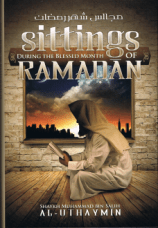
We begin a series of classes Majaalis Ramadan (Sittings in Ramadan) from the works of our noble Shaykh Muhammad ibn Salih al-Uthaymeen rahimahullah.
You can read the Arabic text here.
As with all of our classes at Masjid Tawheed in Stone Mountain, GA, we encourage you to join us.
If you are not able to attend in person, please feel free to listen in via our Spreaker channel or our telelink line at 712-432-2856.
You can buy the above book (english) Here
Contents
Posted from : http://followthesalaf.com/?tag=Majaalis+Ramadan
From Anas – RadhiAllaahu anhu – who said: ‘A Bedouin came to the Prophet – sallAllaahu alayhi wa sallam – and said: ‘O Messenger of Allaah! Teach me some goodness.’
So the Prophet – sallAllaahu alayhi wa sallam – took him by the hand and said:
” قل: سبحان الله، والحمد لله، ولا إله إلا الله، والله أكبر.
‘Say: ‘Far is Allaah from imperfection, and all praise be to Allaah, and there is none worthy of worship in truth except Allaah, and Allaah is the Greatest.’
(Subhana Allaahi, wal hamdu lillaahi, wa la illaah ila Allaah, wa Allaahu Akbar.)’
The Bedouin counted them on his hand, when he finished he began to reflect then came back to the Prophet.
The Prophet – sallAllaahu alayhi wa sallam – smiled and said:
‘The desperate one has reflected.’
Then the Bedouin came and said:
‘O Messenger of Allaah! ‘Far is Allaah from imperfection, and all praise be to Allaah, and there is none worthy of worship in truth except Allaah, and Allaah is the Greatest.’ This is for Allaah, what is for me?’
The Prophet – sallAllaahu alayhi wa sallam – said:
اللهم اغفر لي وارحمني وعافني وارزقني واهدني
‘Say: O Allaah forgive me, and have mercy on me, and pardon me, and provide for me, and guide me.’
The Prophet – sallAllaahu alayhi wa sallam – said to him:
‘O Bedouin! If you say: ‘SubhanAllah’, Allaah says: ‘you have spoken the truth,
If you say: ‘Alhamdulillah’, Allaah says: ‘ you have spoken the truth,
If you say: ‘La ilaha ‘illa Allaah’, Allaah says: ‘you have spoken the truth,
If you say: Allaahu Akbar, Allaah says: ‘you have spoken the truth,
If you say: O Allaah forgive me, Allaah says: I have done so,
If you say: O Allaah have mercy on me, Allaah says: I have done so,
If you say: O Allaah give me provision, Allaah says: I have done so,
Then the Bedouin counted it seven times on his fingers, then went away.’
Shaykh al-Muhaddith al-Albaani -Rahimullaah – said :
Collected by al-Bayhaqi in ‘Shuab al-Eemaan’, and this Isnaad is Jayyid (good) its narrators are trustworthy as for al-Hasan bin Tawab; then I had become exhausted searching about him until I found who he was. So I performed a Sajdah to Allaah thankful for His success and I ask Him for an increase in His excellence.’
[Taken from : ‘Silsilah Saheehah’ No. 3336 by the Shaykh al-Muhaddith al-Albaani -Rahimullaah ]
Related Links:
If a person travels from one country to another where the new crescent of Shawwal has been sighted, should he follow them and break his fast?
Q. 394. If a fasting person travels from one Islamic country to another and it was announced in the first country that the new crescent of Shawwal has been sighted, should he follow them and break his fast, bearing in mind that the new crescent of Shawwal has not yet been sighted in the second country?
A. If a person travels from one Islamic country to another, and the breaking of the fast in the country to which he has travelled was delayed, then he should remain (fasting) with them until they break their fast, because fasting is when the people fast and breaking the fast is when the people break their fast and ( ‘Eid) Al-Adha ( Sacrifice) is on the day when the people sacrifice their animals, even if it means that he increases a day or more. It is the same as if he travelled to a country where the sunset is late for his usual day might be lengthened by two or three hours, or more if he travelled to another country. The new crescent has not been seen there, and the Prophet (صلى الله عليه و سلم) ordered us to not fast unless we see the new crescent, and he also said: “Break your fast when you see it.”
As for the opposite, such as when he travels from a country in which confirmation of the start of the month is delayed to a country in which the start of the month has been confirmed, then he should break his fast with them and make up for what he has missed of Ramadan later. If he missed a day, he must make up for a day and if he missed two days, he must make up for two days.
We say that he makes it up in the second case, because it is not possible for the month to be less than twenty-nine days, nor for it to be more than thirty days. And we say to him: Break your fast, even if you have not completed twenty-nine days, because the new crescent has been seen, and once it has been seen, you must break your fast. And since you have fasted less than twenty-nine, because it is not possible for the month to be less than twenty-nine, so you must complete twenty-nine days, as opposed to the first situation, for you should not break your fast until the new crescent has been seen, and if it has not been seen, then you are still in Ramadan. So, how can you break your fast, for you must fast, even if the month was increased for you, it is only like the increase in the hours of the day .
Posted from : Fatawa Arkanul-Islam : Islamic Verdicts on the Pillars of Islam (Volume2)
By the Honorable Shaikh Muhammad bin Salih Al- ‘Uthaimeen
Collected and Arranged by Fahd bin Nasir bin Ibrahim As-Sulaiman
Published by dar-us-salam
Imaam Muslim -rahimahullaah- reported in his ‘Saheeh’ [The Book of Purification]: (no.234): “Muhammad ibn Haatim ibn Maymoon narrated to me: `Abdur-Rahmaan ibn Mahdee narrated to us: Mu`aawiyah ibn Saalih narrated to us: from Rabee`ah -meaning Ibn Yazeed: from Aboo Idrees alKhawlaanee: from `Uqbah ibn `Aamir; And Aboo `Uthmaan narrated to me: from Jubayr ibn Nufayr: from `Uqbah ibn `Aamir, who said:
‘We were tending camels, and my turn came, so I brought them back in the evening. So then I found Allaah’s Messenger (صلى الله عليه و سلم) standing, speaking to the people, and I caught from what he was saying:
<<There is not one of you who performs the wudoo·, and he performs the wudoo· well, and then he stands and prays two rak`ahs, turning his full attention to them with his heart and his face, except that Paradise will be binding for him>>.’
He said: So I said: ‘How fine this is!’ So then someone in front of me said: “That which came before it was even finer.” So I looked, and it was `Umar. He said: “I saw that you came just now. So he had (already) said:
<<There is not one of you who performs the wudoo·, and he performs the wudoo· completely -or: and he performs it fully, then he says:

(Ashhadu an laa ilaaha illallaah, wa anna Muhammadan `abduhu wa Rasooluh) ‘I testify that none has the right to be worshipped except Allaah, and that Muhammad is His Slave and His Messenger’,
except that the eight gates of Paradise are opened for him: he may enter through whichever of them he wishes >>.”
And Aboo Bakr ibn Abee Shaybah narrated it to us: Zayd ibn al-Hubaab narrated to us: Mu`aawiyah ibn Saalih narrated to us: from Rabee`ah ibn Yazeed: from Aboo Idrees al-Khawlaanee and Aboo `Uthmaan: from Jubayr ibn Nufayr ibn Maalik al-Hadramee: from `Uqbah ibn `Aamir al-Juhanee: that Allaah’s Messenger (صلى الله عليه و سلم) said.., and he mentioned its like, except that he said:
<<Whoever performs the wudoo·, and says:

(Ashhadu an laa ilaaha illallaah, wahdahu laa shareeka lahu, wa ashhadu anna Muhammadan `abduhu wa Rasooluh)
<<‘I testify that none has the right to be worshipped except Allaah, alone, with no partner; and I testify that Muhammad is His Slave and His Messenger’>>.”
Imaam at-Tirmidhee -rahimahullaah-reported in his ‘Sunan’ [The Book of Purification from Allaah’s Messenger (صلى الله عليه و سلم) : Chapter (41): What should be said after the wudoo·] (no.55):
“Ja`far ibn Muhammad ibn `Imraan ath-Tha`labee, al-Koofee, narrated to us, saying: Zayd ibn Hubaab narrated to us: from Mu`aawiyah ibn Saalih: from Rabee`ah ibn Yazeed ad-Dimashqee: from Aboo Yazeed al-Khawlaanee and Aboo `Uthmaan: from `Umar ibn al-Khattaab, who said: Allaah’s Messenger (صلى الله عليه و سلم) said:
<<Whoever performs the wudoo, and he performs the wudoo well, then he says:

(Ashhadu an laa ilaaha illallaah, wahdahu laa shareeka lahu, wa ashhadu anna Muhammadan `abduhu wa Rasooluh. Allaahummaj `alnee minat-Tawwaabeena waj`alnee minal- Mutatahhireen)
<< ‘I testify that none has the right to be worshipped except Allaah, alone, with no partner; and I testify that Muhammad is His Slave and His Messenger’ O Allaah! Make me from those who constantly repent, and make me from those who purify themselves’>>.”
[Declared ‘Saheeh’ by Shaikh al-Albaanee -rahimahullaah: ‘Saheehut-Tirmidhee’ (no. 48).]
[Translated by Aboo Talhah Daawood ibn Ronald Burbank rahimahullaah]
Posted from PDF: https://alitisaambissunnah.wordpress.com


 AbdurRahman.Org
You must be logged in to post a comment.