Hajj to Allaah’s Sacred House is an Obligatory Duty that is owed to Allaah – Shaykh Fawzan | Dawud Burbank [Audio|En]

Bismillaah

Sharh-ul-Usool-ith-Thalaathah : Lesson 32 – Part A
Shaykh Saalih al-Fawzan | Dawud Burbank [Audio|English]

[Souncloud Audio Link


Imaam Muhammad ibn ‘Abdul-Wahhaab (rahimahullaah) said:

And the proof for the Hajj is:

وَلِلَّهِ عَلَى النّاسِ حِجُّ البَيتِ مَنِ استَطاعَ إِلَيهِ سَبيلًا ۚ وَمَن كَفَرَ فَإِنَّ اللَّهَ غَنِيٌّ عَنِ العالَمينَ

And Hajj to Allaah’s Sacred House is an obligatory duty that is owed to Allaah by those who have the ability to make their way there. And whoever rejects the obligation of the Hajj, then Allaah has no need of him or any of the creation. [3:97] [41]


[41] : Shaykh Saalih al-Fawzan’s Explanation:

The Jews claimed that they were Muslims and that they were upon the religion of Ibraaheem, so Allaah the Majestic and Most High tested them in this aayah, and He said: 

وَلِلَّهِ عَلَى النّاسِ حِجُّ البَيتِ مَنِ استَطاعَ إِلَيهِ سَبيلًا ۚ وَمَن كَفَرَ فَإِنَّ اللَّهَ غَنِيٌّ عَنِ العالَمينَ

And Hajj to Allaah’s Sacred House is an obligatory duty that is owed to Allaah by those who have the ability to make their way there. And whoever rejects the obligation of the Hajj, then Allaah has no need of him or any of the creation. [3:97]

Therefore, if you are Muslims, then perform the Hajj, because Allaah has made the Hajj to the Sacred House obligatory upon the Muslims, if you do not perform it, and you refuse to perform it, then this is a proof that you are not Muslims, and you are not upon the religious way of Ibraaheem: 

وَمَن كَفَرَ فَإِنَّ اللَّهَ غَنِيٌّ عَنِ العالَمينَ

And whoever rejects the obligation of the Hajj, then Allaah has no need of him or any of the creation. [3:97]

وَلِلَّهِ : Meaning: this is an obligation, a rite, and a binding duty which is due for Allaah, the Perfect and Most High from mankind.

حِجُّ : Its meaning in the language is al-qasd (to head towards an intended goal). And the word Hajj in the legislation is to head towards the honourable Ka`bah and the Sacred sites (of pilgrimage) at a particular time, and to carry out specific acts of worship and they are the rites of the Hajj.

حِجُّ البَيتِ: Meaning: the Ka`bah and whatever is round about it from the sites of pilgrimage which follow on from it.

مَنِ استَطاعَ إِلَيهِ سَبيلًا : This explains the condition being obligatory, and it is bodily and monetary capability; bodily capability such that he is able to work, ride, and move from his land to Makkah from whatever place he is in upon the earth. This is the bodily capability. It excludes the person who is permanently unable, such as a person with an illness which persists, the feeble old person, and such a one who does not have the bodily ability. But if he has monetary capability, then he should deputize someone to perform the Hajj on his behalf, the obligatory Hajj of Islaam.

As for monetary capability, then it is having the transport necessary to carry him, the riding animal, the plane, or the ship, each as is appropriate to the time; and that he has wealth which is sufficient for him to seek transport to convey him for the performance of the Hajj; and also, that he has provision and money for the journey, going and returning; and for his dependence, such that they will have sufficient funds until he returns to them. So, provision means that he has sufficient funds to suffice him upon his journey, and to suffice his dependents; his children, his parents, his wife, and everyone it is obligatory to spend upon; that he gives them that which will suffice them until he gets back to them, after securing guarantees for the payments of any debts which are upon him.

So this wealth is surplus, remaining after his debts have been dealt with. So, if this is available, then this will be his ability to make his way there, “provision and transport”[1] as occurs in the hadeeth of Ibn `Abbaas radiyallaahu `anhumaa.

And whoever does not have the ability, meaning: he does not have the provision nor the transport, then the Hajj is not upon him, because he does not have the ability to do it. So the condition for the Hajj being obligatory is ability.

Since the people come to the Hajj from far away, from all the regions of the earth, and every distant place, and it requires spending, and involves some difficulty and toil, and it may bring about dangerous situations, then from the Mercy of Allaah is that He made it binding only once in a lifetime. And whatever is in addition to that is supererogatory. This is from the Mercy of Allaah the Perfect and Most High, that He did not make it obligatory upon the Muslim every year just as the Prophet sallallaahu`alaihiwasallam said:

» إن الله فرض عليكم الحج فحجوا ، « قال  الأقرع بن حابس – رضى الله عنه-  أكل سنة يا رسول الله ؟ فسكت عنه الرسول ﷺ ثم أعاد السؤال ، فسكت عنه النبي ﷺ ثم أعاد السؤال ، فقال النبي ﷺ»  لو قلت نعم لوجبت ، ولما  استطعتم ، الحج مرة واحدة ، فما زاد فهو تطوع «

«Allaah has made the Hajj obligatory upon you, so perform the Hajj.» Al-Aqra` bin Haabis radiyallaahu `anhu said: Is it every year O Messenger of Allaah? So the Messenger sallallaahu`alaihiwasallam remained silent. Then he repeated the question, and the Prophet sallallaahu`alaihiwasallam remained silent. And then he repeated the question again, and the Prophet sallallaahu`alaihiwasallam said: «If I were to say yes, it would become obligatory and you would not be able to do it. The Hajj is a single time, and whatever is in addition, then it supererogatory[2]

And His saying, He the Most Perfect:

وَمَن كَفَرَ فَإِنَّ اللَّهَ غَنِيٌّ عَنِ العالَمينَ

And whoever rejects the obligation of the Hajj, then Allaah has no need of him or any of the creation. [3:97]

It contains a proof that whoever refuses to perform the Hajj and he is able to, and he does not perform the Hajj, then he is a disbeliever, because Allaah said: «whoever rejects» meaning: whoever refuses to perform the Hajj when he is able to perform it, then he has committed kufr. [This kufr] may be kufr asghar (lesser kufr), but whoever abandons it whilst denying its obligation, then this is kufr akbar (major kufr) by consensus of the Muslims. As for a person who acknowledges its obligation, but abandons it out of laziness, then this is lesser kufr. However, if the person dies and he has wealth, then someone should perform the Hajj on his behalf using money which he has left behind, because it is the debt of Allaah, the Mighty and Majestic, upon him. And this aayah shows the obligation of performing Hajj, it is a pillar from the pillars of Islaam. The Messenger of Allaah sallallaahu`alaihiwasallam explained that it is a pillar from the pillars of Islaam in the hadeeth of Jibreel[3] and in the hadeeth of Ibn `Umar.[4]

The Hajj was made obligatory in the nine year [after the Hijrah] upon one saying, and the Prophet sallallaahu`alaihiwasallam did not perform the Hajj in that year, rather he performed the Hajj in the year after it, in the tenth year. Why is this? This is because, he sallallaahu`alaihiwasallam:

« أرسل عليا ينادي في الناس في الموسم» : أن لا يحج بعد هذا العام مشرك ، ولا يطوف بالبيت عريان «

sent `Alee to call out to the people in the pilgrimage: «No person of shirk may perform Hajj after this year, and no naked person may perform tawaaf around the House[5]

So when the people of shirk and the naked people were prevented from the Hajj in the tenth year, the Prophet sallallaahu`alaihiwasallam performed the Hajj, the Farewell Hajj.

Footnotes:

[1] Reported by at-Tirmidhee (813), Ibn Maajah (2896) from a hadeeth of `Umar radiyallaahu `anhumaa, and reported by Ibn Maajah (2897) from a hadeeth of Ibn `Abbaas. [In Irwaa ul-Ghaleel, Shaykh al-Albaanee comments upon these ahaadeeth and a number of similar ahaadeeth, and judges all these narrations tracing back to the Prophet sallallaahu`alaihiwasallam) to be extremely weak and not authentic upon him sallallaahu`alaihiwasallam].

[2] Reported by Imaam Ahmad in his Musnad 4/151, Aboo Daawood (1721) and an-Nasaa`i 5/111 from a hadeeth of Ibn `Abbaas radiyallaahu `anhumaa. [Shaykh al-Albaanee declared this hadeeth as authentic].

[3] Reported by al-Bukhaaree (50) and Muslim (9,10) from a hadeeth of Aboo Hurayrah radiyallaahu `anh.

[4] Reported by al-Bukhaaree (8) and Muslim (16) from a hadeeth of Ibn `Umar radiyallaahu `anh.

[5] Reported by al-Bukhaaree (369) and Muslim (1347) from a hadeeth of Aboo Hurayrah radiyallaahu `anh.

Listen to the Full Audio Series:
Sharh Usool-ith-Thalaathah – Shaykh Fawzan | Dawud Burbank

Book Study Resources – Three Fundamental Principles

Related Links:


Important Lessons for the Muslim Ummah – Imam Ibn Baz | Dr Saleh As-Saleh [eBook]

Author: Sheikh Abdul Aziz Bin Abdullah Bin Baz (rahimahullaah)
Translated by: Khalid A. Al-Awadh
Reviewed and Edited By: Dr. Saleh As-Saleh (rahimahullaah)
Published by : Co-Operative office for Call and Guidance, Riyadh

[Download PDF]

Introduction

All Praise is due to Allah, we praise Him, and seek His help and forgiveness. We seek refuge in Allah, the Most High, from the evils of our own selves and from our wicked deeds. Whomsoever has been guided by Allah, none can misguide him, and whomsoever has been misguided by Allah, none can guide him. I bear witness that there is no true god worthy of being worshipped except Allah, alone, without partner or associate. I further bear witness that Muhammad is His true slave and Messenger. May Allah, the Exalted, bestow His peace and blessings on the final Prophet Muhammad, upon his good and pure family, and upon all of his noble companions.

“O you who believe! Fear Allah (by doing all that He ordered and abstaining from all that He has forbidden) as He should be feared, and die not except in the state of Islam (as Muslims with complete submission to Allah).” [Al-Qur’an 3:102]

“O mankind! Be dutiful to your Lord, Who created you from a single person (‘Adam) and from him He created his wife, and from them both He created many men and women; and fear Allah through Whom you demand your mutual (rights) and (do no cut the relations of) the wombs (kinship). Surely, Allah is ever an All Watcher over you.” [Al-Qur’an 4:1]

“O you who believe! Keep your duty to Allah and fear Him, and speak (always) the truth, He will direct you to do righteous good deeds and will forgive you your sins. And whosoever obeys Allah and His Messenger, he has indeed achieved a great success.” [Al-Qur’an 33:70-71]

Know that the most truthful speech is that of Allah’s Book (the Qur’an), and that the best of guidance is that of Muhammad, sallallahu ‘alayhi wa sallam. The worst of evils are innovations (foreign to the true teachings of Islam), and every innovated matter (in religion) is a bid’ah, and every bid’ah is a misguidance, and every mean of misguidance is in the Fire of Hell.

This is an introductory book for every Muslim. It is a summary of basic Islamic beliefs and acts of worship. We ask Allah by His Names and Attributes to accept this work and make it a benefit for those who read it and / or distribute it.

Khalid al-Awadh and Dr. Saleh As-Saleh

24/2/1413

8/12/1993

Contents

  • Introduction
  • The First Lesson – Memorise the Small Chapters of the Qur’an
  • The Second Lesson – The Conditions of the Shahadah
  • The Third Lesson – The Six Fundamentals of Faith
  • The Fourth Lesson – What is Tawhid and Shirk?
  • The Fifth Lesson – The Five Pillars of Islam
  • The Sixth Lesson – The Nine Conditions of Prayer
  • The Seventh Lesson – The Basic Elements of Prayer
  • The Eighth Lesson – The Obligatory Acts of Prayer
  • The Ninth Lesson – The Contents of At-Tashahud
  • The Tenth Lesson – The Sunan Acts of Prayer
  • The Eleventh Lesson – Invalidation of the Prayer
  • The Twelfth Lesson – The Conditions for Ablution
  • The Thirteenth Lesson – The Obligatory Elements of Ablution
  • The Fourteenth Lesson – The Six Nullifying Acts of Ablution
  • The Fifteenth Lesson – Recommend Morals
  • The Sixteenth Lesson – Islamic Decencies
  • The Seventeenth Lesson – Warning Others
  • The Eighteenth Lesson – The Funeral Prayer

The First Lesson – Memorise the Small Chapters of the Qur’an

Memorizing the opening surah (chapter) of the Qur’anal-Fatihah (the Opening) and some short passages and chapters from No. 99 (az-Zalzalah) to 114 (an-Nas). Every Muslim must make an effort to memorize, recite and understand passages and/or chapters from the Noble Qur’an.

The Second Lesson – The Conditions of the Shahadah

Knowing the meaning and the conditions of the declaration of ash-shahadatan that, “There is no true God except Allah, and that Muhammad, sallallahu ‘alayhi wa sallam, is the Messenger of Allah”. The phrase that “there is no true God” negates anything or anyone that is being worshipped other than Allah, and the phrase, “except Allah”, confirms that all forms of worship, submission and adoration must be for Allah Alone, without setting up rivals with Him. The conditions needed to fulfill the meaning of ash-shahadatan are:

  1. Knowledge about what it means;
  2. Certainty about its meaning which dispels doubts and suspicions;
  3. Sincerity that purifies its declarer from any form of shirk (association);
  4. Honesty which negates hypocrisy;
  5. Love and attachment to the declaration of ash-shahadatan, which leads to the dispel of uneasiness, dislike, or hate to what it implies;
  6. Adherance – conducting what Allah has decreed regarding His worship;
  7. Accepting to obey Allah by this declaration; and
  8. Dissociating from anything or anyone being worshipped other than Allah.

The Third Lesson – The Six Fundamentals of Faith

The six fundamental articles of faith are:

  1. Believing in Allah (His Oneness);
  2. His Angels;
  3. All of His Messengers;
  4. All of His Scriptures (in their original and unaltered forms);
  5. In the Last Day (of Judgment); and
  6. Fate and Divine Decree (whether good or bad), which Allah Has measured and ordained according to His previous Knowledge and as deemed suitable by His Wisdom.

The Fourth Lesson – What is Tawhid and Shirk?

Tawhid (Faith in the Unity of Allah) is divided into three articles:

  1. Believing in the Oneness of Allah in the sense of His being the only Creator, Preserver, Nourisher, etc. This belief is called tawhid ar-rububiyah;
  2. Acknowledging that Allah Alone is the One and Only true God who deserves to be worshipped and thus abstaining from worshipping any other being or thing. This belief is called tawhid al-uluhiyah; and
  3. Having faith and belief in the Oneness of Allah’s Names and Attributes. This belief is called tawhid al-asma was-sifat.

As for shirk (associating anything or anyone in worship with Allah), it is divided into three types:

  1. Major shirk (ash-shirk al-akbar) which Allah does not forgive. Allah says regarding shirk:“But if they had joined in worship others with Allah, all that they used to do would have been of no benefit to them.” [Al-Qur’an 6: 88]“It is not for the mushrikin (polytheists) to maintain the Mosques of Allah (i.e. to pray and worship Allah therein, to looking after their cleanness and their building, etc.), while they witness against their ownselves of disbelief. The works of such bear no fruit, and in fire shall they dwell.” [Al-Qur’an 9:17]The one who associate others with Allah and dies on this shirk will not be forgiven andJannah (Paradise) is forbidden to him, as Allah, Most Mighty and Honored, says:“Verily, Allah forgives not that partners should be set up with Him in worship, but He forgives anything else, to whom He pleases; and whoever sets up partners with Allah in worship, he has indeed invented a tremendous sin.” [Al-Qur’an4:48]“Verily, whosoever sets up partners in worship with Allah, then Allah has forbidden the Jannah for him.” [Al-Qur’an 5:72]Asking the dead or idols for help, slaughtering for them and making vows for them are examples of this shirk.
  2. Minor shirk (ash-shirk al-asgar) which is stated in the Qur’an or in the Prophet’s tradition but is not the same as major shirk. Riya (showing off) and swearing by other than Allah are examples of this kind of shirk. Prophet Muhammad, sallallahu ‘alayhi wa sallam, said:“Of which I fear for you the most is minor shirk.” When he was asked what was it, he said, “Riya.”He, sallallahu ‘alayhi wa sallam, also said, “He who swears by anything other than Allah commits minor shirk.”The Prophet, sallallahu ‘alayhi wa sallam, also warned, “Do not say, ‘Had Allah and such and such (person) willed’, but say, ‘Had Allah then such and such (person) willed.’ “. This kind of shirk does not necessarily lead to disbelief from Islam or an eternal stay in Hell. It negates, however, the completeness of faith.
  3. Hidden shirk. Prophet Muhammad, sallallahu ‘alayhi wa sallam, explained, “Shall I not tell you of which I fear for you more than I fear of the Antichrist?” They said, “Yes, O Messenger of Allah”, and he said, “Hidden shirk, where one beautifies his way of praying only because another one is looking at him.”

Alternatively, shirk could be divided into two kinds – major and minor. In this case, the hiddenshirk encompasses both the major and minor kinds depending upon the act committed. It is major if it is the same as the shirk of the hypocrites who hide their false beliefs while showing off Islam out of fear. It is minor if it is the same as riya.

The Fifth Lesson – The Five Pillars of Islam

The five pillars of Islam are ash-shahadatan (bearing witness that there is none worthy of being worshipped except Allah and that Muhammad, sallallahu ‘alayhi wa sallam, is His Messenger), establishing prayers, paying the alms (zakah), fasting the month of Ramadhan, and performing pilgrimage (Hajj) if one can afford it.

The Sixth Lesson – The Nine Conditions of Prayer

The nine conditions of prayers are Islam, sanity, maturity, performing the ablution (wudu), cleanliness from impurities (on the body, clothes, and place of prayer), dressing properly, having the intention of prayers, facing the right direction of qiblah (direction of the Ka’bah at Makkah), and the praying at the proper time.

The Seventh Lesson – The Basic Elements of Prayer

The fourteen basic elements (arkan) of prayers are standing (if one is able), saying allahu akbar(Allah is the Greatest), reading the opening surah of the Qur’an (al-Fatihah), lowering the head and back down at the right angle (ruku’), resuming the initial standing position, prostrating with the toes of both feet, both knees, both hands and the forehead touching the ground (sujud), rising in a sitting position, a short rest in a sitting posture between the two prostrations, tranquility in all actions, performing the basic elements of prayer in order, the last tashahud (the second part), sitting for the last tashahud, exalting the Prophet Muhammad, sallallahu ‘alayhi wa sallam, and turning the face to the right side and to the left one saying as-salamu ‘alaykum wa rahmatullah (peace and mercy of Allah be upon you) one time on each side.

(Note: Salah is invalid if any of the above is missing.)

The Eighth Lesson – The Obligatory Acts of Prayer

The eight obligatory acts of the prayer are all the occasions of saying allahu akbar other thantakbirat al-ihram (which is basic); saying samiallahuliman hamidah (Allah accepts any who are thankful to Him) by the Imam as well as the one who is praying alone, and saying rabbana wa laka al-hamd (Our Lord, praise be to You) for both the Imam and the individual; saying subhana rabbi al-athim (Glory to my Lord, the Most Great) in ruku; saying subhana rabbi al-a’la (Glory to my Lord, the Most High) in sujud; saying rabighfirli (Oh my Lord, grant forgiveness to me) between the two prostrations; the first part (at-tashahud al-awwal); and sitting for it.

(Note: if any of the above is missing, the Muslim needs to make sujud al-sahw).

The Ninth Lesson – The Contents of At-Tashahud

Knowing the contents of at-tashahud:

First Part: “At-tahiyyato lillahi was-salawatu wat-tayyibat. As-salamu alayka ayyuha an-nabi warahmatullahi wa barakatuh, as-salamu alayna wa ala ibadillahi as-salihin, ashadu an la ilaha illallah, wa ashadu anna muhammadan abduhu wa rasuluh.”

“Greetings, prayers ant the good things of life belong to Allah . Peace be upon you, O Prophet, and the Mercy of Allah and His blessings. Peace be upon us all and on the righteous servants of Allah. I bear witness that there is no true God worthy of worship but Allah alone, and I bear witness that Muhammad is His true slave and Messenger.”

Second Part: “Allahumma salli ala muhammad wa ala ali muhammad kama sallayta ala ibrahima wa ala ali ibrahim. Wa barik ala muhammad wa ala ali muhammad, kama barakta ala ibrahima wa ala ali ibrahim, innaka hamidon majid.”

“Oh Allah! Exalt Muhammad and the family of Muhammad, as you did exalt Ibrahim (Abraham) and the family of Abraham. And bless Muhammad and the family of Muhammad, as you did bless Abraham and the people of Abraham, verily You are the Most Praised, The Most Glorious.”

Following the reciting of the tashahud, the slave asks Allah’s protection from the torment of Hell, the torment of the grave, the trials in life-time and after death, and from the impostor Anti-Christ. After that he may supplicate and ask Allah whatever he wishes, especially the type of invocation said by the Prophet, sallallahu ‘alayhi wa sallam:

“O Allah help me to perform remembrance of You and to give all due thanks to You and allow me to worship you in the good way (i.e. as ordained by Allah and His Messenger). O Allah I have inflicted a great deal of wrong upon myself and there is none other than You who can offer forgiveness. Grant me forgiveness from You and grant me your Mercy. You are the All-Merciful, The Oft Forgiving.”

The Tenth Lesson – The Sunan Acts of Prayer

The sunnan (supererogatory) acts of the prayer:

  • The opening call of the prayer;
  • Placing the right hand over the left one with both over the chest while in the standing position;
  • Raising the hands up to the level of the shoulders or near the ears with the fingers being close together (not separated) when saying “allahu akbar” at the beginning of the prayer, when performing the ruku, when resuming the standing position after ruku, and when standing to begin the third unit of the prayer;
  • Saying “subhana rabbi al-adhim” and “subhana rabbi al- a’la” more than once in ruku andsujud, respectively;
  • Saying “rabighfer li warhamni wahdini warzuqni wa’afni, wajburni” (Allah, my Lord, grant me forgiveness, have mercy on me, guide me, provide me with your blessings and console me) more than once between the two prostrations;
  • Bowing down, making the head and back on one level. This is the position of ruku;
  • While prostrating, the arms should not be brought close to the sides nor the abdomen to the thighs or the thighs to the legs;
  • Raising the arms in sujud;
  • Praying for the Prophet and the family of Muhammad, Ibrahim and the family of Ibrahim (as in tashahud);
  • Performing the early morning prayer and the first two units of the sunset and the evening prayer with an audible voice;
  • Sitting between prostrations on the outer side of the left foot (i.e. laying it flat) keeping the right foot erected with the internal parts of the toes touching the ground. The same position is to be taken while sitting in the first part of tashahud;
  • Taking the position of tawartruk during the recitation of the full tashahud – the person sits on his left foot laid down with his right foot erected;
  • Making du’a (to invoke Allah) following the recitation of the last tashahud;
  • Whispering the recitation in the dhuhr (noon), ‘asr (late afternoon), the third raka’h ofmaghrib (sunset) prayer, and the last two raka’at of the isha’ (evening) prayer; and
  • Reciting another passage from the Holy Qur’an after the opening surah of al-Fatihah.

The Eleventh Lesson – Invalidation of the Prayer

Any prayer is invalid and nullified if any of the following acts are committed – Intentional talking, laughing, eating, drinking, uncovering the parts of the body of which are not allowed to be uncovered during prayer, excessive alteration in the direction towards the qiblah, excessive moving outside the regular acts and movements of prayer, without a proper reason and nullifying the ablution.

The Twelfth Lesson – The Conditions for Ablution

The ten conditions for performing ablution are:

  1. Islam;
  2. Sanity;
  3. Maturity;
  4. Intention;
  5. … its continuity (i.e. the person should not intend to discontinue his ablution before its completion);
  6. If one performs istinja’ (cleaning the areas of natural discharges with water) or with stones, tissues, leaves etc. (istijmar) before ablution;
  7. Water must be pure and mubah (i.e. it is not stolen or taken by force);
  8. The removal of all things that prevent water from reaching the parts of ablution such as mud;
  9. Those who continually lose their ablution (for example due to release of gas, urine, or any reason that nullifies ablution), must make prior to prayers; and
  10. Causes that requires ablution (e.g. urine, eating camel meat, sleep, etc.)

The Thirteenth Lesson – The Obligatory Elements of Ablution

The obligatory elements of ablution are:

  • Washing the face, including rinsing out the mouth with water and cleansing the nostrils of the nose;
  • Washing the two hands up to and including the elbows;
  • Wiping the whole head including the two ears;
  • Washing the two feet including the heels; and
  • Doing the ablution in the prescribed sequence, without delays.

The Fourteenth Lesson – The Six Nullifying Acts of Ablution

The six nullifying acts of the ablution are:

  1. Natural excretion, such as urine, feaces, gas, etc.;
  2. Any unclean substance excessively discharged from the body;
  3. Losing one’s reason due to sleep, loss of consciousness or otherwise;
  4. Eating camel meat (because the Prophet, sallallahu ‘alayhi wa sallam, ordered so);
  5. Rejection of Islam; and
  6. Touching the sexual organs with hand (without any barrier: clothes and so on).

Notice: Washing the dead does not nullify the ablution except for that the washer’s hand touches (without any barrier) the sexual organs. Kissing women with or without desire does not nullify ablution because the Prophet, sallallahu ‘alayhi wa sallam, once kissed one of his wives and prayed without performing ablution. This holds as long as there is no associated sexual excretions (e.g. semen). As for the saying of Allah, Most Glorified:

” … or you have been in contact with women (by sexual relations) … “ [Al-Qur’an 4: 43]

The contact with women is the involvement in a full sexual relation as related by Ibn Abbas (companion) and others, and it is the correct opinion.

The Fifteenth Lesson – Recommend Morals

The recommended morals for every Muslim are truthfulness, honesty, abstinence, modesty, courage, generosity, loyalty, refraining from everything that Allah had made unlawful, being a good neighbor, helping the needy, and other morals stated either in the Holy Qur’an or in the Prophet’s, sallallahu ‘alayhi wa sallam, tradition.

The Sixteenth Lesson – Islamic Decencies

Islamic decencies – greeting, cheerfulness, eating and drinking with the right hand, adhering to the Islamic conduct in entering and leaving homes and mosques and while traveling, dealing kindly with parents, relatives, neighbors, the old man and the young; congratulating, lamenting, and other Islamic ethics.

The Seventeenth Lesson – Warning Others

Warning against shirk (association) and against other wrongdoing such as witchcraft, murdering, taking the money of the orphan, dealing with interest (riba), escaping on the day ofJihad (war), speaking evil of faithful women, disobeying parents, breaking up with one’s relatives, false witnessing, harming neighbors, committing outrage upon others, and other warnings as declared by Allah and His messenger, sallallahu ‘alayhi wa sallam.

The Eighteenth Lesson – The Funeral Prayer

Washing the dead body and performing the funeral prayer:

a) Washing the dead:

When a Muslim is confirmed dead his eyes must be closed and his jaws brought together.

When washing the dead body, the whole body beginning with the exposed parts of ablution must be washed. The abdomen is gently squeezed and followed by washing of the anus and the sexual organs using a wet piece of cloth. Normal ablution will then be performed. The body is washed starting with the head and beard using water mixed with the leaves ofsidr (lote tree, if available). The right side must be washed before the left side and the body must be washed three times. Each time the abdomen is squeezed as above. The mustache and the nails are clipped, and when the body is clean, it is wrapped in three white cotton sheets covering all parts of the body and perfumed with incense. If the body is still unclean, ablution must be extended to 5-7 times after which the body is dried with a clean cloth. Men’s hair should not be combed while that of a woman is to be braided into three chains and left hanging down behind her (as done to the Prophet’s daughter).

It is preferred to shroud men with three white sheets without a gown or amamah (head cover); children in one up to three sheets and women in five sheets, these sheets are:

Dir’: a loose outer garment with sleeves slit in front.

Khimar: covering head and face.

Izar: a sheet wrapped around the waist, and

Two overall wrapping sheets.

Young girls can be wrapped with a gown and two sheets.

The one who has the most right to wash the dead body of a man is his chosen guardian (if any) then his father, his grandfather, then the closest of his relatives. The woman is best washed by her chosen female then the mother, the grandmother, then the closest one of her female relatives. The husband can wash the body of his wife and vice versa because Abu Bakr, may Allah be pleased with him, was washed by his wife; and Ali ibn Abi Talib, may Allah be pleased with him, washed his wife, Fatimah, the daughter of the Prophet, may Allah be pleased with her.

b) The funeral prayer (salat ul-janazah):

Saying takbir (allahu akbar) four times. Reciting al-Fatihah after the first takbir. Following the second takbir, one prays for the Prophet, sallallahu ‘alayhi wa sallam, as he does intashahud. Then after saying allahu akbar for the third time, one recites what is usually said in other prayers like asking Allah to forgive all Muslims or any supplications he knows, preferably this:

“Allahumma ighfir li hayyina wa mayyitina, wa shahidina wa ghaibina wa sagheerina wa kabeerina wa thakarina wa unthana. Allahumma man ahyaytahu minna fa ahyihi ala al Islam, wa man tawaffaytah u minna fa tawaffahu ala al-iman. Allahmma la tahrimna ajrah, wa la taftinna badah.”

“O Allah, grant forgiveness to our living and to our dead, and to those who are present and to those who are absent, and to our young and our old folk, and to our males and our females. O Allah, whomsoever you grant to live, from among us, help him to live in Islam and whomsoever of us you cause to die, help him to die in faith. O Allah, do not deprive us of the reward for patience on his (her, their) loss and do not make us subject to trial after him.”

Or one could say:

“Allahumma ighfir lah u warhamhu wa’afihi wa’fu anhu, wa’akrim nuzulahu wa wassi’ madkhalahu, wa’ghsilhu bil mae wathalgi walbarad, wanaqihi mina al-thunoubi walkhataya kama unaqa athawbo alabiado mina addanas, wa abdilhu daran khairan min darihi, wa ahlan khairan min ahlihi, wa adkhilhu al-jannah, wa aidhu min adhabi al qabr, wa adhabi an-nar; wafsah lahu fi qabrihi, wanawir lahu fehi. Allahumma la tahrimna ajrahu, wa la tudhlilna ba’dahu.”

“O Allah forgive him (her, them) and have your Mercy upon him; protect him and pardon him, receive him with honor and make his grave spacious; wash him with water, snow and hail, and clean him from sins and wrong-doings as is cleaned a white garment from impurity; requite him with an abode more excellent than his, and with a mate better than his mate. Admit him to the Garden, and protect him from the torment of the grave and the torment of the Fire; widen his space in his grave and bring him light therein. O Allah don’t deprive us from his reward and don’t let us go astray after him.”

Then after saying allahu akbar for the fourth time one turns his head to the right (makingtaslim) and thus ending the funeral prayer.

It is best to raise one’s hand while saying allahu akbar. In the case when the dead is a child or an infant, the following du’a is made:

“Allahumma ejalhu dhiktan liwalidayehi, washafeean mujaban. Allahuma thaqil bihi mawazeenahuma wa a’dhun bihi ujorahuma wa alhiqhu bi salih al-mu’minin, waj’alhu fi kafalati ibrahim alayhi as-salam, waqihi bi rahmatika adhaba al-jahim.”

“O Allah make him a preceding reward and a reserve treasure (on the Day of Judgment) for his parents; a one whose intercession would be granted. O Allah make of him an excess in the measures and in the rewards (granted by Allah) to his parents. Let him join the company of the righteous believers and make him under the care of Abraham (may the peace of Allah be upon him), and protect him, by Your Mercy, from the torment of the blazing Fire.”

The tradition is for the Imam to stand right next to the head of the body if it is a man, and to the middle of the body if it is a woman. If the dead were many, men, women, male and female children in one funeral, the following positions are to be taken:

The men right in front of the Imam. The women further towards the qiblah. The male children are between the men and women and more towards the men while the female children follow women further down in the direction of qiblah (all of the dead bodies are to be laid parallel to those praying). The bodies are to be arranged such that the head of the male child lies next to that of a man while the middle of a woman lies next to the head of a man. The head of the female child lies next to the head of a woman.

The followers of Imam are to stand behind him just as in other prayers. It is acceptable for one to stand to the right of the Imam if he finds no place behind him.

All praise is due to Allah and His blessings and peace be upon His Prophet, his family and his companions.

(s) A lesson given by Shaykh Abdul-‘Aziz ibn ‘Abdullah ibn Baz
(t) Khalid A. al-Awadh
(e) Dr. Saleh as-Saleh

This is an unauthorized modification of the English translation of the booklet. For any comments or suggestions, please write to:

Islamic Da’wah and Guidance Center
Dammam, Postal Code 31311
Saudi Arabia
Tel: 827-4800, 826-3535
Fax: 827-2772

Audio Explanations of this Excellent Book:

Aqiqah – Al-Mulakhas al-Fiqhi – Shaykh Salih al-Fawzan – Abu Muhamamd al Maghribee [Audio|En]

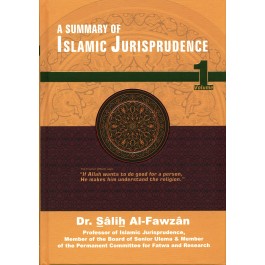
al-mulakhas-al-fiqhi-a-summary-of-islamic-jurisprudenceThis is the weekly Monday evening class on the book Al-Mulakhas al-Fiqhi (A Summary of Islamic Jurisprudence) by Shaykh Salih al-Fawzan.

We continue with the Book of Hajj, Chapter 11: Aqiqah (Sacrifice Offered at the Time of the Birth of a Child)

You may download a copy of the original Arabic text here: الملخص الفقهي

As with all of our classes at Masjid Tawheed in Stone Mountain, GA, we encourage you to join us.  If you are not able to attend in person, please feel free to listen in via our Spreaker channel or our telelink line at 712-432-2856.

Listen / Download Mp3 Here (Time 50:53)

Posted from:  http://followthesalaf.com

Hajj – Al-Mulakhas al-Fiqhi – Shaykh Saalih al-Fawzaan | Abu Muhammad al-Maghribee [Audio|En]

These are the lectures based on the book Al-Mulakhas al-Fiqhi (A Summary of Islamic Jurisprudence) by Shaykh Salih al-Fawzan.
You may download a copy of the original Arabic text here: الملخص الفقهي

As with all of our classes at Masjid Tawheed in Stone Mountain, GA, we encourage you to join us.  If you are not able to attend in person, please feel free to listen in via our Spreaker channel or our telelink line at 712-432-2856.

The following are the chapters covered from the Book

  • Chapter 01 The Obligation off Hajj (Pilgrimage)
  • Chapter 02 Women’s Hajj & Performing it on someones’s behalf
  • Chapter 03 Virtues off Hajj and It’s preparations
  • Chapter 04 Miqats of Hajj
  • Chapter 05 How to Assume Ihraam
  • Chapter 06 Acts Prohibited during Ihraam
  • Chapter 07 Rites of Tarwiyah and ‘Arafah Days
  • Chapter 08 Acts on Muzdalifah and Mina
  • Chapter 09 Days of Tashreeq and Farewell Tawaaf
  • Chapter 10 Sacrificial Animals (Hady and Udhiyah)

Audio Files

Regarding the Haj
Al-Mulakhas al-Fiqhi – Hajj – Part 01 – 20140804
Al-Mulakhas al-Fiqhi – Hajj – Part 02 – 20140818
Al-Mulakhas al-Fiqhi – Hajj – Part 03 – 20140825
Al-Mulakhas al-Fiqhi – Hajj – Part 04 – 20140901

Regarding the ihraam for Hajj
Al-Mulakhas al-Fiqhi – Hajj – Part 05 – 20140908
Al-Mulakhas al-Fiqhi – Hajj – Part 06 – 20140915

The Things the Muhrim Should Not Do
Al-Mulakhas al-Fiqhi – Hajj – Part 07 – 20140922

Yawn al-Arafah
Al-Mulakhas al-Fiqhi – Hajj – Part 08 – 20141006

From the 10th day of Dhul-Hijjah
Al-Mulakhas al-Fiqhi – Hajj – Part 09 – 20141110

Days of Tashriq and Farewell Tawaf
Al-Mulakhas al-Fiqhi – Hajj – Part 10 – 20141117
Al-Mulakhas al-Fiqhi – Hajj – Part 11 – 20141124

Sacrificial Animals
Al-Mulakhas al-Fiqhi – Hajj – Part 12 – 20141201

Posted fromhttp://followthesalaf.com/?tag=Al-Mulakhas+Al-Fiqhi

The following short benefits were extracted from these Hajj Series

Related Books & Lectures on the Rites of Hajj

Hajj index Page

Al-Mulakhas fee Sharh Kitaabit-Tawheed – Shaykh Saalih Fawzaan | Abu Muhammad al Maghribee [Audio|En]

Al-Mulakhas fee Sharh Kitaabit-Tawheed  Concise Commentary on the Book of TawhidThis is the weekly Saturday morning class on the book Al-Mulakhas fee Sharh Kitaabit-Tawheed (Concise Commentary on the Book of Tawhid) by Shaykh Saalih al-Fawzaan.

You may download the original text in Arabic here: الملخص في شرح كتاب التوحيد

As with all of our classes at Masjid Tawheed in Stone Mountain, GA, we encourage you to join us.

If you are not able to attend in person, please feel free to listen in via our Spreaker channel or our telelink line at 712-432-2856.

Al-Mulakhas fee Sharh Kitaabit-Tawheed – 01 – 20120128 Ch2
Al-Mulakhas fee Sharh Kitaabit-Tawheed – 02 – 20120204 Ch3
Al-Mulakhas fee Sharh Kitaabit-Tawheed – 03 – 20120211 Ch3
Al-Mulakhas fee Sharh Kitaabit-Tawheed – 04 – 20120225 Ch4
Al-Mulakhas fee Sharh Kitaabit-Tawheed – 05 – 20120310 Ch4
Al-Mulakhas fee Sharh Kitaabit-Tawheed – 06 – 20120317 Ch5
Al-Mulakhas fee Sharh Kitaabit-Tawheed – 07 – 20120324 Ch5
Al-Mulakhas fee Sharh Kitaabit-Tawheed – 08 – 20120325 Ch5
Al-Mulakhas fee Sharh Kitaabit-Tawheed – 09 – 20120331 Ch6
Al-Mulakhas fee Sharh Kitaabit-Tawheed – 10 – 20120407 Ch6
Al-Mulakhas fee Sharh Kitaabit-Tawheed – 11 – 20120408 Ch7
Al-Mulakhas fee Sharh Kitaabit-Tawheed – 12 – 20120505 Ch7
Al-Mulakhas fee Sharh Kitaabit-Tawheed – 13 – 20120512 Ch7
Al-Mulakhas fee Sharh Kitaabit-Tawheed – 14 – 20120519 Ch8
Al-Mulakhas fee Sharh Kitaabit-Tawheed – 15 – 20120526 Ch8
Al-Mulakhas fee Sharh Kitaabit-Tawheed – 16 – 20120602 Ch9
Al-Mulakhas fee Sharh Kitaabit-Tawheed – 17 – 20120714 Ch11
Al-Mulakhas fee Sharh Kitaabit-Tawheed – 18 – 20120915 Ch12
Al-Mulakhas fee Sharh Kitaabit-Tawheed – 19 – 20120922 Ch13
Al-Mulakhas fee Sharh Kitaabit-Tawheed – 20 – 20120929 Ch14
Al-Mulakhas fee Sharh Kitaabit-Tawheed – 21 – 20121006 Ch14
Al-Mulakhas fee Sharh Kitaabit-Tawheed – 22 – 20121013 Ch15
Al-Mulakhas fee Sharh Kitaabit-Tawheed – 23 – 20121110 Ch15
Al-Mulakhas fee Sharh Kitaabit-Tawheed – 24 – 20121117 Ch15
Al-Mulakhas fee Sharh Kitaabit-Tawheed – 25 – 20121201 Ch16
Al-Mulakhas fee Sharh Kitaabit-Tawheed – 26 – 20121208 Ch16
Al-Mulakhas fee Sharh Kitaabit-Tawheed – 27 – 20121215 Ch17
Al-Mulakhas fee Sharh Kitaabit-Tawheed – 28 – 20121229 Ch17
Al-Mulakhas fee Sharh Kitaabit-Tawheed – 29 – 20130105 Ch18
Al-Mulakhas fee Sharh Kitaabit-Tawheed – 30 – 20130119 Ch19
Al-Mulakhas fee Sharh Kitaabit-Tawheed – 31 – 20130202
Al-Mulakhas fee Sharh Kitaabit-Tawheed – 32 – 20130209
Al-Mulakhas fee Sharh Kitaabit-Tawheed – 33 – 20130223 Ch20
Al-Mulakhas fee Sharh Kitaabit-Tawheed – 34 – 20130302 Ch20
Al-Mulakhas fee Sharh Kitaabit-Tawheed – 35 – 20130309 Ch21
Al-Mulakhas fee Sharh Kitaabit-Tawheed – 36 – 20130316 Ch22
Al-Mulakhas fee Sharh Kitaabit-Tawheed – 37 – 20130426
Al-Mulakhas fee Sharh Kitaabit-Tawheed – 38 – 20130504
Al-Mulakhas fee Sharh Kitaabit-Tawheed – 39 – 20130511
Al-Mulakhas fee Sharh Kitaabit-Tawheed – 40 – 20130518
Al-Mulakhas fee Sharh Kitaabit-Tawheed – 41 – 20130601
Al-Mulakhas fee Sharh Kitaabit-Tawheed – 42 – 20130615
Al-Mulakhas fee Sharh Kitaabit-Tawheed – 43 – 20131109
Al-Mulakhas fee Sharh Kitaabit-Tawheed – 44 – 20131116
Al-Mulakhas fee Sharh Kitaabit-Tawheed – 45 – 20131123 Ch30
Al-Mulakhas fee Sharh Kitaabit-Tawheed – 46 – 20131207
Al-Mulakhas fee Sharh Kitaabit-Tawheed – 47 – 20131214
Al-Mulakhas fee Sharh Kitaabit-Tawheed – 48 – 20131221
Al-Mulakhas fee Sharh Kitaabit-Tawheed – 49 – 20140118
Al-Mulakhas fee Sharh Kitaabit-Tawheed – 50 – 20140201
Al-Mulakhas fee Sharh Kitaabit-Tawheed – 51 – 20140208
Al-Mulakhas fee Sharh Kitaabit-Tawheed – 52 – 20140215
Al-Mulakhas fee Sharh Kitaabit-Tawheed – 53 – 20140301 Ch34
Al-Mulakhas fee Sharh Kitaabit-Tawheed – 54 – 20140308
Al-Mulakhas fee Sharh Kitaabit-Tawheed – 55 – 20140315 Ch35
Al-Mulakhas fee Sharh Kitaabit-Tawheed – 56 – 20140322 Ch36
Al-Mulakhas fee Sharh Kitaabit-Tawheed – 57 – 20140405 Ch36
Al-Mulakhas fee Sharh Kitaabit-Tawheed – 58 – 20140412 Ch37
Al-Mulakhas fee Sharh Kitaabit-Tawheed – 59 – 20140503 Ch37
Al-Mulakhas fee Sharh Kitaabit-Tawheed – 60 – 20140517 Ch39
Al-Mulakhas fee Sharh Kitaabit-Tawheed – 61 – 20140531
Al-Mulakhas fee Sharh Kitaabit-Tawheed – 62 – 20140816
Al-Mulakhas fee Sharh Kitaabit-Tawheed – 63 – 20140823
Al-Mulakhas fee Sharh Kitaabit-Tawheed – 64 – 20140830
Al-Mulakhas fee Sharh Kitaabit-Tawheed – 65 – 20140906
Al-Mulakhas fee Sharh Kitaabit-Tawheed – 66 – 20140913
Al-Mulakhas fee Sharh Kitaabit-Tawheed – 67 – 20140920
Al-Mulakhas fee Sharh Kitaabit-Tawheed – 68 – 20141018
Al-Mulakhas fee Sharh Kitaabit-Tawheed – 69 – 20141108 Ch44
Al-Mulakhas fee Sharh Kitaabit-Tawheed – 70 – 20141115
Al-Mulakhas fee Sharh Kitaabit-Tawheed – 71 – 20141122
Al-Mulakhas fee Sharh Kitaabit-Tawheed – 72 – 20141206
Al-Mulakhas fee Sharh Kitaabit-Tawheed – 73 – 20141213
Al-Mulakhas fee Sharh Kitaabit-Tawheed – 74 – 20150103
Al-Mulakhas fee Sharh Kitaabit-Tawheed – 75 – 20150110
Al-Mulakhas fee Sharh Kitaabit-Tawheed – 76 – 20150117
Al-Mulakhas fee Sharh Kitaabit-Tawheed – 77 – 20150124
Al-Mulakhas fee Sharh Kitaabit-Tawheed – 78 – 20150131
Al-Mulakhas fee Sharh Kitaabit-Tawheed – 79 – 20150207
Al-Mulakhas fee Sharh Kitaabit-Tawheed – 80 – 20150307
Al-Mulakhas fee Sharh Kitaabit-Tawheed – 81 – 20150321
Al-Mulakhas fee Sharh Kitaabit-Tawheed – 82 – 20150328
Al-Mulakhas fee Sharh Kitaabit-Tawheed – 83 – 20150425

These are ongoing classes, the book not finished yet, further parts will be added, inshaa Allaah, when they are available at the below link

http://followthesalaf.com/home/?tag=Kitabut-Tawheed

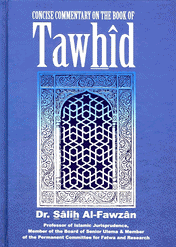
About the English Book:

Author: Dr. Salih al Fawzan
Publisher: Al Maiman Publishing House (2009)
Pages: 493 Binding: Hardcover

Description from the publisher:

This book gives a clear explanation of the Muslim sound Creed which is the core of the religion of Islam, as the belief in Tawhid (monotheism) is the purpose for which Allah created both mankind and jinn, and thus, those whose belief in Tawhid is corrupt, are not considered Muslims. It is a commentary on the Book of Tawhid written by Sheikh Muhammad Ibn Abdul Wahhab.

In this book, Dr. Salih al Fawzan has projected light on doctrinal issues of utmost importance in a genuine and reader-friendly style. This translated version of the book fulfills a long-standing need on the part of English-speaking Muslims for a brief, introductory book in Tawhid. It is a valuable book for novice readers, be they Muslims or non-Muslims, who do not have thorough knowledge of the sound creed, The chapters of this book focus on major issues in Tawhid such as the definition of Tawhid, virtue of Tawhid, warning against acts of shirk (polytheism), the Prophet’s Maintenance of monotheism, and other topics.

Explanation of 40 Hadith Nawawi – Shaykh Saalih Al-Fawzaan – Abu Muhammad al Maghribee

This is the weekly Sunday evening class on the book Al-Minhatu Ar-Rabbaaniyah Fee Sharh Al-Arba’een An-Nawawiyah by Shaikh Saalih Al-Fawzaan.

You may download the original text in Arabic here: المنحة الربانية شرح الأربعين النووية

As with all of our classes at Masjid Tawheed in Stone Mountain, GA, we encourage you to join us.  If you are not able to attend in person, please feel free to listen in via our Spreaker channel or our telelink line at 712-432-2856.

Explanation of 40 Hadith Nawawi – 01 – 120108 
Explanation of 40 Hadith Nawawi – 02 – 120115
Explanation of 40 Hadith Nawawi – 03 – 120122 
Explanation of 40 Hadith Nawawi – 04 – 120205 
Explanation of 40 Hadith Nawawi – 05 – 120212 
Explanation of 40 Hadith Nawawi – 06 – 121111 

continue the explanation of hadeeth #8
Explanation of 40 Hadith Nawawi – 07 – 130203 

we begin the explanation of hadeeth #10
Explanation of 40 Hadith Nawawi – 08 – 130210 

we continue with the explanation of hadeeth #10
Explanation of 40 Hadith Nawawi – 09 – 130217 

we begin the explanation of hadeeth #16
Explanation of 40 Hadith Nawawi – 10 – 130421 

we begin the explanation of hadeeth #17
Explanation of 40 Hadith Nawawi – 11 – 130428

Hadeeth #18
Explanation of 40 Hadith Nawawi – 12 – 130505

Hadeeth #19
Explanation of 40 Hadith Nawawi – 13 – 130512

Hadeeth #19
Explanation of 40 Hadith Nawawi – 14 – 130519

Explanation of 40 Hadith Nawawi – 15 – 130526

Hadith no. 20
Explanation of 40 Hadith Nawawi – 16 – 130602

we begin the explanation of Hadith 21
Explanation of 40 Hadith Nawawi – 17 – 130616

we begin with the hadith #23
Explanation of 40 Hadith Nawawi – 18 – 130825

we continue with the hadith #23
Explanation of 40 Hadith Nawawi – 19 – 130901

we continue again with the explanation of the hadith #23
Explanation of 40 Hadith Nawawi – 20 – 130908

we begin with the explanation of the hadith #24
Explanation of 40 Hadith Nawawi – 21 – 131110

we continue the explanation of the hadith #24
Explanation of 40 Hadith Nawawi – 22 – 131117

we continue with the explanation of the hadith #24
Explanation of 40 Hadith Nawawi – 23 – 131124

we continue with the explanation of the hadith #24
Explanation of 40 Hadith Nawawi – 24 – 131208

we continue with the explanation of the hadith #24
Explanation of 40 Hadith Nawawi – 25 – 131215

Today we finish the explanation of the hadith #24
Explanation of 40 Hadith Nawawi – 26 – 131222

We continue with hadith #25
Explanation of 40 Hadith Nawawi – 27 – 140202

We will be beginning with hadith #27
Explanation of 40 Hadith Nawawi – 28 – 140223

Explanation of 40 Hadith Nawawi – 29 – 140309 
Explanation of 40 Hadith Nawawi – 30 – 140316 
Explanation of 40 Hadith Nawawi – 31 – 140323 
Explanation of 40 Hadith Nawawi – 32 – 140406 
Explanation of 40 Hadith Nawawi – 33 – 140413 
Explanation of 40 Hadith Nawawi – 34 – 140420 
Explanation of 40 Hadith Nawawi – 35 – 140504 
Explanation of 40 Hadith Nawawi – 36 – 140511 

Hadith #32
Explanation of 40 Hadith Nawawi – 37 – 140518

Hadith #33
Explanation of 40 Hadith Nawawi – 38 – 140525

Hadith #34
Explanation of 40 Hadith Nawawi – 39 – 140601

Hadith #35
Explanation of 40 Hadith Nawawi – 40 – 140817

Hadith #35
Explanation of 40 Hadith Nawawi – 41 – 140824
Explanation of 40 Hadith Nawawi – 42 – 140831

Hadith #35
Explanation of 40 Hadith Nawawi – 43 – 140907
Explanation of 40 Hadith Nawawi – 44 – 140914

Hadith #36 continued
Explanation of 40 Hadith Nawawi – 45 – 140921

We continue with hadith no. 38: Worship for the sake of Allah is a means of attaining nearness to Him and His Love
Explanation of 40 Hadith Nawawi – 46 – 141116

We continue with hadith no. 38
Explanation of 40 Hadith Nawawi – 47 – 141123

We continue with hadith no. 39
Explanation of 40 Hadith Nawawi – 48 – 141207

We continue with hadith no. 40
Explanation of 40 Hadith Nawawi – 49 – 141214

We continue with hadith no. 40
Explanation of 40 Hadith Nawawi – 50 – 141221

We continue with Hadith no. 41
Explanation of 40 Hadith Nawawi – 51 – 150111

we conclude the book with the final hadith: Hadith no. 42
Explanation of 40 Hadith Nawawi – 52 – Final – 150118 

Posted fromhttp://followthesalaf.com/home/?tag=40+hadith

Riba (Interest) – Al-Mulakhas al-Fiqhi | Shaykh Salih Fawzan – Abu Muhammad Al Maghribee [Audio|En]

Al-Mulakhas al-Fiqhi (A Summary of Islamic Jurisprudence)

This topic is covered in Volume 2 of the above Book

This is the weekly Monday evening class on the book Al-Mulakhas al-Fiqhi by Shaykh Salih al-Fawzan. We begin with the Book of Trade Transactions, Chapter 6: Riba.

You may download a copy of the original Arabic text here: الملخص الفقهي

As with all of our classes at Masjid Tawheed in Stone Mountain, GA, we encourage you to join us.  If you are not able to attend in person, please feel free to listen in via our Spreaker channel or our telelink line at 712-432-2856.

Part 01 : Listen / Download Mp3 Here (Time 43:32)

Part 02 : Listen / Download Mp3 Here (Time 40:57)

Part 03 : Listen / Download Mp3 Here (Time 46:55)

Part 04 : Listen / Download Mp3 Here (Time 57:10)

Part 05 : Listen / Download Mp3 Here (Time 47:21)

Part 06 : Listen / Download Mp3 Here (Time 45:12)

Posted fromhttp://followthesalaf.com/home/?tag=Al-Mulakhas+Al-Fiqhi

Impermissible for a Muslim to indulge in Trade after the 2nd Adhan of Jumu’ah – Shaykh Fawzan – Abu Muhammd al-Maghribee [Audio|En]

Listen / Download Mp3 Here (Time 11:21)
[audio https://salafiaudio.files.wordpress.com/2015/06/impermissible-for-a-muslim-to-indulge-in-trade-after-the-2nd-adhan-of-jumuah-shaykh-fawzan-abu-muhammd-al-maghribee.mp3]

This short benefit is extracted from the below lecture:

Prohibited Trade Transactions – Al-Mulakhas al-Fiqhi | Shaykh Fawzaan – Abu Muhammad al-Maghribee [Audio|En]

Allaah (The Most High) said:

يَا أَيُّهَا الَّذِينَ آمَنُوا إِذَا نُودِيَ لِلصَّلَاةِ مِنْ يَوْمِ الْجُمُعَةِ فَاسْعَوْا إِلَىٰ ذِكْرِ اللَّهِ وَذَرُوا الْبَيْعَ ۚ ذَٰلِكُمْ خَيْرٌ لَكُمْ إِنْ كُنْتُمْ تَعْلَمُونَ

فَإِذَا قُضِيَتِ الصَّلَاةُ فَانْتَشِرُوا فِي الْأَرْضِ وَابْتَغُوا مِنْ فَضْلِ اللَّهِ وَاذْكُرُوا اللَّهَ كَثِيرًا لَعَلَّكُمْ تُفْلِحُونَ

”O you who believe (Muslims)! When the call is proclaimed for the Salat (prayer) on the day of Friday (Jumu’ah prayer), come to the remembrance of Allah [Jumu’ah religious talk (Khutbah) and Salat (prayer)] and leave off business (and every other thing), that is better for you if you did but know! Then when the (Jumu’ah) Salat (prayer) is finished, you may disperse through the land, and seek the Bounty of Allah (by working, etc.), and remember Allah much, that you may be successful.” [Soorah Al-Jum’ah. Aayaat 9-10]

Prohibited Trade Transactions – Al-Mulakhas al-Fiqhi | Shaykh Fawzaan – Abu Muhammad al-Maghribee [Audio|En]

Al-Mulakhas al-Fiqhi (A Summary of Islamic Jurisprudence)

This is the weekly Monday evening class on the book Al-Mulakhas al-Fiqhi (A Summary of Islamic Jurisprudence) by Shaykh Salih al-Fawzan.

We continue with the Book of Trade Transactions, Chapter 2: Prohibited Trade Transactions

You may download a copy of the original Arabic text here: الملخص الفقهي

Part 01: Listen / Download Mp3 Here (Time 49:09)

Part 02: Listen / Download Mp3 Here (Time 52:28)

As with all of our classes at Masjid Tawheed in Stone Mountain, GA, we encourage you to join us.  If you are not able to attend in person, please feel free to listen in via our Spreaker channel or our telelink line at 712-432-2856.

Posted fromhttp://followthesalaf.com/?tag=Al-Mulakhas+Al-Fiqhi

Read the below excellent e-Book
Forbidden Business Transactions : Shaikh Saalih Al-Fawzaan

Hijrah is an Obligation Upon this Nation and it Continues Until The Hour is Established – Shaykh Fawzan | Dawud Burbank [Audio|En]

Bismillaah

Sharh-ul-Usool ath-Thalaathah : Lesson 43 (Part B) & Lesson 44 (Part A)
Shaykh Saalih al-Fawzan | Dawud Burbank [Audio|English]

[Souncloud Audio Link


Imaam Muhammad ibn ‘Abdul-Wahhaab (rahimahullaah) said:

والهجرة فريضة على هذه الأمة من بلد الشرك إلى بلد الإسلام ، وهي باقية إلى أن تقوم الساعة

Hijrah, from the land of shirk to the land of Islaam, is an obligation upon this nation and it continues until the Hour is established.[64]


[64] Shaykh Saalih al-Fawzan’s Explanation :

Hijrah is joined along with jihaad in Allaah’s cause and it is an obligation which remains, it is not being abrogated. It is obligatory upon every Muslim who needs to perform Hijrah that he should perform Hijrah. And it is not permissible for the Muslim to remain in the lands of kufr when he is not able to make his religion apparent; so then it is obligatory upon him to migrate to the lands of the Muslims. So it is an obligation which remains, because of his sallallaahu`alaihi wa sallam saying:

لا تنقطع الهجرة حتى تنقطع التوبة ، ولا تنقطع التوبة حتى تخرج الشمس من مغرﺑﻬا

Hijrah will not be cut off until repentance is cut off and repentance will not be cut off until the sun rises from its place of setting[1]


Imaam Muhammad ibn ‘Abdul-Wahhaab (rahimahullaah) said:

The proof is His Saying, the Most High:

إِنَّ الَّذِينَ تَوَفَّاهُمُ الْمَلَائِكَةُ ظَالِمِي أَنفُسِهِمْ قَالُوا فِيمَ كُنتُمْ ۖ قَالُوا كُنَّا مُسْتَضْعَفِينَ فِي الْأَرْضِ ۚ قَالُوا أَلَمْ تَكُنْ أَرْضُ اللَّهِ وَاسِعَةً فَتُهَاجِرُوا فِيهَا ۚ فَأُولَٰئِكَ مَأْوَاهُمْ جَهَنَّمُ ۖ وَسَاءَتْ مَصِيرًا

إِلَّا الْمُسْتَضْعَفِينَ مِنَ الرِّجَالِ وَالنِّسَاءِ وَالْوِلْدَانِ لَا يَسْتَطِيعُونَ حِيلَةً وَلَا يَهْتَدُونَ سَبِيلًا

فَأُولَٰئِكَ عَسَى اللَّهُ أَن يَعْفُوَ عَنْهُمْ ۚ وَكَانَ اللَّهُ عَفُوًّا غَفُورًا

«As for those whose souls the angels take in a state of having earned Allaah’s anger, the angels will say to them:  ‘In what condition were you?’ They will say: We were weakened (by the great numbers and strength of the people of shirk) in our land.’ They will reply: ‘Was not Allaah’s earth spacious so that you could make hijrah therein? These people will find their abode in Hell and what an evil destination that is. 

Except for those who were rendered weak from the men, women and children who were unable to migrate or find a way to do so. 

As for such people, Allaah will certainly pardon them and Allaah is ever One who pardons and forgives the sins of His servants.» [4:97-99] [65]


Shaykh Fawzan quoted the 100th ayah as well :

وَمَن يُهَاجِرْ فِي سَبِيلِ اللَّهِ يَجِدْ فِي الْأَرْضِ مُرَاغَمًا كَثِيرًا وَسَعَةً ۚ وَمَن يَخْرُجْ مِن بَيْتِهِ مُهَاجِرًا إِلَى اللَّهِ وَرَسُولِهِ ثُمَّ يُدْرِكْهُ الْمَوْتُ فَقَدْ وَقَعَ أَجْرُهُ عَلَى اللَّهِ ۗ وَكَانَ اللَّهُ غَفُورًا رَّحِيمًا

He who emigrates (from his home) in the Cause of Allah, will find on earth many dwelling places and plenty to live by. And whosoever leaves his home as an emigrant unto Allah and His Messenger, and death overtakes him, his reward is then surely incumbent upon Allah. And Allah is Ever Oft-Forgiving, Most Merciful. [4:100]


[65] Shaykh Saalih al-Fawzan’s Explanation :

These two aayaat contain a threat against abandoning performing the hijrah when the person is able to perform it – and that his abode will be the Hellfire – what an evil destination. Even though he does not exit from Islaam – this is from the nusoos al-wa`eed (the texts which contain a threat). So, if he abandons the hijrah, then he has abandoned something obligatory and he will be sinful. However, he does not exit from Islaam through abandonment of the hijrah, but there is a severe threat upon him.

Then, Allaah explains in the aayah after it, the excuse by which the obligation of the hijrah falls away. He, the Most High, said:

إِلَّا الْمُسْتَضْعَفِينَ مِنَ الرِّجَالِ وَالنِّسَاءِ وَالْوِلْدَانِ

«Except for those who were rendered weak from the men, the women and wildaan (children).» [4:98]

wildaan Meaning: the children.

لَا يَسْتَطِيعُونَ حِيلَةً

«Who were unable to migrate» [4:98]

They do not possess the ability.

وَلَا يَهْتَدُونَ سَبِيلًا

«Or find a way to do so» [4:98]

Meaning: they do not know the way to the land – the city – because hijrah requires (a person) to make a journey, otherwise (it may be the case) that a person dies during the journey if he does not know the way.

So therefore their excuse is in two matters:

  • Firstly: Those who were not able to carry it out.
  • Secondly: Those who do not know the way.

So even if they have the financial capability, but do not have awareness of the way that they could follow, someone to guide them upon the way – this is the correct excuse. As for the person who has the capability and knows the way, then there is no excuse for him.


Imaam Muhammad ibn ‘Abdul-Wahhaab (rahimahullaah) said:

And His saying, He the Most High:

يَا عِبَادِيَ الَّذِينَ آمَنُوا إِنَّ أَرْضِي وَاسِعَةٌ فَإِيَّايَ فَاعْبُدُونِ

«O My servants who believe! Indeed My earth is spacious, so worship Me alone.» [29:56]

قال البغوي رحمه الله : سبب نزول هذه الآية في المسلمين الذين بمكة ولم يهاجروا ، ناداهم الله باسم الإيمان

al-Baghawee (rahimahullaah) said: The reason for the sending down of this aayah concerns the Muslims who were in Makkah and did not migrate; Allaah addressed them with the title of eemaan.”

: والدليل على الهجرة من السنة قوله صلى الله عليه وسلم

» لا تنقطع الهجرة حتى تنقطع  التوبة ، ولا تنقطع التوبة حتى تطلع الشمس من مغرﺑﻬا «

The proof for the hijrah found in the Sunnah is his sallallaahu`alaihi wa sallam saying:

«Hijrah will not be discontinued until repentance is discontinued, and repentance will not be discontinued until the sun rises from its place of setting.»[66]


[66] Shaykh Saalih al-Fawzan’s Explanation :

This aayah is from Soorah al-`Ankaboot. It contains a command to migrate and that the earth of Allaah is spacious. So, if you are in a land where you are not able to make your religion apparent, in that case Allaah’s earth is spacious, so move away from it. Do not remain in the bad part; rather leave it and go somewhere in Allaah’s spacious earth. Allaah, the Perfect and Most High, has made the earth spacious. The proof for the hijrah found in the Sunnah is his sallallaahu`alaihi wa sallam saying:

»لا تنقطع الهجرة حتى تنقطع  التوبة ، ولا تنقطع التوبة حتى تطلع الشمس من مغرﺑﻬ ا «

«Hijrah will not be discontinued until repentance is discontinued, and repentance will not be discontinued until the sun rises from its place of setting[2]

As for his sallallaahu`alaihi wa sallam‘s saying:

» لا هجرة بعد الفتح «

«There is no migrating after the conquest (of Makkah).»[3]

What is apparent from the hadeeth is that the migrating came to an end after the conquest of Makkah. Some people think that there is a contradiction between the hadeeth and between his sallallaahu`alaihi wa sallam saying:

»لا تنقطع الهجرة حتى تنقطع  التوبة ، ولا تنقطع التوبة حتى تطلع الشمس من مغرﺑﻬا«

«Hijrah will not be discontinued until repentance is discontinued, and repentance will not be discontinued until the sun rises from its place of setting[4]

However, the people of knowledge respond to his hadeeth (by saying) that what is meant by «there is no migrating after the conquest» is (no migrating) from Makkah, since through the conquest, it became an abode of Islaam. The people thought that migrating remained from Makkah after the conquest so they wished to attain the reward of migrating. As for migrating from the land of disbelief, then it remains until the Hour is established. The proof is the previous aayaat and the previous prophetic hadeeth. This is the response to this difficulty.

 Footnotes:

[1] Reported by Aboo Daawood no. 2479 and Ahmad from a hadeeth of Mu`aawiyyah ibn Abee Sufyaan, radiyallaahu `anhumaa.

[2] Reported by Aboo Daawood no. 2479 and Ahmad from a hadeeth of Mu`aawiyyah ibn Sufyaan, radiyallaahu `anhumaa. [It was declared saheeh by al-Albaanee].

[3] Reported by al-Bukhaaree no. 2783 and Muslim no. 1353 from a hadeeth of ibn `Abbaas, radiyallaahu `anhumaa, and reported by Muslim no. 1864 from a hadeeth of `Aa.ishah, radiyallaahu `anhaa.

[4] Reported by Aboo Daawood no. 2479 and Ahmad from a hadeeth of Mu`aawiyyah ibn Sufyaan, radiyallaahu `anhumaa. [It was declared saheeh by al-Albaanee].

Sharh-ul-Usool-ith-Thalaathah. Explanation of the Three Fundamental Principles of Imaam Muhammad ibn ‘Abdil-Wahhaab by Shaykh Saalih ibn Fowzaan al-Fowzaan hafizahullaah. Translated by  Daawood  Burbank, rahimahullaah

Posted with kind permission from Dawud Burbank rahimahullaah

Listen to the Full Audio Series:
Sharh Usool-ith-Thalaathah – Shaykh Fawzan | Dawud Burbank

Book Study Resources – Three Fundamental Principles

Related Links:

https://abdurrahman.org/hijrah

Prophet Muhammad ﷺ : The Night Journey and the Ascent through the Heavens – Shaykh Fawzan | Dawud Burbank [Audio|En]

Bismillaah

Sharh-ul-Usool ath-Thalaathah : Lesson 42 (Part B)
Shaykh Saalih al-Fawzan | Dawud Burbank [Audio|English]

[Souncloud Audio Link


The Night Journey and the Ascent through the Heavens

Imaam Muhammad ibn ‘Abdul-Wahhaab (rahimahullaah) said:

وبعد العشر عرج به إلى السماء ، وفرضت عليه الصلوات الخمس ، وصلى في مكة ثلاث سنين

After the ten years, he was taken up through the heavens and the five daily prayers were made obligatory upon him and he prayed in Makkah for three years. [61]


[61] : Shaykh Saalih al-Fawzan’s Explanation :

His saying «After the ten years, he was taken up through the heavens» He sallallaahu`alaihiwasallam remained for ten years upon this – forbidding shirk and calling to tawheed, laying down this foundation. Then, in the eleventh year, he was taken by night from Masjid al-Haraam (the Sacred Mosque) to Masjid al-Aqsaa (the farthest mosque, i.e. the mosque in Jerusalem).

He, the Most High, said:

سُبْحَانَ الَّذِي أَسْرَىٰ بِعَبْدِهِ لَيْلًا مِّنَ الْمَسْجِدِ الْحَرَامِ إِلَى الْمَسْجِدِ الْأَقْصَى

«Perfect and Exalted is He who took His slave on a journey by night from the Sacred Mosque to the farthest mosque.» [17:1]

Whilst he sallallaahu`alaihi wa sallam was sleeping in the house of Umm Haani, Jibreel `alaihissalaatu wassalaam came to him and had with him an animal called al-Buraaq, which was smaller than a mule and larger than a donkey. Its steps were as far apart as the distance which it could see. So, he `alaihissalaatu wassalaam was caused to ride upon it and he was taken to Jerusalem at night.

(أسرى) is from (السرى) which means: ‘to travel by night.’ This was something special to him sallallaahu`alaihi wa sallam and from the miracles given to him `alaihissalaatu wassalaam. So there, he met the prophets in Jerusalem, then he sallallaahu`alaihi wa sallam was taken up through the Heavens. Meaning: he was raised up from Jerusalem to the heavens in the company of Jibreel – and the meaning of (العروج) is ‘to ascend.’

So, he was taken on a night journey from Makkah to Jerusalem and he was taken up from Jerusalem to the heavens – meaning: Jibreel `alaihissalaam took him up and he passed by the inhabitants of the heavens. At each level, Jibreel requested that it should be opened for him until he came to the seventh heaven.

Then, he ascended over the heavens to the farthest lote tree and there Allaah spoke to him with whatever He wished from His revelation and He made obligatory upon him the five daily prayers. So, He obligated for each day and night fifty prayers. However, Moosaa `alaihissalaam advised our Prophet Muhammad sallallaahu`alaihi wa sallam to ask his Lord for a reduction, for his nation would not be able to bear fifty prayers in each day and night. So, Allaah’s Messenger sallallaahu`alaihi wa sallam kept going back to his Lord asking for a reduction until they came to be five.

Then, Allaah, the Mighty and Majestic, said, as occurs in the hadeeth of the Israa. and the Mi`raaj:

»أمضيت فريضتي ، وخففت عن عبادي ، وأجزي الحسنة عشرا«

«I have established My obligatory duty and I have made it easy upon My servants, and I will reward a good deed ten times over[1]

In the narration of Anas from Aboo Dharr, He said:

»هي خمس وهي خمسون«

«They are five and they are fifty[2]

Meaning: They are five with regards to the action and fifty in the balance (of good deeds).

Five prayers in each day and night are equal to fifty prayers upon the balance, because a good deed is rewarded with ten times its like. So a single prayer takes the place of ten prayers.

The Night Journey is mentioned at the beginning of Soorah Subhaan (the 17th soorah) [also known as] Soorah Banee Israa.eel; and the Mi`raaj is mentioned at the beginning of Sooratu-Najm:

وَلَقَدْ رَآهُ نَزْلَةً أُخْرَىٰ – عِندَ سِدْرَةِ الْمُنتَهَىٰ – عِندَهَا جَنَّةُ الْمَأْوَىٰ – إِذْ يَغْشَى السِّدْرَةَ مَا يَغْشَىٰ – مَا زَاغَ الْبَصَرُ وَمَا طَغَىٰ – لَقَدْ رَأَىٰ مِنْ آيَاتِ رَبِّهِ الْكُبْرَىٰ

«And he saw Jibreel on another occasion. By the farthest lote tree. Near it is the Garden of Refuge. When the lote tree was covered by that which covered it! His (sallallaahu`alaihiwasallam) sight did not deviate to the right or left nor did it go beyond that with which he was commanded. He certainly saw tremendous signs of his Lord.» [53:13-18]

This was with regard to the Mi`raaj.

He descended from the heaven to Jerusalem, then he returned to Makkah in the same night. So, in the morning he informed the people about that. The believers increased in eemaan, but as for the disbelievers, then their evil increased and they became happy at this and went about broadcasting it: “How can your companion claim that he went to Jerusalem and came back in a single night when we have to exert ourselves upon camels to reach it, taking a whole month to go there and a month to come back?!”

So, they made analogy between the ability of the Creator and the ability of the creation, for the Israa. and the Mi`raaj were a test from Allaah, the Mighty and Majestic, for the people. The people of shirk increased in mockery and their evil and their belittlement of the Messenger sallallaahu`alaihi wa sallam whereas the believers increased in eemaan.

Therefore when the people of shirk said to Aboo Bakr asSiddeeq radiyallaahu`anhu: “Look at your companion – what he is saying!” He said: “What is he saying?” They said: “He is claiming that he went to Jerusalem (and that he was taken up through the heavens) and that he came back in a single night!” Aboo Bakr asSiddeeq said: “If he said it, then it is just as he said. He has spoken the truth.” They said: “How can that be?” He said: “I attest to the truth of what he says with regard to something greater than that. I attest to the truth with regard to the news coming down from the heavens upon him. So, how should I not attest to the truth of what he says with regard to his being taken at night to Jerusalem?”[3]

This [night journey and ascension] came about through the ability of Allaah, the Mighty and Majestic, not through the ability of the Messenger sallallaahu`alaihi wa sallam. It was only through the ability of Allaah, the Mighty and Majestic. This was one of the miracles given to the Messenger sallallaahu`alaihi wa sallam and is a case of Allaah showing his honorable status with his Lord, the Mighty and Majestic.

It must be held as a person’s creed and belief that he sallallaahu`alaihi wa sallam was taken on the Night Journey and taken up through the Heavens with his soul and his body together whilst awake and not as a dream;, because some people say: “He was taken on the Night Journey with his soul, and as for his body, then it did not go outside Makkah. And he was only taken on the Night Journey and taken up through the heavens with his soul.” This is false and futile speech. Rather he was taken on the Night Journey with his soul and his body `alaihissalaatu wassalaam and he was carried upon al-Buraaq. And this was in a state of being awake, not asleep, since if it had happened with his soul only or if it had been a dream, then what would have been the difference between it and (other) dreams?.

Whereas Allaah, the Majestic and Most High, says:

سُبْحَانَ الَّذِي أَسْرَىٰ بِعَبْدِهِ

«Perfect and Exalted is He who took His `abd on a journey by night.» [17:1]

The `abd is used to apply to the soul and the body together. It is not used for just the soul alone that it be described as `abd, nor is it applied to the body alone that is an `abd. It is not used except to apply to the soul and the body combined, for He did not say: “Perfect and Exalted is He who took the soul of His `abd.” Rather He said: «…took His `abd on a journey by night.» The `abd is the combination of the soul and the body. And Allaah, the Majestic and Most High, is not rendered incapable by anything and He is the One who has full power over everything.

He (rahimahullaah) said: «And the five daily prayers were made obligatory upon him and he prayed in Makkah for three years» He used to pray them as two rak`ahs. When the Prophet sallallaahu`alaihiwasallam migrated, the four rak`ah prayers were completed and became four rak`ahs – except for Fajr prayer, for in that he lengthened the recitation so it remained as two rak`ahs just as it was, and except for the maghrib prayer, for indeed it is three from the first period when it was made obligatory, because it is the witr (prayer with the odd number of rak`ahs) of the daytime. As for the Dhuhr, `Asr and the `Ishaa prayers, then in Makkah they were two rak`ahs each but when the Prophet sallallaahu`alaihiwasallam made Hijrah, they were made complete as four rak`ahs.

As occurs in the hadeeth:

»أول ما فرضت الصلاة ركعتين فلما هاجر النبي صلى الله عليه وسلم   أتمت صلاة الحضر وبقيت صلاة السفر«

«The prayer was first made obligatory as two rak`ahs, then when the Prophet sallallaahu`alaihi wa sallam made Hijrah, the prayer for the resident was completed and the prayer of the traveler remained as it was[4]

This is by consensus of the people of knowledge, that the prayer was obligatory in Makkah and that the Prophet sallallaahu`alaihi wa sallam prayed it in Makkah. However, they differ about whether it was made obligatory three years before the Hijrah.

This is what is more correct, just as the Shaykh mentioned here. Or it is otherwise said that it was made obligatory five years before the Hijrah, or it is said one year before the Hijrah, or it is said a year and a half. However the most correct saying is what the Shaykh mentioned is that it was three years before the Hijrah.

And was anything else from the pillars of Islaam made obligatory along with the prayer? This is an area of disagreement amongst the scholars; some of them held that the Zakaat was also made obligatory in Makkah, and that only its applicable limits, its amounts and those eligible to receive it were made clear in al-Madeenah. But as for the origin of its being made obligatory, then that was in Makkah.

And the proof is His saying, He the Most High:

وَآتُوا حَقَّهُ يَوْمَ حَصَادِهِ

«And give the right due from the crops on the day when it is harvested.» [6:141]

The meaning of the «due» here is the Zakaat. And the whole soorah came down in Makkah.

And likewise in His statement:

وَالَّذِينَ فِي أَمْوَالِهِمْ حَقٌّ مَّعْلُومٌ – لِّلسَّائِلِ وَالْمَحْرُومِ

«And those whose wealth has a known portion for the beggar who asks and for the deprived.» [70:24-25]

This soorah also came down in Makkah. And what is meant by the «known portion» is the Zakaat. So, it was in origin made obligatory in Makkah, however, its details were made clear in al-Madeenah. This is one saying.

The second saying: what is apparent from the speech of the Shaykh here, is that the Zakaat was only made obligatory in al-Madeenah and nothing was made obligatory in Makkah, except for the first pillar which is tawheed and the second pillar which is the prayer. This is what is apparent from the speech of the Shaykh.

Footnotes:

[1] Reported by al-Bukhaaree no. 3208 and no. 3887 as a hadeeth of Maalik ibn Sa`sa`ah and it is a long hadeeth containing the story of the Mi`raaj (the Ascent through the Heavens).

[2] Reported by al-Bukhaaree no. 349 as a hadeeth of Anas from Aboo Dharr, radiyallaahu `anhumaa.

[3] [Reported by al-Haakim in al-Mustadrak 3/65 no. 4407 as a hadeeth of `Aa.ishah radiyallaahu`anhaa. [Declared saheeh by Shaykh al-Albaanee in asSaheehah no. 306].

[4] Reported by al-Bukhaaree no. 350 and Muslim no. 685 as a hadeeth of `Aa.ishah radiyallaahu `anhaa.

Sharh-ul-Usool-ith-Thalaathah. Explanation of the Three Fundamental Principles of Imaam Muhammad ibn ‘Abdil-Wahhaab by Shaykh Saalih ibn Fowzaan al-Fowzaan hafizahullaah. Translated by  Daawood  Burbank, rahimahullaah

Posted with kind permission from Dawud Burbank rahimahullaah

Listen to the Full Audio Series:
Sharh Usool-ith-Thalaathah – Shaykh Fawzan | Dawud Burbank

Book Study Resources – Three Fundamental Principles

Related Links:

https://abdurrahman.org/muhammad

https://abdurrahman.org/category/islam/israa-wa-miraaj

Israa wa Mi’raaj – Aqeedah Tahaawiyyah – Shaykh Al-Fawzaan | Dawud Burbank

Lesson 20 – Explained by Dawud Burbank rahimahullaah

[78] And the Mi`raaj (the ascent through the Heavens) is true; and the Prophet sallAllaahu `alayhi wa `alaa aalihi wa sallam, was taken on a Night-Journey

[79] And he was taken bodily, whilst awake, up to the Heavens.

[80] Then, to whatever higher places Allaah wished. And Allaah bestowed honour upon him with whatever He wished.

[81] And He revealed to him what He revealed to him, {And the heart did not lie about what it saw.} (Sooratun-Najm (53) aayah 11)

[82] So may Allaah extol him and grant him peace and security in the Hereafter and in this life.

Listen or download the Audio

Israa wa Mi’raaj – Aqeedat-ut-Tahaawiyyah – 20 – Abu Talhah Dawood Burbank [Mp3]

Click the Link below to read or Download PDF

Israa wa Miraaj – Aqeedah Tahaawiyyah – Shaykh Al-Fawzaan -Dawud Burbank [PDF]

Points discussed in this excerpt include:

  1. Definition and description of the Israa and the Mi`raaj
  2. The Israa and the Mi`raaj are true and whoever denies it is a kaafir
  3. The Messenger sallAllaahu `alayhi wa sallam was taken bodily, whilst awake, to the heavens
  4. He, sallAllaahu `alayhi wa sallam did not see Allaah with his eyes when Allaah spoke to him
  5. When the Prophet sallAllaahu `alayhi wa sallam is mentioned, it is his right that we send salaah and salaam upon him
  6. Hadeeth of the Israa— and the Mi`raaj
  7. Some clarifications from Shaykh Al-Albaanee rahimahullaah, regarding difference in some narrations concerning the Israa and the Mi`raaj and that which is correct

Listen to the Full Audio Series of Aqeedah Tahaawiyyah & Transcripts:
Explanation of Aqeedah at-Tahaawiyyah – Dawud Burbank [Audio|En]

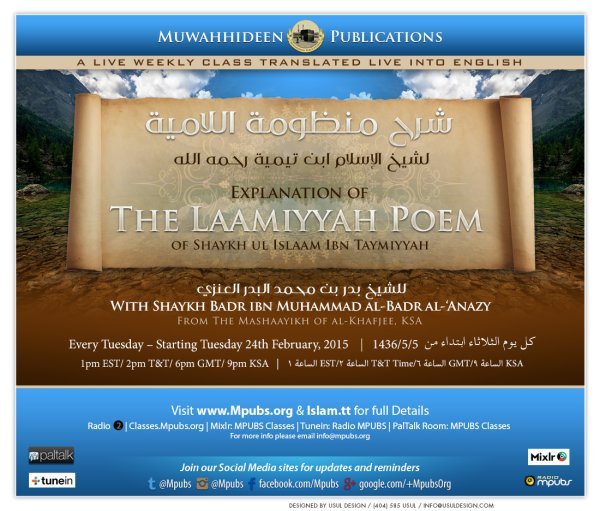
Explanation of The Laamiyyah Poem of Shaykh-ul-Islaam Ibn Taymiyyah – Shaykh Badr al-Badr al-Anazy [Audio|Ar-En]

Explanation of The Laamiyyah Poem of Shaykh-ul-Islaam Ibn Taymiyyah - Shaykh Badr al-Badr al-Anazy

Explanation of The Laamiyyah Poem of Shaykh-ul-Islaam Ibn Taymiyyah

دروس أسبوعي – شرح منظومة اللامية لشيخ الإسلام ابن تيمية رحمه الله مع فضيلة الشيخ بدر بن محمد البدر العنزي

Speaker: Shaykh Badr Ibn Muhammad al-Badr al-‘Anazy الشيخ بدر بن محمد البدر العنزي
Country of Speaker: Saudi Arabia المملكة العربية السعودية
Category: ‘Aqeedah عقيدة

Class # 01 – 24.02.15  Download / Listen تحميل / استماع

[audio https://salafiaudio.files.wordpress.com/2015/04/expl-of-the-laamiyyah-poem-01-shaykh-badr-al-badr-al-anazy.mp3]

Class # 02 – 02.03.15 – Download / Listen تحميل / استماع

[audio https://salafiaudio.files.wordpress.com/2015/04/expl-of-the-laamiyyah-poem-02-shaykh-badr-al-badr-al-anazy.mp3]

Class # 03 – 10.03.15  Download / Listen تحميل / استماع

[audio https://salafiaudio.files.wordpress.com/2015/04/expl-of-the-laamiyyah-poem-03-shaykh-badr-al-badr-al-anazy.mp3]

Class # 04 – 17.03.15  Download / Listen تحميل / استماع

[audio https://salafiaudio.files.wordpress.com/2015/04/expl-of-the-laamiyyah-poem-04-shaykh-badr-al-badr-al-anazy.mp3]

Class # 05 – 31.03.15  Download / Listen تحميل / استماع
[audio https://salafiaudio.files.wordpress.com/2015/04/expl-of-the-laamiyyah-poem-05-shaykh-badr-al-badr-al-anazy.mp3]

Posted from : http://store.mpubs.org

Further Book Study : http://salaf-us-saalih.com/islamic-book-study

The Conditions, Pillars and Requirements of Prayer – Dawud Burbank [Audio|En]

by Imaam Muhammad ibn ‘Abdil-Wahhaab rahimuhullaah
with the explanation of Sh ‘AbdulMuhsin al-‘Abbaad hafidhahullaah
Translated by Abu Talhah Dawud Burbank

Uploaded with Permission from Dawud Burbank rahimahullaah

Part 01 : Listen / Download Mp3 Here (Time 52:31)

Part 02 : Listen / Download Mp3 Here (Time 50:16)

Note: Series Incomplete – only above two audio available

Conditions, Pillars & Waajibaat of Salah – Ibn Baz – Dr. Saleh as Saleh [Audio|En]

25- Important Lessons – Ch 06 – Salaah – Its Conditions
[audio http://salafiaudio.files.wordpress.com/2014/08/saleh-as-saleh-important-lessons-for-the-ummah-25-chapter6-conditions-of-salaat.mp3]

26- Important Lessons – Ch 07 – Salaah – Its Pillars
[audio http://salafiaudio.files.wordpress.com/2014/08/saleh-as-saleh-important-lessons-for-the-ummah-26-chapter7-pillars-of-salaat.mp3]

27- Important Lessons – Ch 08 – Salaah – Its Waajibaat
[audio http://salafiaudio.files.wordpress.com/2014/08/saleh-as-saleh-important-lessons-for-the-ummah-27-waajibaat-of-salaat.mp3]

Source: Important Lessons for the Ummah – Ibn Baaz | Dr Saleh as Saleh [Audio|En]

Shaykh Hasan al Banna Visit To Masjid Tawheed – Abu Muhammad al Maghribee [Audio|En]

Lectures from Shaykh Hasan ibn Abdul Wahhab Marzooq al-Banna Visit to Masjid Tawheed

  • 01 – 12-29-11 Sh Hasan Opening Talk
    [audio https://salafiaudio.files.wordpress.com/2015/03/sh-hasan-al-banna-visit-to-masjid-tawheed-01-12-29-11-sh-hasan-opening-talk-abu-muhammad-al-maghribee.mp3]
  • 02 – 12-30-11 Sh Hasan Tafsir Surat Al-Iklaas
    [audio https://salafiaudio.files.wordpress.com/2015/03/sh-hasan-al-banna-visit-to-masjid-tawheed-02-12-30-11-sh-hasan-tafsir-surat-al-iklaas-abu-muhammad-al-maghribee.mp3]
  • 03 – 12-30-11 Sh Hasan Usoolus-Sunnah
    [audio https://salafiaudio.files.wordpress.com/2015/03/sh-hasan-al-banna-visit-to-masjid-tawheed-03-12-30-11-sh-hasan-usoolus-sunnah-abu-muhammad-al-maghribee.mp3]
  • 04 – 12-30-11 Sheikh Hasan Friday Khutbah
    [audio https://salafiaudio.files.wordpress.com/2015/03/sh-hasan-al-banna-visit-to-masjid-tawheed-04-12-30-11-sheikh-hasan-friday-khutbah-abu-muhammad-al-maghribee.mp3]
  • 05 – 12-30-11 Talk #5 Sh Hasan
    [audio https://salafiaudio.files.wordpress.com/2015/03/sh-hasan-al-banna-visit-to-masjid-tawheed-05-12-30-11-talk-5-sh-hasan-abu-muhammad-al-maghribee.mp3]
  • 06 – 12-31-11 Sh Hasan Tafsir Surat An-Noor & Usoolus-Sunnah
    [audio https://salafiaudio.files.wordpress.com/2015/03/sh-hasan-al-banna-visit-to-masjid-tawheed-06-12-31-11-sh-hasan-tafsir-surat-an-noor-usoolus-sunnah-abu-muhammad-al-maghribee.mp3]
  • 07 – 12-31-11 Sh Hasan Tafsir Surat An-Noor
    [audio https://salafiaudio.files.wordpress.com/2015/03/sh-hasan-al-banna-visit-to-masjid-tawheed-07-12-31-11-sh-hasan-tafsir-surat-an-noor-abu-muhammad-al-maghribee.mp3]
  • 08 – 1-1-12 Sh Hasan Tafsir Surat An-Noor & Usoolus-Sunnah
    [audio https://salafiaudio.files.wordpress.com/2015/03/sh-hasan-al-banna-visit-to-masjid-tawheed-08-1-1-12-sh-hasan-tafsir-surat-an-noor-usoolus-sunnah-abu-muhammad-al-maghribee.mp3]
  • 09 – 1-1-12 Sh Hasan Tafsir Surat An-Noor
    [audio https://salafiaudio.files.wordpress.com/2015/03/sh-hasan-al-banna-visit-to-masjid-tawheed-09-1-1-12-sh-hasan-tafsir-surat-an-noor-abu-muhammad-al-maghribee.mp3]
  • 10 – 1-2-12 Sh Hasan Talk #1
    [audio https://salafiaudio.files.wordpress.com/2015/03/sh-hasan-al-banna-visit-to-masjid-tawheed-10-1-2-12-sh-hasan-talk-1-abu-muhammad-al-maghribee.mp3]
  • 11 – 1-2-12 Sh Hasan Talk #2
    [audio https://salafiaudio.files.wordpress.com/2015/03/sh-hasan-al-banna-visit-to-masjid-tawheed-11-1-2-12-sh-hasan-talk-2-abu-muhammad-al-maghribee.mp3]

Audio Posted from Abu Muhamamd’s (hafidhahullaah) 4-Shared account. Visit his website followthesalaf.com to listen to more lectures.

Supporting the rights of the believing women : Umm Salamah (Sh Muqbil’s wife) – Abu Muhammad al Maghribi [Audio|En]

supporting-the-rights-of-the-believing-women

Part 01 – Listen / Download Mp3 Here (Time 51:36)

Part 02 – Listen / Download Mp3 Here (Time 44:36)

Part 031 – Listen / Download Mp3 Here (Time 43:09)

Below is the introduction by the major scholar Ash-Shaykh Muqbil Bin Haadee Al-Waadi’ee Rahimahullaah.

“I am familiar with what the author, Umm Salamah bint ‘Alee Al-‘Abaasee has written entitled Al-Intisaaru li Huqooqee al- Mu’minaat (supporting the rights of the believing women). I found it to be a beneficial book, as it contains verses from the Book of Allah and traditions from the Messenger of Allaah, sallallahu alayhi wa sallam. The Qur’aan and the Sunnah are beneficial knowledge. Whoever does not seek guidance from then will not find guidance in anything else as our Lord subhaanahu wa ta’ala says:

”In what other speech except Allah and His proofs will you believe?” (sooratul-Jaathiyyah 45:6)

She performed a great duty in selecting the topic of the believing women’s rights. Many people are neglectful in this area, or they leave it off altogether. Therefore, she reminded the fathers, close male family members, and husbands about what Allah has made obligatory upon them, as well as what He has strongly suggested for them to do. Allaah subhaanahu wa ta’ala says:

”Oh you who believe, save yourselves and your family from a fire which is fueled by men and stones.”  (sooratut-Tahreem 66:6)

Verily in the author are gathered some praiseworthy traits: these include abstaining from worldly pleasures, exemplary character, spreading beneficial knowledge, and not wasting her time. She spends her time by herself in the women’s library, substitute teaching for Umm ‘Abdillaah Al-Waadi’iyyah when she is absent, and effective lecturing.

Verily the islamic community is in great need of righteous women who can care for their Muslim sisters so that the corrupted and corrupting callers do not lead them astray. The wives of the Prophet sallallahu alayhi wa sallam as well as the female companions played a major role in spreading the prophetic traditions.

In conclusion, I advise the author and her sisters to make a great effort in spreading beneficial knowledge from the Noble Qur’aan, the prophetic traditions, and the ‘Arabic Language, to become knowledgable in Allaah’s Religion, to place an importance on spreading that knowledge by writing and inviting to Allaah, and teaching the ignorant women. If Allaah guides one woman by your hand, it is better for you than a red camel.

May Allah firmly establish us all on what He loves and pleases Him.

Aboo ‘Abdir-Rahmaan Muqbil bin Haadee Al-Waadi’ee.

Sharh Usool ath-Thalaathah – Shaykh Fawzan | Dawud Burbank [Audio|En]

Sharh Usool-ith-Thalaathah – Explanation of the Three Fundamental Principles
of Imaam Muhammad ibn ‘Abdil-Wahhaab [1115-1206 H]
Explained by Shaikh Saalih ibn Saalih al-Fawzaan haafidhahullaah

Audio Lessons (MP3)

01 – 02. – 03 –  04 – 05 – 06 – 07 – 08 – 09 – 10
11 – 12 – 13 – 14 – 15 – 16 – 17 – 18 – 19 – 20
21 – 22 – 23 – 24 – 25 – 26 – 27 – 28 – 29 – 30
31 – 32 – 33 – 34 – 35 – 36 – 37 – 38 – 39 – 40
41 – 42 – 43 – 44 – 45 – 46 – 47 – 48 – 49 – 50

Transcribed Audio Lessons (PDF)

01 – 02 – 03 – 04 – 05 – 06 – 07 – 08 – 09 – 10
11 – 12 – 13 – 14 – 15 – 16 – 17 – 18 – 19 – 20
21 – 22 – 23 – 24 – 25 – 26 – 27 – 28 – 29 – 30
31 – 32 – 33 – 34 – 35 – 36 – 37 – 38 – 39 – 40
41 – 42 – 43 – 44 – 45 – 46 – 47 – 48 – 49 – 50

Posted with Permission from late Abu Talha Dawud Burbank rahimahullaah
Audio and Transcripts Courtesy: ittibaa.com

The following clips are extracted from these series:

The Fundamentals Of Belief – An abridgement of ‘The Three Fundamentals’

An abridgement of ‘The Three Fundamentals’ (‘Thalaathatul-Usool’), entitled ‘Talqeen Usoolil- ‘Aqeedah lil-‘Aammah’ (Instruction in the fundamentals of Belief for the common people)

By Shaikhul-Islaam Muhammad ibn `Abdil-Wahhaab-rahimahullaah

Click the below link to read or download the article

The Fundamentals Of Belief – An abridgement of The Three Fundamentals [PDF]

Nine Conditions Of The Salaat (Prayer) – Dawood Adib [Audio|En]

Listen / Download Mp3 Here (Time 47:05)
[audio https://salafiaudio.files.wordpress.com/2014/09/nine-conditions-of-the-salaat-prayer-dawood-adib.mp3]