“O Allaah Bless me in what You have given…” – Shaykh Ibn Uthaymeen

The Explanation of:

وَبَارِكْ لِي فِيمَا أَعْطَيْتَ
“Bless me in what You have given…”

The Arabic word بَرَكَة (barakah) “blessing” literally means an abundance of anything good that is continuous. The scholars even trace this word and its meaning back to the word بِرْكَة (birkah) which means a large amount of water or any wide container or gathering of water that is constantly filled with water. Similarly, the word blessing means a continuously large amount of good. So the meaning of this statement is: Send blessings down upon everything you have given me.

The wording, “…in what you have given…” is comprehensive including anything Allah has given us of wealth, children, knowledge, and anything else Allah ( سبحانه وتعالى ) has bestowed upon us. So you ask Allah to put blessings in all of that. If Allah does not put blessings in what he has given you, you would surely be prevented from a great amount of good.

How many people have a wealth in abundance, yet it is as if they live in poverty? This is because they gain no real benefit from their wealth; they simply collect it and never benefit from it. This is the result of the blessings being removed from it. Likewise, many people have lots of children and grandchildren, yet their children do not benefit their parents in anything due to their disobedience and ungratefulness. Such people have not been blessed in their children.

You also find some people to whom Allah has given a great amount of knowledge, yet it is as if he is illiterate. You see no traces of knowledge upon him in his worship, in his character, in his manners, nor in the way he treats others. Rather, his knowledge may even increase him in arrogance and considering himself to be above the rest of Allah’s worshippers, belittling and humiliating them. Such a person does not realize the one who bestowed this knowledge upon him is none other than Allah. You see that he never benefits people with his knowledge, neither with lessons, nor advice, nor with writings. On the contrary, he is exclusively centered only upon himself. This is without doubt a great loss, even though religious knowledge is one of the most blessed things Allah gives to a servant. One reason for this is that when you teach others and spread this knowledge among people, you are rewarded from several different perspectives:

1. When you spread this religious knowledge, you are spreading the religion of Allah ( عزّ وجلّ ). So you work for the sake of Allah, opening people’s hearts with knowledge.

2. From the blessings of spreading knowledge and teaching it is that by doing so, there is the preservation and protection of Allah’s legislation (religious laws). If it weren’t for the passing on of knowledge, the legislation would not have been preserved.

3. Also from the blessings of spreading knowledge is that when you teach others, you do them a great deal of good. You give them insight into the religion of Allah. And when that person then worships Allah with knowledge and insight, you are rewarded with similar rewards he is given because it was you who directed him towards a particular good deed, and the one who directs another to do something good is just like the one who actually does it. [15]

Also, by spreading and teaching religious knowledge, one’s own knowledge increases. It is known that anyone who teaches a particular knowledge to people, his knowledge in that subject will increase. This is because in teaching, one is recalling what he previously learned and memorized as well as learning new things that he must prepare. To this meaning, there is a famous (Arabic) proverb regarding wealth, “It increases by spending it often, and it decreases if held in a tight fist.” Similarly, if knowledge is withheld and not taught, it will eventually decrease.

Footnotes :

[15] A proof of this is the ḥadīth recorded by Muslim (no. 1893), al-Tirmidhī (no. 2671), Abū Dāwūd (no. 5129), and by Aḥmad in which the prophet ( صلّى الله عليه وسلّم ) said:

مَنْ دَلَّ عَلَى خَيْرٍ فَلَهُ مِثْلُ أَجْرِ فَاعِلِهِ
Whoever directs someone to do something good, he will have a reward like the one who actually did it.

Posted fromExplaining the Du’a of Qunut in the Witr Prayer – Shaykh ibn Uthaymeen, Translated by Abu az-Zubayr Harrison

Learn the below important supplication:

O Allah, increase my wealth and offspring, and bless me in what You have given me

The Explanation of: “Oh Allah, guide me with those You have guided.”.. – Shaykh ibn Uthaymeen

The Explanation of: اللَّهُمَّ اهْدِنِي فِيمَنْ هَدَيْتَ
“Oh Allah, guide me with those You have guided.”

Meaning: Guide me to the truth and assist me in acting in accordance with it. Complete, beneficial guidance is that in which Allah combines for a servant both knowledge and action. Guidance without action is of no real benefit. Rather it is even harmful because if a person does not act in accordance with what he already knows, his knowledge becomes evidence against him.

An example of guidance in the form of knowledge but with no action is the verse of Allah:

As for Thamūd, we guided them but they preferred blindness over guidance. [5]

Meaning: We clarified the path to them and we conveyed the knowledge to them. However, they preferred blindness over guidance, and from this we seek refuge with Allah.

Also from this type of guidance – simply giving the knowledge and clarifying the truth – is the statement of Allah (سبحانه و تعالى)to the Prophet (صلى الله عليه و سلم) :

And certainly, you guide to the straight path.[6]

Meaning: You direct the people to the straight path and teach them about it. As for the other type of guidance which is the granting of success, an example of this type is the verse:

Indeed, you can’t guide whoever you like.[7]

This type is the guidance of granting one success in their deeds. In this case, the messenger ( صلى الله عليه و سلم ) is never able to grant someone the success of their good actions as this type of guidance is specific to Allah alone. If the prophet ( صلى الله عليه و سلم ) were capable of that type of guidance, he would have guided his uncle, Abū Ṭālib. He did try to guide his uncle and even when he was about to die, the Prophet ( صلى الله عليه و سلم ) said to him:

Oh uncle, say, “There is nothing worthy of worship except Allah,” – a statement by which I will testify on your behalf before Allah.

But the decree of Allah (سبحانه و تعالى) had already passed that the prophet’s uncle would be from the inhabitants of the Fire, and from this we seek refuge with Allah. So Abū Ṭālib neither said nor believed that nothing has the right to be worshipped except Allah. The last thing he said before dying was that he would remain upon the religion of ‘AbdulMuṭṭalib.8 Despite this, Allah allowed his messenger ( صلى الله عليه و سلم ) to intercede for Abū Ṭālib, not just because he was the prophet’s uncle, but because he used to continually defend the prophet ( صلى الله عليه و سلم ) and Islam (even though he did not personally accept Islam). So the Prophet ( صلى الله عليه و سلم ) interceded for Abū Ṭālib and as a result of this intercession, he ( صلى الله عليه و سلم ) said about his uncle:

He is in the lowest part of the fire, and if it were not for me, he would have been in the lowest, deepest part of the fire.[9]

And the Prophet ( صلى الله عليه و سلم ) also said :

Perhaps my intercession will benefit him on the Day of Resurrection so that he will be put into the lowest part of the fire, it reaching only to his ankles, yet from which his brain will boil. [10]

So when we say in the Du’ā of Qunūt, “Guide us with those you have guided,” we are asking Allah for both types of guidance: the guidance of knowledge and the guidance of being successful in our actions. As an example, the following verse also includes both of these types of guidance:

Guide us to the straight path. [11]

So when anyone says this du’ā he should sincerely call to mind that he is asking for both types of guidance: the guidance of the correct knowledge and the guidance of acting in accordance with it.

As for the wording, “…with those you have guided,” this is a way of seeking nearness to Allah by mentioning his favors on others in that he guided them. So we also ask him to bestow the same favor upon us and guide us. In other words, we ask you (Allah) for guidance, and receiving it is only by virtue of your mercy, your wisdom, and your past favors as you have guided others

Footnotes:

[5] The Quran, Sūrah Fuṣṣilat, 41:17
[6] The Quran, Sūrah al-Shūrá, 42:52.
[7] The Quran, Sūrah al-Qaṣaṣ, 28:56.
[8] The ḥadīth is recorded by al-Bukhārī (no. 1360, 3884, and 4675) Muslim (no. 24), al-Nasāī (no. 2035), and by Aḥmad.
[9]The ḥadīth is recorded by al-Bukhārī (no. 3883, 6208) and Muslim (no. 209) as well as by Imām Aḥmad.
[10] The ḥadīth is recorded by al-Bukhārī (no. 3885, 6564) and Muslim (no. 210) and also by Aḥmad.
[11] The Quran, Sūrah al-Fātiḥah, 1:5

Posted fromExplaining the Du’a of Qunut in the Witr Prayer – Shaykh ibn Uthaymeen, Translated by Abu az-Zubayr Harrison

The Immense Calamity of the Smart Phone – Advice from Shaykh Abdur Razzaaq al Badr

[Must Watch] The Immense Calamity of the Smart Phone – Advice from Shaykh Abdur Razzaaq al Badr حفظه الله
http://mtws.posthaven.com/itikaf-with…
Translated by Rasheed ibn Estes Barbee حفظه الله

Video Courtesy: Bilal Nahim

Book on Hajj (Tabseer an-Naasik fi Ahkaam al-Manaasik) – Shaykh Abdul-Muhsin al-Abbaad – Abu Muhammad al Maghribee [Audio|En]

The following lessons are on the book on Hajj, Tabseer an-Naasik fi Ahkaam al-Manaasik by our noble Shaykh Abdul-Muhsin al-Abbaad al-Badr, hafidhahullah.

You may download a copy of the Arabic text here: تبصير الناسك بأحكام الناسك.

Explanation of 40 Hadith Nawawi – Shaykh Saalih Al-Fawzaan – Abu Muhammad al Maghribee

This is the weekly Sunday evening class on the book Al-Minhatu Ar-Rabbaaniyah Fee Sharh Al-Arba’een An-Nawawiyah by Shaikh Saalih Al-Fawzaan.

You may download the original text in Arabic here: المنحة الربانية شرح الأربعين النووية

As with all of our classes at Masjid Tawheed in Stone Mountain, GA, we encourage you to join us.  If you are not able to attend in person, please feel free to listen in via our Spreaker channel or our telelink line at 712-432-2856.

Explanation of 40 Hadith Nawawi – 01 – 120108 
Explanation of 40 Hadith Nawawi – 02 – 120115
Explanation of 40 Hadith Nawawi – 03 – 120122 
Explanation of 40 Hadith Nawawi – 04 – 120205 
Explanation of 40 Hadith Nawawi – 05 – 120212 
Explanation of 40 Hadith Nawawi – 06 – 121111 

continue the explanation of hadeeth #8
Explanation of 40 Hadith Nawawi – 07 – 130203 

we begin the explanation of hadeeth #10
Explanation of 40 Hadith Nawawi – 08 – 130210 

we continue with the explanation of hadeeth #10
Explanation of 40 Hadith Nawawi – 09 – 130217 

we begin the explanation of hadeeth #16
Explanation of 40 Hadith Nawawi – 10 – 130421 

we begin the explanation of hadeeth #17
Explanation of 40 Hadith Nawawi – 11 – 130428

Hadeeth #18
Explanation of 40 Hadith Nawawi – 12 – 130505

Hadeeth #19
Explanation of 40 Hadith Nawawi – 13 – 130512

Hadeeth #19
Explanation of 40 Hadith Nawawi – 14 – 130519

Explanation of 40 Hadith Nawawi – 15 – 130526

Hadith no. 20
Explanation of 40 Hadith Nawawi – 16 – 130602

we begin the explanation of Hadith 21
Explanation of 40 Hadith Nawawi – 17 – 130616

we begin with the hadith #23
Explanation of 40 Hadith Nawawi – 18 – 130825

we continue with the hadith #23
Explanation of 40 Hadith Nawawi – 19 – 130901

we continue again with the explanation of the hadith #23
Explanation of 40 Hadith Nawawi – 20 – 130908

we begin with the explanation of the hadith #24
Explanation of 40 Hadith Nawawi – 21 – 131110

we continue the explanation of the hadith #24
Explanation of 40 Hadith Nawawi – 22 – 131117

we continue with the explanation of the hadith #24
Explanation of 40 Hadith Nawawi – 23 – 131124

we continue with the explanation of the hadith #24
Explanation of 40 Hadith Nawawi – 24 – 131208

we continue with the explanation of the hadith #24
Explanation of 40 Hadith Nawawi – 25 – 131215

Today we finish the explanation of the hadith #24
Explanation of 40 Hadith Nawawi – 26 – 131222

We continue with hadith #25
Explanation of 40 Hadith Nawawi – 27 – 140202

We will be beginning with hadith #27
Explanation of 40 Hadith Nawawi – 28 – 140223

Explanation of 40 Hadith Nawawi – 29 – 140309 
Explanation of 40 Hadith Nawawi – 30 – 140316 
Explanation of 40 Hadith Nawawi – 31 – 140323 
Explanation of 40 Hadith Nawawi – 32 – 140406 
Explanation of 40 Hadith Nawawi – 33 – 140413 
Explanation of 40 Hadith Nawawi – 34 – 140420 
Explanation of 40 Hadith Nawawi – 35 – 140504 
Explanation of 40 Hadith Nawawi – 36 – 140511 

Hadith #32
Explanation of 40 Hadith Nawawi – 37 – 140518

Hadith #33
Explanation of 40 Hadith Nawawi – 38 – 140525

Hadith #34
Explanation of 40 Hadith Nawawi – 39 – 140601

Hadith #35
Explanation of 40 Hadith Nawawi – 40 – 140817

Hadith #35
Explanation of 40 Hadith Nawawi – 41 – 140824
Explanation of 40 Hadith Nawawi – 42 – 140831

Hadith #35
Explanation of 40 Hadith Nawawi – 43 – 140907
Explanation of 40 Hadith Nawawi – 44 – 140914

Hadith #36 continued
Explanation of 40 Hadith Nawawi – 45 – 140921

We continue with hadith no. 38: Worship for the sake of Allah is a means of attaining nearness to Him and His Love
Explanation of 40 Hadith Nawawi – 46 – 141116

We continue with hadith no. 38
Explanation of 40 Hadith Nawawi – 47 – 141123

We continue with hadith no. 39
Explanation of 40 Hadith Nawawi – 48 – 141207

We continue with hadith no. 40
Explanation of 40 Hadith Nawawi – 49 – 141214

We continue with hadith no. 40
Explanation of 40 Hadith Nawawi – 50 – 141221

We continue with Hadith no. 41
Explanation of 40 Hadith Nawawi – 51 – 150111

we conclude the book with the final hadith: Hadith no. 42
Explanation of 40 Hadith Nawawi – 52 – Final – 150118 

Posted fromhttp://followthesalaf.com/home/?tag=40+hadith

Majaalis Ramadan (Sittings in Ramadan) – Shaykh Uthaymeen | Abu Muhammad al Maghribee [Audio Series|En]

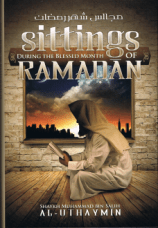
Sittings During the Blessed Month of Ramadan - Shaykh Muhammad bin Salih Al-Uthaymeen

We begin a series of classes Majaalis Ramadan (Sittings in Ramadan) from the works of our noble Shaykh Muhammad ibn Salih al-Uthaymeen rahimahullah.

You can read the Arabic text here.

As with all of our classes at Masjid Tawheed in Stone Mountain, GA, we encourage you to join us.

If you are not able to attend in person, please feel free to listen in via our Spreaker channel or our telelink line at 712-432-2856.

You can buy the above book (english) Here

[Soundcloud Playlist Link]

Contents 

  • Part 01 : The Virtues of reciting the Qur’an
  • Part 02 : The virtues of reciting specific Surahs of the Qur’an
  • Part 03 : Continuing with the virtues of reciting specific Surahs of the Qur’an
  • Part 04 : Continuing with the virtues of reciting the Qur’an
  • Part 05 : Manners pertaining to the Qur’an
  • Part 06 : Manners pertaining to the recitation of the Qur’an
  • Part 07 : The last ten days of Ramadan
  • Part 08 : The last ten days of Ramadan (Contd ..)
  • Part 09 : The description of Paradise
  • Part 10 : The description of the people of Paradise
  • Part 11 : Eid al-Fitr
  • Part 12 : End of Ramadan
  • Part 13End of Ramadan (Contd ..)
  • Pat 14 (Final Part) : Review what was covered so far

Posted fromhttp://followthesalaf.com/?tag=Majaalis+Ramadan

This is for Allaah, What is for Me? – Translated by Abbas Abu Yahya

From Anas – RadhiAllaahu anhu – who said: ‘A Bedouin came to the Prophet – sallAllaahu alayhi wa sallam – and said: ‘O Messenger of Allaah!  Teach me some goodness.’

So the Prophet  – sallAllaahu alayhi wa sallam – took him by the hand and said:

” قل: سبحان الله، والحمد لله، ولا إله إلا الله، والله أكبر.

‘Say: ‘Far is Allaah from imperfection, and all praise be to Allaah, and there is none worthy of worship in truth except Allaah, and Allaah is the Greatest.’

(Subhana Allaahi, wal hamdu lillaahi, wa la illaah ila Allaah, wa Allaahu Akbar.)’

The Bedouin counted them on his hand, when he finished he began to reflect then came back to the Prophet.

The Prophet – sallAllaahu alayhi wa sallam – smiled and said:

 ‘The desperate one has reflected.’

Then the Bedouin came and said:

‘O Messenger of Allaah! ‘Far is Allaah from imperfection, and all praise be to Allaah, and there is none worthy of worship in truth except Allaah, and Allaah is the Greatest.’  This is for Allaah, what is for me?’

The Prophet – sallAllaahu alayhi wa sallam – said:

اللهم اغفر لي وارحمني وعافني وارزقني واهدني

‘Say: O Allaah forgive me, and have mercy on me, and pardon me, and provide for me, and guide me.’

The Prophet – sallAllaahu alayhi wa sallam – said to him:

‘O Bedouin! If you say: ‘SubhanAllah’, Allaah says: ‘you have spoken the truth,

If you say: ‘Alhamdulillah’, Allaah says: ‘ you have spoken the truth,

If you say: La ilaha ‘illa Allaah’, Allaah says: ‘you have spoken the truth,

If you say: Allaahu Akbar, Allaah says: ‘you have spoken the truth,

If you say: O Allaah forgive me, Allaah says: I have done so,

If you say: O Allaah have mercy on me, Allaah says: I have done so,

If you say: O Allaah give me provision, Allaah says: I have done so,

Then the Bedouin  counted it seven times on his fingers,  then went away.’

Shaykh al-Muhaddith al-Albaani -Rahimullaah – said :

Collected by al-Bayhaqi in ‘Shuab al-Eemaan’, and this Isnaad is Jayyid (good) its narrators are trustworthy as for al-Hasan bin Tawab; then I had become exhausted searching about him until I found who he was. So I performed a Sajdah to Allaah thankful for His success and I ask Him for an increase in His excellence.’

[Taken from : ‘Silsilah Saheehah’ No. 3336 by the Shaykh al-Muhaddith al-Albaani -Rahimullaah ]

Related Links: 

Person travelling from one country to another where the new crescent of Shawwal has been sighted

If a person travels from one country to another where the new crescent of Shawwal has been sighted, should he follow them and break his fast?

Q. 394. If a fasting person travels from one Islamic country to another and it was announced in the first country that the new crescent of Shawwal has been sighted, should he follow them and break his fast, bearing in mind that the new crescent of Shawwal has not yet been sighted in the second country?

A. If a person travels from one Islamic country to another, and the breaking of the fast in the country to which he has travelled was delayed, then he should remain (fasting) with them until they break their fast, because fasting is when the people fast and breaking the fast is when the people break their fast and ( ‘Eid) Al-Adha ( Sacrifice) is on the day when the people sacrifice their animals, even if it means that he increases a day or more. It is the same as if he travelled to a country where the sunset is late for his usual day might be lengthened by two or three hours, or more if he travelled to another country. The new crescent has not been seen there, and the Prophet (صلى الله عليه و سلم) ordered us to not fast unless we see the new crescent, and he also said: “Break your fast when you see it.”

As for the opposite, such as when he travels from a country in which confirmation of the start of the month is delayed to a country in which the start of the month has been confirmed, then he should break his fast with them and make up for what he has missed of Ramadan later. If he missed a day, he must make up for a day and if he missed two days, he must make up for two days.

We say that he makes it up in the second case, because it is not possible for the month to be less than twenty-nine days, nor for it to be more than thirty days. And we say to him: Break your fast, even if you have not completed twenty-nine days, because the new crescent has been seen, and once it has been seen, you must break your fast. And since you have fasted less than twenty-nine, because it is not possible for the month to be less than twenty-nine, so you must complete twenty-nine days, as opposed to the first situation, for you should not break your fast until the new crescent has been seen, and if it has not been seen, then you are still in Ramadan. So, how can you break your fast, for you must fast, even if the month was increased for you, it is only like the increase in the hours of the day .

Posted from : Fatawa Arkanul-Islam : Islamic Verdicts on the Pillars of Islam (Volume2)
By the Honorable Shaikh Muhammad bin Salih Al- ‘Uthaimeen
Collected and Arranged by Fahd bin Nasir bin Ibrahim As-Sulaiman
Published by dar-us-salam

A Supplication To Be Said After Performing The Wudoo – Compiled and Translated by Dawud Burbank

بسم الله الرحمن الرحيم

Imaam Muslim -rahimahullaah- reported in his ‘Saheeh’ [The Book of Purification]: (no.234): “Muhammad ibn Haatim ibn Maymoon narrated to me: `Abdur-Rahmaan ibn Mahdee narrated to us: Mu`aawiyah ibn Saalih narrated to us: from Rabee`ah -meaning Ibn Yazeed: from Aboo Idrees alKhawlaanee: from `Uqbah ibn `Aamir; And Aboo `Uthmaan narrated to me: from Jubayr ibn Nufayr: from `Uqbah ibn `Aamir, who said:

‘We were tending camels, and my turn came, so I brought them back in the evening. So then I found Allaah’s Messenger (صلى الله عليه و سلم) standing, speaking to the people, and I caught from what he was saying:

<<There is not one of you who performs the wudoo·, and he performs the wudoo· well, and then he stands and prays two rak`ahs, turning his full attention to them with his heart and his face, except that Paradise will be binding for him>>.’

He said: So I said: ‘How fine this is!’ So then someone in front of me said: “That which came before it was even finer.” So I looked, and it was `Umar. He said: “I saw that you came just now. So he had (already) said:

<<There is not one of you who performs the wudoo·, and he performs the wudoo· completely -or: and he performs it fully, then he says:

wudoo-dua-1

(Ashhadu an laa ilaaha illallaah, wa anna Muhammadan `abduhu wa Rasooluh) ‘I testify that none has the right to be worshipped except Allaah, and that Muhammad is His Slave and His Messenger’,

except that the eight gates of Paradise are opened for him: he may enter through whichever of them he wishes >>.”

And Aboo Bakr ibn Abee Shaybah narrated it to us: Zayd ibn al-Hubaab narrated to us: Mu`aawiyah ibn Saalih narrated to us: from Rabee`ah ibn Yazeed: from Aboo Idrees al-Khawlaanee and Aboo `Uthmaan: from Jubayr ibn Nufayr ibn Maalik al-Hadramee: from `Uqbah ibn `Aamir al-Juhanee: that Allaah’s Messenger (صلى الله عليه و سلم) said.., and he mentioned its like, except that he said:

<<Whoever performs the wudoo·, and says:

wudoo-dua-2

(Ashhadu an laa ilaaha illallaah, wahdahu laa shareeka lahu, wa ashhadu anna Muhammadan `abduhu wa Rasooluh)
<<‘I testify that none has the right to be worshipped except Allaah, alone, with no partner; and I testify that Muhammad is His Slave and His Messenger’>>.”

Imaam at-Tirmidhee -rahimahullaah-reported in his ‘Sunan’ [The Book of Purification from Allaah’s Messenger (صلى الله عليه و سلم) : Chapter (41): What should be said after the wudoo·] (no.55):

“Ja`far ibn Muhammad ibn `Imraan ath-Tha`labee, al-Koofee, narrated to us, saying: Zayd ibn Hubaab narrated to us: from Mu`aawiyah ibn Saalih: from Rabee`ah ibn Yazeed ad-Dimashqee: from Aboo Yazeed al-Khawlaanee and Aboo `Uthmaan: from `Umar ibn al-Khattaab, who said: Allaah’s Messenger (صلى الله عليه و سلم) said:

<<Whoever performs the wudoo, and he performs the wudoo well, then he says:

wudoo-dua-3

(Ashhadu an laa ilaaha illallaah, wahdahu laa shareeka lahu, wa ashhadu anna Muhammadan `abduhu wa Rasooluh. Allaahummaj `alnee minat-Tawwaabeena waj`alnee minal- Mutatahhireen)

<< ‘I testify that none has the right to be worshipped except Allaah, alone, with no partner; and I testify that Muhammad is His Slave and His Messenger’ O Allaah! Make me from those who constantly repent, and make me from those who purify themselves’>>.”

[Declared ‘Saheeh’ by Shaikh al-Albaanee -rahimahullaah: ‘Saheehut-Tirmidhee’ (no. 48).]

[Translated by Aboo Talhah Daawood ibn Ronald Burbank rahimahullaah]

[Download the Original PDF]

Posted from PDF: https://alitisaambissunnah.wordpress.com

Giving Thanks to Allaah Azza wa Jal – Abu Muhammad al Maghribee [Audio|En]

Khutbah on December 13, 2013

It was narrated that ‘Aishah said: When the Messenger of Allah (blessings and peace of Allah be upon him) prayed, he would stand for so long that his feet became swollen. ‘Aishah said: O Messenger of Allah, are you doing this when Allah has forgiven your past and future sins? He said: “O ‘Aishah, should I not be a thankful slave?” 

Narrated by al-Bukhari and Muslim.

Listen / Download Mp3 Here (Time 29:50)

Audio Posted fromhttp://followthesalaf.com/home/2013/12/13/friday-khutbah-giving-thanks

اللّهُـمَّ أَعِـنِّي عَلـى ذِكْـرِكَ وَشُكْـرِك ، وَحُسْـنِ عِبـادَتِـك

Allaahumma a-innee alaa Dhikrika wa shukrikawa husni ibaadatika
O Allah! Help me to remember you, to thank you, and to worship you in the best of manners

[Reference: Abu Dawud 2/86, An-Nasa’i 3/53. See also Al-Albani Sahih Abu Dawud 1 /284]

Morehttp://salaf-us-saalih.com/category/islam/gratitude-shukr-thanking/

The Dunya Vs. The Akhirah – Abu Muhammad al Maghribee [Audio|En]

This khutbah was given at Masjid At-Tawheed on Friday, August 23, 2013.

O mankind! Be afraid of your Lord (by keeping your duty to Him and avoiding all evil), and fear a Day when no father can avail aught for his son, nor a son avail aught for his father. Verily, the Promise of Allah is true, let not then this (worldly) present life deceive you, nor let the chief deceiver (Satan) deceive you about Allah.

[Surat Luqmān 31:33, Muhsin Khan Translation]

Sahl bin Sa’d narrated that the Messenger of Allah (sal Allahu alaihi wa sallam) said:

“If this world was worth a mosquito’s wing in the sight of Allaah, then He would not allow the disbeliever to have a sip of water from it.”

(Hasan) [Chapters on Zuhd: Jami At-Tirmidhi, Saheeh al Albaani]

Listen / Download Mp3 Here (Time 35:15)

Audio Posted fromhttp://followthesalaf.com/home/2013/8/23/friday-khutbah

Unity upon the Truth – Abu Muhammad al Maghribee [Audio|En]

This khutbah was given on 2014-10-17 at Masjid Tawheed in Stone Mountain, GA.

Listen / Download Mp3 Here (Time 32:39)

Posted from: http://followthesalaf.com/home/2014/11/14/khutbah

Allaah – the Most High – said:

“O you who Believe! Have taqwah (fear and obedience) of Allaah as you should do, and do not die except that you are Muslims. And hold fast all together to the rope of Allaah and do not be divided. And remember the favour of Allaah upon you, for you were once enemies one to another, but He joined your hearts together, so that by His Grace, you became brothers. And you were on the brink of a pit of Fire, and He saved you from it. Thus does Allaah make His Signs clear to you, that you may become guided. Let there arise out of you a group of people inviting to all that is good, enjoining all that is good and forbidding all that is evil. They are the ones who are successful. And do not be like those who split up and differed amongst themselves, after the clear proofs had come to them. For them is a tremendous punishment. On the Day of Resurrection, some faces will be white and some faces will be black.”

[Soorah Aal-‘Imraan 3:102-105]

Visit : http://salaf-us-saalih.com/category/islam/unity-of-ummah/

Is this your Progress through the Nights of Ramadaan? – Dr Murtaza bin Bakhsh

From the Lecture How to Prepare for and Welcome Ramadaan – Dr Murtaza bin Baksh (Urdu)

Translated by: Aboo Bilal Nahim ibn Abd al Majid حفظه الله
Video Courtesy: Bilal Nahim

Verily Allaah loves three things for you and he hates three things for you – Shaykh Rabee | Abu Muhammad al Maghribee [Audio|En]

The Messenger (sallallaahu ‘alayhi wa sallam) said,

“Verily Allaah loves three things for you and he hates three things for you. He loves that you worship Him alone, and that you do not join anyone else in your worship of him and that you do not worship other than him, He loves that you hold tight altogether to the rope of Allaah and that you do not be divided.

And Allaah hates for you hearsay (he said and she said – qeela wa qaal – spreading rumours), he hates for you excessive questioning (questioning that brings about no benefit), thirdly, he hates for you the wasting of money.”

This Khutbah is based on the explanation of Shaykh Rabee ibn Hadee (hafidhahullaah)

Listen / Download Mp3 Here (Time 31:43)
[audio https://salafiaudio.files.wordpress.com/2015/06/verily-allaah-loves-three-things-for-you-and-he-hates-three-things-for-you-abu-muhammad-al-maghribee.mp3]

Audio Posted fromhttp://followthesalaf.com

Ways to Success and Happiness – Abu Muhamamd al Maghribee [Audio|En]

Khutbah on January 3, 2014, given at Masjid Tawheed in Stone Mountain, GA

Brilliant lecture, benefit from it, insha’ Allaah

Listen / Download Mp3 Here (Time 29:59)
[audio https://salafiaudio.files.wordpress.com/2015/06/ways-to-success-and-happiness-140103-abu-muhamamd-al-maghribee.mp3]

Posted fromhttp://followthesalaf.com/home/2014/1/3/friday-khutbah-ways-to-success

Strive Hard in your Deen to the Best Of your Ability – Abu Muhammad al Maghribee [Audio|En]

Khutbah on April 4, 2014, given at Masjid Tawheed in Stone Mountain, GA

Listen / Download Mp3 Here (Time 34:59)
[audio https://salafiaudio.files.wordpress.com/2015/06/strive-hard-in-your-deen-to-the-best-of-your-ability-abu-muhammad-al-maghribee.mp3]

Posted fromhttp://followthesalaf.com/home/2015/6/10/khutbah-1

Story of a Sufi Shaykh from Africa who Doesn’t Pray – Abu Muhammad al Maghribee [Audio Benefit|En]

Shaykh Muhammad Amaan Jaamee (rahimahullaah) narrated this to Imam  as-Sa’dee (rahimahullaah)

This story was conveyed by Falaah Isma’eel (hafidhahullaah).

Listen to this 5 min humorous & beneficial clip

Listen / Download Mp3 Here (Time 5:17)
[audio https://salafiaudio.files.wordpress.com/2015/06/story-of-a-sufi-shaykh-from-africa-who-dont-pray-abu-muhammad-al-maghribee.mp3]

This short clip has been extracted from the Class # 3 of the below lecture series

48 Questions and Answers on Fasting (سؤالاً في الصيام) by Shaykh al-Uthaymeen – Abu Muhammad al-Maghribee [Audio|En]

Related Link: http://salaf-us-saalih.com/category/islam/soofeeyah/

Does ‘Umrah in Ramadan compensate for Hajj? – Shaykh Ibn Baaz

Source: http://www.binbaz.org.sa/node/19904
Translated by Abu Afnaan Muhammad Abdullah hafidhahullaah
Video Courtesy: Bilal Nahim

Question:

Does ‘Umrah in the month of Ramadan satisfy for the obligation of Hajj due to the Messenger’s (صلى الله عليه وسلم) statement, “Whoever performs ‘Umrah in Ramadan is like the one who makes Hajj with me.”

Shaykh Abdul- Azeez Bin Baaz:

Umrah in Ramadan does not compensate for Hajj. However, it has the merit/virtue of Hajj due to his (صلى الله عليه وسلم) statement, ‘Umrah in Ramadan equals a Hajj’ or he said ‘a Hajj with me‘.

This means in regards to merit and reward and it does not mean it is equivalent to it and replaces it such that he does not have to perform Hajj. No, rather he still must perform the Hajj, the Hajj of Islam (the obligatory Hajj) even if he makes ‘Umrah in Ramadan according to all of the scholars. Thus, with ‘Umrah in Ramadan, the merit of Hajj is attained from the aspect of reward and excellence, but it does not compensate for the Hajj of Islam.

Related Links:

There cannot be Two Witr Prayers in One Night – Shaykh Ibn Baz

Question:

Is it permissible to offer two Witr prayers in one night?

Answer:

No one should offer two Witr prayers in one night because the Prophet (sallallaahu alaihi wa sallam) said:

There cannot be two Witr prayers in one night.[1]

And he (sallallaahu alaihi wa sallam) also said:

Make the end of your prayer at night Witr. [2]

And he (sallallaahu alaihi wa sallam) said:

Whoever feared that he will not get up at the end of the night should perform Witr at the beginning of it. And whoever desired to stand at the end of it should pray Witr at the end of the night. [3]

If it is easy for the Muslim to perform the night prayer at the end of the night, he should seal his prayer with one Rakah of Witr. Whoever found difficulty in this should perform his Witr at the start of the night.

And if Allaah makes it easy for him (after that) to stand in prayer, he should offer what he can in units of two Rakahs, and he need not repeat the Witr, for the first Witr is sufficient for him, according to the aforementioned Hadith which is:

There cannot be two Witr prayers in one night. [4]

[1] Abu Dawud no. 1439 and At-Tirmithi no. 470
[2] Al-Bukhari no. 990 and Muslim nos. 151, 751
[3] Muslim no. 755
[4] Abu Dawud no. 1439 and At-Tirmithi no. 470

Shaykh `Abdul-`Azeez Bin Baz
Fatawa Islamiyah Vol. 2 Page 298
dar-us-salam publications

Whoever Breaks his Fast with an Excuse, then he is Not Obliged to Fast for the rest of the Day – Shaykh Ibn Uthaymeen

Bismillaah

Q. 400. If a person breaks his fast due to some excuse, and then the excuse is removed during the day, should he fast for the remainder of the day?

A. He is not obliged to fast. This is because it has been made lawful for this man to break his fast on this day based upon an evidence from the Islamic Law. The Islamic Law allows one who is compelled to take medication for example, to take it, but if he takes, he breaks his fast. Therefore the prohibition of the day does not apply to him, because it has been permitted for him to break his fast, but he is required to compensate for it, and for us to require him to fast without any benefit is legally incorrect. So as long as this man does not benefit from fasting, it is not incumbent upon him.

An example of this would be a man who sees someone drowning in the water and he says: If I drank, it would be possible for me to save him, and if I did not drink, it would not be possible for me to save him, so he drinks and then saves him and he eats and drinks for the remainder of the day. This man is not prohibited from eating and drinking on this day, since it has been made lawful for him not to fast in accordance with the Islamic Law. Therefore, he is not required to fast.

For this reason, if there was a sick person, would we say to him: Do not eat unless you are hungry and do not drink unless you are thirsty? Meaning: Do not eat or drink except due to necessity. We would not say this to him, because it is permissible for the sick person to break his fast.

So, every person who breaks his fast in Ramadan in accordance with some legal evidence is not obliged to fast, and vice versa.

Whoever breaks his fast without an excuse, then he must fast, because it is not lawful for him to break his fast and he has transgressed the prohibition of that day without permission from the Islamic Law. So, we must compel him to fast the remainder of the day and to make up for it.

And Allah knows better.

Q. 398. What are the permissible excuses for breaking the fast?

A. The permissible excuses for breaking the fast are: Illness and travel, as mentioned in the Qur’an.

Among other excuses is that a woman is pregnant and she fears for herself or her child. Another excuse is that a woman is breast-feeding and she fears for herself or her breast-fed child if she fasts.

Another excuse is that a person needs to break his fast in order to save the life of someone. For example, he finds a drowning person in the sea, or someone who is surrounded on all sides by fire, and he needs to break his fast in order to save him – in that case, he may break his fast and save him.

Another such case would be if a person needed to break his fast in order to strengthen himself for Jihad in Allah’s Cause, that would also be a permissible cause for him to break his fast, because the Prophet sallallaahu`alaihi wa sallam said to his Companions, may Allah be pleased with them:

You will meet the enemy tomorrow morning, so breaking the fast stronger for you, so break your fast.” [1]

So, if there is a permissible excuse for breaking the fast, and a person breaks his fast due to it, it is not necessary for him to fast for the remainder of that day. Therefore, if it transpired that a person had broken his fast in order to save a person’s life, he should continue to eat and drink, even after saving him. This is because he broke his fast for a reason which permits him to break his fast, so it is not necessary for him to fast in that case, because the prohibition of breaking fast on that day has been removed due to the permissible cause for breaking the fast.

For this reason, we support the most authoritative opinion in this matter, which is that if a sick person became well during the day and he was not fasting, it is not necessary for him to fast, and if a traveller arrived during the day at his hometown and he was not fasting, it is not necessary for him to fast, and if a menstruating woman became clean during the day, it is not necessary for her to fast. This is because all of these people broke their fasts for legitimate reasons, and so on that day, there was no obligation upon them to fast, due to the lawful permission for breaking it at that time, so it is not necessary for them to fast.

This is as opposed to the case where it is confirmed that the month of Ramadan has begun during the day in that case, it is necessary to fast. The difference between the two cases is clear, because if the evidence appears (that Ramadan has begun) during the day, it has been confirmed that fasting on that day is obligatory for them, but they are excused for the time before the evidence became clear to them due to their ignorance of it. This is why, if they knew that this day was a day of Ramadan, it is obligatory for them to fast. But as for those other people whom we have described, it is permissible for them to break their fast, even though they are aware (that it is Ramadan) and the difference between them is clear.

[1] Reported by Muslim in the Book of Fasting, in the Chapter: The Reward of One Who Breaks His Fast on a Journey if He Undertakes a Task (1120).

Source: Fataawa Arkaan al-Islam by Shaykh Muhammad ibn ‘Uthaymeen (may Allaah have mercy o­n him), vol 2, dar-us-salam publications