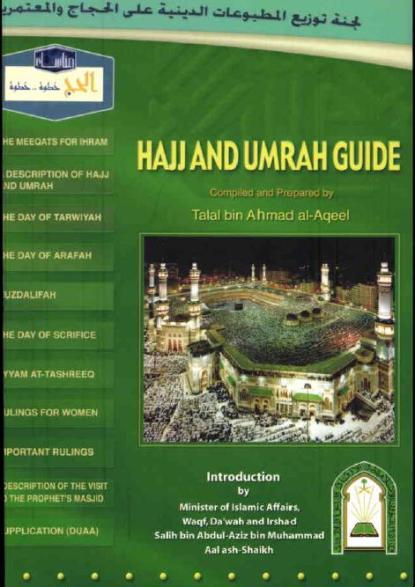
Hajj And Umrah Guide – Compiled by Talal Ahmad al-Aqeel

Hajj And Umrah Guide -  Compiled by Talal Ahmad al-Aqeel Introduction by Sheikh Salih Ibn Abdul Aziz Ali Sheikh

Click the Link below to read or download PDF

Hajj And Umrah Guide – Compiled by Talal Ahmad al-Aqeel [PDF] [81 Pages]

Introduction by Sheikh Salih Ibn Abdul Aziz Ali Sheikh

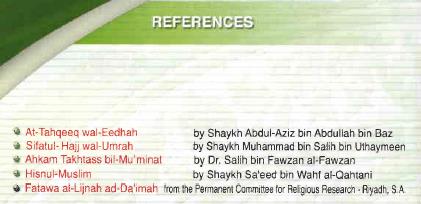
Hajj And Umrah Guide -  Compiled by Talal Ahmad al-Aqeel - References

This book has illustrative pictures related to the Rites of Hajj and Umrah  for easy comprehending of the things

Shaving the Head : Permissible and Impermissible Types – Shaykh AbdurRazzaq al-Badr

Chapter 11: Shaving the Head
Lessons of Creed Acquired From The Hajj
By  Shaykh AbdurRazzaq bin ‘Abdul-Muhsin
Translated by Abbas Abu Yahya

The actions of the day of an-Nahr, the tenth day of the month of Dhul-Hijjah, are indeed four well-known actions which are the stoning, the slaughter, shaving the head and then the Tawaaf. The discussion here will be about shaving the head or shortening the hair as worship for Allaah in obedience to Him and seeking closeness to Him on this great day.

Shaving is completely removing the hair of the head while shortening is lessening the hair of the head all over. Shaving or shortening the hair is one of the obligations of Hajj and Umrah, it is not permissible to leave it, and the evidence is the saying of Allaah Ta’ala:

<< Certainly, you shall enter masjid al-Haram; if Allaah wills, secure, (some) having your heads shaved, and (some) having your head hair cut short, having no fear>> [Fath : 27]

Ibn Qadaamah –Rahimullaah- said:

‘If it was not from the rites of Hajj, Allaah would not have described them this way.’ [1]

It is narrated by Bukhari and Muslim from the hadeeth of Ibn Abbas –RadhiAllaahu anhu- who said:

‘When the Prophet -sallAllaahu alayhi wa sallam- came to Makkah he ordered his Companions to make Tawaaf of the House and of Safa and Marwa, then to come out of Ihraam and shave or shorten their hair.’ [2]

Hence, it is one of the obligations of Hajj and Umrah. So whoever does not shave or shorten their hair, then it is necessary to atone for this by slaughtering a sacrificial animal. It (i.e. shaving/shortening) is a sign that the time period for Ihraam has ended and it imitates the actions of the Messenger – alayhi as-sallat wa sallam- where he shaved his head and ordered his Companions to shave their heads, casting aside their impurities and removing dishevelled hair. Shaving the head is the act of humbly placing the forehead in front of its Lord, due to His greatness, and in submission due to His Honour and it is from the most intense forms of Uboodiyah (worship) for Allaah Azza Wa Jal.

So when the Muslims performs this great act of obedience and important worship in reverence of Allaah and in imitation of the Messenger of Allaah – sallAllaahu alayhi wa sallam- it is obligatory upon him to know that shaving the head or shortening the hair is done to worship and seek closeness to Allaah and that it is not permissible to perform it for anyone other than Allaah –subhanahu wa Ta’ala.

The great Imaam, Shaykh-ul-Islaam ibn Taymeeyah -Rahimullaah– was asked about a people who shave their heads at the command of their shaykhs at such graves as they glorify while regarding it as a means seeking closeness to Allaah and worship: is all of this a Sunnah or a Bida? Is shaving the head, generally, a Sunnah or Bida?

He –Rahimullaah- replied: ‘Shaving the head is of four types:

One of them is shaving the head in Hajj and Umrah and this is from what Allaah and His Messenger -sallAllaahu alayhi wa sallam- have ordered. It is legislated and ordered in the Book, the Sunnah and the consensus of the Ummah.

Allaah Ta’ala said:

<< Certainly, you shall enter masjid al-Haram; if Allaah wills, secure, (some) having your heads shaved, and (some) having your head hair cut short, having no fear>> [Fath : 27]

There are multiple narrations on the authority of the Prophet -sallAllaahu alayhi wa sallamthat he shaved his head in his Hajj and Umrah as did his Companions. From them were those who shaved their heads and some who shortened their hair. Shaving is better than shortening because the Prophet said: ‘O Allaah forgive those who shave their heads.’ The people said, ‘O Messenger of Allaah -sallAllaahu alayhi wa sallam- and those who shorten their hair?’ He said ‘O Allaah forgive those who shave their heads.’ The people said, ‘O Messenger of Allaah -sallAllaahu alayhi wa sallam- and those who shorten their hair?’ He said ‘O Allaah forgive those who shave their heads.’ The people said, ‘O Messenger of Allaah -sallAllaahu alayhi wa sallam- and those who shorten their hair?’ He said: ‘And those who shorten their hair.’ [3]

In the farewell Hajj he -sallAllaahu alayhi wa sallam- commanded the Companions who had brought a sacrificial animal with them to shorten their hair if they had performed Tawaaf of the House and had walked between Safa and Marwa for Umrah and then to shave their heads once they had completed the Hajj. So (in this way) he combined for them, firstly, shortening their hair and, secondly, shaving their heads.

The second type of shaving the head is for a need, such as shaving the head for treatment. This is also permissible according to the Book, the Sunnah and the consensus of the scholars. Indeed Allaah has permitted the Muhrim (pilgrim), for whom it is not usually allowed to have his head shaved until completion of the Hajj rites, to shave his head if he is suffering as Allaah Ta’ala mentions:

<<and do not shave your heads until the Hady (sacrificial animal) reaches the place of sacrifice. And whosoever of you is ill or has an ailment in his scalp (necessitating shaving), he must pay a Fidyah (ransom) of either observing Saum (fasts) (three days) or giving Sadaqah (charity – feeding six poor persons) or offering sacrifice (one sheep) >> [Baqarah :196]

What has been established by agreement of the Muslims is the hadeeth of Ka’b bin Ujraah that when the Prophet -sallAllaahu alayhi wa sallam- passed by him in the Umrah of Al-Hudaybiyah lice were falling from his head, so the Prophet said to him: ‘Are your lice harming you?’ K’ab replied: ‘Yes.’ So the Prophet said: ‘Shave your head and sacrifice a sheep, or fast three days or feed a group of six needy people.’[4]

The authenticity of this Hadeeth is agreed upon and has been received with acceptance by all the Muslims.

The third type of shaving the head is that which is done for worship, religion and Zuhd (abstention from loving worldly things) in other than Hajj or Umrah.

For example, some of the people command the one who repents, once he has repented to shave his head. Similar is the one who shaves the head as a sign of being from the people of rituals and religion or as a sign of the perfection of Zuhd and worship or as a sign that the one who shaves is better, more religious or has more Zuhd than the one who does not.

Then there are those who adhere to certain shaykhs such that if they repent, they shave their heads or they cut some of his hair. So the shaykh specifies who should have the scissors and prayer rug so he can pray on that rug (and not with the Muslims). His cutting hair from the heads of the people is from the complete authority befitting him and someone who is imitated in order to make the people repent.

So all of this is Bida’ which has neither been commanded by Allaah, nor by His Messenger -sallAllaahu alayhi wa sallam. It is not obligatory nor has it been recommended by any one scholar of the Deen. Not one of the Companions did this, nor did any of those who followed the companions in goodness, neither the scholars of the Muslims who were well known for Zuhd and worship nor the Companions, the successors or those who came after them.

There were those who accepted Islam at the time of the Prophet -sallAllaahu alayhi wa sallam- but he never used to order them to shave their heads if they entered Islaam nor did he cut anyone’s hair. He didn’t pray on a rug but, rather, he used to pray as an Imaam with all the Muslims. He used to pray on what they used to pray, sit where they used to sit and he never used to make himself distinct from them by sitting on something special, whether a prayer rug or anything else.

Whoever takes this Bida’ -which is not obligatory or even recommended- as a means of seeking closeness and obedience or as a path to Allaah making it a completion of the Deen or orders the repentant to do it, both the Zahid (the one who abstains from loving worldly things) and the worshipper, then he is a misguided person outside the path of ar-Rahmaan (Allaah the Most Merciful), following the footsteps of the Shayateen.’

Then Shaykh ul-Islaam –Rahimullaah- mentioned the fourth type of shaving the head which is shaving the head as other than a ritual or for other than a need, neither seeking closeness to Allaah nor seeking to be religious. He mentions that the people of knowledge have two opinions regarding this, which are two narrations attributed to Imaam Ahmad.

The first is that it is disliked and this is the Madhab of Maalik and others. The second is that it is permissible and this is well known amongst the companions of Abu Haneefa and ash-Shafi’ee.

Then Imaam Ahmad mentions the evidence that the scholars use for each of these sayings. [5]

Imaam Ibn al-Qayyim mentions a similar division to what has preceded in his book ‘Zaad al-Ma’ad’. He mentions that from the different types of shaving the head there is one that is Shirk and one that is Bida’. Shirk being the one shaving his head for other than Allaah –Subhaanhu- such as those who follow shaykhs and who shave their heads for their shaykhs.

One of them will say:

‘I have shaved my head for so-and-so and you have shaved your head for soand-so.’ This is the same as saying: ‘I have done Sadjah (prostration) for so- and-so,’ because shaving the head is done with humility, in worship and with submissiveness and it is done for the completion of Hajj.

Then he mentions that the misguided shaykhs deceive their followers by causing them to shave their heads for them, just as they mislead them into prostrating to them. [6]

All of this is clear Shirk and a great lie, we ask Allaah for security.

Footnotes:

[1] Al-Mughni (5/305)
[2] Saheeh al-Bukharee
[3] Saheeh al-Bukharee & Saheeh Muslim
[4] Saheeh al-Bukharee & Saheeh Muslim
[5] Majmoo’al-Fatwa (21/116-119)
[6] Za’d al-Ma’ad (4/159-160)

“Allah gave me intellect; therefore I can sit with the innovators” – Shaykh Sulaymaan Ar-Ruhaylee

Read the article here: http://mtws.posthaven.com/allah-gave-…
Translated by Rasheed ibn Estes Barbee حفظه الله
Video Courtesy: Bilal Nahim

Shaykh said :

I swear by Allah O brothers;verily I know people personally, who were from the best of people upon the Sunnah,but they took lightly the matter of sitting with those known to be upon innovation and they were turned upside down

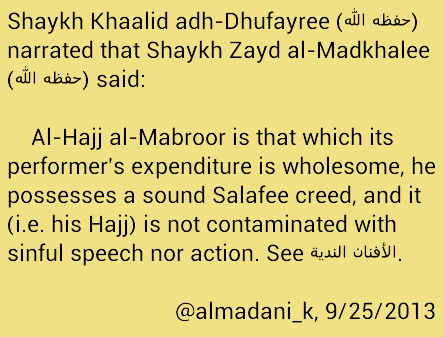
Meaning of Hajj Mabroor (The Accepted Hajj) – Dr. Saleh as Saleh [Audio|En]

It was narrated that Abu Hurayrah (may Allah be pleased with him) said: I heard the Prophet (blessings and peace of Allah be upon him) say:

“Whoever performs Hajj for the sake of Allah and does not utter any obscene speech or do any evil deed, will go back (free of sin) as his mother bore him.” 

Narrated by al-Bukhaari, 1449; Muslim, 1350.

Listen / Download Mp3 Here (Time 10:59)
[audio https://salafiaudio.files.wordpress.com/2014/09/qa-concerning-hajj-001-meaning-of-hajj-mabroor-saleh-as-saleh.mp3]

Posted from : https://abdurrahman.org/2015/02/24/hajj-points-of-benefit-and-rulings-dr-saleh-as-saleh/

The Definition of al-Hajj al-MabroorTranslation & Photo Source:
Abu Adam Jameel Finch hafidhahullaah
http://t.co/bzHORRy4VJ

Numerous ways of doing Good – Abu Muhammad al Maghribee [Audio|En]

Allah, the Exalted, says:

“… and whatever you do of good deeds, truly, Allah knows it well.” (2:215)

“And whatever good you do, (be sure) Allah knows it.” (2:197)

“So whosoever does good equal to the weight of an atom (or a small ant), shall see it.” (99:7)

“Whosoever does a good deed, it is for his ownself…” (45:15)

This Khutbah was delivered on April 18, 2014 based on the below Chapter

Imam Al-Nawawi’s Riyad-us-Saliheen – Chapter 13
Numerous ways of doing Good
http://salaf-us-saalih.com/2014/09/04/riyad-us-saliheen-imaam-nawawi-chapter-013/

Listen / Download Mp3 Here (Time 31:39)

Posted from: http://followthesalaf.com/home/2015/6/10/khutbah

Aqiqah – Al-Mulakhas al-Fiqhi – Shaykh Salih al-Fawzan – Abu Muhamamd al Maghribee [Audio|En]

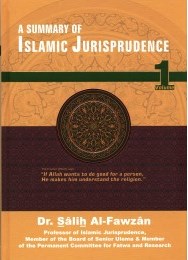
al-mulakhas-al-fiqhi-a-summary-of-islamic-jurisprudenceThis is the weekly Monday evening class on the book Al-Mulakhas al-Fiqhi (A Summary of Islamic Jurisprudence) by Shaykh Salih al-Fawzan.

We continue with the Book of Hajj, Chapter 11: Aqiqah (Sacrifice Offered at the Time of the Birth of a Child)

You may download a copy of the original Arabic text here: الملخص الفقهي

As with all of our classes at Masjid Tawheed in Stone Mountain, GA, we encourage you to join us.  If you are not able to attend in person, please feel free to listen in via our Spreaker channel or our telelink line at 712-432-2856.

Listen / Download Mp3 Here (Time 50:53)

Posted from:  http://followthesalaf.com

Seeking The Forgiveness Of Allaah & His Messenger (صلى الله عليه و سلم)

Bismillaah

وَلَوْ أَنَّهُمْ إِذ ظَّلَمُوا أَنفُسَهُمْ جَاءُوكَ فَاسْتَغْفَرُوا اللَّهَ وَاسْتَغْفَرَ لَهُمُ الرَّسُولُ لَوَجَدُوا اللَّهَ تَوَّابًا رَّحِيمًا

If, when they had wronged themselves, they had come to you – O Muhammad (صلى الله عليه و سلم) – and had sought Allaah’s forgiveness, and the Messenger had asked for Allaah’s forgiveness for them, then they would have found that Allaah would have accepted their repentance and had mercy upon them. [Sooratun-Nisaa (4): 64]

Ibnul-Qayyim (rahimahullaah) said:

“Since Allaah – the One free of all imperfections – knew that those to whom the Messenger was sent would certainly wrong themselves and follow their desires, He guided them to that which would repel the evil of that wrong and remove its causes. This lay in two things:

Firstly, there was something that they themselves were to do, which was to seek forgiveness of their Lord – the Mighty and Majestic.

Secondly, there was something for someone else to do, and this was that the Messenger (صلى الله عليه و سلم) should ask forgiveness for them when they came to him, submitted obediently to him and acknowledged their wrong-doing. So, if they were to do these two things, they would find that Allaah would accept their repentance and forgive them. He would accept their repentance, thus wiping away the effect of their sins and protecting them from their evils. In addition to this, He would grant them His Mercy, His favourable and fine treatment.

So, what share of this Aayah is there for a person who wrongs himself after the death of the Prophet (صلى الله عليه و سلم) ? Does the use of the Aayah support those people who claim that the person should go to his (صلى الله عليه و سلم) grave; ask for forgiveness there, and for his intercession?

The reply is that, as for the share of the person who wrongs himself after the death of the Prophet (صلى الله عليه و سلم) with regard to this Aayah, he should ask for Allaah’s forgiveness, with sincere repentance and this applies in every time and place. It is not a condition for the correctness of his repentance that he should go to his (صلى الله عليه و سلم) grave, and ask for forgiveness there. (By consensus- Ijmaa”).

As for going to his grave and seeking forgiveness there and seeking his intercession, using this Aayah as an evidence, then the Aayah does not indicate this in any sense at all. It only refers to going to him (صلى الله عليه و سلم) ; not going to his grave; nor does it state that he will seek forgiveness for them if they seek intercession from him after his death.

This is thus shown to be a false and futile argument which is further clarified by the fact that the Companions, those who of all people knew best about the Book of Allaah and the Sunnah of His Prophet (صلى الله عليه و سلم) , did not understand the Aayah in this way. So it is known that this is an innovation. That which is most frequently used as evidence by those who permit it, is the narration of al-`Utabee from an unknown Bedouin, even though we do not know any chain of narration for it. If this disconnected report, or it’s like, were a hadeeth or a report from a Companion, then it would not be permissible to use it as a proof, and its ruling would not be binding upon us because of its lack of authenticity. How then can it be permissible to use as proof for this a story that is not authentic, concerning a Bedouin who is unknown!? [1]

Shaikh ‘Abdur-Rahmaan ibn Naasir as-Sa`dee (rahimahullaah) said:

“Allaah said:

Meaning: If, when they had wronged themselves, they had come to you – O Muhammad (صلى الله عليه و سلم)

i.e. acknowledging their sins, and fully confessing them.

…and had sought Allaah’s forgiveness, and the Messenger had asked for Allaah’s forgiveness for them, then they would have found that Allaah would have accepted their repentance and had mercy upon them

i.e. He would have turned to them, forgiven their wrongdoing, and been Merciful to them; by accepting their repentance, guiding them to it and granting it to them, and rewarding them for it. This coming to the Messenger (صلى الله عليه و سلم) was something specific to his lifetime.

This is what the context indicates, because seeking forgiveness from the Messenger cannot occur except in his lifetime. As for after his death, then nothing can be sought from him; rather that would be shirk.” [2]

***

Footnotes:

[1] Tayseerul-‘Azeezil Hameed Sharh Kitaabit-Tawheed of Shaikh Sulaymaan ibn `Abdillaah ibn Muhammad bin `Abdul-Wahhaab (pp. 561-562)

[2] Tayseerul-Kareemir-Rahmaan fee tafseer Kalaamil-Mannaan of Shaikh “Abdur-Rahmaan ibn Naasir asSa”dee.

[Translated by Aboo Talhah Daawood ibn Ronald Burbank –rahimahullaah]

Posted from: www.alitisaambissunnah.wordpress.com

Related Links:

How can you be a martyr if you are in the Hell-fire! – Shaykh Saalih Al-Fawzaan

http://mtws.posthaven.com/how-can-you…
Translated by Rasheed ibn Estes Barbee حقظه الله

Video Courtesy: Bilal Nahim

Hajj – Al-Mulakhas al-Fiqhi – Shaykh Saalih al-Fawzaan | Abu Muhammad al-Maghribee [Audio|En]

These are the lectures based on the book Al-Mulakhas al-Fiqhi (A Summary of Islamic Jurisprudence) by Shaykh Salih al-Fawzan.
You may download a copy of the original Arabic text here: الملخص الفقهي

As with all of our classes at Masjid Tawheed in Stone Mountain, GA, we encourage you to join us.  If you are not able to attend in person, please feel free to listen in via our Spreaker channel or our telelink line at 712-432-2856.

The following are the chapters covered from the Book

  • Chapter 01 The Obligation off Hajj (Pilgrimage)
  • Chapter 02 Women’s Hajj & Performing it on someones’s behalf
  • Chapter 03 Virtues off Hajj and It’s preparations
  • Chapter 04 Miqats of Hajj
  • Chapter 05 How to Assume Ihraam
  • Chapter 06 Acts Prohibited during Ihraam
  • Chapter 07 Rites of Tarwiyah and ‘Arafah Days
  • Chapter 08 Acts on Muzdalifah and Mina
  • Chapter 09 Days of Tashreeq and Farewell Tawaaf
  • Chapter 10 Sacrificial Animals (Hady and Udhiyah)

Audio Files

Regarding the Haj
Al-Mulakhas al-Fiqhi – Hajj – Part 01 – 20140804
Al-Mulakhas al-Fiqhi – Hajj – Part 02 – 20140818
Al-Mulakhas al-Fiqhi – Hajj – Part 03 – 20140825
Al-Mulakhas al-Fiqhi – Hajj – Part 04 – 20140901

Regarding the ihraam for Hajj
Al-Mulakhas al-Fiqhi – Hajj – Part 05 – 20140908
Al-Mulakhas al-Fiqhi – Hajj – Part 06 – 20140915

The Things the Muhrim Should Not Do
Al-Mulakhas al-Fiqhi – Hajj – Part 07 – 20140922

Yawn al-Arafah
Al-Mulakhas al-Fiqhi – Hajj – Part 08 – 20141006

From the 10th day of Dhul-Hijjah
Al-Mulakhas al-Fiqhi – Hajj – Part 09 – 20141110

Days of Tashriq and Farewell Tawaf
Al-Mulakhas al-Fiqhi – Hajj – Part 10 – 20141117
Al-Mulakhas al-Fiqhi – Hajj – Part 11 – 20141124

Sacrificial Animals
Al-Mulakhas al-Fiqhi – Hajj – Part 12 – 20141201

Posted fromhttp://followthesalaf.com/?tag=Al-Mulakhas+Al-Fiqhi

The following short benefits were extracted from these Hajj Series

Related Books & Lectures on the Rites of Hajj

Hajj index Page

Not Wanting Fame – Compiled & translated By Abbas Abu Yahya

Allaah Ta’ala said:

الَّذِينَ يَجْتَنِبُونَ كَبَائِرَ الإِثْمِ وَالْفَوَاحِشَ إِلاَّ اللَّمَمَ إِنَّ رَبَّكَ وَاسِعُ الْمَغْفِرَةِ هُوَ أَعْلَمُ بِكُمْ إِذْ أَنشَأَكُم مِّنَ الأَرْضِ وَإِذْ أَنتُمْ أَجِنَّةٌ فِي بُطُونِ أُمَّهَاتِكُمْ فَلا تُزَكُّوا أَنفُسَكُمْ هُوَ أَعْلَمُ بِمَنِ اتَّقَى

<< Those who avoid great sins and Al-Fawâhish (illegal intercourse, etc.) except the small faults, verily, your Lord is of vast forgiveness. He knows you well when He created you from the earth (Adam), and when you were fetuses in your mothers’ wombs. So ascribe not purity to yourselves. He knows best him who fears Allaah and keep his duty to Him [i.e. those who are Al-Muttaqûn (pious)].>>

[Najm: 32]

Allaah Ta’ala said:

لاَ تَحْسَبَنَّ الَّذِينَ يَفْرَحُونَ بِمَا أَتَوْا وَّيُحِبُّونَ أَن يُحْمَدُواْ بِمَا لَمْ يَفْعَلُواْ فَلاَ تَحْسَبَنَّهُمْ بِمَفَازَةٍ مِّنَ الْعَذَابِ وَلَهُمْ عَذَابٌ أَلِيمٌ

<< Think not that those who rejoice in what they have done (or brought about), and love to be praised for what they have not done,- think not that they are rescued from the torment, and for them is a painful torment.>>

[Aala Imraan: 188]

Allaah Ta’ala said:

أَلَمْ تَرَ إِلَى الَّذِينَ يُزَكُّونَ أَنفُسَهُمْ بَلِ اللَّهُ يُزَكِّي مَن يَشَاء وَلاَ يُظْلَمُون فَتِيلاً

<< Have you not seen those who claim sanctity for themselves. Nay – but Allaah sanctifies whom He pleases, and they will not be dealt with unjustly even equal to the extent of a Fatilâ (A scalish thread in the long slit of a date­ stone). >>

[Nisa’:49]

1 – From Ubaad bin Tameem from his uncle from the Prophet  :

” يا نعايا العرب ! يا نعايا العرب ! ثلاثا , إن أخوف ما أخاف عليكم الرياء و الشهوة الخفية “

‘O Arabs beware, O Arabs beware, (he said it thrice) indeed what I fear for you the most is ar-Riyaa (showing off) and hidden desires.’

[Collected by Tabaraani in ‘Mu’ajam al-Kabeer’, Ibn Adee in ‘al-Kaamil’ & declared Hasan by Albaani in Silsilah Saheehah 2/34/508]

Ibn Atheer said:

‘Verily the hidden desire is to love that the people see your actions.’

[an-Nihaaya 2/516]

2 – It has been mentioned about Umar

أنّه عاتب أبيّا عندما رأى الناس يمشون خلفه ، فنهره و زجره قائلا : ” كُفَّ عن هذا ، فإنها فتنة للمتبوع مذلة للتابع

That he rebuked a person when he saw that the people were all walking behind him, he said: ‘Stop this, it is a Fitnah for the one who is being followed, and a humiliation for those who follow him.’

[Collected in ‘al-Itissam’ by Shaatibi]

3 – Shu’bah said that Ayoob as-Sakhtiyaani said:

ذُكرتُ و لا أحب أن أذكر

‘I am mentioned, and I do not like to be mentioned.’

[Seera Aa’laam 6/22]

4 – Bishr ibn al-Harith said:

ما اتقى الله من أحب الشهرة

 ‘Whoever loves fame does not fear Allaah.’

[Seera Aa’laam 11/216]

5 – Shu’bah said:

ربما ذهبت مع أيوب لحاجة فلا يدعني أمشي معه ، و يخرج من ههنا و ههنا ، لكيلا يفطن له

‘Sometimes I would go out with Ayoob for a need, but he would not allow me to walk with him, and he would walk out this way and that way, so that he would not be trialed.’

[Seera Aa’laam 6/22]

6 – Imam Ahmad said to his student, when he came to know the praise of the people for him:

يا أبا بكر ؛ إذا عرف الرجل نفسه فما ينفعه كلام الناس

‘O Abu Bakr, if a person knows himself, then what the people say about him does not benefit him.’

[Seera Aa’laam 11/211]

7 – The people praised Abu Bakr as-Siddique  so he said:

اللَّهمّ اجْعَلْنِي خَيْرًا مِمَّا يَظُنُّونَ، وَاغْفِرْ لِي مَا لا يَعْلَمُونَ، وَلا تُؤَاخِذْنِي بِمَا يَقُولُونَ .

‘O Allaah You know me better than I know myself, and I know myself better than the people know me. O Allaah make me better than what they reckon of me, and do not take me to task with what they say about me, and forgive me with Your mercy for what they do not know.’

[Collected in ‘Kitaab as-Zuhd’ by Ibn Mubarak p.14, ‘Shua’b al-Eemaan’ by Bayhaqi 4/228 & Saheeh al-Adab al-Mufrad no. 585 & Albaani authenticated the Isnaad]

10 – Ibn Hazm said:

‘Whoever is trialed with being amazed of his own self, then he should think about his faults, if he is amazed by his virtues, then he should check his disgraceful and vile manners, if his faults are hidden from him generally, so much so that he thinks he has no faults, then let him know that his problem is until eternity, and he is the foremost of the people in his deficiencies and the greatest of them in faults, and the weakest of them in determining his faults.

The first of that is: he is a weak minded ignoramus, and there is no fault more severe than these two. Because the intelligent one is he who can determine faults by himself, and he overcomes them and he tries to correct them.

A stupid person is ignorant about his own faults: either due to having little knowledge, and his lack of understanding and determining, and his weak thought, or because he regards his faults as noble characteristics.’

[Collected in ‘Akhlaaq wa Seer’ p.66]

11 – A man said to Maymoon bin Mahraan:

‘O Abu Ayoob, the people will continue to have goodness as long as Allaah keeps you with them.’

Maymoon said:

‘Go about your business, the people will continue to have goodness as long as they fear their Lord.’

[Seera Aalaam 5/75]

Other Beneficial Links:

Story of a Man Rising From the Dead – Hadith as-Saheehah

* as-Saheehah (no.2926) of Shaikh al-Albaanee-rahimahullaah:

…From Jaabir ibn `Abdillaah who said: “Allaah’s Messenger (صلى الله عليه و سلم) said:

<<Narrate from the Banoo Israa·eel. and there is no harm, because amazing things happened amongst them.>>

Then he began narrating, and said:

<< A group from the Banoo Israa.eel went out until they came to one of their grave- yards, and they said: “If only we were to pray two rak`ahs, and make supplication to Allaah- the Mighty and Majestic -that He should bring out for us a man from those who have died, so that we could ask him about death.” He said: So they did so.

So, whilst they were in that condition, a man put his head out from a grave from those graves. He was a brownish person, with the mark of prostration between his eyes.

He said “O people what do you want with me? I died a hundred years ago, and the heat of death has not subsided from me until just now. So supplicate to Allaah- the Mighty and Majesticfor me so that He should return me to being just as I was”.>>

“Reported by Ahmad in “az-Zuhd”(16-17), Ibn Abee Shaybah in “alMusannaf”(9/62)-without the story, and likewise by al-Bazzaar in his “Musnad”(1/108/192: “Kashful-Astaar”): from ar-Rabee` ibn Sa`d al-Ju`fee :he heard it from `Abdur-Rahmaan ibn Saabit: from Jaabir ibn `Abdillaah who said: Allaah’s Messenger (صلى الله عليه و سلم) said: …, and he mentioned it.

I say: The narrators in this chain are reliable, however there is a disagreement about whether Ibn Saabit heard from Jaabir. So Ibn Ma`een was asked: “Did `Abdur-Rahmaan ibn Saabit hear from Jaabir?” So he said: “No.” However Ibn Abee Haatim confirmed his having heard from him, so he said in “al-Jarh watTa`deel” (2/2/240): “He narrated from `Umar, but this is mursal; and from Jaabir, and it is connected.” And this is contrary to what he quoted in “alMaraaseel” (p.84), and this is more correct, because of what follows.

And the hadeeth was reported by `Abd Ibn Humayd in “al-Muntakhab minalMusnad” (q.152/1), with its full wording, and likewise by Wakee` in “azZuhd”(1/280/56), and by Ibn Abee Daawood in “al-Ba`th”(30/5), and in it Ibn Saabit clearly states that he had it narrated to him directly.

So the hadeeth is “Saheeh”, and the chain is fully connected, and all praise is for Allaah…”

***

[Translated by Aboo Talhah Daawood ibn Ronald Burbank rahimahullaah]

Posted from: www.alitisaambissunnah.wordpress.com

Check other Inspirational Stories at the Link below:
https://salaf-us-saalih.com/category/islam/inspirational-stories

Family Matters : Importance Of Families – Abu Muhammad al Maghribee [Audio|En]

Part 01: Listen / Download Mp3 Here (Time 56:09)

Part 02: Listen / Download Mp3 Here (Time 55:34)

Part 03: Listen / Download Mp3 Here (Time 01:03:47)

Posted fromhttp://followthesalaf.com/?tag=Family+Matters

Knowing if your deeds have been accepted – Shaykh Saalih al- Fawzan

Knowing If Your Deeds Have Been Accepted – Shaykh Ṣāliḥ b. Fawzān Al-Fawzān حفظه الله
https://owaisalhashimi.info/al-fawzan…
Translated by Owais Al-Hashimi حفظه الله

Video Courtesy: Bilal Nahim

Family Matters : Educating Our Children – Abu Muhammd al Maghribee [Audio|En]

“Educating our Children” is taken from one of the works of our noble Sheikh Abdur-Razzaq al-Badr hafidhahullaah.

Family Matters – Educating Our Children – 01 – 20130420
[audio https://salafiaudio.files.wordpress.com/2015/07/family-matters-educating-our-children-01-20130420-abu-muhammad-al-maghribee.mp3]

Family Matters – Educating Our Children – 02 – 20130427
[audio https://salafiaudio.files.wordpress.com/2015/07/family-matters-educating-our-children-02-20130427-abu-muhammad-al-maghribee.mp3]

Family Matters – Educating Our Children – 03 – 20130504
[audio https://salafiaudio.files.wordpress.com/2015/07/family-matters-educating-our-children-03-20130504-abu-muhammad-al-maghribee.mp3]

Family Matters – Educating Our Children – 04 – 20130511
[audio https://salafiaudio.files.wordpress.com/2015/07/family-matters-educating-our-children-04-20130511-abu-muhammad-al-maghribee.mp3]

Family Matters – Educating Our Children – 05 – 20130518
[audio https://salafiaudio.files.wordpress.com/2015/07/family-matters-educating-our-children-05-20130518-abu-muhammad-al-maghribee.mp3]

Posted from: http://followthesalaf.com/?tag=Family+Matters

Visit “Children” index Pagehttp://salaf-us-saalih.com/children

Al-Mulakhas fee Sharh Kitaabit-Tawheed – Shaykh Saalih Fawzaan | Abu Muhammad al Maghribee [Audio|En]

Al-Mulakhas fee Sharh Kitaabit-Tawheed  Concise Commentary on the Book of TawhidThis is the weekly Saturday morning class on the book Al-Mulakhas fee Sharh Kitaabit-Tawheed (Concise Commentary on the Book of Tawhid) by Shaykh Saalih al-Fawzaan.

You may download the original text in Arabic here: الملخص في شرح كتاب التوحيد

As with all of our classes at Masjid Tawheed in Stone Mountain, GA, we encourage you to join us.

If you are not able to attend in person, please feel free to listen in via our Spreaker channel or our telelink line at 712-432-2856.

Al-Mulakhas fee Sharh Kitaabit-Tawheed – 01 – 20120128 Ch2
Al-Mulakhas fee Sharh Kitaabit-Tawheed – 02 – 20120204 Ch3
Al-Mulakhas fee Sharh Kitaabit-Tawheed – 03 – 20120211 Ch3
Al-Mulakhas fee Sharh Kitaabit-Tawheed – 04 – 20120225 Ch4
Al-Mulakhas fee Sharh Kitaabit-Tawheed – 05 – 20120310 Ch4
Al-Mulakhas fee Sharh Kitaabit-Tawheed – 06 – 20120317 Ch5
Al-Mulakhas fee Sharh Kitaabit-Tawheed – 07 – 20120324 Ch5
Al-Mulakhas fee Sharh Kitaabit-Tawheed – 08 – 20120325 Ch5
Al-Mulakhas fee Sharh Kitaabit-Tawheed – 09 – 20120331 Ch6
Al-Mulakhas fee Sharh Kitaabit-Tawheed – 10 – 20120407 Ch6
Al-Mulakhas fee Sharh Kitaabit-Tawheed – 11 – 20120408 Ch7
Al-Mulakhas fee Sharh Kitaabit-Tawheed – 12 – 20120505 Ch7
Al-Mulakhas fee Sharh Kitaabit-Tawheed – 13 – 20120512 Ch7
Al-Mulakhas fee Sharh Kitaabit-Tawheed – 14 – 20120519 Ch8
Al-Mulakhas fee Sharh Kitaabit-Tawheed – 15 – 20120526 Ch8
Al-Mulakhas fee Sharh Kitaabit-Tawheed – 16 – 20120602 Ch9
Al-Mulakhas fee Sharh Kitaabit-Tawheed – 17 – 20120714 Ch11
Al-Mulakhas fee Sharh Kitaabit-Tawheed – 18 – 20120915 Ch12
Al-Mulakhas fee Sharh Kitaabit-Tawheed – 19 – 20120922 Ch13
Al-Mulakhas fee Sharh Kitaabit-Tawheed – 20 – 20120929 Ch14
Al-Mulakhas fee Sharh Kitaabit-Tawheed – 21 – 20121006 Ch14
Al-Mulakhas fee Sharh Kitaabit-Tawheed – 22 – 20121013 Ch15
Al-Mulakhas fee Sharh Kitaabit-Tawheed – 23 – 20121110 Ch15
Al-Mulakhas fee Sharh Kitaabit-Tawheed – 24 – 20121117 Ch15
Al-Mulakhas fee Sharh Kitaabit-Tawheed – 25 – 20121201 Ch16
Al-Mulakhas fee Sharh Kitaabit-Tawheed – 26 – 20121208 Ch16
Al-Mulakhas fee Sharh Kitaabit-Tawheed – 27 – 20121215 Ch17
Al-Mulakhas fee Sharh Kitaabit-Tawheed – 28 – 20121229 Ch17
Al-Mulakhas fee Sharh Kitaabit-Tawheed – 29 – 20130105 Ch18
Al-Mulakhas fee Sharh Kitaabit-Tawheed – 30 – 20130119 Ch19
Al-Mulakhas fee Sharh Kitaabit-Tawheed – 31 – 20130202
Al-Mulakhas fee Sharh Kitaabit-Tawheed – 32 – 20130209
Al-Mulakhas fee Sharh Kitaabit-Tawheed – 33 – 20130223 Ch20
Al-Mulakhas fee Sharh Kitaabit-Tawheed – 34 – 20130302 Ch20
Al-Mulakhas fee Sharh Kitaabit-Tawheed – 35 – 20130309 Ch21
Al-Mulakhas fee Sharh Kitaabit-Tawheed – 36 – 20130316 Ch22
Al-Mulakhas fee Sharh Kitaabit-Tawheed – 37 – 20130426
Al-Mulakhas fee Sharh Kitaabit-Tawheed – 38 – 20130504
Al-Mulakhas fee Sharh Kitaabit-Tawheed – 39 – 20130511
Al-Mulakhas fee Sharh Kitaabit-Tawheed – 40 – 20130518
Al-Mulakhas fee Sharh Kitaabit-Tawheed – 41 – 20130601
Al-Mulakhas fee Sharh Kitaabit-Tawheed – 42 – 20130615
Al-Mulakhas fee Sharh Kitaabit-Tawheed – 43 – 20131109
Al-Mulakhas fee Sharh Kitaabit-Tawheed – 44 – 20131116
Al-Mulakhas fee Sharh Kitaabit-Tawheed – 45 – 20131123 Ch30
Al-Mulakhas fee Sharh Kitaabit-Tawheed – 46 – 20131207
Al-Mulakhas fee Sharh Kitaabit-Tawheed – 47 – 20131214
Al-Mulakhas fee Sharh Kitaabit-Tawheed – 48 – 20131221
Al-Mulakhas fee Sharh Kitaabit-Tawheed – 49 – 20140118
Al-Mulakhas fee Sharh Kitaabit-Tawheed – 50 – 20140201
Al-Mulakhas fee Sharh Kitaabit-Tawheed – 51 – 20140208
Al-Mulakhas fee Sharh Kitaabit-Tawheed – 52 – 20140215
Al-Mulakhas fee Sharh Kitaabit-Tawheed – 53 – 20140301 Ch34
Al-Mulakhas fee Sharh Kitaabit-Tawheed – 54 – 20140308
Al-Mulakhas fee Sharh Kitaabit-Tawheed – 55 – 20140315 Ch35
Al-Mulakhas fee Sharh Kitaabit-Tawheed – 56 – 20140322 Ch36
Al-Mulakhas fee Sharh Kitaabit-Tawheed – 57 – 20140405 Ch36
Al-Mulakhas fee Sharh Kitaabit-Tawheed – 58 – 20140412 Ch37
Al-Mulakhas fee Sharh Kitaabit-Tawheed – 59 – 20140503 Ch37
Al-Mulakhas fee Sharh Kitaabit-Tawheed – 60 – 20140517 Ch39
Al-Mulakhas fee Sharh Kitaabit-Tawheed – 61 – 20140531
Al-Mulakhas fee Sharh Kitaabit-Tawheed – 62 – 20140816
Al-Mulakhas fee Sharh Kitaabit-Tawheed – 63 – 20140823
Al-Mulakhas fee Sharh Kitaabit-Tawheed – 64 – 20140830
Al-Mulakhas fee Sharh Kitaabit-Tawheed – 65 – 20140906
Al-Mulakhas fee Sharh Kitaabit-Tawheed – 66 – 20140913
Al-Mulakhas fee Sharh Kitaabit-Tawheed – 67 – 20140920
Al-Mulakhas fee Sharh Kitaabit-Tawheed – 68 – 20141018
Al-Mulakhas fee Sharh Kitaabit-Tawheed – 69 – 20141108 Ch44
Al-Mulakhas fee Sharh Kitaabit-Tawheed – 70 – 20141115
Al-Mulakhas fee Sharh Kitaabit-Tawheed – 71 – 20141122
Al-Mulakhas fee Sharh Kitaabit-Tawheed – 72 – 20141206
Al-Mulakhas fee Sharh Kitaabit-Tawheed – 73 – 20141213
Al-Mulakhas fee Sharh Kitaabit-Tawheed – 74 – 20150103
Al-Mulakhas fee Sharh Kitaabit-Tawheed – 75 – 20150110
Al-Mulakhas fee Sharh Kitaabit-Tawheed – 76 – 20150117
Al-Mulakhas fee Sharh Kitaabit-Tawheed – 77 – 20150124
Al-Mulakhas fee Sharh Kitaabit-Tawheed – 78 – 20150131
Al-Mulakhas fee Sharh Kitaabit-Tawheed – 79 – 20150207
Al-Mulakhas fee Sharh Kitaabit-Tawheed – 80 – 20150307
Al-Mulakhas fee Sharh Kitaabit-Tawheed – 81 – 20150321
Al-Mulakhas fee Sharh Kitaabit-Tawheed – 82 – 20150328
Al-Mulakhas fee Sharh Kitaabit-Tawheed – 83 – 20150425

These are ongoing classes, the book not finished yet, further parts will be added, inshaa Allaah, when they are available at the below link

http://followthesalaf.com/home/?tag=Kitabut-Tawheed

About the English Book:

Author: Dr. Salih al Fawzan
Publisher: Al Maiman Publishing House (2009)
Pages: 493 Binding: Hardcover

Description from the publisher:

This book gives a clear explanation of the Muslim sound Creed which is the core of the religion of Islam, as the belief in Tawhid (monotheism) is the purpose for which Allah created both mankind and jinn, and thus, those whose belief in Tawhid is corrupt, are not considered Muslims. It is a commentary on the Book of Tawhid written by Sheikh Muhammad Ibn Abdul Wahhab.

In this book, Dr. Salih al Fawzan has projected light on doctrinal issues of utmost importance in a genuine and reader-friendly style. This translated version of the book fulfills a long-standing need on the part of English-speaking Muslims for a brief, introductory book in Tawhid. It is a valuable book for novice readers, be they Muslims or non-Muslims, who do not have thorough knowledge of the sound creed, The chapters of this book focus on major issues in Tawhid such as the definition of Tawhid, virtue of Tawhid, warning against acts of shirk (polytheism), the Prophet’s Maintenance of monotheism, and other topics.

Fasting Shawwal When One has days to Make up from Ramadhaan – Shaykh Muqbil

http://mtws.posthaven.com/fasting-sha…
Translated by Raha ibn Donald Batts حفظه الله

Video Courtesy: Bilal Nahim

If the Eid Coincides With the Day of Al-Jumu ah – Shaykh Ibn Uthaymeen

Translated by Abu Afnaan Muhammad ‘Abdullah حفظه الله
Video Courtesy: Bilal Nahim

Question:

May Allah grant you good. The questioner from Yemen, Hasan Saalih asks, ‘Regarding the day of ‘Eid, Eid al Fitr or ‘Eid al Adha, if it coincides with the day of al Jumu’ah, what are the legislative rulings concerning this?

Shaykh Muhammad bin Saalih Al-‘Uthaymeen:

If the ‘Eid coincides with al-Jumu’ah, whether it be ‘Eid al Fitr or Eid al Adha, then it is obligatory that the ‘Eid prayer is prayed and that Jumu’ah is prayed. Then it is said to whoever prayed ‘Eid prayer and was not the imam, if he wishes he may pray Jumu’ah or if he wishes he may pray Dhuhr in his home instead. This is the summary of the issue.

Acquiring the disbelievers nationality – Shaykh Muhammad Ali Ferkous

Fatwa no: 29

Category: Fatwas about Aqîda (Creed) and Tauhîd (monotheism)

The Question:

I am an Algerian young man; religiously upright (If Allah سبحانه wills). I have lived in Canada for a long time and I try to leave it as soon as possible. But I do not have a residence to settle down in my country.

So, is it permissible to get the Canadian passport (with some conditions I will mention later on) since it enables me to leave this country and enter the Gulf States and try to settle there?

And here are the conditions:

First: Indeed getting the Canadian passport will not invalidate my Algerian nationality but it will be the original one, this is confirmed by their laws and the Algerian country accepts plurality of nationalities.

Second: I am able to renounce this passport whenever I want, without having problems. This is also confirmed by their laws.

Third: I can avoid the oath of respecting the Queen, her children and the King as long as I sit in the back of the room without uttering a word.

May you be helpful for us (by your answer) and May Allah bless you.

The answer:

All praise is due to Allah, the Lord of the Worlds. Peace and blessing be upon whom Allah sent as a mercy to the Worlds, upon his Family, his Companions and his Brothers till The Day of Resurrection.

It is not allowed to acquire the disbelievers’ nationality even with keeping the original one, because of the negative aspects which affect the Muslim’s religion and creed.

It is enough to know what results from implicit contentment in applying the disbelievers’ customs and laws of that country, besides referring to them as judges and showing pride in being a Canadian citizen and all that engenders; in terms of allegiance and friendship toward them and imitating them in their words and deeds.

This contradicts the completeness of faith or nullifies it, according to the situation. Allah تعالى said:

﴿لاَ تَجِدُ قوْمًا يُؤْمِنُوْنَ بِاللهِ وَاليَوْمِ الآخِرِ يُوَادُّونَ مَنْ حَادَّ اللهَ وَرَسُولَهُ وَلَوْ كَانُوا آباءَهُمْ أَوْ أَبْنَاءَهُمْ أَوْ إِخْوَانَهُمْ أَوْ عَشِيرَتَهُمْ…﴾[المجادلة: 22].

Translation of the meaning of the verse:

You (O Mohammad صلَّى الله عليه وسلَّم) will not find any people who believe in Allah and the Last Day, making friendship with those who oppose Allah and His Messenger (Mohammad صلَّى الله عليه وسلَّم), even though they were their fathers or their sons or their kindred (people)…﴿ [Al-Mujâdilah (The Woman Who Disputes): 22].

So, the Muslim is called to complete his religion and increase his faith in calling to Allah تعالى and showing Islam.

And among the conditions of traveling to the country of disbelief is to manifest the religion and reveal its rites in a complete way without any opposition to any of them; with the capacity of being loyal to the Muslims and disavowal to the disbelievers.

And those who are not able to do so are obliged to go back to the place they came from and try hard to look for a job and get satisfied with littleness and ask Allah for success. He is the Best Helper and the Best Provider.

The perfect knowledge belongs to Allah. Our last prayer is all praise is due to Allah, the Lord of the Worlds. Peace and blessing be upon our Prophet, his Family, his Companions and Brothers till the Day of Resurrection.

Shaykh Muhammad Ali Ferkous
Algiers. Muharram 24, 1424H
March 27th, 2003

Posted from: http://ferkous.com/home/?q=en/fatwa-en-29

Check Others: http://salaf-us-saalih.com/hijrah/

The Legislative Rulings For ‘Eid-ul-Fitr – Shaykh ‘AbdulQaadir al-Junayd [e-Book]

The Legislative Rulings For 'Eid-ul-Fitr - Shaykh 'AbdulQaadir al-Junayd

Extremely comprehensive yet potent with much benefit, this Ebook offers a synopsis of essential matters surrounding the ‘Eid prayer which every Muslim who wishes to align himself to the Sunnah of Muhammad(sallAllahu ‘alayhi wa sallam) should be familiar with.

This treatise was written by Shaykh ‘Abdul Qaadir Ibn Muhammad al-Junyad (حفظهالله) and was translated by Abu Afnaan Muhammad ‘Abdullah (حفظهالله) with the explicit permission and approval of the Shaykh.

The Chapter Headings

  1. The Legislative Validity of The ‘Eid Prayer
  2. Making Ghusl For The ‘Eid
  3. Adorning Oneself with The Best Clothes and Wearing Fragrance/Scents for The ‘Eid
  4. Eating Before Going to The ‘Eid Prayer Area
  5. Leaving for The Prayer Area and Returning From It
  6. The ‘Takbeer’ on The Day of ‘Eid al-Fitr
  7. Raising The Hands Whilst Making The Initial Takbeer of The ‘Eid Prayer and The Successive ExtraTakbeers of The ‘Eid Prayer
  8. Reading The Opening Supplication in The ‘Eid Prayer
  9. If The Imaam Forgets The Extra Takbeers or Some of Them
  10. Making Up The ‘Eid Prayer
  11. Listening to The ‘Eid Khutbah
  12. Giving ‘Eid Greetings
  13. Beginning The Khutbah with Takbeer (from the Imaam)
  14. The ‘Eid is Two Khutbahs and Not One
  15. Tahiyyatul Masjid
  16. Fasting On The Two ‘Eids

An excerpt taken from the ChapterListening to The ‘Eid Khutbah

Al-Haafidh Ibn Battal mentioned in ‘Sharh Saheeh al-Bukhaaree’, vol.2, pg. 572: “The scholars considered the people talking as the Imaam gives the khutbah as being makrooh (disliked).”

Regarding the hadeeth: “Indeed, we will give the khutbah, thus whoever wishes to stay for the khutbah is to sit and stay and whoever wishes to leave, may leave.”

The majority of the People of Knowledge are of the opinion that this hadeeth is mursal and from those scholars who were of this opinion include: Ibn Ma’een, Abu Zur’ah ar-Raazee, an-Nasaa’ee, Abu Daawood, al-Bayhaqeeand al-Waadi’ee. And mursal is from the categories of weak hadeeth.

Download PDF: The Legislative Rulings For ‘Eid-ul-Fitr by Shaykh ‘AbdulQaadir al-Junayd

Posted from : http://store.mpubs.org

The Angels On Laylatul-Qadr – Hadith as-Saheehah

*IMAAM ABOO DAAWOOD AT-TAYAALISEE-rahimahullaah (d. 204 H) reported in his “Musnad” (no. 2545):

“`Imraan narrated to us: from Qataadah: from Aboo Maymooonah: from Aboo Hurairah: that Allaah”s Messenger (صلى الله عليه و سلم) said, concerning Laylatul-Qadr (the Night of Decree):

<< Laylatul-Qadr is the twenty seventh or the twenty ninth night. The Angels that night upon the earth are more than the number of the pebbles >>. “

*Shaikh al-Albaanee -rahimahullaah- said in “as-Saheehah” (no. 2205): “Reported by at-Tayaalisee in his “Musnad” (no. 2545), and from him by Ahmad (2/519), and likewise by Ibn Khuzaymah in his “Saheeh” (2/223): from `Imraan al-Qattaan: from Qataadah: from Aboo Maymoonah: from Aboo Hurairah marfoo`an.

I say: And this is a hasan chain of narration; and al-Haafiz remained silent about it in “al-Fath” (4/209).”

[Translated by Aboo Talhah Daawood ibn Ronald Burbank]

[Download Original PDF]

Posted from PDF www.alitisaambissunnah.wordpress.com