Terrorism: Its Causes and Cures – Shaykh Salih al-Suhaymi

bismillah2

Terrorism: Its Causes & Cures and a Muslim’s Position from Such Tribulations
اإلرهاب أسبابه وعالجه وموقف املسلم من الفنت :Original Title
Author: Dr. Ṣāliḥ Ibn Sa’d al-Ṣuḥaymī hafidhahullaah
Translated by: Abu az-Zubayr Harrison rahimahullaah

In the name of Allah, the Most Merciful, the Bestower of all mercy.

All praise and thanks are due to Allah alone and may He send prayers and peace upon him (Muhammad) after whom there will never be another prophet.

To proceed:

Allah (عزّ وجل) has honored us with the greatest blessing by sending His prophet (صلى الله عليه وسلم).By him, Allah brought us out of darkness and into light, honoring us by him after our humiliation, and uniting us by him after our division. He made us brothers for the sake of Allah, loving and supporting one another, none having preference over another except by Taqwá as Allah (عزّ وجل) says:

إِنَّ أَكْرَمَكُمْ عِندَ اللَّهِ أَتْقَاكُمْ

Indeed, the most noble among you with Allah is the one with the most Taqwá (constant fearful consciousness of Allah). [Sūrah al-Ḥujurāt, 49:13]

And He says, favoring us with this blessing and reminding us of our previous condition before Islam:

وَاعْتَصِمُواْ بِحَبْلِ اللّهِ جَمِيعًا وَلاَ تَفَرَّقُواْ وَاذْكُرُواْ نِعْمَتَ اللّهِ عَلَيْكُمْ إِذْ
كُنتُمْ أَعْدَاء فَأَلَّفَ بَيْنَ قُلُوبِكُمْ فَأَصْبَحْتُم بِنِعْمَتِهِ إِخْوَانًا وَكُنتُمْ عَلَىَ شَفَا حُفْرَةٍ
مِّنَ النَّارِ فَأَنقَذَكُم مِّنْهَا كَذَلِكَ يُبَيِّنُ اللّهُ لَكُمْ آيَاتِهِ لَعَلَّكُمْ تَهْتَدُونَ

And hold fast, all of you together, to the rope of Allah (the Quran), and be not divided among yourselves, and remember Allah’s favor on you, for you were enemies one to another but He joined your hearts together, so that, by His grace, you became brothers. And you were on the brink of a pit of fire, and He saved you from it. Thus Allah makes His signs clear to you, that you may be guided. [Sūrah Āli-‘Imrān, 3:103]

The Muslims were living under this great blessing and rejoicing in it during the time of the prophet (صلى الله عليه وسلم) until the seed of division was first sown when ‘Abd Allah Ibn Saba and his followers rallied people together against ‘Uthmān (رضي الله عنه). However, the very core of the Khawārij first appeared with Dhū al-Khuwaysarah al-Tamīmī when he objected to the way in which the prophet (صلى الله عليه وسلم) distributed the war gains after the battle of Ḥunayn. He (Dhū al-Khuwaysarah) said to him, “Be fair, Muhammad, for you have not been fair!” He also said, “This is, for sure, a distribution by which Allah’s face was not sought!”

The prophet (صلى الله عليه وسلم) replied:

“Beware. Who would be fair if I would not? Do you not trust me when I am trusted by the One in the heavens?”

When ‘Umar (رضي الله عنه) wanted to kill him, he (صلى الله عليه وسلم) said:

“Leave him. There will come from his progeny a people whom you will consider your prayer compared to their prayer as insignificant and your fasting compared to theirs as insignificant. They will recite the Quran, yet it will not go beyond their throats. They will go out of the religion just as an arrow passes through its target.”

The tribulations were then kindled against ‘Uthmān (رضي الله عنه) as the causes of biased factionalism (Ḥizbiyyah) and opposition emerged, casting tribulations and division among the people, striking the very heart of Islam. Its heat was only further increased with the killing of Dhū al-Nūrayn (‘Uthmān)[01]. The matter dangerously worsened and the trials and tribulations increased. Division and discord broke out – at the head of this was the Khawārij sect. They killed ‘Alī and considered the blood of Muslims lawful to spill and their wealth lawful to steal. They caused terror and fear among people, thereby waging war against Allah and His messenger. ‘Alī fought against their evil and, afterwards, found this same Dhū al-Khuwaysarah among those killed from them. They then plotted to kill many of the companions of the prophet (صلى الله عليه وسلم) and were successful in murdering ‘Alī (رضي الله عنه).

[01] Dhū al-Nūrayn literally means “The Possessor of the Two Lights.” He was given this nickname because he married two of the prophet’s daughters, each at different times. – T.N.

Since then, their evil and tribulations have continued up until this day, sometimes apparent, and other times discreet. They will continue in this way right up to the appearance of the Anti-Christ (towards the end of time) just as the prophet (صلى الله عليه وسلم) informed of.

In recent times, Allah had placed in authority of our land, the peninsula, King ‘Abd al-‘Azīz – may Allah grant him prosperity. With him, Allah united the various factions of this nation together after long generations overshadowed with wars and enmity. In those times, ignorance prevailed and tribalism cropped up amongst the people. Many people returned back to Shirk and to the law of the jungle, by which the strong eats the weak. So Allah destined for this leader (King ‘Abd al-‘Azīz) to unite the people under the banner of Tawhīd. Safety and comfort spread. Religious knowledge thrived and the darkness of ignorance dispersed. The brotherhood of Islam prevailed, established upon the actualization of Tawhīd and upon the guidance of the prophet (صلى الله عليه وسلم).

The peninsular was again secured by the supporters of the land. Its children followed in the same footsteps, adhering to this methodology, seeking Allah’s help and applying the rule of Allah in all matters. So safety, security, and well-being prevailed under the rule of Islam. The people of this land were as the heart of a single person – the ruler and the ruled. The young people were firmly connected to their scholars and leaders. They exemplified one united group, not diverse sects; upon one united methodology, and not diverse methodologies. Their unity was strong, far removed from the methodology of extremism. This was manifested by curricula and studies which firmly instill the moderate fundamentals which the Quran and Sunnah call to, as Allah (عزّ وجل) says:

وَكَذَلِكَ جَعَلْنَاكُمْ أُمَّةً وَسَطًا

And thus, We have made you a middle nation. [Sūrah al-Baqarah, 2:143]

Meaning: a just nation, chosen among other nations. So these lands became a prime example of adhering to the middle path, the path between extremism and negligence.

However, there has appeared during these latter times voices, writings, and cries from some insignificant, minor people calling to the shamefulness of biased factionalism. They began to decay the bones of this (Muslim) nation with their invitations away from the unity of a single, interdependent group to the strictness of several diverse sects. They call to the radically choosing of sides and extremism by such ornamented, yet obviously deceptive, means, leading to nothing but division among the ranks of this nation. They try by various ways to persuade some of our young people to their rebellious, revolutionary ideologies which make it possible for the enemies of Islam to take commodities such as oil under the slogan of human rights sometimes, or the call to update and change the school curriculum other times, claiming they are the causes for this very extremism found among such groups and individuals.

The propagation by those with these ideologies to spread their falsehood is done in numerous ways. From these ways are the following:

1. Belittling the affair of calling to Tawhīd, claiming that the ‘Aqīdah is generally known to most people. Some of them say that it is possible to understand ‘Aqīdah in as little as ten minutes. Rather, some have even stooped so low as to say that this (the persistence in the call to Tawhīd and the correction of ‘Aqīdah) actually causes division amongst the people.

2. Turning away from the scholars, abandoning taking knowledge from them, and distorting their statements, claiming they do not fully comprehend the current affairs. They claim the scholars are not qualified to solve the problems facing the Islamic nation today and that they refuse to stand up to face its true issues.

3. The distancing of the young people far away from the religious knowledge based on the Quran and Sunnah. They preoccupy them with such things as enthusiastic, fiery Nashīds (so-called “Islamic” songs) or whatever other issues are spread here and there of the various attractive ways, whether written, seen, or by audio.

4. The belittlement of the leaders and those in authority and the public exposing of their faults or what some people assume to be their faults. They do this publicly on their pulpits (while delivering lectures in the mosques) and on the questionable satellite channels. They distort the texts commanding the obedience to the leaders to mean that such obedience referred to in these texts is only given to the main leader who has authority over all the Muslims in the world (and not the various individual leaders of each country). They forget, or pretend to forget, that all of the scholars and Imams unanimously agreed that this obedience is also incumbent during times of the existence of various separate Islamic countries. Even though each country may possess its own wealth, with its own rights and obligations dependent upon its respective leader; obedience to such a leader is still an obligation and revolting and rebelling against him is forbidden as long as he establishes the rights of Allah. This is an agreement that all of the scholars of Islam were united upon.

5. Rallying together those with these theoretical thoughts who call to revolutionary and rebellious ideas. They assemble the young people, brainwashing them in private gatherings set up in places of rest and recreation. They focus on separating the young people from their scholars and leaders, instead connecting them with personalities that follow methodologies of rebellion and Takfīr (declaring Muslims to be disbelievers).

6. They call to their imaginary “Jihad” which is actually the declaring of a Muslim’s blood and wealth to be lawful for the taking. They encourage devastation and bombings and the blowing up of structures property, all the while claiming that the land of the Muslims is now a land of war, fighting being justified therein. This ideology is spread by means such as the inspirational Nashīds. The danger has even reached the level of some youths being trained to use all sorts of weapons in far secluded places within the country, and in other questionable foreign countries.

7. The circulation of books, fliers, pamphlets, and cassettes that call to this defiant, radical ideology. They promote making Takfīr, especially against the scholars and leaders. We will mention some of the books that call to this:

a. The writings of Sayyid Qutb. The most dangerous of these are those books that make the blanket Takfīr against most of the Muslim nations in this time, those that defame the Companions of the Prophet (صلّى الله عليه وسلّم), and even books that defame the Prophets. Examples of these are “Fī Ẓilāl al-Qurān” (In the Shade of the Quran), “Kutub wa Shakhṣiyyāt” (Books and Personalities), “al-‘Adālah al-Ijtimā’iyyah” (Social Justice), and “Ma’ālim fī al-Ṭarīq” (Milestones).

b. The books of Sayyid Abul A’la Maududi.
c. The books of Hassan al-Banna.
d. The books of Sa’īd Hawá.
e. The books of ‘Isām al-‘Iṭār.
f. The books of Abū al-Fatḥ al-Bayānūnī.
g. The books of Muḥammad Ibn ‘Alī al-Ṣābūnī.
h. The books of Muḥammad Ḥasan Hanbakah al-Maydānī.
i. The books of of al-Turābī.
j. The books of al-Ḥuḍaybī.
k. The books of al-Tilmisānī.
l. The books of Aḥmad Muḥammad al-Rāshid (a pen name). The most dangerous of his books are “al-Maṣār” (The Path), al-‘Awā`iq (The Obstacles), “al-Munṭaliq” (The Starting Point, or Liberated), and “al-Raqā`iq”.
m. The books of ‘Iṣām al-Bashīr.
n. The books, pamphlets, and tapes of Muḥammad Surūr Zayn al-‘Ābidīn, the head of the Muntaḍá organization in London.
o. Other books than these mentioned that are widespread in our bookstores that are filled with this ideology.

It is incumbent for us to dry up this fountain (of deviation) by warning against these books, preventing their circulation, and by supervising those publishing companies and bookstores who are lenient in distributing these books or selling them.

When these books are read by young people whose own ideas have not yet matured and who have no knowledge-based protection against the effects of such books, they (such books) corrupt their intellect, and ideas, causing them to follow fantasies. This way, the youth are prepared to carry out whatever is requested of them – even something like suicide or the killing of others from among Muslims or non-Muslims that should be guaranteed safety. They do such things to achieve a certain objective – “martyrdom for the sake of Allah and the triumph of entering paradise.” These theorists have made the youth imagine that this is the correct way leading to this destination and to the victory of gaining Allah’s pleasure. So Takfīr, bombings, mass destruction in the lands of Muslims, and abandoning the methodology of the righteous predecessors (al-Salaf al-Ṣāliḥ) have all now become “the path of guidance” as perceived by such people.

8. Another way that such deviant ideologies have spread is by the emergence of inspirational activists from these groups of Takfīr such as the sect “al-Ikhwān alMuslimūn,” or the “Muslim Brotherhood” and other groups that originated from them that are found in our schools, institutes, and universities. They have distorted and transformed many of our children by planting and cultivating among them the methodology of Takfīr by student get-togethers and recreational trips as well as with exaggerated religious narrations and those containing blatant lies.

These are some of the means by which these people were successful in corrupting many of our youth, making them unaware of the correct methodology, their scholars, and their leaders. They made the truth appear to them to be only what they themselves were upon and everyone else was upon nothing (of guidance). The negligence of realizing these means by which they use has allowed this alien ideology to spread in our religion and nation.

Now comes the question: “How do we protect our youth from this?”

To safeguard from such innovated ideologies of Takfīr, we must individually and collectively take the following steps:

1. Call the youth back to adherence to the Quran and Sunnah and to refer back to them both under all circumstances. Allah (عزّ وجل) says:

وَاعْتَصِمُواْ بِحَبْلِ اللّهِ جَمِيعًا وَلاَ تَفَرَّقُواْ

And hold fast, all of you together, to the rope of Allah (the Quran), and be not divided among yourselves. [Sūrah Āli-‘Imrān, 3:103]

And He says:

وَمَا اخْتَلَفْتُمْ فِيهِ مِن شَيْءٍ فَحُكْمُهُ إِلَى اللَّهِ

And if you differ in anything, its decision is for Allah.[Sūrah al-Shūrá, 42:10]

So referring back to the Book of Allah and adhering to it is the protection and the foundation by which Allah preserves one from falling into destruction.

2. We must make sure to understand the Quran and Sunnah according to the methodology of the righteous predecessors (al-Salaf al-Ṣāliḥ). This will not be achieved unless the Muslims seek such understanding from the sincere and knowledgeable scholars who, by the Book of Allah and the Sunnah of His messenger (صلى الله عليه وسلم), they refute the distortion of the extremists, the false assumptions of the deniers, and the misinterpretations of the ignorant ones. Allah (عزّ وجل) said:

فَاسْأَلُواْ أَهْلَ الذِّكْرِ إِن كُنتُمْ لاَ تَعْلَمُونَ

So ask the people of the scripture if you don’t know.[Sūrah al-Anbiyā’, 21:7]

And He says:

وَإِذَا جَاءهُمْ أَمْرٌ مِّنَ الأَمْنِ أَوِ الْخَوْفِ أَذَاعُواْ بِهِ وَلَوْ رَدُّوهُ إِلَى الرَّسُولِ وَإِلَى
أُوْلِي الأَمْرِ مِنْهُمْ لَعَلِمَهُ الَّذِينَ يَسْتَنبِطُونَهُ مِنْهُمْ

If there comes to them a matter of safety or fear, they (immediately) publicize it. If only they had referred it to the messenger and to those charged with authority among them, the proper investigators would have understood it from them (directly). [Sūrah al-Nisā’, 4:83]

The terrorists are those who spread corruption on earth, following religious verdicts given without knowledge. They are those who shun the listening to the main scholars of the nation, describing them with evil characteristics that are more rightly attributed to these terrorists themselves. So if the youth turn instead to the inheritors of prophethood (the major scholars), those who are firmly-grounded in knowledge, then this will be their defense, if Allah wills, against these terrorists who rant and rave about things they know nothing about, spreading false rumors. They claim there is no other place for the youth to turn to and connect themselves with.

3. We must also remain far away from the places of such Fitnah (trials, afflictions, and tribulations) to avoid their evil effects. Allah (عزّ وجل) says:

وَاتَّقُواْ فِتْنَةً لاَّ تُصِيبَنَّ الَّذِينَ ظَلَمُواْ مِنكُمْ خَآصَّةً

And fear the Fitnah which not only afflicts those among you who do wrong particularly (but may rather afflict everyone). [Sūrah al-Anfāl, 8:25]

This is done by taking the initiative to do righteous deeds by which Allah’s servants protect themselves against the Fitnah. The messenger of Allah (صلى الله عليه وسلم) said:

“Take the initiative to do righteous deeds before a Fitnah comes like patches of a dark night. Due to it, a man will be a believer at night and disbelieve by morning, or be a believer in the morning and disbelieve by nightfall. He will sell his religion for a mere portion of this worldly life.” [Imam Aḥmad]

And Abū Hurayrah (رضي الله عنه) said that Allah’s messenger (صلّى الله عليه وسلّم) said:

“There will come a Fitnah during which the one who sits will be better than the one who stands, and the one who stands will be better than the one who walks, the one who walks will be better than one who runs. Whoever exposes himself to it will be overcome by it. Whoever finds a refuge or resort (from it) then let him seek it for protection.” [al-Bukhārī & Muslim]

4. We must strive in worshipping Allah and try to remain constantly and fearfully conscious of Him (عزّ وجل) – having Taqwá. This is done by carrying out what He has commanded and remaining away from what He has forbidden. This is the way of success from every hardship as Allah (عزّ وجل) says:

وَمَن يَتَّقِ اللَّهَ يَجْعَل لَّهُ مِنْ أَمْرِهِ يُسْرًا

And whoever has Taqwá of Allah, He will make his affairs easy for him.[Sūrah al-Ṭalāq, 65:4]

And He (عزّ وجل) says:

َمَن يَتَّقِ اللَّهَ يَجْعَل لَّهُ مَخْرَجًا

And whoever has Taqwá of Allah, He will make for him a way to get out (of every difficulty). [Sūrah al-Ṭalāq, 65:2]

So having this Taqwá of Allah, remaining firm on His legislation, and performing deeds that please Him is the way to achieve every success and victory in both lives (this life and the Hereafter).

5. We must stop the widespread open sinning amongst ourselves, because whatever of Fitnah, evils, or disagreements that afflict the Muslims, it only stems from sins becoming prevalent among the people and disobedience to Allah. Whatever calamities afflict them is only due to what they themselves have earned as Allah says:

أَوَلَمَّا أَصَابَتْكُم مُّصِيبَةٌ قَدْ أَصَبْتُم مِّثْلَيْهَا قُلْتُمْ أَنَّى هَـذَا قُلْ هُوَ مِنْ عِندِ أَنْفُسِكُمْ

When a disaster afflicts you, although you struck (your enemies) with one twice as great, you say: “From where does this come to us?” Say, “It is from your own selves (because of your evil deeds).” [Sūrah Āli-‘Imrān, 3:165]

And He says:

ظَهَرَ الْفَسَادُ فِي الْبَرِّ وَالْبَحْرِ بِمَا كَسَبَتْ أَيْدِي النَّاسِ

Corruption has appeared on land and sea because of what the hands of men have earned (by sins, evil deeds, etc.). [Sūrah al-Rūm, 30:41]

6. We must stick to the main body of Muslims and their leader and we must reinforce the understanding that it is obligatory to obey those in authority in goodness. Allah says:

يَا أَيُّهَا الَّذِينَ آمَنُواْ أَطِيعُواْ اللّهَ وَأَطِيعُواْ الرَّسُولَ وَأُوْلِي الأَمْرِ مِنكُمْ

Oh you who believe, obey Allah and obey the messenger, and those who are in authority among you. [Sūrah al-Nisā’, 4:59]

The messenger of Allah (صلى الله عليه وسلم) also said:

“Indeed, Allah is pleased for you three things and is displeased with three things. He is pleased for you that you worship Him without associating anything as partners with Him, that you hold all together to the rope of Allah and not split into groups, and that you give sincere advice to whomever Allah puts in charge of your affairs.” [Muslim & Aḥmad]

He (صلى الله عليه وسلم) also said:

“There are three things which the heart of a Muslim should never object to: sincerity in doing deeds solely for the sake of Allah, giving sincere advice to those in authority of affairs, and sticking to the main body of Muslims.” [Ibn Mājah & Aḥmad]

He (صلى الله عليه وسلم) said:

“Whoever sees something from his leader which he hates, then let him be patient with it, for indeed the one who splits away from the group by even a hand-span and then dies, he does not die except the death of Jāhiliyyah (the pre-Islamic period of ignorance).” [al-Bukhārī]

al-Bukhārī also records in his authentic collection a long Ḥadīth from Ḥudhayfah (رضي الله عنه) in which he asks the prophet (صلى الله عليه وسلم):

“What do you instruct me to do if that (Fitnah) reaches me?”

He (صلى الله عليه وسلم) replied:

“Stick to the main group of Muslims and their leader.”

I (Ḥudhayfah) further asked, “What if there is neither a main group nor a leader?”

He (صلى الله عليه وسلم) said:

“Then stay away from all of those sects even if you have to bite onto the trunk of a tree until death comes to you while you are in that state.”

[al-Bukhārī]

7. Seeking help by remaining patient during times of hardship. Patience extinguishes much Fitnah as Allah says:

يَا أَيُّهَا الَّذِينَ آمَنُواْ اسْتَعِينُواْ بِالصَّبْرِ وَالصَّلاَةِ إِنَّ اللّهَ مَعَ الصَّابِرِينَ

Oh you who believe, seek help through patience and prayer. Indeed, Allah is with the patient ones. [Sūrah al-Baqarah, 2:153]

And He (عزّ وجل) says:

وَاصْبِرْ عَلَى مَا أَصَابَكَ

And bear with patience whatever may befall you.[Sūrah Luqmān, 31:17]

The messenger of Allah (صلى الله عليه وسلم) said:

“The affair of a believer is amazing – all of his affairs are good for him. If he experiences good, he is thankful and that is good for him. And when hardship befalls him, he is patient and that is good for him. This is not the case of anyone except a believer.” [Muslim]

8. We have to resolve our issues with tolerance and forbearance and not be so hasty in judging and passing religious verdicts. We must refrain from becoming excited and angry – all of these traits are the characteristics of the Prophets and Messengers and their followers. Allah (عزّ وجل) said:

إِنَّ إِبْرَاهِيمَ لَحَلِيمٌ أَوَّاهٌ مُّنِيبٌ

Indeed, Ibraaheem (Prophet Abraham) was certainly forbearing, humbly invoking (Allah), and repentant.[Sūrah Hūd, 11:75]

Allah’s messenger (صلى الله عليه وسلم) said to Ashajj Banī ‘Abd al-Qays:

“There are two qualities within you that Allah and His messenger love: tolerance and forbearance.” [Muslim]

9. We must adorn ourselves with gentleness, good behavior among ourselves, and kindness when resolving our problems. The messenger of Allah (صلّى الله عليه وسلّم) said:

“Gentleness is not in anything except that it beautifies it and it is not removed from anything except that it renders it defective.” [Muslim]

And he (صلى الله عليه وسلم) also said:

“Indeed, Allah loves kindness and gentleness in all matters.” [al-Bukhārī]

10. We must fully comprehend whatever issues face us as they actually are, understanding and perceiving them and delve deep into their root causes. We must give this great significance because any ruling passed on a matter is greatly dependant upon how that matter is first understood. So a Muslim should not be misled by only the outward appearance of any issue. Rather, it is incumbent upon a believer to be careful of everything happening around him and not be deceived by first impressions. This must be done, however, by confirming the evidences and without leaving the true methodology. Passing rulings and judgments must not be rushed into and religious issues must not be delved into with no basis of knowledge as Allah says:

وَلاَ تَقْفُ مَا لَيْسَ لَكَ بِهِ عِلْمٌ إِنَّ السَّمْعَ وَالْبَصَرَ وَالْفُؤَادَ كُلُّ أُولـئِكَ كَانَ عَنْهُ مَسْؤُولاً

And do not follow that of which you have no knowledge. Certainly, the hearing, sight, and heart – of each of those you will be questioned. [Sūrah al-Isrā’, 17:36]

11. We must confirm and verify anything we hear and not simply give an ear to rumors, especially what is broadcast on the various media means and the questionable satellite channels. Often such announcements result in commotion among the Muslims, causing them to differ in their goals and weaken their unity. Allah (عزّ وجل) says:

يَا أَيُّهَا الَّذِينَ آمَنُوا إِن جَاءكُمْ فَاسِقٌ بِنَبَأٍ فَتَبَيَّنُوا أَن تُصِيبُوا قَوْمًا بِجَهَالَةٍ فَتُصْبِحُوا عَلَى مَا فَعَلْتُمْ نَادِمِينَ

Oh you who believe, if a wicked evil person comes to you with news, verify it, lest you harm people in ignorance, and afterwards you become regretful for what you have done. [Sūrah al-Ḥujurāt, 49:4]

And the prophet (صلى الله عليه وسلم) said:

“Beware of suspicion, for suspicion if the most deceitful of speech.” [al-Bukhārī & Muslim]

12. We have to return back to the fundamentals of our faith and our religion when passing any judgments of others as being disbelievers, sinners, or innovators. We only make such rulings based on the criteria found in the Quran and Sunnah. We do not pass a blanket ruling of disbelief on Muslims without deliberation and confirmed evidence due to the seriousness of this matter. It is forbidden for a Muslim to accuse his brother, a specific individual Muslim, of being a disbeliever even if he does an action of disbelief, unless and until all of the applicable conditions have been met and all excuses and explanations have been removed. Allah (عزّ وجل) says:

يَا أَيُّهَا الَّذِينَ آمَنُواْ إِذَا ضَرَبْتُمْ فِي سَبِيلِ اللّهِ فَتَبَيَّنُواْ وَلاَ تَقُولُواْ لِمَنْ أَلْقَى إِلَيْكُمُ السَّلاَمَ لَسْتَ مُؤْمِنًا تَبْتَغُونَ عَرَضَ الْحَيَاةِ الدُّنْيَا فَعِندَ اللّهِ مَغَانِمُ كَثِيرَةٌ كَذَلِكَ كُنتُم مِّن قَبْلُ فَمَنَّ اللّهُ عَلَيْكُمْ فَتَبَيَّنُواْ إِنَّ اللّهَ كَانَ بِمَا تَعْمَلُونَ خَبِيرًا

Oh you who believe, when you go in the cause of Allah, verify (the truth), and say not to anyone who greets you with peace: “You are not a believer,” thereby seeking the perishable goods of the worldly life. There are much more profits and goods with Allah. Even as he is now, so were you yourselves before Allah conferred on you His favors (guided you to Islam). therefore, be cautious in discrimination. Allah is ever well aware of what you do. [Sūrah al-Nisā’, 4:94]

The prophet (صلى الله عليه وسلم) also warned against this saying in the Ḥadīth of Abū Dharr (رضي الله عنه):

“No man accuses another of being a sinner or accuses him of disbelief except that it is applied back to himself if his companion is actually not like that.” [al-Bukhārī & Muslim]

‘Abd Allah Ibn ‘Umar ( رضي الله عنه) narrated that Allah’s messenger (صلّى الله عليه وسلّم) said:

“Any man that says to his brother, ‘Oh disbeliever!’ then it falls back to one of them.” [al-Bukhārī & Muslim]

Ibn Daqīq al-‘Īd says regarding the meaning of this Ḥadīth:

“This is a sever threat to the one who accuses anyone of the Muslims as being a disbeliever while he is really not. It is a very serious matter in which many of the speakers have fallen into and others who falsely ascribe themselves to the Sunnah and the people of Ḥadīth. This is because of their differing in the correct ‘Aqīdah beliefs so they are harsh with those who oppose them, judging them as disbelievers.”

The famous scholar of Islam, Ibn Taymiyyah, endorsed this saying:

“I’m one of the harshest persons in forbidding one from accusing a specific individual of disbelief, wickedness, or sin unless he knows for certain that all the religious proofs and evidences have been established upon him – those proofs indicating that whoever opposes them is in fact a disbeliever, defiantly disobedient one, or a sinner. And I also affirm that Allah may choose to forgive the sins of this entire (Muslim) nation, the spoken sins and mistakes and the actions.”

These are some of the issues that every Muslim must pay close attention to during such depressing times of trials and tribulations. And it is incumbent upon all Muslims, individually and collectively, the rulers and the ruled, the scholars and students, to consolidate their efforts in order to eradicate these tribulations, uprooting them from their very origins especially today’s problems of Takfīr which have led some people to the extent of accepting that other Muslims’ blood and wealth are lawful to take. Such people corrupt others to the point that they are willing to carry out such measures as of destruction, and bombings. They do this by means of questionable organizations, paid publications, and misguiding verdicts which lead to such terrifying incidents carried out by people with stupid misconceptions. Thereby, they convert themselves into corruptors, murderers of Muslims and non-Muslims who have been promised safety. They violate the sanctity of others’ wealth and structures, calling this “Jihad.” This is the age-old crime of naming something with other than its true name…

So every single Muslim is required, as much as he can, to expose their (the terrorists’) lies and to make known their deviation to prevent their evil and corruption from spreading and calamity from dangerously worsening. It is forbidden to hide or conceal anyone of them because this would be cooperating with them in sin and transgression and Allah (عزّ وجل) said:

وَتَعَاوَنُواْ عَلَى الْبرِّ وَالتَّقْوَى وَلاَ تَعَاوَنُواْ عَلَى الإِثْمِ

And cooperate together in righteous and Taqwá, and do not cooperate in sin and transgression. [Sūrah al-Māi’dah, 5:1]

So whoever supports and accommodates them, defends them, or accepts there actions, then he shares in the sin of killing innocent souls who have committed no crime deserving of this from among the Muslims and those who are under the trust of safety from among the non-Muslims living in the Muslim lands. The Ḥadīth of the prophet (صلّى الله عليه وسلّم) is applied to such supporters of them when he (صلى الله عليه وسلم) said:

“The curse of Allah is upon anyone who supports an innovator.” [al-Bukhārī]

We ask Allah, the Generous, the Lord of the great throne, by His perfect names and by His magnificent attributes to preserve and protect all the Muslims in general, and these (Muslim) lands in particular – their religion, safety, and security. And we ask Him to guide the misguided ones from the Muslims and return them back to their religion with a goodly return. We ask Him to unite them all in their goals upon the truth.

The last of our call is that all praise and thanks are due to Allah, the Lord of all creations and may He send prayers and peace upon our prophet, Muhammad, his family, and his companions.

Dr. Saalih ibn Sa’d as-Suhaymee al-Harbee
Member of the Committee of Scholastic Studies
Islamic University of Madeenah & Lecturer in the Prophet’s Mosque

Click the below link to read or download the PDF

Terrorism Its Causes & Cures and a Muslims Position from Such Tribulations – Shaykh Saalih Suhaymi- Authentic-Translations.com [PDF]

Related Links:

The Shahaadah (Testimony of Faith) – Meaning & Conditions – Dr. Saleh as Saleh [Audio|En]

Read :

The Shahaadah – Testimony of Faith – by Saleh As-Saleh [PDF]

Audio

01- The Shahaadah – Meaning – Pillars – Conditions – part 1 – Saleh As-Saleh

02- The Shahaadah – Meaning – Pillars – Conditions – part 2 – Saleh As-Saleh

03- The Shahaadah – Merits – Saleh As-Saleh

04- The Shahaadah – part 1 – laa ilaaha illa Allaah – Saleh As-Saleh

05- The Shahaadah – part 2 – Muhammad Rasuul Allaah – Saleh As-Saleh

06- Discussion on the Meaning of Shahaadah – Part 1 – Saleh As-Saleh

07- Discussion on the Meaning of Shahaadah – Part 2 – Saleh As-Saleh

The Fruit of the Belief that Allah is the All-Hearer and the All-Seer – Shaykh Ibn Uthaymeen

“There is nothing like unto Him, and He is the All-Hearer, the All-Seer” (Ash-Shura 42:11)

The fruit of a person’s faith in this, is that it leads the servant to give Him the utmost reverence, because there is nothing like Him among the creatures. So, exalt this Magnificent Lord that does not have an equal; Or else there will not be any benefit here to your faith that; “There is nothing like unto Him”

When you believe that He is the All-Hearer, you Will soon be cautious regarding every statement that angers Allah, because you know that He hears you, and You fear His punishment. You will soon avoid every statement that involves disobedience of Allah, the Mighty and Sublime, because you believe He is the All-Hearer. If this belief does not make this happen to you, know that your belief that Allah as the All-Hearer, is without a doubt, deficient.

If you truly believe that Allah is the All-Hearer, you would not say anything except that which pleases Him, particularly when you are talking about His Shari’ah, as in the case of a Mufti or a scholar. For this is indeed worse. Allah, Glorious is He, says:

(Then who does more wrong than one who invents a lie against Allah, to lead mankind astray without knowledge. Certainly Alla’h guides not the people who are Zalimz’n (wrongdoers)) (Al-An’am 8:144)

Indeed this is among the worst forms of wrongdoing. That is why He said:

(Verity! Allah guides not the people who are Zalimin wrongdoers)) (Al-Ahqaf 46:10)

This among the punishments for the one who gives religious verdicts without knowledge; that he will not be guided, because he is a wrongdoer.

Be warned my brother Muslim, against saying anything that does not please Allah, whether you say that regarding Allah, or otherwise.

The fruit of the belief that Allah is the All-Seer, is that you will not do anything that angers Allah, because you know that whenever you are looking at something that is prohibited, while the people do not know it is an unlawful glance, Allah, the Exalted sees this glance, and He knows what is in your heart:

{Allah knows the fraud of the eyes, and all that the breasts conceal}(Ghafir 40:19)

When you believe in this, it is not possible that you ever do anything that does not please Him.

You should be shy before Allah, as you are shy before the nearest of the people to you, the most respected of them before you. Therefore, if we believe that Allah is the All-Seer, we will soon guard against every action that will lead to angering Allah; otherwise, our faith in that will be deficient.

If somebody points with his finger, his lip, his eye, or head, to something that is unlawful, while the people around him are unaware, Allah, the Exalted, sees him. Whoever believes in Him, then he should beware of this; If we believe in What is implicated by Allah’s Names Attributes, then we would have a complete state steadfastness (Istiqamah) among ourselves. And the One whose Help is sought.

SourceAl-’Aqidah Al-Wasitiyyah (2 Vol. Set) – Author: Muhammad bin Salih Al-’Uthaimin – Publisher: Darussalam Publishers & Distributors

Virtue Of The Prayer For Sending Rain (Salatul Istisqa) – Shaykh Ibn Baaz

From `Abdul-`Aziz ibn `Abdullah ibn Baz to any Muslim who reads this Fatwa. May Allah guide us all and grant us the means to make sincere repentance from all sins. Amen.

Peace, Mercy and Blessings of Allah be upon you.

To proceed:

:As you know, may Allah bestow His Mercy upon us all, that the ruler of Muslims, may Allah protect and guard him, gave directions for offering the Rain Prayer in the morning of Monday, 7 Jumadal-Ula, 1408 A.H., because rain season is late this year and has not fallen in many places at its annually scheduled time. Muslims are in dire need of it, and they are desperately asking Allah to overwhelm them with His Mercy [Exalted and Sublime Be He], His Bounty and Kindness. He (Exalted and Glorified be He) has guided them to invoke and implore Him so that He grants them their needs with His Grace.

He, the Most Glorified, assured them of answering their supplications, as He (Exalted and Glorified be He) said:

And your Lord said: “Invoke Me, I will respond to your (invocation). Verily! Those who scorn My worship [i.e. do not invoke Me, and do not believe in My Oneness, (Islâmic Monotheism)] they will surely enter Hell in humiliation!“”

and:

And when My slaves ask you (O Muhammad صلى الله عليه وسلم) concerning Me, then (answer them), I am indeed near (to them by My Knowledge). I respond to the invocations of the supplicant when he calls on Me (without any mediator or intercessor). So let them obey Me and believe in Me, so that they may be led aright.

In other verses, He (Exalted and Glorified be He) said:

Invoke your Lord with humility and in secret. He likes not the aggressors.”

And do not do mischief on the earth, after it has been set in order, and invoke Him with fear and hope. Surely, Allâh’s Mercy is (ever) near to the good-doers” .

The Prophet (peace and blessings of Allah be upon him) and the early Muslims always turned to Allah seeking His Help in times of distress or adversity. He answered their invocations and granted them of His Bounties and Benevolence as He (Exalted and Glorified be He) said regarding the Battle of Badr,

(Remember) when you sought help of your Lord and He answered you (saying): “I will help you with a thousand of the angels each behind the other (following one another) in succession.”” .

When drought intensified in Al-Madinah and its suburbs, Muslims requested the Prophet (peace and blessings of Allah be upon him) to pray for rain. He (peace and blessings of Allah be upon him) then raised his hands while giving the Friday Sermon and prayed for rain and repeated his supplication twice.

On another occasion he (peace and blessings of Allah be upon him) went out with them to the desert where he led them in two Rak’ahs prayer similar to the ‘Eid prayer. He supplicated his Lord asking Him for rain. In this prayer he raised his hands and repeated the invocation many times and then inverted his garment.

Following the example of the Prophet (peace and blessings of Allah be upon him), Muslims also raised their hands in prayer and supplicated Allah. Then Allah sent down abundant rain, bestowed His Mercy upon them and removed their distress.

He (Exalted and Glorified be He) said: “Indeed in the Messenger of Allâh (Muhammad صلى الله عليه وسلم) you have a good example to follow for him who hopes for (the Meeting with) Allâh and the Last Day, and remembers Allâh much.”

One of the most important means of obtaining Allah’s Mercy and being blessed with rain is fearing Allah [Exalted and Sublime Be He], turning to Him in repentance from all sins, promoting all what is right and forbidding all what is evil, cooperating in matters of piety and righteousness, holding mutual consultation for the sake of Allah, advising each other with the truth and being steadfast in implementing it, being compassionate to the poor and the needy, consoling them and being generous to them.

Allah (Exalted and Glorified be He) said:

And if the people of the towns had believed and had the Taqwâ (piety), certainly, We should have opened for them blessings from the heaven and the earth” till the end of the verse.

He,Most Glorified, said

And whosoever fears Allâh and keeps his duty to Him, He will make a way for him to get out (from every difficulty).

He also said,

…and whosoever fears Allâh and keeps his duty to Him, He will make his matter easy for him.”

He (Exalted and Glorified be He) also said in another verse:

Surely, Allâh’s Mercy is (ever) near to the doers of good

and:

The believers, men and women, are Auliyâ’ (helpers, supporters, friends, protectors) of one another; they enjoin (on the people) Al-Ma‘rûf (i.e. Islâmic Monotheism and all that Islâm orders one to do), and forbid (people) from Al-Munkar (i.e. polytheism and disbelief of all kinds, and all that Islâm has forbidden); they perform As-Salât (Iqâmat-as-Salât), and give the Zakât, and obey Allâh and His Messenger. Allâh will have His Mercy on them. Surely Allâh is All-Mighty, All-Wise.“.

In these noble verses, He (Exalted and Glorified be He) explained that fearing Allah, being kind to Allah’s servants and keeping upright and straight on the path of Allah are of the means of bringing about Allah’s Mercy to His servants, His kindness to them, sending down rain and removing their distress.

Therefore, fear Allah O servants of Allah! Be kind to His servants, and advise one another with truth and be steadfast and patient in doing so; cooperate among yourselves in acts piety and righteousness, promote what is right, forbid what is evil and repent altogether from all your sins. Hence your Sustainer (Exalted and Glorified be He) will encompass you with His Mercy upon you and send down blessed rain for you. He will also give youwhatever you desire and withhold from you whatever you dislike.

The Almighty said: “And all of you beg Allâh to forgive you all, O believers, that you may be successful

The Prophet (peace and blessings of Allah be upon him) advised us saying:

Whoever is not merciful to others will not be treated mercifully”

In another Hadith he (peace and blessings of Allah be upon him) stated:

The Most Compassionate (Allah) has mercy on those who are compassionate to people. If you show mercy to those on the earth, He Who is in the heaven will show mercy to you” .

The Qur’anic verses and Prophetic Hadiths urging people to observe piety, uprightness, mercy and kindness to those in need are many and well-known.

I ask Allah to rectify the affairs of all Muslims; to grant them sincere repentance from all sins; to send down the rain for them out of His Grace and Bounty; to reconcile and unite their hearts on piety and good deeds; to protect everyone from the evils of their selves and to purify them from their sinful acts; to rid them of misguidance of tribulations; to support His Deen; to make His word the uppermost; to guide our rulers to what is good and beneficial forpeople and countries; to correct the behavior of their advisors and enable them to do all kinds of good. Indeed, He is the Grantor of all this and is the Most Omnipotent. Peace, Mercy and Blessings of Allah be upon you.

President Of The Administrations Of Scientific Researches, Ifta, Call and Guidance.
`Abdul-`Aziz ibn `Abdullah ibn Baz

Posted from alifta.net

Understanding the Texts of Threats – Shaykh Ibn Uthaymeen

فتاوى نور على الدرب :Original Title
Author: Muḥammad Ibn Ṣāliḥ al-‘Uthaymīn
Translated by: Abu az-Zubayr Harrison – authentic-translations.com

Question:

One of the Sudanese brothers living in the kingdom (of Saudi Arabia) in the city of Bāḥah asks: The people of the Sunnah and the mainstream community of Muslims state that the final destination of those who worship Allah with Tawḥīd – the Muslim monotheists – will eventually be Paradise. Yet there have come examples in some ḥadīth (prophetic narrations) that:

لا يَدْخُلُ الجَنَّةَ قَاطِعُ رَحْم

“Someone who breaks ties of kinship will not enter Paradise.” 

And:

لا يَدْخُلُ الجَنَّةَ نَمَّامٌ

“A slanderer will not enter Paradise.” 

So, will the Muslim monotheists who happen to fall into these two groups never enter Paradise as is apparent from these texts, or how do we understand them?

Answer by Shaykh al-Uthaymeen:

These texts pertaining to threats and others similar to them, whether from ḥadīth or verses of the Qur’aan, are what led the Khawārij and Mu’tazilah sects to state that anyone who commits a major sin will remain forever in the fire (of Hell). This is because they take these general texts and forget other general ones that conflict (and must be taken along) with these. And there are many proofs that state that Muslim monotheists or those with faith in their hearts even equal to a seed’s worth will not remain in the fire forever.

Likewise, the generality of the texts pertaining to hopes and promises that mention that believers will enter Paradise led the Murjiah sect to disregard the texts of threats. They said that any believer, even if he were a wicked sinner, would never enter the fire. So, these people take only these general texts and those others sects take only the general texts of threats.

However, Allah has guided the people of the Sunnah and the main community of Muslims to the middle, moderate belief that combines the understanding of both evidences in conjunction. This belief is that someone who commits a major sin does not thereby completely leave his faith. He may be deserving of punishment but Allah could simply forgive him and not put him into the fire, or perhaps someone else could pray for him and as a result Allah may not punish him. His punishment could also be expiated by other means. However, if no means are present whereby he can avoid punishment, then he may be punished in the fire according to the extent of his action, and after that he would be in Paradise. This is the methodology and understanding of the people of Sunnah and the community of mainstream Muslims.

Based on this understanding, the general ḥadīth of threats like those the questioner mentioned: “Someone who breaks ties of kinship will not enter Paradise,” and “A slanderer will not enter Paradise,” are understood to mean that such people will not enter Paradise by a perfect, absolute entrance without punishment. Rather, punishment may precede that (his entrance to Paradise) if nothing wipes out that sin like Allah’s forgiveness or something else. So the meaning is he will not enter Paradise absolutely and perfectly without some sort of punishment preceding that; by this meaning all the evidences are understood together (with no contradiction).

Click the below link to read or download the full document

Understanding the Texts of Threats – Shaykh Ibn Uthaymeen [PDF]

Related Links:

Translating the Quraan – Shaykh Ibn Uthaymeen

Original Author: Sh. Muhammad Ibn Saalih Al-‘Uthaymeen
Translated by: Abu az-Zubayr Harrison – authentic-translations.com

Click the below link to read or download the full document

Translating the Quraan-Shaykh Ibn Uthaymeen [PDF]

Tracking Down Terrorists is One of the Greatest Forms of Jihad – Shaykh Saalih Fawzaan

Tracking Down the Terrorists is One of the Greatest Forms of Jihad
مطاردة اإلرهابيون من أعظم اجلهاد :Original Title
Author: Ṣāliḥ al-Fawzān
Translated by: Abu az-Zubayr Harrison – authentic-translations.com

Question: Noble Shaykh, may Allah grant you success. We are a group of police officers and we would like to direct a question to you since we have been entrusted in this country with investigating those who wish to disturb the peace or oppose and reject obedience to the leader of affairs.

And we have heard of a religious verdict stating that it is impermissible to track these people down to pursue them and fight them because they are “Mujāhidūn” (people making religious Jihad), and because they want to expel the nonbelievers who fight Muslims in other countries such as Iraq. So, what is the correct opinion regarding this,may Allah grant you success.

Click the below link to read or download the full document

Tracking Down the Terrorists is One of the Greatest Forms of Jihad – Shaykh Saalih al Fawzaan [PDF]

Warning against the Fitnah of Takfir – Shaykh al Albaani

Warning against the Fitnah of Takfīr
حتذير من فتنة التكفري :Original Title
Author: Muḥammad Nāṣir al-Din al-Albānī
Translator: Abbas Abu Yahya
Website source: – authentic-translations.com

Contents

Translator’s Foreword
Author’s Introduction
The Principles of Understanding the Book and the Sunnah
A Disbelief Less Than Disbelief
The Relationship Between Takfīr and Rebellion
Making Takfīr of Sinners is Not Permissible
Purification and Education

Click the below link to read or download the full document

Warning against the Fitnah of Takfir – Shaykh al Albanee [PDF]

Ways the Misguided Youth Bent on Takfir and Bombings Contradict Islaam – Shaykh Abd al-Muhsin al-‘Abbad

Ways the Misguided Youth Bent on Takfīr & Bombings Contradict Islam
بذل النصح والتذكري لبقايا ااملفتونني بالتكفري والتفجري :Original Title
Author: ‘Abd al-Muḥsin al-‘Abbād
Translated by: Abu az-Zubayr Harrison – authentic-translations.com

This translation consists of some points explained by ‘Abd al-Muḥsin al-‘Abbād in his work titled: “A Reminder to Those Obsessed with Takfīr and Bombings”.

Takfīr: Excommunicating, or the indiscriminate considering and labeling of Muslims as
disbelievers. [Translator’s Note]

Contents of the PDF

Making Takfīr of Other Muslims
Killing Muslims without Right
Committing Suicide
Killing Non-Muslims Who were Promised Safety
Causing Those Once Safe & Secure to Live in Fear
Destroying the Property of Others
Armed Hijacking of Vehicles to Escape
Disguising Themselves in Women’s Clothing

Click the below link to read or download the full document

Ways the Misguided Youth Bent on Takfir & Bombings Contradict Islam-Abd al-Muhsin al-Abbad [PDF]

Ibn al-Uthaymin on Terrorism and Related Issues

Ibn al-‘Uthaymīn on Terrorism & Related Issues
الفتاوى الشرعية يف القضايا العصرية :Original Title
Author: Muḥammad Ibn Ṣāliḥ al-‘Uthaymīn
Translator : Abu az-Zubayr Harrison – authentic-translations.com

Click the below link to read or download the full article PDF:

Terrorism & Related Issues – Shaykh Ibn Uthaymeen [PDF]

It’s Not the Salafis Guilty of Terrorist Acts – Shaykh Ahmad al-Najmi

السلفيون بريئون من األعمال اإلرهابية :Original Title
Author: Aḥmad Ibn Yaḥyá al-Najmī
Translator : Abu az-Zubayr Harrison – authentic-translations.com

Click the below link to read or download the full article PDF:

It is Not the Salafis Guilty of Terrorist Acts – Shaykh Ahmad al-Najmi [PDF]

Muslim and non-Muslim women exchanging visits – Shaykh Ibn Baaz

Q 6: I have some non-Muslim and Muslim neighbors about whom I have some reservations. What is the ruling on exchanging visits with them?

A: Visits exchanged in such circumstance are a good thing enjoined by Islam when they are for the purpose of guidance, advice, and cooperation in righteousness and piety.

The Prophet (peace be upon him) said:

“Allah (Glorified and Exalted be He) says, ‘My Love is due to those who love one another for My Sake, who sit with one another for My Sake, who visit one another for My Sake, and who are generous to one another for My Sake.’” (Related by Imam Malik [may Allah be merciful to him] with a Sahih (authentic) Sanad (chain of narrators)][1]

Also, the Prophet (peace be upon him) said: “There are seven whom Allah will shade with His Shade on the Day when there will be no shade but His Shade…” among them he (peace be upon him) mentioned: “Two men who love each other for the sake of Allah, meeting for that and parting upon that.” [2]

The example given is that of two men, but the ruling is general and applies to two men or two women. Thus, if a Muslim visits another Muslim or non-Muslim for the purpose of calling them to Allah, teaching them and guiding them to goodness without seeking worldly gain or taking the Commands of Allah lightly, this is a good act.

It is good for a Muslim woman to visit her sister in Islam and advise her to avoid Tabarruj (woman’s public display of her adornment or charms), unveiling the face or taking lightly what Allah prohibits. Similarly, it is good to visit her Christian or non-Christian female neighbor, such as a Buddhist woman or the like, to advise, teach, or instruct her. Actually, this comes under the heading of the Prophet’s words: “Religion is sincerity (well-wishing). Religion is sincerity. Religion is sincerity.“[3]  If she responds positively, all praise is to Allah; if she does not then you should give up the visits which do not serve any useful purpose.

Visiting for the purpose of gaining worldly benefits, playing, exchanging idle talks, eating or the like is not permissible to be made to non-Muslims, whether they are the Christians or others. Such visits may corrupt one’s religious commitment or morals, because the Kafirs (disbelievers) are enemies to us and we do not feel love towards them [as a reaction for their Shirk, disbelief, rejection of truth, enmity, sinning, transgression against Allah, etc. Ed]. Thus, we should not take them as protectors or confidants.

However, visits are required when they are made for the purpose of calling to Allah, urging to do goodness, and warning against evil. In Surah (Qur’anic chapter) Al-Mumtahinah, Allah (Glorified be He) says: “Indeed there has been an excellent example for you in Ibrâhîm (Abraham) and those with him, when they said to their people: “Verily, we are free from you and whatever you worship besides Allâh: we have rejected you, and there has started between us and you hostility and hatred for ever until you believe in Allâh Alone”” [Surah Al-Mumtahanah, 60: 4]

[1] Ahmad ibn Hanbal, Musnad, vol. 5, p. 233; and Malik, Al-Muwatta*, Book on miscellaneous matters, no. 1779.

[2] Al-Bukhari, Sahih, Book on Adhan, no. 660; Muslim, Sahih, Book on Zakah, no. 1031; Al-Tirmidhy, Sunan, Book on asceticism, no. 2391; Al-Nasa*y, Sunan, Book on the manners of judges, no. 5380; Ahmad ibn Hanbal, Musnad, vol. 2, p. 439; and Malik, Al-Muwatta*, Book on miscellaneous matters, no. 1777.

[3] Muslim, Sahih, Book on faith, no. 55; Al-Nasa*y, Sunan, Book on Al-Bay`ah, no. 4198; Abu Dawud, Sunan, Book on manners, no. 4944; and Ahmad ibn Hanbal, Musnad, vol. 4, p. 102.

http://www.alifta.net/Fatawa/FatawaChapters.aspx?languagename=en&View=Page&PageID=405&PageNo=1&BookID=14

O Abu ‘Abdullah! Are you groaning?

There are also some Angels who write down the deeds of human beings.

“But verily, over you (are appointed Angels in charge of mankind) to watch you, honorable, writing down (your deeds), they know all that you do” (Al-Infitar 82:10-12)

“Not a word does he (or she) utter, but there is a watcher by him ready (to record it)” (Qaf 50: 18)

One of the companions of Imam Ahmad, may Allah have mercy upon him, visited him while he was sick. He found him groaning from the sickness. He said:

“O Abu ‘Abdullah! Are you groaning? Tawus said ‘Indeed, the Angels write down everything, even the groan of a sick person, because Allah says:

Not a word does he (or she) utter, but there is a watcher by him ready (to record it(Qaf 50: 18)”‘

Therefore, Abu ‘Abdullah began to have (more) patience, and he stopped groaning,[1] because everything is written down. “Not a word does he (or she) utter? – Meaning any word uttered by you is written. However, you might be rewarded or punished for it. This is based on the saying that was said.

[1] For what was reported by Salih bin Al-Imam Ahmad, he said: “During his sickness prior to death, my father said: ‘Take out the book of ‘Abdullah bin Idris.’ then said: ‘Read to me the narration of Laith that Tawus used to dislike groaning during sickness.’ After that I did not hear to my father a groan till he died.” Siyar A’lam An-Nubula (11:215).

Source : Al-’Aqidah Al-Wasitiyyah (2 Vol. Set) – Author: Muhammad bin Salih Al-’Uthaimin – Publisher: Darussalam Publishers & Distributors

The Heaven Creaks And It Has Every Right To Creak – Sahih Hadith

Among them (Angels) are those who are in (constant) bowing and prostration to Allah in the heavens.

The Prophet (Sallallaahu ‘alaihi wa sallam) said:

“The heaven Atat (creak) and it has every right to creak.”

And the Atit is the Sarir Ar-Rahl (camel’s creaking). Meaning: If there was a heavy load on top of the camel, you would hear to it a creaking sound due to the heavy weight of the load.

The Prophet (Sallallaahu ‘alaihi wa sallam) said:

“The heaven creaks and it has every right to creak. There is no place that could contain four fingers in the heavens except that there is an Angel standing, bowing, or prostrating to Allah therein.” [1]

So these Angles cover the vastness of the heavens.

[1] Reported by Abmad (5:173), At-Tirmidhi (2312), Ibn Majah (4190) and Al-Hakim (2:510), from Abu Dharr, may Allah be pleased with him. And his wording is: “The heaven creaks, and it has every right to creak. There is no space for four fingers, except that there is an Angel there, placing its head in prostration to Allah.” The Hadith is referenced by Al-Albani in As-Sahihah (1722).

Source : Al-’Aqidah Al-Wasitiyyah (2 Vol. Set) – Author: Muhammad bin Salih Al-’Uthaimin
Publisher: Darussalam Publishers & Distributors 

Musical Ring Tones on Mobile Phones – Permanent Committee

Fatwa no. 20842

Q: Most mobiles have musical ring tones. Is it permissible to use these musical tones instead of the regular ring tone?  Could you kindly advise and direct us to what is beneficial for Muslims? May Allah reward you and protect you from harm! 

A: It is not permissible to use musical tones on mobiles or other devices, because listening to musical instruments is prohibited as indicated by Shar‘y (Islamic legal) evidence. It is enough to use the regular ring tone.

May Allah grant us success! May peace and blessings be upon our Prophet Muhammad, his family, and Companions!

Permanent Committee for Scholarly Research and Ifta’
Chairman : Imam Ibn Baz rahimahullaah

Source: Fatwas of the Permanent Committee

“Tell me the most astonishing thing your female Jinn has told you of” – Sahih Bukhari

Narrated ‘Abdullah bin ‘Umar:

I never heard ‘Umar saying about something that he thought it would be so-and-so, but he was quite right.

Once, while ‘Umar was sitting, a handsome man passed by him, ‘Umar said, “If I am not wrong, this person is still on his religion of the pre-lslamic period of ignorance or he was their foreteller. Call the man to me.” When the man was called to him, he told him of his thought. The man said, “I have never seen such a day on which a Muslim is faced with such an accusation.”

‘Umar said, “I am determined that you should tell me the truth.”

He said, “I was a foreteller in the pre-lslamic period of ignorance.

Then ‘Umar said, “Tell me the most astonishing thing your female Jinn has told you of.”

He said,

“One-day while I was in the market, she came to me scared and said, ‘Haven’t you seen the Jinns and their despair and they were overthrown after their defeat (and prevented from listening to the news of the heaven) so that they (stopped going to the sky and) kept following camel-riders (i.e. ‘Arabs)?”

‘Umar said, “He is right.” and added,

“One day while I was near their idols, there came a man with a calf and slaughtered it as a sacrifice (for the idols). An (unseen) creature shouted at him, and I have never heard harsher than his voice. He was crying, ‘O you bold evil-doer! A matter of success! An eloquent man is saying: None has the right to be worshipped except you (O Allah).’ On that the people fled, but I said, ‘I shall not go away till I know what is behind this.’ Then the cry came again: ‘O you bold evil-doer! A matter of success! An eloquent man is saying: None has the right to be worshipped except Allah.’ I then went away and a few days later it was said, “A prophet has appeared.”

Sahih Bukhari Volume 5, Book 58, Number 206 – Merits of the Helpers in Madinah (Ansaar). Muhsin Khan English Translation


Praying while Traveling – Shaykh Muhammad Ibn Salih al-Uthaymin

Author: Muhammad Ibn Saalih Al-‘Uthaymeen
Taken from Fataawaa Arkaan Al-Islaam (no. 312 & 315) by Shaykh Ibn Al-‘Uthaymeen.
Translated by Abu az-Zubayr Harrison authentic-translations.com

Click the below Link to read or download the PDF

Praying while Traveling-Shaykh Uthaymeen [PDF]

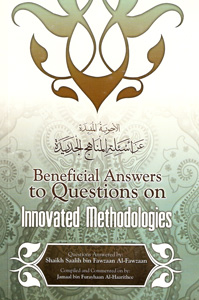
Beneficial Answers To Questions On Innovated Methodologies – Shaykh Saalih Fawzaan – Abu Muhammad al Maghribee [Audio|En]

Beneficial Answers To Questions On Innovated Methodologies - Shaykh Salih FawzaanThis is the weekly Wednesday evening class on the book Al Ajwibah Al Mufeedah ‘An As-ilat Al Manaahij Al Jadeedah (Beneficial Answers to Questions on Innovated Methodologies) by our noble Sheikh Saaleh al-Fawzaan, hafidhahullah.

You may download a copy of the original Arabic text here: الأجوبة المفيدة عن أسئلة المناهج الجديدة

As with all of our classes at Masjid Tawheed in Stone Mountain, GA, we encourage you to join us.

If you are not able to attend in person, please feel free to listen in via our Spreaker channel or our telelink line at 712-432-2856.

About the Book: 

Author: Shaikh Saalih Al-Fawzaan; Compiled by Jamaal bin Furayhaan Al-Haarithee
Publisher: Al-Ibaanah Book Publishing (01-May-04)
Pages: 208 Binding: Paperback

This is a translation of the tremendous book “Al-Ajwibatul-Mufeedah ‘an As’ilatil-Manaahij al-Jadeedah”, which is a compilation of questions presented to Shaykh Saalih al-Fawzaan and his responses to them. The source used for this was the 1997 second edition, published by Daar as-Salaf of Riyadh, Saudi Arabia.

From the topics covered in the book are: The Definition of the Salafee Manhaj, Obedience to the Rulers, Warning against Innovators, Exposition of Deviant Groups, Refutations of Innovated Practices such as Plays and Anaasheed (songs in the name of Islam), the Rulings on Groups and Parties, and Advice to the Students of Knowledge.

Altogether, this combination of a scholar’s guidance and wisdom with a student of knowledge’s research and investigation makes for an incredible and invaluable resource for Muslims everywhere to benefit from.

Beneficial Answers on Innovated Methodologies – 01 – 20140319
Beneficial Answers on Innovated Methodologies – 02 – 20140326
Beneficial Answers on Innovated Methodologies – 03 – 20140402
Beneficial Answers on Innovated Methodologies – 04 – 20140409
Beneficial Answers on Innovated Methodologies – 05 – 20140416
Beneficial Answers on Innovated Methodologies – 06 – 20140423
Beneficial Answers on Innovated Methodologies – 07 – 20140430
Beneficial Answers on Innovated Methodologies – 08 – 20140507
Beneficial Answers on Innovated Methodologies – 09 – 20140514
Beneficial Answers on Innovated Methodologies – 10 – 20140521
Beneficial Answers on Innovated Methodologies – 11 – 20140528
Beneficial Answers on Innovated Methodologies – 12 – 20140820
Beneficial Answers on Innovated Methodologies – 13 – 20140827
Beneficial Answers on Innovated Methodologies – 14 – 20140903
Beneficial Answers on Innovated Methodologies – 15 – 20140910

Question no. 32
Beneficial Answers on Innovated Methodologies – 16 – 20140917

Question no. 35
Beneficial Answers on Innovated Methodologies – 17 – 20140924

Question no. 51
Beneficial Answers on Innovated Methodologies – 18 – 20141022 Q51

Question no. 53
Beneficial Answers on Innovated Methodologies – 19 – 20141029 Q53

Question no. 55
Beneficial Answers on Innovated Methodologies – 20 – 20141105 Q55

Question 55, Footnote 153.
Beneficial Answers on Innovated Methodologies – 21 – 20141112

We continue with Question no. 60: How should we advise the rulers?
Beneficial Answers on Innovated Methodologies – 22 – 20141119

We continue with Question no. 61: Does Salafiyyah divide the Muslims?
Beneficial Answers on Innovated Methodologies – 23 – 20141126

We continue with the Question no. 62: What is Salafiyyah?
Beneficial Answers on Innovated Methodologies – 24 – 20141203

We start with Question no. 65: Is the one who performs an innovated action without knowing that it is an innovation, rewarded for it?
Beneficial Answers on Innovated Methodologies – 25 – 20141210

We continue with Question no. 67: What is the ruling of the one who loves a caller to Islam and doesn’t want him to be refuted?
Beneficial Answers on Innovated Methodologies – 26 – 20141217

We continue with Question no. 71: There are so many groups amongst the Muslims; which one is upon the truth and how can we tell?
Beneficial Answers on Innovated Methodologies – 27 – 20141231

We continue with the Question no. 74: What is the ruling on the one who speaks ill of the scholars?
Beneficial Answers on Innovated Methodologies – 28 – 20150114

We continue with Question no. 75: What is the ruling on taking disbelievers as allies?
Beneficial Answers on Innovated Methodologies – 29 – 20150121

We continue with the Question no. 78: What is the shaykh’s advice to those who accuse him of not outwardly repelling the faults of the rulers?
Beneficial Answers on Innovated Methodologies – 30 – 20150128

We continue with Question no. 85: What are the means that lead to unity?
Beneficial Answers on Innovated Methodologies – 31 – 20150204

We continue with Question no. 85: What are the actions that will lead to the unity of Muslims?
Beneficial Answers on Innovated Methodologies – 32 – 20150304

We cover Question no. 93: Is it possible for Muslims to be united even though they have different methodologies and creeds?
Beneficial Answers on Innovated Methodologies – 33 – 20150311

We cover Question no. 94: Is it possible for Muslims to be united even though they are split into different parties?
Beneficial Answers on Innovated Methodologies – 34 – 20150318

We cover Question no. 95: What is the ruling on suicide bombings?
Beneficial Answers on Innovated Methodologies – 35 – 20150325

We continue with Question no. 98: Are “protests” part of calling to Islam?
Beneficial Answers on Innovated Methodologies – 36 – 20150401

We continue with Question 99: What is your opinion of protests and demonstrations?
Beneficial Answers on Innovated Methodologies – 37 – 20150408

We continue with Question no. 102: Why did the Salaf warn against the “Qussaas” (the storytellers)?
Beneficial Answers on Innovated Methodologies – 38 – 20150415

We begin with Question no. 103: Where did these so-called Islamic groups come from?
Beneficial Answers on Innovated Methodologies – 39 – 20150422

We begin with Question no. 105: Who is the Jama’at at-Tableegh and what is their manhaj?
Beneficial Answers on Innovated Methodologies – 40 – 20150506

We continue with Question no. 108: Is there any advice that will serve as a guideline for those who have been deceived by the deviant groups?
Beneficial Answers on Innovated Methodologies – 41 – 20150513

These are ongoing series, check the below link for updates

Sourcehttp://followthesalaf.com/home/?tag=Beneficial+Answers+on+Innovated+Methodologies

The difference between Ibadah (Worship) and Obedience – Imam Ibn Baaz

In the Name of Allah, the Most Gracious, the Most Merciful

An extract from my letter I sent to His Excellency Shaykh Abu Al-A`la Al-Mawdudy concerning the difference between `Ibadah and obedience

On 2/4//1392 A.H., Abu Al-A`la Al-Mawdudy sent me a letter no. 1526, dated 2 Safar, 1392 A.H. explaining his case and Tufayl’s, his successor in the leadership of Islamic Group. I replied in the same year when I was the President of the Islamic University in Al-Madinah Al-Munawwarah and the following is some of my reply:

Some brothers from Milbar living in the country told me that Your Eminence opine that `Ibadah is clarified by obedience and that when someone obeys another, he worships him. `Ibadah is also interpreted as enslavement and idolization.

Furthermore, Shaykh `Umar ibn Ahmad Al-Millibary, owner of Al-Salsabil Magazine, wrote to me concerning this issue asserting what is mentioned about you and the Group. He sent me a copy of a survey pertaining to this question. You will find an enclosed copy of it.

This question appears strange for me so I determined to write to you before I receive your letter to know whether these statements which are attributed to you are true. So, please let me know your opinion. I see that obedience has a wider scope than `Ibadah. Every act of `Ibadah a person does in compliance with Allah’s Shari`ah is seen as obedience, but not every act of obedience to anything other than Allah (Exalted be He) is seen as `Ibadah. This matter needs more elaboration. Obedience to Allah (Exalted be He) is seen as `Ibadah when a person seeks to please Him. However, it may be valid or corrupt depending on whether the requirements of `Ibadah are met.

Please tell me in details your view on this question. It adds further explanation that `Ibadah may be denied when tainted with Shirkas Allah says concerning Mushrik (one who associates others with Allah in His Divinity or worship), “Nor will you worship that which I worship.” Surah Al-Kafirun, 109: 3 . Ibadah is negated because of their acts of Shirk. It is known that they worship Allah (Exalted be He) during times of hardships through showing Tawhid, performing Hajj and `Umrah, offering Sadaqah and so on.

Since these acts of `Ibadah are spoiled by Shirk, disbelief in the Hereafter and other kinds of disbelief during times of prosperity, it is permissible to negate the `Ibadah of people who show it. Furthermore, I would like to explain another point. The person who obeys the authorities or rulers in something forbidden by Allah (Exalted be He) is not seen worshipping them when he does not believe in the permissibility of obedience to anyone in something opposing Allah’s Shari`ah. They rather obey these rules out of fear of their evils or vain desires while they know that they are sinful. Due to their act of obedience, such persons are sinners, not Mushriks, unless they obey such rulers in matters which do not involve Shirk. Examples of these matters include striking, killing, and taking someone’s money unjustly. There are many other examples that come under this heading. I think this view is known by the people of knowledge whose status is below yours. I find it imperative to ask you about this and know your detailed opinion so that I can refute any claim against you and support you with sure knowledge and show the truth concerning the Islamic Group to any one who seeks it.

If what is attributed to you is true, we can discuss it thoroughly and examine the problematic issues using the evidence. The truth is the long-sought aim of everyone.

We ask Allah (Exalted be He) to grant us success to do what pleases Him and to comprehend His Religion and to adhere to it. May Allah purify our hearts and deeds and make the truth our long-sought aim wherever we are, for He is the Most Generous. As-salamu `alaykum warahmatullah wabarakatuh (May Allah’s Peace, Mercy, and Blessings be upon you!)

President of the Islamic University in Al-Madinah Al-Munawwarah
Abdul-`Aziz ibn `Abdullah ibn Baz

Sourcehttp://www.alifta.net/Fatawa/FatawaChapters.aspx?languagename=en&View=Page&PageID=442&PageNo=1&BookID=14

Happiness, Misery, and Signs of Their People – Ibn Qayyim Al-Jawziyyah

Original Title : السعادة والشقاوة وعالمة أهلها )الفواْئد)
Original Author: Ibn Qayyim Al-Jawziyyah
Translator : Abu az-Zubayr Harrison –  authentic-translations.com
This article is taken from Ibn Qayyim Al-JAwziyyah’s famous book, “Al-Fawaaid” (no. 112)

Click below link to read or download article PDF

Happiness, Misery, and Signs of Their People-Ibn al Qayyim [PDF]

From the signs of happiness and joy is that whenever a worshipper increases in knowledge, his humbleness and mercy increases. Whenever he increases in acts of worship, his fear and caution increases. Whenever he increases in age, his greed decreases. Whenever he increases in wealth, his generosity and spending increases. And whenever he increases in status and position, his nearness to the people increases as does his fulfilling their needs and being humble with them.

And from the signs of misery is that whenever a worshipper increases in knowledge, his pride and arrogance increases. Whenever he increases in acts of worship, his bragging increases as does his belittling of people while always giving himself the benefit of the doubt. And whenever he increases in status and position, his arrogance and ego increases.

All of these things are trials from Allaah and a test by which He tests His servants, and because of them, some people attain happiness and others become miserable.

Similarly, some things people honor and admire are also trials like possessions, authority, and wealth. Allaah says about His prophet, Sulaymaan, when he saw the throne of Bilqees in front of
him:

“هَذَا مِنْ فَضْلِ رَبِّي لِيَبْلُوَنِي أَأَشْكُرُ أَمْ أَكْفُرُ “

This is from the favor of My Lord to test me whether I will be grateful or ungrateful. [Soorah An-Naml, 27:40]

So, blessings are tests from Allaah that make apparent the gratitude of the grateful, and the ingratitude of the ungrateful. In the same way, hardhips are also trials from Him سُبْحَانَه .He tests by way of blessings and hardships.

Allaah says:

“فَأَمَّا الإِنْسَانُ إِذَا مَا ابْتَلاهُ رَبُّهُ فَأَكْرَمَهُ وَنَعَّمَهُ فَيَقُولُ رَبِّي أَكْرَمَنِ وَأَمَّا إِذَا مَا ابْتَلاهُ فَقَدَرَ عَلَيْهِ
رِزْقَهُ فَيَقُولُ رَبِّي أَهَانَنِ “

And as for man, when his Lord tests him and is generous to him and favors him, he says, “My Lord has honored me!” But when He tests him and restricts his provision, he says, “My Lord has humiliated me!” [Soorah Al-Fajr, 89:15-16]

In other words, it’s not the case that everyone I increase with honor and blessings, that’s My way of honoring him. And everyone I tighten his sustenance and test him, it’s not necessarily that I’m humiliating him.