172- “Allaah will say to the one who has been punished the least from the people of the Hell-fire on the Day of Judgment: ‘O son of Adam! How have you found your resting place?’
He will say: ’An evil resting place!’
It will be said to him: ‘If you had the world and everything in it, would you ransom yourself with it?’
He will say: Yes.
Allaah will say: You have lied, what I wanted from you was less than that, while you were in the spine (and in another narration: in the back) of Adam, that you do not associate anything with Me, and I will not enter you into the fire, but you refused and committed Shirk. He will be ordered to be taken to the fire.’
Regarding this hadeeth:
• Regarding His saying: ‘He will say: you have lied.’ An-Nawawee said:
‘It means: If We returned you to the Duniya, you would not have ransomed it, because you were asked for something easier than that but you refused. This will have the same meaning as in the saying of Allaah Ta’ala:
<< But if they were returned (to the world), they would certainly revert to that which they were forbidden. And indeed they are liars >>
Therefore, the meaning of this hadeeth is combined with the saying of Allaah Ta’ala:
<< If they had all that is in the earth, and as much again therewith to ransom themselves thereby >>
• Regarding, His saying: ‘I wanted from you’: i.e. I would have loved from you. When the word ‘Allaah’s Will’ (al-Irada) is mentioned in the Sharia’, it is used in the absolute sense. It means what is general both from the good and the bad, guidance and misguidance.
As is mentioned in the saying of Allaah Ta’ala:
<< And whomsoever Allaah wills to guide, He opens his heart to Islaam, and whomsoever He wills to send astray, He makes his heart closed and constricted, as if he is climbing up to the sky. >>
This Will of Allaah (al-Irada) is that which will most definitely happen. Sometimes when this Will of Allaah (al-Irada) is applied it means, that which is the synonym of love and being pleased. As is mentioned in the saying of Allaah Ta’ala:
<< Allaah intends for you ease, and He does not want to make things difficult for you >>
That is the meaning of the intent of the saying of Allaah Ta’ala in this hadeeth:
‘I wanted from you’ i.e. that I loved from you. The Will of Allaah (al-Irada) with this meaning might not happen, since Allaah Tabaraka wa Ta’ala does not force anyone to obey Him, even though He created them because of it.
<< Then whosoever wills, let him believe, and whosoever wills, let him disbelieve >>
So, therefore Allaah Tabarak wa Ta’ala could want from His slave that what Allaah does not love from His slave, and Allaah loves from His slave that which His slave does not want.
Ibn al-Qayyim -may Allaah have mercy upon him – called this Will of Allaah (alIrada) a will of the order of being (al-Irada), taking that from the saying of Allaah Ta’ala:
<< Verily, His Command, when He intends a thing, is only that He says to it, “Be!” and it is>>
He called the other Will (al-Irada) which is a synonym for ‘being pleased’: the Sharia’ Will (al-Irada).
Whoever understands this division, then he has a solution to many of the problems of understanding the issues of al-Qadaa (Allaah’s ordainment of everything in creation) and al-Qadr (Allaah’s Pre-decree for the creation). And he will succeed from the fitna (tribulations) of the stance of those who say that a person does actions under force, or who hold the beliefs of the Mu’tazilah. The explanation of this can be found in the magnificent book ‘Shifaa’ al-Aleel al-Qadaa wal-Qadr wal-Hikmaah wa Ta’aleel’ by Ibn al-Qayyim -May Allaah have mercy upon him.
• Regarding His saying: ‘……. and you were in the spine of Adam.’ Qadi Iyaad said:
‘The Messenger indicates to the saying of Allaah Ta’ala << And (remember) when your Lord brought forth from the Children of Adam, from their loins, their seed (or from Adam’s loin his offspring)>>, in the Ayaah.
This covenant was taken from them while they were in the spine of Adam. So, whoever fulfills it after he is brought into this world then he is a believer, and whoever does not fulfill it, is a Kaffir.
Therefore, the intent of this hadeeth is: I wanted from you when I took the covenant, but you refused so I took you to the Duniya but you committed Shirk.’
This is mentioned in ‘al-Fath’
Posted from: The Ahadeeth of Tawheed, Part 06, Explained By the Muhaaddith, the Allaamah, Shaykh Naasirud-Deen al-Albaanee (rahimullaah), Source: Silsilah Ahadeeth As-Saheehah of Shaykh Al-Albaani (rahimahullaah), Translated by: Abbas Abu Yahya (hafidhahullaah)
Share this, Baarakallaah Feekum: [“One who guides to something good has a reward similar to that of its doer” - Saheeh Muslim vol.3, no.4665] [This website protects the copyrights of the authors/publishers. The Content is posted on this website with implicit/explicit permission from content owners]
478 – “Allaah Azza wa jal said: Making a vow does not earn anything for the son of Adam except that which I have destined for him. Rather, making a vow is something which makes a miserly person give. He comes to Me with that which he would not offer due to his miserliness. “
And in another narration: ‘He offers that which he never offered before.”
From The Fiqh of the hadeeth
This hadeeth, with all its different wordings, indicates that it is not legislated to make a vow, rather it is disliked.
The apparent meaning of this prohibition in some of its narrations is that making a vow is haram as some of the scholars have said. However, the saying of Allaah Ta’ala: “Rather, making a vow is something which makes a miserly person give.” One feels that this dislike or prohibition is specific to making a vow which is offered to Allaah as a recompense or which is done in exchange for a reward rather than a vow which, from the onset, is done out of obedience to Allaah. This (second type of) vow is purely a means of coming closer to Allaah.
This is because the one who is making the (second type of) vow has the correct intent with it, i.e. that he wants to receive an obligatory reward, which is better than the optional reward. This is the vow which is intended – and Allaah knows best – with the saying of Allaah Ta’ala: <<They fulfil their vows>> rather than the meaning of the vow which is offered as a recompense to Allaah or which is done in exchange for a reward.
Al-Hafidh said in ‘al- Fath (11/ 5000) that at -Tabari narrated an athar with an authentic chain on the authority of Qatadah who said regarding the saying of Allaah Ta’ala: <<They fulfil their vows>>
‘They would make vows in obedience to Allaah in their prayer and their Fasting, Zakaat, Hajj, Umra and in those things that Allaah had made obligatory upon them. Allaah labelled them as righteous people. It is clear that this praise is not for the making a vow which is offered as a recompense to Allaah.’
Before this he said:
‘That Qurtubi mentioned in his book ‘al- Mufhim’, that the prohibition in the hadeeth regarding the vow was that vow offered as a reward to Allaah, and he said:
An example of this prohibition is to say for instance, “If Allaah cures me from my illness then I will give such and such in charity.” The point of objection here is when the goal of coming closer to Allaah is given a condition, this then makes it clear that the action was not done with the pure intention of coming closer to Allaah Ta’ala rather he did it in exchange for recompense.
What shows us this is that if he was not cured -from his illness- then he would not give charity. So he attached the act of giving charity to (Allaah) curing him. This is the condition of the miserly person. Surely he does not give anything from his wealth unless he has a quick, increased return on what he gave.
So this is the meaning which is referred to in the hadeeth when the Messenger of Allaah said “Making a vow is something which extracts from a miserly person, that which a miserly person would not give”
Sometimes what is added to this ignorant belief is the idea that a vow means that the goal will be achieved or that Allaah gives him this goal due to this vow. This is also indicated in the hadeeth: “Without doubt, a vow cannot repel whatever Allaah has destined”. The first situation is close to disbelief and the second is a clear mistake.’
Al- Hafidh said: “I say: rather that the second type is also close to disbelief.” Then he brings a quote from al-Qurtubi in which the scholars regarded the prohibition mentioned in the narration is understood to be of disapproval. Then he says: “what is apparent to me is that, it is held to be prohibited for the one whom you fear has corrupt belief. Therefore it would be haram for this person to make this vow, and it would be regarded as disapproval for the one who does not have that corrupted belief.”
This is a good explanation and what supports this is the story of Ibn Umar, who is the narrator of the hadeeth regarding the prohibition of vows, since they are vows offered as recompense.
I say: what he intends by this story is what has been narrated by Hakim (4/304) by way of Faleeh bin Sulayman on the authority of Sa’eed bin Harith that he heard Abdullaah bin Umar when he was asked by a man called Mas’ood bin ‘Amr, from the tribe of Bani Ka’b, say: o Abu Abdur Rahman my son was in the lands of the Persians, from those who were with Umar bin UbaydAllaah in Basra. There fell a severe plague, so when this reached me I made a vow that if Allaah brought my son to me I would walk to the ka’ba. My son came, but he was sick and died, so what do you think? ‘
Ibn Umar said: Were we not prohibited from making vows?! Certainly the Messenger of Allaah -alayhis-sallat wa sallam- said; “A vow doesn’t bring anything forward nor does it delay anything, rather it takes something out of a miserly person.” Fulfil your vow.”
So, summing up, there is a warning in this hadeeth for the Muslim not to approach a vow which is offered as a reward. Therefore it is for the people to know this so that they do not fall into this prohibition whilst they thought that they were acquiring good by their deeds!
All Praise belongs to Allaah, may His peace and blessings be upon our final Prophet Muhammad, his Family, his Companions and all those who follow his guidance.
Posted from: The Ahadeeth of Tawheed, Explained By the Muhaaddith, the Allaamah, Shaykh Naasirud-Deen al-Albaanee (rahimullaah), Source: Silsilah Ahadeeth As-Saheehah of Shaykh Al-Albaani (rahimahullaah), Translated by: Abbas Abu Yahya (hafidhahullaah)
Share this, Baarakallaah Feekum: [“One who guides to something good has a reward similar to that of its doer” - Saheeh Muslim vol.3, no.4665] [This website protects the copyrights of the authors/publishers. The Content is posted on this website with implicit/explicit permission from content owners]
Any Muslim with any Iman within them, and with their Aqeedah and their Manhaj try to understand that the TV is a Shaitan. That the TV is behind all evils. TV is behind the destruction of families. The reason behind this talk is to remind the Muslim Brothers and sisters so they can follow the reminder when it comes to them. This is not to make them apply this to their intellect and if they do so, they will say that it doesn’t apply to them.. I am aware of the TV, Like many people say they have a TV only for the CNN. Some brothers or the sisters they claim that they have the TV only for the News. Some brothers they say have the TV only for the Travel Show. Somebody may say what does that Travel Show have to do with the Muslim, or the Salafee? Look how twisted .. sometimes we may be and how Shaitan puts us to sleep. So we find excuses against ourselves. That brother he may say: “Yeah, I am watching the Travel Show”. What does that have to do with your life? From a channel to another, SubhanaAllah they may be watching Bay Watch, Wrestling, Ophrah ….. then what? They are not only the ones watching, not adults only, but the kids are also watching.
When the command of Allah and His messenger came to you, you must apply it. In Surah Ahzab : 36
“It is not befitting for any believing men or women that when Allah and His Messenger (sallallahu alaihi wa sallam) decreed upon a matter that they will have a choice in regard to the decision and whoever disobeys Allah and His Messenger (sallallahu alaihi wa sallam) indeed he is in a clear mistaken error.”
There are a lot of evils he is going to mention about the TV. one of the evils is enough to make TV haram, not the 20. The brother has selected 20 and the 20 are the many many evils of the TV. But his is only a selection. one of the reasons I mention is enough for any one who has Iman who has understood the ayah, and he still has the TV, he will put the TV in the trash. If you look at the arrows on the remote, they are faded, because the thumbs have been on it.
Some people after reading or hearing these evils may seem, nothing is applicable on me. Nothing is applicable on you? 20 major destructive things, that destroys the marriages, destroy the education, destroys the Dawah, destroys the religion, destroys men and women, destroys children, destroys that the Prophet (sallallahu alaihi wa sallam) lived upon, destroy the Aqeedah…. None is applicable on you??? Who are you? Simply he is saying ” I don’t care what you are saying, but the TV stays. I cannot do without do without it.
Listen to the full lecture / Read the full Transcript at the link below. Very Beneficial one. May Allaah guide you to get rid of this evil from your homes
Share this, Baarakallaah Feekum: [“One who guides to something good has a reward similar to that of its doer” - Saheeh Muslim vol.3, no.4665] [This website protects the copyrights of the authors/publishers. The Content is posted on this website with implicit/explicit permission from content owners]
Giving the Kaffir the glad-tidings of the Hellfire and Passing by the Places where the Mushrikeen Where Destroyed
18- ‘When ever you pass by the grave of a kaffir then give him the glad tidings of the Hellfire.’
The Origin Of the hadeeth
‘A Bedouin came to the Prophet and said: ‘My father used to keep good relations with his relatives and he used to do such and such good deeds so where is he?” He -sall’Allaahu alayhi wa sallam- said ‘in the fire’: It was as if the Bedouin was upset due to this, so he said, “O Messenger of Allaah, then where is your father?”
He said: ‘Whenever you pass by the grave of a kaffir then give him the glad tidings of the Hellfire.’
The Bedouin accepted Islaam and he said; the Messenger of Allaah -sall’Allaahu alayhi wa sallam- gave me the responsibility of a task; I did not pass by a grave of a kaffir except that I gave him the glad tidings of the Hellfire.’
From the understanding of the hadeeth
There is a great benefit in this hadeeth which many of the general books of fiqh have neglected which is none other than the legislation of giving the kaffir the glad tidings of the Hellfire if you pass by his grave.
What is in this legislation is not hidden, since it contains that which awakens the believer and reminds him of the danger of the sin of the kaffir, who has committed a great sin which would make all of the sins of the world facing him seem like nothing if they were all gathered together. The sin is disbelief in Allaah Azza wa Jal and committing shirk with him, which Allaah Ta’ala explained His severe hatred of such that He excludes shirk from His forgiveness. He says
<< Verily, Allaah forgives not that partners should be set up with him in worship, but He forgives except that (anything else) to whom He pleases >>
This is why the Messenger – sallAllaahu alayhi wa sallam – said; ‘That the biggest of the major sins is that you associate a partner to Allaah while He is the One who created you.’ [Agreed upon.]
Without doubt ignorance about this benefit is what leads some Muslims to fall into that which is contrary to what Allaah, the Most Wise, intends by this benefit.
With certainty we know that many of the Muslims come to the lands of the kuffar to take care of some of their general or specific interests. However, they do not suffice themselves with just this, rather they intend to visit some of the graves of those who are called great men from amongst the kuffar. They place flowers and wreaths and they stand in front of those graves with humility and sadness which indicates being pleased with those in the graves and not having a detest for them.
They do this even though the best example i.e. that of the Prophets – alayhim assalam – dictates the opposite of what they do, as is mentioned in this authentic hadeeth. Listen to the statement of Allaah Azza wa Jal:
<< Indeed there has been an excellent example for you in Ibraheem and those with him, when they said to their people: Verily, we are free from you and whatever you worship besides Allaah, we have rejected you, and there has started between us and you, hostility and hatred for ever >> the Ayaah.
This is their stance against those who were alive, so what about those are dead!!
Bukhaaree (2/120) and Muslim (8/221) narrate on the authority of Ibn Umar that the Messenger – sallAllaahu alayhi wa sallam said to them when he passed by Hijr (a place where the people had been destroyed):
‘Do not enter upon these people who were punished, except that you cry, and if you do not cry then do not enter upon them, so what afflicted them does not afflict you.’
Silsilah Ahadeeth As-Saheehah 19
[He veiled his face with is garment while he was on his mount]
Ahmad narrated this and the extra wording is from his book.
Sadeeq Hasan Khan mentioned a heading for this hadeeth in his book ‘Nazl alAbraar’ p.293, which is; ‘Chapter : crying and fear while passing by the graves of the oppressors and the place where they were destroyed, and showing the need of going back to Allaah Ta’ala and warning against being neglectful about this.’
I ask Allaah Ta’ala to give us the understanding of our Deen and inspire us to perform actions according to it. Indeed He is the One who hears and answers.
Posted from: The Ahadeeth of Tawheed, Explained By the Muhaaddith, the Allaamah, Shaykh Naasirud-Deen al-Albaanee (rahimullaah), Source: Silsilah Ahadeeth As-Saheehah of Shaykh Al-Albaani (rahimahullaah), Translated by: Abbas Abu Yahya (hafidhahullaah)
Share this, Baarakallaah Feekum: [“One who guides to something good has a reward similar to that of its doer” - Saheeh Muslim vol.3, no.4665] [This website protects the copyrights of the authors/publishers. The Content is posted on this website with implicit/explicit permission from content owners]
“There is no obedience due to anyone in disobedience to Allaah Tabarak wa Ta’aala.” [Silsilah Saheehah: 179]
“There is no obedience in disobedience to Allaah Tabaraka wa Ta’aala.” [Silsilah Saheehah: 180 ]
“There is no obedience to mankind in disobedience to Allaah, indeed obedience is in goodness.“[Silsilah Saheehah: 181]
The reason for this hadeeth:
The Messenger of Allaah- sallAllaahu alayhi wa sallam – dispatched an army, and he commanded a man to lead them, who lit a fire, and the man said to the army: enter into the fire. The people wanted to enter into the fire, but some of them said : verily we have just fled from the fire.
This was mentioned to the Messenger of Allaah – sallAllaahu alayhi wa sallam – and he said to those who wanted to enter into it: if you entered it you would have remained in it until the Day of Judgment, and he said a good word to the others, and he said…..(the above hadeeth).
The extra wording in the hadeeth is from Tayyalisee and the context is by Muslim.
In another narration by him where he said:
“The Messenger of Allaah – sallAllaahu alayhi wa sallam – dispatched a battalion and ordered a man from the Ansaar to lead them, and he ordered them to listen to him and obey him. They caused this man to get angry, so he said to them: Gather some firewood for me, so they gathered it for him. Then he said: light the fire and they lit the fire, then he said to them: Did not the Messenger of Allaah – sallAllaahu alayhi wa sallam – order you to listen and to obey me? They said Yes, of course.
He said – enter in to the fire!
So they started to look at each other, and said (and in another narration: a young boy said to them) : indeed we fled to the Messenger of Allaah – sallAllaahu alayhi wa sallam – from the fire, [ do not be hasty, until you meet the Prophet – sallAllaahu alayhi wa sallam – and if he orders you to enter it, then enter into it ], so this is what they did.
The man’s anger came down/subsided, and the fire was put out. When they returned to the Prophet – sallAllaahu alayhi wa sallam – and mentioned it to him, he said: if you had entered it, you would never have exited from it, indeed obedience is in goodness.”
Narrated by Bukhari (8/47, 13/109), Muslim (6/16), Ahmad (1/82, 134) and other narrations which contain the extra wording is also by Ahmad.
This hadeeth has many benefits, the most important of which is the impermissibility of obedience to anyone, if it is disobedience to Allaah Tabarak wa Ta’aala, whether it is the leaders, scholars and the shaykhs.
Also from this hadeeth you get to know the misguidance of different groups of people;
The first: some of the soofis who obey their shaykhs, even if they command them to commit sins, using as a proof, that they in reality are not committing sins. Also that the shaykh sees that which the follower does not see.
I know a shaykh from amongst these people who appointed himself as a leader. He mentioned a story to his followers in some of his lessons in the masjid, the summary of which is, one of the Soofi shaykhs ordered one of his followers that during the night he should go to his father and kill him while he is in his bed next to his wife! So when he killed him, he returned to the shaykh, happily having carried out the command of the shaykh! The shaykh looked at him and said: Do you think that you have really killed your father? Rather he is your mother’s boyfriend! As for your father he is away!
Then he makes and presents a Sharia’ ruling, as he claims, from his story, and he says to his followers : If a shaykh orders his follower with a ruling which is apparently against the Sharia’, it is upon the followers to obey him in this, then he said: Do you not see this shaykh, he apparently orders the boy to kill his father, however in reality he ordered him to kill the one who fornicated with his mother, and that person deserved to be killed!
The falsity of this story is not hidden according to the Sharia’ from many angles:
Firstly: Carrying out the punishment is not the right of the shaykh, no matter how important he is; rather it is from the right of the leader or the one in charge.
Secondly: if the case was that this actually took place, then why did he only carry out the punishment on the man and not the woman, and they both fornicated?
Thirdly: the Sharia’ ruling for the married adulterer is to be stoned to death, and the person is not killed except by stoning. From this it is clear that the shaykh has opposed the Sharia’ from many angles, this is also the situation with the follower who based upon this previous story, made it incumbent upon the Muslims to be obedient to the shaykh, to the extent one of them said to the people: if you see the shaykh and he is wearing a cross around his neck, then it is not allowed to criticize him!
With all the clarity of the absurdity of these stories, and their opposition together to the Sharia’ and to the intellect, we find some people become deceived by these stories, and amongst them some of the cultured youth. A discussion took place between me and one of those youths about that story, and he had heard it from that follower of the shaykh, and what the shaykh had based his ruling upon. However, the discussion with him did not bring about any benefit. He persisted in believing this story, since according to his claim, it was a miracle, and he added: you people reject miracles!
So when I said to him: If your shaykh orders you to kill your father, would you do it?
He said: Indeed, I have not reached that level yet!
So after this can anyone be blamed for characterizing the religion of these shaykhs except that they are the opium of the people?
The second group is:
The blind followers who prefer to follow the statements of the Madhab above the statement of the Prophet – sallAllaahu alayhi wa sallam with what is clearly taken from the statements of the Prophet – sallAllaahu alayhi wa sallam. So if it is said to one of them, for example: do not pray the Sunnah of the Fajr prayer after the obligatory prayer has begun, due to the prohibition of the Prophet – sallAllaahu alayhi wa sallam – from doing so, which is clear, they do not obey, and they say the Madhab allows this.
If it is said to them: the Nikah at-Tahleel ( whereby another man marries the divorced woman and then divorces so that she can be allowed to marry her first husband) is invalid, because the Prophet – sallAllaahu alayhi wa sallam – cursed the one who does this. They would answer by saying: No, but it is permissible according to such and such Madhab!
There are hundreds of issues like this, and this is why many of the scholars held the opinion that the saying of Allaah Tabaraka wa Ta’ala about the Christians: << They took their rabbis and their monks to be their lords besides Allaah >> applies to these blind followers, as Fahkr ar-Razi has explained in his Tafseer.
Posted from: The Ahadeeth of Tawheed, Explained By the Muhaaddith, the Allaamah, Shaykh Naasirud-Deen al-Albaanee (rahimullaah), Source: Silsilah Ahadeeth As-Saheehah of Shaykh Al-Albaani (rahimahullaah), Translated by: Abbas Abu Yahya (hafidhahullaah)
Share this, Baarakallaah Feekum: [“One who guides to something good has a reward similar to that of its doer” - Saheeh Muslim vol.3, no.4665] [This website protects the copyrights of the authors/publishers. The Content is posted on this website with implicit/explicit permission from content owners]
Q 5: Is it permissible for the Imam to perform Du`a’ (supplication to Allah) after performing the prescribed prayer while all the people are still present?
A: Acts of worship are Tawqifiy (bound by a religious text and not amenable to personal opinion). Therefore, it is not legally permitted to say that this act of worship is permissible with regard to its origin, number, manner or place without legal evidence for saying so.
We do not know any Sunnah of the Prophet (peace be upon him) where he did this, either from his sayings, doings or what gains his consent. All blessings are in following his guidance. The guidance of the Prophet (peace be upon him) is established with authentic proofs that denote what he (peace be upon him) did after Taslim (salutation of peace ending the Prayer). The successors, the Companions of the Prophet and those who followed them in righteousness followed his example in this regard. Whoever innovates anything other than the guidance of the Messenger of Allah (peace be upon him), his acts will be rejected. The Prophet (peace be upon him) said: “He who did any act for which there is no sanction from our behalf, that is to be rejected.” [1]
The Imam who makes Du`a’ (supplication to Allah) after Taslim and the followers pronounce Ta’min (saying: “Amin”) after his Du`a’ should be asked to bring evidence that proves his deeds. Otherwise, his acts will be rejected.
Therefore, we will give an outline about the guidance of the Prophet (peace be upon him) after Taslim. When the Prophet (peace be upon him) pronounced Taslim, he used to ask Allah for forgiveness three times and say: “O Allah, You are the Grantor of security, and security comes from You. You are Blessing, O You Who have majesty and nobility)!” [2]
Al-Awza`y was asked about the manner of the Prophet’s asking for forgiveness. He answered: “He said: ‘I seek the forgiveness of Allah. I seek the forgiveness of Allah.'” This is the narration of Muslim, Al-Tirmidhy and Al-Nasa’y. But Al-Nasa’y said that the Prophet (peace be upon him) used to say that upon finishing his prayer, and then mentioned the Hadith.
In the narration reported by Abu Dawud: “After finishing his prayer, the Messenger of Allah (peace be upon him) used to ask Allah for forgiveness three times and say: O Allah! You are Peace.” [3]
In the narration reported by Abu Dawud and Al-Nasa’y on the authority of `Aishah (may Allah be pleased with her) the Prophet (peace be upon him) said: “When the Messenger of Allah (peace be upon him) pronounced salutation, he used to say: O Allah: You are peace, and peace comes from You, blessed are You, Possessor of Glory and Honor.”[4]
Al-Bukhari and Muslim reported on the authority of Warrad the scriber of the servant of Al-Mughirah ibn Shu`bah that he said that Al-Mughirah ibn Shu`bah dictated to me a letter to Mu`awiyah that When the Messenger of Allah (peace be upon him) finished the prayer and pronounced salutation he uttered (this supplication): There is none worthy of worship (in truth) but Allah. He is alone, Who has no partner. To Him belongs the sovereignty and to Him praise is due and He is Potent over everything. O Allah! No one can withhold what You give, or give what You withhold, and the riches cannot avail a wealthy person with You. [5]
Muslim reported in his Sahih on the authority of `Abdullah ibn Al-Zubayr (may Allah be pleased with them both) that the Prophet (peace be upon him) said: He used to say at the end of every prayer after pronouncing salutation (these words): There is none worthy of worship (in truth) but Allah. He is alone. There is no partner with Him. Sovereignty belongs to Him and He is Potent over everything. There is no might or power except with Allah. There is none worthy of worship (in truth) but Allah and we do not worship but Him alone. To Him belong all bounties, to Him belongs all Grace, and to Him is worthy praise accorded. There is none worthy of worship (in truth) but Allah, to Whom we are sincere in devotion, even though the unbelievers should disapprove it. He added: The Prophet (peace be upon him) used to say so after pronouncing salutation at the end of every prayer. [6]
In another narration reported also by Muslim the Prophet (peace be upon him) said: “He who recites after every prayer: Subhan-Allah (Allah is free from imperfection) thirty-three times; Al-hamdu lillah (praise be to Allah) thirty-three times; Allahu Akbar (Allah is Greatest) thirty-three times; and completes a hundred with: La ilaha illallahu, wahdahu la sharika lahu, lahul-mulku wa lahul-hamdu, wa Huwa `ala kulli shai’in Qadir (there is no true god except Allah. He is One and He has no partner with Him. His is the sovereignty and His is the praise, and He is Omnipotent), will have all his sins pardoned even if they may be as the foam on the surface of the sea.” [7]
He who wants to know more supplications should read supplications in the comprehensive books like Jami` Al-‘Ousoul, Majm` Al-Zawa’d, Al-Matalib Al-`Aliyah Bi Zawa’d Al-Masanid Al-Thamaniyah and others.
May Allah grant us success. May peace and blessings be upon our Prophet Muhammad, his family, and Companions.
The Permanent Committee for Scholarly Research and Ifta’
Member Deputy Chairman Chairman
Abdullah ibn Ghudayyan `Abdul-Razzaq `Afify `Abdul-`Aziz ibn `Abdullah ibn Baz
Footnotes:
[1] Muslim, Sahih, Book on judicial decisions, no. 1718; and Ahmad ibn Hanbal, Musnad, vol. 6, p. 180
[2] Muslim, Sahih, Book on Masjids and places for Salah, no. 591; Al-Tirmidhy, Sunan, Book on Salah, no. 300; Abu Dawud, Sunan, no. 1512; Ibn Majah, Sunan, Book on performing Prayer and its Sunan, no. 928; Ahmad, Musnad, vol. 5, p. 280; and Al-Darimy, Sunan, Book on Salah, no. 1348
[3] Muslim, Sahih, Book on Masjids and places for Salah, no. 591; Al-Tirmidhy, Sunan, Book on Salah, no. 300; Abu Dawud, Sunan, no. 1512; Ibn Majah, Sunan, Book on performing Prayer and its Sunan, no. 928; Ahmad, Musnad, vol. 5, p. 280; and Al-Darimy, Sunan, Book on Salah, no. 1348.
[4] Muslim, Sahih, Book on Masjids and places for Salah, no. 592; Al-Tirmidhy, Sunan, Book on Salah, no. 298; Al-Nasa’y, Sunan, Book on Sujud-ul-Sahw, no. 1338; Abu Dawud, Sunan, no. 1512; Ibn Majah, Sunan, Book on performing Prayer and its Sunan, no. 924; Ahmad, Musnad, vol. 6, p. 235; and Al-Darimy, Sunan, Book on Salah, no. 1347.
[5] Al-Bukhari, Sahih, Book on Adhan, no. 844; Muslim, Sahih, Book on Masjids and places for Salah, no. 593; Al-Nasa’y, Sunan, Book on Sujud-ul-Sahw, no. 1341; Abu Dawud, Sunan, Book on Salah, no. 1505; Al-Darimy, Sunan, Book on Salah, no. 1349.
[6] Muslim, Sahih, Book on Masjids and places for Salah, no. 594; Al-Nasa’y, Sunan, Book on Sujud-ul-Sahw, no. 1340; Abu Dawud, Sunan, Book on Salah, no. 1506; Ahmad, Musnad, vol. 4, p. 4.
[7] Muslim, Sahih, Book on Masjids and places for Salah, no. 597; and Malik, Al-Muwatta*, Book on call to Prayer, no. 488.
Share this, Baarakallaah Feekum: [“One who guides to something good has a reward similar to that of its doer” - Saheeh Muslim vol.3, no.4665] [This website protects the copyrights of the authors/publishers. The Content is posted on this website with implicit/explicit permission from content owners]
Share this, Baarakallaah Feekum: [“One who guides to something good has a reward similar to that of its doer” - Saheeh Muslim vol.3, no.4665] [This website protects the copyrights of the authors/publishers. The Content is posted on this website with implicit/explicit permission from content owners]
[1] Taken from Ibn Rajab al-Ḥanbalī’s book Jāmi’ al-‘Ulūm wal-Ḥikam, an explanation of the forty-two famous ḥadīth collected by Imām al-Nawawī. The ḥadīth explained in this article is number nineteen.
The prophet ( صلّى الله عليه وسلّم ) said: “Know Allah in prosperity, He will know you in adversity.” [2]
When a worshipper is conscious and fearful of Allah in times of ease and wellbeing, preserving His rules and paying careful attention to His rights upon him, he begins to know Allah. There is then established between him and his Lord a special relationship. In return, his Lord will remember and know His worshipper during his times of hardship. He will preserve and take care of such person’s relationship with Him in difficult times. Because of this relationship, Allah saves his worshipper from his difficulties. This special relationship brings an individual close to his Lord and ensures His love for him and His answering of his prayers.
A person’s “knowing his Lord” is of two types:
1. A general knowledge. When a person is familiar with Allah is this manner, he simply accepts that He exists, affirms correct belief in Him, and has faith in Him. All believers in general know Allah in this way.
2. A specific knowledge and relationship. When a person truly knows Allah, he turns his heart completely to Him, devotes himself to Him, and feels at ease with Him. He is comforted when Allah is mentioned although he is still shy before Him and fears Him. Those who truly know Allah focus on this specific type of “knowing Him.”
Similarly, Allah’s “knowing his servant” is of two types.
1. A general knowledge. This is Allah’s knowledge of all His servants, His observation of everything they conceal or make apparent, as He ( تعالى ) says:
“And indeed We have created mankind, and We know what his own self whispers to him.” [3]
Another example of this general type of Allah knowing His creation is His statement:
“He was most knowing of you when He produced you from the earth and when you were fetuses in the wombs of your mothers.” [4]
2. A specific knowledge and relationship. This type of “knowing His servant” is when Allah loves His worshipper, brings him close to Him, answers his prayers, and helps him out of difficulties. This is the type of relationship the prophet ( صلّى الله عليه وسلّم ) refers to when he said that Allah says (in a ḥadīth qudsī):
“My servant continues to come close to Me with extra acts of worship until I love him. When I love him, I become his ears with which he hears, his eyes with which he sees, his hand with which he strikes, and his leg with which he walks. Were he to ask Me for anything, I would certainly give it him, and were he to seek My help, I would certainly help him.” [5]
Illustrating this specific type of Allah knowing His servants, there is a report that when al-Ḥasan was fleeing the oppression of al-Ḥajjāj, he came to the house of Ḥabīb Ibn Muḥammad. Ḥabīb said to him, “Abū Saī’d, is there no relationship between you and your Lord by which you could pray to Him to hide you from these people? Come into the house.” al-Ḥasan went inside, and al-Ḥajjāj’s soldiers went in after him but could not see him. When that was mentioned to al-Ḥajjāj, he said, “He was inside the house but Allah blinded your eyes so that you could not see him.”
In summary, whoever shows Allah constant, respectful fear and obedience during times of ease and prosperity, Allah will show him gentleness and assistance during times of difficulty and adversity.
al-Tirmidhī recorded a ḥadīth from Abū Hurayrah ( رضي الله عنه ) that the prophet ( صلّى الله عليه وسلّم ) said:
“Whoever would like Allah to answer him during hardships and difficulties then let him increase in supplication during times of wellbeing.” [6]
The most difficult hardship a servant faces in this life is death; what comes after it is even more severe if the servant’s final destination is not good (Paradise). So it is necessary for a believer to prepare for death and what follows it during times of ease and wellbeing by remaining constantly conscious and fearful of Allah and doing righteous deeds (during life). Allah ( عزّ وجلّ ) says:
“Oh you who believe, fear Allah and let every soul look to what it has put forth for tomorrow. And fear Allah, indeed Allah is aware of what you do. And do not be like those who forgot Allah so He made them forget about their own souls. Those are the defiantly disobedient ones.” [7]
Whoever remembers Allah while in good health, in times of ease and comfort, and prepares himself for his meeting with Allah ( عزّ وجلّ ) upon death and afterwards, Allah will in return remember him during these hardships (associated with death). He will be with the person during such difficulties. Allah will be gentle with him as He assists him, takes care of him, and keeps him firm upon the worship of Allah alone (when he dies). Allah will then meet the person while being happy with him.
On the other hand, whoever forgets Allah during times of ease and comfort (in life) and fails to prepare for his meeting with Him, Allah will forget him during these hardships (of death). And the “forgetting” here means Allah will abandon the person and disregard him.[8]
But when death comes to a true believer in Allah, one who has prepared for it and has good expectations of his Lord, and the good news of Allah comes to him, he then would love to meet Allah and Allah would love to meet him. However, a wicked person is just the opposite of that (i.e., he hates to meet Allah so Allah hates to meet him).[9] The believer is then filled with happiness with what he put forth before him (in life) and with what he is about to arrive at (Paradise). As for someone who is negligent (who forgot about his own soul), he is filled with regret, saying:
“Oh, how I regret what I neglected regarding Allah.“ [10]
Footnotes:
[2] This is part of a longer ḥadīth recorded by Aḥmad, al-Bayhaqī, and al-Lālakāī and Shaykh Nāṣir al-Dīn al-Albānī said it is authentic in his al-Jāmi’ al-Saghīr wa Ziyādatuh (5272).
[3] The Quran, Sūrah Qāf (50:16)
[4] Sūrah al-Najm (53:32)
[5] Recorded by al-Bukhārī
[6] Recorded by al-Tirmidhī (no. 3382) and al-Albānī said it is ḥasan in Ṣaḥīḥ Sunan al-Tirmidhī (no. 2693).
[7] Sūrah al-Ḥashr (59:18-19)
[8] About this type of “forgetting” them, Allah says in Sūrah al-‘Arāf (7:51):
So today We will forget them just as they forgot the meeting of this day of theirs and for having rejected Our verses.
And His ( سبحانسَه وتعالى ) frightening verses in Sūrah ṬāHā (20:124-126):
And whoever turns away from My remembrance, he will certainly have a depressed life, and We will gather him on the Day of Resurrection blind. He will say, “My Lord, why have you raised me blind while I used to see?” (Allah) will answer, “Likewise Our signs came to you but you forgot them, so likewise you will today be forgotten.”
[9] About this, the messenger of Allah ( صلّى الله عليه وسلّم ) said (recorded by al-Bukhārī):
Allah says, “If my servant loves to meet Me, I love to meet him, and if he hates to meet me, I hate to meet him.”
[10] Sūrah al-Zumar (39:56)
[Note: Arabic Text of the Verses and Hadeeth not mentioned in the above article. Please read the below PDF for the same]
Share this, Baarakallaah Feekum: [“One who guides to something good has a reward similar to that of its doer” - Saheeh Muslim vol.3, no.4665] [This website protects the copyrights of the authors/publishers. The Content is posted on this website with implicit/explicit permission from content owners]
Third: Among the qualifications necessary for a Da`y is that he should have patience, kindness, and gentleness with forbearing temperament as the prophets (peace be upon them) were.
Never should a Da`y be rushing, violent, or unduly strict. Rather, he has to be patient, forbearing and kind while practicing Da`wah. To this effect, we have stated some evidence earlier. For example, Allah (Glorified and Exalted be He) says:
“Invite (mankind, O Muhammad صلى الله عليه و سلم) to the Way of your Lord (i.e. Islâm) with wisdom (i.e. with the Divine Revelation and the Qur’ân) and fair preaching, and argue with them in a way that is better.” [Surah Al-Nahl, 16: 125]
He (Glorified be He) also says: And by the Mercy of Allâh, you dealt with them gently. In the story of Musa (Moses) and Harun (Aaron), Allah (Glorified and Exalted be He) says:
“And speak to him mildly, perhaps he may accept admonition or fear (Allâh).” [Surah TaHa, 20: 44]
The Prophet (peace be upon him) is authentically reported to have said:
“O Allah, whoever gains control over some affairs of my people and is hard upon them, be hard upon him, and whoever gains control over some affairs of my people and is kind to them, be kind to him.”
[Muslim, Sahih, Book on rulership, no. 1828; and Ahmad ibn Hanbal, Musnad, vol. 6, p. 93.]
So, it is obligatory for you, slaves of Allah, to be kind in your Da`wah, and not to be harsh with people. Do not make people turn away from Islam because of your harshness, ignorance or violent, harmful approach. It is thus obligatory for you to be forbearing, gentle, pleasant and lenient in speech so that your words may have an effect on the heart of your brother, or that it may have an effect on one toward whom your Da`wah is directed. As such, people will receive your Da`wah better, will be affected by it and will show appreciation. On the contrary, harshness causes disaffection, alienation, and division, not unity.
Posted from- Fatwas of Ibn Baz : Volume 1 > Da`wah to Allah and the manners of those calling to Him > Fourth: Morals and etiquette of the Da`ys to Allah
Share this, Baarakallaah Feekum: [“One who guides to something good has a reward similar to that of its doer” - Saheeh Muslim vol.3, no.4665] [This website protects the copyrights of the authors/publishers. The Content is posted on this website with implicit/explicit permission from content owners]
Muḥammad Ibn Ṣāliḥ al-‘Uthaymīn’s Explanation: [10]
[10] The selections here are from Ibn al-‘Uthaymīn’s explanation of Riyāḍ al-Ṣāliḥīn. Since the chapter in Riyāḍ al-Ṣāliḥīn where the ḥadīth under discussion appears includes preceding verses of the Quran related to lowering one’s gaze, his explanation of those verses have also been included here for the benefit it contains and its relevancy to this translated work.
The chapter in al-Nawawī’s Riyāḍ al-Ṣāliḥīn (in which the ḥadīth under discussion appears) begins with the following verses.
“Tell the believers to lower their gaze.”
[Sūrah al-Nūr (24:30)]
Looking at non-relative women is forbidden as the author رحمه الله says and that is because Allah commanded that we lower our gaze as He says “Tell the believers to lower their gaze and preserve their private parts. That is purer for them. Allah is certainly aware of what you do.” He instructs us to lower our gaze and guard our private parts, and this indicates that when someone does not restrain his gaze, that becomes the very means by which he may fail to preserve his private parts.
When a person is liberal with his eyes, allowing them to roam freely, his heart becomes infatuated with women. He continues to look at them until he may approach a woman, speak to her, carry on a conversation with her, arrange a date with her, and then finally the immorality (of adultery) happens. We seek protection with Allah from this. This is why the look has been called “the messenger” or “delivery” of adultery; it invites to illegal sexual activity, and this is why Allah commands us to lower our gaze.
He عز وجلalso says:
“He knows the eyes’ deceit and what the breasts conceal”
[Sūrah al-Ghāfir (40:19)]
The “eyes’ deceit” is the visions a person’s sight may steal (when looking at impermissible things). In other words, a person may secretly look at something forbidden when people cannot observe him. However, Allah certainly knows what he is doing because “He knows the eyes’ deceit”.
Allah جل وعلى also knows “what the breasts conceal” of both good and bad intentions. He even knows the ideas a person’s own soul may inwardly suggest to him and what he accepts of those suggestions.
Allah تعالى also says:
“Surely the hearing, the sight, and the heart – of each of those one will be questioned”
[Sūrah al-Isrā (17:36)]
A person is accountable for his hearing and will be questioned about it. What did he listen to with his ears? Did he listen to impermissible speech or to a woman, enjoying the sound of her voice? Likewise an individual is accountable for his sight and heart so it is critical that a person safeguards himself (regarding his senses). As for a woman relative or someone to whom it would be forbidden for him to marry anyway, there is no problem with looking at her. He may see her face, her head, her hands, her arms, her legs and feet; there is no problem with any of this unless there is some sort of temptation he fears for himself. If he feels there would be some temptation for him, then he should not even look at women that are religiously considered as his female kin.
For example, if a man had a “sister” because his mother breastfed another girl in infancy who was originally unrelated to him, if such a woman was considered beautiful in his eyes, then looking at her would not be permissible even though a sister of breastfeeding is considered by the religion to be of the same status of an actual, related sister. If he feels some kind of temptation by looking at her, he must then lower his gaze when with her. She must also cover up when she is with him because the origin and purpose behind the ḥijāb (the religious covering) is to prevent temptations. So if she finds some sort of temptation, then she too must cover her face even in front of related men.
However, if there is no such temptation present and a person is chaste with a normal, sound and un-perverted heart, then he is only forbidden to look at nonrelative women not in his immediate family, for example his cousins, his sisters-inlaw, etc. In conclusion, the important point is that a man may look at women religiously considered to be his immediate relatives as long as no sort of temptation is there. As for looking at unrelated women, they are never permissible for him to look at.
The following ḥadīth, with the wording from Ṣaḥīḥ Muslim, is the one mentioned in Riyāḍ al-Ṣāliḥīn (and the same one mentioned on pg. 2-3 of this work).
Abū Hurayrah رضي الله عنه narrated that the prophet صلّى الله عليه وسلّم said:
It has been written upon the Son of Adam his share of adultery which he will indulge in; there is no escaping it. The two eyes, their adultery is looking (at what is forbidden). The two ears, their adultery is listening. The tongue, its adultery is speaking. The hand, its adultery is the touching, and the foot, its adultery is walking (toward adultery). The heart desires and hopes (for adultery) but the private parts either confirm that or deny it. » which he will indulge in; there is no escaping it « means every individual will carry out and realize his inevitable share of adultery, and there is no escape from it unless Allah protects him from doing so.
The prophet صلّى الله عليه وسلّم then mentioned some examples such as,
» The two eyes, their adultery is looking « When a man looks at unrelated women, even if it is without desire, it is a form of adultery – adultery of the eye.
» The two ears, their adultery is listening « A man may listen to a woman speaking and become moved by her voice; this is the adultery of the ear. Similarly,
» The hand, its adultery is the touching « which is anything physically done with the hand like touching or similar physical actions.
» the foot, its adultery is walking « and this includes when someone walks to any place wherein immorality and sexual activity is being committed. It could also be when a man hears a woman’s voice and he walks over to her or sees a woman whom he then approaches. These are all types of adultery – adultery of the foot.
» The heart desires « and may be inclined toward adultery, becoming infatuated with women and this is the adultery of the heart.
» but the private parts either confirm that or deny it « In other words, if a person commits adultery with his private parts—we seek protection with Allah from that—he has then actualized the adultery of all his other senses and limbs. In contrast, if he does not commit adultery with his private part, choosing instead to safeguard and preserve himself, he then denies his other senses their forms of adultery.
This ḥadīth shows the extreme caution required to prevent one’s heart from being attached to women. A man must avoid becoming obsessed with their voices, looking at them, touching them, or approaching them. He has to prevent his own heart’s infatuation with the allure of women as all of these are types of adultery, and we seek protection from Allah.
Every individual of sound intellect and chastity must beware and take precautions to ensure nothing of his senses or body parts become obsessed with women. Anytime a person senses himself being allured to any of that, he must retreat and keep far away (from actualizing any forms of adultery) because Satan courses through the Son of Adam like blood runs through him.
Also, the initial glance can be a poisonous arrow from Iblīs. For example, a man may glance at a woman while unconcerned with her at first sight. However, with the second look then the third he finds his heart becoming attached to her, Allah forbid. He may become so in love with that woman that he thinks of nothing but her. Standing, sitting, when he sleeps and when he wakes up, he thinks of her. And this is how the evil and temptation begins.
We ask Allah for wellbeing and all success is from Him.
Excerpted from PDF. You can read the full PDF article Here
Share this, Baarakallaah Feekum: [“One who guides to something good has a reward similar to that of its doer” - Saheeh Muslim vol.3, no.4665] [This website protects the copyrights of the authors/publishers. The Content is posted on this website with implicit/explicit permission from content owners]
It is prohibited for a husband to have sexual intercourse with his menstruating wife, and it is not allowed for her to make it possible for him. Allah (Azza wa Jal) says:
{ويسألونك عن المحيض قُل هُوَ أذًى فاعتَزِلُوا النِّساءَ في المَحيض ولا تقربوهُنَّ حتى يطْهُرن }
[Surah Al-Baqarah 2:222]
“They ask you concerning menstruation. Say: that is an Adha (a harmful thing for a husband to have a sexual intercourse with his wife while she is having her menses), therefore keep away from women during menses and go not unto them till they have been purified (from menses and have taken a bath).” (Qur’an 2: 222).
Menses here refers to the period of menstruation and the private part of the woman is the prohibited place. The Prophet (صلى الله عليه وآله وسلم) said: “Do everything except sexual intercourse.” [40]
All Muslims had Ijmaa’ prohibiting sexual intercourse with a menstruating woman. It is not permissible for anyone who believes in Allah and in the Day of Judgment to practice this act. Anyone who does this then he had disobeyed Allah and His Messenger and followed a path other than the believers path [41].
It is related that Imam Ash-Shaafiee’ had said:
“Anyone who does such an act then he had committed a Great Sin“.
Other scholars of the same school said:
“Anyone who sees it permissible to have sexual intercourse with a menstruating woman then a decree of his Kufr (rejection of Faith) should be made.”
In order to break the intensity of sexual desire, it is permissible (and praise is due to Allah) to kiss, hug and fondle a menstruating woman in places other than her private parts. It is important, however, that the husband does not approach the area between the knees and the navel without laying a cover sheet as ‘Aisha ( رضي الله عنها) explained:
“He (صلى الله عليه وآله وسلم) used to order me to put an Izar (dress worn below the waist) and used to fondle me (during her menses)” [42].
Footnotes:
[40] Saheeh Muslim (English) V 1. P.175, Hadeeth # 592.
[41] Allah (سبحانه و تعالى) warns saying:
{ ومن يُشاققِ الرَّسول من بَعدِ ما تبينَ لهُ الهُدى ويتَّبِعُ غيرَ سبيل المؤمنين نُوَلِّهِ ما تَولَّى ونصلِهِ جَهَنَّم وساءتْ مَصيراً }
– Surah an-Nisa 115
“And whoever contradicts and opposes the Messenger (Muhammad (صلى الله عليه وآله وسلم)) after the Right Path has been shown clearly to him, and follows other than the believers’ way, We shall keep him in the path he has chosen, and burn him in Hell;–what an evil destination.” (Qur’an 4: 115)
[42] Saheeh Al-Bukhari (Arabic-English): V. 1, P.180, Hadeeth # 298.
Share this, Baarakallaah Feekum: [“One who guides to something good has a reward similar to that of its doer” - Saheeh Muslim vol.3, no.4665] [This website protects the copyrights of the authors/publishers. The Content is posted on this website with implicit/explicit permission from content owners]
Nifass: is the bleeding due to delivery by a pregnant woman. It may occur with delivery, after delivery (post-natal) or before delivery (by two or three days coupled to contractions).
Shayekh Al-Islam Ibn Taymeeyah said: “The blood seen when the woman starts her contractions is Nifass and it is not limited to two or three days. These contractions are followed by delivery or otherwise the released blood is not Nifass”.
The scholars differed as to whether there is a limit on its duration. Shayekul Islam Ibn Taymeeyah said: “Nifass has no limit on the duration of its shorter or longer periods. Assuming that a woman sees a flowing of blood for more than forty, sixty, or seventy days and then the blood flow stops. This kind of bleeding is Nifass. Suppose, however, that the bleeding continues, then a limit of forty days is set as Nifass because this period is the common period encountered by most women”.
This author said: “based upon the above, if the bleeding of a woman continues beyond forty days and if there are signs that indicate that it will come to a stop (based upon previous pregnancies or some other signs), then she should wait until the blood flow stops. If none of these signs are encountered by a woman, then she cleans herself (bath) upon the completion of forty days considering it the reference period for most women. On the other hand, if upon the completion of her forty days she gets her normal menses then she should wait until it ends. If the blood continues after her regular menses ends, then she is a Mustahadah and should apply the rules of Istihadah”.
If the Nifass bleeding stops before the forty day-reference period and she becomes clean, then she should take a bath, pray, fast and she may engage in sexual intercourse with her husband. The stopping of the flow of blood for less than a day does not qualify her to be clean (as mentioned in Al-Mughnee).
Nifass is not confirmed unless the woman delivers a human being with clear features. If a small body is delivered but clearly does not show the developed features of a human being, then the associated bleeding is not Nifass and it is considered as Irq blood (blood from a blood vessel). The least period for which a human form can develop is eighty days starting from the day of conception and most often it is ninety days. Al-Mujid Ibn Taymeeyah [57] said: “If she sees blood coupled to contractions prior to the 80/90-days she should not give it any consideration (i.e., she continues to pray and fast) but if she sees blood after this period she should then refrain from praying and fasting. If, however, she delivers her load and the new born has developed human features, then her bleeding (prior the 80/90 days) should be considered as Nifass and she should correct for her missed prayers and fasting. If on the other hand the newborn does not show developed human features then her bleeding should still not to be considered as Nifass and does not have to make up for her prayers and fasting.”
The Laws of Nifass
The laws of Nifass are the same as the laws governing menses, except in the following cases:
(1) The Idda is not related to Nifass, but rather to the rules of divorce. For example: if Talaq (divorce) was declared prior to delivery, then the Idda ends upon delivery and is not related to the Nifass period. If Talaq was declared after delivery, she waits for the return of her menses and accordingly calculates her Idda as explained earlier.
(2) The period of Eelaa’. The Eelaa’ is when the husband makes an oath to indefinitely (or for more than four months) not to have sexual intercourse with his wife. If his wife demands sexual intercourse, a period of four months starting from the day he took his oath, will be set. If this period is completed he will be ordered (by a Muslim Judge) either to perform sexual intercourse with his wife or request of separation by his wife will be fulfilled. Nifass will not be counted against the Eelaa’ period. An increment equal to the period needed for the wife’s Tahara from Nifass will be added towards the Eelaa’ period. This is in contrast with menses (Haid), whereby its period is counted against the Eelaa’ period.
(3) Puberty: It is clear that Nifass is related to pregnancy. A woman cannot get pregnant before she has her own sexual secretions. Haid (and not Nifass) indicates that puberty had been reached.
(4) What if the flow of Nifass blood stops before the forty days period and then resumes on the fortyth day? In contrast with Haid blood [58], the state of this resumption is considered to be “doubtful” according to famous sayings by the Hanabilah scholars. She, according to them, must fast and pray on time . All that which is forbidden on the Haa’id is forbidden on her, except obligatory acts. She must compensate all that which the Haa’id must compensate for. This author, however, is with the opinion that: “If the blood resumes within a period that may be a Nifass period, then her blood is Nifass blood. If not, then it is a Haid blood unless it continues to flow and it will then be an Istihadah blood. This opinion is close to that reported in Al-Mughnee (V.1, P. 349) in which it is mentioned that Imam Malik have said: “If she sees blood two or three days after its flow had stopped, then it is Nifass blood or otherwise it is a Haid blood.” This is also the choice of Shayekul Islam Ibn Taymeeyah.
Realistically, there can be no “doubt” about blood. It is, however, a relative matter in which peoples’ opinions may vary depending upon their knowledge and understanding. The Book of Allah and the Sunnah of the Prophet Muhammad (صلى الله عليه وسلم) are sources of clarification for everything. Allah (سُبْحَانَهُ وَ تَعَالَى) did not make it mandatory for someone to fast twice or make Tawaff twice except when there is something done wrong during the performance of these acts for the first time and that it cannot be corrected without actually making it up. However, in the case when someone performs a certain act to the best of his/her ability then he/she is relieved from any responsibility as Allah (سُبْحَانَهُ وَ تَعَالَى) says:
( { لا يُكَلِّفُ الله نفساً إلاَّ وُسعَها } (البقرة، 286 “Allah burdens not a person beyond his scope” (Qur’an 2: 286)
( { فاتَّقوا الله ما استَطَعتُم } (التغابن، 16 “So keep your duty to Allah as much as you can”(Qur’an 64: 16)
(5) What about sexual intercourse with a woman who becomes clean prior to the forty days-reference period of Nifass? In the case of the Haa’id, sexual intercourse is permissible if she becomes clean prior to her “normal” duration of her cycle.
In the case of Nifass and in accordance with the well known opinion of the Hanbali school of thought, sexual intercourse is disliked. The right opinion, however, is that it is not disliked and this is also the saying of the majority of Muslim Scholars, because to make something disliked requires a supporting evidence from Islamic Law. In this case there is no evidence except that which Imam Ahmad related: “the wife of Uthman the son of Abi Al-‘Aass approached him before the end of the forty -day period and he told her: ‘do not!'”. This does not necessitate that he disliked what she did because it is possible that he was acting cautiously being afraid that she was not certain that she was Tahira (clean from Nifass) or that bleeding may be re-activated following intercourse with her or for some other reason- and Allah knows best.
References :
[57] Al-Mujid Ibin Taymeeyah: Is the grandfather of the famous Ibin Taymeeyah. He was also a highly respected scholar.
[58] If menses blood stops and resumes then it is certainly Haid blood. For example, a woman has her normal monthly cycle for eight days. She says that the blood stops on the fourth day for two days and then it resumes on the seventh and eighth day. This resumed blood is a certainly a Haid blood.
Share this, Baarakallaah Feekum: [“One who guides to something good has a reward similar to that of its doer” - Saheeh Muslim vol.3, no.4665] [This website protects the copyrights of the authors/publishers. The Content is posted on this website with implicit/explicit permission from content owners]
Markazul Bayaan Arabic Institute and Publishing presents … (streaming live online). “The Preservation of the Quran by Learning the Arabic Language as a First Step”
Abdullâh b. Mas’ûd – Allâh be pleased with him – said:
When a man amongst us learned ten verses [of the Quran], he would not move on [to the next verses] until he had understood their meanings and how to act by them.
[Al-Tabarî, Al-Tafsîr 1:80]. Shaykh Ahmad Shâkir graded its chain of transmission sahîh.
The first Official Class of the New 2016 Semester
Saturday January 9th 2016
8pm in the K.S.A. -5pm in the U.K. – 12pm in the U.S.A.
Speaker: Abu Afnaan Muhammad
Student of Shayhk Muhammad Ramzaan Al Haajiri حفظه الله
You must register to participate and receive the class link…
Brothers contact the Markazul Bayaan Arabic Institute
Sisters contact Markazun Nisaa Arabic Institute for Women
Email the main office at markazulbayaan.org@gmail.com.This class will be posted in the MB Arabic institute whatssapp messenger group contact us at +966544692671(both brothers and sisters please send a message to this whatsapp contact or email so that you will be added to the appropriate brothers/sisters group)
&
Markazul Bayaan and Markazun Nisaa is pleased to announce
Arabic Grammar Ajromiyah
Coming from the famous Explanation
Tufahtus Siniyah
Every Tuesday December 29th 2015
*Bonus class Thursday December 31st 2015
Teacher: Abu Afnaan Muhammad
Tuesday between Maghrib and Isa
Approximately 5:15pm K.S.A. -2:15pm U.K. – 9:15am U.S.A.
*read the text of the book before each class
*make a list of the words you don’t understand from the text
* Join our whatsapp messenger group for this class
Share this, Baarakallaah Feekum: [“One who guides to something good has a reward similar to that of its doer” - Saheeh Muslim vol.3, no.4665] [This website protects the copyrights of the authors/publishers. The Content is posted on this website with implicit/explicit permission from content owners]
Share this, Baarakallaah Feekum: [“One who guides to something good has a reward similar to that of its doer” - Saheeh Muslim vol.3, no.4665] [This website protects the copyrights of the authors/publishers. The Content is posted on this website with implicit/explicit permission from content owners]
Share this, Baarakallaah Feekum: [“One who guides to something good has a reward similar to that of its doer” - Saheeh Muslim vol.3, no.4665] [This website protects the copyrights of the authors/publishers. The Content is posted on this website with implicit/explicit permission from content owners]
Q 1: There is a card which facilitates financial transactions in Western countries, as it helps a person to do without carrying cash with them. A person can purchase any goods they want with this card, then at the end of each month they receive a bill with the sum of money they have to pay for what they bought using this card, and they pay the full amount without any increase. This process protects one’s money from being stolen. But there is a condition for receiving this card. Depending on the terms of the card, one may pay interest charges for every day of delay on the amount that they do not pay within twenty five days.
Is it permissible to deal with this card taking into account that a person can avoid dealing with Riba (usury/interest) if they pay the bill during the twenty five days grace period?
A: If the reality is as you have mentioned, then such dealing is not permissible as this contract contains Riba (usury/interest) because you stipulate paying Riba in case of delaying payment.
May Allah grant us success. May peace and blessings be upon our Prophet Muhammad, his family, and Companions.
The Permanent Committee for Scholarly Research and Ifta’
Member – Member – Deputy Chairman – Chairman `Abdullah ibn Qa`ud – `Abdullah ibn Ghudayyan – `Abdul-Razzaq `Afify – `Abdul-`Aziz ibn `Abdullah ibn Baz
Share this, Baarakallaah Feekum: [“One who guides to something good has a reward similar to that of its doer” - Saheeh Muslim vol.3, no.4665] [This website protects the copyrights of the authors/publishers. The Content is posted on this website with implicit/explicit permission from content owners]
Share this, Baarakallaah Feekum: [“One who guides to something good has a reward similar to that of its doer” - Saheeh Muslim vol.3, no.4665] [This website protects the copyrights of the authors/publishers. The Content is posted on this website with implicit/explicit permission from content owners]
Bismillah wa -Alhamdulillah wa Salaatu wa Salaam ‘alaa Rasulillah ‘amma ba’d
On Friday 30th January, Muwahhideen Publications in conjunction withIslam.tt and Imam-Malik.net hosted a LIVE tele-lecture with Shaykh Yahyaa al-Jaabiree (May Allah Preserve Him) entitled, “The Types of Hijrah” as part of the webinar, “The Obligation of The Muslims Towards The Non-Muslimsin The West”.
This lecture event was translated LIVE into English.
Allah said:
“And as for those who emigrated for the Cause of Allah, after suffering oppression, We will certainly give them goodly residence in this world, but indeed the reward of the Hereafter will be greater, if they but knew!” [Soorah an-Nahl 16:41]
• The Prophet (sallAllahu ‘alayhi wa sallam) said: “Hijrah will not cease until repentance ceases, and repentance will not cease until the sun rises from the West.”
• He (sallAllahu ‘alayhi wa sallam) likewise stated: “There is no Hijrah after the Conquest (of Makkah), but instead Jihaad and (good) intention.” i.e. Hijrah from Makkah to Madeenah, because Makkah had become a land of Islaam and this is a glad tiding that it will remain as such until the Day of Resurrection.
• Hijrah is an obligation upon those who have the ability to do so. If they are unable an exception is made for them. Allah mentions in His Book:
“Except the weak ones among men, women and children who cannot devise a plan, nor are they able to direct their way. For these there is hope that Allah will forgive them, and Allah is Ever Oft Pardoning, Oft-Forgiving.” [Soorah an-Nisaa 4:98-99]
• Whoever finds a Muslim land that will accept him, then it is obligatory for him to emigrate. And whoever does not find a place that would allow him to live there, he should remain in his country and practice his Deen to the best of his ability and treat the people in the best way and not cause the disbelievers to have any animosity towards the Muslims due to his bad actions.
Our Lord (Subhaanahu wa Ta’aalaa) says:
“And say to My slaves that they should (only) say those words that are the best. (Because) Shaytaan verily, sows disagreements among them Surely, Shaytaan is to man a plain enemy.” [Soorah al-Israa` 17:53]
“And (remember) when We took a covenant from the Children of Israel, (saying): Worship none but Allah (Alone) and be dutiful and good to parents, and to kindred, and to orphans and al-Masaakeen (the poor), and speak good to people” [Soorah al-Baqarah 2:83]
This is not because we have some special love for the non-Muslims because of their Deen, but in hope that they will be guided to Islaam and hope that some harm will be repelled form the Muslims.
• From the types of Hijrah are:
1. Leaving a land of bid’ah to a land of Sunnah.
2. Leaving a land of sin and disobedience to a land where the people are righteous and obedient to Allah.
3. Leaving alone that which Allah has prohibited, as is found in the hadeethof ‘Abdullah Ibn ‘Amr ibn al-‘Aas (radhiyAllahu ‘anhu) that the Messenger (sallAllahu ‘alayhi wa sallam) said: “The Muslim is one from whose tongue and hand the Muslims are safe. And a Muhaajir is the one who abandons all that Allah has forbidden.”
• It is befitting for the Muslim to abandon the places where shirk, sin andbid’ah are committed and to stay away from the people who commit those sins because they cause a deficiency in his Deen. And he should not take any knowledge from the people of bid’ah.
• Regarding the third type of leaving alone something – which is the origin of the word – can be applied to shunning people. This can be done to Muslimsif they have committed a sin and it would benefit them and cause them to recognise their sin and repent from it. The Prophet (sallAllahu ‘alayhi wa sallam) did this with Ka’b Ibn Maalik (radhiyAllahu ‘anhu) and others who stayed behind for the Battle of Tabook. The Prophet (sallAllahu ‘alayhi wa sallam) did not speak to them for 50 nights, so they would realise the severity of their sin until Allah revealed that He had accepted their repentance and forgiven them. Allah said:
“Allah has forgiven the Prophet, the Muhaajiroon (Muslim emigrants who left their homes and came to al-Madeenah) and the Ansaar (Muslims of al-Madeenah) who followed him (Muhammad sallAllahu ‘alayhi wa sallam) in the time of distress (Tabook expedition, etc.), after the hearts of a party of them had nearly deviated (from the Right Path), but He accepted their repentance. Certainly, He is unto them full of Kindness, Most Merciful. And (He did forgive also) the three [who did not join the Tabooûk expedition (whom the Prophet sallAllahu ‘alayhi wa sallam)] left (i.e. he did not give his judgement in their case, and their case was suspended for Allah’s Decision) till for them the earth, vast as it is, was straitened and their ownselves were straitened to them, and they perceived that there is no fleeing from Allah, and no refuge but with Him. Then, He accepted their repentance, that they might repent (unto Him). Verily, Allah is the One Who accepts repentance, Most Merciful.” [Soorah at-Tawbah 9:117-118]
• There were other people at that time that likewise stayed behind and they pretended to have a valid excuse when they did not and the Prophet accepted that at face value from them and did not rebuke them from it like the Companions who admitted they did not have an excuse; and Allahexposed those who were hypocrites. This type of hijrah (of shunning) applied to them and remained for 50 nights until Allah accepted their repentance. They benefited from this type of hijrah. They would walk around the market places full of people and no one would pay attention to them. When Allah revealed that He had accepted their repentance the Prophet (sallAllahu ‘alayhi wa sallam) said to Ka’b: “Receive glad tidings of the best day upon you since your mother gave birth to you.”Ka’b asked: “O Messenger of Allah, is this from you or from Allah?” to which the Messenger (sallAllahu ‘alayhi wa sallam) informed him that it was fromAllah.
• However, this type of refusing to talk to people is only applied if they would recognise their sin because of this. If shunning them would only cause them to go further away from the Muslims and go deeper into their sins and break away from the jamaa’ah, it is not to be done.
• The Prophet (sallAllahu ‘alayhi wa sallam) applied this to some people and to others he did not, which was based on their circumstances and if they would benefit from it or not.
Click here to Download / Listen [audio https://salafiaudio.files.wordpress.com/2015/11/the-types-of-hijrah-shaykh-yahya-al-jaabiree.mp3]
Wa Billahi Tawfeeq
Wa SallAllahu wa Sallama wa Barak ‘alaa Nabiyyinaa Muhammad wa ‘alaa ‘Alyhi wa Sahbyhi wa Sallam
Share this, Baarakallaah Feekum: [“One who guides to something good has a reward similar to that of its doer” - Saheeh Muslim vol.3, no.4665] [This website protects the copyrights of the authors/publishers. The Content is posted on this website with implicit/explicit permission from content owners]
Bismillah wa -Alhamdulillah wa Salaatu wa Salaam ‘alaa Rasulillah ‘amma ba’d
The Noble Shaykh Muhammad ‘Awaaji al-Madkhalee (May Allah Preserve Him) from the mashaayikh of Jeezan, Saudi Arabia delivered a LIVE tele-lecture with Muwahhideen Publications on Saturday 13th September 2014. The Shaykh is a student of Shaykh Ahmad an-Najmi (rahimahullah) andShaykh Zayd al-Madkhalee. He is a teacher at the Salafi Institute in Jeezan, and is recommended by Shaykh Fawaaz al-Madkhalee, Shaykh Zayd al-Madkhalee and others.
This lecture event was translated LIVE into English.
• This lecture is based on the aayaah:
“So, when they forgot (the warning) with which they had been reminded, We opened to them the gates of every (pleasant) thing, until in the midst of their enjoyment in that which they were given, all of a sudden, We took them to punishment, and lo! They were plunged into destruction with deep regrets and sorrows.” [al-An’aam 6:44]
• When the people of Eemaan hear this verse their skin trembles out of fear because they are living and enjoying the blessings of Allah and they do not know if they have truly thanked Allah for those blessings. So we fear that this aayah might apply to us for not giving thanks for those blessings bestowed upon us.
• Istidraaj refers to when Allah continuously bestows blessings upon a person in order to lead them further into sins due to them not being thankful. Allah performs this action to whomever He wants, whenever He wants and the worse type is that which incurs Allah’s anger. This is when the person does something to incur the anger of Allah, despite the fact that He is the One Who brought him to life and He is the One who will cause him to die.
• The greatest type of Istidraaj is a person falling into shirk, which is without doubt the greatest of all sins. Allah continuously pours out blessings upon His servant to the extent that he cannot enumerate them, yet he takes these blessings and uses them for the purpose of other than pleasing Allah.
• “So, when they forgot (the warning) with which they had been reminded” – evidence that Allah has established the burden of proof and clarified the message to the creation but some were caused to forget the message due to their own sins.
• Allah punishes His servant with whatever He wishes and He has a great wisdom in doing that. The greatest punishment is causing the heart of the servant to be negligent and forgetful of the remembrance of its Lord. Allahpours out His blessings upon His servants and despite that many of them are forgetful of these blessings and they do not remember their Lord so they live in a state of heedlessness, just like an animal. O my blessed brother, you should know that if a person falls into a state such as this, he has fallen into the greatest and worst type of Istidraaj.
• How does a Muslim know if the blessings he is enjoying is actually Istidraaj? The answer: If a person uses the blessings of Allah to worship and be obedient to Him and to do what is permissible, then he is giving thanks for the blessings of Allah. However, if he uses these blessings for other than worshipping Allah and they distract him from the remembrance of his Lord, then he should know that these blessings are Istidraaj.
• Just as Istidraaj is a punishment that befalls some individuals, it likewise befalls groups of people and can in fact befall the entire Muslim nation. This is the case if they busy themselves with the blessings that they have been given and in doing so they forget their Lord and do not practice the Sunnahof His Messenger (sallAllahu ‘alayhi wa sallam) and they do not practice the Divine Law that Allah has revealed for them to make the source of ruling.Allah says:
“Such is the Seizure of your Lord when He seizes the (population of) towns while they are doing wrong. Verily, His Seizure is painful, and severe.” [Soorah Hood 11:102]
• Allah does not punish these nations, villages and groups of people when they initially start committing these sins. Rather, if they continually engage in sin and fail to command the good and forbid the evil, this is when Allahpunishes them as a group.
• Allah informed us about the conditions of the nations of the past and what happened with the Prophets and Messengers He sent. Allah clarified the proofs and showed them the right way and sent to them Prophets and Messengers who came with miracles. But these miracles increased them in nothing but arrogance and turning away from their Lord. Thus, Allah seized them with a painful punishment. This was the case with the people of Nooh, Hood, Saalih, Shu’ayb, Moosaa, Ibraaheem and many other nations to whom Allah sent Prophets and Messengers.
• The Prophet (sallAllahu ‘alayhi wa sallam) clarified that the servant would be in a condition where Allah gives him plenty of time and does not punish him hastily. Rather, He gives him health and well-being and continues to give him an opportunity to repent from his sins and seek forgiveness.
• It is found in a Hadeeth Qudsi that the Prophet (sallAllah ‘alayhi wa sallam) said that Allah said: “I am according to the servant’s opinion of Me. If he mentions me to himself, I will mention him to Myself and if he mentions Me in a gathering, I will mention him in a gathering better than it.”
• In another hadeeth, the Prophet (sallAllahu ‘alayhi wa sallam) said: “Allahextends His Hand out at night in order to accept the repentance of the one who sinned by day. And He extends His Hand out during the day in order to accept the repentance of the one who sinned by night, and He continues to do this until the sun rises from the West.”
Allah (Subhaanahu wa Ta’aalaa) says:
“And nothing prevents men from believing, now when the guidance has come to them, and from asking Forgiveness of their Lord, except that the ways of the ancients be repeated with them (i.e. their destruction decreed by Allah) ,or the torment be brought to them face to face? And We send not the Messengers except as giver of glad tidings and warners. But those who disbelieve, dispute with false argument, in order to refute the truth thereby. And they treat My Aayaat and that with which they are warned, as jest and mockery!”[Soorah al-Kahf 18:55-56]
• The following aayah sums up the topic of Istidraaj and how the people are punished for it:
“And who does more wrong than he who is reminded of the Aayaat of his Lord, but turns away from them forgetting what his hands have sent forth. Truly, We have set veils over their hearts lest they should understand this (the Qur’aan) and in their ears, deafness. And if you (O Muhammad) call them to guidance, even then they will never be guided.” [Soorah al-Kahf 18:57]
• This aayah clarifies that whoever turns away from the remembrance ofAllah will be punished by having a seal placed over his heart such that he will not understand the truth and he will not benefit from his sight or hearing.
“And these towns (population, ‘Aad, Thamood, etc.) We destroyed when they did wrong. And We appointed a fixed time for their destruction.” [Soorah al-Kahf 18:59]
• Allah destroyed them only after giving them ample time to repent from their sins, but they did not benefit from this time.
• There is a question I would like you all to pay close attention to, may Allahbless you: Is everyone who commits a sin fallen into Istidraaj of Allah?
• The answer: The human being will fall into sins and no person is safe from falling into sin. However, the sins we commit are not a form of Istidraaj until the person continues doing the sin and fails to repent from it.
• For this reason, Allah commands the human being to repent sincerely because He knows the human beings are going to commit sins. So it is obligatory upon us to fear the punishment of Istidraaj.
Allah says in His Book:
“Did they then feel secure against the Plan of Allah. None feels secure from the Plan of Allah except the people who are the losers.” [Soorah al-A’raaf 7:99]
“Draws near for mankind their reckoning, while they turn away in heedlessness. Comes not unto them an admonition (a chapter of the Qur’aan) from their Lord as a recent revelation but they listen to it while they play, With their hearts occupied (with evil things) those who do wrong, conceal their private counsels, (saying): ‘Is this (Muhammad) more than a human being like you? Will you submit to magic while you see it?’” [Soorah al-Anbiyaa` 21:1-3]
• It is obligatory upon us all to beware of the punishment of Allah and strive against our own selves such that whenever we fall into some sin we hasten to return to Allah and repent to Him. We should frequently make du’aaasking Allah to prevent us from doing anything that will incur His anger.
• If a person is to continually perform righteous deeds and is sincere in doing them only for the Pleasure of Allah and follows the Sunnah of the Messenger (sallAllahu ‘alayhi wa sallam) in doing those deeds and asks his Lord for firmness upon His Deen, Allah will make easy his affair and expand this chest and guide him to all that is good.
• Let us take for example one of the many blessings Allah has given all of us, one of those physical blessings Allah has given us in our bodies. Do we use this blessing in order to obey our Lord such that we give thanks for this blessing as we should or do we use this blessing in order to disobey our Lord?
• This is the blessing of sight. If we use our sight to look at what is around us, we see the roads that we are walking on and we look at what we need to around us to keep ourselves safe, then we have used that blessing properly. And likewise if we guard our sight and lower our gaze from looking at anything Allah has prohibited. If we use our eyes to cry out of fear for Allahand we look at those beautiful things Allah has created and think about their beauty and tie that back to the Power and Omnipotence of our Creator, then and only then have we given thanks for this blessing of sight.
• On the other hand, if we use the blessing of sight to look at things that are prohibited such as looking at women who are not our relatives, looking at the private parts of the Muslims and entering into places that we are not permitted to enter into or looking at prohibited books such as the books of magic and other than that, in this case we have used the blessing of sight for other than what Allah has allowed us to use it for and thus we would be committing a sin. And we should fear in such a situation. We should fear that by using this blessing of sight and looking at things that are prohibited that we are incurring Allah’s anger upon ourselves.
• We ask Allah Al-‘Adheem, Rabbul ‘Arsh al-‘Adheem to make us amongst those who worship Him upon clarity and who implement theSunnah of His Messenger (sallAllahu ‘alayhi wa sallam) and we ask Him not to make us of those who use His blessings to incur His anger by way ofIstidraaj. And we ask Him to grant us life and keep us all upon the Deen ofIslaam and upon the Sunnah of His Messenger as long as we live and to die upon them as well.
• We should not forget our brothers around the world who are being oppressed when we are making du’aa. We should ask Allah to rectify their affairs, to strengthen their weaknesses and to raise from amongst them people who will govern by the rule of Allah in their lands.
• We should spread the Deen of Islaam by our good character, by the good treatment of others and by being patient; this is something that we have been commanded by Allah to do. The Prophet (sallAllahu ‘alayhi wa sallam) said: “By Allah, if Allah guides one man because of you, it would be better for you than the red camel.”
• We should also take a firm position in warning against the errors that take place at the hands of some of those who attribute themselves to Islaam from the deviant sects who are far away from the true teachings of Islaam such as ISIS, Ikhwaan al-Muslimeen, Jamaa’ah at-Tableegh and other than them from the deviant groups. These groups are ruining the reputation of Islaamin the non-Muslims countries. When the non-Muslims see their faulty actions they think that all of the Muslims believe and act as they do.
• Spread the Sunnah of the Prophet (sallAllahu ‘alayhi wa sallam) and teach it to the people and be patient with them and treat the people kindly in order to guide them.
Click here to Download / Listen [audio https://salafiaudio.files.wordpress.com/2015/11/in-the-midst-of-their-enjoyment-they-were-plunged-into-destruction-shaykh-muhammad-awaaji-al-muhjari.mp3]
Wa Billahi Tawfeeq
Wa SallAllahu wa Sallaama wa Barak ‘alaa Nabiyanna Muhammad wa ‘alaa ‘Alyhi wa Sahbyhi wa Sallam
Share this, Baarakallaah Feekum: [“One who guides to something good has a reward similar to that of its doer” - Saheeh Muslim vol.3, no.4665] [This website protects the copyrights of the authors/publishers. The Content is posted on this website with implicit/explicit permission from content owners]
Bismillāh wa -Alḥamdulillāh wa Ṣalātu wa Salām ‘alā Rasūlillāh ‘amma ba’d
On Wednesday 30th September 2015, Muwahhideen Publications hosted a LIVE tele-link lecture with Shaykh Ḥāmid Ibn Khamīs al-Junaybī (May Allāh Preserve Him) who is from the well-known Mashāyikh of the U.A.E.
All praise belongs to Allāh; to Him alone belong all greatness. He is the Glorified, the One Who no one besides Him owns all the Greatness and Power. The dominion belongs to Him and all praise belongs to Him. All of the affairs are in His Hands; everything comes from Him and everything shall return to Him. He is to be praised and He is the All-Great. He is near His servants with His Knowledge and is aware of everything they say do and think; absolutely nothing is a secret from Him. He knows everything that is in their souls and is aware of what they do in private and in public. He is the Only One Who gives and withholds; He is the One Who debases and the One Who raises others. The One Who makes some people noble and lowers others; the One Who gives life and causes death. There is nothing and no one who deserves worship except Him. He – The Exalted – said about Himself: “To Him belongs all that is in the heavens and all that is in the earth, and He is the Most High, the Most Great.” [1]
“All praises and thanks be to Allāh, Who (Alone) created the heavens and the earth, and originated the darkness and the light, yet those who disbelieve hold others as equal with their Lord. He it is Who has created you from clay, and then has decreed a stated term (for you to die). And there is with Him another determined term (for you to be resurrected), yet you doubt (in the Resurrection). And He is Allāh (to be worshipped Alone) in the heavens and on the earth, He knows what you conceal and what you reveal, and He knows what you earn (good or bad).” [2]
Allāh (سبحانه و تعالى) sent His Messenger as one who would give glad tidings and warn the people; he was a shining light who called others to Allāh. He was at the forefront of those who were humble; he was humble to Allāh, the Lord of all that exists. He (صلى الله عليه وسلم) said: “Do not excessively praise me as the Christians excessively praised ‘Īsā Ibn Maryam; I am only a slave, so say the slave of Allāh and His Messenger.”
He (صلى الله عليه وسلم) used to visit the sick, attend funerals and would accept invitations when people invited him. He used to ride a donkey and eat bread made out of barley and he would dip it in old oil when people would invite him. He performed Ḥajj on a very weak animal and was wearing clothing that was not even worth four dirhams and in spite of this he said: “O Allāh make this a Ḥajj in which there will be no showing off.”
When his Companions (عنھم الله رضي) saw him, they loved him more than anyone else and in spite of this they would never stand up for him when he entered because they knew he disliked that. He used to milk his own animal with his hands, fix his shoes with his own hands and he served himself in his house, and he was the one whom the entire Arabian Peninsula was under his control yet he (صلى الله عليه وسلم) said: “Whoever is humble for Allāh, Allāh would raise him.”
The Prophet (صلى الله عليه وسلم) knew that establishing Tawḥīd and directing all forms of worship to Allāh is might and whoever does this is the mighty person and has reached the highest rank for the human being; a rank that no one else can reach except by fulfilling Tawḥīd. The Prophet (صلى الله عليه وسلم) nurtured his Companions upon this principle and he knew that having arrogance prevents the perfection of Tawḥīd.
Arrogance and Tawḥīd cannot perfectly join in one soul; it contradicts the perfection of Tawḥīd. Tawḥīd necessitates that a servant humbles himself before his Lord and likewise he is humble to the created beings. The humble person who has fulfilled Tawḥīd does not see himself as being better than anyone else. He knows that the bounty is in the Hand of Allāh (سبحانه و تعالى) and he does not see himself as having prestige over anyone else because this prestige comes from none other than Allāh.
When a servant completes Tawḥīd and builds this foundation of Tawḥīd, he will do so revering and worshipping Allāh (سبحانه و تعالى) , having a complete and perfect love for Allāh which will cause him not to compete with Allāh in His Greatness and Majesty, which is befitting to nothing and no one other than Allāh.
The Prophet (صلى الله عليه وسلم) said teaching his Companions: “No one will enter Jannah if he has within his heart even a mustard seed of arrogance.” It was said: “O Messenger of Allāh, men like to have nice clothing and shoes.” So the Prophet (صلى الله عليه وسلم) responded: “Indeed Allāh is Beautiful and He loves beauty. Arrogance is rejecting the truth and disdaining the people.”
Likewise, he (صلى الله عليه وسلم) said: “Whoever drags his garment out of arrogance, Allāh will not even look at him on the Day of Resurrection.”
He also informed us saying: “The arrogant people will be resurrected on the Day of Resurrection as small as ants and they will be covered with humiliation.”
In another ḥadīth the Prophet (صلى الله عليه وسلم) said: “Once a man was walking in a garment he was very impressed with and was combing the front of his hair (he was arrogant about his clothing and hair). Allāh caused the earth to swallow him and he will continue to be swallowed until the Day of Resurrection.”
If you know O servant of Allāh that you were created from nothing but dirt and will return to dirt, you should not put yourself above your level and give yourself any status you do not deserve. If you know this you would know that this only returns to the affair of Tawḥīd. That a person is only as good as he is in actions in worshipping his Lord and the only reason each person was created was to single out his Lord in worship. If you know this, it would cause you to fear giving your weak self any status it does not deserve or any position it has not earned. Allāh has made signs for the people of Īmān and signs for the people of arrogance. Allāh has made punishments for those who are arrogant on the earth without right just as He has made rewards for those who are humble. From the greatest of punishments for those who are arrogant is as Allāh said:
“I shall turn away from My Āyāt (verses of the Qur’ān) those who behave arrogantly on the earth, without a right, and (even) if they see all the Āyāt (proofs, evidences, verses, lessons, signs, revelations, etc.), they will not believe in them. And if they see the way of righteousness (monotheism, piety, and good deeds), they will not adopt it as the Way, but if they see the way of error (polytheism, crimes and evil deeds), they will adopt that way, that is because they have rejected Our Āyāt (proofs, evidences, verses, lessons, signs, revelations, etc.) and were heedless (to learn a lesson) from them.” [3]
The signs that Allāh will turn away from the arrogant people are both the signs in nature, which are evidence to His Oneness and likewise the signs and verses of His Book. He will turn them away such that they will look at the evidence all around them in nature, which point to the fact that the Creator is One and that He alone should be worshipped, they could have the evidence right in front of them in the Qur’ān and read it but not understand it. Because of their arrogance Allāh would turn their hearts away from pondering the truth, and this is the greatest of punishments – having a blind heart; having a covering over the heart such that the truth is presented to a person and they cannot even recognize it.
What is befitting for the servant to keep in mind is that he is a slave who has been commanded to make his entire life for the Sake of Allāh. He was created to worship his Lord and he was not created to have arrogance and make himself better than others or try to become the ruler over others and compel others. Whenever someone’s soul whispers to him that he is better than others and he has these thoughts of arrogance, he is to remember how great Allāh is. That He (Allāh) is the Only One Who is worthy of this Greatness, and by doing so the person humbles himself.
Imām Ibn al-Qayyim (الله رحمھ) mentions about the people of Īmān that when they feel within themselves that they are better than others, they remember how great and exalted their Lord is and that He is the Only One deserving this Greatness. And they should remember how angry He becomes with whoever tries to compete with Him in this Greatness. By doing so the servants humble themselves in their hearts and souls and they get rid of these feelings of arrogance. This is the peak of having humility.
Whenever Allāh blesses someone and allows them to gain some understanding of the Dīn, allows them to learn some of the legislative rulings or He blesses them to be a devout worshiper or one who remembers Allāh often or blesses him to be one who fasts often or stands the night in prayer or any of the other acts of worship and because of that blessing the servant feels that he is better than those who do not perform these acts of worship, he feels that he has a higher status than other people because of this blessing he has been given, he should realize that this is part of having insufficient knowledge of Allāh and His Names and Attributes and having a lack of reverence for Allāh (سبحانه و تعالى).
Take a minute and ponder with me, O my brother about the story of Qārūn and how he was arrogant and thought he was better than everyone else. Allāh mentions his story in Sūrah Qaṣaṣ:
“Verily, Qārūn (Korah) was of Mūsā’s (Moses) people, but he behaved arrogantly towards them. And We gave him of the treasures, that of which the keys would have been a burden to a body of strong men.When his people said to him: ‘Do not be glad (with ungratefulness to Allāh’s Favours). Verily! Allāh likes not those who are glad (with ungratefulness to Allāh’s Favours). But seek, with that (wealth) which Allāh has bestowed on you, the home of the Hereafter, and forget not your portion of legal enjoyment in this world, and do good as Allāh has been good to you, and seek not mischief in the land. Verily, Allāh likes not the Mufsidūn (those who commit great crimes and sins, oppressors, tyrants, mischief-makers, corrupts). He said: ‘This has been given to me only because of knowledge I possess.’ Did he not know that Allāh had destroyed before him generations, men who were stronger than him in might and greater in the amount (of riches) they had collected. But the Mujrimūn (criminals, disbelievers, polytheists, sinners, etc.) will not be questioned of their sins (because Allāh knows them well, so they will be punished without account).” [4] “So We caused the earth to swallow him and his dwelling place. Then he had no group or party to help him against Allāh, nor was he one of those who could save themselves.” [5]
After mentioning this story Allāh reminds His servants and gives them a get principle when He said:
“That home of the Hereafter (i.e. Paradise), We shall assign to those who rebel not against the truth with pride and oppression in the land nor do mischief by committing crimes. And the good end is for the Muttaqūn.” [6]
Ponder upon this with me, O my bother – may Allāh bless you – two great statements in which the Messenger (صلى الله عليه وسلم) clarified to you the virtue of being humble for the Sake of Allāh.
The first of them is: “Whoever leaves alone some clothing out of humbleness for the Sake of Allāh and he is able to wear that clothing, Allāh will call him on the Day of Resurrection in front of all of the creation and give him the choice to wear whichever of the garments of īmān he wishes.” [7]
What is meant by this ḥadīth is whoever is living amongst people who are middle class and they dress in a way that is normal (they do not wear very poor clothing or very fancy clothing) and this person himself is able to wear the clothing of the rich people but so that he fits in with the others and so that their hearts are not hurt when they see him wearing clothing they are not able to wear, he dresses as they do. Whoever does this out of humility for the Sake of Allāh will get this great reward. He will be called in front of the creation on the Day of Judgement and will be given the choice to wear whichever of the garments of īmān he wishes. However, if a person is living amongst people who wear nice clothing, he should wear the same as they wear because, “Indeed Allāh is Beautiful and He loves beauty.”
The second ḥadīth that I would like you to ponder with me about is the statement of the Messenger (صلى الله عليه وسلم): “Shall I not inform you of the people of Jannah?” His Companions said: “Please do.” He said: “Every weak person (i.e. he is not arrogant); if this person swears in the Name of Allāh then Allāh will make whatever he swears to come true.” He then said: “Shall I not inform you of the people of the Hellfire?” They said: “Please do.” He (صلى الله عليه وسلم) said: “Every person who is rough, harsh and arrogant (in the way that he walks; the one who struts arrogantly when he walks).” [8]
I would like to conclude – may Allāh bless you – by informing you of some of the means to gain this humility, to make ourselves humble for the Sake of Allāh. In doing so I will site some of the statements of Imām Ibn al-Qayyim in his book Ar-Rūh in which he said that humility comes from having knowledge of Allāh and knowing His Names and Attributes and the characteristics of Majesty that belong to Him. Likewise, it comes from revering Him, loving Him and giving Him His due respect. This humility also comes from a person knowing himself and knowing the details of his own shortcomings and knowing how very imperfect he is and knowing all of his mistakes and the outcomes of all of his mistakes.
As a result of knowing these things a person becomes humble. His heart breaks in front of Allāh and he lowers the wing of humility to the servants of Allāh. He does not consider himself to be better than anyone else and he does not consider himself to have any rights over anyone else. Rather, he believes that everyone is better than him and that he owes something to everyone else. This state of being humble is something that Allāh only gives to those whom He loves and those who are close to Him.
We ask Allāh to make us all from those who are humble for the Sake of Allāh and who are humble towards the servants of Allāh. And we ask Allāh to make us from those who love Him and those whom He loves. We ask Him to make us from those who are merciful towards the other servants of Allāh and we ask Him to forgive all of our shortcomings and sins and to grant us success in achieving what He loves and is pleased with. And we ask Him to cause us to live upon Islām, Tawḥīd and the Sunnah and to die following nothing but Islām, Tawḥīd and the Sunnah. And Allāh is the Highest and Most Great, and He knows best.
Wa Billāhi Tawfīq
Wa SallAllāhu wa Sallama wa Bārak ‘alā Nabiyyinā Muḥammad wa ‘alā Ālihi wa Ṣaḥbihi wa Sallam
Footnotes:
[1] Sūrah ash-Shūrā 42:4
[2] Sūrah al-An’ām 6:1-3
[3] Sūrah al-A’rāf 7: 146
[4] Sūrah al-Qaṣaṣ 28:76-78
[5] Sūrah al-Qaṣaṣ 28:81
[6] Sūrah al-Qaṣaṣ 28:83
[7] Reported by at-Tirmidhī and authenticated by Shaykh al-Albānī
[8] Reported by al-Bukhārī
Share this, Baarakallaah Feekum: [“One who guides to something good has a reward similar to that of its doer” - Saheeh Muslim vol.3, no.4665] [This website protects the copyrights of the authors/publishers. The Content is posted on this website with implicit/explicit permission from content owners]


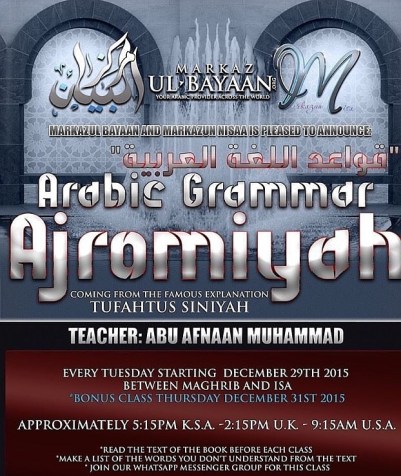

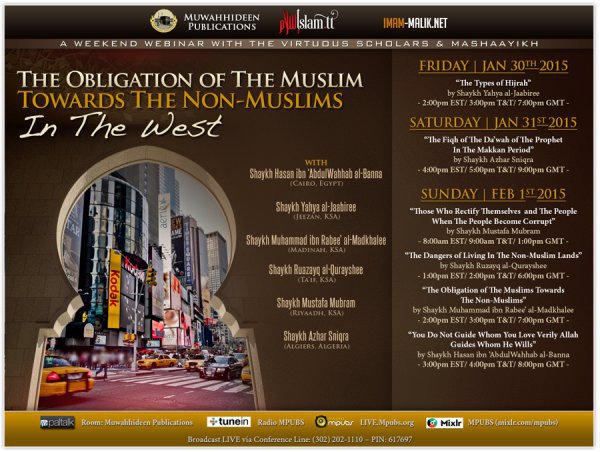

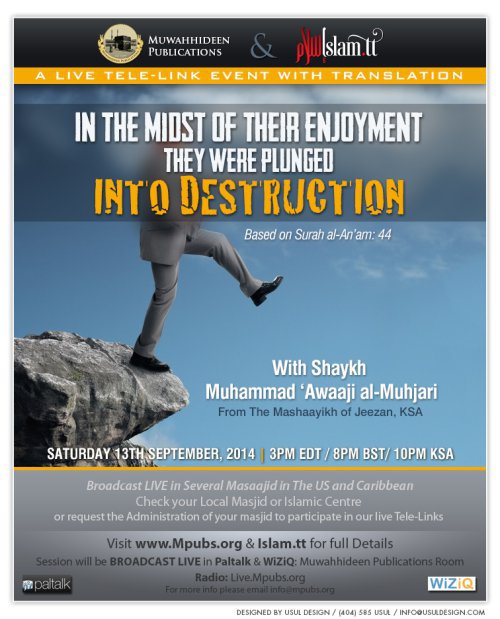


 AbdurRahman.Org
You must be logged in to post a comment.