The Encouragement in Islaam to Utilize the Land and to Till the Land (Must Read)

The Encouragement in Islaam to Utilize the Land  & to Till the Land
Taken from ‘Silsilah Ahadeeth As-Saheehah’
By the Muhaddith, Shaykh, Allamaa’ Muhammad Nasir uddeen al-Albaani
Translated by Abbas Abu Yahya

‘There are many Ahadeeth regarding this, I will mention a few of them:

7 – From Anas the Prophet -sallAllaahu alayhi wa sallam- said:

‘There is no Muslim who plants a plant or a tree, or sows a seed and no bird, or human or animal eats from that except that it is a charity for that person.’

[Collected by Bukhari, Muslim & Ahmad]

8 – From Jabir from the Prophet -sallAllaahu alayhi wa sallam:

‘There is no Muslim who plants a plant or a tree, except that whatever is eaten from it is a charity for him.  Whatever is stolen from that is a charity for him.  Whatever is eaten from it by an animal is a charity for him.  Whatever a bird eats is a charity for him, no one suffers a loss except that it will be a charity for him till the Day of Judgement.’

[Collected by Muslim]

No. 9 – From Anas Radi Allaahu anhu from the Prophet -sallAllaahu alayhi wa sallam- said:

‘If the final hour comes and one of you has a small date-palm plant in his hand, and if you can plant it before you stand then plant it.’

‘Imam Bukhari brought a chapter heading in the previous book (al-Adab al-Mufrad) for this Hadeeth, where he said: ‘Chapter: The Production of Wealth’ then he narrated from al-Harith bin Laqeett who said:

‘There used to be a man from amongst us who would get his horse to reproduce, and then slaughter it. And he would say: ‘Why should I live so that I ride this thing? [i.e. The Day of Judgement is very close].’

Then a letter came to us from Umar:

‘You should cultivate and prosper with that which Allaah has provided you, since indeed in this regard there is enough time.’

Its chain is authentic.

Bukhari also narrated from Dawood with an authentic chain, who said: Abdullaah bin Sallam said to me:

‘If you hear that the Dajjal has exited and you are about to plant a small tree, then do not delay tending to cultivating it, because the people will have a sustenance from that later.’

And Ibn Jareer narrated from ‘Amaarah bin Khuzaimah bin Thaabit who said:

‘I heard Umar bin al-Khattab say to my father: ‘What prevents you from tilling your land?’

My father replied to him: ‘I am an old man and I may die tomorrow.’

So Umar said to him:

‘I swear that; indeed you must plant on your land.’

Indeed I saw Umar bin al-Khattab plant a plant or tree with his own hands along with my father.’

[From ‘al-Jamia’ al-Kabeer’ by Suyootee]

This is why some of the Companions used to regard a man who works on his land as a worker from the workers of Allaah – Azza wa Jal.

Bukhari narrated in ‘al-Adab al-Mufrad’ from Nafi’ bin ‘Aasim that he heard Abdullaah bin ‘Amr say to his nephew, when he was coming out of his [al-Waha] farm: ‘Are your workers doing their jobs?’

He replied: ‘I do not know.’

Abdullaah said: ‘As for me, if I was skilled and trained I would learn the job your workers do.’

Then he turned towards us and said: ‘Indeed if a person works along his workers in his home [and the narrator once mentioned: ‘with his wealth’]; then that person would be a worker from the workers of Allaah – Azza wa Jal.’

Its chain is ‘Hasan’ InshAllaah.

al-Waha’ in the Arabic  language means: a garden, and it was a very large piece of land which was owned by ‘Amr bin ‘al-Aaas in Taif about three miles from Wajja, and it seems he left it for his children.

Ibn ‘Aasakir collected in his book ‘Tareekh’ with an authentic chain from ‘Amr bin Dinar who said:

‘Amr bin al-Aaas entered a farm which he owned in Taif which was called al-Waha, it had a million stakes of wood [which were used to prop up the grapes], he had bought every stake of wood for a Dirham.’

These are some of the general benefits from those Ahadeeth from the Salaf as-Salih Radi Allaahu anhum.

Bukhari wrote a chapter heading in his ‘Saheeh’ for the first two Ahadeeth by saying:

‘Chapter: The excellence of growing plants if they are eaten from’

[Taken from ‘Silsilah Ahadeeth As-Saheehah’ vol. 1 hadeeth no 7-9 p.37-40]

All Praise belongs to Allaah, may His peace and blessings be upon our final Prophet Muhammad, his family, his companions and all those who follow his  guidance

http://followingthesunnah.wordpress.com

Explanation of Important Lessons for Every Muslim – Ibn Baaz – Abu Muhammad [Audio|En]

Explanation of Important Lessons for Every Muslims
By Sheikh Abdul-Azeez ibn Baaz
Audio Lessons : Abu Muhammad al-Maghribee  (mp3/English)
http://followthesalaf.com

You can read the eBook @ https://abdurrahman.org/2016/02/16/important-lessons-for-the-muslim-ummah-ebook/

Click On Part No. to Download the mp3

Download mp3 ListenDescription

Part 01

Part 02

Part 03

Part 04

Part 05

Part 06

Part 07

Part 08

Part 09

Part 10

Part 11In today’s class we covered the final Pillar – Hajj

Part 12In today’s class we began the introduction to the Pillars of Emaan (faith).  Do you know the difference between Islaam and Emaan?

Part 13In today’s class we continued with the discussion on Emaan, its increases and decreases and the effects of disobedience on Emaan.

Part 14In today’s class we discussed the actions which nullify one’s Eemaan (faith) and Islaam.

Part 15

Part 16 : we began studying the 2nd Pillar of Eemaan – Belief in the Angels

Part 17  – Missing

Part 18: we began studying the 4th Pillar of Eemaan – Belief in the Messengers.

Posted fromhttp://followthesalaf.com/home/?tag=Important+Lessons

The Arab Spring? – The Reality of Revolution in Light of The Qur’aan and Sunnah – Shaykh Adil Sayyid [Audio|Ar-En]

The Reality of Revolution in Light of The Quraan and Sunnah by Shaykh 'Adil as-Sayyid

Bismillaah wa -Alhumdulillaah wa Salaatu wa Salaam ‘alaa Rasulullaah ‘amma ba’d

The Noble Shaykh ‘Adil as-Sayyid (May Allaah Preserve Him), from the mashayikh of Egypt, delivered a beautiful LIVE Telelink Lecture with Muwahhideen Publications. The Shaykh brought some of the reasons for oppressive rulers over the muslimeen as a punishment or test from Allaah, then he expounds on the method of change that begins with the society first in order to deserve better rulers and/or Governments.

Beginning with Tunisia then Libya, Egypt, Yemen and now Syria, the Muslim lands have become riddled with the fitnah of revolution – an adopted method of change that has never been part of Islaam.

This disease has entered the hearts and minds of Muslims who have resorted to demonstrations, protests and revolting against the Muslim ruler – all of which are haram (impermissible), according to the pristine sharee’ah (the final and preserved Islaamic legislation revealed from above the heavens by One Who is All-Wise and All-Knowing). Many have been deceived into change through these hectic and democratic methods.[1]

This sickness of revolution, which was innovated by the early deviant groups such as the Khawaarij, has now sadly become the accepted way amongst ignorant Muslims – and undoubtedly this benefits none but the enemies of Islaam. May Allaah rectify the Muslim lands from this disease, and return us all back to the Qur`aan and Sunnah upon the understanding of the righteous predecessors (the Prophet, salallaahu ‘alayhi wa sallam, and his companions, radiallaahu ‘anhum).

Shaykh ‘Adil Sayyid (hafidhahullaah), who is in the middle of this calamity in Egypt and who has defended the position of Ahlus-Sunnah, clarified this very important issue on the 20th of Jamada ath-Thaani, 1433, corresponding to 5-9-12.

Source: Listen/Download (Arabic & English)
[audio https://salafiaudio.files.wordpress.com/2013/01/the-reality-of-revolutione2809dthe-arab-springe2809d-in-light-of-the-quraan-and-sunnah-e28093-shaykh-e28098adil-as-sayyid.mp3]

Read /Download the Full transcription of this Beneficial audio [PDF]


Useful Ways of Leading a Happy Life – Imam as Sa’di – Dr Saleh as Saleh [Audio|En]

Based on the Book of Shaykh Abdur Rahman bin Nasr As Sa’di (rahimahullaah)
Dr.Saleh as-Saleh (rahimahullaah)

Useful Ways of Leading a Happy Life – Imam as Sa’di – Dr Saleh as Saleh [Audio|En]

Video Chapters:

  • 00:00 Introduction
  • 07:35 Ch 1.1: [No.1] Iman and Righteous Deeds
  • 20:45 Ch 1.2: [No.2] Goodness to creation, by words, by deeds, and by all types of good acts
  • 22:56 Ch 2.1: [No.3] Occupying Oneself With Useful Knowledge
  • 24:45 Ch 2.2: [No.4] Concern oneself with the affairs of the present, and to stop being anxious about the future, or grieving over the past.
  • 29:25 Ch 3.1: [No.5] Remembering Allah Much
  • 30:22 Ch 3.2: [No.6] Proclaiming and mentioning the favours and blessings of Allah on oneself, both the outwardly manifest, and the hidden
  • 32:03 Ch 3.3: [No.7] Look at those that are below you (in worldly positions),and do no tlook at those that are above you (in worldly positions)
  • 34:20 Ch 4.1: [No.8] Forgetting The Unpleasant Things That Have Passed
  • 37:26 Ch 4.2: [No.9] Prophetic dua to Allah seeking the betterment of his future both in terms of his religion and his worldly affairs
  • 40:10 Ch 5: [No.10] By imagining the worst possible thing that would have happened to him
  • 42:58 Ch 6.1: [No.11] Firmness Of The Heart
  • 44:03 Ch 6.2: [No.12] Reliance On Allah
  • 47:14 Ch 7.1: [No.13] By overlooking bad qualities, and bringing to mind the good qualities
  • 51:16 Ch 8.1: [No.14] Do Not Let Grief And Worry Make Your Short Life Shorter
  • 52:37 Ch 8.2: [No.15] When something unpleasant happens to him,or he is afraid that it will happen to him, he should remember the other blessings of Allah
  • 53:44 Ch 8.6: [No.16] Do not pay attention to slander and other evil talk about you
  • 54:18 Ch 8.6: [No.17] Know also that your life is subservient to your thoughts
  • 54:38 Ch 8.6: [No.18] Train yourself not to desire thanks & gratitude from anyone except Allah
  • 56:44 Ch 8.6: [No.19] Make the attainment of useful things your goal,and strive to realise them, and pay no attention to harmful things
  • 57:10 Ch 8.7: [No.20] On the spot accomplishment of the current activities so that the future may be free for you
  • 57:40 Ch 8.8: [No.21] Rank the Useful things and seek help in good thinking and good counsel

There is no doubt that the bliss of the heart, its tranquility and happiness, and the absence of grief and worry from it, is the goal of every individual. It is the means by which a happy,blissful and excellent life is achieved. There are means to achieve this;some of which are religious, some are natural and some are physical.These means are never gathered together except to the believers. The non-believers on the other hand, despite the fact that the earnest endeavours of their philosophers is to lead them to these means, even if they achieve them in certain aspects, they miss the way to them in several other aspects that are more beneficial, more permanent and better in yielding results.

Shaykh Abdur-Rahman bin Nasir As-Sadi `rahimahullah mention in his treatise the ways and means to achieve this lofty goal that is the quest of every individual. He said that some people are successful in following these ways, and therefore live a good and pure life and enjoy their life. Some woefully fail in following any of them, and they live a wretched and miserable life. Others lie between these two extremes;by the level of their following these means, by that level do they live a good life. And it is Allah `azza wa jall that guides to all that is good, and wards off all that is evil, and it is His Help we seek in this.

The Book in Arabic can be read Here

This book was Published in English by:

Useful Ways Of Leading A Happy Life – by:Shaykh Abdur-Rahman bin Nasir As-Sa’di
Translated by:Bashir Aliyu Umar ; Printed by:The Ministry of Islamic Affairs,Endowments,Da`wah and Guidance ; Supervised by:The Ministry’s Deputyship for Printing and Publishing Affairs.

Read or Download the Book [English Book] [PDF]

Gems of Guidance For Our Youth – Abu Muhammad al Maghribee [Audio|En]

Download mp3 / Part 01:

Download mp3 / Part 02:

Download mp3 / Part 03:

Posted from: http://followthesalaf.com/tag/youth

Narrate to people what they can understand – call them in stages – (wisdom in da’wah) Shaykh Uthaymeen

Responsibility in Knowledge and Da’wah

‘Alî b. Abî Tâlib – Allah be pleased with him – said:

Narrate to people what they can understand; do you want Allah and His Messenger to be disbelieved?

Quoted by Al-Bukhârî, Al-Sahîh, Chapter about a person preferring some people with certain knowledge to the exclusion of others.

Ibn Hajr said in Fath Al-Bârî, “[In this narration] there is evidence that ambiguous knowledge should not be mentioned amongst the general public.”

Shaykh Muhammad b. Sâlih Al-‘Uthaymîn – Allah have mercy on him – explained this very important and often misunderstood point beautifully. After mentioning the narration of ‘Alî, he states:

It is therefore an aspect of wisdom in da’wah (calling others to Allah) that you should not surprise people with things they are not able to comprehend. Rather, you should call them in stages, bit by bit until their minds settle…”

He goes on to say:

“[The statement of ‘Alî] ‘Do you want Allah and His Messenger to be disbelieved?’ is a rhetorical question, posed as a criticism of such behavior. It means: by narrating to people things they cannot understand do you want Allah and His Messenger to be disbelieved? This is because in such cases when you say, “Allah said, and His Messenger said” they will say you have lied if their minds cannot comprehend what you are saying. Here, they are not disbelieving Allah and His Messenger, but they are disbelieving you because of this speech that you have attributed to Allah and His Messenger. Thus they will end up disbelieving Allah and His Messenger – not directly – but by way of the one who transmits this knowledge (i.e. you).

Now if it is said: Should we stop telling people things they cannot understand even if they need to know? The answer is: no, we do not leave this knowledge altogether, but we should tell them in a way that they will be able to understand. This is done by telling them stage by stage, bit by bit until they can accept the speech we want them to know and they can feel comfortable with it. We do not abandon knowledge that people cannot understand and just say ‘this is something they will reject or dislike so we will not speak about it.’

The same is the case with acting upon a Sunnah that people are not used to and which they might find objectionable. We should act by this Sunnah, but only after informing people about it, such that they will be able to accept it and feel comfortable about it.

We learn from this narration (of ‘Alî) that it is important to employ wisdom in calling to Allah, and that it is incumbent upon anyone who calls to Allah to consider the level of understanding of those he is inviting, and that he should put everyone in their proper place.

Majmû’ Fatâwâ Ibn ‘Uthaymîn Vol.10 p140.

http://www.sayingsofthesalaf.net

[Audio Book] Islamic Creed Based on Qur’an and Sunnah – Muhammad bin Jamil Zeeno [Audio|En]

Questions & Answers on `Aqeedah (Based on the below book by Jamil Zino)
Islamic Creed Based on Qur’an and Sunnah – Muhammad bin Jamil Zeeno
This tape is recorded at Madina Munawaara for “Invitation to Islam”

Muhammad bin Jamil Zeeno , Teacher in Dar Al-Hadeeth Al-Khairiyyah,Makkah Al-Mukarramah.In this book, all important and fundamental aspects of Islam are described in an easy form of question/answer, so that the basic concepts may be inscribed in the minds of the readers.

Part 01: Listen / Download Mp3 Here (Time 43:45)

Part 02: Listen / Download Mp3 Here (Time 34:50)

[Q/A] Did Iblis see Allah when he was amongst the Angels? – Shaykh Falaah [Audio|Ar-En]

Listen / Download mp3: (1.5 min audio)

Sulaiman Al-Rajhi’s life a rags to riches story (Must Read !!)

Sulaiman Al-Rajhi’s life a rags to riches story

Saudi Arabia’s rags-to-riches billionaire Sulaiman Al-Rajhi is also a world-renowned philanthropist. He is the founder of Al-Rajhi Bank, the largest Islamic bank in the world, and one of the largest companies in Saudi Arabia. As of 2011, his wealth was estimated by Forbes to be $7.7 billion, making him the 120th richest person in the world. His flagship SAAR Foundation is a leading charity organization in the Kingdom. The Al-Rajhi family is considered as one of the Kingdom’s wealthiest non-royals, and among the world’s leading philanthropists.

Al-Rajhi is a billionaire who chose last year to become a poor man at his own will without having any cash or real estates or stocks that he owned earlier. He became penniless after transferring all his assets among his children and set aside the rest for endowments. In recognition of his outstanding work to serve Islam, including his role in establishing the world’s largest Islamic bank and his regular contribution toward humanitarian efforts to fight poverty, Al-Rajhi was chosen for this year’s prestigious King Faisal International Prize for Service to Islam.

In an interview with Muhammad Al-Harbi of Al-Eqtisadiah business daily, Al-Rajhi speaks about how he was able to succeed in convincing chiefs of the leading central banks in the world, including that of the Bank of England, nearly 30 years ago that interest is forbidden in both Islam and Christianity, and that the Islamic banking is the most effective solution to activate Islamic financing in the world and make it a real boost to the global economy.

The story of Al-Rajhi is that of a man who made his fortunes from scratch, relying on grit and determination. Al-Rajhi threw away his huge wealth through two windows — distributed a major part of his inheritance among his children and transferred another portion to endowments, which are regarded as the largest endowment in the history of the Islamic world. He had to fight poverty and suffering during his childhood before becoming a billionaire through hard work and relentless efforts, and then leaving all his fortunes to become penniless again.

Al-Rajhi is still very active and hardworking even in his 80s with youthful spirits. He begins his work daily after morning prayers and is active until Isha prayers before going to bed early. He is now fully concentrated on running the endowment project under his SAAR Foundation, and traveling various regions of the Kingdom managing activities related with it. He always carries a pocket diary containing his daily programs and activities and he is accustomed to stick on to the schedule he had prepared well in advance.

Al-Rajhi scored excellent performance results in almost all businesses in which he carved out a niche for himself. In addition to establishing the world’s largest Islamic bank, he founded the largest poultry farm in the Middle East. The credit of activating the organic farming experiment in the Kingdom mainly goes to him through launching a number of farming projects, including Al-Laith shrimp farming. He also established real estate and other investment projects.

Excerpts:

Sheikh Suleiman, have you become a poor man again?

Menses and Postnatal Bleeding – From the book Al-Mulakhas al-Fiqhi by Sheikh Saaleh al-Fawzaan – Abu Muhammad al-Maghribee [Audio|En]

From the book Al-Mulakhas al-Fiqhi by Sheikh Saaleh al-Fawzaan
Abu Muhammad al-Maghribee (mp3/english)
http://followthesalaf.com

These audios are based on the Book A Summary of Islamic Jurisprudence (Al-Mulakhas al-Fiqhi) by Sheikh Saaleh al-Fawzaan. It is Published in 2 volumes by Al-Maiman Pulishing house. The below two audios are based on the 13th Chapter under “Purification” Section of the Volume 1.

Part 01 / Download mp3:

Part 02 / Download mp3:
In this class we covered al-istihaadhah (irregular bleeding) and its rulings.

Chapter of Sincerity and Significance of Intention – Abu Muhammad al-Maghribee [Audio|En]

Based Explanation of Riyaadus-Saaliheen by Sheikh Muhammad ibn al-Uthaymeen, rahimahullah. Abu Muhammad al-Maghribee (mp3/english)
http://followthesalaf.com

Read the ahadeeth of this Chapter in Riyaadus-Saaliheen
@ Sincerity and Significance of Intentions and all Actions, Apparent and Hidden

Part 01 /Download:

Where is the proper place of the intention?  Is it on the tongue or in the heart?  Listen and find out. And you’ll also hear of a piece of advice from Sheikh ibn al-Uthaymeen for a person when he intends to do something good and then is affected by whisperings of the shaytaan regarding his intention.

Part 02 /Download:

The Sheikh explains that the hadith “Indeed actions are but by intentions….” is a mizaan (scale) for the hidden actions.  Listen to find out why this is and also to find out which hadith is a mizaan for the apparent actions.

Part 03 /Download:

Chapter of Sincerity and Presence of Intention – Continued

Part 04 /Download:

In this class we begin with the proofs that when a person has good intention to perform a righteous action, but then has a valid excuse for not performing the action, he will be rewarded just as if he had done it.

Part 05 /Download:

In this class we begin with the hadith narrated by Sa’d ibn abee Waqqas (one of the 10 promised paradise) that the Messenger, sallallahu alaihi wasallam, visited him in his illness and instructed him not to bequeath more than 1/3 of his wealth, and that even that was a lot.

Part 06 /Download:

In this class we study the 14 benefits that our sheikh ibn al-Uthaymeen brought regarding the hadith narrated by Sa’d ibn abee Waqqas (one of the 10 promised paradise) when the Messenger, sallallahu alaihi wasallam, visited him in his illness.

Our Call is to Correct What People Have Corrupted – Shaykh Muhammad al-Anjaree

Bismillaah Al-Hamdulillaah wa salatu wa salaamu ‘ala rasulullaah
Amma-ba’d

Our Call is to Correct What People Have Corrupted, by Shaykh Muhammad al-Anjaree (hafidhahullaah Ta’aala)

[The following are notes – not verbatim – from this highly beneficial Scholarly Lesson and Advice]

After beginning with the name of Allaah, and praising Allaah, and asking Allaah to send His peace and security upon the noblest of His Messengers, our Prophet Muhammad, then Shaikh Al-Anjaree greeted the Muslims with the greeting of Islaam – as-salamu ‘alaykum wa rahmatullaahi wa baarakatu – before beginning:

Allaah said:

كُنْتُمْ خَيْرَ أُمَّةٍ أُخْرِجَتْ لِلنَّاسِ تَأْمُرُونَ بِالْمَعْرُوفِ وَتَنْهَوْنَ عَنِ الْمُنكَرِ وَتُؤْمِنُونَ بِاللَّهِ

You [true believers in Tawheed, and real followers of Prophet Muhammad, and his Sunnah] are the best of peoples ever raised up for mankind; you enjoin Al-Ma’roof (Tawheed and all that Islaam has ordained) and forbid Al-Munkar (polytheism, disbelief and all that Islaam has forbidden), and you believe in Allaah… (Aali ‘Imran, ayah 110)

Allaah, Ta’aala, said:

وَلْتَكُنْ مِنْكُمْ أُمَّة ٌ يَدْعُونَ إِلَى الْخَيْرِ وَيَأْمُرُونَ بِالْمَعْرُوفِ وَيَنْهَوْنَ عَنِ الْمُنْكَرِ وَأُوْلَائِكَ هُمُ الْمُفْلِحُونَ

Let there arise out of you a group of people inviting to all that is good (Islaam), enjoining Al-Ma’roof (Tawheed and all that Islaam orders one to do) and forbidding Al-Munkar (polytheism and disbelief and all that Islaam has forbidden). And it is they who are the successful. (Aali ‘Imran, ayah 104)

Allaah, Subhanahu wa Ta’aala, has made the goodness of this nation in its commanding of the good and forbidding of the evil.

Commanding the good means commanding with the Religion, with Tawheed – that Allaah be singled out with worship – and the correct Manhaj and the Sunnah. And forbidding the evil means that they forbid Shirk, Bid’ah, and sins, and whatever is contrary to this Religion.

So the good comes about with enjoining of the good and forbidding the evil. And this is what Allaah, Subhanahu wa Ta’aala, commanded us with. So this Ummah is commanded to enjoin the good, and this was the duty carried out by the Prophet (salallaahu ‘alayhi wa sallam) and the Sahaba (radiallaahu Ta’aala ‘anhum), who called to good and called to the Sunnah of the Messenger of Allaah (salallaahu ‘alayhi wa sallam).

The Sahaaba called to good, and they likewise forbade all evil, all that the Religion prohibits, such as Shirk, Bid’ah, and the rest of the evil – everything that runs contrary to this Deen.

The flag-bearers, banner-carriers of the Sunnah are the carriers of this Religion, and they are those who command with the Sunnah and forbid Bid’ah, and the sahaaba (radiallaahu Ta’aala ‘anhum) carried out this role and were the carriers of this banner, and this is clear from their narrations.*

It is reported that Ibn ‘Abbaas (radiallaahu ‘anhumma) said: “By Allaah, I do not think that anyone will be more pleased with my death than Shaytaan.” It was said, “How is that?” He replied, “An innovation is invented in the East or the West, and a man brings it to me. When it reaches me, I crush it with the Sunnah.”

They [the Sahaaba] called to revival of the Sunnah, and from forbidding evil is to demolish innovations (heresies).

So when it reached ‘Umar ibn al-Khattab (radiallaahu ‘anhu) that Sabeegh ibn ‘Asl had come up with some tafseer of the Qur`an off the top of his head, from Soorat an-Nazi’at, ‘Umar told him: If you were MuHaliqqa (bold-headed, like the Khawaarij), I would have cut off your neck. Meaning (he would have done that) to preserve the religion, the Sunnah, the methodology of Prophethood. This was their eager concern.

Ordering the good – the Sunnah – and forbidding evil – bid’ah.

The Prophet (salallaahu ‘alayhi wa sallam) described these people of truth, these people of strangeness in his saying: Glad tidings is for the strangers.

He was asked: Who are the strangers? He (salallaahu ‘alayhi wa sallam) said: They are a righteous people amongst many evil people. Those who disobey them will be more than those who obey them.

So these are the strangers. The sahaba (radiallaahu ‘anhum) were like this. As was indicated by the Prophet (salallaahu ‘alayhi wa sallam) in his saying: Islaam began as strange, and it will return strange as it began. So glad tidings to the strangers. [Saheeh Muslim, no. 145] He was asked: Who are the strangers? He (salallaahu ‘alayhi wa sallam) said: They are a righteous people amongst many evil people. Those who disobey them will be more than those who obey them.

Obey them in what?

Meaning those who obey them in their call to the Sunnah and clarifying the truth and seeking to kill off – refute – bid’ah and falsehood.

The Messenger of Allaah (salallaahu ‘alayhi wa sallam) said: Whoever revives a Sunnah from my Sunnah, and the people act upon it, then for him will be the reward for all those who act on it. [Ibn Majah]

This is the Sunni who commands the Sunnah – commands the good – and forbids the evil.

Whoever revives a Sunnah – from the Prophet’s Manhaj, his path – and calls to the Sunnah, and the people act on it, so he receives the reward of all those who act on it without their reward reducing. This Sunni is the one who enjoins the good and forbids the evil. And this is a bounty from Allaah, Who bestows this upon whomever He wishes.

And opposite to this: Whoever calls to bid’ah, he will incur the sin of all those who act on it, without their sins reducing. So therefore, it is a right upon the people of the Sunnah – callers to the truth – to carry out this role, and call to the Sunnah, and strive to uproot innovation (heresies).

The true person of the Sunnah strives to uproot bid’ah. A person truly upon the Sunnah calls to the revival of the Sunnah. A person of bid’ah calls to revival of bid’ah. The Sunni encourages people upon the Sunnah and upon crushing bid’ah.

It has been reported that the Mesenger of Allaah (salallaahu ‘alayhi wa sallam) said about the strangers: They will be a people who rectify what the people have corrupted from my Sunnah after me.

Imam at-Tirmidhi said it is hasan-saheeh. [Although some scholars of hadeeth have said it is not authentic,] the meaning of this is correct. The strangers are those who rectify what people have corrupted from the Sunnah of the Messenger of Allaah (salallaahu ‘alayhi wa sallam) after his passing. So, this is the description of the strangers, that they rectify what the people have corrupted. Fasad (corruption) comes about as a result of bid’ah – no doubt. Bid’ah results in corruption – no doubt!

A person upon the Sunnah calls to the Sunnah, and seeks to benefit the people with what is beneficial in their beliefs, sayings, actions, and methodologies, and strives to rectify what people have corrupted.

So these are Al-Ghuraabah (the strangers). They are the people of the Sunnah, those who revive the Sunnah of the Prophet (salallaahu ‘alayhi wa sallam) and who revive the Prophet’s Methdology, and bring back to life what has been killed from his Sunnah.

Because in the hadeeth, the Prophet (salallaahu ‘alayhi wa sallam) said: Whoever revives a Sunnah from my Sunnah... This being the opposite of killing off a Sunnah.** Then the Sunni comes and he revives it, brings it back to life (after learning it, he practices it, becomes firm upon it, and teaches it to others). This is their role.

And this is why Imam Ahmad (rahimahullaah Ta’aala) said about them (those who call to the Sunnah and its revival) in the introduction of his book Ar-Rad ‘alal Jahmiyyah (The Refutation upon the Jahmiyyah):

All praise is for Allaah, Who leaves a group after the Messengers from amongst the people of knowledge who negate the changes, distortions of those who go to the extreme. And the changes of those who are ignorant. [This group] is those who call people from misguidance to guidance, and are patient upon harm. How many are they who have gone astray whom they helped bring back to guidance? How many are those [whose eeman] have been killed by Iblees whom they have helped give life to again? How beautiful is their effect upon the people, and how ugly and vile is the effect of the people upon them?

Imam Ahmad described these callers to the Sunnah by saying about them.

How beautiful is their effect upon the people, and how ugly and vile is the effect of the people upon them? 

How ugly is the effect of those who raise the banner of bid’ah upon the people of the Sunnah.

The people of the Sunnah are the strangers, those who repel the false distortions, the false tafseer, and refute the changes. The strangers correctly interpret and understand the Qur`an and Sunnah, and the Names and Attributes of Allaah. Those who carry this duty are the Awliyya` of Allaah, the beloved and obedient servants of Allaah.

Shaikh-ul-Islaam Ibn Taymiyyah (rahimahullaah Ta’aala) said: “Those who establish the duty of preserving what was inherited from the Messenger (salallaahu ‘alayhi wa sallam) – and safeguard it from any addition or deletion – are from the greatest of the awliyya` of Allaah; they are of the beloved servants of Allaah and His party.

Pay attention to what Ibn Taymeeyah said: “Those who establish the duty of preserving what was inherited from the Messenger (salallaahu ‘alayhi wa sallam) – and safeguard it from any addition or deletion – are from the greatest of the awliyya` of Allaah; they are of the beloved servants of Allaah and His party.

So this is the duty and role of Ahlus-Sunnah, who revive what Ahlul-Bid’ah have killed off.

If a Sunni is asked: what do you call to?

He [the Sunni] says: I call to the religion of the Messenger (salallaahu ‘alayhi wa sallam) – reviving it and reviving the Prophet’s Sunnah – and to crushing Bid’ah so as to make the truth clear from innovations (bid’ah), distortions and false interpretations.

Allaah, The Most High, consoled His Messenger (salallaahu ‘alayhi wa sallam):

وَلَقَدْ كُذِّبَتْ رُسُل ٌ مِنْ قَبْلِكَ فَصَبَرُوا عَلَى مَا كُذِّبُو

Verily, (many) Messengers were denied before you (O Muhammad), but with patience they bore the denial… (Al-An’aam, ayah 34)

This shows us that this path that the Prophet (salallaahu ‘alayhi wa sallam) and his companioions proceeded upon is a path that requires patience. So, oh person who carries the banner of the Sunnah, you need to remember this and that you are a stranger.

You will have to bear harm, just as Imam Ahmad (rahimahullaah) said: How beautiful is their effect upon the people, and how ugly and vile is the effect of the people upon them? 

The person upon this path needs sabr. The people need from you that you have sabr.

Imam Ibnul Qayyim (rahimahullaah) said: “Whoever proceeds upon the Straight Path that the Messenger (salallaahu ‘alayhi wa sallam) and his companions were upon, let him make himself get used to trouble from the ignoramuses and Ahlul-Bid’ah, such as them belittling him, attacking him, warning against him.”

This is the path of the ghuraba, the strangers, Ahlus-Sunnah, those who want to revive what the people kill off from the Manhaj of Ahlus-Sunnah.

So you need to have sabr upon that. You will receive attacks from Ahlul Bid’ah, which is normal that it will happen, just as Imam Ahmad, Ibn Taymiyyah and Ibnul Qayyim (rahimahumullaah) said.

Allaah’s Messenger (salallaahu ‘alayhi wa sallam) said: Ahead of you there lie days of patience, during which being patient will be like grasping a hot coal… ***

Meaning the one who clings to the Sunnah, the methodology of the Prophet (salallaahu ‘alayhi wa sallam) and his companions (radiallaahu ‘anhum).

Translated by: Abu Talha Dawood Burbank (rahimahullaah)

Source: Lesson Our Call is to Correct What People Have Corrupted, by Shaykh Muhammad al-Anjaree (hafidhahullaah), via salafiradio.org

Regarding the Dream of the Messenger, sallallahu alaihi wasallam – Sheikh Ali at-Tuwaijree [Audio|Ar-En]

Abu Muhammad al-Maghribee
http://followthesalaf.com

This telelink lecture was given by our Noble Sheikh Ali at-Tuwaijree on Friday, April 6, 2012.

The Sheikh, hafidhahullah, gave us a summarized explanation of the hadith narrated by Samurah ibn Jundub when he said that that the Messenger of Allaah (peace and blessings of Allaah be upon him) often used to ask his companions, ‘Did any one of you see a  dream?’ So dreams would be described to him by those who Allaah willed should speak. One morning, the Prophet (peace and blessings of Allaah be upon him) said:

“Last night, two men came to me and said to me, ‘Let us go!’, and I set out with them….”

The Sheikh also gave us some general advice regarding dreams, wajazaahum Allahu khairan.

Download /Listen mp3

The Dream of the Prophet Sallalahu Alaihi wa Sallam 

Narrated Samura bin Jundub:

Allah’s Apostle very often used to ask his companions, “Did anyone of you see a dream?” So dreams would be narrated to him by those whom Allah wished to tell.

One morning the Prophet said,

“Last night two persons came to me (in a dream) and woke me up and said to me, ‘Proceed!’

I set out with them and we came across a man Lying down, and behold, another man was standing over his head, holding a big rock. Behold, he was throwing the rock at the man’s head, injuring it. The rock rolled away and the thrower followed it and took it back. By the time he reached the man, his head returned to the normal state. The thrower then did the same as he had done before. I said to my two companions, ‘Subhan Allah! Who are these two persons?’ They said, ‘Proceed!’

So we proceeded and came to a man Lying flat on his back and another man standing over his head with an iron hook, and behold, he would put the hook in one side of the man’s mouth and tear off that side of his face to the back (of the neck) and similarly tear his nose from front to back and his eye from front to back. Then he turned to the other side of the man’s face and did just as he had done with the other side. He hardly completed this side when the other side returned to its normal state. Then he returned to it to repeat what he had done before. I said to my two companions, ‘Subhan Allah! Who are these two persons?’ They said to me, ‘Proceed!’

So we proceeded and came across something like a Tannur (a kind of baking oven, a pit usually clay-lined for baking bread).” I think the Prophet said, “In that oven there was much noise and voices.” The Prophet added, “We looked into it and found naked men and women, and behold, a flame of fire was reaching to them from underneath, and when it reached them, they cried loudly. I asked them, ‘Who are these?’ They said to me, ‘Proceed!’

And so we proceeded and came across a river.” I think he said, “…. red like blood.” The Prophet added, “And behold, in the river there was a man swimming, and on the bank there was a man who had collected many stones. Behold. while the other man was swimming, he went near him. The former opened his mouth and the latter (on the bank) threw a stone into his mouth whereupon he went swimming again. He returned and every time the performance was repeated, I asked my two companions, ‘Who are these (two) persons?’ They replied, ‘Proceed! Proceed!’

And we proceeded till we came to a man with a repulsive appearance, the most repulsive appearance, you ever saw a man having! Beside him there was a fire and he was kindling it and running around it. I asked my companions, ‘Who is this (man)?’ They said to me, ‘Proceed! Proceed!’

So we proceeded till we reached a garden of deep green dense vegetation, having all sorts of spring colors. In the midst of the garden there was a very tall man and I could hardly see his head because of his great height, and around him there were children in such a large number as I have never seen. I said to my companions, ‘Who is this?’ They replied, ‘Proceed! Proceed!’

So we proceeded till we came to a majestic huge garden, greater and better than I have ever seen! My two companions said to me, ‘Go up and I went up’ The Prophet added, “So we ascended till we reached a city built of gold and silver bricks and we went to its gate and asked (the gatekeeper) to open the gate, and it was opened and we entered the city and found in it, men with one side of their bodies as handsome as the handsomest person you have ever seen, and the other side as ugly as the ugliest person you have ever seen. My two companions ordered those men to throw themselves into the river. Behold, there was a river flowing across (the city), and its water was like milk in whiteness. Those men went and threw themselves in it and then returned to us after the ugliness (of their bodies) had disappeared and they became in the best shape.” The Prophet further added, “My two companions (angels) said to me, ‘This place is the Eden Paradise, and that is your place.’ I raised up my sight, and behold, there I saw a palace like a white cloud! My two companions said to me, ‘That (palace) is your place.’ I said to them, ‘May Allah bless you both! Let me enter it.’ They replied, ‘As for now, you will not enter it, but you shall enter it (one day)

I said to them, ‘I have seen many wonders tonight. What does all that mean which I have seen?’
They replied, ‘We will inform you:

As for the first man you came upon whose head was being injured with the rock, he is the symbol of the one who studies the Quran and then neither recites it nor acts on its orders, and sleeps, neglecting the enjoined prayers. As for the man you came upon whose sides of mouth, nostrils and eyes were torn off from front to back, he is the symbol of the man who goes out of his house in the morning and tells so many lies that it spreads all over the world.

And those naked men and women whom you saw in a construction resembling an oven, they are the adulterers and the adulteresses;,and the man whom you saw swimming in the river and given a stone to swallow, is the eater of usury (Riba) and the bad looking man whom you saw near the fire kindling it and going round it, is Malik, the gatekeeper of Hell and the tall man whom you saw in the garden, is Abraham and the children around him are those children who die with Al-Fitra (the Islamic Faith).”

The narrator added: Some Muslims asked the Prophet, “O Allah’s Apostle! What about the children of pagans?” The Prophet replied, “And also the children of pagans.”

The Prophet added, “My two companions added,

‘The men you saw half handsome and half ugly were those persons who had mixed an act that was good with another that was bad, but Allah forgave them.’”

Source: Sahih Bukhari Volume 9, Book 87, Number 171: [Interpretation of Dreams ]

Effects of Worship on the Life of the Muslim – Sheikh Abdul-Muhsin al-Abbaad – Abu Muhammad al-Maghribee [Audio|En]

Sheikh Abdul-Muhsin al-Abbaad
Abu Muhammad al-Maghribee (mp3/english)
http://followthesalaf.com

This was taken from lecture given by our Noble Sheikh Abdul-Muhsin al-Abbaad al-Badr, hafidhahullah entitled  أثر العبادات في حياة المسلم

Download/Part 01:

We begin the lecture with a brief biography of the Sheikh Abdul-Muhsin al-Abbaad al-Badr. What is the meaning of “ebaadah”? What are some of its types?  What are its conditions? How do you know if an action is righteous?

Download/Part 02:

In this portion we finish the introduction with the narrations and statements of our Salafus-Saaleh regarding adhereing to that which the Companions were upon, radiyallaahu ‘anhum.

The Sheikh explains how great evil and innovation can start as something small and then continues with explaining how Taqwa and righteous actions leads to happiness, tranquility, security and increase in provision.

Download/Part 03:

In this lesson we begin with the ayaat in Surat at-Talaq:

وَمَن يَتَّقِ اللَّهَ يَجْعَل لَّهُ مَخْرَجًا

And whosoever fears Allâh and keeps his duty to Him, He will make a way for him to get out (from every difficulty). (At-Talaq 65:2)

وَيَرْزُقْهُ مِنْ حَيْثُ لَا يَحْتَسِبُ وَمَن يَتَوَكَّلْ عَلى اللَّهِ فَهُوَ حَسْبُهُ إِنَّ اللَّهَ بَالِغُ أَمْرِهِ قَدْ جَعَلَ اللَّهُ لِكُلِّ شَيْءٍ قَدْرًا

 And He will provide him from (sources) he never could imagine. And whosoever puts his trust in Allâh, then He will suffice him. Verily, Allâh will accomplish his purpose. Indeed Allâh has set a measure for all things. (At-Talaq 65:3)

وَمَن يَتَّقِ اللَّهَ يَجْعَل لَّهُ مِنْ أَمْرِهِ يُسْرًا

….and whosoever fears Allâh and keeps his duty to Him, He will make his matter easy for him. (At-Talaq 65:4)

وَمَن يَتَّقِ اللَّهَ يُكَفِّرْ عَنْهُ سَيِّئَاتِهِ وَيُعْظِمْ لَهُ أَجْرًا

…. and whosoever fears Allâh and keeps his duty to Him, He will remit his sins from him, and will enlarge his reward. (At-Talaq 65:5)

So who from us does not want a way out from every difficulty?  Who does not want his or her affairs to become easy?  And who does not want his or her sins to be forgiven and reward enlarged?

Listen to what the Sheikh has explained about these ayaat and more…

Download/Part 04:

In this part we study what the Sheikh said regarding how we understand the hadith of Ibn Abbaas that the Messenger, sallallahu alaihi wasallam, said to him:

احْفَظْ اللَّهَ يَحْفَظْكَ

“Preserve Allah and He will Preserve You.”

And also the tremendous benefit in the statement of the Sheikh, “Get to know Allah in times of ease and He will know you in times of hardship.”

Listen for more gems like these…

# Fingernail and Hair Clippings Are Not The Food of The Jinn by Shaykh ‘Uthmaan As-Saalimee (mp3/arabic-english)

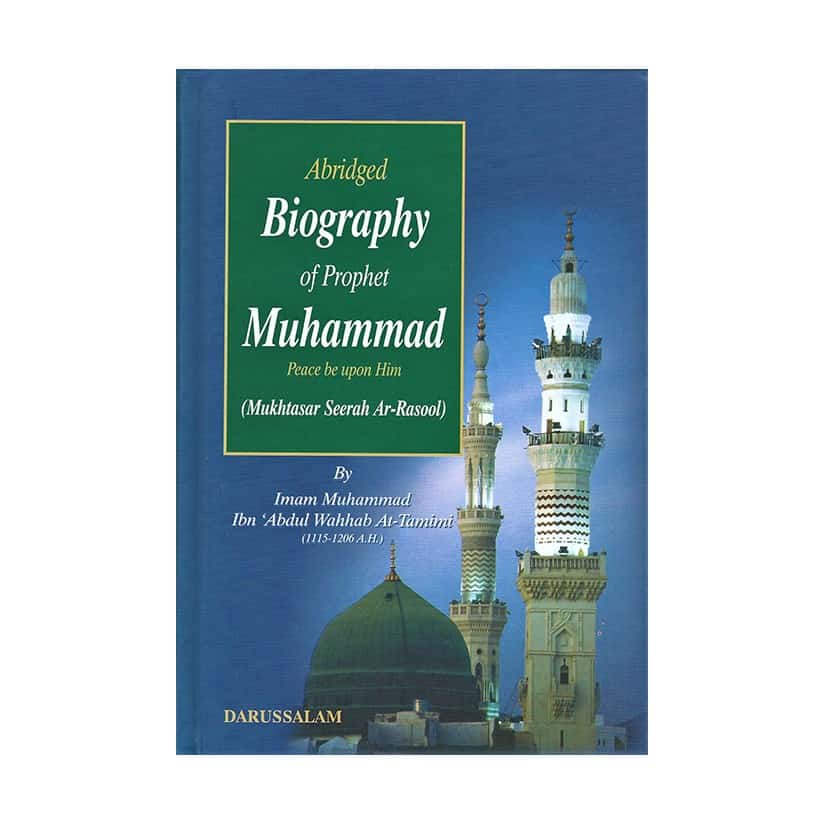
Abridged Seerah of Prophet Muhammad ﷺ – Imam Muhammad bin AbdulWahhaab | Abu Muhammad al Maghribee [Audio Series |En]

Abridged Biography of Prophet Muhammad (Peace be upon him)

Abridged Seerah of Prophet Muhammad sallallahu alaihi wasallam
by  Shaykh Muhammad bin AbdulWahhaab
Abu Muhammad al Maghribee
http://followthesalaf.com

The Book can be purchased at darussalam.com here

[Soundcloud Playlist Link]

Class # Contents:

  • Class 01: Who were the first to embrace Islaam and who was the first martyr of Islaam?
  • Class 02: Covered many topics, such as the first bloodshed in Islaam and the first Hijra
  • Class 03: Reviewed the Second Hijrah to Habasha and continued with discussing the request of the Quraish that an-Najaashee to return the Muslims to the Quraish.
  • Class 04: Ended the last class with the death of An-Najaashee and begin this class with the entrance of Hamza into Islaam, radiyallahu anhumaa.
  • Class 05: Death of Khadijah, the wife of the Messenger, sallallahu alaihi wasallam, and Abi Taalib.
  • Class 06: Questioning of the Quraysh to the messenger, sallallahu alaihi wasallam, regarding the soul and the people of the cave.
  • Class 07: In last class we read about the questions of the Quraysh regarding the Soul and the People of the Cave.  Today we continue reading about the questions and the blessing of being guided to al-Islaam
  • Class 08: Continue with the section “Their Request for Signs” (meaning the Quraysh)
  • Class 09: Departure of the Prophet, sallallahu alaihi wasallam, for Taif

Titles of the other classes will be added soon, inshaa’ Allaah

Purifying The Soul (Tazkiat An-Nafs) – Abu Muhammad al-Maghribee [Audio|En]

Here is a very beneficial talk from Sheikh AbdurRazaaq AlBadr Al’Abaad hafidhahu Allah on how to purify the soul: tazkiyatou annafs. the sheikh after showing the importance of this matter by explaning the 10 first verses of surah ashams, he gave 10 rules by which the muslim can purify his soul. Here is the link for the arabic audio AND its transcription into a word document:
http://www.al-badr.net/web/index.php…y&category=221

This was based on a lecture given by our noble sheikh Abdur-Razzaaq ibn Abdil-Muhsin al-Abbaad al-Badr, hafidhahumullah.

Principles:

  • 1. Purification is in Allah’s Hands
  • 2. Therefore ask Allah for it by supplicating to Him
  • 3. The Quran is the Book which leads to Purification of the Soul
  • 4. No one can be purified except by following the example of our Messenger, sallallahu alaihi wasallam
  • 5. At-tazkiyyatu takhliyyah wa tahliyyah.
  • …..

Listen / Download mp3 :

Part 01Intro, Principle #1 and #2

Part 02 Principle #3

Part 03

091 – Soorah ash-Shams – (The Sun) – [Makkee]
In the Name of Allâh, the Most Gracious, the Most Merciful

  1. By the sun and its brightness.
  2. By the moon as it follows it (the sun).
  3. By the day as it shows up (the sun’s) brightness.
  4. By the night as it conceals it (the sun).
  5. By the heaven and Him Who built it.
  6. By the earth and Him Who spread it.
  7. By Nafs (Adam or a person or a soul), and Him Who perfected him in proportion;
  8. Then He showed him what is wrong for him and what is right for him.
  9. Indeed he succeeds who purifies his own self (i.e. obeys and performs all that Allâh ordered, by following the true Faith of Islâmic Monotheism and by doing righteous good deeds).
  10. And indeed he fails who corrupts his own self (i.e. disobeys what Allâh has ordered, by rejecting the true Faith of Islâmic Monotheism or by following polytheism, or by doing every kind of evil wicked deeds).

Du’aas referenced in the audio for Purifying the Soul:

Allahumma, ‘aati nafsi taqwaaha, wa zakkihaa Anta khairu man zakkaahaa, Anta waliyyuhaa wa maulaaha
O Allah, grant my soul its piety and purify it, for You are the best to purify it. You are its protector and guardian”     (Muslim)

http://followthesalaf.com

From the Fiqh of al-Ad’iyyah wal-Adhkaar (calling upon and remembering Allah) – Abu Muhammad al-Maghribee [Audio|En]

http://followthesalaf.com

This lecture was given on Saturday, May 5, 2012 at Masjid at-Tawheed in Stone Mountain, GA.

This talk is based on the book Fiqh al-Ad’iyyah wal-Adhkaar by our noble Sheikh Abdur-Razzaaq ibn Abdil-Muhsin al-Badr, and may Allah preserve them both.  This book was actually a set of classes given by the Sheikh on a Quran Radio Station in Saudi Arabia.  However, many of the students and scholars alike saw the tremendous benefit in these classes and requested him to compile them into a book.  He did this and then sent it to the noble Sheikh ibn Baaz, rahimahullah, who read it and praised it.

You can also find this book as an ebook on the website of the Sheikh here :
http://www.al-badr.net/web/download/ebook/muallafat3.html

And perhaps this will be an incentive for some to study the arabic language, in shaa Allah.

From the highlights of the talk is the mention of ibn Abbaas,

The shaytaan is sitting on the heart of the Son of Adam in wait.  Once that heart becomes heedless, he begins to whisper.  And when the person begins to remember Allah, he flees and is humiliated.

Listen/Download Mp3 Here  (Time 1:02:03)

"Yaa akhi, by Allaah, my intention is good" – Shaikh al-Albaani (rahimahullaah)

The Meaning Of ‘Actions Are Only Judged By Intentions’
sources: silsilat ul-hudaa wa nnoor, 340/8 & nudhum al-fawaaid, 21
asaheeha translations

~ Explanation of the hadeeth: ‘Actions are only judged by intentions’ [Saheeh al-Bukhaari #1] ~

Shaikh al-Albaani (rahimahullaah):

“This hadeeth means that righteous actions are only (sound/accepted/rewarded) by sincere intentions, not that actions opposing the Legislation turn into righteous legislated actions due to coupling them with righteous intentions. No one will say that except someone ignorant or pursuing his own interests!

Many people know this hadeeth in wording but don’t understand its meaning. Why? Because oftentimes we turn (to some people) and say: ‘Yaa akhi, this action that you are doing, or this statement that you are uttering, is not a righteous action.’ What is the answer? ‘Yaa akhi, the Messenger (sallAllaahu ‘alayhi wa sallam) said: ‘Actions are only judged by intentions’ and my intention is good! My intention is righteous!’

So what is the meaning of the hadeeth? Does the hadeeth mean that evil actions are only (sound/accepted/rewarded) by righteous intentions? Or does it mean that righteous actions are only (sound/accepted/rewarded) by righteous intentions? This latter statement is the meaning. As for if one’s actions are not righteous but intention is righteous – this is not enough. Likewise it is also not enough if it is vice versa: i.e. if one’s actions are righteous but intention is not righteous. So the hadeeth gives us two opposites: just like it is a condition for righteous action that there be righteous intention, it is likewise a condition for righteous intention that there be righteous action. So either one is not enough without the other.

You hear many people nowadays swearing by their fathers for example, saying: ‘.’ Sometimes you may find a person coming to a grave and praying there – a grave of a prophet or righteous person or the like – then when they are prohibited from that, he tells you: ‘My intention is not to worship him, my intention is to seek nearness to Allaah (tawassul) through him.’ Ok, your coming to this grave – granted that the intention is righteous – is an action, so is this a righteous action? The answer is no, because the Messenger (‘alayhi ssalaam) used to say: ‘Don’t sit on the graves nor pray toward them.’ And du’aa is part of prayer, in fact du’aa is worship as he (‘alayhi ssalaam) said. Hence turning to the grave with du’aa is like turning to it with prayer: it is an action that is not righteous, and this unrighteous action is not justified by the intention being righteous, if we grant that the intention is righteous.

Thus, for our actions to be righteous, they must be in agreement with the Legislation. This is what our Lord (‘azza wa jal) pointed to with His Statement in the Noble Qur’aan: {whoever hopes for the meeting with his Lord, let him do righteous work and not associate any partner in the worship of his Lord}.”

The fitnah of As Shahawaat (Base Desires) – Shaykh Abdul Qadir al Junaid

What is meant by this type of fitnah is the fitnah of the desires which leads to and encourages one to engage in and commit sins or disobedience to Allah.

This type of fitnah is very dangerous especially in our times because of the fact that this type of fitnah is more appealing and closer to those who have weak souls. Thus, the (weak) individual gives in the first time, then gets drawn in to this type of fitnah and establishes a strong foothold in committing sins. Thus, his iman (faith) weakens or even leaves.

Some examples of this type of fitnah are: the desire for wealth, immoralities, amusement, food and drink, clothes, and the desire to imitate the kuffar and sinners. For example, the lust for wealth leads to falling into numerous sins like the bloodshed which emanates between warring countries or between tribes, breaking into people’s homes and businesses or their cars, embezzling people’s money by unlawful means or prohibited means like fraud or selling things which are prohibited.

Lust for immoralities leads to committing unlawful acts like rape, fornication or adultery, homosexuality, masturbation, luring minors or weak minded individuals into committing inappropriate acts. It also leads to watching pornographic channels, videos, on the internet or magazines. It also leads to harassing or following women in shopping malls or with video enhanced networking devices like that are included in mobile phones and computer cameras. In addition to these vices, this type of fitnah leads to lethargy with regards to performing the obligatory actions in addition to leniency with regards to them and even leads to eventually leaving them completely, not performing them at all. An individual may be chaste, have fear of Allah, be religious and then open the door to this type of fitnah and as a result become corrupt and then be destroyed.

Source : Hasten to do good deeds; (there will be) fitnah like a portion of a dark night .. (Must Read) – by: Sheikh Abdul Qaadir Bin Muhammad Al Junaid, Translated By: Abu Afnaan Muhammad Abdullah